The Defender is Land Rover’s rugged SUV. The “Octa” version is the more extreme, performance-focused version, and the hosts say it’s meant to feel and drive a lot like the top “SVR” style models from Range Rover.
SVR is a performance badge used by Jaguar Land Rover. It generally means the car is tuned and built to be faster and more aggressive than the regular versions.
Term
SV
SV is another performance badge from Jaguar Land Rover. The point is that it marks a higher-performance version, and the hosts are comparing how different models use different names for that same idea.
The Range Rover Sport SV is the “sporty/performance” version of the Range Rover Sport. The hosts are saying the Defender Octa is closely related under the skin—similar parts and specs.
Concept
new brand name for a singular model
They’re talking about how the company chose a different name for the top performance version of just one model. That can change how people understand what kind of “performance” the car is meant to deliver.
Range Rover is Land Rover’s more upscale, luxury SUV. In this part, the hosts are clarifying which Land Rover model they’re talking about so they don’t mix it up with Defender or Discovery.
The Discovery Sport is a Land Rover SUV that’s smaller than some other Land Rover models. It’s meant for everyday driving with some off-road ability. The podcast is basically checking where it fits in the Land Rover lineup.
A V8 is an engine type with eight cylinders arranged in a V shape. It’s often associated with strong power and a distinctive sound, and here the hosts are wondering if “Octa” hints at a V8.
Range Rover SV is a special, higher-end version of the Range Rover. It’s meant to be more powerful and more “performance” than a normal Range Rover, while still being a luxury SUV.
EV means electric vehicle. Instead of using a gas engine, it uses an electric motor powered by a battery, and it can deliver strong pulling power right away.
The GMC Hummer EV is an electric SUV built to be tough off-road. The point here is that EVs like this are often allowed to have very big power numbers without people thinking it’s “weird.”
The Rivian R1S is an electric SUV. The hosts bring it up because EVs like it can produce huge torque and still be “normal” to people, even though the vehicle isn’t a traditional performance car.
Torque is the twisting force an engine or motor produces, and it strongly influences how quickly a vehicle accelerates, especially at low speeds. Electric motors often deliver torque immediately, which is why EVs can advertise very large torque figures.
Horsepower is a measure of how strong the power source is. Higher horsepower generally helps a car accelerate harder and keep pulling at higher speeds.
Kilowatt-hours (kWh) are a way to measure how much energy is stored in an EV’s battery. Bigger battery capacity usually means more weight, which can change how much power the vehicle needs to move.
Curb weight is basically the car’s weight when it’s ready to drive, with the usual fluids and equipment, but without people or extra stuff inside. Heavier curb weight usually means it takes more effort (power) to move quickly.
They’re talking about how fast the car gets from standing still to 60 mph (and the metric equivalent). It’s basically a “how quickly it accelerates” number. The host is impressed because it’s very fast for this kind of vehicle.
Tires come in different types. All-season tires are meant to work well in a mix of weather, while all-terrain tires have a more rugged tread for dirt and rough roads. The point here is that the car is fast even though it’s not on specialized racing tires.
The Range Rover Sport is a Land Rover SUV. The key point here is that, in the time period they’re talking about, it could be configured with three rows of seats so it could carry more people when needed.
“Three rows of seating” means the SUV has seats for more than just the front and back passengers—there’s an extra row behind the second row. That’s what allows it to carry more people when you need it.
Market research means companies look at what buyers do and what they say they need. In this case, they used it to decide that most Range Rover Sport buyers wanted the option for extra seating when they needed it.
A “super car” usually means a very fast, high-performance car. The host is basically saying the Defender Octa feels like that in terms of performance and wow-factor, even though it’s an SUV.
The Lamborghini Urus is a Lamborghini SUV that’s built to feel like a supercar. Here it’s mentioned as an example of a vehicle people buy for the prestige and “top of the line” appeal.
This is a BMW coupe that was built as a performance version (“M” model). It’s from the E36 generation, which is an older BMW design. The podcast brings it up as an example of BMW’s performance cars.
Alpina is a company that makes special, performance-tuned versions of some BMWs. The host is correcting the pronunciation while talking about why people buy expensive cars for the prestige.
The Huracán is a Lamborghini supercar. It’s known for being extremely fast and for having many different versions over time. The podcast is asking how many different Huracán models have existed.
This is about how car brands use different versions and price levels to create a sense of “who has the higher-status one.” Even small changes can make people feel like they’re in a different tier.
This means the company could be making more money, but they’re not. The idea is that if they don’t sell something at the price people want to pay, they miss out on those sales.
Dakar is a very tough off-road rally race. Saying a vehicle looks like it “just did Dakar” means it looks built for extreme dirt and adventure, not just city driving.
An “emotional decision” in car buying means the choice is driven more by feelings—like style, identity, and excitement—than by purely rational factors such as specs or price. Here, the host argues that Defender shoppers are motivated by the vehicle’s look and vibe, not by the same logic as Range Rover SV buyers.
Term
Okta
Octa is a special, top-tier trim name Land Rover uses. The host is saying they’d skip the most extreme version (like Octa/SV/SVR) and buy a lower, more focused one instead.
To “cross shop” means you’re considering more than one brand or model before you buy. The host is saying most people tend to pick one side—Defender or Range Rover—rather than seriously comparing both.
Branding is the way a car’s image and reputation shape how people see it. The host is saying it can affect what you feel like you should drive, even if it doesn’t really match your real life.
A price point is a certain price level where buying decisions start to feel different. The host is saying that above about $100,000, people start thinking more about image and identity.
The idea here is that a car’s “cool factor” has to fit the kind of person the buyer wants to feel like. It’s not enough for the car to be impressive—it has to match the buyer’s self-image.
The Defender Octa is a special Land Rover Defender made to be extra capable off-road and fun to drive. The hosts are basically saying it’s a “cool, special” version that still needs to feel like it fits the buyer’s identity.
Cargo space is the usable volume for luggage and gear behind the seats. In this segment, the host criticizes a two-door layout because the rear floor shape reduces how much flat, practical space you actually get.
The load floor is the surface in the back where you put boxes and bags. If it’s raised or shaped weirdly, you can’t fit things as easily and you lose usable space.
The Grand Wagoneer is a big Jeep SUV meant for comfort and carrying multiple passengers. It’s designed to feel more luxurious than a typical Jeep. The podcast is referencing it because someone who owns one thinks the comparison makes sense.
The Pathfinder is a family SUV from Nissan. It’s built to carry people comfortably and handle normal daily driving. The podcast mentions it because someone who owns one feels it makes sense.
The G-Class is a Mercedes-Benz luxury SUV with a very recognizable boxy look. People buy it because it feels premium but still has a tough, off-road-style character. The podcast is talking about someone who owned one for a while.
The F-150 is a full-size pickup truck from Ford. It’s designed for everyday driving and also for work or hauling, depending on how it’s set up. The podcast mentions it while clarifying which vehicle they were talking about.
The 911 is a famous sports car from Porsche. It has a distinctive shape and is known for being fast and fun to drive. People compare it to other lineups because it offers many versions, from more basic to very extreme.
A “six-figure spread” just means the price difference is huge—big enough that it’s measured in the tens of thousands of dollars. Here, they’re saying the Defender and the Octa are separated by about $100,000.
The S-Class is Mercedes-Benz’s top luxury car. They’re using it as a comparison to explain that the Range Rover feels like it belongs in the same “top luxury” category, and that AMG is the sportier version of that lineup.
Mercedes is a luxury car brand. The speaker is saying their performance models (AMG) sometimes look very extreme, and other times they tone it down depending on the generation.
Fender wells are the wheel-arch areas that surround the tires, and they strongly influence how “wide” or “aggressive” a car’s stance looks. Styling changes to fender wells and related bodywork are a common way manufacturers make a generation feel more dramatic without changing the whole platform.
Carbon fiber is a lightweight, high-tech material. “Marbled” just means it looks patterned or swirly, like a fancy design, and it’s usually used on higher-end interiors.
These are wheels made from carbon fiber, which is a strong but lightweight material. They’re usually very expensive, and if you damage them, replacing them can cost a lot more than normal wheels.
The Expedition is a large SUV meant to carry people and gear, usually with three rows of seats. Because it’s big, it can be harder to park in tight spaces. The podcast is using it as an example of a vehicle that takes more room.
The Cayenne is Porsche’s SUV. It’s designed to be comfortable like a luxury vehicle, but still drive more like a sports car than a typical SUV. The podcast brings it up as a straightforward option if you want a Porsche SUV.
The G-Class AMG is a high-performance Mercedes G-Wagen. In this segment, it’s mentioned as the nearest “premium and exclusive” alternative—something that appeals to buyers who want a special status SUV.
The F-150 Raptor is a special, off-road-focused version of Ford’s F-150 pickup. The point being made is that people who want that kind of capability often don’t get it from luxury brands.
The Ford Bronco Raptor is a tougher, more powerful off-road Bronco. In this discussion, it’s mentioned as a way to get similar “performance” without buying a Defender.
A three-cylinder engine means the engine has three working cylinders. It’s a common way to make engines lighter and more efficient, and modern versions can still feel quick.
WildPeak is the name of an off-road tire option. It’s meant to give better grip and durability when you’re driving on rough or unpaved roads.
Term
Sasquatch
Sasquatch is a “bundle” of off-road upgrades for certain Bronco trims. The idea is that you get multiple off-road improvements together rather than choosing each part separately.
Term
Big Ben
Big Ben is mentioned like it could be another Bronco off-road package name. The speaker doesn’t sound fully sure, so it’s best taken as a “maybe” in this context.
This means a small engine with four cylinders that uses a turbo to make more power. The turbo helps the engine breathe better, so it can feel stronger without being a huge engine.
The Bronco Sport is a smaller Ford SUV meant to handle light off-road driving. In this segment, they’re talking about what engine it uses, especially a turbocharged four-cylinder.
The Focus RS is a fast, performance version of the Focus. The hosts mention it because they’re saying the engine they’re talking about originally came from that car.
The Mustang is a sports car from Ford. It can come with different engines, including a four-cylinder option. The podcast is talking about a Mustang version that uses a smaller engine but still makes a lot of power.
Transversely mounted means the engine sits sideways in the car. It’s a common layout in many smaller cars because it fits well and helps with how the drivetrain is arranged.
The 2026 Buick Encore GX is a small SUV. The hosts mention it because they drove one that’s about the same size as the Bronco Sport, but it’s not a Ford.
All-wheel drive means the car can send power to all four wheels. That can help it grip better on wet or snowy roads, and the host is saying some versions get it while others don’t.
Front-wheel drive means the front wheels do most of the work to move the car. The host is comparing this to all-wheel drive and how that affects what you can buy.
A technology package is a bundle of driver-assistance and infotainment features sold together as an option. In this segment, the host says the version they drove included a technology package, which helped explain why the car’s price climbed into the high-$30k range.
The Buick Envista is another small SUV/crossover. The host is saying it’s basically the same size as the Encore GX, so shoppers might wonder why they’d pick one over the other.
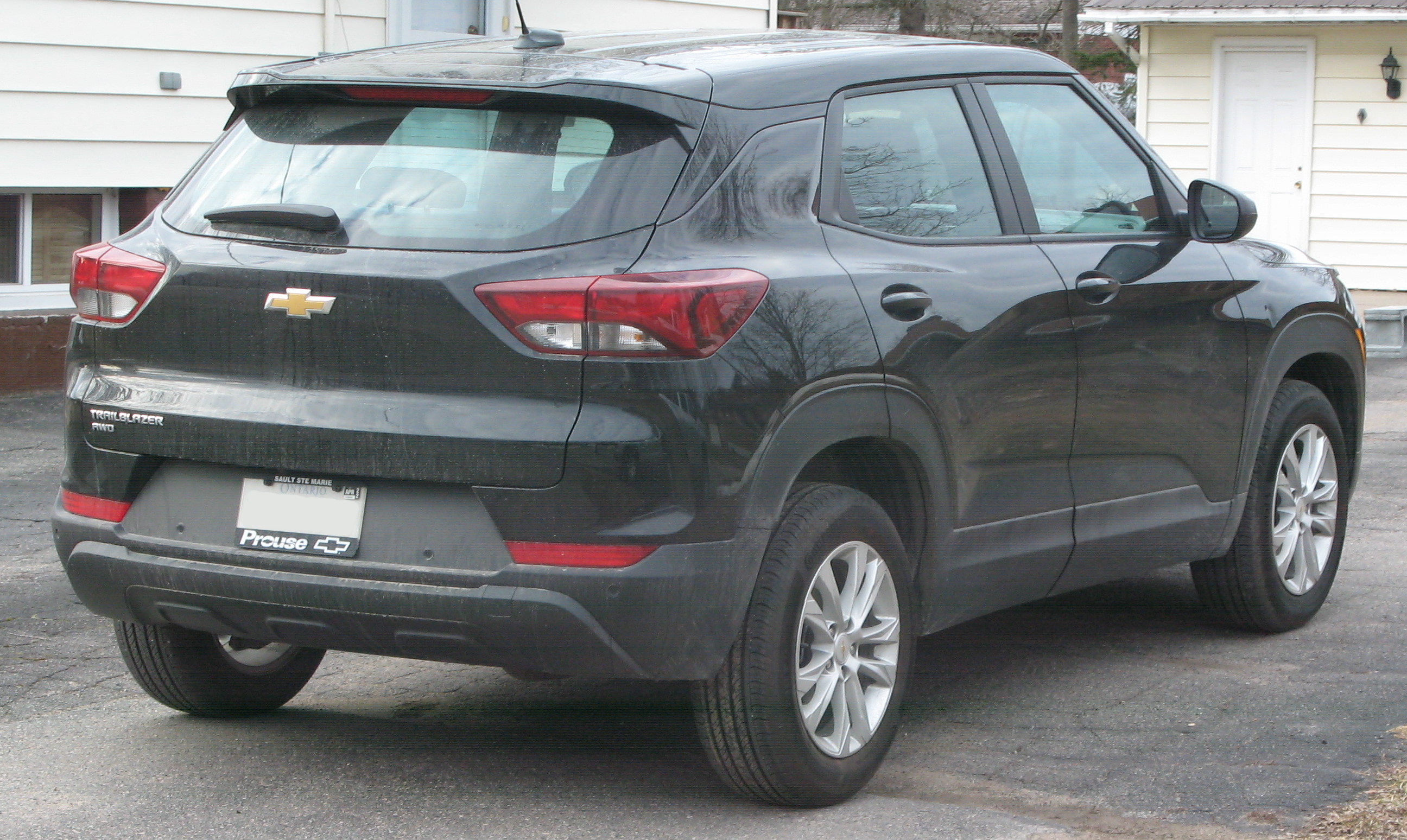
The Chevrolet Trailblazer is referenced as the earlier “old” model that the Encore GX is compared against. The hosts also say the Encore GX is related to the Trailblazer’s platform, but stretched and not the same size—an important distinction because platform sharing can influence packaging, ride feel, and drivetrain options.
Fuel mileage is just how far the car can go on a given amount of gas. They’re saying you can turn AWD on when you need it, instead of always running it and using more fuel.
This is a small engine with four cylinders that uses a turbo to make more power. The turbo helps it feel stronger without needing a bigger engine, which can help fuel economy.
EPA is the U.S. agency that sets the official fuel-economy test numbers you see for cars. The host is saying they were able to get close to those numbers without “babying” the car.
A nine-speed automatic is an automatic transmission with many gear steps. More gears can help the car stay efficient and feel smoother, and the host liked how it drove.
CVT means the transmission can smoothly change “gears” without distinct steps. The host thinks you should avoid it because they didn’t like how it behaves compared with the nine-speed automatic.
The Kona is a small SUV/crossover from Hyundai. It’s built for everyday driving and is usually easier to park and drive than bigger SUVs. The podcast is comparing it to other small crossovers and using it as a reference point.
The Lexus NX is a small luxury SUV. It’s meant to be comfortable and upscale, but not as big as the largest SUVs. The podcast is just making sure the correct model name is being used.
The RDX is a small luxury SUV from Acura. It’s meant to be comfortable for daily driving while still feeling sporty. The podcast is considering whether it would be the right kind of vehicle for the situation.
The Acura Integra is a compact car from Acura. In the podcast, it’s compared to a Civic, meaning it’s in a similar size and category. The point is that some cars can share the same basic design underneath.
The CX-70 is a Mazda SUV model. The podcast is using the name to help compare which SUV category a vehicle belongs to. It’s basically about matching the right model name to the right kind of SUV.
Hankook is the tire brand. The host is testing a specific Hankook model to see how it performs, especially in the “all-season but still sporty” category.
Ventus S1AS is the exact tire model the host plans to test. It’s an all-season tire, meaning it’s designed to work in a wider range of weather than a pure summer tire.
“Three peaks” refers to the severe snow service rating (often called the Three-Peak Mountain Snowflake symbol) used to indicate a tire is engineered for severe winter conditions. The host says these tires do not have three peaks, meaning they’re not certified as true winter tires.
These are all-season tires that try to feel more “sporty” and grippy than normal all-seasons. But they still aren’t as good as dedicated winter tires when conditions get really snowy or cold.
That phrase is describing the engine’s design and size. It means the engine has cylinders laid out on opposite sides (a boxer layout), which can make it run smoother than some other engine designs.
“18 inch” means the tire is made to fit an 18-inch wheel. Bigger wheels usually mean shorter tire sidewalls, which can make the ride feel a bit firmer.
Term
235-5018
That number is the tire’s size. It tells you how wide the tire is, how tall the sidewall is, and what wheel diameter it fits—so it affects how the car drives and how the tire sits on the wheel.
An all-terrain tire is meant for both regular roads and rougher surfaces like dirt. The tradeoff is that it often isn’t as smooth or quiet on highway driving.
This is a tire meant to work in different seasons, but with tread that looks more like an off-road tire. That can help on loose surfaces, but it may feel worse on normal highway driving.
The Subaru Outback is a family car that’s built for everyday driving, including twisty roads and bad weather. Here, they’re talking about picking tires that handle wet roads well and still feel stable on regular highways.
Hydroplaning is when your tires lose contact with the road because there’s too much water. The car can feel like it’s floating, so steering and stopping become less reliable.
Standing water is pooled water on the road. Tires have grooves that help push water out from under the tire so you don’t lose traction.
LIVE
Hello, and welcome to the Unnamed Automotive Podcast.
My name is Sammy Hedge-Assad, and with me as always, it's my good friend and fellow
automotive journalist, Benjamin Hunting.
Say hi to the people, Ben.
Greetings human listeners.
Greetings to everyone.
If this is the first time you're listening to our podcast, thank you for trying something
new.
I really appreciate it, and so does Ben.
Let me reiterate, Ben and I are automotive journalists, but more important than that,
we're really good friends, right Ben?
Sammy, I want to take this moment of friendship pause to let everyone know that I'm super
grateful for everyone who supported the Dead Air Kickstarter that just finished, actually,
this morning as we were recording this.
We managed to make our goal in the last moments of the Kickstarter.
The community really came together, and I know that a lot of you listeners are a big
part of that, so thank you for helping end what had been a very stressful month where
I wasn't sure how things were going to go, and I'm excited to get the book into your
hands.
Yeah, that's really cool.
Congratulations on meeting the Kickstarter goals, and I think I speak for everyone who
contributed to the Kickstarter.
We're very excited to see this book in our hands.
Ben, where can people find your other work?
You can find my other work at driving.ca at Motor Trend and at Haggerty.
And you can find my work at driving.ca as well, and auto-trader.ca, and driving.ca's
YouTube channel.
I believe it's youtube.com slash driving.ca, but the word dot, not the character dot.
Oh, that's confusing.
Very. Ben, we've got some cool cars to talk about this week.
I'm really excited to get started, so I think I will get started.
This week, I'm driving a car known as the 2026 Land Rover Defender Octa.
Now, I need to stop you right away.
Why? Land Rover has a special vehicles department called SVR, right?
No, this is Range Rover, I believe, has the SV.
Oh, so Range Rover is SVR, not Land Rover, which is a different thing.
They're not really the same thing.
I agree with you entirely on this thing that Land Rover has now done to themselves,
or Jaguar Land Rover as a whole company, because Jaguar also used to have,
I think, SV for their performance vehicles as well, right?
Yeah, so if Range Rover can have it and Jaguar can have it, why can't Land Rover have it?
Because where I'm going with this is I'm assuming Octa is very similar in attitude
and performance to SVR, and yet names something totally different.
I will say the specs and a lot of the components of this Octa
are almost identical to what I had in the Range Rover Sport SV
that I drove a little while ago, I think maybe last fall.
And it is bizarre to me that they have decided to make a
new brand name for a singular model being, I suppose, only Defender, right?
Is it just no Discovery Octa?
Is there a Valar Octa?
Oh, that's a Range Rover, sorry.
That's a Range Rover.
What about, I guess we're out of vehicles at this point.
There's nothing else other than Defender and Discovery, right?
Does Discovery Sport?
Yeah, no, I don't think so.
But I think Discovery Sport would have to be Quadra.
Because it's smaller?
It's half, yeah.
Yes.
So the interesting thing to point out, I believe Octa is in all caps,
but I don't think it is an acronym for anything.
From what I understand, it is an abbreviation of Octagon,
or Octahedron, or something like that.
And it relates to the shape of a diamond,
which is considered to be the hardest substance,
I guess, natural substance?
This is confusing to me because when I hear Octa,
my first thought is V8.
My first thought is MMA.
Okay.
The Octagon, right?
So one of these things is a lawsuit from the UFC.
And the other thing is an engine that I don't think
is available in the Defender anymore.
Am I correct?
No, this does have a V8.
Actually, a V8 borrowed from BMW, just like previous,
just like the Range Rover SV that we talked about in the past.
It's a 4.4 liter turbo V8.
It makes 600 and 26 horsepower
and 553 pound-feet of torque.
It's important to talk about exactly what this car is doing
because it's crazy.
That's a lot of horsepower for what is considered
to be an off-road vehicle.
And for a vehicle that has like the silhouette
of a brick schoolhouse.
Yeah, it is.
This is crazy, right?
Like it's weird to give this much power
and performance to a car that I think is meant
to prioritize off-roading.
That's the only reason anyone would really get
the Defender over any other SUV, I guess.
But now you're adding, the Octa branding
is adding more performance
that will make it more capable on the street
and off the road as well.
Now, I need to ask you,
do you think that if the Octa was an EV
and it had that amount of power,
do you think you would be saying the same things about it?
Or do you think that we now live in a world
where there's been this split where we expect
EVs to have really huge power numbers,
especially large SUVs.
And so we don't question it.
Whereas when we see ICE vehicles that have that now,
especially if they're, say, this vehicle,
which is not traditionally a performance vehicle
in the sense that it would need horsepower at this level,
do you think there's like a split
where we think that's weird now,
but EVs have normalized big numbers?
That is a very excellent point.
I really appreciate that tangent.
I really appreciate that perspective
because you're right.
If you look at the GMC Hummer EV, for example,
or the Rivian, what's it called? R1S?
It's like a thousand pound feet of torque
or something you'd say like that.
Tons of performance from seemingly off-road oriented vehicles
that can also deliver really quick 0 to 60 times
on the road, right?
Yeah.
This thing is very similar to that.
Maybe you're right.
Maybe I should be more open-minded.
No, no, I'm not saying it's a failing with you.
I'm saying it's like a perception shift
that we've run into because of how the market is changing.
That EVs are allowed to deliver
or have normalized this really high.
But the thing is, for me,
I used to think that that high torque,
high horsepower figure was required for EVs
because they're carrying usually a massive battery,
well, in excess of 100 kilowatt hours,
even closer to 200.
And that is really heavy.
And in order to move that kind of weight,
you would need a ton of power, essentially, right?
I mean, what do you think the weight is of the Defender Octa?
I have the curb weight in kilos.
It's 6,000 pounds.
Yeah, 6,000 pounds.
It's 5845.
That's as heavy as, I believe, a lightning.
Yeah, but not a GMC.
No, which is 3,000 pounds more.
Yeah.
But still, I mean, it's not nothing.
No, it's not nothing.
And with 600 horsepower,
this thing can still hit 100 kilometers an hour,
60 miles per hour in about four seconds.
I mean, that's nutty.
It is crazy when you consider that this thing is riding on,
like, all-season or all-terrain tires.
Yeah.
So I need to be clear here.
It is a really funny thing to talk about this car.
I don't know what our listeners are.
I don't think anybody here is interested in buying a Defender
because it's a 200, in Canada, it's 200 grand.
In the US, it's closer to...
I think you're making some...
What's the word?
Assumptions.
Assumptions about our listeners.
That's true.
And I don't like it.
Okay, sure.
I'm not going to give this thing because if you want it,
you would buy it.
If that is in your budget, you would buy it.
It is a hundred...
I understand what you're saying
in the sense that people who are buying six-figure vehicles
are not listening to us goofing around on a project.
They're not listening to anyone.
Except for their financial advisor, mate.
Upper-tier six-figure vehicles, like $200,000 to $300,000,
$400,000, no one reads a review
and then makes a decision based on that.
Or if they do, then you're, I think, in the minority.
I think at that price point,
it's more of an emotional decision
and it's also a vehicle that is probably part of a fleet.
So that if it is disappointing
or doesn't do everything you need it to do,
you just drive something else until you get rid of it.
Like, it's not the end of the world.
Yeah, I guess.
I mean, I once was speaking to a Land Rover executive,
a Range Rover executive, and they said that, like,
when they were looking at their breakdown of customers,
I probably said this in the podcast in the past,
but it was at a Range Rover Sport event
and they were saying, well, in that era,
this is probably like 2015, 2014,
the Range Rover Sport had three rows of seating
and the Range Rover did it.
Yes.
And even though it was larger.
And so I asked them, I'm like,
what's the deal with giving the smaller vehicle the three rows
and leaving the Range Rover a two row?
I think the Range Rover does have three rows now,
but this is back then.
And they said, well, we did our market research
and it turns out that, like,
most people who buy a Range Rover Sport,
this is their do everything vehicle.
Exactly, yeah.
It's their one vehicle.
So they want something that's going to be able to have
that third row when they need it.
But if you own a Range Rover,
it's like one of at least five to 10 vehicles alone.
And like you don't need, if you want to drive,
if you need more space,
you drive one of the other vehicles.
It's a really weird thing to have to like,
it makes sense to them.
I don't know if it makes sense to people on the outside
looking in and it makes sense to the buyers.
But like I said,
I don't think it makes sense
for the people on the outside looking in.
Let me tell you in the US,
the Octa starts at about $160,000,
which is a lot of money.
But that's like G class money, right?
That is near G, a G AMG,
which I think is where this thing really competes,
is probably 30 grand more.
And a regular G is like what, 100, 110?
I don't know.
I don't have that off the top of my mind.
I think it's right around there.
That's what I need to talk to you about.
What is this car?
Who is it for?
So to me, it's very much like a super car
in the way that it delivers a ton of performance
in this very unique eye-catching style
and has like these gimmicks
that like there's this Octa mode, for example,
which is a lot like a sport mode,
but catered to loose road conditions
like sand or gravel or something.
It blows my mind that someone would take this,
like this nearly $200,000 car
into territory like that.
But I don't know what...
I suppose if you think your vehicle is capable of it
and you've been marketing it,
you've been told it is capable
of delivering this kind of performance,
you're going to use it, right?
I think that vehicles like the Octa,
not having driven one,
is very similar to the Lamborghini Urus,
in that some people just want to walk into a dealership
and walk out with the most expensive vehicle
in the showroom.
Yeah.
They don't much care about why it's that expensive.
But they want to have the status that comes with that.
This is why we have some of the BMW M cars.
And the Alpine or Alpine, what are we going to call them?
Alpina.
Alpina, yes, holy moly.
So we have Alpina cars where it's like,
the differences are there,
but it's not necessarily a value judgment
when you're making these purchases.
It really...
Or the endless number of special edition Lamborghinis.
I mean, how many versions of the Huracan have there been?
I don't know, 24?
Yeah.
Like they just keep changing it subtly
and changing the pricing,
and then it becomes different stratifications of status.
So I don't think the Octa is any different than that.
I think that...
I think that's important.
I agree with you with this.
Landrovers, they see an opportunity where they're like,
okay, we can differentiate this model,
we can charge more for it,
and we know how many units we can sell at that price point.
So we need to put something at that price point
to scoop up that value.
Otherwise, they're leaving money on the table.
But what...
Is it the really unique and eye-catching styling of the Defender
and maybe the nameplate of the Defender
that makes someone say,
I would rather get this over a Range Rover SV?
I don't think it's the same customer.
You really don't think so?
No.
I think you hit it on the head.
I think somebody can walk into a dealership
and buy anything they want.
And when they look at a Defender,
they say, I want that crazy look,
that thing that looks like it just did Dakar.
I want that.
It's an emotional decision,
as I was mentioning before.
But yeah, I do feel like the profile of people
who are shopping for the Defender
or who are attracted to the Defender
is quite different from that of the Range Rover.
I'm just looking at it from Okta to SV.
No, I know, but I don't think it's...
I think you're too galaxy-braining it there.
I don't think that customers think that.
I don't think they're like,
hmm, Okta or SV, which one should I choose?
I think they're like, I like the Defender
or I like the Range Rover.
And then they choose from that list.
You know what I'm saying?
I don't think people...
I love this conversation.
What camp would you fall into?
I don't think people cross shop
the Defender and the Range Rover.
I guess that's what I'm saying.
Okay.
I'm asking you, what camp would you fall into?
I don't want either of them.
If I'm buying a Defender or a Range Rover,
I'm not buying the SVR or SV or Okta version of those.
I'm buying a lower level of them.
I'm buying one that's like more focused
on what you mentioned earlier,
which is like the perspective toolbox that they have,
where for the Range Rover, it's like essentially
like driving your living room anywhere you want to go
and still having a lot of cargo space
to haul things with you.
For the Defender, it's like kind of a rough
and rugged image that is perhaps...
I guess when you roll into a parking lot,
it's less ostentatious compared to a Range Rover.
Okay.
So I think they both have their appeal.
If you'd asked me in the past,
I probably would have said,
I was a big Range Rover proponent for a long time,
and I drove one last summer, did some towing with it.
It's still a very...
It's an excellent vehicle.
Yeah.
The Defender is maybe more fitting with my lifestyle,
which is a weird thing to say,
because it actually isn't.
I guess it's like my imagined lifestyle.
I don't know.
And this is where branding has messed with us,
where it's like, well, which one fits into,
which one is my vehicle?
No, that's not how the world works, right?
No, but I do think it is,
because now that when you reach a certain price point,
I truly believe when you reach over $100,000,
and that could be US or Canadian,
a car has to be perfect.
When you go beyond that,
it has to be something like special,
and that specialness, that gimmickiness,
has to fit into the customer's perception of themselves.
So let's go back then,
because the Defender starts at well under 100, right?
Oh, yeah.
Whereas the Range Rover does not.
So...
This is a great point, too.
I love this conversation.
I love having this conversation,
because I think, as I said,
I don't think we need to do a review of the Defender Octa,
because it is a super fast, super cool,
unique, off-roading SUV that doesn't really need to exist.
It's good.
Let me tell you, it's great to drive.
It has fantastic steering.
It has great suspension.
It goes everywhere you want it to.
I mean, I really like the Defender 130.
I think I actually like...
The really big one.
Yeah, I like the extended proportions.
I think they look good.
Yeah.
I wanted to like the two-door a lot.
The problem with the two-door is the cargo space is garbage,
because of the really weird load floor in the back,
where it's like super raised,
and you can't do anything about it.
So basically, you have half a cargo area.
I don't understand it.
But the Defender is more my style, I guess.
As a Grand Wagoneer owner,
I feel like that makes sense.
As a Pathfinder owner, I think that makes sense.
I feel like Defender is more my wheelhouse.
Again, in the past,
I probably would have said Range Rover.
But the current Range Rover,
it's a really high-level beast.
That's really like...
I think that...
I had an experience last year,
and I talked about it on the podcast,
where I had a G-Wagon for quite a while.
I can't remember if it was the electric one or the gas one.
I'm pretty sure it was the gas one.
And everywhere I went,
people were looking at me.
Right.
And the impression that you make
when you drive a vehicle like that
in the current times
is not a positive one most of the time.
In that you're seen as like an exploitative,
like financier or something.
Well, just the world is not...
A lot of people are struggling right now.
A lot of people are having trouble paying their rent
and buying groceries.
And then you show up,
and I'm not saying this to shame anyone
who's listening who owns a luxury vehicle.
Or wants one.
I'm not judging anybody,
because I do really like the G-Class.
You're just saying you got the ick.
I think it's excellent.
No, I think that the impression that comes
with this vehicle has been changed.
And I think that whereas in the past,
a lot of people didn't know what a G-Class was.
They just knew it was different.
And it was therefore interesting
if they were at all interested in cars.
That's the impression that came across.
Now, I feel like the G-Class is still interesting
for people who are into cars.
But for people who aren't into cars,
it's become associated with a level of spending...
And a class.
And a certain class.
Yeah, that is seen more negatively now.
Interesting.
And so all of this to say,
when we're talking about Land Rover and Range Rover,
I feel like the Defender is on the border of that.
I feel like the Defender is, like,
rootsy enough in certain trim levels
where people won't think that of you
incorrectly or correctly or however you want to put it.
I think the Range Rover, though,
is like, it is a statement when you roll in with it
in a lot of ways.
In the way that an S-Class used to be,
where a seven series used to be.
You know?
So let's talk about that really quickly.
For starters, the Defender Octa
does have a lot of exterior upgrades.
It's wider.
It has these really wide fender flares.
It almost looks related to a Bronco Sport in many...
Not Bronco Sport, sorry.
Bronco Raptor, is that what it's called?
I think, yeah, the Braptor.
Braptor.
Yeah.
And it has those really big fender flares.
Really, like, it looks like it's meant for something.
But in addition to that, it has a really loud exhaust note.
And inside, there's these really, really impressive bucket seats.
They really remind me of, like, a supercar
in the way they kind of, like, hug you.
Is it a three-row or a two-row?
It is a two-row.
Okay.
But I will say the rest of the interior, like, impressions
kind of end there.
There's not a lot else going on inside the vehicle
that makes me go, oh, wow.
Which is not what I got with, like, SV or Range Rover.
Range Rover has, like, a very high-end, like, floor.
Like, basically, like, the level of equipment and quality.
Yeah, it's absurd.
So it has a really high level there.
While Defender, this feels like it's still based on, like,
as you mentioned, a model that starts at around $60,000,
$65,000 to $70,000.
And then they just put these wicked seats in
and then filled it to the brim with, like, tech goodies.
My question to you.
Is the Defender now the 9-11 of the Land Rover lineup
in terms of, like, the stretch from base to top tier?
Yeah, so, I mean, according to the American pricing,
I believe you can get a Defender for as little as 60,
and then this Octa is 160.
It's a six-figure spread.
That's a $100,000 difference.
That's intense.
The other thing I wanted to add, when you were talking about
where the Range Rover can fit in and reminds you of, like,
an S-class, and an S-class can eventually get to an AMG model,
but the AMGs don't look as, you know,
for lack of a better word, badass as they actually are.
You know what I mean?
It depends. I feel like it waxes and wanes, right?
Like, sometimes...
Depending on the generation?
Yeah, like, Mercedes does go all out
on making the AMGs look wild, and then they're like,
well, we're going to be super restrained for this generation.
I think a lot of it is, like, wheels and fender wells.
Yeah.
That's where you see it, and sometimes arrow at the front,
but I think they reserve the craziest arrow
for, like, the two-door S-Sells.
Okay, and then from what I remember when Range Rover was doing...
When I had the Range Rover Sport SV,
they had all this, like, marbled carbon fiber
on the interior next year.
I believe it had carbon fiber wheels,
which is terrifying to me
as probably the most expensive...
Like, probably a set of these wheels
is more expensive than any car I've ever owned, right?
The one part of, like, the vehicle that's in constant peril.
Exactly.
So, I felt like that thing really wore its, like,
price and exclusivity on its exterior,
and I feel like the Defender...
Octa has a little bit of that.
It has this really weird, like, square badge,
which I guess is the Octa badge.
It has, like, this weird diamond badge,
which apparently has some sort of, like,
diamond coating or something like that.
Don't tell people, because people are just going to steal
that badge right off of the vehicle.
Exactly.
So, all of this is to talk about
how a car that is $100,000 to $200,000
is supposed to make you feel.
And I will say straight up,
this felt like an interesting, impressive vehicle.
It felt like a car that...
an SUV that truly could do anything.
It was really comfortable in the city,
even though it's as big as it is, like,
wide, width-wise.
I still managed to be able...
I was still able to park it in my garage,
which is, you know, not everyone...
I had more difficulty parking an expedition in my garage
than I did this thing.
It was loud.
My kid giggled at the noises it made,
which is really cool.
I think I told you...
Remember, we had this conversation about Monster Jam?
Yes.
Basically, you know, when I pick up these cars
and I pick them up from daycare, I'm like,
hey, buddy, I kind of got you something that...
I kind of brought home something that looks a little bit
like a monster truck.
And he doesn't know anything about cars.
So, like, he walks out into the parking lot.
I'm like, why don't you try to guess which one is the one
we're going to go home in?
And, yeah, he picked it out.
He was like, that one.
And I thought that was really cool.
I'm like, yeah, okay.
He's not even three yet.
He knows. He gets it.
He gets the gist, right?
And I think that is an example enough, right?
That is exactly what it's supposed to do.
It's supposed to make you feel good.
It's supposed to make everyone else feel like, wow.
And they hit it.
So, the real concern that I have to ask
is I believe a Bronco Raptor
is, like, half the price.
I don't think they're being cross-shopped.
Again, this is like...
Performance is probably relative.
This is one of those areas where logic does not apply.
Okay, so that's it, exactly.
Yes, logic does not apply.
So, I can't...
Why not just buy a Cayenne?
Yeah, I can't help, but, like, whenever we're...
Because of what we do, we're always comparing
and contrasting and trying to figure out
who would buy this kind of thing.
The closest thing I think is probably the G-Class AMG.
It's a tiny bit more expensive.
As you mentioned, it has a very high end...
And exclusivity kind of, like, catering.
It caters to somebody who's looking for those kinds of things.
Defender feels a little bit more...
I don't know, it has this Dakar rally thing to it.
And I think that's where it lands.
There's another aspect to this buying decision
that you and I don't discuss very often
because we never deal with it,
and that's the dealership experience.
So, if you are someone who is looking to spend $160,000,
you're not going to afford dealership.
No, hear me out, because you have expectations of service
and reception and appearance.
Or I should say, it's likely that you have those expectations.
And they will not be met at a dealership
that is selling vehicles that range in price
from $20,000 up to the Bronco Raptor, right?
Yeah.
If you go to a Land Rover dealership,
all they do is service vehicles that are priced at a premium.
And it's an extremely different experience.
And this extends to, like, the buying process,
the servicing process, et cetera.
We don't think about this because we're comparing the cars.
But people who are buying the cars,
they are definitely thinking about that.
And it's something I try to remember because I always forget it.
And then I'll be talking about a car with someone.
I have some friends who...
They became auto journalists after being in the dealership world
for a long time.
Right.
And they'll be like, I would never see this customer
at this type of store.
They would just never come in.
They would never think to do that because they're wanting
something that I can't provide them at the service level.
OK.
So that's like another barrier that would keep someone
from buying a Bronco Raptor, for example.
Good point.
I think about that because I see a lot of...
I think people with a lot of high rollers,
let's call them that, with Raptors, with F-150 Raptors.
Sure.
But you can't get that from a luxury brand.
Yeah, I guess so.
There's no luxury pickup out there.
How interesting.
Anyways, that's my whole schmiel.
I think we're basically talking about a supercar in SUV,
in the SUV world.
I mean, a supercar in a straight line.
But even performance-wise, it does have...
If it wasn't for its tires, I think it has pretty good grip.
And it's 6,000 pounds of curb weight.
Yeah, as we've mentioned, there's a lot...
I mentioned this with the SV.
There's a lot of magic in the suspension of these cars.
And I was impressed.
I was really, really happy with it.
I just think it's one of those cars that make you feel
like something different is going on with the vehicle.
It feels more than an SUV.
Do you know what I mean?
Yeah.
Sure.
I hear you.
It's a bit of a gimmick.
And it is a bit of a power fantasy, I suppose.
But if you're spending this much money, you want a car that feels...
Or an SUV that feels more than just a form of transportation
or a statement on the road, it has to be...
Like I said, it has to be everything.
And then when you get above that like 100...
When you start reaching $200,000,
this has to be something that makes you feel
something that no other car can do.
And I think it does that.
Okay.
But that's my spiel.
Anything else you want to talk about?
It's quite a spiel.
Yeah.
I know.
It's so hard to talk about a car like this.
Because like I said, there is no rationale.
If you like the look of the Defender,
you would get one that costs $100,000 cheaper.
If you like the performance of the Defender,
you could get that performance in a couple of other cars.
The Bronco Raptor being one of them.
I keep calling it the Bronco Sport.
Imagine if there was a Bronco Sport Raptor.
Why hasn't that happened yet?
What would the performance level mean?
That thing is currently, I think,
can currently be equipped with a three-cylinder engine.
No, so my dad has one.
He has the Wild Peak, I guess.
Whatever the top tier one is, the off-road one.
So the Sasquatch?
I don't know if it's the Sasquatch.
Big Ben?
I think the Sasquatch is a package that's on top of Wild.
The Wild Peak is the name of the tire.
I don't know.
Whatever.
He has all this to say that the top tier off-road Bronco Sport
has a four-cylinder turbo.
It's the only one that does.
So where I'm going with this is, in theory,
you could put the 310 horsepower four-cylinder
that's in the Mustang, right?
Because that engine came out of the Focus RS,
which means it can be transversely mounted,
which I assume it would need to be to fit into
the Bronco Sport platform.
And then you could have your baby Bronco Raptor.
There you go.
I'm just thinking outside of the box for you, Sammy.
I'm trying to give you what your mouth has been trying
to bring into existence over the course of this podcast.
That's a good point.
So I drove a vehicle that's the same size
as the Bronco Sport, but isn't a Ford.
It is the 2026 Buick Encore GX.
Now, we have apparently never talked about this
on the podcast.
Well, we've never highlighted it.
We've never focused on it, right?
We've never talked about it and talked about it.
It's never happened in nine years,
according to our search tool.
So we're going to talk about it today.
But honestly, I don't know how much longer
this vehicle is going to be in the Buick lineup.
And I'm going to get to why I think that.
This is a small subcompact SUV.
It's supposed to be premium.
But as we know, the smaller you get,
the weirder the premium word gets when you're looking
at features and equipment.
The weirder.
Yeah, that's a good.
That's a great way to put it.
So this starts at 28000
in the States in Canada.
It starts at 34000
for a front wheel drive model.
So pricing is not that different.
The top tier is 34000 in the U.S.
in Canada.
The top tier is 41000
I drove a mid tier.
I drove a sport touring model in Canada.
It comes all wheel drive only in the States.
You can get all the drive and front wheel drive
across the board.
It's up to you.
The version that I drove was loaded with gear
and actually retailed for like 37 grand
U.S.
That is more than the top trim
Avenir model.
But like I had like a technology package
and they gave you the whole show.
Everything.
Yeah.
A lot of appearance stuff.
So this is to say that you can get a base model
or you can get a model that has a lot of equipment
that's been added but still doesn't really feel
like a premium vehicle.
And I think that's the biggest problem
with the Encore GX for me.
The second biggest problem with the Encore GX
is that across the showroom
there's a vehicle called the Envista
which looks really great is the same size
as the Encore GX.
I don't know if it looks great.
It looks fantastic.
It looks really weird.
I don't think it looks weird at all.
I think it is a good looking subcompact.
Okay.
I think it looks better than the Encore GX.
My brother in law bought one.
I'm sorry to do real you.
Sorry.
My brother in law bought one in the fall.
He loves it.
We're on.
We like the tracks here.
The Envista is the Buick version of the tracks
and I think it's better.
Because it comes with much more equipment, right?
Yes and no.
I just think the design is nicer inside.
The materials are nicer.
Cool.
It also feels more modern than the GX,
the Encore GX.
When you're inside this baby Buick
it does not seem to be luxurious in any way.
Like there's a lot of plastic.
It's a lot of black.
I had some blue stitching and that's pretty much it.
Like there's some bright work on the dash.
There's like a chrome vent surround that blinded me on a road trip
for like an hour.
Really annoying glare.
But the infotainment screen, it's 11 inches wide,
but really you don't get the full,
it doesn't go edge to edge on the bezel.
It's great if you're using Android Auto,
but there's nothing really else.
Like all the software for this vehicle is super minimalist,
including the gauge cluster,
which has like three different displays,
three or four different displays that are all battling to see
which can be the most minimal.
Like you can get like a tiny digital readout for the speed
or you can get like a tiny pack or like a tiny,
a tiny like vehicle info display.
It's really odd.
Weird.
Okay.
So basically it feels like this is what I'm going to,
I'm going to, to position.
The Encore GX, what I remember was a surprise hit for Buick
because I think as you mentioned, it was relatively affordable.
It was a little step up from the old trailblazer and was okay.
It was like okay to drive.
And it looks pretty good considering what Buick,
what else Buick had on their, on their show floor.
But now, and I think it's fairly quickly,
it's kind of gotten dated.
It's gotten dated.
And the fact is okay to drive does not cut it when you have an Invista.
Yeah.
Like when you can get the only, the diff,
I think the reason that this vehicle persists is because it offers all-wheel drive.
And as you mentioned, it is related to the trailblazer.
It's the same platform, but not the same size.
I believe it's stretched a little bit compared to the Chevrolet version.
The Invista is for all-wheel drive only.
Honestly, that doesn't matter to me.
The all-wheel drive system in the sport touring version of the,
and I guess all versions of the Encore,
you can turn it on and off at the touch of a button, which is cool.
So you can use it if you need it,
and then you don't have to deal with the fuel mileage aspects.
If you don't, I got like nine liters per hundred kilometers in this vehicle,
26 miles per gallon.
That's almost identical to what its rating is.
So the fuel mileage wasn't an issue.
Power also wasn't an issue.
It's a 1.3 liter turbocharged four-cylinder engine.
I believe it's a four-cylinder.
The, sorry, they're three cylinders.
Okay.
It's, it's 155 horsepower at 174 pound-feet of torque.
If you get the base base model, it's a 1.2 liter.
That's 137 horsepower and 162 pound-feet of torque.
I do not know why there are these two versions of the motor
available in the Encore, like why it needs to have one model
that has that motor unless there's some type of fuel mileage
they can advertise because they have that motor in it.
That's got to be difficult to hit.
Any, any kind of fuel mileage requirement,
you'd have to be really babying that kind of engine, I think.
Well, I mean, I did okay with the, I mean, I was matching
the EPA with mine and I did not baby it.
There's another difference too, mechanically.
All of the all-wheel drive models come with a nine-speed auto.
That's what I had.
All the front-wheel drive models come with a CVT.
I would suggest avoiding the CVT.
The nine-speed was great.
It was transparent.
I didn't have any issues with it.
Acceleration is fine.
I could pass people.
I could pull out into traffic.
It's not quick, but it doesn't need to be quick.
In the same way, it doesn't have any sport modes for driving.
It's just like, here you go.
Here's your vehicle.
It's not trying to be something it's not.
What I, what's most impressive about the on-course driving
experience is how quiet it is.
It's really, really quiet compared to most other sub-compact
crossovers.
It is also quite comfortable even over rough roads.
Those are the two really strong points of its drive.
Everything else, super average.
There's nothing about it that stands out.
There's nothing about it that says this is better than a Kona.
This is better than a Crosstrek.
Aside from the CVT and the Crosstrek,
that's where the quiet comes in.
The Buick has that, and that's an advantage.
In terms of luxury or just a vibe, it's not there.
It's a puzzling vehicle.
I think it's just here because it offers all-wheel drive,
and some buyers won't get it in Vista
because it doesn't have that feature.
I don't think I could recommend it,
but also there's nothing really wrong with it either.
It does the job.
It's fairly anonymous to look at.
It's very egg-shaped, like a lot of small crossovers
at this size.
Not much that can be done with that form factor
unless you're Ford and you make the Broncos Ford.
It just looks like nothing else.
It's a strange vehicle.
It must be really cheap to build.
It must be reasonably profitable for them
to keep it in the lineup this long.
I feel like eventually it's going to leave
in favor of the Invista.
I just think that that's a tide that they can't fight,
especially since the Invista just feels like a better value,
looks better, and is more modern overall in my opinion.
I don't have a ton to say about this vehicle.
I don't have anything bad to say about it,
other than I just don't think it really cuts the mustard anymore.
Yeah, I think that's fair.
As I said, I think it feels like Buick started,
and I don't know where they are right now
because I haven't driven a Buick in a little while.
They found out that they can actually make cars
that people want and surprise their own clientele
or even new clients with the Encore GX
before the Invista showed up.
Then the Invista showed up and they showed that
they understand that they can take what GM
gives them in the Chevy lineup
and improve it.
As a result, they ran with what was successful in the GX
and they doubled down on that in the Invista,
and now the GX just looks like an older...
I don't even think it's a double down.
I think it's an evolution.
I really do think it's a different type of vehicle for Buick.
I think that if you were to drive them back to back,
you would see two eras side by side.
That's really important.
In terms of technology design,
but also philosophy of building the vehicle.
Okay. Tell me more.
I just think that the Encore comes across as much older.
It comes across as an era of basic transportation,
whereas I think that the Invista
is elevated basic transportation.
Cool. Okay, I get it.
I love that.
I mean, I appreciate seeing...
I mean, it's too bad that this car seems kind of bland.
I guess it's the best word to use.
It's extremely bland.
Again, most subcompacts are.
You know, crossovers are not exciting to drive when they're small.
Yes and no.
Name five exciting to drive subcompact crossovers.
Name six songs by Led Zeppelin.
I think one of the interesting things about the subcompact segment
is that it spreads a huge spectrum.
I would say that if you really wanted me to find subcompacts
that were interesting to drive,
they would be from a German automaker.
The Q3, GLA, and X1, X2
are actually pretty decent to drive.
Do any of those start at under $40,000?
No, no, they're all much more expensive.
And I mean, that's the cost that comes with it.
When you're looking at the non-German options,
you're looking at the Lexus NX.
NX, not X, UX, right?
Accura ADX and what else am I missing?
I think the ADX might actually be larger than this.
Wow, yeah, I think the ADX prioritizes space.
I think it's an NX competitor.
Wow, not the RDX.
I think the RDX would be.
Is it?
Yeah.
Because isn't the ADX based off of the...
HRV.
Not the CRV.
I thought it was shared as platform with the Integra.
Which is like a Civic.
Yeah, which is larger than the...
I think it's closer to the...
What's it called?
HRV, because it has all-wheel drive
and I don't think a Civic has one.
Am I missing another premium brand?
There aren't any.
Infinity doesn't really do anything.
No, they have like two vehicles for sale right now.
I'm getting ads for one that I've never heard of, the QX65.
That's the one that was supposed to be like the Bionic Cheetah.
And then it didn't.
I think that it...
And I haven't driven it, but I think that it has ended up kind of like as being the CX70 of the...
Oh, no.
Infinity lineup.
Yeah, that's the vibe I'm getting.
I've got a book one.
Anyways, so yeah, it's this really weird space that Buick has always kind of played in.
And I felt like the previous...
Previously, the on-core GX understood that.
And now the Invista totally gets that like, this is what a Buick really is.
And now the on-core just feels kind of like we're past that now.
Sammy, there's one more thing I want to talk about on the podcast today.
I'll allow it.
This is the new segment that we haven't done really on the podcast.
But I'm going to be testing a set of tires this summer.
Okay.
They are tires from Handcook.
They are the Ventus S1AS, which stands for all season.
So they are a set of, I guess you could call them ultra high performance summer tires,
but they're ultra high performance all season tires, which is like a pretty big asterisk.
I think when you're looking at this kind of rubber, it's intended to be driven all year round
because it has snow capability.
It does not have three peaks.
So it's not a true winter tire, which means I will not be driving it in the winter,
but I will be driving it in the wet spring to the wet and cold fall.
And we have put these on my Outback, our Outback, the Family Outback 2015 Outback
with a 3.6 liter in-line horizontally opposed 6, a 3.6 R.
It's the most powerful version of the Outback.
It's like 260 horsepower.
It's an 18 inch tire.
We went with a 235-5018, which is somewhat wider and a little bit shorter
than the factory tire on the vehicle.
So when I first saw it installed, which I did yesterday, it looks a little bit different,
but I quickly got used to it.
But the reason I went with this tire is because so often when you look at tires for the Outback,
and I know you must have noticed this because you own like six or seven Outbacks.
I've owned two, I think.
Most of the options you see for like a high or a performance tire are off-road oriented.
They're like an all-terrain type tire,
or they're like an all-season with an all-terrain style knobby grip.
Which was awful on like the highway drives that we end up doing.
Yeah, the actual driving that most people do with an Outback I think is on asphalt
or on snow in the wintertime, at least in Canada.
I think that the people who go off-road in their Outback, it's a smaller percentage.
And I feel like most of the marketing for tires that is pushed towards Subaru owners
is assuming that you want the look of someone who's going off-road, even if maybe you don't.
You know what I mean?
And this is not exclusive to Subaru.
There's tons of pickup truck tires that people don't need to be running either.
But the looks of them are hard to deny.
It's attractive.
It's a lifestyle thing.
I get it.
So when I wanted to find a tire for the Outback, I wanted to go in the opposite direction.
I was like, look, this vehicle is a commuter, mostly on the highway.
But there's a lot of two lanes.
There's a lot of mountain roads around here.
I want something that's going to stick to the asphalt and also something that my wife drives the vehicle a lot.
And she is concerned with hydroplaning and dealing with standing water.
So I wanted a tire that was going to be able to deal with that.
We looked at a few summer exclusive tires and some of them had good water rating.
Some of them didn't.
But it was tough to find a size of a 50 Outback, right?
Because sometimes you want a dedicated SUV tire if you're planning to tow or load really heavy stuff.
So you can have a little bit of a stiffer sidewall.
It's not super necessary.
And for our purposes, it's not needed at all.
So the Ventus S1, it's intended to be used on sedans as well as sportier crossovers.
So that's part of why we chose it.
It's got good, it's supposed to have good grip in all conditions.
It's supposed to have decent wear.
I mean, this isn't like a super sticky tire that's going to be worn out after a few seasons.
So all of this together, I'm going to be driving this over the course of the summer.
We're going to be talking about and into the fall.
We're going to be talking about it from time to time on the podcast, updating you.
We just put it on.
I did a quick test drive.
It's out actually on a long drive right now for my wife to see in terms of noise and comfort if there's major differences.
And fuel economy.
And maybe fuel economy.
Maybe fuel economy, although it's going to be tough to tell because the tires that came on the vehicle when we bought it in August,
they were kind of no-name brandish, 18s.
And then we went to a very good winter tire, but the winter tire were 17 inches.
So I don't know if we're going to notice a difference in fuel mileage between an 18 inch summer tire and a 17 inch winter tire
because of the extra weight on the tire from the larger wheel.
I'm curious to see that, but we track all of our fuel mileage.
So it will definitely show up in the numbers.
Anyway, I'm going to be talking about this tire over the course of the summer,
seeing if it is an improvement over a standard all season tire,
seeing if it's an improvement over what I've come to expect from an outback of the vehicle this size in terms of handling.
And yeah, it's going to be a summer review series.
I also wanted to add that Handcook is an interesting tire company to talk about
because they're a Korean tire company.
They are not known as being, I think, in the top tier of tire makers,
but they really are not invisible.
They're in a lot of motorsports.
I believe they're the tire supplier for Formula E and World Rally Championship.
And those tires used to be like Pirelli and I think Michelin.
So they're really making a, making a move to establish themselves
as maybe a performance oriented or maybe a bigger tire company
than some of the ones that we all know to this date.
And you mentioned they're Korean.
Sebi, did you know the word Handcook literally means Korea?
Does it?
Yes.
The Handcook tire manufacturing is Korea tire manufacturing.
Very cool.
I have a fairly long history with Handcook.
I, when I bought my CTSV way back in the day,
the first set of tires I ran it were Handcook Ventus V12s.
Oh, wow.
Which were a good, a good tire.
I did those in autocross and then briefly on the track,
they're not exactly intended for track use on a heavy vehicle like that.
My father's been running Handcooks on his track Mustang for quite a while.
He runs, he ran RS3s.
Now he's running RS4s.
They have a good reputation on the track, a good like sub 200 treadwear tire.
I have not, I have not run a non-performance Handcook tire.
I think what attracted me?
I mean, I suppose the Ventus S1 is kind of the least aggressive Handcook tire
I've ever run, even though it's still a UHP, I think.
I believe it's a UHP.
Let me double check.
I'm on their website right now.
But one of the things that attracted me to Handcook way back when,
I mean, about my Cadillac, almost 20 years ago,
the, what appealed to me is the, for performance, the pricing is very good.
Yeah.
I don't have an exact price on these tires yet.
I haven't been able to find a good retail site that I trust for Canada pricing
or US pricing.
I'm going to keep looking and we'll talk about it on another episode.
But in terms of bang for the buck, the RS4 is a really good tire.
Okay.
And it's versatile.
You can use it in the rain.
You can use it in autocross.
You can use it on a, on a road course.
So that's always been appealing to me.
I haven't run an RS4 on, I can't remember if I've ever run an RS series on my
Datsun.
I've run a bunch of different tires on the Datsun.
I tend to try different things.
So I don't necessarily stick with one for a long period.
I believe Nitto is the manufacturer.
I've run the longest and T01, but I don't have Nitto's on there now.
So I'm running a, I believe a Chinese tire company on, on the car right now,
whose name escapes me.
They've been pretty good so far in any case.
Um, yeah.
Tire, tire reviews on unnamed automotive podcast.
It's a new era sent me.
It is a new era.
If you want to check in with the old era, I really, um,
The pre tire review era, that's what you're saying.
Yes.
I really encourage our listeners to head on over to our website, unnamed automotive
podcast.com.
While you're there, you'll see all of our previous episodes.
You'll see pictures of the cars that we've driven.
We'll see links to the link, stories that we've written about these
cars.
Hopefully we haven't done.
I haven't updated by some of my posts in a while, but we love links though.
You can also subscribe to our podcast, I think through the website.
There's a bunch of buttons there.
You press them, you subscribe to it through your favorite podcast client,
but more important than all of that, you can get in touch with us.
There's a contact form, you fill that out and all of your combats land in our inbox
or you can email us.
It's really easy to do so.
The address is Benjamin at Benjamin hunting.com or you can reach out to us on
Instagram where I'm at Sammy underscore half like you're laughing and you can find
Ben at hunting Benjamin.
But I'm actually taking a bit of a break from Instagram for the next month or so.
I've just been on social media a lot because of the Kickstarter that I was
running.
So I'll be checking in on the web from time to time, but I don't have the app on
my phone for the next little while.
You can more easily find me on blue sky where I have the same handle.
Okay.
What are we talking about next week?
Next week, I'm going to be talking about a vehicle that I'm actually liking a lot
and that is the 2026 GMC Canyon 84.
Oh yeah, 84.
Here we go.
More off road trims.
Here we go.
Sammy, that was my first thought too.
And then I drove it and did a bunch of truck stuff with it and now I'm excited to talk about it.
Okay, fine.
Next week, I believe I've got the Kia EV4, which is a car that I think you've driven
recently so I won't get too, I won't get, I'll just provide my opinion on it because
you had some pretty cool thoughts on it.
All right, so thank you for listening everybody.
See you later.
About this episode
The hosts kick off with the 2026 Land Rover Defender Octa, unpacking how “Octa” branding fits into JLR’s SVR/SV naming and why the Octa’s specs and components feel close to the Range Rover Sport SV. They get into the Octa’s BMW-sourced 4.4L turbo V8, surprising acceleration, and “Octa mode” for loose surfaces—then zoom out to how pricing, status, and buyer psychology shape the Defender vs Range Rover debate. After that, they review the 2026 Buick Encore GX and wrap with a Hankook Ventus S1AS summer tire test plan.
The Unnamed Automotive Podcast gets deep into it this week, with a "review" of the impressive and high end 2026 Land Rover Defender Octa, a performance oriented version of the off road SUV. While Jaguar and Range Rover get the SV treatment for their high output models, Defender gets an Octa badge, though it features the same BMW sourced turbo V8 and 6D suspension as the Range Rover Sport SV. Which JLR super SUV camp do you belong to? What makes a six figure SUV special? What differentiates this from a G63 AMG?
Then Benjamin checks out the 2026 Buick Encore GX, a subcompact crossover that used to represent the growth of the American premium brand, but now seems a bit dated compared to other Buick vehicles. Benjamin explains it all with careful perspective of where the Encore stands with the impressive Envista sitting next to it.
Then the show introduces a new concept: tire testing! Benjamin throws on some new summer rubber on his Daily Driver and can't wait to tell you the results. Thanks for listening!