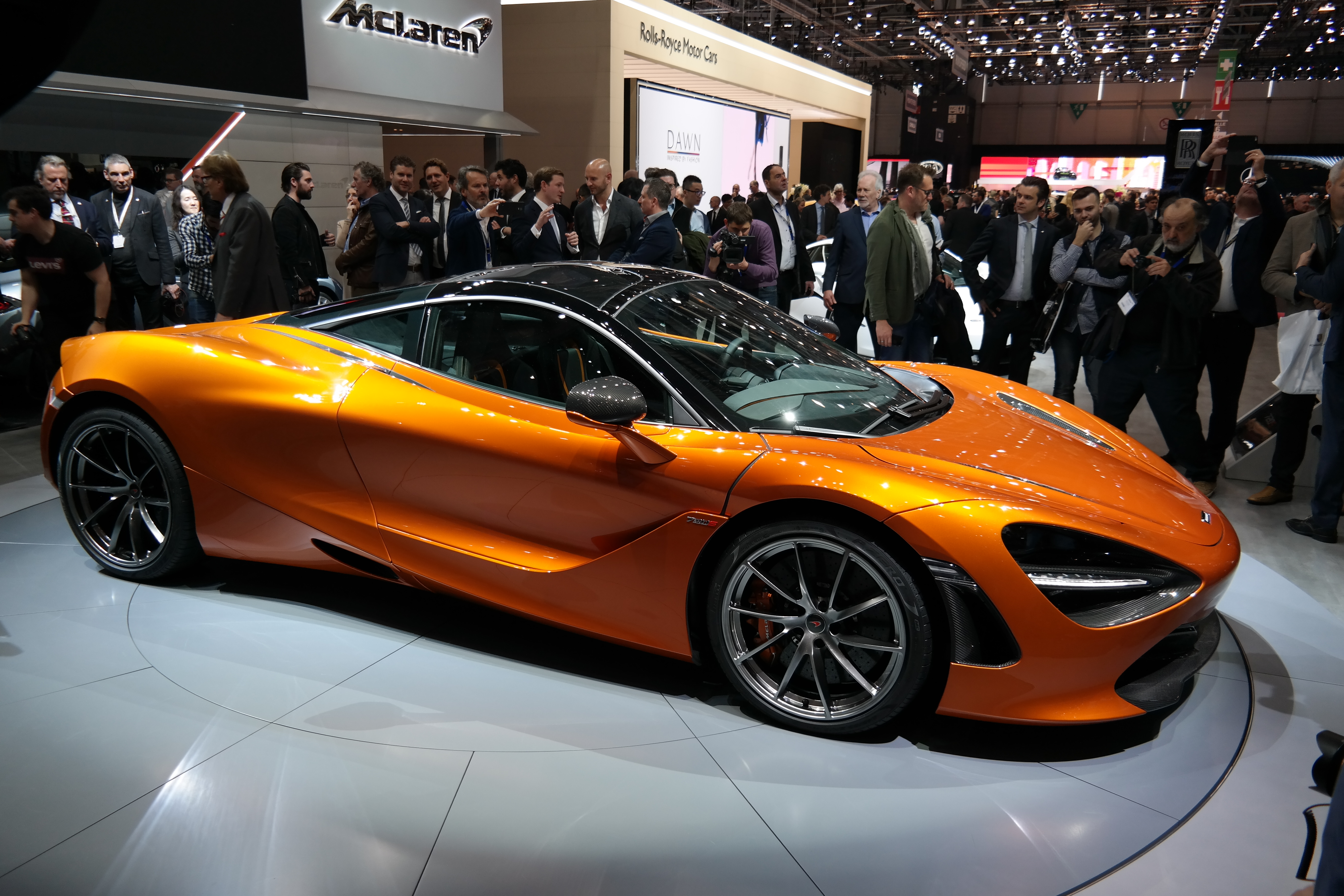
The Tesla Model S is an all-electric car that runs on batteries instead of gasoline. It’s one of Tesla’s early, important models and is often talked about because it was a flagship EV. In this episode, it’s mentioned in the context of its history and retirement.
The Tesla Model X is an all-electric SUV. It’s known for having special rear doors and for being a more premium Tesla model. The episode mentions it because it’s part of Tesla’s history and is being retired.
A “signature series edition” is a special limited version of a car. In this episode, it’s mentioned as the final versions delivered before the Model S and Model X were retired.
The Tesla Fremont factory refers to Tesla’s manufacturing site in Fremont, California, where vehicles are produced. When an episode ties an event to this factory, it usually signals a production milestone—like final deliveries—rather than just a marketing presentation.
Concept
retirement of the SNX
“Retirement” means the SNX model is being phased out. The hosts mention it because it affects what people own and how common each model is.
An extended warranty plan is extra coverage after the original warranty ends. It can help pay for certain repairs so you’re not stuck with the full cost later.
Term
signature delivery event
A signature delivery event is a branded customer handoff experience where the manufacturer presents the vehicle and related activities around delivery. It’s not a technical car term, but it’s a specific EV retail/ownership process being referenced in the episode.
Euro NCAP is a safety testing organization. They update their crash tests over time, and the tests get harder—so car makers may need to change their cars to keep the same safety scores.
A “five-star” rating means the car did very well in crash tests. They’re saying Tesla’s updates helped the Model S and Model X meet the safety rules at the time.
“Structural updates” means changing the car’s main body parts that take crash energy. It’s the difference between the car’s body being designed for one kind of crash versus another.
“Offset” means the car hits something not straight-on, so one side takes more of the impact. Safety systems and the body structure have to handle that uneven crash load.
“Small overlap” means a crash where only part of the front of the car hits something. That kind of crash can be harder on the car’s structure, so safety design has to account for it.
Concept
massive overhaul
A “massive overhaul” means a big redesign, not just small changes. The idea is that the original design needs major work to meet tougher safety expectations.
Term
pilot factory
A “pilot factory” is a smaller, early production site used to validate a new manufacturing process before scaling up. For automotive platforms, it can be used to work out tooling, assembly steps, and quality control for new structural designs.
A “mini refresh” is a smaller update to a car partway through its life. Think tweaks like new looks or updated features, not a completely new model.
Brand
France blue
“France blue” sounds like a named paint color option for the car. It’s basically a way to offer a new look as part of an update.
Topic
shutting the line down
“Shutting the line down” means stopping production at a factory line. The interesting part here is that they kept improving the cars even as they were preparing to end that production.
“48 volt” means the car uses a higher-voltage electrical system for some of its electronics. The goal is usually better efficiency and more capability for features that need extra power.
A “total redesign” means making a car from the ground up instead of just updating parts. It’s a bigger, more expensive change that can affect how the whole car is built and controlled.
This is a factory efficiency measure: how many cars you can build for each unit of floor space. Higher numbers generally mean the plant is using its space more effectively.
Term
Cybercap
Cybercap sounds like an internal Tesla manufacturing approach or technology. The point they’re making is that it’s more efficient than the older Model S/X production setup.
They’re trying to bring back an older special paint look, but make it better with newer paint know-how. It’s like updating a classic color so it looks even nicer today.
Paint shops are the dedicated facilities where cars are prepared, coated, and finished. Improvements in paint shops—process control, equipment, and workflow—can directly affect color consistency and the final appearance of the clear coat and base color.
“Body matched” means the door handles are painted the same color as the car. It’s done to make the car look more seamless instead of having a different-colored handle.
“Spot matching” means they repaint just a small area and try to make it match the existing paint color. The goal is for the repaired spot to be hard to notice.
A “final signature series” is basically a limited, special batch of cars made to wrap up a certain version or time period. Here, they’re explaining how they decided how many to build based on who they thought would want to buy them.
“Plaid powertrain” means the high-performance drivetrain in Tesla’s top versions of the Model S and Model X. It’s what helps the car feel especially fast because it controls the motors and how power is delivered.
Term
350 total cars
They mention “350 total cars,” which sounds like a limited number of vehicles for that specific version. They’re using it to talk about how many of those cars go to certain buyers.
Over-the-air updates are software updates that get sent to your car wirelessly. The point here is that your Tesla can improve over time instead of staying exactly the same after you buy it.
Rear-wheel drive means the power goes to the back wheels. That can change how the car grips the road and how it feels to drive compared with all-wheel drive.
The Ford Falcon is a car model that can be used as a family vehicle. In the episode, it’s mentioned because the doors can make it easier or harder to put kids into car seats. The discussion is about how the car works in everyday situations.
The DeLorean DMC-12 is a sports car with a very recognizable look. In the episode, it’s mentioned because the speaker owned one and it was a dream car. The conversation is about personal connection and the car’s story.
The Mercedes-Benz SLS AMG is a high-performance sports car made by Mercedes. The episode mentions it because only a limited number were built, making it rarer than many cars. That rarity is part of why people talk about it.
Spare parts are extra pieces kept around so you can fill in gaps quickly. In this story, they’re used to make cars look complete in showrooms.
Concept
startup mentality
This phrase means the “make it work” attitude you often hear in early companies. They didn’t have finished cars yet, so they improvised with what they could find.
“Newton meters” is a way to measure how much twisting force the motor makes. More torque usually means the car can feel quicker when you press the accelerator.
Newton-meters are a way to measure how much twisting force the motor produces. The higher the number, the harder the drivetrain is being “twisted” under load.
Splines are the “teeth” or ridges that help two parts lock together so torque can be transferred. They’re saying those spline connections failed under the extra stress.
The inverter is the electronics box that turns battery power into the right kind of electricity for the motor. In this story, it’s part of how they got more power out of the car.
NTN is a parts supplier. Lars had to convince them to update the half-shaft spline design and validate it so the cars could be built without that failure.
This means the car can get more power after you install an update, like downloading new software. It changes how the electric motors are controlled so the car feels quicker.
The motor shaft is the part inside the motor that spins and sends that spinning motion onward. It’s part of the path that ultimately makes the wheels turn.
A production line is the factory process where a car gets built step-by-step. Here, they’re talking about fixing issues while the cars were being made.
“Fabergé” is being used like a nickname for something that’s unusually special and carefully finished. In this conversation, it’s the name they give to the very notable car they’re talking about.
In car manufacturing, “quality issues” means problems that cause the finished cars to come out wrong or inconsistent. In this story, they’re talking about fixing those problems on the production line.
Paint quality is how well the car’s paint job turns out. It can include whether the color looks right and whether the surface is smooth and consistent.
The drive unit is the main electric system that turns battery power into motion. Think of it like the EV’s motor-and-gear assembly that drives the wheels.
They describe an early validation step: getting the wheels spinning to confirm the powertrain and controls are working. This kind of “first motion” test is common in EV development because it reduces risk before driving on public roads.
A test track is a special driving area where engineers can test cars safely and repeatedly. It helps them see how the car behaves when you drive faster or push it harder.
Wheelspin is when the tires spin but don’t really move the car forward as efficiently as they should. It usually shows up when you accelerate hard and the tires can’t grip the road.
Firmware is the software that’s built into the car’s computers. It tells the car how to react—like how it controls power to the wheels—so getting it “right” can change how the car drives.
“Lugs” are the wheel fasteners that hold the wheel to the car. They’re saying they changed those wheel connections to solve a problem the software was having.
FSD means “Full Self-Driving.” It’s Tesla’s computer software that tries to help the car drive more on its own, but you’re still expected to pay attention and be ready to take over.
This is an annual award from Motor Trend that recognizes a standout car. They’re bringing it up to show the Model S was taken seriously by major car publications.
This means the car can get improvements over time. Instead of only changing with a new model, the software can be updated so the car improves after you buy it.
EV tire lines are special tires made for electric cars. They’re often designed to waste less energy as the tire rolls, which can help the car go farther.
The supercharger network is Tesla’s network of fast charging stations. It helps EV owners travel farther without worrying as much about running out of battery.
Company
Reno factory
The Reno factory is where Tesla made batteries at scale. The point is that it helped batteries become cheaper and more practical for EVs.
Global EV adoption is a way of describing how many electric cars are being sold and used around the world. The hosts are basically saying EVs have gone from almost nothing to a meaningful portion of the market.
“Ludicrous” is Tesla’s name for a more aggressive performance mode. It’s basically the car’s “go as fast as possible” setting for acceleration.
Concept
structural bits and integrity
This phrase is about the car’s frame and body strength—how safe it stays in a crash. They’re saying changes to fit new drivetrain or battery parts can affect that strength, so engineers have to redesign carefully.
All-wheel drive means the car can send power to more than just the rear or front wheels. In this story, adding AWD required extra drivetrain parts, which had to fit through the car’s frame.
A “tower of cells” is how the battery cells are physically stacked inside the car. They’re saying the battery design got more efficient, so the team didn’t need as much space as they originally planned.
Using four motors typically means one motor per wheel, or at least a four-motor architecture that can precisely control torque at each axle or wheel. That can improve traction, stability, and performance by letting the vehicle “vector” power to where it’s most effective.
The Porsche Taycan is an electric car designed for performance. It’s the kind of EV that’s built to drive quickly, including on demanding roads or tracks. The episode mentions it in connection with Nürburgring performance and a top trim.
Carbon-ceramic brakes are high-performance brake parts made to handle lots of heat. They’re often used on faster cars because they can keep braking strong during hard driving.
Brand
Corvette kit
They mention a “Corvette kit” as a source for brake parts. The idea is they borrowed a proven performance brake setup from the Corvette world for their testing.
The Chevrolet Corvette is a sports car built for performance. In this episode, it comes up in connection with performance brakes, specifically carbon-ceramic style brakes. That’s the kind of upgrade people use when they want stronger braking for fast driving.
Term
all four brakes were on fire
They’re saying the brakes got so hot that they started burning. That can happen when the car is braking extremely hard and the brakes can’t cool down fast enough.
Term
braking stop
A “braking stop” just means one hard stop—slowing down quickly. If you do it extremely hard on a track, the brakes can get dangerously hot.
Term
1865
“1865” is a specific battery cell size Tesla was using at the time. They’re comparing it to newer cell formats to explain how battery tech improved over time.
“4680s” are Tesla’s bigger cylindrical battery cells. Using a larger cell design can help the battery pack store more energy and be made more efficiently.
Term
720s
“720s” sounds like a specific test setup or target they used while running the car on the Nürburgring. The excerpt doesn’t fully explain what “720s” means, but it’s clearly part of their track testing discussion.
The McLaren 720S is a very fast sports car built for performance. The episode mentions it in the context of driving it on a demanding track like the Nürburgring. It’s brought up because it’s capable of being pushed hard.
Concept
making trades
“Making trades” means you can’t do everything at once, so you choose what to focus on. Here, they’re saying they had to decide where to apply the best battery tech first.
“2170s” are a newer, larger rechargeable battery cell type than the older 18650. The discussion is about switching to this newer battery format and why it’s better to build.
Wire bonding is a way factories electrically connect parts inside a battery. The point here is that the older, smaller cell design is harder to make because it needs this more delicate process.
LIVE
On this week's episode of Ride the Lightning, the Tesla and EV podcast, Tesla chief designer
Frans von Holshausen and engineering vice president Lars Mareyvi both join me to discuss
the legacy and the history of the Model S and Model X as both cars are officially retired
this week.
Plus, my recap of the Model S and Model X celebration event which I was lucky enough
to get to attend.
Stay tuned.
What's happening friends, Ryan McAfrey joining you as always alongside my canine companions
Daisy the Boxer and Lily the Silly Labrador puppy.
The latter just back from the beach so she is wiped out and also wet and covered in sand
so hopefully she'll just stay nice and chill on the couch next to me during the course
of this recording.
It is a pleasure to be with you here for a very special episode.
This one's airing on May 24th, 2026, I'm recording it on Friday evening May 22nd, 2026 and yes,
there were no more delays, the Model S and X celebration event where the final signature
series edition S's and X's were delivered and the S and X's were officially retired.
That event happened at the Tesla Fremont factory and my interview that I had already
teased a couple episodes ago with Tesla's chief designer Frans von Holshausen and their
engineering vice president Lars Marevy, that happened as well.
The way my day went was the interview was actually first and then the event and then
at the end was the actual keynote that you could watch on Tesla's YouTube channel.
So it was a pretty action packed day for me and I'm going to tell you all about that later.
I don't want to waste too much time, I want to get to what you're really probably here
for, which is the Frans and Lars interview and I don't blame you.
If I may say, I thought we had a good conversation, I hope you guys enjoy it, but I do want to
make a couple PSAs first, the first of those being special thanks to long time Ride the
Lightning Listener and professional audio guru Matthew Parra for once again helping
me make the interview sound as good as it possibly can this week.
It was recorded inside of a signature edition Model X, in fact specifically signature number
3 of this final run of 100 signature X's, because the event was outside and so when
Frans and Lars walked up, they were kind of like, alright, how do you want to do this?
I was like, well, it's kind of windy, can we just hop in that Model X and turn the air
conditioning on?
That's exactly what we did, so that was a fun way to do the interview and again, it's
coming up in just a few minutes.
But first, I of course want to get to the Patreon poll with this week's question.
Again, the Patreon poll is open to everybody, you don't have to be supporting me on Patreon,
you just have to stop by my Patreon page every week to vote in the poll and my Patreon page
is found at Patreon.com slash Tesla podcast.
And the poll question this week was simply this, knowing what this week was going to
be about with the retirement of the SNX, I just asked you, which Tesla do you own?
Because I was kind of curious, obviously I know the statistics, right?
Like SNX are about 3% of total Tesla production, but this is an enthusiast audience, right?
You guys are enthusiasts, you're here listening to a Tesla podcast.
And so I was curious if the numbers in this poll would match what the overall production
numbers are.
So, simple question as a way, especially for those of you that own an SNX to vote in that
poll here as SNX are retired.
So nearly 400 of you voted, thank you all so much for stopping by to vote.
And neck and neck, so the Model Y did not run away with this, as you would have guessed
from the fact that the Model Y is the top selling car on the planet, the tie goes to
Model Y and I own multiple Teslas.
So there's your enthusiast audience checking in, that would be what I would have to vote
for in this poll as well, it's a great privilege to have more than one of them.
So 28% of you said I own multiple Teslas, another 28% of you said I own a Model Y, 24% of you
said I own a Model 3, 8% said I own a Model S, 3% Model X, 2% Cybertruck, 6% I don't own
any Teslas.
So, thank you all again for taking the time to vote in the Patreon poll, there will be
a new poll going up this week, typically I put those up on Tuesday nights, so swing
on by and check that out.
And speaking of my Patreon, those of you who are kind enough to be supporting me, supporting
the podcast on Patreon at Patreon.com slash Tesla Podcast, I hope all of you enjoyed this
week's Lightning Round mini episode, which was me answering your questions in the monthly
mailbag slash ask me anything.
Turned out as always there were some really great questions in there, I ended up talking
for 36 minutes across all of the questions that you guys submitted, so thank you all
so much if you submitted a question and if you're with me on Patreon, supporting me on
Patreon and what I do here every single week, I appreciate you, I thank you, if you're not
with me on Patreon yet and you listen to this show and go you know what Ryan, man, really
enjoyed that Lars and Franz interview, you're always seemed to, every now and again you
get these Tesla executives, that's pretty cool, I'd like to say thank you, the way to
do that is to join me on Patreon, the support tiers start at just 5 bucks a month, the most
popular tier is the $10 per month tier, but at all tiers you get an ad free episode and
early access to that ad free episode and if you jump to that $10 per month tier, which
is the most popular one, you get the ad free early access episodes and you get the entire
past, present and future so long as you're pledging stash of those Lightning Round mini
episodes, there are almost 200 of them in there now, so you can find my Patreon page
at patreon.com slash Tesla podcast, don't forget that if you'd like to do an annual
pledge and just pledge once for an entire year of support, I offer a thank you for
that generosity on your part by giving you a 10% discount on the annual pledge, there
are also seven day trials on specifically that most popular tier, that $10 per month
tier, so all the info, it's all there, patreon.com slash Tesla podcast and a couple quick sponsor
messages before I get to the Frons and Lars interview, this week's episode of Ride the
Lightning is brought to you in part by NetSuite by Oracle, so this podcast is technically
my own small business and as a one person small business, I along with every business
is asking the same question these days, how do we make AI work for us?
The possibilities are endless and guessing is too risky, but doing nothing is not an
option because that's not what your competitors are going to do.
The decision just got a lot easier thanks to NetSuite by Oracle because with it you
can put AI to work today.
NetSuite is the number one AI cloud ERP trusted by over 43,000 businesses, it's a unified
suite that brings your financials, inventory, commerce, HR and CRM into a single source
costs and make fast AI powered decisions with confidence and gives you total flexibility.
This isn't another bolted on tool, it's AI built into the system that runs your business.
From software and IT services to healthcare, equipment manufacturing, financial services
and many other great American industries, NetSuite delivers a customized solution for
your business.
I know a lot of you fellow Tesla and EV owners and enthusiasts out there know how EVs thrive
on efficiency and the same thing applies to your business.
It is crucial to find every efficiency in your business and use it to make your operation
the best it can possibly be.
If your revenues are at least in the seven figures, get the free business guide, Demystifying
AI at netsuite.com slash lightning.
The guide is free to you at netsuite.com slash lightning that's netsuit.com slash lightning
or click the link in the episode description.
Meanwhile don't forget about my friends at Accelerate Auto with their X care extended
warranty options for all EVs.
A lot more people are stepping into EV ownership right now, not just with new vehicles but
with used EVs as well.
Because prices have come down, inventories opened up and for a lot of buyers the math
finally makes sense and that is a great thing for EV adoption.
But there's one part of the conversation that doesn't always get the same attention
and that is ownership after the purchase.
Because EVs aren't just different to drive, they're different to maintain, diagnose and
repair over time.
And depending on where that vehicle is in its life cycle, coverage can look very different
and that's where X care comes in.
X care was built specifically for EVs, it covers the components that matter most including
battery and drive systems and gives you the flexibility to use approved EV repair facilities
not necessarily just the manufacturer.
It also includes 24-7 roadside support, trip interruption coverage and rental coverage
as well.
So whether you're buying your first EV or picking up another one, you're not just
thinking about the deal because going electric is one decision.
What matters next is how it's handled when it needs service.
You can learn more at xcare.com or speak to a human being by calling 844-755-4188.
And if you do purchase a policy, a protection policy extended warranty plan for your EV,
make sure to use the promo code LIGHTNING for $100 off any policy purchase.
And without further ado, the main event for this week, my interview with Lars Morevi,
Tesla's chief engineer and Franz von Holshausen, Tesla's chief designer, talking about the
legacy, the history of the Model S and the Model X.
I hope you enjoy this.
It's just under 54 minutes long and then after that I'll come back and give you my thoughts
and impressions from the signature delivery event, getting to attend all the little activities
and things they had going on plus the presentation itself.
So my thoughts on that coming up, but for now, enjoy.
I'm joined once again on Ride the Lightning by five-time guest, Franz von Holshausen.
Five-time.
Yeah, you're, there's no one even close to you at this point.
Although Lars, you're now in the two-time club, Lars Morevi, chief engineer at Tesla.
We are sitting in one of the signature edition final run Model Xs.
I'm in the front seat, these guys are in second row.
It's comfortable.
Yeah, it is.
Oh, it's always super comfortable.
That's what it's always great about these cars.
I don't know what number this is or if it's just the software and go to, you know, service
service, three, then 33 of 250.
Yeah.
Nice.
What are you buying one of these?
I got an S. It's supposedly the last one to factory gate.
Oh, I thought Steve Jervitsen was playing digs on that.
He has, he has been, he has been 250 as I understand it of the last signature.
Yeah, but I have been 240, which has got, it's been held up.
Nice.
Franz, did you buy one?
I did.
An S?
An S?
Then 001.
I figured.
I kind of figured that's how it would go.
All right.
I want to start.
I want to start here with you guys because I've been wondering this since the announcement
was made that these cars were going to, were going to retire.
Put me in the room with you when the decision was made to sunset these cars.
Like, who proposed it first?
What was everybody in the room's reaction?
Was there an argument?
Like, seriously, I just, I put me in there.
I want to hear kind of how this went down.
There's no argument.
I don't think it was an argument.
I think we were all like aware of the challenges, you know, of continuing, like, you know, this
platform is, I mean, we started designing it in what, 2008?
2008, when I joined, we started panning it, right?
2012, we started our first deliveries.
14 years later, it's basically the same car with some, you know, upgrades along the way.
But, you know, for the most part, it's a similar car.
And I think there's, you know, we're starting to run into issues around regulatory things.
Can you give me an example of that?
Because I heard, I heard you talk about that in the Jason Camisa video, which was outstanding.
But like, what does that mean?
Because we also learned in that video that you guys ran the numbers for them.
And there's only 3% of the same parts in this car as there was in the original Model S.
Yeah, I mean, it effectively is a different car.
It is.
It's like a lot of different.
But like, you know, I mean, if I'm just the gong, people are playing with the gong, there's
a gong outside for what, every time we sold a Redster, old historical stuff.
But no, I mean, like fundamentally, and I think Jason alluded to this in the video,
but it's like quite true, you know, every five years or so, Euro NCAP updates their
protocols.
Okay.
We passed five star crash safety protocols with Model S and Model X, where we did the
refreshes a few years back and looking forward, you know, they're getting more and more stringent.
There's more, you know, especially with some of the North American stuff around IHS.
And it's just like, we want to make the safest cars on the road.
And that means always making structural updates.
And it's like, we were at the point where this platform, like it was never designed
for like the small overlap and like the offset cases that exist now in Euro NCAP and IHS.
And we've made like band-aids along the way to make sure it was, it was being safe in
those positions.
But it was just like, man, it's going to be a massive overhaul.
And at the same time, you know, going back to the room, it was like, we're talking about
optimists and like, where do we put optimists?
And it was like, well, we got to spend, you know, our many hundreds of millions of dollars
to redo this in this factory, but we also need a pilot factory for optimists.
And it just kind of was like serendipitous.
I think that the two things went hand in hand.
You said who was the first one to bring it up.
I'm going to give a shout out to a former Tesla VP.
I think it was Sendil.
I think Sendil brought it up.
Who is this for our audience that doesn't know?
Sendil is a VP of finance.
He left a few months ago.
A couple of months ago.
Sendil Polini, he'd been here like 19, 18 years, a long, long time.
So the money guy, the money guy brought it up first.
No, but Sendil wasn't just a money guy.
He was like always a product guy too.
He loved it.
And he just, I think he was like bringing up the option of maybe we should use
Fremont for optimists, not we should get rid of SNX and then just kind of snowballed
into like, you know, the future is autonomous.
These cars were the first ones we designed.
They're the least ready for that, you know, world.
So we got to move forward.
Yeah.
So when was that?
Was it like right before it was publicly announced?
Or have you guys been kind of sitting on this, marinating on it for a while?
The first conversation?
It was probably over a year and a half ago.
Yeah, I think it was a while ago.
I think it was definitely something we were new.
We were like, it wasn't...
But you were still friends.
You were still cooking up this 2026 kind of little mini refresh.
Yeah.
New France blue.
Yeah, we never stopped changing.
The changes on the line happened even last month, even when we knew we were shutting the line down.
So it was a constant, like the idea about this factory and about the ethos of it was
constantly changing, constantly improving, making the car better.
Every car is slightly unique from the next one.
It would just not be Tesla if we just stopped when we knew we were stopping.
Right.
We always, you know, like when you're running a race, you sprint to the finish line.
Yeah.
Right?
Like you don't slow down when you know it's near, like otherwise you lose.
And then we knew we wanted to kind of commemorate the end of it.
So we started putting together what would be kind of our signature package.
Yeah.
Which, you know, is we're sitting in one of the cars now,
but that took some effort to like pull all that together.
Sure.
Make sure we got the pieces that we wanted into the car and that we could actually produce it here.
I've got a few questions about that.
But I want to stay on this point for a minute here first is,
I guess what, as for me as an outsider, as a fan, as a Tesla owner,
as somebody that doesn't own an S or an X, but sees the value in them and how great vehicles they are,
it just, explain, it seems like you should be able to do both,
Optimus and put the resources into keeping these cars going.
You know, you've got all these cool technologies that people have been hoping would get into these
cars like 48 volt and, you know, so at any point was basically a total redesign, a total,
you know, redo like a new, new, new S and X.
Was that ever on the table?
Yeah. I mean, I think it first was in like 2020.
We started talking about it.
We had started talking about like doing a complete refresh,
but then with the Optimus coming online really quickly and needing a home for manufacturing.
And then the lift to, you know, I think, you know, the lines here,
we've definitely learned how to make much better manufacturing lines over the years.
If you look at the density of like the S and X line.
GA1.
No, technically it's GA2.
GA1 was Model S only.
GA2 was S and X.
When we did X, we moved the line.
But like the, you know, the vehicles per square foot coming out of the S and X line is like one
tenth of what Cybercap does.
And so like, you know, it was also just super inefficient.
And like, if, when, like, you know, we redo a vehicle, it's like you want to
make a huge impact to do these, it would be to start from zero and start,
you know, with the Cybercap type like technology and make a new one.
And so like, you know, you weigh that against the scope of work you have.
We transitioned a lot of people to Optimus to work on that and to Cybercap.
Those are, those are big programs.
The semi is coming out this year.
It was just like, you know, now's not the right time to keep this one going.
It doesn't mean it goes away forever and never say never.
Okay, so you are not ruling out a possible return of these vehicles someday?
I mean, I think, you know, S and X have done a great job for us in what they needed to do.
But like, I think when we look forward, you know, there's always new opportunities.
Were you surprised at the public reaction?
Frans, I'll start with you.
Um, yes and no.
I mean, I'm emotionally connected to the product and so it's always hard to,
to, I think, you know, end something great.
But in the same breath, we're making space for something greater.
And I think, you know, that's more in line with where our mission is going.
And I'm okay with that.
And, you know, sometimes you have to change and keep things fresh.
And as nostalgic as we want to be, I think, and we know the car is great,
but we also knew there's going to be a lot of hurdles coming to make it fresh and keep it
as great as it is going forward into the future.
And, you know, I think it's opening up the door for new stuff.
And I'm always about the new stuff.
How about you, Lars?
Were you surprised by the public reaction?
I mean, yeah.
The whole like, oh, Tesla's getting out of the car business.
Yeah, I was like, I was a little bit.
There was a lot like the people that were nostalgic.
I was not surprised about like, of course, there's that.
But like, I think we're pretty transparent with what we're planning to do.
And like, you know, when you listen to our earnings calls and maybe, you know,
I don't listen, I just sit there and I guess I'm on there.
You're on them.
But like, you know, it's not like we're hiding anything.
It's not like we're just like smoke and mirroring everybody.
It's like we're telling everyone what our plans are, what we're doing and how we're growing.
And like, I don't think people should be surprised by that.
Like, it's sort of like, for me, it was sort of just pay attention a little bit
and you'll know what we're planning.
Yeah.
Where's, so I'm going to sneak, just sneak this one.
Every time I sit down with either one of you guys,
I always sneak in one roadster question.
Where are we building that car?
You want to take it?
I think we can say it's going to be built in Texas.
Yeah.
Perfect.
There's plenty of room there, right?
Yeah, yeah, yeah.
We've made, you know, first plans on that.
And I think you'll see a lot of things start to unfold in the next months.
I hope so.
I'm looking forward to that.
All right.
Back to SNX, because that's why we're here.
We're here to celebrate these cars.
Franz, you brought up the idea of, okay, let's celebrate them.
Let's do a final, final run.
How quickly did you land on this?
Obviously, this is my first time seeing the Garnet Red in person.
It is gorgeous as I expected.
Even it looked gorgeous in the render,
but you never know until you see it in person.
How quickly did you land on that color, you and your team?
I mean, we knew right away we were going to have to replicate
the original signature series that we had done.
But make it better.
And then, yeah.
So you didn't want to just literally just take it off the shelf and put it on?
No, we looked at it and we thought, my gosh,
we know so much more about paint.
We know so much more about our factory, our team.
Our paint shops are better.
We've done so much better.
Like how Ultra Red is just way nicer than Multicore Red.
The way we collaborate on making the colors.
And you can see the current lineup out the window.
There are no blues out here.
But the quality of the paint is just so much better.
So we thought we should apply that.
And we took the opportunity to do that.
So it's a next generation signature red.
But it's inspired by the original Cigarette.
The South paint shop that we painted Cigarette
doesn't exist in the same format anyway.
Yeah, that's true.
Like it was.
Is that where you paint parts now?
Is that the one?
No, we still paint cars there.
Still paint cars.
But we do do plastics and things in some other parts there.
And we actually e-coat semi-truck parts there.
Anyway, but we went overall.
And we went with more layers in the solvent based system.
And so to be honest, I don't think we could paint
the old color in the same one.
It would be a step.
It would be a step backwards in the quality of the paints
that we currently produce.
We had to go forward.
Well, it looks gorgeous.
Yes.
I just want to say for Frans, I've known you
for what, 16 years now?
17 years?
And since the first day, you've always wanted the door handles
to be the body color.
Body matched.
Yeah.
You did that to your Model 3 and painted your.
And my Model S.
I like it.
And I was like, you know what?
We're going to do it.
I don't care.
Thank you, Mark.
How long?
And we got it.
Yeah.
And the black swirl gaps.
That was one of the first things I noticed
on when it was sort of publicly revealed
was the body matched door handles.
It's like that's, it just, I don't know.
It just makes the car look, you guys
are on a never ending quest to delete door handles.
So that's one.
Exactly.
One more way to do it, right?
It's just spot matching to the paint.
Make them hide away in the door, yes.
But the first car I saw, it was like that.
Like the, you know, in the studio,
it was always your intent.
Yeah, the intent was always there.
And even though, you know, it is still
like the handshake with the car and the original vision
is still there.
But I think just getting the purity of the design,
getting the handles matched, I think was important.
Why 250 S's and only 100 of the X's that we're sitting in?
How did you guys land on how many of these
to do for this final signature series?
I think, Sammy, I could take that, I guess.
So we've actually sold more S's and X's.
It's interesting, like maybe people think
the X is more popular in recent years, but.
But I mean, you're not talking all time.
All time.
Well, all because it's been around way long.
It's been a long couple of years, but like,
we kind of looked at the population of who
we thought might want to buy these cars
and what they had previously bought.
We're just like, we think it's going to be more S's.
And you know what?
Like they sold out roughly at the same time.
So our math was pretty accurate.
Pretty good.
Because, I mean, my guess was that the plaid
powertrain specifically, you probably sell more plaid S's
than plaid X's would be my guess there, right?
It's a lot of car in an X.
How many of the 350 total cars are being bought by Tesla employees?
Oh, I don't know that percentage.
It's actually surprisingly high.
There's people on my team that are like nostalgic.
They've worked on it since the early days
and they just wanted to have a piece of that history.
And they figure out how to do it.
And I think, I hear that when you walk around.
Yeah, there's people that like never bought an S or an X
that have been here for, you know, like Evan Smalls getting one.
Right.
Like he's been here 17, 18 years.
And if you are going to get one, it is the best version of the S
and X that we will ever obviously produce.
There's something I always say, like people would ask,
when is the next version coming out?
When is the best version?
And it's always been, well, we're always going to keep changing it.
So tomorrow will be better than the one you buy today,
but there is no tomorrow.
So it is literally the best version you can buy.
And with over-the-air updates, you know,
that we pioneered on these cars, the car gets better anyways.
Yeah.
So it's not like a snapshot in time and then you're screwed, you know.
Franz, last time you and I talked, we talked about special paint colors.
This is one of my favorite little topics.
And you told me about your custom blue Model S.
So how many S's and X's do you personally own at this point?
That blue S and my wife drives a black X.
That's it.
And then you've got a signature.
And now the signal is coming.
Yes, but I haven't gotten it yet.
Lars, didn't you just buy a, did you just buy a frost blue S?
Yeah, like a year ago.
So I have three.
I have my 2012 S, which I drove here today,
85 rear-wheel drive, like same battery, same driving.
We were just talking about it, 65,000 miles.
That one's nostalgic.
And then I have the frost blue one and then now a signature.
So three.
I never owned an X.
Maybe, oh man, go back.
The X has been great.
We've had one as long as our kids have been around.
So yeah.
And it's, it's amazing with kids and dogs and everything else.
The Falcon doors, when you have kids in baby seats, there's no better car for
dealing with getting kids in and out of baby seats in cars.
That's, it's a one of one.
Well, you guys care.
I mean, I mean, you guys know my backstory.
I was a Delorean owner.
That was my dream car as a kid.
And you guys carried on the, the Gullwing family of door legacy.
Like there hadn't been a mass produced Gullwing slash Falconwing door car since
Delorean until, until the Model X.
I'm going to look that stand up.
I bet this is.
But the AMG SLS was only, they're only like 2000 of those ever made.
So this might be the most, you know, like 350,000.
It's got to be.
There are only 9,000 Deloreans.
Right.
It might be more than all of them combined.
I'm sure.
The 300 roads or SL, coupe.
You know, the original, I don't know how many.
There's a couple thousand of those.
Yeah.
I'm going to do that math.
How many?
Like a good question for Greg.
How many total S's and X's?
Like what's, what are the final numbers?
It's going to, it's going to be, I mean, it's just over 755,000 total.
Total.
Between the two of them?
Between the two of them.
Okay.
Yeah.
Man.
So we're 400,000 S's and over 300,000 X's.
It's a lot of cars.
Yeah, it's a lot.
I mean,
You probably, I don't, I don't know if you ever imagined you'd make that many.
No, in the early days.
When I first started and we were like quoting, it was like,
we're going to make 20,000 a year.
That seems like a big number.
Right.
You know, for like five years.
And then we'll do something else.
And then.
And then it was always, how do we make the lines go faster?
Yeah, go faster.
Produce more cars.
How, take me back to the beginning.
Because I remember watching at work the initial delivery event in June of 2012
with George Blankenship and Elon handing off those first founder series cars.
What was the feeling at that?
Like take me back to that day versus kind of reflecting back now as we sit in one of the
final signature series cars.
I mean, my gosh, until, until then we had only been able to sell a few roadsters, you know.
And we, there was so much riding on just being able to get these cars into customers hands and,
you know, really get the business rolling.
And there was so much work by everybody that the hours and like the all nighters and everything
leading up to getting the production facility here, you know, pulled together,
getting the lines in, getting cars built and produced.
And like there was just, I don't know.
It was a big release because so much effort had gone into it.
And then to finally see like the elation of the people that were receiving their cars and driving
out and doing donuts in the parking lot and just going crazy and driving up and down,
you know, the freeway.
And like just kind of euphoric over the, over that moment was, was so,
it was really inspiring to keep us going, you know.
And we needed that, I think, then.
Because there was like a lot of, I mean, for you, there was so much struggle.
I would say the same thing.
And for, when you asked my question, the first thing that popped in my head was relief.
It was like, you said release.
But it was just like, I mean, I was up till 4 a.m. that night, like on the cars.
Yeah, we were all working on the cars, you know.
And then it was just like, okay, we get to breathe for a minute.
And that relief lasted like all of that afternoon.
Yeah.
And I liked the next day.
It was like, okay, we need 10 more.
We gotta keep going.
Can't stop now.
But it was, yeah, it was, I mean, it was cool because there was,
you know, we were a much smaller company back then.
So I think almost everyone was here.
Everybody was here and everybody was committed.
And like we had our team up here from LA and all the different teams around.
But I think there's also so much kind of negative pressure around the fact that
this wasn't actually going to happen.
Yeah, that's a lot of work.
We're not going to be able to produce this car.
People forget that there was a gap in time where Tesla wasn't producing anything.
Because the roadster had ended.
And before, I mean, there was so much pressure.
Like six months or something.
So much pressure to actually get these cars delivered.
2011 to June 2000.
And I remember that because I remember at the time,
like we had a small couple of people in marketing
and they were trying to figure out what to put in the showrooms.
And I was like talking to them over lunch or like, you know,
with water, like a water cooler that day.
And I was like, well, we could give you a bunch of like bodies and battery shells and like put them in.
And then suddenly that was my project.
I had to like corral all these like spare parts to get to all those,
you know, the 30 showrooms we had so that they could have a display in the showroom for those.
Something.
Yeah.
And it was because we didn't have cars.
We did it just so that was how the engineering display came out.
And we were just like scrounging and scrapping for parts
wherever we could get them to make those displays work.
But it was really that, I mean, it was the spirit of like the true startup mentality
where everybody piles in.
We all know the mission.
We're all like, it doesn't matter whatever it takes to get there.
And then I think in that moment, you can, if you watch the video,
you can kind of see like everybody and all the factory workers are around and everybody just.
It's just it was pure joy.
It was just pure joy.
I mean, like this will sound sappy to people listening,
but as for me in 2000, I'd been following the company for a while since the Roadster days.
Like it was, it was kind of emotional for me to watch just like seeing like,
wow, they're actually actually happening.
That was super cool.
So many people didn't think we could or we didn't have the money
or that it wasn't technically feasible.
Like so many reasons.
And it was just like here it is.
I remember the videos the most because like YouTube was just,
you know, kind of the thing then and you know,
all the videos of people just flooring it all over.
Yeah, because the acceleration was insane.
And yeah, there's another fun story.
Oh, go ahead.
About was maybe four months before production.
I remember the rear driving it at the at the driving.
It was 400 Newton meters.
And then like we were down.
I was down in LA with with you guys because that's where the vehicle team was
because we thought we're going to have that factory in Downey.
And so like some some engineers hadn't moved up yet.
And I was sort of in between.
I was up here five days a week down there too.
But I was down there and I got a phone call from from the guys in driving it.
Gary Pinkley at the time.
And he's like, hey, Lars, what do you think would happen to the chassis if we put
600 Newton meters through the motor?
And I was like, what, like 50% like break?
You know, like I was like, I think the half shafts are going to break.
And he's like, are you sure?
And I was like, yeah, I'm pretty sure.
And so they like just did it because the powertrain guys were crazy.
And they realized it could eke more out of the inverter in the in the drive unit.
And then sure enough, we just broke the splines right off the half shafts.
And then I had to go to NTN in Detroit and like convince them to change the spline
in like four months, validate it, get on a car and like.
And you guys are are a nobody.
Yeah, nobody.
I mean, like at this point, I'm calling in favors from my previous life.
I'm like, hey, you know, I knew people up there at NTN.
And I was like, went to the face and it was like, we need to do this.
We're going to put it out there.
And then those first cars, you know, the P85s that we had and the P85 pluses that came out initially,
like they were like skin of the teeth validated just barely half shafts.
And, you know, we did it.
But it was like, man, NTN had never changed a part four months before production, you know,
and like get it done.
It was a.
Well, and what I remember that you guys actually you threw out a power upgrade over the air for
those initials because you guys went from they were 4.4 seconds to 60.
And then you'd you eke a little more and got it down to 4.2.
Yeah.
So it started early.
And then that was when I quickly learned that, like, if it was in the powertrain,
like, you know, in from anywhere from the the the motor shaft to the wheel,
we should always protect for more.
Just a little bit more because like it was going to change.
I guess I should probably selfishly ask it.
You know, I've got I've got now the new Model 3 performance.
2.9 seconds.
Can I can I get a little bit more of yours?
Can you give me a little more?
There's always more.
You know, but when there's no more Model S to aspire to, like I've got just give me give me a
little I'll get to work on it with the team.
I appreciate that.
And I'm so to the other Model 3 performance owners.
Um, yeah, I listened to to Jason Kameez's podcast that he did after after the video with
you guys on Model S and he was talking about how he he got to hang with you guys like exactly
what I'm doing now.
And it turned into like three hours of just old stories from the production line.
So he he was like, he said, oh, I wish I had a microphone on those guys.
I have a microphone on you guys.
Give me give me one or two of those stories, Franz, from kind of the the early S days and
or early X days.
Because you know, this thing we're sitting in is famously the Fabergé.
And that's right, your boss refers to it.
Um, well, I, you know, in there was a moment in time when we were just starting to think
about we had just basically launched S and we were starting to think about X on the same line.
And we were having all sorts of quality issues.
So Elon pulled me up and said, can you kind of go deal with quality and you know what
we're supposed to look like?
Yeah, he's like, you know what they're supposed to look like?
Go see if you can fix it.
So I spent almost a year here in Fremont on the line working with the team, like trying
to figure out how do we build the cars better?
How do we get better quality at like driving inequality?
All the all the issues that were happening, paint quality, all those things.
And so it was really interesting to go from kind of the creation side and then have to
go deal with that, you know, and all the complications of, you know, some of the crazy
things that we're doing.
So then thinking about how we attacked Model X after my tenure here was done.
Didn't really slow us down any though, did it?
Yeah.
But yeah, I mean, just again, it was, you know, we have to produce these cars and sometimes when
you're in that moment of like stress cracks in the in the castings, like, and you got to
stop the line, you have to find that balance of, you know, the importance of every sale
and the revenue from every sale versus, you know, letting unsafe cars out into the wild.
Like that's pretty daunting.
You know, there's a lot of pressure.
And so we were trying to just iterate through all these kind of factory issues as quickly as
possible.
It was a really unique time.
I learned a completely different skill set.
I appreciate it at that time.
But it was great to have gone through the entire process, you know, and spend so many hours
crawling around the...
Yeah, from white sheet to paper.
Literally white sheet.
From the white sheet to like...
Factory floor.
Crawling underneath cars in the paint shop in the middle of the night trying to...
What's for you, Franz, is the guy that's literally starts this process by putting ink to
paper to draw, to just initially put down a design.
What's it like for you the first time you get to drive?
Do you remember the first time you drove a Model S?
A show car, maybe.
That maybe, you know, we're...
People can't see this, obviously.
We're at the event.
The original prototype is like 20 feet away from us right now.
So, you know, we built that original prototype on a Mercedes-C class.
Right?
And I think when we...
We had a couple of powertrains that we were doing up in Deer Creek.
And when we first put the battery and the drive unit in and into that prototype,
and it was...
I want to say it was around midnight on like a Tuesday night down in Hawthorne.
When we first got wheels spinning, we're like, okay, let's get it down on the wheels and go.
We put milk crates in the car.
It was just aluminum, no windshield, no doors, no paint, no interior.
It was literally just the shell, you know, welded together.
And so we had some milk crates in there and we bombed around in the middle of the night.
The milk crates were your seats?
Those were our seats.
And, you know, we were test driving the powertrain to make, you know,
we were spinning wheels on the lift, but then we had to go around the block.
I think that was the most exciting moment.
And from there, because it was actually now in the car, it was actually going to happen,
you know, at least from a prototype perspective.
And then when we did an event here, actually prior to the original founder's handoff,
and we had some cars...
I was here at the open house?
Yeah, open house.
Yeah, open house.
Yeah, you get test rides.
And I think getting test rides in that where you could see, okay, this is actually going to be a real thing.
Those are probably the most exciting, sometimes.
And then, you know, maybe once or twice on the test track here.
Yeah, we've bombed around there.
At speed, you know, where, like, you see that this thing is really real.
I think those were, like, the highlight moments, for sure.
I remember that same moment you were talking about with Model S wheelspin with Model X.
It was down in the studio.
We were being in the first show car.
And by this point, we would build our own, right?
So we built it from an S and it was a little different.
But, you know, electricity is weird.
It flows equally in both directions.
I'm curious where this is going.
And, like, it took us, it was a two in the morning, and we kept, like,
trying to get the firmware right and the wheels would just always go backwards.
Because this, like, it was just, like, we're crying, you know, like, couldn't figure it out.
And then finally, it was like, I'm going to fix this.
And I just switched the lugs, like, hardware solution to the firmware problem.
Oh, we go forward.
And now we go forward.
And, you know, there's a lot of moments like that.
But I think it's, when you see those wheelspin, it's like, for me, that's when it's real.
But I have to say, like, more than me, like, experiencing it, I think when I started seeing
Model S's appear in the neighborhoods, in the wild, and you see people like,
and they would just comment on it, or, you know, just hear them talking about their new car.
And it was so new, it didn't look like anything else.
That was actually the best experience, to know that, like, nobody we knew,
nobody connected to Tesla.
They had gone out, you know, used their hard-earned cash to buy this car and continue on our mission.
They believed in it, and they're so excited about it.
That's actually more powerful somehow than my own personal experience.
In those early days, did you ever kind of go out, like, quote unquote, undercover?
Like, they don't, people, somebody doesn't know who you are.
Yeah, I mean, I can go undercover, people don't know who I am, which is great.
And, but just like, hearing, like, standing in line and hearing people talk about their car,
you know, like.
I used to go to the store.
I still try to go to the stores and, like, see what people are talking about and listen.
And, like, unfortunately, when your face comes up on, like, the screen behind you,
it's a little bit of a getaway.
Cover's blown.
But, yeah, I think, like, like I'm saying, the fact that people believed in the mission,
they end up supporting us, and they're just, like, excited about this thing,
and they're evangelizing, and they're telling the stories.
Because, you know, we don't do, like, ads or marketing, but those are the best kind of.
They're real moments.
Yeah, the marketing from that, where it's friend to friend, you know,
think giving those experiences is what converts people, really.
It's always been butts in seats with these cars.
Just try to, it just works.
People, it's hard to, it's hard to explain to anybody, even, you know, like, today with FSD,
it's hard to explain to somebody until they actually experience it,
and then you see their eyes go, wow, this is the future.
And then so many people, like, in the early days, are like, why isn't every car electric?
If this is what electric cars are like, why isn't every car electric?
You know, and, like, good question, why?
I mean, if you, I think there's this, like, I saw it on, like, a short video from an interview
with this guy, and he was, you know, talking about electric cars, and he's like, if you think about,
if it was backwards, and you're like, if all the cars were electric,
and then someone came out and said, I have this great idea, I'm going to put an internal combustion
engine in a car, and, like, there'll be tiny little explosions in the front, like, of combustible
fluid.
We're going to suck this fluid out of the ground from dinosaurs, and turn it into, like,
exhaust that comes out of that.
Yeah, it just, like, shoots you out the back, and it's, like, it's, like, when you watch it.
And only 50% of it gets turned into energy that you can use, and, yeah.
It's just, like, yeah, it doesn't make any sense.
But, you know, unfortunately, we had to go the other way, and, you know, changing people's minds
was hard, but when you saw them change, it was the greatest.
Yeah.
You know, back at, so, Lars, I know, when you and I talked last year, we talked about the model,
the, the motor-trend car of the year award that you guys won unanimously with the Model S.
And I still, I play this clip every now and again on my podcast of, from the Elon's acceptance
speech, where he literally says, I hope everybody copies us.
Have you guys been surprised at the, the, shall we call it, trajectory of EV adoption?
It's, it's had its, you know, sort of rapid ascents and its cool down periods.
Like, did, are you guys surprised at where we either are or aren't right now?
I mean, I, I think the Model S and X are so much more than just EVs in what they did for the
automotive industry.
Like, which is why we're all sad they're going away.
That's, but like, Frans talked about over the year updates or the touchscreen that came out
before the iPad or, or, or even just making lithium ion batteries a thing, a viable thing.
Yeah, beyond a laptop.
You know, and I think when you go into any auto store now or dealership, there is something
there that SNX put there.
True.
And like, you can say the adoption rate of EVs could be faster or slower or whatever,
but like, actually, you know, these cars changed the whole industry and the whole climate of how
vehicles are sold direct to customer, how they, you know, people interact with them,
just the idea of driver profiles, phone is key, you know, the over the year updates,
the constant improvement, the, you know, just even like your styling cues that people
stole the door handles.
Like everybody wants a door, the efficiency, mind in this.
I mean, tires.
I, you know, I love talking about tires like whole, all these companies now have like EV
tire lines that are basically just what we asked for, what we designed.
And it's like, they took our design methodology and like, you know, this is a really good
tire, we should probably sell it to other people.
And so like, I think that impact is like really amazing.
It's like humbling that we're a part of it.
It's humbling that, you know, like, that everyone's, you know, what do they say,
plagiarism is the highest form of flattery.
Right, imitations, yeah.
And I think, you know, in a way, they spawned our next generation of products to be better,
more efficient, equally good looking, but, you know, easier to manufacture, lower cost,
easier, like less barrier of entry.
And like, so now model three, model Y, that they, like, more people can get into them
and more people can experience.
Truly democratize the EV, right?
Yeah.
And so I think they, you know, these SNX, they kind of paved the way for that with all these
innovations that then we figured out how to do in the next generation.
And then the subsequent generation with our fully autonomous vehicles like CyroCab,
we learn even more from that, right?
So, but they also spawned like the whole energy business, you know,
the supercharger network, true, like lithium ions you were mentioning,
like no one thought they could be produced in this scale at this cost and be viable.
Look at the Reno factory.
Gigafactory one was deemed insane by a lot of people before he actually did it.
It doubled the world's output of lithium ion batteries at that time, you know,
and it's, it's, and there's a whole, you know, energy, like, yeah, the supercharging network,
you know, it's insane.
Like, so are we like going back to your original question?
Are we surprised by the rate of adoption?
Every day that I'm here, I'm surprised at what we're doing.
It's amazing.
It's unquestionably like the coolest job to be a part of.
So like, you know, could it be more or sure?
Could it be less?
Sure.
Are we happy where we at?
We're never happy with where we are.
But it's something like what, 17 to 18 percent?
Yeah, global EV adoption from zero to zero.
14 years ago.
That's not bad.
It was like point zero something, right?
They get a few cars out there.
I mean, does it ever hit you like I'm asking you questions now,
but does it ever hit you guys where you kind of stop and think about that and go like,
you see S's and X's on the road?
I'll tell you when it hits me is like when I'm at a stoplight
and the two cars next to me are Tesla's and the one behind me is a Tesla.
And the one that goes across and I'm like, how did we get here?
You know, from the days when you were like C and S on the road
and you'd be like, all right.
Take me back to, believe it would have been 2014
when you guys dropped a second motor in the Model S and suddenly,
because that really, the cars were quick initially.
I mean, like you've already been talking about the stories about that of people
ripping around the street here when they first got their S's.
But when it became the P85D and then the P85D ludicrous after that,
like when you guys said, hell, let's throw a second motor in this,
like that must have been fun the first time that you guys got that working.
Yes, it was fun when we got it working for sure.
Like I remember though, like going back to like the structural bits and integrity,
it was like, I remember early, early Model S, we made this like mental trade.
Are we going to get five star crash?
Or are we going to have an all wheel drive protection?
Because, you know, you got to have a hole for that half shaft to go through in the frame.
And at that time, we simplified and said, we're just going to go five star crash,
we're all driving only, we'll never do an all wheel drive.
And then two years later, it's like.
Well, we always thought that the, that space that we kind of had allocated,
we called the microwave, right, that that was going to be used up for batteries.
We're just going to put our tower of cells in there and kind of never, we got more efficient.
We didn't need to do that.
And so then you look at this kind of big space there.
That's ripe for a drive.
Driving it would be good.
And yeah, so that technical challenge was like great to overcome.
But like, we definitely shoved, you know, a square peg in a round hole,
for sure, to get it to work.
And like our new, you know, all wheel drive, even when we redid this a few years back,
like we made that much, much better integration.
But to get traction down on all four wheels was really like, wow,
now we got something super great to work with.
There's also redundancy play too.
Now you had two motors, one failed, you weren't off-road.
Which paved the way for a lot of the autonomous stuff we do now.
The community would probably be upset if I didn't at least ask this,
because I've seen this floated out and about like, and so here we go.
Now that SNX are retired, is there a possibility that we can get a third motor
in a Model 3 as a could plaid live on that?
I know we have CyberBeast, but is that something we think about,
or is that just too niche of a...
I mean, I think about it all the time.
Go on.
I think about carbon sleeves, you know, all the permanent matter.
Like I definitely think about it.
I mean, you know, but it's a work for reward kind of situation.
Obviously the roadster coming is like prime for all our...
Probably four motors in that, is I guess.
For, you know, it's where the best motor technology gets.
It's also the first time I think we've really been able to think about a motor
in a pure performance mentality, which even that is not true,
because we can't get the efficiency out of our brains.
But it's going to be an exciting product.
I think all of our technologies that this vehicle spawned have found their way
into the other products we make.
And like, you know, the plaid powertrain...
I mean, I remember the first...
First we did it for the Roadster prototype back in 2017.
Yeah.
But I remember when Porsche ran that Nurburgring time in 2019 in Elon...
In the Taycan, right?
In the Taycan, Turbo S, and like Elon texted me or called me.
I can't remember, and he's just like,
you have two weeks, go beat them.
And I was like, Frans, I need the motor from the powertrain.
It was Labor Day weekend, you know?
It was like we ripped it out of the powertrain
down from the Roadster prototype, threw it up here.
And it was like, you know, it was a fun Labor Day weekend, as I recall.
But I mean, those kind of projects would make it great.
And I remember driving the first plaid here at the test track.
And we were like testing out the brakes because we knew that,
like, obviously our brakes had been historically,
like we just didn't have performance vehicles.
Like at that level.
So like we had put on some carbon ceramics from, you know,
Corvette kit that we figured out, white fit.
Then we did one lap around this,
which is like this test track is like barely a quarter mile.
I've had the privilege of riding in a plaid on this test track.
One lap, one braking stop, all four brakes were on fire.
I like got out of the car and like I like quietly went over to the,
you know, get the fire extinguisher and I'm like walking up the guy in front
who's like doing the test driving.
Literally on fire?
Literally on fire.
And I like just like sprayed the wheel, like the, you know,
all four corners to put it out.
And he's like, what are you doing?
I was like, oh, the brakes are on fire.
It's okay.
But yeah, so we obviously put a lot of power in there.
And like we've got plenty of products that need that, you know, for there.
So you're saying all of the performance energy at the company
is currently going into the Roadster.
For sure.
Yeah.
But that actually does bring me to, because I've got about 10,
maybe 15 minutes if I'm lucky left with you guys,
brings me right to the plaid plus the, the never, never delivered plaid plus.
How far into development did that car get?
And for those listening that aren't familiar with this,
the plaid plus was advertised by you guys to,
you actually didn't give a performance number,
but you said quicker than 1.99 seconds.
And you'd said it was going to be, I think, 520 miles a range, I believe.
So what's, how far did we get there?
I mean, I, so the primary basis around that was like
getting our best battery technology into, into a plaid,
because at the time we had advanced it, you know,
Pano was doing some great things with the 1865,
but like we knew with what we had in the 2170s with them and,
you know, with our other suppliers and our in-house 4680s,
we had like an opportunity to be more energy dense.
And so we, we definitely designed the pack
to a level where we could have built it.
And then we decided not to build it, because at that point we actually
had developed the vehicle more and we were getting more out of the 1865s
than we thought we ever could.
And we're like, you know, like we're already at 400 miles,
we're running 720s on the Nürburgring.
Like, what are we going to do with an extra 100 miles and,
and, you know, an extra five seconds?
And then we said, you know what we should do?
We should put it into the Roadster.
And that's actually, I think, deciding not to do that is really in the last
couple of years, what's really brought the Roadster back into the development portfolio.
It's like, you have to make trades.
Like you're, she's only so many hours and we're like, man,
it's been eight years since we, you know, unveiled the Roadster.
We got to get this thing out.
And so I'm excited that those alphas are going around right now and doing some work.
So it's, I don't think it was a regret, but it was just, this car was so great.
And it was so far ahead of its competition.
That's true.
It's just hubris to say that we needed to do it.
Really, it's only just in pretty recently that anything has even
put up quicker quarter mile and 60 times.
And you, and for a lot more money than, than what you're
two of these in a model, in a model three performance.
So are, are you guys done with the 18650 cells?
I mean, obviously you're still very much in partnership with Panasonic, of course,
but are, are, are that form factor kind of retired for now or?
Yeah.
I mean, so those, all of the 1865s came out of Japan and we over the last
months converted those to 2170s.
It's, you know, it's a complexity thing.
The 1865 did a lot of work for us, work course for a long, long time, but
it clearly had to be a great cell if it was in the plaids.
Yeah.
It's tiny cell though, and like the process to, to, to get the current collectors on
there is like wire bonding and like we've moved on the laser welding.
It's just a little bit, it's not as easy to manufacture as the bigger cells.
And, you know, in terms of complexity, having, having that small amount of cells,
you know, when you just think about gigawatt hours per year, it wasn't a lot.
You know, so like, you know, I think at most five.
So it's just like, let's move on and then deprecate it and put our energy into 2070.
Pan is on a great job pushing that along.
Obviously with the new cell that went into the model,
wide performance earlier this year, you know, setting the pathway for more and more improvements
coming.
Love it.
Frans, what's your favorite wheel design on SNX ever?
Um, I actually, I know, but, you know, I think,
um, okay, we're looking at a Y there.
I think that the wheel that's on this car, on the X, is I think the best wheel that we've done
on the X.
Is that magnetite?
Am I remembering that correctly?
Try here.
Just go to the wheels on SNX.
Yeah.
Oh, yeah.
And, um, I'm, I'm like the, the turbine wheels, the uber turbine wheels that we did,
we debuted with model three.
We like Lars and I spent a lot of time trying to figure out how to make an overture.
And, um, really get the essence of the twist of the turbine.
So I'm always a fan of the turbine wheel.
And you, I think you see in any of our wheels, there is some twists, you know, like, there's
some hint or reference back to that.
Yeah.
Um, that, that in itself is like a funny story because remember the original show car,
like the wheels from that were like, Laurentus, right?
I think who, who made those?
Lawrence.
Lawrence.
On the model.
And it was like a pseudo turbine.
We just grabbed something off the shelf that was reminiscent of the, the design that we
were working on for Model S. And, um, actually, you know, the very first part,
that we got from a supplier for Model S was, was the wheel.
From prime, prime wheel down there in Gardena, California.
When the first wheel like showed up and I'm like, this is the very first part that we've
made for Model S.
But anyways, and then on, on Model S, I'm a big fan of the one that's on the signature car now.
Yeah.
But I, I, you know, I still go back to the, to the OG.
Those are my favorite too.
Mine's easy.
This is zero G for like track wheel.
Because like that wheel, you know, engineer, like I want thin spokes at the end and thick
spokes at the, at the hub, because that's like the stress pattern.
And like that wheel is the closest thing we ever made to that.
So I think it looks cool.
I've got those on my 2018 model.
I want to give a shout out to you.
We kind of have a mandate on our wheel design now that every wheel that we do has to be more
efficient than the wheel that it's replacing or more efficient than, than what we've done
in the past for the program.
So we're like from a, from a range aero efficiency perspective.
So we're really trying to find ways, even the performance wheels, you see like the removable
caps, you know, we, we did the on the model.
I pulled the aero fins out of my model.
But even the black around the rim of the model, the model three down there, like those help
with the overall efficiency, but we wanted to keep the wheel looking big.
So spokes to the edges.
So we're constantly trying to like up our game and improve.
So into the future, like now, like you see what's on CyroCab.
That's what I was going to say.
We've done a great job like making the wheels be super aerodynamic, but also look beautiful.
And like CyroCab is obviously like extreme.
We won.
It fits into the motif and the design language.
Oh, it totally does.
The wheel like blurs into the whole body.
You know, you just don't even actually see it when the car is static.
It looks like it's in motion because it's just it's always a color, right?
So, but on new roaster, it's, we just, we need them to look cool.
Maybe not, not as efficient.
How about I ever let you down?
No, maybe, maybe once there is a Model S wheel.
Oh, the original aero disc wheel.
The original aero disc wheel.
That one is, that's a bit of a unicorn.
You and I talked about that last time.
Yeah, but that one, I remember who pushed that one through.
He's the only one who bought it.
Hey, whoever, I'm sure whoever is still riding those wheels.
A brown Model S on those aero wheels.
That is the unicorn of unicorns.
Somewhere down in the peninsula over here.
Probably a former Prius owner that's just like really all about efficiency.
Mission for employee.
Maybe, yeah.
Oh, okay.
There's some tea to be spilled here.
But I like back to prime.
I just want to give a shout out to Henry and Phil.
They've been with us since the beginning.
And they're always super thoughtful and send us a Christmas card every year.
And it's just, they're, they're a great supplier.
So I appreciate that.
I, you know, I got a wine down here.
I know it gets standing outside.
Yeah.
Franz, you once told me that you work on Model S every day.
What was the last thing that you worked on?
This, the signature cars we were trying to get.
Specifically though, like, like the, the gold badge or like, give me, can you, can you remember?
Yeah, the gold badge, getting the gold, it's not on this car, but the golden seats,
the signature logo, you know, pulling that from the past.
Making sure we could actually get it on the air blade in front of the car.
Because you finally put your pen down, so to speak.
One of the last things that we actually realized that we could actually get on the car was the
brakes in the gold color.
So on Model S, you get gold brakes.
Any, I will say for me, it's the, there's a new NVH deal for wind noise in the hood on
the call screen.
They came into production about a month ago.
Totally retrofitable.
So the last like, thousand or two cars have that?
Something like that?
And I remember the team asking me, is like, should we really do it?
I'm like, yeah, it's like two DBs of wind noise.
We should totally do it.
And like, we did it.
And I was like, just make sure we can put it on the older cars in case people wanted to get that.
Well, last thing guys, to my Tesla audience listening, all the S and X owners out there who
maybe they bought one in 2012, maybe they've bought three of them, whether they're buying
one of these last signature ones, give me a parting message.
What do you want to say to all the S and X owners out there, all 750, something thousand of them?
You know, I think thank you so much for believing in us, being a part of our mission.
This, you know, as was the foundation on which Tesla was really built,
we couldn't have done it without anybody, you know, believing and purchasing cars.
And we strive to make the best cars possible, in the world.
I think people believe that we've kind of broken records and done the impossible with these products.
And, you know, I think in a weird sort of way, this is a bit of our mic drop moment,
we're taking our best version of the car and we're kind of, like I said, we're
ending something great to make way for something better, something greater.
And, you know, I think these cars will always live in some way or form in all of our future
products. And we'll always look back on this as being like, just what got us to the future
products was these and our customers and our suppliers and our employees.
Yeah, I mean, I think to just like round that out, you said some really great words there.
And I think, you know, there's a song that I like listen to sometimes is by Ben Miller from
Beaches called The Wind Beneath Your Wings. And I honestly feel like all those customers
that bought these cars, they're our wind. And so I just want to say thanks for for lifting us up.
Love it. So are you guys going to drive your signature S's or are you going to just sit on
them and preserve them like museum pieces? What's what's the move?
Oh, you're going to drive a car to drive it. I know you're daily, you've been daily driving
Cybertruck. Cybertruck. So are you going to daily drive the signature S? Sure. These cars are
meant to be driven. Yeah, this is not a museum piece. I mean, it's hard to daily drive when you
have like, you know, multiple model S's. But yeah, like it's funny, I think I've only ever sold
two of the cars I've owned, which is like a mental glitch I have. So I'll definitely drive it,
you know, special occasions, moments, keep it nice, but, you know, or let it drive me.
That's true. There you go. Exactly. Frans van Holsthausen, Lars Moravey.
Guys, it's always a pleasure to have you on Ride the Lightning. Thank you guys so much.
Awesome. Thanks, Brian. See you in the next one.
I hope you enjoyed listening to that as much fun as I had actually talking to those guys. I try
never to take for granted what a privilege it is to get to do that because those guys,
they don't do a ton of interviews. So it is a real treat for me to get to do that. And I try to
make the most of it every time. And I just, I love both those guys. I just think they're, they're
so, they're both so dedicated to Tesla's mission to try and make these amazing products that we all
love and to make the world a little bit better and cleaner energy of a place. And yeah, the two of
them, man, I just think they're both great. And so yeah, now I wanted to tell you a little bit
about just my thoughts on, on the day, on the day of the Model S and X celebration event, the
signature delivery event. And it's funny, I'm going to start actually at the end because as I was
standing there, watching the presentation at the end of, of the, the whole thing,
with, it actually, it was Elon on stage with Lars and with Franz and with, you know what,
I'm actually blanking on the other gentleman's name that was up there, another longtime employee.
But I just, first of all, I thought it was great that Elon brought those guys up on stage with
him because while Elon deserves a ton of credit, of course, for everything that Tesla's accomplished
and everything that, that the Model S and the Model X were and are, it is Lars, it is Franz,
those are the guys that have been doing the work for the last 14 years, right, of continuing to
improve those cars, make them better, make them cooler. So I was glad to see that Elon was not
by himself on stage. I thought that was a great touch, but it was during that presentation. So
I'll tell you, if you were, if you watch it on YouTube, just you can go look at it, it's youtube.com
slash Tesla, right? That's, that's, you'll see it right there, front and center. It's there,
obviously, their most recent video upload. And you'll see that there's the state on screen left
is the little stage where they were presenting and they had a, you know, had a, a
PowerPoint basically. And then to the right, on the right side of your screen was the end of the
line that was all lit up, you know, with, and where the cars were being, you know, ceremoniously
brought through the signature edition S's and X's. And I decided, you know what, I'm gonna,
I'm gonna post up over by the cars because I think it's gonna be neat to see the cars come by,
and I still had a pretty good vantage point of the stage. And so I was over there on, on the,
what is the right side of your screen? I don't know if you'll actually see me, it doesn't matter,
but so I was over there and it hit me at the end of the presentation when they were handing off cars
to those handful of customers that were lucky enough to be, to be taking those ceremonial
deliveries off the end of the production line. It hit me suddenly that 14 years ago, almost exactly,
because then it was June something in 2012. And now here we are in May, it was May 20th,
2026. Almost, you know, 14 years ago, I was, I remember vividly, I was at my desk at work
watching the live stream of the 2012, the, the original Model S delivery presentation where
they handed off the, the first founder series Model S is the first actual legally for sale
Tesla built cars from the Fremont factory. And I remember being at my desk watching that
and like feeling, I was emotionally invested in it, even though at that point I wasn't thinking
about making a podcast, I wasn't, I had no realistic path to owning a Model S, it was way
out of my price range, but I was, you know, I'd already gone down the rabbit hole of falling
in love with the company and what it was doing. And when I was, and I, and so I was, I was genuinely
like emotionally invested in watching those first Model S's get delivered 14 years ago,
even though I knew I didn't have the bank account to support buying one of them,
but I knew that I was going to be sticking with this company and, and that I was going to be
following it and that I would, I would one day buy one of their cars. And so that hit me during,
as the, the final signature S's and X's were being ceremoniously handed off at that end of line,
the end of the production line, as it just, I realized, wow, 14 years ago, I was sitting at my
desk at work watching the live stream, emotionally invested in it. And now here I am as S and X
are retired and I'm here, I'm, I'm in the room, I'm, I'm right there. And again, just an incredible
privilege for me that I do my best to not take for granted. It really was, it was special,
it was special to me, right? I'm not, I won't cast that judgment on to, you know,
might not be special for you or for to some people, but for me it was pretty special to get
to be there at the end when I was, when I was watching from the outside in the beginning.
So my day started as I, as I mentioned at the very top with the Lars and Franz interview,
that was actually the first thing that happened. And then after that, I got to go on a short
factory tour of basically of what is now the former S and X production line. And you couldn't
really see too, too much as the, the tram moved through the, the factory because they had white
plastic sheets from floor to ceiling over covering a lot of it. Oh, I guess, you know,
for, as they're demolishing stuff behind, behind there and then pretty soon we'll start
installing Optimus production lines. But I do have to say, I have to be honest,
I've had the privilege of doing a factory tour in Fremont a few times over many years.
And it was a bummer this time to, to take that tour through there and see everything dormant.
Like it almost felt like, oh, like is, is Tesla going out of business? Of course Tesla's not
going out of business, but it just was like, oh, this is the end for these cars. So again,
it was, it was a little sad for me. Again, like maybe a lot of people won't have an emotional
reaction to it, but I did feel a bit sad. Again, very grateful to have gotten that experience
to have gotten to go through there. Toward the end of the tour, they actually took us to the
South paint building, which is where S and X get painted along with they paint plastic parts in
there too. And so we didn't get to like walk through the whole paint shop, but we got to go
up into it. And up there, there were like several Model X bodies that are obviously not going to
be turned into cars. Maybe they got rejected for whatever reason, but just in different colors.
And so it was just, it was just kind of neat to get to see that.
And, and then, yeah, then, then the tour took us back to the, the event and the tour
was over. But so it was, it was a very bittersweet tour, you know, in a few years, if I were to have
the privilege to do the tour again and hopefully it'll feel exciting and, and invigorating to
tour and see the Optimus production line in action, right? In, in production, see it all
happening. But it was a little sad to see the dormant S and X lines in there. So eventually,
we make our way inside for the, you know, it's about an hour before the presentation started.
And I thought it was pretty cool. Tesla had a few little things set up. They had a merch stand.
I bought a signature, a red signature t-shirt because it's like, well, why not? I mean, I'm not,
I don't own one of the signature cars, but this is probably, this, this t-shirt's probably not
going on the tesla.com, the shop, the Tesla online shop. So I'm just going to grab it because it was,
it was a neat color red that I liked. And anyway, so there was a merch line and then there was a,
a little area, a little corner you could go to where they had an S and an X, again, just
bodies. Uh, so not completely assembled cars, but bodies of cars that, and then they had
gold sharpies and you could sign the cars. And I just got way too big of a thrill out of that.
I don't know why, because I don't know what Tesla's going to do with that. I hope they display it
somewhere as like from their customers, from their fans, like here's, here's the, here's the,
the S and X body that are, that are customers and fans signed. I hope it, it gets displayed somewhere,
but it was a real thrill for me. I signed each one, the S and the X, and on the Model S, I wrote
without Model S, there is no Model three. Thank you, Tesla. And then I signed my name
and I signed it. Where did I do that? I think it was on the hood. I think I put it on the hood.
And so that, that again, I just got a, an irrationally large thrill out of getting to do that. It
Tesla also had the last production non-signature Model S there. And so that was a completed car.
That was a full, complete car that you could take out and drive, except it was completely covered,
including all the glass. It was signed by all the employees of the Fremont factory who work on the
S and X line. And so that was really neat to get to see. And as I was looking around that car,
on the front of it, in the bottom corner of the hood, on the passenger side,
one employee who signed their name D Cho, they wrote above their name,
end of the best era of Tesla. And D Cho, I'd just like to say to that, if by some chance you're
listening to this, no lies detected with that statement. What a great, I love that you put
that on that car. Not that, you know, not that there aren't going to be awesome eras of Tesla,
but what a time, what a time the S and X were. Without them, there is no podcast. I'm not doing
this. Without them, I don't own, probably I don't own an electric car. Probably many of you don't
own an electric car. So yeah, I just, that jumped out at me as I was looking at this car. I thought
that was a pretty neat message that one employee wrote on there.
What else can I tell you? Oh, the signature cars. So I got to see them, of course, coming off the
ceremoniously, coming off the end of the production line, but they also had them outside
before the event. Of course, I told you I conducted the Lars and Franz interview that you just heard
inside of signature number three, Model X, and they also had a signature S there as well.
In fact, they had the entire progression of Model S's all lined up next to each other.
You can see that on my Instagram, it's in my stories right now, where they have,
they had the original prototype in a, like a beautiful candy apple red is how I would describe it.
And then there was a 2012 signature red Model S, production Model S, and then a 2016 Raven refresh
when they got rid of the nose cone and updated a lot of things on the car and
tweaked, you know, did some other little tweaks to the styling as well. And then next to that
was one of the Palladium cars, the quote unquote new Model S and X as we came to know them, the
2021. And then finally at the end was the signature Model S, the final signature
in the Garnet red paint. And let me tell you folks, I know, yes, paint color is subjective.
My favorite might be your least favorite and vice versa, but oh boy, Garnet red
spectacular in the sun. Just beautiful. And as you heard Fran say in the interview a little
while ago, it's basically a next generation signature red, which was exactly what, what I
had initially speculated when I broke the news of this, uh, broke the news of the signature editions.
However long it was that few months ago, a couple months ago, however long ago that was. So Garnet
red spectacular loved it. And I also speak into paint colors also on display was a Model 3 in the
new Marine blue, as well as a Model 3 performance and a Model Y performance in the frost blue. So
the Marine blue, my first time seeing that in person. And I will say, unlike Garnet red,
I honestly didn't really have an emotional reaction to Marine blue. I would say that
I don't really like it anymore or any less than the now retired deep blue metallic. It seems fairly
close to the deep blue metallic that it just replaced. So I guess as I see them, as I start
to see them on the road and maybe even at some point get to see Marine blue side by side with the
old deep blue metallic, then I'll really kind of formalize my opinion on it. But my initial reaction
to just seeing a Marine blue Model 3 sitting there in the sun was yeah, it's, it's nice and it looks
fairly similar to the outgoing blue. As for the frost blue, I have had the pleasure of seeing
frost blue in person already on SNX, but this was my first time seeing frost blue on the Performance
3 and the Performance Y. And for me, I would say, I mean, I've already given my opinion on this
of the frost blue. It's not my favorite color. It's kind of the, it's like flat. It's sort of a
pastel almost. And so I don't personally love it. I know plenty of you out there absolutely love it.
It's your favorite color because I will say it's different. It is very unique amongst the other
Tesla colors. So if that, if you love it because of that more power to you, but yeah, I liked the
Model 3 Performance in frost blue, but for me personally, I'd probably rank it like if we're
just talking about the Model 3 Performance, the car I own, I would put a frost blue Model 3 Performance
behind ultra red, which is what I bought as you all know. And I'd probably also personally put it
behind quick silver. I think it would, I think the frost blue would rank number three for me
on a, on a Performance 3, but I'm glad that I'm glad to see that we've got multiple blues going
on now. That at least, I like seeing more options, more choices in the paint color lineup. And on
that note, you know what, I think it's probably time that I updated my Tesla paint color rankings
list that I've done a couple of times now on the Patreon lightning round mini episode, as there have
been several new colors introduced since I last did it. In fact, I got to look up and see exactly
when I last did that. I've done it twice. I know that. So I think for you Patreon backers,
that might be an upcoming lightning round episode is, is doing an updated ranking of
all the Tesla paint colors ever. But, um, but yeah, I mean that, that kind of wraps it up for the
event. Now I contemplate, I was like, well, should I play the audio of the entire keynote
from the, from the delivery event at the end of the podcast? And I thought, you know what,
no, I'm not going to do that because it's super easy. If you'd like to go watch it,
just go, it's just again, it's on youtube.com slash Tesla and it's about 20 ish minutes long.
So if you'd like to check it out, go check it out because there are, you know, there's some stuff
to see. They have, like I said, they have a, like a PowerPoint presentation with some stuff on there.
And then you can see the cars being delivered as they, as they come off the end of the production
line as well. So, uh, if you do want to watch the actual keynote, check it out on Tesla's
YouTube channel. And so I guess I'll, I'll conclude by saying this and, and it's, if you're wondering,
okay, well, Ryan, how do you feel now about S and X being retired after having the, again,
very wonderful privilege of getting to attend that event and getting to talk to Lars and Franz
about it? And I will honest, I'll be honest with you as always, I'm still somewhat in disbelief.
I know that may sound silly. Like what's wrong with you, Ryan? It's, it's over. But even after
attending this event and talking to the guys, it just doesn't, it still doesn't seem real. Like
just today, I was lucky. I had the day off today. So I was, um, I took Daisy for a drive down to a,
a place I really like to, to walk her like on weekends when it's, it's just out of my
neighborhood and it's a beautiful spot I like going to. And I, I saw, I just feel like I saw
so many S's and X's on the road where I was like, is, am I being sent a message here? Is this like
a little like cosmic wink, wink kind of thing? But it just, I know I'm still gonna see S's and X's
on the road for a long time, but the fact that there won't be any new ones anymore, I don't like it.
It still sucks. At least as speaking as a car fan and as a Tesla fan, I don't like it. I mean,
as I said a minute ago, I, I wouldn't be doing this podcast without the Model S, even though I've
never owned a Model S and there probably would never have been almost definitely there would
never have been a Model three for me, me to be able to afford to buy without the Model S. So
again, I get why Tesla's doing this. You heard Lars and Franz talk about it a little more in
the interview, which I appreciated them kind of shedding some more light on it in terms of
the platform just sort of aging out and Tesla wanting to make room for a product that they're
super excited about that they think is gonna change the world as much or more than S and X did.
So I get it, but I'm allowed to still not like it. And I, again, I say that politely. I don't say
that with any like malice towards Tesla or towards Lars or Franz or Elon or anything, but I still,
I, I'm, I'm gonna be honest with you. It's, I just, I still don't like it. I just wish these cars
were still getting made. I will miss them even if I have never owned one and maybe would have never
owned. I don't know. I don't know if I ever would have bought an S or an X maybe like I can't rule it
out that after having two Model three performances that maybe next time I would have said, you know
what? I'm going to get an S this time if I were in financial position to do so. Who knows? But now,
I probably won't have that opportunity at least as far as buying a new vehicle. But
my concluding statement is this, we need the Roadster Reveal event to happen soon. We've been
given a new flagship performance oriented Tesla to get excited about. Maybe I'm only speaking for
myself there. Maybe I'm not speaking for anybody else, but I need that. I need that Roadster because
once they do that Roadster Reveal and do the so-called most epic product demo ever,
that's going to get me, that will help me move on from S and X because I will direct all my
attention and my enthusiasm into the Roadster. So hopefully that's going to be coming our way
pretty darn soon. Alright, I am not going to do your ride the lightning hotline phone calls this
week because this episode is already quite long, but I do promise you I will get to more of your
hotline calls next week. If you'd like to call in, if you wanted to respond to something Lars
or Fran said or comment, you know, you're how you feel about S and X or you've got some other Tesla
or EV related question on your mind, feel free to call in. I'd love to hear from you. As always,
there are two easy ways to submit your phone call. The first way is to use your smartphone's built-in
voice recording software and just record it on there. I kindly ask that you keep it to 90 seconds
or less so I can get to as many callers each week as possible. Then simply email that file to me
at my Tesla podcast email address, which is teslapodcastatgmail.com or if you don't want to do
that, you can simply call and leave a message on the ride the lightning hotline. It's a toll-free
number you can dial at any time and that number is 1-888-989-8752. That number again, 1-888-989-TSLA.
Well, as for what's happening with me and my cars, again, I had the great pleasure to go,
I FSD'd my way over to the Tesla Fremont factory, had a great time at the event,
and then today, taking advantage of the day off that I was gifted with here on the Friday ahead
of the Memorial Day weekend, I washed the Spirit of Adventure, my wife's car, which was weeks overdue,
so that cleansed my soul and tomorrow I aim to do my car, the Soul of Adventure,
because it really needs it as well. So if I have two super clean cars, by this time tomorrow,
I will be very happy. But otherwise, I'll tell you, I got a new pizza oven. Yes, my pizza obsession,
my pizza making obsession has now reached the point where I've leveled up my oven. So it was
the company, the one I have, the Uni, they had a big, they were having a big 20% off sale, so
I fell for it, I went for it, and I got like the next step up oven, which I'm really excited to
literally fire that up. I'm having, we're having some friends over, and I'm gonna make pizza for
them this Memorial Day weekend to test that oven out, so that's gonna be my weekend. So washing
cars, making pizza dough, and then actually firing those pizzas up. Plus, of course, plenty of dog
walking time. I can't complain, I am very grateful to be able to just do that stuff and enjoy this
holiday weekend. I hope you are all having a great holiday weekend as you hear this. I do
have an entertainment recommendation for you for this week. It is a tremendous new video game that
is very relevant to everyone listening to this as interest. That game is Forza Horizon 6, currently
available for the Xbox Series X, Xbox Series S, and your gaming PC should your PC meet the system
requirements. It is coming to PlayStation 5, but not until later this year, seemingly the fall
this year, so a good probably five to six months away, something like that, is when if you've got a
PS5 you'll be able to get Forza Horizon 6, but it is amazing. IGN gave it a 10 out of 10 again,
because Forza Horizon 5, we gave a 10 out of 10. It won our Game of the Year at IGN in 2021,
and certainly I can almost certainly say that Forza Horizon 6 will be in our list of Game of the
Year nominees at the end of the year. I mean it's a 10 out of 10 game, we don't give out a lot of
10s, so it is just if you're like well you know what I don't really like racing games, that's the
thing about Forza Horizon. It's an open world driving game, and each one is set in a fictionalized
version of a real place. Forza Horizon 5 was set in Mexico, Forza Horizon 4 was set in Great
Britain, 3 was in Australia, 2 was in the South of France, and the original was set in Colorado,
here in the US. Forza Horizon 6 is set in Japan, and there are stunning vistas in this game,
there are changing of seasons in the roads and the weather, the trees, all that stuff,
and it's got like 500 cars in it. I mean if you're already familiar with Forza Horizon
as a series you know what to expect, and Forza Horizon 6 is just, it's just delectable. I was
trying to come up with a perfect adjective and I don't think I did. It is incredible, so you can
just drive around, do whatever events you want, whether it's like a drifting event or a speed,
like dragstrip event, or a proper race, or an off-road race, or there's so many different cool
activities in there, you can just play by yourself, you can get your friends in there for multiplayer
if you want. I know I'm like giving them a commercial here practically, but this is my job,
right? I work at IGN, I play a million video games, and this is so this, I cannot recommend
Forza Horizon 6 enough. It is that good, so do check it out if it's of interest.
Alright, time now for your Tesla Pro Tip of the Week. It comes courtesy of Brett from Florida.
Yes, thank you, Brett. It is a good reminder. By the way, does anyone out there, like the
multiple choice screen that pops up now on the hardware for cars when you disengage,
Tesla's already made it smaller once, so they've already sort of responded quickly to some feedback,
but it's still just annoyingly there. Like, I think for me, I'd be totally fine with it if
it just disappeared after 10 seconds or so, but it just persists. Now, I get why Tesla's added it,
they no doubt want more FSD disengagement feedback from drivers than they were getting before,
and with the categories that they added that you can tap on, they can more easily sort through
them, I'm sure. And I would have to think that they prioritize the critical bucket first and
take a close look at all those, but yes, Brett, good reminder that you can still use the voice
memo feedback option. I personally, I always do the voice, or at least I always have,
now with this new screen that pops up, sometimes I'll just use one of the categories if I just
feel like it in the moment, but I do still like using the voice memo option, and I hope that my
feedback has gone somewhere useful and not just into a void. Alright, if you've got a Tesla or EV
pro tip of the week, and you'd like to share it with me and your fellow Tesla owners and EV
enthusiasts, please do call in with it, and that's exactly all you need to do. Submit it like a regular
ride the lightning hotline phone call. I gave you the two call in methods for that and the
instructions for that just a few minutes ago, so send me your pro tips of the week that way.
And if you'll allow me here to mention a few friends of Ride the Lightning,
I hope that they can be useful to you at some point, maybe today, maybe tomorrow,
maybe next week, maybe next month, but they are all awesome in their own right. I will start with
abstractocean.com. They have so many great aftermarket accessories for your Tesla from the
lighting kits for both the inside and outside of the car, different color lighting, different,
you know, like puddle lights, that kind of stuff. They've got the tempered glass screen
protectors custom made for each of the different Tesla center screens. They've got sort of style
things to just personalize your car on the inside, on the outside. They've got things like
mud flaps, just like you, you name it and they've got it. You got to check them out. Just click
on go to abstractocean.com. Click on whichever vehicle you have at the top of the page and
then it'll show you all the accessories that they have for that car. Throw everything you like into
into your online shopping cart. Then when you get to check out, there's a 15% discount from
your first order waiting. If you use the coupon code RTL podcast, that's RTL podcast, all one word,
no spaces at abstractocean.com. Meanwhile, the infinity shield, this is the garage door sensor
to end all garage door sensors instead of one beam that's hovering a couple inches off the ground
at the, you know, at the bottom of your garage door. This one is a 25 beam array that goes many
feet up. It's easy to install. No special tools required. It's compatible with every
standard garage door. So it's nothing special. You can totally easily install it yourself.
It never needs to be aligned and it's just super easy. It's really a nice piece of engineering
and the reason to get it, because again, you buy one and you're done like however many, well,
at least for however many doors, one for however many doors you have garage doors,
you will never have a mishap where you accidentally bring the garage door down on
a rear lift gate or the top roof glass of your car. You know, nothing is ever going to get
damaged if you've got the infinity shield. So get yours at infinity-shield.com and use the promo
code RTL at checkout for a nice $35 discount. Thank you to Infinity Shield for kindly extending
that nice discount offer to the Ride the Lightning audience. RPM Tesla. They are trusted by over
200,000 Tesla owners since 2013. They offer over 1,400 in-house designed and manufactured
accessories compatible with every Tesla model and year. Buying Tesla accessories online with them
is easy and risk-free. RPM's low return rate and free return shipping and no restocking fees while
they speak for themselves. And as far as installing whatever cool carbon fiber thing that you've
bought from them to accentuate the look of your car, RPM offers over 600 step-by-step real time
do-it-yourself videos. If you happen to live in Southern California, you can also visit their
physical showroom location for professional installation. Ride the Lightning listeners
anywhere, whether they're in Southern California or anywhere else, can enjoy an exclusive 5-10%
off at RPMTesla.com using the promo code RTL5-10 and that's on top of their current sales discounts.
Visit RPMTesla.com to upgrade your Tesla today. How about the snap plate? I will say this. The one
thing that pained me a little as a Tesla fan that was seeing the Signature Series Model S's
come off the production line with Tesla's front license plate bracket mounted on it.
Apparently because the S's were crash tested with that on there, so every single one has to be
delivered with it on and then you can take it off, but use the snap plate. Get the snap plate,
whatever Tesla you've got, everyamp.com slash RTL, and don't forget the coupon code RTL
as well for a discount. The snap plate and the stronger snap plate plus are a nice minimalist
clean design. They don't get in the way of any of the cameras up front, any of your hardware,
nothing. All it's going to do is just make that license plate look as good as it can up there
without sticking to the front of your car with automotive tape, which is what Tesla uses with
pretty much all the cars. So get if you either want or are legally required to have a front
license plate. I very much recommend the snap plate or the stronger snap plate plus. Again,
you're going to be in the greater San Francisco Bay area. Take your car for a spa day over to my
Detailer Immaculate Reflections. Jeff is the name of the gentleman that runs it. He offers a ride
the lightning listener discount on any services that you have performed there, whether it's
ceramic coating, whether it's paint correction or maybe paint protection film, or maybe some
combination of those three. You can check him out on the website. That's also how you get in touch
and make an appointment, irdetailing.com. You can also check his reviews out on Google,
check out his customer reviews on Yelp. His Yelp page is Yelp.com slash Immaculate Reflections.
If you'd like to check him out on Instagram, perhaps reach out to him there as well. His
Instagram username is immaculate underscore reflections. Finally, real quick, again, the
Patreon, you can find my Patreon page at patreon.com slash Tesla podcast, or just click the link in
the episode description. That is the way that you can choose to support this podcast. It's a free
podcast, always has been, always will be, but my hope is that eventually, if you continue to listen,
you continue to enjoy the podcast, you continue to get something productive and positive out of it,
that you might be kind enough to support me on Patreon because every little bit helps.
You can join for just five bucks a month and for five bucks a month, the thank you gift that I give
is an ad-free episode as well as early access to that ad-free episode. As soon as the show is
done, edited and uploaded, you've got immediate access to it on Friday nights, most of the time.
Sometimes Thursday nights, if I have to record early for some reason, but you get that early access
on the base level. In fact, on all the levels of the Patreon, that $10 per month tier is the most
popular one. That one gets you the ad-free early access and all $193 and counting of those weekly
lightning round mini episodes. So check it out. I'd be humbled and grateful if you considered
supporting me at patreon.com slash Tesla podcast. You can subscribe, excuse me, you can follow,
that's the term now, you can follow this podcast totally for free on any of the big podcast services.
Statistically, most of you are using Apple podcasts, but I'm also on Spotify, Tune In,
and YouTube podcasts as well. So just search Ride the Lightning Tesla if you're not already
following me. When you enter that in the search field, it should pop this podcast right up and
just click the follow button and that's it. What will happen from there is, when there's a new
episode on Sunday at 9am Eastern, 6am Pacific, you will get a nice push notification on your device
letting you know that a new Ride the Lightning is available and you can just tap that notification
and start listening. It's that simple. Finally, if you'd like to reach out to me, you can do so
via email or social media. My email is TeslaPodcast at Gmail.com. On social media, I'm on X as well
as Instagram with the same username, which is DMC underscore Ryan. If you are purchasing a new Tesla
and want to get three free months of FSD, saving you a couple hundred bucks, you can order using
my referral link or anyone else's. I'm not sitting here saying use mine, but if you don't have any
others to use and you're buying a Tesla, feel free to use mine. All you have to do is type in
ts.la slash Ryan73014 into any web browser on a desktop or mobile device and that'll take you to
Tesla's website and a landing page that says Ryan's Referral Code and then you click on Model 3,
Model Y, or Cyber Truck and click through there, configure the car, submit your order, and the
referral bonus will be baked into your order. So take advantage of that. Again, doesn't have to be
for me. Just make sure you're using somebody's referral link if you are ordering a new Tesla.
Lastly, I'd like to extend my sincere thanks to the top tier Patreon backers at the Plad,
Maximum Plad, and Roadster in Space tiers. These very generous folks really are making a positive
difference in my life, my family's life, and I'm so grateful for their continued support.
And as one of their perks, thank you's for being at the top tier of the Patreon,
they get their names shouted out at the end of each week's episode and in addition to a whole
bunch of other perks as well. So let me start with the Maximum Plad backers. Thank you, Jonathan
Whales, Cameron Clark, Daniel Grummer, Seth Capello, the Galpin family, Ryan from New York City,
Darren Nicholl, Cos Barnes, Patrick Wuzniewski, Todd Badger, Joe Edgel, Kevin Yank, the Tesla
owners club of San Joaquin Valley, Will Steadman, Jeremy Harris, Chris Beech, Tom Mills, Cory O'Donnell,
Aaron, Joel Sap, Paul Casarino, Chris Osborn, KB, Adam Lavoie, Jason Chalukis, Travis Crenzel,
Bruce Otterstein, Tom B. Han, Josh Pennington, John from Cream Ridge, New Jersey, Dustin Hart,
Derek Finley, Charles Clement, Damon Klein, Jeff Brown, Jerry Slinger, Kenneth Corbett,
Brian Bertoglio, Kim Bae, Troy Sievers, Chip Hooper, Matt Chinander, Robert Moran,
Rav, Christopher Mann, Michael Williams, Eric Harbert, Scott Sheper, and Tom Tharp.
Next up, the Roadster in Space tier backers. These folks on top of all of the other perks and
bonuses they get, they are invited to a monthly one-on-one hangout with me,
should they elect to utilize it, and some of them do, and we always have a great conversation.
So big thank you to Pete White, Lyle Austin, Steve Radspinner, Fernando Cordero,
Lawton from Chicago, Sean Nightig, Neil Weaver, Jackson Wallace, Rolf and Jennifer Evers, Howard
Anthony Smith, Victoria Ayacaveto, Tesla Hitchhiker 42, Kara Weston, Robert from near Philly,
American Home Contractors, Doug Carey, Michael Gallo, and Tony Figueroa.
And finally, the grandfathered in plaid level supporters. The plaid tier is officially not
available anymore on the Patreon, but these very kind and generous folks continue to support me at
And so they continue to get all the perks and bonuses and thank yous
that they should get, including their shout out here. So thank you and hello goes out to George
Cassiopo, Logan Willis, Peter Chalet, Eric Randolph, Dory and Steve Guberman, the Tesla owners
of Taiwan, Ron Lee, Charlie Gillespie, Jeff Angwin, Chase Cabaneas, the Lydia family,
Aaron Altschul, Jared Brown, Jamie Dalton, Mike and Barbara from Louisville, Matt Nixon,
the Tesla owners club of San, excuse me, of Wisconsin, Ish, not Elon Musk in quotes,
Peter and the Bear Boys of Colorado. And that will wrap it up for a very special episode of
Ride the Lightning. I know I'm pushing two hours here so I will wrap this up quickly, but I just
want to say thank you if you made it this far. That's two hours or so is a lot of your time.
Thank you so much for listening. I really hope you enjoyed the interview. I had a blast talking
to those guys. I always do, but this is my first time getting to interview them together. And
as expected, it was just as much fun to interview them together as it was to interview them
individually. So here's hoping that I get the opportunity again soon, perhaps when the roadster
gets re-revealed, maybe I can corner these guys again to finally, finally, finally answer all of my
many, many roadster questions. But we'll cross that bridge when we come to it. For now, my friends,
happy electric motoring, and I'll see you back here next week.
Elon Musk. People don't like Elon Musk. The guy found a PayPal and Tesla and people were like,
yeah, but he's a troll and a bad dad. I'm like, so is mine. He did nothing to fight climate change.
Also, have you been in a Tesla? Have you been in a Tesla? My buddy let me drive his Tesla.
I laughed out loud at how fast it went. Been clinically depressed my entire life
on dozens of medications in a Tesla for 13 seconds cured forever.
I mean, I think a Tesla is the most fun thing you could possibly buy ever.
That's what it's meant to be. Our goal is to make, it's not exactly a car. It's actually a thing to
maximize enjoyment. That's maximum fun.
About this episode
The episode centers on the legacy of the Tesla Model S and Model X as “both cars are officially retired this week,” with hosts and guests reflecting on the final signature-series deliveries and the Fremont celebration. Inside a limited-run signature Model X, Franz and Lars unpack how the platform evolved—Euro NCAP updates, structural changes, and ongoing line tweaks—while also sharing ownership realities like over-the-air improvements. They debate whether to drive or preserve signature cars, and tie the transition to what comes next.
Tesla Chief Designer Franz von Holzhausen and Engineering VP Lars Moravy both join me to discuss the legacy and history of the Model S and Model X as both cars are officially retired this week. Plus: my recap of the Model S and X Celebration event. Stay tuned!
00:12:18 Interview Start 00:13:30 How the Decision to Discontinue S and X Happened 00:18:02 S and X Would Need a Complete Redesign to Continue 00:21:55 Next-Gen Roadster News 00:25:03 Signature Numbers 00:29:03 Final S and X Production Numbers 00:29:43 The Beginning of Model S 00:36:20 More Lightning 00:36:48 Old S and X Stories 00:39:26 First Drive of the Model S...Ever 00:45:14 The EV Market and EV Adoption Rate 00:49:36 Adding Dual Motors to Model S 00:51:36 A 3rd Motor in a Model 3? 00:54:37 About the Never-Made Model S Plaid+ 00:56:58 Are 18650s done at Tesla? 00:58:10 Favorite Wheels 01:02:10 Pencils Down on S and X 01:03:22 Parting Message 01:05:07 Drive or Preserve their Signature S's
If you enjoy the podcast and would like to support my efforts, please check out my Patreon at https://www.patreon.com/teslapodcast and consider a monthly or (10% discounted!) annual pledge. Every little bit helps, and you can support for just $5 per month. And there are stacking bonuses in it for you at each pledge level, like early access to each episode at the $5 tier and the weekly Lightning Round bonus mini-episode (AND the early access!) at the $10 tier! And NO ADS at every Patreon tier!
NEW: Level up your business with NetSuite by Oracle! Get your free business guide, Demystifying AI, at www.netsuite.com/lightning
Also, don't forget to leave a message on the Ride the Lightning hotline anytime with a question, comment, or discussion topic for next week's show! The toll-free number to call is 1-888-989-8752.
INTERESTED IN A FLEXIBLE EXTENDED WARRANTY FOR YOUR TESLA? Be a part of the future of transportation with XCare, the first extended warranty designed & built exclusively for EV owners, by EV owners. Use the code Lightning to get $100 off their "One-time Payment" option! Go to www.xcelerateauto.com/xcare to find the extended warranty policy that's right for you and your Tesla.
P.S. Get 15% off your first order of awesome aftermarket Tesla accessories at AbstractOcean.com by using the code RTLpodcast at checkout. Grab the SnapPlate front license plate bracket for any Tesla at https://everyamp.com/RTL/ (don't forget the coupon code RTL too!). Enhance your car with cool carbon-fiber upgrades from RPMTesla.com and use the promo code RTL5-10 for 5-10% off your next purchase. And make your garage door foolproof with the Infinity Shield – get yours at https://www.infinity-shield.com and use the promo code RTL at checkout for a $35 discount.