
Episode 564: Special Guests Franz and Lars Discuss Model S and X's Legacy
About this episode
The episode centers on the legacy of the Tesla Model S and Model X as “both cars are officially retired this week,” with hosts and guests reflecting on the final signature-series deliveries and the Fremont celebration. Inside a limited-run signature Model X, Franz and Lars unpack how the platform evolved—Euro NCAP updates, structural changes, and ongoing line tweaks—while also sharing ownership realities like over-the-air improvements. They debate whether to drive or preserve signature cars, and tie the transition to what comes next.
Tesla Chief Designer Franz von Holzhausen and Engineering VP Lars Moravy both join me to discuss the legacy and history of the Model S and Model X as both cars are officially retired this week. Plus: my recap of the Model S and X Celebration event. Stay tuned!
00:12:18 Interview Start
00:13:30 How the Decision to Discontinue S and X Happened
00:18:02 S and X Would Need a Complete Redesign to Continue
00:21:55 Next-Gen Roadster News
00:25:03 Signature Numbers
00:29:03 Final S and X Production Numbers
00:29:43 The Beginning of Model S
00:36:20 More Lightning
00:36:48 Old S and X Stories
00:39:26 First Drive of the Model S...Ever
00:45:14 The EV Market and EV Adoption Rate
00:49:36 Adding Dual Motors to Model S
00:51:36 A 3rd Motor in a Model 3?
00:54:37 About the Never-Made Model S Plaid+
00:56:58 Are 18650s done at Tesla?
00:58:10 Favorite Wheels
01:02:10 Pencils Down on S and X
01:03:22 Parting Message
01:05:07 Drive or Preserve their Signature S's
If you enjoy the podcast and would like to support my efforts, please check out my Patreon at https://www.patreon.com/teslapodcast and consider a monthly or (10% discounted!) annual pledge. Every little bit helps, and you can support for just $5 per month. And there are stacking bonuses in it for you at each pledge level, like early access to each episode at the $5 tier and the weekly Lightning Round bonus mini-episode (AND the early access!) at the $10 tier! And NO ADS at every Patreon tier!
NEW: Level up your business with NetSuite by Oracle! Get your free business guide, Demystifying AI, at www.netsuite.com/lightning
Also, don't forget to leave a message on the Ride the Lightning hotline anytime with a question, comment, or discussion topic for next week's show! The toll-free number to call is 1-888-989-8752.
INTERESTED IN A FLEXIBLE EXTENDED WARRANTY FOR YOUR TESLA? Be a part of the future of transportation with XCare, the first extended warranty designed & built exclusively for EV owners, by EV owners. Use the code Lightning to get $100 off their "One-time Payment" option! Go to www.xcelerateauto.com/xcare to find the extended warranty policy that's right for you and your Tesla.
P.S. Get 15% off your first order of awesome aftermarket Tesla accessories at AbstractOcean.com by using the code RTLpodcast at checkout. Grab the SnapPlate front license plate bracket for any Tesla at https://everyamp.com/RTL/ (don't forget the coupon code RTL too!). Enhance your car with cool carbon-fiber upgrades from RPMTesla.com and use the promo code RTL5-10 for 5-10% off your next purchase. And make your garage door foolproof with the Infinity Shield – get yours at https://www.infinity-shield.com and use the promo code RTL at checkout for a $35 discount.

Tesla Model S
"...n me to discuss the legacy and the history of the Model S and Model X as both cars are officially retired t..."
The Tesla Model S is an all-electric car that runs on batteries instead of gasoline. It’s one of Tesla’s early, important models and is often talked about because it was a flagship EV. In this episode, it’s mentioned in the context of its history and retirement.
The Tesla Model S is a full-size electric sedan that helped establish Tesla’s reputation for long-range, high-performance EVs. In the podcast context, it’s being discussed as part of the Model S and Model X “legacy and history,” especially since the episode notes they are officially retired. That makes it a key reference point for how Tesla’s early flagship EVs shaped the market.

Tesla Model X
"...uss the legacy and the history of the Model S and Model X as both cars are officially retired this week."
The Tesla Model X is an all-electric SUV. It’s known for having special rear doors and for being a more premium Tesla model. The episode mentions it because it’s part of Tesla’s history and is being retired.
The Tesla Model X is a battery-electric SUV known for its premium features and distinctive rear door design. The podcast context places it alongside the Model S in a “legacy and history” discussion, noting both are officially retired. That makes it a key part of Tesla’s flagship SUV story and how Tesla evolved from early EVs to mainstream adoption.
signature series edition
"the Model S and X celebration event where the final signature series edition S's and X's were delivered and the S and X's were officially retired."
A “signature series edition” is a special limited version of a car. In this episode, it’s mentioned as the final versions delivered before the Model S and Model X were retired.
A “signature series edition” is a limited, special-configuration version of a model—typically used to mark a milestone or, in this case, the end of production. The key idea is that it’s not the standard trim; it’s a curated final run with distinctive branding and delivery timing.
Tesla Fremont factory
"That event happened at the Tesla Fremont factory and my interview that I had already teased a couple episodes ago"
The Tesla Fremont factory refers to Tesla’s manufacturing site in Fremont, California, where vehicles are produced. When an episode ties an event to this factory, it usually signals a production milestone—like final deliveries—rather than just a marketing presentation.
retirement of the SNX
"knowing what this week was going to be about with the retirement of the SNX, I just asked you, which Tesla do you own?"
“Retirement” means the SNX model is being phased out. The hosts mention it because it affects what people own and how common each model is.
“Retirement” here means Tesla is ending production/sales of the SNX model. That matters because it changes the available lineup and can shift how enthusiasts compare ownership demographics over time.

Model Y
"from the fact that the Model Y is the top selling car on the planet, the tie goes to [278.9s] Model Y and I own multiple Teslas. [283.1s] So there's your enthusiast audience checking in, that would be what I would have to vote"
The Tesla Model Y is Tesla’s most popular car. It’s a crossover, and the hosts mention it because it sells more than the other Tesla models.
The Tesla Model Y is Tesla’s compact crossover that became the brand’s best-seller. In this segment, it’s used as a benchmark for popularity (“top selling car on the planet”).

Model 3
"So 28% of you said I own multiple Teslas, another 28% of you said I own a Model Y, 24% of you [300.2s] said I own a Model 3, 8% said I own a Model S, 3% Model X, 2% Cybertruck, 6% I don't own"
The Tesla Model 3 is Tesla’s popular electric car. The hosts bring it up because some listeners in the poll own one.
The Tesla Model 3 is Tesla’s mainstream electric sedan, positioned as the brand’s “everyday” EV. Here it’s mentioned as part of a listener ownership poll alongside the Model S and Model X.
service
"[664.9s] What matters next is how it's handled when it needs service. ... [765.8s] I don't know what number this is or if it's just the software and go to, you know, service"
Here, “service” means getting the car repaired or maintained. The point is that EV ownership is easier when the service process is smooth.
In this context, “service” refers to maintenance and repairs handled through the EV manufacturer’s service process rather than routine DIY work. The hosts emphasize that the ownership experience depends on how the car is handled when it needs service.
extended warranty plan
"And if you do purchase a policy, a protection policy extended warranty plan for your EV, [685.9s] make sure to use the promo code LIGHTNING for $100 off any policy purchase."
An extended warranty plan is extra coverage after the original warranty ends. It can help pay for certain repairs so you’re not stuck with the full cost later.
An extended warranty plan is coverage that goes beyond the factory warranty period, typically covering repairs for specified components and time/mileage limits. In EV ownership, it’s often marketed to reduce the cost risk of unexpected repairs.
signature delivery event
"So my thoughts on that coming up, but for now, enjoy. ... [714.0s] and impressions from the signature delivery event, getting to attend all the little activities [720.5s] and things they had going on plus the presentation itself."
A signature delivery event is a branded customer handoff experience where the manufacturer presents the vehicle and related activities around delivery. It’s not a technical car term, but it’s a specific EV retail/ownership process being referenced in the episode.
sunset these cars
"was made that these cars were going to, were going to retire. Put me in the room with you when the decision was made to sunset these cars."
“Sunset” just means Tesla decided to end the model’s run. They’re asking who pushed for it and how people reacted internally.
“Sunset” in an automotive context means the manufacturer plans to stop selling and/or producing a model. Here, the hosts are asking about the internal decision process behind retiring the Model S/X line.
Euro NCAP updates their protocols
"every five years or so, Euro NCAP updates their protocols. [903.1s] Okay. [904.4s] We passed five star crash safety protocols with Model S and Model X, where we did the refreshes a few years back and looking forward, you know, they're getting more and more stringent."
Euro NCAP is a safety testing organization. They update their crash tests over time, and the tests get harder—so car makers may need to change their cars to keep the same safety scores.
Euro NCAP is Europe’s vehicle safety testing program, and it periodically updates its test “protocols” to reflect new safety expectations. As the hosts say, those protocols become more stringent over time, which can force automakers to redesign or refresh vehicles to keep earning top crash-safety ratings.
five star crash safety protocols
"We passed five star crash safety protocols with Model S and Model X, where we did the refreshes a few years back and looking forward, you know, they're getting more and more stringent."
A “five-star” rating means the car did very well in crash tests. They’re saying Tesla’s updates helped the Model S and Model X meet the safety rules at the time.
“Five-star” refers to Euro NCAP’s top rating for crash safety performance. The hosts connect it to vehicle “refreshes,” implying that changes made a few years earlier were important to meet the then-current test requirements.
IHS
"There's more, you know, especially with some of the North American stuff around IHS. And it's just like, we want to make the safest cars on the road."
IHS is an organization that helps evaluate vehicle safety. Here, it’s mentioned as another place that uses crash scenarios to judge how safe a car is.
IHS refers to a safety-testing and analytics organization that has been involved in vehicle safety evaluation frameworks. In this context, it’s being grouped with Euro NCAP as a source of newer, more demanding crash-test scenarios that the platform wasn’t originally built for.
structural updates
"And that means always making structural updates. And it's like, we were at the point where this platform, like it was never designed for like the small overlap and like the offset cases that exist now in Euro NCAP and IHS."
“Structural updates” means changing the car’s main body parts that take crash energy. It’s the difference between the car’s body being designed for one kind of crash versus another.
“Structural updates” are changes to a car’s body structure—like the frame, crumple zones, pillars, and mounting points—so it can better manage crash forces. In crash safety discussions, these updates are often required when new test types (like small overlap) reveal weaknesses in the original design.
offset cases
"And it's like, we were at the point where this platform, like it was never designed for like the small overlap and like the offset cases that exist now in Euro NCAP and IHS."
“Offset” means the car hits something not straight-on, so one side takes more of the impact. Safety systems and the body structure have to handle that uneven crash load.
“Offset” crash tests simulate impacts where the vehicle hits the barrier at an angle or with the front not centered. That changes which parts of the front structure and restraints are loaded, so the car’s crash structure has to manage uneven forces.
small overlap
"And it's like, we were at the point where this platform, like it was never designed for like the small overlap and like the offset cases that exist now in Euro NCAP and IHS."
“Small overlap” means a crash where only part of the front of the car hits something. That kind of crash can be harder on the car’s structure, so safety design has to account for it.
“Small overlap” is a crash test scenario where only a small portion of the front of the car hits an object. Because the impact is concentrated, it can stress the structure differently than a full-width crash, so the vehicle may need specific structural reinforcement to stay safe.
massive overhaul
"But it was just like, man, it's going to be a massive overhaul. And at the same time, you know, going back to the room, it was like, we're talking about optimists and like, where do we put optimists?"
A “massive overhaul” means a big redesign, not just small changes. The idea is that the original design needs major work to meet tougher safety expectations.
A “massive overhaul” here describes a major redesign effort rather than a minor tweak. In vehicle safety terms, it usually implies reworking the underlying platform and manufacturing approach to meet stricter crash-test requirements.
pilot factory
"we got to spend, you know, our many hundreds of millions of dollars to redo this in this factory, but we also need a pilot factory for optimists."
A “pilot factory” is a smaller, early production site used to validate a new manufacturing process before scaling up. For automotive platforms, it can be used to work out tooling, assembly steps, and quality control for new structural designs.
autonomous
"...snowballed into like, you know, the future is autonomous. These cars were the first ones we designed."
Here, “autonomous” means the car can drive on its own. It’s about software and sensors doing the driving instead of the person behind the wheel.
In this context, “autonomous” means the car driving itself using sensors, software, and control systems rather than relying on the driver for every maneuver. Tesla’s autonomy roadmap has been a major part of how the company planned product timing and hardware readiness.
mini refresh
"...you were still cooking up this 2026 kind of little mini refresh. Yeah, new France blue."
A “mini refresh” is a smaller update to a car partway through its life. Think tweaks like new looks or updated features, not a completely new model.
A “mini refresh” is a mid-cycle update to a car that typically changes styling details, software, and/or minor hardware without replacing the whole model. Tesla often rolls these updates gradually, so the car can evolve while production is ongoing.
France blue
"...mini refresh. Yeah, new France blue. Yeah, we never stopped changing."
“France blue” sounds like a named paint color option for the car. It’s basically a way to offer a new look as part of an update.
“France blue” appears to be a specific paint color name being introduced for the refreshed Tesla. Colorways are part of how manufacturers keep a model feeling current without major mechanical changes.
shutting the line down
"...The changes on the line happened even last month, even when we knew we were shutting the line down."
“Shutting the line down” means stopping production at a factory line. The interesting part here is that they kept improving the cars even as they were preparing to end that production.
This refers to ending production at a specific manufacturing line. The key idea is that even while production was winding down, the team still made ongoing changes to improve the cars.
48 volt
"You know, you've got all these cool technologies that people have been hoping would get into these cars like 48 volt and, you know, so at any point was basically a total redesign, a total,"
“48 volt” means the car uses a higher-voltage electrical system for some of its electronics. The goal is usually better efficiency and more capability for features that need extra power.
“48 volt” refers to a higher-voltage electrical system used to power accessories and reduce the load on the traditional 12-volt system. In EVs, moving to 48V can improve efficiency and enable more powerful electronics without running heavy high-current wiring for everything.
total redesign
"48 volt and, you know, so at any point was basically a total redesign, a total, you know, redo like a new, new, new S and X. Was that ever on the table?"
A “total redesign” means making a car from the ground up instead of just updating parts. It’s a bigger, more expensive change that can affect how the whole car is built and controlled.
A “total redesign” means reworking the vehicle’s core architecture and systems rather than making incremental updates. In EV terms, that can involve changing major components and integration points (like electrical architecture, packaging, and control systems), which is a big shift compared with ongoing platform evolution.
vehicles per square foot
"But like the, you know, the vehicles per square foot coming out of the S and X line is like one tenth of what Cybercap does."
This is a factory efficiency measure: how many cars you can build for each unit of floor space. Higher numbers generally mean the plant is using its space more effectively.
“Vehicles per square foot” is a manufacturing productivity metric that measures how many finished vehicles can be produced relative to the factory floor area. It’s used here to compare output efficiency between the Model S/X line and another production approach (“Cybercap”).
Cybercap
"it was also just super inefficient. And so like, if, when, like, you know, we redo a vehicle, it's like you want to make a huge impact to do these, it would be to start from zero and start, you know, with the Cybercap type like technology and make a new one. ... We transitioned a lot of people to Optimus to work on that and to Cybercap."
Cybercap sounds like an internal Tesla manufacturing approach or technology. The point they’re making is that it’s more efficient than the older Model S/X production setup.
Cybercap appears to be a Tesla internal production/engineering approach being compared against the existing Model S/X line. The hosts frame it as a technology that improves manufacturing efficiency and output density, and they discuss shifting people to work on it.
render
"Even it looked gorgeous in the render, but you never know until you see it in person."
A render is a computer picture of the car. It can look slightly different from the real paint once you see it in person.
A render is a computer-generated visualization of a car’s design and color. In automotive marketing, renders can’t perfectly match how a paint finish reflects light in real-world conditions.
replicate the original signature series
"we knew right away we were going to have to replicate the original signature series that we had done. But make it better."
They’re trying to bring back an older special paint look, but make it better with newer paint know-how. It’s like updating a classic color so it looks even nicer today.
The hosts are talking about recreating a prior “Signature Series” paint/color scheme, but with updated manufacturing and paint knowledge. This is essentially a legacy-color refresh: keep the recognizable look while improving the final finish.
paint shops
"We know so much more about our factory, our team. Our paint shops are better. We’ve done so much better."
Paint shops are the dedicated facilities where cars are prepared, coated, and finished. Improvements in paint shops—process control, equipment, and workflow—can directly affect color consistency and the final appearance of the clear coat and base color.
Ultra Red
"Like how Ultra Red is just way nicer than Multicore Red."
Ultra Red and Multicore Red are two different red paint options. They’re saying Ultra Red looks better than Multicore Red.
Ultra Red and Multicore Red are named paint variants being compared for finish quality. The discussion suggests Ultra Red’s formulation/finish produces a nicer look than the older Multicore Red.
Multicore Red
"Like how Ultra Red is just way nicer than Multicore Red."
Multicore Red is an older red paint color they’re comparing against. The point is that newer paint work can make the color look better.
Multicore Red is an earlier named red paint variant used as a comparison point. The hosts imply that newer paint processes and materials can improve the visual result versus older color formulations.
body matched door handles
"That was one of the first things I noticed [1469.5s] was the body matched door handles. [1472.2s] It's like that's, it just, I don't know."
“Body matched” means the door handles are painted the same color as the car. It’s done to make the car look more seamless instead of having a different-colored handle.
“Body matched” means the door handles are finished in the same paint color as the surrounding body panels, rather than using a contrasting black or chrome finish. This is a common visual customization goal because it makes the exterior look more integrated and less “stuck-on.”
spot matching to the paint
"It's just spot matching to the paint. [1481.46s]"
“Spot matching” means they repaint just a small area and try to make it match the existing paint color. The goal is for the repaired spot to be hard to notice.
Spot matching to the paint refers to refinishing a small area so the new paint blends with the existing factory color. It’s a technique used to avoid repainting the entire panel, but it requires careful color matching and blending to minimize visible differences.
final signature series
"Why 250 S's and only 100 of the X's that we're sitting in? How did you guys land on how many of these to do for this final signature series?"
A “final signature series” is basically a limited, special batch of cars made to wrap up a certain version or time period. Here, they’re explaining how they decided how many to build based on who they thought would want to buy them.
A “final signature series” is a limited-edition production run meant to mark the end of a particular model configuration or era. The hosts are using it to explain how Tesla chose a specific quantity split between Model S and Model X based on expected buyer interest.
plaid powertrain
"Because, I mean, my guess was that the plaid powertrain specifically, you probably sell more plaid S's than plaid X's would be my guess there, right?"
“Plaid powertrain” means the high-performance drivetrain in Tesla’s top versions of the Model S and Model X. It’s what helps the car feel especially fast because it controls the motors and how power is delivered.
“Plaid powertrain” refers to Tesla’s Plaid-level drivetrain hardware/software package used in the high-performance versions of the Model S and Model X. It’s the part of the car that determines how much power the motors can deliver and how quickly the car can accelerate.
350 total cars
"It's a lot of car in an X. How many of the 350 total cars are being bought by Tesla employees?"
They mention “350 total cars,” which sounds like a limited number of vehicles for that specific version. They’re using it to talk about how many of those cars go to certain buyers.
The “350 total cars” phrasing indicates a limited production or allocation count for a specific variant or time window. In this context, they’re using that number to discuss demand and who ends up buying the cars.
over-the-air updates
"And with over-the-air updates, you know, you pioneered on these cars, the car gets better anyways. Yeah. So it's not like a snapshot in time and then you're screwed, you know."
Over-the-air updates are software updates that get sent to your car wirelessly. The point here is that your Tesla can improve over time instead of staying exactly the same after you buy it.
Over-the-air (OTA) updates are software updates delivered wirelessly to a car, without needing a dealer visit or a manual install. The key idea in this segment is that Tesla’s OTA updates can improve the car after purchase, so the vehicle isn’t limited to the software version it shipped with.
rear-wheel drive
"I have my 2012 S, which I drove here today, 85 rear-wheel drive, like same battery, same driving. We were just talking about it, 65,000 miles."
Rear-wheel drive means the power goes to the back wheels. That can change how the car grips the road and how it feels to drive compared with all-wheel drive.
Rear-wheel drive (RWD) means the car’s power is sent to the rear wheels instead of all four wheels. For EVs like the Tesla Model S mentioned here, drivetrain layout can affect traction feel, efficiency, and how the car behaves in different conditions.

Ford Falcon
"...azing with kids and dogs and everything else. The Falcon doors, when you have kids in baby seats, there's ..."
The Ford Falcon is a car model that can be used as a family vehicle. In the episode, it’s mentioned because the doors can make it easier or harder to put kids into car seats. The discussion is about how the car works in everyday situations.
The Ford Falcon is a model line known for practical family-oriented use, and the podcast context focuses on door design and how it affects access with kids and car seats. That kind of detail matters because real-world usability—like getting children in and out safely—can be a deciding factor. It’s being discussed for the day-to-day experience rather than performance.
Falcon doors
"The Falcon doors, when you have kids in baby seats, there's no better car for dealing with getting kids in and out of baby seats in cars."
“Falcon doors” are the Model X’s doors that open upward. They can make it easier to reach into the car when you’re putting kids in car seats.
“Falcon doors” refers to the Model X’s upward-opening door design (often called Falcon Wing doors). The point is packaging and access: the doors swing up to give more clearance when loading passengers, which can be especially helpful with child seats.

Delorean DMC-12
"...mean, I mean, you guys know my backstory. I was a Delorean owner. That was my dream car as a kid."
The DeLorean DMC-12 is a sports car with a very recognizable look. In the episode, it’s mentioned because the speaker owned one and it was a dream car. The conversation is about personal connection and the car’s story.
The DeLorean DMC-12 is a distinctive sports car best known for its iconic styling and its place in pop culture. In the podcast context, the host mentions being a Delorean owner as a personal dream-car story. That makes it relevant as a “history and legacy” type reference, even though it’s not an EV-focused vehicle.

Mercedes-Benz Amg Sls
"I bet this is. But the AMG SLS was only, they're only like 2000 of those ever ma..."
The Mercedes-Benz SLS AMG is a high-performance sports car made by Mercedes. The episode mentions it because only a limited number were built, making it rarer than many cars. That rarity is part of why people talk about it.
The Mercedes-Benz SLS AMG is a performance-focused supercar that’s known for its limited production and enthusiast appeal. In the podcast context, it’s referenced with a production-number detail (“only like 2000”), which underscores its rarity. That makes it a natural topic when discussing iconic cars and how scarcity can shape their legacy.
battery shells
"[1961.8s] with water, like a water cooler that day. [1964.6s] And I was like, well, we could give you a bunch of like bodies and battery shells and like put them in. [1968.6s] And then suddenly that was my project."
In an EV, the battery sits inside a protective case. A “battery shell” is basically that outer case/enclosure.
A battery shell is the structural enclosure that houses an EV’s battery pack. Even when the pack isn’t installed, a shell can be used for fitment, display, or engineering mockups.
spare parts
"[1970.5s] I had to like corral all these like spare parts to get to all those, [1975.2s] you know, the 30 showrooms we had so that they could have a display in the showroom for those. [1980.4s] Something."
Spare parts are extra pieces kept around so you can fill in gaps quickly. In this story, they’re used to make cars look complete in showrooms.
Spare parts are components kept on hand to replace missing or incomplete items during production, assembly, or display builds. Here, they’re used to assemble showroom displays when full cars weren’t available.
startup mentality
"[1988.1s] And we were just like scrounging and scrapping for parts [1990.8s] wherever we could get them to make those displays work. [1992.9s] But it was really that, I mean, it was the spirit of like the true startup mentality"
This phrase means the “make it work” attitude you often hear in early companies. They didn’t have finished cars yet, so they improvised with what they could find.
“Startup mentality” refers to the culture of moving fast with limited resources—often improvising to keep progress going. In this segment, it’s tied to scrounging parts and building engineering/showroom displays despite not having finished cars.
acceleration
"[2038.7s] I remember the videos the most because like YouTube was just, [2040.9s] you know, kind of the thing then and you know, [2045.7s] all the videos of people just flooring it all over. [2049.3s] Yeah, because the acceleration was insane."
Acceleration just means how fast the car speeds up. With electric cars, it can feel especially strong because they can deliver power right away.
Acceleration describes how quickly a vehicle’s speed increases over time. In EV discussions, it’s often highlighted because instant torque can make the car feel like it “jumps” forward when you press the pedal.
400 Newton meters
"[2056.9s] About was maybe four months before production. [2059.6s] I remember the rear driving it at the at the driving. [2062.1s] It was 400 Newton meters. [2063.8s] And then like we were down."
“Newton meters” is a way to measure how much twisting force the motor makes. More torque usually means the car can feel quicker when you press the accelerator.
Newton-meters (N·m) are a unit of torque, which is the twisting force an electric motor delivers. A figure like “400 Newton meters” is used to communicate how strongly the vehicle can accelerate, especially from low speeds.
600 Newton meters
"Gary Pinkley at the time. And he's like, hey, Lars, what do you think would happen to the chassis if we put 600 Newton meters through the motor?"
Newton-meters are a way to measure how much twisting force the motor produces. The higher the number, the harder the drivetrain is being “twisted” under load.
Newton-meters (N·m) measure torque, which is the twisting force that the motor applies to the drivetrain. In this segment, Lars is asked what would happen if they pushed 600 N·m through the motor, and he predicts the drivetrain would fail.
half shafts
"And I was like, what, like 50% like break? You know, like I was like, I think the half shafts are going to break. And he's like, are you sure?"
Half shafts are the parts that send power from the drivetrain out to the wheels. In this story, too much torque caused the half shafts to fail.
Half shafts (axle shafts) transmit torque from the drivetrain to the wheels. Lars says the increased torque would likely break the half shafts, and later they confirm it by breaking the splines off the half shafts.
splines
"And they realized it could eke more out of the inverter in the in the drive unit. And then sure enough, we just broke the splines right off the half shafts."
Splines are the “teeth” or ridges that help two parts lock together so torque can be transferred. They’re saying those spline connections failed under the extra stress.
Splines are the ridged, interlocking surfaces on shafts and mating parts that transmit torque while allowing assembly alignment. The failure described here is that the splines on the half shafts broke off after the team pushed higher torque.
inverter
"And they realized it could eke more out of the inverter in the in the drive unit."
The inverter is the electronics box that turns battery power into the right kind of electricity for the motor. In this story, it’s part of how they got more power out of the car.
An inverter is the power electronics component that converts the battery’s DC electricity into AC power for the electric motor. Lars notes they could “eke more out” of the inverter in the drive unit, meaning they increased how much usable torque the system could deliver.
NTN
"And I had to go to NTN in Detroit and like convince them to change the spline in like four months, validate it, get on a car and like."
NTN is a parts supplier. Lars had to convince them to update the half-shaft spline design and validate it so the cars could be built without that failure.
NTN is a supplier involved in manufacturing drivetrain components, and here it’s the company Lars had to work with to change the half-shaft spline design. The discussion highlights how quickly a supplier had to validate a revised part for production cars.
power upgrade over the air
"Well, and what I remember that you guys actually you threw out a power upgrade over the air for [2158.2s] those initials because you guys went from they were 4.4 seconds to 60."
This means the car can get more power after you install an update, like downloading new software. It changes how the electric motors are controlled so the car feels quicker.
A “power upgrade over the air” is a software update that changes how the electric drivetrain delivers power. On an EV, that can mean adjusting motor control settings so the car accelerates more strongly without a physical parts swap.
motor shaft
"And then that was when I quickly learned that, like, if it was in the powertrain, [2173.7s] like, you know, in from anywhere from the the the motor shaft to the wheel,"
The motor shaft is the part inside the motor that spins and sends that spinning motion onward. It’s part of the path that ultimately makes the wheels turn.
The motor shaft is the rotating output of the electric motor that transfers mechanical motion into the drivetrain. When tuning performance, engineers consider what happens from the motor’s output through to the wheels.
production line
"And it turned into like three hours of just old stories from the production line. So he he was like, he said, oh, I wish I had a microphone on those guys."
A production line is the factory process where a car gets built step-by-step. Here, they’re talking about fixing issues while the cars were being made.
A production line is the factory workflow where vehicles (or vehicle components) move through a sequence of stations to be assembled and finished. This segment emphasizes that the early Model S and Model X ramp-up involved troubleshooting problems directly on the line.
Fabergé
"Because you know, this thing we're sitting in is famously the Fabergé. And that's right, your boss refers to it."
“Fabergé” is being used like a nickname for something that’s unusually special and carefully finished. In this conversation, it’s the name they give to the very notable car they’re talking about.
“Fabergé” is used here as a nickname/metaphor for a highly curated, exceptionally finished Tesla prototype or early build—implying it’s treated like a jewel rather than a typical production car. The speaker says the car they’re sitting in is “famously the Fabergé,” tying it to the early production/quality story.
quality issues
"And we were having all sorts of quality issues. So Elon pulled me up and said, can you kind of go deal with quality and you know what we're supposed to look like?"
In car manufacturing, “quality issues” means problems that cause the finished cars to come out wrong or inconsistent. In this story, they’re talking about fixing those problems on the production line.
“Quality issues” in a car context usually means manufacturing defects or inconsistencies that show up in the finished vehicle. Here, the speaker connects those issues to production-line work, including how the cars look and how well they’re built.
Elon
"And we were having all sorts of quality issues. So Elon pulled me up and said, can you kind of go deal with quality and you know what we're supposed to look like?"
“Elon” here means Elon Musk. The story is that he stepped in to help push improvements in how the cars were being built and how they looked.
This refers to Elon Musk, who is described here as directly intervening in production and quality efforts. The speaker says Musk pulled him in to address quality and what the cars were “supposed to look like,” highlighting how leadership can influence manufacturing outcomes.
paint quality
"How do we get better quality at like driving inequality? All the all the issues that were happening, paint quality, all those things. And so it was really interesting to go from kind of the creation side and then have to"
Paint quality is how well the car’s paint job turns out. It can include whether the color looks right and whether the surface is smooth and consistent.
Paint quality refers to how well the vehicle’s exterior coating is applied and finishes—things like surface smoothness, coverage, and how consistently the color and gloss come out. The speaker lists paint quality alongside other production-line problems they worked to improve.
drive unit
"And when we first put the battery and the drive unit in and into that prototype, [2418.6s] and it was..."
The drive unit is the main electric system that turns battery power into motion. Think of it like the EV’s motor-and-gear assembly that drives the wheels.
The drive unit is the EV’s integrated propulsion hardware—typically the electric motor plus its reduction gearing and inverter/control interfaces. It’s the “engine” of an EV, responsible for turning electrical power into wheel torque.
prototype test with wheels spinning
"When we first got wheels spinning, we're like, okay, let's get it down on the wheels and go. We put milk crates in the car."
They describe an early validation step: getting the wheels spinning to confirm the powertrain and controls are working. This kind of “first motion” test is common in EV development because it reduces risk before driving on public roads.
test track
"maybe once or twice on the test track here. Yeah, we've bombed around there. At speed, you know, where, like, you see that this thing is really real."
A test track is a special driving area where engineers can test cars safely and repeatedly. It helps them see how the car behaves when you drive faster or push it harder.
A test track is a controlled driving environment used to evaluate vehicle behavior under repeatable conditions. In this segment, they contrast general test rides with moments “on the test track,” where performance and traction behavior can be observed more clearly at speed.
wheelspin
"I remember that same moment you were talking about with Model S wheelspin with Model X... But I think it's, when you see those wheelspin, it's like, for me, that's when it's real."
Wheelspin is when the tires spin but don’t really move the car forward as efficiently as they should. It usually shows up when you accelerate hard and the tires can’t grip the road.
Wheelspin is when the drive wheels lose traction and spin faster than the car is actually moving. On EVs like the Tesla Model S and Model X, it often happens during hard acceleration because electric motors can deliver torque instantly, so traction control and firmware tuning become critical.
firmware
"trying to get the firmware right and the wheels would just always go backwards. ... finally, it was like, I'm going to fix this."
Firmware is the software that’s built into the car’s computers. It tells the car how to react—like how it controls power to the wheels—so getting it “right” can change how the car drives.
Firmware is the low-level software stored in a vehicle’s electronic control units that directly governs how systems behave. Here, they’re describing late-night debugging to get the firmware right, which affects how the car manages power delivery and traction behavior (including wheelspin).
lugs
"And then finally, it was like, I'm going to fix this. And I just switched the lugs, like, hardware solution to the firmware problem."
“Lugs” are the wheel fasteners that hold the wheel to the car. They’re saying they changed those wheel connections to solve a problem the software was having.
In this context, “lugs” likely refers to wheel hardware (lug nuts/bolts) or wheel-end connections that can be swapped to correct a wiring or sensor/control mapping issue. They describe switching the lugs as a “hardware solution” to a firmware problem, implying the car’s wheel/drive-side inputs needed to match the software’s expectations.
FSD
"People, it's hard to, it's hard to explain to anybody, even, you know, like, today with FSD, it's hard to explain to somebody until they actually experience it, and then you see their eyes go, wow, this is the future."
FSD means “Full Self-Driving.” It’s Tesla’s computer software that tries to help the car drive more on its own, but you’re still expected to pay attention and be ready to take over.
FSD stands for Full Self-Driving, Tesla’s software package aimed at automating more driving tasks. In practice, it’s designed to handle things like lane driving and navigation in certain conditions, but it still depends on driver supervision and the specific environment.
Motor Trend Car of the Year award
"we talked about the model, the, the motor-trend car of the year award that you guys won unanimously with the Model S."
This is an annual award from Motor Trend that recognizes a standout car. They’re bringing it up to show the Model S was taken seriously by major car publications.
This refers to Motor Trend’s annual “Car of the Year” recognition, which is a mainstream automotive award. The hosts mention it to highlight the Model S’s impact and credibility with traditional media.
lithium ion batteries
"That's, but like, Frans talked about over the year updates or the touchscreen that came out before the iPad or, or, or even just making lithium ion batteries a thing, a viable thing."
Lithium-ion batteries are the rechargeable batteries that power most electric cars. They’re what let the car store electricity and drive on it.
Lithium-ion batteries are the rechargeable battery chemistry used in most modern EVs. They store electrical energy efficiently and can be engineered for high power output and long driving range.
touchscreen
"That's, but like, Frans talked about over the year updates or the touchscreen that came out before the iPad or, or, or even just making lithium ion batteries a thing, a viable thing."
A touchscreen is the main screen you use to control the car’s features. In EVs, it often replaces a lot of physical buttons.
In modern EVs, a touchscreen often acts as the primary control interface for driving functions, media, and vehicle settings. Tesla’s early use of a large, central touchscreen helped set expectations for how drivers interact with cars.
over the year updates
"Like, which is why we're all sad they're going away. That's, but like, Frans talked about over the year updates or the touchscreen that came out before the iPad or, or, or even just making lithium ion batteries a thing, a viable thing."
This means the car can get improvements over time. Instead of only changing with a new model, the software can be updated so the car improves after you buy it.
“Over the year updates” refers to Tesla’s practice of improving the car over time via software changes rather than waiting for a new model year. It’s closely associated with the idea of continuous improvement, where features and behavior can evolve after purchase.
driver profiles
"but like, actually, you know, these cars changed the whole industry and the whole climate of how vehicles are sold direct to customer, how they, you know, people interact with them, just the idea of driver profiles, phone is key, you know, the over the year updates,"
Driver profiles let multiple people save their preferred settings. So when you get in, the car can automatically adjust to your preferences.
Driver profiles are saved settings that let different people personalize the car—things like seat position, steering feel, and infotainment preferences. In Tesla’s ecosystem, this is part of the broader shift toward software-driven personalization.
efficiency
"And like, everybody wants a door, the efficiency, mind in this. I mean, tires."
Here, “efficiency” means how far the car can go using the energy in its battery. More efficient cars usually get more range.
In EV context, “efficiency” usually means how effectively the car converts stored electrical energy into motion. Higher efficiency typically translates to more range for the same battery capacity.
EV tire lines
"I, you know, I love talking about tires like whole, all these companies now have like EV tire lines that are basically just what we asked for, what we designed."
EV tire lines are special tires made for electric cars. They’re often designed to waste less energy as the tire rolls, which can help the car go farther.
“EV tire lines” are tire models designed specifically for electric vehicles, often tuned for lower rolling resistance to help maximize range. They may also be engineered for the torque characteristics and heavier weight typical of EVs.
supercharger network
"the whole energy business, you know, the supercharger network, true, like lithium ions you were mentioning, like no one thought they could be produced in this scale at this cost and be viable."
The supercharger network is Tesla’s network of fast charging stations. It helps EV owners travel farther without worrying as much about running out of battery.
The supercharger network is Tesla’s fast-charging infrastructure for EVs. It matters because reliable, widely available fast charging reduces “range anxiety” and makes long trips practical.
Reno factory
"Look at the Reno factory. Gigafactory one was deemed insane by a lot of people before he actually did it."
The Reno factory is where Tesla made batteries at scale. The point is that it helped batteries become cheaper and more practical for EVs.
The “Reno factory” refers to Tesla’s battery manufacturing efforts in the Reno, Nevada area. It’s used here as an example of real-world production scaling that helped make lithium-ion batteries more affordable.
Gigafactory one
"Gigafactory one was deemed insane by a lot of people before he actually did it. It doubled the world's output of lithium ion batteries at that time, you know,"
Gigafactory one is Tesla’s big battery factory. The hosts are saying it massively increased battery production, which helped lower costs for EVs.
Gigafactory one is Tesla’s first major large-scale battery manufacturing site (often associated with Nevada). The hosts highlight how it dramatically increased lithium-ion battery output, helping EVs become more cost-competitive.
global EV adoption
"“...it's something like what, 17 to 18 percent? Yeah, global EV adoption from zero to zero. 14 years ago.”"
Global EV adoption is a way of describing how many electric cars are being sold and used around the world. The hosts are basically saying EVs have gone from almost nothing to a meaningful portion of the market.
Global EV adoption refers to how quickly electric vehicles are being adopted worldwide, usually measured as the share of new vehicle sales or the share of vehicles on the road. The hosts discuss the growth from the early “point zero something” era to around “17 to 18 percent,” framing it as a major shift in mainstream transportation.
dual-motor setup
"“...when you guys dropped a second motor in the Model S and suddenly,”"
A dual-motor setup means the car has two electric motors. That can help the car grip the road better and manage power more effectively to the wheels.
A dual-motor setup uses two electric motors to drive the wheels, often enabling all-wheel drive. Compared with a single-motor EV, it can improve traction and allow more flexible torque distribution between axles.
ludicrous
"But when it became the P85D and then the P85D ludicrous after that, like when you guys said, hell, let's throw a second motor in this,"
“Ludicrous” is Tesla’s name for a more aggressive performance mode. It’s basically the car’s “go as fast as possible” setting for acceleration.
“Ludicrous” is Tesla’s performance software/hardware mode for certain Model S/X variants, designed to deliver maximum acceleration. In this segment it’s mentioned right after the P85D, tying the name to the idea of pushing more power through the drivetrain.
structural bits and integrity
"Like I remember though, like going back to like the structural bits and integrity, it was like, I remember early, early Model S, we made this like mental trade."
This phrase is about the car’s frame and body strength—how safe it stays in a crash. They’re saying changes to fit new drivetrain or battery parts can affect that strength, so engineers have to redesign carefully.
“Structural bits and integrity” refers to the car’s chassis/body structure and how well it maintains strength and crashworthiness. In this segment, it’s central to the engineering trade-off: adding AWD hardware and changing battery packaging can require structural openings or rerouting parts, which must still meet safety goals.
all wheel drive
"Are we going to get five star crash? Or are we going to have an all wheel drive protection? Because, you know, you got to have a hole for that half shaft to go through in the frame."
All-wheel drive means the car can send power to more than just the rear or front wheels. In this story, adding AWD required extra drivetrain parts, which had to fit through the car’s frame.
All-wheel drive (AWD) sends power to more than one axle, improving traction and handling in low-grip conditions. Here, the hosts describe a structural packaging constraint: AWD requires a “hole”/path for a half-shaft through the frame, which forces trade-offs with other design goals.
tower of cells
"Well, we always thought that the, that space that we kind of had allocated, we called the microwave, right, that that was going to be used up for batteries. We're just going to put our tower of cells in there and kind of never,"
A “tower of cells” is how the battery cells are physically stacked inside the car. They’re saying the battery design got more efficient, so the team didn’t need as much space as they originally planned.
A “tower of cells” describes how Tesla arranged battery cells into a stacked module structure within the vehicle. The segment explains a packaging plan: early on, they expected to use a specific underbody space for that battery stack, but later efficiency improvements changed the needed layout.
redundancy
"There's also redundancy play too. Now you had two motors, one failed, you weren't off-road."
Redundancy is like having a backup plan. If one part fails, the car can still keep going because it has other ways to drive.
In automotive systems, redundancy means having backup capability so the vehicle can keep operating if one component fails. Here, the hosts describe a multi-motor setup where if one motor fails, the car can still keep driving rather than becoming stranded.
four motors
"Probably four motors in that, is I guess. For, you know, it's where the best motor technology gets."
Using four motors typically means one motor per wheel, or at least a four-motor architecture that can precisely control torque at each axle or wheel. That can improve traction, stability, and performance by letting the vehicle “vector” power to where it’s most effective.
Nürburgring
"Yeah. I remember when Porsche ran that Nurburgring time in 2019 in Elon... In the Taycan, right?"
The Nürburgring is a well-known race track in Germany. People use it to compare how fast cars really are on a demanding course.
The Nürburgring is a famous German race circuit (often referred to as “the Ring”) used as a benchmark for lap times and vehicle performance. Mentioning a Nürburgring time signals that the comparison is about real-world track pace, not just marketing numbers.

Porsche Taycan
"...n that Nurburgring time in 2019 in Elon... In the Taycan, right? In the Taycan, Turbo S, and like Elon tex..."
The Porsche Taycan is an electric car designed for performance. It’s the kind of EV that’s built to drive quickly, including on demanding roads or tracks. The episode mentions it in connection with Nürburgring performance and a top trim.
The Porsche Taycan is an all-electric performance sedan built for fast driving and high-end engineering. In the podcast context, it’s referenced in relation to Nürburgring performance and a specific Taycan variant (Turbo S), tying it to track credibility. That’s why it comes up in an EV podcast—because it represents how serious performance EVs can be.
carbon ceramics
"So like we had put on some carbon ceramics from, you know, Corvette kit that we figured out, white fit. Then we did one lap around this,"
Carbon-ceramic brakes are high-performance brake parts made to handle lots of heat. They’re often used on faster cars because they can keep braking strong during hard driving.
Carbon-ceramic brakes use ceramic brake discs (often reinforced with carbon fiber in the composite) designed to handle very high temperatures. They’re typically chosen for performance driving because they can resist fade better than conventional brake setups.
Corvette kit
"So like we had put on some carbon ceramics from, you know, Corvette kit that we figured out, white fit. Then we did one lap around this,"
They mention a “Corvette kit” as a source for brake parts. The idea is they borrowed a proven performance brake setup from the Corvette world for their testing.
The “Corvette kit” reference points to using brake components associated with the Chevrolet Corvette ecosystem. In this context, it’s about sourcing carbon-ceramic brake hardware for Tesla’s early Plaid testing.

Chevrolet Corvette
"...e had put on some carbon ceramics from, you know, Corvette kit that we figured out, white fit. Then we did o..."
The Chevrolet Corvette is a sports car built for performance. In this episode, it comes up in connection with performance brakes, specifically carbon-ceramic style brakes. That’s the kind of upgrade people use when they want stronger braking for fast driving.
The Chevrolet Corvette is a performance sports car known for its strong power and track-ready heritage. In the podcast context, it’s mentioned alongside “carbon ceramics,” implying a discussion about braking hardware and performance upgrades. That makes it relevant to conversations about how performance parts are used to improve stopping power and durability.
all four brakes were on fire
"One lap, one braking stop, all four brakes were on fire. I like got out of the car and like I like quietly went over to the, you know, get the fire extinguisher..."
They’re saying the brakes got so hot that they started burning. That can happen when the car is braking extremely hard and the brakes can’t cool down fast enough.
This describes brake thermal runaway: the brakes overheat to the point that materials can ignite. On high-performance EVs, this can happen if brake energy (from hard deceleration) exceeds what the brakes can dissipate as heat during the run.
braking stop
"One lap, one braking stop, all four brakes were on fire."
A “braking stop” just means one hard stop—slowing down quickly. If you do it extremely hard on a track, the brakes can get dangerously hot.
A “braking stop” is a single, deliberate deceleration event—typically from a higher speed down to a stop. On a test track, repeated or extremely hard braking can overwhelm brake cooling and cause severe overheating.
1865
"Pano was doing some great things with the 1865, [3328.2s] but like we knew with what we had in the 2170s"
“1865” is a specific battery cell size Tesla was using at the time. They’re comparing it to newer cell formats to explain how battery tech improved over time.
“1865” refers to another cylindrical lithium-ion cell format (18mm x 65mm). In this discussion, it’s part of the evolution of Tesla’s battery technology, where different cell sizes and designs are used to balance energy density, performance, and manufacturability.
energy dense
"we knew with what we had in the 2170s with them and, [3332.7s] you know, with our other suppliers and our in-house 4680s, [3335.7s] we had like an opportunity to be more energy dense."
“Energy dense” means the battery can store more energy in the same space (or weight). That usually helps the car go farther on a charge.
“Energy dense” refers to how much electrical energy a battery can store for a given size or weight. Higher energy density generally means more driving range without increasing the battery pack’s mass or volume.
4680s
"with our other suppliers and our in-house 4680s, [3335.7s] we had like an opportunity to be more energy dense."
“4680s” are Tesla’s bigger cylindrical battery cells. Using a larger cell design can help the battery pack store more energy and be made more efficiently.
“4680s” refers to Tesla’s larger cylindrical battery cells (46mm x 80mm). Tesla developed this cell format to improve energy capacity and manufacturing efficiency, which can translate into better range or performance potential at the pack level.
720s
"we're already at 400 miles, [3360.2s] we're running 720s on the Nürburgring."
“720s” sounds like a specific test setup or target they used while running the car on the Nürburgring. The excerpt doesn’t fully explain what “720s” means, but it’s clearly part of their track testing discussion.
“720s” here appears to refer to a specific performance/track configuration or target metric used during Nürburgring testing. Without additional context in the excerpt, it’s not possible to confirm whether it’s a time, a vehicle variant, or another internal shorthand.
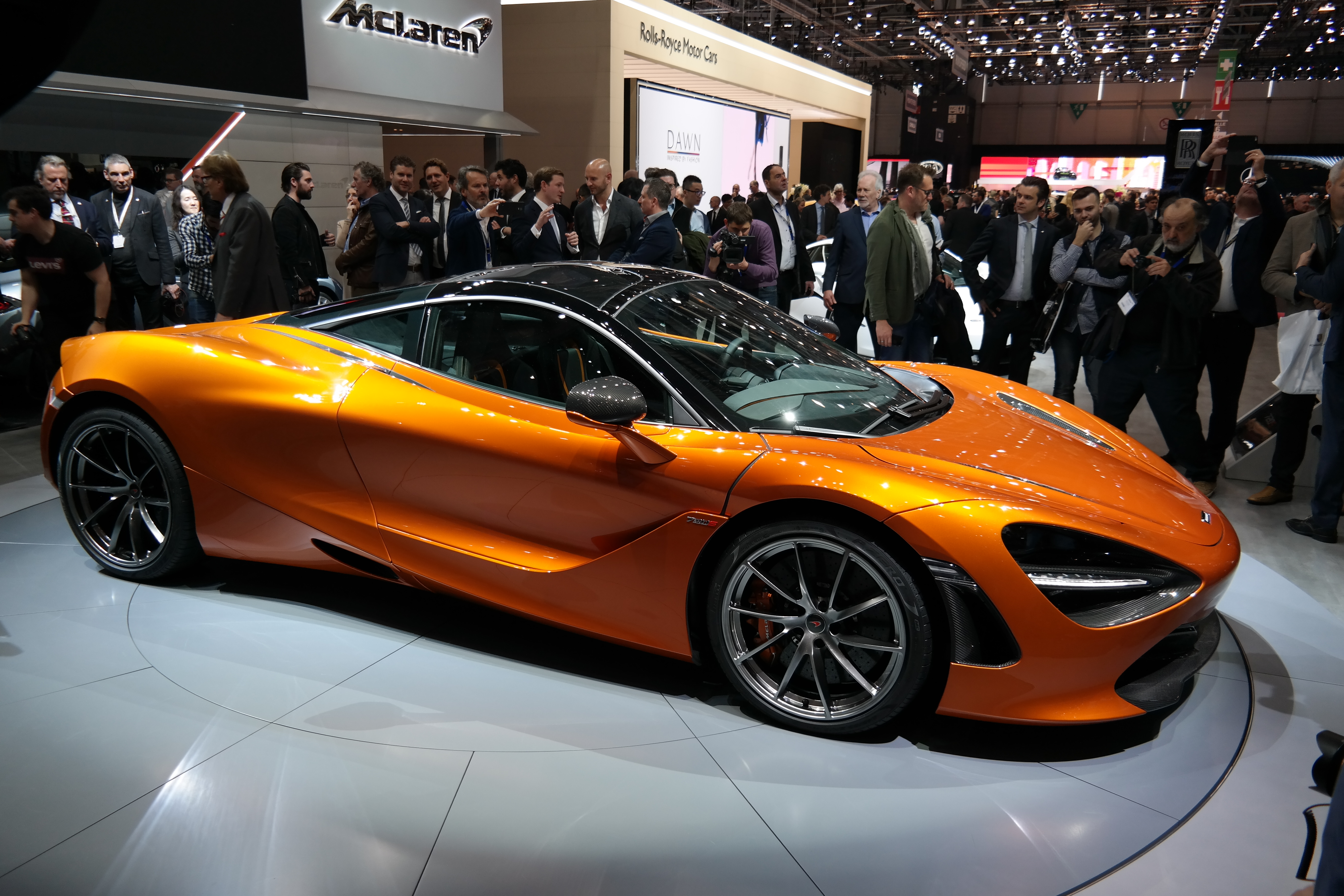
Mclaren 720S
"...w, like we're already at 400 miles, we're running 720s on the Nürburgring. Like, what are we going to do..."
The McLaren 720S is a very fast sports car built for performance. The episode mentions it in the context of driving it on a demanding track like the Nürburgring. It’s brought up because it’s capable of being pushed hard.
The McLaren 720S is a high-performance supercar designed for rapid acceleration and strong track capability. In the podcast context, it’s mentioned in relation to running on the Nürburgring and being driven hard, which highlights its performance reputation. That’s why it appears in a conversation about speed, endurance, and real-world driving demands.
making trades
"It's like, you have to make trades."
“Making trades” means you can’t do everything at once, so you choose what to focus on. Here, they’re saying they had to decide where to apply the best battery tech first.
“Making trades” refers to engineering prioritization: choosing which performance or development goals to optimize when resources and timelines are limited. In this segment, the trade is between battery-pack development for one vehicle versus redirecting that work to another.
2170s
"I mean, so those, all of the 1865s came out of Japan and we over the last [3438.4s] months converted those to 2170s."
“2170s” are a newer, larger rechargeable battery cell type than the older 18650. The discussion is about switching to this newer battery format and why it’s better to build.
“2170s” are cylindrical lithium-ion cells in a newer size format (about 21 mm diameter and 70 mm long). The segment explains that Tesla converted inventory from 18650 cells to 2170 cells, and that the larger cell format is easier to manufacture with newer processes.
wire bonding
"It's tiny cell though, and like the process to, to, to get the current collectors on [3457.2s] there is like wire bonding and like we've moved on the laser welding."
Wire bonding is a way factories electrically connect parts inside a battery. The point here is that the older, smaller cell design is harder to make because it needs this more delicate process.
Wire bonding is a manufacturing technique used to connect battery components electrically, typically by attaching fine wires to current-collector structures. In this segment, it’s contrasted with laser welding, implying that smaller cells (like 18650) require more complex or harder-to-scale steps.
Request an Explanation
Heard something you'd like explained? We'll add it to this episode.
Sign in to request explanations for terms you heard.
Want to learn more?
Browse our glossary for plain-English explanations of automotive terms, jargon, and concepts.
Help improve this episode
See something that's not quite right? Our annotations are AI-generated and can sometimes miss the mark. Click the flag icon on any annotation to suggest a correction.