
Episode 572: Tesla Planning New Wheelchair-Accessible Autonomous Vehicle?
About this episode
Rumors and reporting collide with practical details as the hosts dig into Tesla’s wheelchair-accessible robotaxi plans—debating whether it’s the Robovan or a smaller “cyber cab,” and noting that “steering wheel less and pedal less cyber cab is now in the process of giving employees rides.” They connect accessibility to autonomy rollout (geofenced permissions, versioning, and staged public deployment), then pivot to Japan Supercharger growth, a U.S. headlight recall, and Lucid’s bankruptcy/take-private denials.
Tesla appears to be planning a new autonomous vehicle specifically aimed at wheelchair accessibility. Plus: Cybercab rides for the public get one step closer to reality, Lucid waves off bankruptcy rumors, and more!
If you enjoy the podcast and would like to support my efforts, please check out my Patreon at https://www.patreon.com/teslapodcast and consider a monthly or (10% discounted!) annual pledge. Every little bit helps, and you can support for just $5 per month. And there are stacking bonuses in it for you at each pledge level, like early access to each episode at the $5 tier and the weekly Lightning Round bonus mini-episode (AND the early access!) at the $10 tier! And NO ADS at any Patreon tier!
Also, don't forget to leave a message on the Ride the Lightning hotline anytime with a question, comment, or discussion topic for next week's show! The toll-free number to call is 1-888-989-8752.
INTERESTED IN A FLEXIBLE EXTENDED WARRANTY FOR YOUR TESLA? Be a part of the future of transportation with XCare, the first extended warranty designed & built exclusively for EV owners, by EV owners. Use the code RTL250 to get $250 off your XCare Premium or Battery & Drive Unit Protection Plan using the one-time payment option! Offer expires July 31! Go to https://xcare.com to find the extended warranty policy that's right for you and your Tesla.
P.S. Get 15% off your first order of awesome aftermarket Tesla accessories at AbstractOcean.com by using the code RTLpodcast at checkout. Grab the SnapPlate front license plate bracket for any Tesla at https://everyamp.com/RTL/ (don't forget the coupon code RTL too!). Enhance your car with cool carbon-fiber upgrades from RPMTesla.com. And make your garage door foolproof with the Infinity Shield – get yours at https://www.infinity-shield.com and use the promo code RTL at checkout for a $25 discount.
autonomous vehicle
"Tesla appears to be planning a new autonomous vehicle specifically aimed at wheelchair accessibility. Plus, cyber cab rides for the public get one step closer to reality, Lucid waves off bankruptcy rumors and more."
An autonomous vehicle is a car that can drive itself. Instead of a person doing the driving, the car uses technology to steer, speed up, and slow down.
An autonomous vehicle is a car that can drive itself using sensors, software, and control systems rather than relying on a human driver to steer and brake. The transcript frames it as Tesla planning an autonomy-focused vehicle with a specific accessibility goal.
wheelchair accessibility
"Tesla appears to be planning a new autonomous vehicle specifically aimed at wheelchair accessibility. Plus, cyber cab rides for the public get one step closer to reality, Lucid waves off bankruptcy rumors and more."
Wheelchair accessibility means the vehicle is designed so wheelchair users can get in and out easily and safely. For an autonomous car, it also means the car has to handle the pickup and drop-off in a way that works for wheelchairs.
Wheelchair accessibility means designing a vehicle so people using wheelchairs can board, ride, and exit safely and comfortably. In an autonomous context, it also implies the vehicle layout and operation support safe pickup/drop-off and securement.
full self-driving unsupervised
"They're basically all about cyber cab and full self-driving unsupervised and just updates on robotaxi fleet, it's all autonomy based as what the retail shareholders want to know"
“Full self-driving unsupervised” means the car is supposed to drive on its own without a person watching closely. The big idea is that it’s closer to a real robotaxi than a system that still needs constant human attention.
“Full self-driving unsupervised” refers to an autonomy mode where the vehicle is intended to operate without a human driver actively monitoring and ready to take over. It’s a key milestone because it changes the operational model from driver-assist to true robotaxi-style use.
robo taxi fleet
"They're basically all about cyber cab and full self-driving unsupervised and just updates on robotaxi fleet, it's all autonomy based as what the retail shareholders want to know"
A “robotaxi fleet” is a bunch of self-driving cars used like taxis. Instead of one car showing off, the company runs many cars to serve rides reliably.
A “robotaxi fleet” is a group of autonomous vehicles operating together as a service, typically dispatched to pick up and drop off passengers. Fleet operations matter because performance, safety, and uptime are managed across many cars, not just one demo vehicle.
glass roof
"and that is this, the cyber cab is Tesla's first vehicle to ship without a glass roof, meaning it's got a metal roof obviously"
A glass roof is a roof section made of glass, usually to let more light into the cabin. Removing it changes the cabin feel and can simplify design, even if it doesn’t directly change how fast the car is.
A glass roof is a large transparent panel (often panoramic) used for light and visibility. In EV design discussions, it can affect packaging, structural design, heat management, and how the cabin feels, so “no glass roof” is a notable interior/packaging choice even if it’s not a performance breakthrough.

Model S
"now Tesla eventually got rid of the body roof option on the Model S, it was never standard, [168.6s] it was always, you had to select it and everything since has had a fixed glass roof,"
The Tesla Model S is an electric car. Here they’re talking about the roof choices—Tesla used to offer a different roof option, but later cars mostly got a fixed glass roof instead.
The Tesla Model S is a flagship electric sedan, and this segment focuses on its roof options. The host notes that Tesla removed the “body roof option” and later standardized on a fixed glass roof, which affects light, visibility, and cabin feel.

Tesla Model X
"... was just saying and by the way I am counting the Model X here, because it does have the actual name of it ..."
The Tesla Model X is an electric SUV. The podcast mentions it to make sure it’s included by name in the list of Tesla models being discussed. It’s another Tesla model with a different shape than the sedans.
The Tesla Model X is an all-electric SUV that the podcast counts explicitly because it has the actual name “Model X.” It’s relevant in discussions of Tesla’s lineup because it’s a distinct body style compared with the Model S and Model 3, and it’s often grouped with other Tesla vehicles when talking about design and features. The episode context suggests the speaker is clarifying which models are included in their count.
Big Sky windshield
"it does have the [181.5s] actual name of it from back in the day is the Big Sky windshield that extends up over [187.9s] the first row passengers heads and in the second row there are portal windows in the tops of the [195.5s] Falcon wing doors,"
“Big Sky windshield” is Tesla’s name for the Model X’s extra-large windshield. It rises higher than a normal windshield to give more glass area and a more open feel.
“Big Sky windshield” is Tesla’s marketing name for a very large, upward-extending windshield area on the Model X. In this segment, it’s used to argue that the Model X has roof-like glass coverage over the front seating area.
portal windows
"the first row passengers heads and in the second row there are portal windows in the tops of the [195.5s] Falcon wing doors, so if you wanted to argue with me on that one and say the X doesn't technically"
Portal windows are the small, vertically oriented windows set into the upper area of the door structure. Here, the host describes them as being in the tops of the Model X’s Falcon wing doors, contributing to the vehicle’s distinctive glass-and-light design.

Ford Falcon
"...d row there are portal windows in the tops of the Falcon wing doors, so if you wanted to argue with me on ..."
The Ford Falcon is a car model line. In the podcast, it’s mentioned because of a specific door design detail with small windows near the top of the doors. The speaker is using that feature to make a point in the conversation.
The Ford Falcon is a model line of cars that the podcast references in a specific detail about door design—“portal windows” in the tops of the Falcon wing doors. That kind of detail suggests the episode is discussing a particular Falcon variant or a distinctive body style feature rather than general EV topics. It’s included because the conversation is about design elements and how they work in practice.
falcon wing doors
"portal windows in the tops of the [195.5s] Falcon wing doors, so if you wanted to argue with me on that one and say the X doesn't technically"
Falcon wing doors are Tesla’s special doors that open upward instead of swinging out normally. On the Model X, they also include extra windows near the top of the door.
Falcon wing doors are the upward-opening gull-wing-style doors used on the Tesla Model X. This segment ties them to the “portal windows” above the doors, emphasizing how the door design affects the vehicle’s overall glass layout.
painted metal roof
"9% of you selected a painted metal roof with obviously fabric headliner material above [283.3s] your head in the cabin,"
A painted metal roof is the normal kind of car roof made of metal and painted over. Instead of glass overhead, you usually get a fabric ceiling inside the cabin.
A painted metal roof is a conventional body roof made of metal, finished with paint, rather than using a glass panel. The host pairs it with a fabric headliner above the occupants, highlighting how it changes cabin lighting and the “open roof” feel.
fabric headliner
"9% of you selected a painted metal roof with obviously fabric headliner material above [283.3s] your head in the cabin,"
The fabric headliner is the material that forms the inside “ceiling” of the car. If you don’t have glass overhead, this is what you’ll see above you.
A fabric headliner is the interior ceiling panel, typically made from cloth or a fabric-like material. In this segment it’s mentioned as the material you’d have above your head when choosing a non-glass roof option.
convertible
"8% of you channeling the original roadster voted for a completely [289.8s] removable roof or convertible and there you go,"
A convertible is a car where the roof can be removed or folded down so you can drive with the top open. It’s the most “open air” option compared with glass roofs.
A convertible is a car with an opening roof that can be removed or folded away to expose the cabin to the air. The host groups it with a “completely removable roof” as a roof style choice, contrasting it with fixed or opening glass roofs.

Cybertruck
"“So can I get the Cybertruck I want?” “Yeah, whichever one you want.”"
The Cybertruck is Tesla’s electric pickup. The caller is asking to make sure the prize can be used to get the Cybertruck specifically.
The Cybertruck is Tesla’s distinctive pickup truck with an angular, stainless-steel body and an all-electric drivetrain. When the caller asks “can you save this for my wife… can I get the Cybertruck I want?”, they’re referring to choosing that specific Tesla model as the prize.
no resale clause
"Because these cars, like the original Foundation Series Cybertrucks... came with a no resale clause in the purchase agreement."
A no resale clause is a rule in the purchase contract that limits reselling the car. In this case, it’s why Tesla can potentially punish people who flip the car for profit.
A no resale clause is a contractual restriction that prevents the original buyer from reselling the vehicle for a period of time or at all. Here, the host says certain Tesla “signature series” cars (and earlier Foundation Series Cybertrucks) included this clause, which is why Tesla can respond to dealer flipping.
penalty from the person
"...Tesla now can, if they choose to, do one or both of the following two things. One, seek $50,000 as a penalty from the person that originally sold it."
The host says Tesla can charge the original seller a big penalty if the car is resold against the contract rules. In the example here, the penalty mentioned is $50,000.
The host describes a penalty Tesla can seek from the original seller if the car is flipped despite the contract terms. The segment specifically mentions Tesla seeking $50,000 as a penalty.
ban that person from ever buying
"Or two, or and or two, ban that person from ever buying another at least new Tesla ever again."
The host also describes a harsher option: Tesla could ban that person from buying new Teslas in the future. It’s presented as an alternative to the $50,000 penalty.
This refers to an enforcement option where Tesla can bar a specific person from buying future new Teslas. The host frames it as the second possible consequence tied to the no-resale terms.
Signature Series
"I rant over, I guess, but yeah, I did want to [888.5s] share that because it is a pretty blatant disregard, shall we say, of the [897.1s] terms of the [897.1s] purchase of those signature series cars."
A signature series car is a limited special edition of a model. The host is talking about how some people may not be following the special rules that came with buying that limited version.
Signature series cars are limited-edition vehicles sold under special terms, often with contractual restrictions and unique branding. In this segment, the host frames the discussion around alleged disregard for the purchase terms tied to these signature versions.
Model S Plaid
"but as much as I love the Model S Plaid and that Garnet red paint color, [930.5s] and I've talked, I've said many times how I still feel that the Model S Plaid is probably the best [937.3s] all around car in the world when you take into account price performance, safety, utility, [945.5s] storage, capacity, and of course driver assistance technology, all that stuff, and it's just an"
The Tesla Model S Plaid is the fast, high-end version of the Model S. The host is saying it’s a great “do everything” car because it combines speed, safety, practicality, and driver-assist features.
The Tesla Model S Plaid is Tesla’s high-performance version of the Model S sedan, known for very strong acceleration and a tech-heavy interior. In this segment, the host argues it’s the best all-around car by balancing price, performance, safety, utility, storage, capacity, and driver-assistance features.
driver assistance technology
"when you take into account price performance, safety, utility, [945.5s] storage, capacity, and of course driver assistance technology, all that stuff, and it's just an [952.7s] incredible machine for what, at least the regular price Model S Plaid, this one certainly was,"
Driver assistance technology is the set of features that help you drive more safely, like keeping in your lane or helping with speed and braking. The host is saying it’s a big part of why the car feels complete.
Driver assistance technology refers to automated safety and convenience features that help the driver, such as adaptive cruise control, lane-keeping, and collision-avoidance systems. The host includes it as part of what makes the Model S Plaid an “all-around” package.

Tesla Roadster
"...s that I would like to see on the next generation Tesla Roadster that still has yet to be re-revealed. I know it's..."
The Tesla Roadster is an electric sports car that Tesla has talked about for the future. It’s meant to be a high-performance, exciting model. The podcast brings it up because people are still waiting for the next version to be shown.
The Tesla Roadster is Tesla’s electric sports car concept/line that’s discussed as a future “next generation” vehicle. It matters because it’s positioned as a halo product—something meant to showcase what the company can do at the high end of performance and technology. The episode context specifically frames it as something the public is still waiting to see re-revealed.
paratransit
"vehicle we know that paratransit can be very difficult and people who are confined to wheelchairs permanently should still be able to move around freely so that is an active product being built by Tesla in Texas"
Paratransit is special transportation for people who can’t easily use regular buses or trains. It’s often designed to help people with disabilities get around more easily.
Paratransit refers to specialized transportation services for people who can’t use regular public transit due to disabilities or mobility limitations. The hosts frame it as difficult for wheelchair users, which motivates Tesla’s accessibility-focused autonomous vehicle concept.
Robovan
"is this referring to the Robovan or as I think most of the rest of us call it the Robovan I still I get a kick out of the fact that right from the jump that's how Elon and France have referred to it is the Robovan just seen the cyber cab team post on x about the Robovan being accessible"
The Robovan is Tesla’s idea for an autonomous ride that’s designed for wheelchair users. The key point is making it easier to get in and ride without having to transfer out of the wheelchair.
The Robovan is Tesla’s proposed wheelchair-accessible autonomous vehicle concept. In this segment, the hosts discuss it as a larger, accessibility-focused alternative to the smaller Tesla “Cyber Cab,” including how it would let a wheelchair user enter without leaving the chair.

cyber cab
"that's how Elon and France have referred to it is the Robovan just seen the cyber cab team post on x about the Robovan being accessible and excuse me the Robovan and the cyber cab both being accessible the ladder via the upswinging door"
The Cyber Cab is Tesla’s plan for a small self-driving taxi. The hosts say Tesla expects most ride-share trips to be just one or two people, which is why it’s planned as a two-seater.
The Cyber Cab is Tesla’s proposed small, autonomous ride vehicle. Here, the discussion contrasts it with the Robovan by emphasizing that Tesla designed the Cyber Cab as a two-seater to match ride-share demand patterns (most rides are for one or two people).
upswinging door
"the ladder via the upswinging door and the large the quite very large cargo area in the back of the vehicle that could accommodate a wheelchair"
An upswinging door is a door that opens upward on a hinge or pivot, rather than swinging outward like a conventional door. The segment mentions it as part of how the Robovan and Cyber Cab would support wheelchair accessibility.
cargo area
"the ladder via the upswinging door and the large the quite very large cargo area in the back of the vehicle that could accommodate a wheelchair but that's obviously very different than than an autonomous vehicle"
The cargo area is the part of the vehicle used to carry things. Here, they’re talking about it as the space where a wheelchair could be placed so the vehicle can be accessible.
The cargo area is the space in a vehicle intended for carrying items or, in this case, accommodating a wheelchair. The hosts point out that the Robovan’s large rear cargo area could fit a wheelchair, but that autonomous access requirements are more demanding than simple fitment.
robotaxi service
"if a wheelchair user wants to hail a ride in the Robotaxi service is the 20 passenger Robovan"
A Robotaxi service is like a rideshare, but the car drives itself. The question here is whether a bigger wheelchair-friendly vehicle would be practical for typical ride requests.
A Robotaxi service is an on-demand ride service using autonomous vehicles instead of human drivers. The hosts discuss whether a larger wheelchair-accessible Robovan would make sense operationally—like how many passengers it would pick up at once.
rideshare
"but Tesla's whole reason for making the cyber cab a two-seater in the first place is that statistic that they throw out that it's something like I actually don't have the stat in front of me but it was something like 85% of all ride shares that are hailed are for one or two people"
Ride shares are services where you request a car for a trip, like a taxi app. The hosts mention Tesla’s claim that most requests are for just one or two people.
Ride shares are on-demand shared-ride transportation services where passengers request a vehicle for a trip. The segment cites Tesla’s internal statistic about most ride-share requests being for one or two people, which influences vehicle sizing decisions like a two-seater Cyber Cab.

Tesla semi
"actually well I guess we have the Tesla semi all right you got me on a technicality it'd be the largest passenger vehicle there we go"
The Tesla Semi is Tesla’s electric big truck. It’s mentioned here just to clarify which Tesla vehicle is actually the biggest, depending on whether you mean passenger vehicles or all vehicles.
The Tesla Semi is Tesla’s electric heavy-duty truck. The host brings it up as a comparison point for “largest vehicle” logic, arguing that the Robovan would be the largest passenger vehicle Tesla has produced, but the Tesla Semi is larger overall in a technical sense.
wheelchair accessible
"wheelchair accessible autonomous vehicle that's being discussed here ... with of course no pedals or steering wheel wheel pardon me that can easily accommodate wheelchair users via its interior configuration as well as certainly an accessibility ramp that could be deployed automatically"
“Wheelchair accessible” describes a vehicle interior and entry/exit design that can accommodate wheelchair users. Here, the discussion focuses on interior configuration plus an automatically deployed ramp.
accessibility ramp
"as well as certainly an accessibility ramp that could be deployed automatically when the door opens or from the touch of a button say in your Robotaxi app"
An accessibility ramp is a fold-out ramp that helps someone in a wheelchair get into the vehicle. The idea here is that it can deploy automatically or be triggered from an app.
An accessibility ramp is a deployable platform that helps wheelchair users transition between the vehicle cabin and the ground. In this scenario, it’s described as automatically deploying when the door opens or via a button in a companion app.
RoboTaxi app
"deployed automatically when the door opens or from the touch of a button say in your Robotaxi app right something like that"
A “Robotaxi app” is the phone app you’d use to call a self-driving taxi. Here it’s also mentioned as a way to control the wheelchair ramp.
A “Robotaxi app” is the user interface software used to request and manage autonomous rides. In this segment, it’s specifically mentioned as a way to trigger the accessibility ramp.
Giga Texas
"Tesla released a video on socials stating that there was cool news from giga texas and that employees were now taking rides"
“Giga Texas” is Tesla’s big factory in Texas. The speaker mentions it because Tesla posted news from there about employee rides.
“Giga Texas” is Tesla’s manufacturing facility in Texas, commonly used as shorthand for the Gigafactory site. The segment ties it to Tesla releasing updates and employee rides.
FSD
"is that this is an awesome next step it means that whatever version of fsd that the cyber cabs [1597.8s] are currently running which is presumably the same version of fsd that the model y robo taxis"
FSD is Tesla’s software that tries to make the car drive itself. The host is asking whether the version in the Cyber Cab is more advanced than what regular drivers get, especially for situations where the driver doesn’t need to do anything.
FSD stands for “Full Self-Driving,” Tesla’s software package aimed at automating driving tasks. In the segment, the host compares the FSD version running in Cyber Cabs to the version available to the public in Tesla vehicles, and discusses whether it’s ready for “zero input” driving.
zero input situation
"if you've got an ai4 car obviously what we all have now [1653.9s] i think we'd all agree is not quite ready for a zero input situation it's gotten quite good"
“Zero input” means the car drives without the person having to take over or actively do anything. The host says Tesla’s system is good, but it still sometimes makes silly mistakes, so it’s not fully at that “hands-off, mind-off” level yet.
A “zero input situation” refers to driving where the human driver provides no active commands (no steering/braking/monitoring interventions) while the autonomy system handles the task. The host argues that even though Tesla’s system has improved, it still makes mistakes that show it’s not fully ready for that level of autonomy.
turn signal
"well fsd drove me the whole way there of course and it [1727.7s] did a great job until we got really close to the destination to the burger place because [1734.4s] it put on its turn signal to turn on the near side of the train tracks"
A “turn signal” is the blinking light that tells other drivers you plan to turn. The host mentions it because the self-driving system signaled a turn that it shouldn’t have made in that situation.
A “turn signal” is the vehicle’s indicator lights used to communicate intended direction changes to other road users. In the anecdote, the host uses the turn signal as evidence that the autonomy system was making a navigation/decision near the destination that didn’t match the real-world constraints.
deployed to the fleet
"again yes the [1780.6s] 14.3.4 that's deployed to the fleet now i know some some people 1435 has started to go out to some [1788.5s] folks"
“Deployed to the fleet” means Tesla sends a software update out to a lot of cars. It’s the way they test and improve the system across many vehicles.
“Deployed to the fleet” means Tesla rolls out a software update to many vehicles at once. For autonomy features, this is how improvements (and any bugs) propagate across the cars that are eligible.
navigation mistake
"now that [1795.9s] one is maybe more of a navigation mistake than anything else but the point being in a cyber [1801.2s] cab that would have uh been weird and perhaps a little stressful as well"
A “navigation mistake” means the car’s guidance can pick the wrong turn or route. Even if it can drive safely, it might still get you to the wrong place or take longer.
A “navigation mistake” here refers to the autonomy stack choosing the wrong route or maneuver, even if the car is otherwise capable of driving. The speaker contrasts this with other kinds of autonomy errors, implying route-planning issues can still happen.
earnings call
"i wish we could find that out on the earnings [1848.9s] call next week like and maybe it's not too late for that question to get upvoted"
An “earnings call” is a meeting where a company talks to investors about its results and plans. The speaker is hoping Tesla will answer questions about its self-driving progress.
An “earnings call” is a scheduled investor briefing where a company reports financial results and discusses forward-looking plans. Here, the speaker wants Tesla to address how far along the cyber cab autonomy software is compared with what’s in customer cars.
fully autonomously
"presumably [1861.9s] since tesla has permission to operate fully autonomously with no safety monitor in the car [1878.3s] in both texas and miami"
“Fully autonomously” means the car is supposed to drive itself without a person watching from the driver’s seat. The speaker is saying Tesla has permission to do that in certain places.
“Fully autonomously” in this transcript means operating without a safety driver/monitor in the car. The speaker ties this to Tesla’s permissions in specific locations, implying a higher autonomy level than driver-assist.
safety monitor
"since tesla has permission to operate fully autonomously with no safety monitor in the car [1878.3s] in both texas and miami"
A “safety monitor” is a human whose job is to watch the autonomous system and take over if something goes wrong. The speaker says Tesla may not require one in the approved locations.
A “safety monitor” is a person responsible for supervising the autonomous system and intervening if needed. The transcript suggests Tesla’s permission removes that requirement in certain areas.
geofenced area
"they've just they've started with that small geofenced area within [1892.9s] miami but i would i would have to presume"
A “geofenced area” is a limited zone on a map where the car is allowed to drive itself. Outside that area, it may not be permitted to operate autonomously.
A “geofenced area” is a mapped geographic zone where autonomous operation is allowed. Tesla typically starts autonomy in limited regions, then expands once the system performs reliably there.
supercharger location
"next up this week tesla has marked the opening of its 150th supercharger location in japan with a new partnership that could make charging even more convenient for ev owners"
A Supercharger is a fast charging station for Tesla cars. It’s meant to charge your battery quickly when you’re traveling, not just at home.
A Tesla “Supercharger” location is a network of fast DC charging stations designed for quicker top-ups on longer trips. Instead of charging like a typical home charger, Superchargers are built to deliver high power to reduce time spent plugged in.
Tesla Supercharger expansion in Japan via 711 partnership
"tesla has marked the opening of its 150th supercharger location in japan with a new partnership... 711 japan says it intends to install tesla superchargers at approximately 10 additional stores"
This part is about Tesla adding more fast charging stations in Japan. They’re partnering with 711 stores, and the goal is to install chargers at more locations over time.
The hosts discuss Tesla opening its 150th Supercharger location in Japan and expanding the network through a partnership with 711 Japan. They also mention a rollout plan for additional stores and why store parking availability matters.
EV owners
"with a new partnership that could make charging even more convenient for ev owners"
“EV owners” are people who drive electric cars. The discussion is about making it easier for them to charge their cars.
“EV owners” means people who drive battery-electric vehicles (as opposed to gasoline cars). The segment is about making charging more convenient specifically for those drivers.
711 japan
"tesla has joined forces with 711 japan to begin installing superchargers at the country's largest convenience store chain"
“711 Japan” is a big convenience store chain in Japan. Tesla is putting fast chargers at some of these stores so EV charging is easier to find.
“711 Japan” refers to the Japanese convenience store chain Seven-Eleven Japan. The segment highlights its large nationwide footprint, which makes it a practical partner for placing Tesla Superchargers at widely distributed retail locations.
National Highway Traffic Safety Administration
"tesla has to fix a problem with its old headlights says nitsa the national highway traffic and safety association tip of the cap to tesla roddy who had this one nitsa found that the vehicle's headlights may exceed maximum lighting levels"
This is the U.S. agency that oversees vehicle safety rules. If it finds a car part doesn’t meet the standards, it can require the company to fix it.
This refers to the U.S. vehicle-safety regulator that evaluates whether vehicles comply with federal safety standards and can require recalls. The segment attributes the headlight compliance ruling to this agency.
maximum lighting levels
"nitsa found that the vehicle's headlights may exceed maximum lighting levels we're talking about 2027 to 2023 model y and model 3 vehicles"
Headlights have legal brightness limits. If they’re too bright, they can blind other drivers, so regulators require a fix.
Maximum lighting levels are the regulatory limits on how bright headlights are allowed to be during operation. Exceeding them can reduce safety by causing glare to other drivers.
recall
"tesla had a petition protesting a recall to fix the potential issue and was denied that petition as the national highway traffic safety administration disagreed with the company's opinion of things so the recall will go forward"
A recall is when a car company has to fix a safety-related issue. Drivers are usually told to bring the car in (or get a fix) without paying, because regulators say the problem needs correcting.
A recall is a formal safety action where a manufacturer must notify owners and fix a problem at no cost (or as required by regulators). In this case, the recall is for non-compliance related to headlight brightness/aim on certain Tesla vehicles.
angle of the headlights
"the issue here appears to be the angle of the headlights and the brightness they emit during operation tesla will be required to remedy the issue"
Headlights have to be aimed correctly. If they’re aimed too high or at the wrong angle, they can shine into other drivers’ eyes and create a safety problem.
The angle of the headlights is how the headlamp beam is aimed relative to the road. If the aim is off, the beam can be too high or misdirected, increasing glare and reducing visibility where it matters.
free remedy
"tesla's petition is hereby denied and tesla is consequently obligated to provide notification of and free remedy for that non-compliance"
A free remedy means the company has to fix the problem for free. Owners shouldn’t have to pay for the correction when a recall is ordered.
A free remedy is the required fix provided at no cost to affected owners as part of a recall. The segment says Tesla must notify owners and provide a free remedy for the non-compliance.
headlight on it
"with that headlight on it is because i still see a lot of complaints online from outside the tesla community like just on on other subreddits and other places that teslas have blinding headlights"
This is about the car’s headlights—how they’re aimed and how their light spreads. If the beam is aimed wrong or too bright, it can glare into other drivers’ eyes.
This refers to the specific headlamp hardware and its beam pattern/aim. When headlights are mis-aimed or have an aggressive beam cutoff, they can dazzle drivers in oncoming traffic or at intersections.
swap out about 20 000 pairs of headlights
"but i suppose tesla will be required to swap out about 20 000 pairs of headlights now which again it's a small percentage of the fleet"
“Swap out” means Tesla would replace the headlights on the cars that are affected. It’s like a targeted fix for a specific problem, not something happening to every car.
A “swap out” here means a manufacturer recall-style remedy: replacing the affected headlight units on the cars that fall into the issue group. The host frames it as a targeted fix affecting a limited portion of the total fleet.
notification
"you'll receive a notification you'll get a letter in the mail from nitsa but odds are that notice will probably arrive in the mail well after an email or notification"
A notification here means a message Tesla sends to owners—often through the Tesla app—to let them know something needs attention.
In this context, a notification is the in-app or system message Tesla sends to owners about an affected-vehicle issue. It’s part of how recalls/service campaigns are communicated to customers.
Lucid
"performance and execution they are not advising lucid on a take private transaction or bankruptcy ... punch down at lucid because i'm rooting for lucid i've said before i think they've got great products"
Lucid is a company that makes electric cars. In this part of the podcast, they’re talking about rumors involving Lucid and whether the company is doing well.
Lucid is an EV automaker known for building electric cars and competing directly with Tesla in the premium EV space. In this segment, the host discusses Lucid-related rumors and whether the company is in financial or strategic trouble.
bankruptcy
"performance and execution they are not advising lucid on a take private transaction or bankruptcy"
Bankruptcy is what happens when a company can’t pay its debts and has to go through a legal process to reorganize. The host says Lucid is denying rumors connected to that.
Bankruptcy is a legal process a company can use when it can’t meet its financial obligations, often involving restructuring debts and assets. The segment mentions bankruptcy as part of rumors Lucid denies being advised on.
take private transaction
"performance and execution they are not advising lucid on a take private transaction or bankruptcy"
A take-private transaction means a public company gets bought and stops being traded on the stock market. Here, it’s mentioned as part of rumors the company says are false.
A take private transaction is when a public company is bought out and removed from stock-market trading. The host references it in the context of rumors about Lucid, emphasizing that the company denies being advised on such a move.
EV startup
"we need all the good evs we can get especially the ev startups right like legacy auto is in no hurry to convert to electric"
EV startups are newer companies trying to build electric cars. The host is saying the EV world needs them to keep going so there are more good electric options.
EV startups are newer companies focused on developing and selling electric vehicles, often with less established manufacturing and financing than legacy automakers. The host argues that the EV ecosystem benefits when these startups can remain healthy and competitive.
electrification movement
"the electrification movement the ev movement needs those companies and is better off with those companies being around and being healthy"
This is the push to replace gas cars with electric cars. The host is saying the EV market needs several companies to survive and keep improving.
The electrification movement refers to the industry shift from internal-combustion vehicles to electric vehicles (EVs). The host frames it as something that depends on multiple EV makers staying healthy, not just one company.
restructuring advisor
"what what did they again a restructuring advisor i'm like i guess tesla doesn't need one of those but"
A restructuring advisor is someone a struggling company hires to help it get back on track financially. The host is using it as a clue about how serious the situation might be.
A restructuring advisor is a professional firm or expert brought in to help a company reorganize its finances, operations, or debt when it’s under significant stress. In this segment, the host treats it as a sign of potential trouble, while noting Tesla may not need one.

Lucid Air
"but lucid unfortunately has been struggling long enough and in a shaky enough state for long enough that a report a rumor like this can be reasonably entertained i mean unfortunately the lucid air despite being by most accounts an incredibly well engineered car hardware wise that admittedly remains behind where it should be in the software department"
The Lucid Air is a luxury electric sedan made by Lucid. Even though it’s well-built, the speaker says it hasn’t sold as well as hoped, partly because the software wasn’t as far along as it should be.
The Lucid Air is Lucid’s flagship luxury sedan, known for strong engineering and efficiency. In this segment, it’s used as an example of a technically impressive EV that still struggled commercially, largely due to software maturity and sales traction.
sunset the s
"i mean the fact is it's not just the model s whose sales have dwindled of course obviously tesla made the decision to sunset the s"
“Sunset” here means Tesla is winding down the Model S—basically stopping it and replacing it with something else over time. It’s like ending a product line instead of keeping it going.
“Sunset” in this context means Tesla is ending production and phasing out the Model S rather than continuing it as an ongoing model. It’s a product-lifecycle term used in automotive planning and manufacturing.
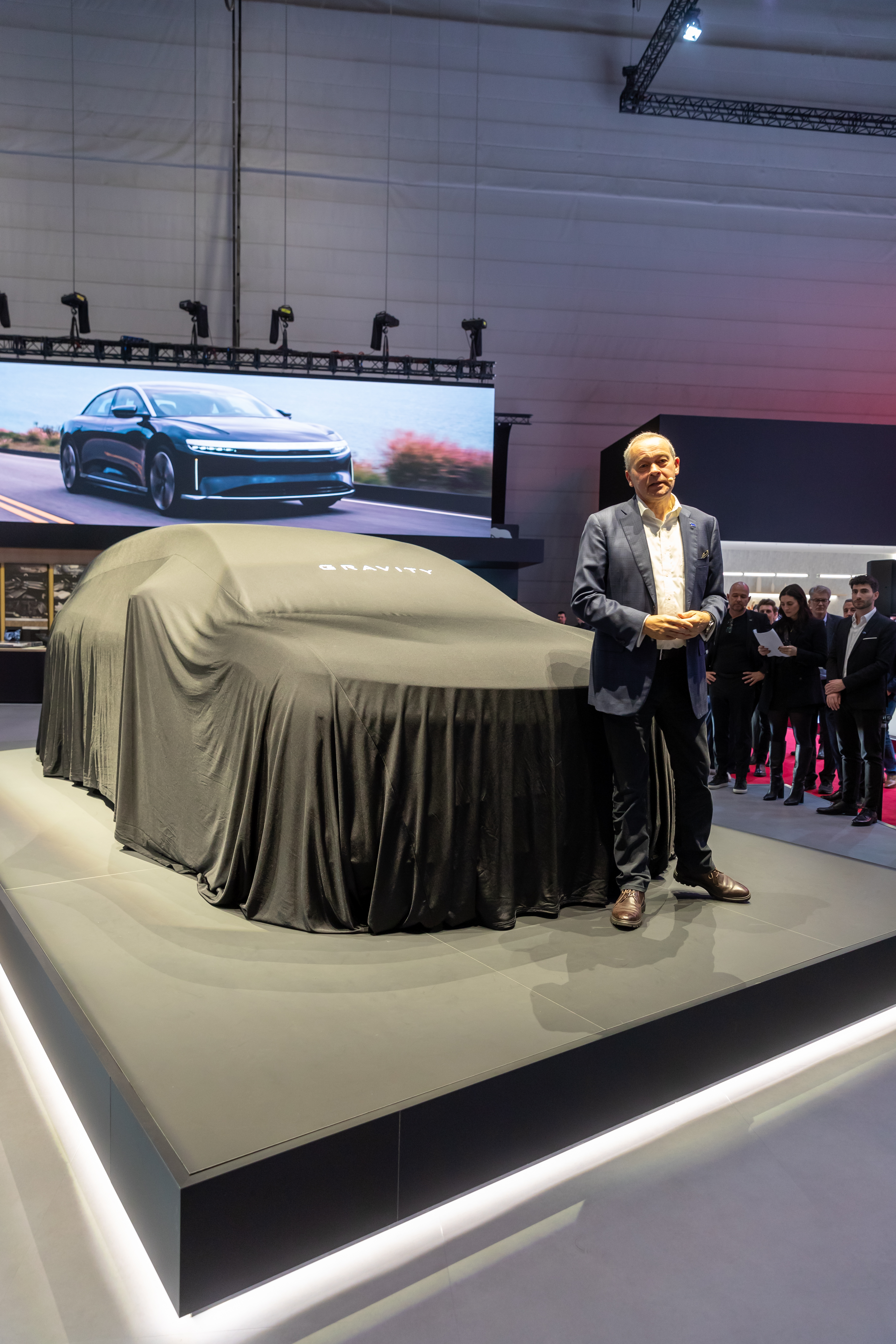
Lucid Gravity
"with the benefit of 2020 hindsight from here in the year 2026 i would imagine that they would have started with the gravity suv since the market does want suvs we know that to be true"
Lucid Gravity is Lucid’s upcoming (or newly introduced, depending on timing) SUV model name. The speaker argues that, with 2020 hindsight, Lucid should have prioritized Gravity because the market has shown stronger demand for SUVs than for luxury sedans.
EV headwinds
"but then again even the segment category that the gravity lives in the luxury suv market the model x lived in even that hasn't been doing great especially in the face of general ev headwinds that that we now face in the us market"
“EV headwinds” is a shorthand for negative market forces affecting electric-vehicle sales, such as pricing pressure, slower-than-expected demand, or changing incentives. The speaker uses it to explain why even the luxury EV SUV segment (including the Model X) has struggled.

Volkswagen Id
"... the model y the rivian r2 the mustang mach e the volkswagen id 4 etc that is where all of the sales are happenin..."
The Volkswagen ID. Buzz is an electric van. The podcast brings it up because it’s one of the EVs people are buying, along with several other models. It’s included to show where sales are happening.
The Volkswagen ID. Buzz is an all-electric van that’s mentioned as part of a broader set of EVs where sales activity is happening. In the podcast context, it’s grouped with other models to illustrate which vehicles are showing up in the market and driving volume. That makes it relevant as a mainstream alternative in the electric van category.

Ford Mustang Mach-E
"the model y the rivian r2 the mustang mach e the volkswagen id 4 etc that is where all of the sales are happening"
The Ford Mustang Mach-E (often written as “Mach-E”) is Ford’s electric crossover, and it’s cited as an example of an EV that fits the mid-size, mid-range price demand the speaker says is driving sales. It’s part of the comparison set against luxury EV sedans and higher-end SUVs.

Volkswagen ID 4
"the mustang mach e the volkswagen id 4 etc that is where all of the sales are happening"
The Volkswagen ID.4 is Volkswagen’s electric crossover, included in the speaker’s list of EVs that are selling in the mid-size, mid-range segment. The mention supports the broader claim that EV demand is concentrated in specific mainstream categories.
efficiency
"i could really increase my range and efficiency if i switch over those tires ... decreasing those tire sizes to get more efficiency"
“Efficiency” means how much energy the EV uses to drive. If it’s more efficient, you usually get more miles per charge.
“Efficiency” here refers to how much energy the EV uses to travel a given distance. Lower energy use typically means better range, and tire changes can improve it by reducing losses.
range
"i could really increase my range and efficiency if i switch over those tires ... you can absolutely do this as long as the tire fits on the wheel and yes you should see a range increase although other things like tread pattern and rolling resistance certainly factor in too"
For an EV, “range” is how many miles the car can go before it needs charging. Things like tire choice can make the car use energy more or less efficiently.
In EV context, “range” means how far the vehicle can drive on a full charge (or under specific conditions). It’s strongly influenced by efficiency factors like tire size, tread design, and rolling resistance.
tire sizes
"decreasing those tire sizes to get more efficiency specifically on the cyber truck going down from 285 maybe even to 265"
Tire size (like going from 285 to 265) changes the tire’s overall diameter and contact patch characteristics. On EVs, that can alter rolling resistance and efficiency, which can change range—though fitment and wheel clearance still matter.
rolling resistance
"you should see a range increase although other things like tread pattern and rolling resistance certainly factor in too"
Rolling resistance is the “drag” from the tires as they roll. If that drag is lower, the car needs less energy, which can help it go farther on a charge.
Rolling resistance is the energy lost as tires deform and scrub against the road while rolling. Tires with lower rolling resistance generally improve EV efficiency and can increase range.
tread pattern
"you should see a range increase although other things like tread pattern and rolling resistance certainly factor in too"
Tread pattern is the design on the tire’s surface. Different tread designs can change how much energy the tire uses while driving, which can affect range.
Tread pattern is the design of the grooves and surface blocks on a tire. It affects grip, noise, and also how much energy the tire wastes rolling—so it can influence EV range.
Elon Musk
"that was back when elan musk was really out there on a regular basis on twitter what was then twitter answering tesla questions from the community"
Elon Musk is the founder/leader of Tesla. In this clip, he’s being referenced as answering a question about how tire width can affect acceleration.
Elon Musk is the entrepreneur behind Tesla, and he has historically used social media to answer technical questions from the community. Here, he’s quoted discussing how wider rear tires could improve acceleration.
zero to 60 time
"he responded that yes you could get an extra tenth of a second or so off the zero to 60 time if you did that"
Zero to 60 time is how fast a car can go from 0 to 60 mph. In this segment, they’re saying tire changes can slightly improve that acceleration number.
Zero to 60 time is the elapsed time for a car to accelerate from 0 mph to 60 mph. It’s commonly used as a quick measure of straight-line acceleration performance, and tire width can affect it via traction and rotational losses.

old bmw i3
"[3586.2s] cyber cab in person take a look at the tires they're pretty narrow they're not quite the wagon wheels [3593.1s] that the old bmw i3 has if you ever see an i3 but they are noticeably narrower"
The BMW i3 is an older electric car from BMW. The host brings it up just to compare tire width—saying the Cyber Cab’s tires look narrow in a similar way.
The BMW i3 is an electric hatchback known for its distinctive design and efficiency-focused packaging. In this segment, it’s referenced as a comparison point for tire width, since the host says the Cyber Cab’s tires are narrower than most Tesla factory tires and similar to the i3’s look.
handicap spot
"[3624.2s] 2021 model three or my new juniper it will occasionally just park in a handicap spot [3635.1s] like it doesn't see the wheelchair sign that kind of bothers me"
A handicap spot is a parking space meant for people with disabilities, usually marked with a wheelchair sign. The caller is saying the car’s automated parking sometimes chooses that spot even when it shouldn’t.
A “handicap spot” is an accessible parking space reserved for drivers with disabilities, typically marked by a wheelchair symbol and specific signage. The segment’s complaint is that the Tesla system sometimes parks there even when it “doesn’t see” the wheelchair sign, implying a perception/decision-making failure in autonomous parking.
wheelchair sign
"[3635.1s] like it doesn't see the wheelchair sign that kind of bothers me and i'm hoping that teslas will get [3654.1s] can build a beautiful convertible like the cyber stir yeah i know the name is crazy but"
The wheelchair sign is the symbol that tells you a parking space is reserved for people with disabilities. The caller is saying the car sometimes doesn’t recognize it when parking.
The “wheelchair sign” is the accessibility symbol used on parking signs to indicate a reserved handicap space. The speaker’s point is that the autonomous parking system may fail to recognize that sign, leading to incorrect parking decisions.
tesla raj
"[3710.4s] like i was talking about with the cybercabs earlier in the podcast in fact i was talking to [3715.9s] tesla raj about this in the version 14 light video versus v14 on ai4 that we made and i'm just"
“Tesla Raj” is someone the host talked to about Tesla’s self-driving software. The host uses that conversation to explain what’s working in newer FSD versions.
“Tesla Raj” is a person the host says they spoke with about FSD behavior and software versions. In this segment, Raj is presented as having early access/insider information about what features work in specific FSD releases.
version 14
"[3715.9s] tesla raj about this in the version 14 light video versus v14 on ai4 that we made and i'm just [3726.0s] glad i did remember to put the link to that video in last week's episode description but anyway [3730.9s] he and i were talking about that and um fsd obeying no right turn on red signs only just [3739.4s] started with version 14 at least on ai4"
“Version 14” is a specific update of Tesla’s self-driving software. The host is saying that some driving rules started working correctly starting with that update.
“Version 14” refers to a specific release of Tesla’s FSD software. The host says a behavior change—like obeying “no right turn on red” signs—started with version 14, meaning the system’s rules/behavior can improve across software updates.
no right turn on red signs
"[3730.9s] he and i were talking about that and um fsd obeying no right turn on red signs only just [3739.4s] started with version 14 at least on ai4 i'm still not sure if v14 light has that skill as well yet"
These signs tell you that you’re not allowed to make a right turn when the light is red. The host is saying Tesla’s self-driving software started following that rule correctly after a software update.
“No right turn on red signs” are traffic signs that prohibit turning right on a red light. The host claims FSD began obeying these restrictions starting with version 14 (at least on a particular AI hardware setup), highlighting how software can improve compliance with specific traffic rules.
AI4
"[3739.4s] started with version 14 at least on ai4 i'm still not sure if v14 light has that skill as well yet [3747.6s] because sadly nobody else has gotten it besides raj and that initial group of early access folks"
“AI4” is the name the host uses for Tesla’s onboard computer hardware that runs the self-driving features. They’re saying the same software version can behave differently depending on which computer it’s running on.
“AI4” appears to refer to Tesla’s specific onboard compute/hardware platform used to run FSD features. The host contrasts “version 14” behavior on AI4 versus “v14 light,” implying that different hardware/software combinations can affect which driving skills work.

Tesla Model 3
"i bought my model three premium in may of this year ... while using fsd that my model three screen reports incorrect speed limits ... my model three displays a 50 mile per hour speed limit"
The Tesla Model 3 is an electric car made by Tesla. Here, the discussion is about the car’s “smart driving” features and how they react when the speed limit shown on the screen is wrong.
The Tesla Model 3 is Tesla’s mass-market electric sedan, known for its software-driven driver-assistance features. In this segment, the host and caller focus on how the car’s driver-assist system behaves when it reads speed limits from the road.
speed limits
"i noticed in particular while using fsd that my model three screen reports incorrect speed limits ... my model three displays a 50 mile per hour speed limit"
Speed limits are the maximum speed posted for a road. If the car thinks the limit is higher than it really is, it may try to drive faster than you expect.
Speed limits are the posted maximum speeds for a road, and many driver-assistance systems try to use them to regulate acceleration and target speed. If the system displays an incorrect limit, it can cause the car to accelerate toward the wrong number.
chill mode
"even higher on a 25 mile per hour road while under using on the chill mode do you know any way to rectify the problem"
Chill mode is a setting that makes the car feel less aggressive when you press the accelerator. The caller is saying that even with that gentler setting, the car still speeds up too much when the speed limit info is incorrect.
Chill mode is a driving setting that typically softens throttle response and reduces how aggressively the car accelerates. In this segment, the caller notes the car still escalates speed even while using chill mode when the displayed speed limit is wrong.
max speed
"news for you but as you know we no longer have control over the max speed of the car on version"
Max speed is the highest speed the car is allowed to go. The host is talking about how a software update can change who controls that limit and how it’s applied.
Max speed refers to a software-limited top speed that the vehicle will not exceed under certain conditions. The host is discussing how, on a particular software version, they no longer control that limit and how it may change when a newer version rolls out to more users.
AI3
"14 for either ai4 or ai3 once v14 light rolls out to a wider group of folks i would recommend that"
AI3 is Tesla’s earlier autonomy-computing hardware generation that runs the vehicle’s driver-assistance features. The host contrasts AI3 with AI4 in the context of how max-speed control may work after a version 14 rollout.
voice recording
"to send in a voice recording and let tesla know now presumably it's an ai that monitors and transcribes"
A voice recording here refers to the car capturing short spoken feedback from the driver. The host suggests these recordings are monitored and transcribed, then sent for review using keyword-based routing.
keywords
"if you keep flagging them with keywords like speed limit in there my hope is that they will find their way to the right person to get reviewed"
Keywords are specific words or phrases used to categorize and route incoming driver feedback. The host’s point is that if drivers flag issues with terms like “speed limit,” the system may route that report to the right team for review.
2024 model 3 performance
"well as for what's going on with me and my cars i had noticed recently that my new model 3 performance the 2024 that its steering wheel was just a smidge off-center"
This is a faster, sportier version of the Tesla Model 3. The host is talking about a small but noticeable steering-wheel misalignment that can happen after service or alignment changes.
The Tesla Model 3 Performance is a high-output version of Tesla’s Model 3, known for quicker acceleration and a more track-oriented setup than standard trims. In this segment, the host discusses a steering-wheel offset that was noticed after service and then compared to other owners’ reports.
alignment adjustments
"after the service visit when they had to drive the car around to verify the the alignment adjustments they dropped me to 98"
Alignment adjustments are changes made to the car’s steering and wheel angles so the tires point in the correct direction relative to each other and the road. If alignment is off, the steering wheel can sit slightly off-center even if the car still drives straight.
alignment rack
"well it keeps spitting back bad numbers on the alignment rack and so he said"
An alignment rack is the tool the shop uses to measure how your wheels are angled. It’s how they figure out if your car needs adjustments before you drive away.
An alignment rack is the specialized machine/fixture a shop uses to measure wheel angles precisely. It helps technicians confirm whether the steering and suspension geometry matches spec and whether adjustments are needed.
subframe
"and my service rep said well i'm not too worried about the suspension i'm worried about the subframe"
A subframe is part of the car’s structure that holds the suspension in place. If it’s bent or mispositioned, the wheels can’t be aligned correctly, and you may get bad alignment measurements.
A subframe is a structural frame section that the suspension and other components attach to. If a subframe is bent, shifted, or damaged, it can throw off alignment readings even after adjustments, because the mounting points themselves aren’t where they should be.

Model Y
"and so i get in the model y loner there's a new juniper gen 2 model y and fsd drove me home that's great no problem"
The Tesla Model Y is an all-electric SUV. Here, the host is talking about getting a Model Y loaner and having it drive them home using Tesla’s advanced driver-assistance features.
The Tesla Model Y is an all-electric crossover SUV built on Tesla’s EV platform. In this segment, the host is describing using a Model Y as a loaner while their own car is in a service center, and how Tesla’s driver-assistance software (FSD) handled the drive home.
cloud profiles
"it's great those cloud profiles brilliant it's just such a great great great feature"
Cloud profiles are saved settings tied to your Tesla account. When you get into the car, it can automatically set things like your seat, mirrors, and favorite music stations.
Cloud profiles are Tesla’s account-linked settings that sync to the car, so the vehicle can automatically load your preferences. The host notes that seat position, steering wheel/mirrors, and even music stations appear without manual setup, which is a practical example of how the system works.
service center
"as fsd is driving me home in this model y while my car remained at the service center getting work"
A service center is where the car gets repaired or checked by trained technicians. The host’s car is there, and they’re using a loaner in the meantime.
A service center is the facility where a manufacturer’s technicians inspect and repair vehicles under warranty or service programs. Here, the host’s own car is at the service center while they’re driving a loaner Model Y.
lemon law
"what if they what if i get back there and they tell me that they need to just lemon law the car and buy it back for me"
Lemon law is a rule that can force a company to buy back or replace a car if it has major problems that keep coming back and can’t be properly fixed. The host is imagining that happening to them.
Lemon law is a consumer protection framework that can require a manufacturer to buy back or replace a vehicle when it repeatedly has serious defects that can’t be fixed after a reasonable number of attempts. The host uses it as a worst-case scenario: being told the car is unsafe and must be bought back.
zero percent interest loan
"a i'm as of uh just a couple weeks ago i'm exactly halfway through my zero percent interest loan"
A zero percent interest loan means you borrow money without paying extra interest. The host brings it up because losing the car could mess with a very favorable deal they’re partway through.
A zero percent interest loan is financing where the lender charges no interest, so the borrower typically pays only the principal. The host mentions it to explain why a worst-case buyback would be especially painful financially.
black headliner
"it is only a matter of time before they are and they in this case is the black headliner that's now in all the model wise"
The headliner is the fabric or material on the inside of the car’s roof. “Black headliner” just means that roof trim is finished in black.
A headliner is the interior trim panel that covers the roof area of the cabin. Here, the host is referring to a specific Model 3 interior option/appearance detail: a black headliner.
16 inch qhd display center touchscreen
"and the slightly larger 16 inch qhd display center touchscreen that's now in all the model wise"
This is the big main screen in the middle of the dashboard. “QHD” is a way of describing the screen’s resolution, which generally means crisper text and images.
This refers to the Tesla’s main infotainment screen mounted in the center of the dashboard. “QHD” means Quad High Definition, a display resolution format that affects how sharp text and graphics look.
Request an Explanation
Heard something you'd like explained? We'll add it to this episode.
Sign in to request explanations for terms you heard.
Want to learn more?
Browse our glossary for plain-English explanations of automotive terms, jargon, and concepts.
Help improve this episode
See something that's not quite right? Our annotations are AI-generated and can sometimes miss the mark. Click the flag icon on any annotation to suggest a correction.