
Episode 566: FSD's Latest Feat, Waymo's Next-Gen Vehicle Rollout, and More!
About this episode
Autonomy and rollout updates take center stage, starting with “plenty of happenings with Tesla's FSD around the world” and then zooming in on Model YL sightings that suggest a U.S. production push. Tesla’s FSD progress is tied to regulatory milestones like Estonia’s approval and a claimed Canada coast-to-coast drive. Waymo’s “ohai” experience expands accessibility-focused rider access. The show also covers Austin robo-taxi expansion, Texas Level 4 self-certification, and a solid-state battery reality check.
Plenty of happenings with Tesla's FSD around the world as well as Waymo's next-generation vehicle rollout dominate a week of autonomous-driving news. Plus: more evidence of the Model YL's imminent arrival in the United States, and more!
If you enjoy the podcast and would like to support my efforts, please check out my Patreon at https://www.patreon.com/teslapodcast and consider a monthly or (10% discounted!) annual pledge. Every little bit helps, and you can support for just $5 per month. And there are stacking bonuses in it for you at each pledge level, like early access to each episode at the $5 tier and the weekly Lightning Round bonus mini-episode (AND the early access!) at the $10 tier! And NO ADS at every Patreon tier!
WIN AN EV WHILE GIVING TO A GREAT CAUSE: For your chance to win your dream EV (or $50k cash!) in the 2026 ChesedChicago raffle, head to https://ccraffle.com/?utm_source=ridethelightning&utm_medium=podcast&utm_campaign=06.07.26 -- Hurry, tickets are limited and only 9,999 tickets will be sold, get your tickets today and use code RTL for $25 off 2 tickets or $500 off 15 tickets. Whether you win or not, you're helping a great organization help families in need.
Also, don't forget to leave a message on the Ride the Lightning hotline anytime with a question, comment, or discussion topic for next week's show! The toll-free number to call is 1-888-989-8752.
INTERESTED IN A FLEXIBLE EXTENDED WARRANTY FOR YOUR TESLA? Be a part of the future of transportation with XCare, the first extended warranty designed & built exclusively for EV owners, by EV owners. Use the code Lightning to get $100 off their "One-time Payment" option! Go to www.xcelerateauto.com/xcare to find the extended warranty policy that's right for you and your Tesla.
P.S. Get 15% off your first order of awesome aftermarket Tesla accessories at AbstractOcean.com by using the code RTLpodcast at checkout. Grab the SnapPlate front license plate bracket for any Tesla at https://everyamp.com/RTL/ (don't forget the coupon code RTL too!). Enhance your car with cool carbon-fiber upgrades from RPMTesla.com. And make your garage door foolproof with the Infinity Shield – get yours at https://www.infinity-shield.com and use the promo code RTL at checkout for a $25 discount.
fremont factory
"courtesy of drive tesla canada and it is this according to a drone flyover of the fremont factory last week ... a camouflaged model yl was seen driving around the test track at tesla's fremont facility"
Tesla’s Fremont factory is the company’s major manufacturing site in Fremont, California. It’s also referenced here as the location where a camouflaged Model Y prototype was spotted driving on a test track, which is a common way automakers validate new variants before broader rollout.
camouflaged
"a camouflaged model yl was seen driving around the test track at tesla's fremont facility while the footage is obviously from a distance it is the same camouflage tesla's used on other test vehicles"
Camouflaged prototypes use coverings or altered bodywork to hide design details while still allowing engineers to test the vehicle. Automakers often do this to reduce leaks and to protect design changes during development.
extended wheelbase
"giving the proportions of the vehicle it makes sense that it would be the extended wheelbase version of the model yl"
“Wheelbase” is the length between the front and rear wheels. An “extended wheelbase” version is longer, which often gives more room inside and can make the ride feel different.
Extended wheelbase means the distance between the front and rear axles is longer than on the standard version. That usually translates to more interior space (especially rear legroom) and can change ride/handling characteristics.
interstate 280
"another camouflaged prototype was seen testing on interstate 280 near palo alto an area that tesla frequently uses for"
Interstate 280 is a major highway in the San Francisco Bay Area. The episode mentions it as a testing route where a camouflaged prototype was spotted near Palo Alto, implying real-world road validation beyond the factory test track.
Giga Texas
"back to the drive tesla canada right up here they say around the same time drone footage from giga texas appeared to show a wrapped model yl body sitting outside the factory"
Giga Texas is Tesla’s big factory in Texas. The host is saying it’s likely involved in building the Model Y for the U.S., based on what was seen outside the plant.
Giga Texas is Tesla’s large manufacturing site in Texas, used for building vehicles and related components. This segment ties Giga Texas to sightings of a Model Y body and to the idea that U.S. production could happen there (and possibly also at another Tesla factory).

Tesla Model Y
"drone footage from giga texas appeared to show a wrapped model yl body sitting outside the factory which i had told you about recently on this podcast when it happened all these sightings suggest tesla is actively validating the vehicle in the us potentially across both fremont and texas ahead of a production launch"
The Tesla Model Y is an electric SUV/crossover. In this segment, they’re saying Tesla is likely preparing it for sale in the U.S., based on factory sightings and timing.
The Tesla Model Y is Tesla’s compact electric crossover, and it’s the subject of this segment’s discussion about an upcoming U.S. production/launch. The hosts are talking about sightings of a wrapped Model Y body near Tesla’s factories and how that suggests the car is being validated for the U.S. market.
wrapped model yl body
"drone footage from giga texas appeared to show a wrapped model yl body sitting outside the factory"
A “wrapped” car body usually means it’s covered up while it’s being tested or prepared. It can be to protect it and also to keep details from being seen in photos or videos.
A “wrapped” vehicle body typically means the car is covered in protective or disguising material during testing and development. That helps hide design details while the manufacturer moves the vehicle through validation steps and factory processes.
validating the vehicle
"all these sightings suggest tesla is actively validating the vehicle in the us potentially across both fremont and texas ahead of a production launch"
“Validating” here means making sure the car is fully ready to be built and sold. The host is saying Tesla is likely running checks so the Model Y can be produced for U.S. customers.
“Validating the vehicle” refers to the process of confirming a car meets requirements and is ready for production and sale—often including testing, compliance checks, and ensuring the build works correctly at a specific factory. In this segment, it’s tied to preparing the Model Y for the U.S. market ahead of a production launch.
production launch
"ahead of a production launch well i certainly concur with drive tesla canada there i mean it's possible it might only be built at one of the two factories"
A “production launch” means the point when the car actually starts being built in volume for customers. The host is connecting the sightings to when Tesla would begin making the Model Y in the U.S.
A “production launch” is when a vehicle starts being manufactured at scale for customers, not just prototypes or limited builds. Here, it’s used to describe when the Model Y would begin U.S. production after validation and factory readiness work.

Tesla Model X
"but rather when with the model x now officially gone i think at this at this stage anytime makes sense to introduce the model yl here"
The Tesla Model X is Tesla’s bigger electric SUV. The host is basically saying that with the Model X no longer being sold, the Model Y becomes the more likely next option for people in the U.S.
The Tesla Model X is Tesla’s larger electric SUV, and the segment uses it as context for why the Model Y would be the next U.S. focus. They note that Model X is “officially gone,” implying Tesla is shifting attention to Model Y for U.S. buyers.
exclusive cosmic silver
"i hope that tesla brings the model yl exclusive cosmic silver paint color over here as well"
Cosmic silver is a named paint color. The host is hoping Tesla offers that same color here in the U.S., not just in other places.
“Cosmic silver” is a specific paint color name, and “exclusive” implies it would be offered only in a particular market or model context. The host is hoping Tesla brings that exact color option to the U.S. Model Y lineup.
trim specific paint colors
"there is precedent for it now because tesla is as of recently already doing trim specific paint colors with of course the model y performance and model free performance"
This just means some paint colors are only available on certain versions of the same car. Tesla may do it to make some trims feel more special than others.
“Trim-specific paint colors” means certain exterior colors are offered only on particular versions (trims) of a model. Tesla uses this kind of strategy to make higher-performance or more premium trims feel more exclusive.
Frost Blue
"the model y performance and model free performance getting frost blue whereas the vanilla model wise do not get the frost blue"
Frost Blue is a named paint color for a Tesla. They’re using it as an example of how Tesla may offer certain colors only on specific versions of the car.
Frost Blue is a specific exterior paint color mentioned as being available on certain Tesla Model Y performance variants. The point of the discussion is that color availability can be tied to trim.

Ford F-150 Lightning
"...supporting me over on patreon enjoyed this week's lightning round mini episode which was a face-to-face conve..."
The Ford F-150 Lightning is an electric version of the F-150 pickup truck. It’s built for people who want a truck for work or hauling, but without gasoline. The podcast is mentioning it as part of a quick discussion segment about the Lightning.
The Ford F-150 Lightning is an all-electric pickup truck based on the F-150 platform, designed to bring EV technology to a mainstream truck audience. It’s often discussed because it combines truck utility with battery-electric power, including features aimed at home charging and everyday driving. In the podcast context, it’s part of a “Lightning round” mini-episode, indicating it’s a key EV truck topic.

Cyber truck
"ian who visited the united states rented a cyber truck and fs did his way around the western u s before circling his way back to san francisco"
The Tesla Cybertruck is Tesla’s distinctive electric pickup known for its angular, stainless-steel body and futuristic design. Here, the host highlights a first-time rental experience and pairing it with Tesla’s FSD supervised driving.
FSD supervised
"ian talking about his experience experiencing the cyber truck for the first time and experiencing fsd supervised for the first time"
“FSD supervised” means the car is doing the driving help, but a person still has to watch closely and be ready to take over. It’s not the same as the car driving completely on its own.
“FSD supervised” refers to Tesla’s Full Self-Driving capability when it’s actively driving but still requires a human to monitor and be ready to take over. It’s a key distinction from fully autonomous operation because the driver remains responsible for safety.
advanced driver assistance technology
"Estonia became the third European Union country to approve the advanced driver assistance technology following approvals in the Netherlands and Lithuania..."
ADAS is technology that helps the car drive more safely by using cameras and sensors. It can assist with things like staying in the lane or controlling speed, and in this case it’s about getting approval for Tesla’s system in a European country.
Advanced Driver Assistance Technology (ADAS) is a set of driver-assist features that use sensors and software to help with tasks like lane keeping, adaptive cruise control, and automated safety interventions. In this segment, it’s specifically tied to regulatory approval for Tesla’s FSD capabilities in Europe.
type certification
"Estonia's transport administration granted the approval by recognizing the type certification issued by the Dutch vehicle authority RDW..."
Type certification is government approval that says a vehicle design (or system) meets safety and regulatory rules. It’s used here so Estonia can approve Tesla’s system without repeating all the testing from scratch.
Type certification is an official approval process that verifies a vehicle or system design meets regulatory requirements before it can be deployed. In the segment, Estonia recognizes the type certification issued by the Dutch vehicle authority to speed up rollout.
mutual recognition mechanism
"This mutual recognition mechanism enabled by EU regulations allows other member states to fast track deployment without repeating extensive local testing..."
This is a rule that lets countries accept each other’s safety approvals. Instead of re-testing the same technology, a country can move faster by relying on another country’s certification work.
A mutual recognition mechanism is a regulatory approach where one country accepts another country’s certification results. Here, EU rules allow member states to fast-track deployment of approved autonomy/ADAS systems without repeating extensive local testing.
over-the-air software update
"Estonia's transport administration granted the approval... so Tesla owners in Estonia can expect an over-the-air software update in the coming weeks..."
An over-the-air update is like updating your phone, but for your car—wirelessly. Tesla can push new software to the car so features can improve over time.
An over-the-air (OTA) software update is a wireless download and install of new vehicle software, without visiting a service center. For autonomy features like FSD, OTA updates are how Tesla can add or expand capabilities after regulatory approval.
FSD version 14 light
"We have heard thankfully Tesla has made it clear that fsd version 14 light will go global... we were told end of june that was the most recent timeline..."
“FSD version 14 light” refers to a specific Tesla autonomy software release (a lighter or more limited variant) within the FSD software line. The host says Tesla has indicated it will go global after it rolls out in the US, with timing discussed as end-of-quarter.
hardware three
"so hopefully that means version 14 for everyone whether you're on hardware three or ai4 will be with us in about a month"
This refers to the computer inside the Tesla that runs the self-driving features. Tesla has used different generations of this computer, and the capabilities can vary by generation.
“Hardware three” (often written as HW3) is Tesla’s third-generation self-driving computer platform used to run advanced driver-assistance features. Different hardware generations can affect what autonomy capabilities are available and how well they perform.
ai4
"whether you're on hardware three or ai4 will be with us in about a month and then hopefully the rest of the world gets v14 light shortly after the us does"
This is another version of the computer Tesla uses for its self-driving features. The podcast is saying the software update schedule may depend on which one your car has.
“AI4” is Tesla’s newer self-driving compute platform referenced here as an alternative to “hardware three.” The segment implies that software rollout timing (like FSD version 14) may differ depending on which compute platform the car has.
domino effect
"in other words my hope is that there's something of a domino effect as you you heard from the story there on the back of that rdw approval the approval and the certification which the tesla roddy story had mentioned there"
They’re using “domino effect” to mean one approval can lead to other approvals happening soon after. It’s about how regulations roll out across countries.
“Domino effect” here describes how regulatory approvals in one region can accelerate approvals in neighboring regions. It’s a discussion framing device for how FSD supervision rollouts might spread across the EU.
fully autonomous coast-to-coast drive
"teslas fsd has officially completed its first fully autonomous coast-to-coast drive across canada this time i saw this on fittingly enough drive tesla canada who wrote after nearly five straight days on the road"
That phrase means the car did the driving for the whole trip by itself, from start to finish, without the driver having to take control. It’s a big milestone because it includes lots of different road situations.
A “fully autonomous coast-to-coast drive” refers to a long-distance trip where the vehicle performs the driving tasks end-to-end without the driver taking over. In this segment, the hosts describe Tesla FSD completing the route across Canada with no disengagements or interventions.
version 14.3.3
"using teslas fsd version 14.3.3 software according to the team the entire drive was completed without a single disengagement or intervention"
“Version 14.3.3” is the specific Tesla FSD software build used for the described drive. Mentioning the exact version matters because autonomy performance can change between software releases.

Chevrolet Nova
"...shoe bay in vancouver british columbia to halifax nova scotia using teslas fsd version 14.3.3 software a..."
The Chevrolet Nova is a car model name that’s best known from earlier decades. In this podcast, it’s mentioned in a context that sounds more like a reference than a discussion of a specific modern Nova. The focus is actually on Tesla’s driving software and the trip details.
The Chevrolet Nova is a classic American nameplate that’s strongly associated with older muscle-era vehicles. In the podcast context, it appears as part of a historical or anecdotal reference while discussing Tesla’s FSD software version 14.3.3 and a route from Vancouver to Halifax. That makes it less about a current Nova model and more about using the name as a recognizable reference point.
disengagement
"using teslas fsd version 14.3.3 software according to the team the entire drive was completed without a single disengagement or intervention including all highway driving city streets parking maneuvers and supercharger stops"
A disengagement is when the car’s automated driving mode stops and the driver has to take over. They’re saying it never had to do that during the whole trip.
In driver-assistance systems, a “disengagement” is when the automation stops controlling the car and hands authority back to the human driver. The segment emphasizes the drive was completed without any disengagements, meaning the system didn’t need to hand control back at any point.
intervention
"the entire drive was completed without a single disengagement or intervention including all highway driving city streets parking maneuvers and supercharger stops"
An intervention is when something forces the driver to step in or the automation has to be interrupted. They’re saying the driver didn’t have to take over at all during the trip.
An “intervention” is when the driver (or system) needs to interrupt the automated driving process—typically because the car can’t handle a situation as expected. The segment claims there were no interventions during the coast-to-coast run.
parking maneuvers
"including all highway driving city streets parking maneuvers and supercharger stops quote we are proud to announce that we have successfully completed the world's first canada coast-to-coast fully autonomous drive"
Parking maneuvers are the slow, careful driving actions like pulling into a spot or lining up to park. They’re saying the system did those too without the driver taking over.
“Parking maneuvers” are low-speed automated tasks like entering a parking spot, aligning the car, and completing the maneuver safely. The segment claims the autonomous system covered these tasks as part of the coast-to-coast run.
supercharger stops
"including all highway driving city streets parking maneuvers and supercharger stops quote we are proud to announce that we have successfully completed the world's first canada coast-to-coast fully autonomous drive"
This means the car also handled charging at Tesla’s fast-charging stations during the trip. They’re saying the autonomy worked even with real-world charging breaks.
“Supercharger stops” refers to using Tesla’s high-power charging network during the trip. The segment highlights that the autonomous driving claim includes not just driving, but also handling charging stops as part of the end-to-end route.
driver input
"instead the software successfully navigated the situation without requiring driver input the team also described another unusual moment"
“Driver input” means the driver has to step in and take control. They’re saying the car didn’t need the person to intervene in that moment.
“Driver input” here means the human taking over or intervening—like steering, braking, or otherwise commanding the car—when the automation can’t safely handle a situation. The point of the story is that FSD managed the scenario without needing that intervention.
charging stall
"before correcting itself and successfully reaching the charging stall autonomously according to ulson"
A charging stall is the specific spot at a charging station where the car plugs in. They’re saying the car found the right spot on its own.
A “charging stall” is a specific physical bay/position at a charging site where a vehicle plugs in. In this segment, the vehicle is described as reaching the correct stall autonomously after a navigation hiccup.
autonomously
"before correcting itself and successfully reaching the charging stall autonomously according to ulson"
“Autonomously” here means the car did it by itself, without the driver manually guiding it. They’re describing the car correcting its route and getting to the charger.
“Autonomously” in this context means the vehicle performs the driving and navigation actions on its own, rather than being guided by the driver. The segment uses it to describe reaching the charging stall after a navigation issue.
version 14.2
"keith has 73 210 miles on fsd since version 14.2 when of course the the tracking in our car started out of a possible 73 510"
“Version 14.2” is a particular update of Tesla’s FSD software. They’re using that update number to track how many miles someone has driven with that specific software.
“Version 14.2” refers to a specific Tesla FSD software release. The segment uses it to quantify how many miles a driver has accumulated while running that FSD version, implying performance/behavior can change meaningfully between software updates.
FSD beta
"as reading this story reminded me that i am old enough to recall the earliest days of the public fsd beta program ... and back then fsd beta would often ... try to kill you"
FSD beta is Tesla’s early version of software meant to help the car drive itself. The host is saying that in the first public testing days, it could make scary mistakes in tricky situations.
FSD beta refers to Tesla’s “Full Self-Driving” software released to a limited set of early users for testing. In the earliest public beta days, it could behave unpredictably in complex driving situations, which is why the host describes it as sometimes “try to kill you” (not literally, but dangerously).
safety score
"the earliest days of the public fsd beta program ... in that first wave of safety score people which was what 55 and a half"
“Safety score” is Tesla’s internal metric used to decide who gets access to FSD beta. The host mentions an early threshold (“55 and a half”), implying that higher scores correlated with safer driving behavior as judged by Tesla’s data collection.

Tesla Model 3
"i still remember the first night that i got the beta in my car my 2018 model 3 and i took the car out ... it tried to go the wrong way down a one way off ramp"
The host is talking about their 2018 Tesla Model 3. They’re using it to show how early self-driving software could make a dangerous wrong turn on a one-way exit.
The host’s example is a Tesla Model 3 (2018), which is one of Tesla’s most common vehicles for early FSD beta testing. They describe a specific failure mode: the car attempting to take the wrong direction on a one-way off-ramp, illustrating how early autonomy could mis-handle road geometry.
geofenced
"the handful of fully driverless tesla robo taxis in austin have now expanded ... beyond the very small geofenced area that they've been operating in"
Geofenced means the car is only permitted to drive itself in a specific mapped area. The host is saying Tesla expanded beyond the small allowed zone.
Geofenced means the robo-taxi is only allowed to operate inside a defined geographic boundary. The host contrasts Tesla’s earlier “very small geofenced area” with the expansion to a larger service region in Austin.
unsupervised robo taxi
"saying quote 'unsupervised robo taxi now in the entire austin metro area' end quote now yes it is still just a"
“Unsupervised” means the car is driving itself without a person watching closely or taking over. The host is treating it as a big step because it allows the service to expand.
An “unsupervised robo taxi” is a fully automated ride-hailing service where the vehicle operates without a human actively monitoring or ready to take over. The host highlights this as a major milestone because it implies the system can handle more real-world situations safely enough to expand the service area.
austin metro area
"tesla confirmed this with a post ... saying quote 'unsupervised robo taxi now in the entire austin metro area' end quote"
This is the larger area around Austin, Texas. The host is saying Tesla expanded the robo-taxi service to cover more of that region.
The “Austin metro area” is the broader regional area around Austin, Texas where Tesla is expanding its robo-taxi service. In this segment, it’s used to mark the geographic scope of where unsupervised driving is permitted.

Metro Austin Metro
"...ng quote unsupervised robo taxi now in the entire austin metro area end quote now yes it is still just a handful..."
“Metro” here sounds like a robo-taxi service that runs in a specific area of Austin. The podcast says it’s not everywhere yet and that there are only a few vehicles operating. The focus is on how autonomous rides are being tested in real conditions.
In the podcast context, “Metro” appears to refer to an Austin-area robo-taxi service operating in a limited geographic area. It’s discussed as an example of unsupervised or minimally supervised autonomous driving deployment, though the podcast notes it’s still only a small number of vehicles. The key significance here is the real-world rollout rather than a specific passenger car model.
safety monitors
"certainly very obviously be more and more of the safety monitors coming out of the model y robo taxis in austin before eventually all of the austin robo taxis are driverless..."
Safety monitors are extra systems that constantly watch the car’s driving system to make sure it’s behaving safely. If something looks wrong, they can trigger a fallback or prevent the car from operating in a risky way.
In advanced driver-assistance and autonomy systems, “safety monitors” are the redundant checks that watch the system’s sensors, predictions, and behavior to detect faults or unsafe conditions. The idea in the transcript is that as more monitoring capability is released, the system can expand where and how it operates (eventually enabling driverless operation in a limited area).
robo taxis
"so i would certainly very obviously be more and more of the safety monitors coming out of the model y robo taxis in austin before eventually all of the austin robo taxis are driverless..."
Robo taxis are self-driving cars that you can call like a rideshare, but without a human driver. The segment is describing how they plan to expand when the cars can safely run on their own.
“Robo taxis” are autonomous ride-hailing vehicles that operate without a human driver in the passenger seat. In the transcript, the host discusses a staged rollout—first with safety monitoring and eventually with driverless operation—before expanding deployment.
level four autonomous driving
"long time listener long time tesla community person james stevensson was the first person to spot and post that the texas dmv has accepted tesla's self certification for level four autonomous driving now you might also be skeptical..."
Level 4 means the car can do the driving by itself in certain situations, without you needing to constantly watch and take over. It’s not “unlimited everywhere,” but it’s a big step up from systems that still require the driver to be ready.
“Level 4” is an SAE autonomy level meaning the vehicle can drive itself without a human driver’s continuous supervision in defined conditions (like a specific geography or operating design domain). Unlike lower levels, the car is expected to handle the driving task on its own when the system is active and conditions are met.
self certification
"was the first person to spot and post that the texas dmv has accepted tesla's self certification for level four autonomous driving now you might also be skeptical of this on account of it being a self certification..."
Self-certification is a regulatory process where the manufacturer submits documentation asserting that its system meets required criteria, rather than relying solely on an independent approval test. In the transcript, the host argues that even if the DMV “accepts” it, skepticism is reasonable because the manufacturer’s claim still needs to be validated by real-world performance and safety evidence.
Texas DMV
"james stevensson was the first person to spot and post that the texas dmv has accepted tesla's self certification for level four autonomous driving..."
The Texas DMV is the government office that handles rules for vehicles in Texas. Here, it’s mentioned because it accepted Tesla’s paperwork for a self-driving system level.
The Texas DMV (Department of Motor Vehicles) is the state agency that oversees vehicle and driver-related regulations. In this segment, it’s described as accepting Tesla’s self-certification for Level 4 autonomous driving, which is a key regulatory milestone.
senate bill 2807
"meanwhile as tesla roddy reports tesla was granted authorization by the state of texas to on may 28th senate bill 2807 passed by the texas legislature took effect after being passed back on september 1st of 2025"
Senate Bill 2807 is a Texas law that sets the rules for companies to operate self-driving vehicles for pay. The host says it requires permission from the Texas DMV before companies can run robo-taxis or freight services.
Senate Bill 2807 is described as creating a statewide Texas regulatory framework for commercial automated-vehicle operations. The segment uses it to explain why Tesla (and others) need authorization from the Texas DMV to run driverless/SAE level four-plus services.
SAE level four
"this covers driverless or sae level four plus operations for passenger transport meaning robo taxi or freight"
SAE level four is an industry label for how capable a self-driving system is. Here, it’s being used to describe Texas rules for commercial “robotaxi” and freight operations.
SAE level four is the Society of Automotive Engineers’ scale for driving automation, where the vehicle performs the driving task without human intervention in defined scenarios. The segment ties this to Texas rules that allow commercial operations like robo-taxis and freight under that automation level.

cybercabs
"if tesla needs to wait for regulatory hurdles before they can start putting cybercabs on the streets in all states well that is naturally going to limit cyber cab production"
“Cybercabs” is Tesla’s idea for a self-driving taxi. The host is saying that if Tesla has to wait for rules in each state, it could slow how many of these taxis can hit the road.
“Cybercabs” refers to Tesla’s planned autonomous, robotaxi-style vehicle concept. In this segment, the discussion is about how regulatory approval across U.S. states could affect how quickly Tesla can deploy and scale production.
regulatory hurdles
"if you're a tesla shareholder i have to imagine that that might be a bit concerning to you meaning [1860.8s] the regulatory hurdles that need to be met here"
It means there are government rules and approvals a company has to get before it can operate something like self-driving cars. Those rules can be different depending on where you live.
“Regulatory hurdles” are the legal and government requirements a company must satisfy before deploying a technology at scale. For self-driving or robo-taxi services, that can include safety approvals, reporting rules, and permissions that vary by state and city.
robo taxi program
"but still it seems like a great next [1913.4s] step forward at the very least for the robo taxi program in texas before i get to the other"
A robo-taxi program is basically a ride-hailing service using self-driving cars. The company has to get the cars working safely and also get permission to run the service.
A “robo taxi program” is a service where autonomous vehicles (or highly automated systems) are used to transport passengers for hire, without a human driver taking over. It typically requires both vehicle capability and extensive operational approvals.
Model Y Performance
"it gives you the chance to win any ev of your choice so maybe that's a model y performance [1969.6s] maybe it's a model three performance"
The Tesla Model Y Performance is a high-performance version of Tesla’s Model Y crossover, tuned for quicker acceleration and sharper driving feel than the standard trims. It’s one of the more enthusiast-oriented options in the Model Y lineup.
Model 3 Performance
"maybe it's a model y performance [1969.6s] maybe it's a model three performance maybe it's a lucid air maybe it's the catalac lyric"
The Tesla Model 3 Performance is the faster, sportier version of the Model 3. It’s designed to be more fun to drive than the regular Model 3.
The Tesla Model 3 Performance is the performance-focused trim of Tesla’s Model 3 sedan, typically emphasizing stronger acceleration and more aggressive handling calibration. It’s positioned as the “sportier” Model 3 option.
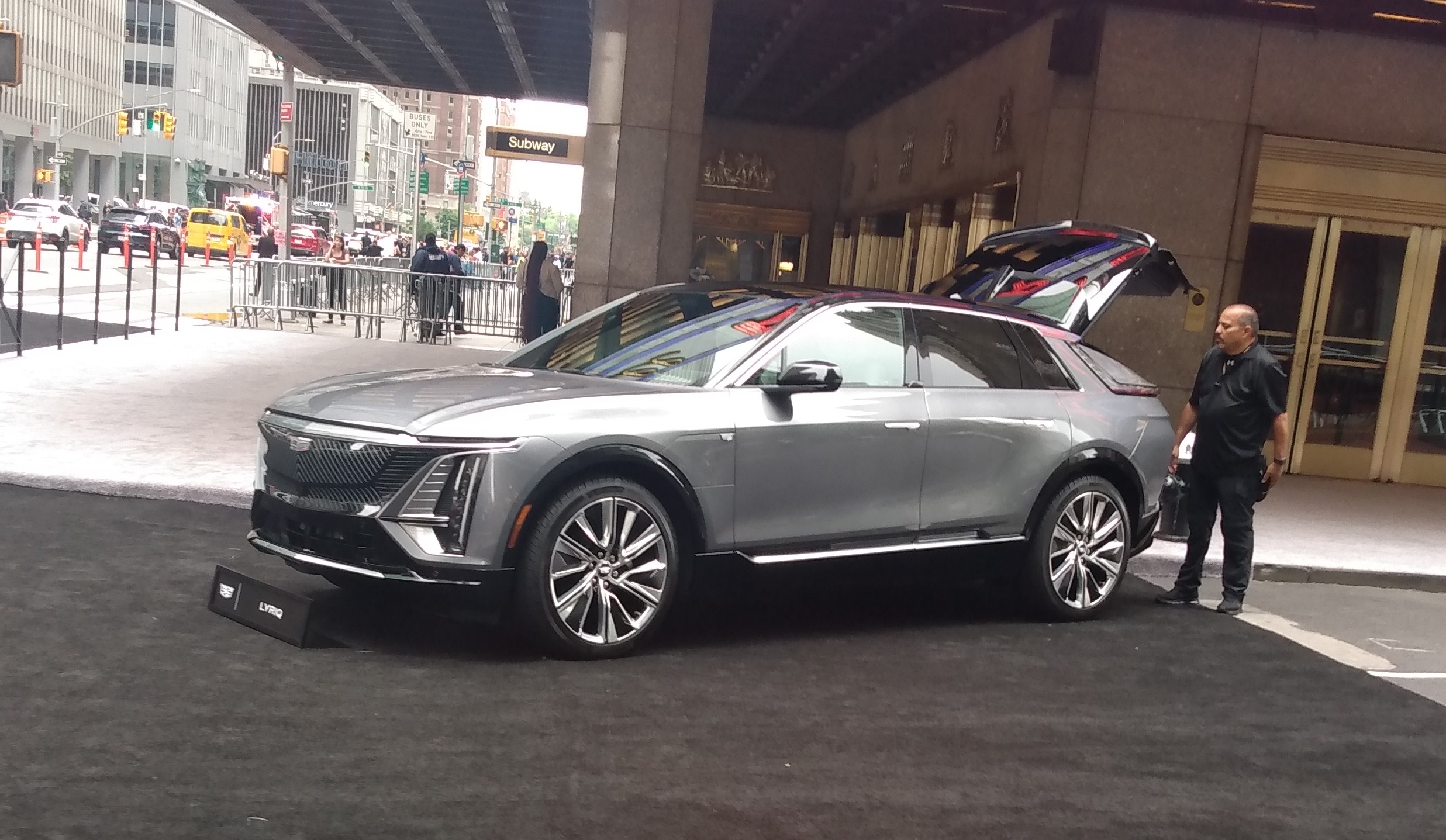
Cadillac Lyric
"...nce maybe it's a lucid air maybe it's the catalac lyric maybe it's the rivian r2 yes you can get an r2 if..."
The Cadillac Lyriq is an electric SUV from Cadillac. It’s designed to feel like a luxury vehicle while running on batteries instead of gasoline. The podcast mentions it as one of several EVs that could be seen on the road.
The Cadillac Lyriq is an all-electric luxury SUV designed to compete in the premium EV market. It’s often mentioned because it brings a mainstream luxury brand approach—comfort, styling, and modern EV tech—into an electric format. In the podcast context, it’s listed among other EVs as a possible vehicle someone might be trying to identify.
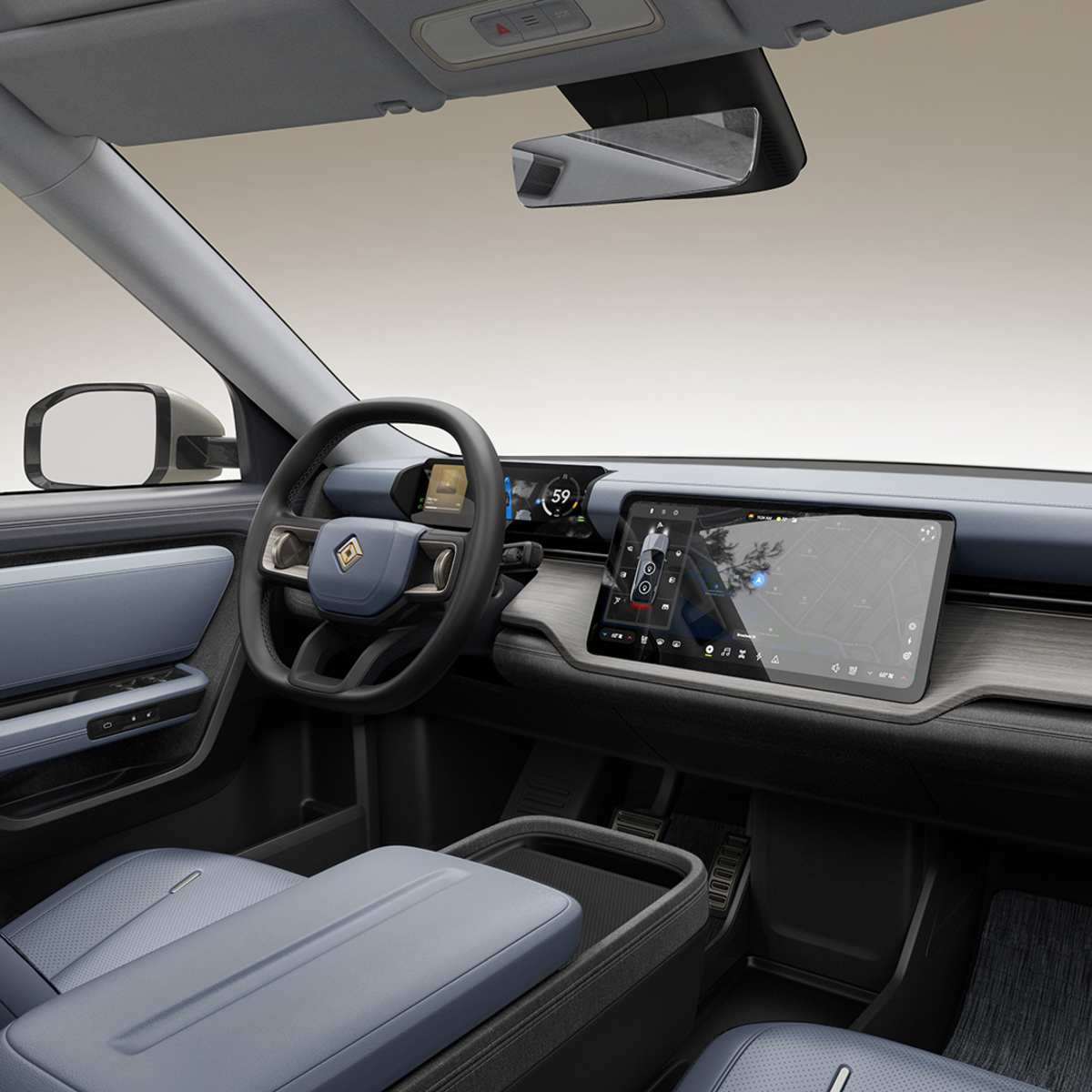
Rivian R2
"maybe it's the catalac lyric [1976.6s] maybe it's the rivian r2 yes you can get an r2 if you win this raffle"
The Rivian R2 is Rivian’s next electric SUV idea. It’s meant to be easier to live with day-to-day than Rivian’s bigger models.
The Rivian R2 is Rivian’s smaller, more affordable electric vehicle concept compared with its larger R1 models. It’s positioned as an EV for everyday use while keeping Rivian’s SUV-style practicality.

Lucid Air
"maybe it's a model three performance maybe it's a lucid air maybe it's the catalac lyric [1976.6s] maybe it's the rivian r2 yes you can get an r2 if you win this raffle"
Lucid Air is a luxury electric car (a sedan) made by Lucid. It’s aimed at people who want a more premium EV experience.
The Lucid Air is a luxury electric sedan from Lucid Motors, known for its focus on efficiency and high-end comfort. It’s often discussed as a premium alternative to Tesla’s Model 3/Model S class.
Tesla NACS ports
"that all the cars have tesla nacs ports on them now so tesla wall connector would be a great add on"
NACS is a common charging plug standard. If a car has a “Tesla NACS port,” it can use Tesla-style chargers more easily, including Tesla wall chargers.
NACS (North American Charging Standard) is Tesla’s charging connector standard that’s becoming widely used across North America. When the host says “Tesla NACS ports,” they mean the car has a charging inlet compatible with Tesla-style plugs, making charging easier with Tesla wall connectors and many third-party setups.
Tesla wall connector
"that all the cars have tesla nacs ports on them now so tesla wall connector would be a great add on"
A Tesla Wall Connector is a charger you install at home. It helps you charge your EV faster and more conveniently than plugging into a regular outlet.
A Tesla Wall Connector is a home EV charger installed at your house. It’s designed to deliver faster, more convenient charging than a basic outlet and is especially relevant when the car has a compatible NACS port.
$7,500 ev tax credit
"no matter which car you choose if you win the raffle and you know it's really true that with the $7,500 ev tax credit gone now this raffle is an even more awesome way to get your hands on the ev"
The $7,500 EV tax credit is a government discount for buying certain electric cars. If it’s no longer available, the car can cost more than it would have with the credit.
The $7,500 EV tax credit refers to a government incentive that can reduce the effective purchase price of qualifying electric vehicles. The host notes it being “gone,” which changes how much buyers pay out of pocket and can affect EV affordability.
accelerate auto
"also accelerate auto and their x care extended warranty option for any ev not just teslas although this company was founded by former tesla employees"
Accelerate Auto is the company being advertised. They offer an extended warranty for electric vehicles, not only Teslas.
Accelerate Auto is the company being promoted in the segment. The host says it offers an EV-focused extended warranty option (X Care) that applies to more than just Tesla vehicles.
extended warranty
"also accelerate auto and their x care extended warranty option for any ev not just teslas"
An extended warranty is extra protection after the normal warranty ends. It can help cover repair costs later, which can make EV ownership feel less risky.
An extended warranty is additional coverage beyond the factory warranty period, intended to help pay for certain repairs after the original coverage expires. In EV ownership, it can be a way to budget for unexpected failures in expensive components.
ownership cost
"and before buying an ev for instance your research charging and battery technology and the software the range what road trips are like and also ownership cost you plan ahead"
Ownership cost means what it really costs to keep and run the car over time. For EVs, that includes things like charging and likely repair/coverage costs.
Ownership cost is the total cost of having a vehicle over time, not just the purchase price. For EVs, it often includes charging costs, insurance, maintenance expectations, and potential warranty/repair expenses.

Rivian R1T
"so whether you're driving a model y a cyber truck a model three an r1 t and r1 s or something else entirely x care was built"
The Rivian R1T is an electric pickup truck. The host is using it as an example of an EV that the warranty plan applies to.
Rivian R1T is an electric pickup truck built for off-road capability and adventure use. The host lists it among EVs that the X Care extended warranty option is designed to cover.

Rivian R1S
"model y a cyber truck a model three an r1 t and r1 s or something else entirely x care was built specifically for ev owners"
The Rivian R1S is Rivian’s electric SUV. The host is listing it as another EV that the warranty plan covers.
Rivian R1S is an electric SUV that shares much of its platform DNA with the R1T pickup, aiming at family-friendly adventure driving. It’s mentioned as another EV model that X Care is intended for.
fully autonomous trips
"while our employees have been enjoying fully autonomous trips in the ohai for months we're excited to welcome our first public riders along for the ride"
It means the car is doing the driving by itself for the whole trip. A human isn’t steering the car the way you would in a normal car, though the service can have limits or support behind the scenes.
“Fully autonomous trips” means the vehicle can drive itself end-to-end without a human driver actively controlling steering, braking, or acceleration. In practice, these systems may still have remote assistance or operational constraints depending on the service area.
elevator like doors
"experience when riders open the elevator like doors they are welcomed into a cabin that feels remarkably expansive with a low step and completely flat floor"
They’re describing doors that open in a way that makes getting in and out easier, like stepping into an elevator. It’s meant to be more accessible than typical car doors.
“Elevator-like doors” refers to a door design that opens in a way that’s easier to enter than conventional car doors—often by lifting or sliding with a low, predictable step height. The goal is to reduce the physical effort required to get in and out.
completely flat floor
"remarkably expansive with a low step and completely flat floor making it easier to get in and out the space opens up like a living room on wheels"
A flat floor means there aren’t big bumps or raised sections under your feet. That can make it easier to get in, sit, and move around in the vehicle.
A “completely flat floor” is a cabin packaging choice that removes the usual raised transmission tunnel and other obstacles. That makes it easier for riders to move around, sit comfortably, and enter/exit—especially for accessibility needs.
embedded braille
"we've prioritized subtle touches that are there when you need them from embedded braille and screen reader compatibility to a seat integrated handle for extra support"
Embedded braille means there are raised letters inside the vehicle that you can feel with your fingers. It helps riders read information without needing to see a screen.
Embedded braille means tactile text is built into surfaces inside the vehicle so riders can read information by touch. It’s a specific accessibility feature rather than a general “accessibility” claim.
screen reader compatibility
"from embedded braille and screen reader compatibility to a seat integrated handle for extra support when entering or exiting these features"
It means the vehicle’s screens and menus can be used by software that reads the information out loud. So riders who can’t easily see the display can still get what they need.
Screen reader compatibility means the vehicle’s digital interfaces are designed to work with assistive software that reads text aloud. This requires accessible UI design (proper labeling, navigation structure, and audio output).
seat integrated handle
"from embedded braille and screen reader compatibility to a seat integrated handle for extra support when entering or exiting these features"
It’s a handhold built into the seat. It helps people steady themselves when getting in or out of the vehicle.
A seat-integrated handle is a grab point built into the seat structure to help riders stabilize themselves while entering or exiting. It’s a practical accessibility design that reduces the need to reach for less predictable surfaces.
san francisco
"initially select riders in san francisco phoenix and los angeles will have the option to take free rides in the ohai"
San Francisco is one of the first cities where Waymo plans to offer free rides in its new self-driving vehicle. It’s known for being a testing ground for new tech.
San Francisco is one of the initial test markets mentioned for Waymo’s “Ohai” rollout. The city is a major hub for autonomous-vehicle pilots and early rider programs.
phoenix
"initially select riders in san francisco phoenix and los angeles will have the option to take free rides in the ohai"
Phoenix is one of the cities where Waymo is starting its early rider rollout for the new self-driving vehicle. They’re using a few cities to gather feedback.
Phoenix is named as one of the initial test-market cities for Waymo’s “Ohai” rider program. It’s commonly used for autonomous-driving testing due to its driving conditions and established AV operations.
los angeles
"initially select riders in san francisco phoenix and los angeles will have the option to take free rides in the ohai"
Los Angeles is one of the first cities where Waymo plans to let select riders try the new self-driving vehicle. It’s a tough, real-world place to test.
Los Angeles is listed as an initial test market for Waymo’s “Ohai” rollout. Large metro areas like LA are important because they represent complex real-world traffic and routing scenarios.
denver
"we'll gradually welcome more riders over the coming months as well as expand to new cities including denver los vegas and san diego"
Denver is one of the cities Waymo says it will expand to later. They’re rolling the service out gradually and collecting feedback as they go.
Denver is mentioned as one of the future cities Waymo plans to expand to as it scales the “Ohai” rider program. City-by-city expansion is how AV services validate operations and gather local feedback.
san diego
"expand to new cities including denver los vegas and san diego before opening our doors even wider to everyone later this year"
San Diego is one of the cities Waymo plans to add for its self-driving rides. They’re expanding gradually and learning as they go.
San Diego is named as one of the cities Waymo plans to expand to for the “Ohai” rider program. This indicates a staged rollout to collect feedback and refine operations.
los vegas
"expand to new cities including denver los vegas and san diego before opening our doors even wider to everyone later this year"
This is referring to Las Vegas as a future city for Waymo’s self-driving ride rollout. They’re expanding to more places over time.
“Los vegas” appears to be a transcription of “Las Vegas,” which is listed as a future expansion city for Waymo’s “Ohai” program. The point is that Waymo is scaling beyond its initial markets.
Waymo
"on google image if you're if you're like wait what is this new wemo what does it look like"
Waymo is the self-driving-vehicle brand associated with Alphabet’s autonomous driving efforts. In this segment, the host discusses Waymo’s robotaxi operations and its vehicle rollout plans, including what cars it uses and how that relates to passenger experience.
Peterson Auto Museum
"i actually had the chance to see one up close the last time i was at the peterson auto museum coincidentally here in"
The Peterson Auto Museum is a car museum where you can see vehicles up close. The host is saying they saw a Waymo car there and that’s why they’re talking about it.
The Peterson Auto Museum is an automotive museum in the Los Angeles area that hosts displays of notable vehicles and technology. The host says they saw a Waymo vehicle up close there, using the museum visit as the reason they’re discussing the platform.
delete the steering wheel and pedals
"is wemo going to eventually be able to delete the steering wheel and pedals from these cars because if they do it effectively opens up an extra seat for an extra passenger"
If a self-driving car removes the steering wheel and pedals, it’s basically saying the car is meant to drive itself. That can free up space and make the cabin feel more like a passenger vehicle than a driver’s car.
Removing the steering wheel and pedals is a design choice that typically signals the vehicle is intended to operate without a human driver taking over. If Waymo can run without those controls, it can reallocate space and focus on passenger comfort rather than driver ergonomics.

Jaguar E-Pace
"for the record i like the jaguar eyepace that wemo uses now just fine like as a rear seat passenger it's perfectly comfortable but hopefully these ohais are even smoother of a ride than than the eyepace"
The Jaguar E-Pace is a small luxury SUV made by Jaguar. Here, the host is saying Waymo has been using it for rides and wondering whether the new Waymo vehicles will feel even smoother for passengers.
The Jaguar E-Pace is a compact luxury SUV from Jaguar Land Rover, known for its comfortable rear-seat experience and everyday drivability. In this segment, the host says Waymo uses an E-Pace for passenger rides and compares ride comfort as Waymo transitions to other vehicles.

Hyundai Ioniq 5
"they are also going to be integrating hunday Ioniq fives into their fleet as well which to me that seems more like a one-to-one replacement for the eyepace"
The Hyundai Ioniq 5 is an all-electric SUV/crossover. In this segment, the host says Waymo wants to add Ioniq 5s to its self-driving fleet as a replacement vehicle.
The Hyundai Ioniq 5 is an electric crossover built on Hyundai’s dedicated EV platform, designed for efficient daily driving and fast charging. The host says Waymo plans to integrate Ioniq 5 vehicles into its robotaxi fleet, implying a practical replacement for the Jaguar E-Pace role in their lineup.
advanced design studio
"[2627.8s] next up in other eb news this week gm officially opened their new advanced design pasadena studio here in southern california where [2635.8s] i happen to be right now"
An advanced design studio is a special workspace where a car company designs and tests new ideas. It’s where engineers and designers collaborate to build concepts faster.
An advanced design studio is a dedicated facility for developing and refining vehicle concepts and design directions. In automotive contexts, these spaces often support rapid prototyping, design iteration, and collaboration between engineering and styling teams.
gm
"[2627.8s] next up in other eb news this week gm officially opened their new advanced design pasadena studio here in southern california where [2635.8s] i happen to be right now and they revealed the gmc hummer x concept in both truck pickup truck and suv form"
GM is a big car company. Here, they’re talking about opening a new design studio and showing off a new electric concept vehicle.
General Motors (GM) is a major automaker that develops vehicles and technologies across multiple brands. In this segment, GM is described as launching a new design studio and showcasing an EV concept.
pasadena
"[2627.8s] next up in other eb news this week gm officially opened their new advanced design pasadena studio here in southern california where [2635.8s] i happen to be right now"
Pasadena is a city in Southern California. The hosts mention it because GM opened a new design studio there and revealed the concept.
Pasadena is a city in Southern California where GM opened an advanced design studio for this segment’s news. The location matters because it frames where the concept reveal happened.

Gmc Hummer
"...na and marked the occasion with the reveal of the gmc hummer x1 concepts highly reconfigurable and uh midsize ..."
The GMC Hummer EV is a fully electric truck/SUV-style vehicle. It’s meant to be powerful and capable, including for rough terrain, but it uses batteries instead of gasoline. The podcast mentions concept reveals to explain how the electric Hummer was introduced and what it was aiming to be.
The GMC Hummer EV is an all-electric version of the Hummer nameplate, built to deliver a high-performance, off-road-capable electric experience. It’s significant because it represents a major shift from traditional Hummer-style trucks to battery-electric technology. The podcast context references the reveal of Hummer EV-related concepts, highlighting how the brand positioned the vehicle’s design and versatility.
flexible manufacturing technology flex fab
"[2668.7s] hummer x concept is [2675.2s] designed to be configurable completely and continuously made possible by flexible manufacturing [2675.2s] technology flex fab in all caps enables fast small batch on demand production similar to 3d printing"
Flex Fab is GM’s way of making parts in smaller batches more quickly. Instead of using special heavy stamping tools, it’s meant to let them build different designs faster—kind of like 3D printing, but for metal.
Flex Fab is GM’s described flexible manufacturing approach that enables fast, small-batch production. The key idea is producing metal parts without relying on specialized stamping tools, similar in spirit to 3D printing but for metal.

Ford Flex
"...able completely and continuously made possible by flexible manufacturing technology flex fab in all caps..."
The Ford Flex is a larger family vehicle that’s shaped like a crossover and is known for having a roomy interior. It was built to be adaptable in how it’s made, which is what the podcast is referring to with “flex fab.” In simple terms, it’s a practical vehicle designed to carry people and cargo.
The Ford Flex is a full-size crossover/people-hauler known for its distinctive, boxy styling and flexible interior space. It’s significant because it was produced using Ford’s flexible manufacturing approach, which helped support different vehicle configurations. The podcast context ties it to “flex fab,” highlighting how manufacturing flexibility enabled the Flex’s production.
laser welded seams
"[2702.4s] radii used radii used r-a-d-i-u-s-e-d google docs is not flagging it as misspelled so i guess i'm [2710.8s] learning a new word here with a flat top silhouette with radii used edges i'm probably mispronouncing [2718.2s] it laser welded seams and visible precision bolts"
Laser welded seams are metal joints made by using a laser to fuse the parts together. It’s a precise welding method used to make strong, clean connections.
Laser welded seams are joints created by using a focused laser beam to melt and fuse metal. In vehicle body construction, this can help achieve precise, consistent seams and potentially reduce the need for bulky fasteners.
beadlock wheels
"[2748.7s] inch good year tires beadlock wheels multimatic shocks removable fender flares and serious [2755.7s] underbody protection"
Beadlock wheels are off-road wheels that clamp the tire to the rim more securely. That helps you run lower tire pressure for grip on dirt and rocks without the tire coming loose.
Beadlock wheels use a mechanical clamping system to hold the tire’s bead to the wheel. This allows off-road drivers to run lower tire pressures for better traction and ride over rough terrain without the tire slipping off the rim.
multimatic shocks
"[2748.7s] inch good year tires beadlock wheels multimatic shocks removable fender flares and serious [2755.7s] underbody protection"
Multimatic shocks are the vehicle’s suspension dampers made by Multimatic. They help the car stay controlled over bumps by controlling how fast the suspension moves.
Multimatic shocks refer to suspension dampers made by Multimatic, a company known for performance and motorsport suspension components. Shocks control how the vehicle moves over bumps by damping spring motion, which matters a lot for off-road traction and stability.
removable fender flares
"[2748.7s] inch good year tires beadlock wheels multimatic shocks removable fender flares and serious [2755.7s] underbody protection"
Removable fender flares are parts around the wheel that can be taken off. Off-roaders use them to fit different tires and help keep dirt and rocks from being thrown around.
Removable fender flares are body panels that can be taken off to change clearance and coverage around the wheel area. On off-road builds, they’re often used to accommodate different tire sizes or suspension setups and to reduce mud and debris spray.
underbody protection
"[2755.7s] underbody protection give it the the capability to take adventures to places most vehicles simply [2763.4s] cannot go"
Underbody protection is armor or shields underneath the car. It helps protect important parts when you drive over rocks, ruts, or rough ground.
Underbody protection refers to skid plates and shields that guard the lowest parts of the vehicle from impacts. It’s especially important off-road because rocks, logs, and ruts can damage components like the battery, drivetrain, and suspension.
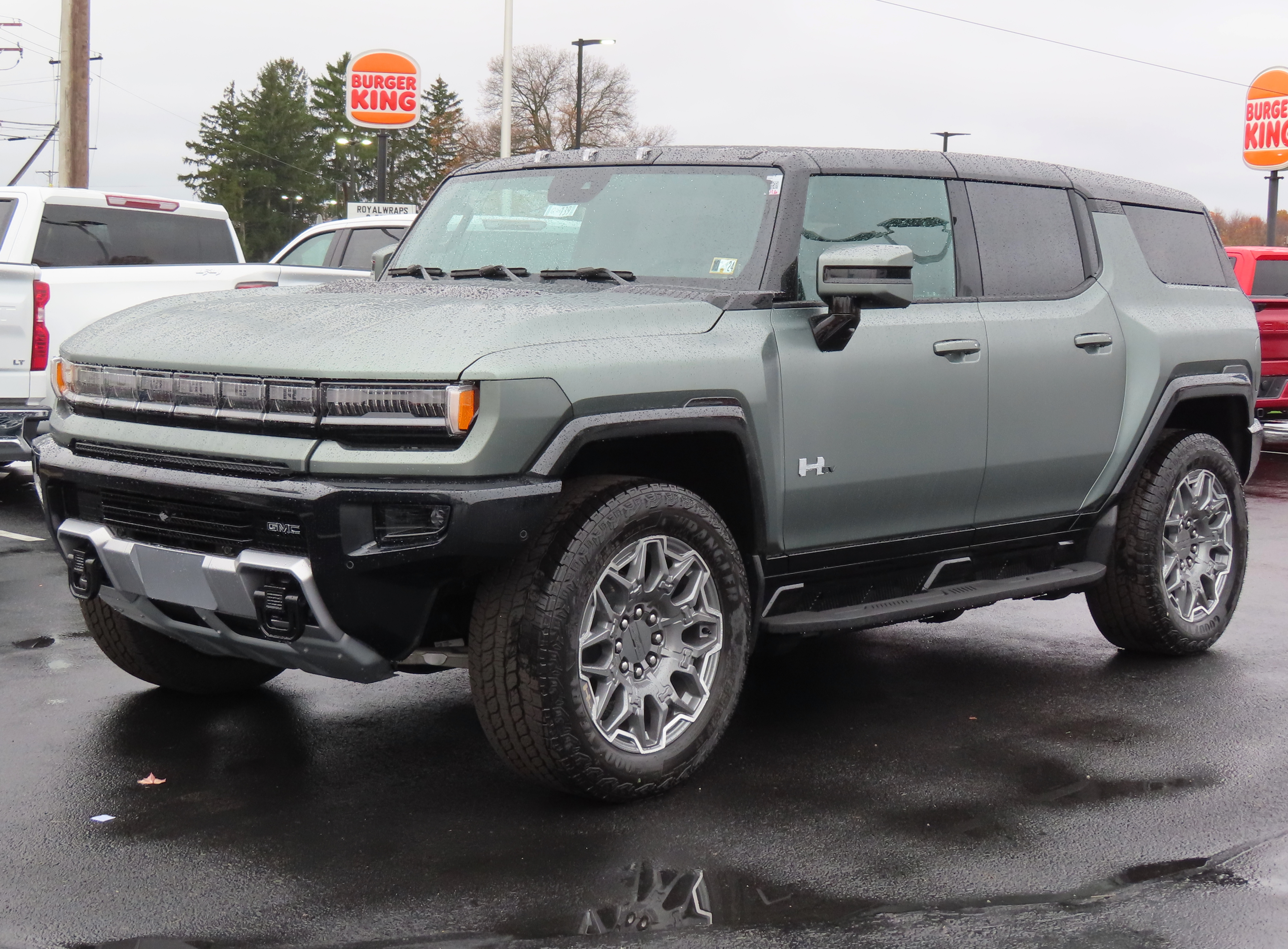
Hummer Ev
"... probably be cheaper than the existing six figure hummer ev but you get where i'm going here and more afforda..."
The Hummer EV SUV is an electric SUV version of the Hummer EV. It’s built to handle rough terrain while still being usable for normal driving. The podcast is mentioning it in the context of affordability compared with other versions.
The Hummer EV SUV refers to the electric, boxy SUV variant of the Hummer EV lineup, designed for both on-road comfort and off-road capability. It’s discussed because it extends the electric Hummer concept into a more family-friendly SUV shape. The podcast context suggests talk about pricing and how it could be more attainable than earlier high-priced versions.
EV headwinds
"and more affordability there are ev headwinds right now we all know that but affordability continues to be the the biggest one"
“EV headwinds” means the problems that make it harder for people to buy electric cars. Here, the host says the biggest issue is that EVs are still too expensive for many buyers.
“EV headwinds” is a general concept meaning obstacles that slow EV adoption. In this segment, the host specifically identifies affordability as the biggest headwind and argues EVs need more lower-priced options, especially SUVs.
Drive Tesla Canada
"it comes via drive tesla canada and it's this toyota is changing course on one of its upcoming ev projects"
Drive Tesla Canada is a news source the host is using to share the Toyota update. It’s basically where the story came from.
Drive Tesla Canada is the outlet/source the host cites for the news about Toyota changing course on an EV project. It’s included because the segment attributes the report to a specific media source.
Toyota
"according to the japan times toyota has decided to end development of a production version of the lexus lf zc a next generation electric sedan"
Toyota is the company changing its EV plans in this story. They’re stopping a production version of a Lexus electric sedan that was expected to start in 2027.
Toyota is the automaker making the decision to end development of a production version of the Lexus LF-ZC. The segment frames this as a shift away from a solid-state-battery-linked EV plan originally expected to reach production in 2027.
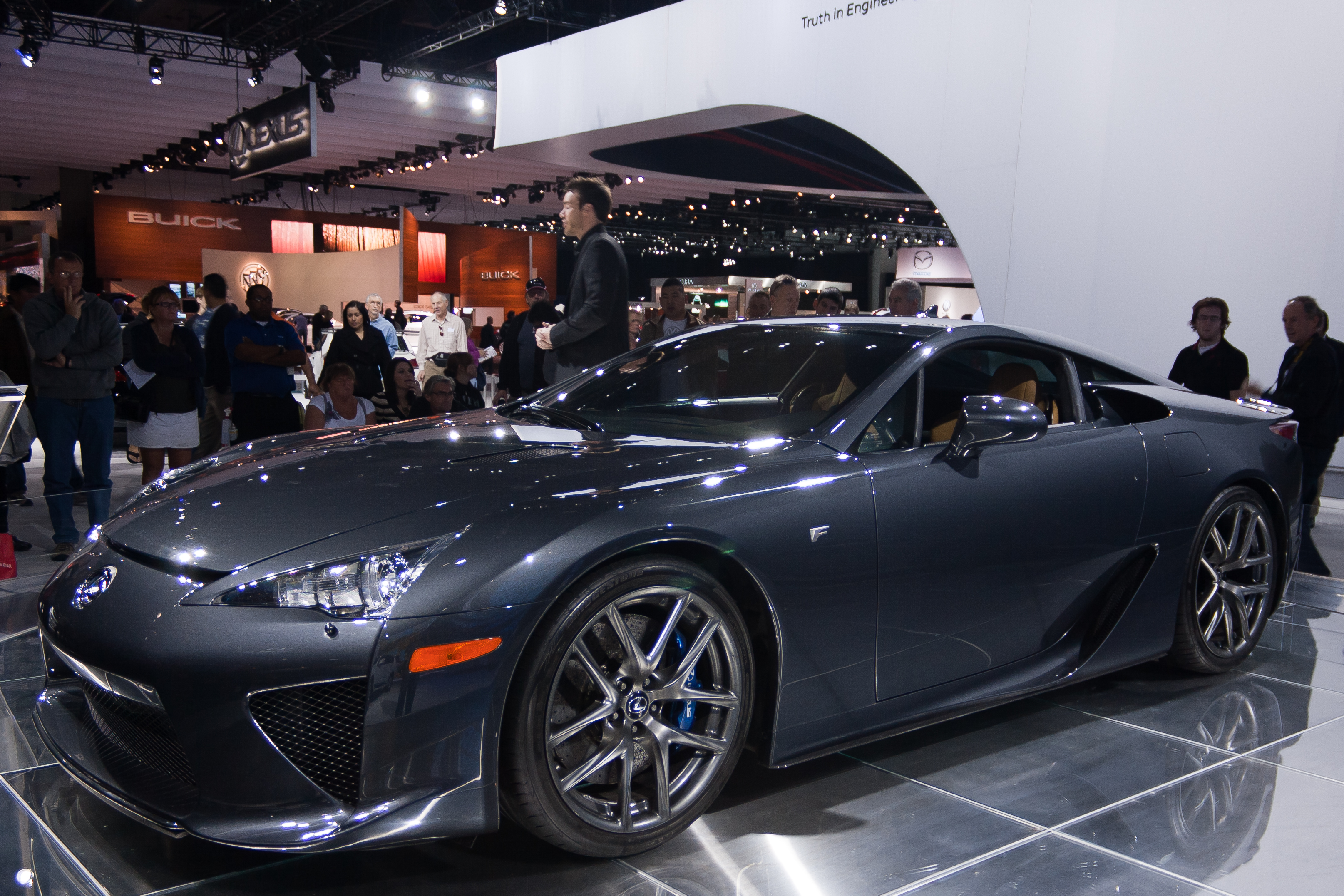
Lexus Lf
"...to end development of a production version of the lexus lf zc a next generation electric sedan that had been..."
all solid state battery technology
"the sleek luxury sedan [3019.5s] was expected to debut several major advancements including all solid state battery technology"
Solid-state batteries are a newer type of EV battery that uses a solid material instead of a liquid inside the battery. The goal is that they can charge faster, last longer, and help the car go farther.
Solid-state batteries replace the liquid electrolyte in conventional lithium-ion packs with a solid material. The promise is faster charging, longer range, and better durability because the battery can be engineered to be more stable and less prone to degradation.
ultrafast charging
"including all solid state battery technology [3027.7s] ultrafast charging and a targeted driving range of approximately 1000 kilometers or 621 miles"
Ultrafast charging means charging an EV very quickly at high power. Whether it’s truly “fast” depends on the battery and the charger working together.
Ultrafast charging refers to EV charging at very high power levels, aiming to add a large amount of energy in a short time. It’s closely tied to battery chemistry and thermal management—solid-state batteries are often discussed as a way to make very high-rate charging more practical.
targeted driving range of approximately 1000 kilometers or 621 miles
"ultrafast charging and a targeted driving range of approximately 1000 kilometers or 621 miles [3037.8s] on a single charge although the lf zc itself may never reach production"
Range is how far an EV can go before it needs charging. The host is quoting a very ambitious target of about 621 miles (around 1000 km) on one charge.
This is a stated target for EV range—how far the car is expected to travel on a single charge. Range targets like ~1000 km (621 miles) are often used to signal how much energy density and efficiency the new battery system is expected to deliver.
solid state batteries
"development of next gen ev technologies will continue that includes [3052.7s] ongoing work on solid state batteries which many automakers see as the next major breakthrough for [3059.8s] evs due to their potential for faster charging longer range and improved durability compared"
Solid-state batteries are a new battery design for EVs. The idea is they can outperform today’s lithium-ion batteries by charging faster, lasting longer, and helping the car go farther.
Solid-state batteries are the next-generation EV battery concept built around a solid electrolyte instead of a liquid one. Compared with today’s lithium-ion battery packs, they’re often claimed to enable faster charging, longer range, and improved durability.
lithium ion battery packs
"due to their potential for faster charging longer range and improved durability compared [3067.0s] to current lithium ion battery packs"
Most EVs today use lithium-ion batteries. The host is contrasting these current batteries with solid-state batteries, which are supposed to be better in key ways.
Lithium-ion battery packs are the dominant battery technology in current EVs, using a liquid electrolyte and lithium-based electrodes. The comparison matters because the episode is contrasting today’s mainstream packs with solid-state batteries as the “next breakthrough.”
real world cars that you can buy and drive
"but the fact of the matter is there are still as of yet no real world cars that you can buy and drive that use solid state battery technology"
It’s the difference between a battery that works great in a lab and a battery that actually shows up in cars people can purchase. Real-world testing matters because batteries have to last and perform under everyday driving and charging conditions.
This is the distinction between lab results and production reality. Even if a battery chemistry looks great in controlled testing, it still has to survive real-world conditions (temperature swings, charging cycles, manufacturing tolerances) and be available in customer vehicles.
thousand kilometer slash 620 mile range
"in say 2028 in about two years from now and it's got a solid state battery in it that gives it a thousand kilometer slash 620 mile range"
They’re talking about how far the car could go on one charge—about 1,000 kilometers or 620 miles. Range is a key number for EV buyers because it affects how often you need to stop and recharge.
This is a claimed EV driving range figure expressed in both kilometers and miles. Range is the distance an EV can travel on a full charge under specified testing conditions, and it’s one of the most important metrics for battery technology.
BYD
"will a chinese automaker such as byd beat the rest of the world to the punch that seems to be the way things are trending"
BYD is a major Chinese car company. The speaker thinks BYD might be the first to bring solid state batteries to real cars because China is pushing EVs hard.
BYD is a Chinese automaker that the speaker suggests could be first to commercialize solid state batteries. The mention ties BYD to the broader idea that China’s EV industry is moving quickly toward electrification.
full self-driving
"full self-driving on the 2026 car something i've been long"
Full Self-Driving is Tesla’s software that helps the car drive more on its own. It’s designed to do more than simple cruise control, but it still depends on the specific feature and conditions.
Full Self-Driving (FSD) is Tesla’s software suite for advanced driver-assistance and automated driving features. It’s not “fully autonomous” in all situations, but it can handle more of the driving task than basic autopilot, including navigating and executing planned routes depending on the version and region.
waypoints
"is the ability to specify waypoints that are non-stop when navigating"
Waypoints are the planned stops you put into your navigation. They tell the car to go to specific places in a certain order.
Waypoints are intermediate stops you add to a navigation route—like “stop B” or “stop C”—so the system must pass through them in order. In this segment, the listener is asking for waypoints that can be handled as a continuous, non-stop multi-stop route.
grok
"i tried this again recently using grok and grok was able to do all of a multi-stop navigation so with four stops"
Grok is an AI tool the caller used to help plan and adjust a multi-stop trip. They’re using it to control the navigation stops without having to touch the screen as much.
Grok is an AI assistant used here to generate or manage multi-stop navigation instructions for the Tesla’s Full Self-Driving experience. The listener describes using it to create a route with multiple stops and then edit those stops while driving.
guest mode
"but i'd highly recommend anybody who has access to grok to use that and particularly to use it with a sign in don't use it in um in guest mode"
Guest mode is a limited mode where you’re not signed in. The caller thinks signing in gives the AI more capability or better results than guest mode.
Guest mode is a restricted operating mode where an AI assistant or app may limit features, personalization, or saved context. The caller recommends signing in rather than using guest mode, implying the navigation/route editing works better with an authenticated account.

Delorean DMC-12
"...e i i have to mention this if you happen to see a delorean around town maybe if if you can take a picture of..."
The DeLorean DMC-12 is a sports car with a very unusual look, including stainless-steel panels and doors that open upward. It’s memorable enough that people often recognize it even if they don’t know much about cars. The podcast is basically asking listeners to take a picture if they see one.
The DeLorean DMC-12 is a distinctive sports car known for its stainless-steel body and gull-wing doors. It’s often discussed because it’s an iconic, recognizable design and has a strong place in automotive pop culture. The podcast context suggests the host is encouraging listeners to spot one in the real world and share photos.
mileage
"i i use fsd all my mileage um but one thing on the highways is that fsd follows i believe far too closely to large trucks"
Here, mileage just means how many miles they’ve driven. They’re saying they use FSD on most of their trips.
In this context, mileage means the total distance driven, used to describe how often the speaker uses FSD. It’s not a technical drivetrain term here—just a measure of usage frequency.
semi truck
"i can see it on my screen that it knows the difference between a semi truck and a pickup truck uh so yeah if it could like increase the follow distance on highways to large trucks"
A semi truck is a large commercial truck with a trailer. Because it’s heavy and can kick up rocks, the speaker wants the car’s system to react differently than it would for a normal pickup.
A semi truck (often called a tractor-trailer) is a heavy commercial vehicle that can throw road debris when driving, especially if it’s carrying materials like gravel. The host wants FSD to recognize semi trucks differently from pickups so it can adjust behavior to reduce damage risk.
follow distance
"if it could like increase the follow distance on highways to large trucks that would be amazing because i end up having a disengage all the time"
Follow distance is how much space the car keeps between itself and the vehicle in front. For automated driving systems, the follow distance strongly affects both safety margins and how likely debris from trucks (like rocks) will reach your car.
van life
"seeing as that his model x isn't just his car it's his home you can take a look at gofundme.com slash f slash tesla van life"
“Van life” is a lifestyle where people live on the road in a vehicle, often converting it into a mobile home. Here, the host frames the Tesla Model X as more than just transportation—something the owner uses as a place to live.
standard mode
"so i typically use fsd in standard mode has anyone else noticed standard mode going noticeably and annoyingly slower than it used to on this new version on the freeway"
Standard mode is a setting inside Tesla’s driving-assist system. It changes how the car behaves—like how it matches speed and how smoothly it drives on highways.
Standard mode is one of Tesla’s driving-assist behavior settings within FSD. It affects how aggressively the car follows speed targets and how it manages acceleration and cruising on roads like freeways.
freeway
"has anyone else noticed standard mode going noticeably and annoyingly slower than it used to on this new version on the freeway so the old versions used to comfortably cruise"
Here, “freeway” just means a highway. The speaker is talking about how the car’s driving-assist behaves on faster roads.
In this context, “freeway” is the high-speed road environment where FSD’s speed and lane-keeping behavior is most noticeable. The speaker is comparing how the system cruises on freeway traffic flow.
regen
"i just wanted to follow up i know there's been a little bit of back and forth about the regen in the winter time on teslas ... and they definitely will kick in regen even when it's slippery"
“Regen” is how an EV slows down when you take your foot off the gas. Instead of wasting all that speed as heat, the car turns the motor into a generator to recharge the battery a bit.
In Tesla EVs, “regen” is short for regenerative braking. It uses the electric motor as a generator when you lift off the accelerator, converting some of the car’s kinetic energy back into electricity while slowing the vehicle.

Tesla Model S
"i've had a 2017 model s a 2019 model x currently in a 2021 model y and they definitely will kick in regen even when it's slippery"
The Tesla Model S is an all-electric sedan. Here, the key point is how its “regen” braking works on slippery roads—whether it still slows the car when traction is poor.
The Tesla Model S is Tesla’s flagship electric sedan, and this listener specifically mentions how its regenerative braking behaves in winter conditions. They’re describing whether regen activates when traction is low, which affects how the car slows when you lift off the accelerator.
braking profiles
"whether or not there was a change on newer teslas kind of like how my 2018 has different braking profiles than my 2024 does"
Braking profile is basically how the car decides to slow down. On many EVs, it affects how strong the slowing feels when you take your foot off the accelerator.
A braking profile is the way an EV’s deceleration behavior is tuned—especially how strongly it slows when you lift off the accelerator. Different profiles can change the balance between regenerative braking and friction braking feel.
one pedal driving
"so more specifically my 2024 doesn't have any choice in braking profile it's one pedal driving only whereas there are options on the 2018"
On an EV with one-pedal driving, you can slow the car just by easing off the accelerator. The car uses its electric motor to slow down and recharge the battery at the same time.
One-pedal driving is an EV driving mode where the accelerator also controls deceleration. Lift off the accelerator and the car uses regenerative braking to slow down, so you often don’t need to touch the brake pedal for normal stops.
piano black finish
"the the fingerprinting is uh is is it's a piano black finish and it's it fingerprints very easily so stuff like that just a lot of really thoughtful and smart accessories"
Piano black finish is a shiny black interior trim. It looks great, but it tends to show fingerprints and smears easily.
A piano black finish is a glossy, dark trim surface (often used on dashboards and center consoles) that reflects light strongly. It’s notorious for showing fingerprints and smudges, which is why owners often use protective wraps or coatings.
RPM Tesla
"[4646.0s] com rpm tesla meanwhile they make so many great body mods are a lot of carbon fiber stuff they are [4655.3s] trusted by over 200 000 tesla owners since 2013 offering over 1400 in-house designed and manufactured"
RPM Tesla sells aftermarket add-ons for Tesla cars. Here they’re talking about things like carbon-fiber upgrades and other accessories you can install yourself or have installed.
RPM Tesla is an aftermarket parts and accessories brand focused on Tesla vehicles. In this segment, they’re being promoted for carbon-fiber body mods and for accessories that are compatible across Tesla models and years.
infinity shield
"[4703.3s] visit rpm tesla dot com to upgrade your tesla today the infinity shield this is an awesome [4712.9s] piece of engineering that you buy once and you never need again it is a garage door sensor"
Infinity Shield is a device that helps stop a garage door from closing if something is in the way. It’s meant to protect your car when you accidentally hit the close button.
Infinity Shield is a garage-door safety accessory marketed as a sensor system. The pitch here is that it uses a multi-beam array to detect obstructions and prevent the garage door from closing on a car or parts.
25 beam array
"[4720.3s] attaches to your existing setup there are no special tools needed it's compatible with basically [4726.4s] every garage door opener system and it creates a 25 beam array not not like most garage door [4737.1s] openers where there's one sensor beam a couple inches off the ground"
This means the sensor uses many light beams instead of just one. If something blocks the beams, the garage door should stop or reverse instead of closing on your car.
A 25 beam array refers to a garage-door safety sensor that projects multiple horizontal and angled light beams across the door opening. More beams can improve the odds of detecting an obstruction (like a car or rear hatch) before the door closes.
snap plate
"[4800.6s] and use the promo code RTL at checkout for a $25 discount how about the snap plate they've got the [4811.9s] regular snap plate and the newer stronger snap plate plus this is the front license plate bracket"
Snap Plate is a product for mounting a front license plate. They’re saying there’s an older version and a newer stronger one, and it’s designed to look clean and mount securely.
Snap Plate is being referenced as a specific aftermarket front license plate bracket system. The host distinguishes between a regular version and a newer, stronger version, and recommends it for a Tesla or other EV.
everyamp.com
"without leaving any damage behind on your car if you ever want to remove it you can get yours at everyamp.com slash RTL and there is a discount if you use the coupon code RTL"
This is the website the host mentions for buying the products they’re talking about. They also say there’s a discount if you use a specific code.
Everyamp.com is the sponsor/retailer mentioned for products related to mounting a front license plate bracket. The host also provides a discount code, indicating it’s a consumer-facing brand in this episode’s ad segment.
front license plate bracket
"there is a discount if you use the coupon code RTL as well these are great products if you need or legally have to have a front license plate bracket i do not recommend using the tesla front mounting brackets"
It’s the part that holds your front license plate on the car. Some places require a front plate, and how it’s mounted can affect how easy it is to remove later.
A front license plate bracket is the mounting hardware that holds the front plate to the car’s bumper or front fascia. Some cars require it by law, and the bracket can be attached with hardware or adhesives/tape depending on the design.
automotive tape
"i do not recommend using the tesla front mounting brackets because it sticks to the car with automotive tape which means if you ever want to get it off you're going to have a bad time"
It’s special sticky tape made for cars. The host is saying that if something is attached with tape, taking it off later can be a pain and may leave marks.
Automotive tape is an adhesive tape designed for vehicle surfaces, often used for trim, brackets, or temporary mounting. The host warns that tape-based mounting can be difficult to remove cleanly without damaging paint or leaving residue.
Immaculate Reflections
"immaculate reflections if you're in or going to be in the greater san francisco bay area make an appointment ahead of time to get it over to immaculate reflections maybe to have the paint finish refreshed via paint correction"
This is a car detailing shop the host recommends. They do services to improve and protect your car’s paint.
Immaculate Reflections is the detailing shop mentioned for services like paint correction and paint protection film. The host frames it as a local option in the greater San Francisco Bay Area.
paint correction
"maybe to have the paint finish refreshed via paint correction which is a laborious delicate process but your paint finish will look amazing when immaculate reflections gets done with it"
Paint correction is the process of removing or reducing surface defects in a car’s clear coat—commonly swirls, scratches, and oxidation—using polishing steps. It’s described as laborious and delicate because it requires careful technique to avoid thinning the clear coat too much.
paint protection film
"with it maybe you want to do paint protection film on the front end of the car or even all of the car or somewhere in between to keep those rocks and other little things from damaging your paint"
Paint protection film is a clear sheet that you apply to protect the paint. It helps prevent rock chips and small damage, especially on the front of the car.
Paint protection film (PPF) is a clear protective layer applied to vulnerable areas of a car’s paint to guard against rock chips, road debris, and minor abrasions. It can be installed on the front end or extended to more of the vehicle depending on how much protection you want.
ceramic coated
"maybe you want to get the car ceramic coated so the next three to five to more like seven years you won't have to worry about waxing the car because the ceramic coating is keeping that surface and that paint protected from the sun and its UV rays"
Ceramic coating is a protective layer put on top of your car’s paint. It makes the paint easier to keep clean and can reduce how often you need to wax.
Ceramic coating is a liquid-applied protective layer that bonds to a car’s paint to make it more resistant to dirt, water spotting, and UV-related wear. The host claims it can reduce how often you need to wax because it helps keep the surface protected for years.
UV rays
"because the ceramic coating is keeping that surface and that paint protected from the sun and its UV rays whatever you want to do"
UV rays are the sun’s invisible light that can slowly damage paint. The host is saying the coating helps protect against that sun damage.
UV rays are ultraviolet radiation from sunlight that can degrade automotive paint over time by breaking down protective layers and contributing to fading/oxidation. Ceramic coatings and other paint protection methods are often marketed as helping reduce UV-related wear.
Request an Explanation
Heard something you'd like explained? We'll add it to this episode.
Sign in to request explanations for terms you heard.
Want to learn more?
Browse our glossary for plain-English explanations of automotive terms, jargon, and concepts.
Help improve this episode
See something that's not quite right? Our annotations are AI-generated and can sometimes miss the mark. Click the flag icon on any annotation to suggest a correction.