
Episode 563: A Long-Awaited Supercharging Feature Debuts
About this episode
Tesla’s long-awaited supercharging improvements are rolling out, including a new in-car waitlist being tested at five sites, with non-Teslas able to join via the Tesla app. The hosts compare it to real-world chaos—like a Supercharger queue of over 20 cars—and debate whether the system truly enforces order or relies on “good faith.” Elsewhere, they dig into Tesla’s battery-cell expansion, interior rattle-reduction patents, and broader EV strategy news from Mazda and Honda.
Tesla has begun an initial rollout of a long-asked-for Supercharging feature. Plus: Tesla expands battery production at Giga Berlin, BMW hits an EV milestone, and more!
If you enjoy the podcast and would like to support my efforts, please check out my Patreon at https://www.patreon.com/teslapodcast and consider a monthly or (10% discounted!) annual pledge. Every little bit helps, and you can support for just $5 per month. And there are stacking bonuses in it for you at each pledge level, like early access to each episode at the $5 tier and the weekly Lightning Round bonus mini-episode (AND the early access!) at the $10 tier! And NO ADS at every Patreon tier!
WIN AN EV WHILE GIVING TO A GREAT CAUSE: For your chance to win your dream EV in the 2026 ChesedChicago raffle, head to https://tinyurl.com/CCraffleRTL -- Hurry, tickets are limited and only 9,999 tickets will be sold, get your tickets today and use code RTL for $25 off 2 tickets or $500 off 15 tickets. Whether you win or not, you're helping a great organization help families in need.
Also, don't forget to leave a message on the Ride the Lightning hotline anytime with a question, comment, or discussion topic for next week's show! The toll-free number to call is 1-888-989-8752.
INTERESTED IN A FLEXIBLE EXTENDED WARRANTY FOR YOUR TESLA? Be a part of the future of transportation with XCare, the first extended warranty designed & built exclusively for EV owners, by EV owners. Use the code Lightning to get $100 off their "One-time Payment" option! Go to www.xcelerateauto.com/xcare to find the extended warranty policy that's right for you and your Tesla.
P.S. Get 15% off your first order of awesome aftermarket Tesla accessories at AbstractOcean.com by using the code RTLpodcast at checkout. Grab the SnapPlate front license plate bracket for any Tesla at https://everyamp.com/RTL/ (don't forget the coupon code RTL too!). Enhance your car with cool carbon-fiber upgrades from RPMTesla.com and use the promo code RTL5-10 for 5-10% off your next purchase. And make your garage door foolproof with the Infinity Shield – get yours at https://www.infinity-shield.com and use the promo code RTL at checkout for a $35 discount.

Model X
"this week's poll. Again, the question was simple. Do you think the Model S or X will ever come back? 13% of you said yes, I think they'll both be back someday."
The Tesla Model X is an all-electric SUV. In this part of the show, they’re debating whether Tesla will bring it back after it was discontinued.
The Tesla Model X is a battery-electric SUV known for its distinctive design and EV packaging. The host uses it alongside the Model S to discuss whether Tesla will reintroduce either vehicle after major manufacturing changes.

Model S
"this week's poll. Again, the question was simple. Do you think the Model S or X will ever come back? 13% of you said yes, I think they'll both be back someday."
The Tesla Model S is an all-electric Tesla sedan. Here, they’re talking about whether Tesla will restart or reintroduce it after it was effectively phased out.
The Tesla Model S is a long-range electric sedan that helped define the modern EV performance-and-range formula. In this segment, the host is discussing whether Tesla will bring the Model S back, implying production and product-line changes.
production line
"because everything that Tesla is not only saying but doing, like they are ripping out that production line, that GA1 assembly line, and they're going to replace it with an Optimus line."
A production line is the factory process where cars are built step-by-step. If Tesla removes a production line for one model, it often means they’re stopping that model and switching to something else.
A production line is an organized manufacturing setup where a product moves through stations for different steps of assembly. In EV discussions, changes to a production line can signal that a model is being phased out or replaced by a different product.
assembly line
"like they are ripping out that production line, that GA1 assembly line, and they're going to replace it with an Optimus line."
An assembly line is how a factory builds a car in stages. Here, Tesla is described as removing the assembly line used for these cars and replacing it with something else.
An assembly line is a manufacturing system where different workers or machines perform specific tasks in sequence to build a complete vehicle. The host specifically ties the assembly line to Tesla’s Model S/X manufacturing footprint being removed and replaced.
Optimus line
"they are ripping out that production line, that GA1 assembly line, and they're going to replace it with an Optimus line."
Optimus is Tesla’s robot project. Saying they’ll replace a car-building line with an “Optimus line” means the factory is being set up to build robots instead of those cars.
“Optimus” refers to Tesla’s humanoid robot program, and an “Optimus line” implies a factory production setup dedicated to building those robots. The host is using it to argue that Tesla is reallocating manufacturing capacity away from certain vehicles.

Chrysler Saratoga
"...nia, all four of these so far in the Bay Area, on Saratoga Avenue, and on the east coast in the Bronx, New Y..."
The Chrysler Saratoga is an older Chrysler car model name. In the podcast, it’s mentioned because of a story tied to specific places. It’s not being described as a modern electric vehicle in this context.
The Chrysler Saratoga is a nameplate from Chrysler’s past, and the podcast mentions it in the context of a location-based story or route (Saratoga Avenue and the Bronx). It’s not being discussed as a current EV, but rather as part of the episode’s broader narrative. That’s why it appears alongside other car references—more as a historical or personal detail than a technical EV comparison.
Supercharger
"and so that of course caused any of the superchargers that are inland off the beaten path to be packed, and in fact, one of them specifically, the Mojave Supercharger"
A Supercharger is a Tesla fast-charging station. It has multiple spots where you can plug in and charge your car, and if too many people arrive, you may have to wait.
A Supercharger is Tesla’s high-power DC fast-charging network for Teslas. Stations typically have multiple “stalls” (individual charging spots), and when demand spikes, those stalls can fill up quickly.
DC fast-charging
"We were just waiting in line for the car to charge... baked into the car"
DC fast-charging is the kind of charging that can add a lot of energy quickly. It’s what you use at fast-charging stations like Tesla Superchargers.
DC fast-charging is a method of charging that uses direct current to deliver high power to the battery. It’s what Tesla Superchargers are designed for, enabling much faster charging than typical home AC charging.
V3
"but it took a while, of course, to make it through everybody that those were V2s, V3s didn't exist back then"
“V3” is a newer generation of Tesla Supercharger equipment. The host is saying that back then, only the older kind (V2) was around, so the charging line took longer.
“V3” refers to Tesla Supercharger hardware generation 3. It’s mentioned here as a later capability that wasn’t available at the time of the story, implying that newer stations can handle demand differently than older V2 setups.
V2
"but it took a while, of course, to make it through everybody that those were V2s, V3s didn't exist back then"
“V2” means an earlier generation of Tesla’s Supercharger equipment. Different generations can charge at different speeds, which changes how long people might wait when a station is busy.
“V2” refers to Tesla Supercharger hardware generation 2. Compared with later versions, V2 stations generally have different power delivery and charging behavior, which can affect how quickly queues clear when many cars arrive.
enforcement vs good-faith queueing
"But anyway, if you're on, whether you're on the list or not, if you try to cut in line, does the supercharger actually lock you out and not charge your car? ... I suspect that this wait list feature probably relies on people acting in good faith"
They’re wondering whether the charging line is “real” (the system blocks you until it’s your turn) or more like a suggestion (it only works if people follow it). That changes how well it works when someone needs to charge urgently.
The hosts are contrasting two models for managing charger queues: hard enforcement (the system blocks charging until your turn) versus soft enforcement (the system tracks a wait list but doesn’t actually prevent out-of-order charging). This matters because it affects whether the queue is reliable during emergencies or bad-faith behavior.
4680 cell production
"quote, today we announced a $250 million investment for our Giga Berlin cell factory. This will enable 18 gigawatt hours of annual 4680 cell production and create more than 1500 new jobs."
“4680” is the name Tesla gives to a specific size/type of battery cell. Tesla likes this design because it can help batteries be made more efficiently and potentially store more energy.
“4680” refers to Tesla’s battery cell format (about 46 mm in diameter and 80 mm tall). Larger cells can improve energy density and reduce manufacturing complexity, which is why Tesla pushes them for scaling battery output.
Andre Tehrig
"Giga Berlin's boss, Andre Tehrig, I hope I'm pronouncing his last name correctly, posted on X saying quote, today we announced a $250 million investment"
Andre Tehrig is mentioned as the person leading Tesla’s Berlin factory. The host is using his quote to share the battery-factory investment details.
Andre Tehrig is identified in the segment as the leader (“boss”) associated with Tesla’s Giga Berlin operations. The quote is used to communicate the factory investment and production targets.
gigawatt hours
"This will enable 18 gigawatt hours of annual 4680 cell production"
“Gigawatt hours” is a big unit for measuring energy. Here it’s used to describe how much energy Tesla expects its battery cells to be able to store each year.
“Gigawatt hours” (GWh) is a unit of energy, commonly used to describe large-scale battery production capacity. In this context, it’s Tesla’s annual output target for how much energy the produced cells can store, not a measure of vehicle range by itself.
full self driving unsupervised
"as full self driving unsupervised is validated and"
“Unsupervised” means the car is expected to drive on its own without the driver needing to watch constantly or take over. The host is saying Tesla plans to expand where it’s used once the software is proven and approved.
“Full self driving unsupervised” refers to Tesla’s driver-assistance software operating without a human actively monitoring or intervening. In practice, this is a regulatory and safety milestone because it changes how the system is allowed to behave and what level of driver attention is required.

Tesla Model 3
"because there's not room there because the SNX lines being replaced by Optimus and then you still have the Model 3 line and the Model Y line there as well."
They mention the Tesla Model 3 because it’s one of the cars already being built at the Fremont factory. The discussion is about how factory space and production lines get rearranged when new projects start.
Tesla Model 3 is referenced as one of the existing production lines that would share space alongside other programs at Tesla’s Fremont factory. In this context, it’s part of the manufacturing capacity puzzle—where new lines (like Optimus) might replace older ones.
factory capacity constraints ("bursting at the seams")
"And there's again, we're told there's that they're bursting at the seams in Fremont."
They’re saying the factory is basically running out of space or capacity. The point is that adding new production (like Optimus) may require swapping out older lines.
“Bursting at the seams” is a capacity metaphor meaning the factory is operating near its practical limits. In this segment, it’s used to support the idea that Fremont may not have room for additional manufacturing programs without replacing or reworking existing lines.
target run rate (units per year)
"phase one of Optimus is going to be built here... with a target run rate of 1 million units per year... phase two production line will be at Giga, Texas on a line that aims to do 10 million units per year."
Run rate is basically the planned “how many will we build each year” number. They use it to judge whether Optimus would require battery supply from a specific Tesla factory right now.
A target run rate is a planned production pace—how many units a factory is expected to produce per year once it ramps up. Here, the speaker uses run-rate targets to argue whether a given factory (Fremont vs Giga Texas) would need to make battery cells for Optimus in the near term.
4680 cells
"reduce Model Y costs and increase the margins per car by doing onsite 4680 cell manufacturing... charging curves on those 4680 cells... legitimate criticism that you can level at the 4680 cells in comparison to the 2170 cells... and the now retired 18650 cells"
“4680 cells” are Tesla’s newer type of battery cells. The hosts say Tesla wants to make them locally to reduce cost, but they’ve been criticized because they don’t stay at the fastest charging speed for as long as older battery types.
“4680” refers to Tesla’s battery cell format (named for its approximate dimensions in millimeters). In this segment, the hosts focus on how 4680 cells are being produced onsite to cut costs, but they also note a drawback: historically, 4680 cells haven’t held high fast-charging rates as long as Tesla’s older 2170 and 18650 cells.
2170 cells
"charging curves on those 4680 cells because so far that's been the... criticism... 4680 is just do not have as good of a charging curve on them... as the 2170s"
“2170 cells” are an older Tesla battery cell type. In this discussion, they’re used as the benchmark for fast charging, because the hosts say 2170 cells have generally charged faster for longer than 4680 cells.
“2170” is Tesla’s earlier cylindrical battery cell format (again named for approximate dimensions in millimeters). The hosts compare it to 4680 by saying 2170 cells have historically had better fast-charging behavior—specifically maintaining higher fast-charging rates for longer.
Giga Nevada
"not having to ship over 2170 cells from Giga Nevada in a half way around the world... then perhaps these additional 18 gigawatt hours of production will be to support that variant"
Giga Nevada is one of Tesla’s factories. Here it’s mentioned as the place where older battery cells come from, and the hosts compare that to making newer cells onsite to save money.
Giga Nevada is Tesla’s battery-cell and/or vehicle-related manufacturing site referenced here as the source of 2170 cells. The segment contrasts shipping cells from Giga Nevada versus producing 4680 cells onsite to reduce logistics cost and improve margins.
charging curve
"let's hope that Tesla has improved the charging curves on those 4680 cells because so far that's been the... criticism... 4680 is just do not have as good of a charging curve on them"
A “charging curve” is basically how fast the car keeps charging over the course of a fast-charge session. They’re saying 4680 batteries tend to slow down sooner than older battery types.
A “charging curve” describes how a battery’s charging power (or charging speed) changes over time during a fast-charge session. The hosts argue that 4680 cells have historically had a less favorable charging curve—meaning they don’t maintain high fast-charging rates for as long as 2170 or 18650 cells.
18650 cells
"in comparison to the 2170 cells from the Model 3s and the Model Ys and the now retired 18650 cells... the 4680 is just do not have as good of a charging curve on them"
“18650 cells” are an older battery type Tesla used before newer designs. The hosts say these older cells generally held fast-charging speed longer than 4680 cells.
“18650” refers to a widely known cylindrical lithium-ion cell format (named for approximate dimensions in millimeters). The hosts mention “retired 18650 cells” as another earlier Tesla battery generation that, like 2170, has historically been better at sustaining fast-charging rates compared with 4680.
Giga Berlin
"Now speaking of Giga Berlin by the way... a quick congratulations to the Giga Berlin team. They announced this week they produced their 750,000th vehicle, of course all Model Ys."
Giga Berlin is Tesla’s factory in Europe. They say it reached a production milestone—750,000 Model Ys—and they connect it to the broader battery and charging discussion.
Giga Berlin is Tesla’s European manufacturing facility, and the hosts tie it to both battery-cell expansion and vehicle production. They also mention a milestone: the plant producing its 750,000th vehicle, all Model Ys, after being open for just over four years.
trim clip
"Tesla has patented a new trim clip to reduce rattles and vibrations. This story comes via not a Tesla app, who I've sourced many times on this podcast, and they write, Tesla has published a new patent application for a redesigned trim clip—"
A trim clip is a small plastic fastener that holds the inside plastic panels and covers of a car. If it gets loose over time, it can make rattling or buzzing noises while you drive.
A trim clip is a plastic fastener used to hold interior trim pieces, panels, and covers in place. If these clips loosen or develop gaps, they can cause squeaks, rattles, and vibration noise—so improving the clip design can directly reduce cabin annoyance.
rattle mitigation
"The patent titled low profile rattle mitigation trim clip focuses on plastic clips that are used throughout a vehicle's interior."
Rattle mitigation means engineering the car’s interior so it doesn’t make annoying rattling noises. This patent focuses on reducing those vibrations from trim pieces over time.
Rattle mitigation refers to design changes intended to stop loose or resonating interior parts from vibrating and making noise. In this patent, the goal is to reduce rattle and vibration noise by changing how trim clips and interfaces behave.
vibration isolating layer
"Tesla's patent describes a new trim clip system designed to reduce those issues by using a soft vibration isolating layer between components."
A vibration isolating layer is a soft material used between parts so vibrations don’t transfer as easily. That helps prevent the interior from buzzing or rattling.
A vibration isolating layer is a compliant material placed between components to absorb or damp vibrations. By adding a soft layer between trim parts, Tesla’s design aims to reduce noise while improving how securely components stay in place.
retention
"The patent says the design helps improve retention while also damping noise and vibration."
In this context, retention means how well the clip system holds trim pieces firmly over time. Better retention reduces the chance of gaps forming, which is what can lead to squeaks, rattles, and vibration noise.
low profile setup
"Typical clips often require large mounting holes. Tesla's design instead uses a lower profile setup that can fit into tighter spaces."
A low profile setup means the mounting hardware is smaller and thinner. That helps it fit in tight spots inside the car where there isn’t room for big mounting holes.
A low profile setup means a thinner, more compact mounting design that can fit into tight interior spaces. The segment notes that typical clips need larger mounting holes, while Tesla’s approach uses a smaller footprint.
BSR
"[1703.6s] squeak and rattle noise, often called BSR in the automotive industry. Tesla's have [1709.9s] often been plagued with rattles and creaks, and this appears to be Tesla's way of solving"
BSR means “squeaks and rattles” from the car’s body or interior. It’s the kind of annoying noise you hear when parts rub or flex.
In automotive discussions, BSR is shorthand for body squeak and rattle—annoying noises that come from trim, panels, or interior components moving against each other. It’s commonly used when diagnosing NVH issues (noise, vibration, and harshness).
soft over molded layer
"[1709.9s] often been plagued with rattles and creaks, and this appears to be Tesla's way of solving [1715.2s] the root issue. The soft over molded layer acts as a cushion while still keeping the [1722.2s] trim secured."
Over-molding is when a flexible rubber-like layer is added over a part. Here, it’s meant to stop parts from rubbing and making noise, without letting the trim come loose.
A soft over-molded layer is a rubbery or flexible material applied over a harder base part. In this context, it’s used to cushion contact points and reduce squeaks while still holding trim securely.
fit and finish
"[1832.8s] really solidly well. The 2024 is overall a much better, quieter fit and finish car, [1842.9s] but it does have a creak. It sounds like it's in the roof glass, like maybe the way it just went"
Fit and finish is how carefully the car is put together—things like how tight panels and trim feel. If it’s good, the car is less likely to make squeaks and rattles.
“Fit and finish” describes how well a car’s parts are assembled—panel gaps, trim alignment, and how tightly components are secured. Better fit and finish often correlates with fewer rattles, creaks, and other noise issues over time.
NVH
"so this patent application for a quieter trim clip that can reduce creaks and squeaks and rattles..."
NVH is a way engineers talk about unwanted noise and shaking in a car. The goal is to make the cabin feel quieter and more solid.
NVH stands for Noise, Vibration, and Harshness, a catch-all term engineers use to describe how much unwanted sound and vibration a vehicle produces. Reducing NVH often involves improving part fit, adding damping, and changing fastening methods like clips and brackets.
creaks and squeaks and rattles
"so this patent application for a quieter trim clip that can reduce creaks and squeaks and rattles..."
“Creaks,” “squeaks,” and “rattles” are common NVH issues—unwanted noises caused by vibration, friction, or loose-fitting panels. Even when they don’t affect performance, they can strongly influence perceived build quality and comfort.

Tesla Roadster
"Now Tesla's been patenting a lot of stuff for the new Roadster lately... I wonder, slash hope, if these new trim clips are going to go into the next gen Roadster..."
The Tesla Roadster is Tesla’s next big, high-end car. The host is saying a new small part that reduces noise and rattles might show up on the Roadster first, and then later on other Teslas too.
The Tesla Roadster is Tesla’s upcoming flagship sports car, positioned as a high-performance, low-volume halo model. In this segment, the host connects a new “quieter trim clip” patent to the Roadster and then argues it will likely roll out across Tesla’s broader lineup once it’s proven in production.
simplifying manufacturing
"and that, you know, you heard in the patent application, that it simplifies assembly, which we know Tesla is obsessive about simplifying manufacturing to speed it up..."
Simplifying manufacturing is about making the car easier to build quickly and with fewer steps. The host connects this to Tesla trying to lower the cost of making each car.
Simplifying manufacturing means redesigning processes and parts so they’re easier and faster to assemble, often with fewer steps or less labor. In the segment, the host links the clip design to Tesla’s goal of speeding production and reducing cost per vehicle.
economies of scale
"In fact, if for no other reason, then the economies of scale benefits, but of course, also the benefits to the consumer..."
Economies of scale means making something in bigger quantities usually makes each one cheaper. The host is saying Tesla can justify the new part more easily if it’s used widely.
Economies of scale are cost advantages that happen when a company makes a part in large quantities. The host argues Tesla will likely use the new clip across many models because higher volume lowers per-car cost and improves the business case.
patent to product
"So it's really just a matter of time, how soon that we go from patent to product that's being installed on Tesla's vehicle manufacturing assembly lines..."
“Patent to product” describes the process of turning an idea protected by patents into an actual production part installed on vehicles. The host frames this as a timeline from filing to deployment on Tesla’s manufacturing assembly lines.
Octo Valve
"I mean, hey, that's where the Octo Valve came from, the heat pump that's in all the newer cars now that gives them better efficiency and cold weather, and that's, I mean, you could, there's a long list of things that Tesla has done and improved on the cars..."
The “Octo Valve” is a valve in Tesla’s heating/cooling system. It helps the car move heat where it’s needed, especially in cold weather, so the car uses energy more efficiently.
Tesla’s “Octo Valve” is part of the vehicle’s thermal management system, helping route refrigerant to heat or cool different components. It’s used to support efficient heating (including in cold weather) so the car can maintain range and comfort without wasting energy.
first principles problem-solving
"because it's yet another example of how Tesla is just so good at rethinking everything from a first principles problem-solving perspective. I mean, hey, that's where the Octo Valve came from..."
“First principles” means you don’t just copy what others do—you figure out the basic underlying reasons and design from there. The host is saying Tesla often takes that approach to improve how the car works.
First principles problem-solving means breaking a problem down to its fundamental physical or engineering causes, then rebuilding solutions from the ground up. The hosts credit Tesla’s approach with driving improvements across multiple vehicle systems, like thermal management and efficiency.
heat pump
"that's where the Octo Valve came from, the heat pump that's in all the newer cars now that gives them better efficiency and cold weather..."
A heat pump is like a heat-mover. In an electric car, it helps provide warmth more efficiently in winter, which can help the car go farther.
A heat pump is a device that moves heat instead of generating it from scratch. In an EV, it can warm the cabin and battery more efficiently in cold weather, which helps preserve driving range compared with resistive heating.
Rivian R2
"this raffle gives you a chance to win any EV of your choice, including the Rivian R2 or $50,000 cash, if you would prefer that..."
The Rivian R2 is an electric vehicle model from Rivian. In this segment it’s mentioned as one of the EVs you could choose if you win the raffle.
Rivian R2 is Rivian’s upcoming/next-generation electric vehicle referenced here as one of the EV options in the raffle. It’s mentioned as an alternative to winning a Tesla charging setup.
Tesla wall connector
"you can supercharge your entry for $10 per ticket, which means if you win, you will get a Tesla wall connector with installation included by a certified professional electrician."
A Tesla wall connector is a home charging unit that provides higher-power, dedicated EV charging than a standard outlet. When bundled with installation, it’s meant to be a turnkey way to charge at home safely and conveniently.
extended warranty
"Meanwhile, my friends that accelerate auto and their X care extended warranty option."
An extended warranty is like extra insurance for repairs after the original warranty runs out. It can help cover costly fixes later on.
An extended warranty is extra coverage beyond the factory warranty period that helps pay for repairs. For EVs, it often targets expensive components, so it can significantly affect total ownership cost if something fails after the original warranty ends.
EV ownership after the purchase
"And that's ownership after the purchase, because EVs aren't just different to drive. As we all know, they're different to maintain, to diagnose, and repair over time."
They’re talking about what it’s like to live with an EV after you buy it. That includes getting it serviced and repaired, which can be different from gas cars.
The episode shifts from buying an EV to what happens after you own it—maintenance, diagnosis, and repairs over time. EVs can require different service processes than gas cars, so coverage and service options matter as much as the purchase price.
X care
"And that's where X care comes in. X care was built specifically for EVs by X Tesla employees who are now doing this."
X care is a protection plan described as being built specifically for EVs, with coverage focused on high-cost EV components like the battery and drivetrain. The host also emphasizes that it can let you use approved EV repair facilities, not only the manufacturer.
battery and drivetrain systems
"It covers the components that matters most, including battery and drivetrain systems, and gives you the flexibility to use approved EV repair facilities..."
The battery is the EV’s high-voltage energy storage pack, and the drivetrain is the set of components that turn that energy into motion (typically including motors and power electronics). These are among the most expensive EV systems to repair, which is why warranty/coverage plans often emphasize them.
approved EV repair facilities
"It covers the components that matters most... and gives you the flexibility to use approved EV repair facilities, not necessarily just the manufacturer..."
Approved EV repair facilities are service shops that a protection plan authorizes to perform covered repairs. This matters because EV repairs can require specialized training, tools, and parts, so the plan’s network can affect how quickly and where you get serviced.
roadside support
"It also includes 24 seven roadside support, trip interruption, and rental coverage."
Roadside support is help you can call for when your car breaks down or you’re stuck, such as towing or on-the-spot assistance. For EVs, it can also include EV-specific logistics like getting you to a charger or arranging appropriate recovery.
trip interruption
"It also includes 24 seven roadside support, trip interruption, and rental coverage."
Trip interruption coverage helps pay for certain costs when a covered vehicle issue prevents you from continuing your trip. It’s commonly paired with rental coverage so you can keep moving while the car is being repaired.
rental coverage
"It also includes 24 seven roadside support, trip interruption, and rental coverage."
Rental coverage pays for a rental car while your vehicle is being repaired under the protection plan. This reduces downtime risk, which is especially relevant for EV owners who may need specialized service.
protection plan
"make sure if you are going to purchase a protection plan for whatever EV you're driving, make sure to use the promo code..."
A protection plan is a paid coverage product that helps pay for certain repairs or service costs after purchase. In the transcript, it’s positioned as something EV buyers should consider alongside the deal price.
FSD Supervised
"my European friends, Sweden says that Tesla FSD Supervised could launch across Europe by this fall... The agency confirmed that following the Provisional EU type approval issued to Tesla by the Dutch vehicle authority, RDW..."
FSD Supervised is Tesla’s advanced driving help. It can steer and manage parts of driving, but you’re still supposed to watch the road and be ready to take control.
FSD Supervised is Tesla’s driver-assistance system that can handle more driving tasks than basic autopilot, but it still expects the driver to remain responsible and ready to take over. In practice, it’s a “supervised” automation mode rather than full self-driving with no human attention.
EU type approval
"the Swedish Transport Agency outlined the current status of Tesla's FSD approval efforts within the European Union... following the Provisional EU type approval issued to Tesla by the Dutch vehicle authority, RDW..."
EU type approval is the official safety/compliance check that lets a vehicle design be sold and used across the European Union. If it’s already approved at the EU level, individual countries may not need to approve it again.
EU type approval is a regulatory process where a vehicle (or system) is evaluated and approved as meeting EU safety and compliance requirements for a given design. Once a system has valid EU type approval, it can reduce the need for separate approvals in each member country.
RDW
"following the Provisional EU type approval issued to Tesla by the Dutch vehicle authority, RDW, back in April, Sweden has been actively participating in the EU wide evaluation process."
RDW is the government agency in the Netherlands that handles vehicle approvals. Here, it’s mentioned because it helped with the EU-level approval step for Tesla’s system.
RDW is the Dutch vehicle authority involved in issuing regulatory approvals. In this context, it issued the Provisional EU type approval that helps move Tesla’s FSD approval process forward for broader EU deployment.
EU wide evaluation process
"Sweden has been actively participating in the EU wide evaluation process. That review is assessing whether Tesla's systems meet the safety standards required for broader deployment across EU member states."
This is the EU’s coordinated review where multiple countries check whether a system is safe enough to be allowed more widely. The goal is to avoid approving it separately country by country.
The EU wide evaluation process is the coordinated review across EU member states to determine whether a system meets the safety standards needed for wider rollout. It’s described here as assessing whether Tesla’s systems qualify for broader deployment beyond a single country.
full self-driving Supervised
"And that is this, full self-driving Supervised has not on a fundamental system-wide level in any way had a problem across what is now 10 billion combined fleet miles. That's the counters on the Tesla website..."
Tesla’s “full self-driving” is software that helps the car drive. When it says “Supervised,” it means you’re still supposed to watch what’s happening and be ready to take control if the system can’t handle something.
“Full self-driving” is Tesla’s driver-assistance software, and the “Supervised” label means the car can handle certain driving tasks but still requires a human to monitor and be ready to take over. It’s not the same as fully autonomous driving where the vehicle operates without driver supervision.
fleet miles
"...had a problem across what is now 10 billion combined fleet miles. That's the counters on the Tesla website if you want to go check it out..."
“Fleet miles” are the total driving distance logged by a manufacturer’s connected vehicles over time. In Tesla’s context, it’s used as a large-scale measure of how often the software has been used and how it performs across many cars.
EV news: Mazda delays first dedicated EV platform
"All right in other EV news I've got... Two of them are not fun... So to start with here, Mazda is once again slowing down its transition to electric vehicles..."
This part is about EV news: Mazda is pushing its first dedicated electric-car platform further out and spending less on battery-electric work.
This segment covers Mazda’s updated EV strategy, including delaying its first purpose-built electric platform and reducing battery-electric investment. It’s a news topic within the episode’s broader discussion of EV developments.
battery electric development
"...while significantly reducing planned investment in battery electric development."
This phrase means spending and engineering effort focused on fully electric cars that run on batteries. It’s not about mild hybrids or other non-battery-electric approaches.
“Battery electric development” refers to R&D and investment specifically aimed at battery-electric vehicles (BEVs), including battery technology, vehicle engineering, and manufacturing readiness. It’s distinct from other electrification approaches like hybrids or fuel-cell vehicles.
hybrids and internal combustion development
"Instead the automaker is redirecting resources towards hybrids and internal combustion development as global demand for hybrid vehicles continues to grow."
This means Mazda is putting more effort into cars that still use a gas engine, and into hybrid cars that use both a gas engine and electricity. The idea is to cover the market while EV demand isn’t growing as fast as expected.
“Hybrids and internal combustion development” refers to investing in cars that still use an engine burning fuel (internal combustion) and/or combining that engine with an electric motor (hybrids). The segment frames Mazda’s reduced EV investment as a shift toward these alternatives while EV demand grows more slowly than anticipated.
electrification plans
"A strategy he now suggests is paying off as automakers around the world reassess electrification plans amid softer than expected EV demand growth and changing regulations in North America and Europe."
Electrification plans are a company’s plan for how quickly it will move toward electric cars. Here, the hosts note that companies are slowing or changing those plans because EV demand and rules are shifting.
Electrification plans are a manufacturer’s roadmap for shifting from gasoline vehicles toward electric powertrains (like BEVs and plug-in hybrids). This segment says automakers are reassessing those plans due to EV demand growth being softer than expected and regulatory changes in North America and Europe.
battery electric vehicles
"Moro said while discussing Mazda's latest financial results he continues saying quote for battery EVs we were always careful."
Battery electric vehicles are fully electric cars that run on a battery. They don’t use a gas engine for propulsion.
Battery electric vehicles (BEVs) are cars powered by electricity stored in onboard batteries, rather than using a gasoline engine. The segment contrasts BEVs with Mazda’s continued focus on hybrids and internal combustion development.
SkyActive EV scalable architecture
"The crossover sized prototype was reportedly built on Mazda's new SkyActive EV scalable architecture a clean sheet platform designed specifically for battery electric vehicles."
SkyActive EV scalable architecture is Mazda’s planned “EV foundation” that’s meant for battery-electric cars. The idea is that one platform can be used for multiple EV models, instead of starting from scratch each time.
SkyActive EV scalable architecture is Mazda’s EV-specific vehicle platform intended for battery-electric vehicles. A “scalable architecture” means the same underlying design can be adapted to different vehicle sizes and body styles, which helps reduce development time and cost for future EVs.
clean sheet platform
"The crossover sized prototype was reportedly built on Mazda's new SkyActive EV scalable architecture a clean sheet platform designed specifically for battery electric vehicles."
A clean sheet platform means the vehicle design starts fresh, not based on an older gas-car layout. For EVs, that usually helps engineers fit the battery and design the car around electric driving.
A clean sheet platform is designed from the ground up for a specific purpose rather than being adapted from an existing vehicle design. In EV context, it typically means the car’s structure, battery packaging, and systems are laid out specifically for battery-electric packaging and performance.

Mazda MX-30
"“...that car was a crossover SUV called the MX30 which had a low price $35,000 starting price... with the MX30 the range... 100 miles... its maximum range... its real world day-to-day range... measured in double digits...”"
The Mazda MX-30 is Mazda’s electric SUV. In this segment, the big point is that it only goes about 100 miles on a full charge, so it can be inconvenient for normal everyday driving.
The Mazda MX-30 is Mazda’s battery-electric crossover SUV (BEV) sold in the U.S. for a very limited run. It’s especially notable here because the speaker highlights its extremely low maximum range—about 100 miles—which would make it difficult for many drivers to use day-to-day without frequent charging.
real world day-to-day range
"“...which means that its real world day-to-day range measured in double digits because it's less than 100...”"
Real world day-to-day range is the distance drivers actually get in everyday conditions, which can be lower than advertised range. Factors like speed, temperature, and driving style can reduce usable range, so it’s a more practical measure for ownership.
compliance car
"“...almost laughable... it's almost as if the MX30 was a compliance car for California emissions...”"
A compliance car is basically a car a company makes to meet rules or requirements. The speaker is implying it might not have been designed to be a great EV for most customers.
A compliance car is a vehicle produced mainly to satisfy regulations or credits rather than to be a fully competitive product. In this segment, the speaker suggests the MX-30’s limited range and short U.S. availability may have been driven by regulatory motives (e.g., meeting emissions requirements).
Honda
"“...Honda... they have given up on a previous plan to completely change over to EVs by 2040... the company's CEO... said the idea is ‘not realistic’...”"
Honda is the car company being discussed. The segment says Honda is backing away from an all-electric-only plan and thinks gas cars and hybrids will still be popular.
Honda is the automaker discussed here as changing its EV strategy. The speaker cites Honda’s CEO saying the company no longer plans a full EV switch by 2040, pointing instead to continued strength in demand for gas vehicles and growing interest in hybrids.
emissions testing
"all that stuff you have to take it to emissions testing and smog it certify it and then your EV side you get like barely any EV only range"
Emissions testing is a check to see how dirty a car’s exhaust is. If it fails, the car may not be allowed to drive legally.
Emissions testing checks how much pollution a vehicle produces, usually by measuring exhaust gases under specified conditions. It’s part of the legal compliance process for gas vehicles (and sometimes other powertrains) to remain road-legal.
smog
"the oil flush the fuel system change spark plug all that stuff you have to take it to emissions testing and smog it certify it and then your EV side you get like barely any EV only range"
Smog is pollution from a car’s exhaust. Some places require tests to make sure a gas car isn’t polluting too much.
“Smog” refers to air-pollution control testing required in many regions to ensure a vehicle’s exhaust meets legal limits. For gas cars, that typically means emissions testing and certification so the car can be legally driven.
all electric
"he's meaning he's referencing the 100 percent electric in 2040 is not realistic as of now we have withdrawn this target end quote instead of going all electric Honda still wants to oblige"
“All electric” means selling only electric cars that run on batteries, not gas engines. The discussion says that going all-in by a certain year may be too hard to achieve.
“All electric” means a company’s lineup is fully battery-electric vehicles (BEVs), with no gasoline engines in the product mix. The segment argues that a “100% electric by 2040” target is unrealistic and that Honda is instead pursuing hybrids.
hybrid powertrains
"by 2050 it'll do this by focusing on those popular hybrid powertrains planning to launch 15 of them by March 2030 Honda will invest 4.4 trillion yen"
A hybrid uses both a gas engine and an electric motor. It tries to use electricity when it can to save fuel and reduce pollution.
A hybrid powertrain combines an internal-combustion engine with an electric motor and battery. The goal is to reduce fuel use and emissions by using electricity in certain conditions and the engine when needed.
four and six cylinder gas engines
"to build hybrid powertrains built around four and six cylinder gas engines oh Honda I'm talking about you on this podcast again"
That phrase means the gas engine has 4 or 6 cylinders. More cylinders can change how the engine feels and how much fuel it uses.
“Four-cylinder” and “six-cylinder” describe the number of cylinders in a gasoline engine, which affects smoothness, power potential, and fuel consumption. In a hybrid plan, these engines typically work alongside an electric motor rather than replacing it entirely.
BMW two-millionth EV milestone
"it is this BMW has officially produced 2000000 EVs as the German giant looks to catch up with other EV brands"
This part is about BMW saying it built its two-millionth electric car. They use it to show how quickly BMW is scaling EV production.
This segment centers on BMW’s claim that it has officially produced its two-millionth EV and what that indicates about BMW’s EV ramp-up. It’s framed as a competitive catch-up moment versus other EV brands.

Bmw I5
"... was a tanzanet blue that's the name of the color bmw i5 m 60 x drive sedan built at the company's ding go..."
The BMW i5 is an all-electric sedan. The i5 M60 xDrive is a higher-performance version, and the podcast also mentions where it’s built and a specific color. It’s included because the speaker is talking about a particular i5 they encountered.
The BMW i5 is BMW’s electric version of the 5 Series, and the podcast specifically references the i5 M60 xDrive. It’s discussed as a sedan built at BMW’s Dingolfing plant, which matters for understanding production and availability. The mention of the color and build details suggests the episode is focusing on a specific example of the car.

BMW i3
"... you may have owned or still own one of these the i3 which began production in september of 2013 at it..."
The BMW i3 is an all-electric small car. It was one of BMW’s earlier EVs and was made to be practical for city driving. The podcast references when it started production.
The BMW i3 is a compact electric car that began production in September 2013. It’s often discussed as an early mainstream EV from BMW, notable for its small size and city-friendly design. The podcast mentions its production start to anchor the timeline of BMW’s EV history.
all carbon fiber
"a fun fact the i3 all carbon fiber in fact um i'll throw in a little mention here"
Carbon fiber is a very light, strong material. Using more of it in a car can help the car use less energy, which can help range in an electric vehicle.
“All carbon fiber” refers to using carbon-fiber composite materials in the vehicle’s structure to reduce weight. In an EV, less weight generally helps improve efficiency and range because the battery has to move less mass.
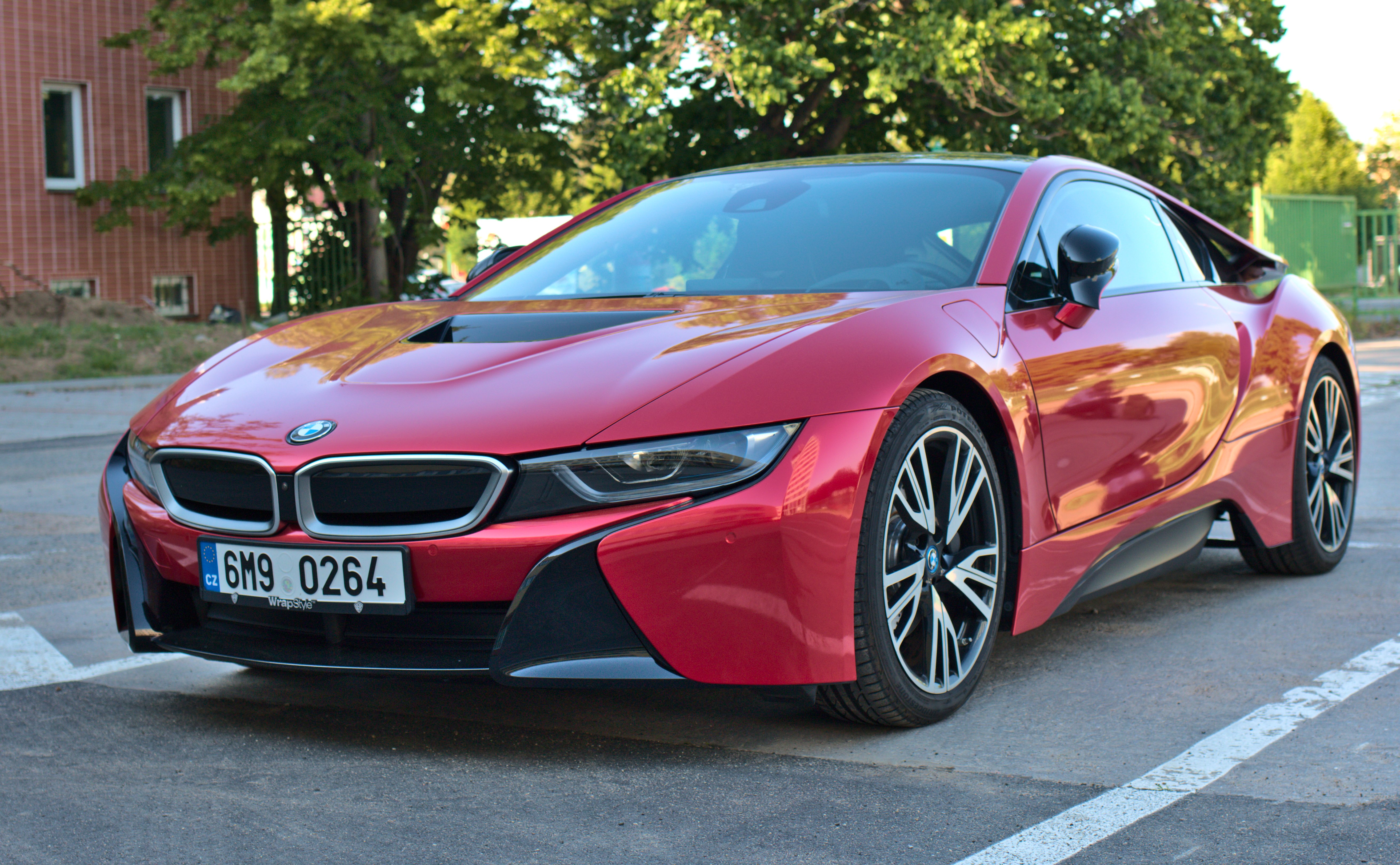
i8 (I12)
"...ell jason also did a video on the i3 and also the i8 sort of this the sports car uh that it's a really..."
The BMW i8 is a sports car that uses electricity as part of its power system. It’s designed to feel sporty and exciting to drive. The podcast brings it up as another electrified BMW example besides the i3.
The BMW i8 (sometimes referenced with an internal code like I12) is a sports car that combines electric drive with a traditional engine setup. It’s mentioned in the podcast as a “sports car” example, alongside discussion of the i3, to illustrate BMW’s earlier EV-adjacent lineup. The context suggests the host is highlighting it as a fun, performance-oriented electrified vehicle.
electrified hubs
"the next million has only taken two years for bmw the strategy has focused on specific electrified hubs and on ensuring that its german production"
An “electrified hub” is a production and supply strategy where specific factories specialize in building EVs and related components. The idea is to concentrate expertise and manufacturing capacity so ramp-up is faster and more efficient.

Tesla Cybertruck
"...mirror here as tesla fans we acknowledge that the cybertruck isn't for everyone either both and that's people ..."
The Tesla Cybertruck is an all-electric pickup truck. It has a very unusual, sharp-edged design that some people love and others don’t. The podcast mentions it to point out that it may not fit every buyer’s needs or taste.
The Tesla Cybertruck is a battery-electric pickup truck with a distinctive angular design. It’s often discussed because it’s a polarizing take on what a modern EV truck can look like and how it’s intended to be used. The podcast context notes that it isn’t for everyone, which reflects how different buyers may view its style and purpose.
battery electric vehicle (BEV) space
"heck japan they're not even doing much worth shouting out in the bev space korea i see you thumbs up on account of the hunday kia ev lineup strong ev lineup from those brands"
“BEV space” just means the world of fully electric cars that use a battery. The hosts are talking about which countries are doing more to build and sell those cars.
“BEV space” refers to the market segment focused on battery-electric vehicles—cars that run only on electricity stored in a battery. The hosts use it to compare how different regions (Germany, China, the US, Japan, Korea) are progressing with EV adoption and production.
EV production milestones (first million to second million)
"it's how much more quickly they went from 1000000 to 2000000 versus zero to 1000000 just two years for that second million after it took them over a decade to do the first million"
They’re comparing how fast BMW grew EV production: how long it took to make the first million cars, then how quickly it reached the next million. It’s basically a “ramp-up speed” story.
The hosts discuss EV production “milestones” by comparing how long it took BMW to reach one million EVs versus two million EVs. This is a way to measure acceleration in manufacturing scale—how quickly a company ramps up output after hitting an initial volume.
accessories
"is what are your personal favorite accessories maybe even modifications that you've made to your teslas that you look back and think man i can't believe the car didn't just come with this"
Here, “accessories” means extra add-ons for the car—things you buy to make it more convenient or better suited to your needs. The caller wants to know what accessories or upgrades they should consider.
In EV and Tesla contexts, “accessories” usually means add-on items that aren’t required for the car to function—like convenience, storage, or protection upgrades. The caller is asking for personal favorites that they added to their Tesla.
modifications
"is what are your personal favorite accessories maybe even modifications that you've made to your teslas that you look back and think man i can't believe the car didn't just come with this"
“Modifications” means changes you make to the car after you buy it. The caller is asking what kinds of upgrades people do to their Teslas and whether they feel worth it.
“Modifications” refers to changes made to a vehicle beyond factory configuration—often aftermarket upgrades or custom changes. In Tesla ownership, this can range from cosmetic changes to functional upgrades, and the caller is specifically asking what modifications they’ve made (or wish the car included).
gorilla glass screen protector
"abstract ocean for all kinds of accessories like the puddle lights and the custom fit gorilla glass screen protector beyond that i really love teslas all-weather"
A screen protector is a clear cover that helps protect the car’s screen from scratches. “Gorilla Glass” is a brand/type of tough glass meant to resist damage.
A screen protector is a protective layer placed over a vehicle’s display to reduce scratches and minor damage. “Gorilla Glass” refers to a tough glass formulation commonly used in consumer devices, chosen for durability.
all-weather floor mats
"beyond that i really love teslas all-weather floor mats i have them in both cars and i leave them in year-round i just i love the look of them"
All-weather floor mats are protective mats for the car’s floor. They’re made to handle rain, snow, and dirt without ruining the carpet underneath.
All-weather floor mats are designed to protect the cabin from mud, snow, and water year-round. They typically have raised edges and durable materials so spills and debris don’t soak into the carpet.
frunk lighting kit
"i also love the frunk lighting kit the tesla cells that i just put in my model three it's a it's a small it's a totally it's a minor deal right it's not like a a must-have modification must-have accessory but it's a small but really nice thing anytime you open up the frunk to use it"
A frunk lighting kit adds a light to the front trunk area of the car. It just makes it easier to see what you’re grabbing when it’s dark.
A frunk lighting kit adds lights to the “frunk,” Tesla’s front trunk area. It improves visibility when you open the front storage compartment, making it easier to use in low light.
tire warranty
"i would strongly consider getting a tire warranty ... tesla sells their own but personally i find the tesla tire warranty plan to be a bit restrictive ... when i got my new model three performance i literally took it straight from tesla when i picked it up ... and bought the road hazard warranty for the tires so all they're gonna do they'll measure the tread depth"
A tire warranty is extra coverage that can help pay for replacement if your tires get damaged by things like road hazards. The idea is to reduce the cost of unexpected tire problems.
A tire warranty is an insurance-like coverage plan that can reimburse or replace tires for certain issues, often including road hazards like punctures or sidewall damage. The host specifically discusses a “road hazard” warranty where the shop measures tread depth and then sells/activates coverage for the tires.
America's Tire
"i google this and it says that you have discount tire in your neck of the woods which is it's this it's called america's tire and and by me same company and you can roll up and buy that warranty from them even though you didn't get the tires from them"
America’s Tire is a shop that sells tires and related protection plans. The host’s point is that you can often buy a warranty there even if you got the tires elsewhere.
America’s Tire is a tire retailer that sells tire-related services and warranty products. In this segment, the host says you can buy a road-hazard tire warranty from them even if you didn’t purchase the tires directly from that store.
Discount Tire
"i google this and it says that you have discount tire in your neck of the woods which is it's this it's called america's tire"
Discount Tire is a tire store brand. The host is saying it’s part of the same company network as America’s Tire in some areas.
Discount Tire is a tire retailer brand referenced as the local equivalent of America’s Tire. The host implies the same company network offers warranty coverage in different regions.
subscription model
"to a month month subscription model as opposed to buying it outright and i believe it's to save them some money for the hardware's three cards"
A subscription model means you keep paying over time to keep the feature. This caller thinks that could affect whether Tesla upgrades your car’s computer for free.
A “subscription model” means paying recurring fees to keep access to a feature (here, FSD) rather than buying it outright. The caller argues this could change Tesla’s willingness or ability to provide hardware upgrades for free.
ai four
"in order to upgrade the hardware three cars to ai four it's going to cost them money to do that"
“AI four” is how the caller refers to the next step in Tesla’s onboard AI computing. They’re connecting it to the idea of upgrading the car’s computer so newer self-driving features can run better.
“AI four” is the caller’s phrasing for the next-generation AI/computing upgrade they expect Tesla to deliver after Hardware 3—effectively tying it to the Hardware 4 upgrade. The discussion treats it as the capability jump that would make future FSD improvements possible on upgraded cars.
micro factories
"i think it's a totally valid hypothesis dav if in fact tesla sets up these so-called micro factories in major metropolitan areas in order to upgrade the hardware three cars to ai four"
The caller is imagining Tesla setting up small upgrade “mini-factories” in big cities. The goal would be to make hardware upgrades cheaper and faster, which could affect who gets upgraded for free.
“Micro factories” here refers to a proposed small-scale, localized production/upgrade setup Tesla could use in major cities to perform hardware upgrades. The caller’s hypothesis is that doing upgrades in-house at scale would reduce costs, which would matter for whether Tesla can offer upgrades for free.
Waze
"and i know a lot of your listeners probably use ways uh recent kind of four-hour trip to use ways ... why can't tesla build either ways into their navigation system"
Waze is a navigation app where drivers report what’s happening on the road in real time. The idea here is that Tesla could use its many cars to collect similar road information and show it in its own navigation.
Waze is a crowd-sourced navigation app that uses real-time reports from drivers to flag hazards like police activity, road obstructions, and traffic slowdowns. In this segment, the hosts are comparing Waze’s community reporting features to what Tesla’s navigation could add using its own driver “fleet” data.
fleet wide capability
"i agree that tesla seems to have the fleet wide capability to build their own version of ways"
This means Tesla can use information from lots of Teslas on the road, not just one car. The claim is that this shared data could power better navigation warnings for everyone.
“Fleet wide capability” refers to Tesla’s ability to use data collected across many vehicles to improve features for all cars. Here, it’s being framed as Tesla having enough real-world driving information to replicate Waze-like hazard reporting without licensing a third-party app.
speed cameras
"there is a little bit of this in the car already at least up by me there will be icons on the nav screen that pop up from time to time that show where known speed cameras are"
Speed cameras are automated enforcement systems that detect vehicles exceeding a set speed limit and record evidence for tickets. The speaker notes Tesla navigation icons that indicate known speed camera locations, contrasting that with the more detailed hazard reporting they want (like potholes and police traps).
speed trap
"it doesn't show speed trap locations or pothole locations or anything else like you're talking about that might be useful"
A speed trap is a place where police are specifically watching for speeding. The speaker is saying Tesla’s navigation doesn’t currently show those kinds of locations the way Waze can.
A speed trap is a location where law enforcement sets up to catch drivers exceeding the speed limit, often using radar or a hidden enforcement setup. The segment contrasts speed camera icons with the absence of speed-trap reporting and other hazards like potholes.
potholes
"it doesn't show speed trap locations or pothole locations ... full self-driving unsupervised would still need to know where potholes are to avoid them"
Potholes are holes or broken spots in the road. The idea is that a self-driving system would need to know where they are so it can avoid them.
Potholes are road surface failures that can damage tires and suspension and create sudden steering/braking hazards. The segment argues that an advanced driver-assistance or autonomy system would need up-to-date pothole information to avoid them.

2024 Tesla Model Y
"i just now discovered a pro tip on how to put your car into neutral i know this this is on a uh 2024 model y so i've got stock i'm not sure how to do it on model three but anyway you uh instead of putting it into driver first you just barely tap it like just barely and it popped into neutral for me"
This is a Tesla Model Y from 2024. The host is talking about how to put it into “neutral,” which can be useful when you need the car to roll or be moved without driving it normally.
The Tesla Model Y is an electric crossover, and the 2024 version is part of Tesla’s current lineup. In this segment, the host discusses how to shift it into neutral, which matters for specific situations like towing, moving the car without power, or certain service procedures.
Request an Explanation
Heard something you'd like explained? We'll add it to this episode.
Sign in to request explanations for terms you heard.
Want to learn more?
Browse our glossary for plain-English explanations of automotive terms, jargon, and concepts.
Help improve this episode
See something that's not quite right? Our annotations are AI-generated and can sometimes miss the mark. Click the flag icon on any annotation to suggest a correction.