
EVALANCHE? CHINA'S GRIP TIGHTENS! EV DRIVER'S 'SMUG MODE?'
About this episode
The hosts tackle three timely EV angles: how oil-price shocks and geopolitical turmoil are nudging buyers toward EVs, but not yet creating a structural shift. They break down March sales data (UK steady at ~22% BEV share, Australia bouncing higher) and argue demand is being pulled forward rather than fully transforming the market. Next, Chinese automakers’ brand-building strategy is spotlighted—BYD and the Cherry/Jaecoo group are gaining share in the UK. Finally, they rip into clickbait “smug EV drivers” and misleading environmental claims, defending EV lifecycle benefits and recycling progress.
It's been a BIG month for battery EV sales, or has it? Imogen and Dan delve into the first set of sales statistics since the Oil Crisis began, display shock and awe at how ambitious Chinese OEMs are changing the structure of a historically conservative market, as well as examining a misinformation masterclass in the British press.
Why not come and join us at our next Everything Electric expo: https://everythingelectric.show
To partner, exhibit or sponsor at our award-winning expos email: [email protected]
EE NORTH (Harrogate) - 8th & 9th May 2026
EE WEST (Cheltenham) - 12th & 13th June 2026
EE GREATER LONDON (Twickenham) - 11th & 12th Sept 2026
EE SYDNEY - Sydney Olympic Park - 18th - 20th Sept 2026
EVALANCHE - has the oil crisis really changed the landscape? https://www.linkedin.com/posts/dancaesar_cheaperbetterbatteryelectric-harrogate-cheltenham-activity-7447164741711454208-OUoq?utm_source=share&utm_medium=member_desktop&rcm=ACoAAAJBSkEByrVwGDXepyipNa6eDY0nhj6qwV0
CHINESE AUTOMAKERS SPEND BILLIONS IN GERMANY - https://www.autonews.com/manufacturing/automakers/ane-chinese-carakers-marketing-campaigns-germany-0406/?utm_source=Sailthru&utm_medium=email&utm_campaign=Newsletter-ANEDontMiss-20260407
CHINESE AUTOMAKERS TIGHTEN GRIP ON UK SALES - https://www.thecarexpert.co.uk/chinese-brands-tighten-grip-uk-new-car-market-march-2026/
SMUG MODE - https://www.linkedin.com/posts/dancaesar_cheaperbetterbatteryelectric-activity-7447896703661338625-Rf8q?utm_source=share&utm_medium=member_desktop&rcm=ACoAAAJBSkEByrVwGDXepyipNa6eDY0nhj6qwV0
Support our StopBurningStuff campaign: https://www.patreon.com/STOPBurningStuff
Become an Everything Electric Patreon: https://www.patreon.com/fullychargedshow
Buy the Fully Charged Guide to Electric Vehicles & Clean Energy : https://buff.ly/2GybGt0
Subscribe for episode alerts and the Everything Electric newsletter: https://fullycharged.show/zap-sign-up/
Visit: https://FullyCharged.Show
Find us on X: https://x.com/Everyth1ngElec
Follow us on Instagram: https://instagram.com/officialeverythingelectric
#fullychargedshow #everythingelectricshow #homeenergy #cleanenergy #battery #electriccars #electric-vehicles-uk
EV driver
"[147.8s] And as always, interesting times in the car industry as well as the wider world. [155.1s] Well, we have three stories today. [157.9s] Avalanche, EV Avalanche."
“EV driver” refers to someone who primarily drives an electric vehicle, which can change how they experience charging, range, and software-driven features compared with gas cars. In EV news, this term often signals the discussion will focus on real-world driver impacts.
Avalanche, EV Avalanche
"[155.1s] Well, we have three stories today. [157.9s] Avalanche, EV Avalanche. [160.8s] We're working on that pun."
They’re using “Avalanche” as a catchy label for the episode’s news. “EV Avalanche” just means the stories are about electric vehicles and the momentum around them.
The hosts are framing the episode’s main news stories around the word “Avalanche,” with a specific EV-focused angle (“EV Avalanche”). It’s a structural hook for listeners to expect multiple EV-related headlines or themes.
Honkuk
"This episode is brought to you by Honkuk. The Honkuk Ion tyre is built exclusively for electric vehicles, engineered to deliver what EV drivers need most."
Honkuk is the company sponsoring the show. They’re saying their Honkuk Ion tire is made specifically for electric cars, aiming for better grip and quieter driving while also helping the car use less energy.
Honkuk is presented as the sponsor and as a tire brand making an EV-focused product called the Honkuk Ion tyre. The segment claims the tire is designed for EV-specific needs like grip, quietness, energy efficiency, and long mileage.
Formula E
"As the official tyre partner of Formula E, Honkuk proves its EV technology is at the highest level of performance and brings that same innovation to every Ion tyre on the road."
Formula E is an all-electric racing series. The sponsor is using it to suggest their tire tech is proven in serious EV racing before being used on regular cars.
Formula E is referenced as the context for Honkuk’s EV technology, positioning the brand’s tire development as coming from high-level electric racing. For listeners, it’s a useful anchor for understanding how EV performance tech can transfer from motorsport to consumer tires.
classic marketing curve
"And from my standpoint, the classic marketing curve is kind of like a big hill, basically. And at the beginning, you see the pioneers and the early adopters... and then you see the kind of early adopters, the early mainstream, the late mainstream, and the Laggards."
This is a way to describe how new products spread over time. First, a small group tries it early, then more people adopt it, and finally the last group (the laggards) comes around.
The “classic marketing curve” is a framework describing how products move from early adopters to the broader market. It’s used here to explain EV adoption timing: pioneers/early adopters first, then early mainstream and late mainstream, with “laggards” adopting last.
Laggards (won't buy an EV until they absolutely have to)
"And there's a huge group called the Laggards [264.1s] who will not buy an EV until they absolutely have to do so [266.6s] and will do so under the cover of darkness"
“Laggards” are people who don’t want to buy an EV right away. They usually wait until they feel like they have no choice—like prices changing or their old car needing replacement.
In EV adoption discussions, “laggards” are the last group of consumers who delay switching until they feel forced by circumstances. They often have higher resistance to new technology and may wait for price, policy, or reliability concerns to be resolved.
oil crisis (Middle East) driving fuel prices
"We've seen a big landslip recently, [286.9s] a big avalanche recently in the oil crisis [291.3s] that's unfolding in the Middle East. [293.0s] The cost of oil has put the cost of motoring"
They’re saying that when oil prices jump—because of events in the Middle East—gas gets more expensive. When gas gets expensive, EVs can start to look like a better deal.
The segment links geopolitical events in the Middle East to oil price spikes, which then raise gasoline and overall “cost of motoring.” This matters for EV adoption because higher fuel costs can make EVs look more attractive on a monthly budget basis.
EVs are cheaper to run
"The cost of oil has put the cost of motoring [296.4s] right in the consumer's mind eye. [300.4s] And quite a few consumers already aware [302.7s] that actually EVs are cheaper to run."
“Cheaper to run” means the day-to-day cost of driving an EV can be lower than paying for gas. It’s usually because charging can cost less than fuel, and EVs often need fewer routine maintenance items.
This refers to the “total cost of ownership” idea for EVs: electricity and maintenance costs are often lower than gasoline and oil-related service. The extent varies by local electricity prices, driving habits, and incentives, but the key point is that operating costs can be meaningfully reduced.
total cost of ownership (implied by "cheaper to run")
"Most people still don't realise that and to what extent, [308.8s] but a lot of people are. [310.5s] And they've accelerated their EV purchases [312.8s] as a result of this news."
Total cost of ownership means what the car costs you over time, not just what you pay upfront. For EVs, it’s about comparing charging costs and upkeep to the costs of a gas car.
“Cheaper to run” is shorthand for total cost of ownership (TCO), which includes operating costs over time—not just the purchase price. For EVs, TCO typically considers electricity vs. fuel costs, charging efficiency, insurance, and maintenance differences.
market structurally
"[326.0s] And what we've seen is the front edge of that mountain [328.1s] sort of fall away, but make no mistake [331.0s] that it hasn't changed the market structurally currently."
“Structurally” here means the big underlying reasons people buy cars haven’t flipped overnight. Even if EVs are growing, gas and diesel cars can still keep selling for a long time.
Saying the market “hasn’t changed… structurally” means the underlying forces—pricing, supply, consumer demand, and regulations—haven’t shifted enough to fully replace internal-combustion cars. It’s a reminder that EV adoption can rise while the overall market still includes lots of petrol and diesel.
used car lots in Australia being unable to get any stock
"[346.6s] And there's been some extraordinary anecdotal stories [349.8s] of used car lots in Australia, for example, [354.5s] being unable to get any stock or their stock has gone,"
They’re talking about dealers not being able to get enough cars to sell. When inventory is tight, prices and availability can change, which can make the EV market look more dramatic than it really is.
This describes a supply-chain or inventory problem affecting used-car dealers—vehicles are scarce or backlogged. In EV discussions, inventory constraints can distort pricing and availability, making adoption trends look different than they would with normal supply.
inertia in the system
"[370.8s] So the idea really is that there's a huge amount of work to do. [375.0s] And actually, there's a huge amount of inertia in the system. [377.9s] How often have we talked about the fact"
“Inertia” means things don’t change instantly. Even if EVs are better, people and businesses keep doing what they’re already set up to do.
“Inertia in the system” refers to how hard it is for consumer behavior and industry infrastructure to change quickly. Even when EVs improve, factors like charging availability, vehicle pricing, and habits keep the market moving slowly.
industrial scales of misinformation about EVs
"[377.9s] How often have we talked about the fact [379.6s] that there's industrial scales of misinformation about EVs out there? [384.5s] That is going to take some serious undoing"
They’re saying a lot of people are spreading wrong or exaggerated ideas about EVs. That can slow down EV adoption because buyers may believe the bad info.
The hosts are pointing to widespread, large-scale claims about EVs that may be misleading or exaggerated. This matters because misinformation can affect purchase decisions, policy debates, and how quickly adoption grows.
new and used car sales statistics
"And we've seen the whole month of March now in terms of sales statistics for cars, new and used, start to come through."
These stats show how many cars people are buying, both brand-new and pre-owned. Looking at both helps you understand the bigger picture—like whether people are trading in cars or holding onto them longer.
“New and used car sales statistics” track how many vehicles are sold in each market segment. Watching both matters because EV adoption, incentives, and fuel-price expectations can affect trade-ins and pricing, not just brand-new purchases.
oil shocks
"...is much more likely to be driven by anticipated oil shocks coming later in the year as that sort of trickle effect of shortages unfolds."
An oil shock means oil prices jump or supply gets disrupted. When that happens, gas gets more expensive, and people may start looking harder at alternatives like EVs.
An “oil shock” is a sudden disruption in oil supply or a sharp jump in oil prices. For drivers and EV shoppers, it can raise the cost of gasoline and indirectly change demand for new cars, including EVs, as fuel becomes more expensive.
trickle effect of shortages
"...as that sort of trickle effect of shortages unfolds. So I wouldn't be surprised if we see another big uptick in sort of September time..."
A shortage doesn’t just affect one thing right away—it can spread out and cause other problems later. In cars, that can mean delays, higher prices, and changes in what people buy.
A “trickle effect” describes how an initial shortage (like oil or components) spreads through the economy over time. In automotive markets, it can show up as delayed production, higher prices, and shifting sales patterns for both new and used vehicles.
new number plates
"And also then we've got the new number plates as well. But yeah, the numbers are pretty telling."
“New number plates” means the government updates the vehicle registration plates. When that happens, some people buy or sell cars around the change date, which can affect sales numbers for a while.
“New number plates” typically refers to a regulatory change that updates vehicle registration plates on a schedule. These transitions can temporarily influence buying behavior because some shoppers want to avoid missing the new plate period or may time purchases around the change.
cost savings you can make by driving EVs
"which is why we think cost savings you can make by driving EVs are going to be more and more important."
EVs can sometimes cost less to run than gas cars because charging can be cheaper than buying fuel. If electricity prices go up, those savings may be smaller, but the overall cost comparison still matters for families.
The idea is that electric vehicles can reduce operating costs compared with gasoline or diesel, mainly because electricity is often cheaper per mile than fuel. As energy prices change, the size of those savings can grow or shrink, which affects household budgets and EV adoption.
new market is different to the used market
"The new market is different to the used market. In the UK, the bulk of sales, for example, and most markets are used."
Buying a brand-new EV and buying a used EV aren’t the same deal. Prices and incentives can be different, and used-car buyers also think about things like battery health and warranty.
A “new market” refers to buyers purchasing EVs directly from dealers, while a “used market” is where previously owned EVs are resold. These markets can behave differently because pricing, incentives, warranty coverage, and consumer risk perception vary between buying new versus used.
bulk of sales... are used
"In the UK, the bulk of sales, for example, and most markets are used. Most people are buying used"
When most EV sales are in the used market, it means overall adoption and affordability depend heavily on resale prices and battery longevity. It also implies that policy changes and energy-cost shifts can influence not just new-car demand, but used-car pricing and consumer confidence.
forecourt
"It's not just about being glib but walking onto a forecourt, kicking the tires and choosing something."
A forecourt is the car lot area outside a dealership where you can walk around and look at cars. The hosts are saying EV buyers often spend less time “browsing” and more time ordering and waiting.
A forecourt is the dealership area where cars are displayed and customers can inspect vehicles before buying. In the EV context, it highlights the difference between in-person shopping and the more common EV buying flow that involves ordering and waiting for delivery.
orders placed, deliveries awaited
"quite often, orders are placed, deliveries awaited. So, actually, you're not going to see huge difference in the new numbers."
This describes the EV sales pipeline: customers place orders first, then vehicles arrive later, so sales numbers can lag behind demand. It helps explain why monthly market share changes may be gradual rather than immediate.
battery EVs
"In the UK, actually, as a percentage of car sales in March, we saw a record number of battery EVs sold, but it's still at 22% of the whole market."
“Battery EVs” are cars that run only on electricity stored in a battery. The hosts are talking about how many of the cars sold are EVs, and how that share is changing over time.
“Battery EVs” refers to fully electric vehicles powered by a rechargeable battery pack, rather than hybrids or plug-in hybrids. The segment uses UK sales share data to show how EV adoption is growing but still represents a minority of total car sales.
car sales in March
"In the UK, actually, as a percentage of car sales in March, we saw a record number of battery EVs sold, but it's still at 22% of the whole market."
They’re talking about EV sales for a specific month (March) to show how the market is moving. It’s basically “how many EVs were sold this month” compared to all cars.
The hosts are using a specific monthly sales period to discuss EV market share trends. This is an example of how adoption is measured using time-based retail sales data rather than long-term registrations or fleet totals.
new car sales in February
"But in Australia, you've actually seen a bit more of a bounce... So, in Australia, actually, it was 11% new car sales in February."
This points to a different country’s timing for EV adoption, using Australia’s February new car sales share. The comparison suggests EV demand and delivery timing can vary by market, affecting how quickly EV share “jumps.”
reliant on diesel
"[595.1s] And I think what's going on in Australia [596.5s] is a little bit different to the UK. [598.3s] Yes, they are a landmass out on their own, [601.6s] but actually, they're very, very, very reliant on diesel."
“Relying on diesel” means a lot of the country’s transport depends on diesel fuel. If diesel supply becomes uncertain, people may feel more pressure to switch vehicles or worry about getting around.
“Reliant on diesel” describes a heavy dependence on diesel fuel for transportation and/or power. In an EV-focused discussion, this matters because diesel dependence can make energy security and fuel availability feel more fragile during geopolitical disruptions.
resilience
"[605.6s] The war has prompted fears of resilience. [609.9s] What does that mean for Australia, et cetera? [613.1s] And then there's the fear of actually running out of fuel,"
“Resilience” means how well the system can handle problems without breaking. They’re talking about whether Australia can still get the energy it needs if things get disrupted.
“Resilience” here means the ability of a country’s energy system to keep working during shocks (like war, supply disruptions, or geopolitical stress). The hosts connect it to how dependent Australia is on diesel and how that dependence affects energy security.
running out of fuel
"[613.1s] And then there's the fear of actually running out of fuel, [615.9s] which is not to be conflated with the cost benefits. [617.8s] Actually, there's actually a fear"
This is the worry that you might not be able to get enough energy to keep driving. With EVs, the concern can shift from gas stations to charging availability and electricity supply.
“Running out of fuel” is a supply-and-logistics concern—people worry they won’t be able to obtain enough energy to drive. For EVs, the comparable fear is often about charging access and grid/energy availability, even though the underlying infrastructure differs from diesel.
used EV market is up significantly
"[620.9s] So, in Australia, we've seen new market bounce, [624.4s] and we've seen all sorts of stories from all across the world in America, [626.0s] used EV market is up significantly, same in the UK."
“Used EV market” just means the market for second-hand electric cars. If it’s going up, more people want them (or they’re harder to find), so prices and sales can move quickly.
The “used EV market” refers to pre-owned electric vehicles being bought and sold. When it’s “up significantly,” it usually means demand and/or pricing is rising because buyers are trying to secure EVs before supply or incentives change.
structural shift
"[642.1s] But the reality is that there's not a structural shift [644.4s] taking place. [645.0s] It's quite a big upswing, and it will last over a period of time,"
A “structural shift” means the rules of the market change for the long run. Here, they’re saying the EV surge might be temporary rather than a permanent change in how people buy cars.
A “structural shift” is a long-term, fundamental change in how a market works, not just a temporary spike. In this context, the hosts are saying EV demand may be rising, but it may not represent a permanent change in adoption patterns yet.
purchase EVs
"...the people who were seeing purchase EVs, either second hand or first hand now, are people who probably were largely considering it..."
“Purchase EVs” means people are deciding to buy electric cars. That decision usually depends on price, charging convenience, and running costs.
“Purchase EVs” refers to the decision to buy an electric vehicle, which is often influenced by incentives, charging access, and total cost of ownership. The transcript frames a shift from early adopters to a broader group that is “tipping” into buying.
second hand market
"...the availability of affordable EVs, either in the first hand market or indeed the second hand market, becomes even more prescient."
“Second hand market” just means buying used cars instead of new ones. For EVs, more used options usually makes it easier for people to afford one.
The “second hand market” means used EVs (or used vehicles in general) being bought and sold after their original purchase. For EVs, used availability strongly affects how quickly more people can afford to switch because it lowers entry price and expands choice.
diesel in particular is so expensive
"I'm sure you watched the video that Roger Atkins posted on LinkedIn about why diesel in particular is so expensive..."
They’re talking about why diesel fuel costs more than you’d expect. That matters because if diesel gets expensive, some people may look harder at alternatives like EVs.
The segment highlights diesel fuel costs as a specific problem, implying that diesel pricing is driven by factors beyond just general fuel prices (such as supply constraints, taxes, or refining/transport economics). For listeners, this matters because diesel affordability affects fleet operators and consumers comparing diesel vs EVs.
"I'm sure you watched the video that Roger Atkins posted on LinkedIn about why diesel in particular is so expensive..."
LinkedIn is a social media site for professionals. They’re saying Roger Atkins posted the video there, so you can look it up.
LinkedIn is mentioned as the place where Roger Atkins posted the video being referenced. This is useful for listeners who want to track down the original argument about diesel pricing.
Sky
"...and Ed Conway did, as ever, the most wonderful explanation on Sky."
Sky is the TV/media outlet mentioned for where the explanation was given. It’s included because it points you to the original segment they’re referencing.
Sky is referenced as the platform where Ed Conway provided an explanation. While not an automotive company, it’s a media source that listeners might use to find the full context behind the diesel-cost discussion.
Australia is so exposed to it
"...why diesel in particular is so expensive, but also why Australia is so exposed to it."
They mean Australia is especially affected by the diesel price problem. If diesel is a big part of how goods and services get moved, higher diesel costs can ripple through everyday life.
“Australia is so exposed to it” suggests Australia has a higher sensitivity to diesel price pressures—likely due to import/refining dynamics, regional distribution, or how much of the economy relies on diesel-powered transport and industry. This is relevant context when discussing EV adoption pressures and energy-cost comparisons.
headwinds against EV
"Quite often the headwinds have been against EV, politically speaking. Lots of incumbent money trying to slow the move to EV down, misinformation, et cetera."
“Headwinds” just means things that make EVs harder to adopt. In this case, it’s mostly politics and messaging that can slow people down from buying an EV.
“Headwinds” here means forces making EV adoption harder, especially political and regulatory resistance. In practice, that can include lobbying by established industries and policy uncertainty that discourages buyers.
incumbent money
"Lots of incumbent money trying to slow the move to EV down, misinformation, et cetera. So this is something that actually is pushing people towards that decision making."
“Incumbent money” means money from older, established industries that benefit from the status quo. They may spend money to influence rules and public opinion so EVs don’t grow as fast.
“Incumbent money” refers to established companies and industries that already profit from the current system—often oil, gas, or legacy automaking. Their funding and influence can shape policy debates and slow EV adoption.
brought forward some demand
"So it's probably brought forward some demand, but not necessarily change the market permanently."
“Brought forward some demand” means some buyers accelerated their purchase timing rather than creating entirely new long-term demand. This can happen when incentives, news, or market conditions make EVs feel more attractive right now.
Automotive News
"So one of the stories comes from Automotive News, a very august title in the industry, which talks about the investment some of the Chinese car companies are making."
They cite Automotive News, which is a trade publication that covers what’s happening in the car industry. It’s basically a source for industry-focused reporting.
Automotive News is an industry publication that reports on developments across the auto sector, including investments by automakers and suppliers. Referencing it signals the segment is grounded in reported industry data rather than opinion alone.
car expert
"And the second story is from the car expert, which actually shows to what extent Chinese car makers are making inroads in the UK market."
They also mention a site called “car expert” as another source. Here, it’s being used to talk about how Chinese car brands are doing in the UK.
“Car expert” appears to be a media outlet the hosts use for reporting on market penetration and sales trends. In this context, it’s being used as a source for how Chinese brands are performing in the UK.
Chinese car companies making inroads in the UK market
"which actually shows to what extent Chinese car makers are making inroads in the UK market. So what's interesting is Automotive News,"
They’re talking about Chinese car brands starting to sell more cars in the UK. That can happen when companies invest, build partnerships, and get their cars into more showrooms and fleets.
The hosts are describing how Chinese automakers are expanding their presence in the UK. “Inroads” usually means gaining market share through sales growth, local partnerships, and increased brand visibility.
German consumer awareness of Chinese brands
"that's been done, a large-scale survey in Germany, which talks about German consumer awareness of Chinese brands... It's also quite well-known because it's already got a bit of a head start."
This part is about a survey in Germany that measures how well people recognize Chinese car brands. It also discusses how advertising and sponsorships affect that recognition.
This segment focuses on a large-scale survey in Germany about how aware consumers are of Chinese automakers. It highlights which brands are recognized and why marketing and sponsorship can move awareness.
brand awareness
"which talks about German consumer awareness of Chinese brands. Chinese brands know they need to invest in their brand. Most people won't buy a vehicle without first recognizing the brand."
Brand awareness just means how familiar people are with a brand. If you don’t recognize the name, you’re much less likely to consider buying the car.
Brand awareness is how many people recognize a company or product name. In EV markets, it matters because many buyers won’t even consider a vehicle unless they’ve heard of the brand first.
positive associations
"And familiarity is not enough. They also, these car companies have got to build positive associations."
Positive associations are the good impressions people have about a brand. The point is that people need to think “this seems good” before they’ll buy.
Positive associations are the feelings and beliefs people attach to a brand—like quality, safety, or value. The episode suggests that recognition alone isn’t enough; Chinese automakers also need to be seen in a favorable light.
Chang'an
"Actually, some of the newer brands that we know, Chang'an's, Deepal, Cherry's, Amoda and J.Coo, is only about 1% as it stands."
Chang'an is one of the Chinese car brands mentioned as not being widely recognized yet. The episode uses it as an example of how awareness is still low for many newcomers.
Chang'an is listed among newer Chinese automakers with very low brand recognition in the Germany survey. The segment uses it to illustrate how most Chinese EV brands start with limited awareness.

S07 Changans Deepal
"Actually, some of the newer brands that we know, Chang'an's, Deepal, Cherry's, Amoda and J.Coo, is only about 1% as it stands."
S07 is the name of an electric car model. The podcast is using it as an example of a newer brand that currently has a very small share of sales. That usually means it’s still early in its growth.
S07 refers to a specific electric vehicle model from a newer Chinese brand mentioned in the podcast context. It’s brought up as part of the broader conversation about emerging EV makers and how small their market presence can be at the moment. The “only about 1%” context suggests it’s being used to illustrate early-stage scale rather than established volume.
Cherry's
"Actually, some of the newer brands that we know, Chang'an's, Deepal, Cherry's, Amoda and J.Coo, is only about 1% as it stands."
This sounds like they mean Chery, a Chinese car company. They’re saying it’s not widely recognized by most German consumers yet.
“Cherry's” appears to be a transcription error for Chery, a well-known Chinese automaker. The segment groups it with other newer brands that have very low recognition in Germany.
Amoda
"Actually, some of the newer brands that we know, Chang'an's, Deepal, Cherry's, Amoda and J.Coo, is only about 1% as it stands."
They list “Amoda” as a newer brand that most people don’t recognize yet. The main point is that many Chinese brands are still early in building awareness.
Amoda is mentioned among newer Chinese brands with about 1% recognition in Germany. The name is likely a transcription error for a specific automaker/model brand, but it’s used here mainly as an example of low awareness.
J.Coo
"Actually, some of the newer brands that we know, Chang'an's, Deepal, Cherry's, Amoda and J.Coo, is only about 1% as it stands."
J.Coo is mentioned as a Chinese brand that very few people recognize in Germany. It’s part of the point that brand visibility is still low for many newcomers.
J.Coo is listed among newer Chinese brands with roughly 1% recognition in Germany. The segment uses it to illustrate how little-known many emerging EV brands are before they invest in marketing and reputation.
Leap Motor
"Leap Motor, a bit better known as is Lincoln Co, which has been Germany for a few years at 11%."
Leap Motor is a Chinese car brand that the hosts say has more recognition than most other newer brands in Germany. It’s an example of gradual brand-building.
Leap Motor is mentioned as having higher recognition than the other “newer brands,” at around 11% in Germany. The hosts use it to show that some Chinese EV makers have progressed further in consumer awareness than others.
Lincoln Co
"Leap Motor, a bit better known as is Lincoln Co, which has been Germany for a few years at 11%."
They mention another Chinese brand with some recognition in Germany, but the name in the transcript sounds unclear. The takeaway is that most Chinese brands have low recognition compared with BYD.
The transcript appears to refer to a Chinese brand connected to the name “Lincoln Co,” but the phrasing is ambiguous. It’s mentioned as having some recognition in Germany, implying partial brand visibility compared with BYD.
MG
"very, very well spent by Paris and MG, which is obviously well-known here in the UK, and well-known in Australia."
MG is a car brand that’s already well known in places like the UK and Australia. The hosts mention it to show how some brands have a head start in public awareness.
MG is referenced as a well-known brand in the UK and Australia, implying it has had more time and visibility than many newer Chinese EV brands. In this segment, it’s used as a contrast to brands with low recognition in Germany.
Paris
"I think, very, very well spent by Paris and MG, which is obviously well-known here in the UK, and well-known in Australia."
“Paris” doesn’t clearly match a car brand in this context, so it may be a transcription mistake. The point is that the hosts are talking about marketing spend and brand visibility.
“Paris” is likely a transcription error or shorthand for a brand or sponsor name, since it’s grouped with MG and described as “well-known here in the UK.” The context suggests it’s another marketing/visibility driver rather than a car model.
Cherry Group
"[979.7s] particularly Amoda J.Coo, [980.9s] which is part of the Cherry Group, [982.2s] and I'll come onto them in a minute."
Chery/Cherry Group is a big Chinese car company that owns more than one brand. The hosts are saying that being part of a larger group can help a brand sell more cars by sharing support like marketing and distribution.
Cherry Group (often referred to as Chery) is a Chinese automaker group with multiple brands under its umbrella. In the segment, it’s used to explain how brand ownership and group structure can support EV marketing and sales expansion.
name plates out on the road
"[984.2s] Also spending big to make sales, [988.4s] to get their brands out there, [989.8s] to get their name plates out on the road."
It means getting the actual cars you sell seen in public—so people notice them on the road. Seeing cars regularly can make a brand feel more real and trustworthy.
“Name plates out on the road” refers to getting specific car models (the brand’s model lineup) visible in everyday driving. Visibility helps reinforce brand awareness, normalizes the cars in public, and can improve perceived legitimacy for buyers.
Geely
"[988.4s] to get their brands out there, [989.8s] to get their name plates out on the road. [993.8s] Geely as well."
Geely is a Chinese automotive group that owns multiple brands and platforms. The hosts mention Geely launching in the UK and spending heavily to grow awareness, using its brand portfolio (including Volvo and Lotus) as part of its strategy.
UK new-car market statistics
"But trying to segue it on just very, very quickly, imagine because I'm dying to make a point as well, but what we've seen in the UK now is big impact from BYD, Cherry Jacoba Moda, in particular."
They’re talking about recent numbers for the UK car market. The goal is to show whether EV sales are rising and how that affects competition.
This segment focuses on reported statistics about the UK new-car market and how EV growth is trending year-over-year. It’s used to support the argument about competitive pressure from Chinese automakers.
Stuart Massen
"The Car Expert, which is a website run by Stuart Massen, reported on some of the details behind the SMMTs,"
Stuart Massen is named as the person running The Car Expert. The mention is mainly to attribute the source of the statistics rather than to discuss a technical automotive topic.
SMMTs
"reported on some of the details behind the SMMTs, new car market that were released this week,"
SMMT is the UK Society of Motor Manufacturers and Traders, which publishes industry data on new vehicle registrations and market trends. Here, the hosts reference SMMT-released figures to discuss EV market growth.
year-on-year (YoY) growth
"and the market in total all-power trains grew 7% year-on-year."
“Year-on-year” means comparing this year to last year. It’s a common way to show whether sales are going up or down over time.
Year-on-year growth compares performance in the current period to the same period in the previous year. The hosts use it to quantify how much the market (described as “all-electric” in the transcript) has increased.
year-to-date registrations
"Now they're combined year-to-date registrations are ahead of Volkswagen's, which is the UK's biggest single brand,"
Year-to-date registrations means “how many cars have been registered this year so far.” It’s a way to compare which brands are selling more over the same time window.
Year-to-date registrations are the number of vehicles registered in a given year up to the current point in time. Using this metric helps compare how different brands are performing over the same period, rather than relying on one-off monthly results.
Volkswagen
"are ahead of Volkswagen's, which is the UK's biggest single brand, and traditionally the dominant force in the UK market."
Volkswagen is described as the UK’s biggest single brand and a traditional leader in that market. The segment argues that Chinese EV brands are growing faster and taking sales away from established incumbents like Volkswagen.
taking thousands of sales away
"meaning they are taking thousands of sales away from other brands, rather than simply adding to total registrations."
This means the new brands aren’t only selling more because the whole market is growing—they’re also stealing customers from other brands. It’s basically “who’s winning buyers.”
This describes market share capture—new brands growing by pulling buyers from competitors rather than just increasing the overall market size. The hosts frame it as a sign that EV adoption is shifting toward certain brands, not just expanding uniformly.
March was the clearest example yet
"March was the clearest example yet of how this is changing the market. Spending big, employing the right strategies,"
They’re saying March showed the clearest proof of what’s changing in the market. It’s a “here’s the example” moment in the conversation.
This is a discussion marker pointing to a specific month (March) as evidence of changing market dynamics. It functions like a chapter/topic cue for the segment’s argument about momentum and competition.
go-to-market strategy
"but it's not the only part. It's about your go-to-market strategy. And we're seeing some clear signs"
A go-to-market strategy is basically how a company decides to sell its cars. It’s not just about making a good vehicle—it’s also about how they advertise, price, and get the cars in front of customers.
A go-to-market strategy is the plan a company uses to sell a product—covering things like pricing, distribution, marketing, and customer targeting. The hosts are emphasizing that even with a good car, winning EV sales depends on how effectively the brand reaches buyers.

D9 Denzer
"...ill win them sales globally, I'm sure. We've seen Denzer join up with Daniel Craig, the last 007. I mean, ..."
D9 is the name of an electric car model. The podcast mentions it in the context of getting attention and building awareness for the brand. That’s often part of how new EVs try to attract buyers.
D9 is an electric vehicle model referenced in the podcast alongside broader brand and marketing momentum. The mention of high-profile entertainment tie-ins (like Daniel Craig) suggests the podcast is discussing how the model and its brand are trying to build global awareness. In an EV episode, it’s likely used to show how newer EV products are being positioned for sales.
Everything Electric shows
"... Sharia, Moda, JQ and Geely are all present at our everything electric shows, which are coming up shortly. [1253.1s] But as you say, to the bureaucracy point,"
The Everything Electric shows are EV events where car companies come to meet buyers. The hosts are using it to talk about who shows up and who doesn’t.
The segment references the hosts’ Everything Electric shows as upcoming events where EV brands will be present. This is a structural part of the discussion about brand participation and how buyers can test drive and put money down.
test drives
"... we can't even get a response out of some of the legacy manufacturers [1260.1s] who don't seem to want to be present when there are thousands of battery TV buyers wanting test drives"
A test drive is when you try the car before buying it. The hosts are saying EV buyers want to book test drives, but some older automakers aren’t engaging.
Test drives are a key step in the EV buying journey because they let customers evaluate real-world drive feel, charging-related planning, and day-to-day usability. The hosts argue that some legacy automakers aren’t responding to buyer demand for test drives.
Renault
"But, you know, our friends at Renault, haven't they done brilliantly in recent times? What a line-up they've got,"
Renault is a well-known car company from France. The hosts are saying Renault has been doing well and has a strong set of models available.
Renault is a major French automaker with a significant presence in the UK. The hosts mention Renault’s recent performance and lineup, implying it’s an important player in the current EV market mix.
Mission Impossible
"you just both definitely got incredibly confused between Mission Impossible and James Bond."
Mission: Impossible is a movie series about spies. The hosts are just making a joke by mixing it up with another spy franchise.
Mission: Impossible is a film franchise the hosts reference as part of a joke about confusing it with another spy franchise. It’s not an automotive topic, but it frames the “smug mode”/spy-movie comparison they’re making.
James Bond
"Mission Impossible and James Bond. OK, that's totally fair."
James Bond is the famous spy character from movies. The hosts are using it for a quick joke, not to talk about cars.
James Bond is referenced as the other spy franchise in the hosts’ joke about confusing it with Mission: Impossible. This is pop-culture context rather than an EV or car-technology discussion.
conquesting
"we talk a lot in the car industry about, you know, conquesting. So one brand conquesting sales away from another."
“Conquesting” is a marketing term for winning customers away from other car brands. Instead of just selling to people who were already shopping for you, you’re taking buyers who used to drive something else.
In automotive marketing, “conquesting” refers to stealing customers from competing brands rather than selling to people who were already planning to buy the same brand. The idea is that EV brands measure how often they win over owners from other manufacturers, which indicates how effectively they’re building loyalty or disrupting it.
loyalty is up for grabs
"And that loyalty is up for grabs at the moment. But my view is strongly that it will cement again, it will coalesce and it will cement over next five to 10 years."
This phrase means drivers aren’t staying loyal to the same brand as much as they used to. With EVs changing fast, people are more open to switching to a different manufacturer.
“Loyalty is up for grabs” describes a period when customers aren’t strongly committed to a single brand, often because the market is changing quickly. In EVs, rapid model launches, pricing pressure, and shifting incentives can make buyers more willing to switch brands.

best-selling car in the UK in March
"It is a Fev, I think it's a plug-in hybrid, but it's outsold everything else. ... it is the best-selling car in the UK in the month of March and by distance tells you everything, there's conquestings going on."
Being the best-selling car in a country for a given month indicates strong demand and effective market positioning, often driven by pricing, availability, and consumer perception. The hosts connect this to “conquestings,” suggesting buyers are switching from other brands rather than just adding new demand.
plug-in hybrid
"It is a Fev, I think it's a plug-in hybrid, but it's outsold everything else."
A plug-in hybrid (PHEV) combines a conventional engine with an electric motor and a battery that can be charged from an external power source. In the segment, the hosts imply the top-selling UK car is a PHEV, which can help it compete by offering EV-like driving for short trips while retaining gasoline range.

Range Rover
"It looks quite Range Rover-ish, totally different price tag. And internal quality. Well, anyway, it is the two very different products... in the absence of Range Rover having a product in the market, people are going towards that."
Range Rover is a very upmarket SUV from Land Rover. The hosts are saying some other cars are trying to copy that “luxury SUV” vibe, even if the price is much lower.
Range Rover is Land Rover’s flagship luxury SUV line known for comfort, off-road ability, and high-end interior materials. In the segment, it’s used as a benchmark for styling and perceived “quality,” implying some Chinese EVs are aiming to look and feel more premium.
JQ
"But ultimately, if someone likes the JQ or they like the BYD and they maybe buy one, maybe buy a second one, they might be quite difficult to shift out of those cars in five, 10 years' time."
“JQ” appears to be a shorthand for a Chinese automaker mentioned alongside BYD, in the context of UK sales and future resale/marketability. Because the transcript doesn’t clearly spell the full brand name, it’s best treated as an ambiguous reference rather than a confirmed model/brand.
difficult to shift out of those cars in five, 10 years' time
"they might be quite difficult to shift out of those cars in five, 10 years' time. So I think it will crystallise around certain brands."
This is a discussion of long-term resale value and market liquidity—whether used buyers will want certain brands/models years later. The hosts suggest that if Chinese brands are still “crystallizing” into specific winners, some buyers could face weaker demand and harder resale.
press trips
"when you go on these sort of press trips and you speak to various engineers and to various people within car brands..."
Press trips are trips where car media get invited to meet companies and engineers. Here, the host is saying that what they hear on these trips is that Chinese EVs are improving fast.
Press trips are organized events where journalists and media are invited to visit manufacturers or engineering teams. In this segment, the hosts use them as a source of insight into what engineers and brand representatives are saying about Chinese EV production speed and quality.
chassis dynamics
"But when it comes to chassis dynamics, Europe is still seen as the absolute centre of excellence. But then also Chinese brands are being wise to that..."
Chassis dynamics refers to how a car behaves under driving forces—how it steers, grips, and stays stable during acceleration, braking, and cornering. The hosts are contrasting the perception that Europe leads in chassis tuning with the idea that Chinese brands are improving and even building parts of their operations in Europe to close the gap.

Tesla Model 3
"I currently am driving a Model 3, [1555.1s] which I still think is very, very, very good."
The Tesla Model 3 is an electric car from Tesla. People compare it to other EVs because it’s popular and usually offers a strong mix of range, performance, and technology for the money.
The Tesla Model 3 is Tesla’s high-volume compact electric sedan. In EV shopping, it’s often used as a benchmark for efficiency, software, and overall value because it’s widely available and has a long track record.

Polestar 4
"I'm pretty keen on the Polestar 4. [1573.1s] I think we've discussed that before."
The Polestar 4 is an electric SUV-style car from Polestar. It’s aimed at people who want something a bit more upscale and sporty than the typical EV options.
The Polestar 4 is a performance-oriented electric crossover from Polestar, positioned as a more premium alternative to mainstream EVs. It’s known for a sporty feel and a design that leans toward a fastback SUV shape.

Xpeng G6
"But the other day I drove the X-Peng G6 performance [1578.1s] and that was astounding."
They’re talking about the XPeng G6, and saying the performance version impressed them. That usually means it’s the quicker, more fun-to-drive trim compared with the standard model.
The speaker is referring to the XPeng G6, specifically the performance version, which suggests a higher-output trim tuned for stronger acceleration and driving feel. XPeng’s G-series cars are typically discussed for their tech and driving-assist features alongside real-world usability.

Renault 5
"driving around a little bit in a Renault 5 recently as well, which is also a great car [1589.1s] at a much lower price point."
The Renault 5 is a small electric hatchback. The point here is that it can be a great EV choice without spending as much as many other electric cars.
The Renault 5 is a compact hatchback that’s been reintroduced as an electric car, bringing back the classic nameplate. In EV discussions, it’s often highlighted as a lower-price, city-friendly option compared with larger or more expensive EVs.
EV packaging for different driver sizes
"I think the challenge that we have as a family at the moment [1651.1s] is that I am 5'3". [1653.1s] My husband is 6'4". [1655.1s] I would go for something like... [1657.1s] To be honest, like the Kia EV2."
They’re talking about how a car has to fit different people comfortably. Even a smaller EV can feel “bigger” inside if the seating and layout are designed well.
The hosts are implicitly discussing how EVs (and cars in general) fit different body sizes, using height differences as the constraint. Compact EVs can still feel larger through seat/steering packaging, visibility, and interior space design—important for comfort and usability.

Kia EV2
"I would go for something like... [1657.1s] To be honest, like the Kia EV2. [1659.1s] Something pretty small and dinky, [1661.1s] but is disguised as a bigger kind of car. [1665.1s] He just..."
Kia EV2 is Kia’s smaller electric-car idea. The point here is that it’s meant to feel roomy and easy to live with, even if it’s physically compact.
Kia EV2 refers to Kia’s smaller, more compact electric vehicle concept/lineup direction. The speaker describes it as “small and dinky” but “disguised as a bigger kind of car,” which points to packaging and interior space being a key selling point for EVs in tight, everyday use.
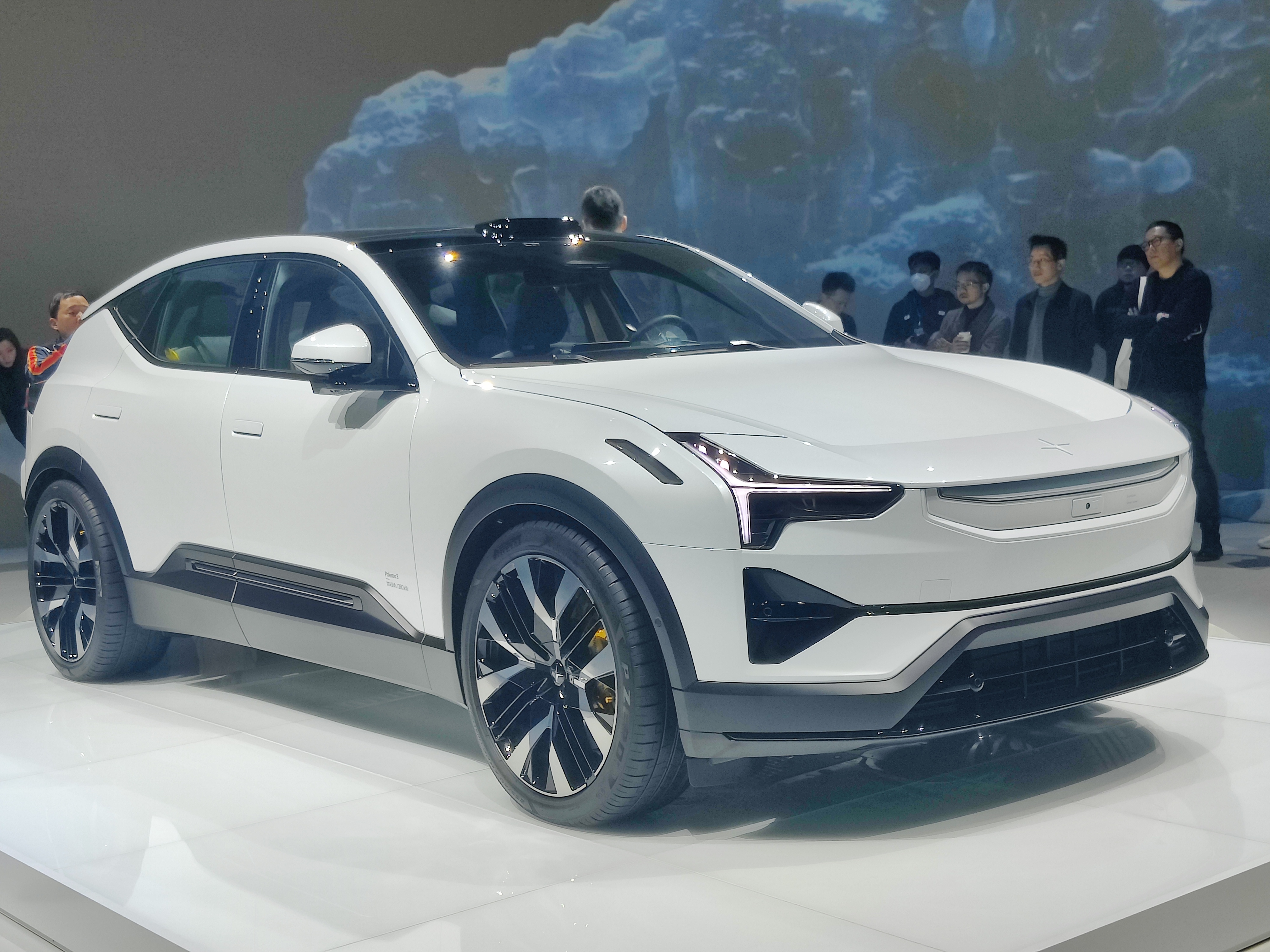
Polestar 3
"...but he is very, very keen on the Polestar 3. But in order for that to happen, it'd be quite nice if some mysterious person just wrote us a check..."
The Polestar 3 is an all-electric SUV. It’s the kind of car people pick when they want a more spacious EV that’s still meant to feel premium.
The Polestar 3 is Polestar’s midsize electric SUV, built to compete with premium EVs that emphasize comfort and long-range usability. In this segment, it’s mentioned as a “keen” choice, suggesting the host values its size and practicality for their needs.

Hyundai Ioniq 5
"But I do love the Ioniq 5. It is great, yeah."
The Hyundai Ioniq 5 is an electric SUV/crossover. The hosts are basically saying it’s a great EV to live with.
The Hyundai Ioniq 5 is a popular electric crossover known for its modern design and efficient packaging. The hosts say they “love” it, indicating it’s a strong reference point for what they like in an EV—likely usability and day-to-day comfort.

5 Renault 5
".... We've been really, really fortunate to have the Renault 5 as a production team for the past year."
The Renault 5 E-Tech Electric is a small electric car (a hatchback). The podcast mentions it because they’ve been using it for their work over the past year, so it’s a real-life example of how an EV fits into normal driving. It’s meant to be practical and easy to live with.
The Renault 5 E-Tech Electric is a compact electric hatchback, and the podcast specifically notes having it as a production team car for about a year. That kind of mention usually signals real-world usage and day-to-day experience rather than just specs. It’s discussed because it represents a mainstream, practical EV format that many buyers can relate to.
combustion engine vehicle
"[1810.1s] in part due to the oil crisis, lots of EV drivers saying, [1813.1s] actually, it's much cheaper to run my EV [1815.1s] than it is for you to run a combustion engine vehicle."
This just means a gas-powered car. The hosts are comparing how expensive it is to run a gas car versus an electric car.
A “combustion engine vehicle” is a car powered by an internal combustion engine that burns fuel like gasoline or diesel. The segment contrasts these vehicles with EVs in terms of operating cost, especially under fuel-price pressure.
clickbait
"[1819.1s] But not only was the headline, you know, [1821.1s] an absolute masterclass in clickbait,"
Clickbait refers to sensational headlines designed to attract attention and clicks, not necessarily to provide accurate or well-supported information. The hosts call the EV-related headline a “masterclass in clickbait,” implying the framing may be misleading or overstated.
lifecycle assessment
"With their manufacture and eventual disposal requiring more raw materials and causing more pollution, carbon emissions are only a part of the environmental story, albeit an important one, and in some other key environmental regards,"
Lifecycle assessment is basically “the full story” of pollution. It looks at how much harm comes from making the car, running it, and recycling or disposing of it.
Lifecycle assessment (LCA) evaluates environmental impacts across the entire lifecycle—materials extraction, manufacturing, use, and disposal. This is why EV discussions often focus on battery production and end-of-life handling, not just tailpipe emissions.
cradle to grave
"There was a little bit of an emission that actually EVs are 30% to 50%, you know, less impactful on the environment over the total cradle to grave."
It means looking at a car’s whole life, not just what comes out of the tailpipe. For EVs, that includes making the battery and what happens when the car is retired.
“Cradle to grave” is a lifecycle assessment idea that counts the environmental impact from making a product (“cradle”) through use and finally disposal (“grave”). In EV debates, it’s used to compare total impacts like manufacturing emissions and end-of-life effects versus gasoline and diesel cars.
tailpipe emissions vs manufacturing emissions
"the truth is that electric vehicles are much less environmentally friendly at the beginning and at the end of their lives than petrol and diesel cars. Yeah, well, the middle bit is the most important bit,"
Some pollution happens when you drive the car, and some happens when you build it. EVs often have more “build-time” impact because of the battery, while petrol/diesel cars have more pollution during driving.
This segment contrasts emissions from using a car (tailpipe emissions for petrol/diesel) with emissions created during manufacturing (especially EV battery production). It’s a key reason EV comparisons can vary depending on how electricity is generated and how lifecycle impacts are counted.
end-of-life disposal
"Yeah, well, the middle bit is the most important bit. With their manufacture and eventual disposal requiring more raw materials and causing more pollution, carbon emissions are only a part of the environmental story,"
“End-of-life disposal” refers to what happens when a vehicle is retired—how components are dismantled, recycled, or landfilled. For EVs, battery recycling and the handling of battery materials are central to the environmental impact at this stage.

BMW iX3
"And actually the reality is that the BMW Neuer Klasse vehicles that we've covered recently, the iX3, the payback means that actually after about 12,000 miles of driving, this is from BMW, that actually is much cleaner."
The BMW iX3 is BMW’s electric SUV. The point here is that EVs can end up producing less pollution over time than gas or diesel cars, depending on how you charge and how far you drive.
The BMW iX3 is an all-electric SUV from BMW. In this segment, the hosts use it as an example to argue that EVs can become “cleaner” over time compared with petrol/diesel once you account for real-world driving and energy sources.

BMW Neuer Klasse
"And actually the reality is that the BMW Neuer Klasse vehicles that we've covered recently, the iX3, th..."
BMW Neue Klasse is BMW’s plan for a new generation of electric-car technology. The podcast brings it up to explain what BMW is building next and how it relates to the EVs they’ve been talking about. It’s basically about the foundation for future electric vehicles.
BMW Neue Klasse refers to BMW’s next-generation vehicle platform strategy, which the podcast connects to vehicles they’ve covered recently (including the iX3). It’s significant because platform changes often drive improvements in efficiency, packaging, and future EV development. In this episode, it’s mentioned to frame the “reality” of where BMW’s EV direction is heading and how that affects current products.
payback means
"the iX3, the payback means that actually after about 12,000 miles of driving, this is from BMW, that actually is much cleaner."
“Payback” is the idea that an electric car may have a bigger environmental cost at the start (like making the battery), but after you drive enough miles, it can make up for it. After that point, it can be cleaner overall than a gas or diesel car.
“Payback” in EV discussions usually refers to the point where the lifetime emissions (or environmental impact) of an EV catch up to—or surpass—those of a petrol/diesel car. It’s often tied to battery production “upfront” emissions and then the cleaner operation of the EV as you drive.
Request an Explanation
Heard something you'd like explained? We'll add it to this episode.
Sign in to request explanations for terms you heard.
Want to learn more?
Browse our glossary for plain-English explanations of automotive terms, jargon, and concepts.
Help improve this episode
See something that's not quite right? Our annotations are AI-generated and can sometimes miss the mark. Click the flag icon on any annotation to suggest a correction.