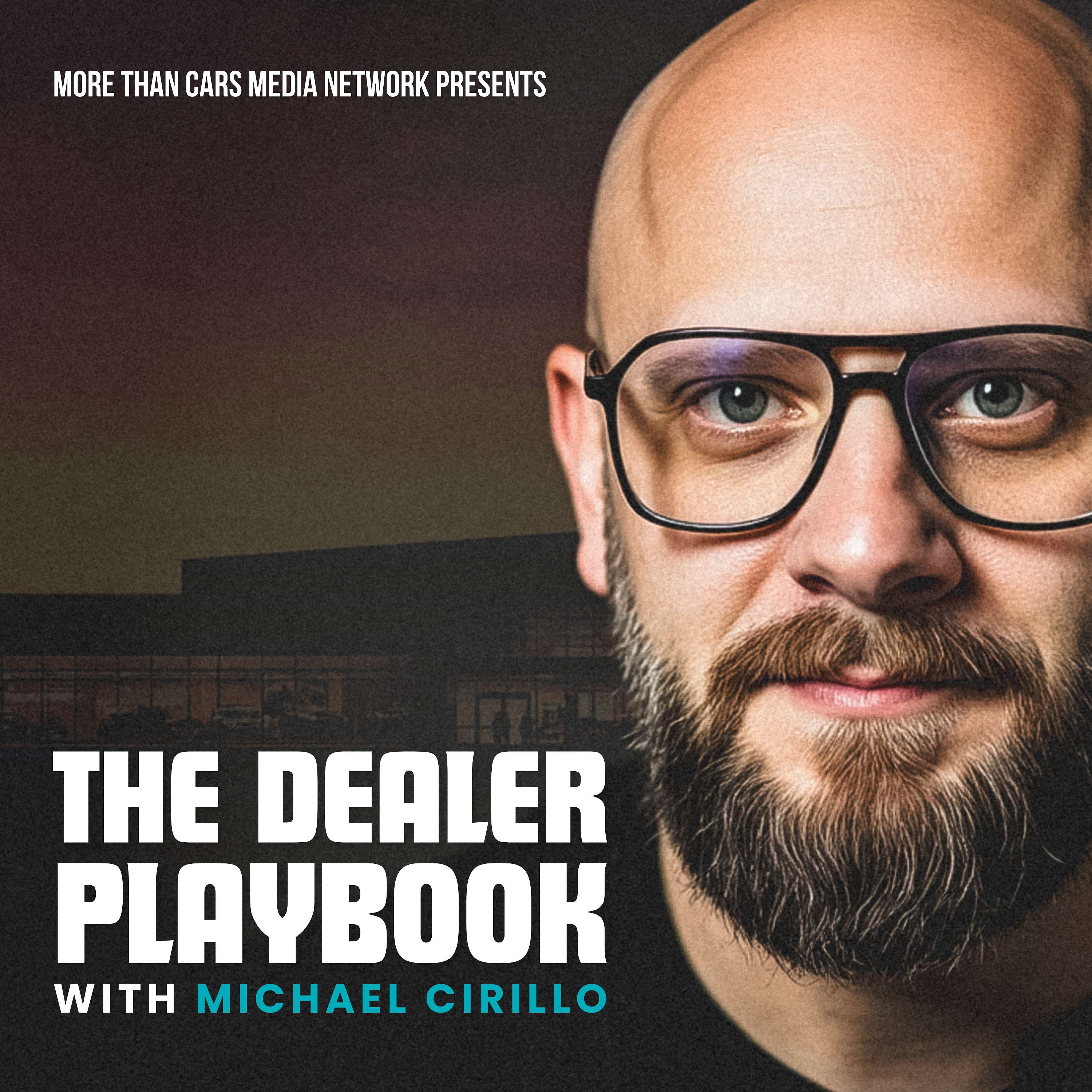
Nir Bashan, a creativity expert, discusses how to harness creativity to transform challenges in the automotive industry into opportunities. He emphasizes that everyone has the potential for creativity, which can be stifled by fear and a focus on analytics. Bashan shares practical strategies for fostering a positive work environment and enhancing communication, which can lead to improved sales and customer satisfaction. He also highlights the importance of adapting to industry changes, such as the rise of electric vehicles, by thinking creatively about inventory and customer engagement. His upcoming book, 'The Solution Mindset,' offers insights into innovative problem-solving.
What if your biggest dealership problems aren’t “market problems”… but creativity problems?
In this episode of The Dealer Playbook, Michael sits down with Nir Bashan, world-renowned creativity expert, founder & CEO of The Creator Mindset, LLC, Clio Award winner, and Emmy-nominated former Hollywood/advertising executive to show car dealers how to use creativity as a practical business tool, not fluffy “inspiration,” but real-world tactics that move metal, grow service, and improve culture.
Nir has coached leaders at AT&T, Microsoft, NFL Network, EA Sports, Suzuki, JetBlue, and more. In this conversation, he maps the same creativity frameworks directly onto retail automotive in 2025 and beyond.
You’ll learn:
Why creativity + innovation are the only sustainable edge as regulations, EVs, and consumer behavior change
How to translate Hollywood-level creativity into daily dealership operations
A simple mindset shift to turn “crisis after crisis” into opportunity (EV overstock, chip shortages, changing regs, etc.)
How to balance data and creativity so your analytics don’t kill your humanity
A dead-simple language exercise that can boost customer satisfaction and sales
Why everyone is creative (backed by research) and how to unlock it in your team
How to use creativity to transform your BDC, service lane, and sales culture
Book Giveaway – 10 Free Copies of The Solution Mindset
If you got value from this episode:
Leave an honest review on Apple Podcasts or Spotify
Screenshot your review
DM it to Michael on LinkedIn, Facebook, Instagram, or X
👉 The first 10 people to do that will get a free copy of Nir’s new book, The Solution Mindset.
"That book went, did it's round at some of the, at some of the auto nation stores, then went to Porsche card North America. I get a call from them saying, hey, we want to have you come in and we're going to have a book party here."
AutoNation runs many car lots where people can buy new or used cars and get them fixed. It’s a big chain that many car buyers visit.
AutoNation is the largest automotive retailer in North America, operating a network of car dealerships and service centers.
"That book went, did it's round at some of the, at some of the auto nation stores, then went to Porsche card North America. I get a call from them saying, hey, we want to have you come in and we're going to have a book party here."
Porsche makes fast, fancy cars that many people want to own or see. It’s famous for its sports cars and SUVs.
Porsche is a German luxury sports car manufacturer known for high-performance vehicles such as the 911 and Cayenne.
Select text to request an explanation
Some people might argue I'm just not the creative type. I can't do that. I mean, we certainly see people throw up that limitation or that barrier quite often. Oh, man, I can't think outside the box. What's your response to people who say, I hear you, man, but I'm not the creative type. Yeah, I think we're all creative. So I think it's in our DNA. We were born with it. I think what happened, Michael, is that we kind of let go of it over the years. And for whatever reason,
we're all in love with numbers and analytic. And we're forever wondering why our dealership ain't doing as good as we think it should. I want to talk about turning fear into fuel. We've had interviews where you've noted that fear of failure suppresses creativity. So what practical exercises or mindsets can leaders introduce to help employees test new ideas without gambling the business. Yeah, this is about an evolution. Michael, not a revolution. This is about changing little things every day in order to get a little bit better.
I find every single time the missing link is creativity. How should dealers use creative thinking to stay resilient and seize opportunities? The exact thing to do is that. One of the things that I enjoy most about producing the dealer playbook is hearing from you. The messages that I get of people who are getting so much value out of the podcast, applying it to their day-to-day workflows and finding a thriving career right here in the retail auto industry. It means the world to me. And you know, one of the ways that we make doing this possible
is through my agency FlexDealer. And of course, in the spirit of providing value, I think this is a perfect time to head over to tripledw.flexealer.com to show even further support for you. My beloved DPB gang. Right now, if you go to my website FlexDealer.com, you can get a full free PDF of my number one bestselling book. Don't wait, dominate. And the reason I think it's so special is that a lot of the topics that are discussed in this book are even more relevant.
Today than ever with this surgeon popularized AI and people wondering, well, what can I do next? How can I have a competitive advantage? Well, that's all here in this book. And so I'd love to be able to offer you a free copy of this. If you go to FlexDealer.com, it would mean the world to me because that is how we continue to produce this show for you.
Near Bashan is a world renowned creativity expert in the founder and CEO of the creator mindset, LLC, where he teaches leaders and employees to unlock creativity as a practical business tool.
A former advertising and entertainment executive, his work is won a Cleo award and been nominated for an Emmy. He has taught graduate courses at the Art Center College of Design and Pasadena and undergraduate classes at UCLA.
You might have heard of that place through his consulting and keynote work he has shown companies such as AT&T Microsoft NFL Network EA sports Suzuki and JetBlue had a harness creativity to improve profitability and build more meaningful work environments.
He has a new book coming out. You might remember him from our previous conversation, but he's got a new book coming out called the solution mindset, which is coming out on December 30th. And it is going to knock your socks off and set you up for a
powerful 2026 at time or recording near my man. Thanks so much for joining me on the dealer playbook.
Thanks. Thanks for having me again together on the Padcast universe here.
I mean, as someone who's written a book and goes help ghosts write another book, that's not an easy process. I want to just dig into this because I mean, the amount of creativity alone that goes into writing a book, bring me into the process.
What point did you realize I'm delusional and I want to write another book?
Right. I like the suffering. It's time to write another book. Isn't that the question? Yeah. So basically I've had a germ of an idea for a while.
I wrote the creator mindset back in 2020. I think last one we talked during the pandemic. And that book did really well sold a lot of copies and people really enjoyed it.
And I had an idea for another one where I strongly believe that creativity and innovation are the foremost tools that will elevate humanity worldwide.
And I know that by watching the news and seeing what you see out there, one could get the impression that the world's going to hell right that everything's horrible and things are terrible.
And I knew that was not the case, Michael. So the book idea was about looking at 10 different places all over the world here in America too, where people are doing incredible, incredible creative things.
You know, lower pollution and heal the oceans and everything like, you know, reform jails even got to reform jails. I mean, that's a big deal to unemployment solving unemployment issue health care and identified people doing incredible things.
And I wrote the book about these 10 amazing people.
And that came together in like seven months, seriously, from the idea to, you know, having a draft the whole thing was very, very quick.
And I just, I had a really good team this time, Michael. I had a really good editor that I could use and I would talk in her.
I said, hey, this is my dish. You like love that hate those three. Don't ever talk to me about this one, but this one, that's really good. That's your second chapter. And so it came together really fast when the first one took seven years to write this one took seven months.
Wow. Yeah, that's kind of what there's so much to unpack there for those that are listening because it's like, well, the first time you do anything, it's going to take you longer.
Which is critical. I mean, our human nature, we want everything right now. We want immediacy. We want absoluteness.
You putting in the reps of the first creative process builds wisdom builds experience so that when you come around to do that process again, you have so much more clarity.
And I think people really under value or overlook the power of clarity.
100% and that clarity's earned. Michael, it's something that we need to, we need to earn it by going through the experience of doing it.
And creativity and innovation are exactly the same thing. People think, oh, you know, I get inspired once a week. I get an idea, but it's a practice.
And the more you practice at it, the better you get at it, the more deliberate you get by using creative tool, the more that it comes to you in terms of clarity of mission and that that clarity is like, man, it's critical.
Yeah, I want to talk to you a little bit about being nominated for an Emmy and working in Hollywood.
You know, you've worked on movies and albums and big advertising campaigns and and, you know, obviously your works won you a clear award, you've been nominated for Emmy.
I'm curious, how did how did you translate those Hollywood creativity skills into tools that any business for since we're talking about car dealers that a car dealership could could use in their business.
So I think the nature of the dealership in general has completely changed, right? The the business is not what it used to be, you know, 10, 15, 20 years ago, it is completely change.
And so the skills that I learned in Hollywood working and advertising are direct parallel into the business world, because what I really learned is that change is inevitable.
And being able to keep up with those changes is incredibly incredibly important. So what I really learned is that, you know, the retail environment has completely changed how dealers look at their inventory, their repair, their warranty work and all of the things that encompass a traditional sort of dealership enterprise.
All of those elements have to be looked at today in a creative and innovative way in order to be more successful.
The tools of the past, you know, the metrics of, you know, we need to convert this customer whatever we need, you know, those tools are no longer the case. I'll give you an example.
So my new book's coming out called the solution mindset. It's available everywhere you can buy books, Amazon target Walmart, just go get a copy. It's in pre order now comes out December 30th.
That book went, did it's round at some of the, at some of the auto nation stores, then went to Porsche card North America. I get a call from them saying, hey, we want to have you come in and we're going to have a book party here.
Here at one of the, one of the local dealerships here in Orlando at Porsche Orlando. And they said, hey, you know, we want to do that as part of the community part of an offering.
And we're going to have a really great time. We're going to sign a lot of books and it's going to be a celebration of creativity, innovation, precision, wonderful, wonderful, wonderful cars and the culture that comes along with that particular brand with Porsche.
So Michael, we need people to think a little bit differently about a traditional model that, hey, you know, this is just a dealership from this time to this time.
And you know, when we close, we close, it's about reinventing the space and reinventing the approach to the community.
And those, those are incredibly creative and innovative things that are in dire need right now, not just that a couple of dealerships or whatever, they're in dire need of a systematic change within the, the, the, the retail relationship of the dealership.
So if you ask what I've learned from advertising and Hollywood and film and doing all this stuff, it is that need to continually evolve in order to drag in that audience and that customer to the environment and to the store.
Some people might argue, I'm just not the creative type. I can't do that. I mean, we certainly see people throw up that limitation or that barrier quite often.
Oh, man, I can't think outside the box. I mean, what's your, what's your response to people who say, I hear you, man, but I'm not the creative type.
Yeah, I think we're all creative. So I think it's in our DNA. We were born with it. I found an amazing piece of recent research that's in the new book, the solution mindset.
And what we found was that there are creativity genes in our, all of our DNA and it is literally part and parcel to who we are.
I think what happened, Michael, is that we kind of let go of it over the years.
And for whatever reason, we fell in love with numbers and analytics and all of that stuff.
And we're forever wondering why our dealership ain't doing as good as we think it should, right?
The numbers point to like great, rosy success, but we're always missing a component.
That component that we're missing is a creative and innovative way to look at things.
It's the soft skills. It's how do we make people feel and all of that in the relationship that we've traded for analytics only.
And if we spend the rest of our lives looking at numbers only, our business will never get to where it needs to go.
We need to balance the analytics with creativity, with innovation, with constant change so that we can be competitive and we can grow and get to where we need to go.
If you think that you're not creative, you need to, well, read my book, right?
The solution mindset gives you, I don't know, dozens of ways to become more creative.
We can get into it, but you need to understand that it's a tool, it's a business tool that has practical and measurable results.
But it needs to be balanced with a system that is, you know, analytic.
I'm not saying throw the analytics away. I'm saying balance it with a bit of creativity.
Everyone can be creative. Anybody can be creative. It's a practice.
You can do it. Your audience can do it. The, you know, the dealership network that you reach can do it.
The employees can do it. It is really about wanting to do it, learning a few of the tools and getting in there.
Hey, does your marketing agency suck? Listen, before we hop back into this episode, I know you know me as the host of the dealer playbook.
But did you also know that I'm the CEO of Flex dealer?
An agency that's helping dealers capture better quality leads from local SEO and hyper targeted ads that convert.
So if you want to sell more cars and finally have a partner that's in it with you that doesn't suck, visit FlexDealer.com.
Let's hop back into this episode.
I love it. I love, I love having conversations with anyone who can shift the paradigm
because I think to your point, so many people are suppressed. So many people are suppressing themselves predicated upon a fear that's not real.
You know, the whole false expectations appearing real thing. And it's, it's, it's really sucky.
Yeah.
How many people are feeling limited by that? I mean, I have empathy for them because I know I've been there before.
I want to talk about turning fear, fear into fuel.
You brought up analytics, this kind of analysis paralysis that can creep in because we are so focused on the data.
And I think a qualifier here for anyone that's listening or watching, I mean, we are data guys just as much as anybody else.
You have to be in marketing, have to be.
But there, I think there is a way to not get so deep into the data that you lose your human touch.
So, you know, you, you've had interviews where you've noted that fear of failure suppresses creativity.
Like we're talking about dealerships are risk averse by nature.
So what practical exercises or mindsets can leaders introduce to help employees test new ideas without gambling the business?
Because I think that's what they're always worried about. They're always worried about like we can't try something because we'll go out of business if we do that.
Right. Right. Right.
Yeah, this is about an evolution, Michael, not a revolution.
This is about changing little things every day in order to get a little bit better.
Listen, I love the analytics. I love Excel. You should see me on it. I'm really good.
The point is not to throw away what has worked. The point is to augment and enhance what has worked to get you to the next level.
And I find every single time the missing link is creativity. I work with financial services companies all the time.
And the missing link almost always, especially in risk adverse environment, is adding a little bit just spoon feeding a bit of creativity.
I'll give you an example. Right. So our language is one of the most important things that we have. Right.
And I did a ton of research on the English language. And I found that there are six to one more negative than positive words in the English language.
Six to one. So for every amazing, there is bad, horrible, terrible, suck, crappy, the worst, you know, on and on and on and on.
And I did a, you know, did some research on languages all over the world. And we found something like 56 languages that we studied.
We found that there's between a four to one ratio and a 12 to one ratio of negative, positive words in every language, Michael, that crazy in every language.
Right. And I'm like, why language so negative. And then how is this going to help me move cars and like get people into the sales department into the repair department.
And how is this, you know, going to, how am I going to sell parts and, you know, whatever else that I need to do.
Here's the thing, right. What if we were to get the staff together and we would say guys, for the next hour, we are going to monitor every single word that we say.
And instead of the usual, you know, texting a vendor, hey, you know, make sure the parts are here by six o'clock.
Hi, Steven. Thank you for being such a trustworthy vendor of ours. Thank you for sending the parts over.
You know, we can't wait to see you at three o'clock. What if that were to happen, right. I'll tell you what would happen.
Michael will show up and go, oh, you guys do like why did, why are you guys sending me this deck. Did somebody happen to somebody die.
You know, he's going to be like, like, and then no, no, we were trying to get better at our communication. He's going to go, oh, this is wonderful.
You guys, I have this extra part here that's been sitting around since last year. Do you guys want it? It's 20% off. Yes, we'll take the whole thing.
We'll take opportunities by changing your language from negativity to positivity, right. How would that work with a customer? How would that work between employees?
Just a simple shift in mindset to using positive instead of negative language can offset amazing tangential things that you can't, like, you know, you can't look at an analytics description.
An Excel and say, okay, if I make it, if I tell my staff, you know, hey, let's use better language, positive language instead of negative language, it'll give me this much return on investment.
You can't, but the return on investment is certainly there. It is there in every interaction in every way that people talk to each other.
One thing your listeners can do right now is start choosing positive language, whether they're texting, whether they're calling, whether they're communicating, whether they're on Slack.
Use positive language. Take a minute to address the human being and you will see amazing creative work. This thing costs absolutely zero. It's free and it is an enhancement on what you are already doing right.
I remember my, my dad used to be, so my dad, I mean, self made Italian immigrant, you know, high school dropout did all the things, right.
It's kind of funny, actually, side note. Any time somebody talks to my dad and then they come and talk to me, they're like, what hasn't your dad done?
It's like, so he was a short circuit repair person, he's worked in hospitals, he was an assistant coroner, he published, there's all these things.
Part of that was my dad had to unwind limiting beliefs that were instilled upon him primarily through language. I don't know if anybody listening knows an Italian.
But they're not the best at positive affirmation.
And so, you know, my dad was the, was the drive to school and thrown in a cassette tape of, you know, Brian Tracy or, you know, whoever it might be and it was all this positive material.
And, and I think about, you know, his tolerance over the years for negative sentiment, negative statements, negative language, really, really diminished, he would, you know, if I, you know, I remember being a teenager and I'd be like, I'm an idiot, he'd be like, take those words out of your mouth.
You know, and really, you know, obviously a Christian household, he'd be like, Jesus said, he is the great I am. And now you are using the words, I am synonymous with idiot, like, right, how, don't matter.
You want me to smack the taste of your mouth?
And to your point, you know, I was at a conference pre, pre pandemic, I want to say 2018, maybe early 2019, Kevin Hart was one of the speakers famous comedian.
And he talked about how negativity travels faster and further than positivity.
That's why the news is always negative sentiment negative headlines. We don't realize how much we're actually being bombarded with language like you can't.
You won't 100% you shouldn't.
All of this suppressive language from peer groups, from leaders at work, co-workers, the media, government, everybody is telling us what we can't do.
And I worry that, you know, especially in conjunction with being innovative and trying to grow our businesses, it leads to this sentiment near of like, why should I even try?
Yeah, given up, I'm not going to get ahead. I can't do it because they told me I can't. Therefore, there's no other solution.
I bring up my dad because he's a solution oriented guy. He's like, everything is figure outable.
There is nothing, there is never not a path. He's like, I am like, old water in a wall. I will find the path.
You know, what's your thoughts on that? The speed at which negativity travels and how much more effort do we have to put into to put a positive sentiment out there?
I think that effort is everything and that differentiates, I think, you know, strong entrepreneurs and strong business leaders from, you know, others that can't get there.
The, the, the very nature and your dad seemed like an amazing, amazing guy with an incredibly astute, intuitive look.
It's okay.
Yeah, it's just it really makes a difference.
And if you were to look at your communication throughout the day, even with your staff, Michael, I know you guys have kind of a big staff and you guys have a really great business and very well esteemed in the market, right?
If you were to look at your community and you're a super nice guy, if you were to look at your text with your staff, you'll see in there.
Oh man, you know, I was really in a hurry and I just had to tell, you know, I don't know, I just had to tell somebody, hey, get this thing done quickly and whatever, but I didn't really take a moment.
I didn't take a second to change the language from get the invoice out by three o'clock to hi, Shelley, hope things are good.
I really appreciate you. You've been doing so good with our invoices like really helping and it's been great if you can help one more time and get that invoice out by three o'clock.
I think what you will get back is going to be magnitudes above the effort you took to just do and slow down to send a text message that was heartfelt and and just appreciate it.
And Michael, we talk a lot about culture at work, right? People are like, oh, the culture of my job and you know, it's hard to change it and strategies, like we're doing strategy and like, you know, everyone knows the culture eats strategy for breakfast, right?
It's famous saying so one way to improve that immediately. And dude, I've been to a bunch of dealerships. Like I got to tell you, like from the second you walk in, you can tell it to vibe.
You can feel whether people have been beat down right the whole time cell, cell, cell, go get cards out the door units units unit or if they're like in a supportive environment where they have good leadership and they have, you know,
you know, positivity that is embedded there. So one of the things that you could do immediately is just start in the way that you interact with people and enhance the message, add a little love, add a little understanding.
I think you put that together three, four times and you can have amazing results.
I did a consult with a famous client. I can't talk about it, right? Because I'm under NDA. So it's a Fortune 500 company. I asked their call center for one hour and I stood in the room. The call center's in Dallas. I stood in the room and I said, guys, we're positive for an hour.
I was like running around listening the phone call of like, you know, like a freaking madman, right? Listening for positive language instead of, hey, mister, you know, so and so, whatever they were calling for.
You know, we'll get you the refund immediately. I understand that you want to refund really sorry that that's happened, you know, just being a little bit of empathy.
And we noticed in that one hour that I was there in the room running around making sure everybody was like being a little bit more positive.
I think something like five or six percent of a, you know, a higher satisfaction at the end of the call, you know, when you push three or four buttons to analyze, hey, how would this call for you?
Even even that little click across the thousands of people that called in, you know, six percent of an improvement is an incredible, incredible improvement.
And I ask the lit, you know, you got dealerships and people listen across the country and automotive. What would a six percent boost in sales or hard sales or people, you know, at the in the, in the repair part of the business.
What would a six percent boost do for you? And most people would take that on a heartbeat. I feel like here, that's the best. Yes, I'm in.
So I think, I think that's why it's so important and, and, you know, in your dad's case, amazing, amazing story about, you know, getting that, you know, I'm an idiot stuff out of your mouth and like understanding that just that simple mine shift that change in the mindset to creativity to positivity.
Incredible benefit.
I love how you quantify it as well because I think a lot of people struggle with it, especially, you know, obviously the auto industry is, is no 501c3 like these are for profit businesses.
They financially contribute to the lives of hundreds and hundreds of people in their communities so that the pressure is high.
So we have a, we have trouble quantifying care. I love how you demonstrate, though, it can be quantified who would not, you know, bend over to get a six percent increase.
I mean, all of us would. And, you know, poignant because nearly every dealership in the United States has a call center, a business development center with agents who are fielding all of these opportunities.
Make me think of man is the best most expensive marketing in the world won't make a difference if the people inside who are fielding the opportunities aren't willing to make a difference.
100% 100% and there's also Michael this shortness of like letting things work. It's incredible. Everyone wants something to work in five seconds or else they're out. Right.
If you sign up for a marketing plan and what lead generate whatever it is, give it some time. Like it's not just, hey, I'm going to hit the button go for it and then stare on my computer and wait for the sales to come in.
That's not how it works. Maybe it worked like that 20, 40 years ago, but it doesn't work like that anymore. You have to ask yourself, who are my partners? These aren't vendors and, you know, hey, I'm keeping them at a shoulder length.
Either your partners and the more that you understand that the sales experience is the partnership of many different components that have to come together in order to bring that sale across the line, the better you are equipped to deal with the changes going on in 2025, 26 and for the next 10 years.
What concerns me about what you just said is that it's 2025 at time or recording and someone just perked up and said, wait, what?
You can't do it that way anymore.
Like the number of people that are still sadly unaware that the way things used to happen is not not the way today, you know, things are moving faster, which means we have to double down on the whole human connection piece.
Maybe quite droople down on it. I want to ask you this as we start winding down the auto industry in particular, I mean, every industry, but we're not talking about every industry here, the auto industry, it's like one thing after another, it was the pandemic with chip shortages and we don't supply chain issues.
And then it's a new regulation every week that these dealers need to be paying attention to and now it's the EV credits gone and there's dealers that have, you know, probably purchased too many EVs and weren't all in so they're not what do I do with all of these I'm losing money.
They're getting hit by I'll use the word strategically crisis after crisis.
You know, you've observed that creativity helps businesses navigate crisis, you know, we've talked about EV adoption, there's digital retailing economic uncertainty tariffs, all these things that are shaping post 2025 retail auto industry, how should dealers use creativity thinking or creative thinking to stay resilient and seize opportunities.
So I believe that every crisis is an opportunity in disguise, right, and now is the time to get more creative and innovative.
You have a bunch of EVs sitting on the lot because nobody wants them, right, I mean, that's kind of the case and you know, what do we do with them now with the time to get incredibly creative and innovative and look at those things as opportunities to get to where where you want to go.
It's really about changing the mindset of looking at something and being a negative into a pod of saying, okay, great, there's a bunch of EVs on the lot.
This is a really good opportunity to do what I don't know, maybe it's rent them out, maybe it's the, you know, get people out of Lisa's early, maybe it's, I don't know, I could come up with a bunch of different ideas.
You have to do what's right for the business and right for that particular use case, but changing the mindset and looking at something instead of saying, you know what,
we just get beat down after year after year, I quit, you know, I'm out going, this is the coolest industry ever why it because every single year something happened that every single year, I have to flex, I have to change, I have to rearrange, I have to be on my toes in order to be competitive in order to, you know, to thrive.
And I see those things as really great opportunity, the exact thing to do, I don't know what it is, right, you can come up with a bunch of ideas, but the, the, the opportunity is there for everyone to look at this crisis and say, man, what good things can I derive from these moment.
And this is the ripe time to derive a bunch of really great stuff from the Evie's piling up or, you know, whatever the, I don't know if they're if they're still cars sitting in in the cargo ships without chips or whatever, but all of those things are opportunities.
Maybe it, you know, get it, get a hold of the client, maybe it's sending, you know, some, some personal stuff in the salesman and the people waiting for their car, every single opportunity or every single crisis is really an opportunity in hiding.
Yeah, I mean, you know, a buddy of mine is really good at this, his name's Glenn Lundy, worth definitely worth checking out, he has a group called 800% club, and it's based off of when he was a general manager of a really small dealership, you know, in the, in the sticks and Kentucky.
Over a five year period, he helped grow his dealership by 800% and now he has this group, but you know, your point, I was thinking about him because.
He's kind of proven them that's the case, for example, oh, there's chip shortages and vehicles locked up at the ports and we can't get new inventory and they're all being built guess what you are now a used car dealer.
Right, like make it happen yeah and some of these dealers are selling we just talked to one of our new client partners eight to one selling eight used vehicles to every one new vehicle.
My question out 350 to 400 cars a month that's crazy and I'm like that there is the proof point to your thesis that.
If you have the mindset the creative mindset to never get got you ain't getting me what's that basketball coach doc Rivers is like you can't get that guy you could question him right and you guys lost a bismillies like I don't know what to do you know
I really think it's so powerful one of my favorite shirts that I have says no crisis can win right and you make me think about that because the sooner we realize how powerful and capable and creative we actually are.
The better off will be things will will expedite and grow for us exponentially near this is such a delight mana it's it's great to connect with you we got to not go so long before the next one.
How can those listening and watching connect with you and get a copy of your upcoming book.
Definitely so I'm easy to find near bachan is my name and I are B.A.S.H.A.N. I'm out the one uploading video game clips to you to I'm the other one there's like three of us in the entire world.
You were the only one before the internet I was I was the book told the solution mindset to available everywhere I would love it if you were to if you're audience were to pick up a copy it's on Amazon right now it's called the solution mindset
Wiley and sons is the is the publisher it'll be in every bookstore in U.S. and every airport in the U.S. it'll be everywhere it's a story of 10 amazing people solving amazing problems around the world and then I break down what they're doing that you could do also it's it's an incredible book.
And I think for card dealers and people in the automotive industry I think it'll just be a ray of fresh fresh air and be sunshine and like really great inspirational stuff to go into work and go okay what are we going to do with the VVs.
I love it man well listen for the D.P.B. gang if you made it all the way to the end of this episode congratulations because I want to do something for you we're going to give away 10 copies of nearest book
what do you have to do is leave an honest review on iTunes or Spotify whichever your podcast app of choice screenshot it and send me a DM on whatever platform you can find me linked in Facebook Instagram
I don't care where the first 10 people to do that we're going to send you a copy of nearest book near thanks so much for joining me on the dealer playbook.
Thank you Michael. Hey thanks for listening to the dealer playbook podcast if you enjoyed tuning in please subscribe share and hit that like button you can also join us and the VV community on social media.
Check back next week for a new dealer playbook episode thanks so much for joining.
Request an explanation for:
Request an Explanation
Heard something you'd like explained? We'll add it to this episode.
Sign in to request explanations for terms you heard.
Want to learn more?
Browse our glossary for plain-English explanations of automotive terms, jargon, and concepts.
See something that's not quite right? Our annotations are AI-generated and can sometimes miss the mark.
Click the flag icon on any annotation to suggest a correction.