The Cadillac Lyriq is an all-electric SUV made by Cadillac. Instead of using gasoline, it runs on a battery and an electric motor, which can make acceleration feel very quick. It’s mentioned because it’s one of Cadillac’s main EV models.
The hosts mention the Miami Grand Prix as a favorite race and set up that they recorded a special episode there previously. This is a segment-level reference to a specific event rather than a technical topic.
In Formula One, the garage is where the team runs the race from. Even though the cars drive on the track, the garage is where the crew plans and coordinates everything.
This is about how the team runs the race behind the scenes. People in the garage coordinate timing, communication, and information so the car can perform on track.
Telemetry is the live stream of car information coming back to the team. It can include things like speed, temperatures, and how the car is behaving so they can make smarter calls.
They’re describing what happens behind the scenes in an F1 team’s garage during a race weekend. You’ll hear who works on the cars, who plans the pit stops, and how the cars get ready to leave for the track.
A recovery drive is when someone starts near the back and has to work their way up during the race. It’s basically a “come-from-behind” effort using good driving and strategy.
The Constructors’ Championship is the season-long points battle between teams, based on the combined results of their cars. The host explains that garage order is usually set by where teams finished in that championship the year before.
McLaren is mentioned as the reigning champions. The host is using them to illustrate how the teams’ garage spots are arranged.
Company
Salba
The transcript mentions a team name that sounds like “Salba” and says they finished last in the championship. The exact team name may be misheard in the transcript.
Race cars use special seat belts that are made to fit the driver’s body. They’re not like everyday belts you can keep adjusting—so someone else helps set them up, but the driver can still release them when needed.
Instead of a belt you adjust every time, the harness is set up to fit you once and then stays in the right position. That helps the safety system work the way it’s designed to, while still allowing you to get out quickly if you need to.
A pit stop is when the car comes into the garage area to get serviced, usually for tires. Pit stop practice is the team rehearsing that process ahead of time so it goes smoothly and quickly during the actual race.
Dynamic stretching is warm-up movement—like controlled stretches while moving—to get your body ready. It’s meant to help you perform better and feel looser before practice or a race.
This means doing specific warm-up movements that get the right muscles working. The goal is to make sure your body is ready for the exact kind of effort you’ll need.
They’re getting the pit crew ready in case the car needs to stop very early. Everyone has a specific spot and job so they can move quickly and efficiently.
F1 limits how many team members can be directly involved in working on the car during the weekend. The idea is to keep things fair and controlled, so teams can’t staff unlimited crews.
The sporting director is basically the rules-and-procedures person for the team. Their job is to make sure the team does everything correctly during race situations so they don’t get penalties.
The start procedure is the exact set of steps the team must follow to begin the race the right way. If the team doesn’t follow it, they can be punished.
A red flag means the race is stopped because something is unsafe on the track. The red flag procedure is the rulebook for what teams and drivers must do during that stoppage.
In F1, tyres are the tires the cars run on during the race. Choosing the right tyres—and getting them up to the right temperature—can make a big difference to speed and grip.
Grand Prix Sunday is the day the actual Formula 1 race happens. Before the race starts, the cars line up and do a short warm-up lap called the formation lap.
A formation lap is the warm-up lap where F1 cars leave the grid and circulate in order before the race start. It helps drivers and teams get tires and brakes up to operating temperature and confirms everyone is in the correct starting position.
“Lights out” is the exact moment the race officially begins. When the lights go out, the cars launch forward—teams watch the timing closely to get it right.
Term
formation app
Before the race, F1 cars do a formation process. The “formation app” is basically the digital system that helps teams and drivers follow the correct timing and instructions.
“Locks up” means the brakes are applied so hard that the tires lose grip and start sliding. That can slow the car down and make it easier for other cars to pass.
Term
T1
“T1” means the first corner of the track. The first corner is where drivers fight for position right after the start.
The front wing flap is part of the car’s front wing that can be adjusted. Changing its angle changes how the car grips the track, which can help the car turn and stay stable.
The pit wall is where the team’s top decision-makers sit during the race. They watch what’s happening in the pit lane and the garages so they can direct strategy and timing without being in the garage.
Mechanics in the garage use two-way radio communication to coordinate actions quickly, especially during pit stops. Because the environment is extremely loud, radio plus headsets/earpieces is essential for reliable instructions.
An intercom channel is like a private radio line. In an F1 garage, lots of people need to talk at once, so they use different “channels” to keep the messages organized.
The pit area is very loud, so it’s hard to hear someone talking normally. That’s why the team uses headsets and radio channels to make sure instructions get through.
Tyre groups are the people who focus on how the tires are doing. They track how the tires are wearing and help decide when the car should change tires.
Term
electronics engineers
Electronics engineers are the people who monitor the car’s technical systems using data. They talk about what the car is doing mechanically/electronically, which is different from the race plan conversation.
A safety car is like a pace car that comes out when there’s danger on track. Because the cars slow down, teams often rethink when to pit, and if you miss the call, your pit stop can be late.
Teams use weather radar to anticipate rain timing so they can adjust strategy—especially tire choice and whether to pit for intermediates or slicks. Because teams treat this data as sensitive, access to it can strongly influence decision-making.
Sometimes teams don’t know which plan will work best, so they try two different approaches with their two cars. That way, if one plan turns out to be wrong, the other might still work out. It’s like hedging your bets during the race.
Strategists don’t just guess—they use data to predict what will happen. They estimate things like how fast tyres will wear and how many laps you can do, then pick the plan that looks best.
Company
Hass
Haas is an F1 team that races with two cars. They make strategy calls to try to score points for the team. Here, they’re using different tyre plans to improve their chances.
F1 tyres come in different “grip vs life” levels. The harder tyre usually lasts longer, but it may not grip as well at the start. Starting on it can help you go longer before your first pit stop.
A stint is how long you stay on one set of tyres. The first stint is your opening run before your first tyre change. How long it is can change when you pit and where you end up on track.
Medium tyres are the compromise option in F1. They’re usually better for grip than the hard tyre, but they won’t last as long. That makes them useful when you need to be fast right away.
In F1, only certain finishing spots earn championship points. If you’re already in those spots, you try to hold them. If you’re outside them, you plan to move up into them.
Optimizing your race means planning so you get the best overall result, not just going fast for one lap. Teams balance tyre wear, pit timing, and where you are on track. The goal is to make the whole race work in your favor.
RaceWatch is a computer program the team uses during the race. It runs lots of “what if” simulations to help decide when you should pit for tyres. It tries to pick the timing that gives your car the best chance to gain time.
An undercut is a strategy where you pit before another driver so you can use fresh tyres to run quicker laps. If you do it at the right time, you can come out ahead when the other driver eventually pits.
In F1 you don’t just use “the same tyres all race.” The team has to pick the tyre type that will give the best grip for the track and conditions. If they pick the wrong one, the car can feel slow or unstable and you may have to change tyres again.
The “strategy point” refers to the pit-wall/strategy group that plans tyre timing, pit-stop windows, and race calls. They coordinate with the driver and engineers using radio, and their decisions drive what the garage needs to do next.
It means braking later than usual to carry more speed into the corner. You have to be careful because if you brake too late or too hard, the car can lose grip.
Pirelli is the official tyre supplier for F1, and its engineers support teams with tyre behavior, inspection, and performance data. Having a Pirelli engineer involved helps teams understand how the tyre is working and why it may be degrading or performing differently than expected.
The strategy engineer is the person who helps plan the race—when to pit and which tyres to run. They use data and team input to keep the plan up to date during the race.
Before the race, teams do practice runs to learn how the car and tyres behave. They use that practice data to guess which tyre will be best later during the race.
The transcript describes strategy as a team process rather than a single-person call. Drivers and engineers communicate frequently—often every lap—to align on the best plan, even if there are differing opinions initially.
Tyres need to be warm to grip well. Heated blankets are like covers with built-in heating that keep the tyres at the right temperature before they’re fitted to the car.
They mention the Cadillac OPTIQ V as the smaller, more agile option. It’s another “V” model, meaning it’s positioned as more performance-oriented than the base version.
A “lap” is one full trip around the track. Saying “lap 22” tells you where the race is in time, which matters because the cars behave differently as tires and conditions change.
“Gained five places” means the driver moved up five positions on the race order. That can happen from passing other cars and from the team helping the car perform better as the race goes on.
In F1, only certain finishing spots earn points toward the championship. “Fallen out of the points” means the driver is currently in a position that won’t earn points.
Car
Ferrari of Lewis Hamilton
That phrase means Lewis Hamilton’s car from Ferrari. When two F1 cars fight for position, it’s usually a mix of car performance and race strategy, not just who’s driving harder.
Term
tentative round of applause
A “tentative round of applause” here is a live reaction from the pit/crew, but it’s “tentative” because the on-track battle isn’t fully resolved yet. In F1 broadcasts, crew reactions often reflect whether a pass or position change is expected to hold.
A pit stop isn’t just “changing tyres”—it’s a coordinated operation. The crew uses countdown signals so everyone is in the right place at the right time, which helps them avoid mistakes and lose less time.
Teams use countdown calls so the pit crew knows exactly when to get ready. The “40 second” call is an early step in that countdown before the car comes in.
Visualisation is basically practicing in your mind. Instead of only training physically, you picture what you’ll do so you’re calmer and quicker when it happens for real.
Timing screens display live race data such as lap times and pit stop durations. When they say a pit stop was “three seconds dead,” they’re referencing the measured time from the car’s stop to its release.
In a one-stop strategy, the team plans to pit only once during the whole race. That usually means changing tires once, and they’re trying to time it so the tires still work well for the rest of the race.
Lap times are how long each full lap takes. If the times suddenly get slower or faster, it can tell the team something about tires, driving, or car behavior.
A reserve driver is a driver who isn’t in the race car for that event. They’re still around the team so they can stay prepared and learn what’s going on.
LIVE
Cadillac has entered Formula One, deepening the racing pedigree behind every V-Series on the road.
Discover a line-up that delivers pure adrenaline in the form of modern luxury.
Experience the quickest Cadillac ever, the all-electric Lyric V, the peak performance of the CT5-V Blackwing,
the nimble agility of the OPTIQ V, and the legendary roar of the Escalade V, all engineered to thrill.
Find out more about Cadillac's performance story in Formula One and our race-tested V-Series line-up at Cadillac.com.
Choose from 26 colours of Owens Corning Duration Shingles and transform your home today.
Shop our selection of roofing products on Menards.com.
Plus check out our weekly flyer and find plenty of great deals happening now.
Save big money at Menards.
We're going to Miami, always one of my favourite races of the year. If you've been with us for a while, you'll know I always say that.
It's one of my favourites, not just because we're recording another live show this year. More details on that a little bit later on in the programme.
But also, we've done some seriously cool stuff.
And at last year's Miami Grand Prix, we recorded a very special episode with Haas.
We had exclusive access to the team on race day.
This is what happens inside a team during a Grand Prix.
Every single mechanic in front of me has just put their helmets on.
Everybody shot up from their seats instantly. It was a case of go, go, go.
We prime everybody individually, physically, for the stops.
Even down to the last lap, you've got to stay ready.
We've got nearly 70 different intercom channels.
They're looking at live feed, best lap times from competitors, telemetry and data.
It all comes together in the garage.
The garage is a Formula One team's home. Yes, the racing happens on track. Yes, the drivers do the overtaking.
But none of that could happen without the dozens of people who work here in the garage.
It's an important place, and of course, you've got questions about it.
Hi, Christian. It's Catherine from Pennsylvania. I have a question for you.
What happens in an F1 garage during a race?
Love the podcast. Thank you.
Thank you, Catherine. Thank you to everyone who sent questions to F1Explains at f1.com.
We will answer them right here on F1Explains.
I'm Christian Newhill, and this, what you're hearing now, is a little bit of podcasting history.
We're going to be recording this episode inside a Formula One garage during a Formula One Grand Prix.
That has never been done before.
Now, usually, the only people allowed into a team garage during the race are the mechanics,
who get the cars ready to race, the strategists, who plan pit stops, and the pit crew,
who, of course, change the tyres in a blink of an eye.
Plus, you do occasionally get some VIP guests as well.
So we're with Haas, America's Formula One team here in Miami.
It is, of course, one of the team's home races, and we thank them very much for letting us do this,
for letting us hopefully not get in the way.
This is where we're going to be during the Grand Prix.
You will hear what happens inside this garage, and we're going to put your questions to the Haas engineers,
the mechanics, the pit crew, the strategists, who all have really important jobs while the race is going on.
Who knew there were more important jobs while the race is going on than recording podcasts?
So, the two white, black, and red cars were just a second ago immediately in front of us.
As I've been talking to you, the engines have been fired up,
and the drivers, of course, Esteban Ocon and Ollie Bearman have put their helmets on, and they've climbed in.
They've just this second driven out the pit lane,
and in front of me now, I can see all the other teams doing what Haas were a little bit sooner to do than most of the others,
leave the garage and get onto the grid.
Now, Esteban starts this race ninth, which gives him a solid chance of finishing in the top turn, I would say, and scoring points.
Ollie Bearman is starting from the back in 19th, so it will be a recovery drive for him,
and that is nothing he's not done before. He scored points from the back before this season.
So, out in front of me is the garage. What can I see here?
I can see, and this will shock you guys, I can see lots and lots of people busily looking at screens.
Men and women wearing the black and red shirts, some people are lifting things up and putting them down,
bits of equipment, some people are analysing every screen.
There's a man in front of me at the very start with a good old-fashioned toolbox putting it onto a stool.
It is the very definition of a Formula One garage getting ready for lights out.
Now, of course, all ten teams have a garage.
Each house are about two-thirds of the way along the pit lane.
They're in between Alpine and Racing Bulls, and we have a quick list of questions about that.
Chris is in Houston, in Texas. He asks how the order of the garages is decided.
Well, almost every race, including Miami, it's done in the order that teams finished in last year's Constructors' Championships.
So, reigning champions McLaren are at one end.
Salba, who finished last in the championship, are at the other.
Now, before the races, I've just been explaining, the garage is a hive of activity.
Just a few moments ago, there were mechanics buzzing around the cars.
One of those mechanics is Matt Thompson.
He's the number one mechanic on Oli Bearman's car.
He's also a member of the pit crew.
He uses a wheel gun to loosen the old tire and then tighten the new one.
More on that later, but first, he told us what he does in moments like we've just witnessed
when the car leaves the garage to head to the starting grid.
The garage prep sort of starts in the morning, and then the real bit sort of starts ten minutes before we go to the grid.
The tires get fit to the car, and obviously we get everyone ready to go to the grid with all the correct kit and stuff.
Matt, we've had a listener question for you.
This is from Rebecca, who's in Sydney in Australia.
Rebecca asks, why do the drivers have to be buckled into the car by someone else?
Are the seat belts so different to normal road car seat belts so they can't fasten themselves in?
Maybe they're just lazy, is that what it is? They just don't like doing it themselves.
I'm sure they probably would like to do it themselves.
No, it's a safety thing, so the belts are basically non-adjustable,
so they're custom made to the length that the driver needs,
and that's if someone has to buckle them in because there's no adjustment on them.
But presumably, in a situation where they need to get out quickly, they can do that themselves.
Yes, so they can release themselves, yeah.
That's important. Now, we are now going to bring in the Haas team physio,
making a very welcome return to F1, explains.
Faith Aitak Martin. Faith, lovely to see you in person down on the ground here in the garage. Welcome back.
Thank you, nice to be back.
Ah, it's lovely to see you. Now Faith, another person you are who has a crucial role in the garage.
How will the guys have warmed up? How will they be ready for this?
Well, we'll be ready first thing in the morning when we do pit stop practice,
so usually Sunday mornings there are a sequence of five or six stops
to really prime everybody individually, physically, for the stops,
and part of that practice is a warm-up,
so we aim to dynamically stretch all the muscle groups
and activate certain muscle groups in order to be ready for practice.
That happens several hours before the race,
and then they'll not warm up again from that point.
Matt Baker, we will catch up with you once the race gets underway. Thank you for now.
Thank you.
So, eleven minutes to go until lights out.
You know I mentioned a little earlier that sometimes there are VIP guests in the garage during the race.
Just being guided in next to me now, wearing a Haas black cap, is John Bon Jovi.
Legendary rock singer, of course, just for our younger listeners.
Our Haas living on a prayer today.
So, Matt and the mechanics have left the garage and are now with the car on the starting grid.
That's where they are now, and the mechanics will soon be running,
sprinting back to the garage so they're ready just in case they need to do a very early pit stop.
But what's happening right now in the garage?
We have got 32 minutes until the race starts,
and the mechanics' helmets, their water bottles are in front of me now,
being laid out on chairs in rows in front of us here in the garage.
And by the way, these chairs, it looks like these two people who are putting out the chairs
are just setting out chairs for a school assembly.
They're not. All of the chairs are set up so each member of the pit crew can get up
and get ready for a pit stop as efficiently as possible.
So they're making sure that the person who has the furthest to go isn't at the back, for example.
Producing the chances of bumping into each other.
The intention to detail is incredible. Each one of these chairs has a person allocated to it.
You can't just sit anywhere. You can't just sit anywhere, you know?
Everything's thought of.
Now, another person with a big garage-related job is Mark Lowe.
He is the sporting director here at Haas.
I asked him all about what he does and why a Formula One team's garage is such an important place.
The garage really is the hub of the operation through the weekend.
Everything comes together within the garage, so we've got engineers based in the office
and we've got support teams based in the UK and Italy, but it all comes together in the garage.
Throughout the weekend, we are limited by regulation to how many people we can actually have working on the car
in terms of running the car, and that's not just mechanics, that's also the engineering team as well.
So we're limited to 58 people that can actually be part of the operation of the car.
We can bring many more people, such as marketing, communications, hospitality staff,
but we're limited by how many people we can actually use to run the car itself.
You're the sporting director at Haas, and you'll forgive me for saying this, Mark.
There are a lot of job titles in Formula One that you hear, oh, they're the sporting director,
and yet if someone asks me to go, what's a sporting director do?
I'd sort of be like, you know, I'm not exactly sure, so you hear the term sporting director.
What is a sporting director doing during a race? What does that mean?
My role here is to make sure that we're abiding by the sporting rules,
the procedures regarding the start procedure or red flag procedure, for example,
making sure that the team is fully versed with what happens in those situations.
Lovely to hear from Mark there.
Here on the ground in Miami, we have just heard a loud klaxon that sounded across the entire pit lane.
We could hear it in the garage. What that means is there is five minutes to go until the start of the race.
Now, that's the point that you at home get very excited because you see the Formula One opening titles on the television.
Now, anything can happen in a race and there are so many rules to follow.
It's Mark's job to make sure the team doesn't break any of the regulations
because that could lead to a race-ruining penalty. Nobody wants that.
He's got one more very important job to do, which we'll ask him about in a moment,
but let's put that to one side for now because, as we've said, there's now just minutes until the Grand Prix starts
and we are starting to see in front of us, as promised, the mechanics arrive back in the garage.
Some of them are checking out their helmets in front of me, which have been placed lovingly on the seats
with water next to them to make sure the mechanics are hydrated as the race goes on.
More and more of them arriving back into the garage now as two members of the crew wheel in some tyres
which are being put over on Ollie's side of the garage.
At this point at home, it's around about the time that the commentators will be telling you who's starting where on the grid.
It's race day in America. The Formula One World Championship returns to Miami.
This is round six in 2025 and our grid has been draped in celebrity.
It is now time for the main event. This is Grand Prix Sunday.
Here we go then. We're getting close to lights out because the cars have left their positions on the grid to do the formation lap.
And what I really like about this is already the sense of camaraderie in the garage.
I've just seen two mechanics give each other one of those high fives where you then grab onto each other afterwards
and give each other a hug, gene each other up for the race.
A little bit of a good look, mate. Yeah, a good look to you too as they start.
So they have done that and then taken their seats in front of me to watch the race start.
And this is the bit where even though everybody in this garage has got a job to do, everybody feels a little bit hopeless.
Even these mechanics in front of me, all they can do despite all the hard work they've had this weekend is just sit and wait.
Their hands have gone up into the air, a signal to suggest they're ready, they're in position.
Just in case they were needed to be called upon super early, they're now sat down.
But as I say, right now, nothing more they could do.
This is the moment where our 20 superheroes earned their money.
And these mechanics at this moment are just like us watching intently for the start of the race.
I do like this bit.
Every single mechanic is now back in position.
The drivers are about two thirds of the way around the formation app.
The thing that's just dawned on me is how quiet the garage is.
There's such a tension and it's maybe tension's the wrong word.
It's more focus.
Because this place, we've obviously been here for about an hour recording before the race start.
It's been a hive of activity, there's been laughter, there's been camaraderie, there's been music, there's been engine noise.
And now, as I pulse it at Max Verstappen, it's the first car to park up in his grid box.
All is quiet, all is calm.
Everybody's cool, focused purely on their job.
And of course, guiding us to all of these moments, is Alex James.
Last car on the grid is Oliver Bearman.
And here we go, green flag at the back, means it's time to look to the lights in Miami.
And the Miami Grand Prix is underway.
A good reaction time for the top three.
It's Max Verstappen holding the lead, but he locks up and Landon Norris is going to have the chance to get on the power.
The two rivals are side by side, but Verstappen got his elbows out and maintained T1.
We have had a fascinating first lap in Miami up at the front.
Max Verstappen held the lead despite challenges from Kimmy Antonelli and Landon Norris, who's dropped a sixth.
But here in the garage, it has all has been calm.
Esteban Ocon is doing a solid job. He's stayed in the top ten during the opening lap.
Everybody here will be very happy with that.
Oli Bearman has made up a few places as well and is in 16th.
So the scene in front of me is calm.
Everybody looking at the monitors smiles on faces, relaxed, chatting.
So far so good for the two hash drivers.
So with the race underway, what is Sporting Director Mark's biggest challenge now?
It's really just trying to keep abreast of all the communication channels that we've got.
Although I'm not on all of them, I'm on a lot of those channels.
And there's a lot of different conversations going on for either side of the garage.
And by that I mean the engineering team for one car is separate for the engineering team on the other car.
We've obviously got a plan of when we're going to carry out our pit stops.
That's all very fluid depending on the situation.
So it's very important that I keep up to date with where we're at in our race.
It's my job to not only bring the crew out from the garage to do the pit stop,
but also inform them of what that flap angle needs to be.
So that's the turns for the front wing flap.
So it's plus will be up, minus will be down.
Mark, I'd like to put one of our listeners' questions to you if that's OK.
This one has come in from Annika, who's in Finland.
Hi Annika, she says, what's the purpose of a pit wall?
And obviously those are the seats on the wall between the pit lane and the racetrack.
You see three or four people sitting there during a race looking at screens.
So what are they doing and why are they not in the garage, Mark?
Well, the pit wall could almost be described as a trackside mission control as such.
So the reason for having it out there is that we can actually see what's going on in the pit lane.
We can look and see what's going on directly in the garages on both sides.
In terms of the people that are sitting on there, there's myself as Sporting Director.
There's the Chief Race Engineer.
We've got the strategist on the pit wall.
And then we've got our team principal as well.
And a similar question actually from Fabio.
Fabio asks how the team members in the garage communicate.
And I'm guessing part of that is communicating from garage to pit wall.
Exactly. So all the mechanics are on radio.
So they've got earpieces that are moulded to their ears and they actually go inside their helmets.
And they've got the helmets on for the pit stops.
They've actually got moulded earpieces.
Each side of the garage will listen to their specific driver.
So Oli's team of mechanics will listen to Oli and his engineer talking.
Esteban's will listen to Esteban and his engineer.
But they'll also both be able to hear me.
So when I broadcast on our global channel, both sets of mechanics hear that.
We've got nearly 70 different intercom channels, internal communication channels that we use.
But to the outside world, only the driver radio channel actually gets broadcast.
So for the viewers watching at home, they're only actually going to listen to the driver and their engineer.
There's many, many different communication channels that are happening in the background.
And that's how we as a team communicate.
Not just because it's a very noisy environment and you need to have headsets on,
but also because different groups of people in different locations all around the world all need to speak to each other at the same time.
So for example, the tyre groups, there may be engineers that are spread all over the world
and in the vicinity of the circuit as well as in the office or in the garage.
And then the same with the strategists.
The strategists aren't necessarily listening to the same information that the electronics engineers want to be talking about.
So everyone's on separate intercom channels so that they can carry out their communications effectively as possible.
If we're all internally speaking on one radio channel, it would, well, it wouldn't work.
We're like one of those meetings at work where everyone talks over each other.
We're all in one of those.
One of the biggest challenges is listening to multiple conversations that are happening all at the same time
and not missing an important piece of information.
For example, if a safety car comes out, there's a lot of discussion about
should we stop, should we not stop, and that might be happening on both sides of the garage.
The strategists will be talking about it.
If it's a very late call, depending on where we are on the circuit, if a safety car comes out,
it's important that I've caught that information from the strategists and the engineers
and also the drivers, if the drivers are suddenly feeding back that they're going to box.
If I miss that, the mechanics won't be in the pit lane in the right time and then the pit stops delayed.
I can see Mark out on the pit wall.
At the moment, meanwhile in the garage, all remains calm.
Lots of Steve determination on the faces of the mechanics in front of me looking at the screens.
One of my favourite Formula One quotes was from the late great Murray Walker, the commentator.
He once said anything can happen in Formula One and it usually does.
So everyone in this garage has to be ready for any events.
A crash, the weather, and there is actually a chance of rain in this race.
We've been given some exclusive access to hash information as this race happens
and they've told us that their weather radar, which teams usually keep top secret,
say there's the potential of rain in around 10 minutes time, so that's one to keep an eye on.
That is something that's going to be feeding in to the strategists' mind.
Now up front, there's a battle for the lead.
Oscar Piastri and Max Verstappen really are going for it,
but that's not really any concern of the strategists on the pit wall in front of me now.
What they're concentrating on is their own battle,
and actually sometimes when it's not 100% clear which is the best way to go forward,
teams will split their strategy.
Those strategists study the data, they crunch the numbers,
they work out the thousands of possible ways the race could happen,
and then they make a series of plans for the most likely scenario.
So in this case, Hass have decided to split their strategy.
They have decided to put Oli Bearman, who's starting towards the back,
on the harder tyre to start the race, hoping he can do a longer first stint and make up places.
Meanwhile, Esteban, who needs to be competitive right from the off,
is on the quicker but less durable medium tyre.
That's got the yellow logo on the tyre, the hard has the white.
So two different strategies at play for the Hass team during this race.
They have to bear that in mind with anything that happens live on track that could impact them.
Now, Ed Brand is a strategy engineer here at Hass.
Right now, he's in a deep conversation with his fellow strategists.
So what are they talking about in the early stages of this Grand Prix?
As soon as the race gets underway, we have to look at our position,
see where we're at, and basically work out the best race scenario for us.
So obviously, if we're in a good position or points position, we want to try and secure that place.
And if we're outside of the points, we want to do everything we can to be able to get into it.
So after that one, that's kind of what our thinking is of how we can best optimise our race to get into the points.
I like constantly thinking about points straight away, points mean prizes.
Let's put one of our listener questions to you.
Dominic is from Germany. Dominic wants to know where all the data comes from,
which helps you come up with that strategy.
Yeah, so basically, we have a software called RaceWatch, and that will run during the race.
It basically runs hundreds of thousands of sims, and then that will tell us live,
it will take into account what tyres we have left, what tyres others have left,
the pace that we're running at, the pace that others are running at.
And basically, it works all that out and will basically spit a number out that is best for us to box.
Obviously, it sounds simple that a software is doing it all for us, but anything can throw up.
A safety car can be thrown up at any point, and that changes everything.
We have to take that into account as well, which the software doesn't.
There's lots more to it than just the software of where the data goes.
There's reading the race and being able to understand what's best for us still if something happens.
Let's say we're approaching the first pit stop. How late do you finally decide,
OK, this is when it's happening. This is what we're doing.
So there's a few different scenarios.
One can be if we're 100% certain or we're alone, we're under no threat from an undercut behind
or trying to undercut anyone ahead.
We have like a call point where we're called the drivers, which is normally before the last corner.
But if we are racing and we don't want someone to know, or whether we're doing some, you know, it's a late call,
we also have a late box point, which is the latest we can call the driver to let them know we're boxing.
And as a strategy engineer, you're on the pit wall, right?
Yes.
But you're also relying on people in here, in the garage. So tell us why and how.
So for us, we do the easy bit. We call the car to box. We've made that decision.
But then obviously we're relying on all the guys that are currently behind us to be able to do the pit stops.
You know, they have to be ready. They have to know which tyre to choose.
So basically everything, all the tyres are in here and the next tyres, we call it lit.
So there's basically a light above it. And we have to make sure that's the correct selected tyre,
which the engineer selects. So that's down to the engineer to make sure that's correctly lit.
And then it's down to the mechanics to get the correct tyre.
And we've seen it before. We've had it before and other teams had it before where they've selected the wrong tyre.
Mechanics have ran out and either actually fitted the wrong tyre or had to run back in and change it.
You guys have got so many variables to think about. So many different variables, so many different systems,
so many different people. I struggle to concentrate on what someone's saying to me while sending an email.
I just can't do it. How do you do it? It scares me.
Yeah. There's a lot of people talking. There's a lot of radio channels as well as us from the strategy point.
We are also listening to other competitors as well. So obviously we want to know when they're boxing.
So yeah, there's a lot of channels and you kind of have to just listen for your name.
That's the big thing is if someone says your name, you get so accustomed to hearing that that you naturally then go straight to it.
So if somebody wants us, they will call our name before they ask the question.
So that's the biggest thing of communication is making sure that we've heard what they're saying
and you just have to pronounce that person's name to make sure that they can hear you first.
It's a good lesson for life, I think, isn't it? Just wait until you hear your name and then you probably want to do something.
Yes.
Yeah, great. Again, I'm learning a lot. This has been fantastic. Thank you so much. Good luck with listening for your name this weekend.
Perfect. Thank you very much.
I hope it comes with it.
We'll go back to the battle for the lead because we're going to go side by side again.
The world champion versus the championship leader into the first turn.
It's late on the brakes for Max Verstappen. He keeps the lead for the moment, but Piastri powers by.
Well, the Miami Grand Prix has a new race leader.
The crowds here in the United States have just gone absolutely wild as Oscar Piastri showing he's more than capable of getting his elbows out
has forced his way past the world champion Max Verstappen to take the lead.
So, I can see lots of conversation and lots of interest on the screens that are placed right in the middle of the garage.
The garage is, of course, separated into Olly's side to my left and Estaban's side to the right.
The screens are in the middle and there is lots of interest on those screens and lots of conversations going on between those three people who I can see in front of me
and the pit wall ten yards or so from there across the pit lane.
Just to the left of the screens in the middle of the garage, there are stacks and stacks of tyres.
They've got blankets around them.
They've got big black letters with a big red highlighter.
Front left or front right or whatever the case may be.
And as strategy engineer Ed said, those black round rubber things are crucial.
How long they last, how long they stay grippy or in a wet race, which this could well be, how well they clear water
determines when pit stops happen.
Changing tyres at the right time can be the difference between scoring points and going home empty handed.
There are people in this garage right now who are thinking of nothing but tyres.
Like tyre science engineer Yuta Kimura.
It is Yuta's job to study the tyres on the car out on track and see how they're performing.
So how does he do that?
We have some sensors on the wheel measuring the tyre temperature.
So we can actually monitor the tyre temperature, pressure, the basic condition of the tyre when car is running from the telemetry data.
And then obviously when tyre is coming back, we visually monitor the tyre to assess the condition of the tyre.
So the telemetry presumably is putting up live data and information on your screens, right, as the drivers are on track?
Yeah, every second we got the data from the car and then on live we can monitor all the temperature and then tyre operating condition.
How important is it to then sort of see it with your own eyes?
That is also useful information sometimes, especially when the tyre is coming back.
Then we can actually visually check the tyre with the Pirelli engineer and that is the most useful information for us.
We've got a question from one of our listeners.
Tommy asks, how do the teams pick which tyres to use at each point during the race?
Now this must be an important part of your job.
Yeah, it really depends on the strategy as well.
So we decide and we discuss together with the strategy engineer, but we pick up the best tyre for the given stint ranks we were thinking about.
And then we kind of assess the data from the free practice session.
So we kind of know which tyre is the best for certain amount of the stint.
You've got all this data, it's on screens, you're seeing it on the tyres.
You're talking to the strategists.
Now is that a team effort as to decide which strategy, which tyre, or does that fall on one particular person to go on making this decision?
It's down to the team's work.
So we always communicate very quickly and then every time, every lap we communicate to the strategy engineer what's the best plan for the race.
And be honest, you can be honest with us.
Is there ever any bickering there?
Or are you always completely unified in which way to go?
We sometimes have a different opinion, but we always unite to the one decision and when we make the decision that's the team's decision.
So that's how we work together.
Good luck with those decisions.
Thank you very much.
We'll try best.
Thank you.
Great to hear from Yuta.
I can see him right in front of me as we speak.
Now Haas have been incredible with the access they've given us, but obviously we're not going to speak to their team during the Grand Prix.
Yuta has far better things to do at the moment.
He's in a conversation with Laura Muller, Esteban Ocon's race engineer.
How often do we hear drivers on the team radio telling the team that their tyres have worn out?
Now Yuta is the one studying the data to see exactly how many more laps there last,
telling Ed and the strategists when they need to call a pit stop.
And as that pit stop approaches, it's over to the people who actually get the tyres ready to go on the car.
Max Cooper is one of them.
He's a tyre technician here at Haas.
And a big part of the job is keeping the tyres at the perfect temperature because warm tyres are grippy.
They do that by using heated tyre blankets, which wrap round the tyres.
Here's Max with more on that.
Our blankets are set to 70 degrees and then before the session, if we think that they might not be up to 70,
we can rip the blanket open slightly and check them with a heat gun.
The engineer will come and check it to make sure they're where they need to be.
If we need to make any adjustments, we can do it on the monitor box.
Fantastic. Now Brian in Florida is a listener to F1 Explains.
He says,
It's performance purely to keep as much heat as you can because like I said,
the second the blankets come off, they start losing heat straight away.
So they want to keep them as warm as possible for as long as possible.
Chloe in South Carolina is asking,
what happens to all the used tyres after a race?
Because you guys get through a few, don't you?
Yep. So every tyre goes back down to Pirelli.
Pirelli then strip them and then recycle them and they get turned into like soft children sort of playground flooring.
So they get recycled.
Okay, sorry, right, we're going to have to talk more about this.
So you're telling me that children play on Oliver Bearman and Esteban Ocon's used tyres?
In a sense, yeah.
They get melted down a place near Birmingham in the UK and then they get recycled into like flooring.
So the next time you go to a park or a wacky warehouse,
you could be on Formula One Performance Engineering as you name the kids play.
You could be, but you'd never know it.
Tell you what, the things you learn. The things you learn.
How much do you love working in environments like this?
I do love it to be fair. It's amazing. It's a very unique job.
Formula One tyres get recycled and turned into playground flooring.
I will never not be able to think about that when I'm at the park.
Now, this is something I didn't know that happened during a race in a garage.
Somebody has just bought in a tray of what look and smell like freshly baked chocolate chip cookies.
And I feel like I'm in some sort of test because I don't think, therefore,
the people in the VIP area that we have been allowed into for this race.
I think, therefore, the mechanics is a bit of a sugar boost during the race, but God, they smell amazing.
It's like a test.
Anyway, I'm going to work on not eating these cookies while we take a break back in a moment.
Cadillac has entered Formula One, deepening the racing pedigree behind every V-Series on the road.
Discover a line-up that delivers pure adrenaline in the form of modern luxury.
Experience the quickest Cadillac ever, the all-electric Lyric V, the peak performance of the CT5-V black wing,
the nimble agility of the OPTIQ V, and the legendary roar of the Escalade V.
All engineered to thrill.
Find out more about Cadillac's performance story in Formula One and our race-tested V-Series line-up at Cadillac.com.
Just time for some Breaking F1 Explains news, and this year we're doing a live show in Miami,
but not at the racetrack instead on Miami Beach at the Miami Grand Prix Fan Fest, which is so cool.
We're going to be on stage at four o'clock next Wednesday the 29th of April with special guests from Cadillac,
Colton Herter and Jo Guan Yu, awesome guests.
As I said, this is not at the racetrack, it's part of the Miami Grand Prix Fan Fest, which is on Miami Beach,
where there's loads of F1 stuff happening during race week.
Tickets are free, but you do have to register to get them, so go to f1miamigp.com
or just search Miami GP Fan Fest for all the details, terms and conditions, that sort of thing, all the exciting stuff.
If you would like to send us a question for Colton or Jo, Cadillac's test and reserve drivers,
you can email them to the usual place, f1explains at f1.com.
If you can make it to the Miami GP Fan Fest on Wednesday, we would love to see you there,
but if not, don't worry, the show will be up on this feed very soon afterwards.
Welcome back to F1 Explains, where the cookies in front of me are still here and still smell amazing.
It's the biggest test in my Formula 1 career, but most importantly, we are watching this race unfold here in the Haas Garage
and explaining everything that happens in this garage to you as it happens.
We are on lap 22 of the Grand Prix and it is a busy one for the Haas boys, in particular, Oli Bearman.
He's gained five places during the first 22 laps and is up to 14th. He will be very, very pleased with that.
Now Esteban Ockham, unfortunately for him, has just, as we were coming back on air, fallen out of the points.
He started in ninth, he's now running in eleventh, as he's had a very tasty battle with a Ferrari of Lewis Hamilton,
a battle that he continues to have right now.
Because he's just taken the place back and the mechanics in front of me, as you just heard, gave that a big round of applause.
They were very happy with that, but I notice it's not a sort of release of pent-up energy.
It's more of a tentative round of applause because that battle is still going on.
We go side by side. Is there enough room for an overtaking spectacle we've had?
And that door was always going to close for Ockham's off the racing line.
And Hamilton gets past the Haas and Hamilton is back to the points.
Well, all credit to Esteban Ockham. That is a sign of how well Haas are doing this Formula One season,
that Esteban is able to battle Lewis Hamilton in Ferrari.
And on lap 22, we know that the pit stops are coming,
because every single mechanic in front of me on those chairs has just put their helmets on.
And you'll be able to hear behind me in the pit lane, our neighbours not too far from us.
RB have just made a pit stop with Isaac Hadja.
We are clearly at the point in the race where the first pit stops are happening.
So with those first pit stops coming up, Ed and the strategists have talked to engineer you to about the tyres.
Technician Max has made sure the tyres are ready.
Now it's time for the pit crew to go to work.
They get a message from Sporting Director Mark on the private internal team radio channel.
Stand by, stand by.
When they hear that in their headsets, they know it's time to get ready.
For number one mechanic Matt Thompson and team physio faith Atag Martin,
the moments before a pit stop, that's what we're witnessing right now, are so important.
A couple of laps before the pit stop, we normally get a standby call.
And basically that's when you get ready.
And that following on from that, once everyone's ready, we get a 40 second call.
Pit crew, 40 seconds Ocon, 40 seconds, plus one, plus one.
You're ready, you still don't move and you don't move until the 20 second call.
Pit crew, 20 seconds Ocon, 20 seconds, plus one, plus one.
That's when you leave the garage, the tyre guys grab the tyre, we go out pick up the guns and that's where it all kicks off really.
You talk about it so calmly and yet it looks like, oh my word everything's happening, are you calm in that situation?
Yeah, it's organised chaos, isn't it? You all know what's going to happen every week.
It's the same for us guys, it's the same, we practice it, that's what we practice for, isn't it?
Formula one, organised chaos, I think that's a very apt way of putting it.
Now faith, are there any last minute things you need to do at that situation to make sure the crew are ready?
Just the sheer being on the grid, running back from the grid, it's all very physical.
So there's no question that they'll be ready for it physically.
It becomes a little bit more of a mental game then, so things like visualisation, breathing, control,
we kind of encourage all that once they are in their seats ready for pit stops
and to take it to more of a cognitive rather than a physical prep.
Working back from that a little bit, once the guys are back in the garage from being on the grid,
we'll make sure that they've had some kind of stimulant, so maybe a coffee or a shot of caffeine in honey shots, things like that.
Just to make sure that cognitively they are as aware as can be.
Now that's the bit I'd like in an F1 team, if someone said to me, do you want a coffee before everything kicks off,
that'll get you ready, yeah, that's a way to sell it to me, that's fantastic.
Now Matt, other than that was a nice coffee, what's going through your mind as the car is heading towards you into the pit lane?
Because that must be unbelievable.
Yeah, you're sort of trying to judge the speed and see how much traffic there is as well.
Quite fast!
Yeah, but it's on the speed limit, so it's not terrible.
And then you're just trying to track, like for me I'm a gunman, so I track the car in,
trying to judge whether it's going to stop long or short, and so I'll give it the best chance of doing a quick stop.
But for those who are unaware, reminders of that pit lane speed limit?
So most circuits are like 80 kph.
Which is roughly what, 65 miles per hour-ish?
50.
That is still really fast if you stood on the side of a road, like that would be quick,
and that car coming towards you at that speed, that must be something that takes a bit of getting used to at first.
It does take a bit of getting used to, and as well the drivers, they have to drive between 20 people,
kneeling down, standing down, so it's a big task for them as well.
Box to slap, box to slap.
Right, this is a big moment for Matt and the mechanics because the first pit stops are happening.
Everybody shot up from their seats instantly.
It was a case of go, go, go, and all eyes in the garage have gone from screens to the pit box in front of us.
Which of the two Haas drivers is coming into the pits?
And we saw Esteban Ocon having that battle with Lewis Hamilton.
It was he who just came into that pit stop.
Now, it looked pretty solid.
Three seconds dead, the timing screens tell us, which is a very solid pit stop.
So that's Esteban's first pit stop.
It's happened.
Let's go back to Matt to find out what happens after a stop.
Everyone explains listener Abby in Ohio emailed to say,
pit stops are my favourite thing in a race.
They're amazing.
I want to know, do the pit crew go back to the garage and review each stop right afterwards?
Great question for Abby.
Here's the answer for Matt.
Occasionally we will watch replays, but that's very rare really.
Normally we have a discussion, so there's three guys on a corner.
If something's gone wrong, normally it's to have a chat,
get each other's confidence back up and then get ready to go again really.
Now Matt, imagine it's a one-stop race.
You guys are done after that one-stop, aren't you?
You can put your feet up and relax, all is fine, right?
Potentially, obviously.
You've always got the chance of a late safety car, a yellow flag.
So I am, of course, lying.
You guys are always on edge.
I mean, it can't be a possible thing to relax during a race
because you guys have got to be ready at any moment.
Yeah, for sure.
You could get a puncture, could be anything could happen.
Even down to the last lap, you've got to stay ready.
OK, some breaking news after the pit stops.
All problems here because big problems, in fact.
This is the most dramatic thing to happen in Haas's race so far
because I was right.
The cookies are not for the VIPs.
And now, Estherban's guys have made the first pit stop.
A couple of them are utilizing this as the perfect time for that sugar hit
and have grabbed the cookie.
Unfortunately, the cookies are so freshly baked,
one of them crumbled everywhere in that mechanic's hand before he eats it.
He will recover from this setback because he's a professional
and he's got back in his seat, he's scooped up the crumbs,
and he's continuing with the race.
That is the sort of dedication and professionalism you expect from this team.
So, Estherban has done his first pit stop.
This is the perfect time to bring in Jess Burrell,
Haas Senior Communications Manager.
Jess, firstly, apart from talking to me,
what are you doing during a race?
Hi guys.
Normally during the race, we are on our laptops watching it via race watch.
That's the official program that team members get.
So, I can see the telemetry, the lap times, the sector times,
and of course the world feed as well.
So, we're maybe monitoring that just to ensure that the drivers are all going okay.
Jess, we've had our first Haas pit stop of the race.
Ollie's still out there.
It feels like the perfect time to ask you a couple of our listener questions
about what goes on in here.
Now, this one is from Jill.
Jill says, sometimes you see a team's reserve driver
or an F1 Academy driver with headphones on in the garage during the races.
What are they listening for?
Or do they have a role providing input?
So, normally during practice sessions, they're mainly listening.
After every session, there's a debrief immediately
with all of the engineering crew, our drivers and reserve driver as well.
So, anything that they're understanding from a driver,
they can also input during the debrief.
We need all the understanding, we can't about these cars,
so that's why other drivers are listening.
Yeah, and sometimes an extra driver's opinion,
when obviously Ollie and Nestermann are on track,
that can be invaluable.
Now, Carrie in New Hampshire asks one of the most frequently asked questions
we get to F1explained2F1.com.
What are the drivers looking at on the screens which get placed around them
in the car when they're sitting in the garage?
Yeah, so they're also looking at a version of RaceWatch.
So, they have their screen dissected into four.
They're looking at live feed, best lap times from competitors,
also the telemetry and data.
So, again, they want to know everything that they can during a session,
and that's the best way to get that information to them.
Jess, thank you.
How are you feeling as this race unfolds in front of us here in the garage?
It's been a very busy home race.
I've loved it.
Have you met?
You've saw John Bonjorie, which is very exciting for us.
Yeah, and we're hoping for a point.
It's been such a good season.
Ollie and Nestermann get on so well.
So, yeah, fingers crossed.
Yeah, and possible, isn't it?
Ollie battling his way up.
Esthermann not far from the points.
That's the aim.
Absolutely.
Fingers crossed, everybody.
Thank you.
Esthermann, this level of pushing is OK for us.
VSC, VSC mode slow, and keep your delta positive, and stay out, stay out.
Right, the virtual safety car has been called.
Oh, and it's a nightmare.
It's an absolute nightmare.
I was just about to say that could mean it's the ideal time for Ollie Bearman
to make his pit stop, but it looks like Ollie Bearman has stopped out on track.
And now you can see the mechanics here.
You can see the look of disappointment on their face.
There's a lot of people who aren't breaking their vision locked onto the screens in front of us.
They try and work out what's happened, and there are some that look very, very disappointed.
The conversation has started to get more intense around the screens in the middle of the garage.
We're listening to try and work out what's happened to Ollie.
Oh, my God, I lost everything.
I think there are issues.
Oh, sorry, guys.
That's a shame.
They disappointed looking and warm looking Ollie Bearman has just walked back into the garage
to lots of shoulder and back slaps of encouragement from his team.
A wry smile on his face.
Unfortunately, it seems like the power unit has let him down on this occasion,
and he's walked off back behind me into the garage now.
He'll go and get changed.
He'll go and cool down, and he will watch the rest of the race with his colleagues
as the Haas team continue to focus on Esteban Ocon and his push for points.
We've got five laps to go of the Miami Grand Prix,
and there has been frustration for the one remaining Haas car left in the race, Esteban Ocon.
Unfortunately for him, he's been stuck behind Isaac Hajar, Esteban running in 12th,
and I actually think he's probably quicker than Isaac,
but not quite quick enough to make his way past and therefore push on
and try and catch Yuki Sonoda in 10th to give Haas that point they've craved from the Miami Grand Prix.
And at this point in the race, it's unlikely there's going to be a change in weather.
It's unlikely there's going to be any more pit stops unless something bad happens.
So what we're able to see now is such as the efficiency of Formula One
that even before the race is finished, the pack-up has started.
Those chairs that are out in front of us are being packed away,
which means the mechanics are quite happy to stand for the remainder of the race,
and tyres that we know aren't going to be used.
For example, the wets are now being wheeled out of the garage behind us,
and they will all start to be packed away.
It's something that's always surprised me about Formula One, the sheer efficiency
that even before the race is finished, they are already thinking about packing up
and thinking about making that pack-up optimal for the next Grand Prix.
They are constantly thinking about moving forward.
So yeah, just a handful of laps left, and this garage, I think, suspects
that this race is pretty much over now, unfortunately.
That's the checkered flag. Are you 12 today?
Coffee, yeah. We're going to get to lucky on this race, but we'll come anyway.
We want to start it on Saturday Sunday.
Copy that. You did a good job racing today.
So, Piastri won from Norris and Russell.
So there we go, ladies and gentlemen. 57 laps have been completed.
Oscar Piastri has won the 2025 Miami Grand Prix, but it's quite amazing,
because in the time that I've been speaking to you when Oscar Piastri
crossed the finish line to what now, a minute after, already the garage looks bare,
already so much stuff has been stripped out.
Already people are running, people are moving things away.
Somebody, I love how Formula One sometimes, yes, it's the most, like,
technologically advanced sport in the world, and sometimes it's like any form of motorsport,
because somebody was putting a load of little spanners and allen keys in a persplex box.
Like, I just absolutely love it.
And a little note as well, that a lot of the mechanics have changed, actually,
and are now in bright orange colours that, of course, they use for health and safety
when they're packing up the garage to make sure that their colleagues in the pit lane can see them.
Now, before we move out of the garage, Jess is back with us.
Jess, unlucky there, wasn't it?
Firstly, let's talk about Ollie. Such things happen in motorsport, don't they?
Yeah, exactly. You can't predict when that's going to happen.
We don't quite know the issue yet, because, again, we've just finished the race
and the guys haven't had their debrief yet.
But, yeah, a shame for Ollie, maybe not one of his best weekends,
but he's one of those characters that's really able to reset and then go again for Imela.
Yeah, absolutely, absolutely.
And as for Esteban, it looked to me like there might have been a bit more pace in the car.
He was unfortunate that he couldn't quite find a way past Isaac Hadge,
and those points were agonisingly just out of place with Esteban finishing 12th.
But, you know, it could have been a worse weekend.
Yeah, absolutely. Esteban's race pace was really good.
He's had, naturally, a really good weekend.
Sadly, sometimes, you just need opportunities and a bit of luck,
and that didn't happen for us today.
Jess, can I just say, thank you for letting us be here.
A, I hope we haven't gone in the way.
B, I hope you're impressed that we didn't touch the cookies
that were placed agonisingly in front of us.
Your willpower is much better than mine is, Walter.
I genuinely thought it was a test.
Like, they couldn't have been placed by the team looking after the mechanics
any more in front of us, and we didn't touch them, so that's good.
Jess, thank you so much for letting us behind the scenes with you guys this weekend.
I'm sad for Haas that there's been no points,
but, as I said, no doubt that they'll be along soon.
No worries. Thank you guys so much for coming in.
We'll invite you again, and any more questions you guys have
or the listeners have, please follow them our way.
Aren't Haas lovely people.
And the champagne sprays in Miami once again.
Well, thank you so much once again to Haas
for giving us that unbelievable access on the ground in Miami last year.
We absolutely love that.
I hope you enjoyed listening to it as much as we enjoyed making it.
Just a reminder, we are doing an F1 Explains live show again this year,
not at the racetrack, but on Miami Beach at the Miami Grand Prix Fan Fest.
It is Wednesday, the 29th of April, 4 o'clock with special guests
from Cadillac, Colton Herter, and Joe Grandiou.
Tickets are free, but you do have to register to get them.
Go to F1MiamiGP.com or search MiamiGP Fan Fest
for all the details and terms and conditions,
and send us your questions at F1explains.com.
We've got new episodes here on F1 Explains every Friday.
Of course, Tom and the gang are popping up with all you need to know
from the Grand Prix with F1 Nation.
I will look forward to seeing you next Friday from Miami.
Until then, have a fantastic week.
Bye for now.
About this episode
Haas grants rare access to an F1 garage during the Miami Grand Prix, turning the race weekend into a behind-the-scenes walkthrough. Christian Newey explains how garages run on dozens of intercom channels, how pit wall “mission control” coordinates strategy, and why mechanics, physios, and engineers all prepare for stops long before lights out. Listeners’ questions cover seatbelt safety, tyre choice, data sources like RaceWatch, and tyre recycling. The drama includes Bearman’s VSC/power-unit retirement and Ocon’s points hopes ending in 12th, while the episode captures the calm, focused tension of race day.
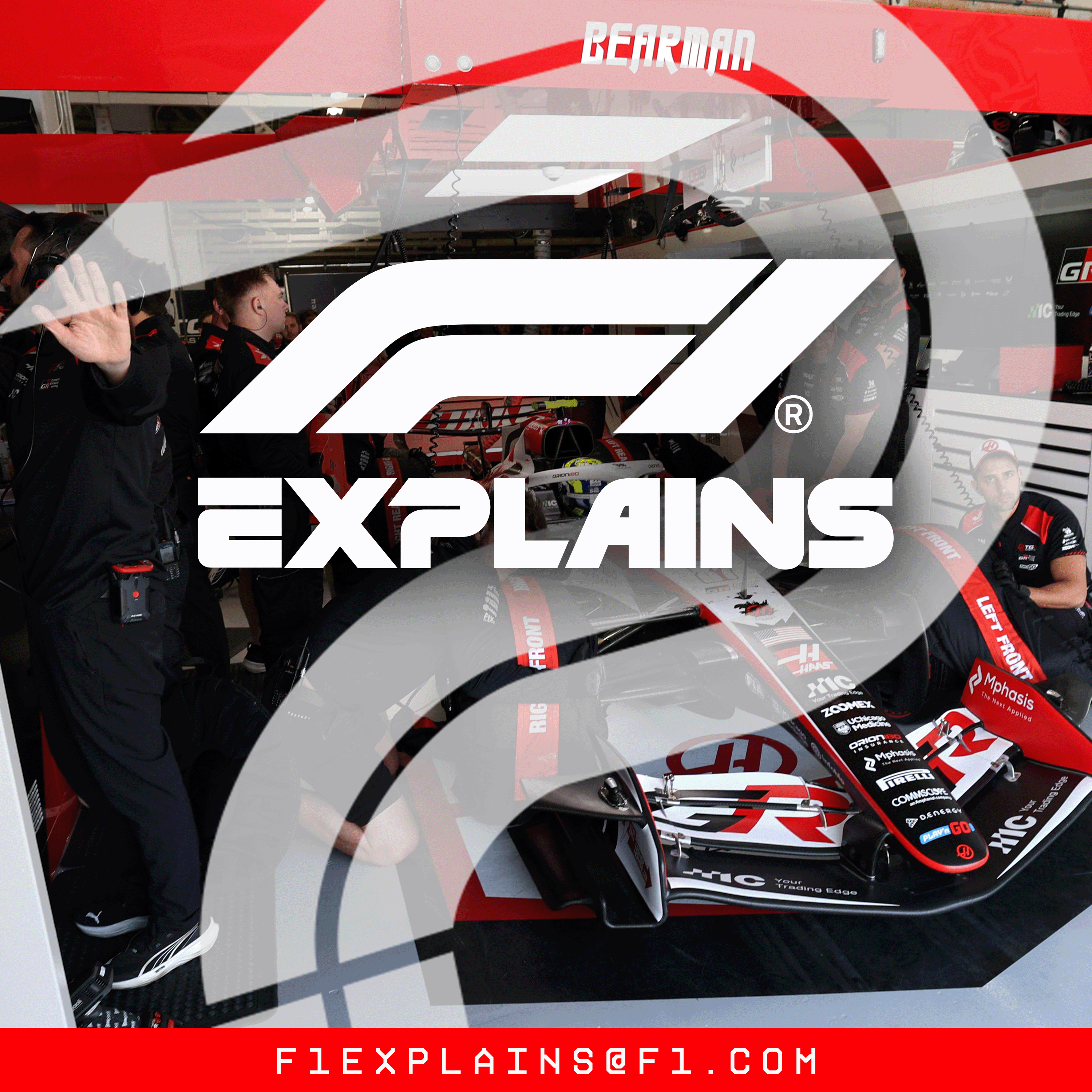
What happens in a Formula 1 team's garage during a race? In a world-first episode, recorded inside the Haas garage during the 2025 Miami Grand Prix, mechanics, engineers and strategists tell F1 Explains what they do while the cars are racing.
How are the pit crew told it's time for a pit stop? How do strategists make their calls? How do mechanics make sure new tyres are ready to go? Christian Hewgill explains it all from an exclusive position surrounded by data screens, engineers and equipment.
Plus, we listen in to team radio channels, learn what F1 tyres are recycled into after each race, resist the urge to eat the pit crew's mid-race treats and rub shoulders with a rock music legend...