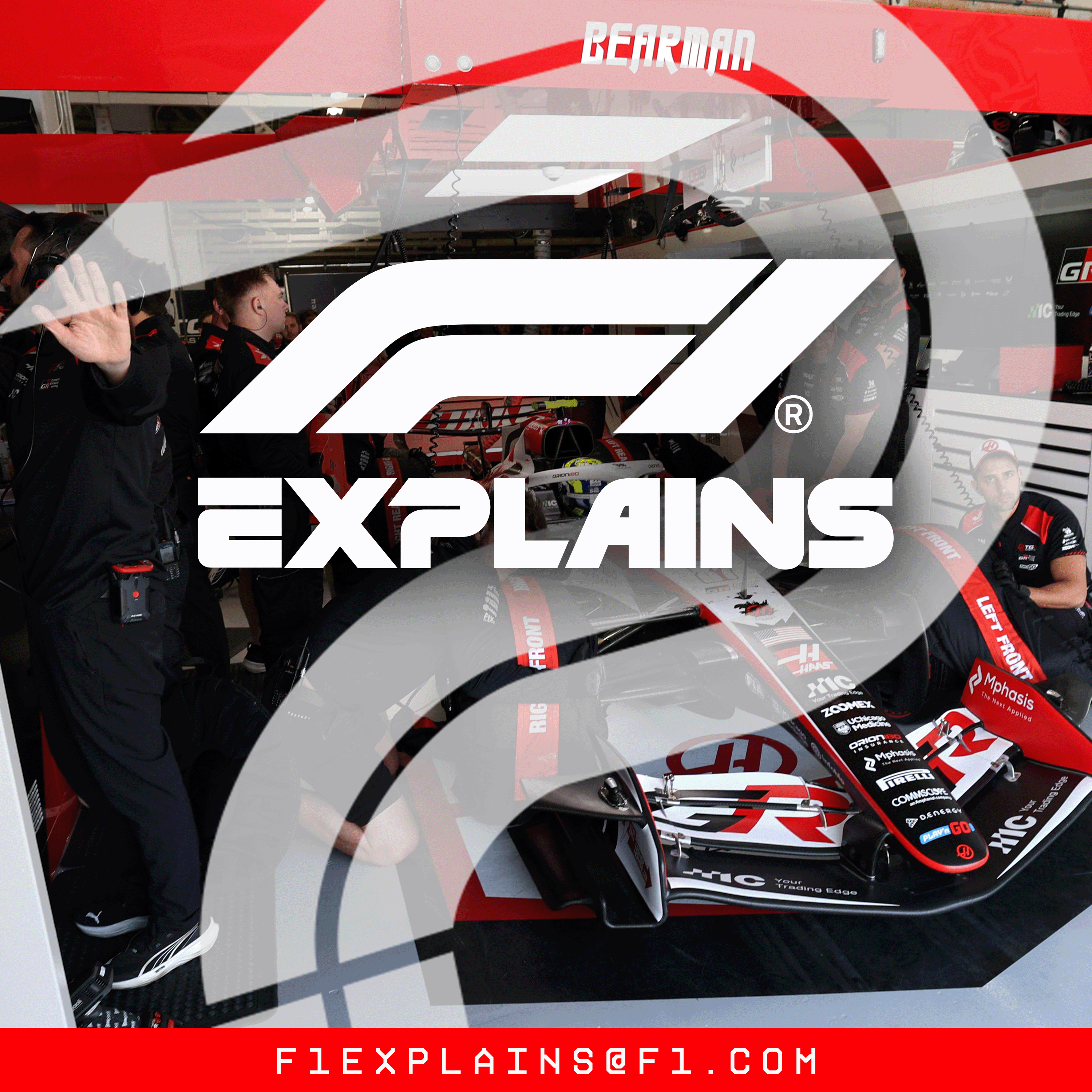
F1 Explains: inside a garage during a Grand Prix
About this episode
Haas grants rare access to an F1 garage during the Miami Grand Prix, turning the race weekend into a behind-the-scenes walkthrough. Christian Newey explains how garages run on dozens of intercom channels, how pit wall “mission control” coordinates strategy, and why mechanics, physios, and engineers all prepare for stops long before lights out. Listeners’ questions cover seatbelt safety, tyre choice, data sources like RaceWatch, and tyre recycling. The drama includes Bearman’s VSC/power-unit retirement and Ocon’s points hopes ending in 12th, while the episode captures the calm, focused tension of race day.
What happens in a Formula 1 team's garage during a race? In a world-first episode, recorded inside the Haas garage during the 2025 Miami Grand Prix, mechanics, engineers and strategists tell F1 Explains what they do while the cars are racing.
How are the pit crew told it's time for a pit stop? How do strategists make their calls? How do mechanics make sure new tyres are ready to go? Christian Hewgill explains it all from an exclusive position surrounded by data screens, engineers and equipment.
Plus, we listen in to team radio channels, learn what F1 tyres are recycled into after each race, resist the urge to eat the pit crew's mid-race treats and rub shoulders with a rock music legend...
F1 Explains LIVE at the Miami GP Fan Fest
Wednesday 29th April | 4pm | Miami Beach
Special guests: Colton Herta + Zhou Guanyu from Cadillac F1 Team
For details, terms and conditions and to register for free tickets go to f1miamigp.com/fan-fest
Send your F1 questions to [email protected]
Experience F1 live in 2026
Book your seat for a Grand Prix this season at tickets.formula1.com
Listen to more official F1 podcasts
In-depth interviews on F1 Beyond The Grid
Expert reaction before and after every Grand Prix on F1 Nation
Cadillac
"Cadillac has entered Formula One, deepening the racing pedigree behind every V-Series on the road. [8.1s] Discover a line-up that delivers pure adrenaline in the form of modern luxury."
Cadillac is talking about getting more involved with Formula One. They’re using that racing connection to support their lineup of performance cars.
Cadillac is framed as entering Formula One, tying the brand’s racing pedigree to its performance “V-Series” vehicles. The hosts use this to connect motorsport credibility with modern luxury/performance marketing.

Cadillac Lyric
"...ence the quickest Cadillac ever, the all-electric Lyric V, the peak performance of the CT5-V Blackwing, ..."
The Cadillac Lyriq is an all-electric SUV made by Cadillac. Instead of using gasoline, it runs on a battery and an electric motor, which can make acceleration feel very quick. It’s mentioned because it’s one of Cadillac’s main EV models.
The Cadillac Lyriq is Cadillac’s all-electric luxury SUV, built around delivering smooth, instant torque and a modern tech-focused driving experience. It’s often discussed because it represents Cadillac’s shift toward EV performance and branding, and it’s part of the lineup’s push toward higher-performance electric models. In a motorsport-adjacent conversation, it may come up as an example of how mainstream performance is moving into the electric era.
Miami Grand Prix
"We're going to Miami, always one of my favourite races of the year. If you've been with us for a while, you'll know I always say that. [101.9s] It's one of my favourites, not just because we're recording another live show this year."
The hosts mention the Miami Grand Prix as a favorite race and set up that they recorded a special episode there previously. This is a segment-level reference to a specific event rather than a technical topic.
Haas
"[112.9s] And at last year's Miami Grand Prix, we recorded a very special episode with Haas. [118.4s] We had exclusive access to the team on race day. [123.0s] This is what happens inside a team during a Grand Prix."
They mention Haas, which is one of the Formula One teams. The point is that they got special access to that team during a race.
Haas is referenced as the team they recorded with at last year’s Miami Grand Prix. In F1 context, Haas is a constructor/team, and the mention supports the “inside a team” access theme.
Formula One team's garage
"This is what happens inside a team during a Grand Prix. [136.4s] Every single mechanic in front of me has just put their helmets on. [142.3s] Everybody shot up from their seats instantly. It was a case of go, go, go."
In Formula One, the garage is where the team runs the race from. Even though the cars drive on the track, the garage is where the crew plans and coordinates everything.
The segment explains that the garage is the Formula One team’s “home base” during a Grand Prix. While racing happens on track, the garage is where the team coordinates strategy, pit work, and real-time decision-making.
Grand Prix garage coordination
"[136.4s] Every single mechanic in front of me has just put their helmets on. [142.3s] Everybody shot up from their seats instantly. It was a case of go, go, go. [148.6s] We prime everybody individually, physically, for the stops."
This is about how the team runs the race behind the scenes. People in the garage coordinate timing, communication, and information so the car can perform on track.
This portion describes how mechanics and engineers coordinate in the garage during a Grand Prix, from gearing up for pit stops to monitoring live performance. It’s essentially a look at the operational workflow that turns track action into a managed, data-driven process.
telemetry
"[157.5s] They're looking at live feed, best lap times from competitors, telemetry and data. [162.8s] It all comes together in the garage. [167.2s] The garage is a Formula One team's home."
Telemetry is the live stream of car information coming back to the team. It can include things like speed, temperatures, and how the car is behaving so they can make smarter calls.
The hosts reference “telemetry and data” being monitored in the garage. Telemetry is the stream of sensor and performance information sent from the car to the team, used to manage strategy, diagnose issues, and optimize driving.
F1 garage during a race
"What happens in an F1 garage during a race? ... Usually, the only people allowed into a team garage during the race are the mechanics, the strategists, and the pit crew..."
They’re describing what happens behind the scenes in an F1 team’s garage during a race weekend. You’ll hear who works on the cars, who plans the pit stops, and how the cars get ready to leave for the track.
The hosts explain what an F1 team garage looks like and who does what during a Grand Prix. They cover the roles of mechanics, strategists, and the pit crew, plus how cars transition from preparation to leaving for the grid.
Formula One Grand Prix
"We're going to be recording this episode inside a Formula One garage during a Formula One Grand Prix."
A Grand Prix is the main Formula 1 race weekend at a track. This episode is set during one of those race events.
A Grand Prix is an F1 race event held at a specific circuit, typically with practice and qualifying leading up to the race. The segment emphasizes that they’re recording inside a Formula One garage during such an event.
pit crew
"...the pit crew, who, of course, change the tyres in a blink of an eye... Plus, you do occasionally get some VIP guests as well."
The pit crew is the team that works on the car during pit stops. Their main job here is to change tires quickly so the car can get back out fast.
The pit crew is the group responsible for fast, precise service during pit stops, especially tire changes. Their performance is measured in seconds because every delay can cost track position.
strategists
"...the strategists, who plan pit stops, and the pit crew..."
Strategists are the people who decide the race plan. They figure out when the car should pit and how to adjust as the race changes.
Strategists in F1 plan race calls like when to pit, how to respond to safety cars, and how to manage tire and fuel usage. Their decisions coordinate with the pit crew and engineers to execute the plan.
engines have been fired up
"As I've been talking to you, the engines have been fired up, and the drivers... have put their helmets on..."
“Fired up” means the team starts the engine. It’s a step in getting the car ready before it goes out to the track.
“Fired up” refers to starting the F1 engine so the car can be checked and prepared for track activity. In a garage, this is part of the run-up process before cars leave for the grid.
Ollie Bearman
"...Esteban Ocon and Ollie Bearman have put their helmets on, and they've climbed in."
Ollie Bearman is a Formula 1 driver. Here, he’s described getting into the car and preparing to head out to the track.
Ollie Bearman is an F1 driver mentioned alongside Esteban Ocon as part of the Haas lineup for this garage recording. The segment notes both drivers getting ready to leave the pit lane.
Esteban Ocon
"...the drivers, of course, Esteban Ocon and Ollie Bearman have put their helmets on, and they've climbed in."
Esteban Ocon is a Formula 1 driver. In this part of the episode, he’s shown getting ready to go out from the pit lane.
Esteban Ocon is an F1 driver mentioned as one of the Haas drivers in this segment. The hosts describe him putting on his helmet and driving out from the pit lane as the session transitions to grid activity.
pit lane
"They've just this second driven out the pit lane, and in front of me now, I can see all the other teams... leave the garage and get onto the grid."
The pit lane is the special area next to the track where the team can work on the car. Cars use it to get service and then rejoin the race.
The pit lane is the dedicated lane alongside the track where F1 cars enter to service during a race. In this segment, the drivers leave the pit lane and then head toward the grid.
grid
"...leave the garage and get onto the grid."
The grid is where the cars line up at the start of the race. After the team finishes preparations, the cars move from the garage area to the grid.
The grid is the starting area where F1 cars line up before the race begins. In the segment, teams leave the garage and get onto the grid after the engines are fired up and drivers are ready.
recovery drive
"Ollie Bearman is starting from the back in 19th, so it will be a recovery drive for him, and that is nothing he's not done before."
A recovery drive is when someone starts near the back and has to work their way up during the race. It’s basically a “come-from-behind” effort using good driving and strategy.
A “recovery drive” in Formula 1 is when a driver starts far back (due to qualifying or penalties) and then makes up positions during the race. It usually relies on race pace, tire management, and smart strategy rather than just raw speed.
Formula One garage
"It is the very definition of a Formula One garage getting ready for lights out. Now, of course, all ten teams have a garage."
They’re describing what an F1 garage looks like right before the race. It’s where the team gets the car ready and makes sure everything is working.
The host calls it “the very definition of a Formula One garage,” emphasizing how F1 teams prepare cars right up to the start. It’s a highly organized workspace where mechanics and engineers coordinate checks, setups, and readiness.
Alpine
"They're in between Alpine and Racing Bulls, and we have a quick list of questions about that."
Alpine is an F1 team. The host is mentioning where their garage is positioned along the pit lane.
Alpine is one of the Formula 1 teams mentioned as having a garage location along the pit lane. Team garage placement is part of the race-weekend logistics that affects how teams move and operate.
Racing Bulls
"They're in between Alpine and Racing Bulls, and we have a quick list of questions about that."
Racing Bulls is another Formula 1 team. They’re mentioned to help explain where garages are located during the race weekend.
Racing Bulls is referenced as the other team near Alpine in the pit-lane garage row. The segment uses this to explain how garages are arranged and why the order matters for teams.
Constructors' Championships
"Well, almost every race, including Miami, it's done in the order that teams finished in last year's Constructors' Championships."
The Constructors’ Championship is the season-long points battle between teams, based on the combined results of their cars. The host explains that garage order is usually set by where teams finished in that championship the year before.
McLaren
"So, reigning champions McLaren are at one end. Salba, who finished last in the championship, are at the other."
McLaren is mentioned as the reigning champions. The host is using them to illustrate how the teams’ garage spots are arranged.
McLaren is identified as the reigning champions, placed at one end of the garage row. This ties into the episode’s explanation that garage order is typically based on the previous year’s Constructors’ Championship results.
Salba
"So, reigning champions McLaren are at one end. Salba, who finished last in the championship, are at the other."
The transcript mentions a team name that sounds like “Salba” and says they finished last in the championship. The exact team name may be misheard in the transcript.
“Salba” appears to be a transcription error for an F1 team name, used here to represent the team that finished last in the Constructors’ Championship. Because the exact team name isn’t clear, this annotation is low-confidence.
wheel gun
"He uses a wheel gun to loosen the old tire and then tighten the new one."
A wheel gun is the tool pit crews use to change tires fast. It’s basically a powerful tool that quickly loosens and tightens the wheel nuts.
A wheel gun is the pneumatic/impact tool used by F1 pit crews to remove and install wheels quickly during tire changes. It’s designed for speed and repeatability, because every fraction of a second matters in pit stops.
seat belts
"“Are the seat belts so different to normal road car seat belts so they can't fasten themselves in? … the belts are basically non-adjustable, so they're custom made to the length that the driver needs…”"
Race cars use special seat belts that are made to fit the driver’s body. They’re not like everyday belts you can keep adjusting—so someone else helps set them up, but the driver can still release them when needed.
F1 seat belts are specialized harnesses designed for racing loads and quick, controlled release. Because they’re typically non-adjustable, they’re custom fitted to the driver’s body size so the restraint position stays correct lap after lap.
non-adjustable, custom-fitted harnesses
"“No, it's a safety thing, so the belts are basically non-adjustable, so they're custom made to the length that the driver needs… But presumably, in a situation where they need to get out quickly, they can do that themselves.”"
Instead of a belt you adjust every time, the harness is set up to fit you once and then stays in the right position. That helps the safety system work the way it’s designed to, while still allowing you to get out quickly if you need to.
A custom-fitted, non-adjustable harness ensures the belt geometry stays consistent, which is important for how forces are distributed during hard braking, impacts, and cornering. In F1, that consistency is part of the safety design, while release capability is still built in for emergency egress.
pit stop practice
"“Well, we'll be ready first thing in the morning when we do pit stop practice, so usually Sunday mornings there are a sequence of five or six stops…”"
A pit stop is when the car comes into the garage area to get serviced, usually for tires. Pit stop practice is the team rehearsing that process ahead of time so it goes smoothly and quickly during the actual race.
In Formula 1, pit stop practice is a structured rehearsal of the full stop procedure—wheel changes, fueling (if applicable), and crew coordination—before race day. Teams use it to reduce mistakes and get every crew member and driver movement timed and consistent.
dynamically stretch
"“...part of that practice is a warm-up, so we aim to dynamically stretch all the muscle groups and activate certain muscle groups…”"
Dynamic stretching is warm-up movement—like controlled stretches while moving—to get your body ready. It’s meant to help you perform better and feel looser before practice or a race.
Dynamic stretching is movement-based warm-up that increases muscle temperature and range of motion without holding static stretches. In F1, it’s used to prepare drivers and crew physically for the demands of race procedures like pit stops.
activate certain muscle groups
"“...we aim to dynamically stretch all the muscle groups and activate certain muscle groups in order to be ready for practice.”"
This means doing specific warm-up movements that get the right muscles working. The goal is to make sure your body is ready for the exact kind of effort you’ll need.
“Activating” muscle groups refers to targeted warm-up drills that wake up specific muscles needed for the task. For pit stop work and driving demands, this can improve coordination, strength, and responsiveness during high-intensity moments.
pit stop readiness in the garage
"So, Matt and the mechanics have left the garage and are now with the car on the starting grid. That's where they are now, and the mechanics will soon be running, sprinting back to the garage so they're ready just in case they need to do a very early pit stop. But what's happening right now in the garage?"
They’re getting the pit crew ready in case the car needs to stop very early. Everyone has a specific spot and job so they can move quickly and efficiently.
The segment describes how F1 teams prepare for a potential early pit stop by organizing the pit crew and getting everyone positioned before the race starts. The garage setup (including where people sit and how they move) is designed to reduce delays and avoid crew members crossing paths.
limited by regulation to how many people we can actually have working on the car
"Throughout the weekend, we are limited by regulation to how many people we can actually have working on the car... we're limited to 58 people that can actually be part of the operation of the car... we can bring many more people... but we're limited by how many people we can actually use to run the car itself."
F1 limits how many team members can be directly involved in working on the car during the weekend. The idea is to keep things fair and controlled, so teams can’t staff unlimited crews.
F1 teams are restricted by regulations on staffing levels involved in car operations during the race weekend. This limits how many people can work on tasks like running and servicing the car, while other roles (marketing, communications, hospitality) can be additional but don’t count toward the operational limit.
sporting director
"You're the sporting director at Haas... There are a lot of job titles in Formula One... What is a sporting director doing during a race? ... My role here is to make sure that we're abiding by the sporting rules..."
The sporting director is basically the rules-and-procedures person for the team. Their job is to make sure the team does everything correctly during race situations so they don’t get penalties.
A sporting director in an F1 team is responsible for ensuring the team follows the sport’s rules and procedures, not the technical side of the car. That includes managing compliance around race control events like starts and red flags, and making sure the team is prepared for those scenarios.
start procedure
"My role here is to make sure that we're abiding by the sporting rules, the procedures regarding the start procedure or red flag procedure, for example..."
The start procedure is the exact set of steps the team must follow to begin the race the right way. If the team doesn’t follow it, they can be punished.
The start procedure is the official sequence F1 teams must follow to get the race underway safely and in compliance with regulations. Sporting officials and race control enforce it, and mistakes can lead to penalties.
red flag procedure
"My role here is to make sure that we're abiding by the sporting rules, the procedures regarding the start procedure or red flag procedure, for example..."
A red flag means the race is stopped because something is unsafe on the track. The red flag procedure is the rulebook for what teams and drivers must do during that stoppage.
The red flag procedure is what teams must follow when a race is stopped due to danger on track. It dictates how cars behave, how teams respond, and what actions are allowed, with sporting compliance critical to avoid penalties.
race-ruining penalty
"It's Mark's job to make sure the team doesn't break any of the regulations because that could lead to a race-ruining penalty. Nobody wants that."
If a team breaks the rules, officials can punish them with penalties. In F1, those penalties can be so bad they can ruin a race.
In F1, sporting rule violations can result in penalties that may significantly affect race outcome, including actions tied to start and red-flag procedures. The phrase highlights how compliance is treated as critical because penalties can be severe.
tyres
"[776.8s] with water next to them to make sure the mechanics are hydrated as the race goes on. [782.3s] More and more of them arriving back into the garage now as two members of the crew wheel in some tyres [789.2s] which are being put over on Ollie's side of the garage."
In F1, tyres are the tires the cars run on during the race. Choosing the right tyres—and getting them up to the right temperature—can make a big difference to speed and grip.
In F1, “tyres” are the tires used for grip and performance, and they’re a major part of race strategy. Teams manage tire choice and timing because tire temperature and wear strongly affect lap times and handling.
Formula One World Championship returns to Miami
"[802.5s] It's race day in America. The Formula One World Championship returns to Miami. [808.7s] This is round six in 2025 and our grid has been draped in celebrity."
They’re talking about the F1 race in Miami coming up on the schedule. It’s the context for why the garage is so busy right before the race.
This segment references the Formula One World Championship event in Miami, which is a specific race on the F1 calendar. It frames the episode’s moment as race-weekend build-up leading into the Grand Prix.
Grand Prix Sunday
"[814.4s] It is now time for the main event. This is Grand Prix Sunday. [819.7s] Here we go then. We're getting close to lights out because the cars have left their positions on the grid to do the formation lap."
Grand Prix Sunday is the day the actual Formula 1 race happens. Before the race starts, the cars line up and do a short warm-up lap called the formation lap.
“Grand Prix Sunday” refers to the main race day of a Formula One event. It’s the day when the formation lap and the race start under the lights-out procedure.
formation lap
"[819.7s] Here we go then. We're getting close to lights out because the cars have left their positions on the grid to do the formation lap. [831.4s] And what I really like about this is already the sense of camaraderie in the garage."
A formation lap is the warm-up lap where F1 cars leave the grid and circulate in order before the race start. It helps drivers and teams get tires and brakes up to operating temperature and confirms everyone is in the correct starting position.
lights out
"[819.7s] Here we go then. We're getting close to lights out because the cars have left their positions on the grid to do the formation lap. [831.4s] And what I really like about this is already the sense of camaraderie in the garage."
“Lights out” is the exact moment the race officially begins. When the lights go out, the cars launch forward—teams watch the timing closely to get it right.
“Lights out” is the moment the starting lights go out to signal the official start of the race. In F1, it’s a critical timing event—teams and drivers are synchronized to launch immediately and avoid penalties for an incorrect start.
formation app
"The drivers are about two thirds of the way around the formation app. The thing that's just dawned on me is how quiet the garage is..."
Before the race, F1 cars do a formation process. The “formation app” is basically the digital system that helps teams and drivers follow the correct timing and instructions.
The “formation app” refers to the team’s/driver’s system used during the formation lap and pre-start procedures. It helps coordinate timing, instructions, and status so everyone lines up correctly before the race begins.
green flag
"And here we go, green flag at the back, means it's time to look to the lights in Miami. And the Miami Grand Prix is underway."
The green flag means the race is officially starting. Teams and drivers immediately switch from getting ready to actually racing.
The green flag indicates the race start is underway, and teams shift from pre-start procedures to race execution. In F1, the moment the green flag is shown is tightly linked to driver reaction and the start sequence.
reaction time
"A good reaction time for the top three. It's Max Verstappen holding the lead..."
Reaction time is how quickly the driver gets moving when the start lights go off. A quicker reaction can help you get ahead right away.
“Reaction time” in F1 is how quickly a driver responds to the start lights after they change. Faster reaction can help you gain position immediately, but it must be balanced against the risk of an imperfect start.
locks up
"...Max Verstappen holding the lead, but he locks up and Landon Norris is going to have the chance to get on the power."
“Locks up” means the brakes are applied so hard that the tires lose grip and start sliding. That can slow the car down and make it easier for other cars to pass.
“Locks up” means the tires stop rotating and slide due to excessive braking force, reducing grip. In F1, a lock-up can cost speed and position immediately, especially at the start when cars are closely packed.
T1
"The two rivals are side by side, but Verstappen got his elbows out and maintained T1. We have had a fascinating first lap..."
“T1” means the first corner of the track. The first corner is where drivers fight for position right after the start.
“T1” is shorthand for Turn 1, the first corner of the race. Early corner battles are often where positions are gained or lost, so maintaining control through Turn 1 is a big deal.
front wing flap
"but also inform them of what that flap angle needs to be. So that's the turns for the front wing flap."
The front wing flap is part of the car’s front wing that can be adjusted. Changing its angle changes how the car grips the track, which can help the car turn and stay stable.
The front wing flap is a movable element of the front wing that affects aerodynamic balance. In F1, teams can adjust flap angles to change downforce and handling characteristics, and the correct setting depends on race conditions and driver feedback.
flap angle
"but also inform them of what that flap angle needs to be. So it's plus will be up, minus will be down."
Flap angle is how much an aerodynamic flap is tilted. Tilting it changes how the car “pushes” down onto the track, which can affect grip and speed.
Flap angle refers to the position of an adjustable aerodynamic flap, which changes airflow over the wing. In F1, small angle changes can meaningfully alter downforce and drag, so teams treat it as a strategic lever during pit stops.
pit wall
"Well, the pit wall could almost be described as a trackside mission control as such. So the reason for having it out there is that we can actually see what's going on in the pit lane."
The pit wall is where the team’s top decision-makers sit during the race. They watch what’s happening in the pit lane and the garages so they can direct strategy and timing without being in the garage.
The pit wall is the control area trackside where key team personnel monitor the race and coordinate decisions. It functions like a “mission control” because it provides direct visibility of the pit lane and both garages, while also using screens and radio communication to manage strategy.
radio
"Exactly. So all the mechanics are on radio. So they've got earpieces that are moulded to their ears and they actually go inside their helmets."
Mechanics in the garage use two-way radio communication to coordinate actions quickly, especially during pit stops. Because the environment is extremely loud, radio plus headsets/earpieces is essential for reliable instructions.
moulded earpieces
"So they've got earpieces that are moulded to their ears and they actually go inside their helmets. And they've got the helmets on for the pit stops."
These are custom ear inserts that help people hear clearly. In a pit stop, it’s loud, so the team uses fitted earpieces so instructions come through.
Moulded earpieces are custom-fit audio devices that improve hearing and reduce background noise in the pit lane. They’re designed to sit securely in/around the helmet so mechanics can understand radio calls during pit stops.
intercom channels
"We've got nearly 70 different intercom channels, internal communication channels that we use. But to the outside world, only the driver radio channel actually gets broadcast."
An intercom channel is like a private radio line. In an F1 garage, lots of people need to talk at once, so they use different “channels” to keep the messages organized.
In Formula 1, teams use many separate intercom channels so different groups (mechanics, engineers, strategists) can talk without stepping on each other. This keeps information clear during high-pressure moments like pit stops and race strategy calls.
noisy environment
"Not just because it's a very noisy environment and you need to have headsets on but also because different groups of people in different locations all around the world all need to speak to each other at the same time."
The pit area is very loud, so it’s hard to hear someone talking normally. That’s why the team uses headsets and radio channels to make sure instructions get through.
F1 garages and pit lanes are extremely loud due to engines, air guns, impact tools, and crowd noise. That’s why teams use headsets/earpieces and multiple dedicated channels—otherwise key instructions can be lost.
tyre groups
"So for example, the tyre groups, there may be engineers that are spread all over the world and in the vicinity of the circuit as well as in the office or in the garage."
Tyre groups are the people who focus on how the tires are doing. They track how the tires are wearing and help decide when the car should change tires.
“Tyre groups” refers to the team personnel focused on tire performance—often including engineers monitoring tire temperatures, pressures, wear, and degradation trends. Their input feeds into decisions like when to pit and what tire strategy to run.
electronics engineers
"The strategists aren't necessarily listening to the same information that the electronics engineers want to be talking about. So everyone's on separate intercom channels so that they can carry out their communications effectively as possible."
Electronics engineers are the people who monitor the car’s technical systems using data. They talk about what the car is doing mechanically/electronically, which is different from the race plan conversation.
Electronics engineers focus on the car’s technical systems—data, sensors, and control-related information. Because their updates are different from strategy discussions, they use separate intercom channels to keep communication efficient and relevant.
safety car comes out
"For example, if a safety car comes out, there's a lot of discussion about should we stop, should we not stop... If I miss that, the mechanics won't be in the pit lane in the right time and then the pit stops delayed."
A safety car is like a pace car that comes out when there’s danger on track. Because the cars slow down, teams often rethink when to pit, and if you miss the call, your pit stop can be late.
In Formula One, a safety car is deployed to control the pace of the race after an incident. It changes strategy because teams may pit under safer, slower conditions, and timing becomes critical for getting pit stops done before the field is reorganized.
box
"...also the drivers, if the drivers are suddenly feeding back that they're going to box."
“Box” is F1 slang for “pit.” It means the driver is telling the team they’re ready to come in so the car can get serviced.
In F1, “boxing” means pitting—bringing the car into the pit lane for tires, fuel, and/or repairs. When drivers report they’re going to box, it’s a key cue that the team’s strategy timing is about to change.
pit stops delayed
"If I miss that, the mechanics won't be in the pit lane in the right time and then the pit stops delayed. I can see Mark out on the pit wall."
In F1, pit stops have to happen at exactly the right time. If the team is late, you lose time and often give up position to other cars.
A delayed pit stop in F1 usually means the team misses the optimal window created by race events like safety cars or changing track conditions. Even small timing errors can cost track position because the field is moving and other teams may pit sooner.
weather radar
"...their weather radar, which teams usually keep top secret, say there's the potential of rain in around 10 minutes time... That is something that's going to be feeding in to the strategists' mind."
Teams use weather radar to anticipate rain timing so they can adjust strategy—especially tire choice and whether to pit for intermediates or slicks. Because teams treat this data as sensitive, access to it can strongly influence decision-making.
split their strategy
"and actually sometimes when it's not 100% clear which is the best way to go forward, [1348.0s] teams will split their strategy. [1351.1s] Those strategists study the data, they crunch the numbers..."
Sometimes teams don’t know which plan will work best, so they try two different approaches with their two cars. That way, if one plan turns out to be wrong, the other might still work out. It’s like hedging your bets during the race.
“Splitting strategy” means using different tyre plans (and sometimes different pit timing) for the two cars in the same team. This increases the chance that at least one car benefits if the race evolves unexpectedly—like changes in track conditions, safety cars, or how competitors manage tyre wear.
crunch the numbers
"Those strategists study the data, they crunch the numbers, [1353.6s] they work out the thousands of possible ways the race could happen,"
Strategists don’t just guess—they use data to predict what will happen. They estimate things like how fast tyres will wear and how many laps you can do, then pick the plan that looks best.
“Crunch the numbers” refers to the quantitative modelling strategists do using tyre wear, fuel/energy usage, lap times, and track position. In F1, this becomes scenario planning—estimating thousands of possible race outcomes to choose the most likely best plan.
Hass
"So in this case, Hass have decided to split their strategy. [1363.9s] They have decided to put Oli Bearman..."
Haas is an F1 team that races with two cars. They make strategy calls to try to score points for the team. Here, they’re using different tyre plans to improve their chances.
“Hass” refers to Haas F1 Team, which runs two cars and uses team strategy to maximize points. In this segment, Haas is described as splitting tyre strategies between its drivers to hedge against uncertainty.
harder tyre
"They have decided to put Oli Bearman, who's starting towards the back, [1368.3s] on the harder tyre to start the race, hoping he can do a longer first stint and make up places."
F1 tyres come in different “grip vs life” levels. The harder tyre usually lasts longer, but it may not grip as well at the start. Starting on it can help you go longer before your first pit stop.
In Formula 1, the “hard” tyre is a harder compound designed to last longer but typically offers less grip than softer options. Teams often start on hard to extend the first stint, aiming to reduce the number of pit stops and manage track position.
first stint
"...hoping he can do a longer first stint and make up places. [1375.7s] Meanwhile, Esteban..."
A stint is how long you stay on one set of tyres. The first stint is your opening run before your first tyre change. How long it is can change when you pit and where you end up on track.
A “stint” is the period a car runs on a specific set of tyres before switching to a new set. The “first stint” is the opening tyre phase of the race, and its length strongly affects pit-stop timing and track position.
medium tyre
"Meanwhile, Esteban, who needs to be competitive right from the off, [1379.4s] is on the quicker but less durable medium tyre."
Medium tyres are the compromise option in F1. They’re usually better for grip than the hard tyre, but they won’t last as long. That makes them useful when you need to be fast right away.
The “medium” tyre is a middle compound in the F1 range—generally offering a balance of grip and durability. Teams choose it when they need stronger performance early, even if it may wear faster than the hard tyre.
points position
"As soon as the race gets underway, we have to look at our position, [1414.1s] see where we're at, and basically work out the best race scenario for us. [1418.3s] So obviously, if we're in a good position or points position..."
In F1, only certain finishing spots earn championship points. If you’re already in those spots, you try to hold them. If you’re outside them, you plan to move up into them.
“Points position” refers to being in the finishing places that earn championship points. Teams adjust strategy based on whether they’re currently in those positions, aiming either to defend them or to climb into them as efficiently as possible.
optimise our race
"...work out the best race scenario for us. [1418.3s] So obviously, if we're in a good position or points position, we want to try and secure that place. [1424.8s] And if we're outside of the points..."
Optimizing your race means planning so you get the best overall result, not just going fast for one lap. Teams balance tyre wear, pit timing, and where you are on track. The goal is to make the whole race work in your favor.
“Optimise our race” in F1 strategy means choosing actions that maximize the team’s result given constraints like tyre degradation, track position, and timing of pit stops. It’s about selecting the best overall plan rather than focusing on a single lap.
RaceWatch
"“Yeah, so basically, we have a software called RaceWatch, and that will run during the race. It basically runs hundreds of thousands of sims…”"
RaceWatch is a computer program the team uses during the race. It runs lots of “what if” simulations to help decide when you should pit for tyres. It tries to pick the timing that gives your car the best chance to gain time.
RaceWatch is a race-strategy software used during an F1 Grand Prix to run large numbers of simulations and produce guidance. It factors in variables like tyre remaining life, competitors’ tyre status, and relative pace to estimate the best time to pit.
undercut
"“…we're alone, we're under no threat from an undercut behind or trying to undercut anyone ahead.”"
An undercut is a strategy where you pit before another driver so you can use fresh tyres to run quicker laps. If you do it at the right time, you can come out ahead when the other driver eventually pits.
An undercut in F1 is when a car pits earlier than a rival, aiming to get onto fresh tyres and set faster lap times before the rival pits. The goal is to gain track position by forcing the other car to respond with their own pit stop.
call point
"“We have like a call point where we're called the drivers, which is normally before the last corner.”"
A call point is the team’s “okay, now pit” timing. It’s a specific moment they choose so the driver knows exactly when to come in.
A call point is the planned moment when the team tells the driver to start the pit-stop process. It’s typically set relative to track position and timing markers (like being before the last corner) to ensure the stop happens at the intended moment.
tyre to choose
"You know, they have to be ready. They have to know which tyre to choose. So basically everything, all the tyres are in here and the next tyres, we call it lit."
In F1 you don’t just use “the same tyres all race.” The team has to pick the tyre type that will give the best grip for the track and conditions. If they pick the wrong one, the car can feel slow or unstable and you may have to change tyres again.
In Formula 1, choosing the right tyre is a critical strategy decision because tyre type and condition directly affect grip and lap time. Teams decide based on track conditions, temperature, and race plan, then the garage and pit crew execute the selection quickly and correctly.
strategy point
"There's a lot of people talking. There's a lot of radio channels as well as us from the strategy point."
The “strategy point” refers to the pit-wall/strategy group that plans tyre timing, pit-stop windows, and race calls. They coordinate with the driver and engineers using radio, and their decisions drive what the garage needs to do next.
late on the brakes
"It's late on the brakes for Max Verstappen. He keeps the lead for the moment, but Piastri powers by."
It means braking later than usual to carry more speed into the corner. You have to be careful because if you brake too late or too hard, the car can lose grip.
“Late on the brakes” describes a driving technique where the driver delays braking as late as possible into a corner to maximize speed through the approach. In racing, it’s a balance between braking stability, tyre grip, and avoiding lock-up or loss of traction.
Max Verstappen
"It's late on the brakes for Max Verstappen. He keeps the lead for the moment, but Piastri powers by."
Max Verstappen is one of the best-known F1 drivers. Here they’re describing how he drives into the corner to keep the lead.
Max Verstappen is a top Formula 1 driver, and his on-track actions are often described in terms of racecraft like braking points and defending for position. In this segment, he’s described as braking late to maintain the lead.
Piastri
"It's late on the brakes for Max Verstappen. He keeps the lead for the moment, but Piastri powers by."
Piastri is another F1 driver. They’re saying he makes a strong pass to get ahead during the cornering phase.
Oscar Piastri is an F1 driver mentioned here as making an overtake (“powers by”) during the lead battle. The wording highlights a decisive move that changes track position at the first corner.
tyre temperature
"We have some sensors on the wheel measuring the tyre temperature. So we can actually monitor the tyre temperature, pressure, the basic condition of the tyre when car is running from the telemetry data."
Tire temperature matters because it changes how much grip the tire has. If the tire gets too hot or too cool, it can feel worse and wear out faster.
Tyre temperature is a crucial input because it strongly affects grip and wear. Teams use wheel-mounted sensors and telemetry to track temperature in real time so they can predict how the tire will behave over the next stint.
Pirelli engineer
"Then we can actually visually check the tyre with the Pirelli engineer and that is the most useful information for us."
Pirelli is the official tyre supplier for F1, and its engineers support teams with tyre behavior, inspection, and performance data. Having a Pirelli engineer involved helps teams understand how the tyre is working and why it may be degrading or performing differently than expected.
strategy engineer
"So we decide and we discuss together with the strategy engineer... every lap we communicate to the strategy engineer what's the best plan for the race."
The strategy engineer is the person who helps plan the race—when to pit and which tyres to run. They use data and team input to keep the plan up to date during the race.
The strategy engineer coordinates race strategy decisions, translating tyre and performance data into pit-stop and tyre-choice plans. They work closely with the rest of the team to update the plan as conditions and the car’s behavior change lap by lap.
free practice session
"And then we kind of assess the data from the free practice session. So we kind of know which tyre is the best for certain amount of the stint."
Before the race, teams do practice runs to learn how the car and tyres behave. They use that practice data to guess which tyre will be best later during the race.
Free practice sessions are used to gather baseline data on tyre performance, car setup, and track conditions. Teams use that information to predict which tyre will work best for a given stint length during the race.
team effort (communication every lap)
"It's down to the team's work... every time, every lap we communicate to the strategy engineer what's the best plan for the race... we always unite to the one decision."
The transcript describes strategy as a team process rather than a single-person call. Drivers and engineers communicate frequently—often every lap—to align on the best plan, even if there are differing opinions initially.
heated tyre blankets
"They do that by using heated tyre blankets, which wrap round the tyres. Here's Max with more on that."
Tyres need to be warm to grip well. Heated blankets are like covers with built-in heating that keep the tyres at the right temperature before they’re fitted to the car.
Heated tyre blankets are insulation/heating devices used to keep race tyres at an optimal temperature before they go onto the car. Because tyre grip depends heavily on temperature, keeping them warm helps the car get traction quickly after the stop.
heat gun
"...we can rip the blanket open slightly and check them with a heat gun. The engineer will come and check it to make sure they're where they need to be."
A heat gun is a tool that measures or checks how hot something is. Here it’s used to make sure the tyres are warm enough before they go out.
A heat gun is used to check tyre surface temperature quickly and confirm the blankets are heating properly. Teams verify temperatures before sessions because tyre performance is very sensitive to being in the correct operating range.

Cadillac Escalade
"...the nimble agility of the OPTIQ V, and the legendary roar of the Escalade V."
They’re talking about the Cadillac Escalade V. It’s the performance version of the Escalade, and they’re emphasizing its strong, exciting character.
The hosts call out the Cadillac Escalade V and describe it with “legendary roar,” implying a performance-focused version of the Escalade. It’s included as the flagship-sounding model in the promotional lineup.

Cadillac Optiq
"...the peak performance of the CT5-V black wing, the nimble agility of the OPTIQ V, and the legendary roar of the Escalade V."
They mention the Cadillac OPTIQ V as the smaller, more agile option. It’s another “V” model, meaning it’s positioned as more performance-oriented than the base version.
The segment references the Cadillac OPTIQ V as a nimble, agile option in the lineup. This is part of Cadillac’s “V” performance branding strategy across multiple models.
lap 22
"We are on lap 22 of the Grand Prix and it is a busy one for the Haas boys, in particular, Oli Bearman."
A “lap” is one full trip around the track. Saying “lap 22” tells you where the race is in time, which matters because the cars behave differently as tires and conditions change.
“Lap 22” is the 22nd circuit completed by the cars in the Grand Prix. Lap-by-lap timing matters in F1 because tire temperatures, fuel load, and traffic all change as the race progresses, affecting overtakes and strategy.
gained five places
"...Oli Bearman. He's gained five places during the first 22 laps and is up to 14th."
“Gained five places” means the driver moved up five positions on the race order. That can happen from passing other cars and from the team helping the car perform better as the race goes on.
“Gained five places” means the driver improved their race position by five spots during the first 22 laps. In F1, that kind of progress usually comes from a mix of overtaking, better tire management, and strategic calls from the pit wall.
fallen out of the points
"Now Esteban Ockham, unfortunately for him, has just, as we were coming back on air, fallen out of the points."
In F1, only certain finishing spots earn points toward the championship. “Fallen out of the points” means the driver is currently in a position that won’t earn points.
In F1, “the points” refers to the finishing positions that earn championship points. Falling out of the points means the driver is currently running outside those positions, which can be costly for the team and driver standings.

Ferrari of Lewis Hamilton
"...as he's had a very tasty battle with a Ferrari of Lewis Hamilton, a battle that he continues to have right now."
That phrase means Lewis Hamilton’s car from Ferrari. When two F1 cars fight for position, it’s usually a mix of car performance and race strategy, not just who’s driving harder.
When the host says “a Ferrari of Lewis Hamilton,” they mean Hamilton’s Formula 1 car for the Ferrari team. In F1, battles between cars from different teams are often driven by differences in setup, tire behavior, and strategy rather than just driver skill.
tentative round of applause
"They were very happy with that, but I notice it's not a sort of release of pent-up energy. It's more of a tentative round of applause because that battle is still going on."
A “tentative round of applause” here is a live reaction from the pit/crew, but it’s “tentative” because the on-track battle isn’t fully resolved yet. In F1 broadcasts, crew reactions often reflect whether a pass or position change is expected to hold.
pit stop timing and crew coordination
"the moments before a pit stop, that's what we're witnessing right now, are so important. A couple of laps before the pit stop, we normally get a standby call. And basically that's when you get ready."
A pit stop isn’t just “changing tyres”—it’s a coordinated operation. The crew uses countdown signals so everyone is in the right place at the right time, which helps them avoid mistakes and lose less time.
This segment highlights how pit stops are as much about teamwork and timing as they are about tyre changing. Small delays or miscommunication can cost track position, so teams use structured calls and roles (mechanics, tyre handlers, and engineers) to execute the stop precisely.
40 second call
"And basically that's when you get ready. And that following on from that, once everyone's ready, we get a 40 second call. Pit crew, 40 seconds Ocon, 40 seconds, plus one, plus one."
Teams use countdown calls so the pit crew knows exactly when to get ready. The “40 second” call is an early step in that countdown before the car comes in.
The “40 second call” is a team communication cue used to coordinate the pit crew’s preparation ahead of the car’s pit entry. It helps ensure everyone is in position and ready so the stop can be executed quickly once the final go-ahead arrives.
20 second call
"You're ready, you still don't move and you don't move until the 20 second call. Pit crew, 20 seconds Ocon, 20 seconds, plus one, plus one. That's when you leave the garage, the tyre guys grab the tyre,"
This is the pit crew’s near-final countdown cue. The idea is that they stay still and ready until the right moment so the tyre change happens cleanly.
The “20 second call” is the later stage of the pit-stop countdown, signaling that the crew must be fully set and waiting for the car to arrive. The transcript emphasizes that the crew doesn’t move until this call, which prevents mistakes and improves consistency.
organised chaos
"Yeah, it's organised chaos, isn't it? You all know what's going to happen every week. [2418.0s] It's the same for us guys, it's the same, we practice it, that's what we practice for, isn't it?"
It means the team looks hectic, but it’s actually planned. The crew has routines, and they just have to adapt quickly when things change.
In Formula 1, “organised chaos” describes how teams run highly structured procedures under extreme time pressure. Everyone follows a plan, but the on-track and pit-lane variables change constantly, so execution has to stay flexible.
visualisation
"It becomes a little bit more of a mental game then, so things like visualisation, breathing, control, [2445.7s] we kind of encourage all that once they are in their seats ready for pit stops"
Visualisation is basically practicing in your mind. Instead of only training physically, you picture what you’ll do so you’re calmer and quicker when it happens for real.
Visualisation is a mental rehearsal technique where drivers and crews “run” the upcoming actions in their head before they happen. In F1, it’s used to improve reaction timing and decision-making during high-stress moments like pit stops.
timing screens
"Now, it looked pretty solid. Three seconds dead, the timing screens tell us, which is a very solid pit stop."
Timing screens display live race data such as lap times and pit stop durations. When they say a pit stop was “three seconds dead,” they’re referencing the measured time from the car’s stop to its release.
one-stop race
"Now Matt, imagine it's a one-stop race. You guys are done after that one-stop, aren't you?"
In a one-stop strategy, the team plans to pit only once during the whole race. That usually means changing tires once, and they’re trying to time it so the tires still work well for the rest of the race.
A “one-stop” race strategy means the car makes only a single pit stop during the Grand Prix, usually to change tires and/or adjust for track conditions. The goal is to balance tire wear and speed so the car stays competitive without needing multiple stops.
yellow flag
"You've always got the chance of a late safety car, a yellow flag. So I am, of course, lying."
A yellow flag means there’s danger on the track. Drivers have to slow down and be careful, which can also affect how teams plan their next move.
A yellow flag warns drivers of a hazard ahead and requires reduced speed and extra caution. In Formula 1, yellow flags can affect tire temperatures, braking points, and the timing of pit stops because the race pace changes.
lap times
"So, I can see the telemetry, the lap times, the sector times, and of course the world feed as well."
Lap times are how long each full lap takes. If the times suddenly get slower or faster, it can tell the team something about tires, driving, or car behavior.
Lap times are the recorded time it takes the car to complete one circuit. Teams track them to compare driver performance, manage strategy, and spot when pace changes due to tires, traffic, or mechanical factors.
sector times
"So, I can see the telemetry, the lap times, the sector times, and of course the world feed as well."
Sector times break the track into smaller chunks. By looking at each chunk, the team can tell which parts of the course are going well or not.
Sector times split the track into sections, giving a time for each part of the lap. Teams use sector-by-sector data to understand where the car is gaining or losing time and to guide setup or driving adjustments.
world feed
"So, I can see the telemetry, the lap times, the sector times, and of course the world feed as well."
The world feed is the live TV-style view of the race. Teams watch it to understand what’s happening on track, not just the car’s data.
The world feed is the live broadcast signal of the race, typically with onboard and camera angles. Teams use it alongside telemetry to understand race context like traffic, incidents, and how competitors are behaving.
reserve driver
"Now, this one is from Jill. Jill says, sometimes you see a team's reserve driver or an F1 Academy driver with headphones on in the garage during the races."
A reserve driver is a driver who isn’t in the race car for that event. They’re still around the team so they can stay prepared and learn what’s going on.
A reserve driver is an F1 driver who isn’t racing that weekend but can step in if needed. During race weekends, they often stay in the garage to learn, listen to team discussions, and be ready to provide input.
Request an Explanation
Heard something you'd like explained? We'll add it to this episode.
Sign in to request explanations for terms you heard.
Want to learn more?
Browse our glossary for plain-English explanations of automotive terms, jargon, and concepts.
Help improve this episode
See something that's not quite right? Our annotations are AI-generated and can sometimes miss the mark. Click the flag icon on any annotation to suggest a correction.