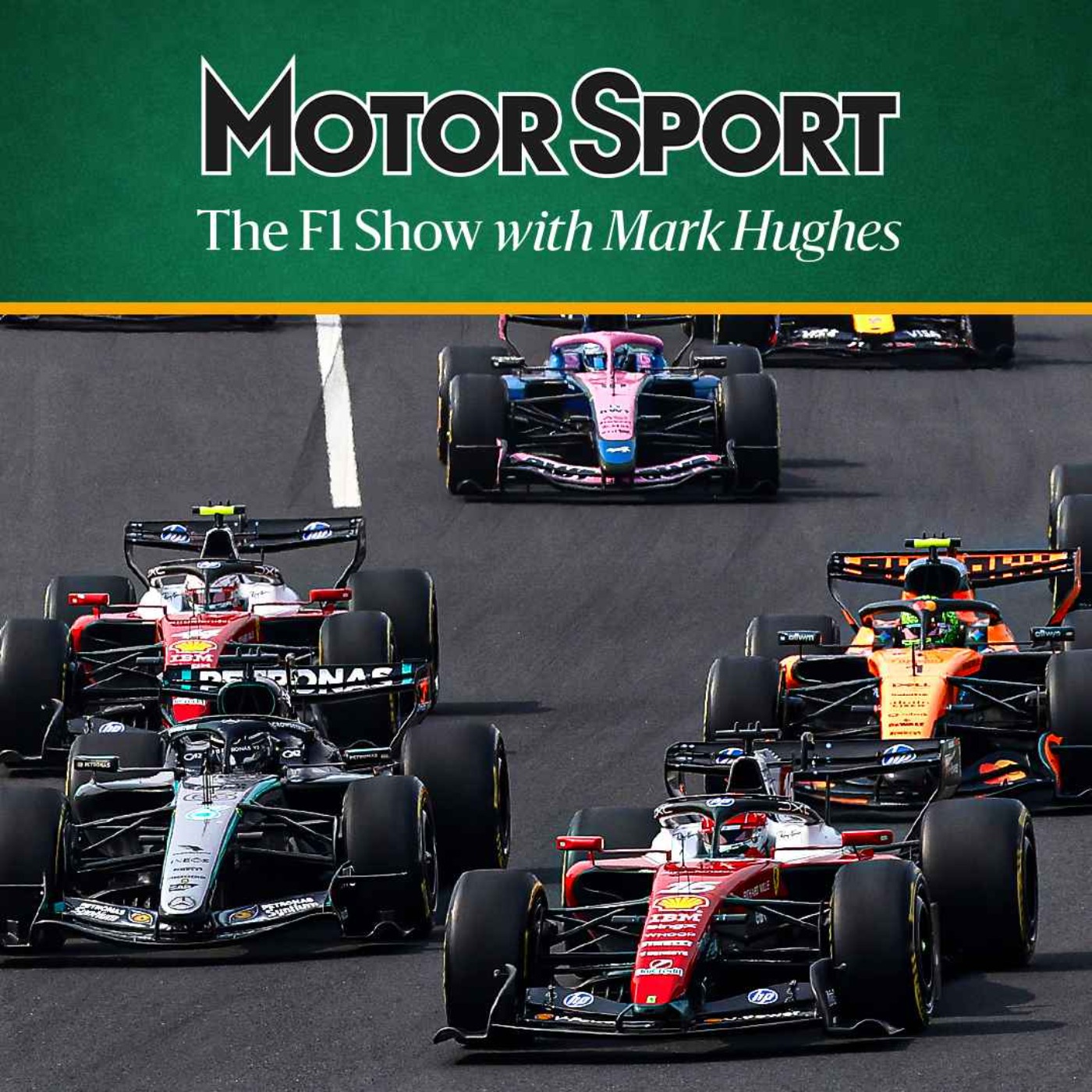
F1 is set to change its rules and unlock engine upgrades
They’re talking about Formula 1 changing the rules for 2026. When the rules change, teams can often improve their engines in new ways, which can change who’s fastest.
Crunch Formula One meeting
They mention a big F1 meeting where important decisions get made. This is the kind of meeting that can change how the cars are allowed to be built and tuned.
power split
“Power split” refers to how power is divided and managed within F1’s powertrain—especially between different energy sources and modes in the hybrid era. Changing it can affect acceleration, efficiency, and how teams calibrate the car’s behavior across the race.
F1's crisis of its own making
They’re suggesting F1 has some problems that it helped create. The conversation is likely about what F1’s choices have done to the sport.
Miami Grand Prix
The Miami Grand Prix is one of the Formula 1 races. When rules are changed, the sport tries to finalize them early enough that teams can build and update their cars for that event.
technical people
“Technical people” in F1 usually refers to engineers and technical delegates who analyze how proposed rule changes affect car design and performance. They help translate high-level decisions into practical, enforceable technical requirements.
F1 Commission
The F1 Commission is like a rules committee for Formula 1. After they approve something, it becomes official rules that teams have to comply with.
regulations
Regulations are the official rules for Formula 1. If something gets added to the regulations, teams can plan their car updates around it.
safety card
“Safety card” here doesn’t mean a car safety system—it’s a figure of speech. It means using a special process to speed things up when there’s not enough time.
energy split
“Energy split” is how the rules let the team decide when to use the car’s stored electrical energy. Think of it like budgeting battery power for acceleration and saving some for later.
deployment
“Deployment” means when the car is allowed to use its stored battery energy to make more power. The rules limit how much you can use, so teams have to choose the best moments.
harvesting rate
“Harvesting rate” is how quickly the car can recharge its battery while slowing down. The faster you can recharge (within limits), the more electrical power you can use later.
battery storage
“Battery storage” is how much energy the car can keep in its battery at once. If the allowed amount is smaller, you run out sooner and have to recharge more often.
electrical side
The “electrical side” is the battery and electric power parts of the F1 hybrid system. If the rules change how that part works, the car’s power delivery and race strategy change too.
internal combustion engine power
This is the power coming from the fuel-burning engine itself (not the battery). If the rules let teams make more of it, the car may depend less on electric boost.
internal combustion engine (ICE) power
ICE power is the “regular engine” part of the F1 power unit that makes power by burning fuel. If teams increase it, they’re trying to get more thrust from that engine, but they have to stay within F1 rules about fuel use and hardware.
speed differential in the race
Speed differential is basically how big the performance gap is between cars during the race. If the gap is too large, it’s harder to pass, so the racing can look less competitive.
qualifying situation where drivers are having to lift off
“Lift off” means the driver eases off the throttle instead of going flat-out. In qualifying, that often happens when the car can’t safely or effectively use full power at that moment, so the driver has to back off to stay in control.
fuel flow
Fuel flow is how quickly the engine is allowed to use fuel. If F1 changes the rules around that, teams can’t just “turn a knob”—they often have to adjust the engine and its settings to work properly under the new fuel limits.
Mercedes
Mercedes is another major F1 constructor, and the segment frames them as being satisfied with their current competitiveness. The discussion suggests that if rules stayed unchanged, Mercedes would likely be among the teams most comfortable with that status quo.
F1's 2026 relaunch: rule changes & engine upgrades unlocked
This part is basically about what the 2026 F1 rule changes could do to team performance. They’re talking about how engine and hybrid upgrades might change who has the advantage.
power unit
In F1, the “power unit” isn’t just the engine. It’s the engine plus the hybrid parts that store and reuse energy, so the car can make more power than the engine alone.
mechanical advantage
This means how much of the car’s speed comes from the regular engine and mechanical parts, versus the hybrid energy system. In hybrid F1 cars, both matter, but they don’t contribute equally all the time.
electrical advantage
This is the part of performance that comes from the battery and electric motor. If the team can store and use more electrical energy, the car can be faster even if the engine itself isn’t the only source of power.
super clipping
This sounds like a strategy the team uses to manage power and energy flow. The important part is that it’s connected to keeping the battery charged and improving how much boost the car can use.
battery starts charging itself up
That phrase means the car can make electricity while it’s running, not just when you slow down. If it can keep the battery charged better, it can use more electric boost later.
Red Bull Powertrain
“Red Bull Powertrain” refers to the team’s power unit program and how it delivers power in practice. The discussion frames it as strong in deployment, efficiency, and overall power—suggesting the car can use its available energy effectively.
transparency
“Transparency” here is about how openly F1 stakeholders communicate intentions, compliance, or decision-making around rule changes. Limited transparency can make it harder for teams to predict what will happen next and plan development accordingly.
additional development upgrade opportunities
This is about how the rules can give teams extra chances to bring new parts during the season. That matters because it changes how fast teams can fix problems and improve the car.
enforced hiatus
An enforced hiatus is a required break—basically a pause—before the next big event. The idea is that teams stop for a bit, then restart their work and bring updates again.
FIA
The FIA is the organization that makes the official rules for Formula 1. Even after new rules are introduced, they can still adjust things later if they think it’s needed.
energy-hungry circuit
Some tracks make you use more power more often. If the circuit demands lots of energy, it can reveal whether the car’s upgrades really work when you’re pushing hard.
Formula One season expectations
The hosts talk about what people expect from each F1 season. They compare different opinions on whether passing is exciting because of driver skill or because of race conditions.
overtaking
In racing, “overtaking” just means getting past another car. In F1, it’s not only about being faster—it also depends on how well the cars can run close together and still have grip.
dirty air
When one car drives, it messes up the air around it. The next car behind has a harder time getting good grip because the air isn’t clean anymore, so it’s tougher to follow closely and pass.
artificial overtakes
“Artificial overtakes” means passes that happen because the rules or systems make it easier to attack. It’s contrasted with a pass that happens purely from a driver’s skill and judgment.
yo-yo style race
A “yo-yo” race is one where the order keeps changing in a back-and-forth way. Instead of one car steadily pulling away or staying ahead, the gaps and positions keep swinging around.
two different algorithms being out of phase with each other
This phrase suggests that the cars’ control systems (and/or race-management systems) can behave differently, so the timing of their actions doesn’t line up. When that happens, what looks like a genuine overtake may actually be a mismatch in how systems respond, rather than clean wheel-to-wheel passing.
out breaking
“Outbraking” means you brake later than the car in front and dive into the corner. If you get the braking right, you can pass without needing straight-line speed.
empty of battery
This means the car’s hybrid battery is running low, so it can’t give as much extra boost. If one car has more battery energy than the other, it can change who can attack and pass.
FOM
FOM is the part of Formula One that focuses on running the show—how races are organized and how the sport is marketed. If they’re talking about attracting fans, it’s usually about presentation and engagement.
GT World Challenge Europe
GT World Challenge Europe is a racing series for sports cars. The host mentions it to explain what they were covering recently, showing they watch more than just F1.
crisis of credibility
When people say “crisis of credibility,” they mean they’re starting to doubt the sport. In F1, that can be because the rules feel confusing, unfair, or like they’re not leading to the racing people expect.
balance of this season
“Balance of this season” refers to how competitive the cars are relative to each other under the current rules and setup window. When the speaker says tweaks could cover the balance, they mean the changes might be enough to keep performance relatively close until the bigger update.
fundamental change
A “fundamental change” means the rules would change in a big way, not just small tweaks. That can force teams to redesign how the car makes and uses power.
IC
“IC” just means the normal engine that burns fuel. In a hybrid, it’s the part you compare against the electric motor and battery.
electrical on the battery side
This is the electric part of the car that comes from the battery. Teams decide when to use that stored energy and when to recharge it, which affects speed and consistency.
combine two completely different energy sources in one car
They’re saying F1 is trying something new where the car uses two different kinds of energy at the same time. That’s a big deal because it forces teams to rethink the engine and how the car makes power.
FAA
The transcript mentions “FAA” as part of the group involved in upcoming discussions. The exact meaning of FAA isn’t explained here, so it’s unclear what organization they mean from this snippet alone.
development upgrades opportunities
Teams don’t just build upgrades whenever they want in F1. They get specific chances to bring improvements, and when those chances happen can affect how quickly performance can improve.
dyno time
“Dyno time” is time on a dynamometer, a test rig that measures engine output under controlled conditions. In F1, limiting or granting dyno time is a way to control development while still allowing teams to validate upgrades.
cost cap allowances
The discussion links performance-based upgrade permissions to the F1 cost cap, meaning teams may receive adjustments that help them stay within spending limits while still developing the allowed upgrades. This is a governance mechanism to balance competitiveness and financial control.
re-homologate certain parts
“Re-homologate” means re-approving parts under the sport’s technical regulations after changes are made. In this context, the rules appear to allow teams to update specific components (and, at larger performance gaps, potentially more broadly) while staying compliant.
horsepower
Horsepower is a way to describe how strong an engine is. But in F1, the rules care about more than just the biggest number you can make at one moment. They also look at how consistent and sustainable the performance is.
aerodynamic veins
Aerodynamic “veins” are small, shaped bodywork elements used to manage airflow around aerodynamic surfaces. Here, the segment explains that Ferrari and Haas use features above the exhaust to redirect airflow, which then affects exhaust back pressure. It’s an example of how aero details can influence engine/exhaust-related measurements.
Ferrari
Ferrari is mentioned here as an example of a team that shapes airflow near the exhaust. Those small design details can change exhaust behavior, which can affect how performance is measured. It shows how much engineering goes into meeting the rules.
Haas
Haas is mentioned as another team using small airflow-shaping parts near the exhaust. Those parts can change exhaust flow and back pressure. That matters because F1’s measurement approach can depend on exhaust behavior.
back pressure
Back pressure is the resistance to exhaust gas flow created by exhaust system geometry and restrictions. In the segment, the hosts say aerodynamic features above the exhaust can increase back pressure, which becomes one of the parameters used to infer how much power is being produced. That’s a reminder that exhaust behavior can be part of how F1 measures and regulates performance.
time allocated
They’re saying teams won’t all get the same amount of time under the rules. That time can be part of how the FIA balances competition. The key idea is that the rules can limit or reward teams through time-based permissions.
detuned
“Detuned” means the engine is being run a little less aggressively than it could be. Teams do this sometimes to make it last longer or to stay within what the rules allow.
compression ratios
Compression ratio is the relationship between the maximum and minimum volume in an engine cylinder, and it strongly affects efficiency and power. The transcript says the FIA will change how they check compression ratios, which implies teams may be able to adjust engine design/calibration more freely to meet the new verification approach.
re-homologate your engine
“Re-homologate” means getting the FIA’s approval again for a new engine setup. If teams are allowed to do that, they can make bigger changes than usual and potentially improve performance sooner.
Aston Martin
Aston Martin is an F1 team. The hosts are using them as an example of a team that might be behind right now, but could get a chance to catch up if the rules let them change their engine more.
Honda
Honda is mentioned as the engine side of Aston Martin’s setup. In F1, the engine package is a huge part of performance, and rule changes can affect how much that engine can be reworked.
long-lead items
Some parts take so long to make that teams have to start planning months (or even years) ahead. Engines are one of those parts because they can’t just be quickly redesigned and built in time for the next few races.
Max Verstappen
Max Verstappen is the main F1 driver being talked about. In this part of the show, they mention where he was and how he’s handling media attention.

GT3
GT3 is a type of race series for modified “regular” sports cars. It’s not one specific car model—think of it as a racing category—and Verstappen was there with his team doing that kind of racing.
Paul Ricard
Paul Ricard is a famous race track in France. It hosts different kinds of racing, so it makes sense that a driver like Verstappen would show up for GT3 events there.
race engineer
A race engineer is the person who works directly with the driver during a race weekend. They help interpret what the driver is feeling, then suggest changes so the car performs better.
driver-engineer relationship
In F1, the driver-engineer relationship is a performance-critical partnership: the engineer must quickly interpret the driver’s feedback and convert it into actionable setup and strategy decisions. The segment describes a “combative” but effective dynamic between Lambiasi and Verstappen, where the engineer helps keep the driver focused and the car working within the right operating window.
systems
When they say “systems,” they mean the car’s different technical parts and electronic controls. The engineer’s job is to understand how those parts affect how the car feels and behaves.
McLaren
McLaren is another top Formula 1 team. The idea here is that Lambiasi is moving to McLaren for a bigger, more senior job rather than working mainly as one driver’s engineer.
Andrea Stella
Andrea Stella is a top leader at McLaren. The host is basically saying Lambiasi’s new role would put him near the top of the team’s decision-making chain.
de facto deputy team principle
This phrase means Lambiasi would effectively act like the team’s second-in-command, even if the official title is different. It’s about who has the most influence on decisions.
management changes
In Formula 1, management changes can trigger broader organizational shifts—new reporting lines, different priorities, and changes in how departments coordinate. That can affect everything from car development timelines to race strategy execution.
driver-team identity
They’re talking about how drivers sometimes feel like they truly belong to a team, not just work there. That can influence how they collaborate with the people building the car and how invested they feel long-term.
straight into F1
“Straight into F1” refers to bypassing the usual ladder of junior series and moving to the top level more quickly. In F1, teams control driver development pathways, so who gets a direct route can strongly affect a driver’s early career and opportunities.
GP2
GP2 was a racing series for up-and-coming drivers. It helped them prove themselves before moving up to Formula 1.
Formula 2
Formula 2 is a stepping-stone series before Formula 1. If a driver does well there, it can help them get noticed and move up.

Lando Norris
Lando Norris is an F1 driver. The host is saying that if Verstappen’s future changes, it could affect who drives for teams like McLaren.

Red Bull
Red Bull is an F1 team. The host is talking about whether Verstappen might leave that team and how that could shake up other teams’ driver lineups.
driver market (being on the market)
In F1, drivers are hired by teams on contracts. If a star driver might become available, other teams start worrying because there are only a few top seats.
Qualifying (Q3)
Qualifying in F1 is split into sessions (Q1, Q2, Q3). Q3 is the final segment where the fastest drivers set their last laps, so any slowing, stopping, or traffic in the closing minutes can directly affect who gets a clean run.
gap management / traffic spacing
F1 is constantly trying to keep cars from getting too spread out or too bunched up. A rule meant to stop big gaps can end up causing a line of cars to form, which then delays other drivers and affects their ability to set a fast lap.
pit lane
The pit lane is the road beside the track where teams work on the cars. Here, the rules make drivers wait there to create spacing, and that waiting can cause delays for everyone behind them.
speed Delta
“Speed Delta” just means the speed gap between two cars during a fight. If one car is consistently faster at certain moments, it can close in quickly—and that can make the racing feel more dangerous.
harvest and deploy
F1 cars can store extra energy and then use it for a burst of performance. “Harvest and deploy” means when the car collects that energy and when it spends it to go faster.
engine maps
“Engine maps” are the programmed control strategies that determine how the engine/power unit responds—such as throttle response, power delivery, and energy deployment behavior. Standardizing maps could, in theory, reduce performance mismatches between teams, but the discussion suggests it may not fully solve the underlying closing-speed issue.
turbo
A turbo is a device that helps the engine make more power by using exhaust gases to push extra air into the engine. In racing, the turbo’s size affects how quickly the car feels fast and when it performs best.
closing speed problem
This is about how fast one car can reel in another. If the rules make cars jump from “not very fast” to “very fast” suddenly, it can be risky for the cars being caught.
F1 and world motorcycle championships
They’re pointing out that two different champions won in two different kinds of racing. One was Formula 1 (cars) and the other was motorcycle racing.

F1
“F1” means Formula 1, which is the highest level of race car series in the world. It’s about purpose-built race cars, not a normal consumer car.