Ford's staggering $11 billion loss in Q4 2025, its worst since the Great Recession, is a focal point of discussion, driven by EV write-downs and unexpected tariff costs. Honda's leadership change and its reduced EV targets are also highlighted. The episode features an insightful interview with CDK Global CEO Brian McDonald, who discusses the transformative role of AI in the automotive industry, emphasizing its potential to provide valuable insights to dealers through extensive data analysis. The conversation explores the shift from basic AI applications to more advanced uses that can enhance dealership operations.
CDK Global CEO Brian MacDonald discusses how the company is moving beyond basic artificial intelligence applications to deliver data-driven insights for dealers. Ford posts its worst quarterly loss since 2008, driven by EV write-downs and tariff costs. Plus, Honda names a new leader for its critical U.S. operations.
"Fujimora takes over from Kazuhiro Takazawa amid affordability concerns, tariff costs, and a dramatic EV pivot. Honda slashed its 2030 global EV target from 2 million vehicles to just $700,000 to $750,000. It also cut prologue production by half."
The Honda Pilot is a family-sized SUV that has lots of space for passengers and cargo. It's important because it's designed to be comfortable and practical for families on the go.
The Honda Pilot is a midsize SUV known for its spacious interior and family-friendly features. It is significant as it represents Honda's approach to balancing practicality and comfort in a competitive SUV market.
"...hicles to just $700,000 to $750,000. It also cut prologue production by half. The company absorbed a $1.8 ..."
The Honda Prologue is a new electric SUV from Honda. It's important because it's Honda's first car made just for electric driving, showing that they're moving towards more environmentally friendly vehicles.
The Honda Prologue is an all-electric SUV that represents Honda's commitment to electrification and sustainability. It is significant as Honda's first dedicated electric vehicle, aiming to compete in the growing EV market.
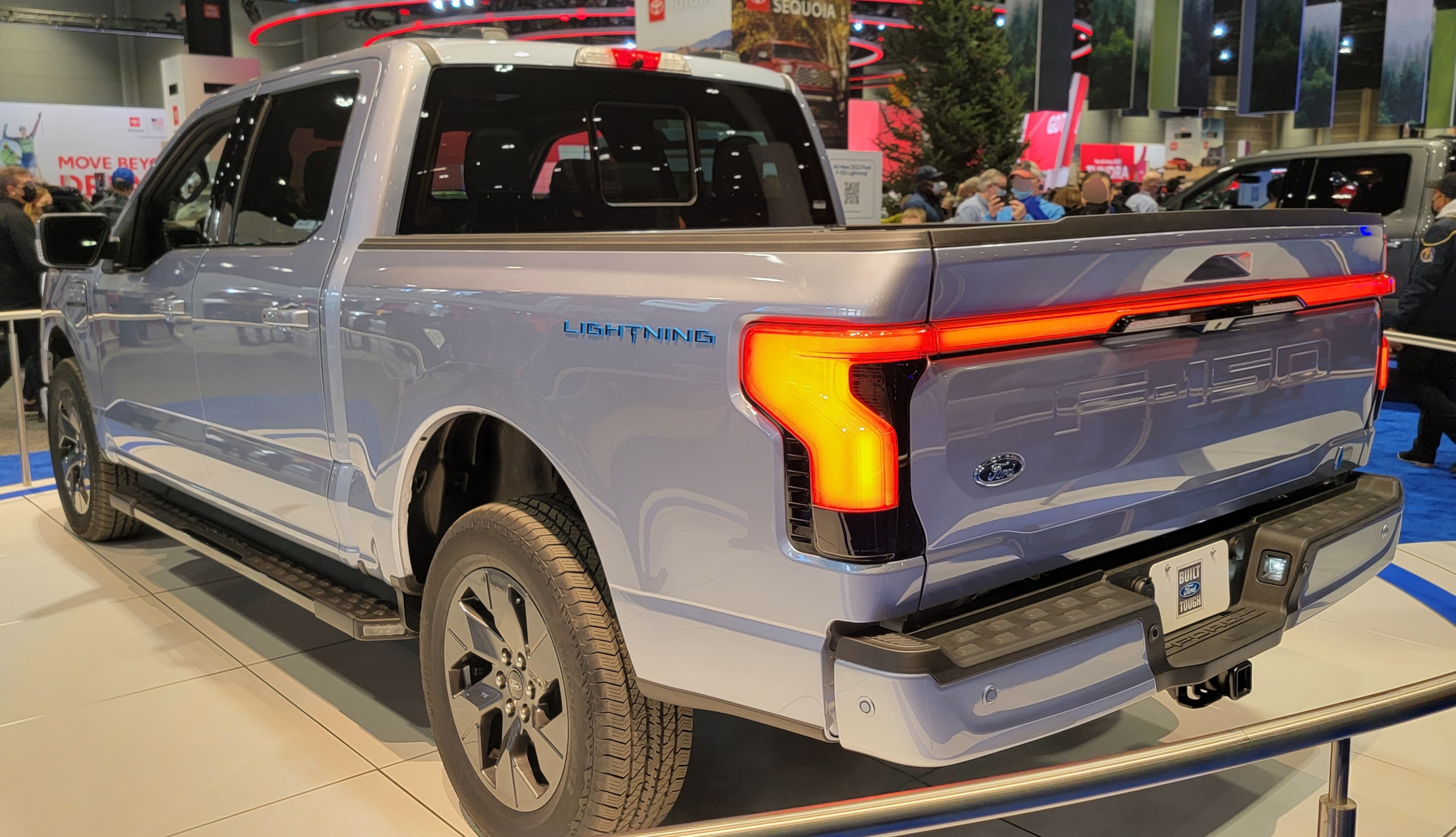
"...because of the novellas fire in October that cut their aluminum supply for the F-150. Nobody could have saw that coming, right? And they've had to react to that. And then even when it comes to EVs..."
The Ford F-150 is a popular truck in America that people use for work and everyday driving. It's known for being tough and able to carry heavy loads.
The Ford F-150 is a full-size pickup truck that has been one of the best-selling vehicles in the United States for decades. It is known for its durability, versatility, and strong performance in various driving conditions.
"...And then even when it comes to EVs, you could make the argument that some of that was outside of their control..."
An EV, or electric vehicle, is a car that runs on electricity instead of gas. They are better for the environment because they produce no exhaust fumes.
EV stands for electric vehicle, which is a type of vehicle that is powered entirely by electricity rather than traditional fuels like gasoline or diesel. EVs are known for being more environmentally friendly and often have lower operating costs.
"... missing the market, particularly with the F-150 Lightning. Yes, it was the number one best-selling full-siz..."
The Ford F-150 Lightning is an electric version of Ford's popular F-150 truck. It’s important because it offers the same features as regular trucks but runs on electricity, which is better for the environment.
The Ford F-150 Lightning is the electric version of Ford's best-selling F-150 pickup truck. It combines the utility and performance of a traditional truck with the benefits of electric power, making it a significant player in the growing electric vehicle market.
"...but the customers just didn't like the range when it came to towing and hauling. It couldn't do truck things..."
Towing means pulling something heavy, like a trailer, behind a truck. It's important for trucks to be able to do this if people want to use them for work or recreation.
Towing refers to the act of pulling a trailer or another vehicle using a truck or SUV. The towing capacity is an important specification for trucks, indicating how much weight they can safely pull.
"...this is the third worst financial performance ever in the company's history. Wow. Well, despite this massive loss..."
Financial performance is a way to see how well a company is doing with its money. It looks at how much money they make and spend, and whether they are making a profit or losing money.
Financial performance refers to how well a company is doing in terms of making money, managing expenses, and overall profitability. It's often measured through earnings, losses, and other financial metrics.
"...they're still dealing with about $2 billion worth of tariff costs."
Tariff costs are extra fees that companies have to pay when they bring parts or materials from other countries. These fees can make it more expensive for companies to make their products.
Tariff costs are taxes imposed on imported goods, which can increase the cost of manufacturing for companies that rely on foreign parts or materials. These costs can significantly impact a company's financial performance.
"...they're not going to be writing down all these EV charges, they think they've set themselves up well for the future."
EV charges are the expenses that car companies have to pay when they make electric vehicles. If they spend too much and don't sell enough cars, they might lose money on those expenses.
EV charges refer to the costs associated with electric vehicle (EV) production, including investments in battery technology and infrastructure. Companies often write down these costs if they don't meet expected sales or profitability.
"So Ford can build more Raptors, they can build more Broncos and F-150s and Mustangs and that will make them more money."
The Ford Bronco is a tough SUV that can go off-road and handle rough terrain. It's popular for outdoor adventures and has a classic look.
The Ford Bronco is an SUV known for its off-road capabilities and rugged design. It has a strong heritage and was reintroduced to the market after a long hiatus.
"So Ford can build more Raptors, they can build more Broncos and F-150s and Mustangs and that will make them more money."
The Ford Raptor is a special version of the F-150 truck that is built for off-road adventures. It has stronger parts and can handle rough roads better than regular trucks.
The Ford Raptor is a high-performance version of the F-150 designed for off-road driving. It features enhanced suspension and powerful engines for rugged terrain.
"So Ford can build more Raptors, they can build more Broncos and F-150s and Mustangs and that will make them more money."
The Ford Mustang is a famous sports car that many people love for its speed and cool design. It's been around for a long time and has a strong following.
The Ford Mustang is a classic American muscle car known for its performance and sporty design. It has a rich history and is popular among car enthusiasts.
"...the small, affordable segment will do a heck of a lot better than the Lightning and the Mustang Mach-E have done."
The Ford Mustang Mach-E is an electric SUV that has the Mustang name but is designed for families and everyday use. It's part of Ford's move to make more electric cars.
The Ford Mustang Mach-E is an all-electric SUV that combines the Mustang's performance heritage with modern electric vehicle technology. It aims to attract a new generation of drivers.
"...the small, affordable segment will do a heck of a lot better than the Lightning and the Mustang Mach-E have done."
The Ford Lightning is an electric version of the F-150 truck. It aims to provide the same features as the regular F-150 but runs on electricity instead of gas.
The Ford Lightning is an electric version of the F-150, designed to offer the same utility and performance as its gasoline counterpart while being environmentally friendly.
Select text to request an explanation
Welcome to Daily Drive.
For Wednesday, February 11, 2026, I'm Kellan Walker in Las Vegas.
Today on the show, Ford posts an $11 billion net loss, its biggest since the Great Recession.
Honda has a new leader for its critical U.S. operations, and auto industry leaders say
President Trump's threat to delay the Gordy Howe Bridge is adding unwanted uncertainty.
Plus, Brian McDonald, CEO of CDK Global, joins the show to talk about how AI is moving
beyond answering phones to delivering real insights for dealers.
Let's run through all the news you need to know to keep up in the auto industry.
Ford posted an $11.1 billion net loss in the fourth quarter.
That's its worst financial performance since 2008.
The automaker lost $8.2 billion for the full year, driven by EV write downs and $2 billion
in tariff costs. That tariff bill roughly doubled Ford's previous projection.
After a late year change by the Trump administration,
eliminated offsets Ford had planned to claim. An October fire at aluminum supplier
Novellis also hampered F-Series production, costing Ford an estimated $2 billion,
though the company expects to recover half of that by boosting output this year.
Despite the rough quarter, Ford projects adjusted earnings of $8-10 billion in 2026.
We'll have more on this story in a minute with our own Michael Martinez.
Honda is tapping CFO, IG Fujimora, to lead American Honda starting April 1st.
Fujimora takes over from Kazuhiro Takazawa amid affordability concerns, tariff costs,
and a dramatic EV pivot. Honda slashed its 2030 global EV target from 2 million vehicles
to just $700,000 to $750,000. It also cut prologue production by half.
The company absorbed a $1.8 billion tariff hit last year,
but aims for modest 4% U.S. sales growth in 2026.
And auto industry leaders say President Trump's threat to delay the Gordy Howe
International Bridge is adding unwanted uncertainty to investment decisions.
Glenn Stevens is executive director of Meshado in Detroit.
He says the threat adds another layer of uncertainty for companies moving parts between the U.S. and
Canada. We are all pointing towards this bridge being an enabler in a variety of different ways,
so I think calmer heads will prevail and we'll get there, but it is a new wrinkle and it does
provide more uncertainty to which the businesses in our industry do not need.
Canada and the United States are in the thick of trade negotiations related not only to tariffs
rolled out by Trump early last year, but also a joint review of the USMCA trade deal scheduled
to begin officially in July. Now, let's dig deeper into that Ford story. Joining me is Michael
Martinez, who covers Ford for us at Automotive News. You'll also hear him most weeks on our
Weekend Drive edition of the show. Mike, welcome back to Daily Drive.
Hey, Cal. All right, Mike. So an $11 billion loss is staggering. Walk us through what went wrong
here beyond just the EV write downs. How much of this was Ford's own strategic missteps versus
external factors they couldn't control? Yeah, that's a really good sort of philosophical
question we could get into. How much of this is actually Ford's fault? You can argue a lot of it
isn't, right? They had $2 billion worth of tariff costs that were largely out of their control,
given what President Trump did over the past year. They had a couple billion dollars worth
of costs because of the novellas fire in October that cut their aluminum supply for the F-150.
Nobody could have saw that coming, right? And they've had to react to that. And then even
when it comes to EVs, you could make the argument that some of that was outside of their control,
the rollback in federal policy, sort of changing consumer demand. But at the end of the day,
you do have to give them some of the blame for missing the market, particularly with the F-150
Lightning. Yes, it was the number one best-selling full-size EV pickup, but the customers just didn't
like the range when it came to towing and hauling. It couldn't do truck things. And they didn't quite
understand their truck customers. And they were supposed to, built Ford Tough. Ford trucks,
number one sellers year in and year out, they should know the customers. And maybe they didn't
realize it there. So definitely cost them this year. This is the third worst financial performance
ever in the company's history. Wow. Well, despite this massive loss, Ford is projecting
eight to 10 billion in adjusted earnings for 2026. That's a pretty optimistic outlook.
What gives them confidence they can turn this around so quickly? And is that
realistic given the tariff environment we're in? Well, they said the tariff costs are going to be
about flat year over year. So they're still dealing with about $2 billion worth of tariff costs.
But just the fact that they're not going to be writing down all these EV charges,
they think they've set themselves up well for the future. Because when you look at it,
last year, another factor in all this, they got rid of the escape. We've talked a lot about that
entry level, not profitable vehicle for them. They are replacing it. Even though some dealers
don't like it, they're getting customers into higher priced models, more profitable models,
that's making them more money. You look at the mix of powertrains. Now that all these EV regulations
have been rolled back, different penalties for gas vehicles and diesel vehicles have been lifted.
So Ford can build more Raptors, they can build more Broncos and F-150s and Mustangs and that will
make them more money. And then on the EV side, they think their losses will continue to go down.
They think they have a plan for profits on EVs by 2029. And they think the small,
affordable segment will do a heck of a lot better than the Lightning and the Mustang Mach-E have
done. Perfect. Mike Martinez, always thank you so much for joining me. Thanks for having me.
Coming up next, CDK Global CEO Brian McDonald talks about how the company is using 900 million
repair orders and AI to deliver real insights to dealers. That's next on Daily Drive.
Are you a dealer creating a workplace culture your employees are proud to be part of?
Applications are now open for the 2026 Automotive News best dealerships to work for program.
This isn't just an award. It's a chance to get real insight into what's working at your dealership
and where you can improve. And we've expanded the categories this year, recognizing everything
from technician experience and leadership development to AI enablement and employee retention.
The registration deadline is April 17th. Find out more and apply at AutoNews.com.
Welcome back to Daily Drive. I'm Kellan Walker.
Artificial intelligence has been the talk of the dealer world from answering phones
to scheduling service appointments. With the leader of CDK Global says the industry is entering a
new phase. CEO Brian McDonald caught up with our own Mark Homer at the NADA show in Las Vegas last
week. Here's their conversation.
Well, we're always here to see our customers and showcase our investments, the benefits of our
investments. CDK over the last few years has invested more than a half a billion dollars
in our technology and our products. And we have modern technology, modern products.
And I know we're going to talk a little bit about AI. We've got built-in AI instead of bolt-on
AI. And so there's a lot of things to show at CDK for our dealers this year, a lot of value.
I think it's coming at a crucial time. There's been talk that a lot of impressive AI tools have
come out, but they haven't necessarily maximized yet, you know, just across the industry.
So is this the year where they become more practical and how they're used? And if so, why?
So I've been saying for quite some time, Mark, that artificial intelligence without data is just
artificial. And nobody has more data than CDK. We have a modern data platform and data engine.
And that allows us to bring AI use cases with our data to real life. So if we went back a year ago,
I would say a lot of dealers are coming to the show with AI on their mind. What do I need to know?
What should I be using AI for? And over the last year, what I would say the first level use cases,
you know, answering the phone, scheduling the service appointment, you know, largely taking
holds across the industry. We have those products. And I think now we're moving into the next phase.
I would call it level two AI, which is where you take rich data and you get insights to bring
value to dealers. And I think that's the level two. And that's where I think the AI can be really
useful to the industry and the dealers is how do you take a company like CDK? How does CDK
take the fact that we have 900 million, I'll say it again, 900 million repair orders in our system.
Really? And then we can take those repair orders and use artificial intelligence and machine learning
and bring insights to dealers when a customer schedules a service appointment,
when a technician is looking at a job, and all of these things doing a warranty claim, etc.
And that's the next level of AI. I think we're kind of quickly moving past the schedule and
appointment and answer the phone. We're moving to, okay, who has the data? What can they do with
that data to bring insights to the customer? Is it hard to get enough data and the right data?
Because there's talk that to maximize AI with data, you have to make sure your data source is
current and there are duplications and that it's where it should be in terms of currency.
So how do you make sure that that happens? So CDK has been around a long time and we serve
a lot of great dealers. So we have a lot of data and we have a modern technology platform
that we've invested in over the last few years. So you combine really market-rich data with
modern technology and that's where you can bring the AI to life. So for example, we announced this
week that we're giving dealers a free CDT, that's a customer data platform. And so we took all of
the records of CDK customer interactions over a long period of time, over 1.3 billion records,
and we basically used AI and our new data engine to combine that down to identify
approximately 257 million unique car buyers in America. So if you think about the population
of America, that's 90 plus percent of all car buyers in America have had an interaction with
CDK. They bought a car at a CDK dealership, they had their car service at a CDK dealership,
they shopped for a car in the CDK CRM. So the fact that we could take all of that data, which we
have, leverage the new technology that we have to create a unique view of 257 million car buyers
is really special and then we can bring that to life with our customers through our CDP platform.
All of that is great and exciting and forward, but dealers and dealerships have been more
conservative about adapting technology forever and they haven't always embraced AI. They've been
wary about some of it, you know, like generative AI had the hallucinations where it worked and
then sometimes it would do something funky and they caused problems. So with all of the advances
that you've made, how do you convince dealers and also do you see dealers being convinced
successfully? Certainly dealers are super interested in how to better use AI. AI is really not,
you know, a means to replace people. I heard this term this morning, which I thought was good,
that artificial intelligence is really assistant intelligence or aided intelligence,
because in our business you still need the people. It's still the people business,
still the relationship business. You know, we sell cars to human beings. We don't sell,
you know, we don't sell cars to AI agents, right? So we need human beings to sell to human
beings and human beings to service human beings. And so I think dealers certainly have the interest
and the way to show them the value is the way to show them the use cases and how to use AI
is to show them the value, show them the pick up in appointments, show them the efficiency for calls.
For example, with our 900 million repair orders. I can't believe that number. Yeah, I know it's,
I didn't believe it the first time I heard it either. But with our 900 million repair orders,
we're able to take a complaint from a customer that the customer, you know, puts into the AI
scheduler. And then we run that against all of our repair orders. So when you walk in
with your car and you've made this complaint, the technician can see generated by AI, here's
some things that could be because we can see the issue across all these repair orders. And then we
can see, give the technician suggested repairs, we can tell the technician that maybe it's a warranty
claim, maybe it's not. And so this is places where dealers go, I just had a meeting, you know,
five minutes ago, where the dealer goes, Well, that's really interesting. Like,
my technician is still going to make the decision of what to do. But this is assistant
intelligence to help the technicians be more efficient, more accurate. These things are
impressive. I mean, you can't argue with the advances that are being made that they're impressive.
But you've invested thousands of money to make that. And it's so it's not cheap to get there.
Is this expensive for dealerships? I mean, look, our our CDP that we talked about with the 257
million unique users, that's free to our dealers. Sure. If you if you have our our dealership
experience platform, that's free to you. And so that's the value that we bring to dealers,
the value of our technology investments. And so look, there are there are costs for some things.
I do think a lot of the level one AI features that we talked about, I think over time, like,
very quickly, they're becoming foundational. Sure. It's like the old days, when we first had a
IVR on the telephone call, you know, the interactive press one for your bank balance press two,
I quickly became these things quickly become foundational expectations that this have to
be in the base products. And I think all of the products that and services that we bring to
dealers, you know, over the next few years, we'll have to have AI components to them
to be successful. That's just going to be the expectation of the market. And at CDK, our
philosophy is we have our AI is built in, it's not bolt on. And we really believe that AI should
be embedded in the products and services. Sure. And not a bolt on solution.
So when is AI truly part of that whole process? Does it mean that it has to be part of the
background if you don't think about it very much? I would say that if you think about the adoption
of smartphones, okay, and people initially thought like smartphones would be like a young person's
game, but very quickly, demographics didn't matter, age didn't matter, people are widely adopted,
smartphones much, much faster in our personal lives and in our business lives. And I think
if you look at the growth of the large language models, whether it's Gemini, ChatGPT, anybody that
uses the internet today, which is virtually everybody is using some form of AI for their
searches and whatnot, translate that to our jobs. Everybody is going to want to use some form of AI
to assist their jobs. The companies want to do it, the employees want to do it. I mean, I use AI
for my job probably 10 times a day. I use some tools myself. To your question, AI is just going
to be an expectation. It's going to have to be in everything. If you have the data, it's going to
provide a lot of value. And if it's built in, it's going to provide value. Anything else you
want to add about what's to come in 2026? Well, one of the things I'm super excited about in
CDK, we just launched a new warranty recovery assistance product. We call it WRAP. We launched
it 30 days ago. We've saved dealers over $30 million in 30 days for about 130 rooftops.
We have a couple hundred dealers coming in to see us today into more culture where we've got
another well over another $100 million or well over another $30 million of opportunity
for dealers for warranty recovery. And so that is another example of CDK using its investment,
using its data, and bringing tangible value to dealers. And so we're super excited about that
and a number of the other innovations we have to show our customers.
That's Daily Drive for today. I'm Kellan Walker. Thanks to Automotive News executive producer
Jake Nier, as well as our own Michael Martinez and Irvash Kakaria for their reporting for today's
podcast. We also have reporting from Kurt Nagel of our sibling publication, Prane's Detroit Business.
You can get the latest news on retail technology, earnings results, and everything happening in
the auto industry at AutoNews.com. Come back tomorrow for a conversation with Windsor Ontario
Mayor Drew Dilkins about President Trump's threat to stop the opening of the Gordy Howe
International Bridge. We'd love to hear from you. Let us know what you think of the show and the
topics we cover today. Send us an email at dailydrive at autonews.com or leave us a voicemail
at 313-444-2774. And if you enjoyed the podcast, remember to like, leave a review, and subscribe
so you never miss an episode.
Request an explanation for:
8 cars
Scroll for more
8 cars featured
Request an Explanation
Heard something you'd like explained? We'll add it to this episode.
Sign in to request explanations for terms you heard.
Want to learn more?
Browse our glossary for plain-English explanations of automotive terms, jargon, and concepts.
See something that's not quite right? Our annotations are AI-generated and can sometimes miss the mark.
Click the flag icon on any annotation to suggest a correction.