Chris Walsh, president and acting CEO of Reynolds and Reynolds, discusses the company's record year and the future of AI in automotive retail. He highlights the importance of their unified data layer, Spark, which powers AI tools for dealerships, enabling them to optimize inventory and pricing strategies. The episode also covers GM's investment in Oshawa, Stellantis' leadership changes, and the growing interest in humanoid robots among automakers, exploring their manufacturing capabilities and varying strategies in this emerging field.
Chris Walsh, president and acting CEO of Reynolds and Reynolds, discusses the company’s record year at NADA and how artificial intelligence is evolving. General manager invests in Oshawa upgrades while cutting capacity. Plus, Automotive News’ Laurence Iliff explains why automakers have an edge when it comes to manufacturing humanoid robots.
"General Motors is investing an additional 63 million Canadian dollars to upgrade its Oshawa assembly plant for next generation full size pickups."
General Motors is a big car company that makes many different types of vehicles, like trucks and cars.
General Motors, often referred to as GM, is one of the largest automotive manufacturers in the world, known for producing a wide range of vehicles including cars, trucks, and SUVs.
"...next generation full size pickups. The new funding adds to the $280 million that it committed in 2023..."
Full-size pickups are big trucks that can carry heavy loads and are often used for work or towing things like trailers.
Full-size pickups are larger trucks designed for heavy-duty tasks, offering more cargo space and towing capacity compared to smaller trucks. They are popular for both work and personal use.
"...you kind of have Hyundai in the middle, you know, which owns Boston robotics..."
Hyundai is a car company from South Korea that makes many types of vehicles, including affordable cars and electric models.
Hyundai is a South Korean automotive manufacturer known for producing a wide range of vehicles, including sedans, SUVs, and electric cars, often at competitive prices.
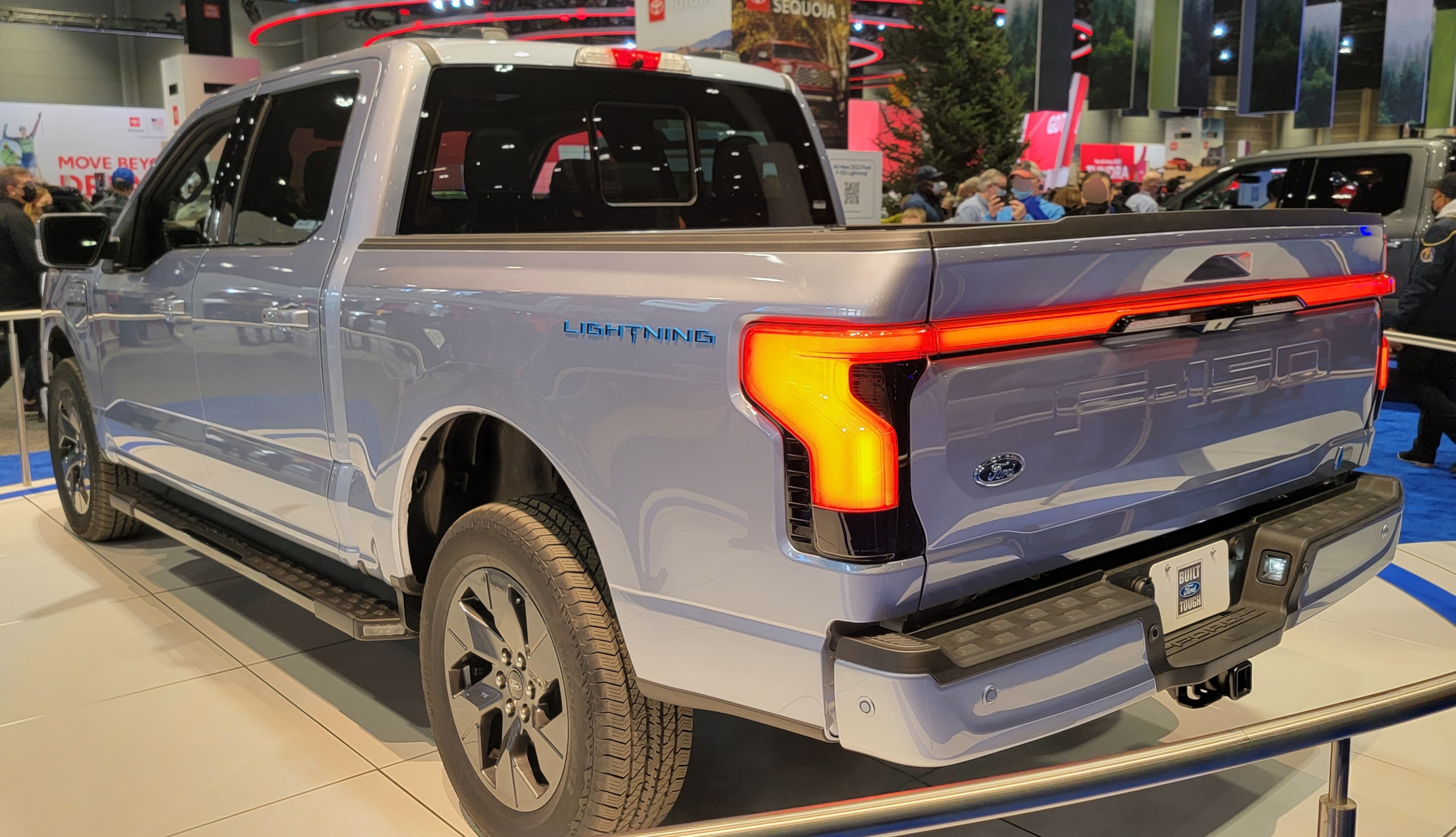
"So you might say, hey, tell me how many F-150s I have in inventory right now and it'll give you"
The Ford F-150 is a big truck that many people use for work or to carry things. It's very popular and has been one of the best-selling trucks in the U.S. for a long time.
The Ford F-150 is a popular full-size pickup truck known for its versatility, durability, and strong performance. It has been a best-seller in the United States for many years, appealing to both work and recreational users.
"...it knows what the market comps are out there. So it gives you advice on how to price the vehicle."
Market comps are similar cars that have been sold recently. They help you understand how much your car is worth compared to others like it.
Market comps, or comparable sales, refer to similar vehicles that have recently sold in the market. This data helps determine the fair market value of a vehicle based on what others are selling for.
"...I think it's doing that. I said, you ask it something, it tells you. Now I think it's going to be, it's going to move into..."
AI pricing recommendation is when computers use data to help car sellers decide how much to charge for their cars. It looks at things like how many cars are available and how much people are willing to pay.
AI pricing recommendation refers to the use of artificial intelligence to suggest optimal pricing for vehicles based on market data, demand, and inventory levels. This technology helps dealers set competitive prices.
Select text to request an explanation
Welcome to Daily Drive. For Wednesday, February 18th, 2026, I'm
Kellan Walker in Las Vegas. Today on the show, GM invests more in
Oshawa after cutting hundreds of jobs.
Salantis shakes up its supply chain leadership, and Auto
Canada names a permanent CEO. Plus, Chris Walsh, president and
acting CEO of Reynolds and Reynolds joins the show, talk
about the next phase of retail AI tech.
Those high volume, low risk tasks that happen in a dealership
every single day, you know, that we can leverage AI to do a lot
of those things so people can focus on things that are, you
know, maybe more important and has a positive impact on
consumers.
Let's run through all the news you need to know to keep up in
the auto industry.
General Motors is investing an additional 63 million Canadian
dollars to upgrade its Oshawa assembly plant for next
generation full size pickups. The new funding adds to the
$280 million that it committed in 2023, paying for stamping
operations and sub assembly upgrades. But it's a mixed
message from GM. The automaker just cut the third shift at
Oshawa in January, eliminating about 700 jobs and 50,000
units of annual capacity. GM cited forecasted demand and trade
uncertainty. Meanwhile, the company plans to add roughly the
same capacity at its Fort Wayne, Indiana plant. Stalantis is
hiring GM veteran Marcelo Conti as North America purchasing
chief. Conti brings more than 30 years of automotive purchasing
experience to the automaker. He replaces Marlo Vitas, who's
moving to a global role overseeing the automakers $13 billion
US investment program. The move comes as Stalantis works to
repair strained supplier relationships and improve vehicle
quality under CEO Antonio Filosa. And Canada's only publicly
traded dealership group has a permanent leader. Auto Canada
named Samuel Cochran as new CEO effective immediately. He's been
serving as interim CEO since October and joined as CFO last
August. Cochran takes the helm as Auto Canada wraps up the sale of
its 17 store US division and refocuses on its 64 Canadian
dealerships and nearly three dozen collision centers. He says
there's significant work ahead to improve dealership
performance and return the network to consistent
profitability. And those are today's headlines. You can read
more about all those stories at auto news.com humanoid robots are
getting lots of hype early in 2026. Our own Lawrence I live has
been looking into how automakers are making a big bet on those
robots, not just using them in factories, but actually
manufacturing them. Lonnie, welcome back to daily drive.
It's great to be here.
So Lonnie, you write that automakers have an edge when it
comes to building humanoid robots. What is that edge and why
not just buy them from other companies?
Automakers have these big manufacturing plants, right? And
they need to, you know, build cars and keep capacity up to make
that economics work. And so you're looking at, you know, all
this installed capacity and then all this know how, right?
Automakers are making cars with cameras, with perception
systems, with software, with the kinds of sensors and things
that can translate into making robots. And so you think of it
as like an adjacent business, right? Here's another business
opportunity. Here's something that people say is going to be
like really hot in the future. And so why not move in that
direction? And you have kind of different tracks, you know,
Tesla wants to do it all by itself. They're already making
their own robo taxis. And they're going to use the same
software and some of the same supply chain, you know,
potentially to make humanoid robots, not just to work in
their factories, but to work in your home. I mean, that's the
that's the vision.
Now, there's a wide range of strategies here. Tesla is going
all in and converting a factory to build robots, while
Mercedes and BMW are partnering with startups and Chinese
automakers to deploy thousands of robots already. What does that
tell us about where this technology actually is right
now?
That's a great question, because, you know, there's
skeptics too, that we talked to in the story of saying, you
know, this is kind of really science fiction at this point,
you know, some of the estimates that we saw about, for
example, humanoid robots being larger than the current
auto industry is in 2050. So I think, you know, there's a
lot of, you know, hedging your bets. Tesla's all in the
Chinese, it looks like they see this as a very logical thing.
They have robots out there dancing and doing karate and
kind of already doing some basic things that you can imagine
them, you know, moving really quickly into space like they
did with EVs. And then you see, you know, more traditional
automakers, you know, kind of getting a foot in, partnering
with startups, just doing some testing, and kind of in the
middle of like, let's say the Tesla and China on one side, and
then like Mercedes and BMW just kind of partnering, doing
some testing, you kind of have Hyundai in the middle, you
know, which owns Boston robotics. And so they already
have robots, working robots and kind of, you know, transforming
those into industrial robots and Hyundai's factories, and then
also maybe moving into the consumer robot industry.
Perfect. Lonnie Eiliff. Always insightful. Thank you so much
for joining me. Thanks guys. Coming up, Reynolds and Reynolds
CEO Chris Walsh talks about the company's record year and how
their unified data layer is powering the next generation of
AI tools for dealers. That's next on Daily Drive.
Are you a dealer creating a workplace culture your employees
are proud to be part of? Applications are now open for the
2026 Automotive News Best Dealerships to Work For Program.
This isn't just an award. It's a chance to get real insight
into what's working at your dealership and where you can
improve. And we've expanded the categories this year,
recognizing everything from technician experience and
leadership development to AI enablement and employee
retention. The registration deadline is April 17th. Find
out more and apply at AutoNews.com.
Welcome back to Daily Drive. I'm Kellan Walker. Reynolds and
Reynolds had a record year in 2025. At this year's NADA show
in Las Vegas, they saw more dealer traffic at their booth
than any year in the past seven. Automotive News Retail
Tech reporter Mark Homer spoke with Chris Walsh, president
and acting CEO of Reynolds and Reynolds, about what's
driving that success and where AI is headed next.
Chris, thanks for joining us. We're ledger here and I'm
wondering how the show's been so far. Well, first of all,
thanks for having me, Mark. I appreciate it. It's good to
see you again. The show's been fantastic. The traffic has
been, you know, sky high. It's probably our yesterday for
sure. We went back and looked at, you know, seven years
and we had more people at our booth yesterday than we ever
had in the previous seven years. So did you count? Like, do
you know it's more than 500 or a thousand? It's more than
500. It's close to a thousand. Really? Yeah. After the first
day. Yeah, for the first day. That's phenomenal. Yeah. I want
to talk to you about technology. Sure. And I noticed in
particular you were at a tech event yesterday. Yeah. Tell me
about that. You're talking about the Steve Greenfield event?
Exactly. I'm basically to look at startups and evaluate
which they're, I mean, what brought you there? Well, our
M&A team was going and I knew they were going. So I wanted
to go. The short answer is I learned when I go there. You
know, we've got relationships with FM Capital and TD
Cowan. So we know those people and so, you know, and we
meet and we meet with them and every time we meet with them,
I feel like I walk away smarter. They, you know, they really
know a lot about the industry. What's going on? They're
pretty embedded in the industry. They know about
companies. They know about new companies. They certainly know
about companies that are, you know, for sale or going to
sale. But really what I learned is the way they look at the
market, you know, and the way they look at the industry and
they have a unique perspective. You know, they're not a
technology company. You know, so I just feel like I learn a
lot when I go there. So that's really why I went. Did you
make connections? What did you take away? Well, I mean, the
shark-take thing was actually really cool. So one of them
was Ryan Austin, who was with Goobagoo. We bought Goobagoo
quite a few years ago. So we got to know Ryan. So I got to
see Ryan talk about his new company and what they're doing.
But a lot of it is just, you know, kind of networking and
seeing people that I hadn't seen in a while and, you know,
getting their perspective on how things are going and what's
new and sometimes getting their perspective on us and what
we're doing. You know, I just feel like, you know, it's good
to, it's good to hear that. Excellent. Now, everybody's
still talking about AI. Where do you see things going
heading into 2026? Well, you know, for us, the important
thing that we did a few years ago was to build Spark, which
is our unified data layer. So that's what, that's the data
that the AI tools are all pulling from. And, you know,
we're in a unique position that, you know, we literally have
decades and decades of data that we can gather insights
from. So we have this, you know, this tremendous data,
which we collected unified and put into Spark's, you know.
So right now, what you're seeing is things like using AI
to respond to things. So asking it questions and it'll
give you an answer. So you might say, hey, tell me how many
F-150s I have in inventory right now and it'll give you
an answer. So instead of going to run a report, it'll do
that. Or you may take that a little bit further and say,
you know, what should my inventory mix be of F-150s?
And it'll tell you what they think, you know, it'll do.
We're using it to price out used cars, you know.
So when you're going to sell a car, you know, it knows what
the market comps are out there. So it gives you advice on
how to price the vehicle. So, and it's not just telling you
what it thinks you should do. It's also telling you why it
thinks what it thinks. You know, so it's based on this data.
This is why I think what I think it always gives the person
the opportunity to disagree and say, no, I think I can sell
this car for a grand more than that. So I'm going to price
a thousand dollars higher than what AI is recommending.
So I think it's doing that. I said, you ask it something,
it tells you. Now I think it's going to be, it's going to
move into, like, to use the F-150 example.
So, you know, what does my Ford inventory look like?
Well, you have, you know, 217 Ford's on the lot right now.
You're a little high on F-150s. So now it's giving you
an insight into it. And the next step will be,
it's not even going to, you don't have to ask it anything.
You're going to come in, you might log into your computer
first thing in the morning and it might say, hey, Mark, you
know, one thing you might want to look at today and it's going to give you, you know,
an insight based on the data that it has, I think that's where
all this is, is kind of going to, you know, now.
It's been said that data is increasingly
important because without good data,
AI doesn't work well. So
you guys are a few years into your data layer.
That was something positive to anticipate
early. I mean, how successful has that switch been?
Well, it's been, it's usually successful. And, you know,
it also brings in data from, you know, we've got
acquisitions that we've made, right? So we can now bring in, you know,
acquisition or data from like, you know, think about TSD,
you know, and the data they have around courtesy and loaner vehicles
and managing those assets. That data can go
into Spark AutoVision, you know, and all the used
vehicle data that we have. So, you know, we feel
very strongly that we did the right things. We did
all the hard work before, you know, because that's the
foundational work that needs to happen in order to make the
AI tools do what it's, what you just mentioned is true, like
it may do something wrong, or it just may, you know,
it just may not do the right thing. Sure.
Now, since I've been covering you for a few years now,
I've followed very closely that you very selectively
made acquisitions that address,
you know, a future technique, whether it was cybersecurity
or data or something else. Right. So
in 2026, are you still looking for more
select acquisitions like that? I mean, we're always,
you know, open to an acquisition as something comes along
that we think is a really good strategic fit.
I think we'll be relatively quiet on the
acquisition front this year. But, you know, it's hard to say,
you know, something comes up. It's like, okay, this, this is a strategic fit
for us. It plugs a hole for our customers. It does something
for the industry, whatever it happens to be, that it might be,
you know, a good fit for us. Excellent. So
what have you noticed about this year's conference?
What is new, if anything? Well,
traffic is, you know, the main thing that I've noticed about
the conference, you know, it's just so much higher. If you remember last year,
you know, we had, you know, the weather, you know, had a dramatic
impact on the conference. And all of us. I think
there's, there's a lot more vendors here, I think, than I remember
being here. And I haven't, I haven't asked what the count is,
but I'm pretty confident there's a lot more vendors
here than there really maybe ever has been. So that's been
something I've noticed. When you're here in your capacity, do you though
and just, do you take a stroll and do you talk to vendors
that you haven't talked to before? Yeah, not as much as I would like
to, but I do, I try to do it. You know, it's such a
fascinating place to walk around. And there's, you know, companies
that are just brand new and doing really interesting, you know, things
that no one else has, sometimes no one else has even thought of, you know,
doing. So, you know, that's interesting. So, and this
is just a lot of cool tech here. You are
president and acting CEO. Are you still, or at least
you were as of last year in terms of the CEO
part? Is that going to become permanent?
Not a question for me to answer, you know, but
I feel like I'm doing the job, you know, so
I look at, I am acting like the CEO and I am doing
the things that I feel that need to be done to make this company
successful and to keep it moving forward and to do
things that help our customers be successful.
At the end of the day, that's the reason that we exist
is to help our customers, you know, be successful and
help them deal with what's coming next. So,
if they decide they want to, you know, take the acting away,
that that's their decision, I'd be glad to do it. Sure. They want me, if they want
to keep it there for a while, that's also fun. Fair enough.
Now, in terms of something new, I'm wondering
what have you seen in terms of tech here that seems
new to you? Well, I think, you know, you're talking about
within rentals or just in general? In general, just walking around
and if that applies to rentals, both. Yeah, I haven't
walked around much, so I haven't seen a lot of tech.
I know that I can provide much insight there.
You know, we've got, you know, a lot of tech in our village. I mean, we've got
I think we have the largest booth. This is our
60th year exhibiting at NAD. I think we're the one. Has it been that long?
Exhibitor. That was not here for all 60 of them.
About those, sometimes it feels like it. Sure. But, you know,
we feel like we've got a pretty comprehensive and robust
sweeter solutions to help retailers be more successful
if you look at the entire rentals village. So, certainly
the DMS things that we do, but even outside of that, you know,
a lot of the point solutions that we offer. Yeah, we've talked about
we've talked about data being a thing. I know that cybersecurity
is an important part of what you're doing as well.
What is coming that's new beyond that? What do you say in terms of
in terms of tech that might be useful? Well, I think, you know,
you'll continue to see the evolution of AI that I talked about
and, you know, really kind of how do we augment
what people do in a dealership that, you know, maybe
they don't need to be doing and do it better. Sure.
Which in the end translates into a better, you know, consumer experience.
So think about like those high volume, low risk
tasks that happen in a dealership every single day.
You know, that we can leverage AI to do a lot of those things.
Sure. So people can focus on things that are, you know, maybe
more important and has a positive impact, you know, on
consumers. Think about, think about yourself. Okay. So let's
just say you're laying on the couch 10 o'clock at night.
You're looking for cars and you find a vehicle that you like
and you submit a lead. Well, 99 out of 100 times
what happens when you submit that lead at 10 o'clock at night
is absolutely nothing happens. So the next day
maybe somebody responds to you, but what's happened
to you the next day? You know, life has happened. You know, you've woken up
and you've gone on to, you know, work or people have kids
and getting them to school and jobs and all these things have happened.
Sure. Now the opportunity to, you know, have an impact
on you has kind of been lost, right? So where
you could meet them in the moment, in that case, are you sitting
on the couch submitting their lead and react to you
then and try to get you to convert and take the next step,
which would, you know, certainly be to come into the dealership to look at the vehicle.
So I think AI can really have a positive impact
there on the consumer experience.
That's Daily Drive for today. I'm Kellan Walker.
Thanks to Automotive News executive producer Jake Neer,
as well as our own Lawrence Isliff for his reporting for today's podcast.
We also had reporting from David Kennedy of our
sibling publication, Automotive News Canada
and Kurt Nagel of Crane's Detroit business.
You can get the latest news on AI and dealerships,
humanoid robots and everything happening in the auto industry
at AutoNews.com. Come back tomorrow
for a conversation with Techie on CEO Jay Vijayan.
I don't say this lightly. We are the most
secure and reliable platform in the industry.
We'd love to hear from you. Let us know what you think of the show
and the topics we cover today. Send us an email at
DailyDrive at AutoNews.com
or leave us a voicemail at
313-444-2774.
And if you enjoyed the podcast, remember to like, leave a review
and subscribe so you never miss an episode.
Request an explanation for:
1 cars
1 cars featured
Request an Explanation
Heard something you'd like explained? We'll add it to this episode.
Sign in to request explanations for terms you heard.
Want to learn more?
Browse our glossary for plain-English explanations of automotive terms, jargon, and concepts.
See something that's not quite right? Our annotations are AI-generated and can sometimes miss the mark.
Click the flag icon on any annotation to suggest a correction.