The latest Weekend Drive covers the NADA 2026 show in Las Vegas, highlighting the industry's optimism despite potential profit declines. Hosts Kellen Walker, Michael Martinez, and Larry Veliquette discuss the UAW's historic tentative deal with Volkswagen for its Chattanooga plant, marking the first contract with a transplant automaker since 1979. The conversation also touches on the implications of this deal for labor relations in the South and the potential entry of Chinese automakers into the U.S. market, with varying opinions on the feasibility of joint ventures.
"Now, the UAW reached a tentative deal with Volkswagen for the Chattanooga plant."
The UAW is a union that helps workers in car factories get better pay and working conditions. They negotiate agreements with car companies.
The UAW, or United Auto Workers, is a labor union representing workers in the automotive industry in the United States. It plays a crucial role in negotiating contracts and working conditions for its members.
"Now, the UAW reached a tentative deal with Volkswagen for the Chattanooga plant."
Volkswagen is a car company from Germany that makes many popular cars. They are well-known for models like the Beetle and Golf.
Volkswagen is a German automotive manufacturer known for producing a wide range of vehicles, including the iconic Beetle and the Golf. The company has a significant presence in the global automotive market and is known for its engineering and innovation.
"...you're sitting with a Camry or something at $35,000. And suddenly, there's another, there's a mid-sized sedan..."
The Toyota Camry is a well-known car that many people like because it's dependable and comfortable to drive. It's a good choice for families and commuters.
The Toyota Camry is a popular mid-sized sedan known for its reliability and comfort. It has been a best-seller in the U.S. for many years, often praised for its fuel efficiency and spacious interior.
"...I had a really interesting conversation with Andrew Frick at Ford. He's the president of Ford's Gas and Electric Vehicle Business Units..."
Ford is a well-known car company from the United States that makes many types of vehicles, like trucks and cars. They are also starting to make more electric cars.
Ford is a major American automotive manufacturer known for producing a wide range of vehicles, including trucks, SUVs, and sedans. The company has a significant presence in both gas and electric vehicle markets.
"...would Ford caution dealers against getting a BYD or a G. Lee franchise if they were out of the US?..."
BYD is a car company from China that makes electric cars and batteries. They are becoming more popular around the world, especially for eco-friendly vehicles.
BYD is a Chinese automotive manufacturer known for its electric vehicles and batteries. The company has rapidly expanded its presence in the global automotive market, focusing on sustainable transportation solutions.
Company
G. Lee
"...against getting a BYD or a G. Lee franchise if they were out of the US?..."
G. Lee is another car company that might not be as famous, but it's mentioned in discussions about car dealerships and franchises.
G. Lee is less well-known compared to other automotive brands, but it is mentioned in the context of franchises that dealers might consider. Understanding the competitive landscape is important for dealers.
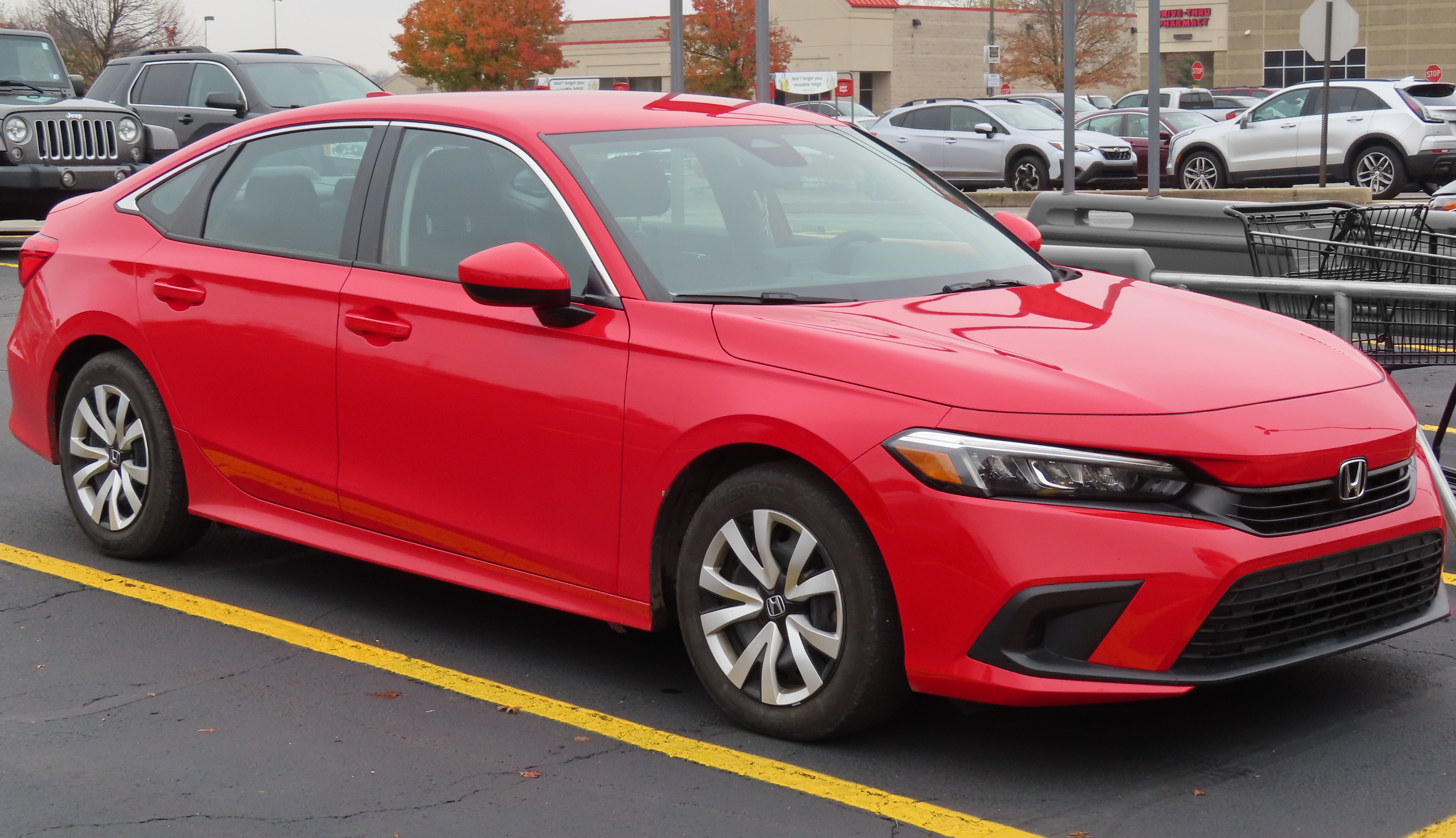
"...70s, 70s Ford, and you looked at a Honda, a Honda Civic from that period or a Toyota Corolla from that pe..."
The Honda Civic is a small car that has been around since the early 1970s. It's loved by many people because it's dependable, gets good gas mileage, and is easy to drive, making it a great option for everyday use.
The Honda Civic is a compact car that has been in production since 1972 and is known for its reliability, fuel efficiency, and practicality. It has evolved through multiple generations, becoming a popular choice for both daily commuters and car enthusiasts alike, often discussed for its role in shaping the compact car segment.
"...a Honda, a Honda Civic from that period or a Toyota Corolla from that period. Those were radically different from what's..."
The Toyota Corolla is a small car that is very popular because it is affordable and gets good gas mileage. It has been sold for many years.
The Toyota Corolla is one of the best-selling cars worldwide, known for its practicality, fuel efficiency, and affordability since its launch in the 1960s.
"So guys, real quick, let's talk about the JD Power forecast for dealer profits this year. Mike, JD Power expects US dealer profits to drop 12% this year to $25.4 billion."
JD Power is a company that collects and analyzes data about cars and customer experiences. They help people understand how well cars perform and how satisfied owners are with them.
JD Power is a global leader in data analytics and consumer intelligence, particularly known for its automotive industry insights, including vehicle quality and customer satisfaction surveys.
"Mike, JD Power expects US dealer profits to drop 12% this year to $25.4 billion. That's down from $28.9 billion in 2025. What's behind that decline?"
Dealer profits are the money that car dealerships make when they sell cars and offer services. These profits can change based on how many cars they sell and how much they spend to run the business.
Dealer profits refer to the earnings that car dealerships make from selling vehicles and providing services. These profits can fluctuate based on market conditions, sales volume, and operational costs.
"But no, I think when you look at the numbers, JD Power is predicting flat sales. And it's funny, I think there's an identical breakdown between fleet and retail 25 to 26 that they expect."
Fleet sales are when companies buy many cars at once, like for delivery services. Retail sales are when regular people buy cars for personal use. Both types of sales affect how much money car dealerships make.
Fleet sales refer to the sale of multiple vehicles to businesses or organizations, while retail sales involve selling vehicles directly to individual consumers. The balance between these two types of sales can impact overall dealership profits.
"But I think there are enough tailwinds, things like continued profits just from the fact that you don't have to sell as many EVs."
EVs stand for electric vehicles, which are cars that run on electricity instead of gas. They are better for the environment and can save money on fuel.
EVs, or electric vehicles, are cars that are powered entirely by electricity instead of gasoline or diesel. They are becoming increasingly popular due to their environmental benefits and lower operating costs.
Select text to request an explanation
If your data isn't connected, your dealership isn't operating at full speed.
Curator brings all your dealership data together to drive better leads, better conversations,
and better results.
Visit goobagoo.com slash curator to learn more.
Welcome to this Weekend Drive edition of Daily Drive for the first week in February,
2026. I'm Kellen Walker, coming to you from Las Vegas, where we've been covering the NADA
show all week. We're breaking down some of the biggest stories in the auto industry
from the past week, and looking forward to what's in store in the days ahead.
Joining me today are Michael Martinez, who covers Ford in the UAW forest and automotive news.
Mike, welcome back to Weekend Drive. Good to see you in person, Kellen.
I know, it's great to have you here. And of course, Larry Veliquette,
who covers Toyota, Subaru, Larry Legend. Thank you for joining us.
Oh, thank you, Kellen. I feel like yelling, we are live.
We are live and in your face. All right, guys. So before we get into this week's news,
you guys have been on the ground here at NADA all week. What are your general impressions
and what's the vibe been like here in Vegas?
Well, I'll say I've been surprised at the optimism and confidence I'm hearing. Obviously,
this is sort of a rah-rah, kind of circle the wagons type event. So you're going to get
some of that regardless. But I think one of our editors put it perfectly in one of our
newsletters this week saying that there may be some bad times ahead in terms of profits
going down, in terms of sales going down. But those bad times really aren't that bad.
We're still at historic highs when you take a broader view of the industry in terms of profits,
in terms of sales. So things are still pretty good, even if some metrics are trending downward.
Yeah, always with the positive waves.
Well, you know, dealers have been historically optimistic, even in the worst times, right?
I think there's some bad trends on the horizon, some things that ought to be scary.
I think what you're seeing here is you've got about 24,000 people here.
And I think maybe half of them are out looking for answers,
trying to figure out what they're going to do. Everybody knows what's coming.
They're trying to figure out their strategy for how they're going to get through it.
Well, guys, before we dig deeper into NADA, we need to talk about some breaking news from earlier
this week. Now, the UAW reached a tentative deal with Volkswagen for the Chattanooga plant.
Mike, on top of Ford, you covered the UAW for us at Automotive News.
This came nearly two years after workers voted to join the union.
What's your reaction to this news?
Well, pick whatever superlative you want to use. Historic,
I think is a good one. This is a big deal, right? Because there has not been a contract
with an automaker that was not the Detroit 3 through the UAW in quite some time.
How long has it been, Larry?
It's before you were born, Mike. It is from 1979.
Was the last time that the United Auto Workers had a contract with a transplant
automaker that was in Westmoreland, Pennsylvania, Salute, where VW workers,
VW had bought a former Chrysler plant and was building small pickup trucks before that whole
thing went belly up and they pulled out. But 1979.
Yeah, so this is a big deal and this was always going to be the hard part. It wasn't
going to be that difficult to organize VW and Chattanooga, but getting to that first contract
was the real challenge. Even though organizing took three separate times.
Exactly. And decades and decades. But I think the thing here to look at is what they were able
to win and it still has to be ratified, obviously. But 20% raise, I think over the course of the
contract, their pay is going up by $10 an hour. They got significant bonus money, even a few
thousand dollars more than what VW's last best and final offer was. So they clearly had more
to give. Interesting thing though, I'd note lower healthcare costs, which is important because
those keep creeping up for all of us by every indication looks to be a pretty good tentative
agreement. Now this seems like real quick, Larry, this seems like this came out of nowhere.
Any idea what happened that could lead to a breakthrough for something like this?
I can only draw from my own experience here. I don't know what happened in Chattanooga.
I can only say that in negotiating labor contracts, this is often what happens.
The sides will get to the last best in finals. So you either at that point, you make a decision,
both sides have to make a decision. Do we go to an open conflict, a strike in this case?
Or do we try to reach a settlement and you try to do the latter and hope you don't have to
do the former? And I think eventually you decide which way you want to go, right?
Go ahead, Mike. I'll tell you what happened, Kel. There's an election coming up this fall.
You've had a federal monitor that has been taking Sean Fain to the woodshed,
accusing him of retaliation, accusing him of improprieties, and basically not doing
what he's been asking the union to do in terms of cleaning up the bad stuff and reforming it in a
way that will lead to good momentum. So you have somebody that's going to be accountable to the
membership in a matter of months who needed a win. And this could certainly give him momentum
and a few more thousand votes come this fall. Now, this is huge for the UAW Southern organizing
campaign. Where do you think that goes from here? Larry, you start.
Well, I will say that this is likely to have knock-on effects to other automakers that are
operating in just in the South and in these transplant plants. Just like when the UAW signed
the contract with the Detroit three last time, it was at 24, right?
Late 23. Late 23. Oh my gosh. Seemed like yesterday. Just like almost immediately in the
aftermath of that, the automakers, foreign automakers that are not unionized, they immediately
raised their wages in response to try and keep their workers. We have a national labor shortage,
in case anybody's not noticed. It may not seem like that on the top line number,
but it is very difficult to fill those manufacturing jobs. They have to be competitive.
And if one of the, if I want to be an automaker and I really don't care where I live,
I'm going to look around where the wages are best, where the economic package is best.
What did you take on that, Mike? Yeah, I think that snowball effect could be very real,
because before it was all theoretical. If you're a worker at Mercedes in Alabama
or somewhere else that's not organized, yeah, you see it out there that, yeah,
maybe I could join the UAW and see some benefits somewhere down the road.
But now it became very real. Those workers in Chattanooga down the street, one stayed over,
two stayed over are getting significantly more money and significantly more job protection
than you may have. So suddenly the prospect of joining a union, even if you have to pay yearly
union dues seems a whole hell of a lot better. Good stuff, guys. Coming up, we'll talk about
the conversations around Chinese vehicles here at the NADA show. That's next on Weekend Drive.
If you're an automotive supplier and you know your team is building the next big thing,
prove it on the industry's biggest innovation stage. Automotive news is now accepting
applications for the 2026 PACE program. PACE awards recognize traditional and
non-traditional suppliers worldwide for new product, process and business model innovation,
and entries must be innovations already commercialized through a sale to an automaker.
Still pre-commercial, but past the pilot stage, PACE pilot recognizes post-pilot
pre-commercial innovations across automotive and future mobility, products, software,
IT systems and processes with the potential to revolutionize an automaker's business.
All submissions are reviewed by an independent panel of judges, and MIMA is the exclusive lead
sponsor. Ready to be recognized? Apply by February 9th at AutoNews.com.
Curator. The automotive industry's first unified intelligence engine. Curator pulls customer data
from everywhere. Your CRM, DMS, website, even your marketing tools. It cleans it, connects it,
and pushes it back into your systems. The result is a complete, real-time record of every customer.
Let's get to know Alan Tellareado. For nearly 50 years, they've built their business on one
simple idea. Take care of the customers, and they'll keep coming back. But even with decades
of loyalty and data, things were getting messy. BDC manager Seth Stannage puts it best. Customers
would reference visits from years ago, but the team could only see the most recent record.
Finding the full story meant digging through duplicates across multiple systems.
That all changed with Curator. Seth says their marketing data is the best it's ever been
thanks to Curator, enabling Alan Tellareado to target buyers at just the right moment,
and making sure they're the first and last dealership those shoppers connect with.
The results speak for themselves. Curator collected more than 20,000 data points a week,
and generated leads that boast a nearly 30% closing rate. Want to see what Curator can do
for your dealership? Visit goobacook.com slash curator to learn more.
Welcome back to Weekend Drive. I'm Kellen Walker with Later Belloquette,
and Michael Martinez on the floor of the 2026 NADA show in Las Vegas.
All right guys, so one of the more fascinating storylines from here at NADA this week is China.
And more specifically, whether Chinese automakers will enter the U.S. market soon.
Now, Mike Venture Capitalist Steve Greenfield made some bold predictions this week,
saying Chinese automakers will enter the U.S. market this year
through joint ventures with legacy automakers with U.S. plants and workers.
How realistic do you think that is?
Well, of the scenarios, it could be the most realistic, right? Because it would be a
toe in the water. It would be a foothold in the door, right? You don't have to have your own plant
set up your own facility. You could partner with an automaker on even just R&D or manufacturing.
We're actually seeing that in Europe, there are reports this week that Ford
is in initial talks with Geely to use some other utilized plants in Europe.
So could that happen in the United States? We're still a few steps ahead of that, obviously,
with regulations and with President Donald Trump, who has indicated some
willingness to let the Chinese in, but still has 100% tariff, by the way.
So that would need to be lifted. But partnership, R&D, manufacturing, whatever
it may be in terms of a joint venture, could be the way to go.
What are your thoughts, Larry, on that?
I would only say it would probably be far cheaper for the Chinese if they really wanted
access to this U.S. market. They could just buy Stellantis. They could buy General Motors.
Can't buy Ford because of the way Ford stock is set up. But they could just buy them,
lock, stock, and barrel. It would be easier to buy Stellantis because it's a European company.
Right? They could, with operations here, with a North American wing, but
so that's an easy turnkey entry if they want to come in. I don't really have the same,
let's, I don't know if Steve was optimistic, an optimistic view, however you want to characterize
it. I don't think we're right at the doorstep, but they're not going at the door.
Right? They're at least starting to knock at the door, and that's worrisome.
Now, meanwhile, NADA said this week that it's backing efforts to keep Chinese brands out of
the market. Now, CEO Mike Stanton says 95% of NADA's board agrees with that stance. Larry,
what's driving that position?
Well, smarts. Number one, right? Number two, if 95% of that board is backing that position,
I want to know, if I'm an auto dealer, I want to know who the one guy on the board out of that
20-member board is saying, hey, bring them on in. Right? That's 5% is one person on a 20-member
board. And if Mike is, if we take Mike at his word, there's somebody out there that's
saying, hey, come on in. And that brings us to a point, Mike and I were talking about earlier.
Right? Eventually, when the floodgate opens, right? When somebody invites the Chinese in,
we all know how Chinese vehicles are priced compared to those that sell in our market.
Right, right.
I mean, it's an instant of affordability fix. Right? The number one issue vexing this industry,
it's instantly fixed. The problem is, is that when somebody opens the floodgates, if it's the one
person, if you're the one person standing on top of the floodgate and you do the opening,
you're probably going to be okay. But for the other people that are standing below the floodgate
in the floodplain, when the dam breaks, yeah, they're not going to be quite so...
Yeah, because you initially think like dealers, they're about making money. So you would think
they'd be like, oh yeah, Chinese, affordability, perfect. This makes perfect sense. But to your
point, you're right. When the gate opens, someone's going to get washed out.
Yeah, oh yeah. It's everybody, if somebody lets the dam open and it's not you,
and you're sitting with cars that are, you know, you're sitting with a
Camry or something at $35,000. And suddenly, there's another, there's a mid-sized sedan,
similar in style and performance. You can sell that for $21,000. What's going to happen to that
Camry? Right. You know, I had a really interesting conversation with Andrew Frick at Ford. He's the
president of Ford's Gas and Electric Vehicle Business Units talking with him about this
exact topic. And I said, would Ford caution dealers against getting a BYD or a G. Lee franchise
if they were out of the US? He said they wouldn't because dealers tend not to listen to the manufacturers
half the time anyway. But he said something I thought was interesting. He made the point that
back in the day, when the Japanese entered the market, that was one of the first things they did
is call up all the Ford dealers because, well, and other brands too, but they know the business
and they know what to do. But he said he hopes the dealers, if they take the call,
which I think there's an admission that a lot of people will take those calls, if they happen,
he wants them to do their homework because he said there's going to be a certain level of
nationalism and USA pride that some dealers won't do it. But for the ones that do want to do it,
for the business purposes, see what's motivating the Chinese companies and see what
they want the dealer to manufacture relationship to be. Now, this is coming for a company that
hasn't always had the best dealer to manufacture relationship. We should admit that. It's getting
better these days, particularly the past few years. But he said, really look at what the value proposition
is, that yeah, you may get some cheap cars, but at what cost. And I thought that was a pretty
thoughtful response. Yeah. And we should really remember, Kel, that the historical difference
that we're facing now between when the Japanese came in the late, largely in the late
60s, early 70s. And today, when the Japanese entered the US market, they came in with vehicles
that were wholly different from what was here, right? You remember the early 70s Chevy right
here in the early 70s, 70s Ford, and you looked at a Honda, a Honda Civic from that
period or a Toyota Corolla from that period. Those were radically different from what's
there was a space for it. There was complete space. It was all white space, right? Our vehicles were
huge. Their vehicles were tiny and fuel efficient. Right. And there was nothing in the market that
really compared to them at that time. They later responded. But what the Chinese have now,
if they would come in, those are vehicles that are right on top of what's in the market
right now. They are side by side competitors that would come in and would undercut the
price significantly, forcing real, real massive change in all of these automakers.
All right. So guys, real quick, let's talk about the JD power forecast for dealer profits this year.
Mike, JD power expects US dealer profits to drop 12% this year to $25.4 billion. That's down
from $28.9 billion in 2025. What's behind that decline? Only $25 billion. Tough times.
Must be nice. But no, I think when you look at the numbers, JD power is predicting
flat sales. And it's funny, I think there's an identical breakdown between fleet and retail
25 to 26 that they expect. So flat sales, they expect prices to keep inching up.
The affordability concerns aren't really going away anytime soon. So the costs for the dealers
are going to rise. So that's why they see the decline. But I think there are enough tailwinds,
things like continued profits just from the fact that you don't have to sell as many EVs,
which could be a boon for dealers to offset some of that. But again, like we said at the
beginning, this is not the worst market to be in. There are some warning signs though,
and that could lead to that slight dip. Yeah, you know, I'll point out something that was actually
in that slide when they had JD power. So the numbers, the first number, which was the
overall SAR, identical 16-3. These three numbers were up. As Mike said, average transaction price
up incentives per unit, right? So those are right off the profit, right off profit up
from 3.1 to 3.4 billion. Consumer expenditures, the amount of cash that consumers are going to lay
out up from 623 to 632. So up $9 billion. Consumers going to pay $9 billion more for the same
number of vehicles this year than they did last year. And then of all those numbers,
right, same number of vehicles, then you have the dealer profit falling that much.
So you've got numbers going the wrong direction for a healthy industry,
for an industry that's going to stay healthy. Are we at the precipice of something? I don't
know. As Mike said, we are still at a historically really good number. And it's
hard to complain about, you know, $25 billion in industry profits. But we're still at a point
where the trend lines are not good. They're not going the right way.
All right, interesting stuff. Good times, guys. Larry, Mike, thank you so much for joining
me here on the floor at the NADA Show. Yeah, where are you going to take us to dinner, man?
I'll see you here, you guys go. That's all for this weekend drive edition of Daily Drive.
I'm Kellan Walker. Thanks to Automotive News executive producer Jake Nier for his help
on today's podcast. You can get the latest news from the NADA show, the UAW and Volkswagen deal,
and everything happening in the auto industry at AutoNews.com. Come back on Monday for a
conversation with Scott Painter, who founded Truecar and now has returned as CEO with plans
to go public. I think the mission got lost along the way and not a lot of people really
interpreted it properly. The mission at Truecar is to save consumers time and money
when buying a car. We'd love to hear from you. Let us know what you think of
the show and the topics we covered today. Send us an email at dailydriveatautonews.com
or leave us a voicemail at 313-444-2774. And if you enjoy the podcast, remember to like,
leave a review, and subscribe so you never miss an episode.
Request an explanation for:
3 cars
3 cars featured
Request an Explanation
Heard something you'd like explained? We'll add it to this episode.
Sign in to request explanations for terms you heard.
Want to learn more?
Browse our glossary for plain-English explanations of automotive terms, jargon, and concepts.
See something that's not quite right? Our annotations are AI-generated and can sometimes miss the mark.
Click the flag icon on any annotation to suggest a correction.