
First Track Day Lessons, Z06 Incident & Why Lightweight Cars Win
About this episode
A first-track-day debrief turns into a wide-ranging enthusiast debate: Blair celebrates learning the ropes in his Lotus Elise while a Z06 incident (carbon wheels + ABS/track-mode confusion) briefly derails the session. The hosts compare real-world downforce, heat management, and simulator learning, then pivot to Porsche’s “shift-by-wire” patent and the ongoing push-pull between digital convenience and analog feel. Corvette’s new Grand Sport/LS6 gets dissected, followed by a “GT3 alternatives” price-bucket showdown and a Japanese beauty contest that crowns the Toyota 2000GT.

Lotus Elise
"I really want to praise this Lotus, but seriously, what what you built together with the Lotus engineers of 20 plus years ago, I had a phenomenal day on track and that Elise yesterday."
The Lotus Elise is a small, light sports car made to handle really well on a track. Because it’s light, it tends to feel quick and fun when you’re cornering.
The Lotus Elise is a lightweight, track-focused sports car known for its agile handling and driver feel. In track-day conversations, it often comes up because its low weight makes it easier to brake, turn, and change direction quickly.
traction control
"Well, and I've never turned traction control off on the track. ... So I asked you, like, anything I need to be worried about with no traction control, whatever."
Traction control helps stop the tires from spinning when you accelerate. On a track it can make the car feel more stable, but you may not learn as much about how the car handles when you’re pushing hard.
Traction control is an electronic system that reduces wheel spin by cutting engine power and/or applying brakes. On track, it can help prevent loss of grip, but it can also mask how the car is really behaving at the limit.

Chevrolet C8
"...we line up and get going. And there's a bunch of C8s in our group, C8, Z06. There's two GT fours, M ..."
The Chevrolet Corvette is a performance sports car from Chevrolet. People talk about it because it’s designed to be fast and exciting to drive. In the episode, it’s mentioned as part of a group of quick cars getting going together.
The Chevrolet Corvette is a long-running American sports car line built for performance, with versions that range from everyday driving to serious track capability. In the podcast, it’s mentioned alongside other high-performance Corvettes, highlighting how common and competitive they are in group drives and track sessions. The discussion likely centers on how these cars line up and accelerate together.
carbon fiber wheels
"before he just destroyed his tires and the carbon fiber wheels too. They're not going to like that."
Carbon fiber wheels are lighter than many regular wheels. They can be great for performance, but if you damage them, repairs or replacements can be very expensive.
Carbon fiber wheels are lightweight wheel assemblies made with carbon composite. They can reduce unsprung mass and improve acceleration/braking feel, but they’re expensive and can be damaged severely in crashes or aggressive curb/track impacts.
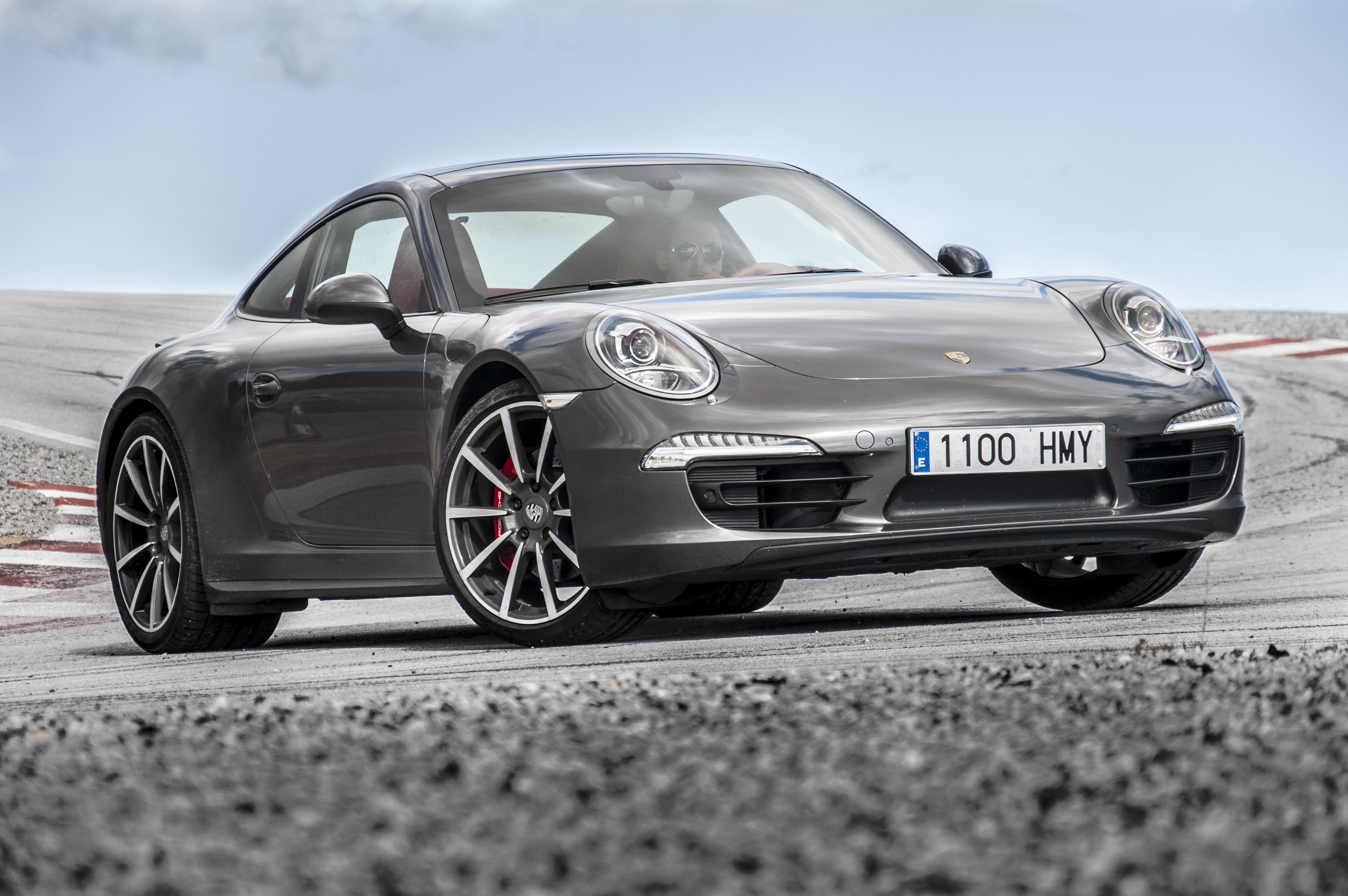
Porsche 992
"...he question that everybody wants answered is that 992 the Porsche 992 GT3 truly the greatest modern sp..."
The Porsche 911 is a famous sports car model that has been around for many years. It’s known for being fast and for its distinctive driving feel. The episode is focusing on a specific performance version and whether it’s the best modern one.
The Porsche 911 is an iconic sports car known for its rear-engine layout and long-running evolution across generations. The podcast specifically references the 992 GT3 and asks whether it’s the greatest modern version, showing how central the 911 is to enthusiast debates. That makes it a natural topic when discussing performance, feel, and modern track capability.
lightheaded
"...I don't pay attention enough to how my, uh, how I'm feeling until I'll [524.8s] start to get lightheaded before I'm consciously aware that I'm getting [528.1s] lightheaded and the only and I have to..."
If you feel lightheaded while driving, it usually means your body is overheated or you’re low on fluids. That’s a sign you should stop and cool down, not push through.
Lightheadedness during track time is often a sign of heat stress, dehydration, or low blood pressure from fluid loss. It’s a safety warning that your body is struggling to maintain normal performance.
dehydrate
"...my driving starts to get a little sloppy and I have to say, Tim, why are you driving a little sloppy? [534.1s] And it's almost always because, Oh, you should have paid attention two laps ago when you were starting to dehydrate and almost passed out."
When it’s hot, you can lose water through sweat without noticing. If you get dehydrated, your body and brain don’t work as well, so you may feel dizzy or drive less smoothly.
Dehydration happens when you lose more water (and electrolytes) than you take in, especially in hot conditions. On track, it can sneak up on you and reduce your focus and reaction time, which is why driving can start to feel “sloppy.”
Stand 21
"[603.5s] So I run these stand 21 suits and they breathe really well. [607.6s] Stand 21, that's kind of what they're known for is heat stress and, you know,"
Stand 21 makes racing suits. In this discussion, they’re praised because the material breathes well and helps with overheating.
Stand 21 is a racing apparel brand known for driver suits and gear. Here it’s specifically referenced for being breathable and targeted at reducing heat stress during hot track driving.
ride frequency
"And we can really nerd out if we want to talk about ride frequency and, and the delay, but you know, the, when you have a longer wheelbase, what it really boils"
Ride frequency is a way to describe how the car’s suspension bounces over bumps. Higher or lower “bounce rates” can make the ride feel smoother or harsher.
Ride frequency refers to how quickly the suspension and body oscillate over bumps—essentially the “spring-mass” behavior of the car. It influences comfort and how the car responds to track surface texture, and it often ties into tuning choices like spring rates and damping.

Chevrolet Camaro
"...he other cars on the straight. My buddy was in a Camaro SS one LE, for example, let's get the LT one. I ..."
The Chevrolet Camaro is a sporty car that’s built for power and quick driving. Different versions can be more or less performance-focused. The podcast mentions it as an example of what someone was driving and how it compares to other cars.
The Chevrolet Camaro is a muscle-car style sports coupe known for strong acceleration and a wide range of trims. In the podcast, it’s brought up as an example of a buddy’s car (like an SS), showing how different Camaro versions can feel on track or on the road. That context suggests the conversation is about performance differences and driving impressions.
downforce
"And, and he had downforce. Yeah. He had real downforce. You do not in the least cup car. Yeah. No, well, even that GT four, right? I mean, he's that car's got a wing on it. Okay. If we add a wing, you know, a rear wing and a front spoiler on your car, the downforce, it's like the hand of God holds you to the back."
Downforce is like the car “squeezing” itself to the road using air. The faster you go, the more it helps the tires grip the track, so you can turn harder.
Downforce is the aerodynamic force that pushes a car’s tires harder onto the track. More downforce (often from wings and splitters) increases grip, especially at speed, which can help you carry more cornering speed.
power to weight ratio
"So it's making about 275 horsepower, you know, and at 2000 pounds wet, you know, the power to weight ratio is really, really good. And that's, that's what gave you, you know, the ability to stay with that Camaro because, you know, it makes a lot of power, but it's, it's heavy as hell."
Power-to-weight ratio compares how much power a car has to how heavy it is. A higher number usually means the car accelerates and responds better.
Power-to-weight ratio is a measure of how much power the car makes relative to its mass. Higher power-to-weight generally improves acceleration and helps a lighter car keep up, even if the heavier car has strong horsepower.
wings
"Like, have you ever driven a car with wings? No, my GT four, but that's like, probably not real down."
Wings are aerodynamic parts that help press the car down onto the road. More downforce usually means better cornering grip, but it can also make the car slower at top speed because it creates drag.
“Wings” on cars are aerodynamic devices that generate downforce. On track cars, larger wings can significantly increase grip at speed, but they also add drag, which affects top speed and fuel/heat management.
iRacing
"they use iRacing, but they also have their own software that was developed by the formula one drivers."
iRacing is a racing game/simulator that many real drivers use to practice. It’s known for being detailed and competitive.
iRacing is a widely used online racing simulator platform with official car/track content. Drivers use it for practice and competition, and it’s often paired with realistic hardware like hydraulic pedals.
track day
"And I'm sure all the listeners, you're motivating them all to actually get out and drive their cars on the track. There's a lot of, oh, uh, we are publishing an article as promised..."
A track day is when you drive your car on a real race track, but in a controlled event. It’s usually safer and more educational than driving on public roads.
A track day is an organized event where drivers take their own street cars (or track-prepped cars) to a closed circuit for timed or coached driving. It’s a common way to learn car control safely, with less traffic and more structured rules than public roads.

Ferrari Luce
"...SUV, the electric thing. They're coming out with Luce, Luce. Yeah, there you go."
“Luce” is mentioned as a new Ferrari model that’s expected to be an electric SUV. The episode is talking about it as something that’s coming in the future. It’s not being discussed as a car you can already buy and own today.
The podcast mentions “Luce” as an upcoming Ferrari model, described in the context of an electric SUV. That makes it a topic about where Ferrari is headed with new vehicle types and powertrains. Since it’s referenced as something “they’re coming out with,” the discussion is likely about anticipation rather than ownership details.
keeping your eyes on the road
"And so I think for a lot, you know, for a lot of reasons, you know, keeping your, whether it's keeping your eyes on the road or just, you know, not using extra bandwidth from the driver, right?"
They mean you should keep your focus on driving. If a car makes you dig through menus to find controls, it pulls your attention away from the road.
The speaker is talking about driver attention—how easy it is to glance away from the road when controls are buried in screens and menus. On-track and in spirited driving, reducing distractions can improve safety and consistency.

Hyundai Ioniq
"And, and so, you know, you look at the Hyundai IONIQ 5N, you know, they've got the simulated dual clutch shifts and they've really programmed that."
The Hyundai IONIQ 5N is the “sporty” version of the IONIQ 5. It’s designed to feel more exciting to drive, and the speaker mentions it mimics the feel of a dual-clutch transmission.
The Hyundai IONIQ 5N is a performance-focused version of the IONIQ 5, tuned for enthusiasts rather than just commuting. In this segment, it’s highlighted for using simulated dual-clutch-style shift behavior to make the car feel more like a sports car.
sticker
"Like a hundred grand. Looking at used prices. I don't know that, you know, but I'm going to guess, you know, a 10, 20 grand less than, than, than a sticker."
“Sticker” means the original price the car was supposed to sell for when it was new. Used cars often cost less than that.
“Sticker” refers to the car’s MSRP (manufacturer’s suggested retail price). The discussion is about how used prices can be meaningfully lower than the original MSRP.
torque
"So yeah, I mean, people that want more torque, you know, that's the biggest difference with this Grandsport, this new engine, it's a torque monster."
Torque is the engine’s “pulling power.” More torque usually means the car feels easier to drive fast because it accelerates strongly without needing to rev as high.
Torque is the twisting force the engine produces, and it strongly affects how quickly a car accelerates from low speeds. The speaker frames torque as the biggest difference-maker for drivability and ease of making progress on track.
keep the revs up
"And, you know, driving a car with more torque, you know, it's just easier to do the Z06, like, you know, when I went for that ride yesterday, it's clear. You've got to keep the revs up, you know, in order for it to make the power."
“Keep the revs up” means you have to rev higher to get the engine to make power. Some engines don’t feel strong until you’re spinning them faster.
“Keeping the revs up” means operating the engine at higher RPM to stay in the power band. The speaker contrasts torque-rich engines (easier to drive) with higher-revving engines that require more RPM to produce the same usable power.
sim racing
"I've probably had 10 or 12 different cars on track. I have never driven an automatic car on track, never once. And and I can imagine it would be awesome. I've done some sim racing and, you know, I agree, Tim, if you've got a two,"
Sim racing is practicing in a video game setup with a steering wheel and pedals. It can teach you how to brake and shift without risking a real car.
Sim racing is using a racing simulator (software + wheel/pedals) to practice driving techniques and learn car behavior. It can help drivers understand braking points, gear selection, and throttle control before going to a real track.
Amelia Island
"Well, that and the auctions that happened in Amelia Island."
Amelia Island is a famous car-collector event in the U.S. Auctions there are a big signal for how collectible cars are doing.
Amelia Island is a major U.S. collector-car event known for auctions and dealer/collector activity. When people reference auctions “in Amelia Island,” they’re usually talking about how high-end cars perform in the collector market.
analog versus digital
"Um, so I'm curious with you guys, we were talking before about analog versus digital. What, what effect will people's lives being, uh, taken over?"
They’re talking about the difference between “old-school” stuff you can touch and feel, versus “modern” stuff that’s mostly digital. The idea is that people might start craving more physical, hands-on experiences again.
The discussion contrasts analog experiences (like vinyl records) with digital ones (streaming, digital media). In automotive terms, it often comes up as a preference for physical controls and tactile feedback versus fully digital interfaces.
listening to vinyl
"Like, I mean, I think she knew talks about listening to vinyl. Well, are the kids going to follow that trend?"
Vinyl records are an analog music format, and the speaker uses them as an example of a broader trend: people seeking “analog” experiences for nostalgia and perceived authenticity. This can mirror how enthusiasts value analog driving feel, physical gauges, and mechanical simplicity.
dropping the needle into the groove
"They want to be, you know, they want to reconnect with things. They, they, they want to drop, you know, the needle in, into the groove."
This is a vinyl-specific phrase describing how a turntable stylus (“needle”) contacts the record’s grooves. It’s used to emphasize the tactile, ritual-like aspect of analog hobbies—something that parallels why drivers often value physical, mechanical engagement in cars.
British racing green
"So there's two choices. I'd have the black with red or the British race in green. Now I'm biased cause Julie and I have a black with red ourselves though."
British Racing Green is a traditional deep green color linked with British racing history. People choose it because it looks “classic” and race-inspired.
British Racing Green is a classic dark green paint color strongly associated with British motorsport and heritage. In enthusiast circles, it’s often used to evoke period-correct styling on sports cars and race-inspired editions.
roadsters
"...I think roadsters are, are, are an important class. [3511.1s] I think it is really the classic sports car, right?"
A roadster is a sporty car you can enjoy with the top down. The speaker is basically saying roadsters are one of the classic “real sports car” types.
A roadster is an open-top, two-seat sports car (typically with a soft top or no fixed roof) that emphasizes driving feel and a more connected experience. In this segment, the speaker frames roadsters as a “classic sports car” category and uses that to justify choosing the S2000 over other options.
manual transmission
"...when I think of GT three, I think of two things... I think of manual transmission."
A manual transmission means you shift gears yourself using a clutch pedal and a stick. People like it because it gives you more control over how the car behaves, especially when driving hard.
A manual transmission lets the driver select gears using a clutch and gear lever, which typically gives more direct control over engine speed and traction behavior. In track driving discussions, manual setups are often valued for driver engagement and for tailoring gear selection to corner exits.
track oriented
"[4093.2s] I mean, there's no, no other option naturally aspirated, you know, very [4100.1s] track oriented, but yet comfortable enough to drive on the road"
“Track oriented” describes cars tuned for performance driving—often with firmer suspension, better brakes, and tires/wheels suited to high grip and repeated use. The key idea is that the car is set up to feel stable and predictable under hard cornering.
Request an Explanation
Heard something you'd like explained? We'll add it to this episode.
Sign in to request explanations for terms you heard.
Want to learn more?
Browse our glossary for plain-English explanations of automotive terms, jargon, and concepts.
Help improve this episode
See something that's not quite right? Our annotations are AI-generated and can sometimes miss the mark. Click the flag icon on any annotation to suggest a correction.