
Fixed Ops Friday w/ Bowers, McIsaac, & Sabino | Daily Dealer Live
About this episode
Fixed Ops Friday dives into what’s squeezing dealer fixed ops and how operators are responding. Catalytic converter theft is escalating as “rhodium has more than doubled…to around 11k per ounce,” and hybrid converters can fetch “up to 1400 bucks.” The conversation then shifts to recruiting and retention—how groups sell “an easier path” that may be “a lie”—and to practical fixed-ops execution: consistent video multipoint inspections, mobile service, and protecting gross profit amid volume swings. Wrap-up includes parts/service workflow, inventory health, and AI VIN scrubbing.
return on investment
"it doesn't do those three things then it's on the chopping block it's in return on investment discussion"
Return on investment (ROI) is a way to measure if something you spend money on is actually worth it. It compares what you gain to what you pay.
Return on investment (ROI) is a metric for whether an activity produces enough benefit to justify its cost. In dealer operations, it’s often used to judge whether marketing or staffing changes are actually paying off.
MPI
"Jim Sabino from all American Ford. He's back mobile service video MPI the retention moves that actually stick"
MPI typically means a multi-point inspection. It’s a checklist-style inspection that helps a shop find issues and recommend repairs.
MPI usually refers to a multi-point inspection—an inspection process used by dealers to check vehicle condition and identify needed work. In fixed-ops (service) discussions, it’s often tied to generating service revenue and building customer trust.
catalytic converters
"again lock up those Silverados you don't want to your catalytic converters to go the wrong way there."
A catalytic converter is a part under your car that helps clean up exhaust. Some thieves steal them because the inside has valuable metals.
A catalytic converter is an emissions-control device that helps convert harmful exhaust gases into less harmful ones. Because it contains valuable metals, it’s become a target for theft, especially on popular trucks and SUVs where it’s easier to access underneath the vehicle.
rhodium
"rhodium has more than doubled over the past year to around 11k per ounce"
Rhodium is a rare metal inside the catalytic converter. Because it’s valuable, higher rhodium prices can make converter theft more profitable.
Rhodium is a rare precious metal used in catalytic converters to help drive the chemical reactions that reduce pollutants. Its price swings can directly affect how valuable converters are to thieves.
precious metal values
"Precious metal values rhodium has more than doubled over the past year to around 11k per ounce"
Catalytic converters contain rare metals that help them clean exhaust. If the price of those metals goes up, thieves can make more money stealing converters.
Precious metals like rhodium are used inside catalytic converters to make them work. When precious metal prices rise, the scrap value of converters rises too, increasing theft incentives.

Dodge Ram
"...rd F 150 the Hyundai Tucson the Ford Explorer the Ram 2500 and the Chevy Silverado largely trucks and S..."
The Dodge Ram is a large pickup truck designed to carry heavy loads and tow trailers. People buy it for work tasks like hauling and towing, but it can also be used like a regular truck for everyday driving. It shows up often in dealership talk because it’s a major truck option for many shoppers.
The Dodge Ram is a full-size pickup truck known for towing and hauling capability, making it a frequent topic in truck-focused dealership discussions. It’s significant because many buyers choose it for work use as well as personal transportation, so inventory and pricing often matter a lot. In the podcast context, it’s mentioned alongside other trucks, likely as part of the broader “truck lineup” being discussed.

Ford Explorer
"...we got the Ford F 150 the Hyundai Tucson the Ford Explorer the Ram 2500 and the Chevy Silverado largely truc..."
The Ford Explorer is a family-sized SUV made for carrying people and luggage. It’s popular because it’s practical for daily driving and road trips. Dealerships often talk about it because lots of buyers consider it when they want an SUV.
The Ford Explorer is a mid-size SUV built for families and everyday driving, with room for passengers and cargo. It’s commonly discussed because it sits in a high-volume segment and is often compared based on comfort, practicality, and available powertrains. In a dealership-focused conversation, it may come up as a mainstream option that many shoppers cross-shop.

Ford F150
"The most targeted vehicles. All right, we got the Ford F 150 the Hyundai Tucson the Ford Explorer the Ram 2500 and the Chevy Silverado"
The Ford F-150 is a popular pickup truck. The episode says it’s a common target for catalytic converter theft because it’s easier for thieves to reach the part underneath.
The Ford F-150 is a high-volume pickup, and in this segment it’s called out as one of the most targeted vehicles for catalytic converter theft. The host links the targeting to easier access underneath taller trucks.
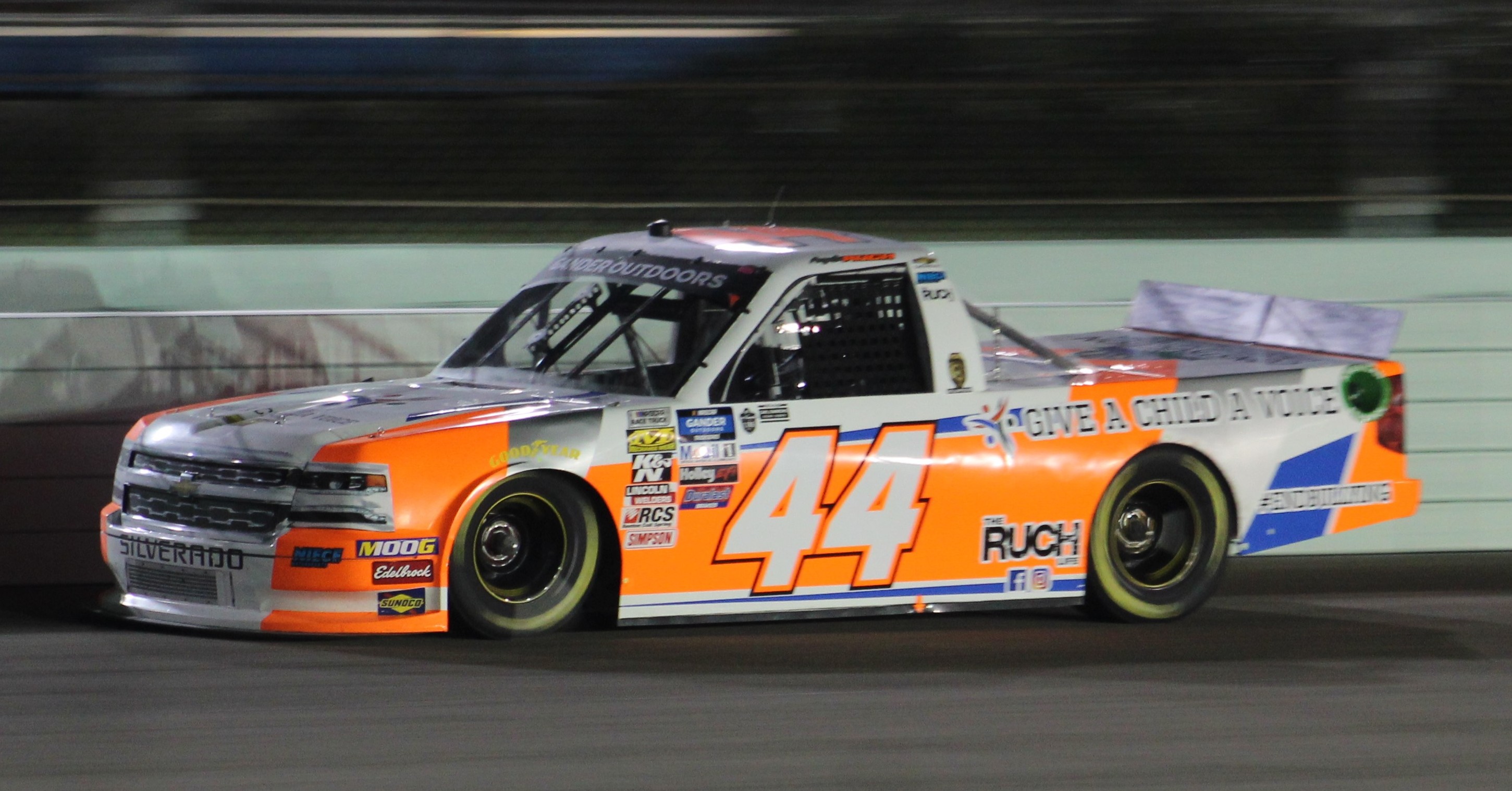
Chevy Silverado
"can't wait when the day as an aside we dealers have to start locking a Chevy Silverado up in the service department"
The Chevrolet Silverado is a popular pickup. The host says dealers should lock them up because thieves can more easily reach and steal the catalytic converter underneath.
The Chevrolet Silverado is a tall, widely sold pickup, and the segment specifically recommends dealers lock up Silverados in the service department. The reason given is to prevent catalytic converter theft, which is easier when the converter is accessible from below.
automotive margin forecast
"after the automaker cut its full year automotive margin forecast to one to 3% that's down from four to six."
A margin forecast is a company’s prediction of how profitable it will be. If that forecast gets worse, it can mean less money for dealers to work with on discounts and deals.
An automotive margin forecast is a company’s outlook for how much profit it expects to make per vehicle or per unit of revenue. When OEMs cut these forecasts, dealers often feel it downstream through tighter incentives and pricing pressure.
incentive spending
"typically flows downstream into pricing posture incentive spending and allocation decisions"
Incentive spending is money automakers put toward discounts or special offers. If it changes, the size and availability of dealer deals can change too.
Incentive spending refers to manufacturer-funded discounts, rebates, and other promotions used to move inventory. If OEM margins are under pressure, incentive spending can change, affecting what deals dealers can offer.
allocation
"pricing posture incentive spending and allocation decisions"
Allocation is how car companies decide which dealers get certain cars. If allocation gets tighter, some dealers may not get the popular models.
Allocation is how an automaker distributes limited production (or certain high-demand models) to specific dealers. When OEMs face margin pressure, allocation decisions can shift, changing which vehicles dealers can reliably sell.
days on market
"for Toyota and Lexus dealers that's showing up directly in days on market inventory discipline and pricing power."
Days on market is how many days a car stays listed before someone buys it. Fewer days usually means the cars are selling faster.
Days on market is how long a vehicle sits unsold before it’s purchased. Lower days on market usually indicate stronger demand and better inventory discipline, which can support pricing power for dealers.
CarMax
"CarMax reported first quarter fiscal 27 results this week showing a business still growing on volume while managing profitability pressure."
CarMax is a big company that sells used cars. They’re sharing financial results that show the used-car business is still growing, but making less profit per car.
CarMax is a large used-vehicle retailer that reports quarterly results on sales volume and profitability. In this segment, it’s used as an example of how the used-car market is growing while margins get squeezed.
gross profit per unit
"The pressure point is gross profit per unit which fell 230 bucks year over year to 2177 on the retail side"
Gross profit per unit is how much money is made on each car sale. You can sell more cars but still make less profit per car if pricing gets competitive.
Gross profit per unit is the profit earned on each vehicle sold, before operating expenses. Even if sales volume rises, a drop in gross profit per unit can indicate tighter pricing or higher costs.
Mannheim auction
"He was at the Mannheim auction today. He said got absolutely nothing today."
The Mannheim auction is a place where dealers and wholesalers buy cars in bulk. People bid on vehicles there to decide what they’re worth.
The Mannheim auction refers to a major vehicle auction market associated with Mannheim, a well-known hub for wholesale vehicle buying in the U.S. Dealers and wholesalers use auctions to source inventory, and bids there can set market expectations.
catalytic converter theft
"Welcome to the automotive industry. Who would have thought catalytic converters? You know, the big pain with catalytic converter theft is like the damage it does to the vehicle taking them out."
A catalytic converter is part of the car’s exhaust system that helps clean the fumes. If someone steals it, the exhaust system is left broken, and the car can be expensive to fix.
A catalytic converter is an emissions-control device that helps convert harmful exhaust gases into less harmful ones. When thieves steal it, they often cut it out of the exhaust, which can leave the car undrivable and can trigger additional damage and repair costs.
car dealerships they bought weren't performing well
"There's a group that bought 11 car dealerships in a market that I'm in. And the 11 car dealerships they bought weren't performing well."
When a dealership “isn’t performing well,” it generally means it’s not selling enough cars or running efficiently. The speaker is saying the group bought underperforming stores and planned to improve them.
“Not performing well” in dealership terms usually means weak sales, poor customer retention, or inefficient operations compared with targets. The speaker frames this as the reason the acquiring group can profit by changing staffing and management.
recruiting spree
"And then this particular group, you know, goes on a recruiting spree through the state, through my stores."
A recruiting spree means a company quickly hires a lot of people in a short time. Here, it’s describing how a dealership group staffed its new stores fast, which can influence how well they run.
In dealership operations, a recruiting spree refers to aggressively hiring staff from other stores or competitors. In this context, it’s used to describe how an out-of-town dealership group quickly staffed its new acquisitions, which can affect performance and culture.
cycle times
"What we're saying to them is our big value we're trying to help is their cycle times. At the end of the day, the insurance companies are starting to really come down on cycle times with a lot of body shop customers specifically."
Cycle time is basically how long a shop takes to get a job done. If it’s faster, customers wait less and the shop can handle more work.
In a body shop or mechanical shop context, cycle time is how long it takes to complete a job from start to finish. Shorter cycle times can reduce delays for customers and help shops keep work moving, which is why insurance companies often pressure vendors on this metric.
next-day turnaround
"And that's done either by quick parts delivery, quick turnaround, [1645.4s] a next-day turnaround, and quite frankly, phone help."
Turnaround time is how quickly something gets done. “Next-day turnaround” means you’re aiming to get the parts or service back to the shop by the next day.
Turnaround time is the time between receiving a request (like parts needed for a repair) and delivering the result. In parts supply, “next-day turnaround” means the shop can get the needed parts quickly enough to keep repairs moving without long downtime.
inventory turn
"So you've talked last time about inventory turn within your OEM lines as a focus area. What is a poorly turning in parts inventory actually cost a dealership that most operators,"
Inventory turn is a way to measure how fast a dealer sells its parts. If parts sit too long, it ties up money and can cost the dealership.
Inventory turn (often called inventory turnover) measures how quickly a dealership sells through its parts inventory and replaces it. Higher turns generally mean less cash tied up sitting on shelves, while low turns can signal slow-moving stock that costs money to store and manage.
OEM lines
"So you've talked last time about inventory turn within your OEM lines as a focus area. What is a poorly turning in parts inventory actually cost a dealership that most operators,"
OEM lines are the official parts for specific car brands—typically the same kinds of parts the manufacturer designs for the vehicles. Dealers track these parts separately from other aftermarket items.
OEM lines refers to parts supplied for specific vehicle brands by (or for) the original equipment manufacturer. In dealership parts operations, focusing on OEM lines means managing inventory for the factory-approved part catalog for those brands.
vinscrubbing AI
"Last time you were on, you talked vinscrubbing AI. Talk to us about how that's going."
A VIN is a unique code for a specific car. “VIN scrubbing” means fixing up and verifying that code so computer systems can use it correctly, like for finding the right parts or matching the car to the right information.
“VIN scrubbing” refers to cleaning and validating vehicle identification number (VIN) data so it’s consistent and usable across systems. VINs are 17-character codes that identify a specific vehicle, and scrubbing helps remove errors, mismatches, or formatting issues before using the VIN for inventory, parts lookup, or pricing.
availability
"Here's the part. What's the availability?"
Here “availability” means whether the part can actually be gotten and delivered soon enough. It’s not just whether the part exists—it’s whether it’s in stock or can be ordered quickly for that exact car.
In dealer and parts contexts, “availability” means whether a specific part can be sourced and delivered in a required timeframe. It often depends on inventory on hand, supplier lead times, and whether the part is compatible with the vehicle’s exact VIN configuration.
margin pressure
"you continually bring up margin pressure, wholesale competition, inefficiencies, all that, what would your advice be to a smaller dealer group?"
Margin pressure means the dealership is making less profit than it used to. Competition and discounting can force prices down, so the dealer has less money left over.
“Margin pressure” is when a dealership’s profit per vehicle or per service job gets squeezed. In this context, it’s driven by things like wholesale competition and eroding discounts, which reduce how much margin the dealer can keep.
wholesale competition
"you continually bring up margin pressure, wholesale competition, inefficiencies, all that, what would your advice be to a smaller dealer group?"
Wholesale competition means dealers are competing more for cars and pricing before they sell them to customers. That competition can make it harder to keep profit on each sale.
“Wholesale competition” refers to pressure in the market for vehicles at the wholesale level—dealers competing for supply and pricing before retail sales. When wholesale competition increases, dealers often have less room to protect their margins on the front end.
inefficiencies
"you continually bring up margin pressure, wholesale competition, inefficiencies, all that, what would your advice be to a smaller dealer group?"
Inefficiencies are basically wasted effort—doing things in a way that costs more time or money than it should. In a dealership, that can hurt profits because you’re spending more to get the same results.
“Inefficiencies” here means wasted time, labor, or process steps that increase costs without improving outcomes. In fixed-ops (service/parts) operations, inefficiencies can show up as poor scheduling, excessive travel, or under-optimized staffing.
two problems
"If you're going too far, that has two problems. One, there's obviously a cost to that if you're not optimizing your trucks and your personnel, quite frankly."
The host frames “going too far” as creating two separate problems: (1) higher costs from not optimizing trucks and personnel, and (2) the opportunity cost of losing time that could be used for closer, more frequent customer handling. It’s an operations tradeoff between distance and service intensity.
optimizing your trucks and your personnel
"One, there's obviously a cost to that if you're not optimizing your trucks and your personnel, quite frankly."
This means using your delivery trucks and staff in the most efficient way—so you’re not driving extra distance or wasting labor time. The goal is to lower the cost of each delivery.
“Optimizing your trucks and your personnel” means scheduling and routing delivery resources so they’re used efficiently—minimizing dead time, unnecessary distance, and labor waste. In parts logistics, better optimization can reduce per-delivery cost and protect margin.
backend discounts
"But the way that they're taking, the way that they're taking, the backend discounts have eroded, there goes margin erosion."
Backend discounts are discounts that come later, usually based on how much you buy or how you perform. If those discounts shrink, the dealership keeps less profit.
“Backend discounts” are price concessions that typically arrive after the fact (often tied to volume, performance, or program participation). The host says these discounts have eroded, which contributes to “margin erosion” for dealers.
margin erosion
"the backend discounts have eroded, there goes margin erosion. So we need to start to cut string on the front end."
Margin erosion means the dealership’s profit per sale is shrinking over time. In this case, it’s happening because discounts and pricing power have changed.
“Margin erosion” is the gradual reduction of profit margins over time due to pricing pressure, discount changes, or higher operating costs. Here, it’s tied to eroded backend discounts and the need to adjust front-end strategy.
cut string on the front end
"So we need to start to cut string on the front end."
This is a metaphor for fixing things early so they don’t cost you later. The idea is to tighten up the dealership’s front-end approach to protect profit.
“Cut string on the front end” is a metaphor for tightening up early-stage processes—before costs pile up—so the dealership can protect profitability. In context, it follows discussion of margin erosion and the need to reduce unnecessary front-end business volume.
Ford Motor Company
"Ford Motor Company was the highest recall manufacturer out there, which to me was not a bad thing [2478.8s] because it was a great opportunity for the service department."
Ford Motor Company is the company that makes Ford cars. In this segment, they’re talking about how often Ford cars needed recalls and what that meant for dealership service departments.
Ford Motor Company is the automaker being discussed in the context of recall volume and how it affects dealership service work. The hosts are using Ford’s recall ranking to explain why service departments saw a lot of recall appointments.
service department
"because it was a great opportunity for the service department. [2481.2s] So we saw so many vehicles through the service drive just to complete open recalls."
The service department is the part of a dealership where they work on cars—like repairs and scheduled maintenance. Here, they’re saying recalls bring more cars into that shop.
A service department is the dealership’s workshop area where customers bring vehicles for maintenance and repairs, including recall work. In this segment, it’s framed as a business opportunity because recall volume drives traffic to the shop.
open recalls
"So we saw so many vehicles through the service drive just to complete open recalls. [2486.5s] And I'm going to tell you, a lot of the Ford owners weren't ever saying,"
An “open recall” is a recall that still needs to be fixed on a particular car. The dealership looks for those cars and completes the required repair.
“Open recalls” are recall campaigns that have been issued but haven’t been completed on a specific vehicle yet. Dealerships track them so they can schedule the required inspection or repair before the issue becomes a safety concern.
mobile service truck
"69% of all recalls can be performed in a mobile service truck. [2509.6s] So that's a huge advantage for the mobile service operators out there across the country."
A mobile service truck is a service vehicle that brings the tools and tech to where the car is. In this segment, they’re saying a lot of recall work can be done that way.
A mobile service truck is a van/truck equipped to perform certain vehicle service tasks at the customer’s location or at a dealership lot. The hosts are highlighting that many recalls can be completed without the car needing to be towed or fully brought into the shop.
over-the-air updates
"And now, Ford, like all the other manufacturers, are leaning hard into over-the-air updates, [2518.05s] "
Over-the-air updates are software updates that get sent to the car wirelessly. Instead of bringing the car in for some fixes, the car can sometimes update itself.
Over-the-air (OTA) updates are software changes delivered wirelessly to a vehicle, without visiting a dealership. The segment suggests manufacturers like Ford are increasingly using OTA to address issues, which can reduce the amount of physical recall service work.
mobile appointment
"So that was a great conversation last time when we talked about how you were scheduling that first-time customer for a mobile appointment right at vehicle delivery."
It means the mechanic comes to you instead of you going to the dealership. The goal is to make the first service visit easier so customers keep coming back.
A mobile appointment is when the service visit happens at the customer’s location instead of the customer driving to the dealership. In this segment, it’s tied to vehicle delivery and then used to start a service relationship immediately.
converting those first-time customers into repeat mobile customers
"And what have you learned about converting those first-time customers into repeat mobile customers in a bid for retention, Jim? ... So the retention is huge."
They’re talking about turning a first visit into a habit. After the first mobile service, the goal is that customers keep booking again—and tell other people too.
This describes a customer lifecycle strategy: turning a one-time service visit into ongoing repeat business. The segment frames it as both retention and referral growth after the first mobile service appointment.
mobile service experience
"So we introduce them to the mobile service experience on their first oil change. And then all of a sudden, wow, this is great. It came to my driveway."
It’s the whole “service at your place” process. In this case, they start it with the first oil change, and it’s designed to be simple—like leaving the key and getting a text when it’s done.
The mobile service experience refers to the workflow of performing service at the customer’s home or workplace, including pickup/drop-off-like convenience without the customer coming in. Here, it’s described as starting with the customer’s first oil change and then becoming a repeatable routine.
oil change
"So we introduce them to the mobile service experience on their first oil change. And then all of a sudden, wow, this is great."
An oil change is when the car’s engine oil is replaced. It helps the engine run smoothly, and here it’s the first service they do at your driveway to make you more likely to come back.
An oil change is scheduled maintenance where the engine oil is replaced to keep lubrication and cooling performance within spec. In the transcript, it’s used as the first touchpoint to transition customers into repeat mobile service.
repeat and referral
"The repeat and referral from the initial first service of mobile experience is it come back ratios over 90%."
Repeat means you book service again later. Referral means you recommend the service to friends or family—both are being driven by the first mobile visit.
Repeat and referral are two ways service businesses grow: repeat means customers come back for future maintenance, and referral means they recommend the service to others. The speaker ties both to the initial mobile service visit.
mobile friendly
"Not everybody qualifies for it because some of the repairs aren't mobile friendly. [2667.9s] So we have to bring them in."
“Mobile friendly” means the repair can be done without bringing the car into the shop—like at your home or workplace. Some repairs still require the dealership service department.
“Mobile friendly” here means repairs that can be performed at the customer’s location (or via a mobile service setup) rather than requiring the vehicle to be brought into the dealership. The speaker says not everyone qualifies because some repairs can’t be done this way.
pick up and delivery
"But it gives other options though, pick up and delivery. [2673.2s] We could also extend that as a very convenient option."
Pick up and delivery means the dealership comes to get your car, brings it in for service, and then returns it to you. It’s a convenience option when the repair can’t be done on-site.
Pick up and delivery is a service model where the dealership arranges transportation for the customer’s vehicle to the service department and back. The segment describes it as an alternative when repairs can’t be handled as mobile-friendly.
OTA
"When you mentioned some of the service recalls with Ford being over the air updates, OTA, [2685.7s] is that OTA direct to the vehicle?"
OTA is short for “over the air.” It means the car receives software updates wirelessly, like a phone update, instead of needing a mechanic to install everything manually.
OTA stands for “over the air,” referring to wireless communication between the automaker and the vehicle to deliver software changes. Here, the speaker clarifies that Ford’s OTA is delivered directly to the vehicle from Ford Motor Company.
internet bandwidth
"across our stores and across dealerships across the country, [2724.7s] there's increasing demands in dealerships for internet bandwidth."
Internet bandwidth is how much data a network can handle at once. Dealerships may need more of it when they’re running connected features and software updates for cars.
Internet bandwidth is the amount of data capacity available over a network connection. The segment ties it to dealership fixed operations needs, noting increasing demand for bandwidth to support connected services like OTA updates.
internet speed
"[2838.2s] And the technicians aren't as frustrated as they were because it's time for them to slow. [2843.9s] I actually think internet speed in 2026 can be as big a pressure point and a frustration [2848.3s] for technicians that potentially slows them down and what they can flag."
In modern service departments, internet speed affects access to diagnostic tools, repair information, and communication systems used during troubleshooting. If connectivity is slow, technicians can’t quickly look up procedures or updates, which increases frustration and slows the bay workflow.
flat rate technicians
"[2853.5s] That's as big an issue as air conditioning in a shop or anything else, I think, potentially. [2857.9s] 100% yes, it can. [2859.2s] Flat rate technicians don't like a slow internet at all at all."
In a flat-rate system, mechanics get paid a fixed amount for each type of repair. If the shop is slow or things take longer than expected, it can feel frustrating because their pay depends on getting through jobs.
“Flat rate” is a pay system where technicians are paid a set amount per job based on a published time allowance, not on how long the repair actually takes. If the shop’s workflow slows down, technicians can feel pressure because their pay is tied to completing jobs efficiently.
NADA
"[2863.2s] So one of the conversation we recently had on this show was with an owner of a dealer [2869.2s] group in Wisconsin who's working with NADA on the technician recruiting issue. [2873.7s] 77,000 technicians are going to be lost here over the next period of time."
NADA is a big U.S. group that represents car dealerships. Here, they’re working on getting more technicians to fill staffing needs.
NADA is the National Automobile Dealers Association, a major U.S. dealer trade group. In this context, they’re involved in technician recruiting efforts, highlighting how dealer organizations influence workforce planning.
technician recruiting issue
"[2863.2s] So one of the conversation we recently had on this show was with an owner of a dealer [2869.2s] group in Wisconsin who's working with NADA on the technician recruiting issue. [2873.7s] 77,000 technicians are going to be lost here over the next period of time."
This is about the difficulty of finding enough car mechanics to work at dealerships. The episode is saying the industry may not have enough people coming in to replace those who are leaving.
This refers to the industry-wide challenge of attracting and hiring enough qualified technicians to replace retiring or leaving workers. The discussion frames it as a workforce pipeline problem that dealerships and trade groups are trying to solve.
Request an Explanation
Heard something you'd like explained? We'll add it to this episode.
Sign in to request explanations for terms you heard.
Want to learn more?
Browse our glossary for plain-English explanations of automotive terms, jargon, and concepts.
Help improve this episode
See something that's not quite right? Our annotations are AI-generated and can sometimes miss the mark. Click the flag icon on any annotation to suggest a correction.