The FTC is a government agency that watches for misleading advertising. If they say some dealer groups are doing it wrong, it means their ads might confuse customers or make claims they can’t back up.
Some dealerships are using AI to pick up service phone calls automatically. It can answer common questions and schedule things, but the big concern is how it changes the role of the people who used to handle those calls.
This is a business-operations concept: the idea that success isn’t limited by knowing what to do, but by executing it consistently. In dealership contexts, “execution” often refers to process discipline—how quickly leads are followed up, how appointments are handled, and how teams implement tools and scripts.
FullPath is software that helps organize car shoppers and customers. It tries to merge messy, scattered dealer records into one clean profile so marketing and follow-ups work better.
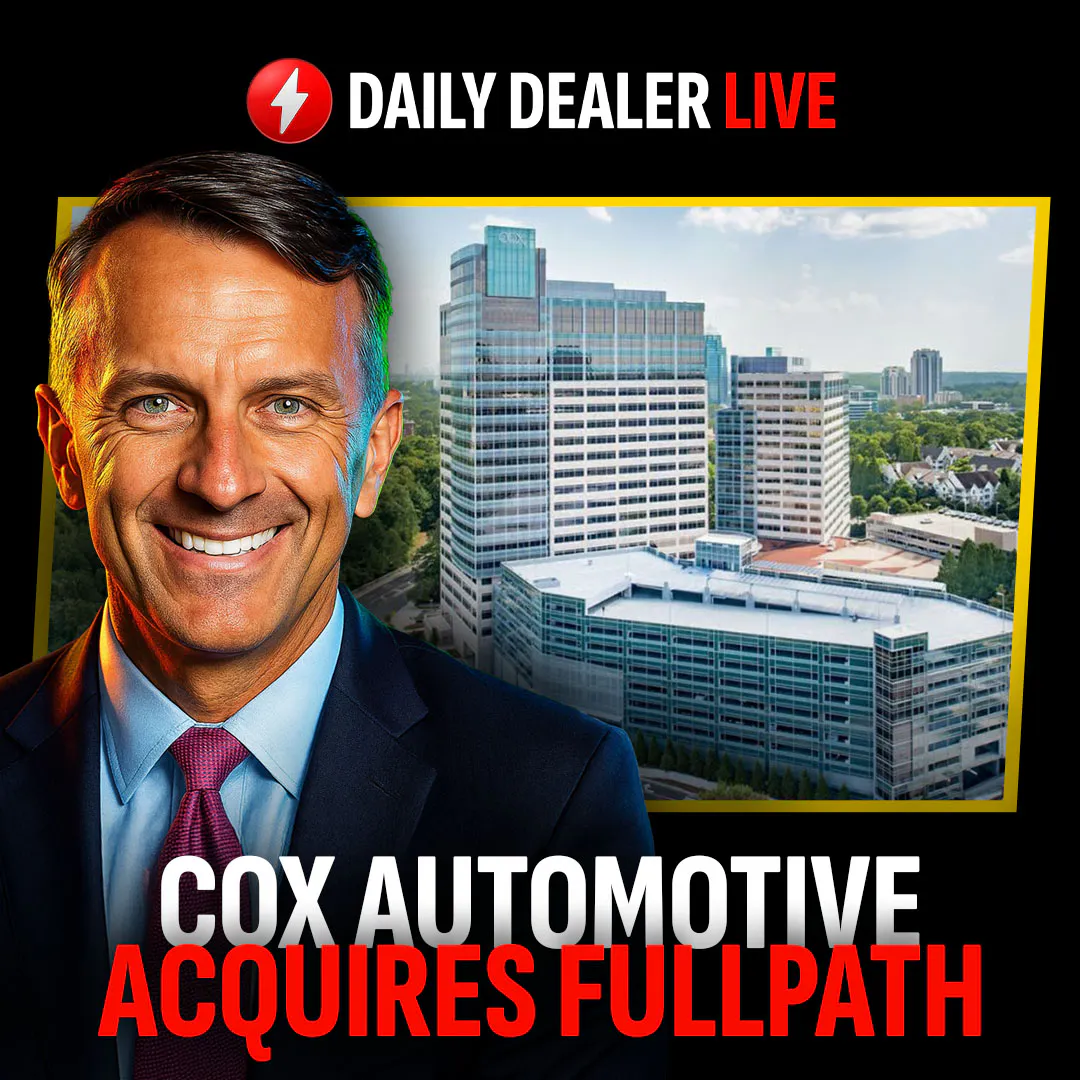
Cox Automotive is a big company in the car industry that helps dealers and shoppers with tools and data. Here, they’re buying another company to make dealer customer information work better.
CRM (customer relationship management) and DMS (dealer management system) data can become fragmented across systems and teams. When that happens, you get duplicate customer profiles and disconnected histories, which then causes AI tools to underperform because they’re trained or run on incomplete information.
Instead of having customer information scattered in multiple places, the platform tries to combine it into one complete record. That helps dealers know who the customer is and what they’ve done so far, making follow-up and marketing more effective.
Purchase journey tracking refers to monitoring where a shopper is in the buying process over time. When customer profiles are consolidated, dealers can better time marketing and lead follow-ups based on actual shopper behavior rather than incomplete records.
Kelly Blue Book is a well-known car information brand. Here, it’s being used as a data source to understand what car shoppers are doing, so dealers can follow up more effectively.
AutoTrader is a car-shopping website. In this context, the show is saying Cox is connecting shopper activity from sites like AutoTrader into dealer customer profiles.
dealer.com is another car-dealer-related platform being used for shopper data. The idea is to combine information from multiple places so dealers can market and follow up with better context.
JD Power and Global Data are research/forecasting organizations. They’re predicting how many cars will be sold in retail during April, which can influence how dealers plan for the month.
Concept
year-over-year comparison distortion from tariff-driven buying surge
Sometimes the “compare to last year” numbers don’t tell the whole story. If last year had a special spike in buying (like due to tariffs), then this year’s comparison can look worse even if demand is actually holding up.
Edmunds is a company that tracks car pricing and market trends. They published the Q1 data the hosts are using to explain how common negative equity is right now.
Negative equity means you owe more on your current car than it’s worth. When you trade it in, that “extra” balance usually gets added to the loan for the next car.
A 72-month loan is a longer payment plan. It usually makes the monthly payment smaller, but you often pay more overall because you’re paying interest for longer.
An 84-month loan is a very long time to pay off a car. It can reduce the monthly payment, but you usually end up paying more interest over the life of the loan.
During the pandemic, cars were often overpriced because there weren’t enough vehicles available. If you paid too much back then, your trade-in can be worth less later, creating negative equity.
Brandon Steven Motors is the company buying a bunch of dealerships in this deal. The hosts describe it as one of the biggest acquisitions they’ve seen this year.
Lincoln is one of the brands included in the dealership deal. Luxury brands often have different customer expectations and service needs than mainstream brands.
Toyota is one of the brands sold by the dealerships in this portfolio. Brand mix can influence how busy the stores are and what customers they attract.
Buy-sell activity in this context means dealership ownership changes—one group purchasing another group’s stores. These transactions can be tracked to understand consolidation trends and how dealer groups are expanding their footprint.
The CDG Tracker is mentioned as a place to look up dealership buying and selling news. It helps you follow which dealership groups are acquiring others.
The FTC is a U.S. government agency that protects consumers. When it sends a letter to car dealers, it’s basically warning that certain business practices may be a problem and could lead to enforcement later.
NADA is a national group that represents car dealers. If they’re involved in a call about the FTC, it usually means dealers are trying to understand what the rules mean for their businesses.
Even though each state has its own rules, a federal agency like the FTC can still step in. That’s why dealers take FTC warnings seriously—because there can be real consequences.
A processing fee is an extra charge for dealer paperwork or preparation. In this discussion, the important part is that regulators want these fees included in what you see in the ad, not tacked on later.
The idea here is simple: if a dealer is going to charge you extra fees, those fees should be shown in the price you see in the ad. That way, you can compare deals without guessing what will be added later.
Out-the-door price is basically the total amount you’ll pay to buy the car, including the usual required charges. This segment is saying customers should be able to figure that out before they show up.
The NAD dealer academy is training for people who work at car dealerships. In this segment, the host is saying it taught him that customers spend a lot of time researching online before they ever talk to a dealer.
This means making it faster and simpler to buy a car. The host’s point is that if customers already know the real price, there’s less back-and-forth and fewer surprises.
A showroom is the dealership area where you go to look at cars and talk to salespeople. The hosts are criticizing sales tactics that try to keep customers in the process longer.
“Sell direct” refers to manufacturers selling vehicles directly to customers, typically bypassing the traditional dealer franchise model. In this segment, the hosts argue manufacturers want to do this and use direct-sales brands as proof that it improves the buying experience.
Rivian is mentioned as another brand that sells without the usual dealer setup. The point is that other brands are pushing the idea that this is better for buyers.
Lucid is another car brand that’s brought up as selling in a more direct way. The hosts are saying manufacturers point to brands like this to justify changing how dealerships operate.
The franchise system is the traditional arrangement where manufacturers authorize independent dealers to sell and service vehicles under the brand’s umbrella. The hosts suggest customers will value dealerships if dealers “do it right,” emphasizing franchise benefits alongside pricing and experience.
“Selling price” is the final negotiated price a customer pays for the vehicle, often influenced by incentives, add-ons, and dealer markup. The hosts frame it as part of the value proposition—if dealers are “straight” and transparent, customers will appreciate the outcome.
A dock fee is an extra charge dealers sometimes add when a car first arrives at the port or shipping location. People get confused because it can show up on the paperwork and it’s not always clear what it covers or why it’s there.
The key idea is that if you’re the one running the ad or putting the information out there, you’re responsible for it. Even if a vendor helps, the dealer still needs to make sure what’s shown is correct and compliant.
OEM co-op materials are marketing materials the car brand provides to help dealers advertise. Even if the brand supplies the template, the dealer still has to make sure the ad is accurate and follows the rules.
Term
third party flap forms
This is about ads or lead forms provided by an outside company. Even if the vendor makes the form, the dealer is usually still responsible for what the customer sees and what the ad implies.
Concept
reputation that would come in and control you
They’re saying the damage isn’t only the fine—it can also hurt your reputation. That can lead to more scrutiny and problems for years.
“In transit” refers to vehicles that have been produced and are on the way to the dealer but are not yet physically on the lot. The discussion centers on whether those vehicles can be advertised/promoted before they are close enough to arrive, which affects compliance risk.
Compliance risk is the risk of getting in trouble with the rules—like advertising requirements. They’re asking who’s responsible when car listings go live before the cars are actually on the lot.
Brand
Stilantis
They likely mean Stellantis, a major car company. The point is that some manufacturers put car listings online early, which can create compliance questions for dealers.
A “platform” is the website or software system that shows car listings online. They’re asking whether that system also has responsibility if the listings break advertising rules.
Brand
Virginia dealers
They’re saying they talked to many dealers in Virginia and heard similar concerns. That helps show the issue isn’t just one dealership—it’s a broader dealer problem.
Concept
control the price
The speaker is basically saying that if you’re the one setting or controlling the price, you have to be extra careful that what you tell customers is accurate. If you’re not controlling it—or you’re transparent about it—there’s less chance of running into problems.
Topic
Bernie Moreno
They mention Bernie Moreno because he talked about this earlier and had a straightforward take. It’s mainly part of the conversation’s back-and-forth, not a car tech detail.
Dealers often borrow money to have cars sitting on their lot. They pay interest while the cars are waiting to be sold. The hosts are saying the cars get financed, but they don’t arrive quickly enough to sell them right away.
Concept
OEM advertising and pipeline strategies
The hosts discuss how OEMs (automakers) manage advertising and “pipeline” strategies—how vehicles are allocated, timed, and moved through the supply chain to dealers. They connect this to FTC compliance, implying that marketing and inventory/availability messaging may need to change to avoid misleading consumers. This is a regulatory-and-operations concept rather than a specific vehicle feature.
Concept
measured by 30 days
Sometimes dealerships are judged on how they perform within a short period, like 30 days. If cars are paid for but don’t arrive in time, it can hurt those numbers. The speaker is saying this timing pressure is a big part of the problem.
They mean the whole process of buying a car—how the dealership treats you and how easy it is. It’s not just about the final price, but how you feel during the sale.
They’re talking about how dealerships pay their employees and how that impacts how hard people work. Better pay plans can help employees stay motivated and treat customers better.
“Moving iron” just means selling cars. It’s a common dealership phrase for keeping vehicles moving off the lot.
Concept
lay them away
“Lay them away” is a dealer/retail workflow phrase meaning to hold or set inventory aside rather than immediately processing or selling it. In dealership contexts, it can relate to delaying action on units while waiting on timing, paperwork, or strategy.
Concept
F9
“Hit them in the F9” appears to be internal dealership software or process shorthand for moving/handling units in a system. Without more context, it’s likely a specific button/menu action used by the dealership’s inventory or deal-management tools.
Concept
automotive industry... ill problems
They’re basically saying the industry has bigger problems that keep repeating, not just one bad decision. They’re hinting that incentives and how people get paid can drive bad behavior.
“Pay planes” means the way people get paid at a dealership. If the pay plan rewards the wrong things, it can lead to bad decisions that hurt customers.
They’re about to talk about Chinese car brands and how they fit into the U.S. market. That usually comes with questions about competition, pricing, and rules.
Vehicle brokering is basically using a middleman to help you buy a car. The debate is whether that middleman improves the buying experience or whether it undercuts what dealerships are supposed to do.
If automakers “clamp down,” it means they’re making stricter rules. They may be trying to keep the buying process more controlled through official dealers.
They’re talking about middlemen who get paid for helping with the deal. The claim is that if you cut out the middleman, more of the money/value stays with the buyer or dealer instead.
They’re saying that in Virginia, certain types of car-broker help are not allowed by law. That changes what options customers and dealers have when trying to buy a car.
Term
automotive tire guy
They’re using “tire guy” as an example of an online auto business people go to. The point is that customers want convenience and don’t want a long, painful buying process.
“Friction” here means extra steps or delays that make buying a car feel annoying. They’re saying the goal is to make the process simpler so customers don’t waste hours going back and forth.
Company
Tommy from Delivered
They mention a person/company called Delivered that charges money to make the car-buying process faster or easier. The point is that some customers will pay to skip the usual hassle.
Dealers and automakers often run incentives on a monthly schedule. If you don’t buy in time, you might miss the incentives that reset at the end of the month.
OEMs (original equipment manufacturers) are the automakers that set the rules and incentive structures for dealers. The phrase “OEMs ability” in this context is about how manufacturer programs and policies affect dealer behavior and the customer journey. It ties manufacturer strategy directly to retail outcomes like pricing, deal timing, and customer satisfaction.
A “stair-step” program is when a company pays dealers more money only after they reach certain sales levels. If you don’t hit the next level, you lose that extra money, so dealers may feel pressure to sell fast. That pressure can affect how fair or customer-friendly the deal feels.
“Incentivizing” refers to using financial rewards to influence behavior—here, pushing dealers to sell certain volumes or hit targets. The speaker argues that incentives can be more than neutral motivation; they can distort decision-making toward speed and volume. That can affect pricing strategy and the overall customer experience.
A “race to the bottom” describes a market dynamic where competitors keep lowering terms (often price or deal structure) to win sales quickly. In dealership contexts, it can mean aggressive discounting or less favorable negotiations as dealers try to compensate for incentive-driven pressure. The result is often less margin and a more transactional buying experience.
Concept
feds
“The feds” is a shorthand for federal regulators in the U.S., often referring to agencies that oversee consumer protection, advertising, and fair business practices. The speaker suggests dealer “winning” tactics have drawn regulatory scrutiny. That implies compliance and legal risk can shape how dealerships structure deals and customer interactions.
“Per transaction” refers to costs or pricing impacts measured for each individual sale, not averaged over time. Here, the speaker claims customers or the market may pay more per deal to avoid conflict or aggressive dealer behavior. It highlights how negotiation dynamics can translate into measurable price differences.
Financing is the payment plan—usually a car loan—so you don’t have to pay the whole price at once. The speaker is saying the customer already understands that part.
The service department is where the dealer takes your car for maintenance and repairs. They’re saying they can help you not just with buying, but also with keeping the car running.
They’re talking about making the buying process feel easier and faster. Instead of lots of back-and-forth, the goal is fewer hassles before you can drive the car home.
This contrasts traditional in-person dealership (“brick and mortar”) with online shopping and remote purchasing. The speaker’s point is that a strong dealership experience should work in either channel, depending on what the customer prefers.
Topic
Chinese automakers vs U.S. border policy
This part of the show is basically a debate about U.S. policy—whether the country should restrict Chinese car companies from selling in America. They weigh the reasons for keeping them out versus the impact of competition.
BYD is a big Chinese company that makes electric cars and the batteries they use. The hosts mention it to show that Chinese EV brands are already selling a lot of cars worldwide.
Concept
short fix
A “short fix” is when you focus on what helps right now instead of planning for the future. The speaker is implying that quick deals can hurt the bigger business long-term.
They’re arguing that competition usually makes products better. The idea is that companies try to build better technology and also make it cheaper to win customers.
The “space race” was a big competition between countries to be first in space. The hosts are using it as a comparison for how competition can push technology forward faster.
They’re talking about low-priced electric cars from China that are selling well worldwide. The concern is that if they dominate the market, other countries have to improve their technology and pricing to keep up.
They’re saying the U.S. has a lot of rules that businesses have to follow. Those rules can make running a dealership or repair shop more expensive and complicated.
A unionized shop means the workers are represented by a union. That can change how much they’re paid and how the shop runs, which can raise costs.
Concept
learn from the Japanese
They’re basically saying the U.S. should copy what Japan does better when it comes to how car dealers are treated. It’s about business practices, not a specific vehicle.
The hosts mention “not for emissions, but for technology,” implying that some vehicle changes are driven by tech competition rather than emissions rules alone. In the automotive world, that can include electrification, software, and advanced powertrain development.
This is a group that represents car dealers in Virginia. They advocate for dealer interests and help shape discussions about rules that affect dealerships.
Hague Partners helps dealership owners sell their businesses. They handle the process privately and try to get strong sale results.
LIVE
Hey everybody, welcome back to another episode of the Daily Dealer Live.
I'm your host, Sam Darkin.
Thanks for choosing to be here with us on this Friday, the 24th of April.
We've got a heck of a show coming up today.
Last month, we've talked at night, the FTC told 97 dealer groups they're doing advertising
all wrong.
Then they asked the rest of us to report the ones that are still doing it wrong.
Don Hall from the VADA was in that room on that day in that webinar and has thoughts.
Then AI is answering your service phones.
What happens to the humans when that happens?
Podium's Morgan is on talking about that gap and the way to fix that gap and how the
gap, it's never been knowledge.
It's always been more about execution, speaking of execution and McGovern's Dan Nagalha.
Danny Nagalha has 690 techs and he's got robots in the parts department.
He's got eight months of real ROI on that project.
He'll share the results of that.
We're getting into all of that.
Plus, this weekend, 5,000 runners are hitting Kalamazoo, Michigan for the Ziggler Kalamazoo
Marathon.
It's not too late to register if you want to join.
We've got incredible weather in store here this weekend.
Dealer owner operator and my boss, Aaron Ziggler, his son, Avery Ziggler, props to Avery and
his friend and fellow employee of Ziggler, Connor McCloud ran the Boston Marathon last
weekend and they intend to do another race this weekend, which is no small feat for anyone
that's done the Boston Marathon.
I have not.
And now they've got their sights set on this weekend's race.
To everybody participating this weekend, all 5,000 runners, walkers, joggers, have an
incredible weekend and best of luck to everybody there.
Let's get into, but before we hit today's show, let's get into breaking news.
Kicking off today's rundown with major news from yesterday.
Cox Automotive is acquiring FullPath.
It's an AI-powered customer data platform with the deal expected to close within the
next 30 days.
For those unfamiliar with FullPath's core product, it solves fragmented CRM and DMS data that
creates duplicate profiles, disconnected customer histories, and AI tools that underperform
because they're working off of incomplete data.
By the way, we've talked on this show a ton about cleaning up data.
The platform then unites that data into a single usable customer profile and uses it
to power marketing campaigns, lead follow-ups, and purchase journey tracking.
Within this acquisition, FullPath's clean data engine now connects to Cox's shopper data
from AutoTrader, Kelly Bluebook, and dealer.com, reaching tens of millions of active car shoppers
across the network of 40,000 plus dealer relationships.
And CDG First, make sure you tune in on Monday to this show, 1 PM Eastern, because we'll
have Cox CEO Steve Rowley on with us, as well as Aaron Horowitz, who's the co-founder and
CEO of FullPath.
They will be here on this show as a CDG exclusive to talk about that purchase and the path that
lies ahead.
Next up today, a quick sales update.
JD Power and Global Data are projecting April new vehicle retail sales at about 1.13 million
units.
That's down about 7.3% year over year.
But again, the comparison problem from last year's tariff driven buying surge is distorting
the picture.
Strip out that, and the underlying demand story is actually one of continued resilience
despite a value elevated fuel prices and economic uncertainty.
Still, affordability remains a larger issue, so even though the market remains relatively
stable and there is continued opportunity for dealers, it will likely remain a more
competitive environment where volume may increasingly depend on execution.
Speaking of affordability woes, Edmunds is out with Q1 data.
That adds more detail to the negative equity picture, and this by the way is shocking to
me.
Get this, nearly 31% of buyers trading in vehicles had negative equity in Q1.
And guess what the average negative equity is?
$7,183.
That's the second highest quarterly figure on record ever.
Those buyers are financing an average of $55,970 and about $12,000 more than buyers without
negative equity.
And 90% of these who have negative equity are extending terms to 72 months or longer
just to get the payments to work, with 43% of those going to 84 months.
Edmunds analysts traced the root cause back to pandemic-era overpayments.
The average age of negative equity trade-ins just hit a record 4.3 years, which maps directly
to that buying window.
The analysts read was that this isn't improving anytime soon.
It's kind of the fall that we all saw coming during the pandemic, but that is astounding
as a dollar amount for negative equity.
Last up today, we've got one deal to close out on, and it's one of the biggest we've
seen this year.
Brandon Steven Motors purchased 12 dealerships from Cody Holdings operating as Southern
Maryland Auto Group in a transaction valued at nearly a half a billion bucks that closed
April 15th.
The portfolio spans six Maryland cities and includes Ford, Lincoln, Chevy, Cadillac,
Buick, GMC, Toyota, Honda, Chrysler Dodge, Jeep and Ram.
The Maryland stores generated $875 million in revenue in 25 and combined with Brandon
Steven's existing $1.44 billion book.
The group is now projected to exceed $2.5 billion in annual revenue across more than
30 stores in Kansas, California and Maryland.
Talk about having the country covered both coasts.
For more information on this and other buy-sell activity, check out the CDG Tracker at cdgbuysell.com.
And that's a wrap.
We love our CDG buy-sell tracker, so thanks for that to the production company.
And that's a wrap on today's industry headlines.
Welcome to Fixed Ops Friday, everybody.
You know, that negative equity number is astonishing.
I really think one of the biggest challenges of our day will be payment affordability.
Getting payments that consumers can afford to pay today and into the future.
That's going to be something we as an auto industry will need to figure out this year
and in the coming years.
Though auto sales remain robust currently.
So first up today, we're going to actually turn to a topic that has nothing to do with
Fixed Ops Friday.
We've been teasing it all week.
It's a debate with Don Hall, president and CEO of Virginia Automobile Dealers Association
back on Daily Deal Alive.
Don Hall, welcome to the show.
Sam, thank you.
Good to be here with you and all of your viewers.
Yeah, thanks for being back with us.
I think you've been on this maybe your third or fourth time on.
So you are a familiar face here.
So thanks for being here.
So you've talked about the FTC letter that was sent out a month or two ago.
The NADA, they had one call, no comments on that call.
And then they did a second one this past week.
And you posted to LinkedIn this past week some of the key takeaways.
You said it was a great webinar.
Give us kind of the highlights.
Give us your thoughts about that webinar and how it went.
Well, first of all, I understand for all deals nationwide,
it doesn't matter what stage you're in or where you are,
what your laws say in the states.
At the end of the day, the FTC has a lot of power over us as an industry.
And there's much that they can do in terms of fines,
looking at you for many, many years down the road.
But I think the thing we're missing out on is this.
Ultimately, what the FTC is doing to us is doing for us,
meaning we'll be better because of it.
The customer buying experience will become better because of the changes being made.
As an example, it is now abundantly clear to everyone nationwide
that if you have a dock fee or a processing fee,
that that fee must be included in the price that you advertise
wherever you might be advertising, period.
Some states say, well, no, in our state, we're allowed to disclose it separately.
That may be true, but that's not what the feds are going to allow.
And I think ultimately the bottom line is this.
Customers will know exactly what the price of the vehicle is when they come in.
And more importantly, they know what they must pay when they come in,
minus any state-required fees, vis-a-vis taxes, and so forth.
And one other quick comment.
I had the opportunity to go through the NAD dealer academy over the last year.
And lots of things I learned as an older guy who'd been in this business for a long time.
But it was amazing me to learn how many hours customers spend online
researching before they buy a car.
And we still play games, games that I was a master at playing and teaching how to play long ago.
And we spend hours and hours with customers.
Look, at the end of the day, we have to shorten the buying process.
And part of this is the customer has a right to know exactly what you're going to pay,
minus the state-required fees.
And the FTC expert on the 17th of April made this comment.
Look, at the end of the day, it's dealers who will turn in dealers.
And frankly, honestly, hard to say it, hard to hear.
That's what should happen.
Because you're going to do it right.
Most want to do it right and play by the rules.
But those wild gunslinging GMs who are out to prove they're the strongest,
we're going to have a great month where this, where that, they're going to want to play games
and then spend the customer around two or three times when they get into the showroom.
Ladies and gentlemen, those days are going away.
And the sooner we understand that, the better.
And one of the final comments, Sam, on this subject as well.
Look, please understand something clearly.
The manufacturers, our manufacturers deep down inside want to sell direct.
Part of the argument they continue to use against us is this.
Well, Tesla can do it and Lucid can do it and Rivian can do it.
And part of what Tesla says is we give a much better buying experience.
I got a terrible service experience, but a much better buying experience.
So our manufacturers are saying the same kinds of things.
Let's not give them the ammunition going forward.
Let's do it right.
Let's make a serious change in our business.
Customers will appreciate us.
They'll appreciate the buying experience and they'll appreciate the franchise system.
When we're straight, we're a matter of fact, and we give them great value.
Whatever that selling price is.
Well, that's a great message.
It's a clear message and it's interesting because coming into this call,
there was a lot of confusion around some aspects of it.
You mentioned the dock fee.
That's absolutely one that was causing confusion on your list
that you posted to LinkedIn.
Number 10 might be one point that matters a lot.
You said, if you control what's in the ad, you are responsible for it.
How many dealers right now are running ads on third party
flap forms or OEM co-op materials?
They don't fully control and they don't realize they own that liability.
How should dealers be thinking about that in April of twenty six?
Well, you know, to some degree, and again, been there, done that,
worked the desk, worked the tower.
I get it. Hey, boss, it's not my problem.
It's the third party vendor. I got nothing to do with this.
Well, when you reach out to third party vendors, here's what they say.
Look, you're the client and, you know, we've got recommendations
and we want to comply, but you're the client.
What are you telling me to do?
What I'm saying to everyone today, tomorrow and the next day
and the following day and the next month is you're responsible.
If you can control, you're responsible.
You're responsible for the things you're able to control.
Now, there are some things the OEMs do that is out of your control.
There is no question about that.
You can make that argument before the FTC, if it comes to that,
but you sure as hell cannot make the argument with third party vendors
that you paying for these services and then say, well, I don't own it.
I wash my hands. This is strictly them doing it.
Ladies and gentlemen, those days are gone.
Trust me, the amount of the fines are massive,
but more importantly, reputation that would come in and control you
and overlook your business for the next five, 10 or 15 years.
You do not want the federal government peering into your business on a regular basis.
You know, so another point from the webinar, from the NADA call with the FTC
that was a little confusing, I think for some dealers, maybe give us your viewpoint
was in transit vehicles.
They talked about how if a vehicle wasn't two days from hitting the lot,
it shouldn't be advertised or shouldn't be promoted.
Manufacturers in a lot of cases, Don, are pushing inventory to dealer websites
before it ever hits the lot weeks and months in the case of Stilantis
and some of the others. Who owns that compliance risk, Don?
Is it the dealer, the OEM or the platform?
Well, part of it, too, I think the FTC doesn't understand our business.
And by the way, I don't think they don't understand.
They don't. Yeah.
This is something where I think NADA deserves a lot of of our appreciation
and respect. They did a really good job of setting us up on the on the 17th
that the second one.
This is an area, though, that that there's not absolute answers today.
I do know factually that the NADA is in the process of doing the FTC
to get greater clarification.
So I'm so reluctant, excuse me, to give you an absolute answer today
on in transit. I have spoken with numerous Virginia dealers
and everyone has sort of the same comment about what about in transit?
And I said, I'm reluctant to say anything yet until we get a better feel from the FTC.
I will say this to you as an overlying kind of principle, again,
is if you don't control the price, then you've got a better chance
of having the FTC understand where you're coming from.
If you are in control and you know what it is and then don't have it right
by design, meaning a policy or you're overlooking it because you can get away
with it, that's where you're going to have problems.
And so I'm waiting for NADA to come back from the FTC.
FTC has agreed to give us answers to the more in depth questions
such as the in transit.
I'm sorry, I can't give an absolute at this point.
So several comments coming in from the chat group, just Jordan Cox says,
Don Hall is fighting the good fight for all of us dealers, local communities
for us consumers.
The market consumer is at the center of all this and it's local dealers.
The automotive tire guy says, if you're up front with the consumer,
the customer, everyone wins.
So Bernie Moreno was on this show a couple of weeks ago, pre that second call.
And he said, look, it's simple.
You don't need to go to the attorneys.
You don't need to get a lot of clarification.
Just do the right thing.
Be transparent.
Make it so that when a customer comes in, they want to buy a vehicle.
It's easy.
But there are elements of our business that make it a little bit more of a challenge.
DNC comes into the chat.
So Stilanus takes way too long to get vehicles delivered.
They floor plan the vehicles immediately after assembly, yet don't get them
on the dealer's lots for weeks.
And many times months later, meanwhile, they're sitting floored
in the pipeline on the inventory on the list.
Do you think the OEMs will need to change their advertising
and their pipeline strategies to better conform with the FTC?
Is that something you see coming next, Don?
Yeah, I think so, because deep down inside the OEMs, at least profess
that they want consumers to have these incredible buying experiences
and not to have games played and so forth.
So I think they will ultimately do it.
But let me go back just a tad bit of what you just said a minute ago.
I have been saying for the 46, 47 years I've been in this industry,
part of our problem is this cancer that I refer to so often, even on your
previous show, and that is that we're measured by 30 days.
We're all measured by 30 days.
Yeah. And maybe when we got a great month going, rock and roll,
let's keep on rolling, let's finish strong.
Let's do it. Yeah.
We got a shitty month going.
Pardon my language.
It's like, oh, my God, we got to do what we got to do.
God almighty. Come on, we got to work.
I know you got the day off, but you're not taking it off, baby.
We're going to sell some cars.
We're going to send them back to you after that.
We're going to make some money back there.
Let's get rolling.
And so it doesn't work system.
We have a system that sort of gets us caught up in it.
And maybe it's time as we evaluate how to make sure customers have a great
buying experience, we tend to forget about those who sell and service
our customers.
Maybe it's time to rethink how we pay people, how we treat people.
And so the desperation doesn't exist.
Yeah, we want motivation.
We want people to be excited about this business and about moving iron.
And let's do it and getting people in cars and changing their lives.
We want all that to happen.
But maybe it's time to reconsider as well.
So it's not always about the God Almighty dollar.
What can I make on this thing?
Lay them away. Why?
Because they're dumb as shit.
We can get away with it, boss.
You know, lay them away.
Well, hit them in the F9.
We get them back there.
We got to stop the talk.
Are you saying that probably is some of the the ill problems of the automotive
industry the past few decades lie, scurrilate the feet of poorly written
pay planes that just focus on absolutely, absolutely.
And I've been saying to dealers for years.
They don't like to hear it.
I get that, but I'm telling you.
And unless and until we really identify this, we'll continue to do stupid stuff.
And again, why should I care what Don Hall is saying?
Let me tell you why you should care because the manufacturers want what you have.
And they continue to take away from you.
And they've been doing it for years in every department you've got, every department.
And they want to sell direct.
And their argument is because you play these games and you do what you do.
And we're much better than that.
Oh, they won't be.
And it'll be a horrible experience for consumers, ultimately.
But that's the game they want to play.
We ought not to feed into that.
We ought to figure out a better way to take care of our people.
And therefore we can attract a different quality individual
who is willing to work with time off and knowing that they can make a good
return on their work.
And it's not about making all you can make on every deal that comes in.
All right.
So you're bullish on the future of the auto industry.
If we do the right thing, the auto, the cleanup on aisle nine, as Bernie
Moreno talks about, is in process and you're fully supportive of it.
Let's talk about a topic that is adjacent to it before we go to Chinese
vehicles, because this is going to be a fun debate.
Brokers, we've had multiple OEMs over the past month clarify their policies
that relates to brokering vehicles.
It seems to be a bigger deal on the East Coast than anywhere else.
As the head of the Auto Dealers Association there in Virginia, what's
your take on brokering and do you support individual OEMs clamping down
on that process and supporting the dealer network that way?
I want everyone to think themselves from in it.
Why do they even exist?
I, not what is it that they do that we can't do or don't do?
Well, we can do anything they can do because one, we have the inventory,
we have the cars, the license, we have all that.
Well, but they, they listen to the customers a little better.
They meet the customers, they take the friction out of the buying process.
They deliver to their home.
Ladies and gentlemen, these are things that dealers on the cutting edge are
doing and can do, but we're paying for the sins of the past.
Let's make sure the world knows that we are capable and competent.
The broker has to make money.
We can cut the broker out and make sure that you get all of the perceived
value that brokers tend to give.
In the state of Virginia, brokering is illegal as it should be for all
the right reasons as it should be.
But brokers ought not to exist to begin with because the other day we can
do a much better job because we care about the people who are buying and the
servicing of those vehicles down the road.
I think you make a great point that it is at the footstool of a poor customer
experience, somebody online, the automotive tire guy says, because individuals
are tired of the six hour buying BS, right?
Amen.
We've got to do away with that, eliminate the friction.
We had Tommy from Delivered, he was featured in, I think it was the New York
Times, he charges a thousand dollars done.
A consumer will pay a thousand dollars in that case to circumvent the process
because of friction.
And then he's also, I think capitalizing on the whole stair step programs that
some OEMs do that towards the end of the month that play into that 30 day cycle
you're talking about, you know, you got to put your month together or else you
lose out that new car money.
I think those practices feed into it.
Do you have an opinion on stair step as it relates to how that impacts OEMs ability
to pump iron versus creating a great experience for the consumer?
For a thousand years, we all paid the same.
We all got the same amount of money.
Then stair step programs came in.
It created the have and the have nots.
And you will do desperate things oftentimes to secure the stair step programs.
You can say, well, no, no, all it's doing is incentivizing.
No, it's not.
It's a race to the bottom to sell these cars quickly in hopes that you make up
by coming over this larger amount of money coming in, having done it.
At the end of the day, if manufacturers, they're part of the reason we do what we
do, frankly, they put us in a situation where between a rock and a hard place and
to our credit as industry, we're fighters.
We are people who are willing to go out and do whatever it takes to win and prevail.
And so we do.
Unfortunately, some of that winning and prevailing now has gotten us in trouble
with the feds and it gets us in trouble with customers.
So much so, they're willing to spend a thousand dollars more per transaction in
order to avoid the fighting spirit that we possess.
Let's fight on behalf of customers to give them a great buying experience.
Let's separate ourselves from the guy down the street, guy or gal down the street,
who play games.
And we do that by the way we sell our products and the way we deliver our
products and we don't do it over a period of hours and hours and hours.
Recognized and they've already been shopping.
They already know about financing.
Now it's a matter of bringing it together, doing the deal.
And oh, by the way, I'd be happy to deliver to your home as well.
One of our folks will bring it out.
We have everything done electronically.
It's a great experience here at ABC Chevrolet or whatever.
And then on top of that, let me talk to you at my service department and what we
can do. Oh, I see you have another car in the driveway.
Oh, it's a five year old car, even better.
Let me tell you what we can do with your five year old car.
We can trade it.
We can service it.
We can so forth.
You get my point.
Yep.
Yep.
So, uh, all right.
Experiences got to be elite.
We got to reduce the friction.
We got to reduce the timeline.
And then I think too, these brokers will peel away because the experience will be,
will be elite in dealership and in brick and mortar or online if that's where the
customer wants to go.
All right.
Final topic for today, Chinese vehicles.
You've been on the show before.
You've said, hey, I don't ever want to see a Chinese vehicle here on U.S.
street, streets.
Senator Bernie Moreno said he's introducing legislation that would forever
seal the U.S. borders.
But Trump has said in Detroit, he's open to it.
And I want to push back on that instinct to keep Chinese automakers out.
BYD is an example.
Sold 2.26 million EVs last year.
They passed Tesla don their cheapest crossover.
It's $14,000 or cheapest 33,600.
The wall is already up.
They're still, they're winning right now globally.
What, what are we protecting by not allowing them here into the U.S. done?
I'll be quick, concise and to the point.
Okay.
Number one, we're not dealing with Chinese manufacturers, folks.
We're dealing with a Chinese government, the Communist Party of China.
It is different than dealing with the Japanese after World War II or the Germans
after World War II.
This is different.
These folks hate us.
I have friends who live, have lived and lived in China, mainland, Taiwan as well.
With federal government jobs, I won't go into details, but I will tell you,
we should not trust the Chinese.
And look, I get the fact that we, you know, we want to sell these cars and they're,
they're going to be half as much and they're going to have lots of nice things on them so forth.
It will be the ultimate demise of our franchises and our OEMs that we know today.
Forgive me, for my friends, they'll chuckle now.
I spent six years in the United States Marine Corps.
I get the Chinese and I have friends today who are either recently retired or involved,
still in the Marine Corps.
And I will tell you, we're training right now our young Marines to make beach landings
in China if and when it becomes necessary.
My view is it won't be because what they will do is come in and control our government.
They will kill us in manufacturing.
They'll make the money.
At the end of the day, they will also know what each of us are doing in our cars
because they have the ability to monitor anything and everything.
We ought not to trust the Chinese.
This is not a quick fix.
It is a long-term problem and we do not and the Chinese are smart.
They're not going to do things bad overnight.
They'll deal the franchise system.
But I tell you, long-term wise, they're to the detriment of the United States of America.
And that's just not the old Marine talking.
It's a fact.
They're here for one reason, to take control of us economically because they know we're all into the
short fix, baby.
I just want satisfaction today.
Right now, let's do it.
I can sell them.
I can make money today.
Let's do it.
But doesn't competition in the United States usually result in a better product?
Isn't this a question of who has the better product, the better technology,
is able to produce it for less?
And if the United States can compete in that marketplace, we'll produce a better vehicle.
Many people have watched this show in the past.
I always talk about the space race, right?
In the 1960s, Kennedy said, we can't let the Russians go to the moon first.
We've got to do it.
He didn't even like the space race at that point.
He brought everybody together.
They've made movies about it.
It brought people from different backgrounds, religions together to achieve and accomplish
an audacious goal.
And the US won that race, and it changed the future forever and our lives today.
And Artemis, too, just went around the moon.
And we're back in a race with China this time to get there.
I am concerned about a world where 90% of the globe is driving cheap Chinese EV vehicles,
and they're not poor quality.
They're very competitive.
I think in the US, Don, we have got to do a better job technology-wise of creating a
better vehicle.
We've got to have an audacious goal.
And somebody's got to take that challenge on and compete in the global marketplace,
even against the Chinese.
Because we're going to turn around one day, and our cars are not going to be great.
Jim Farley went to BID.
He saw it.
He said it's the best in the business.
I don't want to live in the world where we don't lead, Don.
So, Sam, I'm glad you brought up Jim Farley when he said that.
Because what irritated me is this.
What he could have said is how great these cars are.
But we as Americans are going to learn from them.
They don't have to be here to sell their cars here.
We'll learn from them.
The Japanese can learn from them.
There's enough incentive for the world market to compete against the Chinese.
I don't want to be a party in this country.
I agree with you on that, but there's got to be leadership to compete with them.
Let's go learn it.
They did that to us.
They came and they took all of our technology.
They took all of our intellectual property.
The Americans should demand for it.
Yeah.
We should demand it as Americans.
But the answer is not to bring the Communist Party into our country.
These are not our friends.
Wake up, ladies and gentlemen.
These people will do anything.
They're Communist Party, not Chinese people, the party.
But is it too late for that?
TikTok's in the country.
You couldn't get TikTok out.
In fact, it helped elect, some would argue, maybe a president or two, right?
Fight isn't over with until it's over with.
And it isn't over.
We haven't lost yet.
And as far as I'm concerned, we'll continue to fight it.
And we have every reason to.
So as the head of the VADA, from your perspective,
who's the potential leader in automotive today
that could take on that rally cry?
Go learn from the Chinese and create a better product.
We've got to do that.
Somebody's got to be that person, I think.
Look, I've said it openly without any hesitation.
The Japanese do a hell of a job.
Yeah.
The Japanese are, they are there to be admired.
We Americans, we over-regulate ourselves.
We have shops that are unionized.
It costs a lot of money and so forth.
It's complicated.
We don't treat our dealers as well.
The Japanese treat their dealers very, very well, very, very well.
Let's learn from the Japanese.
The Japanese will learn from the Chinese.
They hate each other massively for some very valid reasons.
Historically, you cannot close the history book and say it didn't exist.
They've been treated horribly by the Chinese for a lifetime.
We don't need the Communist Party of China selling anything into this country.
Period.
Yeah.
Well, Don Hull, on that, I'll give you the last word.
A great debate.
I just hope, well, this will be, let's see who that leader is.
Let's see who that company is.
The answer is that rally cry and create something better.
Because I want to see as I travel globally,
the best of America's vehicles leading in a global economy.
I don't want to go to Mexico anymore and see vehicles you never see here in the U.S.,
not for emissions, but for technology.
I don't want to see a better technology vehicle.
Don Hull, President and CEO of Virginia Auto Dealers Association.
Thanks so much for being on the show today.
And we're going to have you back as part of the roundtable at the end.
So hang out with us, would you?
Thank you, Don.
All right.
Today's episode, I just lost my thing, is brought to you by Hague Partners.
When it comes to selling your life's work, experience, and reputation,
matter if Hague Partners is known for helping family owned,
Hague Partners is known for helping family owned dealerships maximize value with a proven
confidential process and record-setting results across multiple major franchises.
Learn more at HaguePartners.com.
Props to Hague Partners for sponsoring and supporting today's comment,
including that conversation we just had with Don Hull.
And moving right along, next up, let's turn to Podium Service AI Product Manager,
Morgan Ebbia.
Oh, I almost got it, Morgan.
Come on, did I?
So close.
Ebbia.
Yes.
There's going to be a blooper reel at some point about Daily Deal Alive,
and am I getting names wrong?
But thank you for being here.
All right, Morgan, tell us for our audience that doesn't know who you are,
who you are, what you do, and how's business for Podium today?
Yeah, thank you so much for having me, Sam.
Yeah, like you said, I work at Podium specifically,
leading our service AI product, which is the most fun challenge I've ever had.
Business at Podium is really great.
I know we're doing something right when I get to work with the smartest GMs,
fixed-off directors, service teams, and working with them day in and day out
and building something that's really transformative to their business.
So I have a lot of fun doing it, and I'm excited to talk about it.
All right, Morgan, let's start with the honest problem.
Every service director, service manager I talk to,
knows that they should be falling up on decline service.
They should be reengaging customers and answering every call.
CDK's data says average call time, nine minutes.
That means some people are waiting longer than nine, some are less.
We've all known this for years.
Why is it still not happening at most stores, even those well-run ones?
Yeah, absolutely.
I mean, I think people can just be really reactionary
because you want to take care of the problem that's in front of you.
The people that are right there in front of you to serve.
And so I think it's just a matter of...
It's also really difficult to do at human scale
because you only have so many people.
You're trying to keep all the people in front of you happy.
And so I think people have the best of intentions.
But to do, like you're saying, decline services outreach well,
you also want it to be really personalized.
You want to make sure people are understanding like,
well, why should I come in for this service?
And so to do it at that personalized level,
a lot of times people just don't have time for it.
And that's a place that I've had so much fun building products
alongside dealers of how do we solve that problem
so that it's not a, oh, we wish we had time to do it.
Or we did that one time a few years ago and it worked for a little bit.
But yeah, I think people have the best of intentions,
but it's difficult to do it human scale.
Yeah. So human scale, it's difficult to deliver on the expectations
that consumers today. That's where AI technology comes in.
What are some of the most useful AI cases
in the service department on this fixed ops Friday
that will help increase that level of play
for everybody in the service department in 2026?
Yeah, absolutely.
So I think there's definitely opportunity
for the really routine regular tasks
that fall onto service advisors when it comes to scheduling.
It can take up a lot of their time
where they're not talking to someone who's already there in the dealership.
And so some of the products that we work on
is a voice AI to be able to handle overflow calls after hours,
but really like anytime someone needs to schedule,
it's able to do that end to end into the scheduling system, which is huge.
And I also think working on getting your existing customers,
you have all the state of people that have been customers in the past
being able to automate reaching out to them,
but not doing it in a way that feels automated,
but that feels really personal.
That's something that kind of like we were saying people aspire to do,
but haven't always had the systems or team to be able to do it.
So Morgan podium specializes in embedding that AI technology
into service departments to help kind of with some of those tasks, right?
But as soon as that happens, there's a fear in automotive,
hey, AI is taking our jobs.
And how do you recommend a GM or a service director
engage with their teams to help prepare them for this idea?
So and is in fact, is AI taking jobs?
Yeah, I think everyone's kind of worried about that,
no matter what industry that you are in.
And so when a GM is introducing a new technology like this,
I think it's really important to communicate to the team the why.
Hey, we want to grow our business.
We need your help to do that.
We think this is a tool that'll help us do this.
My brother had a really good example.
He works in the trades and he was talking about how
if you're a carpenter and you only ever used hand tools
and now you get a drill,
the drill doesn't change what you're building.
It doesn't replace your skill,
but it does help you move faster, more efficiently, consistently,
and take on more without burning out.
And I think that's what, you know, everyone want like,
people don't want to be burnt out.
They want to have focus.
They want to be able to do their jobs really well.
Yeah. And if you think about it, you know,
having a technology to help answer the phone,
so customers not waiting 10 minutes,
the customer is going to be in a better mood
once you actually get to those problems
that require that human interaction anyway.
Like I think the level of service delivery
is going to get so high, so outrageously high
that humans just won't be able to deliver at that level.
And we'll need that to continue increasing the service level.
So you always talk about the gap isn't knowledge, it's execution.
Why do you think the industry has spent so long focused
on training and information when the problems fall through?
Well, yeah, that's a really good question.
I think that training and information are really important,
but at the end of the day, it comes down to process.
Like I said, I feel like I get to work with the smartest operators
and they know, like, whenever we're trying to do something new,
we have to figure out how does it fit into our day to day.
And I think that just takes, that takes upfront strategic thought.
And again, when you're always being reactionary,
it can be really hard to do that.
And so I think the quick fix can often be,
let's get this new process with our people,
but then really the investment in time comes in,
making sure they're consistently executing that.
And then I think if it's not being consistently executed,
a lot of times people will drop the ball on it
and look for something else,
because the execution is the hardest part,
and yeah, really in any business,
but for sure it's something that we see all the time.
So podium is evolving new technologies
and new process procedures quickly.
Is there anything you want to share with us
about what you're working on
and what you may think will change over the next year
in automotive as it relates to the things
that you're engaged in in service departments, Morgan?
Yeah, I mean, it's so exciting
because there are so many opportunities
in service departments.
I feel like the dealers I talk to who start using podium,
they say like, wow, we didn't realize
all these different places
where things were falling through the cracks.
We didn't realize how many calls we were missing.
Yeah, go ahead.
What are some examples?
Like what are some of the biggest gaps
that you're seeing that are filled today?
Yeah, some of the biggest examples I see are just missed calls
and missed messages
because team members are so focused
on the people in front of them.
And I mean, I think there's like, there's two sides of it.
There's like the inbound side,
like people who want to work with you
and bring their business to you,
but not having like the processes in place
to be able to capture that.
I think that's one side of it.
And then I think the other side
is the outbound opportunity
that so often is latent
because you just don't have time to do it.
And kind of talked about like that consistent execution.
So yeah, we're really focused on both sides of it.
How do we make sure every single person that comes in,
if they say they have scheduling intent,
they want to get scheduled.
They want to work with you.
Let's make sure we make that happen
and are following up till they do.
Because also people get busy.
They, you really need to make it convenient for them.
And so once you identify that intent,
making sure that consistent follow-up is happening,
we have a whole product dedicated
to really intelligent follow-up.
And then yeah, like we said,
the opportunity that often people don't address
is their existing customers getting them back in.
So a lot of comments coming in
on our social media platforms.
We're broadcasting live.
You can continue to post.
So Paul Salisman comes in and says,
hey, can podium provide a status of a car's service via voice?
Interesting question.
I've thought of that.
Yeah, that's such a good question.
So the status, a big thing with AI
is making sure that it has the right data.
Where does it get that data from?
And so when we've talked to dealers
about giving status updates for voice calls,
it really comes down to do you have
an accurate status documented somewhere.
And what we find a lot of times is
if there's not an accurate status documented in the system,
no one's going to be able to give that right answer.
A lot of times it's just in the advisor's head.
And so they're actually the only ones who can answer it.
So right now we,
podium doesn't do status updates on voice,
but we're kind of trying to figure out
what's the best way to get an accurate status
so that and actually rather than having the,
someone need to call in to get that,
how can we proactively communicate that?
So you're actually able to lower your call volume
because again, that's kind of a reactive problem
rather than being proactive.
So we're kind of thinking about it a little differently
of how can we use our AI to proactively give status updates
so that phones can ring us.
Yeah.
So one of the things that we've talked about here
is the ability with AI tech like podium,
you can reduce your BDC size, right?
And you can take some of those BDC members
take them out onto the sales floor.
For the dealer that's looking to,
hey, go from six person to a two person BDC plus AI.
Well, what's the reality of that transition?
What happens in that transition?
And what are some of the traditional problems
or biggest mistakes a dealer might make
as they make that transition?
Should they choose to do so?
Yeah.
I mean, a lot of times dealers are coming to us in two cases.
One, they lost a lot of people.
So like you said, maybe they went from like a six person team
to a two person team and they're like, oh my gosh,
what do we do?
And then in other cases, they're like, hey,
we have this great team.
There's so much more that they can do.
Let's off board some of those really manual tasks
so that they can chase higher leverage things.
And so what I would say of kind of like
what you need to think about with,
as it relates to your work structure,
is what could my team do if they weren't doing
all of these routine tasks like scheduling,
like having to send out all these texts and emails
and that sort of thing and getting them
to think a little bigger about, hey,
here's what this could look like.
The other thing is having to think about
how compensation might change.
When AI goes and starts scheduling
like 90% of your appointments,
but your BDC person is compensated
on how many appointments they set,
they're not incentivized to work with it
to get those better results.
And so I think really starting to think about,
even before day one is what do we want our team
to be able to accomplish and how can we use this
to help us go further?
Yeah, so Morgan, you're at the epicenter of AI,
which is a curiosity for dealers.
One of the most popular CDG circle group
has to do with AI tech.
And actually, Cardiola Ship Guy is starting webinars
where you can engage and learn about AI technology
and it's some of the most engaged with content
available within the CDG platform,
which kind of surprises me, right?
I think everybody's really curious.
They're trying to figure out
where are the practical ways to implement it.
What are the best use cases?
Because there is so much that is kind of a waste of time.
As we wrap up here, I'm curious,
from your vantage point, you work for the company,
you specialize in this, you're in service departments often.
What's one thing that kind of surprised you
about how well AI integrates into service operations in 2026?
Yeah, it's such a good question.
I mean, I think what surprises me is actually now,
kind of like what you were saying,
is how much openness there is.
I think on like a consumer level,
people are used to using AI more.
People throughout the dealership
are used to using like chat GPT for different things.
And so they've personally experienced
like how powerful it can be of breaking down complex things
to be able to explain this service to a customer,
like why it's important.
So I think people personally are using it more.
They're experiencing the power of it.
So I think what I'm delightfully surprised by,
compared to like where we were a year ago,
is how open people are and how much they're realizing
there is so much opportunity.
And then like for myself personally,
it's crazy to see how fast it's changing every single day.
And it's just really able to do more and more.
And so I think we just all have to be constantly learning.
And so I think that group is gonna be awesome
because yeah, every single day, every single week,
there are new things available
that we can leverage and help grow together.
Well, Morgan, we appreciate you bringing your perspectives
from podium as your service AI product manager to the show.
And I think to you personally, like it's a wealth of knowledge
to be able to have your information based
and to know what you know about all things AI.
So appreciate you bringing these perspectives, Morgan.
Thanks for being on the show.
Thank you so much.
All right.
All right.
And we are gonna dive straight into our third and final guest
before we go to our round table today.
Repeat return guest to Daily Deal Live, Danny Nogalha.
Welcome, corporate fixed ops director,
McGovern Automotive Group.
Welcome back to the show.
Thanks, Sam.
It's a pleasure to be back.
Appreciate the invite.
For our audience that doesn't know,
you tell us who you are
and how's Biz right now in your world?
Well, I'm the director of fixed operations
from a government automotive group
about nine and a half years now since almost day one.
I oversee all the service operations.
And we have a little bit of fun with it this year.
It's been somewhat unique in the first couple of months,
but I think business has really caught on
and we're pacing in the right direction.
Yeah.
Well, so let's pick up right there.
So you gave us a masterclass last episode
on fixed ops at scale.
You've got just 690 techs.
I actually had to double check that count.
I thought it might have been a typo.
That's a lot of technicians.
Plus, you've got robots in the parts department.
Remind your audience what the robots are doing
and what have you learned in the months
since you've put them in place?
I think it's now eight months that they've been operating.
Well, the robots have been pretty interesting though.
One of the things that I did analysis on the other day
and I noticed that we've done about 16,000 deliveries
with robots and a handful of stores.
And that equates to about 534 miles.
So the efficiency of it has been impressive.
And when you talk about revenue and what that does,
we saw a 3% to 4% increase on revenue per hour row.
So it's also taken a lot of miles off by technician legs,
which keeps them in the bays a little bit more,
keeps them more productive.
Have you run an analysis, cost of the robots versus the people
that were doing it?
What is the efficiency of getting a robot
and then being able to retask people to other positions
where maybe they're doing better?
You know, the cost of, I haven't.
So that's a great question.
It's been about several months now.
The cost of the robot based on hiring an additional support
person for the parts department to be a runner
is a lot less expensive.
And when you see the uptick in terms of revenue,
it more than offsets the cost of the robot.
Yeah, sure.
It's surreal to watch the video, isn't it?
Was there any surprising moment as these robots have gone around?
Maybe something you didn't expect to happen that did
or something that kind of surprised you
about implementing this as a process?
Well, you know, it's a pretty smart robot.
The way it's, especially in one of our biggest stores,
it's a 100,000 square foot facility with over 40 techs.
What was surprising is that it plays some pretty good music.
And no, it's very efficient.
It's very smart.
And I didn't think it was going to be that smart, for sure.
So do you have robots in all stores?
Or if not, how did you decide where to put them
and what's your plans go forward?
We don't have them in all stores.
Some stores are unique to installing a robot.
So we took a look at our highest volume stores
that we could see to have the biggest impact
and the distance from where the technician bays
were to the parts counters.
So we started off there and most recently added
a brand new facility which had the space
and the size for adding a robot
and was starting to see positive results there.
So as we continue to grow and expand our facilities,
I think we'll see more robots in those facilities.
So the physical layout of the shop is a component.
Is there an OEM that does better?
Or is it OEM agnostic, would you say?
I think it's OEM agnostic.
I don't think OEMs matter.
I think it's shop location and how it's designed.
But even in one of the shops that the robot's in,
it's managed to overcome some of the obstacles
that it has to go through based on how they're programmed.
So last time we talked,
we also talked about this fully robotic tire machine
that mounts, balances, brake inspection,
car stays on the lift.
I don't know if we have video of that.
I'd love to see it approximately three minutes.
It was still in pilot when we talked last.
Did you move forward on that?
It was a pilot.
So we just got our final build for it
and we're going to be launching it about a month.
So I believe we'll be the third dealer on it
on the New England area.
And we're pretty excited about it,
especially with what it can do.
So more to come on that, Sam.
For sure.
What were the pilot results though?
Was there efficiencies?
Was there increased RO count?
Was it on the pilot?
We saw more efficiencies from a technician perspective,
less hands-on.
And being able to maximize that in one location
without having to move it from the lift to the tire center
and have potential liability with technician get hurt,
it was done right there in the car.
So the speed of it was so much quicker
that we could do more tires per day in a busier shop.
So more to come on that as well.
Yeah, impressive.
Last time you were on, we talked technician turnover.
You were at 22 to 23%.
But you were four years into an incentive program,
in-person roundtables.
You had your trainer, Ken Webster, deliberate career development.
And I think you are targeting something way short of that.
Where does that sit now?
What's happened with that process?
The technical retention program is still in place.
It's still doing really well.
We've grown from a lot of entry-level technicians
into full flat-rate technicians over the last couple of years.
So our need for entry-level has changed,
but we're still very selective as to who we had to those teams.
And I believe that our retention is about the same.
We haven't gone backwards.
We've remained consistent with our technicians
in terms of retention.
And we've seen our profitability and our production increase
because of that.
So it's definitely a great return on investment,
not only from a profit perspective,
but from a retention perspective.
So a lot of dealers, as they're looking at retention,
hiring, and recruiting, they really focus on the money.
In fact, many have said on this show,
hey, as long as you get the money right,
everything else follows.
You're focused on that culture and the career pathing.
What part does comp play, do you think,
in getting your technicians to stay?
That's a great question.
We try to create a culture of excellence here
over the last several years of growth.
And I think that comes into play quite a bit
by celebrating successes.
And most of the time, it's not always comp,
but because it's such a challenge in market
and other dealerships want to take your technicians,
you have to be proactive.
And what does that mean?
Being proactive by their anniversary dates,
whether it's increasing their hourly rate
or their incentive program,
or providing them with a good culture.
I think that's one of the most important.
And we do that here.
So those go a long way.
At this moment, we really haven't seen
comp being a challenge because of what it's done
from a retention perspective and profitability perspective.
And we don't have to go on recruit as we used to,
which is another expense attitude.
So Danny, good comments in the chat here.
Yoga Cars says, hey, I see a flag on the robot.
Did anyone run into it with a car?
That's a good question.
No, that's just an alert to let them know
that the robot is out and about in the shop,
so that nobody backs into it or damages it.
Yeah. I would imagine the robot sends vehicles.
They would stop back up, take a different direction.
They'll definitely send vehicles.
They'll stop back up.
They'll go to the bay, wait for about 30 seconds,
and hopefully there'll be a technician there
or someone in another bay that'll help unload the parts
and it'll go back to where it used to go.
So it's pretty smart.
It's very smart.
Yeah. All right. So we've talked robots.
We've talked hiring and recruiting, training.
You've got them going around the parts department,
tire machines, whatnot.
What else are you working on as you come into 2026?
What's the next big project you've got on tap?
Well, I think one of the most important things
was we wanted to double down on execution,
retention, and maximizing every opportunity in front of us,
especially with some of the challenges
in the new car market last year.
And we said, we looked at it late last year.
We need to retain more customers.
We don't want to lose our customers.
And we need to sell more pre-owned cars
and help the used car department do that.
So one of the biggest things was obviously
customer retention as always.
How do we get there?
Well, we need to sell more tires.
We study tires pretty aggressively.
That's been a big focus of our group,
just because if we lose the tire sale,
they're going to go to an independent.
And we're going to lose everything else after that.
You know, the recurring stream of customer pay
when it comes to the brakes, the suspension, the alignments,
those retention components that we don't want the independence
to take.
So with that, we have to become a little bit more aggressive
with our specific target marketing, our audiences,
with package pricing.
Looking at our high mileage of vehicles,
we need to keep those customers,
because the standard car is longer.
So having variable rates to keep them coming back
to the dealership and providing them
that world customer experience in a higher mileage vehicle.
So you're using tire prices and some of the other,
and Tully's talked about this, tires
and some of the other basic components of the vehicle
are selling that as a way to keep retention.
Is that what you're doing?
And then are you doing anything with use car acquisition
through that process as well?
Yeah, so we're definitely being more aggressive
with our tire pricing.
We've white labeled a brand, our own mag brand,
with a buy free get one when the OEM is not doing
their tire promotion.
So we definitely don't want to run it when they're doing it
because we'll get reimbursed by the manufacturer.
So with that said, we've seen a growth
in our customer pay accounts by about 121% year over year.
And with more cars coming through,
it's become a pretty good lane for our sales department
to pick up some trades,
which as we know are the best use cars we can get.
So yes, the service lane has become an option
for our use car department.
And is there any technology or implement
you're using in the service lane
to help with the use car acquisition there, Danny?
You know, we have X time and I believe
the use car department is using full path.
If I remember correctly, I've been getting ahead
of my sales back, learning my sales background
with our team have been fascinated by it
because we've got to know about what's going on in the market.
Yeah.
So big news this week with full path being acquired by Cox,
it'll be interesting to see what changes on that.
Stay tuned Monday, 1 p.m. Eastern.
We'll have presidents of both company on the show
to talk a little bit about that.
All right, Danny, we're going to dive into our roundtable.
I'm going to bring Don Hall back in.
But before we do that, Danny Nogalha,
corporate fixed ops director at McGovern automotive group.
Thank you so much for being on the show today
to share everything you're working on
within the McGovern auto group.
Thanks for being here.
We're going to bring you right back.
Thank you.
Thank you.
Great show today.
Talk about starting out with a ton of fire with Don Hall,
transitioning a little AI in the service department
thanks to podium, and then wrapping up on robots,
tire machines, and used car acquisitions
with the McGovern group.
Let's go to our brief roundtable here
as we wrap out today's Friday show.
Don Hall, president, CEO, Virginia Auto Dealers Association,
and Danny Nogalha.
Welcome back.
Thank you both for being here.
Hey, Don, actually, first of all,
Danny, are these Chinese robots that are in the service department?
I'm going to set Don up here, by the way.
I have to know, where are these registered,
and what are they doing?
I think they are, actually, but I don't want them on the map.
What do you think about this?
I think when car dealers say to me on occasion,
you know, Don, five more years I'm going to sell out.
You know, this business is getting harder,
it's getting this.
I think when I listen to Danny Nogalha
and the Govern automotive group,
I say they are the future.
They're doing the things that we ought to be doing,
and I'm willing to accept the fact we might have
some products from China in our dealerships,
but hopefully it won't be cars any time in the near future.
But I am so impressed with Danny and that organization,
and this is what makes the business so exciting,
and so, you know, give us many opportunities going forward
to embrace technology and AI and computers,
and we'll have sales,
I mean, we'll have AI doing F&I before you know it.
It's coming for sure.
Yeah, and honestly, I think the AI
and some of the other things that are available now
are going to speed up the transparency
in the auto industry as well.
So I think the FTC letter we've been talking much about,
I think that was just a conclusion
that was almost assumed with all the technology that's out there.
All right, round table, quick questions.
Don, you may feel a little bit out of your realm on this.
So either one of you, biggest waste of money
in a typical service department right now, April 2026.
Danny, you first, then Don.
What?
Paper.
Paper.
All right, Don, what do you say?
I don't think I'd give you a qualified answer.
Oh, come on.
You can, no, all right.
Paper, do you agree?
I know things that they spend money on that's a good use of money,
but yeah.
What's the best use of money in 2026?
Air conditioning, properly heated shops,
new facilities are doing that.
Old facilities say it doesn't matter.
Bullshit, it matters.
It absolutely matters,
especially in today's world.
Most overrated fixed ops metric.
We'll start with Danny, and then Don, that gives you a second.
As much as I hate to say it, CSI.
Oh, you know what?
I agree.
What do you think of CSI, Don?
You're head of a Virginia Auto Dealers Association.
Is CSI a true metric of customer satisfaction in 2026?
Well, the real metric, and Danny would agree this, I hope,
is, do they come back again, and again, and again?
Absolutely.
That's the real message I carry about.
I'm not interested in them giving me higher scores.
My question is, do they come back when the warranty is over with,
and now we're taking care of them on customer pay business?
That's what's important.
Absolutely.
What's the most underrated fixed ops metric in 2026?
Maybe the fact that we don't analyze,
the fact that outside shops are doing so much,
and we're not taking care of customers when the warranty is over with,
we're not going after that business in the way that we should.
They should not exist in the outside market to the degree they do.
They should not.
We should have that in our dealerships.
How do we get it, Danny, in 2026?
We've got to get that back.
We talked about this last Friday.
I think we've got to be smart without pricing.
We've got to be smart without pricing.
Our price pricing has grown year over year,
from a manufacturer perspective, three to four percent.
We have to be creative.
We have to offer mobile service,
because the independents are starting to come in on that.
We have to just be ahead of it.
We have to start thinking about the following year, mid-year,
and plan accordingly.
Let me add to that, Danny, if I can.
Customers have to feel like we care about them a lot.
Oftentimes, I ask friends, why do you go to the local shop?
Because it's a local guy or gal, and they really care about us.
They seem to care about us.
The pricing seems to be somewhat comparable to dealerships,
but they really care about us.
They matter. We matter.
And so we've got to care about our customers.
That's why they want to come back to us,
not because they have to now.
Now is their choice.
But they love us.
They do, and they also have availability,
which is another important component,
a scheduling of what we look at.
We have to be able to service our customers
when they want to come to our store.
With all the techs you have,
just the logistics of your job, Danny, just boggles my mind.
All those techs, that's like availability to me
would be a 24-7 job, I would think, from your vantage point.
What's one piece of tech every service director
should be using by the end of this year?
One piece of technology.
They should be digital,
and they should be using photo and video.
Mostly video.
Mostly video.
Yeah, go, Don.
Yeah, my answer is get involved
in the community college programs
and the local high school programs.
Let's continue to grow young people.
People are not wanting to go to four-year institutions,
so I need to get dealerships more engaged
to care about their high schools with programs,
their community colleges,
and use those as recruiting tools
to come into our dealerships.
That's awesome.
What video delivery tool do you use, Danny,
in your dealership?
Use X time.
Use X time, okay.
Don, what's the biggest misconception
as your dealers in Virginia recruit from these schools
about being an automotive tech in 2026?
Because I think a lot of kids
don't know what they're walking into.
Much the same as none of us knew what we were walking into.
I, for a decade or more, said,
I'm not going to make automotive the career of my life,
and yet I have, right?
What's the biggest misconception?
I think not the kids so much,
but the parents think it's still the days
to forget my terminology.
Danny, grease monkeys, these people under their fingernails,
and it's just the old individuals
who can take that wrench and do anything, do this, do that.
This is a high-tech business
that pays a lot of six-figure income
that you can get an associate degree
through scholarship programs and so forth.
It's a wonderful, and by the way,
and Danny, you'll appreciate this a lot.
Stand up and cheer for me.
This is the most important department
in any and every dealership in the country,
and if you don't know that, it's time for you to sell out.
Thank you.
Thank you very much for saying that.
You know, people are saying
that's time to focus on fixed stops.
No, we should always be focused on fixed stops.
Most important.
Most of the growth, we have more people
come through our departments.
We have more opportunities
so we can help the sales department
sell the next car.
So thank you for saying that, Don.
I, you know what?
I should leave it on this,
but we have such one good question in the comments.
I can't just end it, but I love this.
Scott Pyle comes in.
How are you measuring repeat business?
Because I agree, that is more important than CSI in some ways.
Everybody's measuring repeat return to use the OEM,
or you're a large group.
There's different methodologies.
What's your methodology?
We're, right now, we're still using the OEM
just because it's a lot easier for us.
We get reporting on that monthly from our managers,
in our stores.
However, I think down the road,
we're going to have our own in-house retention program
that we can quickly take a look at
what our retention is from a group perspective
as opposed to going to the OEM.
So a custom report in that sense.
Yeah, yeah.
All right.
Well, we appreciate you both being on
to this Daily Deal Live Roundtables.
We wrap out fixed stops Friday.
Don Hall, President, CEO of Virginia Auto Dealers Association
and Danny Nagalha, Corporate Fixed-Ops Director
at McGovern Automotive.
Thank you both for being here.
Thanks, Sam.
Thanks, Don.
All right.
What a show.
Thank you all, especially to you,
our loyal listening audience,
for coming into the chat every single week,
for watching this show, for being here.
We've got a great show coming up Monday, 1 p.m. Eastern.
President of Cox, President of Full Path,
talking about that acquisition by Cox.
It's going to be exciting to see that.
So for now, thank you for watching Daily Deal Live.
We break down the biggest moves in the car business,
as they happen.
Don't forget, we're here live every Monday, Wednesday, Friday,
1 p.m. Eastern.
So if this is your world, hit like, hit subscribe,
and turn on those notifications
so you never, ever miss a beep.
We'll see you next episode.
Thanks for being here, everybody.
About this episode
The Daily Dealer Live’s Fixed Ops Friday tackles FTC advertising rules with VADA CEO Don Hall, arguing dealers must control what’s in ads (including dock/processing fees) or risk fines and long-term reputation damage. The show then pivots to service operations: Podium’s Morgan Abeyie explains how AI can handle missed calls, scheduling, and personalized follow-up without “replacing” humans—execution and process matter more than training. McGovern’s Dan Negalha shares eight months of ROI from parts-department robots and a tire/retention strategy that’s boosting customer-pay growth. The episode also covers Cox acquiring FullPath and a heated debate on Chinese EVs and brokering.
Today's show features:
- Don Hall, President & CEO, Virginia Automobile Dealers Association
- Morgan Abeyie, Podium Service AI Product Manager at Podium
- Daniel Negalha, Corporate Fixed Ops Director at McGovern Automotive Group
This episode is brought to you by:
Haig Partners – When it comes to selling your life’s work, trust the advisors who have built a reputation for maximizing value for family-owned dealerships. If you are considering a sale, divestiture or looking to grow, begin a confidential conversation at https://haigpartners.com/.
Podium – Most service departments know exactly what they should be doing — the follow-ups, the declined services, the outbound outreach. They just don't have the bandwidth to do it. Podium's Service AI handles it all, end-to-end, so nothing falls through the cracks. Visit http://podium.com/cdg to see it in action.
Check out Car Dealership Guy’s stuff:
CDG Circles ➤ https://cdgcircles.com/
CDG News ➤ https://news.dealershipguy.com/
CDG Jobs ➤ https://jobs.dealershipguy.com/
CDG Recruiting ➤ https://www.cdgrecruiting.com/
My Socials:
X ➤ https://www.twitter.com/GuyDealership
Instagram ➤ https://www.instagram.com/cardealershipguy/
TikTok ➤ https://www.tiktok.com/@guydealership
LinkedIn ➤ https://www.linkedin.com/company/cardealershipguy/
Threads ➤ https://www.threads.net/@cardealershipguy
Facebook ➤ https://www.facebook.com/profile.php?id=100077402857683