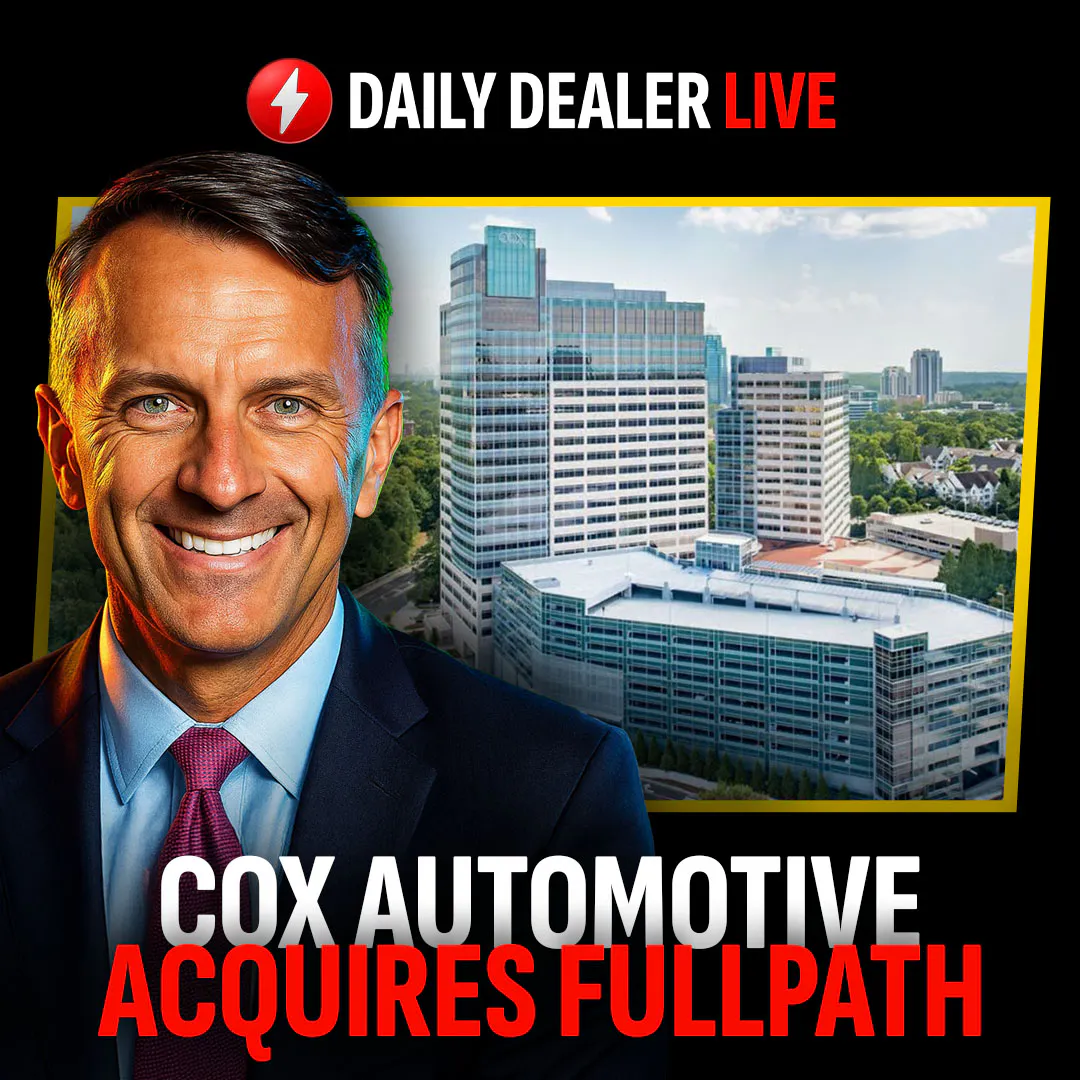
Fixed Ops Friday w/ Don Hall, Morgan Abeyie, Daniel Negalha | Daily Dealer Live
About this episode
The Daily Dealer Live’s Fixed Ops Friday tackles FTC advertising rules with VADA CEO Don Hall, arguing dealers must control what’s in ads (including dock/processing fees) or risk fines and long-term reputation damage. The show then pivots to service operations: Podium’s Morgan Abeyie explains how AI can handle missed calls, scheduling, and personalized follow-up without “replacing” humans—execution and process matter more than training. McGovern’s Dan Negalha shares eight months of ROI from parts-department robots and a tire/retention strategy that’s boosting customer-pay growth. The episode also covers Cox acquiring FullPath and a heated debate on Chinese EVs and brokering.
FTC told 97 dealer groups they're doing advertising all wrong
"Last month, we've talked at night, the FTC told 97 dealer groups they're doing advertising all wrong. Then they asked the rest of us to report the ones that are still doing it wrong."
The FTC is a government agency that watches for misleading advertising. If they say some dealer groups are doing it wrong, it means their ads might confuse customers or make claims they can’t back up.
The FTC (Federal Trade Commission) can enforce advertising rules for car dealers, especially around how offers, pricing, and promotions are presented. When the FTC says dealers are “doing advertising all wrong,” it usually means the marketing may be misleading or not substantiated under consumer-protection standards.
AI is answering your service phones
"Then AI is answering your service phones. What happens to the humans when that happens?"
Some dealerships are using AI to pick up service phone calls automatically. It can answer common questions and schedule things, but the big concern is how it changes the role of the people who used to handle those calls.
Using AI to answer service calls is an automation strategy that can route inquiries, capture appointment requests, and provide basic answers without a human on the line. The key operational question is how that affects customer experience and what happens to the human staff when call volume is handled by automation.
gap... it's never been knowledge. It's always been more about execution
"Podium's Morgan is on talking about that gap and the way to fix that gap and how the gap, it's never been knowledge. It's always been more about execution, speaking of execution..."
This is a business-operations concept: the idea that success isn’t limited by knowing what to do, but by executing it consistently. In dealership contexts, “execution” often refers to process discipline—how quickly leads are followed up, how appointments are handled, and how teams implement tools and scripts.
real ROI on that project
"He's got robots in the parts department. He's got eight months of real ROI on that project. He'll share the results of that."
ROI means “did it pay off?” They’re saying the project produced results in about eight months that were worth the money spent.
ROI (return on investment) is a way to measure whether a project’s benefits outweigh its costs. In dealership operations, “real ROI” usually means the automation or process change produced measurable results within a defined timeframe, not just theoretical savings.
Ziggler Kalamazoo Marathon
"Plus, this weekend, 5,000 runners are hitting Kalamazoo, Michigan for the Ziggler Kalamazoo Marathon. It's not too late to register if you want to join."
They’re talking about a local marathon event in Kalamazoo, Michigan.
This is a segment about a running event, not an automotive topic. It’s included here only because it’s a named event that anchors the episode’s non-automotive discussion.
FullPath
"Cox Automotive is acquiring FullPath. It's an AI-powered customer data platform with the deal expected to close within the next 30 days."
FullPath is software that helps organize car shoppers and customers. It tries to merge messy, scattered dealer records into one clean profile so marketing and follow-ups work better.
FullPath is described as an AI-powered customer data platform. The key value is consolidating fragmented CRM and DMS data into a single customer profile, which then powers marketing, lead follow-ups, and purchase-journey tracking.
Cox Automotive
"Kicking off today's rundown with major news from yesterday. Cox Automotive is acquiring FullPath."
Cox Automotive is a big company in the car industry that helps dealers and shoppers with tools and data. Here, they’re buying another company to make dealer customer information work better.
Cox Automotive is a major automotive services and data company that operates well-known shopping and dealer platforms. In this segment, they’re acquiring FullPath to improve how dealers manage customer and shopper information.
fragmented CRM and DMS data
"For those unfamiliar with FullPath's core product, it solves fragmented CRM and DMS data that creates duplicate profiles, disconnected customer histories, and AI tools that underperform because they're working off of incomplete data."
CRM (customer relationship management) and DMS (dealer management system) data can become fragmented across systems and teams. When that happens, you get duplicate customer profiles and disconnected histories, which then causes AI tools to underperform because they’re trained or run on incomplete information.
single usable customer profile
"The platform then unites that data into a single usable customer profile and uses it to power marketing campaigns, lead follow-ups, and purchase journey tracking."
Instead of having customer information scattered in multiple places, the platform tries to combine it into one complete record. That helps dealers know who the customer is and what they’ve done so far, making follow-up and marketing more effective.
The segment explains that FullPath unites fragmented records into one consolidated customer profile. That “single source of truth” approach improves downstream workflows like marketing targeting, lead follow-ups, and tracking where shoppers are in their buying journey.
purchase journey tracking
"...uses it to power marketing campaigns, lead follow-ups, and purchase journey tracking. Within this acquisition, FullPath's clean data engine now connects to Cox's shopper data..."
Purchase journey tracking refers to monitoring where a shopper is in the buying process over time. When customer profiles are consolidated, dealers can better time marketing and lead follow-ups based on actual shopper behavior rather than incomplete records.
Kelly Bluebook
"FullPath's clean data engine now connects to Cox's shopper data from AutoTrader, Kelly Bluebook, and dealer.com, reaching tens of millions of active car shoppers across the network of 40,000 plus dealer relationships."
Kelly Blue Book is a well-known car information brand. Here, it’s being used as a data source to understand what car shoppers are doing, so dealers can follow up more effectively.
Kelly Blue Book (KBB) is mentioned as a source of shopper data that feeds into Cox’s connected customer-data approach. Using third-party shopping data can help dealers better understand intent and improve targeting.
AutoTrader
"FullPath's clean data engine now connects to Cox's shopper data from AutoTrader, Kelly Bluebook, and dealer.com, reaching tens of millions of active car shoppers across the network of 40,000 plus dealer relationships."
AutoTrader is a car-shopping website. In this context, the show is saying Cox is connecting shopper activity from sites like AutoTrader into dealer customer profiles.
AutoTrader is referenced as one of the sources of shopper data that gets connected into FullPath’s clean data engine. This matters because it expands the dataset beyond a single dealer’s internal records.
dealer.com
"FullPath's clean data engine now connects to Cox's shopper data from AutoTrader, Kelly Bluebook, and dealer.com, reaching tens of millions of active car shoppers across the network of 40,000 plus dealer relationships."
dealer.com is another car-dealer-related platform being used for shopper data. The idea is to combine information from multiple places so dealers can market and follow up with better context.
dealer.com is cited as another third-party source of shopper data connected into Cox’s network. In dealer marketing, aggregating data from multiple channels helps create more complete shopper profiles.
JD Power and Global Data
"Next up today, a quick sales update. JD Power and Global Data are projecting April new vehicle retail sales at about 1.13 million"
JD Power and Global Data are research/forecasting organizations. They’re predicting how many cars will be sold in retail during April, which can influence how dealers plan for the month.
JD Power and Global Data are cited as projecting retail sales figures for April. These kinds of industry forecasts are commonly used by dealers to plan inventory, staffing, and marketing budgets.
year-over-year comparison distortion from tariff-driven buying surge
"But again, the comparison problem from last year's tariff driven buying surge is distorting the picture. Strip out that, and the underlying demand story is actually one of continued resilience."
Sometimes the “compare to last year” numbers don’t tell the whole story. If last year had a special spike in buying (like due to tariffs), then this year’s comparison can look worse even if demand is actually holding up.
A year-over-year (YoY) comparison can be misleading when one period had unusual demand drivers. Here, a tariff-driven buying surge last year makes the current YoY numbers look weaker or different than the underlying demand trend.
Edmunds
"Speaking of affordability woes, Edmunds is out with Q1 data. That adds more detail to the negative equity picture, and this by the way is shocking to me."
Edmunds is a company that tracks car pricing and market trends. They published the Q1 data the hosts are using to explain how common negative equity is right now.
Edmunds is an automotive research and pricing company that publishes market and affordability data. In this segment, the hosts cite Edmunds Q1 findings to support claims about negative equity rates and loan term lengths.
negative equity
"That adds more detail to the negative equity picture, and this by the way is shocking to me. Get this, nearly 31% of buyers trading in vehicles had negative equity in Q1."
Negative equity means you owe more on your current car than it’s worth. When you trade it in, that “extra” balance usually gets added to the loan for the next car.
Negative equity happens when the payoff amount on a buyer’s current loan is higher than what their trade-in is worth. That shortfall gets rolled into the new loan, increasing the amount financed and often the monthly payment.
72 months
"And 90% of these who have negative equity are extending terms to 72 months or longer just to get the payments to work, with 43% of those going to 84 months."
A 72-month loan is a longer payment plan. It usually makes the monthly payment smaller, but you often pay more overall because you’re paying interest for longer.
Extending auto loan terms to 72 months (6 years) lowers the monthly payment by spreading the cost over more time. The tradeoff is typically higher total interest paid and a longer period of being “underwater” if the vehicle’s value drops.
84 months
"And 90% of these who have negative equity are extending terms to 72 months or longer just to get the payments to work, with 43% of those going to 84 months."
An 84-month loan is a very long time to pay off a car. It can reduce the monthly payment, but you usually end up paying more interest over the life of the loan.
84-month financing (7 years) is an even longer term than 72 months, further reducing monthly payments. However, it increases total interest cost and can worsen the negative equity situation if the car depreciates faster than the loan balance declines.
pandemic-era overpayments
"Edmunds analysts traced the root cause back to pandemic-era overpayments. The average age of negative equity trade-ins just hit a record 4.3 years, which maps directly to that buying window."
During the pandemic, cars were often overpriced because there weren’t enough vehicles available. If you paid too much back then, your trade-in can be worth less later, creating negative equity.
“Pandemic-era overpayments” refers to the period when many buyers paid more than normal for used and new vehicles due to supply shortages and high demand. Those inflated purchase prices can lead to negative equity later when values normalize or depreciation catches up.
Brandon Steven Motors
"[329.9s] Brandon Steven Motors purchased 12 dealerships from Cody Holdings operating as Southern [335.2s] Maryland Auto Group in a transaction valued at nearly a half a billion bucks that closed"
Brandon Steven Motors is the company buying a bunch of dealerships in this deal. The hosts describe it as one of the biggest acquisitions they’ve seen this year.
Brandon Steven Motors is identified as the buyer in a multi-dealership transaction. The segment frames it as a major acquisition valued at nearly a half a billion dollars.
Cody Holdings
"[329.9s] Brandon Steven Motors purchased 12 dealerships from Cody Holdings operating as Southern [335.2s] Maryland Auto Group in a transaction valued at nearly a half a billion bucks that closed"
Cody Holdings is the company selling the dealerships in this transaction. The segment notes it operates under the Southern Maryland Auto Group name.
Cody Holdings is named as the seller in the dealership acquisition, operating under the Southern Maryland Auto Group brand. This highlights how dealership groups can be structured under different operating names.
Lincoln
"[342.6s] The portfolio spans six Maryland cities and includes Ford, Lincoln, Chevy, Cadillac, [347.3s] Buick, GMC, Toyota, Honda, Chrysler Dodge, Jeep and Ram."
Lincoln is one of the brands included in the dealership deal. Luxury brands often have different customer expectations and service needs than mainstream brands.
Lincoln is mentioned as part of the acquired dealership portfolio. Including a luxury brand like Lincoln can affect inventory mix, service business, and customer demographics.
Ford
"[342.6s] The portfolio spans six Maryland cities and includes Ford, Lincoln, Chevy, Cadillac, [347.3s] Buick, GMC, Toyota, Honda, Chrysler Dodge, Jeep and Ram."
Ford is one of the car brands included in the dealership group being discussed. It suggests the stores sell multiple popular brands.
Ford is listed among the brands included in the acquired dealership portfolio. For listeners, this signals the buyer’s coverage across multiple mainstream manufacturers rather than a single brand focus.
Toyota
"[342.6s] The portfolio spans six Maryland cities and includes Ford, Lincoln, Chevy, Cadillac, [347.3s] Buick, GMC, Toyota, Honda, Chrysler Dodge, Jeep and Ram."
Toyota is one of the brands sold by the dealerships in this portfolio. Brand mix can influence how busy the stores are and what customers they attract.
Toyota is included in the list of brands across the dealership portfolio. This matters because Toyota stores often have different demand patterns and volume dynamics compared with some other brands.
buy-sell activity
"[369.1s] Talk about having the country covered both coasts. [371.9s] For more information on this and other buy-sell activity, check out the CDG Tracker at cdgbuysell.com."
Buy-sell activity in this context means dealership ownership changes—one group purchasing another group’s stores. These transactions can be tracked to understand consolidation trends and how dealer groups are expanding their footprint.
CDG Tracker
"[371.9s] For more information on this and other buy-sell activity, check out the CDG Tracker at cdgbuysell.com. [378.6s] And that's a wrap."
The CDG Tracker is mentioned as a place to look up dealership buying and selling news. It helps you follow which dealership groups are acquiring others.
The CDG Tracker is referenced as a resource for monitoring dealership buy-sell transactions. It’s likely tied to Car Dealership Guy’s coverage of dealership group acquisitions and consolidations.
FTC letter
"So you've talked about the FTC letter that was sent out a month or two ago... At the end of the day, the FTC has a lot of power over us as an industry."
The FTC is a U.S. government agency that protects consumers. When it sends a letter to car dealers, it’s basically warning that certain business practices may be a problem and could lead to enforcement later.
The FTC (Federal Trade Commission) can send letters to industries to outline concerns and signal enforcement priorities. In auto retail, an FTC letter often relates to consumer-protection issues like advertising, pricing transparency, or how dealers handle add-ons and financing disclosures.
NADA
"The NADA, they had one call, no comments on that call. And then they did a second one this past week."
NADA is a national group that represents car dealers. If they’re involved in a call about the FTC, it usually means dealers are trying to understand what the rules mean for their businesses.
NADA refers to the National Automobile Dealers Association, a major U.S. dealer trade group. When they participate in FTC-related calls or webinars, it typically means dealers are coordinating responses to regulatory guidance and enforcement risk.
FTC has a lot of power over us as an industry
"...what your laws say in the states. At the end of the day, the FTC has a lot of power over us as an industry. And there's much that they can do in terms of fines..."
Even though each state has its own rules, a federal agency like the FTC can still step in. That’s why dealers take FTC warnings seriously—because there can be real consequences.
This highlights how federal regulators can affect auto-dealer operations across state lines. Even if state laws vary, the FTC can still pursue cases and impose penalties, which is why dealers pay close attention to FTC communications and guidance.
processing fee
"...if you have a dock fee or a processing fee, that that fee must be included in the price that you advertise wherever you might be advertising..."
A processing fee is an extra charge for dealer paperwork or preparation. In this discussion, the important part is that regulators want these fees included in what you see in the ad, not tacked on later.
A processing fee is an add-on charge dealers use to cover administrative work (paperwork, preparation, etc.). The segment’s takeaway is that if a processing fee is part of the deal, it may need to be included in the advertised price under the FTC’s approach.
advertised price includes fees
"...that that fee must be included in the price that you advertise wherever you might be advertising, period... Customers will know exactly what the price of the vehicle is when they come in..."
The idea here is simple: if a dealer is going to charge you extra fees, those fees should be shown in the price you see in the ad. That way, you can compare deals without guessing what will be added later.
This segment describes a pricing transparency concept: when dealers advertise a vehicle, certain fees must be included in the advertised price so customers can see the true cost up front. The goal is to reduce “bait-and-switch” style confusion and make comparisons between dealers more straightforward.
out-the-door price
"Customers will know exactly what the price of the vehicle is when they come in... they know what they must pay when they come in, minus any state-required fees, vis-a-vis taxes, and so forth."
Out-the-door price is basically the total amount you’ll pay to buy the car, including the usual required charges. This segment is saying customers should be able to figure that out before they show up.
The hosts are effectively talking about “out-the-door” pricing: what a buyer must pay when they arrive, after accounting for required taxes and state fees. They emphasize that customers should know the total they’ll pay (minus state-required items like taxes) rather than encountering surprise add-ons.
NAD dealer academy
"...I had the opportunity to go through the NAD dealer academy over the last year. And lots of things I learned..."
The NAD dealer academy is training for people who work at car dealerships. In this segment, the host is saying it taught him that customers spend a lot of time researching online before they ever talk to a dealer.
NAD (National Automobile Dealers) runs a dealer academy referenced here as a training program for dealership professionals. The host uses it to highlight lessons about how customers research before buying and how dealers should adapt their process.
shorten the buying process
"Look, at the end of the day, we have to shorten the buying process. And part of this is the customer has a right to know exactly what you're going to pay..."
This means making it faster and simpler to buy a car. The host’s point is that if customers already know the real price, there’s less back-and-forth and fewer surprises.
“Shorten the buying process” refers to reducing friction and steps between a customer’s interest and the final purchase decision. In the context of this segment, it’s tied to transparency—customers should know what they’ll pay so the dealership doesn’t need to renegotiate or re-explain fees later.
showroom
"they're going to want to play games and then spend the customer around two or three times when they get into the showroom."
A showroom is the dealership area where you go to look at cars and talk to salespeople. The hosts are criticizing sales tactics that try to keep customers in the process longer.
“Showroom” here refers to the dealership sales floor where customers are brought in to review vehicles and finalize purchases. The segment implies that some dealers use tactics to keep customers engaged and spending time/money in that process.
sell direct
"The manufacturers, our manufacturers deep down inside want to sell direct. Part of the argument they continue to use against us is this."
“Sell direct” refers to manufacturers selling vehicles directly to customers, typically bypassing the traditional dealer franchise model. In this segment, the hosts argue manufacturers want to do this and use direct-sales brands as proof that it improves the buying experience.
Tesla
"Well, Tesla can do it and Lucid can do it and Rivian can do it. And part of what Tesla says is we give a much better buying experience."
Tesla sells cars in a more direct way than many traditional brands. They argue that this makes the buying process smoother for customers.
Tesla is using a direct-to-consumer sales model, selling cars through its own channels rather than relying on a traditional dealer franchise. The point being made is that Tesla claims this creates a better, more consistent buying experience.
Rivian
"Well, Tesla can do it and Lucid can do it and Rivian can do it. And part of what Tesla says is we give a much better buying experience."
Rivian is mentioned as another brand that sells without the usual dealer setup. The point is that other brands are pushing the idea that this is better for buyers.
Rivian is cited alongside Tesla and Lucid as an example of a manufacturer selling direct to consumers. The hosts use these examples to highlight the pressure on traditional dealer networks and franchise systems.
Lucid
"Well, Tesla can do it and Lucid can do it and Rivian can do it. And part of what Tesla says is we give a much better buying experience."
Lucid is another car brand that’s brought up as selling in a more direct way. The hosts are saying manufacturers point to brands like this to justify changing how dealerships operate.
Lucid is mentioned as another brand using a direct sales approach similar to Tesla. In the discussion, Lucid is part of the argument manufacturers use to claim direct sales improves the customer experience.
franchise system
"Customers will appreciate us. They'll appreciate the buying experience and they'll appreciate the franchise system."
The franchise system is the traditional arrangement where manufacturers authorize independent dealers to sell and service vehicles under the brand’s umbrella. The hosts suggest customers will value dealerships if dealers “do it right,” emphasizing franchise benefits alongside pricing and experience.
selling price
"When we're straight, we're a matter of fact, and we give them great value. Whatever that selling price is. Well, that's a great message."
“Selling price” is the final negotiated price a customer pays for the vehicle, often influenced by incentives, add-ons, and dealer markup. The hosts frame it as part of the value proposition—if dealers are “straight” and transparent, customers will appreciate the outcome.
dock fee
"You mentioned the dock fee. That's absolutely one that was causing confusion on your list that you posted to LinkedIn."
A dock fee is an extra charge dealers sometimes add when a car first arrives at the port or shipping location. People get confused because it can show up on the paperwork and it’s not always clear what it covers or why it’s there.
A dock fee is a charge dealers may pass along for moving or handling a vehicle when it arrives at the port or distribution facility (“dock”). It’s often itemized on the buyer’s paperwork, and confusion usually comes from whether it’s required, how it’s calculated, and whether it’s being marked up.
responsible for what you can control
"You said, if you control what's in the ad, you are responsible for it... If you can control, you're responsible. You're responsible for the things you're able to control. Now, there are some things the OEMs do that is out of your control."
The key idea is that if you’re the one running the ad or putting the information out there, you’re responsible for it. Even if a vendor helps, the dealer still needs to make sure what’s shown is correct and compliant.
This is a liability/compliance principle: if a dealer controls the ad or the buyer-facing materials, they’re responsible for the accuracy and compliance of that content. The discussion contrasts dealer-controlled items with OEM-controlled items that may be outside the dealer’s control, but emphasizes that dealers can’t assume “vendor did it” absolves them.
OEM co-op materials
"How many dealers right now are running ads on third party flap forms or OEM co-op materials? They don't fully control and they don't realize they own that liability."
OEM co-op materials are marketing materials the car brand provides to help dealers advertise. Even if the brand supplies the template, the dealer still has to make sure the ad is accurate and follows the rules.
OEM co-op (cooperative advertising) materials are marketing assets provided or subsidized by the automaker for dealer use. Even when dealers use OEM-approved templates, they can still be responsible for the final ad content, disclosures, and compliance with advertising rules.
third party flap forms
"How many dealers right now are running ads on third party flap forms or OEM co-op materials? They don't fully control and they don't realize they own that liability."
This is about ads or lead forms provided by an outside company. Even if the vendor makes the form, the dealer is usually still responsible for what the customer sees and what the ad implies.
“Third party” advertising or lead forms (often branded as vendor-provided forms) can create legal and compliance exposure for dealers because the dealer is the party running the ad. If the dealer can’t fully control the content, they may still be considered responsible for what the ad ultimately says and how it’s presented to consumers.
reputation that would come in and control you
"Trust me, the amount of the fines are massive, but more importantly, reputation that would come in and control you and overlook your business for the next five, 10 or 15 years."
They’re saying the damage isn’t only the fine—it can also hurt your reputation. That can lead to more scrutiny and problems for years.
The hosts are describing how regulatory enforcement can create long-term reputational and business consequences, not just immediate fines. In dealer compliance discussions, this often means increased scrutiny and lost opportunities due to perceived risk.
in transit vehicles
"...maybe give us your viewpoint was in transit vehicles. They talked about how if a vehicle wasn't two days from hitting the lot, it shouldn't be advertised or shouldn't be promoted."
“In transit” refers to vehicles that have been produced and are on the way to the dealer but are not yet physically on the lot. The discussion centers on whether those vehicles can be advertised/promoted before they are close enough to arrive, which affects compliance risk.
compliance risk
"Manufacturers in a lot of cases... are pushing inventory to dealer websites before it ever hits the lot... Who owns that compliance risk, Don? Is it the dealer, the OEM or the platform?"
Compliance risk is the risk of getting in trouble with the rules—like advertising requirements. They’re asking who’s responsible when car listings go live before the cars are actually on the lot.
Compliance risk is the chance that a dealer, OEM, or marketing platform could violate advertising/consumer-protection rules and face fines or enforcement. The hosts debate who owns that risk when manufacturers push inventory listings to dealer websites before the cars arrive.
Stilantis
"...before it ever hits the lot weeks and months in the case of Stilantis and some of the others."
They likely mean Stellantis, a major car company. The point is that some manufacturers put car listings online early, which can create compliance questions for dealers.
“Stilantis” appears to be a transcription error for Stellantis, the automaker formed from Fiat Chrysler Automobiles and PSA. The hosts mention Stellantis as an example of manufacturers pushing inventory listings to dealer websites before vehicles arrive.
platform
"Who owns that compliance risk, Don? Is it the dealer, the OEM or the platform?"
A “platform” is the website or software system that shows car listings online. They’re asking whether that system also has responsibility if the listings break advertising rules.
In dealer marketing, “platform” typically refers to the digital website/lead-management/vendor systems that display inventory and promotions. The hosts question whether the platform shares responsibility for compliance when inventory is shown before vehicles are ready to arrive.
Virginia dealers
"I have spoken with numerous Virginia dealers and everyone has sort of the same comment about what about in transit?"
They’re saying they talked to many dealers in Virginia and heard similar concerns. That helps show the issue isn’t just one dealership—it’s a broader dealer problem.
The speaker references “numerous Virginia dealers,” using a real-world dealer population as evidence for how widespread the confusion is. This matters because regulatory guidance often affects dealers differently depending on local practices and how inventory is managed.
control the price
"...is if you don't control the price, then you've got a better chance of having the FTC understand where you're coming from. If you are in control and you know what it is and then don't have it right by design... that's where you're going to have problems."
The speaker is basically saying that if you’re the one setting or controlling the price, you have to be extra careful that what you tell customers is accurate. If you’re not controlling it—or you’re transparent about it—there’s less chance of running into problems.
“Control the price” is being used as a compliance principle: if a dealer can influence or set pricing, they may be held to stricter standards for how that pricing is communicated and whether it matches the actual vehicle situation. The speaker contrasts that with scenarios where pricing isn’t controlled or is handled in a way that avoids misleading practices.
Bernie Moreno
"So Bernie Moreno was on this show a couple of weeks ago, pre that second call. And he said, look, it's simple."
They mention Bernie Moreno because he talked about this earlier and had a straightforward take. It’s mainly part of the conversation’s back-and-forth, not a car tech detail.
Bernie Moreno is mentioned as a prior guest who discussed the issue and suggested a simpler approach (not needing attorneys). This functions more as a reference to the show’s ongoing debate than as a technical automotive topic.
floor plan
"So Stilanus takes way too long to get vehicles delivered. They floor plan the vehicles immediately after assembly, yet don't get them on the dealer's lots for weeks."
Dealers often borrow money to have cars sitting on their lot. They pay interest while the cars are waiting to be sold. The hosts are saying the cars get financed, but they don’t arrive quickly enough to sell them right away.
“Floor plan” is the financing dealers use to pay for vehicles while they sit in inventory before being sold. Dealers typically draw on a line of credit tied to each unit, and interest accrues until the car is sold. In the segment, the issue is that vehicles are financed immediately after assembly but take weeks or months to reach the dealer lots.
OEM advertising and pipeline strategies
"Do you think the OEMs will need to change their advertising and their pipeline strategies to better conform with the FTC? ... So I think they will ultimately do it."
The hosts discuss how OEMs (automakers) manage advertising and “pipeline” strategies—how vehicles are allocated, timed, and moved through the supply chain to dealers. They connect this to FTC compliance, implying that marketing and inventory/availability messaging may need to change to avoid misleading consumers. This is a regulatory-and-operations concept rather than a specific vehicle feature.
measured by 30 days
"...part of our problem is this cancer that I refer to so often... and that is that we're measured by 30 days. We're all measured by 30 days."
Sometimes dealerships are judged on how they perform within a short period, like 30 days. If cars are paid for but don’t arrive in time, it can hurt those numbers. The speaker is saying this timing pressure is a big part of the problem.
“Measured by 30 days” refers to how dealers and/or their partners are evaluated on short time windows, often tied to inventory turns, sales performance, or financing/interest costs. When vehicles are financed but not delivered quickly, a 30-day metric can create pressure and distort incentives. The hosts describe this as a recurring industry problem.
buying experience
"And maybe it's time as we evaluate how to make sure customers have a great buying experience, we tend to forget about those who sell and service our customers."
They mean the whole process of buying a car—how the dealership treats you and how easy it is. It’s not just about the final price, but how you feel during the sale.
The hosts are talking about the overall customer buying experience at a dealership, not just closing the deal. This includes how customers are treated, how smoothly the process goes, and whether the dealership feels trustworthy and organized.
pay people
"Maybe it's time to rethink how we pay people, how we treat people. And so the desperation doesn't exist."
They’re talking about how dealerships pay their employees and how that impacts how hard people work. Better pay plans can help employees stay motivated and treat customers better.
This is a discussion about dealership compensation and how pay structures affect employee behavior and performance. In fixed-ops and sales environments, pay plans can influence customer service quality, follow-up, and overall motivation.
moving iron
"We want people to be excited about this business and about moving iron. And let's do it and getting people in cars and changing their lives."
“Moving iron” just means selling cars. It’s a common dealership phrase for keeping vehicles moving off the lot.
“Moving iron” is dealership slang meaning selling vehicles and keeping inventory flowing. It reflects the idea that the business is about getting cars from the lot into customers’ hands.
lay them away
"Lay them away. Why? Because they're dumb as shit. We can get away with it, boss. You know, lay them away."
“Lay them away” is a dealer/retail workflow phrase meaning to hold or set inventory aside rather than immediately processing or selling it. In dealership contexts, it can relate to delaying action on units while waiting on timing, paperwork, or strategy.
F9
"Well, hit them in the F9. We get them back there."
“Hit them in the F9” appears to be internal dealership software or process shorthand for moving/handling units in a system. Without more context, it’s likely a specific button/menu action used by the dealership’s inventory or deal-management tools.
automotive industry... ill problems
"Are you saying that probably is some of the the ill problems of the automotive industry the past few decades… And unless and until we really identify this, we'll continue to do stupid stuff."
They’re basically saying the industry has bigger problems that keep repeating, not just one bad decision. They’re hinting that incentives and how people get paid can drive bad behavior.
The speaker is pointing to systemic “problems” in the automotive industry that persist over decades, implying structural issues rather than one-off mistakes. In dealer conversations, this often ties to incentives, pay plans, and how manufacturers influence dealer operations.
pay planes
"…lie, scurrilate the feet of poorly written pay planes that just focus on absolutely, absolutely."
“Pay planes” means the way people get paid at a dealership. If the pay plan rewards the wrong things, it can lead to bad decisions that hurt customers.
“Pay planes” refers to pay plans—how dealers and their staff are compensated. Compensation structures can strongly influence behavior (e.g., what gets prioritized, how deals are handled, and whether customers are treated well).
Chinese vehicles
"Let's talk about a topic that is adjacent to it before we go to Chinese vehicles, because this is going to be a fun debate."
They’re about to talk about Chinese car brands and how they fit into the U.S. market. That usually comes with questions about competition, pricing, and rules.
The hosts mention an upcoming debate about Chinese vehicles, which is a topic in the U.S. auto market tied to brand expansion, pricing pressure, and regulatory scrutiny. It’s likely being discussed in the context of how OEM policies and dealer networks respond to new entrants.
brokering vehicles
"Brokers, we've had multiple OEMs over the past month clarify their policies that relates to brokering vehicles. It seems to be a bigger deal on the East Coast than anywhere else."
Vehicle brokering is basically using a middleman to help you buy a car. The debate is whether that middleman improves the buying experience or whether it undercuts what dealerships are supposed to do.
Vehicle brokering is when an intermediary helps arrange the sale of a car between a buyer and the seller, often handling logistics and communication. In dealer networks, OEMs may restrict or regulate it because it can bypass traditional dealership roles and affect pricing, customer experience, and compliance.
OEMs clamping down
"your take on brokering and do you support individual OEMs clamping down on that process and supporting the dealer network that way?"
If automakers “clamp down,” it means they’re making stricter rules. They may be trying to keep the buying process more controlled through official dealers.
When OEMs “clamp down” on brokering, they’re tightening rules to limit intermediaries that can bypass dealerships. This can include policy changes, compliance requirements, and restrictions on how vehicles can be sourced and sold.
broker has to make money
"The broker has to make money. We can cut the broker out and make sure that you get all of the perceived value that brokers tend to give."
They’re talking about middlemen who get paid for helping with the deal. The claim is that if you cut out the middleman, more of the money/value stays with the buyer or dealer instead.
The segment discusses brokers as intermediaries who earn fees for arranging parts of the vehicle purchase process. The hosts argue that removing brokers could allow customers to capture more of the value that brokers otherwise take as compensation.
brokering is illegal in the state of Virginia
"In the state of Virginia, brokering is illegal as it should be for all the right reasons as it should be."
They’re saying that in Virginia, certain types of car-broker help are not allowed by law. That changes what options customers and dealers have when trying to buy a car.
The hosts reference Virginia’s legal stance on vehicle brokering, implying that certain intermediary activities are restricted or prohibited. This matters because it affects how deals can be structured and who is allowed to earn fees for arranging transactions.
automotive tire guy
"...somebody online, the automotive tire guy says, because individuals are tired of the six hour buying BS, right?"
They’re using “tire guy” as an example of an online auto business people go to. The point is that customers want convenience and don’t want a long, painful buying process.
The phrase “automotive tire guy” is used as shorthand for an online automotive retailer or service provider that customers might turn to. The hosts are using it to illustrate how consumers seek alternatives when the traditional buying process feels too long or complicated.
eliminate the friction
"We've got to do away with that, eliminate the friction. We had Tommy from Delivered, he was featured in, I think it was the New York Times, he charges a thousand dollars done."
“Friction” here means extra steps or delays that make buying a car feel annoying. They’re saying the goal is to make the process simpler so customers don’t waste hours going back and forth.
In car sales, “friction” means anything that makes the buying process slower, confusing, or more painful—like long back-and-forth negotiations, unclear pricing, or delays. The hosts are arguing that dealers should streamline the process so customers can get to a deal faster with less hassle.
Tommy from Delivered
"We had Tommy from Delivered, he was featured in, I think it was the New York Times, he charges a thousand dollars done."
They mention a person/company called Delivered that charges money to make the car-buying process faster or easier. The point is that some customers will pay to skip the usual hassle.
The hosts mention “Tommy from Delivered,” describing a service that charges a fee to help customers “circumvent the process.” This is presented as a workaround for customers who want to avoid lengthy buying steps.
30 day cycle
"...towards the end of the month that play into that 30 day cycle you're talking about, you know, you got to put your month together or else you lose out that new car money."
Dealers and automakers often run incentives on a monthly schedule. If you don’t buy in time, you might miss the incentives that reset at the end of the month.
The “30 day cycle” is a common dealership/incentive rhythm where OEM programs and dealer targets reset monthly. The hosts connect it to incentives that can expire at month-end, which can pressure buyers to act quickly to qualify for “new car money.”
OEMs ability
"Do you have an opinion on stair step as it relates to how that impacts OEMs ability to pump iron versus creating a great experience for the consumer?"
OEMs (original equipment manufacturers) are the automakers that set the rules and incentive structures for dealers. The phrase “OEMs ability” in this context is about how manufacturer programs and policies affect dealer behavior and the customer journey. It ties manufacturer strategy directly to retail outcomes like pricing, deal timing, and customer satisfaction.
stair step programs
"Then stair step programs came in. It created the have and the have nots. And you will do desperate things oftentimes to secure the stair step programs."
A “stair-step” program is when a company pays dealers more money only after they reach certain sales levels. If you don’t hit the next level, you lose that extra money, so dealers may feel pressure to sell fast. That pressure can affect how fair or customer-friendly the deal feels.
“Stair-step” programs are tiered manufacturer incentives that increase dealer pay as sales targets are hit. They can push dealers to prioritize volume and speed, because missing a tier can mean losing a larger chunk of money. In practice, that can create pressure to discount or sell quickly rather than focus purely on the customer experience.
incentivizing
"You can say, well, no, no, all it's doing is incentivizing. No, it's not."
“Incentivizing” refers to using financial rewards to influence behavior—here, pushing dealers to sell certain volumes or hit targets. The speaker argues that incentives can be more than neutral motivation; they can distort decision-making toward speed and volume. That can affect pricing strategy and the overall customer experience.
race to the bottom
"No, it's not. It's a race to the bottom to sell these cars quickly in hopes that you make up by coming over this larger amount of money coming in, having done it."
A “race to the bottom” describes a market dynamic where competitors keep lowering terms (often price or deal structure) to win sales quickly. In dealership contexts, it can mean aggressive discounting or less favorable negotiations as dealers try to compensate for incentive-driven pressure. The result is often less margin and a more transactional buying experience.
feds
"Unfortunately, some of that winning and prevailing now has gotten us in trouble with the feds and it gets us in trouble with customers."
“The feds” is a shorthand for federal regulators in the U.S., often referring to agencies that oversee consumer protection, advertising, and fair business practices. The speaker suggests dealer “winning” tactics have drawn regulatory scrutiny. That implies compliance and legal risk can shape how dealerships structure deals and customer interactions.
per transaction
"So much so, they're willing to spend a thousand dollars more per transaction in order to avoid the fighting spirit that we possess."
“Per transaction” refers to costs or pricing impacts measured for each individual sale, not averaged over time. Here, the speaker claims customers or the market may pay more per deal to avoid conflict or aggressive dealer behavior. It highlights how negotiation dynamics can translate into measurable price differences.
financing
"They already know about financing. Now it's a matter of bringing it together, doing the deal. And oh, by the way, I'd be happy to deliver to your home as well..."
Financing is the payment plan—usually a car loan—so you don’t have to pay the whole price at once. The speaker is saying the customer already understands that part.
Financing is how a customer pays for a vehicle using a loan or other credit arrangement instead of paying the full price upfront. In dealership conversations, “they already know about financing” usually means the customer is already comfortable with monthly payments and credit approval steps.
everything done electronically
"We have everything done electronically. It's a great experience here at ABC Chevrolet or whatever. And then on top of that, let me talk to you at my service department..."
They’re saying the paperwork can be handled digitally. That usually makes the process faster and less annoying than lots of paper forms.
“Everything done electronically” points to digital paperwork and approvals (e-signing, online forms, and electronic submission of documents). This is commonly used to speed up the deal and reduce the number of in-person steps required.
ABC Chevrolet
"We have everything done electronically. It's a great experience here at ABC Chevrolet or whatever. And then on top of that, let me talk to you at my service department..."
They mention Chevrolet because the dealership is selling Chevy cars. It’s basically saying the whole buying experience happens through a Chevy dealer.
This segment references Chevrolet, a major U.S. automaker brand. The speaker is framing the dealership experience as “ABC Chevrolet,” using the brand to anchor the sales and service pitch.
service department
"And then on top of that, let me talk to you at my service department and what we can do. Oh, I see you have another car in the driveway..."
The service department is where the dealer takes your car for maintenance and repairs. They’re saying they can help you not just with buying, but also with keeping the car running.
The service department is the dealership’s maintenance and repair operation, handling things like scheduled maintenance, inspections, and repairs. The speaker is positioning service as part of the overall customer experience after the sale.
trade it
"Let me tell you what we can do with your five year old car. We can trade it. We can service it. We can so forth..."
They mean you can sell your current car to the dealer as a trade-in. That value gets counted toward the price of the new car.
“Trade it” refers to using the customer’s current vehicle as part of the purchase price—called a trade-in. The dealership typically appraises the trade-in’s condition and value, then applies it toward the new car’s price.
reduce the friction
"Experiences got to be elite. We got to reduce the friction. We got to reduce the timeline. And then I think too, these brokers will peel away..."
They’re talking about making the buying process feel easier and faster. Instead of lots of back-and-forth, the goal is fewer hassles before you can drive the car home.
“Reduce the friction” is dealership-speak for removing steps that slow down or complicate the buying process. In practice, it often means faster paperwork, easier approvals, and more streamlined communication so customers can move from interest to a signed deal quickly.
reduce the timeline
"We got to reduce the friction. We got to reduce the timeline. And then I think too, these brokers will peel away because the experience will be, will be elite..."
They mean speeding up how long it takes to finish the deal. The idea is to get you from “talking about it” to “getting the car” sooner.
“Reduce the timeline” refers to shortening how long it takes to complete a purchase from first contact to final delivery. Dealerships try to compress this by using electronic document signing, pre-approvals, and coordinated steps between sales, finance, and service.
brick and mortar or online
"And then I think too, these brokers will peel away because the experience will be, will be elite in dealership and in brick and mortar or online if that's where the customer wants to go."
This contrasts traditional in-person dealership (“brick and mortar”) with online shopping and remote purchasing. The speaker’s point is that a strong dealership experience should work in either channel, depending on what the customer prefers.
Chinese automakers vs U.S. border policy
"Senator Bernie Moreno said he's introducing legislation that would forever seal the U.S. borders. But Trump has said in Detroit, he's open to it. And I want to push back on that instinct to keep Chinese automakers out."
This part of the show is basically a debate about U.S. policy—whether the country should restrict Chinese car companies from selling in America. They weigh the reasons for keeping them out versus the impact of competition.
This is a policy-focused discussion segment comparing proposed legislation and political stances to the idea of keeping Chinese automakers out of the U.S. market. It’s structured around arguments for and against restricting imports.
BYD
"Okay. ... Number one, we're not dealing with Chinese manufacturers, folks. ... BYD is an example. Sold 2.26 million EVs last year."
BYD is a big Chinese company that makes electric cars and the batteries they use. The hosts mention it to show that Chinese EV brands are already selling a lot of cars worldwide.
BYD is a major Chinese automaker best known for electric vehicles (EVs) and batteries. In the segment, they’re used as an example of how quickly Chinese EV makers are growing globally.
short fix
"[1534.8s] They're here for one reason, to take control of us economically because they know we're all into the [1541.9s] short fix, baby."
A “short fix” is when you focus on what helps right now instead of planning for the future. The speaker is implying that quick deals can hurt the bigger business long-term.
“Short fix” refers to prioritizing quick, near-term solutions rather than long-term strategy. In dealership/OEM terms, it can mean chasing immediate incentives or pricing advantages while ignoring structural risks to the dealer network.
competition in the United States
"But doesn't competition in the United States usually result in a better product? Isn't this a question of who has the better product, the better technology, is able to produce it for less?"
They’re arguing that competition usually makes products better. The idea is that companies try to build better technology and also make it cheaper to win customers.
The hosts frame competition as a driver of better products and better technology, especially when companies can produce at lower cost. In automotive terms, this is the classic “cost vs. capability” argument: competitive pressure can force manufacturers to improve engineering while managing manufacturing expenses.
space race
"I always talk about the space race, right? In the 1960s, Kennedy said, we can't let the Russians go to the moon first."
The “space race” was a big competition between countries to be first in space. The hosts are using it as a comparison for how competition can push technology forward faster.
The “space race” refers to the Cold War competition—primarily between the United States and the Soviet Union—to achieve major milestones in space, like landing on the Moon. It’s used here as an analogy for how national competition can accelerate technology and mobilize resources.
Artemis
"And Artemis, too, just went around the moon. And we're back in a race with China this time to get there."
Artemis is NASA’s plan to send people back to the Moon. They mention it to connect today’s space goals with the idea of countries competing to lead.
Artemis is NASA’s program aimed at returning humans to the Moon and establishing longer-term lunar exploration. The transcript uses it as a continuation of “racing” toward space milestones, tying it to the current geopolitical competition.
cheap Chinese EV vehicles
"I am concerned about a world where 90% of the globe is driving cheap Chinese EV vehicles, and they're not poor quality. They're very competitive."
They’re talking about low-priced electric cars from China that are selling well worldwide. The concern is that if they dominate the market, other countries have to improve their technology and pricing to keep up.
This refers to low-cost electric vehicles coming out of China that are described as both widely available and competitive on quality and performance. The key idea is market disruption: if most of the world adopts these EVs, it changes how other countries must compete technologically and on cost.
over-regulate ourselves
"We Americans, we over-regulate ourselves. We have shops that are unionized. It costs a lot of money and so forth."
They’re saying the U.S. has a lot of rules that businesses have to follow. Those rules can make running a dealership or repair shop more expensive and complicated.
The hosts are talking about how heavy regulation can raise costs and complexity for businesses. In automotive retail and service, that can mean more compliance overhead, paperwork, and operational constraints that affect pricing and profitability.
unionized shops
"We have shops that are unionized. It costs a lot of money and so forth. It's complicated."
A unionized shop means the workers are represented by a union. That can change how much they’re paid and how the shop runs, which can raise costs.
“Unionized” refers to workplaces where employees are represented by a labor union and work under negotiated contracts. In auto service, union labor agreements can affect wage rates, benefits, staffing rules, and overall shop operating costs.
learn from the Japanese
"The Japanese treat their dealers very, very well, very, very well. Let's learn from the Japanese. The Japanese will learn from the Chinese."
They’re basically saying the U.S. should copy what Japan does better when it comes to how car dealers are treated. It’s about business practices, not a specific vehicle.
This is a comparative business strategy point: the hosts suggest the U.S. could improve dealer practices by looking at how Japanese automakers structure dealer relationships. It’s less about a specific car and more about distribution and support models.
emissions
"I don't want to go to Mexico anymore and see vehicles you never see here in the U.S., not for emissions, but for technology."
The hosts mention “not for emissions, but for technology,” implying that some vehicle changes are driven by tech competition rather than emissions rules alone. In the automotive world, that can include electrification, software, and advanced powertrain development.
Virginia Auto Dealers Association
"Don Hull, President and CEO of Virginia Auto Dealers Association."
This is a group that represents car dealers in Virginia. They advocate for dealer interests and help shape discussions about rules that affect dealerships.
The Virginia Auto Dealers Association is an industry group representing auto dealers in Virginia. Its leadership often weighs in on regulations, dealer-franchise issues, and state policy that affects how dealerships operate.
Hague Partners
"Today's episode, I just lost my thing, is brought to you by Hague Partners. When it comes to selling your life's work, experience, and reputation, matter if Hague Partners is known for helping family owned dealerships maximize value..."
Hague Partners helps dealership owners sell their businesses. They handle the process privately and try to get strong sale results.
Hague Partners is a dealership-focused services company that helps owners sell their dealerships. They emphasize a confidential process and results across multiple major franchises, positioning themselves as an M&A advisor for family-owned stores.
Request an Explanation
Heard something you'd like explained? We'll add it to this episode.
Sign in to request explanations for terms you heard.
Want to learn more?
Browse our glossary for plain-English explanations of automotive terms, jargon, and concepts.
Help improve this episode
See something that's not quite right? Our annotations are AI-generated and can sometimes miss the mark. Click the flag icon on any annotation to suggest a correction.