This episode dives into the latest automotive industry news, focusing on the challenges faced by major players like Ford and CarMax, particularly regarding electric vehicle production and leadership changes. Tully Williams, a Fixed Ops expert, shares insights on improving used car turnaround times and the importance of collaboration between fixed and variable operations. The discussion also highlights the role of AI in enhancing vehicle acquisition strategies and the significance of transparency in customer interactions. With expert guests providing valuable perspectives, this episode is packed with actionable insights for dealership operations.
Today's show features:
Tully Williams, Parts & Service Director at The Niello Company
Colin Speer, Director of Sales at Sonic Tools USA
Frank Knox, Chief Operating Officer of AutoAcquire AI
This episode is brought to you by:
CR Stream – Put the power of multiple auctions in your hand! CR Stream multi-lists your inventory to OVE, SmartAuction, and Copart simultaneously. Capture vehicle photos, damage, details and pricing start to finish in under 10 minutes with the CR Stream iPhone and Android mobile apps. Pay only $150 sell fee when you vehicles sells at auction! visit https://crstream.com/ to learn more.
CDG Circles – A modern peer group for auto dealers. Private dealer chats. Real insights — confidential, compliant, no travel required. Visit https://cdgcircles.com/ to learn more.
Car Dealership Guy is back with our second annual NADA Party—happening in Las Vegas on Thursday, February 5th. It’s the hottest ticket at NADA 2026. Spots are limited and unfortunately we can't invite everyone —so RSVP today at https://carguymedia.com/cdglive and we hope to see you in Vegas!
—
Check out Car Dealership Guy’s stuff:
CDG News ➤ https://news.dealershipguy.com/
CDG Jobs ➤ https://jobs.dealershipguy.com/
CDG Recruiting ➤ https://www.cdgrecruiting.com/
My Socials:
X ➤ https://www.twitter.com/GuyDealership
Instagram ➤ https://www.instagram.com/cardealershipguy/
TikTok ➤ https://www.tiktok.com/@guydealership
LinkedIn ➤ https://www.linkedin.com/company/cardealershipguy/
Threads ➤ https://www.threads.net/@cardealershipguy
Facebook ➤ https://www.facebook.com/profile.php?id=100077402857683
Everything else ➤ dealershipguy.com
Fixed Ops is a term used in car dealerships that means the parts and service departments. It's important because it helps the dealership make money by fixing cars and selling parts.
Fixed Ops, short for Fixed Operations, refers to the parts and service departments of a dealership. This area is crucial for generating revenue and maintaining customer relationships through vehicle maintenance and repairs.
"...cancel production of its Ford F-150 Lightning electric pickup..."
An electric pickup is a truck that runs on electricity instead of gas. This means it uses batteries to power the engine, which can be better for the planet.
An electric pickup refers to a pickup truck that is powered entirely by electric batteries rather than traditional gasoline or diesel engines. These vehicles are designed to provide similar capabilities as conventional pickups while being more environmentally friendly.
"...production of its Ford F-150 Lightning electric pickup, this according to The Wall Street Journal..."
EV means Electric Vehicle. These are cars or trucks that run on electricity instead of gas, making them better for the environment.
EV stands for Electric Vehicle, which refers to any vehicle that is powered by electricity instead of gasoline or diesel. EVs are known for being more environmentally friendly and often have lower operating costs compared to traditional vehicles.
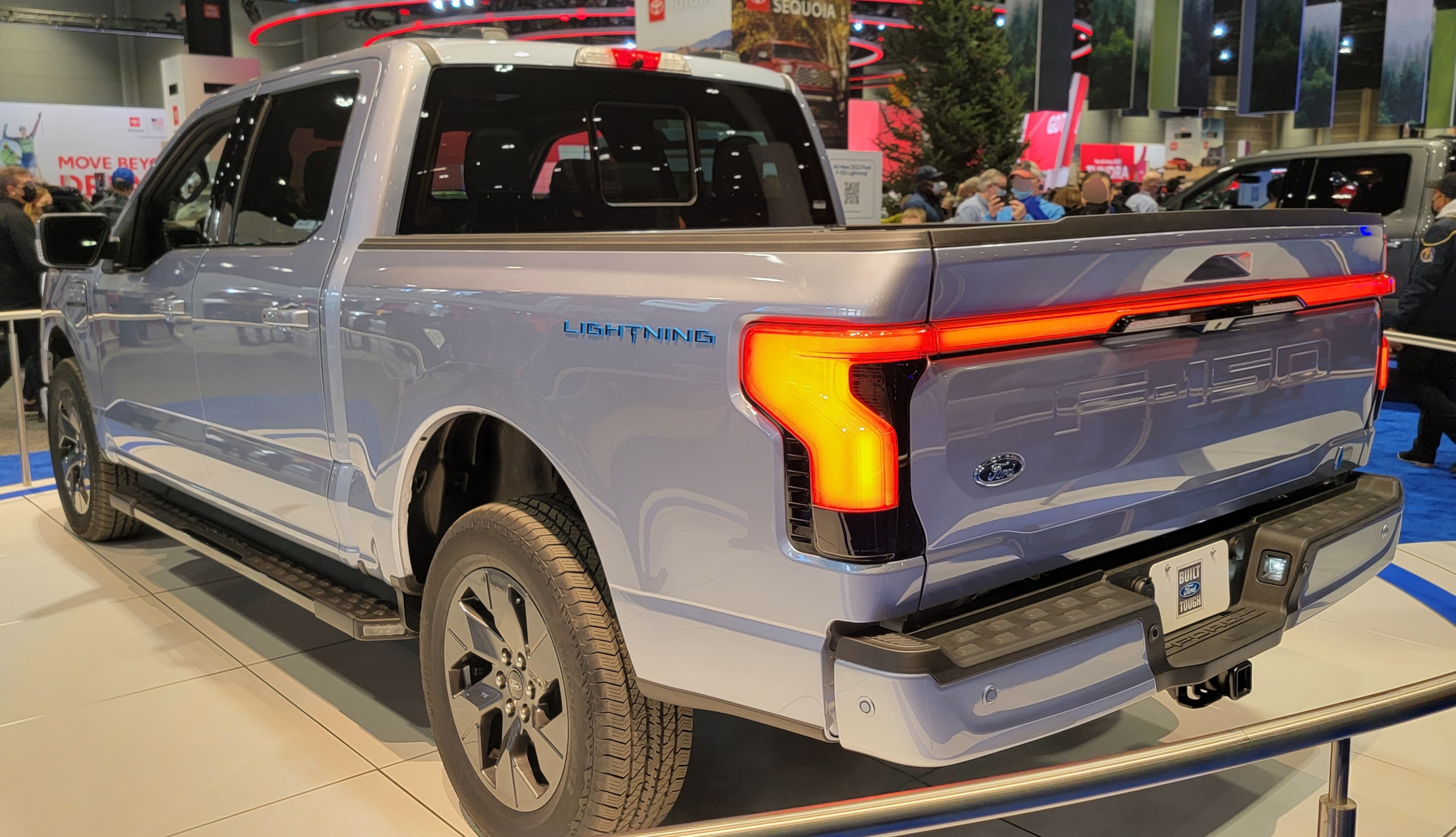
"biggest industry headlines. And first up today, a shocker from Ford. Ford is reportedly weighing whether to cancel production of its Ford F-150 Lightning electric pickup, this according to The Wall Street Journal. Production of the EV pickup has been idled since October after a fire at a"
The Ford F-150 Lightning is an electric version of the popular Ford F-150 truck, which means it runs on electricity instead of gasoline. It's important because it shows how car companies are trying to make more environmentally friendly vehicles. The talk about possibly stopping its production suggests that there are some challenges or issues with making these electric trucks.
The Ford F-150 Lightning is an all-electric version of Ford's best-selling F-150 pickup truck. It represents a significant shift towards electric vehicles in the pickup segment, showcasing Ford's commitment to electrification and innovation in the automotive industry. The discussion around its potential production cancellation highlights the challenges faced by automakers in the transition to electric vehicles.
"Ford's EV division continues to hemorrhage money, losing, get this, $3.6 billion dollars this year alone. Zooming out, Ford's potential EV retreat is far from isolated."
An EV, or electric vehicle, is a car that runs on electricity instead of gasoline or diesel.
An electric vehicle (EV) is a type of vehicle that is powered entirely or partially by electricity, using electric motors instead of internal combustion engines.
"Stellantis already canceled its all-electric ram. Tesla, Cybertruck sales have collapsed and Rivian is laying off workers amid huge losses."
Stellantis is a big car company that makes many different brands of cars, like Jeep and Dodge.
Stellantis is a multinational automotive manufacturer formed from the merger of Fiat Chrysler Automobiles and PSA Group, producing various brands including Jeep, Dodge, and Peugeot.
"...is already canceled its all-electric ram. Tesla, Cybertruck sales have collapsed and Rivian is laying off wor..."
The Tesla Cybertruck is a new electric pickup truck that looks very different from regular trucks, almost like something from a sci-fi movie. It's important because it's part of Tesla's efforts to create electric vehicles, but there are concerns that not enough people want to buy it. This has led to worries about whether Tesla will keep making it.
The Tesla Cybertruck is an all-electric pickup truck known for its unique, futuristic design and advanced technology features. It has garnered significant attention since its unveiling, but recent reports indicate that sales have not met expectations, leading to discussions about its future in the market. The Cybertruck's performance and design are often compared to traditional trucks, making it a focal point in the conversation about the future of electric vehicles.
"Next up today, there's been a big leadership shake up at CarMax. CEO Bill Nash is stepping down December 1st after the used car giant posted weak preliminary results for the third quarter."
CarMax is a company that sells used cars and is known for making the buying process simple and straightforward.
CarMax is a leading retailer of used cars in the United States, known for its no-haggle pricing and wide selection of vehicles.
"However, buyers who are unhappy with their trading values, but did not receive a thorough explanation just to find the amount and had higher overall satisfaction scores. Bottom line, customer trust is becoming the ultimate currency as costs rise."
Transparent pricing means that car buyers know exactly how much they will pay for a car, including any extra fees. This helps customers feel more confident and satisfied with their purchase.
Transparent pricing refers to the practice of clearly communicating all costs associated with a vehicle purchase, including fees and trade-in values. This approach builds trust between dealers and customers, leading to higher satisfaction scores.
"And finally, up today, we bring an update to the unfolding automotive chip crisis. It's not Doritos or Lay's."
The automotive chip crisis is a situation where car manufacturers are having trouble getting the computer chips they need to build cars. This has caused delays and made cars more expensive.
The automotive chip crisis refers to the global shortage of semiconductor chips that has significantly impacted vehicle production and sales. This shortage has led to delays in manufacturing and increased vehicle prices due to limited supply.
"it's those that go into making the vehicles we sell involving semiconductor chip maker Nexperia. Earlier this week, Nexperia told its customers it still had no clarity on if or when shipments..."
Nexperia is a company that makes tiny electronic parts, like chips, which are important for cars to work properly.
Nexperia is a semiconductor company that specializes in producing components essential for various electronic applications, including those used in automotive manufacturing.
"Parts suppliers like Bosch and Amovio say shipments have started flowing and automakers, including Volkswagen, BMW, and Honda are already planning to restart production."
Bosch is a big company that makes parts for cars, like brakes and engines, helping them run better and safer.
Bosch is a leading global supplier of technology and services, including automotive components such as braking systems, fuel systems, and electronic control units.
"if it's not a customer trade-in, and then getting it through service, and then getting it out into the world. Yuli, do you agree? I do."
A trade-in is when you give your old car to a dealership to help pay for a new one. It makes buying a new car easier because you can lower the price you have to pay.
Trade-ins refer to the practice of exchanging a used vehicle as part of the payment for a new or used vehicle. This process can simplify the purchasing experience for customers by reducing the amount they need to finance or pay upfront.
"I'm curious, do you have separate internal departments in each rooftop? I mean, maybe you do it on a case-to-case basis, but you have dedicated teams to, you know, those trade-ins?"
A service advisor is someone at a car dealership who helps you with your car repairs. They explain what needs to be done and keep you updated on the work being done.
A service advisor is a professional at a dealership or repair shop who acts as a liaison between customers and the service department. They help customers understand the services their vehicles need and manage the repair process.
"If you let your service advisors or your overall technicians work on it, all use cars get pushed off."
Technicians are the people who fix cars. They know how to repair different parts of a vehicle and make sure everything works properly.
Technicians in the automotive context are skilled professionals who perform maintenance and repairs on vehicles. They diagnose issues, replace parts, and ensure that vehicles are safe and operational.
"if you have a dedicated service advisor, we call our internal advisor that's paid on days in shop, not gross or hours, and he has his dedicated technicians that work for that person."
A pay plan is how someone gets paid for their work. In car dealerships, it can depend on how many cars they fix or sell.
A pay plan in the automotive industry typically refers to the compensation structure for employees, particularly service advisors and technicians. It can be based on various factors such as hours worked, sales made, or customer satisfaction metrics.
"If there is a problem with a car, the world should blow up, and we need to figure"
Parts issues happen when the parts needed to fix a car are missing or broken. This can slow down the repair process and make customers unhappy.
Parts issues refer to problems that arise when the necessary components for vehicle repair or maintenance are unavailable, delayed, or defective. This can significantly impact the efficiency of service operations and customer satisfaction.
"...sell them a great F&I product that drives repeat referral business. And then when that car comes back in, those things are now going to be covered for the extended warranty..."
F&I products are services related to financing and insurance that dealerships offer when you buy a car. They can include things like loans, insurance, and warranties to help protect your purchase.
F&I stands for Finance and Insurance, which refers to products and services offered to customers during the car buying process, such as financing options, insurance, and extended warranties. These products can enhance the dealership's revenue and improve customer satisfaction.
"...those things are now going to be covered for the extended warranty. Guess what happens? The customer's happy..."
An extended warranty is like extra insurance for your car that covers repairs after the original warranty ends. It helps protect you from high repair costs if something goes wrong.
An extended warranty is a service contract that provides additional coverage for a vehicle beyond the manufacturer's warranty. It can cover repairs and maintenance for a specified period or mileage, offering peace of mind to the vehicle owner.
"...what do you say to somebody who's in the Midwest, they've got EVs, they've got to sell those EVs..."
EVs are electric vehicles that run on electricity instead of gasoline. They are better for the environment and are becoming more common as technology improves.
EVs, or electric vehicles, are cars that are powered entirely or partially by electricity instead of traditional gasoline or diesel fuel. They are becoming increasingly popular due to their environmental benefits and advancements in battery technology.
"...I'm not sure if a Porsche customer wants us to go to their tile driveway and jack their car up and fix it, but they pick up and delivery works there."
Porsche is a famous car brand from Germany that makes fast and luxury cars. They are known for models like the 911 and the Cayenne.
Porsche is a German automotive manufacturer known for its high-performance sports cars, SUVs, and sedans. The brand is synonymous with luxury and performance, often appealing to enthusiasts and collectors.
"...We know where Carvana was not so long ago when their stock was $6, $7 a share..."
Carvana is a company where you can buy and sell used cars online. They even have a special vending machine where you can pick up your car after buying it.
Carvana is an online used car retailer that allows customers to buy and sell cars through a digital platform, offering home delivery and a unique car vending machine experience.
"...making sure that they're buying the right inventory one, but getting that inventory recondition and through the shop makes all the difference..."
Reconditioning is when a used car is fixed up and cleaned to make it look and work like new before being sold.
Reconditioning refers to the process of repairing and refurbishing used vehicles to bring them up to a certain standard before they are sold. This can include mechanical repairs, cleaning, and cosmetic improvements.
"...I didn't know my car was worth this much. But now that I have the offer in hand, now I'll talk to you. Yeah, but so I'm just thinking this through logically, right? So Carvana sends out their automated offer..."
An automated offer is a price that a company gives you for your car based on information you provide, like its make and model. This happens quickly and doesn't require someone to look at the car in person.
An automated offer is a price quote generated by a system or algorithm, often used by companies like Carvana to provide quick estimates for vehicle trade-ins or sales without the need for a physical inspection.
Select text to request an explanation
Hey everybody, welcome back to another episode of The Daily Dealer Live.
I'm your host, Sam Dark, and welcome to this space where all automotive comes together.
Thanks for choosing to be here on this Friday, November 7th, where today is it's Fixed Ops
Friday, everybody. But before we get into Fixed Ops Friday, let's jump into today's
biggest industry headlines. And first up today, a shocker from Ford. Ford is reportedly weighing
whether to cancel production of its Ford F-150 Lightning electric pickup, this according to
The Wall Street Journal. Production of the EV pickup has been idled since October after a fire at a
novellas aluminum plant in upstate New York when disrupted a key supply source for U.S. automakers.
When faced with a shortage, Ford prioritized the gas-powered F-150 adding shifts to its
Dearborn plant while keeping the Rogue Electric Vehicle Center dark. A few years ago, the Lightning
launched to huge buzz, but it has struggled to maintain sales momentum ever since. And as a result,
Ford's EV division continues to hemorrhage money, losing, get this, $3.6 billion dollars this year
alone. Zooming out, Ford's potential EV retreat is far from isolated. Stellantis already canceled
its all-electric ram. Tesla, Cybertruck sales have collapsed and Rivian is laying off workers amid
huge losses. Next up today, there's been a big leadership shake up at CarMax. CEO Bill Nash
is stepping down December 1st after the used car giant posted weak preliminary results for the
third quarter. While it searches for a new CEO, CarMax is bringing back some familiar faces to
stabilize things. Longtime board member and retail veteran David McCrae will step in as interim CEO
while former chief Tom Fulliard, who ran CarMax for a decade, is returning as executive chair.
But it's been a rough year for CarMax stock, which is down, get this, 50% in 2025. And Fulliard
says the focus is now simple. Get sales moving again, improve profitability and cut costs.
Looking ahead, the company's next earnings call on December 18th will likely expose the true depths
of CarMax's structural issues. And we'll bring you that report once it's released next month,
mid month. Next up today, and it is interesting, CarMax Carvana, similar models focused on used
the tale of two very different results. It'll be fun to dive into that today and in future episodes.
Next up today, back to the news, a new JD Power study shows that auto tariffs triggered retail
whiplash earlier this year, shocker, pulling many car buyers forward into the market and
leaving some dealers in a lurch now that demand is softening. The survey of more than 32,000 new
vehicle buyers found that 87% of import buyers, both premium and mass market, decided to buy
sooner than planned, 87% sooner. But that rush came at a price about 15% said they spent more
than they meant to, while overall satisfaction scores remain basically unchanged. However,
between the lines, transparency is now a measurable profit driver for dealers. For example,
buyers who are unhappy with their trading values, but did not receive a thorough explanation just
to find the amount and had higher overall satisfaction scores. Bottom line, customer
trust is becoming the ultimate currency as costs rise. So I just want to make sure I said that
correctly. Buyers who are unhappy with their trade values, but who received a thorough explanation
explaining the trade value scored higher overall satisfaction scores than those that did not. So
data backing up the decision and providing transparency scores well with consumers.
By the way, that's something we in the auto industry know and are running towards. And finally,
up today, we bring an update to the unfolding automotive chip crisis. It's not Doritos or Lay's,
it's those that go into making the vehicles we sell involving semiconductor chip maker Nexperia.
Earlier this week, Nexperia told its customers it still had no clarity on if or when shipments
of chips which are vital to core vehicle functions would fully resume. Then in a quick turnaround,
and you can't make this up, the Netherlands decided to back down and China began easing
restrictions, allowing some exports to move again, according to Bloomberg. Parts suppliers like Bosch
and Amovio say shipments have started flowing and automakers, including Volkswagen, BMW, and Honda
are already planning to restart production. Still, industry leaders are cautious. German
manufacturers are preparing for possible disruptions in the next four to six weeks. And insiders
warn that financial and oversight disputes between Nexperia's Dutch headquarters and its Chinese
operations remain essentially unresolved. And we here at CDG are committed to continue bringing
you the updates on this evolving chip crisis now and into the future. And that is a wrap on today's
industry news. Yuli, welcome back. Happy to be here. All right, what's your take? Are we going
to see chips or no chips? It does seem like it goes back and forth. Trump went to China. He
held his summit. It feels like maybe the resumption and kind of the loosening of some of that might
be tied to his visit, but it's tough to say for sure. And as with all things, chip shortages and
tariffs, like it remains up in the air, what are dealers to do in this tumultuous time as we're
trying to figure out, do you go all in on inventory used in particular, anticipating a chip shortage,
or do you continue to exercise high discipline, assuming that that will not materialize? It's
a fascinating question, Yuli. Yeah, I mean, it feels like a coin toss. Actually, every single
point you were going through, I'm like, I have this opinion of where the market could go in any
direction. But you know, the people in the business do understand these chips that we're short on are
not these super complicated things. They're the things that control ABS, power windows,
power door locks. I mean, you cannot finish a car without those chips. Yeah, that is true, right?
Like it is not the none of these are optional. So yeah, all right, everybody for those joining
our live stream, we are live as always across all CDG social media platforms, post your comments,
we'll bring them into today's show. And what a show we have in store for you today, our daily
dealer live audience. Again, it's Fixed Ops Friday, which will be super fun. So wherever you're
watching, whether you're in fixed sales, parts, vendor, shout out in the comments, let us know
where you're listening from, where you're watching from, and we'll bring you into today's show with
your conversation with your comments with your feedback. And first up today, we go to someone
who's been here multiple times in the Fixed Ops world, we're super pumped to have totally Williams,
Parts and Service Director at the Neal Company back with us again on daily dealer live. Totally
welcome. Thank you for joining us. I love Fixed Ops Fridays. Yes, Fixed Ops Friday and you are a
core central figure to Fixed Ops Fridays, because you refuse to relent that variable
ops or sales, you are driving in your words, the dealership experience and the profitability
at your dealer group totally. Yes, no, maybe so. I would say 100%. You got to remember,
if it wasn't for Fixed Ops, sales could not sell the second, third, fourth, fiftieth car,
correct? And on this Friday, November 7th, that's a great reminder for everybody across the
organization. All right, so tell us first off, totally, how's Biz? Biz is okay. I think the last
quarter, the last month was a struggle, but we did have year over year growth, which is always good.
We want to be green. We sold 138% of our hours forecast, which you know, that's what I care about,
don't care about the money, care about selling our capacity. And you know, it was interesting,
you talk about the chips and then use cars, is use cars was a big focus for us in Fixed.
How do we drive more inventory, quality inventory, inventory that would send that really did help
the Fixed Ops department, and of course, Fixed helps fix the use car department as well.
So when you say you have a used car focus, is that on reconning the used cars or is it acquiring
used cars, totally? I think it's always. But on my side, it's more about recon, as you know. I mean,
our goal is how many days, how many hours should we get it out to is that is the shop set up?
We'll get to the used car tomorrow. No, we need to get to use car today. We had our biggest gross
for the store when it comes to recon gross and the most hours that we ever produced in used cars
this month, which to me is a win. When you figure out you're struggling with, you know, economy is
down a little bit, I think in the market, I think people are a little worried, but use cars picked
it up. And guess what we did? We gave a tremendous amount of quality, great recon vehicles to the
used car department to sell to make great customers for us, which is why we're in business, don't we?
So you shortened the time from acquisition to the curb to frontline ready, which we all know
is an important metric in being able to sell. If we can sell that vehicle in the first 30 days,
we're going to be more profitable. How did you how did you shorten that turn time totally?
Focus 100%. So we focus on two things in the fixed ops department. One is when we buy the car,
how many days did it get to the shop? The next thing is that it goes from the how many days in
the shop. If that's over two days, we have a serious problem, right? So our focus is that
now what happens is when we have our dedicated advisor on that used car, our dedicated texts,
speed is the essence. Oh, guess what? We bonus the internal advisor, not on gross, not on anything,
but the total days in the shop. So that person is doing what? My car needs to go. My car needs to
go. What can I do to get parts? So our focus when you look at our total group, cars in shop,
we were under two days, 1.9. But you know what? It started with a one. And days in the shop jumped
up to about just about one point something. You know, it depends how you buy the cars. But the
focus is what? Speed and quality. And that to me is the biggest thing for us. So you said it
started with a one. Give us the starting number. Because I was at one of our stores and I was
looking at a number that looked like 14 to 15. And I lost my mind. I thought that's insane,
right? That's crazy. I'm not going to admit that, but I might say that. So a store I know,
I'm asking for a friend. So what did your number start with? It started four to five.
Yeah, yeah. And now you're now you're two days. Yeah, correct. Now we had some stores that struggled.
I'm gonna say, you know, I'm not gonna say your number, but it came close to it. But now every
store is in the green under three. That includes before and after. So I think I know this answer,
but I'm gonna ask it anyway. Is there a technology or a tool that you're using to help track that
through the process from start to finish? So, you know, each store has their own little widget,
you know, you know, so we use X time in our store. So we provide the videos and so forth. But
really what I look at is the day we purchased the car in CDK, okay, the day it opened the repair
order and the daily repair order close. So I'm not giving any fake news here. This is real numbers.
So from the day it's bought in CDK to the day it's frontline ready, what's your average today?
The time that the RO closed to frontline ready, I don't know that exact number, but I know a lot
of stores have told me it's less than a day on average. Because you have the detail process,
usually things are happening in that process there, but we're getting that car out on the thing. So
when you look at our overall, I would say from the day we buy it or hits the ground, if it ain't
on the frontline in five days or four days, there's a problem. And totally, are you using some sort
of a technology tool like Rapid Recon or something to track as it goes through service or are you
using your own the spreadsheets? I know you've got a pretty elaborate tool yourself. So some stores
like Rapid Recon, and they like it. So we like to use car manager and the service manager really
work on that. Some people use X time, where we forward that information. But it's whatever the
store wants. I think at the needle company, we want the store to own it. We just need the days
under three in the shop in beforehand. I mean, if you're at three, you're in the negative. We
really want two days in the shop. But look at what happens for a store. We actually made a month
that we were struggling with, because warranty and customer pay were down at teens. Used cars
came through. Used car, good business. Absolutely. We charge what we charge a customer. We need to
demand that excellence. Because ultimately, we're in the repeat and referral business.
Every Recon ticket is what? A new customer for the needle company. So I was just in defense of
myself. I was talking from the moment it's acquired, whether at auction or somewhere else to the
moment. Okay, okay. So I'm going to give you, but I will also tell you that number is important.
I think the focus right now has got to be from the minute that vehicle is purchased. It's using
every tool to get it on the lot as fast as you can. So delivering it from wherever you buy it,
if it's not a customer trade-in, and then getting it through service, and then getting it out into
the world. Yuli, do you agree? I do. And Tully, I'm curious, do you have separate internal departments
in each rooftop? I mean, maybe you do it on a case-to-case basis, but you have dedicated teams to,
you know, those trade-ins? 100% your spot on on this, because if you let your service advisors
or your overall technicians work on it, all use cars get pushed off. If you have a dedicated
service advisor, we call our internal advisor that's paid on days in shop, not gross or hours,
and he has his dedicated technicians that work for that person, right? That, guess what happens?
You're under two days. Parts, issues, right? Because their focus is on their pay plan, God
bless America. Our technicians are paid on hours, God bless America. Guess what happens?
Cars get done. If there is a problem with a car, the world should blow up, and we need to figure
it out. Please, please, please, if you look at your store and you have a used car problem,
get what exactly what you said, a dedicated used car team. You can roll some things off if we buy
a bunch of cars or whatever, God bless America, but the focus needs to go to that one or two or
three texts based on your volume. So, Tully, Lauren Klein agrees with you. She says fixed ops is
the backbone. Sales only sells the first car. So, you've got a champion in your
corner. She also says, control the controllable. Use cars fixed, developing your people. I just
have an interesting question. A lot of times in some dealerships, there's this tension between
fixed ops and sales, and you've been on here and we've joked with Dennis Gingrich. You guys seem
to work really well, but you also advocate well for the departments that you work in. So, as you
started to see this problem with used cars, the time to frontline ready, what did that conversation
in your organization look like? Who's saying, hey, we need to speed this up? And how do you avoid
responding with, hey, we're busy. We're trying to earn gross here and use car gross. How do you get
to the point where use car gross is as good as customer pay, warranty pay, and everything else,
Tully? Great question. You get your service managers in a room and say, do you want to get
paid more for you and your family? The answer is yes. Do you have extra capacity? Yes. You need
to dedicate those teams to that. If you want to make more money for you and your family, we need
to be in the used car business in the fixed ops department. That includes quality because we're
going to demand quality, right? So then our used car managers are like, oh my God, we're getting
cars in and out, and our used car managers and our fixed ops departments are working as one.
One other thing I've done to help build that great relationship, all my used car managers get
paid on recon gross. Oh, yeah, that's good. Yeah. There's a little incentive to make sure we do the
car right because here's the deal. Yo, I only have so much gross in the car. No, you don't,
but here's the deal. I'm going to ensure that that gross goes to the bottom line of the store
and I'll pay you on it. So the goal is to take some of that tension away. And that helped us a lot.
Yeah, that's smart. So you said you got together, you realized that things were a little bit
challenging, right? And I love how you came to that. At some point, I presume in September,
tell us what that conversation looked at at the Nilo group. You realized you were under pressure
on, you know, warranty pay and customer pay and everything else. How did you come to a decision
about where your biggest opportunity was and what the problem was and how did you pivot
from a director of Fixed Ops perspective, Tully? Great question. So, you know, we have Fixed Ops
team meetings every week with our leaderships, right? And I'm also, you know, as I, you know,
I'm on the sales meeting as Dennis Stoll at times will be on the fixed meeting. We want to know
everybody understands the business at their store. And I think a lot of times fixed stays behind their
wall sales sales behind their wall and they don't know what they need. So what is a problem right
now in the fourth quarter? We don't have good inventory, right? Inventory unused and new. A
lot of our stores are going to struggle. We don't have great new inventory. So what do we need?
We need great used cars. If we explain to our managers in service that we can make more money
for you and your family by focusing on used with a dedicated team, don't take away from service,
you know, from the warranty and customer pay. But if you focus on what works at your store,
how do I get more used cars in the driveway? That in turn does what it drives repeat and for
referral business, because that's the business that we're in. We want to sell. Yes, I would
love to sell our brands. We sell off brands, of course. But our goal is that we want to get
those customers in there because retention is the key and use cars helps with that tremendously.
So, Tully, you mentioned doing it all quality. How are you measuring quality in this case?
Great question. Comebacks, zero tolerance for that, right? Two is that we have pictures and video
and a digital inspection on every car as we would a customer's car. So the goal would be
is that if there's ever a question when the car comes back, guess what we do? We look at the
pictures and video. Did the used car managers say no to that repair? And we ask the questions why.
As long as everybody knows what we're doing and make it transparent, things just work.
Great relationships between used car managers and internal advisors and fixed ops managers
is the key to making great used cars. All right, so I'm going to challenge you a little bit there.
I heard you say you saw customer pay, warranty pay go down. So you have capacity. What does that
conversation look like when you're cranking it in service? Like in the middle of the summer months
or the winter months when it's as busy it can be, you don't have time for used cars. How does
used cars get your attention to figure it out in the front line? Totally. Great question. It's
all about the hours. It's not about the money. When you look at your hours capacity, where are you?
When we are when we are going a mile a minute, we will be at 140 to 150 percent, which that you
know what that is? That's 13 and a half hours per tech per day, rich and tired for every technician.
So if you focus on your capacity, yes, when things go down, yes, we had 138 percent last month.
Okay, that was, we kind of think, oh, something happened. They still made over 12 hours per guy.
Remember, nine hours is the is the staple, right? So the goal is going to be is that if you think
about capacity. So now we slowed down a little bit. We of course, we do marketing like everybody
else does, but the goal is going to be is how do we fill it in? Wow, variable has a hole in it.
How do we get more great use cars of them? And bam, we got another two, three hundred hours per
store. Totally. I'm going to push you, though. You're doing the 12 hours you're overworked in
service. Are you going to put used? Are you going to prioritize used or are you going to put the
customer first? That's the reason why we have used car teams. So we do not do that because
you know what I do? I'm going to plead the fifth year, but here, we're going to go to the customer.
And then what happens? The other customer loses. So you need to have those teams.
Then you've got to go higher. You got to hire. You got to build the team. You got to grow the team.
So are you building your team? And that's the key issue in the technicians. We don't have a tech
shortage at the company because we always have a bench. I love it. All right. So one metric,
you've been on this show many times and you've touted one metric as the most important metric.
It's not absorption. It's not what's the one metric and how are you doing on that metric and
what are you doing to drive it today? Thanks for asking that question. The best metrics that you
should be is retention number. When you look at the average dealer, they're under 40 sometimes.
70 has to be the minimum number for you, right? When you talk about retention, well,
it's hard. I know it's hard. But if we provide great service to customers, great CSI,
transparency, honesty, and integrity, and believe that we're in the repeat referral business,
retention becomes easier. As we have four stores over 70, as the group were 70,
this is what I'm super proud about. And guess what? I like to talk about it a lot.
Yeah. So it's interesting. In the news, we talked about a report. I think it's from JD Powers and
it highlights the importance of transparency on the used car trade-in piece. Transparency is easier
when we have a relationship. It's not easier when you have a relationship. Transparency is great
when we have a great relationship. We have a great relationship when service has a relationship,
when they bring their car in, they trade it. Customer satisfaction goes up. So I buy into this.
So I got something here for you. Dennis called me up a week a month ago and he said, Sam,
we sold a car into your territory. I'm like, you did not from Sacramento. He said, yeah,
we did. He said, yeah, we did. I said, how did Tully allow that to happen? Because Tully has
total command control. He's like, I vetoed him. Tully, could this possibly be true?
Well, here's the deal. It didn't get vetoed. The sales managers are all about today's money,
not loans or money. As we are in fixed stops, fixed stops Friday, we're about the long-term
dollar. And I think when you look at 100%, but when you look at your general managers or your
dealers at your store, are they truly in to repeat referral business? What they're going to do is
don't ship cars out because we want to stay them in. What do we want to do? Sell them their car,
sell them a great F&I product that drives repeat referral business. And then when that car comes
back in, those things are now going to be covered for the extended warranty. Guess what happens?
The customer's happy. They trade the car in and we got a great trade-in and another customer.
But Tully, what do you say to somebody who's in the Midwest, they've got EVs,
they've got to sell those EVs, and they're like, look, we have to ship these EVs to Texas and
to California and to the coast. We have to pump out vehicles in order to be successful. What do
you say to that sales director or sales manager or general manager that says, I get your retention
and I get the importance of the relationship to the customer, but at the end of the day,
we've got to do inventory management, Tully. I would say that you're not in the repeat referral
business. You're in the business of today, not tomorrow. Long term, that store will fail. And
two is that if you're in the Midwest and you bought a bunch of EV cars, you might want to look in the
mirror first because the issue is that that's not your market. OEM, manufacturer, they sometimes
push it. That's the reality of a sales manager, Tully. Correct answer, but the issue is going
to be, is that do you know your market? If you know your customer, you can drive that repeat
referral business. Yeah. All right, Tully, you've got a ton of experience in doing what you do.
You're respected, the fix stops from. What's next? So retention is a key indicator for you. Use cars,
days to front line. I think you made every use car manager super happy. What's the next thing
that keeps you up at night that you're working to solve for it, Nilo, Tully? I think the next
thing is, is that how do we make it easier for a customer to do business at a car dealership?
I think it's horrible. And we're pretty fast. Take that back. I'm going to take it back. How
long does it take to buy a car? 14 million hours to buy a car? Come on. And how long does it take
to go in and sit in a car, drive the car into service drive, wait for a person? I just think
that we have to be customer centric on the speed of a transaction. No matter what transaction it is,
if it's a parts counter to a service department to a car deal, is how do we make customers come
into a car dealership and get out? Well, because on that vein, if you want to make the experience
better, you're opening up the market, right? If we want to only sell into our local area,
we're going to have a very small market, but there's going to be customers that want to do
business with you if you're that great. And now you're eating into that retention, right?
It is, but I think that we can grow our outside business for fixed, as you're correct,
is that now maybe instead of in that focus of maybe that 60 miles, maybe I go out 120 because
I'll go pick it up and deliver it, or I'll have mobile service. Manufacturers need to help in that
survival, which we, you know, we struggle with, we do do pick up and delivery a lot, local. But
the goal is going to be is that's the next step, you're spot on. How do we increase our footprint
for fixed to drive that repeat referral business? So on that vein, totally, Lauren Klein online
says, are you doing mobile service? What do you recommend to dealers wanting to start offering
a mobile service today? I think mobile service is a great idea. My good friend, Ed Roberts,
as you know, is the king of mobile service. I think it's all about your brand. I'm not sure if
a Porsche customer wants us to go to their tile driveway and jack their car up and fix it,
but they pick up and delivery works there. I think they're each brand is more specific on
what they want to do for mobile, mobile repair. I believe mobile repair will come to some of
our luxury brands soon. The manufacturer as Ford has done an incredible job with our manufacturers
have said, you know, we like it, but we're not going to pay you to do it. I think they need to,
we all need to be in the same picture for that because they're also in the repeat referral
business. And I think that as you said, we need to expand our market. I want to drill my market
out 250 miles, not just 50 miles. So, Toli, you are exposed to a lot of different dealer groups
as you travel across the country and you speak and you give advice. Talking about that experience
and talking about speed in the dealership, what could variable or sales learn from fixed ops
that they don't currently know? Does fixed ops deliver a faster, more efficient process than
sales and what could sales learn? That's a great question. I think that sales needs to work on
loyalty and repeat referral business. I think when you do a car deal, they're focused on one thing,
is selling that car and try to get as much money they can for that car today. They're not into the
long term. When you look at your best salesperson, like we have this guy at Audi that sells 20,
30 cars a month, he is looking at for the long term. He's been with us forever and his goal is
that I'm in the long term market, not the short term market. So, when you look at variable,
think about today but think about tomorrow and the future because what are they going to bring you?
They're friends and family to buy more cars, which in turns feeds the fixed ops department,
which in turns gives them a never car sale. So, Toli, let's drop some knowledge to our
audience here. I'm sure everybody already notices this but we talk variable, which is traditionally
sales. We talk fixed, which is service. When I went through an ADA dealer academy, props to the
graduating class, I was part of, they taught us. They said fixed is called fix. Why? Because it's
very consistent in terms of expense and sales. Variable has these horrendous and incredible
peaks and valleys and cycles, weather and supply and all that stuff. Part of what I hear you saying,
Toli, is the future of automotive is a more fixed variable department, right? Without some of those
peaks and valleys seeking to earn that business, keep that business and serve that business long
term. I think you're spot on. So, let's think about this. Go back five, 10 years or probably even less
than that. It was parts and service. We haven't said that have we lately. It's fixed ops department.
Yeah. What we need to say, it's not fixed and variable. We need to say it's the dealership
and I think that as good great dealerships have great culture, the fixed ops and the variable
side have a really, really great relationship. I would say Nilos have one of the best, but that's
where it's going to work. If your variable and fixed are fighting each other and want to blame
each other, who's going to pay for it? Stop. Look in the mirror. Fix that problem.
Yeah. Mic drop on that. Online Joshua Lehman says long term sales equals professional sales. So,
Toli, what are your thoughts on that as we wrap up? I think it is because you know what are car
salesmen? They're salesmen. What are service advisors? They're sales people as well, right?
So, we have to treat them as that sometimes with service advisors and that could be another
session, but service advisors say when someone says no, I'll see you next time.
Well, Toli Williams, parts and service director at the Nilo group. Thanks for being on this fixed
ops Friday. You owned it. You crushed it and all in fixed ops, dealership operations, service
parts, whatever you want to call it. You've given us some great things to think about today, Toli.
Thanks for being on the show. Thank you so much for having me. I can't wait for the next time.
Take care of yourself. I'll be back soon. Oh, he gets me so charged up. It's such a fun conversation
always with Toli and it is an interesting perspective, one that everybody, all of us in
sales, the sales side of a dealership would do well to listen to that retention piece. I love
that he always, always talks about it. All right, Yuli, let's talk CR Stream.
Hey, dealers, put the power of multiple auctions in your hand. Use CR Stream to sell vehicles
on multiple online auctions fast. You pay only a $100, $150 flat selfie to the auction. That's
the QR code or you can go into the show notes at the very bottom if you're listening to the podcast
later. We appreciate CR Stream for sponsoring today's content on this fixed ops Friday,
including the great perspectives provided us today by Toli Williams. Thanks, CR Stream.
And then, Yuli, we got to just mention the NADA party. Keep the requests coming in.
Card dealership guys back with our second annual NADA party. It's happening in Las Vegas on
Thursday, Friday, February 5th. It's the hottest ticket at NADA 2026. Special guests, automotive
personalities. To be considered for a formal invite, hit the link in the show notes, request
to join, fill out the questionnaire. Spots are limited. We can't have everybody, but we want
you. So RSVP today and we hope to see you in Las Vegas, FIVA Las Vegas, but which, by the way,
is always my favorite place for NADA. Snow, New Orleans. I love New Orleans. It's always fun,
good food, whatever. But Vegas is a great natural spot for that. And I heard a comment online,
Mike Vogel. Toli Williams is a great fixed ops advocate for so many things and a wealth of great
advice. Agree with that. Lauren Klein, amazing insights. Toli, thank you. Next up today,
director of sales at Sonic Tools, USA. Welcome to the show, Colin Spear. Welcome. Thanks for being here.
Well, thank you for having me. Happy Friday. Happy Friday. So welcome to fixed ops Friday.
We appreciate you being here. So you're in the tool business in fixed ops. Yes. And I'm fascinated.
You know, there's this trend. How did we get to a place where a 20-year-old lube tech in
today's world is carrying a $200 a month tool payment? What's the problem with that? And what's
the solution to that? Well, it's a great question. And it's something that we are very keen to try to
address. You know, it's interesting. In this country, we have the very unique situation where
technicians historically have always provided their own tools. Yes. They start a job, which is
strange when you think about it, because no other job requires that. If I start working for you,
you're probably going to provide me with a desk and a phone and a computer. Yeah. And everything I
need in order to do my job. And we're in a crossroads within the industry where I'm sure you've seen
some of the, you know, different statistics and data that, you know, we need many hundreds of
thousands of technicians in this industry over the coming years. Yeah. And there are multiple
different roadblocks that are creating this. And one of the key roadblocks is the debt that is
required in order for a technician to get started. And so what we often find is a solution and as
a bridge to help with that recruitment, but also retention piece is working hand in hand with the,
whether it's the FixOps manager, the service manager, whoever has ownership over those new
technicians coming in is providing them with some kind of entry level starter type set to help them
get started so that they're able to be productive and profitable on day one. So Colin, tell us what
that setup looks like. So here at the Ziggler Auto Group, we have a technician academy. We've
talked about it a lot and we formed a partnership with a tool provider and there's X dollars that
that candidate can go out and use to purchase. Now, they own those tools as a result of going
through the program. So there's still that personal ownership, but it just helps with,
to your point, some of that debt. What would you recommend as that starter kit? Do you want the
dealership to own it? The individual, how does that look? So we see it both ways. The most common
way is for the dealership to own it. And typically there will be some sort of an agreement or
contract sign that I'm going to provide these for you. And you're going to agree to stay here for
maybe 12 months, 24 months. And at the end of that period of time, then they become yours.
And so there's an incentive to stay. So it ties directly in with that retention component. But
yet there's also the ownership. There's a psychological piece that these are mine. I'm
going to take care of them. I'm going to make sure that the tools are not only being used,
but they're being cared for. And because I want to make sure that I have these at the end of that
period of time. So Colin, do you have any data that shows what retention looks like when you
provide a program like that as an entry path for new technicians? We do, actually. So working
directly in that field, what we have seen is anywhere from a 30% to 60% increase of technician
retention. And so as I'm sure you know, across the industry, retention of technician is,
can we just say crisis? It's a regular crisis. That's a problem. There's a revolving door
of technicians that have come into the business. And within two years,
25% of those technicians have already left. And they haven't just left to another dealership.
They've left the industry completely. And one of the key issues is related to this tool debt. But
of course, it also gets into pay structure of fixed rate versus hourly and maybe the work
environment. I'm sure there's all kinds of factors that go into that. But this is such an easy thing
to address. It's a very easy solution that as a new technician, this is what I need in order to do
my job. Colin, you mentioned it started here in the US that way, where technicians bought their
own tools, they brought their own tools, and then ultimately they would travel from work to work.
Well, what's the start of that? Why did it begin that way? Because I think there is a shift away
from that, particularly as OEMs require built in toolboxes, right? It's not as easy for the
technicians to pack their tools out when they leave if they leave. How did it, how did the,
how did we, how do we get here, Colin? So I've heard a couple of different stories of the,
you know, once upon a time narrative of how things got started all the way down to the original
technicians weren't automotive technicians, they were just general purpose tradespeople.
If you knew how to fix things, turn wrenches and make things work, you would be hired as a technician.
And those tradespeople would have come with their own tools. And so it was a very low barrier to
entry to say we need humans in our facility to do this work and you come in and it became the norm
and it became the standard that everybody is going to do that. And I think what we have seen
within the society is that that is very, very difficult. It's not common. The interesting
thing too is that the automotive sector is really the only sector that this applies to.
If we were talking about being a technician in an aviation space or, you know, some other sector,
you're not bringing your own tools to the job site, right? So in this regard, the automotive
sector is perhaps a little bit behind the times. So are you seeing more forward thinking dealers
providing tools 100% out the gate and those built-in boxes required by OEMs or being filled by
dealers? And what do programs from tool manufacturers look like where they're
helping to kind of support that? This is a shift, right? It's a shift. What does that shift look
like? Yeah, it is a shift. And I think the shift is being driven by probably two or three different
main drivers. One is the manufacturers themselves are beginning to mandate some of this. And so
whether you want to or not, you may be forced to do it. The second thing is, is that it is a,
again, tied into this recruitment and retention piece. It is something that solves the problem
that otherwise has not been solvable. And then finally, it's a productivity piece as everyone
is trying to maximize productivity and efficiency of a technician to maximize the profitability
of the fixed ops department. Having a consistent and uniform solution from bay to bay is essential.
All right. So you're talking, let's pretend you're talking to a general manager, a dealer,
a service director, who's considering making that full shift. What are some of the first steps
to piloting a program where the dealership would own those tools, provide them to the technicians?
And how do you implement that more broadly? Yeah, the first step, honestly, is to understand
specifically what the needs are within that shop. So you have various different skill levels and very
different requirements per bay. So not every single technician in the shop is going to get
the same sort of set. So there's a little bit of customization and curation to understand
what do we need within this facility. Oftentimes, there's a decision made to either do things in
small stages. You know, we're going to start with one group and over time phase it out across the
shop or in other cases, usually after a remodel or for a new facility that's opening up, they will
go across the board straight from the beginning just to have a clean slate that everything is done.
So what do you think are the biggest fears or misconceptions that keep dealers from embracing
this from shifting over more, more wholly to it? I think honestly, it comes down to just a fear of
the unknown. This is something that has not been done before. If these are dealership-owned tools,
they now become your problem. Historically, they've not been my problem because it's the
technician's problem. So if they have the tools, if they lose the tools, if they need to go buy
something else, that's not my problem. That's your problem. Well, now it is your problem, right?
And so what Sonic does and companies like ours is we have a full inventory control process to make
for sure that now that these are company-owned tools, you need to make sure that you are
inventorying your toolbox, you know what you have, and you're able to keep and maintain traceability
on those tools. Historically, that's not been a concern because they're not your tools.
Yeah, so Yoga Cars says, great question. Does taking care of tools have something to do with
the tech-owned tools? And probably, right? Tracking them, taking care of them. You know,
it's interesting. I had an insurance background. I worked for a Swiss-based insurance carrier.
We did property casualty for dealerships. And one of the biggest unknown, most challenging
features of dealership insurance was to value technician tools because it could be anywhere
from 10,000 to 100,000. I mean, some of the boxes are incredibly elaborate. And there are cases where
there are dealership fires where the tools could be underinsured because you just don't know what's
sitting in the building. That's probably the only item that resides in a building other than maybe
consigned vehicles where you have some liability as a dealer, but you don't totally know what's there.
That's correct. So having a standard offering across the shop allows you to
have very clear traceability on exactly what you have and what the value of that would be.
Yeah. Well, Colin Spears, Director of Sales at Sonic Tools USA. It's been an absolute pleasure
to hear your perspectives on this shift from employee-owned to dealership-owned tools and
really using that as a retention tool to hire, retain, train the best technicians in the industry.
Thanks for being on today with us, Colin. Thank you very much. Look forward to seeing you get soon.
Thank you. Look forward to it. That's interesting. Have you heard of that shift, Uli? It's a big,
it's a, it's a different shift. It's not something I've heard.
Yeah. You know, I was trying to think about my friends coming up. We all took different paths,
but I have friends that are ATEX and there was a time, I think, where it may be like a barbershop,
right? You wanted to buy your scissors so you could make your money and you'd go out and buy
your own tools because you were like, oh, now I have this tool so I can do this job or whatever.
And things have gotten so specialized now. I guess it makes sense. That barrier of entry that we
always talk about in this segment is so high, maybe it is becoming, you know, prohibitive for
people to jump. Plus, candidly, one of the things that drives me nuts is you see that
Snap-on tool at all the dealerships. You see all the technicians empty out the shop to go have
the Snap-on conversation. Like they don't get the group buying power and this is no shade on
Snap-on. Don't call us. It could be anybody, right? There's tool vans that come into groups.
Like those individual technicians race out to buy the tools. That's time away from the cars
they're working on. That's a break. Like I think it makes sense. I would just need to look at a
little bit more of the economics to understand it a little bit better. But it has worked incredibly
well in our group as we train new and emergent technicians. There's a large dollar amount in
partnership with a tool provider. We gift those technicians if they stick around for a while.
I think it's a huge benefit to them. All right. Next up, let's go to our third final guest today,
Frank Knox, Chief Operating Officer at AutoAcquireAI. Frank, welcome to the show.
Good afternoon, gentlemen. How are you guys? Excellent. Before we get into our signature
question, how's biz? Why don't you tell us a little bit about yourself and what you do?
Yeah. A little bit about myself. Started back in the automotive industry back in
03. Started with CarMax. Spent about 17 and a half years within that organization. All of my time
in the acquisition space. Going out and figuring out ways to acquire inventory was what I did
for many, many years with CarMax. Obviously, that's a hot button now. I left there and went to
off-lease only down in South Florida and was the director of purchasing there. Again,
large-scale acquisitions down there before I ended up and landed working with Justin Campbell and
Unique Auto Sourcing and Sales, which is a wholesale side of what we do. Then obviously,
AutoAcquire now, which is again, all in the acquisition space, figuring out ways to help
dealers go out and acquire inventory. You put acquisitions and AI in the same sentence and
everyone perks up and wants to hear more about what you have to say.
Well, I am perked up because what you're saying is near and dear to my heart. We love used vehicle
acquisitions in the car business obviously. I shouldn't say my heart. Our collective car dealer
So, how's biz? Business is good. It's good, but it's challenging. When you see what's happening
with some of the biggest players and some of the best at acquisitions, it has dealers on edge,
obviously, and they're looking for solutions. Sometimes those solutions are going out to the
auction. Sometimes those solutions are rental. Sometimes it's AI. I try to fill that void for
all dealers by making sure that dealers are comfortable with understanding that
they're really, in my opinion, there's no bad channels. There's just bad strategy.
Feel free to go to those places and source inventory, but you better have the right strategy
when you're going out and doing that. It's challenging right now for dealers. It's
challenging for the biggest players. It has people wondering, what is Carvana doing to drive
that level of success? One of the things that CarMax and Carvana have been really good at
is acquiring inventory. I think companies like Carvana, I think they just ramped up the game
by jumping into the franchise world. You join that franchise world and now you have access to
closed sales. You have access to being able to go and get off-leased vehicles. Dare I say,
give Carvana fixed ops and all of a sudden the game has changed significantly if they
start to scale that model. Do you think, Frank, that's the big difference between Carvana and
CarMax's results over this past quarter? CarMax losing 50% of its stock price.
You heard in the news, new CEO out Carvana skyrocketing. What's the delta between these two
used car powerhouses? I think acquisitions is a part of it, but I think it has to do a lot with
that ability to be somewhat nimble and change. We know where Carvana was not so long ago when
their stock was $6, $7 a share and CarMax was $150 a share and now they've reversed. You just
wonder what happened. I think some of what I see and what I hear from boots on the ground is that
CarMax has been slower to adjust and change and they're holding on to some inventory,
maybe some inventory that they acquired that wasn't quite right, that were waiting for it to sell
through and those losses are mounting. You look at Carvana and Carvana has moved the opposite
direction with making sure that they're buying the right inventory one, but getting that inventory
recondition and through the shop makes all the difference in the world and then making sure that
you can get out of that inventory quickly. Drop some knowledge on us that will help our dealer
clients today. Everybody out there is looking for that perfect used car and they're trying to figure
out how do I acquire it at the right cost? How do I recon it, get it front line ready? You heard
totally talk about this. Did you watch our used car round table last week where we talked with
four used car managers about acquisition? So in that we talked about data versus gut and it came
down to gut is super important as we look at the data and we evaluate it. What do you say, Frank,
to that used car manager that says, you know what, at the end of the day, I'm going to use my data,
I'm going to apply my gut. I don't need AI in used car acquisitions. AI is a buzzword that's not going
to help me, Frank. Yeah, look, what I would say to that is you can be any more wrong. I believe
that if you want to be able to scale acquisitions, either you're going to have to go out and add a
lot of headcount to be able to do that, or you're going to have to lean on AI. And when I say lean
on AI, you've got to be able to scale offers and cast this really wide net and let things much like
on the customer side, right? Like when we're selling a car, we expect the customer to work
its way through that funnel. And then when they get to the bottom of the funnel, now we can really,
really engage. All right, so tell me this, what's the specific task that you want AI
to accomplish for my used car manager that's going to help us cast a wider net effectively
without ticking off customers and without paying too much for that used car, Frank?
Yeah, I think, you know, one, you have to have the ability to control your offers and use the
data to kind of guide you to do that. Once you have control of that offer, I'm using AI to go out
and see to put offers on those cars. And then I'm going to automate that process. I'm going to send
as many offers out as I possibly can. And then I'm going to use AI to help me inspect those cars
as well. So I need AI to come in. And when a customer gets that offer that they really like,
well, I can't afford to send four or five people out to people's houses and go inspect cars,
but I surely can send them a link and have them work their way around the car. And now I can use
that. And I can have one person sitting in front of a computer, manning five different customers
at the same time, versus five people going out to engage with five different customers. In my
opinion, that's how we start to scale some acquisitions. So Frank, do you have some data that
shows how casting this wider net and how automating some of these functions and features,
sending out offers, pricing those offers and attempt to bring that customer in? Do you have
data that shows the impact of AI in this case, increasing acquisition and CSI profit?
Yeah. So what we've seen is when you think about, and I'll stay in one pocket, I think about service
lane acquisitions. Service lane acquisitions, what we hear is that you typically will convert
in about 2% to 3%. Yes. If I want to go out there and appraise 100 cars, I'm going to convert
about two of those cars. If I do it, the average person can probably do 300 a month, maybe,
right? So I'm going to buy six cars in that way. Well, what if I were able to send out,
for every service drive acquisition, I was able to send out 1,000 offers on my 1,000 ROs and know
that, you know, ultimately, when I start seeing these people raise their hand, I'm going to convert
at 12%, right? And that's what we see. But here's what concerns me. You send out 1,000 offers,
and this is probably where Caravan and some of them have got it right, right? Send out 1,000
offers. As a used car manager, I might think, what do I have out there? What's sitting out there
that's going to hit me? 1,000 people come running in. It doesn't happen, right? What's the safety
valves sending AI out with the 1,000 offers to customers in service? Well, and so that's where
we've done the research and have determined like it ends up being anywhere from that once a customer
raises their hand and says, I want to engage with you, right? Okay. You're going to see that happen
about 30% of the time where the customer is going to say, I want to engage with you. And then once
they engage with you, now you're talking about buying about 12% of those cars, 12 to 15%. So,
people hear AI and they go, man, I can't afford to buy 1,000 cars. Well, realistically, and everyone
can speak to this, the average consumer that comes through your service drive, they're not looking to
sell their car that day, right? But what you're creating and what you're generating is this constant
funnel of offers going out. That's what it moved down to. Is that activity creates that result and
you create the activity. And usually the truth about humans, a human led process is as soon as
you start to get a bunch of activity, you get so busy, you stop the activity that created that
activity, right? But in this world, AI doesn't do that, right? And that's the key. So you think
about the, you know, when I talk to average used car managers across the country, and this is what
we experienced even on my unique sourcing side of the business, you know, we would experience
this all the time last year where they would ride these peaks and valleys. Frank, send your team
out to go buy cars. Nope, don't go buy cars. Go buy cars. And all of a sudden, now you have,
you're in this situation where you're trying to bulk buy. And now you're wondering why cars are
moving from bucket to bucket. And I'm not effectively moving those cars. And I'm not profitable
in those cars, right? Because you keep turning this, this valve on and off when the valve really
should stay on. And then at some point, maybe you turn that valve down a bit, and it starts to
trickle. And so that's the value of controlling your offers, because you may start looking at
your offers that are rolling in, and you say, you know what, I'm buying too many cars. Well,
auto acquirer allows you to turn that dial down a bit and say, you know what, I'm over inventory
it on pickups. Let me turn that dial down some so that I get less pickups coming in.
That's the value. And that's exactly what a Carvana and a Carman's does is they control their own
destiny. I remember years ago being at the auction. And if we needed something, you knew it walking
into the auction because our books were going to say, go crazy on this car. I don't care what you
pay for, just own it because we need them. And then you would see next week that dial would get
turned down and you're like, we're never going to buy any of these things. That's the game, right?
There's a lot of monsters always in the car business. I mean, there's always some tidal
wave coming in right now. We talked about the potential chip shortage. I don't want to jinx
that anything. Why is now such a pivotal moment for dealers to get serious about acquisition
strategy? Well, you know, I would argue that the time to get serious about acquisition strategy
was like two years ago. But for those dealers that are a little bit late to the game, right?
That was the time because one, yes, I am looking at that chip shortage and saying, man, if that
hits and we have another shortage of cars, I don't know what that's going to do to the used car
business. I'm praying Toes Cross is going to get that doesn't happen. If it happens, you have to
have a strategy in place. The other thing that I look at is that we're quickly moving through Q4.
We need to get to Q1 in a way that we're already have our inventory on our lots and ready for
whatever tax season that we might be able to have. And I look at that, that there's some
pent up demand. I think we're going to see because of this, this government shutdown and
consumer sentiment is down. They're not out there spinning as much. I think that by the time we get
to the new year, I think we're going to see a very robust February, March, April, where you're going
to wish you had that acquisition strategy in place right now today. All right. So thinking about
sending out the AI to go deliver these offers, yoga cars has a great question. Yoga car says,
what's the offer that gets the most responses high offer and then devalue or a realistic
auction value? What's your strategy? That's a great question. I mean, you know, when you're
sitting out automated offers, you always want to have the ability for that customer to raise
their hand. You need to be in the game. And so when you think about like, I look at those as two
different numbers, there's the wholesale value of what that car is worth. And then there's the value
that I know that the CarMax, the Carvana, the Echo Parks, the whomever, insert whatever that
they're offering for that car. And I know that if I want to even have a chance at that customer,
I got to get them to at least raise their hand and come and engage with them. So I would say,
you know, you really want to have that high offer. And I wouldn't say it's necessarily devaluing that
car, per se. But you know, when I send out an offer, I'm anticipating that car is perfect. Well,
yeah, what could it be worth? Right. Do you think, do you think the net impact of all these quote,
unquote high offers is to artificially raise the used car market and prices?
I don't think so. I think it's really, I think it's about getting that customer to engage with you,
because that customer that's sitting on their couch that has no intent to come in and do business
with you, unless they get something that's compelling, that's the only way that they're going
to come to your dealership and say, you know what, I did get this offer. I wasn't even in the market.
I didn't know my car was worth this much. But now that I have the offer in hand, now I'll talk to
you. Yeah, but so I'm just thinking this through logically, right? So Carvana sends
out their automated offer, Carmac sends out theirs, two or three dealerships send out theirs,
and they're all kind of in the highest area. Well, each one you're saying has to go through a process
to devalue. But the net impact of those offers as we become more automated in this, I wonder if it
is to raise the used car market a little value-wise as people compete. Because let's be honest,
the best traded, the best used car is that car sitting in the customer lot. It's not that car
sitting in auction anywhere. It's not the rental car, right? I want the car sitting in the grandma's
garage because it's been well cared for. Bingo. And if she gets five values that are high-ish,
it's fascinating. It'd be interesting to see if there's some data that supports that or backs
that up. I don't know if there is or isn't. Yeah, you know what I love, and I've talked to Brian
Kramer about this many, many times, that if we all of a sudden create this auction environment
with the direct from consumer channel, at what point do some of the bigger players go, you know
what, I'd rather go back to the auction because the prices might be, in essence, a little bit
cheaper at the auction. I don't know. It's interesting to think about, but if I can go in the
average consumer, we know the average consumer gets what? Four or five offers before they even
interact with a dealer because they can do it within four or five minutes. I can sit here with,
you know, multiple browsers and get offers on my car. So I don't know. I mean, it certainly raises
the instant offer marketplace. I don't think it necessarily raises the auction marketplace because
you're always going to have the fleet lease companies and the banks and the repos that are
going to keep that true wholesale value intact. But certainly on the instant offer marketplace,
I always see those values significantly higher than sometimes even what you're willing to pay at
the auction. And sometimes it's okay. Well, Frank Knox, Chief Operating Officer, Auto Acquire AI.
Absolute pleasure having you on the show. Fascinating conversation on all things
auto, AI and AI acquisition to use car space. Appreciate you being on today.
No, I appreciate you guys having me. Thank you. Thanks, Frank.
Guess what almost happened? Somehow I got my laptop was unplugged. I was getting a 2% warning.
Can you imagine my laptop dies, Mitchell? That would be a bad deal. I'm just thinking about
this logically. And I think Frank's thinking about it right as is Brian. It'd be interesting
to have Brian Kramer back on to talk a little bit about this. But as all these offers are getting
put out into the marketplace, it creates more competition within that private space. And you've
got all the different players, Brian Long, all these others that are really aggressively going
after them. Ultimately, the consumer wins because they get more money. There's more competition.
The question becomes, how do we in automotive win as we go through that? So fun show today,
Julie. Let's do it again Monday. Very fun. But with a mustache. Maybe. We'll see. Well, yours
is coming in there. But hey, to our Daily Deal Alive audience, thank you for watching Daily
Deal Alive where you break down the biggest moves in the car businesses. They happen. And as we say,
three times a week, don't forget, we're here live every Monday, Wednesday and Friday. So if this
is your world, hit like, hit subscribe, turn on those notifications so you never, ever, ever miss
a beat. And everybody will see a Monday next episode. Thanks. Thanks, guys.
Request an explanation for:
2 cars
2 cars featured
Request an Explanation
Heard something you'd like explained? We'll add it to this episode.
Sign in to request explanations for terms you heard.
Want to learn more?
Browse our glossary for plain-English explanations of automotive terms, jargon, and concepts.
See something that's not quite right? Our annotations are AI-generated and can sometimes miss the mark.
Click the flag icon on any annotation to suggest a correction.