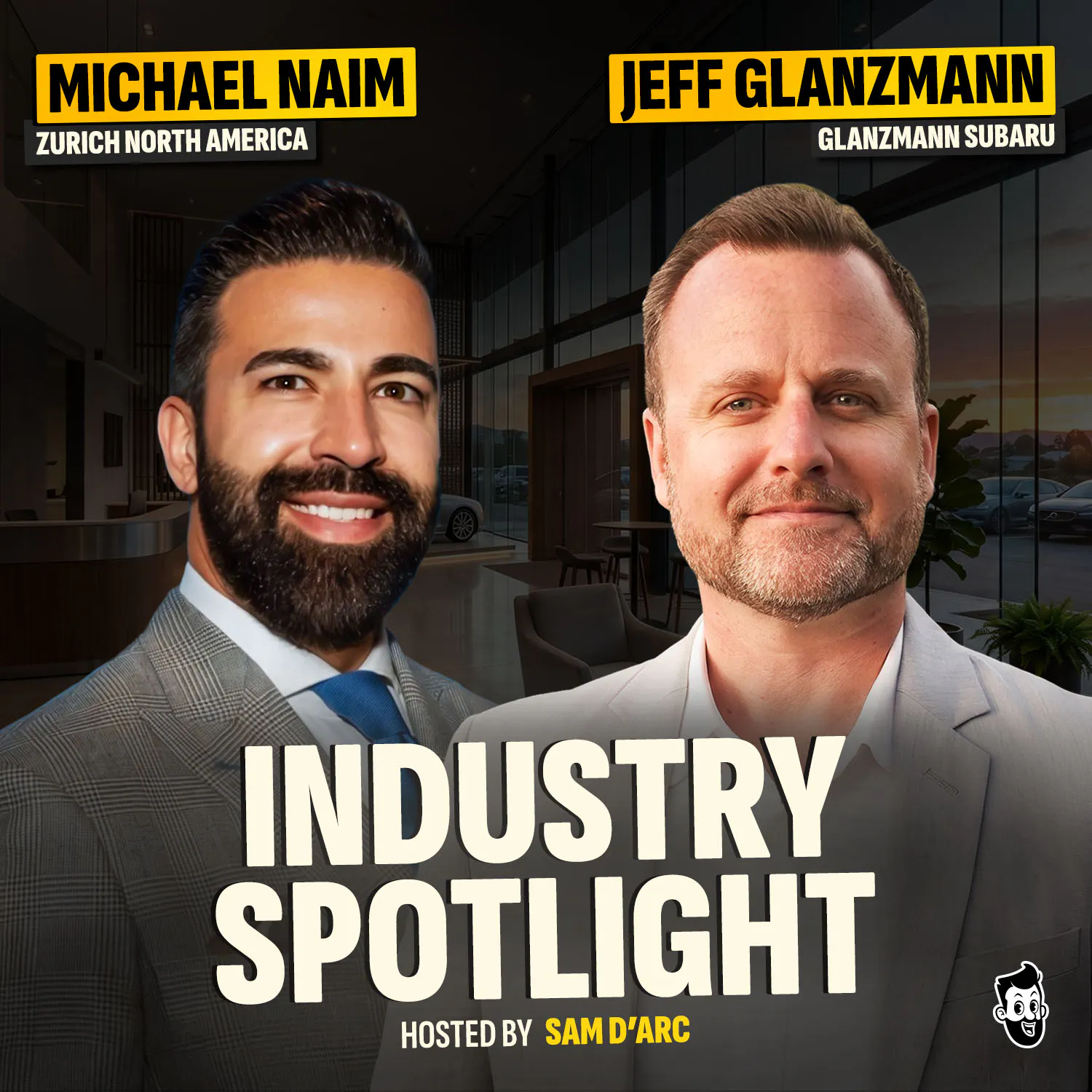
Flying Blind: Why "Set It & Forget It" Reinsurance is Costing Dealers Millions | Industry Spotlight
About this episode
The conversation makes a strong case that dealer reinsurance can’t be treated like a passive side program anymore. Jeff and Mike focus on dashboards, monthly reviews, and transparency so dealers can see claims, retention, and return on premium in real time. Jeff also explains how better data changed his store’s reconditioning standards, improved customer satisfaction, and gave sales staff more confidence in the vehicles they sold.
reinsurance
"We all know what that is, reinsurance. If you can't find it, that's the first tell. If you can find it, but it came from your F&I provider in a PDF once a quarter, that's the second tell."
Reinsurance is basically insurance companies sharing the risk with each other. In dealership finance, it can be part of how dealers get paid back or earn profit from certain insurance products.
In dealership F&I, reinsurance is an insurance arrangement where a provider shares risk (and sometimes returns) with another insurer. Dealers often earn money through profit participation tied to these reinsurance portfolios, so how it’s reported and managed directly affects dealer profitability.
profit participation program
"Pull up the last report you got on your profit participation program. We all know what that is, reinsurance."
This is a deal where the dealer gets a share of the money made from certain finance-and-insurance products. The host is saying many dealers don’t get clear, real-time information about how that money is being calculated.
A profit participation program is how dealers share in the profits generated by certain F&I products and the underlying insurance/reinsurance arrangements. The key issue in the segment is whether dealers have timely, transparent visibility into the performance of the portfolio they own.
F&I PVR
"Here's the uncomfortable truth in 2026. Front-end gross is compressing, F&I PVR, it's doing the real work to carry the store."
F&I PVR is a metric dealers use to measure how much money the finance-and-insurance department brings in. The point here is that when regular car sales profit shrinks, F&I has to make up the difference.
F&I PVR refers to the profit/volume measure dealers use to track how much finance-and-insurance business contributes to overall store earnings. In this segment, the host argues that as front-end gross compresses, F&I PVR becomes more important to keep the dealership profitable.
front-end gross is compressing
"Here's the uncomfortable truth in 2026. Front-end gross is compressing, F&I PVR, it's doing the real work to carry the store."
Front-end gross is the profit from selling the car. If it’s “compressing,” that means dealers are making less money per car sale, so they need other income sources like finance and insurance.
Front-end gross is the profit dealers earn on the sale of the vehicle itself (before F&I). When it “compresses,” it means margins are shrinking—often due to pricing pressure, incentives, and competitive market conditions—so dealers rely more heavily on F&I income.
Zurich, North America
"Joining me today, Michael, named VP of the East Division for Direct Markets at Zurich, North America, and Jeff Glansman, dealer principal at Glansman, Subaru,"
Zurich is an insurance company. Since the episode is about reinsurance and dealer profit participation, Zurich’s role is relevant to how the insurance side of the deal works.
Zurich is an insurance group, and in this episode it’s referenced as the company Michael represents (Direct Markets at Zurich, North America). This matters because the discussion is about reinsurance portfolios and how dealers receive (or don’t receive) visibility into the performance of those arrangements.
Subaru
"...what does Glansman, Subaru look like today? ...been a Subaru retailer since 1973."
Subaru is a car brand. If someone is a “Subaru retailer,” it means they sell and service Subaru cars at their dealership.
Subaru is a Japanese automaker known for its all-wheel-drive systems and boxer engines. In a dealership context, being a “Subaru retailer” means the business sells and services Subaru vehicles under the brand’s franchise agreement.
independent visibility
"Before you had real independent visibility into your professional participation portfolio that we were talking about, how are you running it?"
They’re saying they didn’t always have clear, direct information to track how things were going. Better visibility helps you spot problems sooner instead of finding out after costs rise.
“Independent visibility” here refers to having direct, clear insight into performance metrics (like claims or participation portfolios) rather than relying on outside reports or delayed information. In dealer operations, better visibility helps managers catch issues earlier—before loss ratios or costs start trending the wrong way.
portfolio
"the rep would show maybe some bigger claims that hit the portfolio, or maybe an FNI manager that was relying too heavily on longer term contracts."
A portfolio is just a bundle of all the coverage plans being managed. If big claims happen, they can raise costs for the whole bundle, not just one customer.
A “portfolio” here means the collection of policies/contracts a provider (or dealer program) has in force. When the speaker says claims “hit the portfolio,” they mean losses from certain claims affect the overall risk and pricing of that group of contracts.
FNI manager
"or maybe an FNI manager that was relying too heavily on longer term contracts."
In a dealership, FNI usually means the finance-and-insurance side—where they sell things like warranties and protection plans. The FNI manager runs that area and manages how those products perform.
FNI typically refers to Finance and Insurance, the department/function in a dealership that sells products like warranties and other coverage. An “FNI manager” is the person overseeing those sales and the related processes, including how claims and coverage performance are handled.
longer term contracts
"or maybe an FNI manager that was relying too heavily on longer term contracts."
These are agreements that last for a long time with the rules and pricing set upfront. If the real-world costs (like claims) change, a long contract can make it harder to adjust.
Longer term contracts are agreements that lock in pricing and terms for an extended period. In insurance/reinsurance and coverage programs, relying too heavily on them can be risky if claim patterns or costs change faster than the contract assumptions.
set it & forget it operation
"So overall, I'd say I had a, what would you, like I said it and forget it operation with my reinsurance company."
This means you set things up once and then you don’t have to keep checking them. In this case, the dealer expects the insurance/reinsurance company to handle the paperwork and updates without constant back-and-forth.
“Set it & forget it” describes a process where a dealer relies on a reinsurance provider to handle reporting and claims management with minimal day-to-day involvement. The idea is that the dealer doesn’t have to constantly request updates or monitor details because the provider’s workflow is meant to run automatically.
parts inflation
"...especially in an environment where parts are experiencing inflation, labor is inflating, use cars are costing more."
Parts inflation is when replacement parts cost more than they used to. If repairs cost more, insurance and warranty-related costs can go up too.
Parts inflation means the cost of replacement parts is rising over time. For dealers, higher parts costs can increase repair claim severity and make fixed pricing or passive coverage strategies less profitable.
labor is inflating
"...parts are experiencing inflation, labor is inflating, use cars are costing more."
Labor inflation means the cost of paying mechanics and doing repairs is going up. Since repairs take time, higher labor rates can make claims more expensive.
Labor inflation refers to rising wages and shop rates for technicians and service work. When labor costs increase, the cost to complete repairs rises, which can worsen claim economics for coverage programs.
use cars are costing more
"...labor is inflating, use cars are costing more. It's a tough way to run that business so reactionary."
If used cars get more expensive, then the value of a customer’s car is higher. That can change how much insurance or coverage pays out when there’s damage.
When used cars cost more, the market value of vehicles rises, which can affect total-loss calculations, claim payouts, and the economics of coverage tied to vehicle value. Higher vehicle values can also influence repair vs. replace decisions.
real time data
"And really, it really becomes something... when you have that real time data, something that you can manage day to day, rather than quarter to quarter or year to year."
Real-time data is information you can see right now, not months later. The idea is that if you can spot problems quickly, you can adjust sooner instead of waiting for the next big report.
Real-time data means using up-to-the-minute information (like claim trends, parts costs, and labor rates) to steer decisions as conditions change. The speaker contrasts this with waiting for quarterly or yearly reporting, which can delay corrective action and worsen financial outcomes.
quarterly basis
"They walk me through it on a quarterly basis. Walk us through the moment you realized fine just wasn't good enough."
Quarterly reporting means you’re reviewing performance every few months. If you only check that often, you might miss early warning signs and lose money before you can act.
Reporting on a quarterly basis is a common cadence for financial and risk programs, but it can be too slow for operational control. The segment suggests that longer review windows (three to 12 months) reduce the dealership’s ability to prevent losses from compounding.
reactive look
"That having that reactive look, three months, six months, 12 months, it was a crack in the wall of that business"
A reactive approach means you wait until you see the problem in reports, instead of checking earlier. That can make it harder to fix things before they cost more.
A “reactive look” means you only respond after results show up (for example, after quarterly or longer reporting). The discussion frames this as risky because delayed signals can let losses build before the dealership can change processes.
metrics
"pay attention to it on a daily, weekly, monthly basis, have specific metrics that I'm looking at."
Metrics are the specific numbers you track to see how things are going. Instead of guessing, you watch the right stats regularly so you can catch problems early.
In this context, “metrics” means specific numbers the dealership tracks to manage reinsurance outcomes. The host contrasts vague oversight with measurable targets and regular review to reduce surprises and improve accountability.
hold the right company accountable
"that would kind of safeguard the reinsurance a little bit, but also hold the right company accountable."
It means making sure the company responsible for the program is actually doing what it should. The idea is to use evidence (reports and numbers) to push for fair outcomes.
“Holding the right company accountable” implies using the tracked performance and reporting to ensure the responsible party is meeting obligations. In dealer reinsurance discussions, this often means tying outcomes to processes and making sure the program is administered as agreed.
use car reconditioning
"Yeah, because use car reconditioning in 2026 is a real challenge, right? So use car managers seeking to maximize their ability may or may not recon as aggressively if they know that's part of your program."
Use car reconditioning (often called “recon”) is the work dealers do to bring a pre-owned vehicle up to sale-ready condition—repairs, detailing, and sometimes mechanical fixes. The hosts tie recon to claim outcomes, implying that better visibility into recon and claim timing can show where costs truly originate.
clean visibility through reporting through a dashboard
"So walk us through when you finally got that clean visibility through reporting through a dashboard and let's be specific, what surprised you most?"
A dashboard is a reporting screen that shows key numbers clearly. Here, it’s being used to see claims and recon-related activity sooner, so dealers can spot problems they didn’t notice before.
“Clean visibility” via dashboards means using reporting tools to track claims and operational metrics in near real time. In this segment, the dashboard data changes decision-making by revealing claim volume and timing that weren’t apparent in the dealer’s prior “books.”
first 120 days of the customer's ownership
"was seeing how many claims were actually coming through within the first 120 days of the customer's ownership."
They’re talking about claims that happen soon after someone buys the car—within about four months. If lots of problems show up that early, it can suggest the car needed more attention before sale, or that the dealer should be responsible for those costs.
The “first 120 days” window is an early-ownership period where many warranty-like claims can surface due to pre-existing issues, insufficient inspection, or recon decisions. The hosts use this timing to question whether costs should fall on the reinsurance program versus the dealership’s own processes.
reconditioning process
"And then that led us back to, okay, well, what's our reconditioning process? And we had a good reconditioning process, but maybe, well, in seeing this, what it allowed us to do was sort of raise our thresholds"
Reconditioning is what a dealership does to a used car before it’s sold. It can include repairs and making it look and function right, and the podcast is saying how strict that process is can change who pays for problems.
In dealer operations, a reconditioning process is the standardized workflow for getting a used vehicle ready for sale—things like repairs, cleaning, and fixing wear items. The episode frames it as a lever that affects costs and how much the dealer ends up replacing versus letting reinsurance cover.
thresholds for what we would replace
"what it allowed us to do was sort of raise our thresholds for what we would replace and what we would sort of say is okay."
Thresholds are the dealership’s cutoffs for deciding when something is bad enough to replace. If you’re too lenient, you might pay more later when claims come in.
“Thresholds” here means the internal rules for when a dealer (or coverage program) replaces items versus repairs or leaves them alone. Raising thresholds can reduce immediate spend but may increase downstream claims, especially if inspections and coverage terms aren’t aligned.
use car inspection process
"So do I really need to get disciplined behind my use car inspection process or am I okay if it's a little sloppy into the reinsurance?"
A used-car inspection is the dealership’s way of checking the car’s condition before selling it. The podcast is basically asking whether the dealer can be less careful if insurance/reinsurance will cover the issues anyway.
A use car inspection process is the dealer’s checklist-driven evaluation of a vehicle’s condition before it’s sold or sent through coverage workflows. The discussion highlights how “sloppy” inspections can shift costs into reinsurance and create disputes about accountability between the dealer and the reinsurance company.
multiple investors in the dealership
"But when you have maybe multiple investors in the dealership and they're different from who's in the reinsurance company, well, then it becomes a much more serious conversation"
If more than one group owns the dealership, they may not all have the same incentives. The podcast is saying that can make it harder to agree on who should be responsible for costs when insurance coverage is involved.
The episode points out that when multiple investors own or fund a dealership, incentives and accountability can get complicated—especially if those investors are different from the parties involved in the reinsurance program. That misalignment can make cost responsibility and decision-making more contentious.
CSI
"...that improves CSI to the consumer, it improves our profit margin overall..."
CSI is a score that measures how satisfied customers are. If the dealership does a better job inspecting and fixing used cars before sale, customers are less likely to complain, so the CSI score goes up.
CSI stands for Customer Satisfaction Index, a metric dealerships use to track how happy customers are with their purchase and service experience. The segment connects improved reconditioning/inspection discipline to higher CSI, which can also influence profitability through fewer disputes and smoother sales.
tires
"...If something was kind of on the borderline of whether it should have been replaced or not, let's say tires, for example..."
They’re using tires as an example of a part that can be “almost good enough.” If the dealership has a clear rule for when tires get replaced, it prevents arguments and helps ensure customers feel the car was properly prepared.
Tires are used here as an example of a “borderline” item—something that may or may not be replaced depending on inspection thresholds. The segment emphasizes that once the dealership sets clear replacement thresholds during recon, they avoid disputes and reduce the chance of customer dissatisfaction.
used car department and recon department
"it certainly helped the culture in the store as well, especially in our used car department and in our recon department."
Dealers usually have a team that sells used cars, and another team that “reconditions” them first. Recon is the work done to fix and prepare the car so it’s ready to be sold.
The “used car department” and “recon department” are dealership functions tied to preparing pre-owned vehicles for sale. Recon typically covers inspection, repairs, and reconditioning so the car matches the dealership’s promised condition.
new car department
"...the re-insurance profit participation is it stand on its own silo like any new car department or used car department or service department. It's very important to the business."
A dealership is usually split into departments. The “new car department” is the part that sells brand-new cars, and the host is using it as an example of how profit should be measured.
The “new car department” is the dealership’s sales operation for brand-new vehicles, typically with its own profit targets, staffing, and processes. Mentioning it here helps illustrate that profit participation/reinsurance should be evaluated like any other dealership revenue stream.
service department
"...like any new car department or used car department or service department. It's very important to the business."
The “service department” is the dealership’s maintenance and repair operation, typically generating steady revenue through labor and parts sales. The host’s comparison implies that profit participation tied to reinsurance should be treated as a meaningful contributor to dealership performance.
used car inspection process
"you get a few insights that can impact the rest of your operation positively like your used car inspection process. Those benefits cascade across the organization."
This is the dealership’s step-by-step check of a used car before selling it. Doing it well helps avoid problems later and can make sales and customer confidence better.
A used car inspection process is the dealership’s structured checklist and workflow for evaluating a pre-owned vehicle’s condition before it’s sold. Improving it can reduce surprises, strengthen pricing confidence, and improve customer trust—so the benefits ripple through multiple parts of the operation.
FTC letter to 97 dealer groups
"but with, we've talked a lot on Daily Deal Alive, the FTC letter that went out to 97 dealer groups a couple months ago."
The FTC is the U.S. government agency that enforces consumer protection rules. The hosts are pointing to a letter sent to many dealer groups, suggesting there are compliance and trust issues dealers need to pay attention to.
The FTC letter referenced is a regulatory action aimed at dealer groups, and it’s mentioned as context for compliance and trust-related concerns in the industry. Even though the hosts say it’s not the main topic, it signals that dealer practices can be scrutinized by regulators.
net net on sales
"one of the most important metrics I think everybody listening can agree on in the automotive industry is net net on sales. For every dollar you make in the dealership, how much do you keep?"
“Net net on sales” refers to how much profit a dealer keeps from each sales dollar after expenses and other costs. The hosts treat it as a key performance metric because it directly reflects dealership profitability rather than just gross sales volume.
NADA guide
"Everybody knows how to calculate that. There's an NADA guide that tells you what a good number is."
NADA is an industry group that provides pricing/benchmark information for car dealers. Here, they’re saying dealers can use NADA guidance to judge whether their results are in a healthy range.
NADA (National Automobile Dealers Association) publishes industry pricing and valuation guidance used by dealers to benchmark “good” numbers. In this segment, the hosts reference NADA as a source for what a reasonable net figure looks like.
return on premium
"You call that return on premium. It's called return on premium. Every dollar you're putting in, what are you keeping..."
Return on premium is a way to judge whether the insurance cost is paying off. It compares what you put in (premium) to what you get to keep back.
Return on premium (often abbreviated RoP in insurance contexts) measures how effectively premium dollars generate retained value or profit. The hosts are emphasizing that dealers should track this metric to see what they keep relative to what they pay in premium.
chargebacks
"[941.0s] We focus a lot on chargebacks and net PVR. [944.6s] So you're saying the number that most dealers brag [946.5s] about that PVR isn't actually showing"
Chargebacks are financial reversals or repayments that occur when a claim or contract outcome doesn’t go the way it was originally priced for. In the segment, chargebacks are used alongside PVR to evaluate program performance, but the hosts argue dealers should also track retention/profitability metrics like return on premium.
Zurich statement
"So Mike, what advice would you give to a dealer that doesn't have a Zurich statement in front of them? How can I go find that number? Who do I need to get that from?... ask why I don't have a dashboard or why you don't have a statement"
This is the report from the insurance company (Zurich) that shows the dealer’s insurance results. If you don’t have it, the hosts say you should ask your provider so you can see what’s really happening.
A Zurich statement is the insurer’s reporting document that shows how premiums, claims, and retention are calculated for a dealer’s reinsurance/insurance program. The hosts advise dealers to request it (or a dashboard) to find their actual performance number.
data transparency and access
"is when you request something, you're not getting 100% of the data you requested... make sure that everything you're requesting, you're getting and it's on at least a good cadence."
The hosts are talking about whether dealers can actually see the information they need. If you don’t get complete data regularly, it’s harder to track what’s happening and make good decisions.
The segment emphasizes that when dealers request information, they may not receive 100% of the data they asked for. It also stresses getting data on a consistent schedule (“cadence”), which matters for auditing claims, managing reserves, and understanding how reinsurance participation programs are performing.
automobile dealership back end
"we've seen pressure in automotive... for the back end to carry more and do more in an automobile dealership"
In a dealership, the “front end” is the car sale itself, while the “back end” is the extra money from things like financing add-ons and coverage products. The hosts say the back end is being asked to do more than before.
“Back end” in dealership terms usually refers to profit areas outside the front-end car sale—commonly finance and insurance (F&I), service contracts, and related products. The podcast argues that pressure has increased for the back end to carry more financial responsibility than it historically has.
70 cents on the dollar return
"How does that pressure match up with the 70 cents on the dollar return you're getting in reinsurance?"
It means the program is only paying back about 70% of what you put in. If you’re paying for coverage but getting less back, it can hurt the dealership’s finances.
“70 cents on the dollar return” is a shorthand for how much money comes back relative to what was paid into the program. In this context, it suggests dealers aren’t getting a full value back from the reinsurance arrangement, which can make the back-end burden feel even heavier.
loss ratio
"You can maybe be looking at your reinsurance and see that your loss ratio, it's an acceptable range, but maybe your investment side is lagging."
A loss ratio is basically: “How much money did we lose compared to how much we collected in premiums?” If it’s high, the costs from claims are eating up the money; if it’s low, the coverage is performing better.
Loss ratio is a key insurance metric comparing losses paid out to premiums collected. In the segment, the hosts use it to show how a dealer’s risk/claims performance can look “acceptable” even while other parts of the business (like investments) are underperforming.
fragmented reporting
"So let's widen the lens another notch, right? Fragmented reporting, the dealer relying on the FNI provider or the agent to pull the data, interpret the data, explain the data, what does it actually cost a dealer?"
Fragmented reporting means the information you need is scattered or handled by different people/systems. That can slow you down because you spend more time collecting and understanding the data before you can make changes.
Fragmented reporting describes a workflow where data is spread across multiple systems or intermediaries rather than being consolidated for decision-making. The hosts connect it to higher real-world costs—extra calls, time delays, and slower pivots—especially when dealers depend on providers/agents to interpret results.
FNI provider
"Fragmented reporting, the dealer relying on the FNI provider or the agent to pull the data, interpret the data, explain the data, what does it actually cost a dealer?"
They mention an outside provider that helps dealers get the information they need. The point is that when reporting is split across parties, it can take more time and effort to understand what the numbers really mean.
The “FNI provider” is referenced as a party that supplies or pulls data used to evaluate dealer performance. The segment frames the issue as fragmented reporting—dealers rely on a provider or agent to gather, interpret, and explain the numbers, which can increase operational cost.
premiums
"Well, I mean, it's gonna cost them a lot of premiums that are going out, multiple calls of loss, lack of time and how soon they're making pivots"
Premiums are the regular payments you make to keep insurance coverage active. The hosts are saying that the overall cost isn’t just theoretical—it shows up in the money paid out for coverage.
Premiums are the payments made for insurance coverage. The segment argues that the “cost” of the reporting/insurance setup shows up in real dollars—premiums going out—along with operational overhead like multiple loss calls and delayed adjustments.
loss calls
"Well, I mean, it's gonna cost them a lot of premiums that are going out, multiple calls of loss, lack of time and how soon they're making pivots and adjustments to maximizing the profitability."
A “loss call” is basically a call or meeting related to an insurance claim after something goes wrong. The point here is that too many of these take time, which makes it harder to react quickly.
“Loss calls” refers to the repeated communications/claims-related interactions that occur after losses are reported. In this segment, the hosts treat them as an operational cost driver—more calls and less time reduce how quickly dealers can respond and adjust profitability strategy.
dashboard (full transparency)
"Because when you have access to the dashboard, you're seeing everything in full transparency. It's every product, the contract count, the written premium, the earned premium, the losses and the loss ratio, and then the average premium per contract."
A dashboard is a reporting screen that shows the important numbers clearly. In this case, it helps you see how your insurance program is doing instead of guessing.
A “dashboard” here refers to a reporting tool that provides real-time or near-real-time visibility into insurance performance data. Full transparency across products, contracts, and loss metrics helps dealers or program managers avoid “flying blind” when costs change.
written premium
"It's every product, the contract count, the written premium, the earned premium, the losses and the loss ratio, and then the average premium per contract."
Written premium is the total price of insurance policies you sold for a time period. Earned premium is the part of that price that “counts” as the coverage time has passed.
Written premium is the total premium amount an insurer has issued/contracted for during a period. It’s different from earned premium, which reflects the portion of that premium that corresponds to coverage that has actually been provided.
contract count
"It's every product, the contract count, the written premium, the earned premium, the losses and the loss ratio, and then the average premium per contract."
Contract count is the number of active or issued insurance contracts being tracked in the portfolio. It’s important because it affects how premiums and losses scale—more contracts can mean more total premium and potentially more total claims.
earned premium
"It's every product, the contract count, the written premium, the earned premium, the losses and the loss ratio, and then the average premium per contract."
Earned premium is the part of the insurance cost that matches the time the policy has actually been in effect. It’s used to judge how the insurance is performing over time.
Earned premium is the portion of written premium that corresponds to coverage that has been delivered during the period. Because insurance coverage is time-based, earned premium is often used for more accurate performance tracking than written premium.
average premium per contract
"and then the average premium per contract. So when you're increasing premiums at a certain percent, wouldn't it be nice to see what your average premium is in your portfolio so you can increase it with the right number?"
Average premium per contract is the typical cost of coverage for each policy. It helps you see whether your pricing changes are working across all the policies you sell.
Average premium per contract is the mean price charged for each individual insurance contract in a portfolio. Tracking it helps determine whether premium changes are actually moving pricing in the right direction across different products or risk segments.
line item (by product)
"every product is a line item. It's not an all in one. So that way you can do target increases and shift things methodically with that line of business because you never know."
A “line item” approach means each insurance product is tracked separately rather than bundled together. That granularity lets you apply targeted premium increases and manage performance by product line instead of relying on one blended number.
lifetime
"Well, that may have led to higher losses in Tyron Real. It'd be nice to see that lifetime"
“Lifetime” here likely means looking at how costs/claims add up over the whole time the coverage applies. That gives a more accurate picture than only looking at what happened so far.
“Lifetime” in this context likely refers to lifetime loss experience—how claims develop over the full duration of coverage rather than just in the short term. Lifetime metrics are crucial for setting sustainable pricing and reinsurance terms.
transparency behind the data
"It's a decision-making problem is all because without transparency behind the data, being able to see the trends, you can't then take action on the data"
They’re saying you can’t make good decisions if you can’t see the real numbers. When the data is clear, you can spot patterns and respond instead of guessing.
The hosts emphasize that transparency into the data is what enables trend detection and informed action. Without clear visibility, decision-makers can’t reliably interpret performance signals or adjust the program that affects producers/agents.
term of the contract
"when you're looking at the term of the contract sold ... or the multiple causal laws"
The “term of the contract” is the length and structure of the agreement between the dealer and the provider. It matters because pricing, coverage, and how claims are handled can vary by time period and renewal cycle.
30, 60, 90 media claims
"or the multiple causal laws or the 30, 60, 90 media claims, at least even more conversations"
“30, 60, 90” is a way to sort claims by timing—like whether something shows up within 30 days, 60 days, or 90 days. That timing can affect how much risk the insurer thinks you’re taking on.
“30, 60, 90” claims typically refer to when a claim is reported or when an event occurs relative to a timeline (e.g., 30/60/90 days). These buckets help insurers and reinsurers track patterns and assign risk/costs more precisely.
multiple causal laws
"when you're looking at the term of the contract sold or the multiple causal laws or the 30, 60, 90 media claims"
This phrase sounds like a rule-set for figuring out what caused a problem when there are multiple contributing factors. It matters because it can change how a claim is classified and who pays.
“Multiple causal laws” sounds like a specific underwriting/claims framework that ties outcomes to more than one cause or contributing factor. Without more context, it likely refers to how responsibility is determined when there are several contributing events.
recon process
"...they have a better understanding of how the overall portfolio of the dealership is affected by what they're doing, whether it be the recon process or the PVR..."
“Recon” is short for reconditioning, the work a dealership performs to prepare used vehicles for sale (repairs, detailing, and safety/condition fixes). The transcript ties recon to insurance risk and underwriting outcomes, implying that consistent, well-documented recon can improve how insurers view the dealership’s portfolio.
premium that's being seeded
"...whether it be the recon process or the PVR or the premium that's being seeded. So they have kind of full transparency..."
“Premium seeding” means the insurance cost is being influenced or set up based on certain inputs. The host is saying the dealership’s actions—like how cars are reconditioned—can change what the insurer charges. So it’s not just paperwork; operations can affect the bill.
“Premium seeding” suggests an arrangement where the dealership’s insurance premium is allocated or influenced by specific underwriting inputs and processes. The segment implies that what the recon team does (and related workflow items) can affect the premium outcomes under the reinsurance/insurance structure.
profit center
"...I think there's enough profit potential in that... But to your point, if you get a return on premium of 70%, that's such a significant profit center..."
A profit center is an area of the business that makes money by itself. The hosts are saying insurance-related revenue can be big enough that it shouldn’t be left only to one group—it should involve more of the dealership.
A “profit center” is a part of a business that generates profit on its own, rather than just supporting other operations. In dealership terms, the discussion suggests reinsurance/insurance-related revenue can be treated as a standalone earnings engine that other departments should help optimize.
claims retentions
"We'll look at the labor rates. We'll look at the claims retentions. Where are the claims going? How much are you retaining?"
Retention is how much of a claim cost you agree to pay yourself. If you keep more (higher retention), you may pay less to the insurer—but you take on more risk.
Claims retention is the portion of a loss that the dealer (or primary party) keeps rather than passing to the reinsurance/insurance layer. Adjusting retention can change the dealer’s cost structure and incentives, which is why the segment focuses on increasing retention where appropriate.
F&I departments
"We'll then work with the F&I departments on which contracts they're selling the terms and the deductible options..."
F&I is the part of the dealership that handles financing and optional protection products. They help decide what coverage and deductibles customers are offered, which can change how claims are paid.
F&I (Finance and Insurance) departments are the dealership teams responsible for selling finance products and vehicle protection plans. In this segment, they’re involved in choosing which contracts and deductible options are being sold, which directly affects claim outcomes and retention strategy.
deductible options
"...which contracts they're selling the terms and the deductible options to then make sure we're increasing the claims retention portion of it."
A deductible is the amount you pay out of pocket before insurance coverage kicks in. Choosing different deductible levels can shift how much risk and cost the dealer keeps.
Deductible options are the customer/dealer cost-sharing amounts applied when a claim is made. The segment ties deductible selection to increasing the claims retention portion, meaning deductible structure can influence who bears more of the loss cost.
active management cadence
"The cadence is up to whatever the dealer wants to have it, whether it's weekly... monthly... Jeff and I will normally sit down monthly... And then we have our quarterly reviews."
Cadence just means how often you check the numbers and make changes. The point here is that frequent reviews help prevent costs from drifting upward.
Cadence refers to how often the parties review performance metrics and adjust strategy. The segment lists possible review frequencies (weekly through quarterly), emphasizing that regular check-ins are part of keeping the reinsurance/claims process aligned with dealer goals.
collaborative optimization
"All right, I wanna see if collaborative optimization lands. It's way too long. It won't work."
Collaborative optimization means both sides work together to improve results, using the same information. Instead of guessing, they use data to make the program work better.
Collaborative optimization is the idea that a dealer and its vendor partner work together using data to improve outcomes. In this context, it suggests using shared metrics (like claims performance) to adjust processes and reduce losses.
managing on a monthly basis
"you really need to be managing this on a monthly basis ... maybe once a year ... but never adjusted your premium."
Instead of checking the numbers once a year, the hosts say you should review them every month. That way, you notice problems sooner and can adjust before they get expensive.
The episode argues that dealerships should review reinsurance performance more frequently—specifically monthly—rather than only annually. This helps catch changes in claim costs and pricing assumptions early, especially when labor rates and other cost drivers shift rapidly.
labor rates
"because where as you might have before looked at the amount of premium ... maybe once a year, you really need it with the way labor rates have climbed pretty drastically"
Labor rates are what shops charge per hour to do repairs. If those rates go up, warranty/coverage costs can rise too, so any coverage pricing needs to keep up.
Labor rates are the hourly charges used to price vehicle repairs and warranty/coverage claim estimates. The hosts note that labor rates have climbed quickly, and if reinsurance premium assumptions aren’t updated accordingly, dealers can get stuck with unfavorable economics.
Ziegler
"I have a 17 year career. [1804.6s] I worked for Zurich before I came over to Ziegler. [1807.2s] And I see, I saw this,"
Ziegler is the company the speaker moved to after working at Zurich. It’s mentioned to show they’re speaking from hands-on experience in the insurance side of the business.
Ziegler is referenced as the speaker’s current employer after working at Zurich, tying the discussion to dealership-focused insurance and risk management operations. It’s mentioned to frame the speaker’s perspective on how reinsurance and data-driven management impact dealer profitability.
total visibility behind the data
"I saw the need for total visibility [1816.6s] behind the data to drive it. [1818.5s] And it is, Jeff, it's such a big profit center inside the dealership,"
This means you can see the full story in the numbers—like what’s happening with claims and costs. When you can see it clearly, it’s easier to make smarter decisions instead of guessing.
“Total visibility behind the data” refers to having end-to-end access to performance and claims information so decisions can be made with confidence. In automotive finance and reinsurance, better data visibility helps identify loss drivers, tighten underwriting, and improve profitability.
embracing transparency
"Yeah, I think it's, one, it's embracing transparency. All right, so transparent with your team, transparency coming from, requiring transparency coming from your provider."
In this context, transparency means having clear visibility into pricing, coverage terms, and performance data from both the dealer team and the reinsurance/provider partner. That visibility lets dealers spot issues earlier and make better decisions instead of operating on assumptions.
hold your provider accountable
"That's where I think the biggest opportunity for retailers is to, if you get educated, you can then hold your provider accountable. And it's sort of like that collaborative optimization term"
It means don’t just accept what the provider says—use the information you have to ask for proof and push back when things don’t add up. Over time, that can reduce wasted spend and improve outcomes.
“Holding your provider accountable” means using the data and contract terms you have access to in order to challenge pricing, coverage, and service outcomes. For dealers, this typically requires tracking performance metrics and insisting on explanations or changes when results don’t match expectations.
clean data
"no dashboard, no clean data. They've been running their program the old way for the past 10, 15 years."
Clean data just means the numbers are trustworthy and easy to understand. If the data is messy or outdated, it’s hard to tell what you’re really paying for.
“Clean data” means information that’s accurate, complete, and organized well enough to make decisions. The episode frames clean data as necessary for identifying opportunities and holding providers accountable.
section statement
"ask for the most recent section statement, ask for the most recent bank statement, ask for a breakout of all the fees and all, and ask how the investments are doing."
Think of a statement as a receipt and report for your account. Asking for the latest one helps you see exactly what’s being charged and what’s happening with your money.
A “section statement” here appears to be a detailed account statement from the provider that breaks down activity relevant to the dealer’s program. The hosts recommend requesting the most recent version to verify fees, performance, and how funds are being handled.
bank statement
"ask for the most recent bank statement, ask for a breakout of all the fees and all, and ask how the investments are doing."
A bank statement is the bank’s official log of deposits and withdrawals. It’s a good way to double-check that what you’re being told matches what actually happened.
A “bank statement” is the dealer’s official record of account activity from their bank. The hosts suggest comparing it against provider reporting to confirm fees and ensure the money is moving as expected.
breakout of all the fees
"ask for a breakout of all the fees and all, and ask how the investments are doing."
Instead of one big number, you want a list of every fee. That way you can see what you’re paying for and question anything that seems unnecessary.
A “breakout of all the fees” means itemizing every charge rather than accepting a single lump sum. This helps dealers identify which costs are driving losses and whether the provider’s pricing is transparent.
provider accountability via account access
"Access is the first step, have an access to your account. Because I can't stress enough, it's their money. How would you be okay if you didn't have access to... the checking account at your own dealership?"
The idea is simple: if it’s your money, you should be able to see what’s happening. Access to your account helps you catch mistakes and ask better questions.
The hosts emphasize that dealers should have direct access to their account information so they can verify activity and hold the provider accountable. This is a governance and risk-control concept: without visibility, it’s harder to detect overcharges or poor performance.
benchmark of north of 80%
"But if you can get up to benchmark of north of 80%,"
They’re talking about a target performance level—something like “you want to be above 80%.” The takeaway is that you should compare your results to a real standard, not just guess that things are fine.
The hosts reference a target “benchmark” above 80%, implying an industry or internal threshold for performance. In context, it’s part of the argument that dealers should track the right metric(s) and compare results to meaningful benchmarks rather than relying on assumptions.
benchmarks
"You might still be performing okay, but if you don't know the data and what the benchmarks are, you don't know what you're leaving on the table."
Benchmarks are like scorecards or target numbers. They help you see whether your dealership is doing better or worse than expected. Without them, you might not realize you could be earning more.
In dealership operations, “benchmarks” are reference numbers (like sales, gross profit, retention, or reinsurance performance) used to judge how well a store is doing versus targets or peers. If you don’t know the benchmarks, it’s easy to miss opportunities to improve profitability.
Request an Explanation
Heard something you'd like explained? We'll add it to this episode.
Sign in to request explanations for terms you heard.
Want to learn more?
Browse our glossary for plain-English explanations of automotive terms, jargon, and concepts.
Help improve this episode
See something that's not quite right? Our annotations are AI-generated and can sometimes miss the mark. Click the flag icon on any annotation to suggest a correction.