This is about organizing the company so the whole process—from designing the car to building it in factories—runs more smoothly. The goal is fewer slowdowns between teams.
“Electric architectures” are the underlying vehicle design frameworks—how the powertrain, battery, wiring, and control systems are laid out. “Next-generation” implies Ford plans a new generation of EV-specific (or EV-ready) platform designs to support faster scaling and better integration with software.
In-house software means Ford writes and manages the software itself instead of buying it from another company. That can help them control features and updates for the car.
Ford is talking about making money not only from selling cars, but also from software and services that come with them. They believe those services can be more profitable than the car sale itself.
Aftermarket sales are things you buy for your car after you already own it—like replacement parts or service. Ford is saying it wants to sell more of those over time.
“Skunk work” means a small group working on experimental ideas quickly. Ford is saying it will use what those teams invent in regular, high-volume car production.
This is a way to estimate how much something will cost using engineering science, not guesswork. Ford says it’s using those tools to better plan costs for many types of cars, including gas and hybrid models.
The Ford F-150 is Ford’s popular pickup truck. Here, Ford is saying the next version of it will be part of their bigger plan to offer electrified drivetrains.
Super Duty is Ford’s bigger, heavy-duty truck line. Ford is implying the next versions will also get electrified powertrain options as part of their future platform plan.
An “EV platform” is the main design and engineering foundation for electric cars. “Universal” here means Ford wants one common electric-car foundation that can be used for many different vehicle types.
A “powertrain” is how the car makes and delivers power (gas, hybrid, or electric). “Powertrain choice” means Ford wants to offer several different types instead of only one.
An extended-range EV is mostly electric, but it has a backup system that helps recharge the battery on the go. That means you can drive farther without needing to plug in every time.
An advanced hybrid is a car that uses both a gas engine and an electric system. It’s designed to be more efficient than simpler hybrids, especially in stop-and-go driving.
ICE cars are the regular gas-powered cars that use an engine burning fuel. Ford is saying its strategy covers those too, alongside hybrids and electric cars.
“Skunk Works” is a nickname for a special, fast team that builds something in a more experimental way. Ford is saying it used that kind of approach to develop a cheaper truck and then reuse what it learned elsewhere.
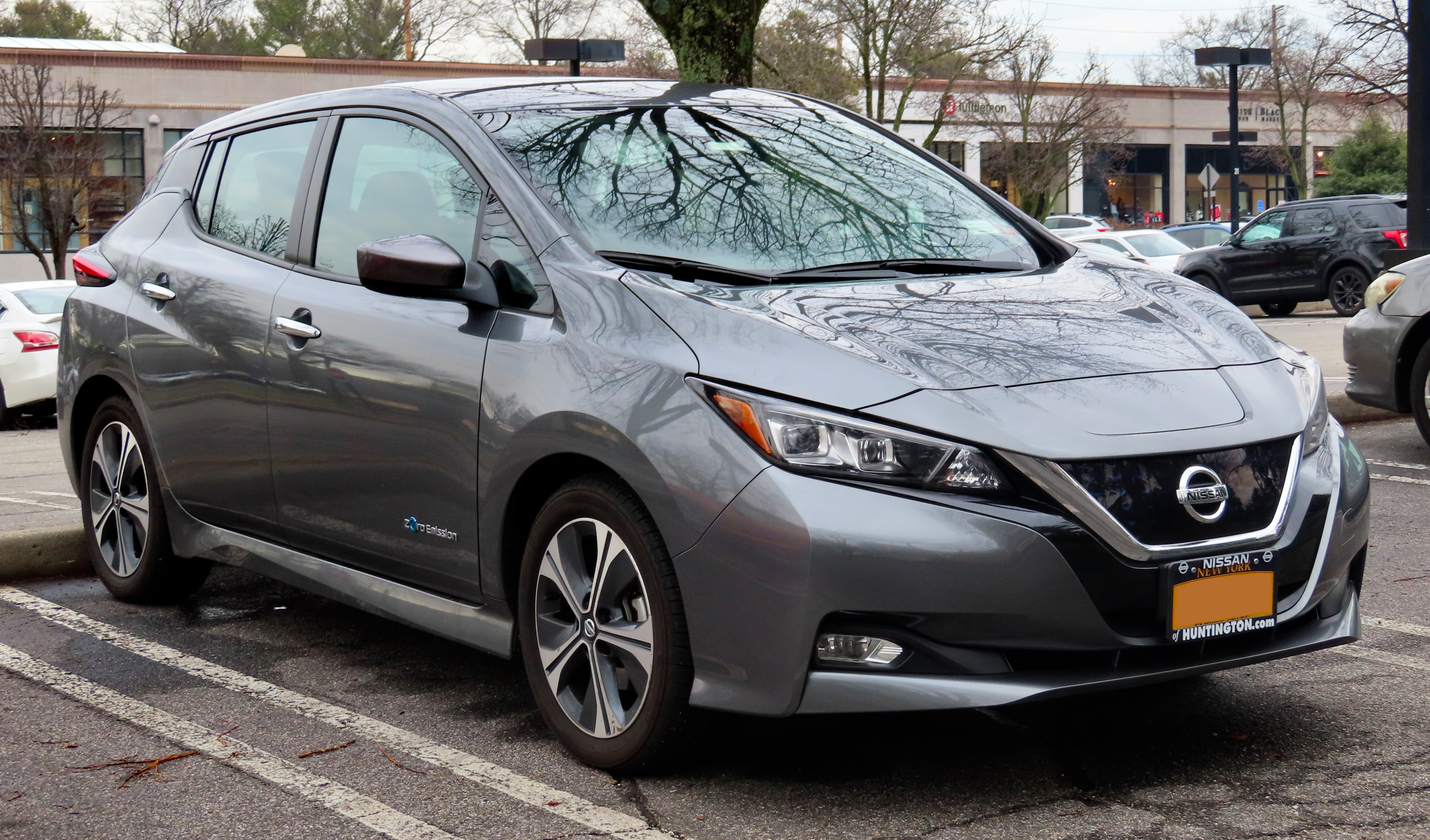
The Nissan Leaf is an electric car that runs on a battery instead of gasoline. It’s designed for normal driving and charging at home or in public spots. The podcast brings it up as an example of an early, widely known EV.
Tariff refunds are money returned to a company after it pays import duties (tariffs) on goods. In earnings calls, they’re often used to explain how trade policy affects costs and cash flow.
EBITDA is a way to measure how profitable a business is from its core operations. It removes some effects like interest payments and taxes so comparisons are easier.
OEMs are the companies that actually make the cars (or key parts) in the first place. “Chinese OEMs” means Chinese automakers that could be involved with the US EV market.
IP sharing means companies share valuable know-how or technology they’ve developed. In cars, that can include things like designs, patents, or software used in EVs.
“Level playing field” means everyone should be competing under fair rules. In car trade talks, it often means reducing advantages or disadvantages caused by government policies.
Digital services are the online/app features that come with a car. They can include things like connectivity, apps, and other paid add-ons that affect how you use the vehicle.
Subscription fees here means paying ongoing money to use certain car features. The host is saying some of these charges feel fair, but charging for things you already have in the car—like heated seats—feels wrong.
Ford’s F-Series is Ford’s main line of pickup trucks. The host is using it as an example of how strong Ford already is in trucks before talking about new truck models coming.
Profit margin is basically how much money a company makes on each sale after paying its costs. The question here is whether more truck supply will help or hurt Ford’s earnings.
The Ford Maverick is a smaller pickup truck from Ford. The speaker is saying that Maverick helped bring in a whole new group of truck buyers, and that trend should keep growing.
Term
UAV pickup
“UAV pickup” sounds like a specific Ford pickup offering or program name. The speaker is saying the way it’s packaged will attract both truck buyers and SUV buyers, but they don’t explain what UAV stands for here.
The Ford F-750 is a heavy-duty Ford truck used for work. The speaker is saying commercial buyers can choose from smaller trucks all the way up to the F-750.
The Buick Model 27 is a Buick vehicle tied to a particular model year. The podcast is saying that people can start placing orders for that model year now. It’s brought up because it relates to how the company is planning upcoming production.
Pro Power Onboard is Ford’s system that lets the truck provide electricity for things like tools or camping gear. Ford is saying that’s one of the reasons buyers would want certain electrified powertrains.
The Ford Ranger is a mid-size pickup truck that’s sold in many countries. The podcast mentions it because it’s especially popular in several regions around the world. It’s a key model for Ford’s pickup lineup outside of North America.
The EV transition is the shift from gas-powered cars to electric cars. The speaker is saying companies may need a gradual plan so they don’t lose sales while EVs ramp up.
For EVs, infrastructure means the charging setup—like public chargers and the systems that make them work. The point is that EVs need charging to be available before everyone can switch quickly.
A gigawatt-hour is a way to measure how much energy something can store or deliver. When companies talk about “capacity” in GWh, they mean the total energy their batteries can provide over time.
UEV is a short form for a specific kind of electric-vehicle-related product. In this call, it’s basically telling you what the factory will mainly be making.
“DC” means direct current, the type of electricity batteries produce. A “DC block” is part of the battery system that helps package and manage that electricity so it can be used safely.
Concept
bridge
In earnings-call language, a “bridge” is a step-by-step reconciliation that explains how you get from one financial outcome to another (for example, from prior performance to a target margin). It’s a structured narrative of what changed and why.
“Mega castings” means making big structural parts in one piece instead of many smaller pieces. That can make the car cheaper to build and faster to assemble.
“Top hats” here sounds like a specific part or module Ford uses as part of its EV production plan. They’re talking about how many versions they’ll run and how that supports the launch.
“Demand creation” means marketing and sales efforts to get people excited about buying the new EV. Ford is saying it matters a lot for getting enough customer orders during the launch.
“Fully specced” means the car is equipped with the full set of features, not a basic version. Ford is saying their affordable EV can still be well-equipped.
“Compliance vehicles” are cars companies make mainly to satisfy government rules. The speaker is saying Ford’s EV is meant to be a real product people want to buy, not just a paperwork requirement.
LIVE
Good day, everyone. My name is Layla, and I will be your conference operator today.
At this time, I would like to welcome you to the Ford Motor Company First Quarter 2026
Earnings Conference Call. At this time, I would like to turn the call over to Lynn Antipas Tyson,
Chief Investor Relations Officer. Thank you, Layla, and welcome to Ford Motor Company's
First Quarter 2026 Earnings Call. With me today are Jim Farley, President and CEO,
and Sherry House CFO. Joining us for Q&A is Andrew Crick, President of Ford Blue and Model E,
Alicia Boehler-Davis, President of Ford Pro, Kumar Galhotra, Chief Operating Officer,
and Kathy O'Callaghan, CEO Ford Credit. We'll be referring to non-GAP measures today. These are
reconciled to the most comparable U.S. GAP measures in the appendix of our earnings deck.
You can find the deck at shareholder.ford.com. Our discussion also includes forward-looking
statements. Our actual results may differ. The most significant risk factors are included on
page 19 of our deck. Unless otherwise noted, all comparisons are year-over-year,
about electric vehicles, renewable energy, autonomous driving, and much, much more.
I might sound a little different today. That is because I'm recording directly to my
laptop over the laptop speaker. I'm gonna be honest, I don't feel good. So going and spending
a lot of time sitting in a hot room recording this episode was not gonna be a good choice for me.
So in order to get this out, I was like, you know what? It's an earnings call. Jim Farley and the
team are gonna do most of the talking anyway. Had I been smarter, I would have got this out
yesterday, but I didn't feel good yesterday either. And I was like, well, I'll feel better tomorrow.
I will say though, before we get right into the opening remarks of Jim Farley,
this was recorded back in April. So this earnings call is more than a month old. So
just keep that in the back of your head. I still like doing these because I do like knowing where
the company's heads are at or what they're thinking when it comes to EVs and renewable energy
and autonomous driving. And yeah, so I still think there's some value in this. I will make it as
short as possible, but as long as necessary. There's lots of other things that they talked
about in these earnings calls for these legacy automakers that don't necessarily have to do with
what we have, what we talked about on the show. So I cut that part out. Also, it's important to note
that I will edit this for the show, but I will try to leave the context in as best as possible.
If you want to go and listen to the entire earnings call, you can just go to the show notes
and check it out there. Alright, with that, let's go ahead and jump into Jim Farley's opening remarks.
Jim's the CEO of Ford. Alright, let's hear what Jim has to say.
Real progress on quality cost and advanced our software capability and customer experience.
Early this month, we took the next step in that evolution by establishing an end-to-end
organization, product creation and industrialization. We unified our advanced technology,
digital and design teams with our global industrial system. This change aligns with
the most intensive product and software rollout in our history. By 2030, almost all of our global
volume will feature next-generation electric architectures and in-house software. This
applies to every propulsion type as we deliver and scale high-quality software-defying vehicles.
This new organization allows for faster decision-making and reduced complexity.
This is the moment we integrate the digital soul of the vehicle, the software, all the silicon,
and the user experience with our world-class industrial execution.
Among other things, this alignment will support our high-margin software and physical services
revenue, which was over 15 billion last year. And we expect to grow that 15 billion nearly
8% annually through the end of the decade. This service growth is driven by offering customers
indispensable digital experiences and investing in aftermarket sales with a focus on customer
uptime, expanding our parts catalog, and enhancing our service network. We're also learning, we're
creating the UEV platform, which represents a step change in efficiency and cost, especially for
the EV market. But before, we're now integrating these skunk work breakthroughs back into our
mainstream products and processes. We're applying their advanced tools and physics-based
cost modeling to the highest volume internal combustion and hybrid lines.
This, of course, will reduce our costs and improve quality across the board.
Our product pipeline is aggressive. Between now and 29, we will refresh 80% of our North American
portfolio and 70% of our global portfolio by volume. This includes the next generation F-150
and Super Duty, among many others. It also includes the launch of our universal EV platform in 2027
from our Louisville assembly plant in Kentucky. We are scaling that plant for significant volume
to accommodate a variety of vehicles off that single platform. And speaking of electrification,
our strategy remains focused on powertrain choice, not nameplate complexity.
By the end of the decade, 90% of our global nameplates will offer electrified powertrains,
including advanced hybrids, extended range electric vehicles, and full EVs.
So we started off talking about digital services, but that's not really stopped. He's like,
we're going to build this for all of the different types of vehicle platforms that we're going to
sell, hybrid, extended range EVs, and full electric EVs, as well as ICE cars. So that's
not all that different than what GM said. They put a lot more emphasis on Mary's opening remarks
when it comes to digital services, but Ford mentions it here. But the thing that was stuck
out to me anyway is that while Mary did mention that GM was number two when it comes to EVs in
the United States or North America, I believe is what it was, Ford really, you know, Jim Farley
really kind of highlighted like, here's how we're going to take what we learned with our $30,000
truck, whatever it's going to be called, we don't know yet. They developed a whole Skunk Works
project. They're building that truck in much in the same way that Japanese, excuse me, Chinese
automakers build their vehicles. So they took a leaf or several chapters from the Japanese
automotive industry to learn how to build more efficiently. I'm sure that's what he's talking
about when it comes to, you know, bringing that what they learned from Skunk Works into their
other platforms. And ultimately, if Ford is able to be successful, this is this is a good thing.
Now, Jim Farley's actual opening remarks did not go all that long. And then they moved over to the
CFO Sherry's opening remarks. And just a couple of things to talk about. I won't play her clips.
I'll just do a quick rundown. She talked a little bit about getting, I think it was like $1.1
billion in tariff refunds back from the US government, which if memory serves me was
something close to what Jim got back as well. And then she talks a little bit more about the
novellas aluminum plant. This was the plant that caught on fire like three times in 2025.
So they have plans to get their aluminum source it from other places until novellas is back up
and running at full capacity. All right, let's go ahead and jump into our analyst questions.
I've already skipped several analyst questions because they were really more about EBITDA and
things like that. But this next one, when I heard the question, it made me perk up. And it was really
about getting Jim Farley's take on Chinese EVs possibly here in the US. So let's go ahead and
listen to that. Jim, maybe one for you. There's been a lot of headlines recently around some
potential partnerships between Ford and some of the Chinese OEMs. And even outside of Ford,
there's just a lot of focus in the marketplace around some of these vehicles coming out of China,
eventually potentially making their way into the US. Can you just give us your updated thoughts
on what that could look like and maybe any involvement that you might be interested in
doing there? Sure. I'm sure glad there is a lot of focus on it. As America's largest auto producer,
we are totally dedicated to a thriving US auto industry. And of course, safeguarding our country's
industrial base and that's not economic vitality. It's also national security as a country.
And when we see China and Japan and South Korea, they've really prioritized their domestic auto
industry and manufacturing for these same reasons that I mentioned. I would say to answer your
question, we leverage global partnerships and even IP sharing, including with the Chinese OEs
to grow our business around the world. But we are really fully committed to a level playing field
here in the US and also safeguarding our whole market because of the importance of the auto
industry and our industrial base. So how I would think about it is Ford continues to be a global
company. We want to have the rights to win around the globe. We need IP and partnerships outside
the US to do that. And when it comes to the US industry itself, we are extremely protective
as we should be like China, South Korea and Japan are. What that means in specific policies that
will play out in our strategy as a company. But as America's number one auto producer,
you can understand our perspectives. So I actually looked at this and I only looked
at American companies. I didn't look at European companies selling cars in China,
but there's only three US companies that sell cars in China at the moment. That's GM, Ford and Tesla.
And then in Japan, it's GM, Stalantis and or Jeep and Tesla. So I mean, I kind of get what he's
saying here. I don't 100% agree with it entirely, you know, I do think if you want to go out and
conquer other markets, then you need to be open to those companies that are working in those
markets coming into your country and trying to conquer your market. It seems like good enough
for me, but not for the kind of a thing. But at its heart, I totally understand where he's
coming from. And I don't really have a problem with this answer is what I'm trying to say.
If for some reason, China sold every single American brand or American made car, American
automotive, automotive, American cars, companies that are based in the United States. If China,
for some reason sold cars from all of those companies, then I would have a bigger problem
with this. But in this particular instance, I think that it's a reasonable take.
All right, let's move on to our next analyst question, which has to do with digital services,
but it touches on a lot of different things. And a lot of the things that it touches on are
stuff that I've kind of left out of the earnings call anyway. So this is a nice way to kind of
tidy all that up, all the stuff that you didn't hear into one clip. So let's go ahead and listen
to that. Your next question will come from Mark Delaney with Goldman Sachs.
Yes, good afternoon. Thank you very much for taking the questions. I was hoping to start
on the comments the company spoke about in its prepared remarks on software and physical services.
I think you said you expect the $15 billion of revenue coming from those areas to grow at a nearly
8% rate annually through the end of the decade, which is a pretty good outlook over several years.
So can you help investors to better understand what's driving that degree of revenue growth over
the coming years? And more importantly, what does that mean for EBIT?
Sure. This has been a critical part of our path to 8%. And we've been planning for many years.
As you can imagine, before I answer your question directly, we've had to invest a lot
in our advanced electric architectures. And our dealers haven't had to invest a lot
in dealer capacity for the service. Really, our focus is on two key areas. We have a lot more
focus than these two, but these are the ones driving our business. The first is our after-sales
parts business. This is a really key focus for the 4T. We see growth in pro. Our dealers are
massively investing in capacity for pro. But we're also becoming a lot more successful in
wholesaling parts from our dealers to third-party repair shops throughout the US. As I mentioned,
we're going to expand our parts catalog in terms of price and diversity. And we're going to start
to focus on not just Ford parts, but multi-make parts. And I think the other key distinguishing
element for Ford is that we have started to really get good at remote service. Almost 20% of all
Ford's repair now is done outside the dealership at our customer's location. And for our pro-customers,
they're especially excited about this because they don't have to come into the dealership.
And this has really expanded our revenue on after-sales. Inside the company, we're very focused
on improving our repair order duration. That gives our dealers more capacity, so to speak,
without having to build any more capacity. I think you know our growth in ADAS,
pro-intelligence that Sherry mentioned are both signature parts of our integrated services that
seem to be growing about 30% to 40% a quarter with very high margins. When you look at the margins
of the part business and the software business, this 15 billion that will be growing at 8% a year
is highly profitable for the company. It also has a different revenue risk than our vehicle
business. It's more of an annuity and a lot of it tends to be any cyclical. That means that when
the car business goes down, people tend to repair their vehicles. So this fitness we're developing
on the parts side will help us on the anti-cyclical side. That gives you, I think, some window and
hopefully we'll be giving you more and more insights as to our ADAS strategy and pro-intelligence
product would roll out in the coming years. I would like it in the coming months, but okay,
we'll go with the coming years. Now, the thing with this is, one is I didn't know if Ford had
mobile service, so that's cool. I'm curious as to if that mobile service comes out of a dealership
or if that mobile service is actually like Ford employees driving around doing that,
because he mentioned it as a potential way of them to get revenue if the economy kind of goes
down and people are needing to repair their cars. So I don't know that that's a specific,
he gave a specific answer on that. And at the moment, I'm not going to look because it really
doesn't matter, but interesting. And then he talks a lot about the digital services, again,
$15 billion growing 8% a year, which is fairly impressive when you talk about $15 billion,
8% of that is quite a bit of money. The thing though is it goes back to the thing that I was
saying with GM, when it comes to services, there is a fine line in providing extra services
that are valuable to the customer, but aren't vital to the customer experience of owning the car.
So having to pay for a system, for instance, okay, that seems fair. Having to pay for a
cell connectivity on your phone or on your car so that you can stream music, that seems fair.
Going back to the am I going to want to pay for the luxury of you turning on my heated seats?
No, that does not seem fair. So I believe that GM and Ford and most car companies, honestly,
will make the right choice or the right balance in not overdoing it with these
all of these subscription fees that they could be offering you and not, like I said,
charging you to turn on something that you already have in your car like heated seats.
All right, let's go ahead and move on to our next question.
My other question was on the pickup market and Ford obviously has a very strong franchise
in that segment with the F series, but you've also spoken to adding more product with the
UEV based pickup model coming and then also the ice truck you've talked about coming out of the
Tennessee factory. We've also seen competitors lean into that segment more. So as you think
about all the new models coming into the pickup space, maybe talk more on how much of the market
you think pickups can make up in the future. And then as you think about more supply coming
into pickups, what are implications for profit margins in that important category? Thanks.
Yeah, thank you for the question mark. This is Andrew and I think it's important when you
talk about the truck business, maybe to look at it through the lens of both retail and commercial
because they're both really important parts of those of both customer groups.
On the retail side, the truck business has historically been with the full size pickup
and medium pickup, but what we've been able to do is really expand that the pickup segments
themselves, Maverick has created a whole new segment and we've been able to really take advantage
of that. In fact, if you look at the trends in the market, you've seen a lot of car buyers
go into truck and even utilities go into truck. And we think that trend will continue,
especially with the type of packaging that we're going to be able to provide. It worked on Maverick
and we are really excited about the UAV pickup and the packaging that that has to really appeal to
not just truck buyers, but to source from SUV buyers as well. So we see the pickup market growing
and it's really growing across segments and price points on the retail side. And Alicia,
maybe on the commercial side. On the commercial side, I would just ask,
I'll just comment similar to what Andrew said. We have commercial buyers that buy pickup trucks
from Maverick size all the way up to our F 750 and we have products in those segments and we also
have diverse powertrains and we see that continuing to grow. We continue to have strong orders for
2026 right now, complete customers and we continue to see we just opened our 27 model year order
books and we're starting, we're seeing some early indicators. So we know the demand is there,
is strong and we want to make sure that we have offerings from the very beginning. Maverick all
the way to the higher pickup trucks. How we like to think about is that we want to future proof
our truck business. To do that, we want to offer customers more choice on the powertrain side and
tie the powertrains to other benefits that a truck customer would want like a hybrid for
pro power on board. And part of protecting is not just having an affordable electric pickup
or hybrid throughout our lineup, but it's also having a flow of customers that move through our
lineup over time. On the pro side, it helps us with the JCC sales, but on the retail side,
those Maverick, those UEB sales, they are juggernaut for loading our whole pickup business
and the strength over time because we haven't seen our competitors invest like we have.
I think the other thing that gets maybe overlooked about Ford's pickup strategy is our global strategy.
Ford is really number one or number two in most markets around the globe. There are large pickup
markets in Thailand, Africa, the Middle East, and South America. Ranger is number one or number two
in every one of those segments. We are future proofing those lineups now as we speak with
different powertrains and even more affordable options. This is critical because we're seeing
new competition in those markets from the Chinese. Our pickup strategy is a global strategy.
We're trying to learn from the past where we're trying to future proof it in a way from oil shocks
or movement of powertrain to actually price points. I thought this was a good question,
which is why I left it in. One of the reasons why I left it in, the other reason why I left it in
is because I thought it was an even better answer. Shucks are obviously very important to Ford's
business. We heard why. It's nice to hear what their strategy is for future products.
Honestly, when I started this podcast, I was like, no, we got to go 100% EVs. If it means that
companies are going to fail and we're not going to get those EVs any sooner, then I'm okay with
a little bit more of a transition. However, I do think sometimes companies use different excuses
for why their businesses are failing or why their sales were down a quarter or whatever.
So I'll maintain objectivity, but I do think having a broader strategy in that EV transition
is a good idea. Whether or not it lasts forever, I don't know, but what I like everybody to just
switch over to an EV, yes, I think as long as the infrastructure can keep up,
like if everybody switched over tomorrow, probably not, but if everybody switched over
over the next few years, we have time to build out that infrastructure, so it's not a big deal.
Anyway, let's go ahead to our next question. Just coming back to autonomy, it seems in
Robotex, there's a lot more appetite now for some of these tech companies like Uber and Invade,
it's sort of quasi-subsidized the OEMs. Has your kind of thinking about Robotex maybe
evolved over the last three or four months? I would say yes, not just over the last three or
four months. It's something we've been, frankly, watching carefully as it evolves because we were
involved in Argo and are very well aware of both managing the fleet and the SDS system itself
and the progress. We kind of knew from Argo what to look for as Robotex became, the SDS itself
became more proficient, and we're starting to see that now. I think how you should think about Ford's
approach is that we are completely focused on having the most efficient EV and the lowest cost
of ownership in North America. Number one, and number two, because of our pro-business,
we have the most fit repair and fleet management capability for new fleets, all fleets,
and that capability can be applied to all sorts of different fleets. That's how we think about
the market is emerges, and I think that's all we're here to say at this point.
In the past, Ford has said that they're not interested in doing a RoboTaxi service themselves.
It's not to say that they rolled out giving cars to other companies to let them do RoboTaxis,
but it didn't sound like this was something that Ford was interested in. Now it sounds like that's
changed. I'm not surprised to be honest with you, especially with as much money as Uber is
thrown around to companies to help them develop their RoboTaxis or their autonomous cars, I guess,
would be a better way of saying it. It makes sense to me. All right, our next question is
going to be about Ford's energy business. Let's go ahead and hear what that's up to.
Your next question will come from Ryan Brinkman with JPMorgan.
Ryan, your line is now open. Feel free to unmute.
Oh, thank you so much. Thanks for taking the question. Is there an update you might be able
to provide on the relatively recently announced Ford energy business? Has there been maybe
proactive outreach to Ford from companies that you have existing B2B relationships with on the
pro side of the business? How would you characterize that interest and maybe just remind on potential
time in that? Thank you, Ryan. Well, as you know, we are committed to over 20 gigawatt hours of
capacity starting in the fourth quarter of next year. That'll be a mostly Kentucky one and a
little bit of Marshall. Marshall will be really focused on UEV, but has some capacity for energy
business. So that's the timing starting fourth quarter next year. The plants are coming online.
We are on track in the industrial manufacturing capability of doing DC block. It's not just the
batteries themselves. It's the containers. It's the management of the battery.
That's all coming together as we expected. We are very active in contracting customers as we
speak. We've had a lot of inbound and a lot of interest in Ford because they understand that
we have the best tech. We have a lot of advantages financially and we have a great service and sales
capability. And of course, the company has deep relationships with a lot of these as vehicle
customers. So they know us. They know through Pro that we're a reliable company.
And all I would say, Ryan, is that the energy business is the key element of our bridge to
8% margin. Okay, so I will make this response and all other responses brief. In between last
night when I was recording this, I went to sleep early because I was tired. And then I got up this
morning, I felt much better, took my son to his music class. And one of the things that the lady
who's doing the tutoring for the music class, she's like, Hey, just so you know, when you enter the
number to get into the apartment complex, be careful because a lot of people rub their tire
on the curb because it's just designed in a really weird way. It's like, cool. So I typed my number
in. Guess what I did? I took a massive chunk out of my tire and scraped the heck out of my wheel,
which makes me so happy. I can't even tell you how happy it makes me. I'm getting it doesn't
make me happy at all. I had one of my kids friends in the car with me and I said some not
safe for work words or not safe for children words. But I said it underneath my breath. So
just got a worse mouth than I do sometimes. So I think it's okay. Anyway, so yeah, $323 later,
I'm sitting in a Costco parking lot trying to finish this up before going to a pool party
that I'm extremely late for. It's been a great, great day. Also, I have the air conditioner off
because I'm sitting in my car. So you don't have to hear that noise and it's 105 degrees right now
with a lot of humidity in Arizona. So also that's this is what I do for you folks. Anyway,
so in terms of this clip, I don't really have anything to add. We'll see what Ford's energy
business looks like in 2027. But I think it was a very good question. And, you know, looking forward
to seeing what they're actually able to pull off. And I love that automotive companies because GM's
got GM energy as well. I love that they're getting into this business. So good answer, good question.
Let's listen to the next question. Great. Thanks. And then just as my follow up,
you know, around the same time that Ford Energy was announced, you also broke news of the new
strategic partnership with Renault. So I was just wondering if there might be any kind of update
you can provide there too, given that the first vehicles that were announced were electric vehicles.
And I think that's an important, you know, piece of solving the puzzle in Europe. But I met with
Hans Jeff during the quarter. He's super energized about, you know, Renault on the commercial vehicle
side in Europe. What do you think the broader potential for collaboration there might be?
Thank you, Brian, for your question. It's very pertinent. At this point, all we would say is
that we believe that on the passenger car side, Renault has fully cost competitive platforms.
And we intend to take advantage of that as Europe continues to electrify amidst the Chinese
competition on passenger cars. On commercial, we have a very successful relationship, as you know,
with Volkswagen, both on the pickup and the van side. And, you know, we have nothing to
announce today, but certainly John, myself and the whole team are very focused on taking advantage
of the Renault relationship across all of our businesses. And, you know, our commercial business
at this point is still very profitable in Europe. We see it as the core of our profitability in
the future on the vehicle side. And so we will do everything we need to to maximize our scale
and our cost advantage on commercial in Europe. I'm sure he meant to say that they would do
everything they need to to maximize their sales and cost whatever he said in the United States too.
But he said the Europe in a weird way. There's a long longer than I thought needed pause
and Europe. Anyway, yeah, the Renault partnership looks to be for, you know, small consumer cars
and then for commercial sounds like they have more to announce in the near future on
with their partnership with Volkswagen. So we'll keep an eye on that as well.
I wonder because, you know, Rivian and Volkswagen have their partnership. I wonder if any of that,
those software defined vehicles that Rivian and Volkswagen are working on, if any of that finds
its way into what Ford's doing? Probably not, but it would be interesting if it did.
All right, let's move on to our next question. And I'm pretty sure, yes, this next question had
zero to do with EVs, but I feel like this gentleman answered it and asked it, excuse me,
in such a way that it made everybody, including himself, feel uncomfortable. So I was like,
you know what, that's entertaining. Let's throw it in there. Our next question will come from
Colin Langen with Wells Fargo. Oh, great. Thanks for taking my questions. Just if I'm looking at
slide 10, there's a 900 million of other, it's kind of unusual to have such a large item,
any color on what that is. And then also looking on that slide, cost is only 700 positive and
includes the IEPA. I think the target is that you're supposed to get a billion of cost benefit
for the year, which would mean underlying costs is actually worse year over year in Q1.
So what is driving the weaker Q1 cost? Well, first off, let me just hit on your question on other.
That's really related to services, both physical and software. So that's where that's showing up.
So you had 900 million of software, right? Well, we also had compliance benefits,
services, physical and software credit as well.
Okay. And then the cost piece, is that just the cost savings pick up in the second half of the year?
This cost savings, if you're on slide 10, was related to the Q1 bridge going from
1.3 billion in board pro to the 1.7?
Yeah. Well, I was just saying in the bridge, it's 700 million positive,
but that includes 1.3 billion of IEPA. It does include IEPA, that's right.
So that would mean X IEPA, it was negative. So I'm just wondering why it's negative
if the target for the year is a billion positive costs?
Well, you have no balance in there as well.
Okay. And then just lastly, if I go to slide 18 and I add up all the items,
it does seem like it's a little short of some good news. It seems like about 900 million short
of all the items listed on that slide. What is that? Is that volume? You did mention regulatory
savings, just other cost savings that we're kind of missing in the walk?
I would say, yeah, it's a variety of other savings throughout the company as well.
So we thought that really, cost is fairly flat on a year-over-year basis,
where we're really presenting very close to what we presented in the past. The big changes
as we've gone into this guide is we had the 1.3 billion of resulting from the IEPA Supreme
Court ruling, then we had the increase in the commodities, which is offsetting. So when you
look at all of that together, you're really looking at a pretty flat picture year-over-year,
because we already had a number of items that were offsetting.
All right. I don't really necessarily have any, I don't really necessarily,
I don't have anything to add to this other than I just loved how it seemed like no one
was comfortable and it tickled me to no end. So let's go ahead and move into our final question.
Your next question will come from Itai McAiley with TD Cohen.
Great. Thanks. Hi, everybody. Just a couple of questions on the UEV platform. I'm just curious
sort of what's left to do here as you prepare for next year's launch, and maybe thinking even
out to 2029 towards your break-even or profitability objective for Model E, how should we think about
roughly the number of top hats that you're planning to launch on that platform,
and maybe just lastly, if I can sneak it in. In the past, you've mentioned using some new
suppliers for UEV. Any more updates you can share on how that's going? Thank you.
So Itai, this is Kumar answering your first question on the, let's say, the industrial launch
of the product. There are four major pieces to it. There's the hardware of key new parts,
like mega castings. You know, UEV has its own software platform, so development and testing
of that platform. Excuse me. There it is, the readiness of our suppliers with all the parts
that are coming from suppliers. And lastly, number four is equipment installation at our plant.
We're in the middle of all four of these right now, and all enablers and all indicators,
early indicators of these four work streams are on track, so feel good about it.
Your second piece of question, number of top hats. As we've mentioned, it is a platform.
We plan to have high volume at Louisville, but I think it's, we don't want to give away our
plan to competition, but talking about how many top hats or which top hats, it would be too early
to do that. The launch is bigger than the industrial launch, so we want to give you
a little bit insight into the demand creation, because that's critical for us.
Yeah, this is Andrew. We're confident on our launch plan. In fact, we're right on track to
share our plans with dealers and take customer orders later this year. And
what we're really excited about is some of the EV market trends that we're seeing, and the EV
volume really heading towards the affordable space, which really favors this affordable
UEV platform, because it's shooting us right in the heart of the market. So we're really pleased
with that. I think the market is already predisposed to this price point, but now it feels like in
the US, the EV market is moving even closer to the UEV platform. And there's really not much
choice on a fully specced, highly capable technological vehicle platform that's really
affordable. There's not a lot of choice for customers. There's a lot of compliance vehicles,
but this is a real legitimate, fully capable product for customers. So we think the market is
really moving, and we understand that. That's why we're working so hard on the demand creation.
I think UEV is on as far as the new suppliers. Do you want to mention anything about the new
UEV team took a very interesting approach. We did the toughest and the most complex commodities.
We designed them in-house. This gives us a lot of control over those commodities,
and it gives us the ability to source those commodities at the highest quality and the best
cost price points from new suppliers. And these new suppliers have been great partners,
and we are working towards using that capability, both the process as well as the new supply base
in the rest of our portfolio. What's exciting for me is to see the team's pollination of the
UEV process, new suppliers, new way of developing a vehicle, new IT tools that the development team
uses. It's really starting to spread across the company. And to me, that's very encouraging to see,
because the greatest gift for UEV will likely be what it gives all of our other models and our
team as a whole. Okay, so I'm going to start with the last thing first. New way of doing things,
new to Ford or a new way of doing things in manufacturing, because they've already said
that they're taking things from Chinese automotive manufacturers, and they're putting that into Ford.
Now, does that mean that Ford doesn't have its own flavor of something that's new? No, that doesn't
mean that at all. They probably do. But it sounds like when they say a new way of doing things,
I feel like they're leaving out the new way of doing things, but the Chinese have been doing
it for a really long time, and we're improving on it. However, Ford improves on something that
makes sense for them. So I just wanted to say that sounds like the EUV, the new electric platform
that Ford has for their affordable pickup trucks is on track. Top hats would be like, this platform
can support a SUV and a pickup truck or whatever. It's probably not going to be a submarine,
but whatever you built on top of the platform, that's what a top hat is referring to.
Ford likes the way that the EV market trend is going, which is a lot of people are buying
affordable used EVs because gas prices are super high right now. And I'm to be honest,
like gas prices are high. Tires, as I found out today, I paid 270, which was for four, so it's
probably a little different, but I paid 270 a tire in April of 2025. And I just paid 323 for the
most affordable tire that I could put on my car at Costco. Was it the most affordable tire I could
have found anywhere? No, but still 323, 269, one year. There's a difference. Again, I didn't buy
four. He usually get a discount if you buy four. Let's see. But yes, the trend is gas prices are
high and people want to save money because everything, everything is increased in terms of
price. I don't know, and maybe I might be wrong, but I'm not sure that there's anything that I buy
now that I bought before the pandemic is more affordable than it was, or even close to being
as affordable as it was back then. Yeah, I think that's it. If you want to email me, you can do so.
It's Bodiebodeie at 918digital.com. You can find me on X at 918digital, although I'm not on there
very much. I don't even know why I mentioned it other than habit. I'm also on LinkedIn. It's
Bodiebodeie, Grim-G-R-I-M-M, if you want to connect on LinkedIn. And I'm much more active over there.
Then let's see here. If you want to support the show, you can go to support kellywatt.com.
None of the money from the, the Patreon or the Supercast goes into my own pocket. So
none of the money that I get from supporters goes to do things like pay for new tire.
All that money comes out of my regular two jobs that I have.
All right. It is, it is burning up in this car. So I'm going to bid you all adieu.
Regular show, hopefully on Tuesday, regular show on Friday. And thank you everybody so
much for hanging out and listening to this episode. And I will talk to you soon.
This concludes the Ford Motor Company first quarter,
2026 earnings conference call. Thank you for your participation. You may now disconnect.
If you liked the show, please take a moment to rate, review and subscribe. It really does
help the show to grow. Thank you for listening.
About this episode
Ford’s Q1 2026 earnings call centers on a push to unify software, digital, and industrial execution—creating an end-to-end product creation and industrialization organization. Jim Farley ties this to next-gen EV architectures and in-house software, plus growth in software and physical services revenue (over $15B last year, targeting ~8% annual growth through the decade). The call also highlights cost/quality gains from “skunk work” tools flowing into ICE and hybrid lines, an aggressive North American refresh plan, and a 2027 universal EV platform. Analysts pressed on Chinese EV competition and digital services economics.
In this episode, we dive deep into the newly released financial performance details from Ford Motor Company's Q1 2026 earnings call. The discussion centers on the legacy automaker's ongoing transition toward electrification, detailing their latest production strategies, capital allocations, and vehicle manufacturing updates. We break down the technical article updates and analyze what these profit margins and battery engineering adjustments mean for the future of their EV lineup, including popular models like the Model Y competitors and upcoming consumer trucks. Additionally, we look at market trends, solid-state battery engineering timelines, and how automotive industry dynamics are shifting as legacy tech mixes with next-gen software-driven fleets. Whether you are an EV enthusiast or tracking the broader automotive stock market, this episode offers a comprehensive blueprint of Ford's current trajectory.