Ford is a big car company. Here, the hosts are saying Ford’s sales are slipping partly because there have been a lot of recalls, which can make people hesitant and send more owners to the dealership for repairs.
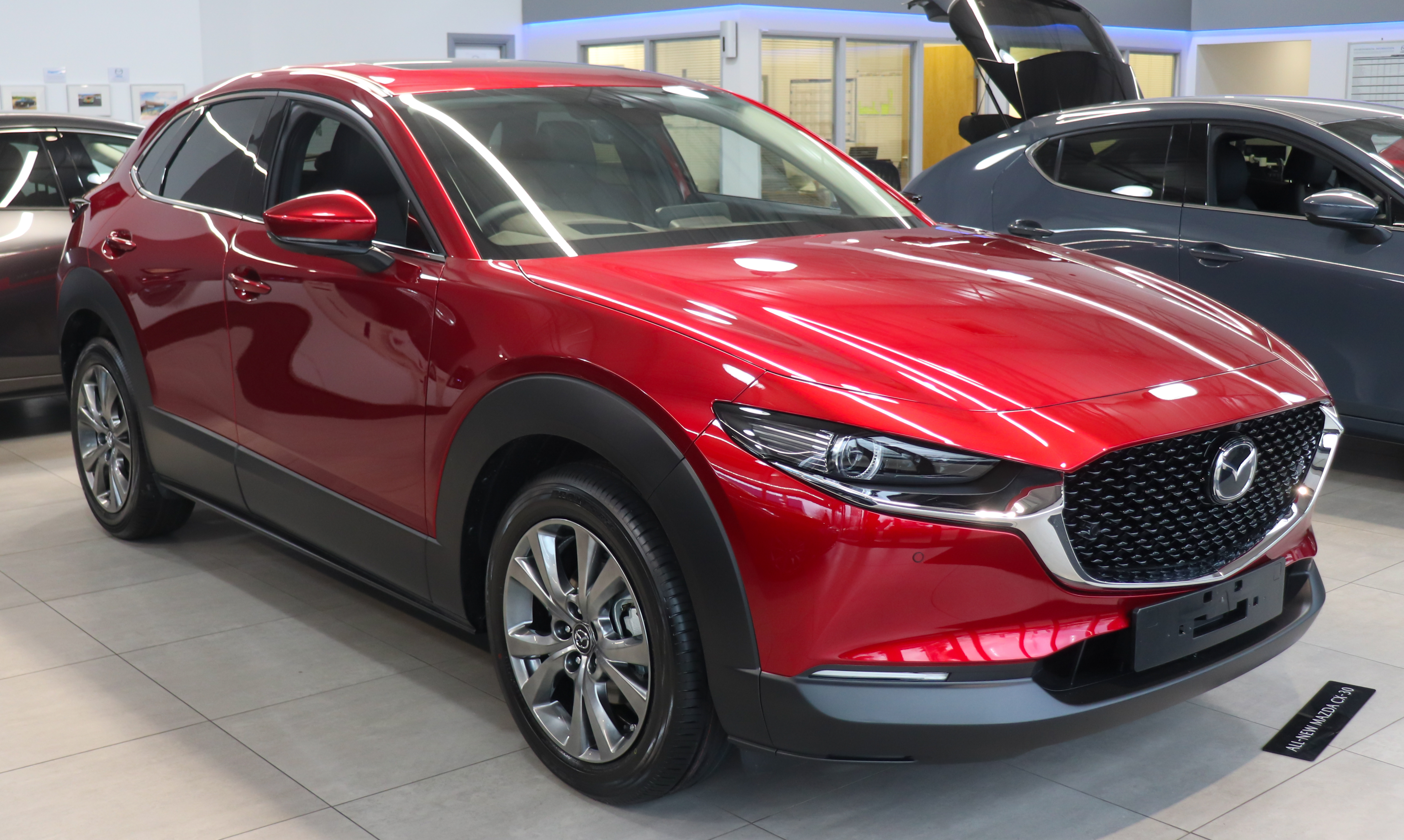
Mazda is a Japanese car brand. The hosts say Mazda’s sales are falling compared to last year, and they’re treating it as part of the same broader problem affecting a few brands.
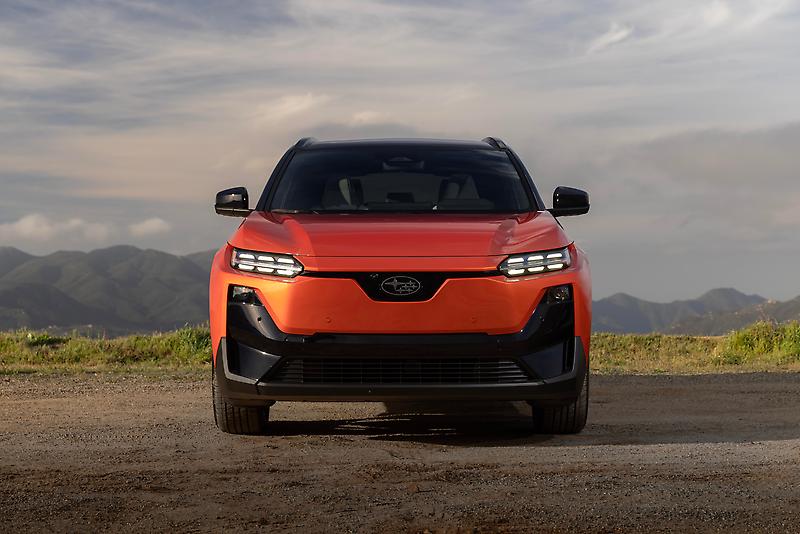
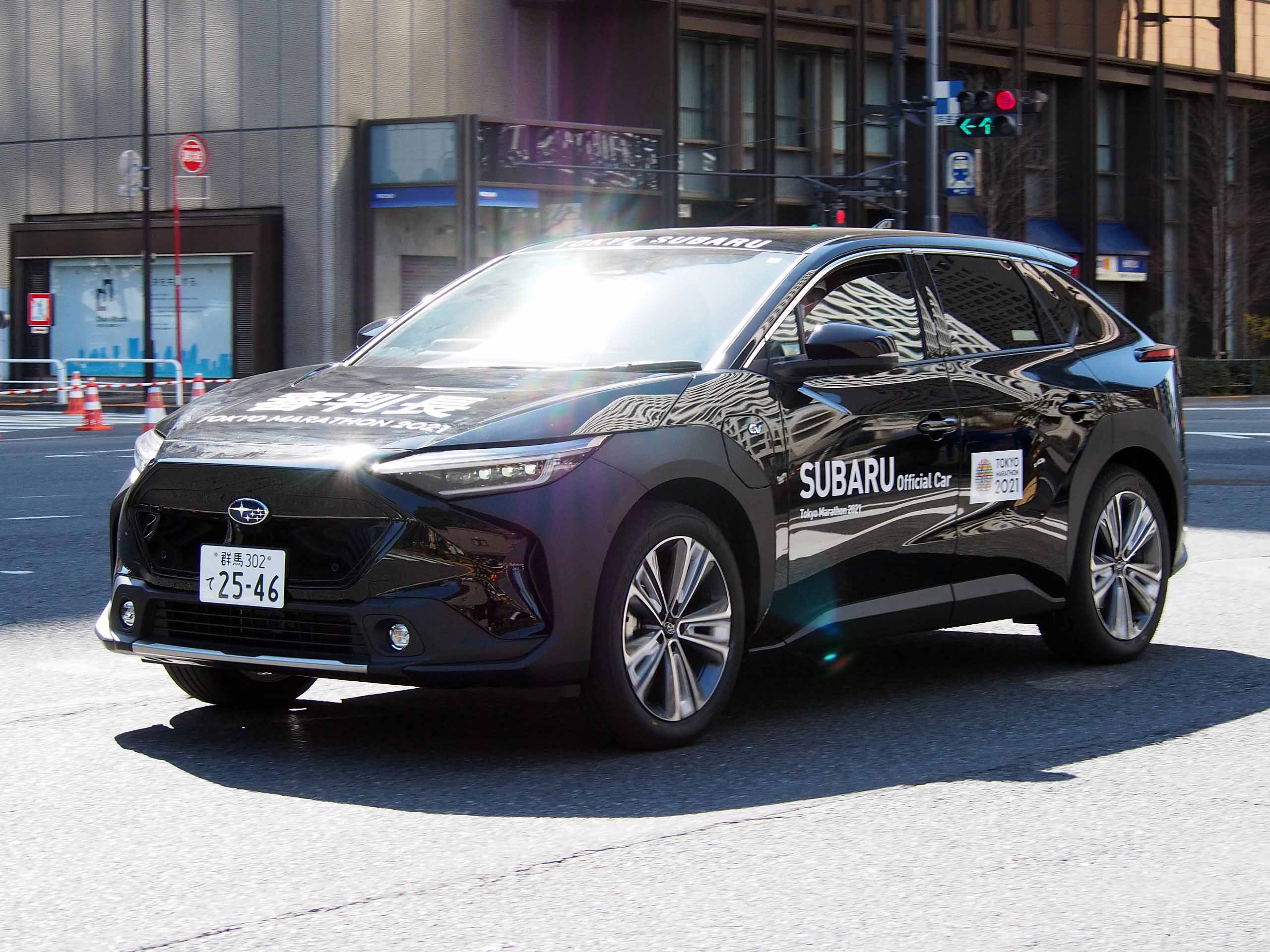
Subaru is a car brand that’s especially known for all-wheel drive. In this segment, the hosts say Subaru’s sales are down compared to last year, along with Ford and Mazda.
A recall is when a car company admits there’s a problem with certain cars and tells owners to get them fixed. The hosts are saying lots of recalls can hurt sales because people may worry about the brand and owners end up spending more time at the dealership for repairs.
The Ford Expedition is a large SUV with room for more people, usually including three rows of seats. It’s made for carrying passengers and gear comfortably, especially on longer trips. It often gets mentioned when people talk about big family SUVs.
The Ford Ranger is a pickup truck that’s smaller than Ford’s biggest trucks. They’re saying the Ranger’s sales fell a lot compared with the same time last year, so it’s one of the biggest reasons Ford’s overall numbers look weaker.
The Ford Maverick is a smaller pickup truck from Ford. In this segment, they’re pointing out it’s doing better than most other Ford models, with sales rising 10%.
The Ford Explorer is a family SUV with multiple rows. They’re saying Explorer sales rose 8.8%, so it’s doing better than many other Ford models in this period.
“Leftover vehicles” are cars that didn’t sell when they were new. They’re still sitting at dealerships, so the dealer may need to lower the price to move them.
The Ford Bronco Sport is a smaller SUV made for people who want to drive normally but still handle rougher roads. It’s designed to be more capable than a basic city SUV. It’s often mentioned as part of the Bronco family.
The Ford F-150 Lightning is a pickup truck that runs on electricity instead of gasoline. It’s meant to do the same kind of truck jobs, but with an electric motor. People bring it up because it’s Ford’s electric truck.
The Ford F-Series is Ford’s main line of big pickup trucks. In this segment, they’re saying a discontinued F-Series truck is still not selling, so dealers have to cut the price a lot.
A “discount” here means an advertised price reduction from MSRP to encourage buyers to purchase a vehicle that isn’t moving. In dealer inventory situations, discounts are often the fastest lever to reduce the number of unsold cars on lots.
“264 days” means the car has been on the lot for a long time without selling. When cars sit that long, dealers usually have to lower the price to attract buyers.
It means the dealership still has cars that haven’t sold yet. If those cars sit too long, the dealer usually has to lower the price or offer incentives to sell them before newer models show up.
“On the lot” just means the cars are sitting at the dealership waiting to be sold. If they stay there too long, the dealer often needs to reduce the price to get them moving.
This is basically how long the cars have been unsold at the dealership. If it’s been about six months or more, the dealer usually feels pressure to lower prices or offer deals to sell them.
Concept
clearance cells
This is basically a clearance sale. It means the dealer or manufacturer is trying to sell older cars for less money so they don’t keep sitting on the lot.
They’re talking about a large payment from Ford to the dealer to help them get rid of cars that didn’t sell. It’s like the manufacturer helping cover the cost so the dealer can move on to newer cars.
The Dodge Charger is a large car (a sedan) made by Dodge. It’s usually built for more power and a sportier feel than a typical family car. People mention it because it’s a well-known model name.
The Mazda CX-5 is a popular Mazda SUV. The hosts are saying that when the CX-5 is (or isn’t) ready in enough numbers, it can change how well Mazda sells month to month.
The Mazda CX-30 is a smaller Mazda SUV. The hosts are saying Mazda sent fewer CX-30s than planned, which can happen when production or shipping plans change.
The Mazda CX-90 is a bigger, family-oriented Mazda SUV with extra seating. The hosts are saying Mazda expected it to sell well, but it took time to show up in the sales numbers.
A hybrid uses both a gas engine and an electric motor. Here, the hosts mean Mazda expected the hybrid version of the CX-50 to help sales once it was available in meaningful numbers.
MSRP is the price on the car’s window sticker that the manufacturer sets. If a dealer offers “off MSRP,” it means they’re selling it for less than that sticker price.
The Mazda CX-70 is a bigger SUV than the CX-5. It’s made for people who want more space and a higher-end price point. It often comes up when Mazda’s newer, larger SUVs are discussed.
“Days supply” is an inventory metric that estimates how long current stock would last at the current sales pace. A higher days-supply number generally suggests slower sales or excess inventory, which can pressure pricing and incentives.
A dealer processing charge is an extra fee the dealership adds on top of the car’s price. The hosts are saying it should be clearly listed, and that it may not be something you’re legally required to pay.
The Toyota RAV4 is a compact SUV that’s made for everyday driving. It’s popular partly because it can come in different versions, including hybrid models. In the conversation, it’s mentioned to point out that the car being discussed isn’t a RAV4 hybrid.
An inventory problem means dealers don’t have the right cars in stock for what people want to buy. So even if people are interested, sales can still drop because the cars aren’t there.
The Subaru Uncharted is an electric vehicle model Subaru is talking about. The host mentions it to explain why Subaru’s EV lineup is bigger than many shoppers realize.
EVs are electric cars that run on electricity stored in a battery. The host is talking about Subaru’s electric models and how many people may not realize they exist.
The Subaru Outback is a popular Subaru that’s built to feel rugged and capable, with all-wheel drive. Here, the host is talking about the newer version and how people react to its looks—some love it, others don’t.
An “inventory story” is basically about stock levels. If a dealer doesn’t have enough cars to meet what people want, prices and sales patterns can look different than when there are lots of cars sitting around.
The Subaru Forester is a compact SUV/crossover that’s popular for being practical and for having all-wheel drive. The host uses it as an example of Subaru raising prices and running into challenges afterward.
This means raising prices so much that even people who really like the brand decide not to buy. At some point, the higher cost stops being worth it for loyal customers.
This is a reference to Stellantis, a big car company that owns multiple brands. The host is saying other automakers have tried price increases too, and it can change how customers buy.
“Bang for the buck” is a value concept: it means customers feel they’re getting more features, quality, or capability per dollar. The hosts argue that Subaru’s pricing changes are eroding that perceived value for its loyal customer base.
This is how long the car has been sitting at the dealership without being sold. If it’s been there a long time, the dealer may be more willing to lower the price.
A Dodge Ram is a pickup truck, meaning it has an open bed for hauling things. People choose it for tasks like towing and carrying cargo. It’s mentioned because it’s a well-known truck model line.
LIVE
It's noon here in Mentor City, New Jersey,
and our nation's capital, Washington, DC.
And this is Car Edge Live for Wednesday,
June 10th with your host, me, Ray,
hanging in my living room and vendor,
and Zach, hanging in the office in DC.
How are you today, handsome?
Doing fantastic, happy Wednesday, everyone.
Thanks so much for tuning in for another episode
of Car Edge Live.
We're gonna be talking about Ford, Subaru, and Mazda,
and how they can't lower their prices fast enough
before we do a friendly reminder
that today's show is brought to you by none other
than CarEdge.com.
For those of you that are unfamiliar,
me, my dad, and our incredible team provide a host
of car buying solutions and services back at CarEdge.com,
whether it be our car shopping,
back on the Shop Cars feature, our car search,
our car buying service, research dealer reviews.
If you're not using the dealer reviews,
you're missing out on a great, great opportunity
and as part of your research to find transparent dealers
and maybe avoid some not-so-transparent dealers,
check it out, that and so much more, back at CarEdge.com.
Now, Dad, the brands we're gonna talk about today,
they had a little bit of a struggle,
and I think that's putting it lightly,
as they've navigated 2026.
We've got the latest data on car sales for the month of May,
and today we're gonna focus on the five months so far of 2026.
Ford sales, Dad, thus far in 2026,
down 11.2%.
If I scroll down here, 6.9% decline, that's from Mazda,
and 8.3% decline, that's from our friends over at Subaru.
These three brands in particular, Dad,
have struggled to grow sales year over year.
What's the story with Ford, Mazda, and Subaru?
What's the story?
Well, I would bet dollars to donuts.
Dollars to donuts.
When it comes to Ford, that perhaps the amount of recalls
that they have had and continue to have
is catching up to them to a certain degree.
Yes, there are Ford loyalists out there
that will drive nothing but a Ford,
but they will probably spend more time
at their local Ford service departments
than say other brands, because, well,
Ford has three times as many recalls
as just about anybody else.
So I'm just guessing that that number of recalls
is finally catching up to Ford.
That, and well, I don't know.
They don't have any sedans.
They don't, you know, it's a great product
if you want a truck or an SUV, apparently,
but if you want anything other than that,
you are, as somebody once said, poop out of luck.
So we'll stick with Ford here for just a moment,
then we'll move over to Mazda and Subaru.
You can see here this comes from Motor1.
In May, Ford sales slipped 13.3% year over year.
Most models saw their sales decline,
including the Mustang, Broncos,
Sport Expedition, and the F-Series.
The Ford Ranger saw the largest decline of 23.3%.
The strong sellers in the Ford lineup,
well, it was the Maverick up 10%.
And Broncos sales were actually up 5.2%.
And Explorer sales were up 8.8%.
You know me, Dad.
One of the things I love looking at all the time,
back on CarHedge.com, is under the car search,
I want to look at leftover vehicles,
because the story here for Ford,
and you know what, I'm going to cheat.
If you just go to CarHedge.com slash unsold,
give me a second here,
it'll take you to the car search pre-filtered.
You can see here, Dad, there are still 132,493
unsold leftover 2025 new cars out there for sale
in the United States of America.
Any guesses how many are still Fords?
58,273.
Now, it's not quite 58,000,
but it's 50,000 of them.
So well over a third of all the leftover inventory
in the United States right now are Ford vehicles.
And if you come here, let's take a peek.
Let's get past some of these.
I mean, yeah, Broncos, Sports Lightning.
I mean, look at this lightning, Dad.
This is the Ford problem in a nutshell right here.
$74,000 MSRP of a discontinued F-Series pickup truck
that now the dealer is having to advertise
with a $13,464 discount.
And it's still too expensive,
and it's still not selling even after 264 days.
That's the Ford story in a nutshell.
Recalls and expensive products
that people haven't bought and shock our folks.
The story hasn't changed since two weeks ago
when we talked about the same thing.
There haven't been enough incentives, essentially, Dad,
which is the other part of today's show
that we will talk about,
which is we got the latest new vehicle price data
and incentive data from Kelly Blue Book.
And did incentives go up?
Yes.
But did they go up enough to actually move the needle?
No.
No.
Like, no.
So we'll spend time on that in just a second,
but with the Ford story, Dad,
shocker, not enough has changed in the past couple of weeks
to move the metal on those 50,000 leftovers.
Uh, no.
And Ford has made choices.
They, you know, they made choices.
And the choices were and continue to be
that they're going to continue to concentrate
with a declining market,
that they're going to continue to concentrate
on the higher profit margin, higher priced vehicles.
They just make more money on those.
And, you know, what I was,
I sent you an article earlier today.
And I thought, well, it was from CNBC,
if I'm not mistaken.
And I thought to myself, wow, this is funny.
We've been talking about this for four years, you know,
and suddenly everybody else in the industry is like,
well, yeah, you know, the cars that weren't built,
that's impacting the prices of everything.
And I don't know if you read in there.
But people who are buying new cars have an average family
income of $150,000, which is almost double
what the average income for Americans is.
So how do you expect if they know the market's declining
and they anticipate it will continue to decline?
How do you expect to be in a position
where your sales are going to grow when you are,
when you, every one of these automakers
has pretty much abandoned the average person?
And so you have a much smaller percentage
of the population that can participate
and fewer and fewer of those who can are,
which is why sales are declining.
And have been declining for years.
So it's, foreign cases, they just continue
to produce too many high priced vehicles.
They abandoned the entry level and sedan market,
small car market, and they got too damn many recalls.
They have been producing crap for years.
And I know people get mad at me
because they think I'm taking a shot at Ford.
It's the facts, ladies and gentlemen.
You don't have 153 recalls in one year
if you are producing a quality product.
You just don't.
And every year they talk about how they're going
to address the quality issues.
And it seems like every year they kind of sort of don't.
So that's the Ford story in a nutshell.
And again, during today's show,
we will spend time.
Kelly Blue Book, we appreciate it.
Every single month they put out the latest date
on new car prices and as part of that incentives.
And yes, folks, there was good news.
The line here, the yellow line is incentive percentage
of average transaction price meaning.
If you were to buy a $100,000 car,
which is not that far-fetched in today's market,
you would expect to get $7,100 in incentives
from the manufacturer to help you purchase that vehicle, 7.1%.
Now, that used to be in a pre-pandemic world
more than 10% on that same $10,000 car
you'd expect to get $100,000 car
you'd expect to get $10,000 in incentives.
You can see what happened during the pandemic.
That's this area where the blue line went up,
car prices went up, and incentives from the manufacturers
because there was more demand and not enough supply
really, really, really plummeted.
So yes, there is good news reason to celebrate today.
But it's not like incentives are skyrocketing,
which in the case of Ford,
just to spend one more moment on this,
is what needs to happen here.
I mean, unequivocally,
as compared to every other automaker out there,
and again, I encourage everyone on today's show,
go to caredge.com slash old.
If for no other reason to just do this research yourself,
when you go to caredge.com slash old,
it shows you 2025 or older new cars
still for sale in the United States of America.
No other manufacturers in a predicament quite like Ford.
Ford has 50,444 left over is what we like to call them.
New cars for sale, the whole car business,
the whole auto market only has 132,000.
So Ford needs to look at their own version of this chart,
and they need that yellow line to go significantly up
into the right.
They need to incentivize the sale of those vehicles
significantly.
That's the Ford story in a nutshell.
Can you go back to that chart for a second?
I can spend all day on that chart.
Well, I don't want to spend all day on it,
but go back to where was it?
It looks like I don't know the middle of 2024,
and incentives were higher then than they are today.
So, and, you know, we here at caredge seem to talk
about affordability pretty much on a daily basis.
If you go to the home page of automotive news today.
It's bad today.
Yeah, it's bad.
Yeah, yeah, yeah, yeah.
It's bad today.
It's the average asking price today is what, 51,7,
which is nearly $2,000 higher than a year ago.
So please, ladies and gentlemen, explain to me,
like I'm a three-year-old, how they are addressing
the affordability issue when we see these numbers
are ridiculously high.
It is there, it is all bull hockey, bull pucky, bull, bull.
It's bull poop.
Okay, it's like there's stuff on honor panels
of bull poop in a 10-pound bag.
Okay, and this is what triggers me on a daily basis,
because every one of these automakers talks about it,
lenders talk about it, dealerships talk about it.
The only problem is nobody doing a damn thing about it.
But to be clear here, I anticipate, and I think
the expectation we should set for our community,
is over the coming months, you will see Ford,
both the OEM and Ford dealers, individual operators,
become much, much, much, much more aggressive
on this leftover inventory, because they are unique.
No other dealership or OEM is in the same position
as Ford dealers who are sitting on leftover 2025 inventory.
And the reason I say that with such conviction, Dad,
is they have to get rid of it eventually.
Like we're about to transition here and talk about Mazda
and Subaru, very easily.
Yes, of course they have to sell those cars.
You know, I spent 43 years in retail automobile.
I've heard that rumor.
And you know, I thought there were certain truisms.
And I think for the vast majority of my 43 years,
there were when inventory sat, the automakers typically
increase their incentives.
And I don't think since the pandemic that we've really seen
that, that they're still following the same playbook.
And that's why I ask you, really?
Yeah, yeah, Ford's got 50,000 2025 leftovers.
Okay, Ford doesn't have them.
Ford's dealers have them.
Okay, and at a certain point, either Ford's dealers are going
to have to eat the cost of getting rid of them.
And then they will complain loudly to their sales, factory sales reps
and to the dealer council and try and get Ford to step up to some degree.
But I just, I just don't think that the old playbook is being utilized anymore.
Every time we look at the stats and you would say to yourself,
prices have to go down, incentives have to go up.
That's the only way we're going to move the metal.
It just, it doesn't seem to happen.
And that's the part that confuses the hell out of me.
Because I don't know what the new playbook is other than to say to your dealers,
well, because that seems to be what Ford's saying.
I hear you, Dad.
But you know what's happening sooner rather than later?
2027 model year cars are going to start hitting Ford dealer lots.
And that is going to put immense pressure on those dealers who,
yes, to your point, it's dealers who are sitting on that leftover inventory,
but an example here of some of the insights that we get to see.
Lindsay Ford of Wheaton, Dad, this dealership, I pulled them up on the Car Edge dealer review
platform and I scroll down to their on the lot right now, section of their page.
They still have plenty of 2025 vehicles, plenty of vehicles.
37% of their inventory has been sitting on their lot for over 180 days.
And to Danny's point, some 2027s are already here.
And so I hear you loud and clear.
The traditional thought has been that car dealers need to sell their cars to make money.
I don't think that's fundamentally changed.
And I think Ford, we're going to switch gears and talk Mazda in a second here.
I think Ford is uniquely positioned right now to offer some clearance cells.
There's got to be some big, big, big discounts on the horizon for those 50,000 leftover cars,
trucks, pickups.
I don't see an alternative.
They have to sell them, especially as 2027 vehicles start to hit their dealer lots.
Well, what's the alternative?
A big final payment that Ford's going to give to the dealer for the remaining 2025s and 2024s
that are sitting on their lot.
And Ford is going to say, that's it.
We're done.
That's the end of our support.
You now, we're going to give you a big chunk of cash for each one of those particular vehicles.
It's now up to you to figure out how to get rid of it.
And we know that can be the case because of our dear friend Joe Lewis at JC Lewis.
We also remember Jared Glover from Jim Glover.
Yes, no, these cars, they get final pay and they're able to then,
in the case of Jared Glover from Jim Glover, what was it?
It was a Dodge Charger?
Charger of some kind.
They were like 30% or 35% off.
It ended up selling at 48% off MSRP.
Okay.
Which is insane.
Well, you know what's really insane?
That they priced it that high to begin with.
But no, no, no, no.
The poor folks that bought them at close to 100% of MSRP, when they first came out,
as opposed to waiting and being able to get their hands on one at like 50% off.
Which again, for those of you that are part of the carriage community,
obviously you're informed, empowered, and you have knowledge.
Okay.
You've been waiting for a car deal.
I'm telling you, Ford is uniquely positioned here.
Let's switch gears.
Let's talk Mazda.
Okay.
Mazda sales are off 6.9% so far this year.
So again, Ford sales are off 11.2%.
They're the big dog when it comes to losing sales.
Mazda's only down 6.9%.
What's the story at Mazda?
We know they've produced a lot more vehicles,
so I don't think it's an inventory shortage over at Mazda.
Why have they struggled to grow and do they need to lower their prices?
Well, if you look at May, they didn't struggle at all in May.
It was a good month for Mazda, yeah.
Their sales were up 35% May over May.
Where have they struggled?
I don't know that the new CX-5 was coming out.
Maybe they were in relatively short supply.
They cut back on the amount of CX-30s that they brought into the country,
because those are manufactured in Mexico,
and they were hoping that the CX-70s and the CX-90s would pick up the slack,
which initially during the first part of the year they did not,
and they were counting on the CX-50 to take off a little bit more in the hybrid mode.
And apparently, some of those things started coming together in May.
Now, January, February, March, and April, not so much.
Things look bleak, but you can see that they've made a dramatic turnaround in May.
And so, I think that Mazda is a relatively small,
somewhat independent automaker, and they have a limited amount of cash.
So, can they or will they continue to incentivize sales the way they need to?
I don't know, but it seems to me, typically you can go and look at a Mazda
and get somewhere between 6% and 10% off of MSRP most of the time.
So, that's what I think is interesting, and I think it is a price issue with Mazda, right?
Now, although their sales, like you said, in May, did bounce back a little bit.
Leon's saying CX-70s and CX-90s are well over $50,000. Here's an example.
The CX-5 is their big seller, and you can see here, this is just in the Maryland area,
119 days supply of this particular CX-5, which to be clear here,
this is the CX-5 2.5S Premium Plus. Now, Dad, what do you think the price is for a 2026
Mazda CX-5 Premium Plus? What do you think it is?
I don't know.
Premium Plus.
What?
S Premium Plus.
I don't know. I would have guessed as a 2025 before the redesign,
I would have guessed probably somewhere around $35,000 or $36,000.
So, what I'm going to show you here is two things. One is obviously the price,
which is $40,985, which is expensive. Now, the other thing I'm going to show you is,
this dealership, Dad, is effectively asking $800 over MSRP. No wonder they're not selling
as many of these, whether it's Leon's point, which is the 70s and 90s or over 50k,
or their big volume seller, the CX-5 here, is to your point, it should probably be priced
$5,000 or $6,000 lower, and then dealers are asking for MSRP, and then actually, kudos to
this dealership, dealer processing charge being explicitly called out here is good transparency,
and then reminding us it's also not required by law as good transparency.
But effectively, they're asking almost $1,000 over MSRP. So, no wonder the day's supply in that
particular area is over 100 days. That's because they're asking too much for these vehicles.
And you can see Igor here, emphatic, no Mazda seller over MSRP, no Mazda model none.
I would think, even though the 2026 CX-5 is a new redesigned model, a little larger,
a little wider... Kind of how some people describe you, Dad.
A larger and wider, yes, yes. And I continue to move in those directions. But I would think,
even though that's a newer model, you can still probably, or should probably, be able to get
5% off of MSRP, not pay MSRP. So, I think a dealer asking MSRP for a Mazda is being a tad bit
you're not selling a Toyota here. Okay, this is not a RAV4 hybrid that you're selling.
You're selling a Mazda CX-5. So, Mazda's been claiming the fame, always had been,
that it was good bang for the buck, good value for the dollar. And once you start hitting
a $40,000 price point for an S premium, which I guess is as close to the top of the line for
this new CX-5 as you can get today, that's high. That's high for a Mazda CX-5. It just is. I mean,
I think my CX-30 that I drive, I think mine only had an MSRP, and mine's an S premium,
it was, I think the MSRP was around 34g. Now, what's the Subaru story? So,
Subaru sales so far this year, down 8.3% year over year. Again, Subaru, similar to Mazda,
actually did have a stronger May, but Subaru sales that have been off significantly, maybe
a little bit more of the story that Subaru is an inventory problem, like Subaru doesn't have
the right inventory here in the United States. And I bring that up in the context of,
Subaru has launched two new products here in the United States that most people probably don't
know about, which would be two new EVs, the Uncharted and the Trailseeker. Like, I don't
think most people know that the Subaru lineup has three EVs in it, the Soltera, the Uncharted,
and the Trailseeker. So, what's going on over at Subaru? Is it the same story as Ford and Mazda,
or is it slightly different here? Well, we know that Subaru was the first of the automakers,
because so many of their vehicles are built in Japan and brought into this country.
They were one of the first of the automakers to announce rather sizable price increases due to
the tariffs and to the increase in tariffs. And so, their value proposition took a hit
when they did that. They didn't find themselves being as competitively priced to their peers
as they had been in the past. I will tell you this. The other day, when I was driving home from
somewhere, I drove past our local Subaru dealer that we filmed that six weeks ago. And you remember
how packed the lot was? It was empty. Really? The new car side of things was empty. It was like,
whoa, where did everything go? Wow. Okay. It was way more as fault than it was cars.
Interesting. Yes. And I know, in my heart of hearts, I look at the new updated Outback. And to
me, it's just as fuggly as an Outback as a purported SUV can get. I mean, to me, it's hideous.
Okay. But that's me. Apparently, there's others out there that look at it and go, well, that's
the best look in sun I've ever seen. How do you look at that and go, oh, yeah, I gotta have me one
of them? Okay. But apparently, the sales have picked up. So maybe the Subaru story actually
is an inventory story, different than Ford and Mazda. It seems like Ford, the inventory story
is actually the inverse of Subaru. They have too much 2025. Mazda is kind of in the middle. They
have a decent amount of inventory, but the prices are too high. Subaru would actually
probably be the one where you're not going to expect huge price decreases. So a little misleading in
my title today, because the Subaru challenge is more of an inventory challenge. They don't have
enough inventory to match demand. Maybe the exception would be like the Outback, where maybe
sales are not nearly as strong on the other side of a redesign. But Subaru did increase
prices significantly for the Forester, for example, and did run into some speed bumps
and challenges this year to grow their business. Oh, absolutely. I mean, you can only raise your
prices so much before you start to price out your loyal customer base. This isn't the first brand
we've seen that with. We watched that happen with the Stalantis for many of their products. And we're
seeing that even though Subaru owners are extremely loyal. Okay. I mean, Subaru owners are as fanatical
about a brand as you can get. Totally. But one of the things that Subaru owners love
is that they're relatively inexpensive for what you get. There is a lot of bang for the buck
with a Subaru. Not dissimilar from how Mazda is perceived. Yes. It's not considered
as much of a driver's vehicle as a Mazda would be, but it's always been a great value proposition
with a very loyal customer base. But that customer base, even if they can afford it,
doesn't... I don't think they react well to prices going up one, but I think they react as if
I have the sense you're starting to try and take advantage of me and take advantage of my loyalty
to the brand. And that the amount more that I have to pay today isn't worth what you're asking.
Let's just look at this one example. We had the outback up on the screen. I didn't even notice
this. The MSRP is nearly $50,000. You can see it right there. $49,507 this dealer's had at 132 days.
They've had a discount at $3,500. I mean, that is very expensive for a Subaru. $50,000 MSRP is a
threshold I don't know if most people are ready for when it comes to thinking about buying a Subaru.
No, not an outback. I remember, of course, it was 15 years ago when we bought the outback for Mom.
But that was what, a $28,000 car. And today, that same car is probably $38,000 or $39,000, so...
I think more, Dad. I don't think you're getting into an outback for sub $40,000 or $39,000. There
you go. $39,653,000. I mean, look at these. Yeah, an outback premium. That's what we got.
Your mother was like an outback premium, so they're like $38,000, $40,000.
They're $40,000, yeah. Yeah, which is... That is not...
That is not the bang for the buck that the Subaru customer thought of in the past.
Yeah. So, prices have gone up way more than incomes. And I think it... Especially the
less expensive brands. And I know it's hard to say that Subaru is a less expensive brand,
but typically it is. It's much harder even for the less expensive brands because
their customers tend to be struggling more than the people who, on average, are making a family
making $150,000 a year. Now, Dad, I see a couple comments in the chat talking about the ads. I
have no clue what's going on with the ads today. So, hopefully YouTube cleans it up. The ads are
crazy today, Zach. Must have bumped the ad sensor. Not enough super chats. No, it's not bad. I don't
think we changed any settings. So, we'll have to see what's going on behind the scenes. Sorry,
y'all are getting so many commercials and didn't realize that. But anyway, we appreciate you
continuing the tuning. Okay, no ads here. That's good to hear. All right, Dad.
Now, how do they do ads during the show when it's live?
This is the first time I've seen this. I don't know if you noticed that the YouTube studio,
like, they kind of updated it or changed it. So, I don't know. Maybe YouTube's rolling out
some changes, I guess. I'm not sure. Well, whatever it is, I'm sure it's to make them more money than
others. Pretty sure that's how that works. All right, folks, we're going to call it a show for
today. Again, a friendly reminder if we can help you out with anything, caredge.com is our website.
I'm also curious what other brands folks want to hear us talk about. It was really fun today to
break down these three manufacturers. So, let us know some comments in the chat which manufacturers
you want to see us do deep dives on. And, Dad, let's do it all again tomorrow with more cars.
Absolutely. And, you know, my suggestion, even though I know you asked for viewer input,
I think it's time to take a dive, a deep dive into a Jeep and perhaps Ram. You know, we haven't
done those in a while. I know Jeep just had a huge recall where the good folks at Jeep have
told those Jeep owners, oh, whatever you do, don't park them in a garage. Park them outdoors
because they're now a fire risk. So, I think that could be something that might be interesting to
take a look at and see exactly how that might impact their sales moving forward.
Definitely. And, from Scott, we appreciate it. Thank you so much.
Basically, the ad stopped the live show. That's miserable. All right, we'll have to see what
that YouTube's up to. Hopefully, that goes away. Wow. All right, y'all, we're back tomorrow with
more Car Edge Live. Appreciate everyone tuning in. Yeah, thanks for being here, everybody. Have a
great day. Handsome. Love you. Love you too. Bye.
About this episode
Ford, Subaru, and Mazda pricing gets the spotlight as the hosts argue automakers can’t cut prices fast enough to clear inventory. They cite Ford sales declines, heavy recall pressure, and large “leftover” stock that still won’t move even as incentives rise. Mazda’s slowdown is tied to supply/import decisions and dealer markups above MSRP, while Subaru is framed as an inventory mismatch plus tariff-driven price hikes that outpace perceived value. The discussion leans on CarEdge and Kelley Blue Book data, plus real-world discount examples.
Today on CarEdge Live, Ray and Zach discuss the latest on Ford, Subaru, and Mazda. Tune in to learn more! Hosted by Simplecast, an AdsWizz company. See https://pcm.adswizz.com
for information about our collection and use of personal data for
advertising.