Renae Chrysler shares her inspiring journey from personal tragedy to founding the Jumpstart Fund, aimed at guiding teens towards hands-on careers in skilled trades. After losing her son Riley in a motorcycle accident, Renae turned her heartbreak into a mission to expose young people to alternative career paths beyond traditional college. The episode delves into Riley's struggles with education and his passion for mechanics, highlighting the importance of finding meaningful work and the impact of mentorship in shaping young lives. Renae's story is a powerful reminder of resilience and purpose.
Renee Crisler, Owner and Founder of the Reilly Crisler Jumpstart Memorial Fund, joins us to share how she turned the loss of her son into a mission to help other “Reillys” explore careers in the skilled trades. She shares Reilly’s story, the purpose behind the fund, what Draft Day looks like, and how others can get involved.
"My dad had a really cool Corvette that he sold to buy our farm and we all talk about how we'd love to get that Corvette back someday."
The Corvette is a famous sports car made by Chevrolet. It's known for being fast and stylish, and many people love it for its performance.
The Chevrolet Corvette is a high-performance sports car known for its distinctive design and powerful engine options. It has been a symbol of American automotive performance since its introduction in 1953.
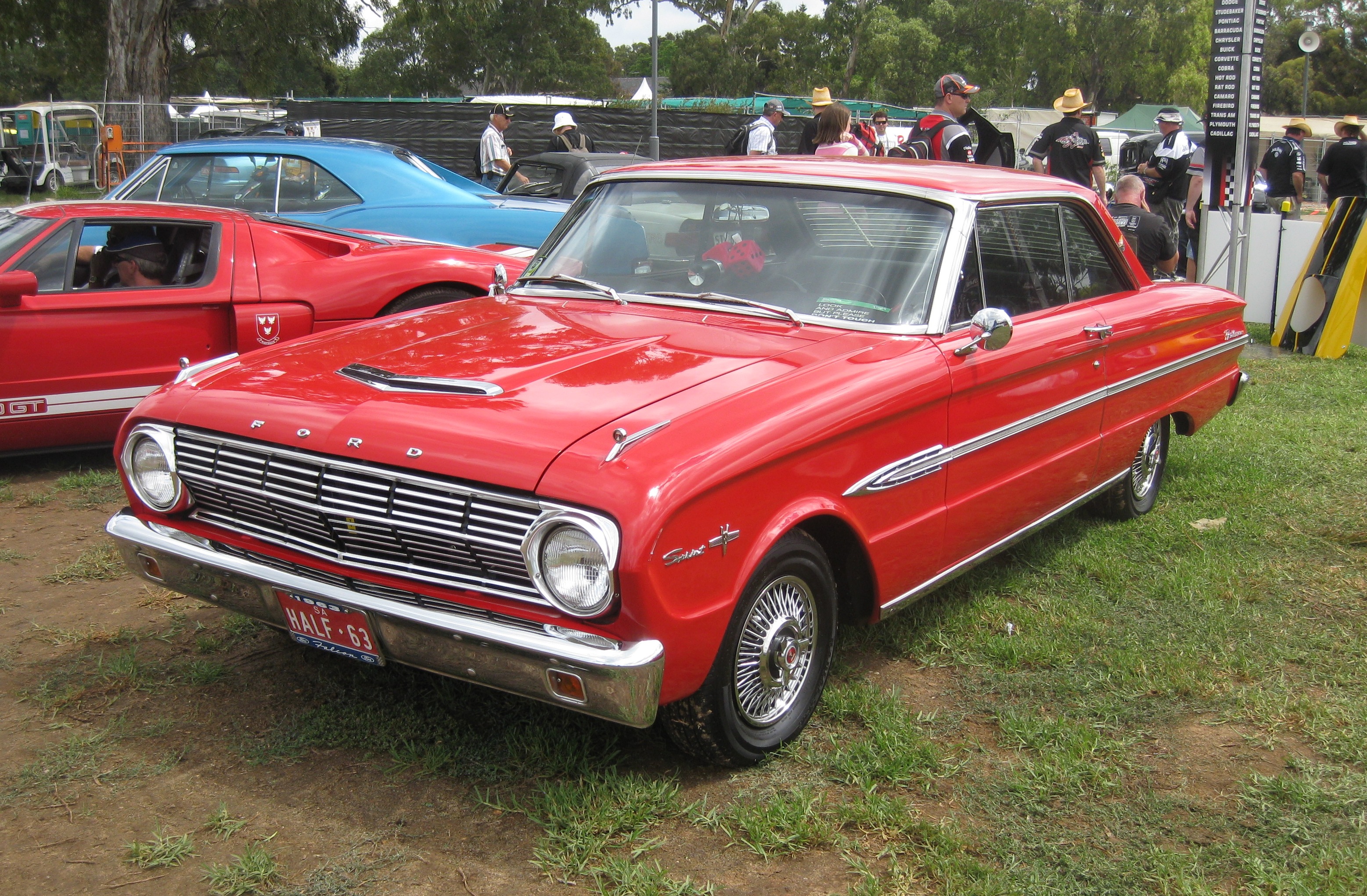
"And when I started working with, it's called Falcon District, District 49, Thane's Just Snowbald."
The Ford Falcon is a type of car that was made a long time ago, mainly in the 1960s and 1970s. It was popular because it was affordable and easy to drive, making it a good choice for many families. People still talk about it today because it has a special place in car history.
The Ford Falcon is a mid-size car that was produced by Ford from the early 1960s to the early 1970s. It is significant for its role in popularizing compact cars in the United States and is often remembered for its affordability and practicality. The Falcon has a strong following among classic car enthusiasts and is frequently discussed for its historical impact and design.
Select text to request an explanation
She said, Renae, I can promise you
that if you work in apprenticeship,
you will find the Rylees of the world.
Beyond the Wrench with J. Gannon from Wrenchway.
Today on Beyond the Wrench,
we're honored to be joined by Renae Chrysler,
an entrepreneur and advocate
whose work is rooted in purpose and impact.
After losing her son in a tragic motorcycle accident,
Renae turned heartbreak into hope
by founding the Jumpstart Fund,
a foundation focused on exposing teens
to hands-on career paths
beyond the traditional college route,
including the skilled trades.
Renae joins us today to share her personal journey
and how she's helping young people find direction,
opportunity, and meaningful work.
Renae, welcome to Beyond the Wrench.
Thank you.
I'm really honored and privileged
you're taking time to talk to me, so thank you.
Well, I'm truly honored to have you on.
As we talked in our intro call,
you can't help but walk away
from a conversation with you,
but being inspired, right?
And really everything that you've done
to turn what could be perceived as a negative,
a negative into a really, really positive thing
was so powerful to me.
And after we initially had our talk,
I was just so floored by you
and everything that you're doing.
So today's conversation,
I've had kind of circled on the calendar
as one that I'm really, really looking forward to
because you're doing some incredible things.
Oh, thank you.
That means a lot, really.
It does, we appreciate that.
So your path didn't come maybe the traditional way
into our industry or into the skilled trades
as to most that come on the show.
And so I do wanna, before we get into all of the things
about what you're doing,
that the reason why we're having you on the show,
I do wanna talk about your upbringing
because it is different than most that we talked to.
What led you to this point in your career?
I mean, you've had some really, really cool things going on.
So it's funny that you say I'm not your typical,
but I did grow up with three brothers.
One happens to be a diesel mechanic.
Oh, nice.
One's a helicopter pilot
and one is still working our family farm in Kansas.
And so funny enough, I was around cars a lot.
My next oldest brother actually used to drag, race his cars
and tweet cars and on occasion I would be in the vehicle
or I was on the street watching for traffic
to make sure it was all clear.
But I was also the annoying little sister
so they didn't really teach me a lot.
I tried to weld when I was younger
and I was really terrible at it.
And they just said, we're done with you.
You can't learn this.
Go back to cleaning the house
and doing dishes or whatever.
And so I grew up in Kansas on a small farm
with three brothers and was around cars a lot.
My dad had a really cool Corvette that he sold to buy our farm
and we all talk about how we'd love
to get that Corvette back someday.
So, so cars have kind of been a part of my upbringing.
I just don't know the mechanics as well as maybe I should
because of being in that upbringing.
So, so yeah, but my background, my education
I did go the traditional college route
and I do have a master's in marketing and business.
And whenever Riley entered into our home as a young toddler
he was obsessed with cars and airplanes
from like age two probably since he could talk.
He would talk about seeing planes
and the smoke coming out of them
and tailpipes and semis and cars when he was teeny.
And so I just knew it was kind of gonna come full circle.
I was gonna have a somehow I was gonna be
thrown into automotive.
Yeah, yeah, for sure.
It sounds, I think a nice step here
and it's really cool to hear your background
because what you've been able to do
when we talk about the start of the Jumpstart Fund
is use maybe some of your background
and the things that you grew up knowing,
putting that MBA to work.
If anybody gets a chance to go check out the website,
phenomenal work, very good branding, looks great.
But I do wanna talk about the purpose
and really kind of how this fund originated.
You mentioned Riley and Riley's at the core of this story
and something where as our listeners kind of take this in,
I think you'll see Riley in a lot of you, right?
Like there's just as I was hearing about Riley's interests,
I couldn't help but think about myself as a young person.
And so tell us a little bit about Riley
and kind of just everything that got going
with the Jumpstart Fund.
Sure, so Riley was incredibly intelligent.
I knew I was in trouble when in seventh grade,
he was in a math class that I couldn't help him with
anymore because he was triple advanced and it was great.
But as parents, I don't know if that's a but,
when your parents have a kiddo who's incredibly intelligent,
we were very career college focused.
And I think that was our first misstep.
I don't know if it was necessarily a mistake
because you only know what you know.
And this was new to us as parents.
And so he went into high school triple advanced
as a freshman, he was top of his class.
Just really an intelligent person in general
and very driven, like we talk a lot to our kids about,
we don't want you to work for someone else,
be your own boss, we talk about that a lot
when they're young.
And so for us, we thought Riley can go to college,
start his own business and he'll be uber successful,
like he'll do great things.
And so we told him his job was to get good grades.
Like that was a huge emphasis on our home for him
because he was very capable
and we just thought it was the natural pathway
for him to be successful.
And so going into his sophomore year
after his first semester, his grades started to tank.
And I mean really tank, he was getting Ds and Fs.
And we thought, we didn't know what to think quite honestly,
we were a little lost.
And after his first semester of his sophomore year,
we decided to part-time homeschool him
because he was struggling
and we were struggling as parents.
And so he found a job at a cabinet shop
and would take his core classes at school
and then we would do a lot of his electives
through his homeschooling program, which was his job.
And he loved it.
It was, I can't say I saw a true 180 in him,
but the way he would speak to his coworkers and his boss,
I was like, okay, we're doing something right.
I mean, he would work hard, his boss really loved him.
He showed up on, I mean, I had to drive him
at that time because he was only 15.
He didn't have an option then, he was shown up on time.
Correct, but he wanted to, right?
It wasn't like I was pulling teeth.
I was like, Riley, come on, let's go, you're gonna be late.
He was waiting and ready to go.
And so that was really inspiring for us as parents
thinking that, okay, we're on the right track.
This is something that resonates with him.
And so he worked that whole summer
before going into his junior year.
And then he asked because we were,
he wasn't quite sure what his pathway was,
but he wanted to be in school more,
which was a shock for us.
And so we put him back into school full-time.
And then he would work at the cabinet shop on Saturdays.
And that was probably a mistake
just because he got into a lot of trouble.
He just, I think he still felt the pressure of
mom and dad want me to go to college,
but I'm gonna show them, I'm not going to college.
I'm gonna have some questionable friendships,
make some very questionable choices.
And again, we were kind of back to square one.
And then a great, a really good friend of mine
suggested Riley check into aviation
and his son was on the pathway
to become a commercial airline pilot.
And I thought, oh my gosh, what a great idea.
Riley loves airplanes, he loves fast cars.
Okay, let's explore this.
And so I enrolled him in an aviation program
at Spring's Aviation.
He agreed, I didn't have to convince him.
And he was super excited about it.
And again, I'd like to say there was a total 180,
but it was definitely baby steps.
So he would have to be drug tested,
which was huge for us as parents because he needed that.
I mean, this is a funny story
and you can take this for what it's worth.
But one night I was suspicious that maybe he was regressing
and I said, get in the car.
We're gonna go buy a drug test.
And he got in the car with me.
There was no pushback or anything.
And he passed it.
But I just, I don't know what it was.
It was some kind of mom, something.
Intuition type of thing.
Yeah, I just thought maybe he needs to know
that we're still checking in.
And he passed, he didn't pass with flying collars,
but he passed it enough to where he could stay in the program.
And so I was like, sweet, this is good.
We're making progress.
And that was, I would say that was a pivotal moment
because I think he started to believe
that we were in it for him and not for ourselves
or for college or whatever he might've been thinking
at that time.
And so after his junior year,
he went back to work in the summer
at the cabinet shop pretty much full-time.
And it was great.
It was good.
And then going into his senior year,
he had a buddy that had a sport bike
and he asked us if he could get a sport bike.
So of course our answer was no.
I mean, you don't have a sport bike at 17 at that time
and drive the speed limit we knew.
I mean, I had been around motorcycles
and fast cars my whole life in college.
I remember being on the back of a sport bike with friends
and I just, and knowing his personality
because he was someone that pushed the limits
and he was very determined to experience life his own way.
He didn't want someone to tell him, blah, blah, blah.
So we told him no, but he got it anyway.
And the way that we found out he got his bike
is because he'd been hiding it at a park
kind of in the trees about two or three miles away
from our house.
And one day he called his sister and said,
hey, I need help.
He sent me a text and said, mom, I need Ellie.
And that's my oldest daughter and his oldest sister.
And I was like, what's going on?
He goes, I can't talk right now.
And of course to me, I thought crap.
He wrecked his bike or something happened
because you know, again, mother intuition,
like does he have a bike?
What's going on?
Of course, worst case scenario,
I thought he was in an accident of some sort.
Well, an hour later, I see him being towed
behind our daughter's car on his sport bike.
And that's why, I mean, I don't know.
It's really hard to stay on a bike
when you're going 10 miles.
Yeah, I was gonna say,
that's actually takes some talent, right there.
Yes.
And so watching it was really hilarious, quite obviously.
But again, I was texting him, calling him
and he kept saying, mom, quit trying to talk to me.
I can't talk right now.
And so I was like worst case scenario,
what's going on, what's happening?
And so he pulls in and he's had some,
I don't know what was wrong with the bike.
I really don't remember.
But that was a turning point for us because,
and that's a, that is just a reflection
of his personality too.
When he was determined to do something,
he was doing it.
Like there was quite honestly no stopping him.
And we thought, okay, he's gonna have a bike.
How can we make this livable for everybody?
Like how can I sleep at night?
How can we somewhat ensure his safety?
So we just had some conversations about rules
and I will say he was really great.
He would leave at about nine o'clock at night,
give us a great big hug, say, we'll see you later.
I'll be home at 12.
And he would be home at 12.
I mean, honestly for like the first time
in his high school experience with him
because he used to sneak out
and come home at like six in the morning.
And that's a whole nother story, how we found that out.
But this was the first time where I really felt like
he's gonna be home at midnight.
He's gonna be true to his word
because I think we were giving him some grace.
And so that allowed him to kind of be himself
a little bit more.
And so yeah, so that was good.
He bought a bike, he flipped it, bought another bike.
He wanted to figure out how to make money
and pay so they could pay for themselves.
I mean, his first bike was small.
I think it was a 700 maybe.
The last bike, his third bike was huge.
It was, we said it was Satan's bike.
It was a 1200 Mitsubishi.
It was so fast, so big.
Like no one should ever be on a bike that fast.
But that was his third or fourth bike.
So he had flipped several and he used his own money
to buy them and kind of upgrade.
But you see that maybe entrepreneurial spirit there too,
right of like wanting to,
and something that was maybe passed down from you
in that you are seeing the want
to maybe turn that into a business
or to figure out a way to make money off of it
or you know, turning your passion into something
that is something you can do something with.
I think that's pretty cool.
I think so too.
And I think that's just a reflection of him again
is that he was determined and he wanted to,
he wanted like, he wanted to be uber successful
in whatever it was.
One of his favorite F1 drivers was Arenton Senna.
And we actually are using a quote of Arenton Senna
on his gravestone and it talks about whatever you do in life
and he goes, and I'm not talking about just being an F1 driver,
you will be successful with your faith in God.
And Riley, I'm not gonna say that his faith
drove him to success, but he was very, very driven
to find whatever it is that God wanted him to be
to be successful at it.
And so I think that, yeah,
I think that was a definite reflection
of his A determination to be successful
and B, he just wanted to,
this is his hands-on part of him, right?
Like he wanted to experience life hands-on.
He wanted to do it himself.
He wanted to feel and touch it.
We could tell him something was dangerous all day long,
but he wanted to learn it for himself for sure.
Love that his favorite driver was Senna,
that is really cool.
And then the quote with the faith-based piece of that,
I think is incredible.
And then just the, you talk about the intelligence level
and this is something that it sounded like
you almost had to open your mind to
or shift your thinking in and that,
maybe the traditional route wasn't going to be
the avenue that he was going to go down,
but you still knew that he was really, really intelligent
and maybe just using that intelligence in a different way.
And it's hard for a lot of parents,
I think to come to terms with that, right?
Because I think a lot of times
you always want what's best for your kids, right?
And you had talked about that part of him
just starting to understand that
his parents were in it for him as well.
Like it wasn't just to tell their friends
that he's going to college
or it's, you're wanting what's best for him.
And then as you kind of start to see this,
I've got a lot of friends that are that way, right?
Where they, in myself included,
I was not what I would call a good student,
not even close.
Not because you weren't capable,
you just chose not to be a good student.
Well, and it is one of those things
where I think when you find what you're passionate about
and that whatever, everybody's different, right?
And I think that's,
the more you can keep an open mind to that
and really start to see how talented some of these kids are
that maybe don't have that desire to be book smart
or, and I shouldn't even say book smart,
but more the,
you weren't going to find me
looking through trigonometry homework, right?
Like it wasn't because I didn't want to get smarter
or be smarter.
It was because my interest lied in something different
and I wanted to,
similar to Riley, be working on something
or doing something with my hands versus reading.
And so I think it's,
I'd be interested to kind of get your take there
in terms of, as you're watching his progression,
was that something that at first was kind of a concern
or were you like, hey, you know what?
He's just his skill set.
We know he's smart,
but his skill set,
he's going to apply it to something differently
and we have to be okay with that.
That's exactly the pivot that we made
was we have to be okay with whatever path he chooses.
And I think that he didn't,
so unfortunately in our community
and in our area of the world,
it's college, college, college, college.
Right.
There's not, as parents,
we had no idea where he could go
as an intelligent, hands-on,
kind of mechanical minded individual, right?
We didn't know anything about CTE classes.
We didn't know about concurrent enrollment.
I mean, really it was a blessing
that he even was able to work at the cabinet shop.
And I found that out,
that opportunity just landed in my lap
because a friend of ours was a builder
and it was his cabinet shop that he used, right?
And I just asked him,
I'm like, hey, do you think Riley could get a job
working at Dale's shop?
And he's like, ask him, here's his number.
And so that was just,
I mean, I don't know,
divine intervention is all I can say.
It just worked out.
It's kind of a blessing because you can see him
start to work with his hands a little bit
and see that this intelligence transfers pretty nicely.
Yeah, and you see it
and you can see a change in their countenance,
meaning it wasn't a significant shift then.
I will say when he started working at Tire World,
he was almost a different person.
I mean, he felt what he felt value,
he felt worth, he had his own tools,
they were cheap crappy tools, right?
But he bought them, he took great care of them.
I think someone even in the shop gave them a hand tool
that we still have.
And it was like really cherished to him
because I think it just gave him independence
and feeling of self-worth.
And in our community,
there's not a lot of opportunities shared
outside of college.
It's no fault of anybody,
but our school system is designed
to support students to go to college in general.
It's super easy to walk into a counselor office
and say, here's my top five universities,
help me get one.
But if you go in and you say,
here's my top five jobs,
I wanna be an elevator mechanic
or an auto technician or whatever it might be.
The counselors don't know what to do.
They're like, well,
you could take our construction CTE class,
let me look at your schedule.
And then does it fit in your schedule?
I don't know, how can we get you in that class?
It might be tricky.
Yeah, sorry, you're gonna have to stay in pre-calc
or whatever it might be.
And so that is kind of a flaw in the system.
And we, in our part of the world,
now don't get me wrong,
I have definitely worked with some districts
where it is substantially different.
Where you can walk into a counselor's office
and they say, okay, what do you need?
How can we fix your schedule
to make it so you can be in that construction class
or get into the auto technician class, right?
But that was very foreign to us.
And I'm still learning about it here
within our own district.
And I cannot tell you the number of parents
I have spoken with,
when they talk about what we do
and how we do it in Riley's experience,
they are blown away that CTE classes even exist.
And so that has been an immense challenge,
but also very rewarding at the same time.
Yeah, and I, so I had a very similar experience there
as well, right?
And I remember going into our school counselor's office
when I was in high school many moons ago now.
And having that conversation
and coming out of the conversation,
where you're talking about what you're going to do
after school, and this was maybe like,
I was probably a sophomore in high school
or something like that.
And I just wanted to work on cars.
And I remember going into that conversation
and coming out thinking like,
this guy could care less about me
because I am not going the traditional career route
or the traditional school route.
And so, you know, I think that perception
is changing a little bit just from my talks
with school counselors and with educators
and even just general perception from parents, right?
Because I do think that's important
that they start to understand that
there are changing technologies.
There's changing job demands.
I mean, we look at,
I was just reading through the America's
talent strategy reports and kind of some of the fear
of what AI is doing to a lot of jobs.
And, you know, some of those jobs that in the past
had you gone the college route and really gone,
you know, kind of through your steps
would be make total logical sense.
Well, now that's a little hairy, right?
You don't know exactly what jobs are going
to be available in five years down the road,
maybe even two years down the road.
I've got an eight-year-old son.
And I'm like, I have no idea what the job market's
going to look like when you're ready
to graduate and go out.
So I think people are starting to look
at that a little differently.
I think career counselors are starting
to take that a little bit more seriously.
At least that's my hope.
But similar to everything that you're talking about with Riley,
I had the same experience
and really could get the sense,
even from my parents that at times,
like if they're talking to their friends,
like they're like, well, yeah,
he's not going to go to college.
He's going to go to a tech school.
And, you know, it's kind of like one
of those things where you're like, okay,
I feel like I could do pretty well at this stuff,
but there's always this like,
maybe you don't feel like your parents are as proud
or you don't feel like the general public
is looking at it from the sense of like,
yeah, my kid is going to go learn this skilled trade
and have skills that are very, very helpful
to a lot of people.
And I know I'm not alone.
I'm sure Riley didn't feel like he was alone in that.
There's some cool stuff that you can do with your hands.
There's some things that are truly skills
that you can learn that you'll be able
to apply for a long time.
So he wasn't alone there, I can tell you that.
Now, I don't think he was alone either.
And I think that is also another reason
he felt more value and self-worth
when he did work at Tire World as a, you know,
he was just a loob tech.
I mean, but every once in a while
and you get pulled into a cool job, right?
And we always knew
because he'd come home super stoked and excited
and be like, oh my gosh, mom,
we overhauled the engine on, or actually,
that was be cool.
But when someone pulled in with a really cool fast car
and he got to drive it on and off,
he was, that was really exciting for him.
Yeah, it just made his day.
We could tell for sure.
But I think that he found people similar to him.
And I think it made him realize that I'm not alone, right?
Like, there are other guys 18, 19 years old
just like me that are trying to figure this out.
And they are here too.
And I think he also knew that this,
that was just a stepping stone.
I mean, we would talk to him about it.
We're like, you've got to get the fundamentals,
the basics, because he had no CTE,
no, you know, anything in high school.
So he was learning it based on what he did
with his bikes, right?
And then what he was learning
on a very basic level at Tire World.
But I think that when you're around like people
and you see people that think
and kind of have vision similar to your own,
it helps you believe in yourself.
If you're an automotive diesel or collision instructor
or an educator helping students explore these careers,
this is for you.
Building relationships with local shops takes time
and knowing who's willing to help isn't always clear.
ASC Connects in partnership with Wrenchway
brings schools and industry together
on one easy online platform at no cost for schools.
At the heart of ASC Connects is School Assist,
the online resource that lets you post
exactly what your program needs.
From guest speakers, shop tours, tools,
advisory committee members, career fair participants
and even student job opportunities,
shops can see your requests and respond directly to you.
You'll also get access to instructor-focused resources,
webinars and templates designed to save time
and strengthen industry partnerships.
Even if your school doesn't have a formal auto
or diesel program, you can still participate
to help connect interested students
with real-world opportunities.
ASC Connects is free for schools.
Get started at wrenchway.com slash solutions slash schools
or use the link in the show notes.
What was it about Tire World that got him
to go that route, right?
He's going from the cabinet shop to Tire World?
Yes, yep.
It was location.
I didn't even have a connection there.
I think maybe one of his buddies that he met
with his motorcycle gang knew somebody there
is actually, if I remember right.
And they said, hey, I think they're hiring.
And he went and applied and they hired him on the spot.
And that was back when you could walk in
with a resume and just show up
and say, hey, I want a job here and here's my resume.
And I feel like he started working like two days
after he walked into the shop.
And so, yeah, so that was...
Did he get the sense, did you get the sense
he was learning some stuff when he was there
and maybe trying to lean into his passion
in a little bit?
I think most definitely.
He was definitely learning stuff
because he would even come home
and take more parts off of his bikes
than he would normally.
And so to me, that was a reflection of him
being a little more confident in the mechanical side.
And also, I think he started to realize
he could call one of my brothers any time
and be like, hey, I don't know what I just did,
but can you talk me through this?
And they were always super chill
about talking him through mistakes, I guess.
It sounds like he was genuinely curious, right?
And I think that a lot of people
that are really successful in the skilled trades
are the curious ones that aren't afraid to tinker,
that aren't afraid to tear something apart
and put it back together.
And especially like him,
something he's passionate about,
if he can figure out ways to make it work better
or do what he wants performance-wise with it,
there's so many cool things to do
that make the experience more enjoyable, right?
And so I see that in a lot of the best
is they are just really curious
and maybe that's not even just the skilled trades.
I think I've seen that a lot even with our staff
or with friends of mine that are very successful,
just curious and wanna figure things out
and maybe go through and I know even in my own experience
that helps me and my head kind of piece things together
if I'm able to tear into something
that I'm not overly familiar with
or if it's something in the business world
dive into something that I'm not overly comfortable doing
and just trying to kind of just learn it
and like figure it out.
And I think you just,
you learn so many lessons as a result of that.
I think so too.
And I think also you're willing to take a chance,
you're a little bit risk-divert,
you're not afraid of some risk.
I mean, even thinking about you in your career path,
I'm sure even though you,
it was a 33-year-old repair shop,
there's still risk involved with buying and taking it over.
And Riley definitely was pretty fearless.
And so I think for him,
and I think that you're right,
an entrepreneur has to have a sense,
almost a sense of fearlessness.
If you think about some of the most successful entrepreneurs
that we know in this lifetime,
they took big risks.
They were very curious
and they weren't afraid to act on that curiosity.
Like I feel like I'm a somewhat curious person
but I'm a little timid,
especially at this age in life
to do anything with that curiosity
besides what's safe, right?
Like in my little box of safety.
But if you're willing to go outside of that comfort zone,
take some chances,
I think that leads to great success
or can lead to great success also.
Yeah, and I think that kind of leads us
into really what you're doing with Jumpstart.
Unfortunately, Riley lost his life
in a motorcycle accident.
It's so hard for me to even talk about this
because you see such a good kid
and to have this happen is just something that
I can't even imagine what you and your family
went through with this
and to take something that he,
in his short time on this earth,
really kind of left behind as a legacy
is something that is really powerful.
I don't know how to put this into words.
It's very, very few times for those that know me,
am I at a loss for words?
But as I kept digging into everything you're doing here,
this was one that really touched me.
I can't tell you how much
or what an impact Riley's having on everybody
and the fact that you're driving this home
is such a, it's hard to put it in the words for me
in terms of what you're doing with his legacy
and really trying to turn some of his passion
and his curiosity into something that's going to drive
a lot of other kids that are in similar situations
into a better position.
So I wanna talk a little bit about this, right?
And how did you take something that was so difficult
and really make it into a positive?
And I don't even know if I've got a better way
to word that question.
It's a tough one for me to ask,
but to go through something like you did
and to really start to shift your thinking
into how do we make this a positive?
Walk me through your mindset here
and really how one thing led to another.
So I think initially we had no idea
what we were gonna do, right?
We had a lot of community support as in donations
like financial support.
And my husband and I talked about
what to do with that money.
We thought we have a substantial amount of money here,
let's set up a scholarship.
And that didn't seem to fit like a one and done scholar
or even five years over.
And plus the scholarship for what?
Are we scholarship in college students?
Which is fine, I mean, I'm not.
But it'd be the opposite of what Riley was looking for, right?
It wasn't really his, yeah, it wasn't really Riley.
And so I met, it's just amazing how thing,
like divine intervention.
We went to a close friend of ours
and invited us to an Air Force game in October.
Riley's accident was in August
and she was close, like she was a second mom to Riley.
So she needed us as much as we needed her.
Anyway, so we went to this Air Force game
and her daughter was a cheerleader
or yeah, was a cheerleader.
So we went to this Air Force game
and my friend introduced me to someone in Missouri
who was incredibly successful at apprenticeship.
And she said, Renee, you need to meet my friend, Cynthia.
She does apprenticeship.
I think that there's something there for you to do
related to apprenticeship.
And I had the stereotypical mindset about apprenticeship.
I was like, oh, okay, it's construction,
plumbing, electrical, whatever that might be.
And so, but I was more than happy
to meet with her and talk with her.
And so we met, we talked, we hit it off,
we're both old college basketball players.
So we had a lot of cool things
that we had in common and that we could talk about.
And then we talked about Riley and she said, Renee,
I can promise you that if you work in apprenticeship,
you will find the Rylies of the world.
Oh, oh, that, I've got chills when you just said that.
That is so on point as well, right?
There are so many Rylies out there that go maybe untapped
or like just, you know, they don't have the opportunities
to showcase what they are truly talented with.
The fact that that was said is so powerful.
Yeah, I felt the same way.
It was, yeah, it was, it was powerful and right.
I just knew that it was right for what we, what I wanted to do.
And so we set up a registered apprenticeship program
and started small.
I was working in the local district
because I wanted to work in Rylies world, right?
I wanted to work at his school with his friends
and his, our community here.
And so I started to bring industry leaders
as in I bring business owners into the classroom,
like successful business owners
that had amazing stories too.
One of my favorite people to bring into the classroom
was one of those kids that sat back in the corner,
felt like no one gave a crap about him
and he didn't know what the heck he was gonna do.
So he tried college, quit college,
came back home and started building cabinets
out of his garage, out of his dad's garage.
And now he owns a company that ships pivot doors
across the world and he's super successful.
He's amazing and Rylee adored him too.
So I was like, this is perfect
because he has a lot of cool cars.
And it wasn't just because he has cool cars.
It's not just because he has cool cars
but he's just a great guy
and we would bring him into the classroom.
We, I had another friend in IT
that was from the Air Force and he knew apprenticeship.
He loved talking about apprenticeship.
He would come into the classroom.
So I would just bring different people I knew
and people that people told me that I should talk to
and ask them to come into the classroom.
And honestly kids would line up
to talk to these industry partners,
friends after their presentation
because they thought, oh, this is different.
Like these guys have all taken pathways
that aren't just college right after high school.
Don't get me wrong, some was military then college
then whatever it might've been
or some was straight to, I'm gonna figure it out.
I'm gonna take a chance and start my own business.
So kids were hungry to speak with these industry leaders.
They loved it.
And so we placed a couple students
in it's called IT Generalists Apprenticeships
and that was great.
One of them, she's 20 years old,
works as top clearance and with a DOD
and she makes great money and she's happy, she loves.
I mean, of course it's still a job sometimes for her
but she loves where she's at in life, right?
She didn't go to college, she doesn't have debt.
She's doing probably the same job
she would have done after four years of college.
And so it was great.
But I was kind of not taking it to scale.
I had four or five in one that first year
I maybe placed eight students in construction IT
but I just felt like I could do more.
And a friend of mine was like Renee,
the only reason Jump Starts isn't getting big
is because of you.
You have to get off, get out of your comfort zone
and get off this pedestal that I'm only gonna work
with your local district
and reach out to some of the other school districts.
And so that's what I did.
And when I started working with,
it's called Falcon District, District 49,
Thane's Just Snowbald.
They were super welcoming to the idea
of let's get more students out there,
let's get industry more involved.
How do we do it?
What is your vision?
And we came up with draft day
and the draft day idea started very small and personal
but our very first draft day
we had maybe a dozen industry partners
but we placed 12 kids out of like 25
into jobs or an apprenticeship
or not even internships at that time.
It was all, no, there were a few internships
but right away people were hungry for what we wanted to do.
The students were hungry,
education was hungry and industry was hungry.
And so again, I thought, okay, we're on to something.
Now how do I keep growing it and make it bigger?
So we did a couple other pilots
and we learned a lot of the ways that we shouldn't do it.
And then by our fourth draft day
we decided to do it just industry specific with automotive.
And we had a great partnership from one of the dealerships
and they helped us or helped me understand the mindset
of kind of how these guys think and operate
and what it takes to get them to do stuff and to buy in.
Like how do you build credibility
and how do you get them to buy in?
So it was work, but in a good way, right?
And so we did an automotive draft day
and we had eight dealerships come,
which for us that was a good number.
It's really good, it's really good.
We had, yeah, I felt like that was pretty good.
And we had over 40 students,
we had about 80 students sign up
but we narrowed it down to about 40 to come.
So the way it works here is not every district
has an auto tech program.
There's 14 districts here and only five
have an auto tech program.
And then our community college,
Pikes Peak Community College has,
you can do concurrent enrollment from your high school.
And so it's not as if I could pull from thousands
of students, not that I would want to
because I couldn't manage that anyway.
But 40 is a great number for us to work with.
And so after that first automotive draft day,
I mean, I was hooked, I walked away feeling so inspired
like I was super excited.
It was Riley's passion was cars.
I actually relate really well
to a lot of the GMs and the auto guys.
Like it's kind of, it's kind of who I am.
I mean, I grew up.
Feels natural, right?
Yeah, I kind of grew up with that mentality
and mine, I don't know.
It was not hard for me to relate to them,
most of them, it was great.
I actually loved talking to them,
getting to know them and build a relationship.
And so the first one went really great.
The second one went even better.
We got more dealers, we got more students.
Again, though, we still try to narrow it down to 40.
We have more districts participating.
I feel like we have buy-in from all of the districts
with an auto program.
Our third draft day, we just did it in the spring
or in the fall and we're doing another one in the spring.
But going into that draft day, this is silly to say
and I'm sad to admit it, but I went into it saying,
I've got to find the Riley.
I want to find a Riley today.
Like I just, we're always placing students, right?
And we make a lot of great matches.
Well, I mean, we call them picks because it's a draft day.
But I went into it and I thought,
I really want to find a Riley.
There has to be a Riley because I meet
and talk with every single student
that comes to our draft day.
Like I have a very,
and I'm not going to say personal relationship,
but I know them.
I know a little bit about them.
I know a little bit about their background.
I know kind of where they're coming from.
And so I thought, I'm going to find a Riley today.
And sure enough, one of the students
that I actually knew him when he was younger,
he played soccer with one of my kids.
And actually we found kind of two Rylies that draft day.
But I thought, this is my Riley.
I am going to find him a placement.
And I share that with you
because if we look for the Rylies,
we will find them.
They are there.
And sometimes you're finding them
and you don't even realize it, but.
It's so true too, it really is.
And I love how you said that as well,
where you're looking for that Riley.
And when you say Riley,
I think everybody that's listening
probably knows what you're talking about, right?
That kid, like it's very,
at least in my mind, very easy to kind of picture
who not only Riley was,
but then also like when you're looking
for those characteristics in a young person,
when you find them, it's really, really cool.
Yeah, it's obvious.
I mean, you know, you're like, ah, this is,
I'm going to figure this out.
We're going to make a connection here.
You're going to get matched.
You're going to get picked.
We're going to make it happen.
And you do.
And so, yeah, so that was really cool.
I don't know what else to say about it.
It was just so cool.
Well, it is cool.
I mean, it's so cool.
And you know, as we talk about the purpose behind this,
I don't know that you could have a greater purpose
than you do with this, right?
Because it is something where
when you're just in you saying that, right?
Like you're continuing that legacy.
You're continuing to do good with everything
that Riley accomplished in his life.
And I just, when you're looking for that Riley,
I almost feel like that that in itself is something
that will stick with me for forever.
And that, you know, looking for those Riley's
that are out there and having that purpose
and that heart to then say,
I want you to have a good life.
I want you to find opportunities
that are going to be rewarding for your skill set
and who you are and things that are going to make you happy
in a way that Riley was living his life.
He wanted to carve his own path
and he wanted to do his own thing.
And I think it takes some level of determination
and I don't want to say rebellion,
but like as we're going through this,
I think I had a lot of those same characteristics, right?
Where it was, I didn't want to do the same thing
that everybody else was doing.
I didn't want to just kind of go that route.
And so as you're looking for these other students
that are going down that similar path,
similar to what you said before,
you're also giving them exposure
to highly successful people
that have gone through that similar path, right?
Like so many of these successful people
aren't the ones that did everything
kind of between the lines.
Like so many of them were folks
that weren't afraid of risks.
And even if they were afraid of risks,
like maybe didn't talk about it
in the way that others do.
And so it just, you know,
I think that's so all-encompassing
when you say looking for that next Riley
because there's so many good things
that come along with that.
I agree, I agree.
And I also think that when you can share this,
share the vision to find the Riley with others,
I have yet to have someone not want to.
I mean, it's so natural for our human nature right
to find the Riley's.
And so anytime I can get in front of someone in general
and really share the heartfeltness
of what we're trying to accomplish,
I can't say that I've ever had anyone absolutely say no.
I will get, you know,
oh, I don't know if I can do it this time,
but I love what you're doing.
And so, and then helping them navigate, you know,
how to implement it within their own organization
kind of is a little bit tricky occasionally.
But in general, it's our human nature
to want to find the Riley's
or to find that person that needs you.
I mean, we all want to feel needed.
And who doesn't want to teach someone
something you're passionate about?
I mean, I would, I love that.
That's a great opportunity.
If you're a master tech and you have an 18 year old
that can't wait to learn everything you've, you've learned.
Oh my gosh, what a privilege.
I've said that so many times too,
where you look at legacy as it relates in a shop.
And a lot of times we'll have maybe a technician out there
that's like, oh, man, I, you know,
I don't want to be in the bays anymore.
I'm like, I'm kind of worn out and.
I totally get that.
But like at the same time,
you talk about that mentorship piece
and how important that is for a young person.
And I think it's equally as important
for that more experienced person
because they can showcase some
of what they've learned over the years.
And if they have the right mindset,
it has a lasting impact that will last beyond
our years on earth, right?
Like they, I still have some of my mentors from growing up.
I always talk about it,
but a mentor of mine was Charlie Varko.
I have his business card behind me.
He probably died 10 years ago.
And I, those people, I don't think a lot of times
understand in the moment what type of impact
that they're having, especially on a young person.
But it means the world.
Like it really, really does.
And the fact that you can take,
and I'll kind of spin this around to your skill set
and how it relates to everything here is that,
I think the other important piece here is
you had a dynamic skill set before any of this.
And the fact that you've taken that
and applied it in a way that helps out a young Riley
or helps out somebody else in Riley's shoes
to help them kind of find their path
and maybe find their path to a mentor,
find their path to an apprenticeship.
Like there's so much value in what you're doing
and that you were able to kind of reapply your skill set
to something that is probably bigger than any of us, right?
Like I think that's to me,
when you look at your own legacy
and what you're doing in honor of Riley,
like doing some things that you're pushing through
and helping others out that I think
is what this is all about, right?
Like that's what life is all about.
That's what the cool things are all about
and the fact that you've pushed through
this really, really difficult thing,
the most difficult thing anybody could go through
to make this substantial impact on a lot of young people,
all the credit in the world to you
because that is amazing.
Thank you, I mean, yeah, thank you.
It has definitely got,
it has taken me out of my comfort zone many times,
but in a good way, just like you said, like in a good way.
And I love people, but I'm also an introvert,
which is weird because-
I'm kind of that way too.
Yeah, but I love connecting with people and it's great.
I just don't like being thrown into a big room
and expected to like meet 50 different people
and whatnot like that.
But something I've learned too is that
in relation to how we are,
I think we're all innately meant to connect with people, right?
And something that even going back to Riley at Tire World
and why he felt more purpose and worth and value in himself
is that one reason people go back to a job,
even if it's a crummy job,
is because they've made a connection, right?
And I think that our draft days,
whether our industry partners hire someone or not,
they're still making connections that they normally,
they would have not.
They would have not been able to-
Where can you go and in a three hour timeframe
meet 15 students that are auto tech students
and talk to them, share your story,
listen to their story and connect.
And oftentimes I have partners that leave
saying thank you Renee, like I really feel fulfilled.
And if we can provide a platform for that,
then that's a win in and of itself too, right?
So, and I think that's something that
because of just like you said, the future of work
and what it looks like because interfaces are different now
and we as human beings need to connect to people
and that's becoming harder and harder to do, I think.
It really is.
Now I have to apologize,
we haven't spent a lot of time on the draft day itself
and I want to maybe spend a few minutes
and talk about that because it is such a cool thing.
Can you talk us through the nuts and bolts of draft day?
No pun intended, sure, yeah, I love it.
So our draft days are intended to connect industry partners
with potential employees,
whether it's as an apprenticeship, internship
or it's just a job, right?
Automotive specifically, it's for auto technicians,
students in CTE classes
or sometimes we have students that just show an aptitude
for being, you know, for like I can go recruit kids
all day long from Lube Tech jobs
and bring them into our auto draft day
but we don't do it that way right now
but it's not to say that we won't expand into that.
Right now I simply go into the schools,
I talk to students in the CTE auto classes
and I explain to them what opportunity
we're trying to provide for them
and we sign them up and after we sign them
or register them and after we register them
I go back to the classroom
and I say, hey, do you have a resume?
Who doesn't have a resume?
And then we help them with their resumes, right?
And then the fun part for me is the interview prep
and that is where we do role playing
and I make them interview each other
because in this day and age
there's not a lot of face-to-face interviews happening
and at our draft day we do face-to-face interviews.
Everyone will get at least four or five interviews
but I go into the classroom, we do interview prep,
we do a little bit of professionalism training
meaning just because it's an auto shop
doesn't mean you show up in crocs
and a pair of shorts and a T-shirt.
Thank you for doing that.
Well, I mean for the most part it's working
but I ask them to dress nicely
like I don't expect you in a three-piece suit
but dress to impress, that's our goal.
If you wanna make an impression
sometimes it's the initial outwardly appearance, right?
And so we, I call it boot camp
but it's like we put them through boot camp
before they come to our draft day.
So at draft day we still do another round of interview prep
so that the day of we can help calm their nerves,
fill their confidence.
So before they even start their interviews
with our industry partners
they do another round of interview prep
where they're just doing a little more role playing
and then we share some questions that they might
be asked and even we throw weird questions at them
like one of my favorite, I play tennis
so I always throw in why is there fuzz on a tennis ball
just to see how they react
but I need to probably do something auto-related
like I don't know, I'll think of something.
Something just totally goofy.
Before you go on, why is there fuzz on a tennis ball?
I've never ever thought about that
but now that you're saying that I'm like, I don't know.
Exactly, but you should hear
some of the cool answers we get.
It's awesome.
I'm like, that actually might be true.
I've never heard that before but I love it.
But it's good, it just helps them think on their feet
and so after they do their interview prep
we break them up into groups
and then they share with us what industry partners
they would like to interview with,
they share their top four.
I usually give them their top two or three
just because it depends on numbers
and how the rotations work
and so they get to go through
and they get three or four 15 minute interviews
with industry partners of their choice
and then it's like a three hour day
so it's a long day and they're worn out.
The students are spent, it's actually awesome
because they're very composed
and it's mentally taxing for them
and so at the end they leave, they go back to school
and then I talk to our industry partners
and I say, hey, I need you to share with me
the top three students you would like to draft
for your organization
and so they share their top three sometimes four
and then I get the same information from the students
and then I draft them.
So I go back, load it in my spreadsheet,
match everybody up and then I share
with our industry partners, I say, hey,
these are your top two draft picks,
reach out to them, offer them whatever it is.
I mean, I know what they're gonna offer
but sometimes it's an internship, apprenticeship, job,
whatever it might be.
So they reach out, I reach out to the student and say,
hey, if you get a phone call from Phil Long,
you need to answer it.
Don't just send it to your voicemail
or if you get a text or whatever,
I'm like make sure you answer your phone
or respond or whatever.
But again, that's also another level
of almost kind of refining a student
and how seriously they are
because if they don't respond,
they just go on to their next pick
and that's just the way it goes.
And so after that, we matched them all up
and then this is the first year we had a signing day
which was so exciting for me.
It's so cool, so cool.
It was, so I think I mentioned to you
how excited I was and happy I was.
I was like floating on cloud nine
after our last draft day.
Signing day put me like in the heavens
because we, it was, first we'd been building up to it
for the last year and a half,
like trying to figure out when to do it,
how to do it.
It's always been a thought that I'd had to do a sign
to celebrate the kids just like D1 commits,
get celebrated at high school, right?
I had my own signing day in high school
and I just remember it being so cool
and such a great feeling
and these students deserve the same thing, right?
So we finally had our first signing day.
It was amazing.
It was, I mean, if there could be a can of cherries on top,
that's what it was.
It was the, it was so rewarding, so fulfilling
and Mike Davis, who I think you know,
he pulled one of my work-based learning counterparts
aside and said it has finally come full circle.
And I think what he means by that is we had education,
we had industry and we had community
all in the same place for the same reason,
celebrating these students that deserve it.
They deserve it.
They need to be recognized.
It was just, oh, and I had a few parents come up to me
and say, why aren't more people doing this?
This is amazing.
I'm like, thank you so much for supporting me.
And it was just, and for me it came,
when I had a couple moms come up to me and say,
you have changed my son's life.
It makes it all worth it, and beyond.
You're finding those rillies and it really is,
you look at those parents and a lot of whom probably
had some experiences like you have
and just being able to show that young person
how special they are and that they have
a hugely bright future ahead of them.
And just to get the attention,
it's the draft day or the signing day
that maybe they're not accustomed to.
They're not used to that.
And it's just, I think any parent sees their kid
and when they have that light shined on them,
whether you take that so much to heart
and what you're doing is giving somebody
something to be very, very proud of.
And I just think, what a cool thing.
What just an awesome, awesome thing.
And again, I just give you all the credit in the world
for everything that you're doing.
And I hope to see this continue to grow
and to really have the word spread more and more
for those that might be interested in helping out
or wanting to get more information
about everything that you're doing.
What's the best avenue for them to do that?
It would definitely be to go to our website,
which is jumpstart-fund.org.
And we just have a form that says how to get,
it's basically how can I get involved?
And if you fill that out and share it with me,
I will get right back to you
because having supportive partners
that I can't do what I'm doing without partnerships, right?
At some point, I wanna be able to have an answer
to every student that comes up to me and ask for a job.
Like I think I may have mentioned it,
but I've had students say,
I wanna be an elevator mechanic.
I'm like, Crud, I don't have anyone
that offers jobs in that industry.
I gotta find one.
Partnerships are the only way I can do what I do, so.
And great people like the Fill Long Group
and so many others in Colorado.
Yes, yes, so many great ones out there supporting
what is truly an incredible mission.
I'm just so happy to have been able to meet you
and look forward to following this progress along.
I know for me, this was probably one of the more,
one of the more emotional podcasts.
It's funny because I think normally
things come very easy for me
in terms of coming up with questions and that kind of thing.
And this one was definitely harder,
but more so, a few different reasons because of it
is just because of the impact it's having.
And it just, it truly, it touched me.
I mean, it really, really did.
This is incredible work that you're doing
in honor of Riley.
And I hope word just keeps spreading
and it just keeps getting more and more successful.
It's just what an honor to Riley,
to everything that you're doing.
And for you to come on and talk about it,
I just can't tell you how much I appreciate that.
Again, I can't express how I truly heartfelt thank you
for having me, I really appreciate it.
My last question for you is.
Sure.
Your photos on the site are great.
I was looking through the,
I don't know if you take them or it just,
I was going through the ones on the auto draft day recap
and just the joy in the kids' faces
and it just a really, really good photography.
And then Riley's photo, I believe with the,
is that with the Senna jacket on and.
That's actually a Schumacher jacket.
It is, okay.
So Schumacher is right there behind Senna.
I mean, if Senna had been able to live longer and race longer,
I think he would have been like, yeah.
A giant.
Yeah, giant.
So is it close race between Schumacher and Senna for him?
But the Ferrari in that picture is our friend
who sells PivotDors.
Let us borrow it for his senior pictures.
Wow.
Yeah.
What a cool picture.
Yeah.
And the other pictures, just FYI,
we had a student come and take those pictures
and we paid them as an intern
to come and do pictures that day, so.
Very talented there as well.
Those pictures are top notch.
So I just, lastly, just thank you.
Keep doing what you're doing.
It's amazing work and we'll try to help spread the word
however we can.
Thank you.
We appreciate it.
That wraps up another episode of Beyond the Wrench.
If you like this episode, please show your support
by rating and following the podcast.
You can also watch the video interviews
on Wrenchway's YouTube channel.
Speaking of Wrenchway, Beyond the Wrench
is managed and produced by the Wrenchway team.
Wrenchway is dedicated to promoting and improving careers
in the automotive, diesel, and collision industries.
In partnership with ASC,
we run the ASC Connects community
which empowers shops and dealerships
with reliable data, school connections,
and industry insights
while helping grow the future technician workforce.
You can learn more by visiting wrenchway.com.
Thank you so much for listening.
We'll see you next week.
Request an explanation for:
2 cars
2 cars featured
Request an Explanation
Heard something you'd like explained? We'll add it to this episode.
Sign in to request explanations for terms you heard.
Want to learn more?
Browse our glossary for plain-English explanations of automotive terms, jargon, and concepts.
See something that's not quite right? Our annotations are AI-generated and can sometimes miss the mark.
Click the flag icon on any annotation to suggest a correction.