Gas Sippers! The Most Affordable Fuel-Efficient Cars That Aren't Electric! | Ep. 339
TFL Car Chat
Gas Sippers! The Most Affordable Fuel-Efficient Cars That Aren't Electric! | Ep. 339TFL Car Chat · May 25, 2026
Annotations will appear as you listen
0:00
63:49
Car
Lexus CT200H
The Lexus CT200H is a small Lexus hatchback that uses a hybrid system to sip fuel. The hosts are saying it’s efficient and reliable, and that it can be a good cheaper car option—especially compared to gas prices. They also mention it has a design and interior that still feel appealing today.
In the episode, “CT” refers to the CT200h, which is a compact luxury hybrid car. They say it’s been discontinued for a long time. That matters because it’s no longer commonly available, especially compared to current models.
A “hybrid” car uses two kinds of power: a gas engine and an electric motor. It can use electricity in certain situations and it also recovers energy when you slow down. That helps it get better gas mileage than a normal gas-only car.
“MPG” stands for miles per gallon, a measure of how far a car can travel on one gallon of fuel. The hosts cite a “combined” figure of 42 MPG for the CT200H, which blends city and highway driving assumptions into one number. This is central to the episode’s theme of fuel-efficient, affordable cars.
The Ford Focus ST is a sportier, more performance-focused version of the Focus. The hosts mention it to make it clear the Lexus CT200H isn’t a car you’d buy to drive fast or aggressively. It’s more about saving fuel than chasing performance.
A “stack dash” means the dashboard is built like a set of layers. Instead of everything being spread out, the screen and controls are grouped vertically. The hosts are pointing out that the CT200H’s layout is easy to read and feels well designed.
The Lexus LFA is a very expensive, high-performance Lexus supercar. The hosts are saying the CT200H’s steering wheel looks similar to the LFA’s style. It’s just a design comparison to make the CT200H sound more interesting inside.
The Lexus HS is another small hybrid model Lexus offered, but the hosts describe it as less appealing than the CT200H. They call it a “dreary blob” and say you “almost never see these anymore for good reason,” implying it didn’t earn a strong reputation.
The Cadillac CTS is a mid-size luxury sedan, meaning it’s a nicer, more comfortable car than a typical non-luxury model. In the episode, they mention that CTS cars can still cost a lot even used. That’s why it comes up—because it affects what you might pay when shopping.
The Toyota Prius is a car that uses both a gasoline engine and an electric motor. That helps it use less fuel than many non-hybrid cars. The episode is talking about the Prius lineup as a whole, not just one single model.
MPG combined is a single number that estimates how many miles you can drive on one gallon of gas in mixed city-and-highway driving. They’re using it to show the Prius is very fuel efficient.
Nickel metal hydride is a type of battery used in some older Prius models. The hosts are basically saying it’s a different battery chemistry than lithium-ion, and they believe it’s simpler and easier to deal with.
The Volkswagen Beetle is a long-running, iconic Volkswagen model. Here, the hosts are using it as a comparison to explain that the car they’re talking about is inexpensive and not easy to find in good shape anymore.
The Toyota Prius C is a smaller, more affordable Prius hybrid variant designed to deliver strong fuel economy in a compact package. The hosts mention it as the “compact one” and compare its efficiency and pricing versus other Prius generations, emphasizing that it’s harder to find and can be more expensive than the cheapest gas-sippers.
MPGe is a way to measure how efficient an electric drive is, using the same kind of idea as MPG. It lets you compare electricity use to gas use on the same scale.
They’re warning that on some Prius cars, the headlights were known to fail. If you’re shopping for one, it’s worth checking that both headlights work properly.
Car
Scion iQ
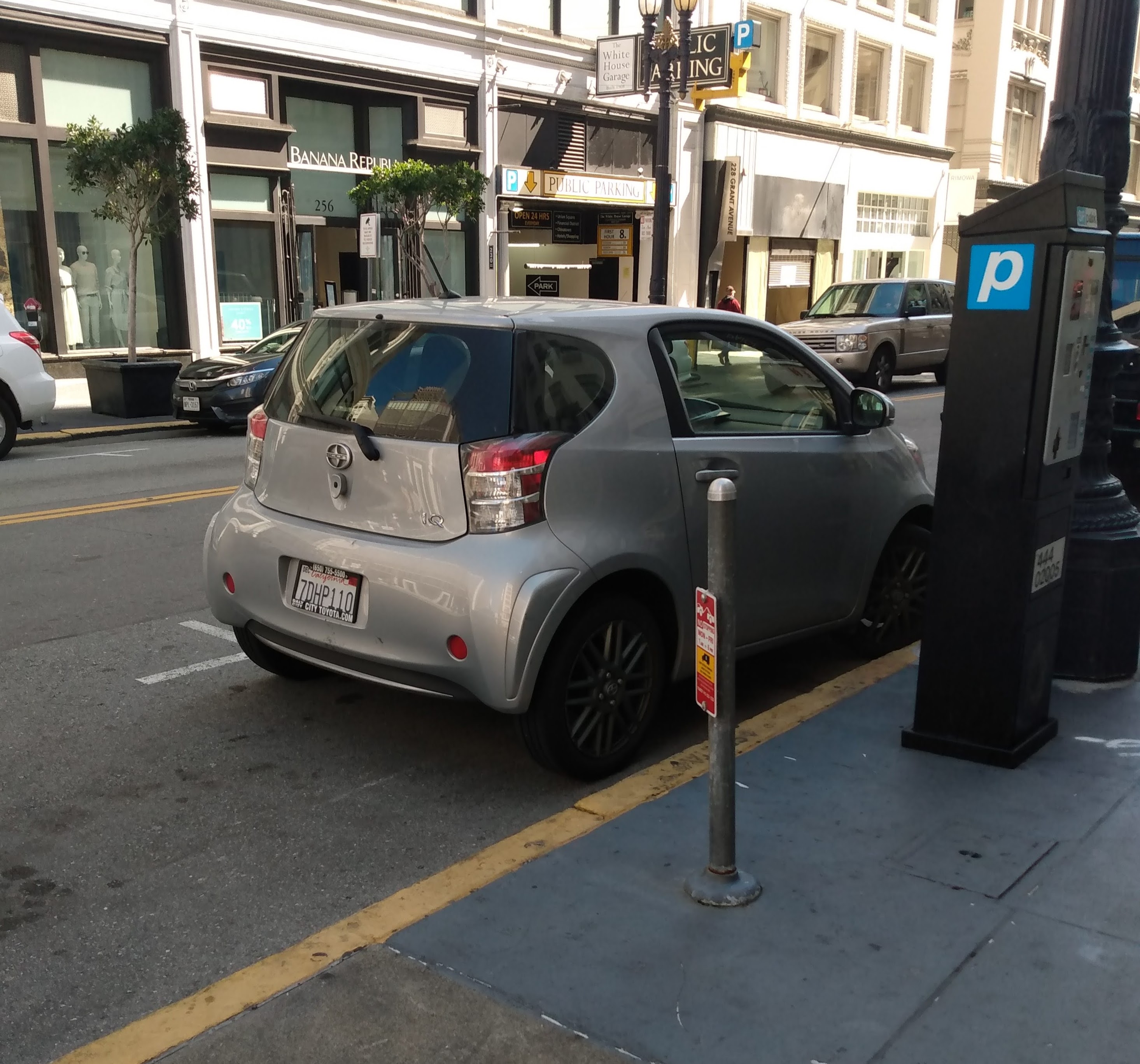
The Scion iQ is a very small car designed to fit where bigger cars can’t. The hosts say it’s overpriced for the size and features, and they also mention it has a CVT, which is a type of automatic transmission that can feel different than a normal gearbox.
CVT means “continuously variable transmission,” which is an automatic transmission that changes smoothly instead of shifting between set gears. The hosts don’t like it here because it can make the car feel less engaging or less direct than a normal automatic.
A turbo engine uses a device that pushes extra air into the engine. That can help the engine make more power (and sometimes feel more fun) than a similar non-turbo engine.
A rear-engine car puts the engine behind the driver instead of up front. That affects how the car feels and handles, and the Porsche 911 is one of the most well-known examples.
The Porsche 911 is a sports car made by Porsche. One key thing about it is that the engine sits toward the back of the car. The podcast brings it up because that rear-engine setup is a big part of what makes it feel and handle the way it does.
A “flat four” is an engine where the cylinders are laid out in a sideways, boxer-style shape. It’s mentioned here because the hosts are trying to figure out what engine layout that car actually used.
Term
flat two
A “flat two” would be a two-cylinder engine shaped like a boxer, with cylinders laid out to the left and right. They mention it while guessing what engine layout the car had.
The smart for two is a very small city car. The hosts are talking about a version that used a small 1.0-liter engine (sometimes turbo, sometimes not), which helps explain why it might not get the fuel economy you’d expect for something so tiny.
Concept
third generation of smart car
“Third generation” just means the third major version of that model. Different generations can have different engines and features, which is why the hosts are using it to keep the story straight.
This means a small 1.0-liter engine with three cylinders in a row, and a turbo that helps it make more power. They’re also comparing it to a version without the turbo, which changes how the engine feels.
The Renault Twingo is a small car made for city driving. It’s easy to handle in tight spaces. The episode mentions it because they were talking about a movie and whether the car is similar to something else.
The Nissan Versa is a low-cost, small car that’s meant to be practical and affordable. The hosts are talking about it as a cheap option that still feels like a decent daily driver.
Term
CBT issues
The hosts are talking about a known problem they associate with earlier versions of these Nissan small cars, and they imply it’s related to how the car’s drivetrain works. They suggest that if you don’t want to deal with it, you can choose the manual.
A 5-speed manual is a car where you shift gears yourself using a clutch and a stick. The hosts are saying that choosing the manual can help you avoid certain transmission-related headaches they associate with earlier versions.
The Versa Note is a small Nissan hatchback. The hosts say to avoid it because it’s tied to the earlier problem they mentioned with these budget Nissan cars.
The Ford Escape Hybrid is a gas-and-electric SUV that gets better mileage than a regular gas-only Escape. They’re talking about a 2012 model and how efficient it is, plus where its hybrid system originally came from.
The Toyota RAV4 Prime is a plug-in hybrid RAV4 that can run on electricity for a while and also has more power than some other plug-in hybrids. They compare it to the Ford Escape plug-in hybrid and talk about pricing and efficiency.
Full electric range is how far the car can go using electricity only. The hosts say it’s around 37 miles, but it only helps if you can charge it regularly.
A warranty is coverage from the manufacturer for certain repairs. If the car is still under warranty, you’re less likely to pay out of pocket for problems that fall under that coverage.
A lock-up clutch is a part that can “lock” two parts together so power can flow directly. On the Volt, it can let the gas engine help drive the front wheels directly in some situations. That can make highway driving more efficient.
Term
T-shaped battery
A “T-shaped battery” is about where the battery pack is placed inside the car. The hosts say it runs down the middle in a shape that resembles a T. Where the battery sits can affect space and how expensive it might be to replace.
Term
force eater
“Force eater” sounds like a term for parts that help absorb crash energy. The speaker is saying the battery layout affects the structure in the middle of the cabin. That can change how the car is built to protect people in a crash.
Haptic controls are touch buttons that “push back” with vibration or other feedback. The idea is to help you feel what you pressed, but the hosts think this particular design wasn’t very popular.
Capacitive touch controls are the kind of touch buttons that work like a phone screen—your finger changes the electrical signal. The hosts didn’t like how these controls felt or worked, and they think that’s why the design struggled at first.
Term
foreseater
“Foreseater” sounds like they meant “four-seater,” but they’re really talking about how usable the back seats are. The point is that the car isn’t very practical for passengers in the rear.
The Cadillac ELR is a hybrid car that looks futuristic and is meant to feel like an EV sometimes, but it’s not fully electric. Here, the hosts compare it to the Chevy Volt and talk about why it was expensive and hard to buy at the time.
Term
payment systems
This part sounds like the hosts are complaining about the car’s in-car system—how you interact with it—being hard to use. They say it’s especially tough when you’re trying to operate it while the car is moving.
The BMW i3 is an electric BMW. Some versions also have a small gas engine that kicks in when the battery runs low, so you can keep driving farther. That’s what they’re describing when they talk about the i3’s “range extender” and how far it could go on electricity alone.
A range extender is a backup engine in an electric car. When the battery gets low, it turns on to make electricity so you can keep driving. It’s like having a small “power generator” on board.
They’re comparing the range-extender to a small scooter motor. It’s not meant to be powerful for driving—it’s mainly there to generate electricity when the battery is empty. That’s why they call it a “scooter engine.”
It means the car can go farther before you have to plug it in again. They’re describing a backup engine that helps keep the battery charged so you can reach the next charger.
This means the car mainly runs on electricity, but it has a gas engine that can step in when the battery is low. Think of it like a backup power source to keep you moving until you can recharge.
Term
plug-in hives
They’re talking about a type of car you can plug in to charge. Here, the point is that some plug-in cars are meant to run on gas too, while this one is meant to run mostly on electricity.
Clamshell doors are a special door design that opens in a different way than normal car doors. In this case, the hosts are pointing out it as a unique look/feature on the car they’re discussing.
Term
Tera
“Tera” sounds like the name of a specific version of the car they’re talking about. It’s basically a label for that particular model/trim.
The C8 Corvette is a Chevrolet sports car where the engine is in the middle of the car, not the front. People compare it to other cars because it’s quick and handles well.
The quarter mile is a standard short race distance used to compare how fast cars accelerate. If a car “beat it in the quarter mile,” it was quicker over that sprint.
An Autobahn package is a trim option (common on Volkswagen models) that bundles convenience and driver-assistance features aimed at highway driving. It’s typically used to describe a more equipped configuration than the base model.
The Volkswagen Jetta is a small sedan. Here they’re talking about a version with a turbocharged 1.5-liter engine and an automatic transmission that can get extremely good gas mileage—over 50 MPG in their example.
An 8-speed automatic transmission uses eight forward gears to keep the engine in its efficient operating range more often. More gears can help the car stay near the best fuel-economy points during city driving and highway cruising.
Car
Volkswagen GTI
The Volkswagen GTI is a sporty Volkswagen model that’s known for being fun to drive. They’re using it as a comparison point for how this car feels—sporty and responsive—while also noting it’s more practical with extra space.
Turbo lag is a short delay you can feel in a turbo engine. You press the gas, but the extra power doesn’t show up instantly—it kicks in after the turbo spools up.
This is the touchscreen-and-menu system in the car that controls things like music and climate-related settings. The hosts prefer the older style because it uses physical knobs instead of making you dig through screens.
Climate control is what heats or cools the car and controls fan/air direction. They prefer having it on a dedicated panel with its own controls instead of hiding it in the touchscreen menus.
The Volkswagen Golf is a compact car that’s meant to be practical for everyday driving. The episode talks about the GLI version, which is a sportier trim meant to feel more fun. That’s why they mention it—because it’s a way to get more performance while still staying in a compact car.
An automatic transmission shifts gears for you. The hosts are using it as another example of how older cars can feel simpler and more straightforward to drive.
Torque is the engine’s “pulling power.” Higher torque usually means the car can get up to speed more easily, especially when you’re starting from a stop or rolling slowly.
The Mazda 3 is a compact car. In this episode, they’re using it as an example of a gas-powered car that can still get good mileage in everyday driving.
The Toyota Corolla is a very common, practical small car. The host is saying it’s one of the best options if you care most about getting great gas mileage, especially in hybrid form.
The Hyundai Elantra hybrid is a small car that uses a hybrid system to help it use less gas. The host is recommending it because it can be extremely efficient in real use.
The Honda Civic is a popular small car. Here, they’re basically saying it’s probably not the best choice if your top priority is maximum fuel economy compared with the hybrids they’re recommending.
The Toyota Highlander is a family SUV that’s meant to be practical for everyday life. Here, the hosts are saying older ones can still be a good choice if you want decent fuel economy and something dependable.
The Mitsubishi Outlander Plug-in Hybrid is an SUV that you can plug in to drive on electricity for a while. After that, it uses gas like a normal hybrid, and the hosts say it’s a great deal if you have a place to charge at home.
Naturally aspirated means the engine doesn’t use a turbo to force more air in. It just pulls air in normally, and that can affect throttle response and driving feel.
Turbocharged means the engine uses a turbo to push more air into the cylinders. That can help the car feel stronger and often improves fuel economy too.
The Ford Mustang is a sports car that’s known for performance and a classic muscle-car look. In this episode, they’re discussing what kind of engine it uses “now,” including whether it’s a turbocharged four-cylinder. That matters because the engine type affects how the car feels to drive.
The Nissan Pathfinder is a midsize SUV, usually chosen for space and versatility. The episode mentions it because some versions use turbocharged engines. That’s relevant because turbo engines can change how the SUV accelerates and how it uses fuel.
The Nissan Frontier is a pickup truck. Here it’s being used as an example of a vehicle where you can still get a naturally aspirated V6 (an engine that doesn’t use a turbocharger).
The Dodge Challenger is a muscle car, meaning it’s designed to feel strong and fast. The episode mentions it with other similar cars because they used to have some related design or engineering features. That’s why it comes up—people compare how these cars feel and perform.
The Lexus ES is a comfortable, everyday sedan that most people think of as a calm commuter car. The hosts are saying that, even though it has a “grandma car” reputation, it can still be more interesting (or even collectible) than people expect.
The Lexus RX is a popular luxury crossover. The hosts are hinting that there’s a common drivetrain or technology across RX models that matters for fuel economy.
The General Motors EV1 was an electric car made by GM. The episode talks about how people remember it and how that history is discussed. It’s brought up because it’s one of the earlier electric cars and has a well-known backstory.
The Lexus GX is a more rugged, SUV-style Lexus compared with the RX. Here, the hosts are basically debating which Lexus model would attract younger buyers.
The Lexus LX is Lexus’s bigger, more expensive luxury SUV. The hosts are saying younger buyers may not be able to afford it.
Car
Lexus ISF
The Lexus ISF is the sportier, higher-performance version of the Lexus IS. The hosts bring it up to illustrate how Lexus models can shift from “old people” stereotypes to something more exciting.
A tuning package is an optional bundle of upgrades you can buy from the factory or dealer. Here, they’re saying it can include suspension changes, not just styling.
The Toyota GT 86 is a small sports coupe made for enjoyable driving. The episode mentions it because they’re trying to confirm the exact model name they’re talking about. The main idea is that it’s a sporty Toyota with a focus on driving feel.
The podcast mentions a Toyota GR GT, which sounds like a performance-focused Toyota model in the GR line. They also mention it being sold through Lexus dealerships, which is why the channel of sale comes up. The key point is that it’s a GR-branded Toyota intended to feel more sporty than a typical model.
An electric version means a model variant that uses an electric powertrain instead of a traditional gasoline engine. The hosts are contrasting the expected pricing of the performance model with the idea that there will also be an electric variant sold through Lexus.
This part of the show is about cars that save gas but aren’t electric. They’re using the Hyundai Venue as an example of a small, affordable option that can still get good mileage.
Front-wheel drive means the front wheels are the ones that pull the car forward. It’s a common setup on small, efficient cars because it helps keep things simple and space-efficient.
The Hyundai Venue is a small SUV made by Hyundai. It’s designed to be easy to park and use day to day, and the host says it can be one of the cheapest new cars you can buy while still getting good gas mileage.
Car
Honda Monkey
The Honda Monkey is a tiny, lightweight motorcycle made by Honda. The hosts are saying it can be surprisingly efficient on gas—great for short trips—though it’s not ideal for bad weather or heavier riders.
“MPG” means how many miles you can drive using one gallon of gas. “100 MPG” means it goes a huge distance on a small amount of fuel—usually only possible with very small, efficient vehicles.
A “mini bike” is a small motorcycle made for easy everyday riding, usually at lower speeds. The hosts are connecting that small size to better gas mileage for commuting.
“Two wheels” is shorthand here for motorcycles and other single-track vehicles. The point is that, compared with cars, two-wheeled commuting can be far more fuel-efficient because the vehicle is lighter and typically has a smaller engine.
LIVE
[SPEAKER_01]: Tell me, you know what sucks?
[SPEAKER_01]: Oh, what's that?
[SPEAKER_01]: Every time I fill up these days, it's between 80 and 100 bucks, and it's just fill up the canyon today.
[SPEAKER_01]: I sure did.
[SPEAKER_01]: How much was it?
[SPEAKER_01]: Between 80 and $100.
[SPEAKER_01]: There you go.
[SPEAKER_01]: Yeah, gas and diesel prices are through the roof.
[SPEAKER_01]: So in this podcast, we thought we'd give you some alternatives.
[SPEAKER_01]: In fact, I was just reading that the average person is spending over $700 a year more on fuel these days.
[SPEAKER_00]: Yeah, and I've got the triple A.
[SPEAKER_00]: National average gas pressure front of me here the current average as of recording on May 20th is four dollars and fifty five cents But that depends a lot on where you're at so for here in Colorado.
[SPEAKER_00]: We're paying on average $4.78 so we're actually a little bit above
[SPEAKER_00]: where we were at.
[SPEAKER_01]: And if you can California, good luck to you.
[SPEAKER_00]: Yes, that's exactly right.
[SPEAKER_01]: Because I'm going to be like more like six or seven dollars a gallon.
[SPEAKER_01]: So here's the thing.
[SPEAKER_01]: We put together a list of cars that aren't electric.
[SPEAKER_01]: Uh-huh.
[SPEAKER_01]: Uh-huh.
[SPEAKER_01]: But that are...
[SPEAKER_01]: efficient and that are for the most part affordable.
[SPEAKER_01]: So we kind of set ourselves a budget of, you know, 10 to 20k.
[SPEAKER_01]: We probably busted that on a few of these cars, but you know, we've driven almost every new car over the last 15 years.
[SPEAKER_01]: So we have experience with all these cars.
[SPEAKER_01]: So we have a pretty comprehensive list of cars that you could pick up used and maybe spend less than $700 more a year.
[SPEAKER_01]: You can actually save.
[SPEAKER_00]: yeah absolutely and some of these cars are very reliable some of them are pretty interesting some of our very boring but very fuel efficient we got a little bit of everything for every kind of family here and every kind of price point yeah and they're kind of hidden gems maybe their cars that when they came out didn't do very well but in the [SPEAKER_01]: year since they've you know picked up in popularity and maybe some of these are forgotten gems were there cars that because fuel prices were very low for a long time people forgot about so if you're in the market for a fuel fishing car or if you're just interested in you know maybe seeing what's out there that might be fun to drive might be fuel efficient and might be reliable and won't break the bank this is a
[SPEAKER_01]: podcast for you.
[SPEAKER_00]: So let's dive right in with the first one.
[SPEAKER_00]: It's just kind of a forgotten gem, but a car that has proven itself be really reliable and very interesting to drive, and that's actually a Lexus.
[SPEAKER_00]: The Lexus has been long discontinued.
[SPEAKER_00]: It's the CT200H.
[SPEAKER_01]: Yeah, so the H of course stands for hybrid, and this was a small compact-ish car that Lexus built, what year?
[SPEAKER_00]: You know, [SPEAKER_00]: Yeah, 2011 through 2017 here in the US, it sold them a little bit further abroad, but this was interesting because Lexus had a bit of an image problem, and you know, they're still living with it a little bit, but back in this era, they were known for building really boring cars for really old people.
[SPEAKER_00]: And the CC200H was kind of a break from that.
[SPEAKER_00]: So it's a hatchback with a really bold design, a great interior, and it was engineered to be incredibly fuel efficient.
[SPEAKER_00]: And we pulled up the fuel economy numbers here at fuelaccomi.gov, the combined number 42 MPG for car from 2012, by the way, with 500 miles of range.
[SPEAKER_01]: And with Toyota's reputation for reliability, and the other thing that this car has become, it's become kind of a first car for a lot of either, you know, high school kids or college kids.
[SPEAKER_01]: So it has proven itself to be a really interesting car.
[SPEAKER_01]: Okay, it's not gonna be, [SPEAKER_01]: You're not going to be racing any focus STs with it, and you're certainly not going to be standing out in the car because it's kind of a non-descripted in some ways, right?
[SPEAKER_01]: It's kind of a sleeper in the way it just looks.
[SPEAKER_00]: Yeah, but it did have some really great options.
[SPEAKER_00]: They had a wonderful kind of Mahogany brown interior.
[SPEAKER_00]: You could get very interesting dash layout with [SPEAKER_00]: It was a stack dash design with buttons on the bottom, climate control, the middle, and the screen on top.
[SPEAKER_00]: And the steering wheel looks straight out of the LFA.
[SPEAKER_00]: So I think that this car is aged really well.
[SPEAKER_00]: And it's a vehicle that definitely looks faster than it is.
[SPEAKER_00]: But when we're paying 455 a gallon on average for regular, this is a really, really, really attractive proposition.
[SPEAKER_00]: 134 horsepower.
[SPEAKER_00]: And this is a car that's going to last a long time.
[SPEAKER_01]: entry-level luxury.
[SPEAKER_01]: Now my question is, was this built on like a, what was the two to chassis that this was built on?
[SPEAKER_00]: Well, so what you're thinking of is there were there were two versions of of small hybrids that Lexus built.
[SPEAKER_00]: There was the CT200H, which was the phenomenal hatchback, and then there was the HS, which was kind of a dreary blob.
[SPEAKER_01]: So if I remember the HS is a European Corolla hyper.
[SPEAKER_01]: Exactly, and the only thing that was interesting about it, [SPEAKER_01]: I thought it was a cami hybrid.
[SPEAKER_00]: Corolla.
[SPEAKER_00]: Anyway, it's very simple.
[SPEAKER_01]: Anything that was interesting about it.
[SPEAKER_01]: It had all kinds of recycled materials.
[SPEAKER_01]: Yeah.
[SPEAKER_01]: So I'd love like a bamboo interior.
[SPEAKER_01]: Remember driving this thing and thinking to myself, this is very slow.
[SPEAKER_00]: Well, it looks like I got punched in a nose, too.
[SPEAKER_00]: It's kind of this very droopy appearance.
[SPEAKER_00]: You almost never see these anymore for good reason.
[SPEAKER_00]: They weren't very good cars.
[SPEAKER_01]: Yeah, don't get that.
[SPEAKER_01]: this one.
[SPEAKER_00]: Yeah, it was also sedans of small storage capacity, but the CT's great.
[SPEAKER_00]: CT's are still pretty expensive.
[SPEAKER_00]: In some cases, $8 to $10,000, but they go a long time and highly recommend them.
[SPEAKER_01]: Yeah, like I said, they went to college kids and they went to grandma's.
[SPEAKER_01]: That's right.
[SPEAKER_01]: That's kind of bookended both ends of life.
[SPEAKER_00]: Do you remember you looked at one of these for my grandma?
[SPEAKER_00]: I know your mom.
[SPEAKER_00]: But why didn't you get it?
[SPEAKER_01]: I thought the interior was a little too confusing.
[SPEAKER_00]: Yes, head of screen, and she was the worst person with technology in the history of the world.
[SPEAKER_01]: Yeah, so she would have been, I think, very confused by it.
[SPEAKER_01]: All right, let's go to our next list, and this is several cars in one, right?
[SPEAKER_00]: Yeah, so I want to talk about the Prius family.
[SPEAKER_00]: Now, this is of course a car that, what are we going to add to the conversation, except for the fact that they are very cheap now and a great way to get good fuel economy in a couple different versions.
[SPEAKER_00]: So of course, we've got the iconic Prius, [SPEAKER_00]: the oh five years right oh four I think came out that was the one that Larry David drove and everyone all the celebrities bought And to this day, they're still very fuel efficient 46 MPG combined You know hybrid batteries have known to fail on these cars.
[SPEAKER_00]: Why if your mom here one of these?
[SPEAKER_00]: That's true But the hybrid batteries are cheap to replace now too, so it's just an excellent I won't do it hold on they're gonna get in.
[SPEAKER_01]: I think they're known to fail like 200,000 miles [SPEAKER_01]: I was in Vancouver where these were running around as taxis, and I spoke to some of the taxicab drivers there, and they said they could easily and normally get between 200 and 200 miles on a hybrid battery, and these are not fancy batteries, they are let-ass that I think.
[SPEAKER_00]: I know, I think the nickel metal hydrate.
[SPEAKER_01]: But there's nothing fancy about them, they're not like lithium ion.
[SPEAKER_01]: And they're easy to replace and they're relatively inexpensive to replace and this car also has that magic Japanese quality of being bigger on the inside than on the outside I remember I drove ours to an Iron Man I was doing in Madison and I fit mine and my friends wrote bike in the back with a seat sound I think they kind of became like a cultural joke [SPEAKER_00]: Right, yeah, this is this was a tree hugger car of its era, but I think that they've aged it unbelievably well It's the design hasn't but the car is still like interesting piece of design what else is model after a shoe looks a little cockroach Yeah, let's take a conver I'll star shoe look at that
[SPEAKER_00]: Look at that, that's a time list design right there.
[SPEAKER_01]: Hold on, yeah, that's a design was not, out of all the things that this brought to the table, design was not one of them.
[SPEAKER_01]: But what it did bring was that cool interior with that, you know, unique spedometer, and then for the first time you could see where the energy was flowing, you remember the energy flow meter that would show you, the fact that you were either being powered by the battery or by the engine or both, and then it had one of the easiest screens in the world.
[SPEAKER_00]: Yeah, these colors are excellent.
[SPEAKER_00]: You read on like the design?
[SPEAKER_00]: No, I think the design is so puzzling to a lot from this design.
[SPEAKER_01]: I think the design is really not good, but as an iconic and fuel efficient and affordable vehicle, it is certainly going to be on the top of your list because they will run forever.
[SPEAKER_01]: This is the new, I would say this is like the new Volkswagen Beetle.
[SPEAKER_01]: Yes, that's a great way of putting it, but they are very cheap and it's hard to find a good one because they've all been thrown away now And so what happened was this car was so successful that it spawned a family of freezes So we would recommend all of them you want to go over the other ones?
[SPEAKER_00]: Well, there was the the previous V this would be like 2011 call This was the I think it was V for versatile is that's how right this was like [SPEAKER_00]: It was basically a station wagon, it was a little bit less efficient and I don't actually love it that much because it was only front wheel drive.
[SPEAKER_00]: Maybe it was 13, yeah, some somewhere around that, ericle.
[SPEAKER_00]: And I really think that they should have made an audio drive one for areas like Colorado, but still an amazingly efficient car for what it is, 41 MPG for a fairly big lift back is very, very good.
[SPEAKER_00]: There's also the Prius C, which is smaller.
[SPEAKER_00]: Yeah, which [SPEAKER_00]: Um, this was their compact one.
[SPEAKER_00]: You could get it in, um, salmon salmon.
[SPEAKER_01]: Yeah, that was a coolest one.
[SPEAKER_01]: The salmon color ones were really cool.
[SPEAKER_00]: Yeah, and there was a more affordable one.
[SPEAKER_00]: It wasn't quite as a fish.
[SPEAKER_01]: I remember reviewing both of these Nathan and I did both of these here in Colorado.
[SPEAKER_00]: Yeah, pre-as-see.
[SPEAKER_00]: It wasn't quite as efficient as the normal pre-as-as-as-as-as-as-as-as-as-as-as-as-as-as-as-as-as-as-as-as-as-as-as-as-as-as-as-as-as-as-as-as-as-as-as-as-as-as-as-as-as-as-as-as-as-as-as-as-as-as-as-as-as-as-as-as-as-as-as-as-as-as-as-as- [SPEAKER_00]: These are still a little bit more expensive than the cars that we've talked about.
[SPEAKER_00]: They're typically 15 to maybe $20,000, but they have a real usable all electric range.
[SPEAKER_00]: So if you have a place to plug one in at home, you can travel, it was something like 30 miles, 25 miles on electricity, and then you can get 133 MPGE and 54 MPG gas when the battery died.
[SPEAKER_01]: Yeah, so if you go, we'll talk about this in a second, the most recent generation of primes are still very expensive from Toyota, but if you go back to this one, it is affordable, they're hard to find them.
[SPEAKER_00]: Yeah, well, they, I mean, I think that Prius is our typically driven into the dirt, right?
[SPEAKER_00]: People buy them and drive them until they, they won't drive it.
[SPEAKER_00]: So there was fall off, yeah.
[SPEAKER_00]: So there was fall off.
[SPEAKER_00]: That's the case.
[SPEAKER_01]: There was one issue, you should be aware of, and that is, one, usually, one of the headlights usually failed on the Prius.
[SPEAKER_01]: I don't know what was wrong with it, but it was a common problem.
[SPEAKER_00]: Yeah, and there's no one's, yeah, and the, but that was like the O5 Prius.
[SPEAKER_01]: Yeah, you had to have like the expensive Zenans, and you'd see a lot of them drive around with like, we call it one.
[SPEAKER_01]: You know, one, one I opened basically when I preuses, so that was a common problem if you had the more expensive headlights, right?
[SPEAKER_01]: Let's keep going.
[SPEAKER_01]: This is a car that you hate, but I thought was really cool.
[SPEAKER_01]: The cyan IQ, remember this?
[SPEAKER_01]: I don't hate it.
[SPEAKER_00]: I just think that they're too expensive for what they are.
[SPEAKER_00]: So this was a car to compete with vehicles like the smart car, actually.
[SPEAKER_00]: So it was an ultra ultra compact two-door, I think it was a three-seater, wasn't it?
[SPEAKER_00]: Yeah, it was a three-seater and it was my passenger has See behind him more as a driver did not right, but the problem with these is like the whole category is so cute The whole category is really cool like browns color from Barrage of the ultra mini car is they're just very impractical Right, this was a smart car problem.
[SPEAKER_01]: Well, okay, the smart car.
[SPEAKER_01]: I think was smaller.
[SPEAKER_00]: Same size two-seater Yes, it was a two-seater, but kind of the similar similar form factor [SPEAKER_01]: Well, then you'd have to get the Aston Martin version of it.
[SPEAKER_01]: The signet?
[SPEAKER_01]: Yep, exactly.
[SPEAKER_01]: If you could find one of those, those are still, you know those have gone up in price, those are like $50,000 cars now.
[SPEAKER_01]: Yeah, I don't think they've been reported.
[SPEAKER_01]: Where's the IQs are like five to six?
[SPEAKER_00]: The IQs are closer, like a good IQs closer to 10.
[SPEAKER_00]: And that's why I don't like the IQ.
[SPEAKER_00]: I think they're too valuable for what they are.
[SPEAKER_00]: They're also a CVT, which is kind of a bummer.
[SPEAKER_00]: I think they're not a J.C.C.C.C.C.C.C.C.C.C.C.C.C.C.C.C.C.C.C.C.C.C.C.C.C.C.C.C.C.C.C.C.
[SPEAKER_00]: because those had a really interesting little turbo engine.
[SPEAKER_01]: But they weren't very fuel efficient.
[SPEAKER_01]: For how small they were, they were extremely thirsty.
[SPEAKER_01]: I mean, okay, so I'm not thirsty.
[SPEAKER_01]: I mean, it's like mid 30s, right?
[SPEAKER_01]: Which isn't thirsty, but for how tiny they were, those things should have had like, you know, 60 MPG.
[SPEAKER_00]: 2018, coal or 2019.
[SPEAKER_00]: Yeah, they definitely were too thirsty for what they were, but they drive a lot better.
[SPEAKER_00]: They're a lot more interesting to drive, and you could get them in a convertible.
[SPEAKER_01]: Well, and they have a distinction, of course.
[SPEAKER_01]: There was the EV one.
[SPEAKER_01]: Yeah, not the EV one.
[SPEAKER_01]: We're doing non EVs here.
[SPEAKER_01]: You know what the distinction is?
[SPEAKER_01]: What's that?
[SPEAKER_01]: There's only one other car that is rear-engine 911.
[SPEAKER_01]: Yeah, that is rear-engine.
[SPEAKER_00]: That's true at the time It's part of the rear-engine.
[SPEAKER_01]: It had this funky And rear wheel drive funky.
[SPEAKER_01]: I think it was a flat flat.
[SPEAKER_01]: Was it a flat four or flat two?
[SPEAKER_00]: No, I think it was a three.
[SPEAKER_01]: Well, it was a maybe it was flat.
[SPEAKER_00]: I think it was not flat.
[SPEAKER_01]: Yeah, to fit it behind that it was flat I think it was well Google it would you have for sure.
[SPEAKER_00]: I thought it was a flat something the 2018 smart for two [SPEAKER_00]: That's when they went to electricity only what year was the normal one like a 15 I don't know, I'll remember anymore Smart for two, here we go So there was technically I think it was a third generation of smart car Yeah, it was the most interesting design It used a one liter turbo in line three or naturally aspirated in line three How about the one before it?
[SPEAKER_00]: That used in line three, 2000 Mitsubishi in line three Okay, right there you go, in line [SPEAKER_00]: Yeah, I think you're thinking of the movie, the Twingo has the flat.
[SPEAKER_01]: I thought they shared, I thought it was shared components with one of the tiny little European cars that we don't get.
[SPEAKER_01]: Anyway, either the IQ or the smart car, I'd like the IQ better because it's a Toyota.
[SPEAKER_01]: Well, Sion, but basically Toyota.
[SPEAKER_00]: And it's going to be more reliable than the smart cars, really.
[SPEAKER_00]: So, weird cars aside, this is a newer car that I think didn't get the attention it deserved, but it was really good.
[SPEAKER_00]: The final version of the Nissan Versa.
[SPEAKER_01]: Yeah, you know, the current verse is actually a really good.
[SPEAKER_00]: I think that, yeah, and that's still what I'm talking about.
[SPEAKER_00]: Didn't they officially discontinue this car?
[SPEAKER_01]: Don't know.
[SPEAKER_00]: Let me make sure I think it was just came out.
[SPEAKER_01]: We just had it at the office.
[SPEAKER_01]: So the current Nissan Versailles, one of the least expensive cars you could buy.
[SPEAKER_01]: We had the SR, which you would think would have going back historically, they'd have a bigger engine and power train, but it doesn't.
[SPEAKER_01]: It officially died.
[SPEAKER_00]: There's no 26 model here, yeah.
[SPEAKER_01]: Anyway, it's a great car, get it.
[SPEAKER_01]: Yeah, really good car.
[SPEAKER_01]: Like 25K?
[SPEAKER_01]: No, not even.
[SPEAKER_01]: They were like, 17, 9 starting.
[SPEAKER_01]: Well, back, but the new ones, I think the one we had was like, 25,000.
[SPEAKER_00]: would you say there cool 17 for yeah these car for really affordable and they this was like the they the earlier ones had the big CBT issues by this time they really figured them out or if you didn't want to deal with that you can get them with the 5 speed manual but you can see me 35 MBG for conventional gas car is very impressive I thought the packaging was great the interior was really good yeah quality is good it's it's a good car [SPEAKER_00]: Yeah, so as a whole, if you're just looking for a small run around, that's affordable.
[SPEAKER_01]: Avoid the Nissan Note, Versa Note, which had the... That was the older CBT car.
[SPEAKER_00]: Yeah, and the older Versa's also had the issues with the CBT, but the latest ones seem to be pretty good, or just get the manual and avoid it all.
[SPEAKER_00]: So if you look at for a little bit of utility, I want to talk about the Ford Escape Hybrid.
[SPEAKER_01]: Yeah, it's a good looking boxy car, but I don't know much about this car to tell me, so this is one car actually, I don't think I've ever driven.
[SPEAKER_00]: Well, this was a little bit before our time, if I'm right, but the first generation of escape hybrid and potentially even the second actually licensed their hybrid technology from Toyota.
[SPEAKER_00]: So it was pretty early on.
[SPEAKER_01]: On a synergy drive.
[SPEAKER_00]: Yeah, pretty early on in the hybrid line as SUVs went.
[SPEAKER_00]: 29 MPG in this 2012 that we're looking at.
[SPEAKER_01]: Isn't it ironic that until it all licensed, it's electric technology from Tesla?
[SPEAKER_01]: In the, in the, in the four, no raffle.
[SPEAKER_01]: Raffle for you, yeah.
[SPEAKER_00]: But the hybrid technology's always been their own, right?
[SPEAKER_01]: And avoid those Tesla powered, if you're looking for an electric RAF 4, avoid those Tesla powered ones because they have all kinds of issues.
[SPEAKER_00]: And then another kind of hidden gem here is going to be more expensive than a 2012, but the current, or I should say, the last four to scape, could have been had with a 37 mile [SPEAKER_00]: plug-in hybrid version.
[SPEAKER_00]: It was just called the Escape P-Heve.
[SPEAKER_00]: I remember it was only front wheel drive and it was not nearly as good as the RAF4, but it was still very efficient.
[SPEAKER_00]: And I think they're quite a bit more affordable now because they don't have the hype that the RAF4 prime has.
[SPEAKER_01]: It says 101 combined.
[SPEAKER_00]: Yeah, 37, 37 miles of full electric range as well.
[SPEAKER_00]: So if you have a place to plug it in, probably I've only 210 horsepower, so way less than the 320 that Toyota's making.
[SPEAKER_01]: But it wasn't the great car.
[SPEAKER_00]: No, but they're, they're, they're good deal for what it is.
[SPEAKER_00]: Okay.
[SPEAKER_00]: And they're still under warranty, which is a big one.
[SPEAKER_00]: Um, so speaking of plug-in hybrids, uh, the vault made our list as well.
[SPEAKER_01]: Yeah, that was a car that was way ahead of its time.
[SPEAKER_01]: I mean, it's still ahead of its time.
[SPEAKER_01]: So the vault was, uh, a car that was a series hybrid for the most part.
[SPEAKER_01]: Let me explain.
[SPEAKER_01]: So a series hybrid is where the internal combustion engine only, [SPEAKER_01]: serves as a generator to power the battery and then the battery powers an electric motor which doesn't spins of front wheels.
[SPEAKER_01]: And the problem with that is they're very efficient in the city, but very un-efficient on the highway.
[SPEAKER_01]: Yes.
[SPEAKER_01]: And so GM actually engineers way out of that by having a way that [SPEAKER_01]: the internal combustion engine had a drive shaft or a connection to the front wheels, so it was a series hybrid, what I was running in the city, and when you were on the highway, where series hybrids are very un-fuel-efficient, it would actually power the wheels and that's what it was.
[SPEAKER_00]: And but what's funny about that is GM never wanted people to know that they always wanted it to seem like that engine was Exclusively a generator, but on both the first and second generation Volts there was a lock-up clutch that could power the front wheels directly So these cars are incredible and the most interesting thing about them is they're getting really cheap well under ten thousand dollars now And a lot of folks are worried about the replacement cost of these batteries because especially a vault has a lot more on the T-shaped battery that ran straight down the middle [SPEAKER_00]: Yeah, but a lot more on board power than something like a Prius, right?
[SPEAKER_00]: But these vault batteries are, their borderline indestructible I've heard.
[SPEAKER_00]: They last forever, their absolute tanks.
[SPEAKER_00]: And they're so good.
[SPEAKER_00]: In fact, remember when the Corvette e-ray launched in the CA, the engineer said that the batteries in the e-ray were largely the same as the batteries in the vault.
[SPEAKER_00]: which was long discontinued by them.
[SPEAKER_01]: And the Volt has very few, if any, mechanical issues, it's actually relatively bulletproof.
[SPEAKER_01]: There is one downside, and that is, it's only a force eater, because of the battery, like I said, it runs down the center of the cabin.
[SPEAKER_00]: Well, it is what we'll drive only.
[SPEAKER_00]: Yeah.
[SPEAKER_00]: And the first jet, I think, was more attracted than the second, but the range was worse.
[SPEAKER_01]: Yeah, the second jet looked, they looked, they went too pre-ass like.
[SPEAKER_00]: Yeah, the first gen was very, very cool.
[SPEAKER_01]: Get the first gen, and then I had that like cool little like display with leaves that would grow.
[SPEAKER_01]: So when you got full efficiency, it would show you, nose a ball.
[SPEAKER_01]: Remember it was a ball, the leaves were on the leaf, I think.
[SPEAKER_01]: The leaves were on the, this had a ball that would go up and down based on how much you pressed the filler it a bit.
[SPEAKER_00]: Yeah, had a little green orb.
[SPEAKER_00]: Yeah.
[SPEAKER_00]: The only issue with the first gen vault is the interior uses a lot of haptic controls.
[SPEAKER_00]: Yeah, so the whole, well, it was Chevy's version of Q sort of.
[SPEAKER_00]: But the whole set or stack where these really weird touch capacitive things, which was hugely unpopular then, it died, and now for some reason it's come back, so maybe it'll be good again.
[SPEAKER_00]: And it was only a foreseater in the back.
[SPEAKER_00]: And if you want one that's even less practical, [SPEAKER_00]: But you're the cooler Cadillac ELR.
[SPEAKER_01]: Yeah, that's one of my bucket list by guilty pleasures.
[SPEAKER_01]: That's the Cadillac version of it.
[SPEAKER_01]: So some reason the vault was an affordable car and Cadillac decided to pick a number out of a hat and it came up with something like a seven or an eight at the front of it.
[SPEAKER_01]: So basically the Cadillac version of the vault started at like $75,000, which was way above what the market was willing to pay for it.
[SPEAKER_00]: Yeah, so it was 2014, Cole was the first one of the year.
[SPEAKER_00]: They only built in from 14 to 16, started at $75 and $76,000 before incentives, and then for 16, they had to cut the price of $66.
[SPEAKER_00]: But our friend Tom Volkpot, one of these brand new, and picked it up off the lot for like $30 or $32,000.
[SPEAKER_00]: Yeah, because nobody wants anybody on and I'm yeah, the issue is that they look futuristic.
[SPEAKER_00]: They looked sort of performancey, but it was the same engine.
[SPEAKER_01]: The biggest like doors is a it's a coupe right?
[SPEAKER_01]: So it's a two door massive doors and the one that I want is there's this like ruby candy apple red, which is a brilliant color, but the downside once again is it's got q running, so which is one of the most tough.
[SPEAKER_01]: Oh my god, he was really bad.
[SPEAKER_01]: One of the most headache-inducing is both payment systems out there because trying to make that thing work going to your standing still is hard when you're driving.
[SPEAKER_01]: It's almost impossible.
[SPEAKER_01]: So next story, Tom.
[SPEAKER_00]: Yeah, that's true.
[SPEAKER_01]: I love the car.
[SPEAKER_00]: I want the car.
[SPEAKER_01]: They're like, they're coming down for a while there.
[SPEAKER_01]: They came down significantly, but then they kind of held in the 20s.
[SPEAKER_01]: And now I think you can get them into the teens.
[SPEAKER_01]: Yeah, for sure.
[SPEAKER_01]: Yeah, definitely.
[SPEAKER_01]: Yeah, Q was a horrible system.
[SPEAKER_00]: I've can't believe that we're bringing that back So next up we've got the Croll and a lot of hybrid two great options.
[SPEAKER_00]: It's a good one.
[SPEAKER_01]: Oh Yeah, don't skip one because this is a great car.
[SPEAKER_01]: This is a certainly a sleeper car and you shouldn't [SPEAKER_01]: Forget about it.
[SPEAKER_00]: Well, one of them is mostly an EV but you can get it with a hybrid.
[SPEAKER_01]: Yeah.
[SPEAKER_01]: That's the I3.
[SPEAKER_01]: I3 is a brilliant.
[SPEAKER_01]: If you can, we bought one with the range extender.
[SPEAKER_01]: So basically the early ones only had about a 50 miles of range and then toward the end.
[SPEAKER_00]: It was like 75 and the early ones.
[SPEAKER_01]: 50 because I remember driving it.
[SPEAKER_01]: We got it.
[SPEAKER_01]: We had a full bed and we could barely get it up to where we were driving it to George time before ran out of electricity.
[SPEAKER_00]: Yeah, let's see, so I think it was 75 miles officially, 72.
[SPEAKER_00]: Okay.
[SPEAKER_00]: But the reality was, it was 50.
[SPEAKER_00]: But the whole point of the rest, which is such a good idea, is that when the battery died, there was a little scooter engine on it.
[SPEAKER_01]: Six hundred C.C.
[SPEAKER_01]: Kimco.
[SPEAKER_00]: Yeah, a little two-cylinder guy that would strictly charge the battery to extend your range to get to the next charging station.
[SPEAKER_00]: So unlike the other plug-in hives we're talking about, which could and were designed to be driven exclusively on quote gasoline, [SPEAKER_00]: This car was designed to be driven exclusively in electricity with a gasoline engine as a backup.
[SPEAKER_00]: It's a subtle distinction, but it's very important.
[SPEAKER_01]: Yeah, and the one you want is the S, which came out kind of toward the end of the product line.
[SPEAKER_01]: It had a little fatter tires, because he's seen had these like, uh, bicycle tires.
[SPEAKER_01]: Yeah, basically.
[SPEAKER_01]: But basically bicycle tires and hard to get, hard to get actually tires form, because it's so thin.
[SPEAKER_01]: And they had clamshell over the half clamshell doors, which is, we should be talking about this in the present.
[SPEAKER_01]: They're not dead, they're just out there.
[SPEAKER_01]: Some of them are dead.
[SPEAKER_01]: They have clamshell doors, and they have these really funky interiors, and they have these cool names for it.
[SPEAKER_01]: I forgot what the names were like.
[SPEAKER_01]: Tera.
[SPEAKER_01]: Tera, yeah.
[SPEAKER_01]: Yeah.
[SPEAKER_01]: And I love Dara's Andre bought it from the company.
[SPEAKER_01]: His wife still drives it every day.
[SPEAKER_01]: Yeah.
[SPEAKER_01]: She basically drives it.
[SPEAKER_00]: pretty much on electricity.
[SPEAKER_00]: So we bought that car with like 30,000 miles on it and Andre is wife now just crossed the 100,000 mile mark.
[SPEAKER_00]: So she's put like 70,000 miles on this car and she just didn't update on it over at TFL EV and like [SPEAKER_00]: It's been one of the best ownership experiences he said, because the thing it just will not break.
[SPEAKER_00]: It's been an absolute tank for the battery still in good condition.
[SPEAKER_00]: She uses the little gas engine sometimes.
[SPEAKER_00]: It has been perfectly reliable.
[SPEAKER_01]: And surprisingly, the back seat is usable.
[SPEAKER_01]: It's actually not good.
[SPEAKER_01]: But it is usable, yeah.
[SPEAKER_01]: It's what's going to be bigger on the inside than the outside.
[SPEAKER_01]: And I think this one is certainly not in the budget, because these cars are between depending on what year you get.
[SPEAKER_01]: And if you get the convertible versus the the coupe, [SPEAKER_01]: I'm pretty aware from, yeah, no, I ate now, we're talking, I ate now moving on, yeah, okay, this could be anywhere from 40 to like 90,000 depending on what year you get, but I think the I ate which we own is also a super affordable for what it is because they were our $150,000 new economy car.
[SPEAKER_01]: It's got a little 300 mini engine in it, which is what people hated, but if you get the [SPEAKER_01]: If you get the later ones, you get like 20 miles of, if you get the, yeah, the one that we have, like 20 miles of all electric range, and then if you get the newer ones, it goes up to like 30, they increase the battery size.
[SPEAKER_00]: I think it was like, yeah, 15, and then it went up to mid 20s, maybe or 30, but the car is a hole is all wheel drive.
[SPEAKER_00]: They're 16 about four seconds.
[SPEAKER_00]: In the real world, we've had this thing up against our C8 Corvette, our standard one, and it actually kept up with it perfectly and beat it in the quarter mile, believe it or not.
[SPEAKER_01]: Hey, what's the ePanical on the IA?
[SPEAKER_01]: Because I think it's surprisingly frugal.
[SPEAKER_01]: So when we bought it, we bought it in Anchorage and drove it down the Alaska Highway.
[SPEAKER_01]: And I was a little terrified of that, because it's only got a 10 gallon fuel tank.
[SPEAKER_01]: I think there's two versions.
[SPEAKER_01]: There's both a 10 and then there's one with a 12.
[SPEAKER_01]: And so I thought we'll never make it.
[SPEAKER_01]: And yet, look at the MPGE combined.
[SPEAKER_01]: It's actually six.
[SPEAKER_00]: Yeah, but that's not, that's of electricity only.
[SPEAKER_00]: I mean, the Prius was getting 128 electricity only.
[SPEAKER_01]: Yeah, but you can have zero to 16 under five seconds.
[SPEAKER_01]: Yeah.
[SPEAKER_01]: You can have styling that is futuristic and still relevant today.
[SPEAKER_01]: It's built on just like the I3.
[SPEAKER_01]: It's built on a carbon composite shell, chassis.
[SPEAKER_01]: You can have incredible workmanship because these things were built.
[SPEAKER_01]: standard for sure.
[SPEAKER_01]: And you can still get 76 MPGE or 28 combined when the battery dies.
[SPEAKER_01]: But you could get, like I say, I've been driving that thing around town and you know, I could like 15 miles to the charge and very rarely do I ever like jump into the gas engine.
[SPEAKER_00]: Well, so I drive it from a lot from the ranch here.
[SPEAKER_00]: What I find with that car is the range even 12-year later or whatever is still on the money.
[SPEAKER_00]: The gas mileage is actually better than the EPA says.
[SPEAKER_00]: They say 28-ling your in hybrid mode.
[SPEAKER_00]: I actually think it's more like 37 or 38 because I watch it really closely and if I'm driving it gently, I can get it up to 40.
[SPEAKER_00]: but it's a very cool concept of being able to have a four-second zero to 60 car that's so frugal and it's just interesting, right?
[SPEAKER_00]: I know it's got a lot of hate for being a little three-cylinder but in some ways now that's appealing because it's an affordable car to drive and it's affordable relative for what it is to buy.
[SPEAKER_00]: You can pick one up for 40 to 50 thousand dollars.
[SPEAKER_01]: Hey Cole, I'm gonna put a car in here.
[SPEAKER_01]: We haven't put on this list, but I think it's worth mentioning and I don't want to forget about it So can you get the this just in on the Jenna g li it's not a list.
[SPEAKER_00]: Oh, is it?
[SPEAKER_00]: Yeah, yeah, it's coming up your jumping your jump in the gun.
[SPEAKER_01]: Well, let's just go there right now because I'm ready to tell the story [SPEAKER_01]: Our friends over at Garnet, Steve, sent us over a Jitter G li to have for a couple of months as a long-term tester, and there's a couple of great things about this car.
[SPEAKER_01]: First and foremost, it is so much fun to drive.
[SPEAKER_01]: I drove it up to the mountains this weekend, tell me, and drive it back down.
[SPEAKER_01]: an incredible value, the one we have, which has the Autobahn package and some other accessories is 37,000, but if you guys are interested, our friend Steve over at garnet, in Pennsylvania, will give you employee or they call it partner pricing, basically $3,000 off on this car, and this is not a paid commercial, yeah, I'm just saying this because it's such a hell of a deal, so ours is 37, you can get it for 34 from him, [SPEAKER_01]: and he'll ship it to you anywhere in the lower 48 for no additional costs.
[SPEAKER_00]: And it's got a six-speed manual.
[SPEAKER_00]: Yeah.
[SPEAKER_00]: So really fun car to drive.
[SPEAKER_00]: It's pretty sporty.
[SPEAKER_00]: I love it.
[SPEAKER_00]: It's my favorite car of the year, by far.
[SPEAKER_00]: So this is another, you know, this is a press car we had.
[SPEAKER_00]: The standard Jetta as a 1.5 turbo, 8 speed automatic.
[SPEAKER_00]: Our producer Zach actually had a chance to take one on a little bit of a trip and he averaged over 50 MPG in that jetta, which is unreal so the cars don't look that impressive on paper in terms of fuel economy but in person and reality they're super super, super efficient.
[SPEAKER_00]: So I definitely consider a newer jetta.
[SPEAKER_01]: We just recently published it.
[SPEAKER_01]: The other thing that amazed me about this car was just how I've I have forgotten at how good a car can be Making driving fun and this is that car, right?
[SPEAKER_01]: It's like a GTI except of course It has a trunk and it has a lot more backseat room.
[SPEAKER_01]: Yeah, but the road feel the brake feel the steering feel Just the way that it goes down the road [SPEAKER_01]: The way that the car accelerates, there's a little bit of turbo lag, but after that it's like a bad out of hell.
[SPEAKER_01]: It's got these huge exhaust pipes, two exhaust pipes in the four cylinder.
[SPEAKER_01]: It's the only four cylinder I know that actually sounds good.
[SPEAKER_01]: And the car is still sexy for what it is.
[SPEAKER_01]: This was designed, you know, I don't know how many years ago.
[SPEAKER_00]: It's older.
[SPEAKER_01]: It's older.
[SPEAKER_01]: And then the interior is also wonderful.
[SPEAKER_01]: It's got that very dramatic.
[SPEAKER_01]: I feel like I've seen it for this thing.
[SPEAKER_01]: You do sound a little sad.
[SPEAKER_01]: I felt unloved at it.
[SPEAKER_01]: This interior is just really dramatic and it's kind of practical.
[SPEAKER_01]: Some of the materials are a little...
[SPEAKER_01]: Well, you know why you like this thing because it's resonates because I'm of the GTI era.
[SPEAKER_00]: I don't know why you like this thing because it is an older car So I think this generation, okay, the manuals a little a little This generation of jet-up I want to say is like [SPEAKER_00]: It's a bunch of years old this thing.
[SPEAKER_01]: I want to say it's like seven years old now It's a bunch of old meat at how good German cars used to be well before they freaked out and you like it because it is older because it still has buttons No, no, I'm serious.
[SPEAKER_00]: It has buttons.
[SPEAKER_00]: I like it because it's a good car [SPEAKER_00]: I like it because it is older, hear me out.
[SPEAKER_00]: So look, it's got real controls for the volume and the two knobs.
[SPEAKER_00]: So it hasn't gone to the latest version of the Volkswagen Infotainment System, which has gotten much harder.
[SPEAKER_00]: This one still has physical knobs, so it's better, right?
[SPEAKER_00]: Same thing with the climate control as its own panel, it never moves, it never goes away, it's better, right?
[SPEAKER_00]: And that's why the GLI is appealing is like, yeah, you can make fun of it and say it's old, but it's better because it is old.
[SPEAKER_01]: Well, I think we've gone the wrong way when it comes to infotainment.
[SPEAKER_01]: Yeah, that's exactly right.
[SPEAKER_01]: Yeah.
[SPEAKER_01]: Automatic transmission, and this reminds me of how good cars used to be.
[SPEAKER_01]: Yeah.
[SPEAKER_00]: Seven, it came out in 2019.
[SPEAKER_00]: Yeah.
[SPEAKER_00]: Yeah.
[SPEAKER_00]: So it's like it's great that it's still as good as it always has been.
[SPEAKER_01]: Anyway, and the fuel economy for as much power as it has, which is what almost I forgot to know.
[SPEAKER_01]: I think it's 2AV.
[SPEAKER_00]: No, 228.
[SPEAKER_00]: I think, yeah, yeah.
[SPEAKER_00]: Is it that little?
[SPEAKER_00]: It just feels much faster than that.
[SPEAKER_00]: Well, it's because it's a manual.
[SPEAKER_00]: Yeah, 228 and 258 pound feet of torque.
[SPEAKER_00]: Okay.
[SPEAKER_00]: I love that car though.
[SPEAKER_00]: I think it is so phenomenal.
[SPEAKER_01]: Yeah, for 34,000 to all of it.
[SPEAKER_00]: So we'll combine a couple of these.
[SPEAKER_00]: The whole category of kind of compacts a Dan along with the Jeddah.
[SPEAKER_00]: The Jeddah is by far the most fun to drive.
[SPEAKER_00]: But the the new Civic Hybrid excellent car.
[SPEAKER_01]: Well, I know, fuel economy is through the roof, right?
[SPEAKER_00]: Unreal, it's also as quick as a Civic S I now, so it's really, really, really good car.
[SPEAKER_00]: But the Civic Hybrid has been around a long time, so it's new.
[SPEAKER_00]: There was never a hybrid before.
[SPEAKER_00]: Well, no, but the newest hybrid I'm saying is the best that it's ever better.
[SPEAKER_01]: Yeah, but it's also the most expensive.
[SPEAKER_01]: I'm saying you could go back up.
[SPEAKER_00]: Oh yeah, you could go any generation specific hybrid and they're all amazing.
[SPEAKER_01]: Yeah, yeah, it's going to do really well.
[SPEAKER_00]: Also newer car, but also very good the Mazda 3, Zack owned one of these and, you know, he consistently averaged 32 MPG over his, like, thank 40,000 miles he owned it, great, great, great car.
[SPEAKER_00]: And then if you really want to get efficient the Corolla and the Alantra hybrid, especially the blue, unreal fuel efficiency in those cars.
[SPEAKER_00]: And some of those cars are also used, now you can get [SPEAKER_00]: I think it's called an launcher blue and they're just so good and so efficient.
[SPEAKER_00]: So not as fun to drive as the jedna.
[SPEAKER_00]: The most of three years is fun to drive, but the curl and the Civic and the Hyundai probably not.
[SPEAKER_00]: But look at that, the curl hybrid 2020, 52 MPG.
[SPEAKER_00]: You know, also crazy.
[SPEAKER_00]: You can get a camera.
[SPEAKER_00]: I've written it also good.
[SPEAKER_00]: Like, yeah, also 50.
[SPEAKER_00]: Yeah.
[SPEAKER_00]: But the older ones, the new ones are expensive.
[SPEAKER_01]: So you'd have to go older ones.
[SPEAKER_01]: you can get a camera for like 37 the base camera I think they're they start and they're all you know so it's going pretty much all hybrid except for a couple cars now and so if you really want us a sedan either go base hybrid Corolla [SPEAKER_01]: or I'm sorry, can we or a chord?
[SPEAKER_01]: Both are great.
[SPEAKER_01]: Yeah, both good.
[SPEAKER_01]: For sure.
[SPEAKER_00]: If you want to go new.
[SPEAKER_00]: So speaking of something a little cheaper, highlander hybrids have always been a great high.
[SPEAKER_00]: Yes, that's right.
[SPEAKER_00]: I think this thing's going on 20 years old now and it first debuted, but if you get one like, go, go, let's go way back.
[SPEAKER_00]: Call us, go 06.
[SPEAKER_01]: Yeah, this is a family hauling monster that gets incredible fuel economy for, you know, the amount of space you get.
[SPEAKER_00]: I mean, I think it even back in the day it did like 27, which doesn't sound like that much, but for the day it was pretty good, yeah, 26, and they go forever, right?
[SPEAKER_00]: If you just want a reliable car that will get you where you need to go, old highlanders are excellent choices, another 26, no, is that the high, is it the high grade?
[SPEAKER_00]: Yeah, I mean, it was 2006.
[SPEAKER_00]: Oh, yeah.
[SPEAKER_01]: All right, go ahead.
[SPEAKER_01]: Yeah.
[SPEAKER_00]: Another car, which is very, very overlooked, but can be had really fortably, is the Outlander Peeheav.
[SPEAKER_00]: So Outlander Plugin Hybrid, the new one, goes 38 miles on a charge, the old one did 22, but these cars were really popular in Canada.
[SPEAKER_00]: Can you believe that?
[SPEAKER_00]: No.
[SPEAKER_00]: hugely popular in Canada.
[SPEAKER_00]: And to this day, I still think that they're very good cars and they're pretty good value on the use market now.
[SPEAKER_00]: So definitely consider a Peeheav outlander if you have a place to charge a home.
[SPEAKER_01]: Hey, so we can go in a little bit over a half hours.
[SPEAKER_01]: Take a break on this list and talk about a couple things.
[SPEAKER_01]: First, cool, are there any comments in the...
[SPEAKER_00]: I'm watching them.
[SPEAKER_00]: Nothing.
[SPEAKER_00]: No, nothing.
[SPEAKER_01]: Boy, we're really resonating with the viewers today.
[SPEAKER_00]: Well, I mean...
[SPEAKER_01]: For likes though.
[SPEAKER_01]: Thank you.
[SPEAKER_01]: Come on down.
[SPEAKER_01]: You can make a comment.
[SPEAKER_01]: I know you're there.
[SPEAKER_00]: I just think that hybrid.
[SPEAKER_00]: Maybe you're not the most sexy.
[SPEAKER_00]: Yeah, but comments.
[SPEAKER_01]: Yeah, I don't know when get gas is so expensive, but let's let's take a short break and let's talk about a program that you just went on and two cars that you drove that are also kind of in this category.
[SPEAKER_01]: So you went and drove the new Lexus.
[SPEAKER_00]: Yeah, yes, and it's a hybrid or electric.
[SPEAKER_00]: Yeah.
[SPEAKER_00]: So they're doing something very interesting with this.
[SPEAKER_00]: You can get for pretty much the same starting price.
[SPEAKER_00]: The full electric ES or the hybrid ES, which will get up to 46 MPG.
[SPEAKER_00]: And what I think is great about this is usually the EV choice is a very expensive extra on top of the normal gas version.
[SPEAKER_00]: But [SPEAKER_00]: the EV versions actually slightly cheaper than the hybrid and you can get a lot more options in the electric car.
[SPEAKER_00]: So I think that they're both excellent excellent excellent cars.
[SPEAKER_00]: The quality inside and out is just as you expect as a Lexus, but it feels a lot more LS, big luxury sedan than ES.
[SPEAKER_01]: There's one theme here that keeps coming around, and that is, a lot of these are sedans, and I think because sedans are out, if you do actually want something that is affordable, then look at a sedan.
[SPEAKER_01]: If you don't have to have the least greatest in the crossover of the SUV, didn't you also drive the IS?
[SPEAKER_01]: They had it there, but I didn't drive that.
[SPEAKER_00]: Yeah.
[SPEAKER_00]: The IS350, by the way, as far as I can tell, it's the very last naturally aspirated car with a V6 for sale in the US.
[SPEAKER_00]: I mean, if you think about it, all the Germans are turbocharged or in line 6, right?
[SPEAKER_00]: Yeah.
[SPEAKER_00]: Ford doesn't really do cars within the Mustang, which isn't turbo 4 now.
[SPEAKER_00]: Infinity has V6, but they're turbocharged.
[SPEAKER_00]: Apart from a pathfinder, a Nissan Frontier or something like that, you can't buy an NAV6 other than in a minivan, but it's the last car with a naturally aspirated V6.
[SPEAKER_01]: That's a large line pilot.
[SPEAKER_01]: It's a total of three.
[SPEAKER_01]: A pilot.
[SPEAKER_01]: That's easy.
[SPEAKER_01]: Passports today.
[SPEAKER_01]: Yeah, those are all three.
[SPEAKER_01]: Those are all three five.
[SPEAKER_00]: But like, remember the chargers and the challengers and the Cameroos, those all used to have these sixes, not anymore.
[SPEAKER_00]: So really cool that they still do that.
[SPEAKER_00]: Then an engine went around since 2002, I think.
[SPEAKER_00]: And the car's been nicely updated.
[SPEAKER_00]: They got rid of your favorite little finger pad.
[SPEAKER_00]: No, we're a bigger pad.
[SPEAKER_00]: Yeah, that one.
[SPEAKER_00]: New interior, which looks fantastic.
[SPEAKER_00]: Don't need to log into my car and if I think it's 40 sort of $46,000 the new I asked okay So it's pretty reasonable for what you get and they're all F sports of some very now standard there's one thing I keep thinking about Lexus is right and that is especially the sporty ones [SPEAKER_01]: When they're for sale, nobody wants them and then the second they go off sale or a few years afterwards, they become these iconic cars that no one can get.
[SPEAKER_01]: Oh, they killed the V8.
[SPEAKER_01]: That's what's going to make people really sad.
[SPEAKER_01]: Yeah.
[SPEAKER_01]: Five-liter.
[SPEAKER_01]: Five-liter.
[SPEAKER_00]: Yeah, the IS-500 is gone.
[SPEAKER_00]: Dead, dead, dead.
[SPEAKER_01]: Yeah, that's going to be the one that's going to be very collectible.
[SPEAKER_01]: Definitely not fully efficient.
[SPEAKER_00]: Definitely not fully efficient.
[SPEAKER_00]: But you can get that same engine in the, uh, [SPEAKER_01]: L.C.
[SPEAKER_01]: L.C.
[SPEAKER_01]: Yeah.
[SPEAKER_01]: Yeah.
[SPEAKER_01]: Yeah.
[SPEAKER_01]: Yeah.
[SPEAKER_00]: So I think the ES especially kind of blew me away because ES is typically known as a pretty boring kind of grandma car.
[SPEAKER_00]: My grandma had an ES, so I'm saying that with some relevance.
[SPEAKER_00]: And also our buddy Sam, did you hear about this?
[SPEAKER_00]: No.
[SPEAKER_00]: He and my other buddy Robbie.
[SPEAKER_00]: They are a dry partners.
[SPEAKER_00]: And they went and were taking pictures of it.
[SPEAKER_00]: For example, wheel bearings.
[SPEAKER_00]: Yes.
[SPEAKER_01]: And Robbie is from SAE International.
[SPEAKER_00]: They went to, they went and stopped at this like beach and they were surrounded by a group of old women.
[SPEAKER_00]: they were like swarm with the old women old carhatties they were really digging the yes so Lexus is Lexus and the presentation they're really working hard to bring down the eight demographic but then they got swarm with old women [SPEAKER_00]: So maybe it's not going so well.
[SPEAKER_01]: Well, I mean, there is something that every RX is driven by.
[SPEAKER_00]: It seems like there is a reputation, but they're saying, listen, the EV1, they're trying to bring down a 45 years old.
[SPEAKER_01]: The hybrid 50, which one do you think is the one that out of the current Lexus lineup draws the most youthful buyer?
[SPEAKER_01]: youthful yeah which which uh like uh it's got to be the I see I see going to be a bunch of old guys yeah I guess or GX probably yeah I think the LX is going to be too this too expensive yeah no even younger person can afford that remember the ISF yeah yeah for sure what happened what happened till like the F now has become like an appearance package that was for old people that wanted to go sideways you know GSM all even older people [SPEAKER_00]: No, the apps were really cool.
[SPEAKER_00]: Yeah, it is mostly appearance now with some suspension stuff if you get like the tuning packages.
[SPEAKER_00]: But yeah, so I just thought that was funny that Sam and Robbie got, they got them.
[SPEAKER_01]: Well, what's coming soon, of course, is...
[SPEAKER_01]: I think it was Sam and Robbie.
[SPEAKER_01]: Maybe so.
[SPEAKER_01]: It's the GT, Toyota GT, which will be sold through Lexus dealership.
[SPEAKER_01]: Oh, the GR GT, isn't it?
[SPEAKER_01]: Yeah, GR GT, yeah.
[SPEAKER_01]: Yeah, so I did say, you're correcting me.
[SPEAKER_01]: Yeah, which is also a headscratcher.
[SPEAKER_00]: I'm, I'm, I'm, I'm, I'm, I'm not the Lexus viewers.
[SPEAKER_01]: Yeah.
[SPEAKER_01]: Really.
[SPEAKER_01]: Uh-huh.
[SPEAKER_01]: It's got Toyota badge.
[SPEAKER_01]: I don't really piss off to get you.
[SPEAKER_00]: Yeah.
[SPEAKER_00]: That's crazy.
[SPEAKER_01]: Because I think if you're a two to two.
[SPEAKER_01]: Wow.
[SPEAKER_01]: You want that car, but your, your buddy over there at the Lexus is going to get it.
[SPEAKER_00]: Yeah, that's pretty, pretty.
[SPEAKER_01]: I know the ML Lexus version that Lexus will sell as well.
[SPEAKER_01]: I know about the electric version, but I'm just really surprised It's gonna be probably between we're guessing at this, but between it's gonna be Corvette ZR1 X money, so we're looking at like 250 maybe more.
[SPEAKER_00]: Do pause registry says 225.
[SPEAKER_00]: Yeah, there you go.
[SPEAKER_00]: What they're saying?
[SPEAKER_00]: I don't know if that's official though, but that would make sense about about a quarter I mean, yeah, yeah, here's exactly right.
[SPEAKER_01]: And that might be I'm too about be thinking that that's gonna be a little too [SPEAKER_01]: high-brow and posh, you can see I've been listening to a lot of British podcast to sell out of a Toyota dealer, put it next to a Corolla, just doesn't have the right feel to it.
[SPEAKER_01]: Yeah.
[SPEAKER_01]: And maybe those customers expect a little higher level of treatment?
[SPEAKER_01]: Then hey, what can I do to get you in this GRGT?
[SPEAKER_00]: Yeah, that's true.
[SPEAKER_00]: Yeah.
[SPEAKER_00]: But if I was a Toyota dealer, I would be pretty live it by that.
[SPEAKER_00]: That's a great point.
[SPEAKER_00]: Yeah.
[SPEAKER_00]: All right, let's keep going.
[SPEAKER_00]: So I got a couple other ones, this is a car my grandpa actually bought and I love driving it and the fuel coming I personally saw 37 my few days as driving it the Hyundai Venue So this is their teeny tiny SUV front wheel drive only not a hybrid and it doesn't have a CVT But what a great little car such a good piece of packaging.
[SPEAKER_01]: Yeah, and it's it's you know the reason you're grandma my mom had it was They had it because it's very easy to Like drive there's not a lot of [SPEAKER_01]: Super simple.
[SPEAKER_01]: Yeah.
[SPEAKER_01]: Not a lot of screen, things, it's a relatively straightforward car.
[SPEAKER_01]: The controls are what you'd expect.
[SPEAKER_01]: And I think, and if you're elderly, yeah, yeah.
[SPEAKER_01]: Or if you're fuel efficient, 31 MPG.
[SPEAKER_00]: Yeah, but I saw like 36, 37, it was easy to get.
[SPEAKER_00]: So the thing about this car is, [SPEAKER_00]: I'm pretty sure it is to this day the cheapest new car you can buy.
[SPEAKER_00]: It starts to just over $20,000 and it is just an excellent little run about.
[SPEAKER_00]: I love how much space it is.
[SPEAKER_00]: I thought the tech was fine for what it was super easy to use as you said.
[SPEAKER_00]: All will drive would be nice in Colorado, but as a whole I couldn't recommend it enough.
[SPEAKER_01]: Yeah, it was a good little car and get it in that ruby right again.
[SPEAKER_00]: So you got some funny, um, some funny ones here at the end of this podcast.
[SPEAKER_01]: These are these, uh, kind of quirky.
[SPEAKER_01]: You wrote the Honda Monkey down.
[SPEAKER_01]: Yeah, definitely the Honda Monkey 100 MPG.
[SPEAKER_01]: No, 100 MPG.
[SPEAKER_01]: Sorry.
[SPEAKER_01]: You have a monkey.
[SPEAKER_01]: I do have a monkey.
[SPEAKER_01]: If you're commuting a little, uh, mini bike, uh, the monkey is definitely worth taking a look at.
[SPEAKER_00]: Yes, I mean, it only goes 50, which is a problem.
[SPEAKER_00]: It's a problem.
[SPEAKER_00]: And if you're like 200 pounds plus, it only does 48.
[SPEAKER_00]: But if you do really want the most possible fuel economy, it's hard to be in a monkey.
[SPEAKER_01]: Yeah.
[SPEAKER_00]: Definitely.
[SPEAKER_00]: Or any motorcycle.
[SPEAKER_00]: Yeah, or any motorcycle at all.
[SPEAKER_00]: That's exactly right.
[SPEAKER_00]: No, it's a good point.
[SPEAKER_00]: I mean, it only works in when it's not snowing, obviously.
[SPEAKER_00]: And in the city.
[SPEAKER_00]: But yeah, they're super, super efficient ways to get around.
[SPEAKER_00]: Yeah, two wheels.
[SPEAKER_00]: You also put on the Honda Insight.
[SPEAKER_01]: Yeah, so the Honda Insight came in actually three flavors if I remember right the second generation the first generation of course Did you know here's the second generation was crap though?
[SPEAKER_01]: Well, yeah, I look the dead that was weird wheel covers.
[SPEAKER_00]: Oh, no, that's the third gen. Is that the third gen?
[SPEAKER_00]: Yeah, the second generation was the ugly blob one the third one.
[SPEAKER_00]: Okay, so that was this that was the second gen the third gen was actually very good [SPEAKER_00]: Yeah, it was kind of civic related, but very efficient and very good to drive the first insight.
[SPEAKER_01]: Let's go to the very first one.
[SPEAKER_01]: Yes.
[SPEAKER_01]: So that was a pure economy play.
[SPEAKER_01]: It was a two-seater manual, manual available.
[SPEAKER_01]: Stop-start one of the first cars and stop-start.
[SPEAKER_01]: Yep.
[SPEAKER_01]: And people think that Toyota was the first to have a hybrid, it was actually Honda.
[SPEAKER_01]: A Honda came, Toyota was the first, I think, in Japan, but Honda was here first with the inside.
[SPEAKER_01]: Like six months ahead of the Prius.
[SPEAKER_01]: And those things are selling for anywhere, like two to $3,000.
[SPEAKER_01]: Yeah, because they're all flat.
[SPEAKER_01]: They're all like, yeah, we bought one, and it smelled a cat pee, and the battery took a dump.
[SPEAKER_01]: The battery and the battery was $1,500 replace, which I think is as far as batteries go as far as the battery is.
[SPEAKER_01]: Pretty reasonable, yeah.
[SPEAKER_01]: But if you want a classic car that gets 47 MPG, [SPEAKER_01]: Yeah, and if you hype them out of those things, you can do like 70 and I know a lot of people that do well over 47 Which brings to mind another car.
[SPEAKER_00]: Can you look this one up?
[SPEAKER_01]: CRZ.
[SPEAKER_01]: Oh, the Honda.
[SPEAKER_01]: Yeah.
[SPEAKER_01]: Other Honda.
[SPEAKER_01]: So that's another one that's 2013.
[SPEAKER_01]: Yeah, that's very fuel efficient.
[SPEAKER_01]: People thought it was going to be a competitor to the CRSI.
[SPEAKER_01]: Like a replacement.
[SPEAKER_01]: Yeah, but it wasn't [SPEAKER_00]: They could get it with a manual or an auto?
[SPEAKER_00]: Yeah.
[SPEAKER_00]: Yep, 36 MPG.
[SPEAKER_00]: These are pretty fun to drive, CRZs.
[SPEAKER_01]: And there's like four that were super charged by.
[SPEAKER_01]: Yeah, I know.
[SPEAKER_00]: We still get emails from them.
[SPEAKER_00]: Honda still has one in their collection, actually.
[SPEAKER_00]: So Honda did the same.
[SPEAKER_00]: I think the number was 48 or 50.
[SPEAKER_00]: Don't quote me on that.
[SPEAKER_00]: But it was a really low production number of dealer installs, superstatures.
[SPEAKER_00]: And we get an email, probably, once every three months, someone asking, like, hey, what happened to that car because you reviewed it?
[SPEAKER_00]: on the channel and it was cool, but they didn't really mass-produce them.
[SPEAKER_00]: But Sears, these are excellent choices.
[SPEAKER_00]: The third gen insight was an excellent choice.
[SPEAKER_00]: I forgot about that car completely.
[SPEAKER_00]: I think as everybody has.
[SPEAKER_00]: And then there was three.
[SPEAKER_01]: There was an all- trick one, which didn't have any miles away.
[SPEAKER_01]: That's the clarity.
[SPEAKER_01]: Oh, the clarity.
[SPEAKER_01]: I'm thinking of the clarity.
[SPEAKER_01]: What about the clarity?
[SPEAKER_01]: Let's see.
[SPEAKER_01]: Yeah, the clarity should be on the list.
[SPEAKER_01]: Look up the clarity.
[SPEAKER_01]: Cole.
[SPEAKER_01]: Was it the clarity?
[SPEAKER_01]: Yeah, it was a clarity.
[SPEAKER_01]: Yeah, it was a clear clarity.
[SPEAKER_00]: Yeah, they had a, they had a, like, [SPEAKER_00]: They had an e-b.
[SPEAKER_01]: Oh god.
[SPEAKER_01]: Let's find the clarity.
[SPEAKER_01]: Um, twenty-s-s, uh, twenty-s-s-s-s-s-s-s-s-s-s-s-s-s-s-s-s-s-s-s-s-s-s-s-s-s-s-s-s-s-s-s-s-s-s-s-s-s-s-s-s-s-s-s-s-s-s-s-s-s-s-s-s-s-s-s-s-s-s-s-s-s-s-s-s-s-s-s-s-s-s-s-s-s-s-s-s-s-s-s-s-s-s-s-s-s-s-s-s-s-s-s-s-s-s-s-s-s [SPEAKER_00]: Yeah, well, they had a plug and hybrid, too.
[SPEAKER_00]: Sorry, Cole, pause, pause, pause.
[SPEAKER_00]: Well, we'll find it.
[SPEAKER_00]: Anyway, I went on the program.
[SPEAKER_00]: Do you like 2018?
[SPEAKER_01]: So there were three versions.
[SPEAKER_01]: There was a fuel cell.
[SPEAKER_01]: There was a plug and hybrid.
[SPEAKER_01]: And there was an EV.
[SPEAKER_01]: And there was an EV.
[SPEAKER_01]: The EV had like only 80 miles or range.
[SPEAKER_01]: So never went anywhere.
[SPEAKER_01]: Obviously, the hydrogen powered one is only good for California, because that's only place where they have hydrogen.
[SPEAKER_01]: And then the hybrid there is good for 42 MPG.
[SPEAKER_01]: Actually, hold on, hold on there, hold on, hold your horses, they're youngster, the interiors on these cars are really nice.
[SPEAKER_01]: Look up my review, probably be on car.
[SPEAKER_01]: The interior is really nice.
[SPEAKER_01]: I mean, the thing you could say about it, which is not a great thing.
[SPEAKER_01]: This is your dad's view like.
[SPEAKER_00]: Yeah, yeah.
[SPEAKER_01]: It was kind of, yeah, there we go.
[SPEAKER_01]: Oh, I never mind.
[SPEAKER_01]: Don't you're out then.
[SPEAKER_00]: Just look up in a tier from a Honda Clarity.
[SPEAKER_00]: It's very luxurious.
[SPEAKER_00]: If we show our own footage, it's a long story about YouTube will copyright claim us.
[SPEAKER_00]: Yeah, for all footage.
[SPEAKER_01]: It's a long story, yeah.
[SPEAKER_00]: Um, yeah, the interiors on Clarity's were like, they were leather wrapped, and they were super well-made, and they'd tons of rear seat legroom, and they'd stitched leather dashes and son of them.
[SPEAKER_00]: Yeah, look at that.
[SPEAKER_00]: That kind of nice outlooks.
[SPEAKER_00]: Yeah, it's a really nice place to be.
[SPEAKER_00]: But then you have to look at the outside when you get out of it.
[SPEAKER_00]: Well, not if you're sitting inside.
[SPEAKER_00]: That's true.
[SPEAKER_00]: When you're in it, you can't see the outside of it.
[SPEAKER_00]: Yeah, the outside is pretty horrible.
[SPEAKER_01]: Well, the outside is weird because the back wheels are covered just like they were in the inside.
[SPEAKER_00]: Yeah.
[SPEAKER_01]: They're like, which is aerodynamically, you know, efficient.
[SPEAKER_00]: They're like, people hated the look of this.
[SPEAKER_00]: We should replicate it again for two more times.
[SPEAKER_01]: We knew, you know, it was funny because I went on the program on this and you knew that it was not going to be the most exciting car because Honda brought out the Honda jet.
[SPEAKER_01]: That's good if I did that.
[SPEAKER_01]: Yeah.
[SPEAKER_01]: So I think they were like, look here, don't look at me here.
[SPEAKER_00]: Elliott Tucker, Dixon from our Patreon page.
[SPEAKER_00]: Patreon.com slash.
[SPEAKER_00]: Do you have a car if you want to support the podcast?
[SPEAKER_00]: These are the guys that make it possible.
[SPEAKER_00]: He said Geometro received non hybrid 53 MPG.
[SPEAKER_00]: I wanted to put the Geometro on this list.
[SPEAKER_01]: Do you actually owned a Geometro?
[SPEAKER_00]: We did not own a Geometro.
[SPEAKER_00]: You owned a geometro?
[SPEAKER_01]: Well, I almost did.
[SPEAKER_01]: One of the guys who worked for me used a geometro, and I got to drive it quite a bit.
[SPEAKER_01]: That is a definition of a tin can.
[SPEAKER_00]: Probably the pretty fun to drive.
[SPEAKER_01]: No.
[SPEAKER_00]: Look up, go to fieldcoming.gov call.
[SPEAKER_00]: Look up like a 93.
[SPEAKER_01]: No, don't, it's not, it's a horrible car.
[SPEAKER_01]: There you go.
[SPEAKER_01]: Oh, God, don't, don't do a geometro.
[SPEAKER_01]: You do so many better cars.
[SPEAKER_00]: Geometro, hang on, be careful, Cole.
[SPEAKER_00]: LSI, LSI convertible.
[SPEAKER_00]: I think XFI.
[SPEAKER_00]: I think that might be the ultra fuel efficient one.
[SPEAKER_00]: 47, look at that.
[SPEAKER_01]: Yeah, because it's a tin can.
[SPEAKER_00]: Yeah, it's got a, it's a beater with the heater.
[SPEAKER_00]: What else do you need?
[SPEAKER_01]: I look, a fat mosquito would bust through that thing if it hit you at speeds.
[SPEAKER_00]: You know that car was a Suzuki underneath.
[SPEAKER_00]: I know.
[SPEAKER_00]: This is a Swift.
[SPEAKER_00]: Yeah, those are actually cars.
[SPEAKER_01]: Speaking of Suzuki's, if you want a little off-road or the SX4, [SPEAKER_01]: Those are very fuel-off-roader is kind of a- It had a locking center diff.
[SPEAKER_01]: Sure.
[SPEAKER_01]: Look up the SX4, what year time you?
[SPEAKER_01]: Uh, those would be like a 2012 again.
[SPEAKER_00]: Yeah, but these don't get very good fuel economy.
[SPEAKER_00]: Are you sure?
[SPEAKER_00]: Yeah, they were pretty thirsty.
[SPEAKER_01]: Let's see, I'm curious what an SX4 got.
[SPEAKER_01]: I mean, what we could go because Ashie, if you really wanted to get the Japanese Jetta.
[SPEAKER_00]: Let's see what an automatic.
[SPEAKER_00]: Yeah, 25.
[SPEAKER_01]: Pretty horrible.
[SPEAKER_01]: It's pretty horrible.
[SPEAKER_01]: Yeah, but you can't you have all wheel drive and you do have a locking set of different.
[SPEAKER_00]: I actually took it off from a pretty good actually.
[SPEAKER_00]: Yeah, that's the SX4 was a really interesting little car, but it really bad for you.
[SPEAKER_01]: Before you wrap this up, let's let's you a quick, quick, clean up, quick, clean up.
[SPEAKER_01]: fleet update because we're in the process of selling a whole bunch of cars.
[SPEAKER_01]: So, I'll give you the cars that we're selling if you're interested.
[SPEAKER_01]: Let me know.
[SPEAKER_01]: A couple of them are already sold.
[SPEAKER_01]: So we sold our 68 Corvette.
[SPEAKER_01]: This is a friend's of ours.
[SPEAKER_01]: So that convertible is gone.
[SPEAKER_01]: This week, in the last week, we sold our little Chinkwichentor in 1971, Fiat 500.
[SPEAKER_01]: Yes, so that is unfortunately gone as well, but right now we're advertising for our 2008 Honda Ridgeline.
[SPEAKER_01]: We're asking about 6,995 for it, but you know, we'll work with you if you're interested in it It's got 196,000 miles.
[SPEAKER_01]: It's got some dense and dinges.
[SPEAKER_01]: It's got some hell damage, but mechanically it's sorted timing belt has been replaced Alternator has been in trouble.
[SPEAKER_01]: Spool valve cover has been replaced [SPEAKER_01]: Newish tires interior is brilliant and it's got a soft top run it and only a few dense only a few Well a few dense honor, but but mechanically, it's it's a really sorted and sound.
[SPEAKER_01]: It is a very good car.
[SPEAKER_01]: Yeah, the route-rich line is excellent.
[SPEAKER_00]: Yeah, so Definitely not not the rich line called as the fiat 500.
[SPEAKER_00]: It's easy to mix them up though [SPEAKER_01]: But the rich line is that that is a great car and it will be missed because I do like John and I do more cars were selling which we haven't publicly announced yet But the next one that that we're gonna be selling hopefully if I can get a sorted is our ZR1 Corvette Which has well, let's when we bought it.
[SPEAKER_01]: Let's put it this way the owner who sold it to us He never uses first gear and why is that Tommy because it crunches first gear?
[SPEAKER_01]: Yeah [SPEAKER_01]: first-year single first-year single is not great and it won't pass emissions in Colorado, so there might be some What would you say?
[SPEAKER_00]: I don't know.
[SPEAKER_00]: I don't know what's going on.
[SPEAKER_00]: It's been it's been kind of a challenging Relationship because it only has like 22,000 miles.
[SPEAKER_00]: Yeah, I mean the body the good news is the interior is excellent the body's excellent The car is bright red.
[SPEAKER_01]: It's got both tops.
[SPEAKER_01]: Yeah [SPEAKER_01]: and that it's got the clear top and the color top yeah and we did fix the oil line issues yes it's got replaced with the rated lines now those have been replaced and you know in terms of interior and in terms of body it's good but there is a problem with the sinker we bought at first 27 if you're interested in making us an off-run it [SPEAKER_01]: Knowing that it's got some issues.
[SPEAKER_01]: Let me know.
[SPEAKER_01]: I mean these cars are very where this is a C4 This is the first generation of the ZR1 not that common.
[SPEAKER_01]: So even a car with some issues But the plan is we'll probably get some of these things sorted and then sell it for Hopefully we bought it for no way [SPEAKER_00]: Oh, if we fix it.
[SPEAKER_01]: Yeah.
[SPEAKER_00]: Yeah.
[SPEAKER_00]: Yeah.
[SPEAKER_00]: Yeah.
[SPEAKER_00]: I thought you missed.
[SPEAKER_00]: This is like I thought you may now with the crunchy first gear.
[SPEAKER_00]: Yeah.
[SPEAKER_00]: If we fix it.
[SPEAKER_00]: Yeah.
[SPEAKER_00]: We can get a lot of money out of it.
[SPEAKER_00]: Yeah.
[SPEAKER_00]: Right.
[SPEAKER_01]: But if you want a project card, this is certainly available.
[SPEAKER_01]: Yeah.
[SPEAKER_00]: It's a great place to start and you could turn into something really cool for sure.
[SPEAKER_01]: And the other one that won't be hard to sell, which we're also going to be selling is we recently purchased a Porsche 2002.
[SPEAKER_01]: Three, two, two, three, I think, 9, 11, coupe C2 automatic automatic, which is the only downside of this car, but 80, some thousand miles, but it's got some really brilliant things about it, first and foremost, it's in really terrific shape, everything works as it should.
[SPEAKER_01]: And it had the IMS issue, and guess what happened?
[SPEAKER_01]: they were put a new engine in it's got it replaced engine by Porsche so you don't have to worry about the IMS issue at 40,000 miles so that while the car is 80,000 the Porsche engine only is 40,000 of course people are going to be saying well why don't I want to count on automatic because it's it's pretty good it's a five-piece torque converter I do like driving it yeah 90,000 miles we just crossed 90 yeah it's good overnight you've been driving at that much well we bought it with 89 oh okay i'm trying to that much [SPEAKER_01]: But it's a really great car.
[SPEAKER_01]: Yeah, I do love it.
[SPEAKER_01]: Yeah.
[SPEAKER_01]: It's the right.
[SPEAKER_01]: It's a 996, which is the least expensive.
[SPEAKER_01]: That too, which is the one you want.
[SPEAKER_01]: So it's not quite as fried egg.
[SPEAKER_01]: Egg light.
[SPEAKER_01]: Fried egg headlighty as the first Jan, which has red yellow turns signals, which looks like the fried eggs.
[SPEAKER_01]: Right.
[SPEAKER_01]: What do we think is going to happen with gas prices?
[SPEAKER_01]: Even if the war would end today, they're going to stay high.
[SPEAKER_01]: They always do gas prices, you know, right now there is such a shortage of fuel and the demand is so high that I don't think we're going to see lower gas prices, especially given that the summer travel season is coming, obvious, more or less this weekend.
[SPEAKER_01]: So, people are driving, I think gas prices are either going to go up or stay high.
[SPEAKER_01]: So if you guys think that, if you believe what certain people tell you that these things are going to go back down to $3 a gallon, I think you're with some Dixie.
[SPEAKER_01]: Yeah, I agree.
[SPEAKER_01]: That's not the way the world works.
[SPEAKER_00]: Yeah.
[SPEAKER_00]: It's kind of crazy that the administration canceled all of the subsidies and credits to build out the charging stations, right?
[SPEAKER_00]: And then managed to make gas $5 a gallon.
[SPEAKER_01]: Really?
[SPEAKER_01]: And what do you do?
[SPEAKER_01]: I just been talking about getting rid of the federal gas tax.
[SPEAKER_01]: I guess how much that is.
[SPEAKER_01]: 18 cents.
[SPEAKER_01]: Yeah.
[SPEAKER_01]: Yeah.
[SPEAKER_01]: That's not going to matter.
[SPEAKER_01]: Move the needle very much.
[SPEAKER_01]: I think it's a little bit more on diesel.
[SPEAKER_01]: I think it's five cents more on diesel.
[SPEAKER_00]: So why on our giant list of affordable use cars, did you not put any EVs?
[SPEAKER_01]: Well, because there's a large tendency of you guys out there who hate EVs.
[SPEAKER_01]: And we wanted to kind of give you an alternative to something that you might like, because it's got an traditional introduction.
[SPEAKER_01]: A bunch of engines, it's got pistons, it burns gas, it makes [SPEAKER_01]: Rory, Rory sounds, I have room sounds, but yeah, if you really want to go and, you know, safe field, I save a both ton of money, get yourself a used EV, that's what I would do.
[SPEAKER_01]: I mean, I would be looking at an Atlantic 5, maybe a Ford Mach E, if you really want to go cheap, yeah, to get our leaf is, we have one more month of our leaf that we're paying $9 a month for, that's coming off of lease, we're not going to be buying it, obviously, because it would be silly.
[SPEAKER_01]: So there's going to be a boatload of those.
[SPEAKER_01]: It's funny how the obvious answer is the answer that most people don't want everywhere.
[SPEAKER_01]: Yeah, except.
[SPEAKER_01]: People everywhere want the obvious answer, except in America.
[SPEAKER_00]: Yeah, it's interesting seeing like some of the values.
[SPEAKER_00]: I mean, Ionic Fives, Arias, now are in the low 20s.
[SPEAKER_00]: ID4s are in the low 20s or high teens.
[SPEAKER_00]: And these were cars that were 45, 50 grand new.
[SPEAKER_00]: And they drive like $45 or $50,000 cars.
[SPEAKER_00]: And you can pick them up for $21,000.
[SPEAKER_00]: I mean, they are such good deals right now.
[SPEAKER_01]: Yeah, the more interesting question that I've been wondering about Tommy's Andre just went for the unveiling of four new pickup trucks.
[SPEAKER_01]: Oh yes, yeah, yeah, and with with the coolest one being the rumble be I think a street truck with a Hellcat power plan And I was reading these a lot of things story about it recently, and they said right truck wrong time And I'm wondering if that is indeed the case.
[SPEAKER_01]: What's what's gonna happen to all of the the rush deviates are people [SPEAKER_01]: are going to our people are going to be able to afford the fuel economy of that truck.
[SPEAKER_01]: And I think Andre will be talking about this truck over at TFL truck podcast.
[SPEAKER_00]: Yeah, I mean, the thing is if you can already afford $100,000 truck, I'm not so sure gas mileage is going to be top of mind.
[SPEAKER_00]: Maybe, you know, when you're spending $115,000 or $120,000 on a raptor R, I think you're kind of just know that we're getting into.
[SPEAKER_01]: I'm not sure that that, you know, I'm not sure that that's true.
[SPEAKER_01]: I think the reason that rich people got rich is that they're very frugal with their money.
[SPEAKER_01]: I mean, I used to work in the rest of my folks had a restaurant and some of the cheapest tippers were some of the richest people.
[SPEAKER_01]: So I'm sure what you're saying to some extent is true, but I think what I'm saying is also true.
[SPEAKER_01]: The reason you got a lot of money is because you weren't [SPEAKER_01]: willing to spend a lot of money at least not on frivolous things.
[SPEAKER_01]: Sure, which this might be, but what a beautiful truck.
[SPEAKER_00]: Yeah, it's cool.
[SPEAKER_00]: So under the last, I have a whole podcast discussion about that.
[SPEAKER_00]: Yeah, I'm already talking trucks.
[SPEAKER_01]: So head on over to allTFL.com.
[SPEAKER_01]: If you want to check that out, I mean, I think like- Love that truck, by the way.
[SPEAKER_01]: I would give my front teeth for that.
[SPEAKER_00]: What we need now and what would be really beneficial now is especially with gasping as high as it is is like I think that the scout would do wonders right now Yeah, we need a scout, you know, full electric or range extended version, but that's just not the RAM has also been taken forever Oh, yeah, the RAM yeah, and I think one thing I want to clarify is like this is a really hard thing for folks to understand and I understand why but [SPEAKER_00]: I mean, even this discussion is going to be hard to quantify it, how would you describe the difference between a plug and hybrid and a range extender?
[SPEAKER_01]: It's very confusing.
[SPEAKER_01]: I think people, I know some of the show are on the weekends, the car pro show and it's all these old folk and I'm getting there and I feel old.
[SPEAKER_01]: calling in and they have no clue like the difference between a plug-in hybrid or a hybrid or let's call it what else is there there's a range of sender yeah they have no idea and the conversation isn't even centered around that it's centered around you know our Terrible is reliable [SPEAKER_01]: And my God, those have been around since I was a kid, right, in the sobs.
[SPEAKER_01]: And you're still worried about the fact that Tuda has not gone to a force in a little turbo.
[SPEAKER_01]: Actually, everybody's gone to a force in a turbo.
[SPEAKER_01]: And they're terrified that the turbo won't last.
[SPEAKER_01]: Even though that technology is now 30 years old or older in mainstream use.
[SPEAKER_01]: Yeah, so they haven't even gotten to the hybrid part.
[SPEAKER_01]: And actually, a lot of them, when you listen to the colors are like, the last thing I want is a force in a turbo.
[SPEAKER_01]: Even though you get more horsepower, you get more torque, [SPEAKER_01]: In a lot of cases, not in all cases, right?
[SPEAKER_01]: I mean, the problem with like the Ford F-150 EcoBoost is either Eco or Boost.
[SPEAKER_01]: There are those trade-offs.
[SPEAKER_01]: But in general, you will get better fuel economy with a smaller displacement engine.
[SPEAKER_01]: You'll get less sound.
[SPEAKER_01]: You'll get less potentially thrills because it doesn't have that...
[SPEAKER_01]: visceral, you know, feel of all those cylinders going up and down, but you're going to get better fuel economy and you're probably going to get better longevity because nowadays, you know, we've made huge steps in terms of reliability.
[SPEAKER_01]: And sure, there's, you know, you can point to 15 different ways that a lot of these engines are blowing up, but that always been the case.
[SPEAKER_00]: I mean, I think that the way I would describe the difference between a plug and hybrid and a range extender is a plug and hybrid is a gas car that can drive a short [SPEAKER_00]: A range-extended car in E-REV is an electric car that can drive a small distance on gasoline.
[SPEAKER_00]: That's kind of a quick and dirty way of saying it.
[SPEAKER_01]: Yeah, that's a good way.
[SPEAKER_00]: Um, so for example, in a plug-in hybrid when the battery dies, it's going to drive like a gas car.
[SPEAKER_00]: In an E-REV when the battery dies, it's going to drive like an electric car with a gas onboard generator.
[SPEAKER_00]: So it's very subtle, but it is technically different.
[SPEAKER_01]: Well, I think the I3 and the I8 are great examples of that.
[SPEAKER_01]: So if the I8 is really sophisticated, it's got two gearboxes.
[SPEAKER_01]: It's got a two speed and a six speed.
[SPEAKER_01]: And if you put it in all electric mode, it's super smooth and it's super quiet, but it's not thrilling.
[SPEAKER_01]: But if you put it in, [SPEAKER_01]: You know, hybrid, which it's using both or pure gas mode when you put in sport mode, then all of the sudden, you know, the shift becomes, the shift becomes much jerky or the carb becomes much louder, it becomes much more thrilling, but you lose that smoothness.
[SPEAKER_01]: So the question is what do you want?
[SPEAKER_01]: Do you want the smoothness of the electric vehicle or do you want the excitement of the internal combustion engine?
[SPEAKER_01]: And that's kind of the cool thing about either range [SPEAKER_00]: I mean, the problem with Rangex is you never really interact with the gasoline engine.
[SPEAKER_00]: It's just its sole purpose.
[SPEAKER_00]: in my opinion is to act as a generator to charge of the battery.
[SPEAKER_01]: So I just drove the rogue, uh, the new rogue got that's a whole other can of worms.
[SPEAKER_01]: That's a series hybrid that's like the vault, right?
[SPEAKER_01]: Where the engine is only used to power the battery, which then spins on electric motor, which then spins the wheels, uh, and you kind of get the benefit of both in some ways.
[SPEAKER_01]: So you get the quietness of an electric car.
[SPEAKER_01]: You get the performance of an electric car.
[SPEAKER_01]: You get that.
[SPEAKER_01]: region regented breaking you get the blended breaking which some people hate you get one pedal but you also have this kind of engine in the background but in the rogue in the new rogue hybrid that engine is very quiet so you barely hear it but the problem is that the question that still hasn't been answered is that [SPEAKER_00]: That set up of hybrid where the gas engine is a generator.
[SPEAKER_00]: I hope we're not boring, guys.
[SPEAKER_00]: No, no, but it's fundamentally very inefficient on the highway.
[SPEAKER_00]: That's why the vault would lock up its clutch and drive direct gas into your wheels, right?
[SPEAKER_00]: So I'm really curious to see how Nissan gets around that.
[SPEAKER_01]: I mean, for me, you know, we have several electric cars in our fleet right now.
[SPEAKER_01]: Pure electric, right?
[SPEAKER_01]: So we have the leaf and we have the Tesla Model Y.
[SPEAKER_01]: The problem with pure electric cars is even though they're incredibly quick.
[SPEAKER_01]: not necessarily fast, right?
[SPEAKER_01]: Zero to 60 is quick, fast is top speed.
[SPEAKER_00]: Yep.
[SPEAKER_01]: Curly quiet and incredibly efficient, they're boring.
[SPEAKER_01]: Sure, it's very boring and... Definitely.
[SPEAKER_01]: Especially when you go full self-driving, it's just not, now you're driving a toaster's kind of cold, but it is, it's just, it's a, it's a means of...
[SPEAKER_01]: It's a bit of a toaster, yeah.
[SPEAKER_01]: Yeah, translating yourself.
[SPEAKER_01]: And so for me, kind of the sweet spot is a plugin hybrid where you get...
[SPEAKER_01]: For a 40 or 50 miles that if you were talking about like the old prime, or a four, where you get the best world of the electric car, so it can be a toaster, but then when you switch it to the engine, it gives you kind of that visceral thrill of having little explosions happening under the hood.
[SPEAKER_01]: Yeah, so I think plug-in hybrids are cool, but they're also from a mechanical and reliability along Jevity point of view, the stupidest because they're heavy because you've got two power trains and you've got to maintain electric motor and an internal combustion engine and a battery, so it's problematic.
[SPEAKER_01]: Any other comments before we say goodbye?
[SPEAKER_00]: Any questions?
[SPEAKER_00]: Yep, Elliott says, what about the big truck are you planning on flowing GG?
[SPEAKER_01]: Yeah, we want to sell that, too.
[SPEAKER_01]: Yeah, yeah, if you want GG, let us know.
[SPEAKER_01]: We're kind of done everything we could do with it.
[SPEAKER_00]: That's our doosin' a half.
[SPEAKER_00]: Yeah, that's our Bob Sennheye app.
[SPEAKER_01]: You're gonna take that next week and drive it through downtown Denver.
[SPEAKER_01]: Good luck with that.
[SPEAKER_01]: Great.
[SPEAKER_01]: Great news.
[SPEAKER_01]: The Ram Off Road and do some kind of off-roading with the UNK some curious to see that.
[SPEAKER_01]: So yeah, that one's off for sale.
[SPEAKER_01]: Of course, that only has like a hundred gallon design.
[SPEAKER_00]: Yeah, that's a tough one to drive right now.
[SPEAKER_00]: It gets like eight miles to the gallon.
[SPEAKER_01]: Any other questions?
[SPEAKER_01]: Nope, that's pretty much it.
[SPEAKER_01]: Yep.
[SPEAKER_01]: All right guys, thanks for joining us.
[SPEAKER_01]: As always, Tommy, if you want to go listen to cars, which is coming up next week.
[SPEAKER_00]: Yep, that's right.
[SPEAKER_00]: It's all TFL.com.
[SPEAKER_00]: You can find it there.
[SPEAKER_00]: Or subscribe to the TFL Talk YouTube channel, because it'll be on there as well.
[SPEAKER_00]: Yeah, and I'm over to Talking Trucks with Andre.
[SPEAKER_01]: Andre will talk about his rumblebee.
[SPEAKER_01]: Yeah, I'm curious about that as well.
[SPEAKER_01]: And we'll see you next time.
[SPEAKER_01]: Ciao.
[SPEAKER_01]: Bye guys.
About this episode
Gas prices are hitting hard—“Every time I fill up these days, it's between 80 and 100 bucks”—so the hosts build a list of affordable, non-electric fuel sippers. They start with Lexus CT200H and Toyota Prius-family hybrids, weighing fuel economy against battery concerns. The discussion then expands to practical hybrids and small gas cars, plus plug-in/range-extender concepts like the BMW i3. Along the way, they share real-world MPG figures, common issues to watch, and drivetrain explanations.
( https://www.alltfl.com/ ) Check out our new spot to find ALL our content, from news to videos and our podcasts! With national average gas prices violently surging past $4.50 a gallon (and creeping closer to $6.00 on the coasts), filling up your tank is officially painful again. In this episode of TFL Car Chat, Roman and Tommy throw out a massive lifeline for your wallet. They are breaking down a huge master list of the best, most affordable new and used "gas sippers" on the market today—completely bypassing the high purchase costs, long charging times, or range anxiety of a full EV.
The guys go back and forth covering dozens of brilliant commuter options across every single budget and vehicle class. They touch on the obvious used hybrid heavyweights—like older generations of the bulletproof Toyota Prius, the incredibly clever plug-in Chevy Volt, and family-sized haulers like the Toyota Highlander Hybrid—before diving into a mountain of alternative options like the BMW i3 REx and the turbocharged VW Jetta GLI that can absolutely crush a highway commute. From cheap subcompact hatchbacks to surprising highway cruisers, this episode is packed with dozens of fuel-efficient ideas to help you completely slash your fuel budget!
( http://www.patreon.com/tflcar ) Visit our Patreon page to support the TFL team!