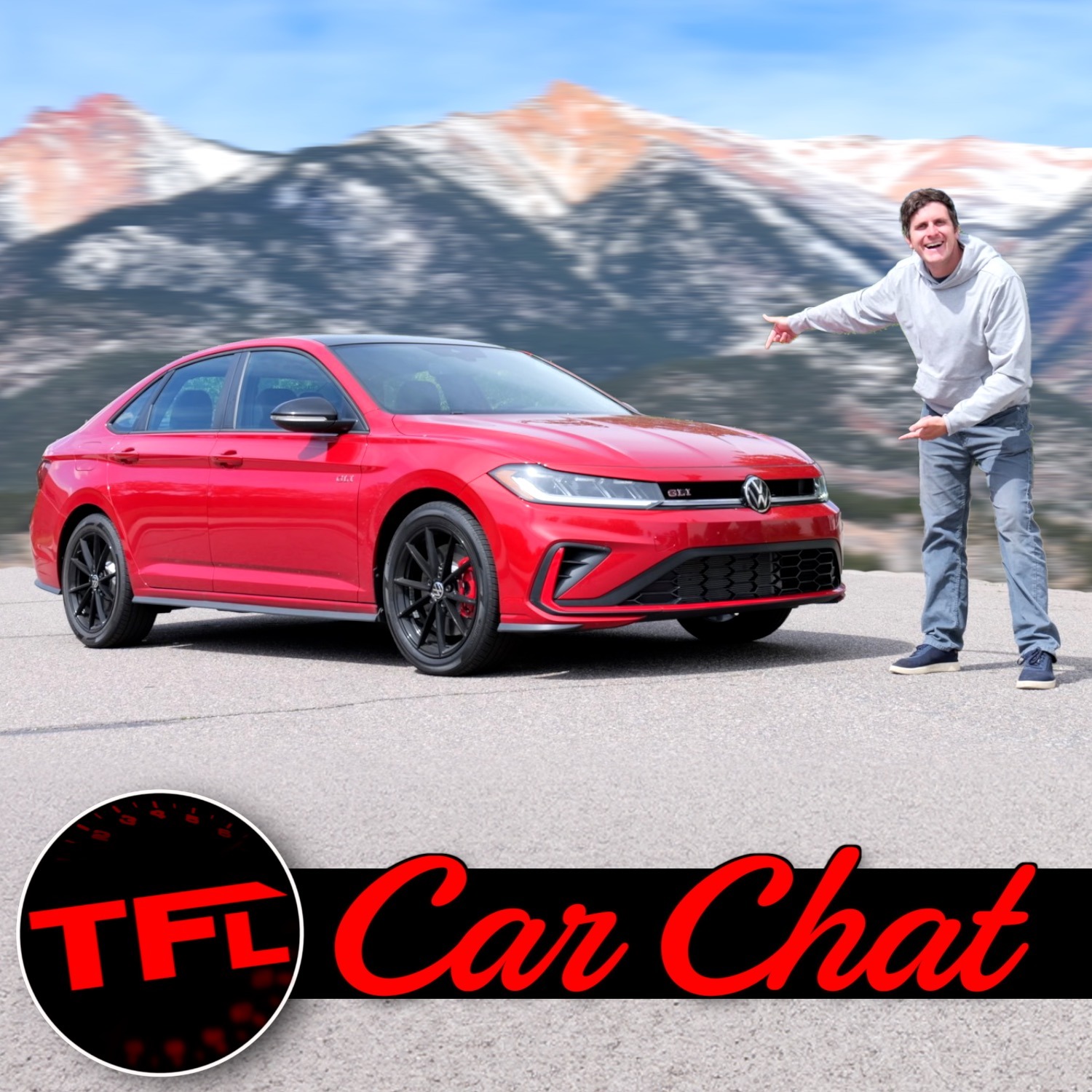
Gas Sippers! The Most Affordable Fuel-Efficient Cars That Aren't Electric! | Ep. 339
About this episode
Gas prices are hitting hard—“Every time I fill up these days, it's between 80 and 100 bucks”—so the hosts build a list of affordable, non-electric fuel sippers. They start with Lexus CT200H and Toyota Prius-family hybrids, weighing fuel economy against battery concerns. The discussion then expands to practical hybrids and small gas cars, plus plug-in/range-extender concepts like the BMW i3. Along the way, they share real-world MPG figures, common issues to watch, and drivetrain explanations.
( https://www.alltfl.com/ ) Check out our new spot to find ALL our content, from news to videos and our podcasts! With national average gas prices violently surging past $4.50 a gallon (and creeping closer to $6.00 on the coasts), filling up your tank is officially painful again. In this episode of TFL Car Chat, Roman and Tommy throw out a massive lifeline for your wallet. They are breaking down a huge master list of the best, most affordable new and used "gas sippers" on the market today—completely bypassing the high purchase costs, long charging times, or range anxiety of a full EV.
The guys go back and forth covering dozens of brilliant commuter options across every single budget and vehicle class. They touch on the obvious used hybrid heavyweights—like older generations of the bulletproof Toyota Prius, the incredibly clever plug-in Chevy Volt, and family-sized haulers like the Toyota Highlander Hybrid—before diving into a mountain of alternative options like the BMW i3 REx and the turbocharged VW Jetta GLI that can absolutely crush a highway commute. From cheap subcompact hatchbacks to surprising highway cruisers, this episode is packed with dozens of fuel-efficient ideas to help you completely slash your fuel budget!
( http://www.patreon.com/tflcar ) Visit our Patreon page to support the TFL team!
Advertising Inquiries: https://redcircle.com/brands
Privacy & Opt-Out: https://redcircle.com/privacy

Lexus CT200H
"[132.5s] [SPEAKER_00]: It's just kind of a forgotten gem, but a car that has proven itself be really reliable and very interesting to drive, and that's actually a Lexus. [142.8s] [SPEAKER_00]: It's the CT200H. [172.8s] [SPEAKER_00]: So it's a hatchback with a really bold design, a great interior, and it was engineered to be incredibly fuel efficient."
The Lexus CT200H is a small Lexus hatchback that uses a hybrid system to sip fuel. The hosts are saying it’s efficient and reliable, and that it can be a good cheaper car option—especially compared to gas prices. They also mention it has a design and interior that still feel appealing today.
The Lexus CT200H is a compact hatchback built by Lexus with a hybrid powertrain, aimed at high fuel efficiency rather than performance. In this episode, they highlight its 2011–2017 US availability, its “hybrid” CT badge meaning, and real-world fuel-economy figures like 42 MPG combined. It’s positioned as a reliable, budget-friendly “first car” that still looks more interesting than you’d expect.

Ct200H
"...as been long discontinued. [SPEAKER_00]: It's the CT200H. [SPEAKER_01]: Yeah, so the H of course stands fo..."
In the episode, “CT” refers to the CT200h, which is a compact luxury hybrid car. They say it’s been discontinued for a long time. That matters because it’s no longer commonly available, especially compared to current models.
In the podcast, “CT” is clarified as the CT200h, which is a compact luxury hybrid model. The discussion indicates it has been long discontinued, which is why it’s being referenced historically. It comes up because discontinued models can become harder to find and more interesting for collectors or used buyers.
hybrid
"[145.7s] [SPEAKER_01]: Yeah, so the H of course stands for hybrid, and this was a small compact-ish car that Lexus built, what year? [154.1s] [SPEAKER_00]: You know, [SPEAKER_00]: Yeah, 2011 through 2017 here in the US, it sold them a little bit further abroad, but this was interesting because Lexus had a bit of an image problem, and you know, they're still living with it a little bit, but back in this era, they were known for building really boring cars for really old people."
A “hybrid” car uses two kinds of power: a gas engine and an electric motor. It can use electricity in certain situations and it also recovers energy when you slow down. That helps it get better gas mileage than a normal gas-only car.
In the CT200H, “hybrid” refers to a powertrain that combines an internal-combustion engine with an electric motor. The goal is to improve fuel economy by using electricity for some driving and by recovering energy during braking. That’s why the episode can talk about high MPG and long range for a non-electric car.
42 MPG
"[180.4s] [SPEAKER_00]: And we pulled up the fuel economy numbers here at fuelaccomi.gov, the combined number 42 MPG for car from 2012, by the way, with 500 miles of range. [189.9s] [SPEAKER_01]: And with Toyota's reputation for reliability, and the other thing that this car has become, it's become kind of a first car for a lot of either, you know, high school kids or college kids."
“MPG” stands for miles per gallon, a measure of how far a car can travel on one gallon of fuel. The hosts cite a “combined” figure of 42 MPG for the CT200H, which blends city and highway driving assumptions into one number. This is central to the episode’s theme of fuel-efficient, affordable cars.

Ford Focus ST
"[200.0s] [SPEAKER_01]: So it has proven itself to be a really interesting car. [204.2s] [SPEAKER_01]: Okay, it's not gonna be, [SPEAKER_01]: You're not going to be racing any focus STs with it, and you're certainly not going to be standing out in the car because it's kind of a non-descripted in some ways, right? [215.7s] [SPEAKER_01]: It's kind of a sleeper in the way it just looks."
The Ford Focus ST is a sportier, more performance-focused version of the Focus. The hosts mention it to make it clear the Lexus CT200H isn’t a car you’d buy to drive fast or aggressively. It’s more about saving fuel than chasing performance.
The Ford Focus ST is a performance-oriented version of the Focus, typically associated with sporty driving dynamics and higher output than a standard commuter hatchback. The hosts use it as a contrast point to say the Lexus CT200H isn’t meant for that kind of driving. It helps frame the CT200H as a “fuel sipper,” not a hot hatch.
stack dash
"[220.4s] [SPEAKER_00]: They had a wonderful kind of Mahogany brown interior. [223.5s] [SPEAKER_00]: You could get very interesting dash layout with [SPEAKER_00]: It was a stack dash design with buttons on the bottom, climate control, the middle, and the screen on top. [231.3s] [SPEAKER_00]: And the steering wheel looks straight out of the LFA."
A “stack dash” means the dashboard is built like a set of layers. Instead of everything being spread out, the screen and controls are grouped vertically. The hosts are pointing out that the CT200H’s layout is easy to read and feels well designed.
A “stack dash” is a dashboard layout where controls and displays are arranged in vertical layers. In the CT200H description, they say climate controls sit in the middle, with the screen on top and buttons on the bottom. This is a design detail that affects usability and how “modern” the cabin feels.
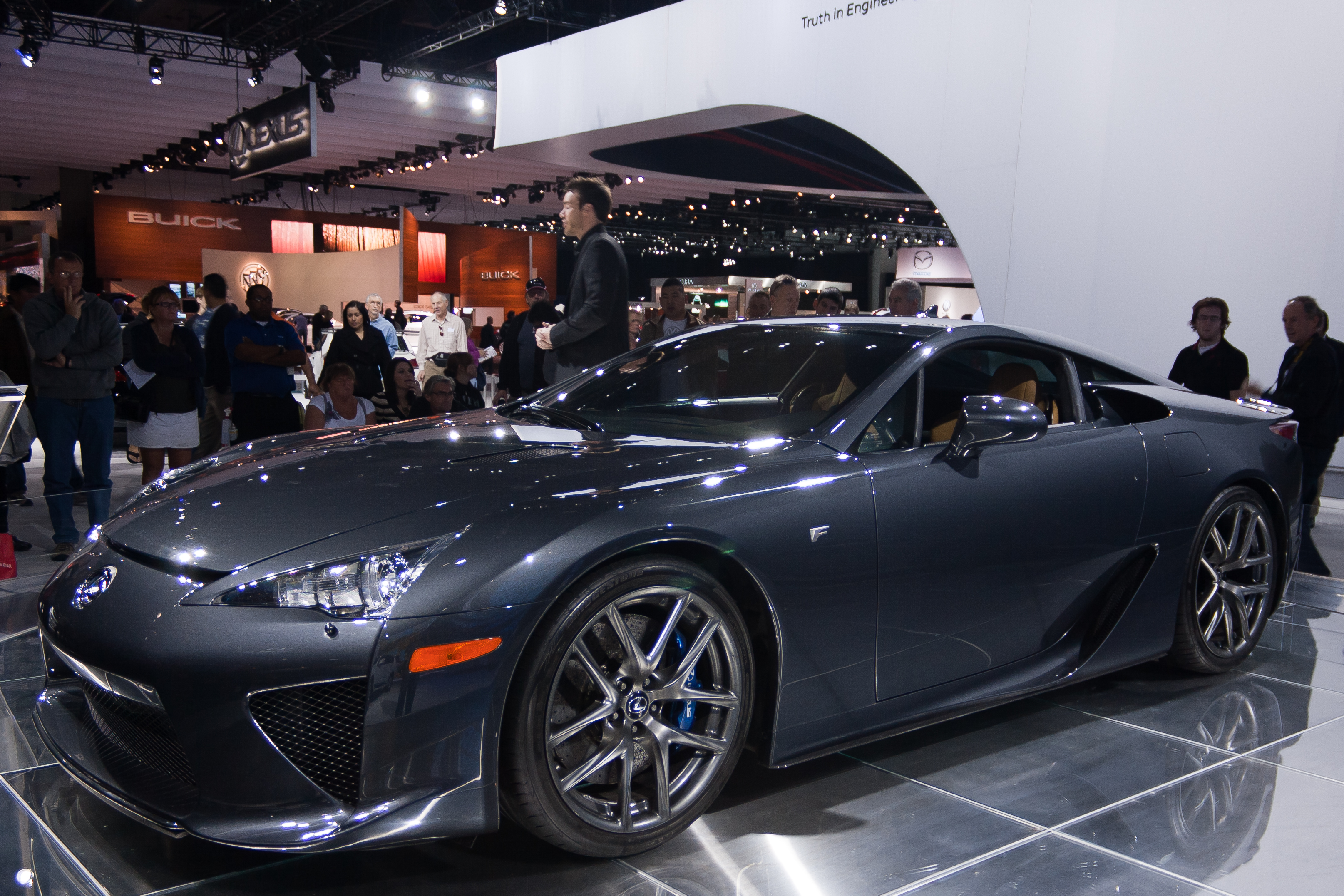
Lexus LFA
"[231.3s] [SPEAKER_00]: And the steering wheel looks straight out of the LFA. [234.0s] [SPEAKER_00]: So I think that this car is aged really well. [237.0s] [SPEAKER_00]: And it's a vehicle that definitely looks faster than it is."
The Lexus LFA is a very expensive, high-performance Lexus supercar. The hosts are saying the CT200H’s steering wheel looks similar to the LFA’s style. It’s just a design comparison to make the CT200H sound more interesting inside.
The Lexus LFA is Lexus’s high-performance supercar known for its exotic engineering and distinctive design cues. Here, the hosts compare the CT200H’s steering wheel look to the LFA to emphasize that the CT200H’s cabin styling feels more premium or sporty than you’d expect from a budget hybrid. It’s a visual reference, not a claim that the CT200H matches LFA performance.

Lexus HS
"There was the CT200H, which was the phenomenal hatchback, and then there was the HS, which was kind of a dreary blob. ...You almost never see these anymore for good reason. They weren't very good cars."
The Lexus HS is another small hybrid model Lexus offered, but the hosts describe it as less appealing than the CT200H. They call it a “dreary blob” and say you “almost never see these anymore for good reason,” implying it didn’t earn a strong reputation.

Cadillac CTS
"[SPEAKER_01]: this one. [SPEAKER_00]: Yeah, it was also sedans of small storage capacity, but the CT's great. [SPEAKER_00]: CT's are still pretty expensive."
The Cadillac CTS is a mid-size luxury sedan, meaning it’s a nicer, more comfortable car than a typical non-luxury model. In the episode, they mention that CTS cars can still cost a lot even used. That’s why it comes up—because it affects what you might pay when shopping.
The Cadillac CTS is a mid-size luxury sedan positioned as a more driver-focused alternative within Cadillac’s lineup. The podcast notes that CTS models are “still pretty expensive,” which is why it’s part of a value or used-car discussion. It’s discussed because it represents a luxury sedan that buyers often consider for performance and comfort.

Toyota Prius
"...? [SPEAKER_00]: Yeah, so I want to talk about the Prius family. [SPEAKER_00]: Now, this is of course a ca..."
The Toyota Prius is a car that uses both a gasoline engine and an electric motor. That helps it use less fuel than many non-hybrid cars. The episode is talking about the Prius lineup as a whole, not just one single model.
The Toyota Prius is a hybrid car that became one of the most recognizable mainstream hybrids. The podcast is specifically framing it as part of a “Prius family,” which is why it’s discussed beyond just one model year or generation. It’s often brought up when talking about how hybrid tech evolved and how it affects everyday driving and ownership.
46 MPG combined
"And to this day, they're still very fuel efficient 46 MPG combined You know hybrid batteries have known to fail on these cars."
MPG combined is a single number that estimates how many miles you can drive on one gallon of gas in mixed city-and-highway driving. They’re using it to show the Prius is very fuel efficient.
MPG combined is a fuel-economy rating that blends multiple driving conditions into one number. The hosts cite “46 MPG combined” to emphasize that the Prius can be extremely efficient even in everyday mixed driving.
nickel metal hydrate
"I know, I think the nickel metal hydrate. But there's nothing fancy about them, they're not like lithium ion."
Nickel metal hydride is a type of battery used in some older Prius models. The hosts are basically saying it’s a different battery chemistry than lithium-ion, and they believe it’s simpler and easier to deal with.
Nickel metal hydride (often abbreviated NiMH) is a battery chemistry used in many earlier Prius generations. The hosts contrast it with lithium-ion, implying NiMH packs are less “fancy” and may be easier/cheaper to replace than lithium-ion packs.

Volkswagen Beetle
"This is the new, I would say this is like the new Volkswagen Beetle. Yes, that's a great way of putting it, but they are very cheap..."
The Volkswagen Beetle is a long-running, iconic Volkswagen model. Here, the hosts are using it as a comparison to explain that the car they’re talking about is inexpensive and not easy to find in good shape anymore.
The Volkswagen Beetle is a classic, air-cooled rear-engine Volkswagen that became famous for its simple, durable design and huge global popularity. In this segment, the hosts use it as a comparison point for a “new” car that’s cheap and hard to find in good condition because many have been discarded.

Toyota Prius C
"There's also the Prius C, which is smaller. Yeah, which Um, this was their compact one... And so if you have a place to plug one in at home, you can travel..."
The Toyota Prius C is a smaller, more affordable Prius hybrid variant designed to deliver strong fuel economy in a compact package. The hosts mention it as the “compact one” and compare its efficiency and pricing versus other Prius generations, emphasizing that it’s harder to find and can be more expensive than the cheapest gas-sippers.
MPGE
"So if you have a place to plug one in at home, you can travel, it was something like 30 miles, 25 miles on electricity, and then you can get 133 MPGE and 54 MPG gas when the battery died."
MPGe is a way to measure how efficient an electric drive is, using the same kind of idea as MPG. It lets you compare electricity use to gas use on the same scale.
MPGe (miles per gallon equivalent) is a fuel-economy unit used to compare electric driving to gasoline. It converts the energy used by the battery into a “gasoline equivalent” so you can compare an EV’s efficiency to MPG.
headlights usually failed
"There was one issue, you should be aware of, and that is, one, usually, one of the headlights usually failed on the Prius. I don't know what was wrong with it, but it was a common problem."
They’re warning that on some Prius cars, the headlights were known to fail. If you’re shopping for one, it’s worth checking that both headlights work properly.
This refers to a recurring failure where the Prius’s headlights stop working reliably. The hosts say it was a common problem, even if they don’t know the exact cause.

Scion iQ
"The cyan IQ, remember this? I don't hate it. I just think that they're too expensive for what they are. ... They're also a CVT, which is kind of a bummer."
The Scion iQ is a very small car designed to fit where bigger cars can’t. The hosts say it’s overpriced for the size and features, and they also mention it has a CVT, which is a type of automatic transmission that can feel different than a normal gearbox.
The Scion iQ is a tiny, ultra-compact hatchback built around maximizing space in a very small footprint. In this segment, the hosts criticize it for being too expensive for what it is and specifically call out that it uses a CVT, which can feel less engaging than traditional transmissions.
CVT
"And that's why I don't like the IQ. I think they're too valuable for what they are. They're also a CVT, which is kind of a bummer."
CVT means “continuously variable transmission,” which is an automatic transmission that changes smoothly instead of shifting between set gears. The hosts don’t like it here because it can make the car feel less engaging or less direct than a normal automatic.
CVT stands for continuously variable transmission, a type of automatic gearbox that can smoothly change ratios without fixed “gears.” The hosts call it a “bummer” in the context of the Scion iQ, implying the driving feel or responsiveness isn’t as satisfying as they’d like.
turbo engine
"I think they're not a J.C.C.C.C.C.C.C.C.C.C.C.C.C.C.C.C.C.C.C.C.C.C.C.C.C.C.C.C.C.C.C.C.C.C.C.C.C.C. ... because those had a really interesting little turbo engine."
A turbo engine uses a device that pushes extra air into the engine. That can help the engine make more power (and sometimes feel more fun) than a similar non-turbo engine.
A turbo engine uses a turbocharger to force more air into the engine, which can improve power and efficiency compared with a non-turbo setup of similar size. The hosts contrast the iQ’s setup with “those” having an interesting little turbo engine, suggesting the turbo adds character or performance potential.
rear-engine 911
"You know what the distinction is? What's that? There's only one other car that is rear-engine 911. Yeah, that is rear-engine."
A rear-engine car puts the engine behind the driver instead of up front. That affects how the car feels and handles, and the Porsche 911 is one of the most well-known examples.
“Rear-engine” describes an engine mounted behind the driver, which changes how the car’s weight sits and how it handles. The Porsche 911 is famous for this layout, and the hosts are using it as a key identity point when comparing which other cars share that same basic packaging.

Porsche 911
"...]: There's only one other car that is rear-engine 911. [SPEAKER_01]: Yeah, that is rear-engine."
The Porsche 911 is a sports car made by Porsche. One key thing about it is that the engine sits toward the back of the car. The podcast brings it up because that rear-engine setup is a big part of what makes it feel and handle the way it does.
The Porsche 911 is a long-running sports car famous for its rear-engine layout and distinctive design. In the podcast, it’s mentioned as the “only other car” with a rear-engine configuration, highlighting how unusual that layout is in modern sports cars. It’s discussed because the 911’s engineering choices strongly shape how it drives.
flat four
"I think it was a flat flat. Was it a flat four or flat two? No, I think it was a three."
A “flat four” is an engine where the cylinders are laid out in a sideways, boxer-style shape. It’s mentioned here because the hosts are trying to figure out what engine layout that car actually used.
A “flat four” is an engine with four cylinders arranged in two opposing banks (horizontally opposed), which helps keep the engine’s mass low. The hosts are debating whether the engine layout in the smart for two discussion is a flat configuration, which is why the term comes up.
flat two
"Was it a flat four or flat two? No, I think it was a three."
A “flat two” would be a two-cylinder engine shaped like a boxer, with cylinders laid out to the left and right. They mention it while guessing what engine layout the car had.
A “flat two” would mean a two-cylinder horizontally opposed engine (a boxer-style layout). In this segment, it’s part of a quick back-and-forth as the hosts try to identify the correct cylinder layout for the smart for two generation they’re discussing.

smart for two
"I thought it was a flat something the 2018 smart for two [SPEAKER_00]: That's when they went to electricity only what year was the normal one like a 15 I don't know, I'll remember anymore Smart for two, here we go So there was technically I think it was a third generation of smart car Yeah, it was the most interesting design It used a one liter turbo in line three or naturally aspirated in line three"
The smart for two is a very small city car. The hosts are talking about a version that used a small 1.0-liter engine (sometimes turbo, sometimes not), which helps explain why it might not get the fuel economy you’d expect for something so tiny.
The smart for two is a tiny city car from smart (a Daimler brand), known for its compact footprint and unusual packaging. In this segment, the hosts discuss a specific generation that used a 1.0-liter turbo inline-three engine (or a naturally aspirated inline-three in earlier form), which is why it can feel “thirsty” despite being small.
third generation of smart car
"Smart for two, here we go So there was technically I think it was a third generation of smart car Yeah, it was the most interesting design"
“Third generation” just means the third major version of that model. Different generations can have different engines and features, which is why the hosts are using it to keep the story straight.
“Third generation” refers to a specific redesign cycle within a model line, where the car’s platform and major components can change. Here, the hosts use it to distinguish which smart for two version they’re talking about when discussing engine choices and the shift toward an EV-only variant.
one liter turbo in line three
"It used a one liter turbo in line three or naturally aspirated in line three How about the one before it?"
This means a small 1.0-liter engine with three cylinders in a row, and a turbo that helps it make more power. They’re also comparing it to a version without the turbo, which changes how the engine feels.
“1.0-liter turbo inline-three” describes a small 1.0-liter engine with three cylinders arranged in a straight line, plus a turbocharger to increase air pressure and power. The hosts contrast this with a naturally aspirated inline-three, which typically makes less power for the same displacement but can feel different to drive.

Renault Twingo
"...: Yeah, I think you're thinking of the movie, the Twingo has the flat. [SPEAKER_01]: I thought they shared..."
The Renault Twingo is a small car made for city driving. It’s easy to handle in tight spaces. The episode mentions it because they were talking about a movie and whether the car is similar to something else.
The Renault Twingo is a small city car designed for tight urban spaces and easy maneuvering. In the podcast, it’s referenced in a humorous context about the “movie” and whether certain cars share features. It comes up because it’s a recognizable small-car name and often gets discussed in pop-culture or trivia-style ways.

Nissan Versa
"The final version of the Nissan Versa. [818.8s] [SPEAKER_01]: Yeah, you know, the current verse is actually a really good... [831.5s] [SPEAKER_01]: So the current Nissan Versailles, one of the least expensive cars you could buy."
The Nissan Versa is a low-cost, small car that’s meant to be practical and affordable. The hosts are talking about it as a cheap option that still feels like a decent daily driver.
The Nissan Versa is a budget-friendly subcompact sedan known for being one of the cheapest ways to get into a new car. In this segment, the hosts focus on the “final version” and pricing, plus how it can be a practical, fuel-efficient small runabout.
CBT issues
"would you say there cool 17 for yeah these car for really affordable and they this was like the they the earlier ones had the big CBT issues by this time they really figured them out or if you didn't want to deal with that you can get them with the 5 speed manual but you can see me 35 MBG for conventional gas car is very impressive"
The hosts are talking about a known problem they associate with earlier versions of these Nissan small cars, and they imply it’s related to how the car’s drivetrain works. They suggest that if you don’t want to deal with it, you can choose the manual.
“CBT” here is being used as shorthand for a known problem area on some earlier Nissan Versa/related models—specifically transmission-related trouble that owners had to deal with. The hosts contrast earlier versions with later improvements, and suggest that choosing a manual can avoid those issues.
5 speed manual
"the earlier ones had the big CBT issues by this time they really figured them out or if you didn't want to deal with that you can get them with the 5 speed manual but you can see me 35 MBG for conventional gas car is very impressive"
A 5-speed manual is a car where you shift gears yourself using a clutch and a stick. The hosts are saying that choosing the manual can help you avoid certain transmission-related headaches they associate with earlier versions.
A “5-speed manual” is a gearbox where the driver selects gears using a clutch pedal and a shift lever. In this segment, it’s presented as an option to avoid the earlier “CBT issues,” implying the manual transmission route can be a safer choice for buyers concerned about drivetrain problems.
Nissan Versa Note
"Avoid the Nissan Note, Versa Note, which had the... That was the older CBT car."
The Versa Note is a small Nissan hatchback. The hosts say to avoid it because it’s tied to the earlier problem they mentioned with these budget Nissan cars.
The Nissan Versa Note is a compact hatchback that the hosts warn against because it’s associated with the earlier “CBT” problem they’re trying to steer listeners away from. They frame it as an older version of the “cheap Nissan” formula that didn’t age as well.

Ford Escape Hybrid
"So if you look at for a little bit of utility, I want to talk about the Ford Escape Hybrid. Yeah, it's a good looking boxy car, but I don't know much about this car to tell me, so this is one car actually, I don't think I've ever driven. Well, this was a little bit before our time, if I'm right, but the first generation of escape hybrid..."
The Ford Escape Hybrid is a gas-and-electric SUV that gets better mileage than a regular gas-only Escape. They’re talking about a 2012 model and how efficient it is, plus where its hybrid system originally came from.
The Ford Escape Hybrid is a compact SUV that uses a hybrid powertrain to improve fuel economy without being fully electric. In this segment, the hosts discuss a 2012 example and its real-world efficiency, including the idea that early Escape hybrid tech was sourced/licensed from Toyota.

Toyota RAV4 Prime
"And I think they're quite a bit more affordable now because they don't have the hype that the RAF4 prime has. ...So if you have a place to plug it in, probably I've only 210 horsepower, so way less than the 320 that Toyota's making. But it wasn't the great car."
The Toyota RAV4 Prime is a plug-in hybrid RAV4 that can run on electricity for a while and also has more power than some other plug-in hybrids. They compare it to the Ford Escape plug-in hybrid and talk about pricing and efficiency.
Toyota RAV4 Prime is a plug-in hybrid version of the RAV4 that’s known for strong electric-only capability and higher system output than many competitors. Here, the hosts compare it against the Escape plug-in hybrid, including a mention of its higher horsepower figure and the idea that it can be more expensive due to hype.
full electric range
"Yeah, 37, 37 miles of full electric range as well. So if you have a place to plug it in, probably I've only 210 horsepower, so way less than the 320 that Toyota's making. But it wasn't the great car."
Full electric range is how far the car can go using electricity only. The hosts say it’s around 37 miles, but it only helps if you can charge it regularly.
Full electric range is the estimated distance a plug-in hybrid can travel using only its electric motor and battery. This segment cites about 37 miles, emphasizing that real-world usefulness depends on whether you have a place to plug it in.
warranty
"No, but they're, they're, they're good deal for what it is. Okay. And they're still under warranty, which is a big one. Um, so speaking of plug-in hybrids, uh, the vault made our list as well."
A warranty is coverage from the manufacturer for certain repairs. If the car is still under warranty, you’re less likely to pay out of pocket for problems that fall under that coverage.
Warranty is the manufacturer’s promise to cover certain repairs for a set period or mileage. The hosts mention that these cars are still under warranty, which reduces the risk of unexpected repair costs.
lock-up clutch
"GM never wanted people to know that they always wanted it to seem like that engine was Exclusively a generator, but on both the first and second generation Volts there was a lock-up clutch that could power the front wheels directly"
A lock-up clutch is a part that can “lock” two parts together so power can flow directly. On the Volt, it can let the gas engine help drive the front wheels directly in some situations. That can make highway driving more efficient.
A lock-up clutch is a mechanism that can mechanically connect components that would otherwise be separated. In the context of the Chevrolet Volt, it can connect the engine to the front wheels directly instead of only using the engine as a generator. That direct connection can improve highway efficiency compared with a purely generator-based setup.
T-shaped battery
"And a lot of folks are worried about the replacement cost of these batteries because especially a vault has a lot more on the T-shaped battery that ran straight down the middle"
A “T-shaped battery” is about where the battery pack is placed inside the car. The hosts say it runs down the middle in a shape that resembles a T. Where the battery sits can affect space and how expensive it might be to replace.
A “T-shaped battery” refers to how the battery pack is packaged within the vehicle. The hosts say the Volt’s battery runs down the middle of the car in a T-like layout, which affects where the battery mass sits and how much space it takes. That packaging is part of why some people worry about replacement costs, even though the hosts claim the batteries are durable.
force eater
"There is one downside, and that is, it's only a force eater, because of the battery, like I said, it runs down the center of the cabin."
“Force eater” sounds like a term for parts that help absorb crash energy. The speaker is saying the battery layout affects the structure in the middle of the cabin. That can change how the car is built to protect people in a crash.
“Force eater” appears to be the speaker’s description of a structural or crash-related component that absorbs energy during an impact. In this context, they connect it to the battery packaging running down the center of the cabin. The idea is that the battery layout influences how the car’s interior structure is shaped and protected.
haptic controls
"The only issue with the first gen vault is the interior uses a lot of haptic controls. [1143.5s] [SPEAKER_00]: Yeah, so the whole, well, it was Chevy's version of Q sort of. [1148.0s] [SPEAKER_00]: But the whole set or stack where these really weird touch capacitive things, which was hugely unpopular then, it died, and now for some reason it's come back, so maybe it'll be good again."
Haptic controls are touch buttons that “push back” with vibration or other feedback. The idea is to help you feel what you pressed, but the hosts think this particular design wasn’t very popular.
Haptic controls are touch-based interfaces that provide feedback through vibrations or other “feel” cues instead of traditional physical buttons. The hosts say the first-gen setup used a lot of these controls, which can make the interior feel less intuitive or more frustrating for some drivers.
touch capacitive things
"But the whole set or stack where these really weird touch capacitive things, which was hugely unpopular then, it died, and now for some reason it's come back, so maybe it'll be good again. [1157.6s] [SPEAKER_00]: And it was only a foreseater in the back. [1159.1s] [SPEAKER_00]: And if you want one that's even less practical, [SPEAKER_00]: But you're the cooler Cadillac ELR."
Capacitive touch controls are the kind of touch buttons that work like a phone screen—your finger changes the electrical signal. The hosts didn’t like how these controls felt or worked, and they think that’s why the design struggled at first.
Capacitive touch controls detect input through changes in electrical charge, similar to how many smartphones work. The hosts call these “weird touch capacitive things” and say they were hugely unpopular, implying the interface design was a major drawback on the first generation.
foreseater
"And it was only a foreseater in the back. [1159.1s] [SPEAKER_00]: And if you want one that's even less practical, [SPEAKER_00]: But you're the cooler Cadillac ELR. [1164.0s] [SPEAKER_01]: Yeah, that's one of my bucket list by guilty pleasures."
“Foreseater” sounds like they meant “four-seater,” but they’re really talking about how usable the back seats are. The point is that the car isn’t very practical for passengers in the rear.
“Foreseater” appears to be a transcription error for “four-seater,” referring to seating practicality. The hosts are contrasting how many people can realistically fit in the back, framing the ELR as less practical than alternatives.

Cadillac Elr
"And if you want one that's even less practical, [SPEAKER_00]: But you're the cooler Cadillac ELR. [1164.0s] [SPEAKER_01]: Yeah, that's one of my bucket list by guilty pleasures. [1168.4s] [SPEAKER_01]: That's the Cadillac version of it."
The Cadillac ELR is a hybrid car that looks futuristic and is meant to feel like an EV sometimes, but it’s not fully electric. Here, the hosts compare it to the Chevy Volt and talk about why it was expensive and hard to buy at the time.
The Cadillac ELR is a plug-in hybrid coupe from Cadillac, known for its futuristic styling and “electric-like” driving feel despite not being a pure EV. In this segment, the hosts discuss it as a “cooler” alternative to the Chevrolet Volt, including how it was priced and built in limited numbers.
payment systems
"Oh my god, he was really bad. [1229.9s] [SPEAKER_01]: One of the most headache-inducing is both payment systems out there because trying to make that thing work going to your standing still is hard when you're driving. [1237.0s] [SPEAKER_01]: It's almost impossible."
This part sounds like the hosts are complaining about the car’s in-car system—how you interact with it—being hard to use. They say it’s especially tough when you’re trying to operate it while the car is moving.
“Payment systems” here is almost certainly a mis-transcription of the car’s infotainment/controls system (the hosts are talking about making the interface work while stopped vs driving). The key point is that the ELR’s control/UX design was difficult to use in real-world driving situations.

BMW i3
"Yeah, for sure. Yeah, definitely. Yeah, Q was a horrible system. I've can't believe that we're bringing that back So next up we've got the Croll and a lot of hybrid two great options... That's the I3. I3 is a brilliant. If you can, we bought one with the range extender. So basically the early ones only had about a 50 miles of range and then toward the end."
The BMW i3 is an electric BMW. Some versions also have a small gas engine that kicks in when the battery runs low, so you can keep driving farther. That’s what they’re describing when they talk about the i3’s “range extender” and how far it could go on electricity alone.
The BMW i3 is a small electric car known for its distinctive carbon-fiber passenger cell and, in some versions, a gasoline range extender. In this segment, they’re talking about the i3’s range-extender setup, where the car can keep going after the battery runs low. That’s why they mention early cars having about 50 miles of EV range and later ones closer to ~75 miles.
range extender
"I3 is a brilliant. If you can, we bought one with the range extender. So basically the early ones only had about a 50 miles of range and then toward the end."
A range extender is a backup engine in an electric car. When the battery gets low, it turns on to make electricity so you can keep driving. It’s like having a small “power generator” on board.
A range extender is a small auxiliary engine (often gasoline) used to generate electricity when the main battery is depleted. It doesn’t directly drive the wheels; instead, it helps keep the electric drivetrain running. In the BMW i3 context here, it explains how the car can continue after the EV-only range runs out.
scooter engine
"But the whole point of the rest, which is such a good idea, is that when the battery died, there was a little scooter engine on it. Six hundred C.C."
They’re comparing the range-extender to a small scooter motor. It’s not meant to be powerful for driving—it’s mainly there to generate electricity when the battery is empty. That’s why they call it a “scooter engine.”
In this context, “scooter engine” is a casual way to describe the small-displacement range-extender motor used in the BMW i3. These engines are designed to run efficiently at limited loads to generate electricity, not to provide strong acceleration. The hosts then quantify it as “six hundred C.C.”
extend your range
"Yeah, a little two-cylinder guy that would strictly charge the battery to extend your range to get to the next charging station."
It means the car can go farther before you have to plug it in again. They’re describing a backup engine that helps keep the battery charged so you can reach the next charger.
“Extend your range” refers to increasing how far the car can go before it needs charging. Here, the hosts describe a small engine that charges the battery so you can reach the next charging station.
gasoline engine as a backup
"So unlike the other plug-in hives we're talking about, which could and were designed to be driven exclusively on quote gasoline, [SPEAKER_00]: This car was designed to be driven exclusively in electricity with a gasoline engine as a backup."
This means the car mainly runs on electricity, but it has a gas engine that can step in when the battery is low. Think of it like a backup power source to keep you moving until you can recharge.
A “gasoline engine as a backup” describes a setup where the car’s primary propulsion is electric, but a gasoline engine can take over if the battery needs help. In this episode’s framing, the engine’s job is mainly to generate electricity (charge the battery), not to directly drive the wheels like a traditional hybrid.
plug-in hives
"So unlike the other plug-in hives we're talking about, which could and were designed to be driven exclusively on quote gasoline, [SPEAKER_00]: This car was designed to be driven exclusively in electricity with a gasoline engine as a backup."
They’re talking about a type of car you can plug in to charge. Here, the point is that some plug-in cars are meant to run on gas too, while this one is meant to run mostly on electricity.
“Plug-in hives” sounds like the hosts’ nickname for plug-in vehicles—cars you can charge from an outlet. In this context, they’re contrasting plug-in designs that can run on gasoline versus designs that are meant to run primarily on electricity.
clamshell doors
"And they had clamshell over the half clamshell doors, which is, we should be talking about this in the present. [SPEAKER_01]: They're not dead, they're just out there."
Clamshell doors are a special door design that opens in a different way than normal car doors. In this case, the hosts are pointing out it as a unique look/feature on the car they’re discussing.
“Clamshell doors” are doors that open outward like a hinged shell, typically swinging up and/or out rather than using conventional side-hinged doors. The hosts mention them as a distinctive styling/packaging feature on this specific EV.
Tera
"I forgot what the names were like. [SPEAKER_01]: Tera. [SPEAKER_01]: Tera, yeah."
“Tera” sounds like the name of a specific version of the car they’re talking about. It’s basically a label for that particular model/trim.
“Tera” appears to be a model/trim nickname the hosts use for the EV they’re discussing. It’s not a common universal automotive term, so in context it likely refers to a specific variant within that car’s lineup.

C8 Corvette
"In the real world, we've had this thing up against our C8 Corvette, our standard one, and it actually kept up with it perfectly and beat it in the quarter mile, believe it or not."
The C8 Corvette is a Chevrolet sports car where the engine is in the middle of the car, not the front. People compare it to other cars because it’s quick and handles well.
The C8 Corvette is Chevrolet’s mid-engine Corvette generation, meaning the engine sits behind the front seats instead of up front. That layout gives it very strong acceleration and balance, which is why it’s used as a benchmark when comparing other cars’ real-world speed.
quarter mile
"In the real world, we've had this thing up against our C8 Corvette, our standard one, and it actually kept up with it perfectly and beat it in the quarter mile, believe it or not."
The quarter mile is a standard short race distance used to compare how fast cars accelerate. If a car “beat it in the quarter mile,” it was quicker over that sprint.
The quarter mile is a common drag-racing distance (about 402 meters) used to compare straight-line acceleration. When someone says a car “beat it in the quarter mile,” they mean it accelerated faster over that short sprint.
carbon composite shell
"It's built on a carbon composite shell, chassis. You can have incredible workmanship because these things were built."
This means the car’s main body structure uses carbon-fiber material. Carbon fiber is strong but light, which can help the car use less energy.
A carbon composite shell refers to a body structure made from carbon-fiber composite materials. Carbon composites are used to reduce weight while maintaining stiffness, which can improve efficiency and handling.
zero to 60
"but it's a very cool concept of being able to have a four-second zero to 60 car that's so frugal and it's just interesting, right? I know it's got a lot of hate for being a little three-cylinder..."
“Zero to 60” is how fast the car can go from standing still to 60 mph. People use it as a quick way to compare acceleration between cars.
“Zero to 60” is shorthand for how quickly a car accelerates from 0 mph to 60 mph, usually measured in seconds. It’s a common performance benchmark, even when the discussion is about fuel economy.
Autobahn package
"an incredible value, the one we have, which has the Autobahn package and some other accessories is 37,000"
An Autobahn package is a trim option (common on Volkswagen models) that bundles convenience and driver-assistance features aimed at highway driving. It’s typically used to describe a more equipped configuration than the base model.
six-speed manual
"And it's got a six-speed manual. Yeah."
A six-speed manual means you shift gears yourself using a clutch. It can feel more fun because you’re in control of what gear the engine is in.
A six-speed manual is a gearbox where the driver selects gears using a clutch pedal and a shift lever. Manuals can feel more engaging because you directly control gear choice, which can also help you keep the engine in the right rev range for efficiency or response.

Volkswagen Jetta
"The standard Jetta as a 1.5 turbo, 8 speed automatic. Our producer Zach actually had a chance to take one on a little bit of a trip and he averaged over 50 MPG in that jetta, which is unreal"
The Volkswagen Jetta is a small sedan. Here they’re talking about a version with a turbocharged 1.5-liter engine and an automatic transmission that can get extremely good gas mileage—over 50 MPG in their example.
The Volkswagen Jetta is a compact sedan known here for being a non-hybrid “gas sipper” with strong real-world fuel economy. In this segment they specifically call out a 1.5 turbo with an 8-speed automatic, and mention averaging over 50 MPG on a trip.
8 speed automatic
"The standard Jetta as a 1.5 turbo, 8 speed automatic. Our producer Zach actually had a chance to take one on a little bit of a trip"
An 8-speed automatic transmission uses eight forward gears to keep the engine in its efficient operating range more often. More gears can help the car stay near the best fuel-economy points during city driving and highway cruising.

Volkswagen GTI
"It's like a GTI except of course It has a trunk and it has a lot more backseat room."
The Volkswagen GTI is a sporty Volkswagen model that’s known for being fun to drive. They’re using it as a comparison point for how this car feels—sporty and responsive—while also noting it’s more practical with extra space.
The Volkswagen GTI is the sporty, performance-focused trim of the Golf family, known for delivering “hot hatch” driving feel. Here, the host compares the discussed car to a GTI, saying it has similar road feel and acceleration character, but with a trunk and more backseat room.
turbo lag
"there's a little bit of turbo lag, but after that it's like a bad out of hell."
Turbo lag is a short delay you can feel in a turbo engine. You press the gas, but the extra power doesn’t show up instantly—it kicks in after the turbo spools up.
Turbo lag is the delay between pressing the accelerator and the turbocharger producing boost. With a turbocharged engine, that pause can make the car feel less immediate until boost builds—then power arrives quickly.
Volkswagen Infotainment System
"It hasn't gone to the latest version of the Volkswagen Infotainment System, which has gotten much harder."
This is the touchscreen-and-menu system in the car that controls things like music and climate-related settings. The hosts prefer the older style because it uses physical knobs instead of making you dig through screens.
A Volkswagen Infotainment System is the car’s integrated dashboard interface for media, navigation, phone, and vehicle settings. The hosts contrast older Volkswagen setups with physical knobs against newer versions that can be harder to use because more functions move into the screen.
physical knobs
"This one still has physical knobs, so it's better, right?"
Physical knobs are the real dials and buttons you can turn by hand. The idea is that they’re faster and easier than using a touchscreen while driving.
“Physical knobs” refers to real, tactile controls (like volume and tuning) that you can adjust without navigating menus. The hosts argue that keeping these controls improves usability compared with newer infotainment layouts that rely more heavily on touchscreens.
climate control
"Same thing with the climate control as its own panel, it never moves, it never goes away, it's better, right?"
Climate control is what heats or cools the car and controls fan/air direction. They prefer having it on a dedicated panel with its own controls instead of hiding it in the touchscreen menus.
Climate control is the system that manages cabin temperature and airflow. Here, the hosts specifically like that it has its own dedicated panel that “never moves” (i.e., it stays separate from the infotainment screen), making it easier to adjust on the fly.
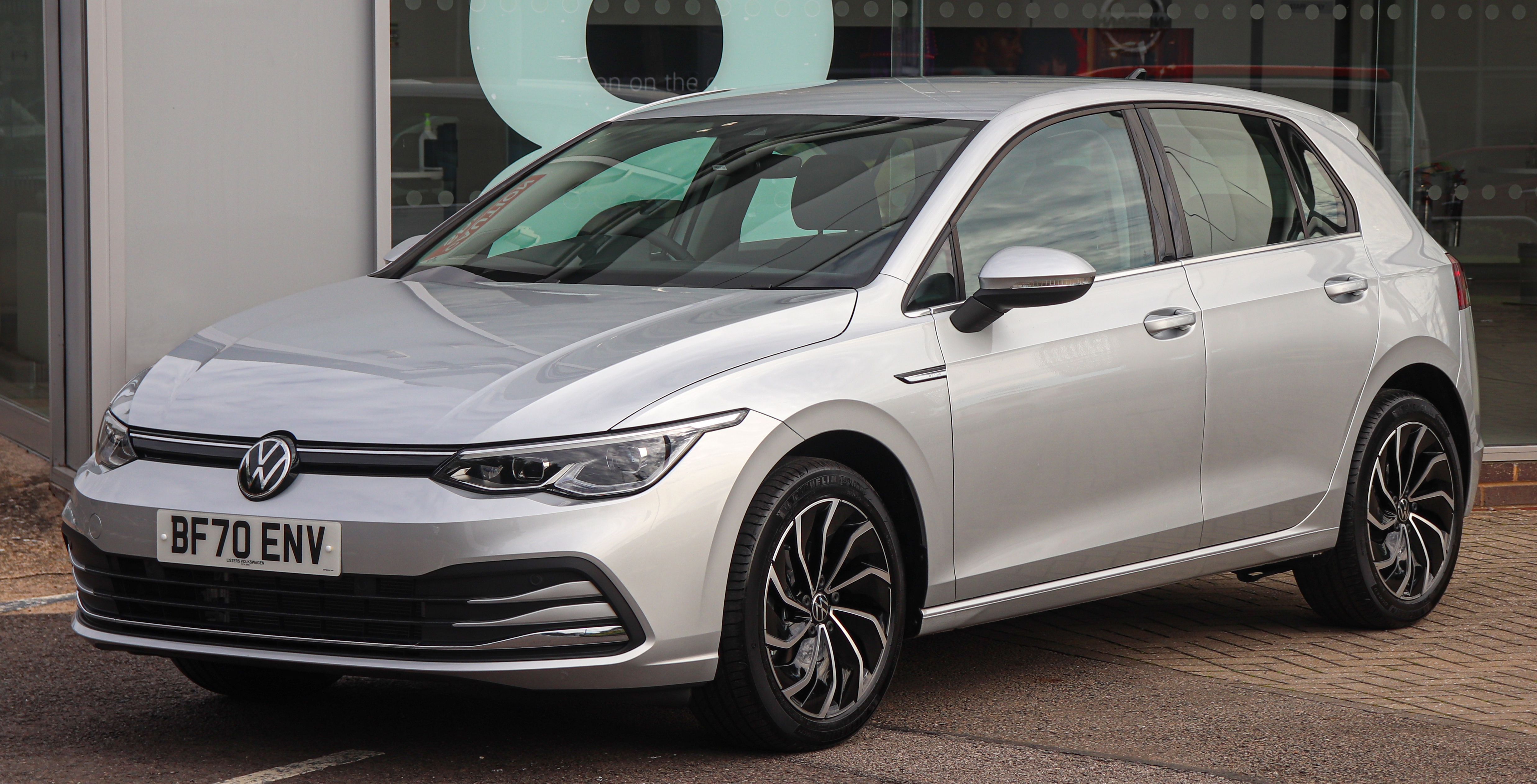
Volkswagen Gli
"...s better, right? [SPEAKER_00]: And that's why the GLI is appealing is like, yeah, you can make fun of i..."
The Volkswagen Golf is a compact car that’s meant to be practical for everyday driving. The episode talks about the GLI version, which is a sportier trim meant to feel more fun. That’s why they mention it—because it’s a way to get more performance while still staying in a compact car.
The Volkswagen Golf is a compact car line known for being practical and widely used, with performance trims like the GLI. The podcast mentions the GLI being appealing and ties it to making the car “fun,” which is why the Golf name comes up. It’s discussed because the Golf platform is often used as a base for different power and driving-character options.
Automatic transmission
"Automatic transmission, and this reminds me of how good cars used to be."
An automatic transmission shifts gears for you. The hosts are using it as another example of how older cars can feel simpler and more straightforward to drive.
An automatic transmission is a gearbox that changes gears without the driver using a clutch pedal. In this segment it’s mentioned as part of the “older cars were better” theme, contrasting driving feel and control simplicity versus newer tech-focused designs.
torque
"Yeah, 228 and 258 pound feet of torque. [1849.3s] [SPEAKER_00]: Okay. [1849.8s] [SPEAKER_00]: I love that car though."
Torque is the engine’s “pulling power.” Higher torque usually means the car can get up to speed more easily, especially when you’re starting from a stop or rolling slowly.
Torque is the twisting force an engine produces, and it strongly affects how quickly a car accelerates from low speeds. The hosts mention torque figures (in pound-feet) to explain why the car feels faster than you’d expect for its stated power.

Mazda 3
"Also newer car, but also very good the Mazda 3, Zack owned one of these and, you know, he consistently averaged 32 MPG over his, like, thank 40,000 miles he owned it, great, great, great car."
The Mazda 3 is a compact car. In this episode, they’re using it as an example of a gas-powered car that can still get good mileage in everyday driving.
The Mazda 3 is a compact car known for being efficient and easy to live with, and in this episode it’s cited as a real-world fuel-economy example. The host says Zack averaged about 32 MPG over roughly 40,000 miles, using it as proof that non-electric cars can still be “gas sippers.”

Toyota Corolla
"And then if you really want to get efficient the Corolla and the Alantra hybrid, especially the blue, unreal fuel efficiency in those cars."
The Toyota Corolla is a very common, practical small car. The host is saying it’s one of the best options if you care most about getting great gas mileage, especially in hybrid form.
The Toyota Corolla is a mainstream compact sedan/hatchback that’s often chosen for fuel economy. Here, the host specifically points to the Corolla as a top pick when you want maximum efficiency, including mentioning hybrid availability and strong real-world results.

Hyundai Elantra hybrid
"And then if you really want to get efficient the Corolla and the Alantra hybrid, especially the blue, unreal fuel efficiency in those cars."
The Hyundai Elantra hybrid is a small car that uses a hybrid system to help it use less gas. The host is recommending it because it can be extremely efficient in real use.
The Hyundai Elantra hybrid is a compact car that uses a hybrid powertrain to improve fuel economy versus a non-hybrid. In this segment, the host highlights it as having “unreal” fuel efficiency, and even mentions a specific paint/color reference when talking about efficiency-focused shoppers.

Honda Civic
"The most of three years is fun to drive, but the curl and the Civic and the Hyundai probably not. 1923.1s] [SPEAKER_00]: But look at that, the curl hybrid 2020, 52 MPG."
The Honda Civic is a popular small car. Here, they’re basically saying it’s probably not the best choice if your top priority is maximum fuel economy compared with the hybrids they’re recommending.
The Honda Civic is a compact car that’s often compared in the “efficient daily driver” conversation. In this segment, the host groups the Civic with other cars they don’t expect to be as efficient/fuel-sipping as the hybrid-focused picks mentioned nearby.

Toyota Highlander
"If you just want a reliable car that will get you where you need to go, old highlanders are excellent choices, another 26, no, is that the high, is it the high grade? Yeah, I mean, it was 2006."
The Toyota Highlander is a family SUV that’s meant to be practical for everyday life. Here, the hosts are saying older ones can still be a good choice if you want decent fuel economy and something dependable.
The Toyota Highlander is a midsize family SUV known for being practical and easy to live with. In this segment, the hosts highlight older Highlanders as fuel-efficient for the space they offer and emphasize their long-term usefulness as a “reliable car.”

Mitsubishi Outlander
"So Outlander Plugin Hybrid, the new one, goes 38 miles on a charge, the old one did 22, but these cars were really popular in Canada. Can you believe that? So definitely consider a Peeheav outlander if you have a place to charge a home."
The Mitsubishi Outlander Plug-in Hybrid is an SUV that you can plug in to drive on electricity for a while. After that, it uses gas like a normal hybrid, and the hosts say it’s a great deal if you have a place to charge at home.
The Mitsubishi Outlander Plug-in Hybrid (PHEV) is a plug-in hybrid SUV that can run on electricity for a limited distance before switching to its gas engine. The hosts compare the newer model’s electric range (“38 miles on a charge”) versus an older one (“22”), and they note it’s especially compelling if you can charge at home.
naturally aspirated
"The IS350, by the way, as far as I can tell, it's the very last naturally aspirated car with a V6 for sale in the US. I mean, if you think about it, all the Germans are turbocharged or in line 6, right?"
Naturally aspirated means the engine doesn’t use a turbo to force more air in. It just pulls air in normally, and that can affect throttle response and driving feel.
Naturally aspirated engines make power without a turbocharger or supercharger. They rely on atmospheric pressure and engine design to pull air into the cylinders, which often changes how the engine feels compared with turbocharged setups.
V6
"The IS350, by the way, as far as I can tell, it's the very last naturally aspirated car with a V6 for sale in the US. I mean, if you think about it, all the Germans are turbocharged or in line 6, right?"
A V6 is an engine with six cylinders. It’s a popular engine type because it can provide good power while still running smoothly.
A V6 is an engine with six cylinders arranged in a “V” shape. It’s a common layout for midsize and performance sedans because it can balance smoothness and power with relatively compact packaging.
turbocharged
"I mean, if you think about it, all the Germans are turbocharged or in line 6, right? Yeah."
Turbocharged means the engine uses a turbo to push more air into the cylinders. That can help the car feel stronger and often improves fuel economy too.
Turbocharged engines use a turbocharger to compress incoming air, allowing more oxygen into the cylinders. That typically enables higher power and efficiency than a similar naturally aspirated engine, but it can change throttle response and engine behavior.
in line 6
"I mean, if you think about it, all the Germans are turbocharged or in line 6, right? Yeah."
“In-line 6” means the engine has six cylinders lined up in a row. It’s often described as smooth because of how the cylinders fire.
“In-line 6” refers to an engine with six cylinders arranged in a single straight row. This layout is known for smooth operation and is common in some European performance engines.

Ford Mustang
"...EAKER_00]: Ford doesn't really do cars within the Mustang, which isn't turbo 4 now. [SPEAKER_00]: Infinity ..."
The Ford Mustang is a sports car that’s known for performance and a classic muscle-car look. In this episode, they’re discussing what kind of engine it uses “now,” including whether it’s a turbocharged four-cylinder. That matters because the engine type affects how the car feels to drive.
The Ford Mustang is a long-running American muscle car that’s known for its sporty styling and engine variety. In the podcast context, it’s being discussed in relation to what powertrain approach it uses “now,” including the mention of “not turbo 4.” It comes up because the Mustang’s direction and engine choices are a big part of how people compare it to other performance cars.

Nissan Pathfinder
"... they're turbocharged. [SPEAKER_00]: Apart from a pathfinder, a Nissan Frontier or something like that, you ca..."
The Nissan Pathfinder is a midsize SUV, usually chosen for space and versatility. The episode mentions it because some versions use turbocharged engines. That’s relevant because turbo engines can change how the SUV accelerates and how it uses fuel.
The Nissan Pathfinder is a midsize SUV known for family-oriented space and practical utility. In the podcast, it’s mentioned as an example of a vehicle you can buy with turbocharged engines, alongside other similar options. It comes up because turbocharging is a common way manufacturers try to improve performance and efficiency in SUVs.

Nissan Frontier
"Apart from a pathfinder, a Nissan Frontier or something like that, you can't buy an NAV6 other than in a minivan, but it's the last car with a naturally aspirated V6."
The Nissan Frontier is a pickup truck. Here it’s being used as an example of a vehicle where you can still get a naturally aspirated V6 (an engine that doesn’t use a turbocharger).
The Nissan Frontier is a midsize pickup truck, and in this segment it’s mentioned as one of the few ways to get a naturally aspirated V6 outside of minivans. The key point is that most other V6 options have shifted away from naturally aspirated engines.
NAV6
"Apart from a pathfinder, a Nissan Frontier or something like that, you can't buy an NAV6 other than in a minivan, but it's the last car with a naturally aspirated V6."
“NAV6” means a V6 engine that doesn’t use a turbocharger. It relies on normal airflow into the engine to make power.
“NAV6” is shorthand for a naturally aspirated V6—an engine with six cylinders arranged in a V shape that makes power without a turbocharger or supercharger. In this context, it’s used to highlight how rare naturally aspirated V6s have become in mainstream lineups.

Dodge Challenger
"...AKER_00]: But like, remember the chargers and the challengers and the Cameroos, those all used to have these si..."
The Dodge Challenger is a muscle car, meaning it’s designed to feel strong and fast. The episode mentions it with other similar cars because they used to have some related design or engineering features. That’s why it comes up—people compare how these cars feel and perform.
The Dodge Challenger is a muscle car that’s built around powerful engines and a retro-inspired design. The podcast mentions the Challenger alongside the Charger and Camaro, focusing on how these cars used to share certain design or engineering elements. It’s discussed because those shared traits can influence performance, feel, and what buyers expect from the lineup.

Lexus ES
"So I think the ES especially kind of blew me away because ES is typically known as a pretty boring kind of grandma car."
The Lexus ES is a comfortable, everyday sedan that most people think of as a calm commuter car. The hosts are saying that, even though it has a “grandma car” reputation, it can still be more interesting (or even collectible) than people expect.
The Lexus ES is a front-wheel-drive (FWD) midsize sedan known for comfort and a smooth, commuter-focused ride rather than sporty driving. In this segment, the hosts call out that the ES is often seen as a “boring grandma car,” but they’re surprised by how collectible or interesting it can be in certain contexts.
wheel bearings
"For example, wheel bearings. Yes."
Wheel bearings are small parts that help your wheels spin smoothly. If they wear out, the car can start making noise or feel off while driving.
Wheel bearings are the components that allow a wheel hub to rotate smoothly with low friction. They’re critical for safe handling and can wear out over time, often showing symptoms like noise or roughness when driving.

Lexus RX
"Well, I mean, there is something that every RX is driven by."
The Lexus RX is a popular luxury crossover. The hosts are hinting that there’s a common drivetrain or technology across RX models that matters for fuel economy.
The Lexus RX is a midsize luxury crossover that’s known for being offered with hybrid powertrains. The hosts mention “every RX is driven by” as a setup for discussing what makes the RX lineup distinctive, tying it to the episode’s theme of fuel efficiency and electrification-adjacent tech.

General Motors Ev1
"... is a reputation, but they're saying, listen, the EV1, they're trying to bring down a 45 years old. [SP..."
The General Motors EV1 was an electric car made by GM. The episode talks about how people remember it and how that history is discussed. It’s brought up because it’s one of the earlier electric cars and has a well-known backstory.
The General Motors EV1 was an early, purpose-built electric vehicle that became well known for its limited availability and eventual discontinuation. The podcast references a “reputation” and says they’re trying to “bring down” a 45-year-old narrative, which points to discussion about how the EV1 is remembered historically. It’s discussed because it’s a landmark example of early EV efforts and the stories around them.

Lexus GX
"The hybrid 50, which one do you think is the one that out of the current Lexus lineup draws the most youthful buyer? ... GX probably yeah"
The Lexus GX is a more rugged, SUV-style Lexus compared with the RX. Here, the hosts are basically debating which Lexus model would attract younger buyers.
The Lexus GX is a body-on-frame (truck-based) midsize luxury SUV, typically positioned as more rugged than the RX. In this segment, it’s mentioned as a candidate that might appeal to a more youthful buyer within the current Lexus lineup.

Lexus LX
" ... GX probably yeah I think the LX is going to be too this too expensive"
The Lexus LX is Lexus’s bigger, more expensive luxury SUV. The hosts are saying younger buyers may not be able to afford it.
The Lexus LX is a large luxury SUV that’s generally priced and positioned above the GX and RX. The hosts suggest it’s “too expensive,” implying it’s less likely to draw younger buyers due to cost.
Lexus ISF
" ... remember the ISF yeah yeah for sure"
The Lexus ISF is the sportier, higher-performance version of the Lexus IS. The hosts bring it up to illustrate how Lexus models can shift from “old people” stereotypes to something more exciting.
The Lexus IS F (often written ISF) is the performance-focused version of the Lexus IS, known for being a more enthusiast-oriented sedan compared with the brand’s typical comfort-first image. The hosts mention it as an example of a model that appealed to a different kind of buyer.
tuning packages
"[2323.0s] [SPEAKER_00]: Yeah, it is mostly appearance now with some suspension stuff if you get like the tuning packages. [2328.2s] [SPEAKER_00]: But yeah, so I just thought that was funny that Sam and Robbie got, they got them."
A tuning package is an optional bundle of upgrades you can buy from the factory or dealer. Here, they’re saying it can include suspension changes, not just styling.
A tuning package is a bundle of performance or appearance upgrades sold as an option, often including suspension changes. In this context, the hosts are saying the car is mostly about looks unless you choose the suspension-related tuning package.

Toyota Gt Toyota
"[SPEAKER_01]: Maybe so. [SPEAKER_01]: It's the GT, Toyota GT, which will be sold through Lexus dealership. [SPEAKER_01]: Oh, the GR GT, isn't it?"
The Toyota GT 86 is a small sports coupe made for enjoyable driving. The episode mentions it because they’re trying to confirm the exact model name they’re talking about. The main idea is that it’s a sporty Toyota with a focus on driving feel.
The Toyota GT 86 is a sports coupe known for a lightweight, fun-to-drive character. In the podcast, it’s mentioned alongside the GR GT name, suggesting they’re clarifying which Toyota performance model they mean. It’s discussed because the GT 86 is often brought up when talking about affordable driving fun.

Toyota GR GT
"...d through Lexus dealership. [SPEAKER_01]: Oh, the GR GT, isn't it? [SPEAKER_01]: Yeah, GR GT, yeah."
The podcast mentions a Toyota GR GT, which sounds like a performance-focused Toyota model in the GR line. They also mention it being sold through Lexus dealerships, which is why the channel of sale comes up. The key point is that it’s a GR-branded Toyota intended to feel more sporty than a typical model.
The Toyota GR GT is referenced in the podcast as a name associated with a GR-branded Toyota model sold through Lexus dealership channels. The discussion suggests confusion or clarification around the exact name, but it’s clearly treated as a GR performance-oriented Toyota product. It’s brought up because GR models are typically discussed for their driving character and enthusiast focus.
electric version
"[2365.0s] [SPEAKER_01]: I know the ML Lexus version that Lexus will sell as well. [2368.2s] [SPEAKER_01]: I know about the electric version, but I'm just really surprised It's gonna be probably between we're guessing at this, but between it's gonna be Corvette ZR1 X money, so we're looking at like 250 maybe more. [2381.3s] [SPEAKER_00]: Do pause registry says 225."
An electric version means a model variant that uses an electric powertrain instead of a traditional gasoline engine. The hosts are contrasting the expected pricing of the performance model with the idea that there will also be an electric variant sold through Lexus.
fuel-efficient cars that aren't electric
"So I got a couple other ones... the Hyundai Venue... not a hybrid... Or if you're fuel efficient, 31 MPG."
This part of the show is about cars that save gas but aren’t electric. They’re using the Hyundai Venue as an example of a small, affordable option that can still get good mileage.
This segment is part of the episode’s broader theme: finding affordable vehicles that deliver good fuel economy without being electric. The Hyundai Venue is used as an example of a small, non-hybrid, non-electric option that can still be economical.
front wheel drive
"So this is their teeny tiny SUV front wheel drive only not a hybrid and it doesn't have a CVT But what a great little car such a good piece of packaging."
Front-wheel drive means the front wheels are the ones that pull the car forward. It’s a common setup on small, efficient cars because it helps keep things simple and space-efficient.
Front-wheel drive (FWD) means the engine sends power to the front wheels, which handle both steering and propulsion. It’s common on small, fuel-efficient cars because it’s typically simpler and can package well in compact engine bays.

Hyundai Venue
"So I got a couple other ones, this is a car my grandpa actually bought and I love driving it and the fuel coming I personally saw 37 my few days as driving it the Hyundai Venue So this is their teeny tiny SUV front wheel drive only not a hybrid and it doesn't have a CVT But what a great little car such a good piece of packaging."
The Hyundai Venue is a small SUV made by Hyundai. It’s designed to be easy to park and use day to day, and the host says it can be one of the cheapest new cars you can buy while still getting good gas mileage.
The Hyundai Venue is a subcompact SUV from Hyundai, known for its very small footprint and practical “packaging” that makes it easy to live with. In this segment, the host highlights it as a front-wheel-drive, non-hybrid option that’s also relatively cheap to buy new, with fuel economy in the low-to-mid 30 MPG range.

Honda Monkey
"You wrote the Honda Monkey down. Yeah, definitely the Honda Monkey 100 MPG."
The Honda Monkey is a tiny, lightweight motorcycle made by Honda. The hosts are saying it can be surprisingly efficient on gas—great for short trips—though it’s not ideal for bad weather or heavier riders.
The Honda Monkey is a small, lightweight Honda mini-motorcycle known for being extremely fuel-efficient. In this episode, they’re emphasizing its very high real-world fuel economy (they mention “100 MPG”) and that it’s mainly practical for short commuting rather than long-distance or all-weather use.
100 MPG
"Yeah, definitely the Honda Monkey 100 MPG. No, 100 MPG. Sorry."
“MPG” means how many miles you can drive using one gallon of gas. “100 MPG” means it goes a huge distance on a small amount of fuel—usually only possible with very small, efficient vehicles.
“MPG” means miles per gallon, a measure of how far a vehicle can go on one gallon of fuel. When the hosts say “100 MPG,” they’re talking about extremely high fuel economy, which is typically only achievable with very small, low-power vehicles and gentle riding conditions.
mini bike
"If you're commuting a little, uh, mini bike, uh, the monkey is definitely worth taking a look at. Yes, I mean, it only goes 50, which is a problem."
A “mini bike” is a small motorcycle made for easy everyday riding, usually at lower speeds. The hosts are connecting that small size to better gas mileage for commuting.
A “mini bike” refers to a small-displacement motorcycle or motorbike designed for easy, low-speed commuting. Because they’re light and use less fuel than larger motorcycles, mini bikes can be among the most fuel-efficient ways to travel—especially in city traffic.
two wheels
"But yeah, they're super, super efficient ways to get around. Yeah, two wheels."
“Two wheels” is shorthand here for motorcycles and other single-track vehicles. The point is that, compared with cars, two-wheeled commuting can be far more fuel-efficient because the vehicle is lighter and typically has a smaller engine.
Request an Explanation
Heard something you'd like explained? We'll add it to this episode.
Sign in to request explanations for terms you heard.
Want to learn more?
Browse our glossary for plain-English explanations of automotive terms, jargon, and concepts.
Help improve this episode
See something that's not quite right? Our annotations are AI-generated and can sometimes miss the mark. Click the flag icon on any annotation to suggest a correction.