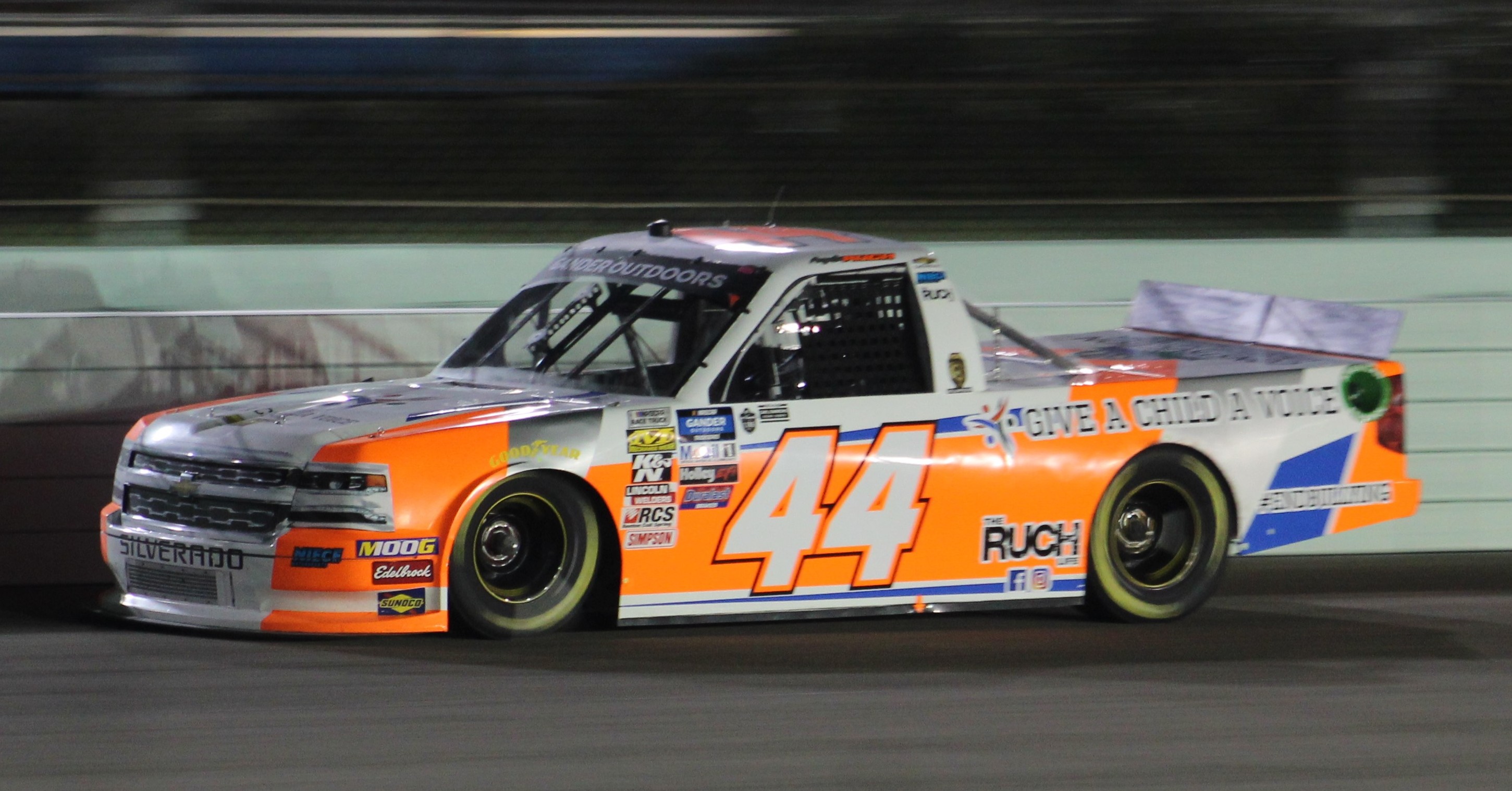
The Chevrolet Silverado is a large truck designed for work and everyday driving. People buy it when they need to tow or haul things, but it can also be used like a normal vehicle. It’s mentioned a lot because it sells in high numbers and helps the company make money.
It’s basically a “how many days of cars we have on hand” number. If it’s high, the company has more cars sitting around than it can sell quickly; if it’s low, cars are selling faster than they’re being stocked.
Ford is another major automaker brand being compared in the chart. The point is that Ford’s inventory-days number is higher than some of the other brands discussed.
Buick is a General Motors brand. The hosts highlight it because its inventory-days number is much higher than the others, meaning it likely has more cars sitting than it can sell quickly.
General Motors is the big car company behind brands like Chevrolet and Buick. In this segment, they’re talking about GM making more profit and managing its car stock better than some rivals.
MSRP is the price on the car’s window sticker that the manufacturer suggests. Dealers can sell for less than that, and that’s the “deal off of MSRP” they’re talking about.
Incentives are discounts or special financing offers that make a car cheaper or easier to buy. The hosts are saying the amount of these deals can be smaller or bigger depending on the type of car and who’s buying it.
Transaction price is the final price you end up paying for the car after any discounts. They’re comparing incentives to that final price to show how large the discounts really are.
Customer segments are different groups of buyers. The idea here is that some people will buy expensive cars even without big discounts, but other buyers need incentives to make the deal work.
A down payment is the money you pay upfront when you buy a car. The hosts are saying incentives can help buyers put down less money, which may make it easier to get approved for a loan.
Loan approval is the lender saying “yes” to financing your car purchase. They’re suggesting that incentives can help buyers qualify by making the deal look safer to the bank.
The Chevy Silverado 1500 is a full-size pickup truck from Chevrolet. Here, they’re looking at listings and talking about how much they cost and how many are available in the area.
ZR2 is a Silverado trim focused on off-road capability. It generally pairs with more aggressive off-road hardware (like suspension tuning and underbody protection) compared with standard trims.
RST is a trim level on the Silverado, meaning it’s a specific package of features and styling. It’s not just a generic “model name”—it tells you what equipment the truck includes.
“Day supply inventory” is a way to estimate how long the current stock of cars will last. If it’s low, it means cars are selling faster than they’re arriving, which can make them harder to find.
Topic
pickup truck pricing vs inventory tightness
They’re basically saying: pickups cost a lot, and there aren’t many sitting around on lots. That combination helps explain why sales stay strong and prices don’t drop quickly.
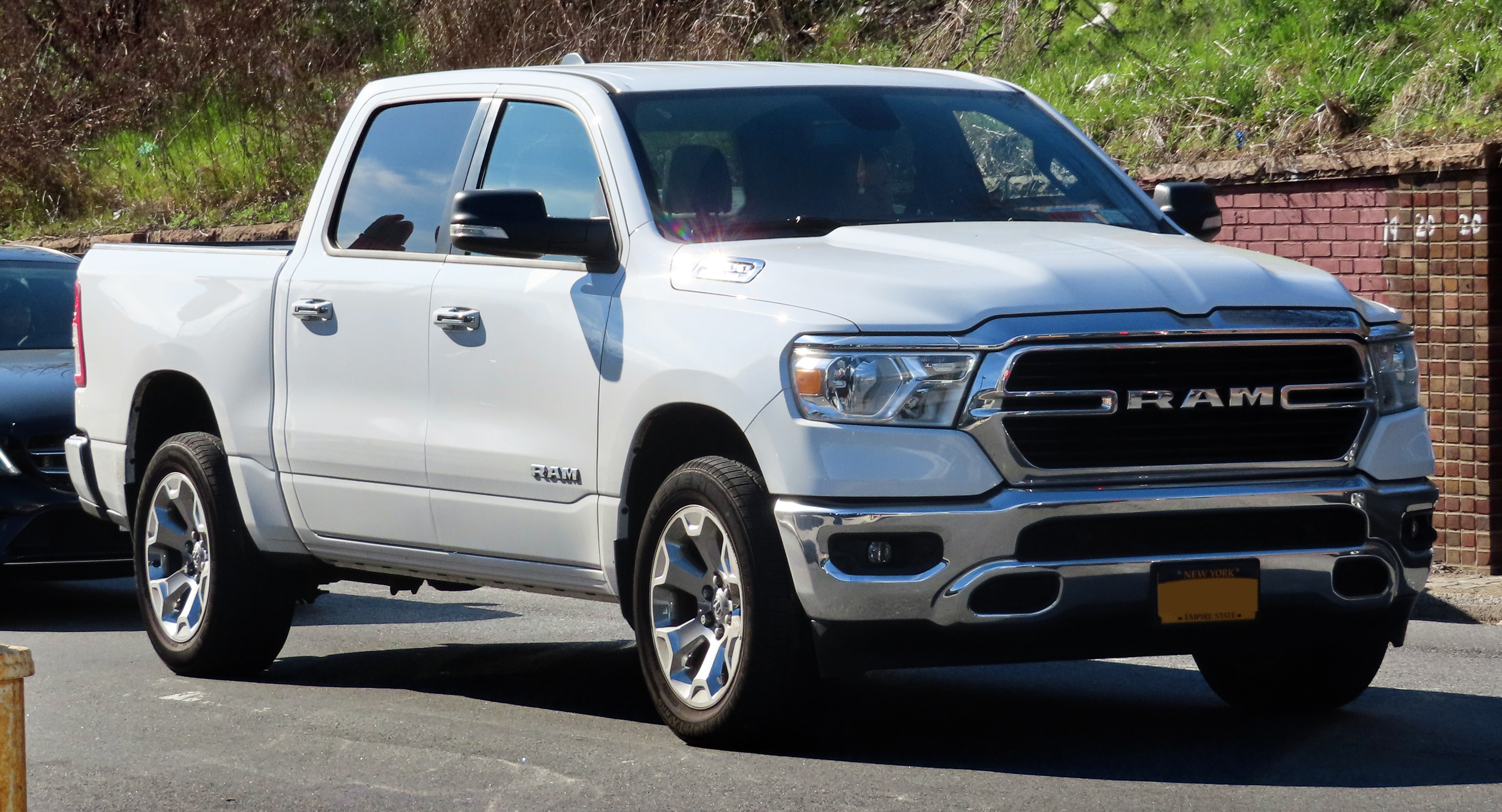
Ram Trucks is the company that makes Ram pickup trucks. In this part of the episode, the hosts talk to a Ram Trucks executive and then discuss a particular Ram truck version.
Car
Ram Trucks Tungsten Edition 1500
This is a fancy, top-level version of the Ram 1500 pickup truck. The hosts bring it up to show that trucks are getting very expensive, and they’re debating how high prices can go before people stop buying.
The Ram 1500 is a large pickup truck, and the “Tungsten Edition” is a more equipped version of that truck. People choose it when they want more features than the basic models. The podcast mentions it because it’s a specific trim level being highlighted.
This is a specific version of the Ram 1500 pickup truck for 2026. “Tungsten” is the higher trim level, and the discussion here is mainly about the sticker price and the discounts being advertised.
Dealer discounts are price reductions offered by the dealership to lower the transaction price from the listed MSRP. In the segment, the hosts cite a wide advertised range, emphasizing how much the “real” price can vary by dealer.
That’s money the car company itself is offering to reduce the price. They’re separating it from the dealer’s discount so you can see where the savings come from.
The idea is that if people stop buying at a certain price, the seller has to lower prices or offer bigger deals. They’re saying that demand eventually forces pricing to come down.
GM is General Motors, one of the big car companies. They’re talking about GM’s recent financial results and how strong sales of higher-priced vehicles are affecting profits.
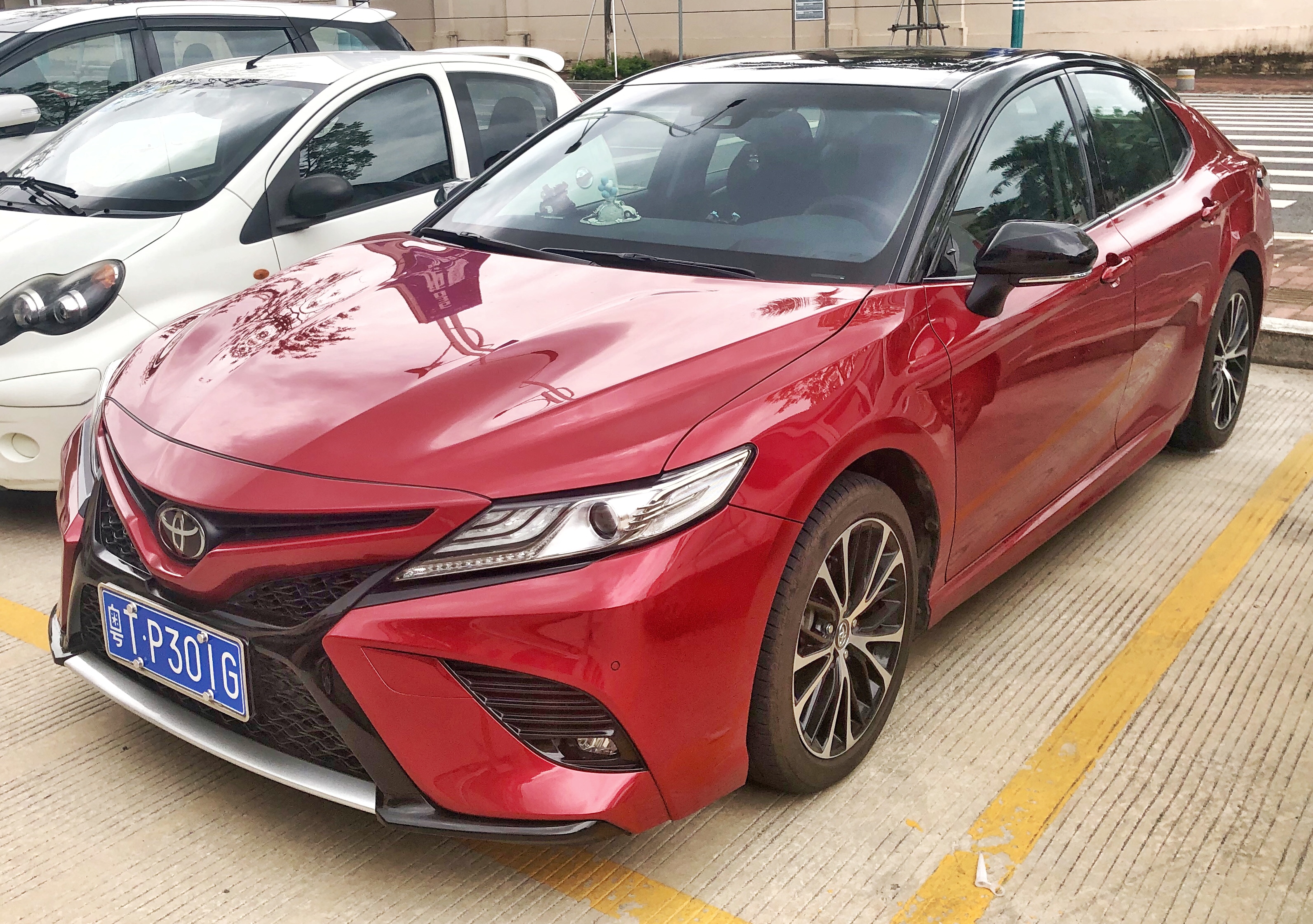
The Toyota Camry is a regular passenger car (a mid-size sedan) meant for daily driving. It’s popular with buyers who want a comfortable, dependable car. The podcast mentions it because there was a special financing offer for people buying one.
LIVE
Every team, every topic, everywhere, this is Belize.
It's noon here in Washington, D.C.
and this is Courage Live for Tuesday, July 21st
with your host, Zach.
And, well, me, Ray, his dad, hanging out.
It's so wet.
Hanging out here in D.C. with him in the office.
Hope you're doing well today.
I think it's his car.
I think it's his car.
Oh, my God.
It is a, what a G.S. from the roast dirt.
Alrighty, folks, today's show, man, I love my dad.
Today's show is brought to you by who else?
None other than at caredge.com.
If you want to have the edge,
when you go to buy your next car, head to caredge.com.
We have an incredible car search.
Love our car search, so much good information there.
We have our buying services,
whether you want to use Courage Concierge
or the AI buying service.
We also have Ask Courage, which is so incredible.
Our research center, dealer reviews,
and you can start everything off,
off, excuse me, with a free consultation.
Today's show, dad, we are talking about something special.
Yeah.
And it is our friends, from our friends, excuse me,
over at General Motors.
They have, once again, gotten caught.
Yeah.
This time, what have they gotten caught doing?
They get more money than ever before, which is insane.
GM's profits jump 43% in Q2.
The whole world of retail automotive, as we know it, dad,
we're catching them all leptin, right?
They are doing this exactly.
Their transaction prices are going up.
And where was it here?
Bear with me for a moment.
They're maintaining their capital discipline.
Sounds a little bit similar to yesterday's conversation.
I'm going to jump over to it.
We talked about Jeep, Chrysler Dodge, and Ram,
and how they have an oversupply of inventory.
Yet, their incentive discipline appears to be holding.
They're not increasing their spending to sell cars.
What's going on with General Motors?
What do we catch them doing this time, pop?
We caught them making a lot of money, damn it.
The wonderful thing about General Motors is,
and this, for me, is the conundrum in all seriousness.
And I'm very rarely serious.
There is no other automaker at the moment
that is trying to help the entry-level buyer as much as GM is.
That's really well said.
They have very cheap entry-level options, the tracks, for example.
There are any number of vehicles on the Chevrolet side of things.
And then all the whole Buick line.
And then a number of vehicles on the Buick side of things
that are extremely inexpensive in comparison to their peers.
Yeah.
So you think to yourself,
OK, this is a company that is trying to address.
I want more light on you.
Yeah, I don't need any more light.
So I'm bouncing off my head.
And so this is a company that is trying to balance helping consumers
that are finding it difficult and need more affordable options.
Yet their profit was up 43 percent because the bulk of the vehicles
that they're selling are transacting at a higher price point,
which means it's their higher profit margin, higher priced vehicles
that are actually selling.
So as much as we discuss on this show, affordability.
This indicates to me that the people that are looking for affordable cars
aren't really interested in buying affordable cars.
And where General Motors is making their money is at the upper end of the market.
And so at this point, it just seems to me not to sound crass,
but will the hell with the people that need the inexpensive cars,
we're just going to concentrate on the elites because they're the ones
that are buying the vehicles.
So let's take a peek here where General Motors is excited.
And you can see right here upcoming redesigns of two of GM's
top selling and most profitable vehicles, the Silverado and the Sierra
should further boost profits.
Barra said, Mary Barra, she also noted the company's plan
to bring significant production to the US to reduce its exposure
to presidential President Donald Trump's import tariffs.
So obviously, dad, they are leaning in more and more
when it comes to their more expensive higher profit margins vehicles.
And Barra did say this is another quote she has right here.
We expect these trends will continue to strengthen our performance in 2027
and beyond because we have multiple engines of margin expansion and growth
while maintaining our capital discipline.
I'm going to turn our attention to this comment in the chat early in the show.
From the panel, auto manufacturers have no reason to reduce prices
when profits are increasing.
Bingo. That is today's show from Carter.
Yeah, we are going to end early.
Yeah, thanks for tuning in.
Thanks for tuning in.
And it's true.
That's what we have caught General Motors doing right here.
And they, dad, have managed their inventory better than all the other
domestic manufacturers.
General Motors is probably in the strongest position compared to Ram,
excuse me, compared to Stalantis, compared to Ford.
Yes. They look the most like a Toyota,
even though they're obviously not a Toyota from a quality and brand perspective.
But like managing their inventory, they've done it best thus far.
And they really don't have an incentive to lower their prices.
Ford is different story.
Stalantis is different story.
Are they? I don't know.
It would be interesting to see their profits. Yeah.
Yeah, I mean.
Oh, you're thinking.
Well, I am thinking.
What I'm thinking is I have been.
Tasked with doing a tremendous number of of media.
Yeah.
Interviews based on what has happened to the affordable
cars in America, where, you know, $20,000 and below cars have disappeared.
$25,000 and below cars are less available today than they had been in the past.
And typically these interviews that I do, whether they be for TV,
which usually lasts four to five minutes or radio,
where they can last upwards of 15 minutes.
You know, we discuss it that, you know, the manufacturers basically
decided after the pandemic that they were just going to produce
the higher profit margin vehicles.
And we approach this every time I do one of these interviews.
The interviewer approaches it from the perspective
that there are people out there who want affordable options.
And yet all the indications are that those people don't buy cars.
The people that want affordable options don't buy cars in the volumes
that are necessary for the manufacturers.
And and so General Motors, who has done a better job than any other
when it comes to trying to offer affordable options,
is making more money than it's ever made because of their higher profit,
higher transaction price vehicles.
So it is it is counterintuitive to what I discuss every day on these interviews
when the reality of the situation is that people who claim to want
affordable cars aren't buying them when the opportunity exists for them.
So if I was General Motors or I was Ford Stalances
or I was any of the others, I would I would almost totally
completely abandon the affordable car market and just concentrate
on the people that actually have the money and the desire
and the ability to follow through and actually buy the damn cars.
Wow, you have such energy today.
Let's turn our attention here.
Probably this really crappy call from that, I tried my best.
You did. And I appreciate it.
This chart shows you the day supply of inventory broken down by brand.
We talked about this ad nauseam yesterday, but it is compelling and interesting.
Yes, we talked about Chrysler Dodge Jeep and Ram yesterday.
Well, some of those brands don't even show up on the chart here.
They have such an oversupply of inventory and lack of demand.
Look at the left Chevrolet has a 76 days supply of inventory right now.
GMC is at 88.
These numbers are low relative to some of their competition.
Obviously, Ford with 93 is higher than we mentioned the other brands a second ago.
They're super high Buick is their one exception here.
You can see it already in the chat for a second.
Buick has 129 days supply of inventory.
So General Motors is making, again,
to reiterate for those of you that are just joining us,
their profits went up 30% year over year.
They went from making $3.45 billion to $3.94 billion during a time
where we've seen for many months this year, car sales are flat.
Yeah, we're dead.
They haven't necessarily gone up.
Yep. But General Motors is making more money than ever before.
They're managing their inventory more effectively.
You could be the one exception here.
You could probably walk into a Buick dealership right now
and get yourself a heck of a deal off of MSRP.
And Buick is some of the more affordable ones and they're making their money,
as you mentioned, selling these big, expensive pickup trucks.
And not having to incentivize them as much as they have in the past.
Absolutely.
We know incentives as a percentage of the transaction prices on average,
nationally, are about 7%.
Prior to the pandemic.
No, no, these are big discounts there.
Sorry, I just mentioned it.
Yeah, incentives ran between 11% and 12% of the average transaction price.
So we know they're not spending as much to incentivize the sale.
Yeah.
My guess is, this is just a guess.
And if there's a way to quantify this, I would love it.
My guess is that as a percentage of the transaction price,
they have to pay more on the affordable cars to get the people to buy them
than they do on their high priced vehicles.
Because the high priced vehicles, those customers are going to buy them
incentives or not, where the bottom rung customers,
they're the ones that need the incentives to get them over the hump.
Especially catch incentives that will allow them to perhaps show
some down payment so that the bank will find it easier to approve them for a loan.
So let's do a little bit of a live experiment.
You know, I love to do this.
Let's just take a temperature check.
We're in Arizona right now.
Where do you want to go?
Go to the Midwest.
OK, Chicago.
Uh, go to Milwaukee.
OK, give me a sec.
Haven't been to Milwaukee in a while.
Milwaukee zip code.
So I need a zip code for Milwaukee.
53202.
All right.
So we're headed to Milwaukee and we're searching for Chevy Silverado 1500s.
So let's get a sense here for a second.
What are the price points of these vehicles?
So yeah, I mean, these are expensive just on the first list here.
But these are RST, ZR2's, 83,000, 68,000, 67,000.
What I'm very curious to add is we'll click into one of these.
And just a second, I'm curious about two things.
One is what is the day supply inventory in this area?
So we'll click into this 1500 RST.
So the day supply of inventory is only a 59 day supply.
So think about that first.
Yes.
We all know here on the car edge, you know, the higher that
market day supply number is, the more desperate the dealer is to sell the vehicle.
You know, this vehicle has been sitting for 246 days.
This is an aged unit.
Don't get any wrong.
But 43 are for sale.
33 have sold the last 45 days.
So these are turning over.
Again, this is an aged one, but these are turning over relatively quickly.
The next thing I'm curious about, let's take that Milwaukee zip code,
which again was 53202.
And let's come over here.
And now let's do Chevrolet and San Jose and we're going to do offers.
And wow, look at that.
I was going to see if I had to change my zip code.
Yeah.
But actually, wow.
Zero percent for five years and no payments for 90 days.
That's a big incentive.
And typically, if I may, when there's no payments for 90 days,
well, typically, there's interest that accrues for those 90 days
that there hasn't been a payment made.
So that ultimately your your payment is slightly higher
because of that accrued interest over the first day.
But when it's a zero percent loan, there is no interest accruing for those 90 days.
It's a good trade offer.
So this is actually.
So in this, in essence, you're getting zero percent for 63 months for sure.
So this that I want to cut back here because General Motors, again,
came out and they made more money than they ever.
Yes. They raised a guidance.
They made 43 percent more profit.
Whatever. Yeah, they they they expect to make between 14
billion and 16 billion for the year.
Incredible. Yeah.
That's about a billion.
They're saying that they come back up here.
They raise their guidance because transaction prices went up.
Yeah. They're also saying we see it right here.
Where was it?
Capital discipline.
Yes, which feels very similar to what we were talking about yesterday
on the show when we talked about Jeep, for example, is that 6.7 percent
of the average transaction price they're incentivizing,
which is below the industry, which is below the industry.
They're saying he is inventive discipline.
So kind of the same theme here.
Yes. I didn't realize.
Shame on me.
I didn't realize that Chevy right now is offering is your percent
offer for effectively 63 months.
Yes. That's a big offer.
And yes, their transaction prices are up.
I mean, this is a $63,000 MSRP Silverado 1500,
but no wonder they're selling these vehicles and no wonder the day's supply
is so low.
Yes. And here's the other reality.
Chevy's kind of crushing it right now.
The other reality is, is that the average transaction price
for a pickup truck in this country is just north of $66,000.
MSRP, that's the transaction.
That's the transaction.
That's what they're transacting at.
So think about that.
It is.
I mean, why?
You can buy three Chevy Traxas for what the average transaction price is.
Traxai.
Traxai for what the average transaction price is for a brand new pickup
truck in this country.
And yet, I guarantee you, those pickup trucks are selling three times faster
than the Traxai.
So, I mean, it is, for me, it is, and the hell, I have an interview tomorrow morning
at 8.30, where I know we're going to talk about where of all the affordable cars
gone. And the real question should be, where have all the buyers for the
affordable cars gone?
Well, you know, I wear hearing aids and the older you get.
And when you wear hearing aids, the latter you speak, because when you want
to hear what the hell are you saying?
And for those sitting next to you, it can be a tad bit annoying.
No, it's annoying.
It's incredible.
I love your energy.
So there is a lack of demand at the low end.
But General Motors profits just now.
But General Motors profits there are showing that they have no interest
in changing how they're operating.
So this is a huge wake-up call, I think, for consumers nationwide, is that any
expectation we have, and I'm going to come full circle here.
My dad's been saying, forever, it's lip service.
They're talking about how they're going to work for more affordable vehicles,
more affordable after transaction.
Why would they?
Why would they?
Exactly.
Why would they?
Now, there is an interesting angle to this.
I want to cover one other thing.
Did you remember, I think it was last summer and we were driving home from
somewhere, I think we had gone down to Delaware or something, and we were
driving home and we were talking to somebody from Ram Trucks, an executive.
Yeah, yeah, yeah.
Remember this?
Yep.
And the conversation was they haven't figured out what the ceiling is.
That's when Ram came out with the Tungsten Edition 1500, and my dad and I,
someone on LinkedIn, one of the executives at Ram reached out to us.
We were talking about the Tungsten Edition and how crazy it is.
And I think if I remember correctly, it was like a $100,000 Ram pickup truck.
And we had this conversation about they haven't found the ceiling yet.
Yeah, they haven't been able to figure out what the ceiling is for their pickup trucks.
What's the highest price they could charge people that they're still going to buy it?
And so this is just further proof to me that there is no affordable car market.
The people, you know, I've always railed at the automakers that they abandoned
the affordable car market, they abandoned their customers.
The truth of the matter is the customers have abandoned the market.
The customers who should be buying those affordable cars are not.
Maybe it's because they're stretching and buying things that aren't affordable.
I don't know.
Can I show you something now?
Yes, yes, please.
Here's on CarEdge.com.
Yes.
Ram 1500 Tungsten Edition.
Yes.
Look what's going on in the market right now.
Well, okay.
So maybe they didn't find the ceiling.
I think they found the ceiling.
Yes.
Yeah.
For those of you that listen to the podcast and don't watch the show live,
we're looking at three 2026 Ram 1500 Tungsten to cross the board here.
$92,955 MSRP, $94,575 MSRP, and $95,170 MSRP.
With dealer discounts as advertised anywhere from $19,329 to $24,936.
And forgive me, Dad, I want to go to the dealer website and actually look at this.
I want to see how they're advertising it.
I mean, there you go.
They're offering an $11,000 dealer discount plus Ram.
The manufacturer is giving $14,186 off.
What more do you need?
15% below MSRP.
What more do you need to know that this thing was never actually worth $95,000 than this?
I don't think there's anything.
So the manufacturers are going to find the ceiling eventually because what happens is
customers stop buying.
What you're acknowledging here is in GM's most recent earnings, again, what we caught
them doing, making more money than they've ever made before because to your point, people
haven't stopped buying the expensive vehicles.
When we started seeing Silverado 1500s with what is that essentially, 30% discount off
of MSRP, then they think we'll know that they've hit the ceiling and the demand even for the
more expensive vehicles has gone away, but we're not there yet.
We're nowhere near there.
And every time we ever talk about it, it seems like it may never actually happen.
I honestly believe, I mean, my mindset has switched.
Yeah, let's hear it.
And I honestly believe it's not that the manufacturers abandoned the market.
The customers abandoned the market.
There is a psychology in this country that won't allow people to buy what it is that
they actually need or can afford because, well, they'll just look like pikers compared
to their friends who have bought the more expensive, more luxurious vehicles.
And so everybody just over commits themselves and it's around.
Yeah.
Well, here's the deal.
Was my...
Hey, you...
It was the right choice.
So here's the deal.
Here's one thing that could be arrived down the cost of cars in America, but may never
happen or at least there's a big push to not let it happen.
Chinese brands had a record 10.9% market share in Europe in June because we have certain
brands, MG, BYD, and Cherry selling more vehicles at the same exact time that Honda is doubling
down on sales in China, yet their sales are collapsing.
We also knew Ford, for example, has seen their sales in China collapse and evaporate.
Many other automakers have as well two Chinese manufacturers, even in the luxury space, many
to Chinese manufacturers.
Couldn't Chinese manufactured vehicles decrease significantly the average price point of vehicles
sold in the United States?
Well, if they're ever really allowed in in quantity, yeah, they could.
However.
However.
Think about this for a second, because, you know, I've read the comments.
I read the comments all the time.
Oh, well, wait until the Japanese vehicles come to the United States, that's when we'll
have some inexpensive cars.
Japanese vehicles...
I mean, Chinese...
Yeah, I should say.
I'm sorry.
Wait until the Chinese vehicles come to the United States, that's when we'll have some
inexpensive cars.
Well, you think that Chinese auto manufacturers aren't taking note of what's going on at GM,
that GM's profits are up dramatically because they're they're transacting at higher prices.
So even if they would have a significant price advantage, you know, everybody's thinking,
oh, well, there's going to be 10 to $15,000 Chinese electric vehicles that will be available.
Why would they do that?
I hear you.
But I mean, if they could, if they could sell it at 10, why would they sell it at 10 if
they could sell it at 20 and it'll still seem like a bargain?
I totally hear you.
But I think macro, big picture, regardless of if they raised their prices a little bit
in North America, the idea here is Chinese automakers are posing a huge threat globally.
They're currently blocked out from operating in the United States because of all the various
tariffs and fees associated with trying to operate here.
But they really could be a safety valve for affordability in the United States.
But obviously, they're not allowed right now.
And it does.
I forgot which executive it was.
Some executive recently came out and said, you can't imagine that we're going to keep
them out of here forever.
Well, I can't imagine that either.
But so wouldn't that drive down the average price point?
I think they would reevaluate how they would price.
How crazy would that be?
It's like, you know, globally, these automakers sold cars at one price, but then they come
to America because they know customers will spend more and they just jack up the prices.
That's what you'll see.
Do you think that already happens?
I'm sure it does.
But I mean, think about this for a second.
If they have a car that is legitimately like a $25,000 car and the comparable American
car is $40,000, why would they sell it here at $25,000 instead of say $32,000 or $35,000?
For sure.
For sure.
But it would still be undercutting where price points are today.
Yeah, but my point is they would look at it as an opportunity where they could maximize
their profit return to make up for the losses that they're taking in their home country
in China because many of these brands are struggling in China because there's so much
competition that they keep undercutting.
This would be a way if and when they ever...
I hear you.
I think that's an interesting angle, but I think the bigger picture to me, Dad, is
it would still be cheaper price points?
Well, I'm going to be the CEO of that Chinese company and we're going to charge, it's still
be less, but we're going to be able to make more per car.
I appreciate that you're taking that route.
We've got here from Joe, why would American consumers want to purchase a Chinese-made
vehicle?
I think it's just price.
At the end of the day, it's just price.
If, if, if, if.
And I am not convinced any longer that there really is that strong of a market.
And let's do, here, let's do another live experiment.
You know me.
I love these.
Yes.
So you're saying you don't think there's demand for inexpensive vehicles?
Well, I think there's some demand, but I don't think it's anywhere near.
Stick with me for a second, Harry.
What, what I thought it was, or would be, or shouldn't be.
We still got leftover Versus from last year.
So this starts to corroborate your, your, what you're saying, but actually let's not
look at Versus.
What's another cheap?
Kicks?
Yeah.
Kicks is cheap.
Let's see how these are sold.
I remember when they were in the mid 20s.
So here you go.
I mean, again, we're still in, where are we?
Yeah.
So in the Milwaukee area, 68 days of line.
That's pretty low.
This one's again been sitting for a long time, but they're turning over pretty fast.
So that's Milwaukee.
Let's go to Arizona.
You're still in there.
Okay.
All right.
All right.
405 days supply.
What that's telling you is that the Nissan Kicks is not selling fast in Arizona.
Yes.
Why would that be?
This corroborates my dad's points at my point.
Yeah.
Especially in Arizona, where people feel they have to step up and get, get something more
than they can actually afford.
Wow.
Okay.
Let's look at one more market.
This is super interesting.
So the Nissan Kicks not selling well there.
Two at 19064.
That's the Philadelphia area.
All right.
This one, yeah, 120 days.
Super high.
So again, these would be options for people that are cheap.
I mean, the Kicks is an inexpensive option, especially relative.
That one's not.
Well, here, we can look at a different one.
Yeah.
This one was $33.
Yeah.
That's like the most premium Kicks of all time.
It seems like.
Okay.
Well, dad, the cheaper one's 191 days supply.
Nissan oversupplied the Philly market with 326 for sale, but only 77 epsilon last for
5 days.
Which shows you that, that, that the affordable cars that are out there are not selling as
quickly as one would anticipate when every day we talk about an affordability crisis.
There is no affordability crisis.
The customers have abandoned the affordable car market, not necessarily the manufacturers.
Yeah.
The manufacturers, you can make a case, they're just going where the demand is.
Seems like it to me.
And it seems like to me that they want to sell cars to like the 10 to 13% of the population
that have the money that can literally really afford to buy these expensive cars because
that's what the market is.
Those are the people who are buying the cars.
So you might as well build what it is that the people are willing to buy.
And at the moment, they're not willing to buy the inexpensive cars.
Oh, this is going to be an interesting conversation.
I have to borrow my radio.
Again, folks, if we can help you out with anything, it's caredge.com.
So if you're in the market to buy a car, please, please, please try out our car search, our
buying service, ask caredge, the research center, dealer reviews, and please start things
with a free consultation.
We have an incredible team.
We've got Justice Leadinem, Annie, Tina, Mitch, Tony, a couple more people have recently
joined the team as well that you can talk to over the phone to learn more about the
various ways that caredge can help you.
Again, the big story that we talked about this morning, General Motors with their capital
discipline has managed to make more money than ever before as transaction prices have
increased.
I do think you're on the right page here, Deb.
I do think it's, hey, consumers are not buying cheaper cars, so we're going to make more
and more of these silver out of $50.
I am, though.
This was a surprise, mate.
For whatever reason, I was not aware of the fact that GM is currently offering 0% financing
for effectively 63 months on the 1,500s.
This is a great offer.
And there's a GM dealer out there.
Take advantage of this.
This is a good offer.
Come on.
That's a great offer.
That's free money for 63 months.
Is it the same offer that Nissan has running against four of their vehicles right now as
well?
Yeah, it was funny.
This morning, I was watching the news in DC and a commercial came on the TV for Toyota,
and God bless them.
They got 4.89% interest for 48 months on the highly-desirous Camry, 4.89%, at 0%.
Oh, and only for four years, which is a good thing.
They're not five, excuse me.
Yeah.
So, you can see the difference.
I am so glad you picked this article to discuss today.
Really, it has changed the way I look at these manufacturers.
I can't rail at them anymore.
I don't know that I can say, well, their actions don't match their words.
No, their actions actually match what the hell their customers want to buy.
And I think if you're selling something, you might as well sell what it is your customer
wants to buy.
Absolutely.
Absolutely.
It makes sense.
All right, folks, we're back.
We're back with more car edge line pops.
We'll be back home.
I'll be here in Washington.
You see, tomorrow is also my 31st birthday, so I had to spend some of the day on my birthday
with everyone here as well, so hopefully you tune in for that, looking forward to it.
Yeah, boy, I should have gotten you a cake.
Oh, I did last night.
Yeah, dinner was quite good last night.
But no, I don't need any more cake.
I'm very full.
I'm a-okay.
Well, terrific.
I'll see you all tomorrow from my living room inventor, thankfully, and you have a great
rest of the day.
All right, we'll see you guys back here tomorrow.
Bye-bye now.
Thank you for listening.
About this episode
GM’s latest results become the backdrop for a broader affordability debate: the hosts say “Their transaction prices are going up” while “GM's profits jump 43% in Q2.” They argue GM’s money is “at the upper end of the market,” pointing to higher-priced vehicle mix, inventory management, and incentives that help financing. They also track how “$20,000 and below cars have disappeared,” then widen the discussion to whether Chinese competition could act as a “safety valve” on U.S. pricing.
Today on CarEdge Live, Ray and Zach discuss the latest news on General Motors. Tune in to learn more! Hosted by Simplecast, an AdsWizz company. See https://pcm.adswizz.com
for information about our collection and use of personal data for
advertising.