GM Energy, Tesla HW3 reckoning, Ford reshuffles EVs, Donut Lab probs, more
About this episode
GM Energy’s Asim Kapoor breaks down GM’s bidirectional EV-to-home and EV-to-grid push, emphasizing that most of the lineup is compatible and that the system hinges on a bidirectional charger, inverter/home hub, and optional stationary storage that can interoperate—an angle he contrasts with Tesla’s lack of interoperability. The hosts then pivot to Tesla’s Model S/X “Signature” swan song and Europe’s FSD HW3 “reckoning,” plus a bizarre Norway Model Y crash evidence dispute. Ford’s EV unit reshuffle, Lucid’s CEO change and funding, and Donut Lab’s solid-state claims collapse/whistleblower complaint round out the news.
In the Electrek Podcast, we discuss the most popular news in the world of sustainable transport and energy. In this week’s episode, we discuss Tesla having its HW3 reckoning, Ford reshuffling its EV unit, Donut Lab being in hot water, and more.
The show is live every Friday at 4 p.m. ET on Electrek’s YouTube channel.
As a reminder, we’ll have an accompanying post, like this one, on the site with an embedded link to the live stream. Head to the YouTube channel to get your questions and comments in.
After the show ends at around 5 p.m. ET, the video will be archived on YouTube and the audio on all your favorite podcast apps:
We now have a Patreon if you want to help us avoid more ads and invest more in our content. We have some awesome gifts for our Patreons and more coming.
Here are a few of the articles that we will discuss during the podcast:
We talk to Aseem Kapur, energy and eMobility executive at GM Energy!
- Tesla doing final ‘Signature Series’ run of Model S and X Plaid — starts at $159,420
- Tesla gets FSD Supervised approved in the Netherlands — here’s what it means
- Tesla tells HW3 owner to ‘be patient’ after 7 years of waiting for FSD
- Key evidence disappears from Tesla involved in bizarre crash
- Ford reshuffles EV unit, Doug Field out as Farley chases 8% margin
- Ford CEO warns Chinese EVs would hit ‘the heart and soul’ of the US
- Lucid names new CEO as it raises over $1 billion and ramps up robotaxi ambitions
- Slate Auto closes funding round with enough financial runway to reach next stage of production
- Donut Lab’s ‘miracle’ solid-state battery is fraud, says insider, Donut Lab denies
Here’s the live stream for today’s episode starting at 4:00 p.m. ET (or the video after 5 p.m. ET:
https://www.youtube.com/live/jAAb1ie0NGIGM Energy
"we have Asim, the head of growth at GM Energy, was here to talk to us a little bit about GM's effort to deploy vehicle to grid... Yeah. Well, I lead our growth strategy at GM Energy"
GM Energy is GM’s team working on energy features that connect EVs to your home and the electric system. Here, they’re explaining how GM plans to make EVs useful beyond just driving.
GM Energy is GM’s business focused on energy services connected to EVs, including vehicle-to-home and related storage/grid ecosystem efforts. In this episode segment, it’s the organization behind the strategy and execution for bidirectional EV deployments.
vehicle to home
"can you remind me what's in term of vehicle to home, vehicle to grid... So all our EVs are able to power your home. And to keep things simple, we call it vehicle to home or think of your EV as a backup generator that can be used to power your home"
Vehicle-to-home means your EV can send electricity back to your house. Think of it like a backup battery for your home when the power goes out.
Vehicle-to-home (V2H) lets an EV use its battery to power a house, typically during outages or peak-demand periods. GM frames it as using the EV like a backup generator, with the home drawing electricity from the car through compatible hardware and software.
vehicle to grid
"can you remind me what's in term of vehicle to home, vehicle to grid, vehicle to everything... and I'm responsible for directing all our short-term execution... to build a more connected and resilient ecosystem."
Vehicle-to-grid means your EV can share electricity with the power grid. Instead of only charging, it can also help the grid when demand is high.
Vehicle-to-grid (V2G) enables an EV to send electricity back to the electric grid, helping balance supply and demand. It’s part of the broader idea of bidirectional charging, where the car isn’t just taking power—it can also provide it.
bidirectionally enabled EVs
"So I mean, I think the our offering GM has the largest portfolio of bidirectionally enabled EVs. So all our EVs are able to power your home."
Bidirectional means the car can move electricity both ways. It can charge like normal, but it can also send power out to your home or the grid.
Bidirectional charging-capable EVs can both draw power from the grid and send power back to a home or the grid. GM says it has a large portfolio of these bidirectionally enabled vehicles, which is the foundation for V2H and V2G use cases.

Chevy Bolt
"And so you said the entire EV lineup now, the 2026 lineup is is compatible right now, right? Yes, our entire lineup. Chevy Bolt too."
The Chevrolet Bolt is an EV that GM says can work with their “power your home” feature. It’s an example of GM offering this capability across multiple EVs.
The Chevrolet Bolt is GM’s EV that’s mentioned here as being compatible with GM’s vehicle-to-home capability. In this context, it’s being used to illustrate that GM’s bidirectional tech applies beyond just one model.
bidirectional charger
"And it starts with, you know, a charger, right? So you majority of the charging happens at home over 80%. And we offer a bidirectional charger that allows a customer to do both high speed charging, AC charging at home, and then also DC power discharging."
Most EV chargers only put energy into the car. A bidirectional charger can also send energy back out, so your EV can act like a backup power source for your home.
A bidirectional charger can send electricity both ways: it charges the EV from the grid and can also discharge power back out. That enables “vehicle-to-home” or “vehicle-to-grid” style backup and energy sharing instead of only one-way charging.
AC charging
"And we offer a bidirectional charger that allows a customer to do both high speed charging, AC charging at home, and then also DC power discharging."
AC charging is the kind of charging most homes are set up for. The car usually has a built-in system that converts that home electricity into the right form for the battery.
AC charging is when the charger supplies alternating current to the vehicle, and the car’s onboard electronics convert it to the battery’s needs. It’s commonly used for home charging because it’s widely supported and typically simpler to install.
DC power discharging
"And we offer a bidirectional charger that allows a customer to do both high speed charging, AC charging at home, and then also DC power discharging. And we complement that with a set of devices, you know, I see the video playing in the background that allows the customer to be able to take the power from the vehicle."
DC power discharging is when the EV sends electricity out in a direct-current form. That’s useful for powering home systems when the charger and home equipment are set up for it.
DC power discharging means the system outputs direct current from the EV to power loads or energy systems. For bidirectional setups, the vehicle and home equipment coordinate so the energy can be used safely and effectively.
home hub
"So we have an inverter, we have a home hub, which is, you know, the smart panel that allows you to select the circuits that you can power from the vehicle."
The home hub is like the control center for deciding what parts of your home get power. It helps the system switch power to the right circuits.
A home hub (smart panel) is the control interface that manages which circuits in the home can be powered from the EV/energy system. It helps coordinate switching and power routing so the system can run selected loads safely.
inverter
"So we have an inverter, we have a home hub, which is, you know, the smart panel that allows you to select the circuits that you can power from the vehicle."
An inverter is the box that helps electricity match what your home needs. Homes usually use AC power, while batteries store DC power.
An inverter converts electricity between AC and DC forms. In a home energy system, it’s what lets stored or vehicle-supplied power be used by typical household circuits.
home energy management system
"And then we also offer a fully comprehensive home energy management system. So you can further extend that and pair that with a stationary storage product that allows you to be able to interchangeably power your home from a stationary backup power system or from your EV."
A home energy management system is software plus controls that decide where your electricity comes from and where it goes. It helps your home use power efficiently and switch sources when needed.
A home energy management system coordinates how power flows between the grid, the EV, and home loads. It’s what enables smarter scheduling, load control, and seamless switching between sources like backup power and vehicle power.
interoperate
"So we are the only automaker that has this offering that allows for the EV and the stationary storage system to interoperate."
Interoperability means your car and your home battery system can work together smoothly. Instead of choosing one or the other, the setup can switch power sources as needed.
Interoperability here means the EV charging/discharging hardware and the stationary home battery system can communicate and operate together. That allows seamless switching so the home can be powered from either the EV or a stationary backup system.
utility sign-off
"And third is, you know, having the ability to be able to get the system powered and signed off by the local utility. So as we expand the network across the country,"
Before these systems can be used, the local utility often has to approve the installation. That helps ensure it’s safe and follows the rules for connecting to the grid.
“Powered and signed off by the local utility” refers to the requirement that the installation meets local electrical codes and utility requirements before it can operate. This is a common gating item for grid-interactive energy systems like bidirectional chargers and home storage.
EV being paired with backup storage
"So they, you know, they appreciate the flexibility that you have with EV being paired with the backup storage, and that gives consumers, you know, the choice."
This means your EV setup works together with a home battery. The battery can store energy for later—like during an outage—and it can also help charge the EV at better times.
Pairing an EV with backup storage means using a home battery (or similar storage) to provide power during outages or to shift energy usage. In practice, it can also enable smarter charging schedules based on utility rates and grid conditions.
ConEd
"Now, you have a background with ConEd, which is a, you know, New York area utility. Is it hard to get these utilities on board?"
ConEd is an electric utility company in New York. Utilities like this have rules for how new energy systems connect and get approved.
ConEd (Consolidated Edison) is a major electric utility serving New York City and surrounding areas. In discussions like this, it represents the kind of utility with its own interconnection and approval requirements.
PG&E
"Like, you know, we're doing, we have partnerships with PG&E, with DTE. We've also done other proof-of-value pilots with Duke and Eversource."
PG&E is a big electric utility company in California. Working with utilities like PG&E helps prove the technology works with their rules and grid.
PG&E (Pacific Gas and Electric) is a large investor-owned utility in California. The transcript frames it as a partner where the company can pilot and demonstrate technology before scaling through standardization.
DTE
"we have partnerships with PG&E, with DTE. We've also done other proof-of-value pilots with Duke and Eversource."
DTE is an electric utility company in the Midwest. The idea is that pilots with utilities like DTE help get the technology approved more smoothly.
DTE is an investor-owned utility serving parts of the Midwest (notably Michigan). In the context of the episode, it’s mentioned as a partner for pilots that help utilities gain confidence and streamline approvals.
proof-of-value pilots
"We've also done other proof-of-value pilots with Duke and Eversource. And so we're introducing our technology in order to have utilities gain the confidence in the product, as well as the interconnection process, right?"
A proof-of-value pilot is a small test to prove the idea actually works. It helps the utility see results before approving a bigger rollout.
Proof-of-value pilots are limited trials designed to show that a product delivers measurable benefits for a specific utility or region. They help reduce uncertainty by validating performance and compatibility before full-scale deployment.
Duke
"We've also done other proof-of-value pilots with Duke and Eversource. And so we're introducing our technology in order to have utilities gain the confidence in the product, as well as the interconnection process, right?"
Duke is mentioned as a utility that ran a pilot to test whether the technology is worth adopting. Pilots help utilities feel confident before they approve wider use.
Duke is referenced as a utility partner for “proof-of-value” pilots. These pilots are used to demonstrate performance and compatibility with a specific utility’s requirements before broader rollout.
Eversource
"We've also done other proof-of-value pilots with Duke and Eversource. And so we're introducing our technology in order to have utilities gain the confidence in the product, as well as the interconnection process, right?"
Eversource is a utility company in the Northeast. They’re mentioned as part of pilot programs that test the tech and how it connects to the grid.
Eversource (likely Eversource Energy) is a utility in the Northeast referenced here for proof-of-value pilots. The transcript uses it to illustrate how pilots help utilities evaluate both the product and the process for connecting it to the grid.
interconnection process
"And so we're introducing our technology in order to have utilities gain the confidence in the product, as well as the interconnection process, right? How we actually connect our assets to the grid."
The interconnection process is how a utility decides whether a new energy system can safely connect to the power grid. It’s a big part of why approvals can take time.
The interconnection process is the set of steps and technical requirements utilities use to approve how distributed energy resources connect to the grid. It often involves safety studies, equipment requirements, and timelines that can slow or accelerate deployment.
standardization
"So our focus has been trying to drive adoption through standardization, right? So how we get the specs certified by the utility companies and then essentially fast follow that process and rinse and repeat across different companies."
Standardization means making the approval process more consistent from one utility to the next. If utilities can use the same checklist/specs, it’s faster to get permission to install.
Standardization here means getting the technology’s specifications certified in a repeatable way across different utilities. By making the approval path consistent, companies can reduce delays and speed up scaling to new regions.
GM EVs
"Yeah. So presently, our system works with GM EVs only."
They’re talking about General Motors EVs and whether GM’s home-energy products will work with them. Compatibility is important because not every EV can share energy with every home charger system.
The hosts are discussing General Motors’ EV ecosystem and how GM Energy’s vehicle-to-home products currently work with GM EVs. This matters because compatibility depends on the EV’s charging/energy standards and the specific V2H/V2G implementation.
interoperability / plug-and-play
"...as all EVs are designed to the same standard, in the future, the systems will be interoperable. Like you can plug and play..."
They’re talking about making EV charging and energy features work across brands. The ideal is that you can connect things and they just work, without needing special compatibility steps.
Interoperability here means different EVs and energy systems can work together using shared standards, ideally with minimal setup. “Plug-and-play” is the goal: any supported EV can connect to the system and function without special-case compatibility work.
Nax connector
"...the US market is moving to the Nax connector. I'm assuming Nax works the same as a CCS combo..."
They mention a new charging connector standard called Nax. The big question is whether it behaves like CCS so the same home-energy setup can work with different EVs.
The Nax connector is being referenced as the connector standard the US market is moving toward. The key point in the discussion is whether Nax works similarly to CCS for GM Energy products, which affects charger and adapter compatibility.
CCS combo
"...I'm assuming Nax works the same as a CCS combo as far as GM energy products are concerned."
CCS combo is a widely used fast-charging plug for EVs. They’re basically asking: if your EV uses CCS, will it work the same way as the newer Nax standard for these home-energy chargers?
CCS (Combined Charging System) is a common DC fast-charging standard, and “CCS combo” refers to the combined connector used for DC charging. In this segment, they’re comparing CCS compatibility to the newer Nax connector for GM Energy chargers and adapters.

Dodge Charger
"...following that and launching a Nax version of the charger as well. And we sell a host of adapters, right? ..."
The Dodge Charger is a car designed to feel fast and sporty. The podcast mentions a special version (“Nax”) and also talks about adapters, which usually means extra parts to make charging or connections easier. It’s a performance sedan, not a truck or SUV.
The Dodge Charger is a performance-focused sedan that’s known for strong power and a sporty driving feel. It’s discussed in the context of launching a “Nax” version and selling adapters, which suggests the conversation is about a specific variant and related charging or accessory ecosystem. That makes it relevant for listeners interested in how performance models are evolving for modern use.
adapters
"And we sell a host of adapters, right? So that are available today in the market that allow the customers..."
An adapter is a small piece that lets you use the “wrong” plug shape with a charger. They’re saying adapters can work, but it’s not as smooth as having the right connector built into the charger.
Adapters are used to let a vehicle with one charging/energy interface plug into chargers designed for another interface. The hosts note that adapters exist today to bridge CCS and Nax, but they can make the user experience feel “clunky.”
bi-directional charging protocol
"you guys are using the bi-directional charging protocol in CCS? Yes. So today the system is designed with proprietary technology that allows GM EVs to talk to our system."
Bi-directional charging means your EV can not only charge from the grid, but also send power back out. That’s what makes “backup power” at home possible during outages.
A bi-directional charging protocol lets an EV send electricity back out through the charging system, enabling vehicle-to-home (V2H) or vehicle-to-grid (V2G) use. The protocol is crucial because it governs communication, safety, and how power is controlled.
ISO 15118-20
"In the future, the products will all be compatible with ISO 15118-20, right? That's the standard."
ISO 15118-20 is a global “language” for how EVs communicate during charging—and for sending energy back out too. If your EV supports it, it’s more likely to work with more third-party home/charging equipment.
ISO 15118-20 is an international standard for EV charging communication that includes support for bidirectional energy transfer. When GM says future products will be compatible with it, they’re aiming for broader interoperability with other chargers and home energy systems.
software update
"That's good. And that's a software update, not a hardware update? Yes."
They’re saying the improvement can come from a software update rather than new hardware. That’s usually better for owners because it can be applied without major repairs or parts replacement.
The transcript distinguishes a software update from a hardware update, implying that interoperability features (like ISO 15118-20 compatibility) may be enabled via firmware. This matters because software-only changes are typically cheaper and faster to roll out than replacing physical components.
locked in into a specific ecosystem
"Okay. But in going forward... these are significant investments. So people would like to think about like, we don't want to be necessarily locked in into a specific ecosystem."
“Locked in” refers to the risk that EV owners can only use certain chargers, home energy products, or software features that are tied to one company’s platform. Standardization (like ISO 15118-20) is often pursued to reduce this dependency and improve cross-brand compatibility.
buffer battery
"I'm curious, do you have any data on like how people use these versus their car? So I understand like you probably going to want to use this kind of like a buffer battery."
A buffer battery is like a small “shock absorber” for your home power. It can keep things running during short outages, and then the EV can step in if the outage lasts longer.
A buffer battery in a home energy system helps smooth out brief utility outages and power fluctuations. The idea is that the home can ride through short events using stored energy, while the EV is used for longer outages or higher-demand periods.
DC fast charger
"...a customer who was powering the EV with a DC fast charger in the local community. So they actually used their backup battery to power their home..."
A DC fast charger is a high-speed EV charger. During an outage, the idea is you can keep the home running on the backup battery, then recharge the EV at a fast charger that still has power.
A DC fast charger delivers high-power direct current to recharge an EV much faster than typical Level 2 charging. Here, it’s used as a “bridge” during a prolonged outage: the home battery powers the house first, then the EV is topped up at a DC fast charger that’s still operating.
backup battery powering the home and the EV
"...they actually used their backup battery to power their home and then as the vehicle was depleting, they went back and charged the vehicle at a DC fast charger... and were able to ride through the entire outage..."
It’s the concept of using your EV (and/or your home battery) to keep the house running when the power goes out. Then, when you can, you recharge the EV so the backup power keeps going.
This describes vehicle-to-home (V2H) style energy sharing, where an EV and/or home battery can support household power during grid outages. The key point is the system can “ride through” several days by switching between home battery power and recharging the EV when external charging is available.

Honda Prologue
"...Does that include on the prologue and the bright drop since they are technically GM powertrains in there? Yeah, so it does not include those two vehicles. Honda prologue is of course designed by the Honda team..."
The Honda Prologue is Honda’s electric SUV. They’re saying that even though it shares some underlying EV hardware concepts, Honda controls the software that enables this kind of energy feature.
The Honda Prologue is Honda’s electric SUV built on a shared platform with GM’s Ultium-based architecture. In the discussion, the important detail is that while the hardware/platform is shared, the software enablement for the energy capability is handled by Honda.
DC backplane connection instead of AC
"...I'm just curious, what are we going to see in the near future? I've heard of things like having a DC backplane connection instead of AC..."
This is about how electricity is routed inside the system. Using DC instead of AC can make power handling more efficient, which may help reduce costs over time.
An AC vs DC “backplane” refers to where and how power is distributed inside the vehicle or energy system. Moving to a DC backplane can reduce conversion losses and simplify integration of high-power components, which can help efficiency and potentially lower costs as systems scale.
prices are going to start coming down as these things scale up
"...a price reduction as these things scale up, obviously the prices are going to start coming down."
As more of these products get built, they usually get cheaper to make. That can lead to lower prices for customers over time.
This is the idea that unit costs fall as production volume increases (economies of scale). In EV and home energy systems, scaling can reduce manufacturing costs, improve supply-chain efficiency, and spread R&D costs over more units.
AI-enabled capabilities
"As we introduce AI-enabled capabilities in our car park, as well within the vehicle, as well as in the apps, you will see a lot of optimization..."
AI-enabled capabilities means the system uses “smart” software to make better decisions. Instead of only following fixed rules, it can learn patterns and help manage charging and energy use more smoothly.
AI-enabled capabilities refer to using machine-learning-style intelligence to improve how the system predicts and optimizes energy use. In EV and home energy management contexts, AI can help forecast demand, automate decisions, and adjust charging or power flows more effectively.
active load management
"...optimization that happens with active load management. So the system is responsive to the customer's needs based on how much energy is being consumed in your home..."
Active load management is like a smart power scheduler. It helps decide when your home should use electricity so you don’t overload the system, and it can also help you save money or use cleaner energy.
Active load management is software that coordinates how much power a home uses and when, so charging and household loads don’t overwhelm the grid. In an EV/home-energy setup, it can shift energy use to cheaper or cleaner times and respond to real-time conditions.
super peaks
"...Can you imagine a time where ConEd says, you know what, these summer super peaks are so painful for us, we need to figure out a way to get 100 kilowatts per house back into the grid..."
“Super peaks” are times when the electric grid is under the most stress because everyone is using lots of power at once. The idea here is to use batteries to help during those high-demand moments.
“Super peaks” refers to extreme periods of electricity demand—typically during hot summers when air conditioning drives load. The discussion frames these peaks as a grid stress problem that could be mitigated by using home/vehicle batteries to supply power back to the grid.
kilowatt hours
"...we need to figure out a way to get 100 kilowatts per house back into the grid during the summer super peak. If we find a Chevy Silverado person with 100 or 200 kilowatt hour battery..."
Kilowatt-hours (kWh) tell you how big a battery is in terms of energy. A higher number means the battery can store more electricity, which can matter for how long you can run loads or how much power you can share.
Kilowatt-hours (kWh) measure energy capacity—how much electricity a battery can store. When someone mentions “100 or 200 kilowatt hour battery,” they’re talking about the size of the battery pack, which affects how much energy can be used for charging or potentially returned to the grid.
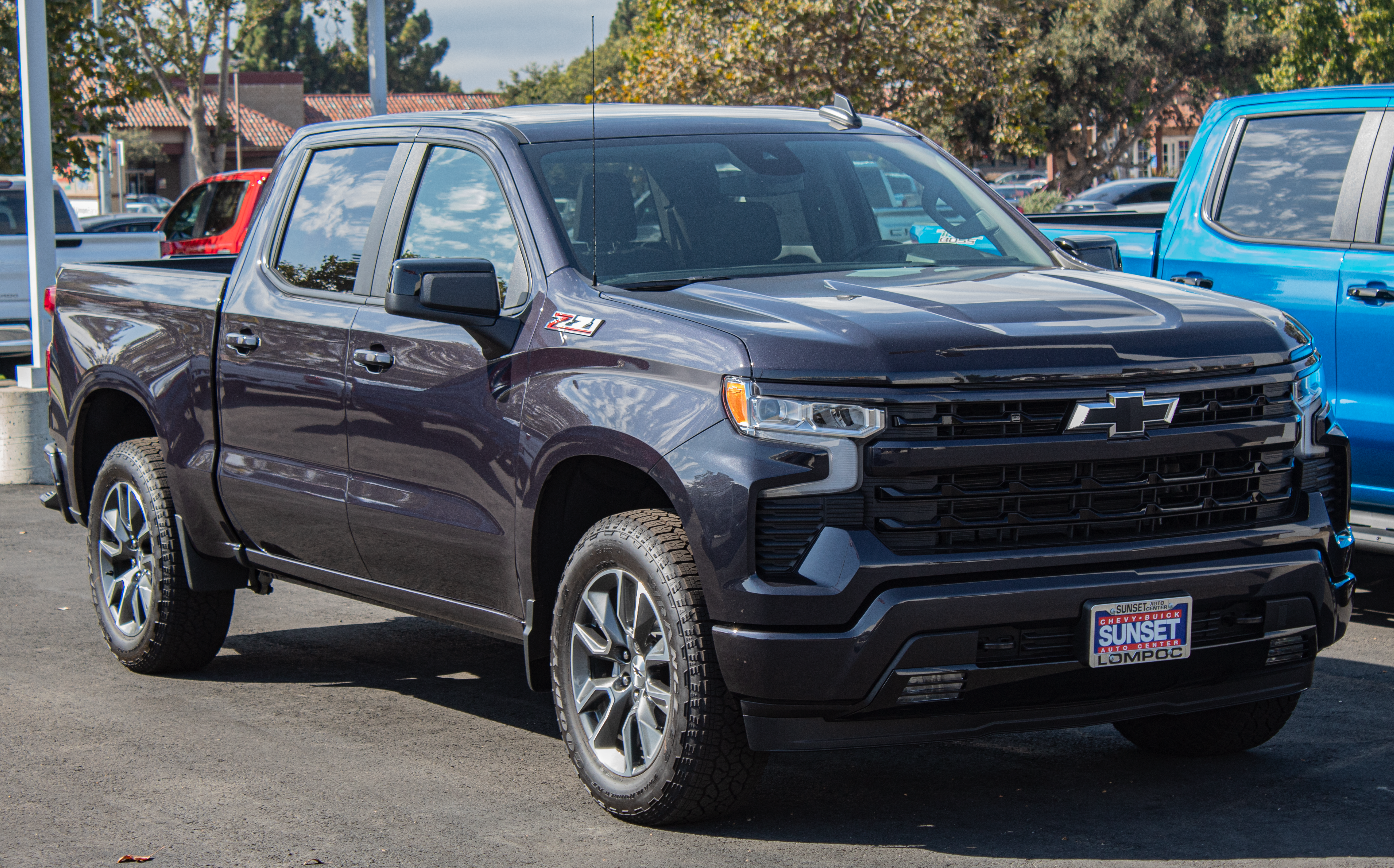
Chevy Silverado
"...If we find a Chevy Silverado person with 100 or 200 kilowatt hour battery, would it be worth it to install this for free or at a significant discount..."
They’re using the Chevrolet Silverado as an example of a pickup that could have a big battery. The idea is that, during high-demand times, that battery could help the grid instead of only using electricity.
The Chevrolet Silverado is referenced here as an example EV/battery-equipped vehicle that could participate in grid services. The key point is using a large battery pack to provide energy back to the grid during peak demand periods.
stationary storage programs
"utilities are actively promoting stationary storage programs where they are giving customers the option to, they're buying them, they're letting them lease from them."
These are programs where your electric utility helps you get a home battery system. The goal is to keep the lights on during outages and make the grid work better during peak demand.
Stationary storage programs are utility-backed efforts to deploy fixed energy storage (like home batteries) so customers can keep power during outages and reduce grid stress. Utilities may offer incentives, leases, or direct purchases to make the systems more affordable and widely adopted.
GM
"Now GM is definitely the forefront for that, like their entire lineup is, I didn't even know that."
GM is a big car company that’s working on electric vehicles and related energy tech. Here, they’re being discussed as a leader in the broader shift toward batteries and power management.
GM (General Motors) is a major automaker that’s been investing heavily in electrification and energy-related technologies. In this segment, the host links GM’s broader push to the idea of home/grid power and EV-related energy storage.
GMC
"Yeah, and that's all of Cadillacs vehicles as well. GMC. Yeah, yeah. It's hard to argue, man, even the bolt, I didn't know the bolt of that diversity."
GMC is GM’s truck/SUV brand, and the segment implies its electrified lineup is included in GM’s broader push. That’s relevant because trucks and SUVs are often key volume segments for EV adoption.
Cadillac
"Yeah, and that's all of Cadillacs vehicles as well. GMC."
Cadillac is GM’s luxury brand. The host is basically saying Cadillac is also part of GM’s broader move toward electric and energy-focused technology.
Cadillac is GM’s luxury brand, and the host suggests Cadillac’s lineup is part of the same electrification/energy push. This matters because luxury brands often lead in tech adoption and platform rollouts.

Tesla Model S
"We're going to start with Tesla announcing a signature farewell run, last production run for the Model S and X. Only 250 Model S, 100 Model X, so"
The Tesla Model S is an all-electric sedan from Tesla. The hosts are talking about a final limited production batch, which usually means Tesla is moving on to something newer.
The Tesla Model S is Tesla’s flagship electric sedan. The segment says Tesla is announcing a “last production run” with a limited number of cars, which typically signals an upcoming platform update or a transition to a newer variant.

Tesla Model X
"We're going to start with Tesla announcing a signature farewell run, last production run for the Model S and X. Only 250 Model S, 100 Model X, so"
The Tesla Model X is an all-electric SUV from Tesla. The episode mentions it getting a limited final production run, suggesting a change coming next.
The Tesla Model X is Tesla’s electric SUV, known for its performance and distinctive rear “falcon wing” doors. The segment frames it as part of Tesla’s limited “farewell run” for the current production configuration.
FSD
"“Tesla did get approval from the road authority in the Netherlands to launch FSD, at least a version of FSD.”"
FSD is Tesla’s software that’s meant to help the car drive more automatically. Here they’re talking about permission from regulators in the Netherlands so Tesla can offer it there sooner and then roll it out to other countries.
FSD stands for “Full Self-Driving,” Tesla’s driver-assistance software package marketed as progressively more capable automation. The segment focuses on regulatory approval in the Netherlands, where Tesla can launch at least a version of FSD faster than in other European markets.
regulatory approval by road authorities
"“For people who don't know, the approach in Europe is very different than in the US where you need to get the approval of one road authority in a country... the Netherlands has been sort of the go-to country...”"
Automated-driving features can’t just be released everywhere—governments have to approve them. The hosts explain that Europe’s approval process is handled by different road authorities, and the Netherlands is often used as a starting point because other countries may follow its lead.
In Europe, driver-assistance and automated-driving features often require approval from national or regional “road authorities,” and the process can differ from the U.S. The Netherlands is described as a “go-to” country because other European markets may adopt rules that are established there.
V14
"The big difference though is that it's only V14 and therefore... it's basically the software of V14 and it's not on outdoor three vehicles."
V14 is a Tesla software update version. The point here is that some cars may get certain software features, while others may not, even if owners paid for the same driver-assist capability.
V14 refers to a specific Tesla software version that’s being discussed as the basis for changes to Full Self-Driving availability. In this segment, the hosts connect V14 to what owners with certain hardware can (or can’t) access.
Full self-driving
"what happened in Australia when Tesla launched full self-driving in Australia... a lot of owners, hardware three owners, have been waiting... having paid for full self-driving and now it's finally launching and they don't have it..."
Full self-driving is Tesla’s paid software that’s supposed to improve how much the car can drive itself. If your car can’t get the update when others do, it can feel like you paid for something you don’t have yet.
Full self-driving (FSD) is Tesla’s paid driver-assistance package that’s delivered via software updates. This segment focuses on how rollout timing and eligibility differ by vehicle hardware generation, leading to backlash when promised capability doesn’t arrive.
hardware three
"there was a quick backlash because a lot of owners, hardware three owners, have been waiting a long time having paid for full self-driving..."
Hardware three is the generation of computer in the Tesla that’s needed for advanced driving features. The issue described is that owners with this older hardware may not get the newest FSD capability when they expect it.
“Hardware three” refers to Tesla’s internal hardware generation used to run advanced driver-assistance features. The hosts argue that owners with this hardware have been waiting longer and may not receive the same FSD rollout timing as newer hardware.
hardware four
"...they don't have it even though they've been waiting a lot longer than all hardware four owners."
Hardware four is a newer version of the computer Tesla uses for advanced driving features. In this discussion, it’s mentioned because newer cars may get updates sooner than older ones.
“Hardware four” is Tesla’s newer hardware generation referenced as getting FSD availability earlier than hardware three. The segment uses this contrast to explain why hardware three owners feel left behind.
collective claim / class action
"he started a website to basically make a collective claim against Tesla... It was like collective bargaining with Tesla and another thing that Tesla is not a plan of but..."
This is about owners banding together to pressure a company. It can be a lawsuit (like a class action) or a coordinated effort to negotiate and demand answers or fixes.
The segment describes owners organizing a collective legal/negotiation effort against Tesla. The hosts distinguish between a formal class action lawsuit and a broader “collective bargaining” approach to pressure Tesla for a solution.
3,000 signups
"he got 3,000 signups in a space of like 48 hours and then he reached out to Tesla about it..."
They mention how many people joined the effort quickly. The takeaway is that a lot of owners share the same frustration and are organizing fast.
The hosts cite a rapid number of signups to the organizer’s website, illustrating how widespread the dissatisfaction is. It’s used as evidence of momentum and urgency among affected Tesla owners.
retrofit
"So when asked about the retrofit, the potential retrofit or the V14 light... they said that no information about when it comes or if it comes at all."
A retrofit means adding or changing parts so your car can get features it couldn’t before. The frustration in this segment is that owners are asking if a retrofit will happen, but Tesla isn’t giving a clear timeline.
A retrofit is an upgrade or replacement of hardware/software to enable features that weren’t available at purchase. Here, the hosts discuss the possibility of a retrofit for certain Tesla hardware owners, and how Tesla’s lack of clear information fuels frustration.
6,400 euros
"...it's seven years that they bought full self-driving and they've been waiting 6,400 euros and in a sense that is a $6,000 interest-free loan..."
They mention the amount of money owners paid for Full Self-Driving. The point is that if the feature doesn’t arrive, it’s like you gave Tesla money and don’t have a clear way to get it back.
The segment references the price paid for Full Self-Driving in euros, emphasizing the financial impact of delayed or uncertain feature delivery. It’s framed as an “interest-free loan” because owners can’t easily recover principal without a clear path to the promised capability.
sudden acceleration
"...I don't really report on these crashes because 99.9% of the time it's a user error. It's one of those sudden acceleration issues where people claim that their car is actually hitting by itself..."
“Sudden acceleration” means the car speeds up quickly when the driver didn’t ask for it. Investigators usually look for simple human mistakes first, like pressing the wrong pedal, before assuming a technical problem.
“Sudden acceleration” refers to situations where a vehicle rapidly speeds up without the driver intending to. In EV and other drive-by-wire vehicles, these claims are often investigated for causes like pedal misplacement, stuck pedals, or software/controls faults.
unintended acceleration claims
"...people claim that their car is actually hitting by itself and they crash into people or objects and most of the time it's a what we call a pedal misplacement issue."
“Unintended acceleration” is when someone believes the car sped up without them asking. The key question is whether it was a driver mistake or a problem with the car’s controls.
“Unintended acceleration” is the broader category of incidents where drivers report the car accelerates on its own. These cases typically trigger investigations that weigh human factors (like pedal misplacement) against mechanical or electronic causes (like pedal sensors, floor mats, or control-system faults).
drive-by-wire / pedal control context
"...most of the time it's a what we call a pedal misplacement issue... user error where they press X or turns into the pedal."
Modern cars often read what you do with the pedals using sensors and electronics. So when people report sudden acceleration, investigators consider both driver mistakes and possible sensor/control problems.
The discussion centers on how modern vehicles interpret pedal inputs—often through electronic sensors rather than purely mechanical linkages. That’s why pedal-related human error (misplacement) and pedal-sensor/control issues both matter when evaluating “sudden acceleration” reports.
pedal misplacement issue
"...most of the time it's a what we call a pedal misplacement issue. So a user error where they press X or turns into the pedal."
A pedal misplacement issue means the driver accidentally hits the wrong pedal. It’s one of the most common reasons people think their car accelerated by itself.
A pedal misplacement issue is when the driver accidentally presses the wrong pedal (for example, accelerator instead of brake). This is a common explanation in “unintended acceleration” reports, especially when drivers are distracted, unfamiliar with the vehicle layout, or in stressful situations.

Tesla Model
"...it happened in Norway with Tesla Model Y taxi driver. So someone that was already very familiar with his vehicle..."
The Tesla Model Y is an electric SUV. Here, it’s the specific car involved in a crash story where the driver says the car accelerated unexpectedly.
The Tesla Model Y is an electric crossover SUV. In this story, it’s described as being involved in a sudden-acceleration-style crash while being used as a taxi in Norway.
dash cam
"in the dash so you see the dash cam from the Tesla video but also you see the from the back"
A dash cam is a camera mounted in the car that records what’s happening on the road. After a crash, that video can help show what the driver and traffic were doing.
A dash cam is an onboard camera that records driving footage. In modern cars like Tesla, dash cam footage can be used alongside vehicle telemetry (sensor data) to reconstruct what happened during a crash.
brake lights
"and you see the brake lights are on all the way through and he claimed he was pressing the brakes ... Tesla as emergency braking being applied or uh the just the region of the vehicle can also activate the brake lights"
Brake lights indicate when the vehicle’s braking system is commanded or active, but they can illuminate for multiple reasons. The hosts note Tesla’s emergency braking and even vehicle system logic that can trigger the lights, which matters when interpreting footage during investigations.
last six seconds of data
"Tesla claimed that it was missing the last six seconds of data of the crash which was a critical last six seconds because it was basically the second part of the crash"
“Last six seconds of data” refers to the missing portion of crash telemetry used to determine driver inputs and vehicle behavior. In crash analysis, the final seconds can be critical because they often capture the transition from normal driving to the moment of impact.
crash analytics
"they got the car and they sent it to an expert in uh crash um analytics i guess ... try to find those last six seconds or see make sure that Tesla doesn't have them"
Crash analytics is the process of using vehicle data, sensor logs, and evidence (like cameras and telemetry) to reconstruct what happened. Here, it’s used to verify whether the missing data window exists and whether the car’s recorded behavior matches the claims.
network card
"this guy gets the car and it's missing its network card ... on the top here you have a daughter board that's a network card that's attached to the main computer board and it's been completely removed"
The network card is a hardware module that provides connectivity for the vehicle’s systems (e.g., communications between modules and/or to external services). The hosts claim the car’s network card was removed, which is central to allegations about whether the evidence was altered or incomplete.
daughter board
"on the top here you have a daughter board that's a network card that's attached to the main computer board and it's been completely removed"
A daughter board is a smaller circuit board connected to a main computer board, often used to add specific functions like networking. In this context, the hosts point out that the daughter board acting as the network card was removed, which could affect connectivity and data handling.
telemetry data
"there's some buffer data held on the network card i don't think you can have the the telemetry data from the hand"
Telemetry data is the car’s recorded “health and activity” info from sensors. After an accident, that data can help investigators understand what the car was doing seconds before impact.
Telemetry data is automatically collected information from a vehicle’s sensors and systems (like speed, braking, and system states). Here, the hosts are discussing whether the network card could contain telemetry that would help determine what happened during the crash.
missing last six seconds of the crash
"confirm or deny Tesla's story about the missing last six seconds of the crash because it's weird that Tesla didn't get those last seconds"
This is about whether the most important moments right before the crash were captured. If those seconds are missing, it becomes harder to verify what the car was doing and what the driver-assistance system was seeing.
“Missing last seconds” refers to the idea that the most critical moments before impact were not available or not recorded in the expected way. In crash investigations involving advanced driver-assistance systems, missing time windows can strongly affect how credible a vehicle’s account is.
autopilot computer
"someone had cut the into the car specifically remove the autopilot computer and then removed the network card and placed back the autopilot computer in there"
The autopilot computer is the “brain” that runs Tesla’s driver-assistance features. If it’s physically removed or swapped, it can affect what gets recorded and what evidence remains.
The autopilot computer is the vehicle’s dedicated computing hardware for driver-assistance functions (often including perception and control logic). In this segment, the claim is that the autopilot computer was removed and then reinstalled, which would be highly relevant to what data was available after the crash.
SD card
"they were talking about an sd card from the the vehicle not the actual like i think i would assume the dash cam"
An SD card is a small memory chip where recordings can be saved. The key point here is whether the investigators had the memory with the video, or a different hardware component entirely.
An SD card is a removable flash-memory storage device commonly used to store recorded video or logs. In this segment, the dispute is whether the “card” referenced by authorities was an SD card containing dash cam footage versus the vehicle’s network card hardware.
telemetry evidence
"...it wouldn't be the first time that Tesla actively tried to hide evidence telemetry evidence from from a crash we it's the reason part of the reason why there was the big 253 million 43 million dollar verdict..."
Telemetry evidence is basically the car’s “black box” data. It can show what the car’s systems were seeing and doing right before and during a crash.
Telemetry evidence is the vehicle/driver-assistance system’s recorded data—things like sensor readings, system status, and event logs—captured around a crash. In lawsuits, it’s often central because it can show what the system was doing and whether key data was preserved or withheld.
data withholding / evidence preservation in crash litigation
"...Tesla claimed no the data is not in there and then only a you know a couple of years later we actually found the data was indeed on the computer which is nuts so it wouldn't be the first time..."
This is about whether the important crash data was kept and shared correctly. If key records are missing or delayed, it can seriously affect how investigators and courts understand what happened.
This segment centers on evidence preservation—whether crash data was properly retained and disclosed during investigations and legal proceedings. The hosts describe alleged attempts to prevent access to telemetry data, including staged retrieval and later discovery that the data existed on the computer.
EV unit reshuffle / folding labs into other teams
"...for that the big reshuffle of its EV unit here this where they kind of folded it uh folded some labs into uh you know to me it sounds like they are slowly just shutting down this model e..."
An EV reshuffle is when a company changes how it’s organized for electric cars. It can mean merging teams or winding down one program to focus resources elsewhere.
An EV unit reshuffle is when a company reorganizes its electric-vehicle organization—often merging teams, “folding” projects into other groups, or changing leadership—to accelerate execution or cut costs. The hosts interpret the move as a sign of strategic downsizing or phasing out certain programs.
Ford
"for Ford's EV effort for the last you know year or so they've been winding things down quite a bit ... cancelled like three or four EV programs in the last year since Trump took power"
They’re talking about Ford’s electric-car plans and how the company is reorganizing. The point is that Ford has been backing off some EV work and changing leadership, which suggests things aren’t going as planned.
The hosts are discussing Ford’s EV organization and leadership changes, framing them as part of a broader slowdown in the company’s electric-vehicle push. They mention winding things down and canceling multiple EV programs, which signals a strategic retreat or restructuring rather than steady scaling.
Doug Phil
"Doug Phil who's uh was the leader of model e of the electric vehicle unit is now leaving the automaker"
They’re saying Doug Phil ran Ford’s EV team and is now leaving. The hosts think he’ll land somewhere else because he has experience in big tech and EV-related projects.
Doug Phil is described as the leader of Ford’s “Model e” electric-vehicle unit, and the hosts say he’s leaving the automaker. The discussion connects his background across Ford, Apple (Project Titan), and Tesla, implying he’s a high-demand executive in the EV/autonomous space.
Apple
"and then he went to Apple then he went to Tesla and Apple was project Titan"
Apple comes up because the hosts say Doug Phil worked on a car-related project there. They’re using it to illustrate that building self-driving tech is extremely hard, even with huge budgets.
Apple is mentioned because the hosts say Doug Phil went there after Ford, and that Apple had a vehicle initiative called Project Titan. The segment uses this as an example of how even well-funded tech efforts can fail to deliver a viable self-driving or vehicle product.
self-driving car
"they learned that it wasn't worth it to bring a I don't think that we learned that it's impossible to do a self-driving car"
The hosts debate whether the industry learned that it’s “impossible” to bring a self-driving car to market, or at least that the economics are unfavorable. This is a key theme in EV/autonomy discussions: technical feasibility may exist, but scaling it profitably and safely is the hard part.
Lucid
"like the lucid and you lucid CEO was announced this week yeah I wonder if he was involved with that"
They mention Lucid because the timing lines up with the leadership news they’re discussing. It’s basically another EV company example in the same news cycle.
Lucid is brought up when the hosts say the Lucid CEO was announced this week, tying it to the timing of Doug Phil’s departure. This functions as a comparison point for how EV leadership moves can signal broader industry shifts.
Jim Farley
"a comment that we keep hearing a little bit from Ford CEO Jim Farley but he had he keeps re-emphasizing this in the last few months"
Jim Farley, Ford’s CEO, is quoted as repeatedly emphasizing fear about Chinese competition. The hosts treat this as a recurring strategic message from Ford leadership, likely influencing how aggressively Ford pursues EV programs and partnerships.
cyber security and privacy concern
"...he also pointed out like cyber security and privacy concern all that which you know the Chinese have done to US manufacturer as well so you know fair play..."
Modern cars can connect to the internet and send data back and forth. The hosts are saying there are worries about hackers (cybersecurity) and about what information the car collects (privacy). Those concerns are often raised when new companies enter a market.
The segment mentions cybersecurity and privacy concerns as part of the broader debate about allowing Chinese EVs into the US. In connected vehicles, cybersecurity can involve protecting telematics, over-the-air update systems, and onboard networks from unauthorized access. Privacy concerns relate to how vehicle data is collected, stored, and potentially shared.
subsidized by taxpayers
"...automakers cannot bring up the card of like oh it's because they're heavily subsidized in in China because yes they are but American automakers are heavily subsidized by by taxpayers in the US as well as proven the last financial crisis yeah..."
Sometimes governments give money or support to companies to help them build products. The argument here is that China supports EV makers, but the US has also supported its own automakers with taxpayer money. That makes the competition less about “who’s better” and more about “who got help.”
The hosts are discussing how government subsidies can distort competition in the EV market. They’re pointing out that Chinese EV makers receive support, but US automakers have also benefited from taxpayer-backed support, including during financial crises. This matters because it affects how “fair” competition is perceived and how policy debates play out.
CEO leadership change
"...Lucid announced their new CEO... so the new CEO... is Mr. Napoli... coming from the Schindler group... okay... coming down from Peter Rawlsson who I think was very much a car guy..."
They’re talking about a leadership change at an EV company. The idea is that different leaders can push different strategies, like how fast to build cars or what to focus on next. In the EV world, that can change timelines and results.
The hosts discuss a CEO transition at Lucid, contrasting the incoming executive’s background with the prior CEO described as a “car guy” and engineer. CEO changes can signal shifts in strategy—such as manufacturing priorities, product roadmap timing, and how aggressively a company scales. In EVs, leadership often affects how quickly production targets are met.
Schindler group
"...Silvio Napoli and he's coming from the Schindler group which is better known as a manufacturer of elevator escalator and moving walkway..."
The hosts note that Lucid’s new CEO, Silvio Napoli, came from the Schindler group. Schindler is known for elevators, escalators, and moving walkways, so the discussion highlights a leadership background outside traditional automotive manufacturing. That can be relevant when thinking about operational scaling, safety culture, and industrial systems expertise.
Uber
"okay Uber is investing an additional 200 million dollars uh bringing their total investment now to 500 million dollars into the company"
Uber is the rideshare app. In this segment, Uber is investing in and planning to use EVs, which can help both the car company and the autonomy testing.
Uber is a rideshare platform, and here it’s discussed as investing in Lucid and partnering for vehicle deployment. That matters because rideshare fleets can provide high-mileage data and demand stability for EV makers and autonomy providers.
PIF
"on top of it the higher turn investment company which is part of of PIF so the Saudi Arabia's wealth fund has committed to perishing 550 million of Lucid's convertible preferred stock"
PIF is the Public Investment Fund of Saudi Arabia, a state-backed sovereign wealth fund. In the segment, PIF is described as committing capital to Lucid, which highlights how sovereign investors can materially influence EV company survival and growth.
convertible preferred stock
"the Saudi Arabia's wealth fund has committed to perishing 550 million of Lucid's convertible preferred stock so they are going to increase their investment in the company"
Convertible preferred stock is a special kind of investment. Investors put money in now, and later they may be able to turn that investment into ownership shares in the company.
Convertible preferred stock is an investment type where the preferred shares can later be converted into common shares, usually at terms set when the deal is made. It’s common in EV and tech funding because it can provide downside protection to investors while still giving them upside if the company succeeds.
self-driving technology company
"Uber is also aiming to deploy 35 000 gravities into their network through a partnership with Neuro which are a self-driving technology company"
A self-driving technology company is working on the software and systems that let cars drive with little or no human input. Rideshare deployments are one way to test and scale that technology.
The segment mentions a partnership with a self-driving technology company to deploy vehicles for autonomy-focused rides. For listeners, the key point is that autonomy programs often start with limited deployments and rely on software, sensors, and fleet operations rather than just vehicle hardware.
autonomy for ridesharing
"it’s interesting seeing the rideshare companies jump on these things I mean it's a it's a great from factor it's a great vehicle for autonomy for ridesharing so why not"
They’re saying self-driving cars are a good fit for rideshare because lots of trips help test the technology. But it can be expensive at first, and the real goal is making it work reliably so costs come down.
The hosts frame autonomy as a “vehicle for autonomy for ridesharing,” meaning self-driving tech can be tested and monetized in a fleet environment. Fleet operations also change the economics: utilization, safety validation, and software updates become as important as vehicle purchase price.
funding rounds
"all right staying on funding rounds we have a slate that also raised a bunch of cash um I think it was the hundreds of millions"
Funding rounds (like “series C”) are stages where companies raise new capital, often to scale manufacturing, expand teams, or fund product development. The segment uses funding round details to explain how much runway an EV/tech company has and how investors view its prospects.
TWG Global
"so it led by TWG Global hmm I don't know them DJ was you anyone else naming the round no"
TWG Global is a company that invests money in other companies. Here, they’re described as leading a funding round, meaning they helped put a lot of the money into the deal.
TWG Global is mentioned as leading a funding round, implying it’s an investor or investment firm active in EV/tech financing. For listeners, the takeaway is that multiple specialized investors can back EV companies alongside larger strategic or sovereign players.
series C
"the scooter road raises 650 million dollars so that's that's an actual race as he mentioned series C's around so yeah it's a it's new capital"
Series C is a later stage of fundraising. It usually means the company is more established than at the beginning and is raising money to grow faster.
A “Series C” is a later-stage venture funding round, typically after earlier seed and Series A/B rounds. By Series C, companies are usually past early concept validation and are raising capital to scale operations, expand product lines, or accelerate commercialization.

Rivian R1S
"the Rivian R1S and R1T share the decent number of parts but this probably nothing compared to these two vehicles they're basically the same"
The Rivian R1S is an all-electric SUV. The hosts are pointing out that some EV companies build multiple models from the same basic parts, which can lower cost and speed up production.
The Rivian R1S is an electric SUV built on Rivian’s skateboard-like EV platform. In this segment, it’s used as an example of how EV makers can share a large number of parts across different body styles.

Rivian R1T
"the Rivian R1S and R1T share the decent number of parts but this probably nothing compared to these two vehicles they're basically the same"
The Rivian R1T is an electric pickup. The point here is that the R1T and R1S are related, so they can share many parts instead of designing everything from scratch.
The Rivian R1T is Rivian’s electric pickup truck. The hosts mention it alongside the R1S to illustrate how the same EV platform and shared components can be used across different vehicle types.
solid state batteries
"that we're going to deliver the first production EV this verge motorcycle with solid state batteries made by us for the first time in q1 and now we're in q2"
Solid-state batteries replace the liquid electrolyte used in most current lithium-ion packs with a solid electrolyte. The promise is potentially higher energy density and improved safety, but they’re difficult to manufacture at scale, so delivery timelines are a major credibility test.
production EV timeline credibility
"we're going to deliver the first production EV this verge motorcycle with solid state batteries made by us for the first time in q1 and now we're in q2"
They’re questioning whether the company actually delivered what it promised on schedule. When timelines slip and outside proof is lacking, it suggests the technology may not be ready for real-world production.
This segment is essentially about whether a company’s stated production milestones for a new battery technology are met. When promised delivery windows slip and independent verification is missing, it becomes a credibility and commercialization risk signal.
independent testing
"the independent the independent testing result that donut lab shared in the first few weeks months of the of the year some of them were encouraging but we always noted that the main claims"
Independent testing is when someone outside the company checks the product. Here, the hosts are saying the battery claims weren’t proven by outside tests, which is why they’re skeptical.
Independent testing means third parties evaluate battery performance claims (like energy density, manufacturing consistency, and cycle life) rather than relying on the company’s own reports. In this segment, the hosts argue that key claims weren’t confirmed by those independent results.
Request an Explanation
Heard something you'd like explained? We'll add it to this episode.
Sign in to request explanations for terms you heard.
Want to learn more?
Browse our glossary for plain-English explanations of automotive terms, jargon, and concepts.
Help improve this episode
See something that's not quite right? Our annotations are AI-generated and can sometimes miss the mark. Click the flag icon on any annotation to suggest a correction.