It’s a diesel engine with eight cylinders, and it uses a turbo to help it make more power. The turbo helps the engine pull harder, especially under load.
In 2008, the economy crashed, and car companies got hit hard. GM had to restructure through bankruptcy, and that stopped this engine from going into production.
They’re talking about a diesel engine GM never released, and how evidence of it ended up in the real world. The show says photos surfaced that suggest some prototypes survived.
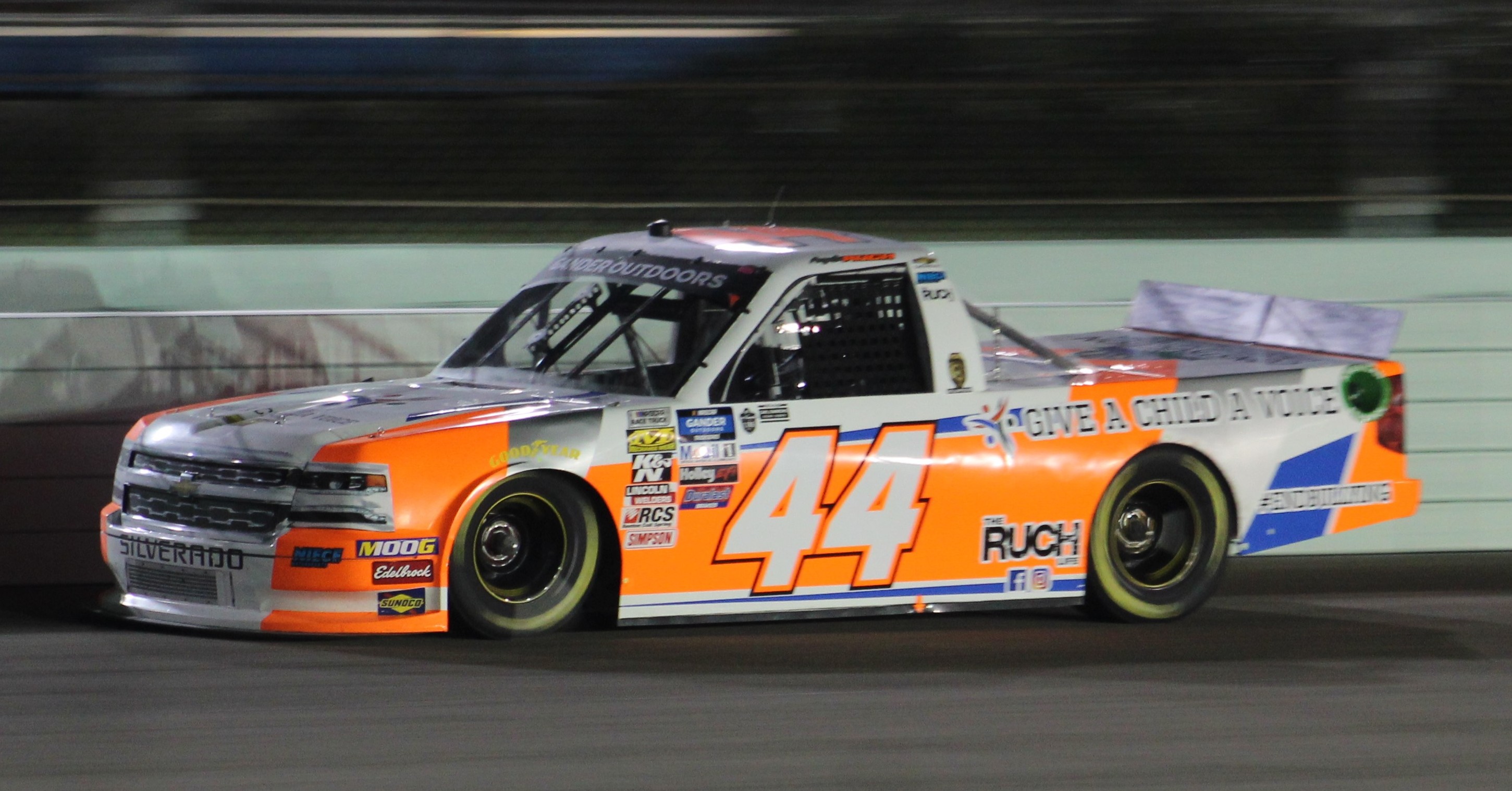
This is an electric version of the Chevrolet Silverado pickup. The Trail Boss version is meant to handle rough roads better, and because it’s electric it can feel very strong right away.
“Pound-feet” is just a way to measure how strong the vehicle’s twisting force is. A bigger number generally means the truck can pull harder and feel faster.
Horsepower is a unit of power, describing how quickly the vehicle can do work over time. It complements torque: torque helps with initial pull, while horsepower matters more as speeds rise.
Term
35
In off-roading, “35” typically means 35-inch tires. Bigger tires can help the truck clear obstacles and handle rough terrain better.
It’s a playful phrase meaning “a contradiction you can drive.” The host is basically saying an electric truck can still be built for serious off-roading.
The Dodge Ram is a large pickup truck designed for hauling and everyday driving. The podcast brings it up as part of the group of well-known full-size trucks from major American brands. It’s mentioned to help explain how truck choices and expectations have changed.
“Small block gas V8s” means the smaller gasoline V8 engines people were using in pickups. The hosts are saying the diesel was meant to beat those engines in economy and pulling power.
A “hot V” turbo puts the turbocharger in the V-shaped space between the engine banks. That helps the exhaust reach the turbo faster, which can make the engine feel more responsive.
Car
Cadillac CT6V Blackwing
The Cadillac CT6V Blackwing is a performance version of the CT6 sedan. Here it’s mentioned just to help you picture what a “hot V” turbo setup looks like in a real car.
The Mercedes-AMG GT is a well-known Mercedes performance sports car. The hosts mention it to give you a mental picture of the same turbocharger layout they’re describing for the diesel engine.
Chapter 11 is a way for a struggling company to reorganize and keep operating while it works out its debts. The host is saying it disrupted GM’s plans for this engine.
Term
hot V setup
“Hot V” is an engine layout where the exhaust/turbo hardware sits inside the V-shaped area of a V-engine. The idea is to use the engine’s heat to help the turbo work faster, but it also makes the area run hotter.
Duty cycle just means how the vehicle is typically used—like whether it’s mostly towing at steady load or being driven hard at high speed. Different uses stress the engine and cooling system in different ways.
A radiator helps keep the engine from overheating by cooling the fluid. An intercooler cools the turbocharged air before it goes into the engine, which helps it run stronger and safer.
RPM tells you how fast the engine is spinning. Higher RPM usually means the engine is working harder, while lower RPM can be more typical for steady towing and climbing.
A turbocharger is a device that uses the engine’s exhaust to spin a fan that pushes extra air into the engine. That extra air helps the engine make more power.
“Body-on-frame” means the truck has a strong frame underneath, and the body is attached to it. That design is often used for towing because it handles heavy loads and rough conditions well.
Four-wheel drive sends power to all four wheels so the vehicle can grip better. It’s useful when roads are slippery or when you’re pulling something heavy.
At high altitude the air is thinner, so engines can’t breathe as well. That can reduce power and change how the vehicle needs to be tuned or cooled to work reliably.
Colorado is mentioned as a place where car makers test vehicles. The point is that they try cars in different environments so the results match real-world use.
Hoover Dam is a famous dam in the U.S. The host is using it as an example of a desert area where manufacturers test vehicles because conditions are tough.
Gail Banks is a person who’s really famous for working on turbo-diesel engines. The host is saying GM brought him in because he knows a lot about how to tune and improve diesel engines.
GM is General Motors, a major car company. In this story, they’re looking at diesel engines and asking an expert to help figure out how they might be used in boats.
“Marine customers” refers to buyers who use engines in boats rather than in vehicles. Marine applications often have different duty cycles and packaging constraints, so an engine that works well in trucks may need evaluation for reliability, cooling, and continuous load operation.
Term
inboard outboards
This is a boat setup where the engine sits inside the boat, but it still turns the propeller in a way similar to outboard motors. The point here is that boat engines often get adapted from car-engine designs.
“Water cooled” means the engine uses liquid coolant to keep it from overheating. The coolant carries heat away so the engine can run reliably.
Car
Chevy small block
A “small block” is a Chevrolet V8 engine design. The host is saying boats sometimes use versions of these Chevy engines, not just purpose-built marine engines.
Mercury is a major marine engine brand, commonly used on boats with inboard and outboard setups. Here, the host says the boat’s engine is a Mercury installation built around a water-cooled Chevy small-block concept.
The host is talking about rumors that sound unbelievable—stories people repeat without proof. They’re saying sometimes there’s truth, but you need evidence.
It’s an engine layout where the turbo/exhaust hardware is tucked into the V-shaped space between the cylinders. That can make the turbo respond faster, but it also means a lot of heat is in one tight spot.
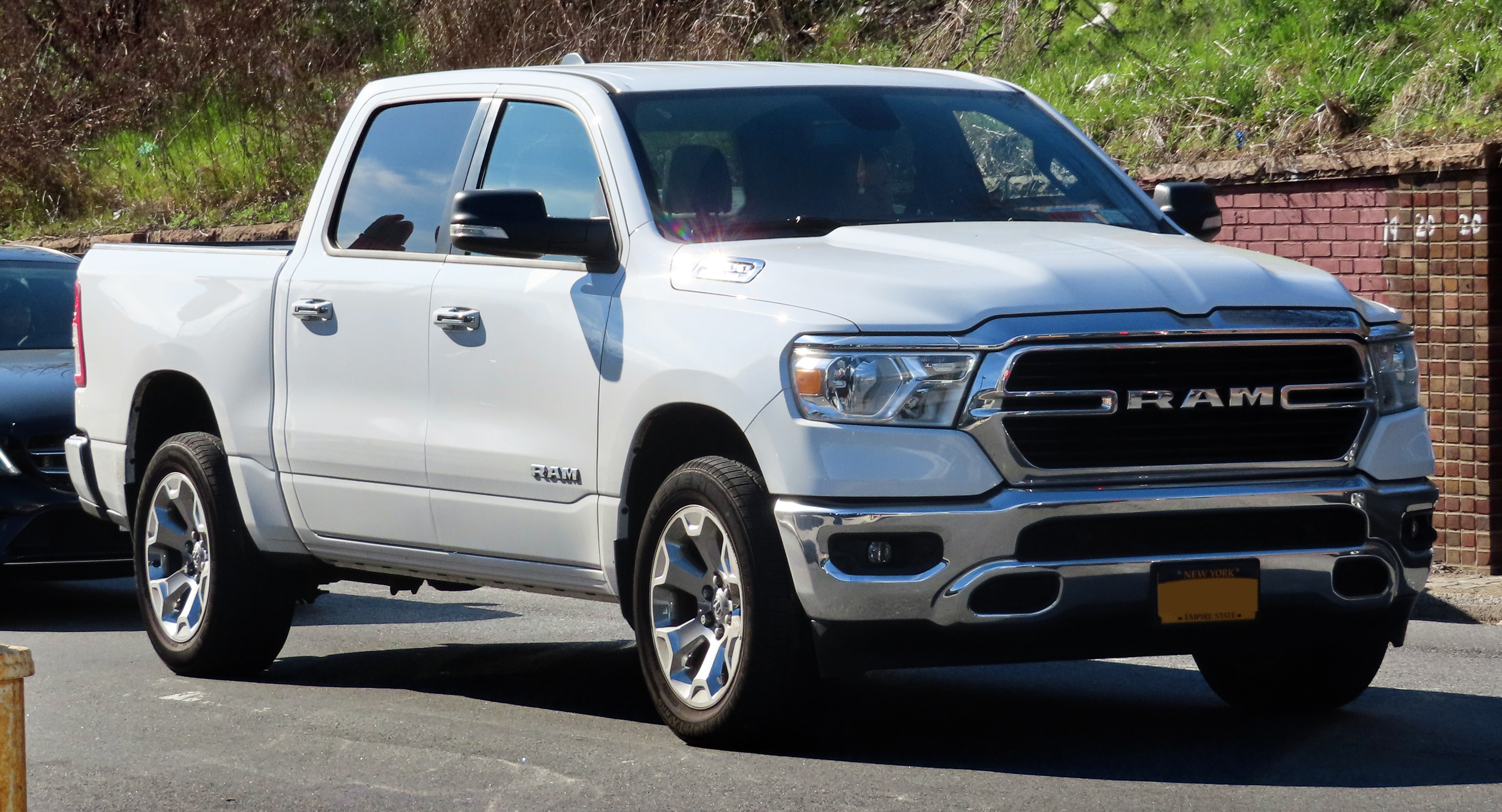
The Ram 1500 is a big pickup truck. In this part, they’re talking about a diesel version (“Eco diesel”) that was meant to be more efficient than a typical gas engine.
They’re talking about a diesel engine that’s 3.0 liters and uses a turbo, with six cylinders in a straight line. That combination is usually chosen to get strong pulling power and smooth operation.
The Chevrolet Suburban is a large SUV. They’re saying the diesel engine was available in it, mainly to help with strong pulling power and better efficiency.
The GMC Yukon is a big SUV. They’re saying this diesel engine was offered in it, which is typically done to get strong low-end pull for driving and towing.
The Chevrolet Tahoe is a big SUV. They’re saying the diesel engine was still offered in it, which shows GM kept the option around for large-vehicle buyers.
Cummins makes diesel engines. If a truck is “Cummins-powered,” it means it has a Cummins diesel under the hood, and people often compare it to other diesel engines from other brands.
A 10-speed transmission is an automatic with more gear choices. That helps the engine run at better speeds for efficiency, which can improve gas mileage.
Full-size pickups are big trucks. They’re often used for towing, but the hosts say you can still get good mileage if you’re not hauling a heavy trailer.
The Ford F-150 is a popular big pickup truck. Here, they’re talking about a diesel version of it, which changes how quickly the engine responds and how good (or not) the fuel economy is.
Range Rover is a luxury SUV brand/model line. Here it’s mentioned because the diesel engine in the Ford truck was related to an engine used in Range Rover vehicles.
“Factory stock” means the car is basically how it came from the factory, not modified. The host is saying the turbo response was impressive even without tuning or upgrades.
Super Duty is Ford’s bigger, heavier-duty truck line. The host is saying newer Super Duty diesels feel even more extreme in power/torque and response than the older F-150 diesel he drove.
Turbo lag is the hesitation you can feel when you hit the gas and the turbo hasn’t built boost yet. The host is saying this diesel felt like it responded almost immediately.
“EcoDiesel” is a name for a diesel engine that’s marketed to be more fuel-efficient. Here, it’s used to talk about which diesel trucks people actually buy.
Car
new 3-liter Duramax
Duramax is GM’s diesel engine. This one is a 3-liter diesel, and the point is that it can be efficient but still feel strong. They mention an updated torque number to argue diesel makes sense for everyday truck use.
Torque is the engine’s pulling/twisting force. It’s what helps a truck get moving and tow things without feeling strained. “Pound-feet” is just the way the US measures that force.
That number is how heavy the truck is rated to tow. It depends on the truck’s engine and drivetrain, plus cooling and other parts. Higher towing ratings usually mean it can pull heavier trailers more safely.
Diesel exhaust fluid is a special liquid diesel trucks use to clean up their exhaust. It helps reduce pollution, and the truck needs it like it needs oil. If you don’t keep it filled, the truck can warn you or restrict performance.
The emission system is the set of parts that helps a diesel truck reduce pollution. It uses sensors and special chemicals to clean the exhaust. If something in that system has a problem, it can cause warnings or performance limits.
Term
5-4 Triton
“Triton” is a Ford engine family name that has appeared across multiple V8 generations in the F-Series. The host’s “5-4” phrasing is likely referring to a displacement (commonly 5.4L) within that Triton era, used here as a comparison point against newer GM/other powertrains.
“Hemi” is an engine design associated with Mopar performance V8s. It’s known for making strong power because of how the combustion chamber is shaped inside the engine.
The EcoBoost F-150 is a Ford pickup with turbocharged engines. Turbocharging helps the engine make strong pulling power (torque) without needing the most extreme version of the truck.
The Ford F-150 is a large pickup truck that’s built for hauling and towing, but it’s also meant to be comfortable for daily driving. The podcast is talking about how a turbocharged EcoBoost version can feel very powerful, especially in how quickly it can pull and accelerate. That’s why it’s used as an example of strong performance in a regular F-150.
Aftertreatment systems are devices in the exhaust that clean up the gases after they leave the engine. They help meet emissions rules by reducing pollutants before they exit the tailpipe.
A Twin Turbo V6 is a V6 engine that uses two turbochargers. Turbos help the engine make more power, especially when you press the gas.
Term
Limited F-150
The “Limited F-150” is a special F-150 setup that combined a regular F-150 body with a much stronger engine. It’s basically a limited run that made the truck feel like a performance model.
That’s a 3.5-liter V6 engine with two turbochargers, tuned to make more power. Turbos help the engine feel stronger, especially when you press the gas hard.
A “4.5-liter Duramax” refers to a GM Duramax diesel engine with a 4.5L displacement. The key point here is that the hosts describe it as a prototype/alternate application that was publicly shown in a concept, then may have disappeared.
The Buick Rainier is a mid-size SUV from Buick, and the hosts are specifically saying Bob Lutz put a Duramax diesel into one. That’s interesting because it implies a non-standard engine swap/fitment that would be unusual for the Rainier’s typical powertrains.
Bob Lutz was a prominent GM executive and automotive industry figure known for influencing product direction and engineering culture at General Motors. In this segment, he’s credited with putting a Duramax into a Buick Rainier, which frames the story as coming from a high-level GM insider.
LIVE
Hello, everyone, and welcome to The DriveCast.
I'm Joel Federer, Director of Content and Product at The Drive.
And I'm Caleb Jacobs, Senior Editor at The Drive.
And The DriveCast is our weekly podcast, giving you an inside look at the biggest stories,
controversies, and people shaping the automotive industry.
Today, we were talking about how almost two decades ago, General Motors was on the verge
of launching a revolutionary new engine that could have rewritten the history of pickup trucks.
With more torque than any halftone on the market, better fuel economy than a small block V8,
and tech that wouldn't even show up in sports cars for another 10 years, it was an engineering marvel.
That's right, GM's baby Duramax, but not the 3.0-liter inline 6 we know today.
The original one, a 4.5-liter turbo diesel V8.
The LMK, as it was codenamed, was destined to become something special.
But then, the program fell apart.
From its performance specs to the design itself, the Duramax could have changed everything.
In fact, it almost did.
It wasn't just a concept.
It was slated to enter production.
The economic collapse of 2008 had other plans.
And GM filed for bankruptcy, taking the 4.5-liter LMK down with it.
Yeah, and it's a shame, because we can only wonder what could have been.
Or maybe we should be asking what could be?
One or more prototypes somehow escaped the factory, despite GM claiming they were all crushed.
Mr. Jacobs himself actually broke the story of the unreleased Duramax diesel
surfacing in the real world, publishing never-before-seen photos and loads of new information.
How many are out there?
We aren't entirely sure.
So today, we dig into the history books of what almost was, and could have been, and what happened.
By the way, if you like what we're doing here,
do us a favor and hit us with a five-star review on Spotify or Apple Podcasts.
It really does help get the drive cast in front of more people.
Okay, let's go.
All right, Joel, I'm excited to finally talk about this on a podcast.
This consumes so much of my life there for a little bit as I was doing this reporting,
trying to uncover the current story with the lost Duramax.
And here we are.
And it's kind of ironic because you just spent the last week in a Silverado EV trail boss.
Quite a different rig there, don't you think?
Yeah, no.
I mean, look, we live in such a different timeline than the 2008 and the LMK and all that stuff.
It's true.
I just had a Chevrolet Silverado EV trail boss.
And this is, it's an electric truck, right?
With a massive battery pack and it's heavy.
It has all the torque, 775 pound-feet torque and all of the horsepower, 725 horsepower.
On 35 is an off-road this and whatever.
It's a rolling oxymoron.
Like it is a rolling contradiction.
And we'll do a review on that and everything like that.
But it is ironic timing that we are talking about the Baby Duramax and what could have been
given we are in such a different timeline.
And history would have probably been changed in the truck segment, which we're going to talk about.
So before we get into everything, Caleb, walk us through what we're even talking about.
The background here, what happened and the history itself.
Prior to us finding the engine itself that escaped the crusher, what are we even talking about?
Yeah, sure.
So the 4.5-liter Duramax, that was a project that really got wound up there in the mid-2000s,
toward the end of that decade.
It was a really special project that was destined to do something new in the half-ton truck space,
which at the time, of course, it was competitive.
It was the big three Chevy, we'll just say GM, Ram and Ford.
But if you look back to those days, the half-ton segment wasn't particularly great at the time.
I mean, maybe I'm alone in thinking that you had Ford with the 5.4-liter Triton,
which people still love to hate all these years later.
And so GM was thinking at least two steps ahead by saying, you know what,
we could develop a diesel engine to put in these 1500 series trucks.
And that would really throw people for a loop.
It would perform far better than what you were seeing from the small block gas V8s.
And so they set to work to do that.
They wanted one that would fit anywhere that a small block V8 would,
but they wanted it to achieve better fuel economy while also making 520 pound-feet of torque.
And so that's what they did.
They developed this engine.
They went through all of the hard work to make it happen.
It had a hot V turbocharger, which if you're more familiar with sports cars,
you'll know that was in the Mercedes-AMG GT, the Cadillac CT6V Blackwing,
which like we all talk about, rare as hints, something that you don't see very often.
GM actually did that with this Duramax diesel about 10 years before that.
So what I'm getting at is this was really a special piece of engineering,
not just for the time, you know, like 2006, you know, 2007 is whenever it really started to take off.
But even still today, I believe would be seen as special.
And that torque number is still unmatched by a modern light duty diesel engine.
So all that's just to say, it was going to be something great.
But then as 2008, 2009 came along, GM's Chapter 11 bankruptcy took it down with it.
And so all that we had were stories about this engine.
Never any firsthand accounts in terms of, I reviewed this, you know, engine,
and this is the way it performed.
I was able to get some of that by interviewing people that saw it up close.
So the first one being Gale Banks, pretty special.
And before we get into more about the engine itself, just a couple of pieces of context
that Caleb said there that I want people to understand the scope of this,
because it's not just the trucks, right?
You said something really key in there, Caleb, that this was going to drop in and fit anywhere
that Chevy's essentially a small block of Yate was going to fit, right?
That means this would have fit in basically an Escalade, and this would have fit in a Tahoe,
and a Suburb, and a Yukon, like this would have fit in a whole host of vehicles.
And it would have opened the doors to, again, a totally different timeline than we live in today,
or, well, ironically, we are kind of living in today, and we'll get into that.
But two decades before we are today.
And there was nothing at the time that was like this, right?
There was no small baby V8 turbo diesel, or any turbo diesels at the time,
in any of these trucks, or SUVs at the time.
And to your point, the hot V setup, that is, again, associated today with sports cars,
you know, and Fives have this, and AMGs Audis are running this,
but these are all RS badge cars, and AMGs, and M cars.
These are hot sports cars.
These are not pickup trucks.
Right.
Also, when you're in a pickup truck, the duty cycle and use case of a pickup is vastly different
than a sports car, right?
A sports car, these cars are being theoretically designed to run on race tracks,
and high rates of speed with lots of air coming through the radiators and intercoolers and all
that stuff.
Trucks, you're not running at 150, 125 miles an hour down a race track.
You're headed up a steep grade towing something, right, with a lower RPM.
So these are, this is a totally different use case with a lower RPM, and the idea of putting
turbos in the V, I mean, that's mind-boggling for two decades to go for a pickup truck.
Yeah, yeah, for sure.
And, you know, this is what I find myself doing, like, all the time, is I, you know,
I write so much about four-wheel drives, body arm frames, stuff like that.
People tend to just write them off as completely simple, right?
Like, there's not much to it.
Oftentimes, you'll see that manufacturers have some of their greatest engineering minds
at the helm of these truck projects, and it's for exactly the reason that you mentioned.
Whether or not people actually use them the way that they're built to be used is another story,
but they're all capable and developed to run, you know, crazy, you know, high altitude.
That's why you see, you know, manufacturers testing in Colorado, you know, but also in
the desert over at Hoover Dam.
I mean, they run all over the place.
These have to do hard work wherever people take them to.
And so that's why they put some really sharp minds at the helm of this LMK project.
And I brought up Gail Banks earlier.
For anybody who's unfamiliar with him, man, he's the turbo diesel guru.
I mean, he has been tuning him for a lot longer than I've been alive.
And that's a commendation to Gail, by the way, not a knock.
He just knows pretty much all that there is to know.
And GM invited him out.
They said, hey, come take a look at this.
They were curious about him maybe selling them to, like, marine customers, you know,
so like putting these engines in boats.
And whenever I called him and I talked to him about this,
he brought out his handwritten notes from 20 years ago.
And to hear somebody like Gail Banks read, you know, these little personal memoirs,
essentially, from a different time, different place.
So that was one of the coolest experiences of my career.
And I don't know.
This is something that is a lot of fun to geek out on as somebody that likes trucks,
that likes history.
But I don't think you even have to know very much about trucks to find this interesting,
or at least I hope not.
Yeah, no.
And I want to talk about the engine real quick, and we're going to move into that.
But I will just say the other thing you mentioned is Gail Banks and marine industry.
So the marine industry, by the way, a lot of it runs on modified car engines.
So specifically for inboard outboards.
So like our deck boat, that's from 1995, it's running a 5.7 essentially water cooled.
It's a mercury, but it's a water cooled Chevy small block.
Like that's essentially what it is.
So to your point, this would have actually had huge ramifications, not just on autos,
but marine and other industries too.
And we won't sit here and wax on about that because I do want to get into the engine itself.
So speaking of the engine, so GM claimed they were all crushed, right?
They were all crushed and then the program was dead and everything like that.
But you know, when we hear, you know, it's like tall tales or, you know,
it's like the Loctus monster or bigfoot.
We come on, we hear wild rumors in the auto industry all the time.
And sometimes there's some saliation behind it, but sometimes a lot of times there's not.
Or there's no proof.
So it's kind of like a tall tale and it's like, you know, what do you really believe?
But one of them did at least, at least one of them did escape GM's hands in the crusher.
And you found it.
And not only did you find it, we then eventually published photos of its existence and the story
behind it. Talk to me about this engine and the story and how this all came to be.
Yeah, sure.
So like you said, we found it, but in a lot of ways it found me.
And so I had published stories about this LMK Duramax, you know,
pretty much just like, hey, this almost happened once upon a time.
And then not too long after that, I think there was, it was a post on Facebook Marketplace.
Somebody was claiming to have prototypes of this engine.
I was, you know, infatuated with that.
I reached out to him, had a whole back and forth conversation.
And then whenever I, you know, explained that I am a reporter,
that I would like to write a story about these, they just went through and totally wiped out
all of our conversation history.
I mean, they unsent every message, all of the photos that they had sent my way, they were gone.
And I thought that was curious, you know, like why, why would you do that?
And into that publishing a follow up story, you know,
explaining how we kind of stumbled upon these and then they were gone.
And then not too long later, guy from Sweden, my new friend, Henrik, reached out and he said,
I got one.
The fact that he reached out from, you know, across the ocean to say,
I just so happened to have one of these in my possession.
That was amazing.
I never would have expected that in a million years.
And so we talked on the phone, by the way,
if you're going to talk to somebody international, don't learn the hard way like I did.
Call him on Wi-Fi.
That was a $63 phone call.
But that's, that's.
Oh, there's a thing called WhatsApp, my guy.
Yeah, yeah.
Well, like I said, don't learn it the hard way.
Listen to somebody like Joel here.
But it was well worth it.
And by the way, I got through expenses.
So it wasn't out of my pocket.
Had a great phone conversation, man.
We hang on.
Did you call him on a landline?
No, no, I called him for my cell phone.
Just check it.
Just check it and make sure you had a cell phone there, bud.
Yeah, I do have a landline.
You might hear it go off during this.
So sorry if that's the case.
But anyway, this is not about how I live in the dark ages.
Okay, this is, this is a totally different story.
But I got to be friends, you know, with Henrik.
We talked back and forth.
He sent me these photos.
The story goes is he bought it as part of a bulk deal.
So Henrik likes to build Mercedes diesel engines.
He was looking for a turbo and he just happened to see that in this lot, there was like
variable vein, variable geometry turbo.
And then he's like, well, what in the world?
This, this engine, this is a hot V engine, but this doesn't look like any of the Mercedes
engines that I'm, you know, more familiar with.
And so he ended up buying it and he's had it ever since.
So it's been several years at this point.
And I actually just reached out to him here recently and he still has the engine.
He still wants to sell it.
So if anybody here is listening and they want to maybe buy it,
I can put you in contact with Henrik.
It may end up being a fancy paperweight, but you would still have a piece of truck history.
So pretty special.
I tried to facilitate a deal with a friend of mine.
It didn't end up working out.
He wanted to put it in a square body Chevy and couldn't find anybody to do the conversion
for him.
So needless to say, it would have been cool though.
It would have been cool.
It would have been hard though.
It would have been difficult.
And, you know, with this being late 2000s diesel engine, that's just as emission systems,
came into play, not only EGR, but DPF, things like that.
So there would have been some obstacles to it, but nevertheless.
So yeah, as of right now, this is what June of 2026, Henrik still has it.
And I certainly have his email address as well as his phone number, but you should email him.
So this entire thing, of course, is highly ironic, right?
Because, you know, now we live in a timeline that we did, at least recently, where Ram first
came out with a turbo diesel three liter in there.
It was called the Eco diesel in there, Ram 1500.
And then Ford came out with a turbo diesel, which also was a Range Rover engine, but like
whatever in there, 150.
And then GM came out with a three liter turbo diesel in line six, by the way, not a V8.
And of course, Ram has now since killed theirs and Ford very quickly killed theirs.
I think it was like a two mile a year thing.
But GM still offers theirs.
And not only they still offer it, again, again, it's now sold in the Yukon and the Suburban
and the Tahoe for a minute.
It was sold in the Escalade, but nobody bought it, which was a whole different topic because
it was a great engine for the Escalade and the highway lugging, but like whatever, people just
don't make good choices.
And then you can still buy it in all the light duty trucks, so like Sierra and Silverado.
So the last man standing, they were last to this new party because Ram came then Ford came then GM.
And now the last man standing at the party without a V8, it is marketed as a Duramax,
mind you.
It's not a V8.
It's in line six.
Everyone else did the V6, by the way.
This is just kind of ironic now, isn't it?
Like why didn't they just take this thing off the shelf and run this and update the EGR
and the emissions controls, Caleb?
I think it was mainly just a matter of this is in the past.
We've got to let it lie.
We're going to come up with something that, you know, of course there are some benefits
to an inline six over a V8, people debate back and forth, and that oftentimes decides if somebody
buys a Cummins-powered vehicle or a Duramax or Powerstroke is where they fall on that.
You know, this new Duramax, the inline six is developed to run with a 10-speed transmission.
I don't know exactly what transmission would have been made it to these 4.5-liter Duramax
is probably a six-speed.
So, you know, maybe that was part of, I don't know, it's difficult to say.
And while I don't have official fuel economy figures for the 4.5-liter Duramax,
it would have been tough for it to match this three-liter inline six.
You know, smaller displacement, smooth running, you have the benefit of the different ratios
from the 10-speed transmission.
So, I think that's ultimately what they were after.
It sure was improved torque over the gas engines, but I think they wanted better efficiency.
And this was a better path forward for that.
So, I don't know, I can only postulate why they would go with the new design over the old one,
but I have a hunch that's it.
I mean, you're not wrong, right?
The Turbo 6, depending on the application, easily EPA ratings in the upper 20s.
And we've definitely seen people on Reddit and YouTube and people we know and even our own testing.
You can knock on the door 30 miles per gallon on one of those full-size pickups if you're not
lugging a heavy trailer behind you down the highway.
And you weren't going to get that with a 4.5-liter VA turbo diesel, but you would have
gotten more power, right?
So, to your point, if you're going to go for fuel economy, you're definitely going to get this
Turbo 6.
And also, it's smooth, right?
V8s are not as smooth as an inline six.
Like, there's just science here.
And that is a very smooth engine.
It's interesting too, because the V6 turbo diesel that was in the Ford F-150, it was marketed as
a power stroke.
Again, it was a Range Rover engine that was offered for like two model years.
That might have been the quickest spooling turbo diesel, like factory stock turbo diesel
that I've ever been in until maybe like the current modern Super Duty high output ones,
which those are just ridiculous, like 1200 pound-feet torque or whatever.
But that thing, you manage the floor, there was almost no turbo lag.
I don't even understand how they did it.
It was crazy.
But you also didn't get the fuel economy.
I think I averaged like 24, 25 on the highway.
You're not going to get 30 out of that one.
So yeah, you're one of the few people that have ever driven one of those power stroke F-150s.
I know that I definitely have it.
And I never see them either.
I'm right in the middle of truck country, right?
I am in the Ozarks, the Missouri Ozarks.
I can't tell you the last time I saw an F-150 power stroke come through.
I do see quite a few eco diesel Rams, like people bought those up.
I think a lot of good old boys bought those, not even knowing like, oh, this is an Italian
engine, right?
It's like, nobody knew that.
I'm not going to say that I drove a power stroke powered turbo diesel F-150 up to Duluth,
Minnesota for the Ram 1500 eco diesel launch.
I'm not going to say I did.
But if I did, you could imagine the PR people's faces at Ram when I pulled in and they were like,
really?
And I was like, guys, it just so happened with what I had in the fleet this week.
It's just a coincidence.
And they looked at me with the squintiest of eyes.
And I'm like, I mean, what am I going to say?
And I'm not saying I compared the two in the first drive, but I will guarantee you if I did,
I was the only journalist in the world to be able to do that because I happened to live
like three hours, four hours from the launch.
But so let me ask you, Caleb, does a diesel engine make sense in a half ton today in today's
timeline?
Do you think there's only one standing?
Yeah, no, I think that it does make sense.
Now, that's harder to say as the price of diesel currently is pretty high.
Spoken from a very sad 7.3 liter power stroke owner.
Yeah, diesel costs a whole lot right now.
But I think in terms of usability, it absolutely does.
The smooth running, for all the reasons that you brought up that it's a great fit for the
Escalade, right?
So many people use their trucks as daily drivers.
That's them a huge benefit for fuel economy.
But also, the new 3-liter Duramax with the slatest update is 495 pound-feet of torque.
It's still short of what the LMK did.
That was 520 pound-feet.
But still, 495 pound-feet of torque, that's stout.
It'll pull up to like 13,300 pounds or something like that.
I'm getting kind of specific.
But I think that shows that yes, it does make sense.
Depending on where you live in the world, maybe diesel is even more.
Where I'm at, I think the latest price, it was like 472 a gallon.
And you guys that live on the coast are probably laughing at me saying,
you know, that's 87 unleaded.
But I don't see any reason not to own it.
There are the added, you know, the frustrations with diesel exhaust fluid.
You have the emission system there.
You don't hear about nearly as many issues on the 3-liter Duramax as you do as maybe
some other ones.
So I don't know.
That would not be enough to turn me away from it.
If you're considering any modern diesel truck, you know, I think if people were
honest with themselves, a lot of them would realize that a half ton is more than enough.
But again, that's kind of outside the scope of this conversation, I guess.
Well, we don't want to be rational people here.
So yeah, I'm certainly not one.
Final thoughts, Caleb, on what could have been in history?
Well, I mean, if this would have came out and it hit big, you would have seen the other
manufacturers scramble to do something in response, right?
Now, they have the benefit of history being on their side.
Now they can say RAM and Ford both.
They can say, oh, no, we knew it wasn't the right time.
And they did it a little bit later.
But had GM rolled this out and just totally stomped everybody else, right?
Because what was there to compete with?
You know, it was the 5-4 Triton and then what a tired Hemi.
Like, it would have been a big deal for this to come out.
And so I don't know how much of a different place we land in as compared to now,
because we see some really high performing engines.
Of course, the Dermamax, the three liter that we've talked about,
but also gas truck engines right now.
I mean, they're amazingly powerful.
You don't even have to get a Raptor ton of torque in an EcoBoost F-150.
I drove the Ram 1500 with a high output hurricane.
That baby will smoke the tires in a hurry.
What a monster.
People don't want to hear that.
I know that there's some folks that are like, oh, no, you've got to have the Hemi.
And hey, as far as reliability goes, that may turn out to be the case.
We don't know what these are like after 200,000 miles.
I can't tell you what it's like to own a high output hurricane.
But I tell you, that feels a lot more like an $80,000 truck whenever you've got something
that runs that quiet, that scoots from a stoplight.
But all that's just to say, I don't know what would have been.
I think that we would have seen maybe some other manufacturers respond with diesels of their own.
But no matter what, I feel like the regulatory changes would have come.
And that influences this far more than a lot of people give it credit.
Those regulatory differences and changes and making it more difficult.
I think that's why we saw such a lull from other manufacturers not chiming in with the
diesel immediately after.
They got to say, hey, we need time to develop something that will meet these stricter emissions
requirements.
We have to decide if we're going to develop these systems like EGR, like DPF, and after
treatment systems too.
So I don't know.
I think that it certainly could have been revolutionary in terms of what people come
to expect from a half-ton truck.
Maybe that's a better way of putting it.
I think we got there eventually.
I think there's a good chance that would have accelerated it.
So whether other manufacturers would have done that with diesel or gas, I'm not entirely sure.
But Ford was on to something whenever they went with the Twin Turbo V6.
I understand there's a lot of EcoBoost haters out there that are probably thinking,
you're ridiculous.
There's no denying their performance of those engines.
Okay, we can debate about reliability, durability, all those things, even though I've seen them
go for a lot of miles too.
Man, Turbos just wake up a truck.
There's no question about it.
I will tell you as we wrap it up here that I told, there was like a one or two model years,
like 2020, 2021, something like that, where they made, I think it was called a Limited F-150.
It was a narrow-body, normal F-150, and they took the high-output EcoBoost 3.5 twin-turbo out of
the Raptor.
So it was like 450 horsepower, 510 pound-feet of torque.
Now this is like 56 years before a hurricane came from Stalantis.
And I towed our 5,000-pound boat, and I remember doing fast enough on the highway,
and then we were cruising, and I just laid into it all the way to the floor,
and the thing just lunged forward.
Like there was no boat attached.
I'm like, oh my Lord, like it was fast.
And this is again, like years before, there was rumors of a hurricane engine,
the Stalantis Turbo 6 coming.
And so that was a quick truck.
It's a real shame that that only lasted a couple model years.
Like I've even looked at what used ones go for, and they hold their value,
unfortunately.
I'm sure there's a reason.
Those are quick trucks.
Those are cool.
Dude, if you saw somebody roll up in an F-150 Limited, you knew.
All right.
This guy gets it.
Either this guy gets it, or he was upsold.
One of the two.
Yeah.
So anyway, look, if anyone listening knows more about these Duramax, Baby Duramax,
four or five LMK engines, and you know of more in existence,
or even more to the story than we have, please definitely drop us a line,
tips at thedrive.com.
Or if you just know about engines that escape the factory that shouldn't exist today,
also send us an email at tips at thedrive.com.
Caleb and I would very much like to connect with you.
We don't have to name our sources.
And I will put out a personal challenge to you.
They debuted this 4.5-liter Duramax in a suburban Z71 concept.
That thing may now be long gone.
I'm not sure.
But if you have any artifacts of that, it was publicly shown, right?
I mean, there were people who saw it.
But if you know of its whereabouts, or, oh my goodness, hold the presses.
I forgot to mention this important place.
And you'll know this if you read the story, or if you watch our YouTube video on this.
Bob Lutz put one of these in a Buick Rainier.
If you know what happened to that Buick Rainier, please give me a shout.
I saw somebody on Facebook one time mention that this Buick with a diesel
was brought by the dealership they worked at.
If that was you, hit me up.
Caleb at thedrive.com.
Go to tips at thedrive.com.
Send us this stuff.
I want to know.
The story does not have to be over.
And for real, if anybody wants to buy this engine, hit me up.
This is unpaid, unsolicited advertising.
But I want to see something happen to it, okay?
The story does not have to end here.
Aside from Caleb hawking an engine from Sweden, I will say Caleb is probably legitimately
losing sleep over the fact that a Rainier is out there somewhere with a baby Duramax
right now from Bob Lutz's hands.
You know about these cars whereabouts.
Send us a line.
Hit us up.
We will end it there.
I really appreciate it.
That's it for this week's episode of The Drive Cast.
Thanks to GM for nearly changing the course of truck history to Caleb for his time and
insights.
Thanks to our editor Tyler Mark.
And thank you for listening.
We'll be back next Wednesday.
Be sure to check out thedrive.com for our full coverage on this and a whole lot more.
Subscribe to one of our fine newsletters.
They're free, by the way.
Follow us on Instagram, Facebook, and TikTok.
And subscribe to us on YouTube where we've got a lot of cool videos coming.
We'll see you next week.
Bye everyone.
About this episode
GM’s canceled 4.5-liter turbo-diesel V8 Duramax concept (LMK) becomes the episode’s mystery: GM said the prototypes were all crushed, yet “one or more prototypes somehow escaped the factory.” The hosts connect that lost-engine lore to later diesel talk—hot V turbo layouts, EGR/DPF realities, and how modern Duramax inline-sixes pair with 10-speeds. A Facebook Marketplace lead ends with a friend in Sweden, Henrik, saying, “I got one.”
Almost two decades ago General Motors almost changed pickup truck history, and would've changed the entire market. A new, smaller, Baby Duramax turbodiesel V8 was set to launch and reset the bar for torque, fuel economy, and technology in the half-ton market.
The engine was done, but the entire thing was scrapped with the crash of 2008 when GM filed bankruptcy. The automaker claimed all the prototypes were crushed, but at lest one escaped into the wild.
So today, we dig into the history books and dissect the story of the unreleased Baby Duramax and a prototype surfacing in the real world.
Stories mentioned in today's episode:
The Recession Killed GM’s 4.5L Duramax V8, But One Escaped the Factory
I Found the Canceled 4.5L Duramax V8 Prototypes, Then They Disappeared
We Found GM’s Lost Duramax V8 Prototype That Could’ve Reinvented Modern Trucks
00:00 Intro
Learn more about your ad choices. Visit megaphone.fm/adchoices