
GM said they crushed them all. One ended up in Sweden
About this episode
GM’s canceled 4.5-liter turbo-diesel V8 Duramax concept (LMK) becomes the episode’s mystery: GM said the prototypes were all crushed, yet “one or more prototypes somehow escaped the factory.” The hosts connect that lost-engine lore to later diesel talk—hot V turbo layouts, EGR/DPF realities, and how modern Duramax inline-sixes pair with 10-speeds. A Facebook Marketplace lead ends with a friend in Sweden, Henrik, saying, “I got one.”
GM's baby Duramax
"That's right, GM's baby Duramax, but not the 3.0-liter inline 6 we know today. The original one, a 4.5-liter turbo diesel V8."
Duramax is GM’s line of diesel engines. In this story, they’re talking about an older Duramax idea that never made it to production.
The Duramax is General Motors’ diesel engine family, best known today for modern V8 and I6 applications in trucks. Here, the hosts are talking about an earlier, unreleased Duramax concept: a 4.5-liter turbo diesel V8 that was codenamed LMK.
turbo diesel V8
"The original one, a 4.5-liter turbo diesel V8."
It’s a diesel engine with eight cylinders, and it uses a turbo to help it make more power. The turbo helps the engine pull harder, especially under load.
A turbo diesel V8 is a diesel engine with eight cylinders that uses a turbocharger to force more air into the cylinders. That extra air lets the engine burn more fuel efficiently, which can raise torque and improve real-world pulling power.
LMK
"The LMK, as it was codenamed, was destined to become something special. But then, the program fell apart."
LMK is just the internal name GM used for this engine project while it was being developed. It’s not the engine’s final product name.
LMK is the codename for GM’s unreleased 4.5-liter Duramax turbo-diesel V8 program. Codenames like this are internal project labels used during development, and they often disappear once a program is canceled.
program fell apart
"The LMK, as it was codenamed, was destined to become something special. But then, the program fell apart."
This phrase means the company stopped the project. The hosts say the 2008 financial crisis was a big reason.
When an automaker says a development program “fell apart,” it usually means the project was canceled or re-scoped due to cost, timing, or shifting corporate priorities. In this case, the hosts connect it to the 2008 economic collapse and bankruptcy.
economic collapse of 2008
"In fact, it almost did. It wasn't just a concept. It was slated to enter production. The economic collapse of 2008 had other plans."
In 2008, the economy crashed, and car companies got hit hard. GM had to restructure through bankruptcy, and that stopped this engine from going into production.
The 2008 economic collapse triggered major funding and demand problems across the auto industry. For GM, it led to bankruptcy, which in turn killed the LMK Duramax engine program before it could enter production.
filed for bankruptcy
"The economic collapse of 2008 had other plans. And GM filed for bankruptcy, taking the 4.5-liter LMK down with it."
Bankruptcy is a legal step a company takes when it’s in serious financial trouble. The hosts say GM’s bankruptcy led to canceling this engine project.
Filing for bankruptcy is a legal process companies use when they can’t meet financial obligations. For GM, it meant major restructuring and cancellations, including taking the LMK 4.5-liter Duramax down with it.
prototypes
"One or more prototypes somehow escaped the factory, despite GM claiming they were all crushed."
Prototypes are test versions made before something goes into production. The story says a few of these engine prototypes somehow weren’t destroyed.
Prototypes are early, experimental versions of a product—here, likely engine builds—used to test whether the design works in the real world. The segment claims some prototypes escaped destruction even though GM said they were all crushed.
unreleased Duramax diesel surfacing in the real world
"Mr. Jacobs himself actually broke the story of the unreleased Duramax diesel surfacing in the real world, publishing never-before-seen photos and loads of new information."
They’re talking about a diesel engine GM never released, and how evidence of it ended up in the real world. The show says photos surfaced that suggest some prototypes survived.
This segment centers on the mystery of an unreleased Duramax diesel program showing up outside the factory. The hosts discuss how photos and new information surfaced, implying surviving prototypes rather than a fully destroyed development effort.

Chevrolet Silverado EV trail boss
"And it's kind of ironic because you just spent the last week in a Silverado EV trail boss. Quite a different rig there, don't you think? Yeah, no. I mean, look, we live in such a different timeline than the 2008 and the LMK and all that stuff. It's true. I just had a Chevrolet Silverado EV trail boss. And this is, it's an electric truck, right?"
This is an electric version of the Chevrolet Silverado pickup. The Trail Boss version is meant to handle rough roads better, and because it’s electric it can feel very strong right away.
The Chevrolet Silverado EV is an electric pickup, and the “Trail Boss” trim is tuned for off-road use. In this segment, the host highlights its massive battery pack and heavy weight, which help explain why it feels so forceful off the line.
775 pound-feet torque
"With a massive battery pack and it's heavy. It has all the torque, 775 pound-feet torque and all of the horsepower, 725 horsepower. On 35 is an off-road this and whatever."
“Pound-feet” is just a way to measure how strong the vehicle’s twisting force is. A bigger number generally means the truck can pull harder and feel faster.
“Pound-feet” (lb-ft) is a unit for torque, measuring how much twisting force the powertrain can apply. The host is using this number to emphasize how the Silverado EV’s electric motor output translates into strong real-world acceleration.
725 horsepower
"With a massive battery pack and it's heavy. It has all the torque, 775 pound-feet torque and all of the horsepower, 725 horsepower. On 35 is an off-road this and whatever."
Horsepower is a unit of power, describing how quickly the vehicle can do work over time. It complements torque: torque helps with initial pull, while horsepower matters more as speeds rise.
35
"It has all the torque, 775 pound-feet torque and all of the horsepower, 725 horsepower. On 35 is an off-road this and whatever. It's a rolling oxymoron."
In off-roading, “35” typically means 35-inch tires. Bigger tires can help the truck clear obstacles and handle rough terrain better.
When off-roaders say “35,” they’re usually referring to 35-inch tires. Tire size affects ground clearance, ride feel, and how well the truck can roll over obstacles.
rolling oxymoron
"On 35 is an off-road this and whatever. It's a rolling oxymoron. Like it is a rolling contradiction. And we'll do a review on that and everything like that."
It’s a playful phrase meaning “a contradiction you can drive.” The host is basically saying an electric truck can still be built for serious off-roading.
“Rolling oxymoron” is a rhetorical way to describe something that seems contradictory but exists anyway. Here it’s used to frame an electric truck as an off-road machine—two ideas that traditionally didn’t go together.
half-ton truck space
"It was a really special project that was destined to do something new in the half-ton truck space, which at the time, of course, it was competitive."
“Half-ton” is a way people categorize pickup trucks by their typical payload class. It’s the market GM was trying to win with a new diesel engine.
“Half-ton” is a common pickup-truck class label that roughly corresponds to the truck’s payload rating tradition (not a literal half-ton of weight). The hosts use it to frame the competitive target market for GM’s new diesel engine project.

Dodge Ram
"...e. It was the big three Chevy, we'll just say GM, Ram and Ford. But if you look back to those days, the..."
The Dodge Ram is a large pickup truck designed for hauling and everyday driving. The podcast brings it up as part of the group of well-known full-size trucks from major American brands. It’s mentioned to help explain how truck choices and expectations have changed.
The Dodge Ram is a full-size pickup truck known for being a major player in the “big three” truck conversation. The podcast reference to “those days” suggests it’s being used to frame how truck lineups and reputations have evolved over time. Ram often comes up in discussions about what buyers wanted from large trucks—work capability, power, and practicality.
small block gas V8s
"It would perform far better than what you were seeing from the small block gas V8s."
“Small block gas V8s” means the smaller gasoline V8 engines people were using in pickups. The hosts are saying the diesel was meant to beat those engines in economy and pulling power.
“Small block” refers to GM’s compact V8 engine architecture, and “gas V8s” means gasoline versions of those engines. The segment contrasts them with the diesel engine’s goals—better fuel economy and much higher torque output for the same truck class.
hot V turbocharger
"It had a hot V turbocharger, which if you're more familiar with sports cars, you'll know that was in the Mercedes-AMG GT, the Cadillac CT6V Blackwing,"
A “hot V” turbo puts the turbocharger in the V-shaped space between the engine banks. That helps the exhaust reach the turbo faster, which can make the engine feel more responsive.
A “hot V turbocharger” places the turbocharger inside the V-shaped valley of a V-engine, right where exhaust ports are located. This shortens the path exhaust gases travel to the turbo, which can improve response and reduce turbo lag compared with setups where the turbo sits farther away.
Cadillac CT6V Blackwing
"It had a hot V turbocharger, which if you're more familiar with sports cars, you'll know that was in the Mercedes-AMG GT, the Cadillac CT6V Blackwing,"
The Cadillac CT6V Blackwing is a performance version of the CT6 sedan. Here it’s mentioned just to help you picture what a “hot V” turbo setup looks like in a real car.
The Cadillac CT6V Blackwing is a high-performance sedan from Cadillac that’s known for its serious powertrain and track-capable attitude. In this segment, it’s used as a reference point for the “hot V” turbocharger layout, linking the diesel engine discussion to a recognizable performance application.

Mercedes-AMG GT
"It had a hot V turbocharger, which if you're more familiar with sports cars, you'll know that was in the Mercedes-AMG GT, the Cadillac CT6V Blackwing,"
The Mercedes-AMG GT is a well-known Mercedes performance sports car. The hosts mention it to give you a mental picture of the same turbocharger layout they’re describing for the diesel engine.
The Mercedes-AMG GT is a performance sports car line from Mercedes-AMG, famous for its strong engines and turbocharged layouts. In this segment, it’s referenced as an example of where a “hot V turbocharger” configuration can be found, helping listeners connect the diesel engine’s design to a familiar gasoline performance platform.
torque number
"And that torque number is still unmatched by a modern light duty diesel engine. So all that's just to say, it was going to be something great."
Torque is the engine’s pulling strength. Higher torque usually means the truck feels stronger when you accelerate or tow, especially at lower speeds.
Torque is the twisting force an engine produces, and it’s especially important for diesel engines because it helps the vehicle accelerate and tow strongly at lower engine speeds. When the host says the torque number is “unmatched,” they mean the peak twisting force figure was extremely high compared with other light-duty diesels.
Chapter 11 bankruptcy
"But then as 2008, 2009 came along, GM's Chapter 11 bankruptcy took it down with it. And so all that we had were stories about this engine."
Chapter 11 is a way for a struggling company to reorganize and keep operating while it works out its debts. The host is saying it disrupted GM’s plans for this engine.
Chapter 11 bankruptcy is a legal process where a company reorganizes its debts and operations rather than immediately liquidating. In this context, the host is saying GM’s Chapter 11 restructuring derailed the engine’s development and limited what people could learn or verify about it.
hot V setup
"And to your point, the hot V setup, that is, again, associated today with sports cars, [413.5s] you know, and Fives have this, and AMGs Audis are running this"
“Hot V” is an engine layout where the exhaust/turbo hardware sits inside the V-shaped area of a V-engine. The idea is to use the engine’s heat to help the turbo work faster, but it also makes the area run hotter.
A “hot V” setup refers to placing exhaust components close to the engine’s V-shaped cylinder bank so exhaust heat is managed differently than in a conventional layout. In practice, it’s commonly discussed in turbocharged V-engines because it can help turbo response, but it also changes thermal loading and packaging.
duty cycle
"Also, when you're in a pickup truck, the duty cycle and use case of a pickup is vastly different [429.1s] than a sports car, right?"
Duty cycle just means how the vehicle is typically used—like whether it’s mostly towing at steady load or being driven hard at high speed. Different uses stress the engine and cooling system in different ways.
Duty cycle is the pattern of how a vehicle is used over time—how hard it works, how long it works, and under what conditions. Pickup trucks often have a duty cycle focused on towing and steady loads, while sports cars are used more for sustained high-speed operation and repeated high-load bursts.
radiators and intercoolers
"and high rates of speed with lots of air coming through the radiators and intercoolers and all [440.0s] that stuff."
A radiator helps keep the engine from overheating by cooling the fluid. An intercooler cools the turbocharged air before it goes into the engine, which helps it run stronger and safer.
A radiator cools the engine coolant by transferring heat to airflow. An intercooler cools the compressed intake air from a turbocharger; cooler air is denser, which helps the engine make more power and can reduce knock risk.
RPM
"You're headed up a steep grade towing something, right, with a lower RPM. [449.5s] So these are, this is a totally different use case"
RPM tells you how fast the engine is spinning. Higher RPM usually means the engine is working harder, while lower RPM can be more typical for steady towing and climbing.
RPM (revolutions per minute) is how fast the engine’s crankshaft spins. The transcript contrasts sports-car operation at higher RPM with towing/uphill operation at lower RPM, which affects how the engine makes power and how heat is managed.
turbos
"So these are, this is a totally different use case with a lower RPM, and the idea of putting [455.5s] turbos in the V, I mean, that's mind-boggling for two decades to go for a pickup truck."
A turbocharger is a device that uses the engine’s exhaust to spin a fan that pushes extra air into the engine. That extra air helps the engine make more power.
A turbocharger (“turbo”) uses exhaust gas to spin a turbine, which drives a compressor to force more air into the engine. More air lets the engine burn more fuel for more power, and it can also improve efficiency when used correctly.
body arm frames
"I write so much about four-wheel drives, body arm frames, stuff like that. [469.0s] People tend to just write them off as completely simple, right?"
“Body-on-frame” means the truck has a strong frame underneath, and the body is attached to it. That design is often used for towing because it handles heavy loads and rough conditions well.
“Body-on-frame” construction uses a separate ladder frame for structure, with the body mounted on top. This is common in trucks because it’s durable for towing and can better tolerate impacts and twisting loads compared with many unibody designs.
four-wheel drives
"I write so much about four-wheel drives, body arm frames, stuff like that. [469.0s] People tend to just write them off as completely simple, right?"
Four-wheel drive sends power to all four wheels so the vehicle can grip better. It’s useful when roads are slippery or when you’re pulling something heavy.
Four-wheel drive (4WD) sends power to both the front and rear axles to improve traction. It’s especially relevant for trucks because it helps manage low-grip situations like towing on grades, snow, mud, or uneven terrain.
high altitude
"they're all capable and developed to run, you know, crazy, you know, high altitude."
At high altitude the air is thinner, so engines can’t breathe as well. That can reduce power and change how the vehicle needs to be tuned or cooled to work reliably.
High altitude means thinner air, which reduces the amount of oxygen available for combustion. That affects engine power and cooling strategy, so manufacturers may engineer trucks to operate reliably in those conditions.
Colorado
"[492.7s] That's why you see, you know, manufacturers testing in Colorado, you know, but also in [497.5s] the desert over at Hoover Dam. [499.4s] I mean, they run all over the place."
Colorado is mentioned as a place where car makers test vehicles. The point is that they try cars in different environments so the results match real-world use.
Colorado is referenced as a testing region where manufacturers evaluate vehicles under different climate and altitude conditions. The underlying idea is that real-world durability and performance depend on how hardware behaves across temperature ranges and terrain.
Hoover Dam
"[492.7s] That's why you see, you know, manufacturers testing in Colorado, you know, but also in [497.5s] the desert over at Hoover Dam. [499.4s] I mean, they run all over the place."
Hoover Dam is a famous dam in the U.S. The host is using it as an example of a desert area where manufacturers test vehicles because conditions are tough.
Hoover Dam is a major landmark on the border of Nevada and Arizona in the U.S., and it’s referenced here as a testing location. The host’s point is that manufacturers test engines and vehicles across varied environments, including harsh desert conditions.
Gail Banks
"[509.6s] And I brought up Gail Banks earlier. [512.8s] For anybody who's unfamiliar with him, man, he's the turbo diesel guru. [526.3s] And GM invited him out."
Gail Banks is a person who’s really famous for working on turbo-diesel engines. The host is saying GM brought him in because he knows a lot about how to tune and improve diesel engines.
Gail Banks is a well-known diesel-performance specialist, often associated with turbo-diesel tuning and aftermarket development. In this segment, the host frames him as an expert whose long experience and detailed notes helped GM evaluate diesel engines for new applications.
GM
"[523.6s] He just knows pretty much all that there is to know. [526.3s] And GM invited him out. [530.2s] They said, hey, come take a look at this."
GM is General Motors, a major car company. In this story, they’re looking at diesel engines and asking an expert to help figure out how they might be used in boats.
GM (General Motors) is the automaker behind the project being discussed. Here, GM is described as inviting a diesel expert to evaluate engines and considering whether they could be adapted for marine use (like powering boats).
marine customers
"[530.2s] They were curious about him maybe selling them to, like, marine customers, you know, [535.0s] so like putting these engines in boats."
“Marine customers” refers to buyers who use engines in boats rather than in vehicles. Marine applications often have different duty cycles and packaging constraints, so an engine that works well in trucks may need evaluation for reliability, cooling, and continuous load operation.
inboard outboards
"So specifically for inboard outboards. So like our deck boat, that's from 1995, it's running a 5.7 essentially water cooled."
This is a boat setup where the engine sits inside the boat, but it still turns the propeller in a way similar to outboard motors. The point here is that boat engines often get adapted from car-engine designs.
“Inboard outboards” is a marine configuration where the engine is mounted inboard (inside the hull) but drives a propeller through an outboard-style arrangement. The host uses it to explain why marine builders often modify car engines for boat use.
water cooled
"So like our deck boat, that's from 1995, it's running a 5.7 essentially water cooled."
“Water cooled” means the engine uses liquid coolant to keep it from overheating. The coolant carries heat away so the engine can run reliably.
“Water cooled” means the engine uses a liquid coolant (typically a mix of water and antifreeze) to absorb heat and carry it to a radiator/heat exchanger. In marine applications, water cooling is especially common because it can be integrated with the boat’s cooling system.

Chevy small block
"It's a mercury, but it's a water cooled Chevy small block."
A “small block” is a Chevrolet V8 engine design. The host is saying boats sometimes use versions of these Chevy engines, not just purpose-built marine engines.
“Small block” refers to Chevrolet’s compact V8 engine family, known for being widely used, modified, and adapted across different applications. In this segment, the host highlights that marine engines can be built from (or based on) these automotive small-block designs.
mercury
"It's a mercury, but it's a water cooled Chevy small block."
Mercury is a major marine engine brand, commonly used on boats with inboard and outboard setups. Here, the host says the boat’s engine is a Mercury installation built around a water-cooled Chevy small-block concept.
tall tales
"But you know, when we hear, you know, it's like tall tales or, you know, it's like the Loctus monster or bigfoot. We come on, we hear wild rumors in the auto industry all the time."
The host is talking about rumors that sound unbelievable—stories people repeat without proof. They’re saying sometimes there’s truth, but you need evidence.
“Tall tales” here means exaggerated stories or rumors that spread without solid evidence. The host contrasts those kinds of auto-industry rumors with the documented evidence they later found in this engine story.
variable vein, variable geometry turbo
"He was looking for a turbo and he just happened to see that in this lot, there was like variable vein, variable geometry turbo. And then he's like, well, what in the world?"
It’s a turbo that can change its internal airflow. That lets it build boost sooner when you need it, instead of waiting for the turbo to catch up.
A variable-geometry turbocharger uses adjustable vanes inside the turbo to change how exhaust gas flows. That helps the turbo spool up quickly at low engine speeds and still make strong boost at higher speeds.
hot V engine
"And then he's like, well, what in the world? This, this engine, this is a hot V engine, but this doesn't look like any of the Mercedes"
It’s an engine layout where the turbo/exhaust hardware is tucked into the V-shaped space between the cylinders. That can make the turbo respond faster, but it also means a lot of heat is in one tight spot.
A “hot V” engine is a packaging/layout where the exhaust components (and often the turbo) sit inside the V-shaped valley between the cylinder banks. This can shorten exhaust path length and improve turbo response, but it also concentrates heat in the engine’s center area.
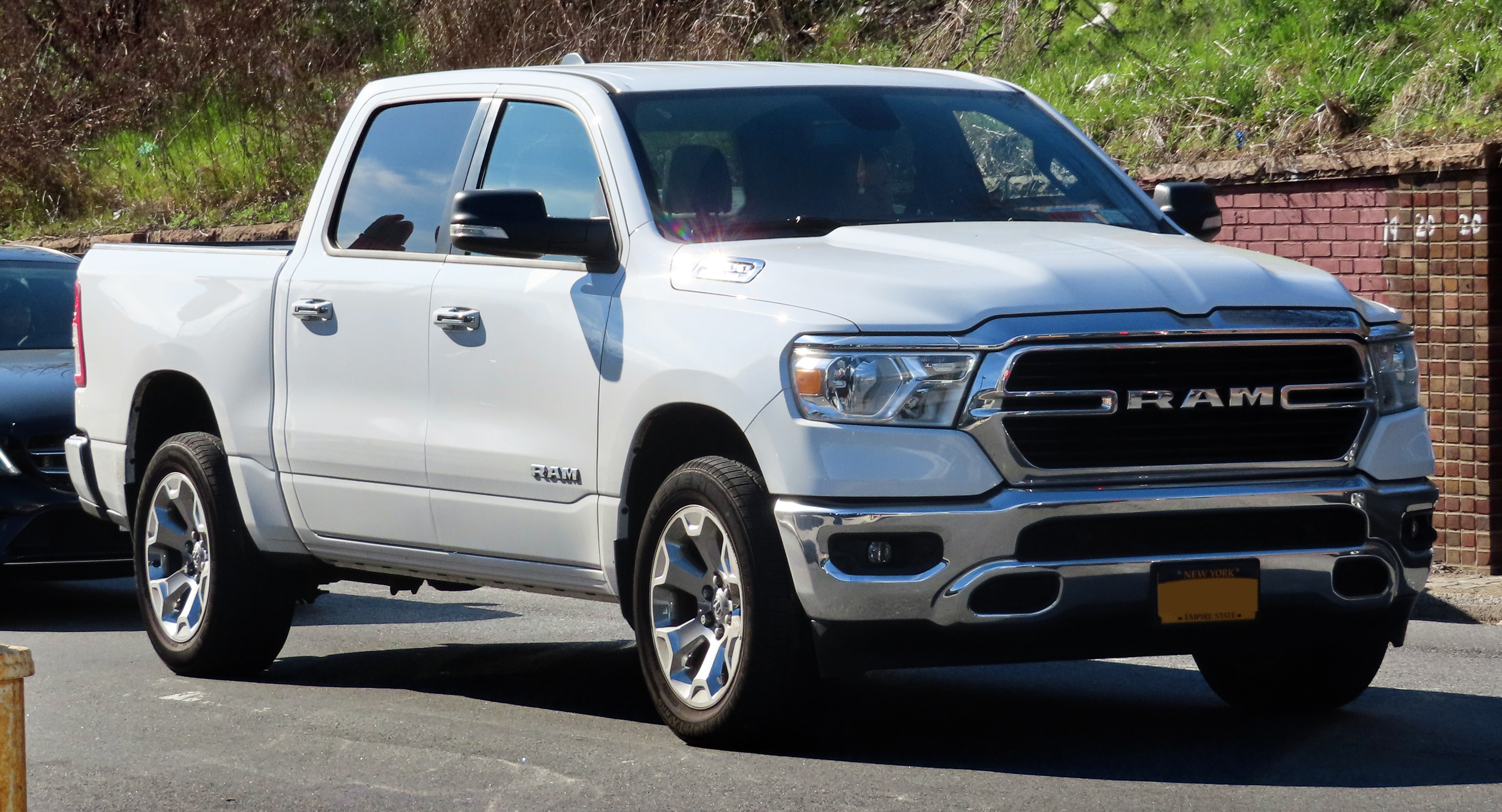
Ram 1500
"It was called the Eco diesel in there, Ram 1500."
The Ram 1500 is a big pickup truck. In this part, they’re talking about a diesel version (“Eco diesel”) that was meant to be more efficient than a typical gas engine.
The Ram 1500 is a full-size pickup, and this segment is specifically talking about its EcoDiesel setup. “Eco diesel” refers to a diesel variant aimed at better fuel economy than traditional gas V8s, using a smaller displacement diesel.
three liter turbo diesel in line six
"And then GM came out with a three liter turbo diesel in line six, by the way, not a V8."
They’re talking about a diesel engine that’s 3.0 liters and uses a turbo, with six cylinders in a straight line. That combination is usually chosen to get strong pulling power and smooth operation.
This describes a 3.0-liter turbo diesel with an inline-six cylinder layout. Inline-six engines are known for smoothness and balanced operation, and pairing that layout with a turbo diesel setup is often about maximizing low-end torque for towing and highway cruising.

Suburban
"And not only they still offer it, again, again, it's now sold in the Yukon and the Suburban and the Tahoe for a minute."
The Chevrolet Suburban is a large SUV. They’re saying the diesel engine was available in it, mainly to help with strong pulling power and better efficiency.
The Chevrolet Suburban is a full-size SUV, and this segment notes the diesel was offered there. Diesel in a Suburban is typically chosen for torque and efficiency on long trips, especially compared with gas V8s.

Yukon
"And not only they still offer it, again, again, it's now sold in the Yukon and the Suburban and the Tahoe for a minute."
The GMC Yukon is a big SUV. They’re saying this diesel engine was offered in it, which is typically done to get strong low-end pull for driving and towing.
The GMC Yukon is a full-size SUV, and the segment says the diesel engine was sold in it. That matters because fitting a diesel into a large SUV is usually about delivering strong torque for highway cruising and towing.

Tahoe
"And not only they still offer it, again, again, it's now sold in the Yukon and the Suburban and the Tahoe for a minute."
The Chevrolet Tahoe is a big SUV. They’re saying the diesel engine was still offered in it, which shows GM kept the option around for large-vehicle buyers.
The Chevrolet Tahoe is another full-size SUV mentioned as a place where the diesel was still sold. In this context, the point is that GM kept the diesel option alive in large vehicles rather than dropping it entirely.

Escalade
"It was sold in the Escalade, but nobody bought it, which was a whole different topic because"
The Cadillac Escalade is a luxury big SUV. They’re saying the diesel version was available, but customers didn’t really want it.
The Cadillac Escalade is a luxury full-size SUV, and the segment says the diesel was offered in it but “nobody bought it.” That highlights how even a good engine can struggle if buyers prefer the brand’s typical gas V8 feel or if the diesel option isn’t compelling enough.

Sierra
"And then you can still buy it in all the light duty trucks, so like Sierra and Silverado."
The GMC Sierra is a pickup truck. They’re saying the diesel option was still available in trucks like this one.
The GMC Sierra is a full-size pickup, and the segment says the diesel engine could still be bought in these light-duty trucks. Diesel offerings in trucks are typically about torque for towing and steady highway cruising.
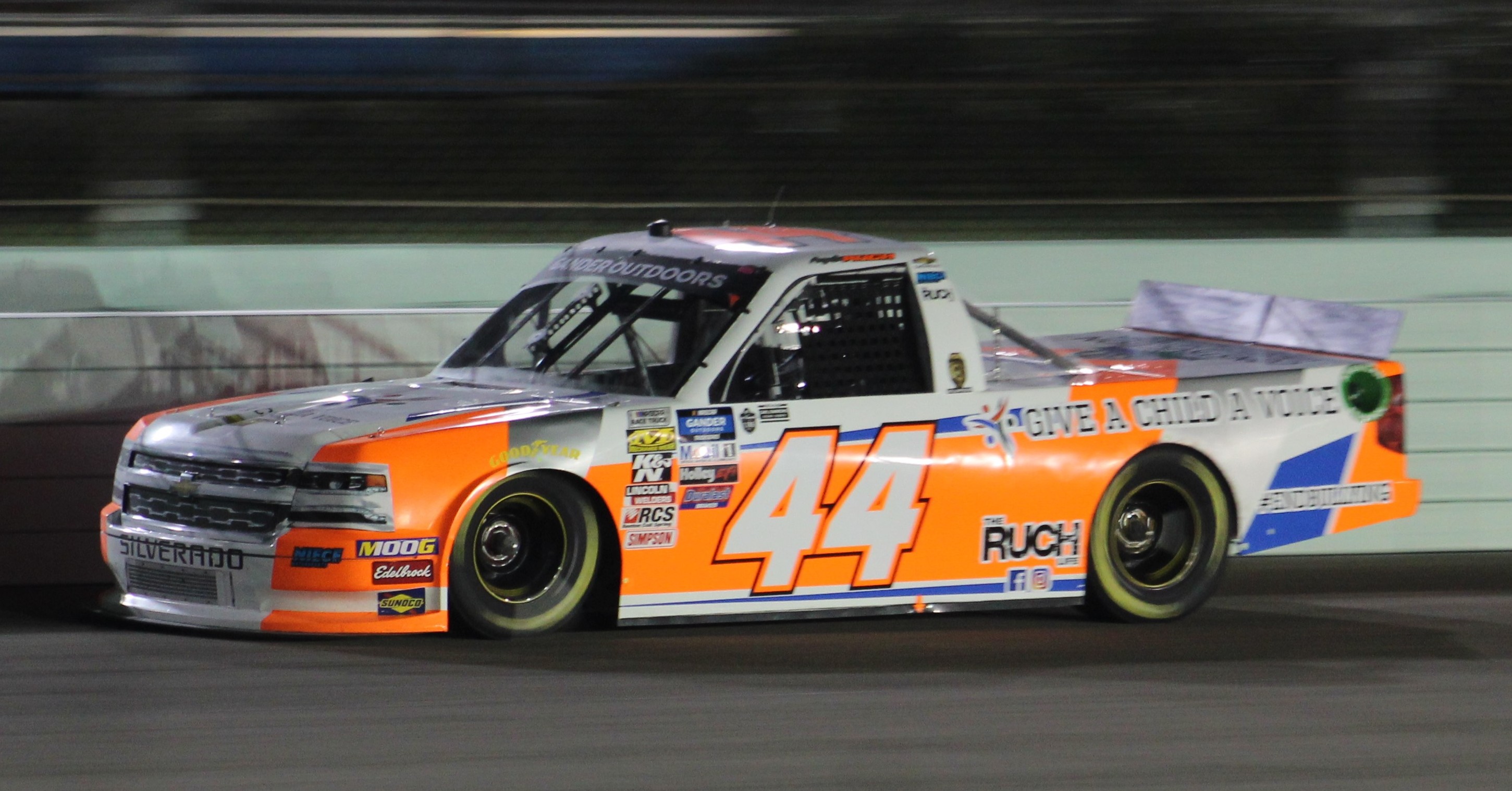
Silverado
"And then you can still buy it in all the light duty trucks, so like Sierra and Silverado."
The Chevrolet Silverado is a pickup truck. They’re saying the diesel engine was still offered in trucks like this.
The Chevrolet Silverado is a full-size pickup, and this segment places the diesel engine in the “light duty trucks” lineup. The key point is that GM kept the diesel available in mainstream truck models rather than limiting it to niche vehicles.
Cummins-powered
"to an inline six over a V8, people debate back and forth, and that oftentimes decides if somebody buys a Cummins-powered vehicle or a Duramax or Powerstroke is where they fall on that."
Cummins makes diesel engines. If a truck is “Cummins-powered,” it means it has a Cummins diesel under the hood, and people often compare it to other diesel engines from other brands.
Cummins is a diesel-engine maker whose engines are commonly found in heavy-duty trucks. When someone says “Cummins-powered,” they mean the truck uses a Cummins diesel, which is often compared directly with other diesel options like Duramax and Powerstroke.
Powerstroke
"buys a Cummins-powered vehicle or a Duramax or Powerstroke is where they fall on that. You know, this new Duramax, the inline six is developed to run with a 10-speed transmission."
Powerstroke is Ford’s diesel engine line. People compare it to other diesel options like Duramax and Cummins when deciding what truck to buy.
Powerstroke is Ford’s diesel-engine brand, commonly compared with GM’s Duramax and Ram’s Cummins. Here it’s part of the “which diesel should I buy?” debate that often comes down to engine layout and how it affects efficiency and towing behavior.
10-speed transmission
"You know, this new Duramax, the inline six is developed to run with a 10-speed transmission. I don't know exactly what transmission would have been made it to these 4.5-liter Duramax"
A 10-speed transmission is an automatic with more gear choices. That helps the engine run at better speeds for efficiency, which can improve gas mileage.
A 10-speed transmission is an automatic gearbox with ten forward gear ratios. More gears let the engine stay closer to its most efficient operating range, which can improve fuel economy—especially when paired with a diesel’s torque characteristics.
Turbo 6
"The Turbo 6, depending on the application, easily EPA ratings in the upper 20s. And we've definitely seen people on Reddit and YouTube and people we know and even our own testing."
“Turbo 6” means a six-cylinder engine with a turbocharger. The turbo helps the engine make more power and pull strongly, which matters for trucks.
“Turbo 6” here refers to a turbocharged inline-six diesel configuration. Turbocharging forces more air into the engine, which helps it make strong torque and power while still targeting efficiency.
EPA ratings
"The Turbo 6, depending on the application, easily EPA ratings in the upper 20s. And we've definitely seen people on Reddit and YouTube and people we know and even our own testing."
EPA ratings are official mileage numbers from standardized tests in the U.S. They’re a reference point for comparing fuel economy between vehicles.
EPA ratings are fuel-economy estimates published by the U.S. Environmental Protection Agency based on standardized testing. The hosts use them as a benchmark for what the turbocharged inline-six can achieve in real-world conditions.
full-size pickups
"You can knock on the door 30 miles per gallon on one of those full-size pickups if you're not lugging a heavy trailer behind you down the highway."
Full-size pickups are big trucks. They’re often used for towing, but the hosts say you can still get good mileage if you’re not hauling a heavy trailer.
Full-size pickups are large trucks typically used for towing and hauling, with bigger engines and heavier curb weights than smaller trucks. The segment notes that these vehicles can still reach high mileage when not towing heavy trailers.
heavy trailer
"You can knock on the door 30 miles per gallon on one of those full-size pickups if you're not lugging a heavy trailer behind you down the highway."
A heavy trailer makes the truck work harder. More load usually means worse fuel economy, even on efficient engines.
A heavy trailer increases aerodynamic drag and rolling resistance, which raises the load on the engine and transmission. That’s why fuel economy drops when towing, even if the truck is otherwise efficient.

Ford F150
"It's interesting too, because the V6 turbo diesel that was in the Ford F-150, it was marketed as [1051.7s] a power stroke."
The Ford F-150 is a popular big pickup truck. Here, they’re talking about a diesel version of it, which changes how quickly the engine responds and how good (or not) the fuel economy is.
The Ford F-150 is a full-size pickup truck known for offering multiple engine options, including diesel variants. In this segment, the host is specifically talking about a turbo-diesel setup offered in the F-150 for a short time, which affects how it feels (boost response) and how it drinks fuel.

Range Rover
"Again, it was a Range Rover engine that was offered for like two model years."
Range Rover is a luxury SUV brand/model line. Here it’s mentioned because the diesel engine in the Ford truck was related to an engine used in Range Rover vehicles.
Range Rover is Land Rover’s luxury SUV line, and in this segment it’s used as a clue for where the engine design came from. The host says the diesel engine in the Ford F-150 was essentially a Range Rover engine offered for only a couple model years, which matters because it explains why it’s rare and how it behaves.
spooling
"That might have been the quickest spooling turbo diesel, like factory stock turbo diesel [1061.8s] that I've ever been in until maybe like the current modern Super Duty high output ones,"
Spooling is how quickly the turbocharger “spins up” after you ask for power. Faster spooling usually means the car feels more responsive.
“Spooling” describes how fast a turbocharger spins up to generate boost pressure. The host calls it the quickest-spooling factory-stock turbo diesel they’ve driven, linking that to the near-zero turbo lag they experienced.
factory stock
"That might have been the quickest spooling turbo diesel, like factory stock turbo diesel [1061.8s] that I've ever been in until maybe like the current modern Super Duty high output ones,"
“Factory stock” means the car is basically how it came from the factory, not modified. The host is saying the turbo response was impressive even without tuning or upgrades.
“Factory stock” means the vehicle is in its original, unmodified configuration as delivered by the manufacturer. The host emphasizes that the turbo spooled quickly even without aftermarket upgrades, making the behavior more notable.
Super Duty
"until maybe like the current modern Super Duty high output ones, [1068.1s] which those are just ridiculous, like 1200 pound-feet torque or whatever."
Super Duty is Ford’s bigger, heavier-duty truck line. The host is saying newer Super Duty diesels feel even more extreme in power/torque and response than the older F-150 diesel he drove.
Super Duty is Ford’s heavy-duty truck line (bigger than the standard F-150), often associated with higher-output diesel variants. The host contrasts the earlier F-150 diesel with the “current modern Super Duty high output ones,” implying improved torque and boost behavior in newer heavy-duty applications.
turbo lag
"But that thing, you manage the floor, there was almost no turbo lag. [1074.7s] I don't even understand how they did it."
Turbo lag is the hesitation you can feel when you hit the gas and the turbo hasn’t built boost yet. The host is saying this diesel felt like it responded almost immediately.
Turbo lag is the delay between when you press the accelerator and when a turbocharger builds enough boost to make power. The host says the truck had “almost no turbo lag,” meaning the turbo spooled quickly and the engine felt responsive.
eco diesel
"I do see quite a few eco diesel Rams, like people bought those up. [1105.4s] I think a lot of good old boys bought those, not even knowing like, oh, this is an Italian [1109.0s] engine, right?"
“EcoDiesel” is a name for a diesel engine that’s marketed to be more fuel-efficient. Here, it’s used to talk about which diesel trucks people actually buy.
“EcoDiesel” is a specific diesel engine branding used by Ram for a fuel-economy-focused diesel variant. The host uses it to explain what diesel trucks are common locally and to set up the point that buyers may not realize the engine’s origin.
new 3-liter Duramax
"But also, the new 3-liter Duramax with the slatest update is 495 pound-feet of torque."
Duramax is GM’s diesel engine. This one is a 3-liter diesel, and the point is that it can be efficient but still feel strong. They mention an updated torque number to argue diesel makes sense for everyday truck use.
Duramax is GM’s diesel engine family, and the “3-liter Duramax” is a smaller-displacement diesel designed for modern efficiency while still delivering strong low-end torque. In this segment, the host highlights its updated output (495 lb-ft) as part of the argument for why diesel can work in a half-ton truck used daily.
pound-feet of torque
"That was 520 pound-feet. But still, 495 pound-feet of torque, that's stout."
Torque is the engine’s pulling/twisting force. It’s what helps a truck get moving and tow things without feeling strained. “Pound-feet” is just the way the US measures that force.
“Torque” is the twisting force an engine makes, and it strongly affects how easily a vehicle accelerates and how well it tows. “Pound-feet” (lb-ft) is the unit used in the US to measure that twisting force. Higher torque usually means the truck can pull heavier loads more easily, especially at lower engine speeds.
13,300 pounds
"It'll pull up to like 13,300 pounds or something like that. I'm getting kind of specific."
That number is how heavy the truck is rated to tow. It depends on the truck’s engine and drivetrain, plus cooling and other parts. Higher towing ratings usually mean it can pull heavier trailers more safely.
“13,300 pounds” is a towing-capacity figure—how much weight the vehicle is rated to pull. Towing capacity depends on the engine’s torque, transmission gearing, cooling capability, and the vehicle’s overall hardware. It’s a practical number enthusiasts use to judge whether a truck can handle real hauling needs.
diesel exhaust fluid
"There are the added, you know, the frustrations with diesel exhaust fluid. You have the emission system there."
Diesel exhaust fluid is a special liquid diesel trucks use to clean up their exhaust. It helps reduce pollution, and the truck needs it like it needs oil. If you don’t keep it filled, the truck can warn you or restrict performance.
Diesel exhaust fluid (DEF) is a urea-based liquid injected into the exhaust system to reduce harmful nitrogen-oxide emissions. It’s used by modern diesel engines with selective catalytic reduction (SCR). When DEF runs low or the system can’t dose it correctly, the vehicle can limit power or trigger warning lights.
emission system
"You have the emission system there. You don't hear about nearly as many issues on the 3-liter Duramax as you do as maybe"
The emission system is the set of parts that helps a diesel truck reduce pollution. It uses sensors and special chemicals to clean the exhaust. If something in that system has a problem, it can cause warnings or performance limits.
A diesel “emission system” is the set of components that reduce pollutants before they leave the tailpipe. On modern diesels, this commonly includes DEF/urea dosing plus catalysts and sensors that monitor exhaust chemistry. These systems add complexity, and issues can be more noticeable than on older engines without them.
5-4 Triton
"You know, it was the 5-4 Triton and then what a tired Hemi."
“Triton” is a Ford engine family name that has appeared across multiple V8 generations in the F-Series. The host’s “5-4” phrasing is likely referring to a displacement (commonly 5.4L) within that Triton era, used here as a comparison point against newer GM/other powertrains.
Hemi
"You know, it was the 5-4 Triton and then what a tired Hemi. Like, it would have been a big deal for this to come out."
“Hemi” is an engine design associated with Mopar performance V8s. It’s known for making strong power because of how the combustion chamber is shaped inside the engine.
“Hemi” refers to Chrysler’s hemispherical combustion chamber engine design, commonly associated with Dodge/Chrysler performance V8s. The key idea is that the cylinder head shape helps airflow and combustion, which can support higher power—though real-world results depend on the specific engine and tune.
EcoBoost F-150
"You don't even have to get a Raptor ton of torque in an EcoBoost F-150."
The EcoBoost F-150 is a Ford pickup with turbocharged engines. Turbocharging helps the engine make strong pulling power (torque) without needing the most extreme version of the truck.
“EcoBoost” is Ford’s turbocharged engine family, and the “F-150” is Ford’s best-selling full-size pickup. The host is pointing out that you can get very high torque from a turbocharged EcoBoost setup without needing a “Raptor” model.
F-150 Raptor
"... amazingly powerful. You don't even have to get a Raptor ton of torque in an EcoBoost F-150. I drove the R..."
The Ford F-150 is a large pickup truck that’s built for hauling and towing, but it’s also meant to be comfortable for daily driving. The podcast is talking about how a turbocharged EcoBoost version can feel very powerful, especially in how quickly it can pull and accelerate. That’s why it’s used as an example of strong performance in a regular F-150.
The Ford F-150 is a full-size pickup truck that’s widely known for offering strong engine options and broad capability for work and towing. The podcast highlights torque and power in an EcoBoost F-150, emphasizing that you can get impressive performance without needing the most extreme variant. It’s discussed because the F-150 is often a benchmark for how modern turbocharged engines deliver everyday drivability.
high output hurricane
"I drove the Ram 1500 with a high output hurricane. That baby will smoke the tires in a hurry."
“Hurricane” is the name of a Ram engine. “High output” means it’s tuned to make more power, which is why the truck can launch aggressively.
“Hurricane” is the name used for a high-output engine family in Ram’s lineup, and “high output” indicates a more powerful calibration/variant. In this context, the host is using it to explain why the Ram 1500 can accelerate hard enough to break traction.
DPF
"We have to decide if we're going to develop these systems like EGR, like DPF, and after [1414.2s] treatment systems too."
DPF is a filter that catches soot from a diesel engine. It periodically cleans itself by burning the soot away so the exhaust stays cleaner.
DPF (diesel particulate filter) traps soot particles produced by a diesel engine. It periodically burns that soot off (regeneration) to keep emissions within limits, especially under stricter particulate regulations.
EGR
"We have to decide if we're going to develop these systems like EGR, like DPF, and after [1414.2s] treatment systems too."
EGR is a way to reuse some exhaust gas inside the engine. It helps the engine burn cleaner by reducing the formation of certain harmful emissions.
EGR (exhaust gas recirculation) is a system that routes a portion of exhaust gas back into the engine’s intake. That lowers combustion temperatures and helps reduce nitrogen oxides (NOx), which are a major target of emissions regulations.
after treatment systems
"We have to decide if we're going to develop these systems like EGR, like DPF, and after [1414.2s] treatment systems too."
Aftertreatment systems are devices in the exhaust that clean up the gases after they leave the engine. They help meet emissions rules by reducing pollutants before they exit the tailpipe.
Aftertreatment systems are emissions-control devices placed after the engine, in the exhaust path. For diesels, they commonly include components like DPFs and NOx-control systems to meet regulated limits.
Twin Turbo V6
"But Ford was on to something whenever they went with the Twin Turbo V6. [1439.8s] I understand there's a lot of EcoBoost haters out there that are probably thinking,"
A Twin Turbo V6 is a V6 engine that uses two turbochargers. Turbos help the engine make more power, especially when you press the gas.
A Twin Turbo V6 is a V6 engine with two turbochargers, which helps deliver stronger low-end and midrange boost compared with a single-turbo setup. In trucks, that typically translates to quicker throttle response and more usable torque for towing and passing.
Limited F-150
"where they made, I think it was called a Limited F-150. [1470.4s] It was a narrow-body, normal F-150, and they took the high-output EcoBoost 3.5 twin-turbo out of the Raptor."
The “Limited F-150” is a special F-150 setup that combined a regular F-150 body with a much stronger engine. It’s basically a limited run that made the truck feel like a performance model.
“Limited F-150” here refers to a short-lived, higher-performance F-150 configuration (a narrow-body “normal” F-150) that was fitted with the Raptor’s high-output engine. The point is that it wasn’t just a trim badge—it was a way to get Raptor-level power in a more standard body style.
high-output EcoBoost 3.5 twin-turbo
"It was a narrow-body, normal F-150, and they took the high-output EcoBoost 3.5 twin-turbo out of the Raptor. [1476.3s] So it was like 450 horsepower, 510 pound-feet of torque."
That’s a 3.5-liter V6 engine with two turbochargers, tuned to make more power. Turbos help the engine feel stronger, especially when you press the gas hard.
This is Ford’s EcoBoost 3.5-liter V6 with two turbochargers (“twin-turbo”) tuned for higher output. Turbocharging forces more air into the engine, which is why the host can quote big torque numbers and describe the truck “lunging forward” under full throttle.
hold their value
"Like I've even looked at what used ones go for, and they hold their value, [1514.8s] unfortunately. I'm sure there's a reason."
“Hold their value” means the truck doesn’t lose much money when you sell it later. Some special, hard-to-find versions keep resale prices higher.
“Hold their value” is a shorthand for residual value—how much of the purchase price a vehicle retains over time. Limited-run, desirable powertrains can keep resale prices higher than more common versions.
4.5-liter Duramax
"They debuted this 4.5-liter Duramax in a suburban Z71 concept."
A “4.5-liter Duramax” refers to a GM Duramax diesel engine with a 4.5L displacement. The key point here is that the hosts describe it as a prototype/alternate application that was publicly shown in a concept, then may have disappeared.

Buick Rainier
"Bob Lutz put one of these in a Buick Rainier. If you know what happened to that Buick Rainier, please give me a shout."
The Buick Rainier is a mid-size SUV from Buick, and the hosts are specifically saying Bob Lutz put a Duramax diesel into one. That’s interesting because it implies a non-standard engine swap/fitment that would be unusual for the Rainier’s typical powertrains.
Bob Lutz
"Bob Lutz put one of these in a Buick Rainier. If you know what happened to that Buick Rainier, please give me a shout."
Bob Lutz was a prominent GM executive and automotive industry figure known for influencing product direction and engineering culture at General Motors. In this segment, he’s credited with putting a Duramax into a Buick Rainier, which frames the story as coming from a high-level GM insider.
Request an Explanation
Heard something you'd like explained? We'll add it to this episode.
Sign in to request explanations for terms you heard.
Want to learn more?
Browse our glossary for plain-English explanations of automotive terms, jargon, and concepts.
Help improve this episode
See something that's not quite right? Our annotations are AI-generated and can sometimes miss the mark. Click the flag icon on any annotation to suggest a correction.