
About this episode
Concept cars were once the loudest signal of what automakers could do next, but the Drivecast argues their influence is fading. Modern reveals are narrower—often focused on electrification and self-driving—and they’re increasingly judged through online images instead of real-world viewing. Meanwhile, skepticism and cost pressures shrink the market-research window. Designers still need concepts to learn how to make emotional, production-ready vehicles, yet the “curse of the show car” is that safety, regulations, and manufacturing constraints break the dream-to-reality bridge.
CGI render
"because a CGI render is a lot cheaper and the ones they are making [141.2s] are primarily trying to solve the massive twin challenges of"
A CGI render is a digital picture or video of a car made on a computer. It lets companies show a design without building a real car first.
A CGI render is a computer-generated image or animation used to visualize a vehicle design before anything physical exists. Automakers use them to market concepts and reduce the cost and time of building full prototypes.
electrification
"because a CGI render is a lot cheaper and the ones they are making [141.2s] are primarily trying to solve the massive twin challenges of [144.1s] electrification and self driving technologies."
Electrification means cars are moving away from gas engines and toward electric power. That usually involves batteries and electric motors, and it changes how the whole car is designed.
Electrification is the shift from gasoline engines toward electric propulsion, typically involving battery-electric vehicles and plug-in hybrids. For automakers, it drives major changes in packaging, power electronics, thermal management, and charging strategy.
self-driving technology
"are primarily trying to solve the massive twin challenges of [144.1s] electrification and self driving technologies. [146.6s] There's just a big convergence happening."
Self-driving technologies are the systems that help a car drive more automatically. They use sensors and software to understand the road and decide what to do.
Self driving technologies are the sensing, computing, and control systems that enable automated driving. They typically combine cameras, radar, lidar (in some systems), and software that interprets the environment and plans vehicle actions.
Mazda iconic SP
"Some cool stuff is still being made. [157.0s] Look at the Mazda iconic SP or any recent concept from Genesis. [160.7s] But overall trust that concept cars will actually lead to better,"
Mazda’s “iconic SP” is a concept car that shows Mazda’s design ideas for the future. The hosts bring it up as proof that not every concept is only about new tech.
Mazda’s “iconic SP” is a concept vehicle used by Mazda to preview future design language and styling cues. It’s mentioned here as an example of a concept that still aims to be more than just a technology demo.
Genesis
"Some cool stuff is still being made. [157.0s] Look at the Mazda iconic SP or any recent concept from Genesis. [160.7s] But overall trust that concept cars will actually lead to better,"
Genesis is a luxury car brand. The host mentions its recent concept cars as examples of “cool stuff” still being made, not just tech-focused concepts.
Genesis is Hyundai Motor Group’s luxury brand, and it has produced multiple recent concept cars. In this segment, the host cites Genesis concepts as another example of concept work that still has creative design intent.
constraints
"So there are parameters and things you have to hold on to to make a real vehicle out of it, but you don't have the constraints. And yet being naiv allows you to push limits..."
In automotive design, “constraints” are the real-world limits that production vehicles must satisfy—like regulations, cost targets, manufacturing feasibility, and safety requirements. The host contrasts concept cars (with fewer constraints) against experienced designers who may “limit themselves” after multiple production cycles.
Larry Snowda
"For instance Larry Snowda, you know, he did the, the vet, you know, and he had all those amazing show cards from Detroit General Motors back in the day."
Larry Snowda is a designer the host talks about from the past. The host brings him up to explain how concept-car work and design sketches can shape what designers love.
Larry Snowda is mentioned as a past design figure who created concept-related work (including “show cards”) associated with Detroit-era General Motors. The host uses him to illustrate how concept-car projects can influence a designer’s taste and priorities.
General Motors
"For instance Larry Snowda, you know, he did the, the vet, you know, and he had all those amazing show cards from Detroit General Motors back in the day."
General Motors, or GM, is a big car company. The host is saying that the designer’s old concept-car show drawings came from GM’s Detroit design scene.
General Motors (GM) is a major global automaker that has historically employed large design and engineering teams, including during the Detroit era referenced here. In the transcript, it’s tied to concept-car show materials and design work from “back in the day.”

Volkswagen Rabbit
"And he said the Volkswagen rabbit. [638.8s] And I said the rabbit."
The Volkswagen Rabbit is a regular, everyday Volkswagen model. Here, the speaker brings it up as an example of a car design meant to be a real-world replacement for the Beetle, not just a one-off show car.
The Volkswagen Rabbit is a compact car from Volkswagen that became well known in the U.S. as a practical, mass-market alternative in the late 1970s/1980s era. In this conversation, it’s being used as an example of a design that was meant to replace the Beetle as a global “everyday” vehicle.
form is defined by the function
"Personally, I've always loved when a car, the form is defined by the function. [687.8s] And you see, I would say less of that."
This is a design idea that says the purpose of something should decide what it looks like. Applied to cars, it means the shape is built around how the car works and what it needs to do.
“Form follows function” is a design philosophy where the shape and appearance of an object are driven primarily by what it needs to do. In car design, it often leads to simpler, more purposeful packaging and fewer purely decorative elements—something the speaker contrasts with the complexity of modern concept cars.
powertrain
"Either that has interior and exterior done and maybe even has a powertrain or even just, you know, electric motors to roll it around like."
The powertrain is the “moving parts” that make the car go—like the engine or electric motors and the parts that send that power to the wheels. If a concept car has a real powertrain, it’s much harder and more expensive to build.
A powertrain is the set of components that generate and deliver power to move the vehicle—typically the engine (or motor), transmission, driveshaft, differential, and related hardware. In concept cars, adding a real powertrain (or a working substitute) is one of the major cost drivers because it has to function reliably.
electric motor
"Either that has interior and exterior done and maybe even has a powertrain or even just, you know, electric motors to roll it around like."
Electric motors are what make an electric vehicle move by turning electricity into motion. Here, they’re mentioned as a way concept cars can be made to move even if the full system isn’t production-ready.
Electric motors convert electrical energy into mechanical rotation to drive the wheels. For concept cars, using electric motors to “roll it around” means the vehicle can move under its own power without necessarily having a full production-grade system.
concept board
"Our Google download pre-internet was, we'd spent hours at a bookstore looking through magazines for the right image so we could cut it out and put it on a poster board to make a concept board or something. So, yeah, it's way, way more advanced."
A concept board is a visual collage used in design to communicate an idea quickly—often combining sketches, reference images, and mood visuals. It helps align a team on the direction before detailed design work begins.
Acura
"You know, your career as a designer and then as a brand manager for Acura kind of tracked with the internet developing and turning into the default form of communication."
Acura is Honda’s luxury car brand. The speaker is saying their career included working for Acura as a brand manager.
Acura is Honda’s luxury brand, known for performance-oriented models and design-led marketing. In the transcript, it’s referenced as the brand where the speaker worked as a brand manager.
auto shows
"But auto shows have also really fallen off. ... But the comments are running because so many people can't see the real concept car because it's one of one traveling around the world or whatever."
Auto shows are big events where car companies bring cars to display for the public and press. Seeing a car in person can make it look different than photos or videos.
Auto shows are large public events where automakers display new vehicles, including concept cars and production models. They matter because seeing a car in person can change how people perceive its proportions, materials, and overall presence.
concept car
"And in your view, does that change the way that a concept car is developed, the idea that most people are going to see this online versus in person and that physical presence isn't going to play as much of a role? ... But the comments are running because so many people can't see the real concept car because it's one of one traveling around the world or whatever."
A concept car is a one-off or limited vehicle manufacturers build to show off new ideas. It’s mainly meant to be seen at events or online, not to be sold like a normal car.
A concept car is a showpiece vehicle built to preview new design directions, technologies, or styling themes. It’s often not intended for mass production, and people judge it based on photos, videos, and live auto-show appearances.
moderate car week
"And then you see it, you know, you go to moderate car week or somewhere and you see it in the space that it needs to be at. And it's like, wow, it's completely different than what I thought I saw, right?"
They’re talking about a car event where you can see a concept car in person. The host’s point is that it can look totally different than it does on a screen.
This refers to a car event where concept cars may be displayed in a specific setting. The point in the discussion is that seeing the car in the right physical context can differ dramatically from what people expect from online images.
design study
"Behind you is a design study that was not made for the public consumption until it ended up in the museum."
A design study is basically a “design prototype” used to show what a car could look like. It might not be a real car you can buy, but it can still shape future models.
A design study is a prototype vehicle or full-scale concept created to explore styling ideas, proportions, and materials. It may never be built for sale, and sometimes it later ends up in a museum or influences future production designs.
inside-outside mock-up
"Obviously, for this car to be where it is, is an inside-outside mock-up, if you will."
An inside-outside mock-up shows the car’s interior and exterior design together. It helps the team make sure the cabin and the outside look match the same design idea.
An inside-outside mock-up is a coordinated design model showing both interior and exterior styling together. It helps teams align on how the cabin experience and the exterior appearance support the same overall design theme.
theme model
"But this is the car and the design that won out as the theme model for the 10-year vision."
A theme model is like a “style reference” car. Designers use it to make sure future cars share the same overall look and details.
A theme model is a reference concept or prototype that sets the design direction for a brand over time. Other designers then compare new work against it to keep elements consistent across multiple future vehicles.

Acura MDX
"And as you work on an MDX or you work on an RDX or whatever vehicle you were working on, an actor, you will come to this, you know, hey, there's some nice subtleties of this that's missing in this car."
The Acura MDX is a luxury SUV. Here, they’re saying designers look at cars like the MDX to carry forward the same design “theme” over time.
The Acura MDX is a midsize luxury SUV from Acura, Honda’s luxury brand. In this segment, the host uses it as an example of an existing production vehicle that designers reference when evolving a brand’s design language.

Acura RDX
"And as you work on an MDX or you work on an RDX or whatever vehicle you were working on, an actor, you will come to this, you know, hey, there's some nice subtleties of this that's missing in this car."
The Acura RDX is a smaller luxury SUV. They’re using it as an example of a car designers reference so the brand’s look stays cohesive.
The Acura RDX is a compact luxury SUV from Acura. The segment treats it as another production model designers use to apply the same design subtleties and keep future vehicles consistent with the brand’s direction.
brand look and feel
"It kind of helps manage a brand look and feel for a little bit."
“Brand look and feel” means the recognizable style a company wants across its cars. Here, they’re saying design teams use references so the cars don’t all end up looking unrelated.
“Brand look and feel” refers to the consistent visual and experiential design identity a manufacturer wants across many models. In this segment, it’s used to explain how internal design references prevent every vehicle from becoming completely different.

Jaguar Dtype
"because somebody will tell me, yeah, have you ever seen the shape of a fender on a D-type Jag? [1454.3s] Have you really looked at it, John? Not pictures, have you really looked at one"
The D-type Jag is a classic Jaguar race car from the 1950s. The point is that its body panels have a specific shape you only really appreciate by looking closely in person.
The “D-type Jag” refers to the Jaguar D-Type, a famous 1950s Le Mans-winning sports-racing car. Here it’s mentioned to illustrate how British race-car bodywork—like the shape of a fender—can be more complex than it looks in pictures.
fender
"because somebody will tell me, yeah, have you ever seen the shape of a fender on a D-type Jag? [1454.3s] Have you really looked at it, John? Not pictures, have you really looked at one"
A fender is the panel above the wheel. Its shape matters because it changes how the car looks and how air moves around the wheel.
A fender is the outer body panel above a wheel that helps cover the tire and direct airflow around the wheel area. In car design, the fender’s shape and curvature can strongly affect both aerodynamics and how the car’s proportions “read” visually.
CES
"Now there's a lot of other things that represent those kinds of things too, right? ... CES, huge following for what's the future bring"
CES is a big annual tech event where companies show off new gadgets and future technology. The hosts mention it to explain that the “future” conversation isn’t just happening in cars anymore.
CES (Consumer Electronics Show) is a major tech trade show where companies preview upcoming consumer technology. In the segment, it’s used as a comparison point for how “the future” is communicated beyond cars, even though mobility still matters.
future mobility
"It's funny you brought up, you know, the future mobility because I also think that there's a particular challenge for designing a concept car"
Future mobility is a general term for how transportation might change in the future. In this discussion, it’s used to introduce why concept cars are hard to design when they’re meant to show new tech like self-driving and EVs.
Future mobility is the broader discussion about how people will travel in coming years—often involving electrification, automation, and new vehicle experiences. Here it sets up the segment’s focus on why concept cars struggle to communicate those changes convincingly.
EV
"But now with an EV you don't have those constraints and so the shape of it has almost less meaning in a way"
EV is short for electric vehicle. It’s a car that runs on electricity instead of a gas engine, so the design can be different.
EV means electric vehicle. In this segment, the host argues that once a car is an EV, the lack of an engine changes packaging and makes the body shape less constrained by traditional engine layout.
in-wheel motors
"or we talk about like in wheel motors and all of these things and skateboard batteries all the pieces start to change and then you could change the architecture."
In-wheel motors are electric motors built into the wheels. That can free up space elsewhere in the car and let designers rethink the layout.
In-wheel motors are electric motors integrated into the wheel hubs. Because they move the drive components out of the traditional drivetrain tunnel, they can change packaging and enable different vehicle architectures.
skateboard batteries
"or we talk about like in wheel motors and all of these things and skateboard batteries all the pieces start to change and then you could change the architecture."
Skateboard batteries are EV battery packs mounted low in the car, under the cabin area. Putting the batteries there affects how the whole car is built.
Skateboard batteries are EV battery packs packaged low in the floor, shaped like a flat “skateboard.” This placement lowers the center of gravity and strongly influences vehicle architecture because the battery becomes a structural part of the chassis layout.
architecture
"all the pieces start to change and then you could change the architecture. The only thing that won't change is probably seats and humans."
Here, “architecture” means the car’s overall design layout—where the big components go and how the car is built. Even with EV flexibility, safety rules still limit the design choices.
In EV design, “architecture” means the overall layout and engineering structure—how the battery, motors, chassis, and other systems are arranged together. The host argues that EV components can change the architecture, but safety and regulation still constrain what’s possible.
Teslas
"Now I find it interesting that some of the good transitions like I'm going to say but you know the Tesla's, the first ones, it was just a beautiful car"
Tesla is a company that makes electric cars. The speaker is using Tesla as an example of an EV that looks good even though the design is very different from gas cars.
Tesla is an EV brand known for early mass-market electric cars that helped popularize EV packaging and design approaches. The host references “the Tesla’s” as an example of a successful transition to EV form.
wheelbase length
"That's like your wheelbase length to how high it is, how wide it is. One of the key things that I always talk about is how high is the cowl."
Wheelbase length is how far apart the front and rear wheels are. It’s one of the biggest “shape” measurements designers use to make a car look balanced.
Wheelbase length is the distance between the front and rear axles. Designers use it as a core proportion because it changes the car’s overall stance—longer wheelbases tend to make the body look more stretched and stable, while shorter ones can look more compact and agile.
double wishbone suspension
"Your fender is probably going to be a little bit lower which means you better have a double wishbone suspension or something. That will dictate how big your wheel arch is"
Double wishbone suspension is a type of front or rear suspension where the wheel is guided by two shaped arms. It helps the wheel move in a controlled way, which can support a lower, sportier-looking front end.
Double wishbone suspension uses two control arms (wishbones) per wheel to precisely control wheel motion and alignment. It’s often used on performance cars because it can help package a lower hood line while maintaining good steering geometry and ride/handling behavior.
wheel arch
"That will dictate how big your wheel arch is and then your world circumference of the wheel and tire."
The wheel arch is the curved body panel around the tire. If the suspension and tire are packaged a certain way, the arch has to be sized to fit and to keep clearance.
The wheel arch is the bodywork opening/covering around the wheel. Its size and shape are dictated by suspension geometry, tire diameter, and how low the car can sit—so it’s a key visual proportion that also affects clearance and fitment.
15-inch rims
"If you look at cars, especially Japanese cars that are late 80s, 90s, how can they look so good with 15 inch rims?"
“15 inch rims” refers to wheel diameter—15 inches from one edge of the rim to the other. Designers and engineers consider rim size alongside tire sidewall height and overall wheel/tire diameter because it affects how the car’s proportions look and how much clearance the suspension and body need.
hood height
"It's because the cowl, especially like Hanna's and Anger, the cows are so low. The hood height is so low"
Hood height is how high the hood sits. If it’s lower, the car can look more aggressive and sleek, but it also means designers have to fit everything underneath.
Hood height is the vertical position of the hood’s leading edge and overall hood line relative to the ground. Lower hood height can improve the car’s visual stance and aerodynamics, but it also constrains packaging—especially front suspension and engine/ancillary clearance.
pedestrian safety
"because there's no pedestrian safety in those days. Not safe. But the regulation wasn't there."
Pedestrian safety means designing the front of a car to be less dangerous to people if there’s a crash. It can change things like how the hood and bumper are shaped so they don’t hit a person as hard.
Pedestrian safety refers to vehicle design rules and engineering choices meant to reduce injury to people outside the car during a crash. In practice, it drives changes to front-end geometry (like hood shape and bumper placement) and materials (like how the front structure deforms).
cowl vehicles
"Cowl vehicles start to get taller. You got that clearance between the hood and the top of the engine"
The cowl is the part of the car body near the windshield. When safety rules require more space in the front, the car’s shape around that area often changes, which can make the front end taller.
“Cowl vehicles” is a reference to the car’s cowl area—the body section at the base of the windshield that shapes airflow and packaging. When pedestrian-safety requirements increase the needed clearance and deformation space, the cowl and related front-end structures can end up taller to accommodate that geometry.
clearance between the hood and the top of the engine
"You got that clearance between the hood and the top of the engine and all of these things for safety reasons."
That clearance is the space under the hood above the engine. If safety rules want the front to crush or deform more in an impact, designers may need more space there, which changes the car’s overall shape.
This clearance is the physical gap between the hood’s underside and the engine components beneath it. More clearance can help the front-end deform in a crash and improve pedestrian-injury outcomes, which is why safety-driven packaging changes can raise other body dimensions like fender height.
belt line
"The car's belt lines starts to get higher. The doors get thicker."
Belt lines are the visible lines along the side of the car that help define its shape. If the car’s body gets taller for safety reasons, those lines usually move up too so the proportions still look right.
Belt lines are the character lines running along the sides of a car, typically aligned with the base of the windows or the body’s mid-height “shoulder.” When safety packaging forces the body to rise (taller cowl, thicker doors, higher front-end geometry), belt lines often shift upward to match the new proportions.
massive rims
"I was going to be one of my questions why so many concept cars have massive rims. It just gets bigger and"
“Massive rims” just means very large wheels. Concept cars often use oversized wheels to make the car look more aggressive and to match the bigger body shape.
“Massive rims” refers to wheels with a larger diameter (and often wider stance) than typical production fitments. Concept cars frequently exaggerate wheel size to emphasize stance, packaging, and visual impact—especially when the bodywork is also being scaled up for safety and styling cues.
chop top
"So you do the chop top look pretty much to make the car look lower and wider, right?"
A “chop top” means cutting the roof down to make the car look lower. It can make the car look more aggressive, but it’s not simple because it affects space inside and how the front and windows fit.
“Chop top” is a custom-body modification where the roof is cut down and the cabin height is reduced. It changes the car’s proportions so the body can look lower and more aggressive, but it also creates packaging and visibility challenges for designers.
22 inch rims
"But it blends itself to vehicles that are big and now you're talking about 22 inch rims. To just make it look right."
“22 inch rims” means the wheels are 22 inches wide across. Larger wheels can make the car look more “filled in” and sporty, but they can change ride comfort and tire options.
“22 inch rims” refers to wheel diameter—22 inches across the wheel. Bigger wheels can help a car look wider and fill the wheel arches more, but they also affect ride comfort, tire choice, and how the body lines are designed.
vertically oriented headlights
"And not only that but also things like vertically oriented headlights because you got to fill the front end gap"
“Vertically oriented headlights” are headlights that are shaped more tall than wide. Designers sometimes choose this to fit the front end’s shape and still meet required lighting rules.
“Vertically oriented headlights” means the headlamp design is taller than it is wide, with the light elements stacked more vertically. This packaging choice is often driven by styling constraints—like how much space the front end has to fill—while still meeting lighting and safety requirements.
Honda
"which is not something that Honda has done. Honda has been one of the holdouts in keeping a traditional face on a car."
Honda is the car brand being mentioned. The host is saying Honda has tended to keep a more traditional-looking front design compared with some other modern styling trends.
Honda is being referenced here as a brand that has historically kept a more traditional front-end face. The discussion uses Honda as an example of how design constraints and styling choices can affect whether a car looks “normal” versus more radical.
power wolf
"So you may end up with a power wolf where you could try to lower the fender as much as you can where the bump is over the engine or whatever."
“Power wolf” sounds like a nickname for a front-end styling problem. The idea is that if the hood and fenders have to sit higher for clearance, the front can end up looking “off,” and designers may try to reshape the fender to fix it.
“Power wolf” appears to be a stylized nickname for a front-end look where the hood/fender area is forced higher or shaped awkwardly to clear the engine and meet design constraints. In this context, it’s describing how lowering the fender can be limited by the engine and front bumper geometry.
overhang
"How do I make an overhang look shorter than it really is? You know, you bevel the shape or it make the corner look like it's way over here..."
An overhang is the part of the car body that sticks out past the wheels. Car designers try to shape it so it looks shorter or more balanced, especially when you view the car from the side or at an angle.
In car design, an overhang is the body section that extends forward of the front wheels or rearward of the rear wheels. Designers use shape cues (like beveling and surfacing) to make that extension look shorter from certain viewing angles, even if the real dimensions are unchanged.
3 quarter
"so when you're looking at it from 3 quarter it looks like there's nothing there but if you park the car in a big parking lot..."
A three-quarter view is when you look at the car from an angle so you can see the front (or back) and the side. It’s a common way to judge how the car’s shape looks in real life.
A “three-quarter” view is an angle where you can see both the front (or rear) and one side of the car at the same time. It’s a standard way designers and photographers evaluate proportions because perspective can make features like overhangs appear different than they do head-on or from straight-on side views.
hard points
"melding, creative vision with the hard points and the safety requirements and all that stuff."
“Hard points” are the non-negotiable spots in the car’s structure—places where parts must mount and where safety structures have to be. Designers can’t just draw anything; the shape has to fit those real engineering locations.
In automotive design, “hard points” are fixed structural or engineering reference locations that can’t easily move—like mounting points, crash-structure locations, and packaging constraints. Concept styling has to be “melded” to these constraints so the final car can be built safely and reliably.
safety requirement
"melding, creative vision with the hard points and the safety requirements and all that stuff."
Safety requirements are the rules and engineering needs that make sure a car protects people in crashes. They can limit what designers are able to do with the shape and layout of the car.
“Safety requirements” are the regulatory and engineering rules that dictate how a car must protect occupants and perform in crashes. They directly affect packaging, structural design, and even exterior proportions because airbags, crash structures, and pedestrian-safety features need space and specific geometry.

Acura Integra
"...ugh in the Type S concept and then the TLX in the Integra and so I'm curious when that was made"
The Acura Integra is a smaller, sporty car made by Acura. It’s designed to feel more fun to drive than a typical everyday compact. The podcast is referencing it because it’s part of Acura’s newer performance lineup.
The Acura Integra is a compact performance-oriented car that Acura revived to bring back a smaller, more driver-focused identity. In the podcast context, it’s mentioned alongside the Type S concept and the TLX, pointing to how Acura’s performance branding and ideas show up in multiple models. That makes the Integra relevant when discussing when and how Acura’s modern lineup took shape.

Acura TLX
"come through in the Type S concept and then the TLX in the Integra and so I'm curious when that was m..."
The Acura TLX is a luxury car in the middle size class, built for comfortable everyday driving. It’s also offered in sportier versions, which is why people bring it up when discussing Acura’s performance concepts. In simple terms, it’s Acura’s “main” sedan that can be tuned for more excitement.
The Acura TLX is Acura’s mid-size luxury sedan, positioned as a more performance-oriented alternative to a typical family commuter. It often comes up in discussions because Acura has used the TLX nameplate to explore different performance directions, including concept-to-production ideas like the “Type S” theme referenced in the podcast. That’s why it’s a natural follow-up when talking about how Acura’s design and performance concepts eventually translate into real cars.
show car
"[2316.9s] and then you just kind of figured it out [2318.6s] because like I imagine like the low cow [2320.7s] was pretty definitive there. [2322.9s] That's the curse of the show car."
A show car is a special car made mainly to wow people at car shows. It can be designed more freely than a regular production car, so turning it into a real, sellable car is often harder than it looks.
A show car is a vehicle built to look impressive at auto shows and demonstrate styling or technology. Because it isn’t constrained by mass-production rules, it can be “too far off base” for what can be manufactured and certified at scale.
production regulations
"[2336.6s] and it looks amazing [2338.3s] and then you got to meet the production regulations and things [2342.6s] and if you're too far off base"
Production regulations are the rules a car has to follow to be legal and safe to sell. They can force changes from the show-car version because the car must pass certification tests.
Production regulations are the legal and safety requirements that a vehicle must meet before it can be sold. They can affect everything from crashworthiness and emissions to lighting, dimensions, and other certification details—making it harder to keep a show-car design unchanged.
production version
"[2352.3s] then you might find yourself in big trouble [2356.4s] because you come out with a production version [2358.6s] this happens all the time,"
A production version is the real car that gets built for regular customers. It has to be made in large numbers and meet safety/legal rules, so it may not match the show-car exactly.
A production version is the mass-manufactured, certified car that goes on sale to customers. The key challenge is that it must be buildable at scale and compliant, so it often differs from the show-car or concept inspiration.
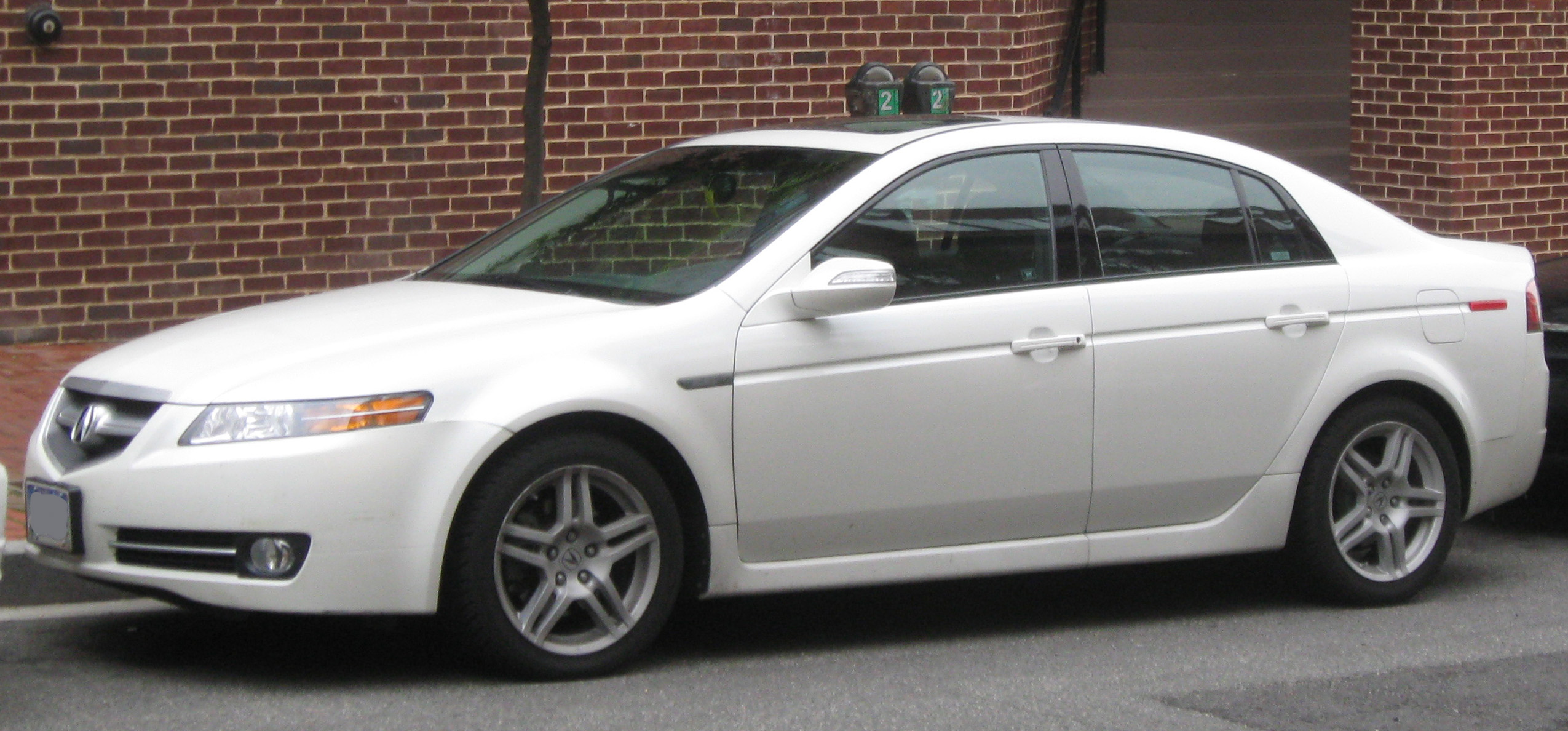
Gen 3 TL
"I remember working on the Gen 3 TL and they were telling me I just begged them, I said look"
“Gen 3 TL” means the third generation of the Acura TL. In this story, the speaker is trying to get the car’s wheels and tires to match what the concept design intended.
“Gen 3 TL” refers to the third-generation Acura TL. The Acura TL is a front-wheel-drive midsize sedan, and this segment is about fitting specific wheel/tire sizes to match the original concept car’s look.
215, 65, 15
"and they were saying it's going to be a 215, 65, 15 John or maybe we'll give you 60, 16s."
That’s a tire size code. It tells you the tire width, how tall the sidewall is, and what wheel size it fits—so it changes both ride feel and the car’s look.
“215, 65, 15” is another tire size format: 215 is the tire width in millimeters, 65 is the aspect ratio (sidewall height percentage), and 15 is the wheel diameter in inches. Compared with lower-aspect-ratio tires, a higher “65” typically means a taller sidewall and a different ride/handling feel.
60, 16s
"or maybe we'll give you 60, 16s. And what are you talking about"
This is another tire size shorthand. “16” is the wheel size, and “60” describes the sidewall height—so it changes how the car rides and turns.
“60, 16s” is shorthand for a tire size where “16” is the wheel diameter in inches, and “60” is the aspect ratio percentage. Aspect ratio changes sidewall height, which can affect steering response and comfort.
17 inch, 45 series tires
"And what are you talking about 17 inch, 45 series tires that are out of your mind."
That phrase is tire sizing. “17 inch” is the wheel diameter, and “45 series” describes how tall the tire’s sidewall is compared to its width—both affect how the car rides and how it looks.
“17 inch, 45 series tires” describes tire sizing: the wheel diameter is 17 inches, and the “45 series” is the tire’s aspect ratio (sidewall height as a percentage of the tire’s width). Changing these numbers affects ride comfort, steering feel, and how the car’s stance looks.
core platform
"It's built on a core platform job. And went on, on"
A “core platform” is the main shared vehicle structure that many cars are built on. It can limit what wheels/tires you can fit unless you modify parts that connect to the wheel area.
A “core platform” is the shared vehicle architecture (hardpoints and mounting points) that multiple models use. The speaker is saying the car was constrained by that shared base, which limited wheel/tire fitment unless specific components were changed.
$3 knuckle piece
"if I change this $3 knuckle piece on here we could put those wheels on."
A “knuckle” is a wheel-area part that connects the suspension/steering to the wheel hub. The point here is that swapping that component made it possible to use the wheels they wanted.
A “knuckle” in this context is the steering/axle component that helps connect the wheel hub to the suspension and steering linkage. The speaker claims that by changing this small part, they could fit the desired wheel/tire setup.

Integra
"I have fun in my Integra because I know people that have made it and I like it"
The Honda Integra is a small sporty Honda that car fans like because it drives well and has lots of parts available. Here, the host is talking about a specific Integra version using a code name.
Honda Integra is a compact, enthusiast-focused model known for its sporty handling and strong aftermarket support. In this segment, the host also references “DC2,” which is commonly used by enthusiasts to refer to a specific Integra generation/chassis code.
front engine
"[2849.0s] the ASCC [2850.3s] the front engine [2851.5s] the front engine [2852.0s] the NSX successor"
“Front engine” means the engine sits in the front of the car. That layout affects how the car feels and handles compared with cars where the engine is in the middle or back.
“Front engine” describes an engine mounted at the front of the car, typically driving the front wheels or feeding a front-mounted drivetrain. It’s a layout choice that can change weight distribution, steering feel, and packaging compared with mid-engine or rear-engine designs.

NSX
"I know you guys didn't use the NSX name when it was shown... but that was the heavy implication... then the recession killed the project... the NSX is the NSX"
The Honda NSX is a famous Honda supercar. It’s known for being designed like a real performance machine, not just a styling exercise. Here, the discussion is about how using the NSX name comes with big expectations—especially when the car has to be redesigned for new rules and a different kind of vehicle.
The Honda NSX is Honda’s flagship supercar, known for its mid-engine layout and engineering-first approach. In this segment, the hosts reference the NSX name being used as a heavy implication for a project that was later killed by a recession, and they discuss the challenge of recreating an iconic name under new regulations and a different format.
FR effort
"but it was an FR effort and so from a designer perspective okay let's celebrate the FR in proportion"
“FR” means the engine is in the front of the car and the power goes to the rear wheels. That setup changes how the car grips the road and how it feels when you turn or accelerate.
“FR” here refers to a front-engine, rear-wheel-drive layout. That layout affects how the car balances weight and how it delivers traction and steering feel, especially compared with front-wheel drive or all-wheel drive.
mid-engine
"and it's a mid-engine or something let's just be very pure with it because it's a show car"
“Mid-engine” means the engine sits closer to the middle of the car rather than the front. That can help the car feel more balanced and easier to steer.
A mid-engine layout places the engine near the center of the car, typically behind the front seats and ahead of the rear axle. This usually helps balance weight distribution, which can improve handling and steering response.
FR
"that it was going to be an FR [2944.0s] right [2945.1s] and"
FR means the engine is in the front of the car, and the rear wheels do the driving. Different layouts change how the car handles and how it puts power to the road.
FR stands for “front-engine, rear-wheel drive,” describing a layout where the engine is in the front and power goes to the rear wheels. The speaker is contrasting this with the NSX’s mid-engine approach, since layout affects balance, traction, and how the car feels to drive.
V10
"I think that thing was a V10 so whatever people were saying"
A V10 is an engine with 10 cylinders arranged in two rows that form a V shape. People notice it because it usually sounds special and can feel very smooth when it revs.
A V10 is an engine with 10 cylinders arranged in a “V” shape (two banks of five). It’s known for a distinctive sound and smooth power delivery, and it’s relatively rare compared with V6 or V8 engines.

Acura NSX
"but that front end is very similar to the NSX on this design study here behind you"
The Acura NSX is a well-known sports car from Acura, famous for being a high-tech, driver-focused machine. Here, they’re saying the concept’s front design looks similar to the NSX.
The Acura NSX is a mid-engine sports car that became famous for its advanced engineering and supercar-like driving feel. In this segment, the speaker says the concept/design study’s front end shares cues with the NSX, tying the study to Acura’s design direction at the time.
front facial images
"several years of [3035.3s] front facial images and things [3037.5s] every OEM was trying to"
“Front facial images” means the pictures or drawings of the car’s front end. It’s about how the headlights and grille come together to give the car its look.
“Front facial images” is a design-industry way of talking about how the car’s front end “face” looks in sketches, renders, or photos. It usually includes elements like headlights, grille, and overall proportions that define the car’s visual identity.
OEM
"and things [3037.5s] every OEM was trying to [3039.2s] figure out their character"
OEM means the original company that makes the car. In this context, it’s talking about the automaker deciding how the car should look and feel.
OEM stands for “original equipment manufacturer,” meaning the company that builds the vehicle (or the parts) that are sold under its brand. In automotive design discussions, OEM is often used to refer to the automaker setting the design direction.
grill tactics
"figure out their character [3041.3s] or grill tactics [3043.1s] or whatnot"
“Grill tactics” is basically how a car company designs the front grille to look like it belongs to their brand. It’s one of the first things you notice on the front of a car, so it’s used to make the car look “on purpose.”
“Grill tactics” refers to how automakers use the front grille as a key part of their brand identity and styling strategy. The grille shape, openings, and detailing can signal a model’s character and help unify a company’s design language across vehicles.

Acura CL
"you could see it what became the original CL you wanna talk about a jump between a show car"
The Acura CL is an older Acura model that was built as a sporty luxury coupe. It’s the kind of car people talk about when they’re looking at how Acura’s designs moved from show cars to real production vehicles. In short, it’s a past-generation Acura that represents the brand’s earlier styling and performance goals.
The Acura CL is a classic Acura model name associated with the brand’s earlier era of sporty luxury coupes. The podcast’s “jump between a show car” context suggests the CL is being discussed as part of the lineage from concept ideas to production cars. That’s why it comes up when tracing how Acura’s design and styling direction evolved over time.
production car
"you wanna talk about a jump between a show car [3074.9s] and a production car [3075.9s] I think they're right next to each other"
A production car is the real version of a design that gets built and sold to regular customers. The hosts are comparing it to a show car to show how ideas change between concept and the final product.
A production car is a vehicle that’s built for sale to the public in meaningful quantities, using finalized engineering and manufacturing processes. The hosts are contrasting it with a show car to explain how design elements can evolve from concept to something you can actually buy.
crush zones
"your true [3199.1s] safety hardpoints and crush zones [3201.0s] and everything else it won't look like [3203.1s] the cool image you made"
Crush zones are parts of the car designed to crumple in a crash. They help soak up energy so the cabin is less likely to be hit by the full impact.
Crush zones are engineered areas of a vehicle that deform in a controlled way during a collision. The goal is to absorb crash energy and reduce the amount of force reaching the passenger compartment.
extendable wheelbase
"Audi made a concept car in 2019 that had an extendable wheelbase it was a GT"
An extendable wheelbase means the distance between the front and rear axles can change. In concept-car form, it’s used to explore how the same vehicle platform could shift between different roles—like a larger grand-tourer feel versus a smaller sports-car stance.
GTS
"it was a GT and then a small sports car"
“GT” usually means a grand touring car—built for comfortable highway driving over long distances, but still meant to be fun to drive.
“GT” stands for grand touring, a style of car focused on comfortable long-distance cruising with enough performance to feel sporty. In the transcript, the speaker contrasts that GT concept with a smaller sports-car concept.
Request an Explanation
Heard something you'd like explained? We'll add it to this episode.
Sign in to request explanations for terms you heard.
Want to learn more?
Browse our glossary for plain-English explanations of automotive terms, jargon, and concepts.
Help improve this episode
See something that's not quite right? Our annotations are AI-generated and can sometimes miss the mark. Click the flag icon on any annotation to suggest a correction.