Electrification means cars are moving away from gas engines and toward electric power. That usually involves batteries and electric motors, and it changes how the whole car is designed.
Self-driving technologies are the systems that help a car drive more automatically. They use sensors and software to understand the road and decide what to do.
Mazda’s “iconic SP” is a concept car that shows Mazda’s design ideas for the future. The hosts bring it up as proof that not every concept is only about new tech.
In automotive design, “constraints” are the real-world limits that production vehicles must satisfy—like regulations, cost targets, manufacturing feasibility, and safety requirements. The host contrasts concept cars (with fewer constraints) against experienced designers who may “limit themselves” after multiple production cycles.
Person
Larry Snowda
Larry Snowda is a designer the host talks about from the past. The host brings him up to explain how concept-car work and design sketches can shape what designers love.
The Volkswagen Rabbit is a regular, everyday Volkswagen model. Here, the speaker brings it up as an example of a car design meant to be a real-world replacement for the Beetle, not just a one-off show car.
Concept
form is defined by the function
This is a design idea that says the purpose of something should decide what it looks like. Applied to cars, it means the shape is built around how the car works and what it needs to do.
The powertrain is the “moving parts” that make the car go—like the engine or electric motors and the parts that send that power to the wheels. If a concept car has a real powertrain, it’s much harder and more expensive to build.
Electric motors are what make an electric vehicle move by turning electricity into motion. Here, they’re mentioned as a way concept cars can be made to move even if the full system isn’t production-ready.
A concept board is a visual collage used in design to communicate an idea quickly—often combining sketches, reference images, and mood visuals. It helps align a team on the direction before detailed design work begins.
Auto shows are big events where car companies bring cars to display for the public and press. Seeing a car in person can make it look different than photos or videos.
A concept car is a one-off or limited vehicle manufacturers build to show off new ideas. It’s mainly meant to be seen at events or online, not to be sold like a normal car.
Topic
moderate car week
They’re talking about a car event where you can see a concept car in person. The host’s point is that it can look totally different than it does on a screen.
A design study is basically a “design prototype” used to show what a car could look like. It might not be a real car you can buy, but it can still shape future models.
An inside-outside mock-up shows the car’s interior and exterior design together. It helps the team make sure the cabin and the outside look match the same design idea.
“Brand look and feel” means the recognizable style a company wants across its cars. Here, they’re saying design teams use references so the cars don’t all end up looking unrelated.
The D-type Jag is a classic Jaguar race car from the 1950s. The point is that its body panels have a specific shape you only really appreciate by looking closely in person.
CES is a big annual tech event where companies show off new gadgets and future technology. The hosts mention it to explain that the “future” conversation isn’t just happening in cars anymore.
Future mobility is a general term for how transportation might change in the future. In this discussion, it’s used to introduce why concept cars are hard to design when they’re meant to show new tech like self-driving and EVs.
Skateboard batteries are EV battery packs mounted low in the car, under the cabin area. Putting the batteries there affects how the whole car is built.
Here, “architecture” means the car’s overall design layout—where the big components go and how the car is built. Even with EV flexibility, safety rules still limit the design choices.
Tesla is a company that makes electric cars. The speaker is using Tesla as an example of an EV that looks good even though the design is very different from gas cars.
Wheelbase length is how far apart the front and rear wheels are. It’s one of the biggest “shape” measurements designers use to make a car look balanced.
Double wishbone suspension is a type of front or rear suspension where the wheel is guided by two shaped arms. It helps the wheel move in a controlled way, which can support a lower, sportier-looking front end.
The wheel arch is the curved body panel around the tire. If the suspension and tire are packaged a certain way, the arch has to be sized to fit and to keep clearance.
“15 inch rims” refers to wheel diameter—15 inches from one edge of the rim to the other. Designers and engineers consider rim size alongside tire sidewall height and overall wheel/tire diameter because it affects how the car’s proportions look and how much clearance the suspension and body need.
Hood height is how high the hood sits. If it’s lower, the car can look more aggressive and sleek, but it also means designers have to fit everything underneath.
Pedestrian safety means designing the front of a car to be less dangerous to people if there’s a crash. It can change things like how the hood and bumper are shaped so they don’t hit a person as hard.
Term
cowl vehicles
The cowl is the part of the car body near the windshield. When safety rules require more space in the front, the car’s shape around that area often changes, which can make the front end taller.
Term
clearance between the hood and the top of the engine
That clearance is the space under the hood above the engine. If safety rules want the front to crush or deform more in an impact, designers may need more space there, which changes the car’s overall shape.
Belt lines are the visible lines along the side of the car that help define its shape. If the car’s body gets taller for safety reasons, those lines usually move up too so the proportions still look right.
“Massive rims” just means very large wheels. Concept cars often use oversized wheels to make the car look more aggressive and to match the bigger body shape.
A “chop top” means cutting the roof down to make the car look lower. It can make the car look more aggressive, but it’s not simple because it affects space inside and how the front and windows fit.
“22 inch rims” means the wheels are 22 inches wide across. Larger wheels can make the car look more “filled in” and sporty, but they can change ride comfort and tire options.
“Vertically oriented headlights” are headlights that are shaped more tall than wide. Designers sometimes choose this to fit the front end’s shape and still meet required lighting rules.
Honda is the car brand being mentioned. The host is saying Honda has tended to keep a more traditional-looking front design compared with some other modern styling trends.
Term
power wolf
“Power wolf” sounds like a nickname for a front-end styling problem. The idea is that if the hood and fenders have to sit higher for clearance, the front can end up looking “off,” and designers may try to reshape the fender to fix it.
An overhang is the part of the car body that sticks out past the wheels. Car designers try to shape it so it looks shorter or more balanced, especially when you view the car from the side or at an angle.
A three-quarter view is when you look at the car from an angle so you can see the front (or back) and the side. It’s a common way to judge how the car’s shape looks in real life.
“Hard points” are the non-negotiable spots in the car’s structure—places where parts must mount and where safety structures have to be. Designers can’t just draw anything; the shape has to fit those real engineering locations.
Safety requirements are the rules and engineering needs that make sure a car protects people in crashes. They can limit what designers are able to do with the shape and layout of the car.
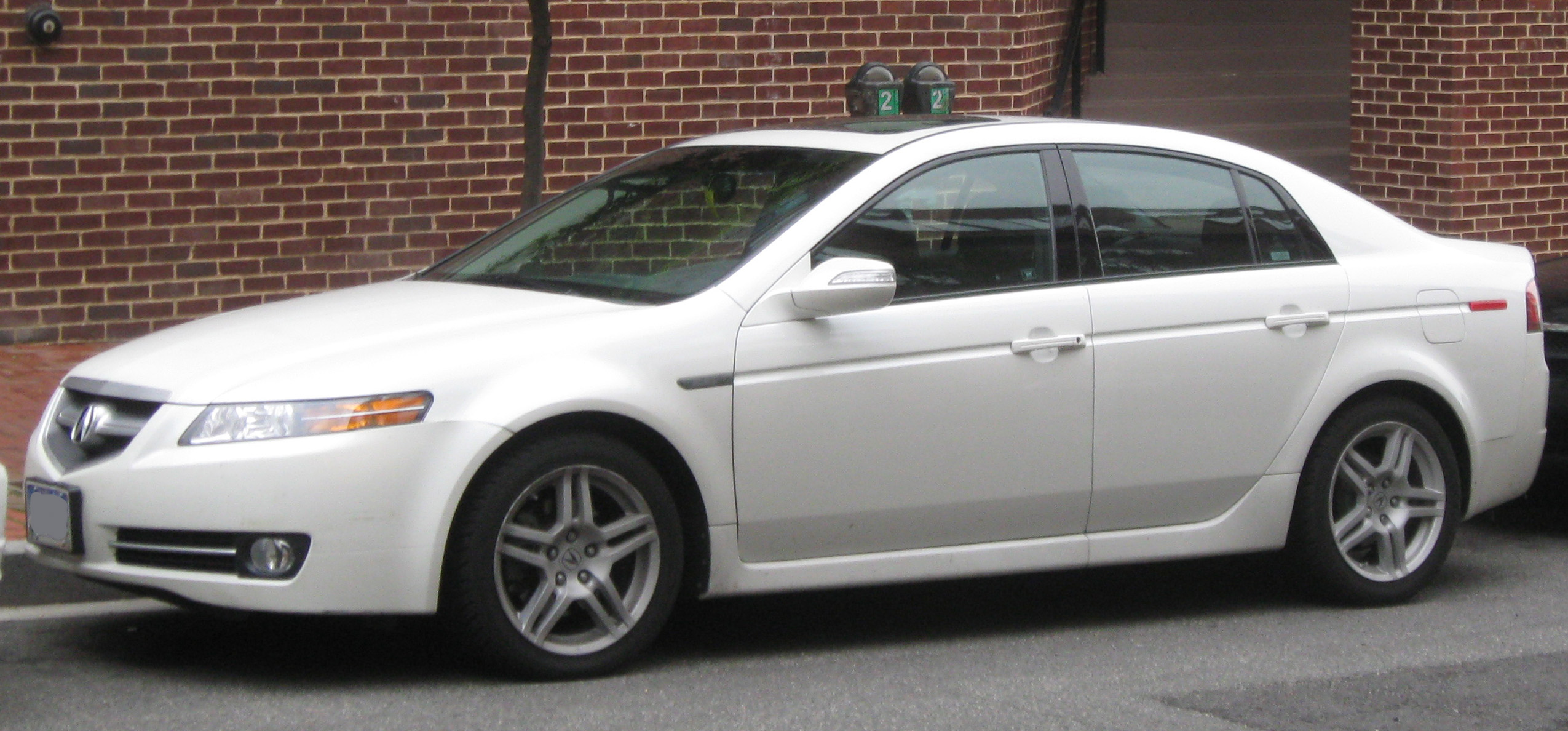
The Acura Integra is a smaller, sporty car made by Acura. It’s designed to feel more fun to drive than a typical everyday compact. The podcast is referencing it because it’s part of Acura’s newer performance lineup.
The Acura TLX is a luxury car in the middle size class, built for comfortable everyday driving. It’s also offered in sportier versions, which is why people bring it up when discussing Acura’s performance concepts. In simple terms, it’s Acura’s “main” sedan that can be tuned for more excitement.
A show car is a special car made mainly to wow people at car shows. It can be designed more freely than a regular production car, so turning it into a real, sellable car is often harder than it looks.
Production regulations are the rules a car has to follow to be legal and safe to sell. They can force changes from the show-car version because the car must pass certification tests.
A production version is the real car that gets built for regular customers. It has to be made in large numbers and meet safety/legal rules, so it may not match the show-car exactly.
“Gen 3 TL” means the third generation of the Acura TL. In this story, the speaker is trying to get the car’s wheels and tires to match what the concept design intended.
That’s a tire size code. It tells you the tire width, how tall the sidewall is, and what wheel size it fits—so it changes both ride feel and the car’s look.
That phrase is tire sizing. “17 inch” is the wheel diameter, and “45 series” describes how tall the tire’s sidewall is compared to its width—both affect how the car rides and how it looks.
A “core platform” is the main shared vehicle structure that many cars are built on. It can limit what wheels/tires you can fit unless you modify parts that connect to the wheel area.
Part
$3 knuckle piece
A “knuckle” is a wheel-area part that connects the suspension/steering to the wheel hub. The point here is that swapping that component made it possible to use the wheels they wanted.
The Honda Integra is a small sporty Honda that car fans like because it drives well and has lots of parts available. Here, the host is talking about a specific Integra version using a code name.
“Front engine” means the engine sits in the front of the car. That layout affects how the car feels and handles compared with cars where the engine is in the middle or back.
The Honda NSX is a famous Honda supercar. It’s known for being designed like a real performance machine, not just a styling exercise. Here, the discussion is about how using the NSX name comes with big expectations—especially when the car has to be redesigned for new rules and a different kind of vehicle.
Term
FR effort
“FR” means the engine is in the front of the car and the power goes to the rear wheels. That setup changes how the car grips the road and how it feels when you turn or accelerate.
“Mid-engine” means the engine sits closer to the middle of the car rather than the front. That can help the car feel more balanced and easier to steer.
Term
FR
FR means the engine is in the front of the car, and the rear wheels do the driving. Different layouts change how the car handles and how it puts power to the road.
A V10 is an engine with 10 cylinders arranged in two rows that form a V shape. People notice it because it usually sounds special and can feel very smooth when it revs.
The Acura NSX is a well-known sports car from Acura, famous for being a high-tech, driver-focused machine. Here, they’re saying the concept’s front design looks similar to the NSX.
Term
front facial images
“Front facial images” means the pictures or drawings of the car’s front end. It’s about how the headlights and grille come together to give the car its look.
OEM means the original company that makes the car. In this context, it’s talking about the automaker deciding how the car should look and feel.
Term
grill tactics
“Grill tactics” is basically how a car company designs the front grille to look like it belongs to their brand. It’s one of the first things you notice on the front of a car, so it’s used to make the car look “on purpose.”
The Acura CL is an older Acura model that was built as a sporty luxury coupe. It’s the kind of car people talk about when they’re looking at how Acura’s designs moved from show cars to real production vehicles. In short, it’s a past-generation Acura that represents the brand’s earlier styling and performance goals.
A production car is the real version of a design that gets built and sold to regular customers. The hosts are comparing it to a show car to show how ideas change between concept and the final product.
An extendable wheelbase means the distance between the front and rear axles can change. In concept-car form, it’s used to explore how the same vehicle platform could shift between different roles—like a larger grand-tourer feel versus a smaller sports-car stance.
“GT” usually means a grand touring car—built for comfortable highway driving over long distances, but still meant to be fun to drive.
LIVE
Tänk till exempel att ligga med benen i högläge hjälper lite,
ifs olycksfalsförsäkring hjälper mycket.
I discovering track by police and nearly arrested, thanks to a flock license plate camera screw up, that story is live on the.
Drive dot com and if you're not one of the millions of people who saw it.
What are you doing time to catch up because we got a lot more coming on that.
So anyway, this week I'm stepping back in with another special interview episode on a problem
that could have huge implications for the future of cars and that is the faulting business of concept cars.
Every year automakers spend many millions of dollars building full size one off concept cars to market
new ideas, flex design, capabilities, experiment
with new technologies and just get people excited about
what's next.
There are showcase of what a company can do when they're freed up
from pesky things like crash regulations and mass production
budgets.
Most never make it to the showroom, at least not without a
lot of compromises, but that's not the point.
The point is to push, see what happens and apply those findings
to the cars of tomorrow.
Historically, this is all worked pretty well.
An amazing concept car can turn someone into a brand loyalist
for life, and you can trace almost every element of a new car in
2026 back through initial concepts over decades.
But we cover a lot of concept car reveals on the drive.
In the last few years, I've noticed something shift.
They don't really have that magic pull on the public anymore.
Outside the occasional home run, more often, they're making people
mad.
Too many screens, too much tech, too ugly, too cold, not enough
cylinders, whatever, you name it.
And okay, people like to complain online, water is wet, what
else is new?
But there's something bigger going on here.
Concept cars are a tangible glimpse of the future, and 20 or 30
years ago, they were being made to explore a much wider range of
hopeful ideas about what that could be.
Today, the future of cars feels narrower, grimmer, more expensive
and more software defined.
Automakers have cut back on how many concepts they're making
because a CGI render is a lot cheaper and the ones they are making
are primarily trying to solve the massive twin challenges of
electrification and self driving technologies.
There's just a big convergence happening.
I'm generalizing because not every concept is a tank like crossover
or an autonomous electric blob.
Some cool stuff is still being made.
Look at the Mazda iconic SP or any recent concept from Genesis.
But overall trust that concept cars will actually lead to better,
more desirable production cars is at an all time low.
And here's why this is a problem.
The signal that a concept car is supposed to create for both sides,
for companies and consumers, is getting weaker.
When people are geared to greet concepts with suspicion because
they represent anxieties about the future instead of hope, the
market research aspect breaks down.
When car companies can't get valid data from that response,
they're aim falters.
And when companies build fewer ambitious concepts because it feels
like a waste of money, the one window for both sides to have a
conversation about what the cars of tomorrow should look like or do
or represent gets smaller and smaller.
I think it's possible.
It could disappear entirely.
And then where does that leave this whole business?
Anyway, this was on my mind a lot earlier this year.
But fortunately for you and me, I don't have to wonder if
automakers are worried about this.
I can just ask them and I did.
Over the last few months, I sat down with five leading car designers
from Honda, Toyota, Stilantis, Hyundai and GM, all of whom have worked
on pretty big concept cars to get the insider view on the state
of concepts today.
What they think is working, what's not and whether there's a way
out of this moment.
We just published a big video wrapping up all those interviews
on our YouTube channel today, but they were really fascinating
conversations.
So here on the pod we're sharing the full cut of my chat with
John Aketa, the former head of design for Acura.
He's a candid guy.
He definitely didn't hold back on the mistakes he's seen and made
himself, why concepts are harder to nail these days, but also
why he thinks they're more important than ever.
If the industry can get them right.
I think you're going to enjoy this one.
Okay, let's go.
So my name is John Aketa.
Currently I am at Honda Racing Corporation run in the business division,
but I have a long history in Honda.
I'm on my 36 year.
Wow, 36 years, but 25 of that.
Was designing cars and I had opportunity to learn design in
Japan for six years.
My first six years in Japan and then I came back here to the
States at Torrance facility.
You're here.
A lot of accuracy on this year and then maybe a complaint too much
about the sales guys that haunted me over to become general manager
sales at Acura, but I've been working with the sales side of things
for a while now.
You still consider yourself a designer like if you were to say one
word, who I am designer.
I would say yes.
I would still say that.
Wow, I don't know.
I think more of a creative guy.
I'm not an Excel sheet, crunching numbers, monthly sales, daily things
like that.
It's hard for me to work the left side of the brain as much.
I could tell you if I'm sitting in a meeting, I'm still doodling.
You know, it's just a way for me to concentrate.
So most of the time I walk away and like, could I have your doodles?
You know, whatever.
Yeah, whatever.
You know, but it's just just why, yeah.
You know, having demand for your doodles is I think a sign of something.
Yeah, that's a sign of something.
So my first question is in your view both from your time as a designer
and your time running Acura.
What is the real value of concept cars or show cars for automakers
today also versus say 25 35 years ago when you first started?
Because you've got the ROI calculation of the marketing potential, the R&D
playground potential, the feedback potential from possible buyers.
So where do you think the real value lies?
I think, you know, you've hit all of the value points.
The, how do you say the logical viewpoint?
Meaning, yeah, let's test some ideas, you know, get it out in front of the
market, see what people react to it and what they say.
We can get some data points and whatnot.
The other is you want to try something new as a designer and you're still years out.
And if things are well received, that gives the engineer time to kind of work on
something that might possibly become something new for a vehicle, whatnot.
Purely, you know, from a designer guy perspective, and I know there's other
design people that might see this, but for me, it's just a excuse for a lot
more freedom because it is a one off and you know, hot rod might be a good
representation if you're well, but you get to spend the time and just purely
have the room to express something that's been on your mind that somebody's
been telling you, you know, you can't, you know, it just opens up the box.
And especially, you know, when you're starting out, it's an amazing thing to be
able to work on show cards and things to really express your ideas and things.
And it's a sense of freedom for designers.
So there's different reasons behind it all, but selfishly, from a designer's
perspective, it's a play day.
Yeah, go out, express yourself.
Which one do you think actually delivers the most value to automakers, though?
I think all of them do.
You know, I think you have to give the designers some freedom to express themselves
because out of that, when we say, you know, freedom to express yourself, some of it
just purely naivety because kid out of school or something might not know how to
put a production vehicle together, right?
And but it is industrial design.
So there are parameters and things you have to hold on to to make a real vehicle
out of it, but you don't have the constraints.
And yet being naiv allows you to push limits that an experienced designer who's
gone through several rounds already limit themselves, you know, in a box or that
can't they can't do this, that.
And you just just slowly starts to hold back, you know.
So from a value perspective from an OEM, they want the new ideas, right?
And it's very important for each OEM to let the guys and gals loose a little bit
from time to time to just see what they could come up with that's new, all right?
I think the new component of it is very valuable.
Yeah, yeah, that's something I've heard before as well that name a car designer.
They you can't end up designing a really emotional, powerful, long lasting production
car without getting your bones on concept cars.
Like it's an essential part of a designer's development.
Yeah, yeah, well, and it's interesting too, though.
I mean, I've had the, you know, opportunity to meet some big, big design guys
from the past, right?
For instance Larry Snowda, you know, he did the, the vet, you know, and he had all
those amazing show cards from Detroit General Motors back in the day.
I remember he befriended me a little bit and we were talking at a bar one night.
He said, well, you've done all these amazing looking, you know, show cards and
think which one's your favorite, which is your favorite car, right?
And he, specific mention at the time, he loved the Monza GT that he did, right?
And he said just the ideas, the way it turned out that was his favorite.
Now you talk to another person like Jaeger and we're talking about a one
time, you know, or you've done so many amazing vehicles.
What's your favorite design?
And you would think they would poke at a sports car or a show car or something.
And he said the Volkswagen rabbit.
And I said the rabbit.
Det kind of took me by surprise, but he spoke out like a true industrial designer.
He said they were trying to do something that will replace the beetle, basically a global vehicle.
And to have that car become such a well received vehicle globally.
He really made him feel good about himself being a industrial designer, a car designer, right?
So it just depends on the kind of individual you are and what you're into at that time.
But two completely different answers for, you know, really, really amazing designers.
Yeah, no, that's really fascinating.
Personally, I've always loved when a car, the form is defined by the function.
And you see, I would say less of that.
I mean, obviously there's crossovers everywhere.
Like people want to carry a bunch of stuff at their family.
But there's something about how the lines on a car like that are just so straightforward.
And that's really interesting to me.
It's clean, it's simple and it's so hard to do.
And what's not simple is most concept cars today.
How expensive, and I know that we're talking about the present and you have been out of the studio for a minute.
But how expensive has it gotten to make a functional show car?
Either that has interior and exterior done and maybe even has a powertrain or even just, you know, electric motors to roll it around like.
Wow.
Yeah, it's the sky's the limit.
But what I do see trending after the Bev world and the Bev push is the simplification of interior designs.
Yeah, right back when we were doing it.
All the little, you know, meters and needles and everything was everything had to be made physically and show that it's unique and it's fun and whatnot.
From an interior design perspective, I thought that was something they had to do in my day.
But recently things are a lot more open and simple and you have panels and screens and a lot of the entertainment that occurs to get a driver engaged is digital.
Right.
And it gives you the freedom to choose the color you want or the meter that you want to see and the size of the font you want.
And all of that could be a lot more customized because of the technologies in general.
But the space itself has simplified, you know, and I think there's less buttons.
So I dare say probably man hour wise, it probably should take less time to make showcar interiors of today than maybe in the past where you had 50 buttons and this and that.
Now, obviously, even with the new cars where you do details and things, you know, it's going to take quite a lot of time.
But also 3D printing and all of these technologies that came into play to make these things that we couldn't make before, you know, easily can be done a lot simpler.
So I'm imagining, I don't know, inflation, everything, maybe equals out.
But if it went equals equal to make a showcar in the past, probably should have cost more in terms of man hour.
Yeah, yeah, yeah, that makes sense.
I could see that.
The same time, though, we were just saying how designing a showcar is really important for a designer's development.
Do you think that having to put that much more time into, say, the interior to match what was in vogue at the time versus today when it's just less to do?
Do you think that's a problem or do you think it's part of making modern interiors feel more emotional and impactful?
Well, I think it's a different look and feel, I'm sure.
And if I said this as an exterior designer, the interior designer is watching this, he doesn't get anything.
No, there's a lot more things that you could focus on that might not have gotten attention, you know, to just improve the whole experience inside.
You know, you're getting into aromas and, you know, ceiling lighting and mood, this and that.
And things that they really think about too much, you know, with older showcars maybe, but how a individual experiences themselves inside the car is so important now, right?
It just is.
And there's so many new tools, like I've been out too long.
I see how presentations are done, you know, it's completely different.
You know, things are moving now in presentations, you got videos and things to give you a sense of feel of what it might look like driving down the street.
We had to draw everything, you know, we drew absolutely everything.
Our Google download pre-internet was, we'd spent hours at a bookstore looking through magazines for the right image so we could cut it out and put it on a poster board to make a concept board or something.
So, yeah, it's way, way more advanced.
And I'm sure with the information that, you know, young designers could get these days, the solutions and things are way more unique and different for the time.
You know, your career as a designer and then as a brand manager for Acura kind of tracked with the internet developing and turning into the default form of communication.
And the way that most people now receive a concept car is through pictures or video online.
I mean, magazines, it's similar, but I think we all know that like the way that we use magazines and consume media through that, it's just, it is different.
But auto shows have also really fallen off.
And in your view, does that change the way that a concept car is developed, the idea that most people are going to see this online versus in person and that physical presence isn't going to play as much of a role?
I don't think any designer approaches it that way.
You know, there's nothing like the real thing at the end of the day.
How many times have I seen something online and I'm like, that's kind of weird or whatever.
And then you see it, you know, you go to moderate car week or somewhere and you see it in the space that it needs to be at.
And it's like, wow, it's completely different than what I thought I saw, right?
But the comments are running because so many people can't see the real concept car because it's one of one traveling around the world or whatever.
And it doesn't make it to your town or whatever.
So you're basically relying on images and things.
But it's always amazing to me how, yeah, that's not what I thought once I saw it and it could go the other way too.
It looked amazing on the screen, but I don't know what happened.
I don't like it in real life or whatever.
It could go both ways, but yeah, it has, and it's a physical thing.
It's a 3D thing.
So we're talking about show cars that are seen by the public.
Behind you is a design study that was not made for the public consumption until it ended up in the museum.
What is the approach both logistically and creatively when you're making something that's for your guys' eyes only versus something that is intended for the public?
Because I look at that and I think that could have been shown at an auto show.
That could have been presented.
Yeah, absolutely.
It's interesting sometimes.
It goes both ways.
You make it internally because what you do want is some alignment.
You're trying to build a brand.
You're trying to build a certain look and feel that you all want to target.
And you got a team of designers that are going to be designing an SUV or sedan or whatever it is, variations of vehicles.
But you do want to tie to something so that every single one isn't completely different other than the grill or something.
So it's kind of a 10-year vision for internals to say, hey, that's what we want to be doing in the next few years here.
Obviously, for this car to be where it is, is an inside-outside mock-up, if you will.
There were several other designers that they were competing with.
But this is the car and the design that won out as the theme model for the 10-year vision.
And as you work on an MDX or you work on an RDX or whatever vehicle you were working on, an actor, you will come to this, you know,
hey, there's some nice subtleties of this that's missing in this car.
We should try to use a little bit more of that.
And it's a talking point, but it kind of helps guide a direction, if you will,
so that it doesn't branch off into 50 different ways of things.
It kind of helps manage a brand look and feel for a little bit.
That's fascinating.
So there was a contest between multiple designers to make something that would, again,
never be seen by the public, but would set the direction for the brand.
That's for ourselves now.
Yeah, wow.
If it's liked by a lot of people like this one, they might not let you take it out.
Or, you know, it's so cool, we got to show it, let's show it.
So it just comes down to decisions at certain times, you know, for what.
But I can tell you, when I was interning it in Detroit, there must have been a million shapes and things
that were at Tech Center, you know, the General Motors that never saw or would ever saw.
Amazing, amazing designs and things and drawings and stuff, you know, back in the 80s and 90s.
That every OEM I'm sure has.
Some make it out, some don't.
But for people that are around it every day, it's just stuff.
Yeah, right.
It's like going back to school.
Yeah, you know, that's Jamie's or that's, you know, James or whatever, it's just whatever it is.
Tools of the trade.
Yeah, it's part of what they do.
It's amazing to think of how many, like you just said, how many designs have never made it out
and never been seen and have just floating around in history for maybe to be discovered one day
or brought to the surface, but maybe not.
Like, we'll just never know.
Yeah.
Yeah.
I'm sure there's plenty of memories of a lot of people and designers that worked in, you know, different companies.
Like, yeah, there was this one that was crazy or whatever.
The one thing that's cool with designers is though, you know, if you have a napkin and a pen or at a bar, it looked like this.
They could pretty much kind of draw what it looked like.
No way, you know, it's like, really?
Yeah, we were trying to do that, you know.
But yeah, there's plenty of those, I'm sure, around the world.
So you were just talking about concepts coming out of Detroit in the 80s.
And before we started recording, you brought up the Japanese concepts from the 90s.
I think something I've heard from a number of people is that they feel like show cars and concept cars from that era
were just so much more, I don't know, joyful and varied
and seemed to represent a much wider range of ideas.
Versus today, there is sort of a convergence happening both stylistically
and in terms of the goals of these cars.
Why do you think that is?
Yeah, this is just my own personal opinion, right?
I'm sure there's other reasons.
But when I was in school and if I wanted to know what somebody in Italy was doing, right,
or somebody in France was doing or Germany,
I had to go find a magazine that a Japanese print house, publishing house, had a car styling.
And they would have volumes of these and every month or so they would come out
and they would talk about a particular vehicle at a particular studio
and they would have concept stories and play model pictures
and sketches that they did and it could be about interiors as well as X-series.
But you'd flip through these things and go wow, that's so cool or whatever.
I think today, because the information is so easy to get,
what happens with designers, it's hard to be the only one that saw that and thought it was cool.
So you got all kinds of people looking at it and cool is cool.
And before you know it, there's pieces that are cool on somebody else's sketch
and somebody else's ideas and things and it maybe just kind of melts after a while.
Why did cars in the 30s and 40s and 50s look so different
based on which country it came from, right?
And yet Ferrari is still Ferrari, Porsches are still Porsches, right?
And even with Honda, we tried to be who we are, BMW, everybody is trying to hold onto their roots
but it gets more and more difficult, it gets difficult
because the information that inspires you is just everywhere, it's just everywhere.
And some of this stuff that I used to gok at was like, how did he come up with that idea?
That is so fresh, that's so cool.
I need to do more research on British cars history or something
because somebody will tell me, yeah, have you ever seen the shape of a fender on a D-type Jag?
Have you really looked at it, John? Not pictures, have you really looked at one
and you realize it's like, holy cow, it's way more volatilist than I thought it would be.
You think all those shapes are the same and then you walk up to a Ferrari P6 or something
and there's a little crease at the top of that full fender.
And these are little things, nuances and things that you might not even notice
unless you ran your hand over it, but once again, difficult.
It's not easily accessible to see the details and things like it probably is today.
But people that like cars, they're looking, they're getting inspiration, right?
Maybe there's a little bit of melding in the mind happening, not saying good or bad
because cool is still cool.
I do agree with you that the intentionality that was needed to find that kind of creative inspiration
it was just different when the media landscape was different
and any creative field, there's a convergence happening
as everyone can have any idea that they want.
But I want to run a theory by you and tell me if you agree.
I think that, especially we're just saying 80s and 90s concept cars,
the gap between what was possible and what was in production at the time was very wide
especially when it comes to tech and interior tech.
And I know you're an exterior designer by trade, but screens were not in cars yet.
So you put a screen in a concept car, you're like, oh my god, that's crazy.
And you also had the sense of possibility of where cars could go
just seemed I think a little bit more wider.
And now you got as much tech as you can kind of fit.
And it's more about how do you express that tech versus the addition of something totally new
and that just maybe makes it feel like there's less of a bridge
that a concept car represents to the future.
Cars used to be the utmost futuristic thing, right?
So it's the closest thing to people trying to make almost like a human robot.
It's a machine, but it has soul.
For car people like me, you, there's something there, right?
Now there's a lot of other things that represent those kinds of things too, right?
And so if you're not a car person, yeah, I mean look at the transition.
You talked about auto shows and things.
CES, huge following for what's the future bring, you know?
And rightly so, just people evolving and machinery and technology evolving
and things are moving and yet mobility is just still a part of it.
So where does the automobile live in this ecosystem, right?
So it used to be auto shows and all of a sudden the car company starts showing up at CES, right?
So there's some merging thing that's just naturally from an evolutionary point of view that has to occur.
And the hard part is the expectation of just regular consumers with just technology in general
with the phone or the iPad or whatever it is that it has to offer.
Now you get that kind of, you know, how is my car, can my car meet that?
For people like myself who drives an Integritype, that's manual, you know?
I'm a caveman, man.
I'm so that guy, you know?
I always talk about this with friends sometimes.
You remember when cars came and people were told that the days of the horses were over, right?
And the guy on the horse used to say, well, there's no roads to get out there
and you can feed yourself and I take it to the river and it drinks and we just keep going, right?
But it didn't take long before the infrastructure allowed the car to be the best mobility device for A to B.
And in that evolution, technology is always going to keep coming
and it's going to evolve mobility for everyone and there's going to be some that are autonomous.
Yeah, humans are very finicky people, especially here in the US.
We love our cars, we love our freedom that's associated with that
and just part of the process, I do believe.
Yeah, we love our cars a certain kind of way, that's for sure.
It's funny you brought up, you know, the future mobility
because I also think that there's a particular challenge for designing a concept car
that can really resonate both when you are trying to showcase self-driving tech
because that's like an abstract thing in a concept car that doesn't fully function
and with EVs.
And with EVs I think it's interesting because the concept cars of the past
for the most part still had ICE powertrains ostensibly and yet they look crazy
and so you're imagining they took the same packaging constraints that a production car has
and somehow have a plan at least to figure out how to make it look like that.
But now with an EV you don't have those constraints
and so the shape of it has almost less meaning in a way
that comes through in the final product.
Do you think I'm way off base there?
Well no, I think I always thought that once everything goes right
that you don't have an engine in there anymore.
So the whole packaging parameter could change
or we talk about like in wheel motors and all of these things and skateboard batteries
all the pieces start to change and then you could change the architecture.
The only thing that won't change is probably seats and humans.
They're going to be in this thing and I wanted more dramatic changes in things
but safety, just purely just safety and things that you just can't get around
is always going to be if not more regulated as should be.
It's going to dictate the architecture.
Now I find it interesting that some of the good transitions like I'm going to say
but you know the Tesla's, the first ones, it was just a beautiful car
and I think they were very smart to do it that way.
Because when you design things that are so new
and I used to talk about this with some of my designer friends
he goes too new, it's a life decision for the owner.
It might have to be something, they still live in houses that look like this.
It's still here, it's still around this.
What's the proper transition and for designers, exterior designers
I'll tell you, it's all about proportions.
It's not how a sheet metal is bent this way
or the headlight shape is that or this.
It's the basic proportions of the vehicle that's going to justify
if people kind of lean into it as something that looks good or not.
That's like your wheelbase length to how high it is, how wide it is.
One of the key things that I always talk about is how high is the cowl.
The cowl sets everything.
The lower you can make it, the lower you can lower your seat point.
The lower you can lower the roof point.
Most likely your hood is going to be lower.
It's not going to go straight out, it's going to probably die down.
Your fender is probably going to be a little bit lower
which means you better have a double wishbone suspension or something.
That will dictate how big your wheel arch is
and then your world circumference of the wheel and tire.
We talk about this.
If you look at cars, especially Japanese cars
that are late 80s, 90s,
how can they look so good with 15 inch rims?
That's a good question.
It's because the cowl, especially like Hanna's and Anger,
the cows are so low.
The hood height is so low
because there's no pedestrian safety in those days.
True.
Not safe.
But the regulation wasn't there.
So your fender thickness is really thin.
With pedestrian safety and everything else, it's necessary.
Cowl vehicles start to get taller.
You got that clearance between the hood and the top of the engine
and all of these things for safety reasons.
Now your fender ends up being taller.
The car's belt lines starts to get higher.
The doors get thicker.
But you don't want your wheel arch to be the same size as before.
You're going to end up with this fender thing that's going to be this thick.
So designers will make bigger wheel arches
and you need bigger wheels and tires to fill in that space.
I was going to be one of my questions
why so many concept cars have massive rims.
It just gets bigger and
and this is where I think a lot of cars are.
I prefer my Integratype S
because of the size that it is.
It makes me feel comfortable with what I grew up with,
I guess more than anything.
You know, size wise.
There's a certain level of comfort that I have for size
when I want to own a vehicle, right?
Yeah, it's proportions and everything.
Now if you make a big wheel arches
and if you go to the wheel base,
well the wheel base is still long
but you're looking at wheel base from the outside
from the inside of the rear
and the inside of the front
and whatever body color you got left in between
is visually your wheel base.
So what happens?
Well, that looks kind of stubby.
So what do they want?
I want the wheel base to be alright.
So these big wheels and tires can be further apart
so you get the length that you want.
Yeah, it's endless proportion games.
This is why you have cars with belt lines
that seem so high
or dashboards that the dash seems so high
and yet they look like they're chop tops
like the side glasses lower
it's because if you just did it regular
it would just look like a very tall car
with a very small person in it.
So you do the chop top look pretty much
to make the car look lower and wider, right?
To get the proportion of that lower and wide working for you.
These are all the challenges that designers
continually have to face.
But it blends itself to vehicles that are big
and now you're talking about 22 inch rims.
To just make it look right.
And not only that but also things like
vertically oriented headlights
because you got to fill the front end gap
which is not something that Honda has done.
Honda has been one of the holdouts
in keeping a traditional face on a car.
I think it's very interesting to hear you talk about the cowl
kind of setting the height and shape of everything.
Clearly that must have entered the calculation
and why Honda still look like normal cars in a way.
Well it gets more and more difficult for everybody.
So now your cowl is higher, your engine everything.
You meet all your points, the hood is higher than you want.
So you may end up with a power wolf
where you could try to lower the fender as much as you can
where the bump is over the engine or whatever.
Or you'll see companies where they hold out
as long as they can.
And then they'll pull the headlight as low as they can.
So when you look at the face it looks kind of low and thin.
A little bit bigger forehead maybe.
But they're trying to make it look low.
And when you work with horizontal things
it's easier to make things look wider.
When you do vertical treatments of things
it doesn't lend itself to making cars feel wide.
All these are tricks under the trade
that every designer around the world is trying to tackle
to get their vehicles with these incredible hard points
that they have to meet to look the way they want it to look.
So if you go to a beauty salon
and you have a big head, John.
Really you should have longer hair like you
and you could just cut it this way
so you don't see as much of your face.
And they pull it back and say, holy cow.
Those types of games is being played with designers
with cars all day.
You're hiding things, you're trying to do things
to make it look a certain way.
It's the same as fashion.
How do I make an overhang look shorter than it really is?
You know, you bevel the shape
or it make the corner look like it's way over here
so when you're looking at it from 3 quarter
it looks like there's nothing there
but if you park the car in a big parking lot
and look at it from 100 meters away
holy cow, that overhang is just huge.
You never knew that
because you're just kind of up on the car all the time.
Games like that is what really good car designers
always have to deal with to try to make it look like they're sketching
or trying to make it look like a show car.
So it's funny you bring up the idea of trying to make things
that can reach production and dealing, you know,
melding, creative vision with the hard points
and the safety requirements and all that stuff.
So the precision driving concept that Acura did in,
was that 2016?
Yeah, 2016.
That clearly looked like a show car.
It did not have proportions that were realistic for production
but you did end up seeing a lot of those design elements
come through in the Type S concept
and then the TLX in the Integra
and so I'm curious when that was made
was it like, oh crap, now we have to make,
figure out how to actually do this in production
and that meets all these requirements
or was it less of a concern at that time
and then you just kind of figured it out
because like I imagine like the low cow
was pretty definitive there.
That's the curse of the show car.
The curse of the show car to production
is because you're not constrained
you make it as high as you want,
you make it as wide as you want,
you could do all kinds of things as you want
and it looks amazing
and then you got to meet the production regulations and things
and if you're too far off base
and you can't meet the tricks
that we were just talking about a little earlier
to cover for that
then you might find yourself in big trouble
because you come out with a production version
this happens all the time,
it's happened to us,
it's happened to a lot of companies where
show car is amazing,
what does it,
where does the production look like this?
We surpassed the limits of our
or manufacturing capabilities
or being able to,
we could always make one.
But when you're trying to sell a vehicle
you're going to sell 50,000 of these a year
there's sheet metal stamping coming out
and you got a certain amount of minutes
that he has to go on the line and does this
and people have to work so diligently
to put everything together
so the line keeps moving.
There's a lot of things you have to think about
engineering, manufacturing,
all of these that are good people
that I have to go through
and Indiana, all our factories have to go through
and every factory, every OEM has to go through.
But yeah, you put all that in
and sometimes you just can't,
he can't get it.
Or sometimes somebody, the engineer goes
I figured it out.
I remember working on the Gen 3 TL
and they were telling me
I just begged them, I said look
if we're going to make this car
I need 235, 45, 17 as the tire.
And I was laughed off the face of the map
by experienced engineers and they were saying
it's going to be a 215, 65, 15 John
or maybe we'll give you 60, 16s.
And what are you talking about
17 inch, 45 series tires
that are out of your mind.
It's built on a core platform job.
And went on, on
and took one engineer to say
if I change this $3 knuckle piece on here
we could put those wheels on.
And we were able to do it.
But because of that fashion
to pursue that by this individual
it helped the car look more like
the original concept.
Otherwise it would be very much
more like the course of the time.
You have to have great
what could we call large project leaders
the engineering guy that runs the whole program.
Dynamics, engine, chassis, design
he's the king lord of this vehicle.
If you have the right guy
and gets people motivated
you could do a lot of things.
Solutions can be found.
What is your personal reaction
when people say oh the concept car
looks so much better.
Are they screwed it up in production?
Is it offensive to you as a designer
or you just kind of roll it off?
No, some people might spend the time
to explain why.
And it's okay, you could tell the guy
just click baiting or whatever
it's so easy to complain
and it's still right to.
If you're a car designer
and you don't have thick skin
you're in the wrong business.
I imagine so.
You're absolutely in the wrong business
because making a vehicle
you spend five to six years of your life
from the napkin sketch
to somehow miraculously
coming out of a production line.
It's a lifetime of involvement
and the more passionate you are
the more involved you are
probably you'll end up
being closer to what you want.
In that context of things
it's like a kid
and then you make the kid
you love your kid
and somebody's saying
your kid's not cool
you can see how personal it could get.
It can be for a lot of people
but that's part of design.
It's part of car design for sure
and because it's like that
when you win though
you feel good about it
and it's okay.
The flip side.
The flip side is good too.
It's part of doing anything
for public consumption honestly.
I mean we get the same thing.
We write an article that people love
they're like oh my god
this is the best thing I've ever read
we're really happy about it
or a video
and then we do one
that doesn't resonate as much
and they're like
you guys are the worst
I can't believe I wasted
five minutes of my life on you.
All right well thanks for the five minutes
I guess.
There's been a couple of moments
where we've done things in Acura
where you know you have
killjonicita.com come out somewhere
and by somebody right?
It's just but
I mean there were memes made
about the Integra you know
and the way we presented that car
and introduced it just then
we didn't do it a good job right
but at the same time
people were so passionate
you know about Integra
we knew what we were going to get into
anti sexes, Integra
these are real emotions
that people have
towards the vehicle experience
that they've owned
and so to go away for a while
and all of a sudden
you know she's coming home
and the doorbell rings
you open the door
and it's the wrong person
standing there
they're gonna say something
they're gonna say something
cars are emotional things
but over time they
you know I'm hoping
that not everybody's gonna forgive us
but over time
this Integra's good too
because I could tell you
the man that led that program
his first two cars
when he joined on
there was an Integra
right so when he was
trying to find a concept
of things
I just sat down with him
and said hey stop
overthinking all this stuff
why did you buy an Integra
and he told me this and this and that
and you know why did you buy
and I bought the second one
why then
because of this
just make that the best you can
just make that man
yeah just make that
and they tried
and they had a team
that enjoyed themselves
immensely working on their car in Japan
and when you have a group of people
that are enjoying themselves
and are totally to the point
where like can we do this
should we do that
you know we should do this
you got a group of people doing that
you know the products gonna be
it's raised right
by right parents
and the right village if you will
all right
I have fun in my Integra
because I know people that have made it
and I like it
you know
it's all the little details
that are taking place
that the DC2 know
it's a different person
a different era
yeah
what would you have done differently
in introducing that
camera angles maybe
as we were saying before
yeah camera angles and things
you know it was a very high angle
and they wanted to do YouTube live
or whatever
I didn't even know what we were gonna do
YouTube live
I thought we were gonna be able to edit things and whatnot
but it's like
yeah it wasn't the best
angle
you know
and then people were
all the world were
you know
watching the countdown
for this thing to come in
here comes this
crazy man
here it is
and it was a
warm moment for them
and it's real
right
it's pure
you can't argue that
it's real feeling
the only thing I was said
and there was memes
and I was
in the meme I was fired by Trump
you know
and I'm there
and I sent it to my kid
I said
dad's me
and my
kids won't respond to that
was bra
not a good thing
yeah
but
I appreciated the
the time they took
to express their feelings
for sure
right
there were others a little more forgiving
give it a chance
I want to see the real car first
kind of thing too
but
you know
a year later
it was the North America car of the year
for whatever reason
and then it's on from there
and then the type best came
and more people like that
variation of it
right
and things have calmed down a little bit
but
it's all part of the
designers life
it's a very emotional thing
yeah I mean as you said change
no one likes change
right
and when you bring back a name like that
it's inevitably going to be different
and I don't think even if you had
different camera angles
people would have
maybe some people would have been
placated but
most people are just going to react like that
yeah
you know it's
something I wanted to ask about
was the
the concept you did
in 2008
or 2009
the ASCC
or
what is it
the ASCC
the front engine
the front engine
the NSX successor
that never was
yeah that never was
except for the race car kind of
right exactly
no I love that front engine
NSX car in Japan
that things sick
but when you're designing something like that
you have
I know you guys didn't use the NSX name
when it was shown
but that was the
heavy implication
that that's what it would be
then the recession killed the project
but
you're taking
ostensibly
an iconic name
and having to recreate it
not just in like
for a new era
with new regulations
but a totally different
format
can you tell me a little bit about
what that experience was like
and what you took away from it
it was
it was an interesting time
because
the NSX is the NSX
right
and we knew that
this is what
it might end up becoming
we knew the engine was amazing
but
it was an FR effort
and so from a designer perspective
okay let's
celebrate the FR
in proportion
let's not
try to make
this look like
NSX
and it's a mid-engine
or something
let's just be
very pure with it
because it's a show car
alright
and
how it
if we were able to continue that program
how if that's how we'll deal with it then
but one of the key things
was just keeping it clean as possible
but there's no denying
that it was going to be an FR
right
and
almost too good
to a point
you know
some of these
it can't be
people were making all kinds of comments
and NSX is a mid-engine
but that was the direction
that the company wanted to take at the time
and as a designer
it's a job to just try to do our best
to set it up if you will
alright
because that's what a show car is
once again
this is set up for what's about to come
and so we don't want any confusion
just back then
the engines that they were making
I think that thing was a V10
so
whatever people were saying
once they turn it on
they hear it, they'll forgive us
if only we could have lived in that world
yeah, that would have been awesome
they'll forgive us once they hear it
but from just a
stunning exercise perspective
just to make sure that everybody understood that
it's gonna be an FR
yeah
it's also funny that
I know these timelines kind of overlap
but that car never made it to production
and it has sort of reflected
the design cues of Acura at the time
less of like setting the next ten years
as the one behind you is
but that front end is very similar to the NSX
on this design study here
behind you
well I think there's some cues right
so
we went through
several years of
front facial images and things
every OEM was trying to
figure out their character
or grill tactics
or whatnot
and some of that carried over
into the NSX
as well as the team working on this car
you know, orders
some of these key elements that we wanted to do
I could tell you right now
that the break point that
we did keep for
a very long time until even now
we still have it
came from a show car
that was done if you go back over to the lobby
you could see it
what became the original CL
you wanna talk about a jump between a show car
and a production car
I think they're right next to each other
in the lobby over there you could see
what could happen between
Dreamland and
and
the reality check of
creating a wonderful vehicle
at Mirrensville
but that's where
the center brake line
started and we talked
about it it was
accurate accuracy
accuracy is not vague it's a point
you know and there's some reason
and logic behind why we did
it differentiated us with
what Honda was doing right
it was just something that we
were working with
do you think there's some
tragedy in the fact that
you can work really hard on something
that gets shown once and then
gets crushed or is never seen
by the public and you're really proud of it
but no one knows that you did this amazing thing
like how does that feel
after everything
all the work is done on this concept car
and it may not ever go anywhere else
depends on the type
of designer you are
but you know what they say
is nothing older than Laster's Choker
from a designer's perspective
yeah we could still say these things
being around and it still looks cool
but if you don't have the frame
of mind as a car designer
where you say
to yourself there's nothing older than
Laster's Choker
is that why
in your opinion
you really don't see that many retro
concept cars
there was maybe a burst of that in the 90's
2000's but for the most part
most concepts are not referencing the past
in any meaningful way
there's successful ones
and
not so successful ones in my book
and it's the same thing with Integra
if you try to copy exactly
it could get difficult
it could get difficult
and you'll see stuff online now
they'll look amazing
but if I gave you
your true
safety hardpoints and crush zones
and everything else it won't look like
the cool image you made
but I could see why everybody
is excited about it
and there's places to play
and there's places to push
but it should always look new
there's some nostalgia games you could play
and it's okay to do that
but it better look new
so
was there an Integra design study
at some point with the circular headlights
I'm sure I didn't see it
but somebody had to draw it
somebody in Japan somebody here
somebody was drawing it
I would have been cool to see
it would have been interesting
but I do get the need to
look forwards as you said
especially with something that is ostensibly
to do that
it's so funny too because
when the American version
had the round lights
and the Japanese version didn't
the kids over there wanted
the round lights and the kids over here wanted
the other one so
everybody wanted
the Euro lens back in the days
I wanted the amber lights on my thing
they wanted all clean light
you would get with just the red and clear
like the Americans
whatever you don't have
you kinda want
so it's very
it's a personal thing
it's situational
is there a concept that you
really wanted to drive home
or steal or never give back
is there one that you think of if you're like man
if only I could have that car
or if only we could have made that car
personally no
just me personally
that's cool for somebody else to drive
they would look amazing in show cars
he just has that persona
just not me per se
but there's just too many cool looking cars
once again
walking through tech center
as an intern was just
mind blowing
one of the fun things
that they did have is
every studio had their own room
but you can't walk in
so there's a main corridor hallway
that all the designers used to get
to the studio of their work
and there's a T-intersection
and they would always make things in 3rd scale
so there's a 3rd scale model
that some studio made
it could have been Buick or Pontiac
or whatever and something really cool
looking at it
sometimes it's really weird looking cars
I think that's weird looking
yeah I do too
wherever you're working with
and it was a point
where they would
the ones that were like
pushing the boundaries
too much and people weren't comfortable
they would just park it out there
and the logic there was
after 10 days of all these
designers looking at it and everybody
still thinks it's too wacky
it's wacky
it's wacky
if after 10 days of walking around
you got half the guy saying you know it's kind of growing on me
it's new
there's something new something there
they used to play games like that
it was fun
I think there's a big difference
in how a concept car is received
when there is some basis
in reality versus not
it's an example that comes to mind
I don't expect you to comment on it
but Audi made a concept car
in 2019 that had an extendable
wheelbase it was a GT
and then a small sports car
and it's like no one thinks that's
going to make production
like that's just impossible
in the next 20-30 years at least
but it was also a design study for them
and some of those design cues showed up
but I do think people may
be more willing or likely
to see it for what it's supposed to be
when there isn't
a feature or a function like that
that's so obviously never going to happen
that it's almost distracting
yeah
too much new is too much sometimes
so it depends
on the individual
yeah
if you do something where everybody likes it
might not be new enough
might not be new enough
everybody thinks this is cool
it's probably not new enough
so if you want to be in that weird zone
and Acura for the most part
has stayed out of crazy
bad shit concepts
all the concept cars I can remember
from the last 15 years have been grounded
in reality at least
wow
good and bad
there's some crazy show cars
I wish we would do a little bit more crazy show cars
just let
just cut loose
just let it rip
see what it looks like 20 years from now
see what happens
let it go
it's okay
it's okay to do that
I think it's important
I think it's important for designers
to be able to cut loose like that
some of it is just because
the show car to the production jump
went from amazing to
you know
that kind of
pull the sheet and you get that
and it's like well we had enough of that
let's not do that
that's what the sales guy is gonna tell
okay we got enough, we got enough feedback here
so to get back to
the initial question
do you see the value of concept cars
changing in the next 10, 20 years
or pretty much it is what it is
and it is even the expression is different
it's still gonna matter to the industry
and to designers and to the public
I think it matters
it should always matter because it's a
it's a way for designers
to express themselves freely
and you're seeing it
in it's purest form
and all the ideas are very pure
right
and out of those you know
you play the cradle principle
80 of those is junk ideas
but if you don't do these things
you're not gonna find the 20
right
you're not gonna find the 20 that's like
holy cow there's something here
that would be cool
and being
a division director at one point
and even chief designers
you have to let the
the young designers just cut loose
yeah
you know you can't do that
it's not about nose so much
you gotta if you don't have a listening
or having an open opinion
if you're designing an open
and new things are in trouble anyways
to start out with
but if you don't have that openness
to whatever ideas that might be creative
you're gonna miss out
yeah 80 will be junk
20 there's something happening
you need the charm
you need it
otherwise things don't move
that's it man
that's it
we could talk all afternoon
we're on a schedule
yeah we gotta have a martini or a beer
yeah yeah exactly
alright
that's it for this week's episode of the drive cast
thanks to John for a fun chat
Honda for letting him speak so freely
not that anyone lets John do anything
if he couldn't tell
our editor Tyler Mark and thank you for listening
remember to head on over to our youtube channel
to see the full video with the rest of the designers
and stay tuned there for more extended
interview cuts that we'll be dropping over the next week
and let us know if you enjoyed this one
by leaving a comment or emailing feedback
at thedrive.com
I don't want to turn this into a concept car podcast
but we can always drop another full length interview
in the feed here if enough people want it
and if you like what we're doing here
do us a favor and hit us with a 5 star review
on Spotify or Apple Podcast
it really does help get the drive cast
in front of more people
also be sure to check out thedrive.com
for more stories of Joel almost getting arrested
subscribe to our fine newsletters
which are free by the way
follow us on Instagram, Facebook
and yeah hit that subscribe button on youtube
while you're watching the full video
Joel's not here to make a joke about my hair
but yes I do have cool hair
see there too
alright we'll see you next week
bye everyone
About this episode
Concept cars were once the loudest signal of what automakers could do next, but the Drivecast argues their influence is fading. Modern reveals are narrower—often focused on electrification and self-driving—and they’re increasingly judged through online images instead of real-world viewing. Meanwhile, skepticism and cost pressures shrink the market-research window. Designers still need concepts to learn how to make emotional, production-ready vehicles, yet the “curse of the show car” is that safety, regulations, and manufacturing constraints break the dream-to-reality bridge.
The business of concept cars is faltering. Every year, automakers spend many millions of dollars building full-size, one-off concept cars to market-test new ideas, flex design capabilities, experiment with new technologies, and just get people excited about what's next. They are a showcase of what a company can do when they're freed up from pesky things like crash regulations and mass production budgets. Most never make it to the showroom, at least not without a lot of compromises, but that's not the point. The point is to push, see what happens, and apply those findings to the cars of tomorrow.
The signal that a concept car is supposed to create for both sides, for companies and consumers, is getting weaker. When people are geared to greet concepts with suspicion because they represent anxieties about the future instead of hope, the market research aspect breaks down. When car companies can't get valid data from that response, their aim falters. And when companies build fewer ambitious concepts because it feels like a waste of money, the one window for both sides to have a conversation about what the cars of tomorrow should look like or do or represent gets smaller and smaller.
Are concept cars going to disappear? Why? What will happen? The Drive's Editor-In-Chief Kyle Cheromcha is joined by John Ikeda from Honda and Acura to break down the business of concept cars.
Stories mentioned in today's episode:
How Flock Cameras Wrongly Tracked Me for Days Over ‘Stolen’ Plates and Sent Police After Me
Do concept cars matter anymore? 5 top Designers explain
00:00 Intro
04:19 - John Ikeda and his background
5:40 - What's the ROI of concept cars?
11:39 - How expensive are concept cars to create?
15:53 - The Internet and digital consumption changed things
17:33 - Design studies vs. public concept cars
28:33 - Powertrains and proportions
37:38 - The Precision Concept
42:48 - Public reactions
Learn more about your ad choices. Visit megaphone.fm/adchoices