
Jason Cammisa and Derek Tam-Scott riff on car features that either never caught on—or did, eventually—plus the ones that feel cheap or pointless at premium prices. The discussion ranges from one-touch window controls and keyless-entry/ignition logic, to the baffling absence of spare tires on modern big coupes. They also debate pricey options like Apple CarPlay in high-end cars, the rise of once-gimmicky tech (park distance control, auto-dimming, backup cameras), and how safety mandates quietly make advanced driver aids ubiquitous.
Every year, manufactures launch new features that we usually don’t know that we want. Sometimes, these features are so effective and popular, they disrupt an industry and become government-mandated. Other times, they become quickly forgotten and unwanted by society. Until recent years, the Mercedes-Benz S-Class was the purveyor of new automotive technology - we’d see something in an S Class that we know we might get 15 years later on a Nissan Versa. But even the S-Class had some misses - debuting technology that quickly went away after the next generation.
===
Visit http://JasonSentMe.com to get a Hagerty Guaranteed Value (TM) collector-car insurance quote!
===
Nowadays, more than ever - we notice manufactures cutting corners in areas where they have no business doing so. No one-touch windows (Subaru Crosstrek), CarPlay being a $4,000+ option (Ferrari, until 2023), non-amber turn signals (BMW), and lacking spare tires on cars we know need them (Volkswagen e-Golf).
This got us thinking - what are the best and worst features in history that have ever been invented? What features seemed like they’d be popular, but flunked? What features seemed dumb and first, but are now on every car sold? Jason and Derek do a deep dive on this episode - tune in to find out.
Learn more about your ad choices. Visit megaphone.fm/adchoices
"...this episode is about... There's a Ford Maverick Lobo behind us. That means wolf?"
“Lobo” is a name used with a Ford Maverick in the podcast. It’s probably a trim or special version name, not a completely different car. The speaker mentions it because it sounds like “wolf.”
“Lobo” is used as a name/trim reference in the context of a Ford Maverick, as mentioned in the podcast (“Ford Maverick Lobo”). It’s likely being discussed as a branding detail rather than a separate vehicle model. The mention is tied to the speaker’s joke about “wolf,” which highlights how the name is perceived.
"He cuts right to it, because car makers are stupid. Where's my spare tire?"
A spare tire is the backup wheel used if you get a flat, letting you keep driving (often to a shop) instead of being stranded. Many modern vehicles either include a full-size spare, a compact “donut” spare, or no spare at all—so whether a spare is present is a practical ownership consideration.
"So, behind us is a Ford Maverick. ... But, so I get in the Ford Maverick. I've driven at 13.7 miles, and have determined I would totally buy that car."
A Ford Maverick is a small pickup truck from Ford. The speaker is saying they drove it for a short time and liked it enough that they’d consider buying it.
The Ford Maverick is Ford’s compact pickup truck, known for being relatively affordable and practical compared with larger trucks. In this segment, the host is describing personal driving impressions and whether they’d buy one.
"And all four windows went down. And that started a whole tirade in my head about manufacturers who saved three cents. So, I've been getting a lot of press cars lately."
He’s saying the company cut corners on tiny details to save money. Those small cuts add up to a worse experience, even on an expensive car.
This is a rhetorical way to criticize cost-cutting—spending less on small features that affect day-to-day usability. The speaker’s point is that even expensive cars can feel worse if manufacturers remove “small” conveniences.
"So, they all have automatic up and down,
but they have left and right ones"
Again, this means the window can go up or down automatically with one press. The speaker is saying that even with that convenience, left and right controls can still be different.
This is the same “one-touch” power window behavior, repeated to emphasize that the windows move automatically. The speaker then connects it to why left and right switches can differ even when both have auto operation.
"There's nothing... Hyundai Venue, a little SUV. I can forgive a little bit on rea..."
The Hyundai Venue is a small SUV made by Hyundai. It’s designed to be easy to drive, especially in cities. The podcast mentions it as an example of a “little SUV.”
The Hyundai Venue is a small subcompact SUV aimed at buyers who want an easy-to-drive, city-friendly vehicle. The podcast mentions it as a “little SUV,” suggesting it’s being discussed in the context of size and practicality. It’s brought up because it’s a common type of vehicle people consider for everyday use.
"Because it's demonstrably proven that amber rear turn signals save lives. Don't forget about BMW's idiotic now insistence of the turn signals..."
Turn signals are the lights that tell other drivers you’re turning or changing lanes. The hosts are arguing that how the signal is designed—color and timing—can make it easier for people to notice you.
Turn signals are the exterior indicators used to communicate lane changes and turns. The discussion contrasts different lighting strategies (like amber vs red, and how long the signal stays illuminated) and argues that clearer, more consistent signaling improves safety.
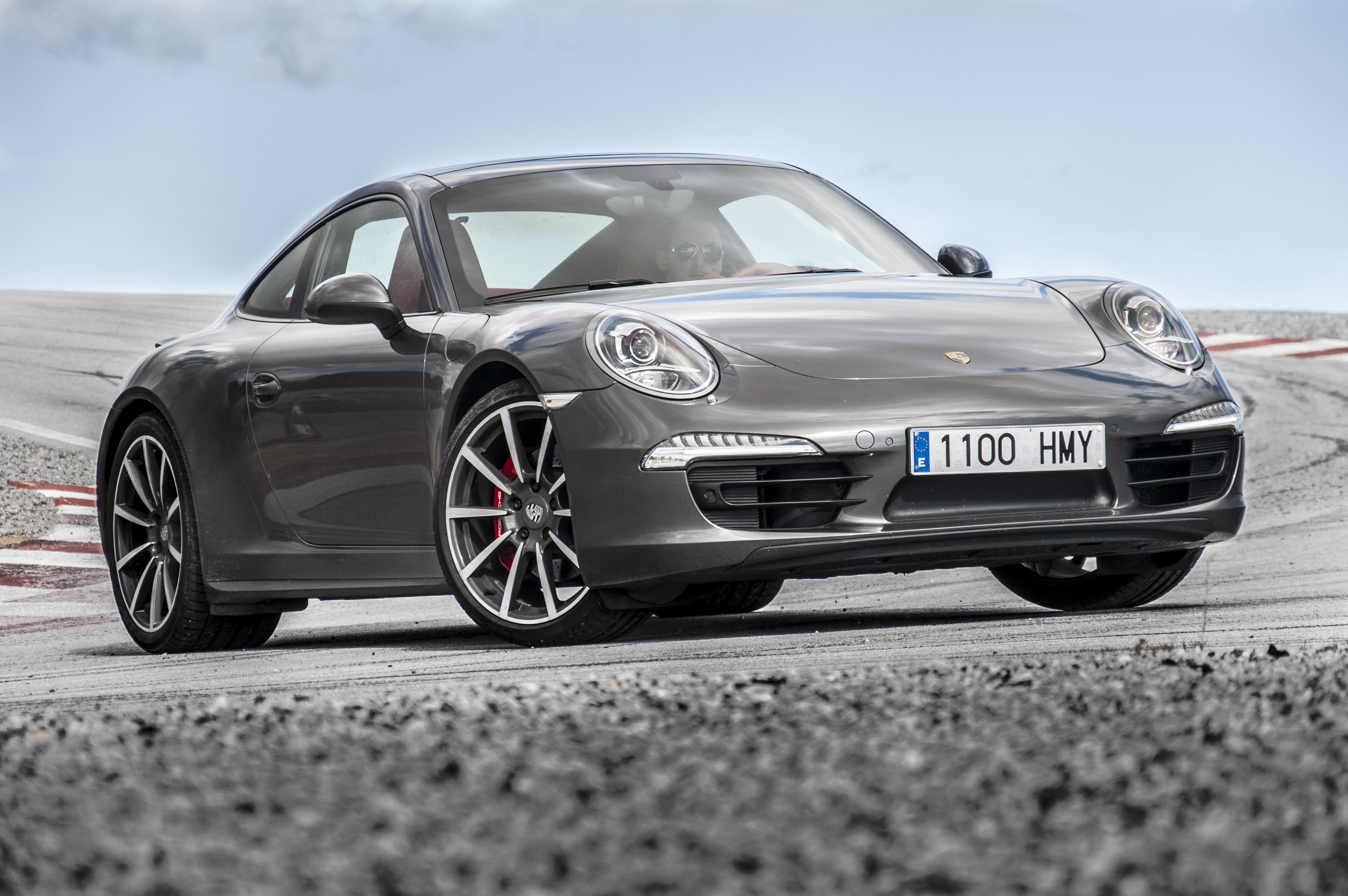
"...n some sense because, for example, if you look at Porsche GT3s, the 23.7 gallon fuel tank is optional so that t..."
The Porsche 911 is a sports car model line. The podcast talks about how some versions can have different fuel tank sizes, which affects how far you can drive before refueling. It’s brought up as a practical detail about real-world range.
The Porsche 911 is the model line being discussed, and the podcast specifically references fuel tank capacity details on certain 911 variants like the GT3. The point is that some configurations can change practical range because the fuel tank size may be optional. It’s mentioned because the 911’s many variants can differ in everyday usability.
"But by contrast, car play was not universally selected... Oh, it doesn't have car play because somebody didn't want to pay four grand."
CarPlay is a way to connect your iPhone to the car’s screen. It lets you use apps like maps and music through the car, and some cars charge extra to include it.
“CarPlay” is Apple’s in-car system that mirrors and controls compatible iPhone apps on the vehicle’s infotainment screen. It typically requires the automaker to support the software and often involves licensing costs, which can affect whether it’s included on a given trim or option package.
"...they have the great wireless charging pads right there. And everyone has Spotify and Waze running on the two cell phones..."
Wireless charging pads let you charge your phone without plugging it in. You just place the phone on the pad and it charges.
Wireless charging pads use inductive charging to power compatible phones without plugging in a cable. In EVs, these are often integrated into the center console/armrest area and can be a key part of the “phone-as-a-key/phone-integration” experience.
"A long wheelbase W221S class is 205.4 inches. Yeah. Well, this is 1.2 inches longer than that."
“Long wheelbase” means the car’s wheel-to-wheel distance is bigger. That usually gives passengers more legroom in the back seat.
A “long wheelbase” means the distance between the front and rear axles is extended. That typically improves rear-seat legroom and can change ride/handling characteristics, which is why wheelbase is used in comparisons like this.
"My, I mean, in the old days, it made sense from like the perspective of like a Ferrari where you wanted to use it as a grand tourer."
A “grand tourer” is a car meant for comfortable long trips. The speaker is saying that, historically, some compromises might have been more acceptable if the car was meant to be a relaxed highway cruiser.
A “grand tourer” (GT) is a car type designed for comfortable, long-distance driving—typically prioritizing smoothness, seating comfort, and usable luggage space. The speaker is saying that in the past, deleting a spare could make more sense for certain GT-style goals.
"The 550 Marinella was optionally available with a spare, a compact spare. I've seen it once in a car, but I didn't realize those cars didn't have a spare."
A compact spare is a smaller spare tire meant for emergencies. It’s usually only for getting you to a repair shop, not for long-distance driving.
A compact spare (often called a “donut”) is a smaller, lighter spare tire designed to fit in tight spaces. It’s usually meant for temporary use to get you to a shop, rather than matching the performance and durability of a full-size tire.
"Plus there was a frunk full of mechanical stuff. There was a little bit of room of 20, 30 pairs of underwear minimum."
A frunk is a trunk up front. On some cars with a mid-engine layout, that front space is where you store things because the regular trunk area is limited.
A frunk is a front trunk—storage space in the front of the car. On many mid-engine cars, the frunk is used to compensate for limited rear trunk space, which is why the speaker mentions it being full of mechanical stuff.
"but frankly, the government needs to step in and mandate a couple of things. Automatic headlights at this point, if you have like, Canadian did. Right, which is to say you can't see the instruments."
Automatic headlights turn your lights on by themselves when it gets dark. That helps you avoid driving with the lights off and not seeing your dashboard.
Automatic headlights turn the lights on and off based on ambient light levels, so the driver doesn’t have to remember to switch them. The speaker’s point is that without automatic headlights, it’s easy to drive with insufficient illumination—especially affecting visibility of the instrument cluster.
"That was a thing that Citroën did in the fifties, turning the headlights that turned with your steering wheel."
It means your headlights can swivel to point where you’re steering. That helps you see around corners instead of only straight ahead.
This describes steering-linked headlamps (often called “cornering lights” or “adaptive headlights”), where the headlight aim changes based on steering input. It improves visibility when turning and is a good example of tech that can look gimmicky at first but becomes mainstream later.
"So I talked to someone who worked at BMW and I found it's all the BMWs lost half of their glove box for this smell."
BMW is the brand being blamed here for using space in the glove box for a scent system. The tradeoff is less storage.
BMW is mentioned in connection with an interior fragrance system that takes up glove-box space. The speaker claims BMWs “lost” a significant portion of glove-box capacity due to the dispenser hardware.
"And there have been a lot of different active suspension Mercedes, active body control, which is a hydraulic thing."
Active suspension is a suspension system that can change its behavior while you drive. Instead of just relying on springs and shocks, it uses computers and moving parts to keep the car steadier and smoother.
Active suspension uses sensors and actuators to adjust suspension behavior in real time. The goal is to improve both ride comfort and handling by counteracting roll, pitch, and body motion.
"there is a measure of theft prevention that you can have by having a hardtop. ... is the act of installing and removing the hardtop is quite an undertaking."
A hardtop is the rigid, solid roof on some convertibles. It can help with security and weather, but it’s typically more work to take off and put back on.
A hardtop is a rigid roof panel used on some convertibles, often removable or stowable. Compared with a soft top, it can improve theft resistance and weather protection, but it usually adds weight and complexity to remove/install.
"they would just total the cars out if it needed a new roof. Like they were just $12,000."
“Total the cars out” means declaring a vehicle a total loss after damage or a major repair estimate. In this context, the speaker claims BMW service centers would total convertibles when a new roof is required because the repair cost is too high relative to the car’s value.
"[1482.8s] Other ones on things that didn't really catch on.
[1485.9s] Night vision.
[1487.5s] Did it not?
[1488.4s] I don't know enough about modern cars.
[1489.9s] There are a lot of modern luxury cars that have them.
[1493.0s] And I've never seen anyone use them in any sort of meaningful way.
[1497.5s] A Cadillac lyric that I had just had one, Mercedes had one.
...
[1526.0s] The car freaked out because in the dark was able to see
[1530.3s] that there was a human body walking around directly in my path,
[1533.4s] not realizing I was about to turn.
[1535.1s] And the dash lit up with the night vision display"
Night vision is a system that helps you see better in the dark. The host says most people don’t get much benefit from it, but in one scary moment it helped spot someone in the road.
Night vision is a driver-assistance feature that uses sensors (often infrared) to help the driver see people or obstacles in low light. The speaker argues it often isn’t used meaningfully, but then describes a scenario where the system detected a pedestrian and the dash displayed a night-vision image.
"I mean, my 308 GT4 unquestionably has a cocaine mirror. It is a mirror that can never be aimed at you. It's at the underside of the glove box door, which- So it rests horizontally facing up."
They’re using a joking nickname for a hidden mirror. The idea is that it lets you look at yourself without it being obvious or easily aimed at you.
A “cocaine mirror” is a slang term for a hidden or oddly positioned mirror intended to let someone check their appearance discreetly. In this case, it’s described as being mounted under the glove box door so it can’t be aimed at the driver.
"I could send the head unit to Becker and have them add Bluetooth, which I've been meaning to do."
Bluetooth lets your phone connect wirelessly to the car stereo. That way you can play music or make calls without plugging in.
Bluetooth is a short-range wireless connection used to pair a phone with a car’s audio system. Adding Bluetooth to an older head unit typically enables hands-free calling and streaming audio without cables.
"I am very happy to listen to terrestrial radio, as it's called, until the fucking ads start."
Terrestrial radio is the regular over-the-air radio signal your car picks up with its antenna. It’s different from streaming or satellite services.
Terrestrial radio means traditional over-the-air broadcast radio received via the car’s antenna, as opposed to streaming services or satellite radio. The speaker is contrasting the ad-free experience of public radio with commercial stations.
"...all technology that's now pass A and replaced with backup cameras, which we also thought were stupid. But then... Really?"
Backup cameras are cameras that show what’s behind your car when you’re reversing. They became popular because it can be hard to see behind the car in newer designs.
Backup cameras became common as rear visibility worsened in modern cars due to larger bodywork, thicker pillars, and styling that blocks sightlines. They provide a live video view behind the vehicle, often with guidelines and sometimes integrated obstacle detection.
Term
Atronic eye
"They had, in Cadillacs, you had the Atronic eye. Atronic eye, yeah."
“Atronic eye” refers to an early automatic headlight/lighting control system associated with Cadillac in the mid-20th century. The speaker uses it to illustrate that today’s “new” lighting automation has historical roots.
"because all their cars were separate frame, live rear axle, drum brake, carbureted cars. And so they had-"
A drum brake is an older brake design where pads push outward inside a drum to slow the car down. It was common historically, but disc brakes generally handle heat better.
Drum brakes use brake shoes that press outward against the inside of a rotating drum. They were common on older cars, but compared with disc brakes they can be less consistent under repeated heavy use due to heat management.
"because all their cars were separate frame, live rear axle, drum brake, carbureted cars. And so they had-"
A carburetor is an older way of mixing fuel and air for the engine. It’s not as precise as modern fuel injection, so it can need more tuning.
“Carbureted” refers to engines that use a carburetor to mix fuel and air before it enters the engine. Carburetors were widely used before modern fuel injection and can be more sensitive to tuning and temperature changes.
"Yeah, all of these things happened early. Digital dashes happened early a lot in American cars that didn't. They weren't quite ready."
“Digital dashes” are the gauge clusters that show information on screens instead of needles. The point is that early versions weren’t as satisfying or intuitive as analog for many drivers.
“Digital dashes” refers to instrument clusters that use digital displays instead of traditional analog gauges. The hosts argue that these appeared early in some American cars, but consumers weren’t ready and the execution didn’t clearly feel better than analog.
"[2617.1s] And when the ride height gets higher
[2618.3s] and you have a full-sized tailgate
[2620.3s] as opposed to like a split one, like you have in a Range Rover,"
The Range Rover is being used as an example of a SUV with a different style of rear door. Because it’s split, it can affect how easy it is to reach and use the hatch when the vehicle sits higher.
The Range Rover is referenced as an example of a vehicle with a split tailgate design (as opposed to a full-sized tailgate). Split designs can change how people reach and operate the cargo opening, especially with higher SUV ride heights.
"[2636.3s] Turbos are an interesting thing
[2637.4s] because they started out as a performance thing
[2640.1s] where everything, we've talked about this,
[2642.3s] everything in the 1980s that was turbocharged was hot as shit.
[2645.2s] And now everything that doesn't have a turbo is hot as shit."
“Turbocharged” means the engine has a turbo to help it make power. The host is saying turbos used to be mostly for performance cars, but now they’re common even on regular cars.
“Turbocharged” describes engines that use a turbocharger to increase the amount of air entering the cylinders. The speaker is contrasting earlier eras—when turbo cars were often performance-focused—with today, when many mainstream engines are turbocharged for efficiency and emissions reasons.
"I think that the amount of things that are on this list
that originated in a Mercedes S-Class
is like hilariously large percentages of stuff."
The Mercedes S-Class is Mercedes-Benz’s top-of-the-line car. It’s often where new safety and tech features show up first before they spread to cheaper models.
The Mercedes-Benz S-Class is the brand’s flagship sedan and has historically been a technology showcase, often introducing advanced driver-assistance and safety features early. The discussion suggests many later “required” features originated there.
"I have to go to the dentist though. I mean, we have things that would be displacement on demand."
Displacement on demand lets the engine use fewer cylinders when you don’t need much power. When you accelerate, it turns the extra cylinders back on.
Displacement on demand (DoD) is an engine technology that temporarily shuts down some cylinders to reduce fuel consumption under light load. When more power is needed, the engine reactivates the cylinders to return to full displacement.
Select text to request an explanation
Hello! This is the Carmagen Show, which is driven by Hagerty.
And presented by me, Jason Camisa, Derek Tam-Scott.
Okay.
And this episode is about...
There's a Ford Maverick Lobo behind us.
That means wolf?
I think it means wolf.
In Spanish?
Yes.
Lobo or Lobo?
I don't know.
You don't know what to say.
That has nothing to do with anything.
Ain't us, we talk about it.
It spurred some conversation.
Yes.
About features, various features in cars.
Specifically, are there cul-de-sacs of features
that we thought we were going to catch on that didn't,
or ones that were thought to be insane,
that now are ubiquitous, or things that should be in cars,
but aren't because car makers are stupid?
All of the above or below we discuss in this episode.
He cuts right to it, because car makers are stupid.
Where's my spare tire?
Yeah, you're right.
Totally right.
Okay, Derek's going to clap, and we're going to hop right in.
Can you just...
Can we put an equalizer on your clap and just turn up the bass?
That was mid-range.
It was louder.
Come on.
Just punch the table.
It was at least louder.
Bye.
Okay.
And away we go.
And away we go.
So, behind us is a Ford Maverick.
The Y is inherent in the Detroit spelling.
There's also a dentist who's...
There's a lot of noise here today.
The table's creaking.
There'll be noise in the background,
because the guy's next door
chopping up bodies or something.
But, so I get in the Ford Maverick.
I've driven at 13.7 miles,
and have determined I would totally buy that car.
It feels like a GTI.
No, it actually feels like a GTI.
No, no, you would buy that truck.
I'd buy that truck, yeah.
It feels like a GTI.
It's turbo two liter.
It's fast as shit.
It's got great traction,
and it's nice handling balance, good steering.
And you can actually hear and feel the motor,
which is something you can on most cars.
And so, I just...
I like its size.
I like everything it does.
And then I put the windows down.
I hit a button, four of them simultaneously,
and all four windows went down.
And that started a whole tirade in my head
about manufacturers who saved three cents.
So, I've been getting a lot of press cars lately.
And nothing irritates me more
than some $40,000 fucking car,
like the Subaru that I had a couple weeks ago,
that I quite liked,
but only had auto up or auto down on one window.
I just wanna grab the product planner by their throat
and say, how much did you save?
Was it 12 cents per car or was it a dollar per car?
Because this is an annoyance that I will have to live with
for the next 72 months or however long I finance this car.
Why would you not put auto up and down
when it's that inexpensive to do?
My question also perhaps is,
is it more expensive to make two different versions
of the window switch
when they could just do one version
and use it on all four windows?
This is the opposite of the Mercedes way,
where the windows, have you noticed,
the old Mercedes window switches,
where the left and the right ones are different
because the windows are pointed different ways
and they want it to be symmetrical?
Have you ever noticed this?
No, I never noticed that.
So, they all have automatic up and down,
but they have left and right ones
so that the window angle is correct for the left to right.
On the little...
On the pictograph, yes.
Crazy.
But yeah, there could be a compromise somewhere in the middle
where you install the feature that really helps people
and then you don't bother spending extra money
on something that I've never noticed in my 27 years
on this planet.
Happy 29th birthday, the first of many.
27th, it's not my birthday.
So, but I wonder if it's more expensive for them
to make two versions of the switch
than if they just made one version of the switch?
Yeah, but I don't...
Like, I also...
It was a fully loaded car, you know, whatever...
Like, half of these cars that I drive are really expensive
and I just keep thinking like,
it can't be that much more money to do an auto up.
You know, maybe there's a pinch sensor in it or whatever.
I just doesn't...
It just strikes me as worth it.
Sure.
And so, I started thinking about other sort of features
that are in cars that shouldn't be and you brought one.
And shouldn't be or vice versa, right?
I think we should have a conversation about all of the above, right?
Sure.
The one that you just mentioned is you said,
should we talk about...
What did you call it?
Comfort access or keyless go.
Comfort access versus keyless go.
Apparently...
There's a difference.
Okay.
So, comfort access is being loaded this term.
Keyless go is Mercedes speak.
So, I call it keyless entry and keyless go is how I differentiate it.
One of them is the ability to have the key in your pocket,
grab a door handle and have the car unlock to get in.
And then the other one is keyless ignition.
So, I give the key in my pocket and I hit...
But aren't those both?
They're not.
Hold on.
Maybe I should shut up and let you ask your question.
Aren't those both?
Okay.
Don't you need them both?
Like, doesn't it not make sense to have one without the other?
Thank you.
There are...
So, do some manufacturers do that?
Almost all of them.
For example, base Range Rovers, base BMWs.
You don't...
If you don't get comfort access, you still get keyless go.
But you need to remove the key from your pocket.
Really?
Click and unlock button and then you get in the car and it's got keyless go.
And now there's nowhere for you to put the key.
It sort of made sense early on where they were sort of hybrid systems where you could then...
You needed to put the key in the slot or you had a slot
that you could put the key in.
But I'm sorry.
If I have to remove the key from my pocket to unlock the car,
I need to have somewhere to put it in the car.
And keyless go without keyless entry is just idiotic.
I didn't know that people did that.
Like my...
I had a 2004 Mercedes E500 wagon and that had a button on the door handle.
But so the key could be in your pocket and you could lock and unlock the door handle.
And then you could leave it in your pocket while you drove.
There was a button on the shifter to start the car,
which is a sensible solution which existed in 2004.
And you're telling me that that's not...
To this day.
Ubiquitous.
Yeah.
This happens.
I get press cars and you get rental cars and whatever you have to unlock.
It's in on a premium car.
Like things that drive me crazy on premium cars.
Right?
It's a very different thing if you're talking about like a $20,000 Nissan Versa.
Which is the only $20,000 anything I think you can buy.
No, no, no.
You can get other $20,000 cars.
There's a base jet of S.
For at 20 and change.
Like below 21.
Below 21.
There's nothing...
Hyundai Venue, a little SUV.
I can forgive a little bit on really inexpensive cars, but a $40,000 car,
$50,000 car once you start to get those price points.
And then again, another sort of shift into a different gear of expectations
when you have anything premium.
Like a premium manufacturer who doesn't put amber turn signals in their car.
They deserve to be drawn and quartered.
Because they are effectively harming humans by doing that.
Because it's demonstrably proven that amber rear turn signals save lives.
Don't forget about BMW's idiotic now insistence of the turn signals that are not only red,
but they don't go on and then fade off.
They fade on and then go off.
So they're only illuminated for a split second and it's a rip.
It's a very apologetic turn signal.
And I just want to grab the engineers who did that.
Right, even when they do signal it's after they've started turning.
It's consistent with that philosophy.
Anyway, on the topic of premium manufacturers cheap, cheaping out,
I would like to refer us to the fact that car play in Ferrari.
I don't know if this is true now, but certainly five years ago it was true was an option.
And not only was it an option, it was a $4,219 option.
This is like on a Luso, it's a $400,000 car.
So 1% of the purchase price.
That's all fine and good because I think not all fine and good,
but excusable in some sense because, for example, if you look at Porsche GT3s,
the 23.7 gallon fuel tank is optional so that they can have a smaller fuel tank and
quote a lower weight for the car.
But almost every single car that was built has the big fuel tank.
Well, then they can't quote the lower weight.
Almost every, but it is technically available to order and you could order it without it.
But the point is that if you are out there shopping now,
every single one that you find pretty much has the big fuel tank because it was like a $140
option and why wouldn't you get the big fuel tank?
But by contrast, car play was not universally selected.
And so now when you're shopping for a used one, you're like, oh, it's perfect.
It's blue with a brown interior and it has no miles and it's beautifully maintained.
Oh, it doesn't have car play because somebody didn't want to pay four grand.
And so the take rate on car play is weirdly low on those cars
because people were enraged that it was so expensive or they assumed it was included or I don't know.
Do you find customers really, your customers are really looking for this?
Yeah, there's definitely people who are like, oh, I can't buy that one.
It doesn't have car play.
I'm glad people get fixated on certain options.
Sometimes it's panoramic roof or something like that.
But I fight with the product planners or car companies all the time over car play,
especially the sort of Rivians and Lucids and Tesla's of the world who just.
We've built our own system better.
Right. And GM's sucks and they should be fired.
Everyone who made that decision.
Tesla's infotainment, it's amazing, but I just had an argument with a Tesla
product planner over this.
Every time you get into a Model 3 or any of their modern cars,
they have the great wireless charging pads right there.
And everyone has Spotify and Waze running on the two cell phones there that are charged,
which are not, Spotify is in the UX, but it's not as good as the Spotify UX on your phone.
And Waze is not built in at all.
So yeah, but there is a cost to the manufacturer to license.
They have to pay a per vehicle fee to.
When it's a $400,000 car.
And you have to amortize the development of integrating that software across your lineup.
Which they have already done because it's an option.
Well, they have to charge appropriately for that.
No, I think it's idiotic.
When a $20,000, so I looked it up, a Nissan Versa S, the absolute base,
base, base model at 17 and change does not come with car play,
but the SV, which is super value, I guess, does have wired car play.
The Mitsubishi Mirage was the previous one.
Rest it's soul.
Yeah, I think you're totally right.
I can buy and I have bought, I have now six power acoustic $130 singled in wireless car
play head units for my old cars.
And if I can buy an entire fucking radio with a touch screen and everything else for 130 bucks
with wireless car play, your $400,000 Ferrari should not require a $4,000 option for that.
Yeah, but in the quintessentially Ferrari fashion, which Porsche is very good at too,
they are really good at value extraction and realize that there's a lot of margin and options
and that people will pay for it because they want it and $4,000 is nothing to the people who buy it.
So it's just, you know, money grab.
Yeah, for sure.
And it works for them.
So we have briefly assembled a list of features, which we have categorized into,
let's see, how many groups is this?
Three or four groups?
Four of them.
Four groups.
They're sort of loosely defined.
But so on the, so we talked about one touch windows, right?
I think that's a, that's a miss that to not have them at any premium price point.
Comfort access, if you're going to have comfort, keyless go, you need comfort access.
My next one is the fucking spare tire issue.
We got, we were in a Dodge, hold on, I'm going to fuck the same up, Dodge Charger
two door.
So effectively a challenger, but it's now called the Charger two door.
What?
Oh yeah.
You'll see that actually next week, this week, possibly this week,
we have a drag race video coming out with one.
And then I spent a week with one and oh dear.
But that's, that's a different topic for a different day.
That is a 6,000 pound, 5,000 pound with gas engine, 6,000 pound with electricity.
200 and something inch long, enormous coupe that doesn't have a fucking spare tire.
200 something inch?
Oh, it's like S class size.
Yeah, no, it's enormous.
I should look that up before I say something like that.
2026, Dodge.
So the spare was optional.
There is none.
There is none.
There is none.
And I got a, yeah, 206.6 inches long.
That's bigger than a W221S class.
A long wheelbase W221S class is 205.4 inches.
Yeah. Well, this is 1.2 inches longer than that.
It's huge.
And it's two doors.
And that's a four door because the Charger two door and the Charger four door.
I have to do it with the Michigan accent because I did it in the, in the, in the drag race video.
Never miss a good opportunity.
What was the scat pack track pack?
I mean, six pack was the one that we had.
And I'm like, how could you call it a six pack track without a Michigan accent?
It's a charger, six pack track pack, whatever.
And then there was a Daytona anyway, but any car without a spare tire,
if it's larger than a Lotus Elise, fail.
Yeah. So what is the rationale for this?
Trunk space and weight.
They can save and money.
They save 50 pounds per car.
You get another two cubic feet of trunk space and they save a hundred bucks.
It's disgusting.
That's the rationale.
My, I mean, in the old days, it made sense from like the perspective of like a Ferrari
where you wanted to use it as a grand tourer.
I don't know.
I mean, like not having a spare made sense.
I'm going to drive across what was rationalized.
And I get a flat from an Italian.
And they give you, give you a spare and a can.
The 550, I recently learned the 550 Marinella was optionally available with a spare,
a compact spare.
I've seen it once in a car, but I didn't realize those cars didn't have a spare.
No, they all, even a Testerosa's and 512 TRs don't have spares.
You're a kid.
I off my Christmas card list.
At 40 also.
Kind of understandable, but not really.
The Honda beat had a fucking spare tire.
If Honda could package a spare tire in a mid-engine car,
you literally can't put like a duffel bag in the trunk.
Very small duffel bag you could.
Plus there was a frunk full of mechanical stuff.
There was a little bit of room of 20, 30 pairs of underwear minimum.
But my point is, and there was a poor shelf behind you,
you could absolutely, and I did go away with two people in that car for a weekend.
No problem.
Ended at a fucking spare.
I'm sorry, but also had 13s.
Sure, it was a little spare, but it was a spare.
Nonetheless, it was a spare that matched the size of the car.
But like the Lotus Elise didn't have a spare.
I didn't think that was okay.
I am now down to precisely one car without a spare tire.
And it's the e-golf and it can't go far enough that I can't walk home anyway.
So it doesn't.
But I did get a flat at a 1035 at night in the rain in the dark,
and it was a fucking nightmare.
I would have been home in 20 minutes.
Instead, it was hours of waiting.
And then the wrecker came and dragged my car.
I'll show pictures of this one.
Dragged the car with the rear tire on the ground
and made a hole right through my tire.
It was a fucking nightmare.
And had I not been able to pull off the highway, it could have been fatal.
Sure.
So unforgivable information.
Unforgivable.
And actually, that's it.
I hate the idea of big government mandating everything,
but frankly, the government needs to step in and mandate a couple of things.
Automatic headlights at this point, if you have like, Canadian did.
Right, which is to say you can't see the instruments.
The instruments are not illuminated if their lights are not on.
Correct.
And amber turn signals, which are now effectively becoming a requirement to get,
it's a five-storey IHS.
And they have been mandated in Europe for decades.
Decades.
Like maybe four or five of those, them decades, maybe longer.
You could still have read if it was an independent bulb up until the 90s, I think.
Really?
But no one did it because it wasn't the right thing to do.
And so spare tires is one of those things.
The government's just going to have to come in and they're not going to.
I don't think they will.
They don't know what the fuck they're doing.
So anyway, those are my, you know, get off my lawn.
I've been driving a press car of things and that really pissed me off,
but that fucking spare tire on a 206 point, whatever inch long car.
Anyway.
Yeah.
And when it's a large car, especially, I think it's a particularly egregious emission.
So now we can talk about, we have other categories.
So that's category one is things that should be mandatory or included that aren't.
I mean, I could go on for that, but let's, we'll move past to,
should we go to the smaller categories first?
Things that didn't catch on, but maybe should have or maybe shouldn't have?
Sure.
This is interesting because I feel like a lot of these,
so the other category that we'll spend more time on is things that seem stupid
when they first came out, but are ubiquitous now?
And like, I don't know, a good example of this would be BP parking.
Like people thought it was very gimmicky when it came out.
Now it's everywhere.
But what I've found is that the things that didn't catch on, if you wait long enough,
seems like some of them will eventually come around like turning headlights.
That was a thing that Citroën did in the fifties, turning the headlights that
turned with your steering wheel.
And Citroën started doing this in the fifties with the DS in 1955,
the Tucker did this in 1948.
And then it disappeared when the DS stopped production in 1975.
And then we got it back, I don't know, in the E90.
I feel like it's maybe the first time I ever saw that in modern times,
which BMW E90 came out 2006.
So anyway, I feel like if you wait long enough, some of this stuff could come back,
but others of this stuff, I'm not so sure.
So one of the things, does Mercedes still do the interior smell thing?
So this is the perfume dispenser in the glove box.
So I talked to someone who worked at BMW and I found it's all the BMWs lost half
of their glove box for this smell.
Half?
Not half, a good portion of their glove box capacity.
And it turns out, I think I've mentioned this before,
that one of the board members at BMW has a family member who owned the company
who created this idiotic device.
And basically there was a mandate from above that all five series
and above BMWs will have perfume dispensers.
So you're just to follow the money on this sort of corruption.
But I thought, didn't Mercedes do this too?
Or was this a response?
Mercedes does it.
Well, probably because they all follow each other.
Mercedes, BMW and Audi just sniff each other's tails all the time.
But BMW, I think Mercedes might have done it first,
BMW then added it in and literally tried to trick both.
I only know this because I spoke to someone who worked for BMW.
And A, told, blamed it on China and to the Chinese product planners
who didn't want it, blamed it on the US.
And unfortunately the Chinese and US product planners got together once
and were like, why do you want this?
I don't want it.
Why do you want it?
And they've been able to get rid of it.
But it was just a bullshit corporate mandate.
But other car companies have gotten away with sense for years.
Like Lexus has canisters under the passenger seat of leather smell.
And you can replace them if they wear out.
Your car doesn't smell like leather anymore.
You just say, it basically looks like a,
oh, I can never remember the name.
What's those things that a sterno, it looks like a little sterno
under like a little waxy substance that gives off leather smell.
I just think car smell is important,
but I don't like the idea of perfume dispensers through the vents.
Yes. This is like, do you pipes, engine noises through the speakers?
Or does it just?
Everything does.
That's another one that we all made fun of in every car on the road at this point.
It has some sort of active sound management.
Okay. You have a note here about hydraulic suspension.
Yeah. I think we all sort of, we looked at that Bose system that went nowhere.
This is the one where it would leap over obstacles and stuff like that.
That was demonstrated on like Q45.
I remember seeing this like in the early 90s.
I thought it was an LS.
Lexus LS.
Lexus LS.
Q45 had that, their adaptive like a damping the roll elimination system.
Okay.
Which now is maybe a thing where you have hydraulic,
we've had roll compensation.
Yeah.
Audis.
Audis do.
Instead of sway bars.
And there have been a lot of different active suspension Mercedes,
active body control, which is a hydraulic thing.
You have all kinds of air systems.
And that goes back, you know, certainly to the 1950s at least.
Oh yeah.
And of course Citroen was started using the hydraulic system in the early 50s, 53 or 54,
on the back of late traction and then DS.
We haven't really seen any of them be transformative in vehicle handling or ride.
Really?
To be honest with you.
I mean the Citroen system was nice. It was lovely.
They ride like nothing else.
But there are so many compromises built in in terms of handling
that I think we're really going to start seeing active suspension now that Porsche has done it.
Yeah.
I was just going to bring up the Panamera example because you said,
I don't feel like I've ever seen a difference occur as a result of this.
That was, that's the moment where you say, wow, it's really heavy.
It's a very big power consumer.
So they have to be on EVs or hybrids.
Yeah.
It's a minimum.
Is it 48 or does it even use the 400 volt hybrid system?
I don't remember.
But they're huge power consumers.
And so the Porsche 911 GTS also now uses that system.
But I'm sure those cars could jump if they want.
Like Mercedes had that stupid fucking feature where you see the, you know,
they called it like, oh, the car will get it stuck.
Unstuck itself, the GL.
But that was worthless.
Now the way Porsche did it, that Panamera rides like a Rolls-Royce,
but then handles like a 911.
So I think we'll now start to see true active suspension become proliferate through other cars.
I think the technology just wasn't rife up until now.
Other things that we saw that didn't catch on hardtop convertibles and cheap cars,
that was a stupid move.
Really?
I mean, they've sort of gone away.
They will total a car.
These hardtop convertibles, first of all, they made everything ugly
because they fold in the back in such a way that the back of the car has got to be really high.
And I think what the car-
You complain specifically in cheap cars or generally?
Actually, I shouldn't say that.
It's more expensive cars that it's a problem.
Like there's no reason for a hardtop SL.
A hardtop Miata, those are more likely to be street parked.
And so if you're street parking a convertible in the city,
there is a measure of theft prevention that you can have by having a hardtop.
I think the problem they're trying to solve, speaking as an SL owner,
is the act of installing and removing the hardtop is quite an undertaking.
We have one insane friend who does this himself when he removes the hardtop.
He basically puts it, he stands in the back and puts it on his back
and then steps out of the car with it on his back.
He's also like 5'4 and 140 pounds.
Holy shit.
But most people, you need two people to do that, to do that job.
And so I think the purpose of that system was to not have to do that.
I get that.
But my question is, do the people who buy Mercedes SLs, for example,
not have an average of four other cars that they drive in inclement weather, right?
They have a Range Rover or they have a G-Wagon or they have some other car.
They don't need a hardtop convertible.
They want a softtop for the looks and the ability to just go down very quickly.
I just think it was a bad compromise, especially for premium cars.
Audi realized that, they made the A5, made a purposeful choice that the A5 would stay softtop
because they realized it was just ruining the looks for benefit that no one really needed.
It's also, I think, a tougher problem to solve with a four-seat car or the two-seat car.
And when they break, you get an E93 convertible, BMW 3 Series convertible.
And I remember a friend working, a friend of ours worked at the BMW service center
and they would just total the cars out if it needed a new roof.
Like they were just $12,000.
Some outrageous, they were not adjustable.
You couldn't fix them.
It was just one unit that you had.
Whenever that happens, there's always someone comes in and finds a fix,
but they were such nightmares that they just total the cars.
It's just a lot of compromise that I don't think is necessary.
Okay. Let's see.
Other ones on things that didn't really catch on.
Night vision.
Did it not?
I don't know enough about modern cars.
There are a lot of modern luxury cars that have them.
And I've never seen anyone use them in any sort of meaningful way.
A Cadillac lyric that I had just had one, Mercedes had one.
The only time that I thought it was of any value at all
was I was driving on a very twisty back road in a Mercedes.
I was in an S class years ago.
And I was heading at a very high rate of speed towards a curve.
And there was a right hand bend and directly in front of me was a driveway.
And there was somebody moving their garbage pails out.
And they were far enough ahead of me that I didn't see them.
The car freaked out because in the dark was able to see
that there was a human body walking around directly in my path,
not realizing I was about to turn.
And the dash lit up with the night vision display
with the person highlighted in yellow and it slammed on the brakes
right as I was entering the corner.
And I was, okay, technically it was an error that it made,
but if it, it didn't know that I was going to turn.
But I saw a pedestrian that I would have never seen.
So I thought that was cool, that it was using that night vision
in the background and then bringing it up in an instant to say,
oh my God, there's someone in your path.
The sort of having a night vision display,
short of like telling your friends to stand there and taking a picture.
I'm like, I can see your crotch.
I can see your dits.
Like there's just kind of no reason for it.
Okay.
I've never owned or driven a car that had it and used it.
So I have no idea how effective it is.
There's a lot of new fangled stuff in modern cars where I'm like,
is that truly necessary?
I'm going to, the last one in this category,
I'm going to move to the next category.
Just in case you're wondering what I'm doing, I'm copying.
We're on a shared note here, thanks to Apple's technology.
Okay. So we had a category of things that were amazing
and are now fully obsolete.
You have one in here, drinking paraphernalia?
Yeah. It used to be kind of common to have,
especially in nice cars, like shot glasses or like sort of bar
equipment in the car.
This is maybe a high end car thing,
but I just feel like our values have shifted in a way where this is not likely.
I don't know. Maybe in a Rolls Royce or Bentley,
you might still find like champagne flutes in the back.
In the back.
Yes.
Not on the front.
Yeah. So there was like a Rolls Royce Corniche once that I saw that had
four little slots for shot glasses in the driver's door pocket.
And I was like, huh, I don't think you'd see this anymore.
I mean, my 308 GT4 unquestionably has a cocaine mirror.
It is a mirror that can never be aimed at you.
It's at the underside of the glove box door, which-
So it rests horizontally facing up.
And there's no way you could ever,
I mean, you could look up your nose if you tried, but yeah.
So I guess a cocaine mirror would be another thing that was,
that seemed amazing at the time, but are now fully obsolete.
I just kind of knew rental car recently,
and it had serious XM radio and no carplay.
And I was like, whoa.
What year was it?
2024.
It was a Centra.
Did you fly there on a time machine?
I could. It was a Nissan Centra that I got from Enterprise with 48,000 miles on it.
And it had, I'm sorry, it did have carplay.
It was just wired only, which whatever.
But of course, no one had paid for the serious XM membership.
So it was stuck on one, which is the preview channel.
And every time you turn the car on, it's like,
welcome to serious XM, whatever.
It just XM was so cool.
Serious was so cool.
And now they're so gone.
Is it?
Yeah. I mean, there's no reason for it.
If you have, now that you have streaming and data service on your phone.
So that's something that was obsolete by the evolution of technology,
which is like, you could argue the same, for example, about car phones.
AM radio, FM radio, car phones.
Sure. I mean, as a consumer, regular consumer of old cars,
I kind of use all of those things.
Is this radio?
Yeah.
Really?
Yeah.
I can't say.
My daily driver has only a radio and a cassette player,
so I listened to the radio in it.
I could send the head unit to Becker and have them add Bluetooth,
which I've been meaning to do.
I just haven't gone around to it.
I am very happy to listen to terrestrial radio, as it's called,
until the fucking ads start.
And I just don't want to be boring.
You have to listen to NPR again, because there's no ads in NPR.
I don't think I'd do that.
I want to jam.
I want to be screaming.
So this is like a thing where we have,
where in car entertainment technologies evolved away from meeting,
to have something like a car phone,
which at the time was quite a swanky thing to have.
Oh, yeah.
And now it's like a charming period piece.
I kept mine at 850 CSI, because of the sound it makes when you start it.
Absolutely.
Any car that I have that has it in, I purposely leave it in,
because I think it's very, there's like a nostalgia for that now.
Now it's, it's wrapped around from being like uncool,
or passe to being like charmingly period.
And a lot of them got removed during the like obsolescence period.
So now when you find one that still has it in there,
you're like, oh, this is very charming.
It's reminiscent of a certain time and place.
I haven't, I think in that same things that were amazing,
now fully obsolete is GM's skip shift.
I don't even know what that is.
Oh, really?
Please enlighten us.
So it started in the Corvette.
And it was when, it was ostensibly there as a fuel saving device,
but really what it was is an MPG cheat.
It was if you accelerated at a rate,
and at the speed that would correspond to the EPA city cycle,
it would move a solenoid that locked out second gear,
but it would, it sort of had a ramp to it.
So it would, as you're moving from first to second gear
in this Corvette, it would nudge the shifter into fourth.
And then you couldn't get in locked out second.
So, and this went on until recently,
like the final, the C7 still had it.
So did the C7 wagon?
But only if you did it, if you did it,
if you were leaving it a very gentle way.
Between 19, I'm making this up,
but it was like something like between 19 and 24 miles an hour,
when accelerating between this and this,
and this throttle opening, it would do it.
And it was always a one to four skip shift light
that would come on on the dash.
And the first thing you do if you owned any of these cars
was open the shifter and just pull the solenoid,
so it couldn't do it.
But I mean, there were many press cars that I'd get in.
And it was there as an emissions cheat.
The other thing to do was a skip shift light.
Yes, I remember those.
Do modern manual cars not have those?
They do, they're back again.
They're back again.
Did they disappear?
They disappeared for a long time.
I didn't see any for a long time, and now they're all over.
To me, it's like very quintessentially like 80s and into the 90s.
Yeah, my Scirocco has a shift light.
And it was at any time you were over 2000 RPM,
if vacuum was above a certain point,
meaning throttle opening was below fucking a third or whatever,
light on, and it would guilt me.
And I was always in fifth gear by 38 miles,
35 miles an hour, whatever it was.
And I finally just pulled the relay
because this big yellow light yelling at me
that I'm destroying the planet.
And now these cars do it.
They'll have a little smaller indication,
but they get credit for it.
My Mark 7 didn't have that, did it?
Oh yeah, it did.
Did?
Yeah.
And the top corner of your little multi-information display.
Oh yes, it did.
Yes, yes, yes.
It would show you the cure you're in.
It was part of like a larger display.
It wasn't like a dedicated light that was orange.
It was just part of like the landscape in that.
Yes, but it functioned the same way on an EPA test,
meaning they would get credit for it.
But if you looked, it will tell you what gear you're in
and if it wants you to be in a different gear,
it would give you a recommended gear that you should be in.
Yeah, the best is, you know, yeah,
go to sixth gear from second.
From right.
Yeah, so those are all fun trips there.
Forgot about that.
I guess I just ignored it.
Okay, so the big category that we have here
is things that seem stupid at the time
that are now ubiquitous.
So I gave the example earlier of park distance control.
And it's fun to go back and read like,
I do this for fun, like reading.
It was a comparison test, I think, between a BMW E38
and a Mercedes W140 and probably some other stuff too.
So this is probably like second half of the 90s.
And, you know, the people who are in their prime
earning years during this period are people who are now
boomer, elderly boomers, you know.
So it's funny to read that they were basically
in the same place back then where they're like,
this is this new fangled business of, you know,
it beeps at you all of the time to tell you various things
such as when you're close to hitting shit and stuff like that.
And do we really need that?
And like the increasing complexity that BMW has,
and it's also gimmicky and all this stuff about like,
oh yeah, it'll run the cooling system fans afterwards
to continue to condition the cabin after you turn it off.
And there's all this just complexity added.
And why does it turn the mirrors down at the curb
when you put it in reverse and all this stuff?
And you're like, I don't know,
all that stuff's actually kind of nice and is useful
and is everywhere now.
So park distance control was sort of like thought of
as gimmicky in period.
And I think it shows this sort of stick in the mud mentality
or the sort of resistance to change and innovation
that was sort of present and probably will be present
to various... Oh, forever.
I, funny, I'd look at all of the park distance control
and all of its iterations,
including like the 140 had the little antennas
that would pop up when you put it in reverse
as actually all technology that's now pass A
and replaced with backup cameras,
which we also thought were stupid.
But then... Really?
Was that the read when they first came out?
To me it was, it was why is this necessary?
The problem was cars visibility started to get so bad.
Yes.
In the name of probably safety, I guess,
you want higher belt lines and thicker pillars.
I think it was more style where you have wedge shaped everything.
My dad bitches about the width of the thickness of the A pillars
and his modern cars.
They're a real problem.
And especially when you're in a city that's on a grid,
like San Francisco, you know,
there's pedestrian crosswalks everywhere.
And I can't tell you how many times I go to move out
and my passenger is like...
If you're approaching at the same rate that they are walking,
this is the same thing happens like with mid-air airplane collisions.
If like, sorry, this is maybe spooky,
but if the plane is approaching and at such that its position
in your field of view doesn't change,
it's just sort of getting closer
than you won't perceive the motion.
And I think that the pillars present a similar risk
because you could have an entire whole ass pedestrian
behind a pillar like that
if their rate of walking matches with your rate of rolling
in a way that they never are out from behind your pillar.
That happened to me in a Jag XK.
And I went to go and at the very last second,
this woman screamed and I heard the top down in this car
and I slammed on the brakes and I looked,
I moved my head and looked and there she was with an ice cream cone.
And she looked like she was going to kill me.
And I just started laughing.
I was like, holy shit, I just wanted your ice cream.
Can I have it?
I reached out the window and she just started laughing.
We had a moment.
I'm like, I genuinely never saw you,
but I cannot tell you how often that happens in a city
where the passenger in the car is like, whoa, whoa, whoa, whoa.
And I never saw that pedestrian.
I mean, luckily I've only hit one person in the last couple of years.
And they deserve it.
And it was on purpose.
I think what I talked about this, remember, I actually did.
This is in a parking lot, right?
A woman did fall to the ground, but I actually never hit her.
Her name was Shirley.
She's my neighbor.
Turns out we were across town and what a long story short.
But I never saw her.
So this technological augmentation is aimed maybe somewhat at,
and you drive now like an old car and you're like,
man, the visibility is incredible.
The pillars are slim and the belt line is low
and like I can see everything.
But backup cameras have also meaningfully changed my willingness
to park a nice car on a parallel parking situation.
Because I used to watch, I sit in a cafe or have lunch or something
and just watch the parking fuckery.
And everyone was slamming into each other at all times.
That kind of doesn't happen anymore.
Yeah, it has to be blatant and intentional and negligent as opposed to like-
Like everyone's nosing each other from the front
hitting their back bumpers, but you're not parking by Braille anymore
because especially a sedan, which is, let's face it, a stupid design,
you're estimating where the back of the car is.
You have no way of visually seeing that.
I am now willing to street park cars that I would have never street parked.
And I will make sure that I'm,
the car that I'm parked behind has a camera.
If it's an old enough car, then I'll have a camera.
I won't park behind it.
In the rare event that I street park-
This is a very Jason thing to do to like consider that eventuality.
But hey, look, I mean, the E-Golf is now seven years old
and has managed to mostly not get hit street parked often in the city.
Sure. Okay.
Okay.
So that has become useful.
So you put in heated seats.
Yeah.
I don't-
I think when heated seats first appeared in, let's see,
I don't know if Mercedes Invent-
Sob 900, is this who invented this?
I was going to guess Mercedes W116.
It was optional than W116.
The first one I knew of was the Sob 900.
But that's like early 80s.
Might have been 99.
It was 99.
I believe 99.
Sob 99.
Not 1999, but Sob 99.
Sob 99.
And it was driver only of a standard.
And-
Yeah.
So this is from a very cold place.
And then in Mercedes, it's from a very luxurious place to put it as an option
in the 6.9.
Well, it was available, I think probably in all S classes,
but you could get heated seats in a 116,
which would be a car that ended production in 1979 or 80.
So it appeared in the 70s.
I think it was a sort of luxurious indulgence where you're like,
well, that's absurd.
And now, I mean, the joke is Mercedes just patented
or just put into production a heated seat belt.
Really?
Yeah.
So I guess that makes sense.
10 years ago, they started with the armrest and the door panel.
Right.
So the center console.
Door panel was 15 years ago now.
Door panel was long.
It wasn't heated per se, but they would run HVAC into the door panel.
Oh yeah.
No, no.
But it started with 221 S class had a heating element in the arm rest
and one in the center console and heated steering wheel,
which you think, oh, how idiotic makes perfect sense.
Yeah.
Heated steering wheels are great.
They're almost as important as a heated seat.
And now you think, if pedals are the only thing that I haven't seen yet,
but if all of the points of contact,
so they call the heated seat, seat belt the hug,
and I haven't experienced it yet,
but you totally understand, especially in an electric car
where heat actually costs range and costs,
you're spending electricity for that.
Why not?
Why have every point of contact heated?
I love it.
Especially if it's hanging inside of the B pillar,
where it would be something that would be the single cold point of contact that you have.
Sure.
Okay.
What else?
You put in auto dimming high beams.
I did this because it was a very gimmicky thing
when it first appeared in the 1950s in American cars.
They had, in Cadillacs, you had the Atronic eye.
Atronic eye, yeah.
And then I think it wasn't really widely used probably for decades.
This is one of those things where I was saying,
if you wait long enough, some of this stuff comes back.
And I think that the steering headlights and the,
maybe the hydraulic suspension and auto dimming high beams.
And also automatic headlights overall, right?
So you had that era, you had the Twilight Sentinel.
Which is the thing that automatically turns the headlights on when it's dark enough.
Most cars have that at this point.
Sequential turn signals is another one of those.
That's an interesting one.
I think it's still gimmicky, but it's kind of pervasive now.
Have you ever seen the mechanism?
There's, of course, it started in the 1960s, I think,
Ford probably did it in 64, maybe, in the Thunderbird.
There's like this little mechanical thing that does it,
that turns, that causes the light bulbs to come on in sequence.
But I think that's, it was definitely gimmicky.
And the American car companies were often doing gimmicky stuff,
because all their cars were separate frame,
live rear axle, drum brake, carbureted cars.
And so they had-
They were spending money on marketing and marketing gimmicks.
And features that were sort of customer facing instead,
because they knew that customers wouldn't care
whether it had overhead valves or overhead cams.
Crash protection or any other stuff.
Or disc brakes or anything like that.
But they would care if it did some groovy thing
that had a something-o-matic name associated with it,
because American car company,
and so they were doing stuff like that
that was more obvious to the consumer.
I bet if you looked up features that seemed stupid
and are now ubiquitous,
are the vast majority of them debuted in American cars.
Even things like a CRT cathode-ray tube touchscreen.
Famous in the 1980s for the Buicks, I think we're doing this.
Riviera, Riata.
Chrysler did the thing where the car would talk to you.
Key is in the ignition, the TRS.
In full sentences.
What was that TI, Texas Instruments Voice, right?
A door is a jar.
Don't forget your keys.
Your headlights are on.
Thank you.
Yeah, all of these things happened early.
Digital dashes happened early a lot in American cars that didn't.
They weren't quite ready.
Consumers weren't ready for them.
And they weren't executed in a way that was like,
why is this better?
I think it just is different, but it's not better.
I wonder, I just think about when the last time
I drove a press car with an actual analog dashboard was.
Miata?
Maybe.
That might be the last one.
I mean, I can't, nothing has real gauges anymore.
Nothing, it's all a screen.
And so that was in 1986 Ford Taurus was like, oh my God.
And the Corvette C4 when that came out in 84.
Yeah.
I mean, that was like futuristic.
And now it's very charming because it's retrofuturistic.
And then there's this sort of, it's again,
it's evocative of a certain time and place.
Like even VW Digifits, which is Mark I and Soraco.
And Mark II has had this digital dash.
Audi Quattro had it available as well.
I think it was optional.
That's a good one.
On my list also self-closing trunk lids
because you go to the original self-closing trunk lids
like the Mercedes 6001, which will kill.
Which is a guillotine.
Kill someone.
And they're like, well, that's just a Plutocrat car thing.
And now I think it's definitely much more accessible.
All of these power, I mean, there was, you know,
the sort of soft clothes that always kind of made sense.
Lincoln's all had that, whatever.
But I also, it's another thing.
I can't think of any luxury car that I've had in the last 10 years
that hasn't had a self-closing hatch or trunk lid kind of.
I think the pervasion of SUVs also made it helpful
because you have to design for the, you know,
I don't know what the number is.
The 50th percentile male and the 20th percentile female
in terms of like reach height.
And when the ride height gets higher
and you have a full-sized tailgate
as opposed to like a split one, like you have in a Range Rover,
then that the reality of just reaching the hatch is an issue.
What else is on our list?
Turbos, I mean, that's, you know,
everything is turbocharged at this point.
I don't know if it ever seemed stupid.
Turbos are an interesting thing
because they started out as a performance thing
where everything, we've talked about this,
everything in the 1980s that was turbocharged was hot as shit.
And now everything that doesn't have a turbo is hot as shit.
Yes, that's true.
You know, we're all, because it wound up being the best.
Once you added direct injection and variable valve timing,
it winds up being the most efficient way to make a lot of power.
So it turns into, turned into an efficiency thing.
Actually, everything is fast.
Well, yeah, and you get the fuel consumption
only when you're in boost
and when people are just puttering around
with their heads up their own assholes,
then they don't need the boost.
So they're actually pretty economical in that context.
You put cup holders in this.
No, I didn't. You did that.
I did this?
Yep.
Okay.
So you have to lead this discussion.
I'm happy to do it.
I mean, I remember the Germans, especially the rest of the world.
Looking down at us or why do you need cup holders?
But this is like a regionalization thing, right?
This is the difference, I think,
between Japan and Germany
when they're regionalizing their cars.
Like the success of the 1983 Honda Accord
was so tremendous because they were like,
we're going to design a specific car for American consumers
because the stuff that we make is so focused
on the needs outside the United States
that it can't succeed as eventually the Honda Accord
did become the best-selling car in America
within five or six years
of when they've built their first dedicated U.S. market car.
So like the Japanese were very clever and perceptive
to pick up on the fact that they had to
meet American consumers where they were.
I mean, is it really that a clever of a thing say,
okay, let's just do, give people what they want?
No, no, it's not clever.
I mean, it should seem obvious.
Yeah, but it's in from a German perspective,
it's like, no, the fatherland knows best.
You should not be drinking while you're driving.
That was the German thing on it.
And I will say, I have a bunch of cars without cup holders
and I'm not, I don't eat at the wheel, I don't,
typically don't drink, but I did have to sit
and finish my coffee last week.
I was behind schedule and I went to being even later
because I had the Mark 1 Cabriolet
and I was drinking coffee and I thought,
okay, one drop on cloth seats is going to stain it.
I will not, I cannot leave until I suck this coffee down.
Spray me the ass.
Jason's an American.
I'm an American.
But yes, I think we've recounted before the times
that they've made German executives come to America
and experience the day of the life of an American commuter
so they could realize why cup holders were including.
Go look at any Dunkin' Donuts anywhere in the country,
drive through in the morning and watch everyone
lined up to get their coffee and question all that.
Radar Cruise, you talk about dystronic.
Yeah, I mean, I think that's one of those things
that falls into, well, like when I was talking
about the 90s, especially when you get this sort
of increased digitalization of cars
and the ability to add functions without adding
necessarily more buttons or the way to sort
of like have logic programmed in the way
that when you shift into reverse,
your mirror points down at the curb.
And I think there's an expansion of features
that occurred during the 90s as computers
became more pervasive in cars.
And I mean pervasive, not just like more cars have them,
but like there are more computers in the cars.
And so they started being able to do stuff like dystronic,
which seemed impossibly futuristic and crazy.
It's like almost a precursor to self-driving cars
in some sense. It is.
And yeah, right.
If you're talking about the various stages
of autonomous driving or whatever, it is one of them.
And so it seemed really absurd at the time
and that was the late 90s.
I think it was available as an option,
very rare option in the W140S class.
So that's, you know, 97 probably, 98.
And it's very ubiquitous effectively now.
In fact, I think you need it in order
for AEB to function, which is-
Well, so we see the weirdest things right now.
You're absolutely do. You do need it for AEB.
And so what you're seeing now is that the cheapest car
for sale in America has lean keeping assistance.
No car play, but lean keep assistance.
Is that a safety mandate?
It's not a mandate, but in order to get,
first of all, everything now has ESP, right?
Everything is stability control.
That's required by law, but as a secondary,
as a side effect of that, everything also has ABS, right?
ABS was never mandated by the government.
We're seeing the same sort of thing.
In order to get a top safety pick plus,
which is a marketing thing effectively,
you need to have certain autonomous features like AEB,
which are now slowly being phased in as requirements.
And the side effect of this
is you have a full suite of autonomous functions
that no $20,000 car, you know, absolute base car
would otherwise have were it not for the mandate
that all of the cars have these.
And so you're seeing things like radar based cruise control
and lane keep assist and all of these autonomous functions
that while the equipment's there, it's already in there.
It's just a couple of lines of code to make something happen.
In the same way that ABS became effectively mandated
when ESP became mandated.
Yeah, so it started as usual.
I think that the amount of things that are on this list
that originated in a Mercedes S-Class
is like hilariously large percentages of stuff.
I wonder if we asked chat GPT, which I would not ask,
but if we could actually do the research,
what proportion of the standard features listed
on the sticker of insert most common,
like Toyota RAV4, number one selling car in America, whatever.
Originated on the Mercedes S-Class
and it would be airbags and ABS and stability control.
Heated seats, we think.
Yeah, I mean, the list would be enormous.
Yeah.
Yeah, I think Mercedes did that in the 90s.
Distraughting.
This is why we continually excite ourselves
over Mercedes Benz.
Infrared locking, I think is a funny one
because this was a sort of like intermediate solution
that was sort of compromised
and eventually got replaced by something that was better.
But if you buy a Mercedes S-Class or SL
from the early 90s in the U.S.
and it was optional in E-classes elsewhere in the world,
you had an infrared locking key,
which was like a TV remote
where you had to point it at the TV
and it used like an optical signal.
And so if it was in your pocket, it wouldn't work.
You'd have to point it at the little sensor on the car.
And if it was broad daylight, it also wouldn't work.
Yeah, that was apparently the way it was.
You said in the Pujos,
they were, it was on the underside of the driver's mirror
or the interior rear-view mirror.
BMW did that too, I think.
Did they?
Yeah.
You'd have to aim it at directly at the thing
and it just didn't work well and broad daylight.
There was a lot of sunlight at it.
The Mercedes system seems to always work,
but the result of it is that there were, on an SL,
there were four sensors on the car,
just one on each door and one on the trunk lid.
Yeah, that you had to point it at it.
And of course now we use radio base,
so it doesn't have to be line of sight any longer.
So that was, I think, a funny little like intermediate solution
that eventually gave way to something
that is now, of course, everywhere.
There are a number of other ones.
I have to go to the dentist though.
I mean, we have things that would be displacement on demand.
Think about the V864 GM debacle.
Which was apparently a horrible system.
Yeah, it didn't work, but so many cars.
But now cylinder deactivation is just deregur.
Everywhere.
CVTs are regular, four-wheel drive, four-wheel steering.
Yeah, I wanted to do a brief sidebar.
It's not a sidebar, I guess, on automated manual transmissions.
This was probably a good place to conclude this episode.
Why don't we do a whole episode on...
You want to?
Oh, see, there's the timer.
This is your, Jason has to go to the dentist.
Yeah, I have a teeth cleaning.
I mean, you got to keep these two-faces clean.
But I think we could do a whole episode on...
Yeah, because so many people have attempted to do this in the past.
And people, let's not give it away,
but companies that people don't remember didn't even know.
Yeah, because the take rate was so low.
So we can, yeah, sure, we can do a separate episode about this.
Let's do an automated manuals maybe next week.
Maybe not.
I don't know, we'll find out.
Wish me luck at the dentist.
You'll be fine if they're not doing a technological intervention.
You never know.
That's the problem.
You go in...
Surprise.
You have a cleaning and...
A root canal.
Yeah, exactly.
Okay, well, we'll see you next week,
and hopefully I won't be bandaged.
Okay, thank you for joining us, Godspeed.
Yes, bye.
Request an explanation for:
5 cars
5 cars featured
Request an Explanation
Heard something you'd like explained? We'll add it to this episode.
Sign in to request explanations for terms you heard.
Want to learn more?
Browse our glossary for plain-English explanations of automotive terms, jargon, and concepts.
See something that's not quite right? Our annotations are AI-generated and can sometimes miss the mark.
Click the flag icon on any annotation to suggest a correction.