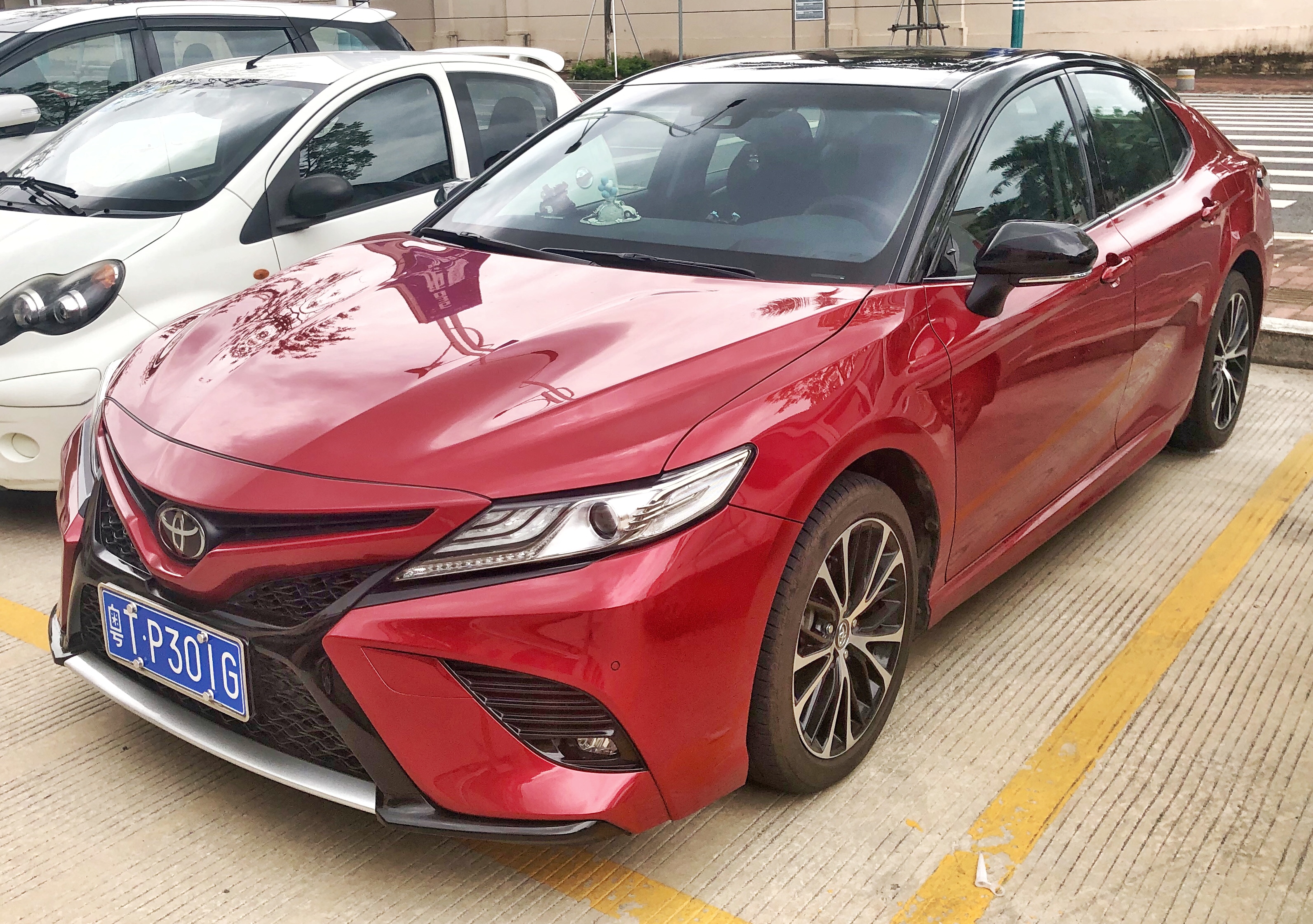
This is a 2009 Toyota Camry. The problem they’re talking about is the engine shaking when the car is stopped at a light, especially when the air conditioning is running.
Fuel trims are the car’s way of fine-tuning how much fuel it injects. If the numbers are off, it can hint that the engine isn’t getting the right fuel-air mix.
A misfire code is an error the car logs when it detects that a cylinder isn’t firing properly. It can turn on the check-engine light and help point to the cause.
Engine mounts hold the engine in place and help reduce vibration. If the mounts are worn out, the engine can move more than it should and the car can shake.
A compression check measures how much pressure the engine cylinder can build. If one cylinder is low, it usually means something inside isn’t sealing well.
A fuel injector is a nozzle that sprays fuel into the engine. If one gets clogged, that cylinder may not get the right fuel, which can make the engine idle rough.
Term
CRC guaranteed to pass the G2P emission system cleaner
This is a fuel additive/cleaner meant to remove gunk from the fuel system. The host suggests trying it first and then driving to see if the rough idle improves, which can point to clogged injectors.
The cylinder head gasket is a thin seal inside the engine that keeps different fluids and gases from mixing. When it fails, the engine can run poorly and you may see leaks or overheating.
Transmission mounts are the parts that hold the transmission in place and help absorb vibration. If they’re worn, the car can shake or feel rough, even if the engine itself is fine.
A leak down test checks whether each cylinder is sealing properly. It can help find if the problem is inside the engine (like valves or rings) or from a gasket leak.
A compression test checks how much pressure the engine cylinders can make. It tells you if something is off, but it doesn’t always show exactly where the problem is.
The fuel pump moves fuel from the tank to the engine and maintains system pressure. A weak or failing fuel pump can cause lean running, misfires, and intermittent idle problems—especially under certain loads or temperatures.
Injectors are the parts that spray fuel into the engine. If an injector isn’t working right, that cylinder may not get the right amount of fuel, which can make the engine run rough. They’re saying injectors are harder to quickly verify than some other causes.
Term
AC
AC is the air conditioning system. Turning it on makes the engine work a bit harder, which can affect how the car idles. If the car shakes more with AC on, that’s an important clue for diagnosing the cause.
Lockup is when an automatic transmission connects the engine to the transmission more directly to reduce slippage. If it doesn’t engage or disengage correctly, the car can feel rough or behave strangely when you slow down. They’re saying this situation doesn’t sound like that kind of transmission problem.
RPM is how fast the engine is spinning, measured as revolutions per minute. When the engine is idling, RPM should stay fairly steady. If it drops too low or behaves oddly when you turn on AC, that can help point to what’s wrong.
Fuel pressure is how strongly the fuel system pushes gas to the engine. If pressure is too low at idle, the engine may run rough or shake. If it runs well at higher idle/load, that can suggest the fuel pressure problem isn’t happening (or isn’t severe) at idle.
The fuel filter cleans the gas before it gets to the engine. If it gets clogged, the engine might not get enough fuel, which can make it run rough. The hosts are basically saying the idle behavior should match what the fuel filter/fuel pressure is doing.
This is a Chevrolet Tahoe (a big SUV). The problem described is that the engine idle speed goes up and down when the A/C is on, which usually means the car’s computer is struggling to manage idle under that extra load.
Electronic throttle means the gas/throttle is controlled by sensors and a motor instead of a cable. Since the car is using sensors to decide how much air to let in, bad sensor data can make the idle speed bounce around.
Some cars use a small motor to let extra air in at idle to keep the RPM steady. The speaker is saying this one doesn’t do it that way, so the idle problem is more likely tied to throttle/sensor control.
The mass airflow sensor tells the engine how much air is coming in. If it’s reading wrong, the car may add too much or too little fuel, which can hurt gas mileage and make the engine feel weak.
Fuel economy is basically how many miles you can drive on a gallon of gas. If the engine is getting the wrong information, it can waste fuel and you’ll use more gas than you should.
Concept
unplug them all the time to test the car
They’re describing a quick test where you unplug a sensor and see how the car responds. The car may switch to backup settings, and that behavior can help figure out which sensor is the problem.
The throttle position sensor tells the car how much you’re pressing the gas (how open the throttle is). If it’s unplugged, the car may guess, and that can change how systems behave.
Mileage is how far the car or truck has been driven. But for fleet vehicles, low mileage doesn’t always mean low wear if the engine ran a lot while idling.
An hour meter tells you how long the engine has been running. Two trucks can have the same miles, but the one that idled a lot will have more engine hours.
Fleet patrol vehicles are work trucks used repeatedly for duties like patrolling. They may idle a lot and start/stop frequently, so engine wear can come from hours of running, not just miles driven.
How the vehicle was used matters a lot. A truck that mostly idled and was started often can be more worn than one with similar miles that was driven normally.
They’re saying fleet cars are often a good buy if you can see proof they were maintained. Service records help you know the vehicle was cared for, not just driven.
A fleet manager is the person who runs a company’s fleet of vehicles. If they don’t manage maintenance and replacements well, some vehicles can get neglected or used in ways that cause problems.
A serpentine belt is one long belt that powers several car accessories. If it wears out, multiple things can start acting up because the belt is what turns them.
Belt slip means the belt isn’t gripping and turning things as it should. When the car loads the system harder, the belt can squeal or fail to drive accessories properly.
A component kit usually means you replace the belt and the related pulley/tensioner parts together. Doing it as a set helps prevent the same squeal from coming back soon.
Automatic tension means the belt tension is maintained by a built-in mechanism, not by you adjusting it with a wrench. That helps keep the belt from squealing as it wears.
The host mentions the Honda Civic as an example of a car that used to have belts you could adjust by hand. If the belt tension isn’t right, it can squeal and you may need to re-check it after a new belt.
Some older belt setups require adjusting the belt tension by hand. If it’s too loose, it can squeal, especially when you turn on A/C or use more electrical load.
A timing belt coordinates the engine’s moving parts so the valves open at the right time. It has to be replaced on a schedule, because waiting until it looks cracked can be risky.
This is a Ford F-150 with a 3.5-liter EcoBoost engine. Because it uses turbocharging and direct fuel injection, carbon can build up on the engine’s intake valves and make the engine idle rough.
GDI means the engine injects gasoline directly where it burns. Since the fuel doesn’t clean the intake valves as much, carbon can build up there and cause problems like rough idling.
CRC is a brand that sells cleaning products for cars. In this call, they’re recommending a CRC kit meant to clean carbon buildup on direct-injection engines.
The valve train is the set of parts that opens and closes the intake and exhaust valves (including components like camshafts and related hardware). Carbon buildup in this area—especially on intake valves—can disrupt airflow and cause rough idle.
The valve seat is the contact surface that helps the valve seal tightly. If carbon builds up there, the valve may not seal or behave properly, which can make the engine run poorly.
A turbocharger is a device that uses exhaust to push more air into the engine. On turbo engines, carbon can build up in places that affect how the engine runs.
The check engine light is a warning that the car’s computer found a problem. Here, they’re saying if the light isn’t on, the issue might be something like carbon buildup instead of a sensor failure.
A scanner is a tool that plugs into the car to read the computer’s error codes and live data. They’re saying that if the scanner shows everything looks normal, the cause may be something like carbon affecting airflow.
A fuel additive is a cleaner you put into the gas. They’re saying it’s different from physically cleaning the engine parts, which may be needed if deposits are heavy.
Car
2012 Chevy 1500
This is a 2012 Chevrolet pickup truck (the 1500 model). The caller is describing a strange behavior that happens when they get out of the truck and how they handle the keys.
This is an automatic lock feature that uses your key fob. When the car thinks you’ve walked away, it locks by itself so you don’t have to press the button.
This is a car alarm or anti-theft system that was added after the car was built. It can sometimes make the car lock automatically in ways you don’t realize.
Remote start means you can start the car without being in it. Some add-on remote-start systems also connect to the car’s security/locking, which can cause the doors to lock unexpectedly.
Non-factory equipment refers to parts or modules that weren’t installed by the vehicle manufacturer. In this context, it means you should look for add-on wiring/modules under the dash that could be controlling locking or remote-start behavior.
Telltale signs are observable clues that indicate something is present or has been modified. Here, the clue is wiring that doesn’t look factory—suggesting an aftermarket security/remote-start install.
Factory plug-ins (factory connectors) are the original electrical connections and harness plugs installed by the automaker. Aftermarket wiring often looks different—rougher, mismatched, or routed differently—so comparing to factory connectors helps you spot add-ons.
A fob is the little remote you use to lock and unlock the car. Some cars also use it to let the engine start, so if the fob isn’t working right, the car may unlock but still won’t start.
The body control module is like the car’s main computer for the “body” features—things like locks and other convenience electronics. If it’s not working right (or needs an update), the car can act weird with keys and fobs, including not starting.
Reprogramming is when a shop updates the car’s computer software so it can work correctly again. Here, they’re saying the car might need an update so the key and lock/start functions behave properly.
Concept
anti Brian to for Brian's keys plan
This is mostly a joke about a plan for managing keys. The real takeaway is that more keys can mean more programming and cost if the car’s computer has to learn them.
BCM is short for the car’s body computer. If the BCM is the problem, the fix may involve replacing it and programming it so the car recognizes it and works correctly.
That “blend door” part helps the truck decide how much hot vs. cold air to send, and where to send it (like defrost or floor). If it’s failing, it can make a quick clicking noise when you first turn the heat on in cold weather.
In this context, “dash” refers to the vehicle’s dashboard assembly. Some HVAC actuator/blend-door repairs require removing large portions of the dash to access the HVAC box and actuators, which is why labor costs can jump from “a couple hundred bucks” to much more if the dash has to come out.
The HVAC box is the main housing for the truck’s heating and air system. If a door inside it breaks, the shop may have to replace the whole unit because the parts are hard to reach.
Defrost is the setting that blows air toward the windshield to clear it. If defrost works, it means the air-routing part of the system is probably okay.
That “recirculation door” is part of your car’s heating and A/C system. It decides whether the fan pulls air from inside the car or brings in outside air. If it’s stuck or broken, the sound and airflow behavior won’t change when you press the recirculation button.
The recirculation button tells your A/C or heater to reuse the air already inside the car. Pressing it changes the airflow behavior, so you should notice a difference in sound and how the cabin air is handled.
Remanufacturing means taking an old, worn car part and rebuilding it so it works like a properly functioning part again. The old part you turn in is called the core, and it’s what makes the rebuild possible.
A core charge is a deposit-like fee you pay when buying a rebuilt part. It encourages you to turn in the old broken part so it can be rebuilt again. If you don’t return the old part, you usually don’t get that money back.
In this context, a “core wagon” is the shop’s collection area for returned cores—used parts that customers bring back after paying core charges. Parts that can’t be reused or reclaimed are later sold for scrap or recycled.
The GMC Sierra EV is a pickup truck that runs on electricity instead of gasoline. Because it’s electric, it has different systems for power and charging than a regular gas truck. If someone calls in with an issue, the discussion usually focuses on what’s happening with the vehicle and how to fix it.
Traction control helps prevent your wheels from spinning when the road is slick. If it senses a problem, it can turn on warning lights on your dashboard.
Park assist is the feature that helps you park by warning you about obstacles and sometimes steering or braking to help you fit. If the car detects a braking-related problem, it may turn off park assist.
The brake fluid reservoir is where the car stores the fluid that makes the brakes work. If it gets low or empties, it usually means there’s a leak somewhere, and the car will warn you.
ABS helps you keep steering control when you brake hard by preventing the wheels from locking. If the car thinks the braking system isn’t healthy (like low brake fluid), it can turn ABS off and light up warnings.
This is the car’s electronic system that helps you stay in control if you start to slide or lose grip. If the brakes aren’t working properly (like low brake fluid), the car may warn you and turn it off.
The vacuum brake booster helps your brakes respond with less pedal effort. If brake fluid is disappearing but you can’t find a leak outside, it can be leaking into the booster area, and the fix may involve replacing parts of the brake system.
The master cylinder is the part that makes brake fluid pressurized when you press the brake pedal. That pressure is what actually helps the brakes clamp down at the wheels.
A seal is a rubber-like barrier that prevents fluid from leaking. If it fails, brake fluid can seep out and you may see wet spots around the master cylinder area.
A brake line carries brake fluid to the brakes. If it rusts and starts leaking, you can lose braking performance—and the leak may be hard to spot because dirt and mud can hide it.
They’re using a 2020 Highlander as another example of a car that doesn’t get driven regularly. The main point is picking a battery tender that works with the battery type you have.
AGM is a type of car battery that’s sealed and designed to handle vibration. It often needs a charger that specifically supports AGM so it charges correctly and stays healthy.
LIVE
Welcome to the Under the Hood Show podcast. Thank you for joining us. We have some podcast sponsors.
Berkeley One Classics, your key to collector car insurance.
And road ready wheels, replica OEM wheels at huge savings. Use the offer code hoodie for even more.
And by car dash part, over 200 million used parts ready to ship to you fast.
Thank you for subscribing. Wherever you listen to your podcast, we would love if you'd subscribe
and rate and review us. We appreciate it. Here is the Under the Hood Show podcast.
This is Under the Hood. Welcome to the Under the Hood Show. We are glad to have you with us.
Russ Evans is here to answer your automotive questions. Thanks for joining us under the hood.
Shannon Nordstrom is here to do the same. Welcome, hoodies. Thanks for tuning in so we can help you
tune up. I'm Chris Carter here to answer your calls at 866-594-4150. Like this. Watch this one.
You ready? You guys ready? I think so. Let's do it. Let's go to California and talk to Tony.
You're on the Under the Hood Show. Tony, what can we do for you?
Hey, guys. Thanks for the show. I listen to you guys all the time and learn a lot.
Thank you. You do. So I have a 09 Camry with a four cylinder, the 2.4 cylinder,
and it's got a rough idle only when I'm stopped at a light and I'm in drive. As soon as I shift
to neutral, for example, it goes fine and it's definitely worse with the AC on.
It's been going like that for a while. I've cleaned out the throttle body and the mass airflow
sensor. It didn't seem to help very much at all. So kind of scratching my head,
checked the fuel trims. They're good, like around two or three percent.
ChatGBT suggested that maybe ignition coils could be just marginal, only having a problem
when it's idling and there's no codes or anything and it drives fine perfectly every other instance.
It's only when you're stopped at a light with your foot on a brake
and it's really bad with the AC on, like the car shakes.
Well, with a coil, you're either going to get a misfire or you're going to get a complete fire
on a car like that. So if it's misfiring, you should have a misfire code and a dead cylinder.
If it's a coil, but you may have a weak cylinder. You may have a valve that's a little weak,
leaking by there or low compression in a cylinder, making it run rougher. If it's at low speed
and it's in gear under a load, it's really going to shake and run rough.
It could also be an engine mount that is in poor condition. It's starting to sag a little bit.
These engines are pretty good. The O9 Camry's got a really good engine that doesn't usually develop
that type of a weak cylinder situation. We do see them more often have engine mounts that start to
either become super stiff with age or rotten and worn out. They'll flop around a little bit
so the engine can shake a little bit at idle. Those are a couple of things we'd look at.
We do a cylinder leak down test on all the cylinders and compare them, see if they're
all four are the same, compression check, see if they're all the same. If that's all good there,
then you know, mechanically it's sound and you can look at some tune up issues and things like that.
You might have a, you know, if fuel trim, that's going to indicate an average of all four cylinders.
It's not going to indicate if you have one weak one. So if you have, let's say number,
the number one cylinder has a clogged fuel injector enough that it's giving an idle problem,
but down the road it's fine. That two percent would indicate that it's adding two percent total
to all four cylinders to make that one come up enough to compensate for the maybe six percent
it's losing on the one cylinder. That would be a case where you could try before you even start
taking it apart and doing readings and spending your time doing that. You might try some CRC
guaranteed to pass the G2P emission system cleaner. And a partner of ours. Yeah. Put it in the tank,
drive it a couple hundred miles, see if it changes. If it does, that's a great indication that you've
got clogged fuel injectors. If you can drive it a couple hundred miles and never stop at a light,
if you can time it, it would be right. I mean, that would. Tony, we had in the Wenine Camry that
my daughter drove for a lot of years and we went, this is kind of odd, but we went through a couple
spats with that thing where it just idled a little bit weird and it just seemed like whether it was
different fuels that she got. Whatever it might have to be, it would react a little bit different.
We bought that car with 30,000 miles on it and drove it to 100,000 miles. And you never could
really isolate that? What's that? You never could. No, it just happened every once in a while. So
I have a lot more information. I actually did most of those things. This has been going on for
probably more than a year now, but a year ago, less than a year ago, I had the cylinder head
rebuilt because the head gasket blew. Oh, here's more information. Keep talking here. Keep going.
And so that didn't affect the problem at all. I have changed the transmission mounts because
I had another separate problem in the fall that I thought was the problem. So all the
engine mounts are new. So new plugs as well with the head rebuilt. And then on the forums,
I see a lot of guys talking about the same kind of problem that they couldn't solve.
Some people were just like, oh yeah, just live with it. And I'm like,
there's 60,000 miles on it, but everything else was run fine.
Yeah. There again, we drove ours to 100,000 miles and we sold it to somebody else. And
as far as I know, they're still driving it. That car was just solid. But it did have a
funky idle every once in a while. Now, I'm not saying that makes it right, but it wasn't so bad
that it never died. We never chased it any further because we just knew it was going to be
just maddening probably to chase it any further. The cylinder head, why did you do that? Just
because there was a problem with the cylinder pressure? No, cylinder blue cylinder head gasket.
Head gasket. Okay. And after you put the new cylinder head on, redo the whole thing,
after you put the new cylinder head on, has someone done yourself probably,
have you done a leak down test? Not a compression test, but a leak down test to see if all the
cylinders are sealing? I didn't, but the problem was there before and it didn't get any worse.
Maybe you've gotten through temporarily. It didn't do much. It's been a problem since before and
after. I know Russ and I will challenge each other from time to time. Go back to the basics.
Go back and go back to the basics. And fuel delivery, fuel pump, fuel filter that you've
checked all that probably? Not the fuel pump, but I'm leaning towards, like you said, the
injectors because that's the only thing that's not as easy to check at this point.
Could be. You could swap them around, move them to a different cylinder, but you're not
seeing a misfire that's solid, so I guess it would. Yeah, that would just be, well, you'd still be
wondering at that point. Yeah. But it's, you know, a lot of times they'll tell people to do that if
they're having a misfire in one cylinder to move some things and see if the problem moves with it
or not. Right. Yeah, there's no codes or anything. And so under load is basically what's happened.
Air conditioning on, still hanging up, you know, in gear a little bit, that's just an extra load
on the engine. And it's not so bad that it's like a transmission that is not releasing the lockup
or something like that. We're not talking about that bad. You're just talking about a light
just a rough idle, correct? Yeah, it's pretty rough. I mean, even without the AC, it kind of
shakes a little bit, but it's real annoying when the AC comes on. It has installed though,
you know. And I checked the RPM. It doesn't seem to drop too low. I mean, it's about 650,
both with and without the AC on. And it goes at the most at 700 if I put it in neutral.
When it's doing it, if is it going to do it every time you stop and do that for a
period of time? Or is it intermittent in that way too? Yeah, seems to be pretty consistent.
Russ, you were just leaning in like you're going to say something when he said that about that.
You could have a shop take another look at it and see if they if they think what's going on,
but it sounds almost like it might be a it's a transferring type vibration from engine mounts,
from engine to the to the body. And a lot of times when you replace those mounts,
they are not the same as the factory ones.
Well, Tony, good luck. Kind of feel like we let him down. We didn't give him anything
that he hadn't already tried, but he's definitely shook the tree pretty hard on that one already.
Fuel filter, that idle, you should have plenty of fuel pressure at idle,
you know, if it's running so good at higher idle, most likely. Tony, wish we could have
given you. We might have given him an idea and we don't even know it. Just by the way,
we talked about different things, kind of talked through it with him. Yeah, sure we did.
866-594-4150. That's the number to reach us here on the end of the hood show.
Let's go to Arizona and talk to Tammy. You're on the end of the hood show. Tammy, what can we do for
you? Hey, I have a 2010 Tahoe with 360 plus 100 miles on it, 1000. Sure, that deserves a clap.
She's been around the block, but it was an old Border Patrol truck, so it was maintained very
well. My mom owned it, maintained same way. I own it same way. Every 3000 oil change.
What the issue I'm having now is when the truck is at idle and I have the AC on,
the RPMs fluctuate. They'll start about seven, they'll go up to about
12 to 13, and it just, it constantly does that until, unless I completely turn off the fan,
and then it'll idle normally. But if I'm sitting on, I just, it does that, and the fan will be
constantly on. I've asked my mechanic and he's like, oh, that's just normal for it, but I just,
I don't ever remember when I was younger, the older vehicles that I grew up with ever.
I don't mean hard that way. That's a big swing, 700 to 1200. That's a lot.
We need to give some of her RPMs to Tony with his camera. I mean, they need to do an RPM dollar
cost averaging. But you know, if that, it will, as the AC clutch kicks on and off, if it's cold
enough, you know, it cools itself down and it's, it's adjusted where it's kicking on and off,
it will move some, but it automatically adjusts. It, it might be idling at 700. It'll kick in,
it'll drop down to 675, 650 and kick right back up as it adjusts. That's got electronic throttle
on it. There's no cable, nothing like that. So it's no idle air control motor. A dirty throttle
body can cause it to swing like that. A dirty mass airflow sensor or a mass airflow sensor that
is failing can cause that to happen as well. It can't see the changes in airflow quickly
and it doesn't adjust quickly. So it's, it drags. So, and it's, it's going to have that normal kick.
If it's hot out and you have the air on, you're going to get a little bit of a kick there.
Yeah. Just a little bit. And sometimes you can, you get a code, but you can unplug the mass airflow
sensor, shut the car off and restart it with the sensor unplugged and let it, you know,
find its idle and sit there for a second. And once it does, and it's running smooth,
turn the air on and see if it's working good now, then you probably got a mass airflow sensor
that's, that's weak. And when it's actually plugged in and operating, it's got a lot of
fluctuation. They can fail within their range and not give a code and cause it to act up,
cause fuel, fuel economy to be poor, things like that, response to be sluggish. So it's
one of the items that does that, but we unplug them all the time to test the car. You know,
you can't really drive it, but you just unplug it, shut the car off, restart it. It may stall
a few times, but eventually it'll start an idle. Fine. And once it does, then you can,
you can turn the AC on and see what it does. It's, it's reading off the throttle position
sensor when that's unplugged. Right. Okay. All right. I'll start there.
Well, Tammy, I got to ask you a question just because it just is always interesting to me.
And Chris is looking at me like he's really nervous about what I might ask.
Chris is giving me that look. He's giving me that look right now. I just want to know if our,
if our, if producer Doug spelled your name correctly on the caller board that we see,
because I just, there's a lot of Tammy spells. Right, right, right. My wife has a unique one.
And I'm just curious if Doug spelled it into what I would call the most common, I think,
pretty common. T-A-M-M-Y, did he spell it correct? Certainly the, the common spelling for
gen X. IE. Did he, did he spell it right? Yes, he did. Okay. Doug, did you ask for the spelling?
Oh, Doug, he's, he never does, but I just, well, sometimes you do. But most of the time,
it doesn't matter as long as we can look up there and read that it's Tammy from Arizona.
Yeah. If, however he spells it,
it'd be so great if she said, you'll never go wrong when you put in an M-Y. You'll never go
wrong. If it's the other way, then those people are the wrong ones. Okay. So my wife is spelled T-A-M-I-E.
And so we often have to correct even our own relatives of that. I only know two
Tammies. I think my whole life, that one and the one that cuts my hair and they're both M-I-E.
Yeah. But this is well, Tammy Mockmiller, our sales manager's wife. I'm wrong. I do know three.
You know, you know, another one. That's M-M-Y. M-M-Y, I'm pretty sure. So I just, I thought it'd
be something fun to ask. We've never done that before. That's a good, that's a good one. Tammy,
thanks very much for the call. Good luck. Let us know how it goes. Yes, definitely I will. I kind of
do odds and ends on my own if I can. I change oil, spark plugs, and I do what I can to save,
save myself money. I'm a little bit coordinated that way. I hate to go reference the movie, but
you know, my, my brother was a mechanic. My dad was a mechanic. My uncles are mechanics. So
yeah, that's just, that's what I grew up with. I didn't grow up with Barbie dolls with trucks.
I love it, I love it. I have a question about a vehicle like that, border patrol, whatever it is,
when it's a, it comes from a situation like that, law enforcement, or even, even any fleet vehicle,
when it's taken care of well, the oil changes, all of that is kind of logged and it's all good.
But they also take, it's, that's not, it's not like it was driven every day normally
and taken care of in that same way, right? I mean, are those, do those sometimes have a
hidden thoughts, right? You know, well, I have thoughts. It depends on what
each visual or each vehicle individually, right? I could imagine that in South Dakota,
police vehicles that are used for patrol, they, they're treated differently and they run differently
than the ones that are not on control, but the ones are stopped like, like highway patrol
would be different than a sheriff's car, sheriff's car is moving. It's not doing a lot of sitting,
waiting for speeders. The highway patrol, they may be either cruising down the road or stopped
idling for long periods with heat on things like that. Border patrol vehicles are either going to
be used for, they could be used for intense pursuit of things. They could be used for
sitting and watching. So you might look at the mileage. I'd rather find one with average miles,
because if you find one with high miles, it's, it's on the, you know, you want the high mileage
one because that means they were on the road moving with it a lot. Hopefully they weren't
running all over constantly at slow speeds in the dirt, but the ones with very low miles
probably have been sitting and a lot of those have hour meters convert those to mileage,
because if you've got one with 25,000 hours on it and it's only got 10,000 miles, you think,
oh, look how this great mileage, where do I find the hours in the meter, the truck meter,
you know, on the dash? Yeah, there's hours, most of the GMs and Fords, they have an hour meter as
you flip through. Yeah. And you can convert. And I think a lot of the miles, you know what,
I think a lot of the fleet patrol type vehicles, I think that's part of that kit that they,
yeah, you want to, you want to go maintenance, it'll say base, it'll say change your oil at
this many hours or this many miles. Because it's a real thing. I mean, sure. And that's what I was
going to say, Russ, you hit it right in the head. The use of that vehicle is important, and you
don't always know that. You know, was that the one that they, was it the car that they,
look, I'm just going to look around here. They hopped in and they drove to Rapid City
twice a week. Yeah. That's a great one. Or is it the one that drove down to the corner
and sat through the air conditioning on and idled and then took off every once in a while?
Right. That one I'm going to be a little more cautious about, but it might have a great chassis
that never got used. Seat might be broken in. But the engine probably has brand a lot. Yeah.
Transmission might be pretty good. You know, it's just, but as a rule of thumb though,
of a well maintained fleet vehicle with good records is a pretty safe vehicle to buy
most of the time. But we have seen, there's that 10% where that fleet didn't have a good
fleet manager, that they had problem vehicles that they're getting rid of. You've always got
to have your caution. If you have 10 cars in your fleet and one of them does something different,
then, and you end up with that one, they might all be great, except that one was used for pursuit
or for going over dirt, you know. The Under the Hood Show podcast is brought to you by exclusive
sponsors like Berkeley One Classics, celebrating 50 years, your key to collector car insurance.
And by car-part.com with over 200 million parts, find them online at car-part.com.
And by Road Ready Wheels, OEM replica wheels at a huge savings, roadreadywheels.com.
Thanks for listening to the Under the Hood Show podcast.
When you need parts for your car, finding them is half the battle. And we have a great source
for you to find those parts you need at great prices. If you need parts, whether it be for a
brand new car or going back about 20 years, it doesn't matter, check out car-part.com.
It's fast and it's easy. Over 200 million parts strong all across North America.
Over 4,000 recyclers to choose from, giving you the largest selection available.
Whether it's an engine, transmission, doors, seats, or wheels, you can find them on car-part.com.
We even let you know what parts from other models and years fit your car. Many recyclers supply
pictures of their parts too. We even have a mobile app, search US and Canada,
or buy from your local independent recycler. Whichever you choose, buying recycled is good
for the environment and good for your wallet. If you're a repair shop, there is a professional
version available for you at no charge. That's car-part.com. Check it out today.
This is for those of you who need a new wheel or a set of wheels due to damage or leaks. You've
heard people call our show with wheels that are constantly leaking air or have been damaged in
some way. Maybe that person is you, or maybe you want a set of spare wheels that you can install
on your vehicle over the winter months with snow tires to avoid damaging your nice summer wheels.
Road ready wheels has replacement wheels for many OEM manufacturers at substantial cost savings.
These wheels look and perform like OEM wheels, so save money and go with road ready wheels
when you need a replacement. Are you tired of needing to add air to your tires every few days
because your wheels have been eaten away by road salt and corrosion? A new set of wheels from road
ready wheels is the cost saving way to go. A new set of road ready wheels will stop the leaks.
Do you have factory steel wheels and have shopped in the seemingly endless and expensive
aftermarket wheel scene not knowing what to get but you want a better look? Road ready wheels can
help you upgrade to factory looking OEM aluminum wheels. Over 40,000 wheels with free shipping
available and returns with a one year warranty. Under the hood listeners, save 10% when you
use the code hoodie at checkout. These wheels are a direct fit so your factory caps and TPMS
sensors will fit. Find out more and order yours at roadreadywheels.com. When I got my first special
decar, I called up my agent and had him put it under my regular auto policy and had very minimal
coverage. Even dropping coverage in the storage months to keep the cost down. That was before I
met the professionals at Berkeley One Classics. I'm Shannon Nordstrom, host of the Under the
Hood show with Russ Evans and Chris Carter. Berkeley One Classics ensured me with an agreed value
policy. That means if you suffer a loss, there's no haggle over the value of your vehicle. They
also show me that I could ensure my vehicle for what it was really worth and keep my coverage
year round and still save money. I did not know that my homeowners policy did not cover my car
when it was stored in my garage for the winter. For 50 years, Berkeley One Classics has ensured
a wide range of vehicles from sports cars and rare exotic cars to antique vehicles including cars,
trucks, tractors, and motorcycles. Berkeley One Classics makes it easy to get a quote.
Just visit them on the web at BerkeleyClassics.com and use their online quote tool or give them a
call. 1-800-603-3330. That's 1-800-603-3330. Welcome back, everybody. It's time to get
back under the hood with our motor medics. 866-594-4150. That's the number to reach
us here at the Under the Hood show. Don't forget, if you miss an episode, you can always find it
wherever you get your podcasts. And you can watch the show on our YouTube channel if you
subscribe to that and join the Hoodie Fan Club at UnderTheHoodShow.com. You could win a hoodie.
Like Robin Burkhart. Congratulations for everybody here at the end of the Hood
show and our friends over at Berkeley One Classics. They're celebrating over 50 years of
collector car coverage. Nice. 866-594-4150. I want you to find out how many years over 50.
Will you do that before next week? Oh, we have one. I believe it's 51. Okay.
Because we've been saying it for a while and I wondered where we are. That's why it's over 50
years. It was 50 years last year. Now it's over. 866-594-4150. And my question is,
it seems like it was last year, but was it? Yeah, we're doing that before the Toyota.
October beast. Let's talk to Jason. You're on the Under the Hood show. Jason, what can we do for you?
Hey guys, what the show? I just had a question for you that I was wondering about.
I work at a mechanic shop in high school, you know, in the early 2000s. And it seems like
back then we replaced a lot of serpentine belts in vehicles. And you know, I've been
driving vehicles now for years and I've never replaced one. So I was just wondering as like
belt technology somehow improved in the last 28 years, that they last longer?
Belts have become a little better, but there's more things going on. What happens is the old belts,
the way they were made, they would show their signs of wear very quickly. They would crack and
look horrible. And we said, oh, the belt's cracked. We got to replace it. Now belts have problems where
they don't crack, but they stretch, they start to get glazed over. They will slip at times when
you get a heavy load, like you get your alternator on your rear defoggers, you know, really loading
that alternator on their air conditioning, all that kind of stuff. If you got a water pump,
sometimes it can slip on there. And they can come off when things happen, you get tensioners that go
bad, all those kinds of things. Actually, it is one item that goes neglected until something
major breaks. But when it's time to replace it, you should look at the schedule and see,
you know, get a realistic time. If you got 100,000 miles on a vehicle and you've never put a belt
on it and never put a component kit on it, it's time to do it. We use Deco in our shop. They're
put a belt on. I do not want to put a belt on for somebody that says, well, my belt's squeaking.
Can you throw it on? Sure. We'll throw that belt on there. Oh, well, now it's squeaking. Well,
why is it squeaking? Well, we didn't replace that idler. We didn't replace the tensioner pulley.
If I would have got a complete Deco kit that had all those components, I'm going to put it on once
and never have that issue because I forgot something. What a person might do is buy a belt,
they put it on and it starts squeaking within a few weeks because they didn't replace those other
components, which may have had some contamination from the old belt on there, just air, dirt, grease,
whatever. So now they'll say, well, I should put, I should go get an idler pulley. So sure,
they put one idler pulley on it. That may not fix it. So now they put a tensioner pulley on it.
And now it's quiet again for a little while, but because they didn't put the belt
and the pulleys on at the same time, now they got the same problem. It's similar to doing
brake pads without rotors and then trying to throw a set of rotors on there a couple weeks later to
stop the noise. It usually doesn't fix it. You're usually back to taking it all off and putting a
set of pads and rotors on at the same time. So with belts, a component kit is complete, but
your first question there, are they different? I think they're probably a little better, but
not so much. They just show their signs of wear differently, like tires.
Well, and when I, I mean, I was, when I was a kid, I remember the neighbor fixing his car.
It had three, he put a giant belt on it. It had three things. You could see the belt going,
he'd take a wrench and tighten it and try and get it the right tension. Now, that's not,
you've got automatic tension. Well, and it's going in and it's the serpentine belt that, you know,
the serpentines, they're in there. Yeah, they're in there with low clearance. And so they're,
they're not on each other. There are still some that aren't too old though, like a Honda Civic
that still has manually adjusted belts, not the brand new ones. I'm talking about you go back
a few years, but they had manually adjusted belts. You had to put a new belt on and then the customer
pretty much always had to come back within two weeks to two months to readjust those belts,
or they would definitely squeak when you turn that air conditioner on or put a heavy load on
the vehicle with alternator headlights or, you know, your alternator is squeaking because you
get your headlights on rear to fog or stuff like that. So belts have come a long way,
but they just don't show their wear the way they used to. Back when I was a kid, you'd see
parts of belts on the side of the road. But if that were the case now, there'd be cars sitting
there because you didn't, you don't break a belt now. Like you said, you, it's a done, it's a done
deal pal. And timing belts, they still have a chain, a change interval to them, which should
really be followed, but we pull them off and they don't have cracks even though they're
old and aged, but it doesn't mean they're not ready to break because we will see a tooth come
off one and the belt's done. I was like, but there weren't any cracks in the belt. You're right,
there weren't, but structurally it was breaking down internally. Jason, thanks very much for the
call. Good luck. 866-594-4150. Let's talk to Bill. You're on the end of the hood show. Bill,
what can we do for you? I have a 21 F-150 with a 3.5 EcoBoost and I'm getting a rough idle.
It's got 65,000 miles on it. I drive the same vehicle at work and that one's nice and smooth.
What am I dealing with probably? It's just rough idle only. It could be
that the fuel injection system is dirty on that. It's got a direct GDI gas, direct injected engine,
and they do carbon up on the backside of the valves and they cause these things to run rough.
They really need to be cleaned earlier than a lot of people do. We see that they benefit
the most from cleaning those at about 30,000 miles. The CRC GDI service kit, the direct injection
service kit is great at cleaning that out to clean the back of the valves, the mass air flow
sensor, the injectors themselves through the fuel tank, all of it. You've got to do that
complete and it's got to be on a regular schedule. If you let it go too long, you'll never get that
stuff clean. Once it's caked down there for good, it's just not coming off, but proper servicing
with the proper tools on a regular schedule will help keep those clean, but they'll just give a
little shake at idle. If it's not a hard misfire, they'll just carbon up enough to
cause fuel issues. Is the one you have at work, are they used similarly?
Yes. The one at work is less miles, 28,000 miles.
It's time for a cleaning on that one right now.
Yeah. Because those three point, those EcoBoost motors, one of the things you hear people talking
about is just with the turbos, they get a little more carbon buildup in the valve train.
They've tried to offset that with a second set of injectors in the intake now to spray the back
of the, that's all they're there as far as where to clean the back of the valves.
And it does, it gets a little clean spot right on there where it's spraying them.
Have you torered some apart like that?
We've had some apart to replace the intake and you're like, oh, look at that shiny spot right
there where it's spraying, but it's really not, I don't think it's really getting down in there
and washing the valve seat off. It's just the back of the valve area.
But that, I mean, that is a thing though with those turbos. You just get a different,
a different amount of carbon that gets back up inside that cylinder and they've been trying to
super tune that over the years as they've perfected that EcoBoost, but we definitely have,
if you talk to the manufacturers even, you'll hear people talking about,
there's some that get so bad, they have to pull the heads and clean them.
So don't, don't let it get to that point. If we're going down that road that we think that's
what it is, assuming you don't have any other check engine lights, there's nothing else showing up
if they hook it up to a scanner, when it's running, you know, if the idle can be duplicated as rough
and they hook up to it and everything looks like it's checking normal and the fuel terms are
normal and everything looks like it's supposed to, it's more than likely just a disrupted
air chamber that's causing that thing to lower idle, not be able to flow the air right because
of carbon. Good chance of that. Okay. And that's a physical cleaning. That's not like a fuel
additive. Well, that's where the, you know, Russ recommended. It's an additive, but it's also
added in through the intake itself and in the gas thing. It's not just a pour in the tank
additive. You're talking about bringing it in and having it done. Correct. Yeah. I mean,
you could do it yourself too. People do it themselves, but a lot of people do it in the shop.
Bill, thanks very much for the call. Good luck. 866-594-4150. That's the number to reach us here
at the end of the hood show. Let's talk to Brian. You're on the end of the hood show. Brian,
what can we do for you? Hey guys, it's, uh, love the show. Love the show when I'm able to listen
to it. Thank you. Got a 2012 Chevy 1500 and I have a crazy thing that happens to it. I, uh,
when I get out of the truck, if I keep the keys in it, pull it out halfway, get out of the truck,
once in a while, a little ding twice, and lock itself in home. And my keys are stuck inside the
truck. So now I've got like four or five extra keys all over my truck on the outside that I can
get to in case it happens. And it just happened a half an hour ago. So just wondering, have you
ever run into something like this? Well, I mean, I'm going to go obvious here.
Don't, don't do that. Don't leave the key in the car. Just take the key with it. You don't need
a bunch of keys. Just need that one put, hold it your hand. Oh, no. Okay. No, just, just a half an
hour ago I got out, I took the, um, before I hit the five to lock it, it would already locked itself
in home. So I don't know what is that. Like, is that a proximity walk away feature that's not a
12? They didn't get that, they didn't get that until 14. No, I guess we're fancy. If it's got an
aftermarket security system of some sort on there or a remote start, it could be set to that to
passive lock. And it, you may not even know it has it. If somebody has left it in there and they
took their remotes when they sold the vehicle, which happens a lot, or if it's dealer installed,
that you just aren't aware of, you got to look under the dash and see if there's any non factory
equipment. You got an aftermarket remote start in there or security or something. You want to check
that first. Because that's easy. You got to look up under there. If you don't, don't think it's there
and look. Is there any other telltale signs besides looking under the dash? It's going to be on the
driver's side where the ignition wires are. It's going to be up under there somewhere. There'll be
wires that do not look factory. Because I got to be honest with you. You've said that before. You
got to look under the dash or just check under the dash and see. Right by the steering column. I
can't even look under my dash. I don't know how to do it. It doesn't make any sense to me. It's
covered up by a trim panel usually and when you look up underneath there. But it is, if you've got,
I'd say three wrench out of 10 familiarity. You'll look up underneath there and see.
That doesn't look factory. Got you. Compared to what factory plug-ins, factory connections look
like. Factory wires, it just typically doesn't look factory. Is three out of 10 good rusts,
do you think? Yeah. You could tell factory wires have covering on them. They just look smooth
and normal. The aftermarket ones are going to be bunched up in a rat's nest. There's probably a
zip tie. There's probably a zip tie or two most likely. Now, have you tried, since you have all
these keys, how many do you have? Now we're having fun with this. That's all right. No, I do. I have
like three extra keys on the outside of the truck and I always keep one in my pocket. All right.
All right. Okay. So it doesn't happen all the time. So out of all those keys,
out of all those keys, do they each have a fob also? No, no, they do not. Okay.
No, they do not. It will not start. Right. It will not start the truck. It'll unlock the truck.
Okay. So it's a vanity key kind of for the door. Well, yeah. So let's say he doesn't have an
aftermarket up underneath there. Then what do we do next? It's probably going to need a body
control module or at least need a reprogramming because it's not, not doing what
it's supposed to. Everything is a function of that part. So there's something going on in there.
When you said that, I flipped from anti Brian to for Brian's keys plan so fast. If it's the
BCM plant a key because it's 10 more keys. So it's going to cost you a little money on that one
because you've probably got to buy a new one, I think, and program it. I think. Well, you do.
400 to 600 bucks. Oh, you can hide a lot of keys at 400 bucks. Yeah, for sure. You can hide hundreds
of them. You can go have a remote start installed and just hit the unlock button. Right. Just do it
that way. Yeah. Well, have you tried taking the, have you tried taking the fob away from the vehicle?
I have not. No. Yeah, take your, so take, take the two, any key fobs you have with the vehicle
and leave them at home for the day. Just use your regular key. And if it stops doing it,
you might have a remote that's broken inside. And if you shake it up a little bit, it's doing it.
You could even just, well, that would should lock going on the road too, but you could even
just try to stay in next to the vehicle, maybe leave the window down so you can
hit the unlock button, unlock it and then just shake the key a little bit. See if it does it.
Move it around and see it. Yeah. Okay. That's just a couple of things to try. Yeah. Otherwise,
it's more than likely an electronic. Yeah. I endorse the extra keys now, Brian. Good luck.
866-594-4150. Let's talk to Dallas. You're on the end of the hood show. Dallas, what can we do for you?
Yeah. I have a 2020 Ford F-150 and when I, when it's cold outside and I jump in and turn on the
heater or whatever, there is a funky noise. But then it doesn't, isn't a fan or
anything like that because the fan still sounds the same high or low and it only works, you know,
about five minutes and then it's gone. Blendor motor. Is it a thud or a click?
It's kind of like a click. Yeah. Blendor motor broken. I've got one right now on one of these
in our, in our shop that needs when you got to pull the whole dash to do it, but it turned out
it had more than, more than a Blendor broken. It had the door broken, so it's going to need
the dash replaced. I'm waiting for the part to come in for that, but we do that a lot. We have a
lot of those Blendors that the door breaks in the dash and it's not just replacing the actuator,
it's replacing the entire unit. HVAC box. Yeah. So we, we sell a lot of those. Let's hope it's not
that. Let's hope it's, you know, just, just the, just the, no and that one's the one going for your
mode that moves from, well you said you're going from cold to heat. You're not changing position
like from defrost to. No, it's as soon as I, if I jump in the truck when it's cold out and
start it and then turn the heat on or, you know, like hit the power button on it, it does that
noise for about five minutes until it kind of warms up and then it's gone. The blower motor works
great. I can change it from defrost to floor, you know, all that stuff works. It's just that
funky noise, you know, for the first five minutes that it's chilly. Is there, okay. So let's, let's
assume it's the least thing. A couple hundred bucks. So I was going to ask
you to bring it to you and have you take the dash off. For the one you can access without
certain things. That's the one you can access. The one that you can't access. Okay. You can figure
about 89 bucks because you got to pull a lot to get that one out. There's one of the five
that are really hard to get to. Okay. And then if the dash is broken, you can look at a couple grand.
That's not what he wants to hear. Usually the dash isn't broken on those. But I tell us, does it
start working after that time? It does. Does every function work though? Heat, cold on both sides?
Yep. And they all work. That's weird. Even when that noise is working too. Then it's got to be the
recirculation door motor because you wouldn't, that wouldn't affect anything coming out the
dash, but you'll hear a change. If you hit the recirculation button, you should hear it go from
a loud roar inside because it's pulling air from inside the car. You turn that off to outside air,
it should quiet down. If you don't hear that change at all, that recirculation door is the one that's
not working. And it's the, that would automatically do, if it's cold out and I start my vehicle,
the default goes to open. And that's probably where it's working right there. Okay. All right,
Dallas, good luck. 866-594-4150. Let's talk to Roger. You're on the end of the hood show. Roger,
what can we do for you? Hi, I have just kind of a generic question, I guess. I occasionally do some
repair for friends and such and seems like after a few months, I would normally end up with
like a couple transmissions or maybe an oil pan or axles and things like that. And I'm just wondering
from a recycling perspective, is that better to take to just a regular metal scrap yard,
or should I be looking at taking it to an auto recycle center like Nordstrom's?
What a good question that is. Yeah. I don't think we've ever had this one.
No, and it's, and I've wondered it. I've had it, we have it all the time at the counter,
right? At our sales reps get this question all the time. But if you're, are these problem units
that you've taken out, is that what they are? Yes. Okay. I think I have the closest to quick
answer I can give based on our own experience. We have a program within our computer system
that we get from the United Recyclers Group that monitors five to seven different core companies
that are interested in the items that are in demand for remanufacturing. And if it is one of
those items, whether it's an instrument cluster or a transmission or whatever it is, it automatically
inserts a core charge onto our invoice. So we know there's a value to the old part.
Or not. And it, and it could affect the pricing of the original part on how we do it. It's all
part of a, it's all part of a formula. If there is no core charge on there, or the seller has
chosen not to have a core charge and doesn't want it back, they don't want it back. If you don't want.
It would cost us more to handle it, right? Then it's worth typically in that point.
A lot of the repair shops you'll see will have a scrap wagon and the things that are not
in demand for core charges where they've been charged and have to return it end up in that
core wagon. And they usually take them to the scrap metal place and get rid of them. Or somebody
will come by that will buy the aluminum transmissions or whatever it to be. And that becomes the
beer and pizza money for the shop. A lot of times. So is that fair Russ? No, ours goes right back
into the, well, you've got a unique situation, but that's exactly how it works. Yes. They,
we return and I'll, I'll bet you the worst part for the shop is that I would say probably
two to 5% of everything in that scrap bucket that goes in for 10 cents or whatever had a core on
it. Somehow it got missed because it's, it can get missed in Roger's case. What does he do? Does
he call? Well, he probably knows it had a core when he bought it because to repair
somebody. So he would have got his core money back if needed. So these are probably scrap parts.
So for scrap, he could, I know what I would do if I was in his shoes. Okay. I have a different set
of resources, but I would, if you got like 12 items, take a picture of them, put them on Facebook
marketplace and say core and scrap units, who's interested, give me a bid. And there's enough
scrappers out there and core guys that they might see that in your market. And if you want to deal
with that noise, you might be able to get rid of that. Otherwise just take it to the scrapper.
I might say we'll give you two bucks for it and take all your scraps.
Just take it to the scrap yard probably after that. Does that answer your question?
Yeah. Does it make any, does it make any difference environmentally?
No. Well, the environmentally it matters if you're making sure everything's drained.
But as far as like, because that aluminum, that steel, that's all going to work its way back into
the system one way or the other. Let's talk to Todd. Let's go. We'll take the, we'll do the
after show here. Let's go like this. 866-594-4150. Let's talk to Todd. You're on the end of the
hood show. Todd, what can we do for you? Hi guys. So I got an O9 GMC Sierra 1500.
And we were coming from camping the other day and my wife was driving on the camper
and her vehicle and she says, the lights and lights just came on your dash and they're
making the noise, you know, the dingin. We got home and it said, service, traction control,
service, park assist, park assist turned off, all that kind of stuff on my dash.
So I went out and looked into the hood and I noticed that my brake reservoir,
brake fluid reservoir was way down. I was like, what the heck, how'd that happen, you know?
So I always keep an eye on that. So yesterday I filled it up and I looked at it this morning
and it's empty again. Where's that brake fluid going? Is that part of that park assist? Because
yeah, what's going on there? A low brake fluid level will give you an indicator
light and cause all those systems to give you warnings, ABS, park assist, stability track,
everything. But if it's disappearing, there's only two places it can go. It's leaking onto the
ground. You've got a hose or a line leaking somewhere and it may be leaking into a frame and
you won't see it until it's got a whole bunch of fluid in there. The only other place period it can go
is into the vacuum brake booster if it is equipped with a vacuum brake booster. If it's not,
it's leaking somewhere and you'll find it eventually. It'll start coming out somewhere,
but it may take a while for it to build up enough to start running down. If it's leaking on the line
behind the gas tank, which is really common, it will completely fill all the dirt and mud that's
been packed for years behind there because that's why it rusted in the first place. It'll fill that
up with a brake fluid and then it'll start dripping on the ground. If it has a vacuum
brake booster and you don't see it leaking on the ground, take the two nuts off that hold the
master cylinder to the brake booster. You don't have to take anything else off. Just take those
nuts off and pull it away an inch and look in there with a flashlight. And if it's all wet,
you're going to need a brake booster and a master cylinder. Otherwise, it's got to leak.
Bolt's off to my master cylinder to the brake booster. Take them off. Those two nuts. Yeah,
just take them loose. Pull it forward enough to see inside of there and if it's all wet,
your master cylinder's gone bad and you're going to have to put the booster on it too because the
booster will be full of fluid. Does that make sense to you? Because that means you have a seal
out in the back of the master cylinder and it's allowing it to go inside of there. So you've got
to see if it's wet back there. But most likely, are you from a Northern climate? Are you from around
here? Yeah, from Minnesota. Most likely, it's a rusted brake line. Most likely, it's a rusted
brake line and it's seeping out fluid and it's getting rust nailed it. It's getting caught up
in the dirt and the mud just that is accumulated near that brake line and you won't notice it right
away. Todd, thanks very much for the call. Good luck. 866-594-4150. Let's talk to Bob. You're
taking my call. I just got a question as far as what brand you guys would buy. I've got a couple.
I've got like a 2015 Lexus and a 2020 Highlander. They got the AGM batteries and everything in
and one doesn't get driven very often and when I go to look and Google for battery tenders,
you know, it gives me about five different brands. I'm just curious, what would you guys recommend?
What brand of battery tender and how big, like a 5 amp, 10 amp, what would you guys recommend?
Well, for a normal car with a single battery, a 5 to 10 amp one is fine, but it's got to be able
to charge. It's got to be able to maintain. It's got to be able to condition the battery. It's got
to be a smart unit. It's got to be able to do AGM, marine, you know, powers, but whatever you want.
Most of them are going to be, right? No, not all of them. Some of them are just glorified
battery chargers. I like the Optima brand ones. Those are great. Yeah, the ones from Optima,
you could have been different sizes, but they have the capability of charging a battery,
maintaining a battery. They'll check the level of it. The whole thing when you plug it in,
it's fully automatic. You've got a button on there to switch to. You've got AGM battery
or lead acid battery. So it's going to protect your car and it's really good. It's going to
keep it, charge it and it's going to keep it charged. So if you ever have one that runs a little low,
you can charge it. It doesn't hurt to help with the condition of a battery. If you've got a minute
and you're doing some work on that car to plug one in, not everybody will plug one in, but I
have found that myself, if I got a car, I'm driving every day and then I am doing some work on it.
I say, you know, I got the hood open. I'm going to be doing a lot of work on here. I'm just going
to plug that battery maintainer in. I plug it in. I'm like, I think it's 75%. It's just not fully
charged. I plug it in, let it charge overnight. It goes into maintain. I'm good. Even though the
vehicle start every day, like Chris is like, I've never charged a battery that was, I was driving
every, well, you don't have to. But if you do that, it'll make sure that battery is that it's
top optimum peak fully charged and it'll prolong the life of that battery. So even if you're
charging one fully every three or six months just to, Hey, I got time. It's a weekend. Let's plug it
and let it go. And I'll give you a tip, Bob. If you're using it on a specific vehicle the most,
if it's the one, put the leads on the battery and give yourself access to that cord because it,
it doesn't opening the hood and clamping it takes 10 seconds. It's a piece of cake. But
it is, will you do it? If you just put the leads on and leave it available. Oh my gosh,
will you do it all the time? And also then when you back out and forget, it just pops off too.
I can say from an optimum that optimum maintainer there. It's made by the same company that makes
the AGM technology. Yeah, they know what they're doing. Yeah, Clarios is one of our partners and
they've educated us a lot. And that's a super good product. Now, having said that,
the Amperage, they kind of know what they need with their charger or with their maintainer.
And it's a good unit. I've got some little scooters and stuff that I've put all kinds of brand names
on them. And they're anywhere from 1.5 amp to two amps, something that you buy for not a lot of
money. And they seem to work fine on those units. But on my nicer vehicles, I want to have a better
system to maintain that battery. Yeah, well, these will be primarily, it'll be primary used on just
our regular vehicles, newer vehicles. It won't be for, you know, a boat or a long track or anything
like that. It's just mainly our cars that we drive. Yep. Well, that Lexus, that's a heavily,
heavily demand for the power system to be top notch. They've got a lot going on in that car.
So that's a definite candidate for a good maintainer. Bob, thanks very much for the call. Good luck.
All right. I think that's going to do it. Welcome back. Be gone next week. A couple weeks. Okay.
And then I think I'm here for like a long time. I think a long time. I'm trying to
schedule everything past Thursday. I think a long time. I don't know what a long time means right
now, but two weeks. No, I think it's a long time. I'm trying to put my schedule together and it's
crazy. I got to go to Texas. I got to go to Florida. I've got to go to Canada. But I think most of
those I'm going to be able to do, Indianapolis, I think most of those I'm going to be able to do
on a, well, Greece is for a wedding and go to Europe too.
Well, I'm going to Greece for a wedding and it happens to fall the same weekend as a meeting
in England. So we're going to the wedding in Greece and then we're flying from Greece to
Heathrow and we're staying at Heathrow and then we're going to commute to a meeting two days
one day of yard touring and one day of meetings in England. So because we should, we should mention
you're a karate expert. Yeah, it is. My forms are so good.
All right, that's going to do it for the Under the Hood show. Thanks everybody.
With Russ Evans, this is Shannon Nordstrom thanking you for tuning into the Nordstroms Under the
Hood show. Have a great day and remember PTLA. The opinions heard on this program based on the
many years of experience of Russ and Shannon are offered for entertainment value only and
as a guide to your repair needs. No claim to repair or cause is given or implied. Always
consult with your own certified technician and follow all safety procedures before attempting
any repair. To be a part of the show, call 866-594-4150. Find out more by visiting Under
the Hood show.com. Under the Hood is produced by Prairie House Productions. All content is the
property of Nordstroms Automotive Incorporated and may not be used without our permission.
Copyright Nordstroms Automotive Inc.
About this episode
Callers get real-time troubleshooting help for rough idle and drivability issues, especially when A/C is on—covering misfires, fuel delivery, engine mounts, and why scanner data can miss a single weak cylinder. The hosts also walk through practical diagnostics like leak down vs compression tests, unplugging sensors, and checking for carbon buildup on direct-injection engines. Later segments shift to fleet/police vehicle buying heuristics (mileage vs engine hours) and other shop-adjacent topics like core charges, plus a few non-engine issues (keys/BCM, HVAC blend doors, brake fluid warnings).
We are the Motor Medics working in our shop every day for decades now and broadcasting on over 250 radio stations and podcast helping people fix their cars and trucks since 1990. The call cost nothing but could save you thousands. Call us any day 866-594-4150 and leave us a message to get back to you or call live during the show. Thursdays from 9-11am Central. Here are today's callers.1. 09 Camry rough idle 2. 2016 Tahoe idle fluctuates 3. Do serpentine belts fail less these days? 4. F150 transmission recall 5. 21 F150 Rough idle 6. 12 Chevy 1500 locks itself 7. 20 f150 dash clicking 8. Discarding used parts 9. 09 Sierra brake leak 10. Choosing the right battery tender