Lewis Hamilton is a famous Formula 1 race driver from the UK. The hosts are saying he finally won a race with Ferrari, which is a big deal because he’s one of the most successful drivers of his era.
The front row is the two spots at the very front of the starting grid. Starting there usually makes it easier to control the race early and avoid getting stuck in traffic.
An alternate strategy means the team planned a different race plan than the usual one. In F1 that often comes down to when you pit and what tires you run.
A “three stop” means the car pits three times for things like tires. It can help performance if the tires wear out quickly, but it also costs time in the pit lane.
A “two stop” means pitting twice during the race. It’s a strategy choice—sometimes fewer stops are better, but it depends on how quickly the tires wear out.
Mercedes is another top Formula 1 team. The hosts are saying Mercedes chose a different pit-stop plan than Hamilton’s Ferrari, and that strategy battle helped decide who won.
A virtual safety car is when race control tells drivers to slow down using electronic rules, not by following a real safety car. It can help teams because pitting during that slower period costs less time.
This means the tires lost grip quickly during the race. When tires wear out fast, teams have to change strategy—often pit sooner or more often—to stay quick.
Michael Schumacher is one of the most famous Formula 1 drivers ever. The hosts mention him because he also won a first Ferrari race at the same track, making the story feel connected.
Barcelona in Catalonia is a well-known race track area in Spain. The hosts are pointing out that two different Ferrari “first wins” happened there, which makes the moment feel special.
Energy management is how F1 teams control the car’s power so it lasts and stays within the rules. The hosts are saying this race felt more like normal racing than a “save energy” contest.
George Russell is another Formula 1 driver. The hosts mention him because he started from pole (the front of the grid) and was involved in the main race battle.
Pole means you start the race from the very front. It’s earned by being fastest in qualifying and usually gives you a big advantage at the start.
Term
tire deck
It’s basically how good the tires feel during a race stint. If the driver starts strong and then “falls off,” it means the tires are losing grip later on.
Track limits are the rules about staying within the track boundaries. If you go over the line (like cutting a corner), you can get a penalty even after you cross the finish line.
Jackie Stewart is a famous British race car driver who won the Formula 1 world championship three times. He’s brought up here as a historical benchmark for past races.
Graham Hill was a famous British racing driver, known for winning major races. He’s mentioned here because he was part of the last all-British podium group.
Lewis Hamilton is one of the most famous Formula One race drivers in the world. In this segment, they’re celebrating that he’s winning again—this time while driving for Ferrari.
“Victory Lane” is a nickname for the place where the winner celebrates right after a race. When they say Hamilton is back in Victory Lane, they mean he’s winning again.
Fred Vassar is a key person in Lewis Hamilton’s early racing career. The hosts say he helped shape Hamilton in the junior series before Formula One, and that reuniting with him could help Hamilton perform like he did when he was coming up.
“F three” is a junior racing series that helps young drivers learn and prove themselves before Formula One. The hosts are saying Hamilton’s early success in these lower categories mattered.
“GP two” is a racing series that was used to develop drivers before Formula One. The hosts also note it’s now called Formula 2, and they’re explaining it as part of Hamilton’s early climb.
Ferrari is one of the top Formula 1 teams. The hosts are saying Hamilton’s success is a big boost for Ferrari because it means their car is competitive again.
In F1, drivers earn points at each race based on where they finish. The more points you have over the season, the higher you are in the championship standings.
Upgrades are new parts the team installs to make the car faster or easier to drive. In racing, even small changes can help a lot once they’re tested and tuned.
A “momentum swing” means one team suddenly looks much stronger, and that can carry into the next races. It’s not just luck—teams often learn and improve after a big result.
“Bulletproof” here just means “almost impossible to break.” The host is saying Mercedes (and/or the field) still isn’t fully dependable, so DNFs and setbacks can still occur.
“Pace” is the car’s and driver’s speed over a stint or race distance, not just a single fast lap. When they say “Kimmy had the pace,” they mean he was consistently quicker and could control the race.
Track marshals have a safety handle on the car. If they pull it, it activates emergency systems like fire suppression and shuts down the car’s electrical power so responders can work more safely.
Race cars have a built-in system to put out fires quickly. If something goes wrong and the system is triggered, it can also shut down the car’s electronics so it’s safer for the crew to approach.
A gravel trap is a rough area next to the track made of loose stones. If a car goes off, the gravel helps slow it down—and it can kick stones back into the air.
Liam Lawson is a Formula One driver. In this moment, he’s the driver who goes off track and throws gravel, which then leads to the safety system being triggered.
An O-ring is a small rubber seal that helps stop fluid or gas from leaking. Here, gravel hits that seal, and it causes the fire-suppression system to activate.
Monaco is a famous Formula 1 race location. In this story, something about the pit-lane speed measurement there was wrong, which led to penalties being issued and then corrected. That’s why the podium changed after the race.
Teams can sometimes ask officials to double-check a decision using the data they have. If the officials agree it was wrong, they can change the result. That’s what happened here with the penalty and the podium.
Racing cars have to slow down in the pit lane. If they go too fast there, officials can punish the driver with a penalty. Here, those punishments were later taken back, which changed the final podium order.
The FIA (Fédération Internationale de l’Automobile) is motorsport’s governing body that oversees rules and officiating for series like Formula 1. In race weekends, the FIA’s stewards can review incidents and apply or rescind penalties. Here, the FIA rescinded pit-lane speeding penalties after a review.
To enforce pit-lane speed limits, the track uses sensors to figure out where the car is and whether it’s going too fast. If those sensors are set up wrong, drivers can get penalties unfairly. That’s what the hosts are describing for Monaco.
Tyres don’t last forever, and they also change how much grip they have as the race goes on. Teams choose when to pit and what tyres to use, and a different plan can help a driver catch up. Here, Camara’s different tyre timing helped him move through the field late.
A safety car is a pace car the organizers send out when the track isn’t safe. It slows everyone down so drivers can get past hazards safely, and teams often adjust their pit plans because the race is effectively paused.
Campos Racing is a racing team that runs cars in junior open-wheel championships. Here, it’s mentioned because the win happened at their home-track setting.
Le Mans is a famous race in France where teams compete for 24 hours. It’s not just about going fast—it’s about lasting the whole race and managing tires and fuel while dealing with slower cars.
Hypercar is the top class of race cars at Le Mans. These cars are built for maximum performance over 24 hours, and teams have to manage things like energy use, tires, and reliability to win.
“First stops” are the first pit stops teams make during the race. When you stop first (and how you refuel) can change who comes out ahead and what strategy you can use next.
The undercut is when a team pits earlier than the competition to come out ahead. Because the track is clear and the tires are fresh, they can set quicker laps and gain position before the other team stops.
Short fuelled means the team puts in less fuel at that stop. That makes the car lighter for a while, so it can often run quicker laps before it needs another stop.
Concept
make your car survive anymore and get to the finish
This is describing how modern endurance racing has evolved: it’s no longer enough to simply avoid breaking and “survive” to the end. Teams now balance reliability with performance through detailed planning—car setup, driver execution, and race strategy all have to work together for 24 hours.
LMGT3 is a category of race cars used at Le Mans. It’s for GT cars that are built to a common set of rules so different brands can compete more fairly.
That’s a race car: a Chevrolet Corvette run by the team TF Sport. The “33” is the car’s entry number, and it’s competing in the GT3 class against other similar race-prepped cars.
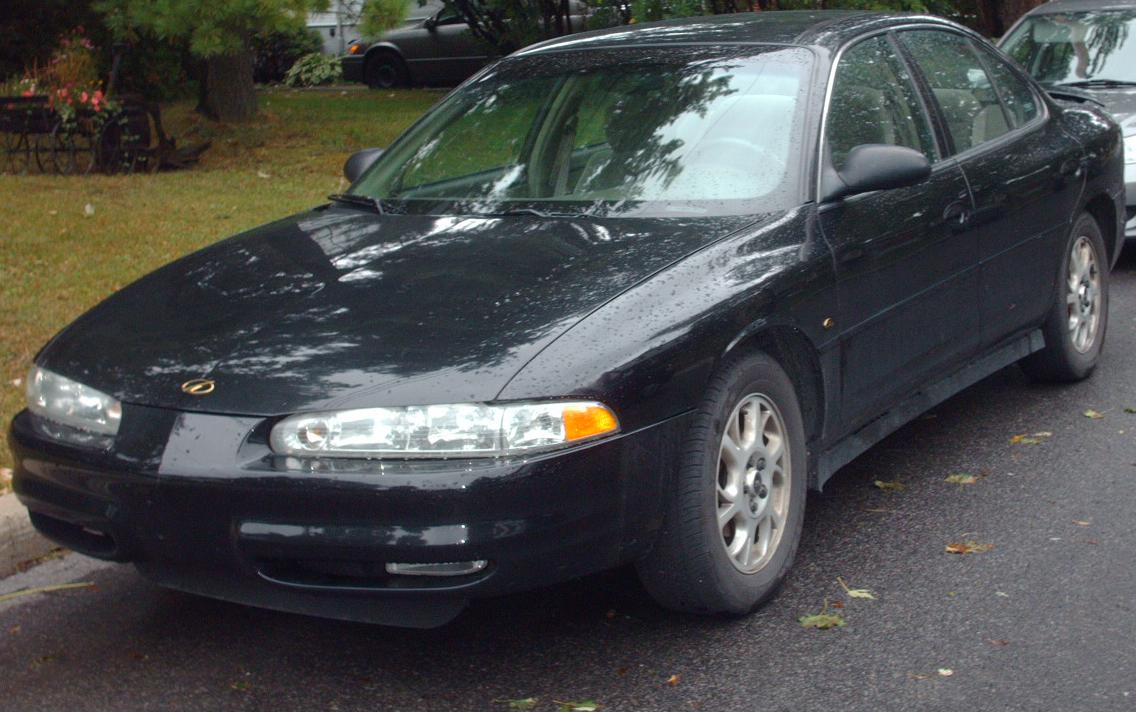
The Oldsmobile Intrigue is a mid-size car (a sedan) that was made in the early 2000s. It was built to be comfortable for everyday driving. Since it’s older and no longer sold new, it’s often mentioned as a historical or nostalgic model.
“Gen seven” is NASCAR’s name for a particular generation of race car rules and design. It determines what the cars look like and how teams build and set them up for NASCAR races.
Downforce is the “suction” effect from the car’s shape and wings that presses the tires harder to the road. More downforce usually means better grip and faster cornering, but it can make the car slower in top speed because it creates drag.
NASCAR is a type of racing where cars compete mostly on oval tracks. It’s known for being loud, heavy, and very strategy-heavy—especially around pit stops and tire wear.
In NASCAR, the “Cup” is the top-level series. “O’Reilly” is the sponsor name attached to it, so “Cup O’Reilly” means NASCAR’s main top-tier championship.
“Trucks” means NASCAR’s truck racing series, where the cars look like pickups. It’s a separate championship from the top “Cup” series, so racing both at once is a big challenge.
“Hypercars” here means the fastest, most advanced race cars in endurance events. Because they’re so quick, they constantly have to deal with slower cars on track and still keep their pace.
LMP2 is one of the race-car categories in endurance racing. It’s a slower class than the very top cars, so when you’re in a faster car you have to pass LMP2 cars while staying focused and safe.
GT cars are race cars that are related to real production models, but built for racing. In endurance races, they share the track with faster prototype cars, so passing them is part of the challenge.
Term
daylight, in the nighttime
Endurance racing often spans both daylight and nighttime, which changes visibility, track grip, and driver workload. That’s why the speaker highlights “mental acuity” across day/night conditions—fatigue management and concentration are critical.
Road courses are race tracks with lots of turns and braking, more like driving on roads than a simple oval. Cars and drivers that handle well through corners tend to do better there.
Fuel strategy is the plan for how teams use fuel during a race—when they pit and how much fuel they try to run with. The goal is to keep the car fast while still having enough fuel to finish, and it can affect who ends up leading late.
The “Chase” is the part of the NASCAR season where the championship is decided. After the regular races, drivers compete for the title, and points and finishing positions matter a lot.
Brake pedal modulation means gently and smoothly changing how hard you press the brakes. On twisty tracks, that helps the car stay stable and turn in better instead of getting too abrupt or sliding.
Throttle is how much you press the gas pedal. Being patient with it means you don’t go full-throttle too early in a turn, so the tires can grip and the car can accelerate cleanly.
Pocono Raceway is a famous NASCAR track in Pennsylvania. Because the track is shaped a little differently than most ovals, teams have to set up the cars to match how it drives.
In NASCAR, a “cup car” means the stock car used in the top-tier NASCAR Cup Series. It’s a different machine than lower feeder categories, so drivers often need time to relearn braking, throttle response, and racecraft.
A feeder series is like a training league for race drivers. It’s meant to help them get ready for the top series by racing in cars that teach similar skills.
Formula 3000 was a lower open-wheel racing series that helped drivers move up toward Formula One. The point here is that its cars started to feel too different from F1.
GP2 was a racing series created to replace Formula 3000. It was meant to be a better “practice step” toward Formula One by using cars that were closer to F1.
Formula Two is the next step in the open-wheel ladder after GP2. The discussion here is whether its cars are close enough to Formula One to prepare drivers properly.
Power steering helps you turn the wheel with less effort. Without it, steering takes more strength, so the car feels harder to drive, especially when parking or turning a lot.
Racing has rules that control what teams can do with the car. “New regulations” means the rulebook changed recently, and that can change how the cars feel and what technology they’re allowed to use.
They’re talking about how well a racing series helps drivers improve for the next level. It’s basically asking: does this series teach the right skills for the bigger cars, or is it too different?
“Seat time” just means how long a driver gets to actually drive the car. The more time they spend behind the wheel, the better they learn how it handles and how to race it.
Gio Ruggero is the driver highlighted for a dominant ARCA performance at Pocono. The host cites his lead-lap dominance and the margin of victory, framing it as a sign he’s ready for the next level.
Kevin Harvick is a well-known race driver. Here, they’re talking about a win he had where late-race restarts and aggressive racing decided the outcome.
Stateline Speedway is the race track in Idaho where they’re talking about a recent event. The host uses it to set the scene for how the race played out.
A “restart” is when the race begins moving at racing speed again after a caution. “Late race restarts” are near the end, so drivers are under a lot of pressure and things can get chaotic.
Keelan Harvick is the driver they’re talking about who had a rough race. They say he got wrecked late and also had a penalty connected to a restart, which hurt his chances.
“Three-wide” means three cars are driving next to each other at the same time. It’s exciting but risky because if one car moves wrong, they can all get into trouble.
The “pit area” is where the race teams go to work on the car during stops. It’s also where team members are close to the action, so arguments can happen after crashes.
The Ford Edge is a family-sized SUV that’s designed for normal daily driving. It’s meant to be comfortable and roomy, without being as large as the biggest SUVs. People often talk about it because it’s a common vehicle on the road.
“Open-wheel racing” is racing where the wheels are exposed instead of hidden under the body. The hosts mention it because crashes can be especially dangerous for drivers.
The “Indy 500” is a huge open-wheel race in the U.S. The hosts mention it because some drivers want to go there, even though the racing can be dangerous.
Kyle Larson is a well-known NASCAR driver. They’re using him as an example of how big teams decide who to hire and what racing opportunities come with it.
Bernie Ecclestone was an important leader in Formula One’s business. In this conversation, he’s being blamed/credited for making drivers stick to F1 so the league could market them as exclusive stars.
Formula One is the most famous kind of open-wheel race series in the world. Teams race on tracks around the globe, and drivers earn points across the season.
An exclusive contract means a driver is only allowed to race in one main series. It helps the series sell the idea that the biggest stars are only seen there.
The Nürburgring 24 is a famous 24-hour race in Germany. Drivers and teams have to keep the car going for an entire day, not just race fast for a short time.
The World Endurance Championship is a racing series focused on long races. Teams plan around driver changes and strategy because the cars have to last for hours.
“Cup series” refers to NASCAR’s top-level stock-car racing series (often called the NASCAR Cup Series). The segment uses it to describe drivers who step outside their usual discipline to try other forms of racing.
F2 and F3 are lower-tier open-wheel racing series that help drivers prove themselves before reaching Formula 1. The speaker wants F1 drivers to try them to measure their skill.
Pit crews are the team members who work on the car during the scheduled stop in the pits. They’re responsible for fast tire and service work so the driver loses as little time as possible.
“Setups” are how a race car is adjusted for a specific track and conditions. The goal is to make the car handle predictably so the driver isn’t fighting it.
Bristol Dragway is a drag racing track where NHRA events are held. The track and weather conditions can make a big difference in how fast cars can launch and grip.
Funny Car is a class in NHRA drag racing with a different car shape than Top Fuel. They’re still purpose-built drag racers designed for huge acceleration.
Pro Stock Motorcycle is a top-level drag racing class for motorcycles. The rules are designed so the bikes are still based on real production designs, not totally custom race machines.
“IndyCar’s Freedom 250” is a named IndyCar race. The hosts are just reminding people when it happens and joking about safety for the event’s big entertainment moments.
“Le Mans 24” is the famous 24-hour race at Le Mans. Since it’s so long, each team uses multiple drivers, so the hosts are saying you can’t judge it fairly by just one driver.
A “stint” is a driver’s turn in the car. In long races, drivers swap, so each person drives for a chunk of time before the next driver takes over.
LIVE
The excitement of the FIFA World Cup is now streaming live on FOX ONE,
the official English streaming platform to catch every unforgettable moment.
FOX ONE brings the action straight to your screen, so you never miss a goal.
Download FOX ONE and experience the FIFA World Cup live.
Just don't go to O'Reilly, because it won't prepare you for Cup.
Well, I'm not saying that.
Fabulous question.
Words, sir, from Bucks, again, sorry about that.
The vast majority of the internet, Kevin, believes that you nominated yourself.
Welcome to Speed with Harvick and Buxton, fueled by Poet.
Let's talk racing, Will.
Let's talk racing, my friend.
Neither of us are in our normal studio in Charlotte this week.
I am in the heady heights of Brackley in the middle of the Cotswolds in the UK,
and you are in LA?
I am in LA. Yes, I'm out here.
We went to Idaho and raced this weekend and headed down to Los Angeles,
and then going to call the truck race on Friday.
So that'll be fun.
So I'm a West Coast guy for a 10, 12 day run here.
You're too modest, mate. Not only did you race, you won this weekend.
I feel like that should be our main headline to open the show.
And yet it's not, because there was a lot of racing action this weekend.
But we will get into that at a certain point.
Congratulations, mate.
Thank you. Yeah, it was a fun weekend.
I'll save that for later in the show, though.
Yes, I'm I'm afraid you've been pipped to main news by Sir Louis Hamilton,
who won his first race for Ferrari, in case anyone needed reminding
that he is the greatest of his generation, possibly of all time.
His 106th Formula One victory, his first in Scarlett,
and it was a beautiful drive.
He started on the front row, pulled off an alternate strategy,
did the three stop, Mercedes stuck to their guns and did the two stop,
aided a little bit by the timing of a virtual safety car
that sort of reduced the amount of time he lost on pit lane.
But even without that, I think he would have won anyway.
He had the pace, he had the right strategy on a weekend
where the tyres were just falling off during the stints
and brought home his first win for Ferrari.
Interestingly enough, 30 years on from Michael Schumacher,
taking his first Ferrari victory also at the circuit to Barcelona, Catalonia.
So a nice kind of full circle, full circle moment there.
But it was brilliant stuff. It was a great race.
I really enjoyed it. It was like it was a proper F1 race.
It wasn't too dependent on, you know, energy management
and all of that kind of stuff. It was just proper racing, really good fun.
The Mercedes guys, really interesting battle between those two.
George Russell had taken the pole and we've been saying for the last few races,
you know, Russell needed to swing back, needed to win a race
or at least finish ahead of Kimmy Antonelli.
But when we talk about tire deck, George was falling off
in the second half of the stints, Kimmy was catching him up.
In the end, Kimmy overtook him on track and you're like, this is this is great.
And then Kimmy's engine gave out.
So that's one DNF for him from an engine, one DNF for George in Canada
because of an engine.
He would have got a post race penalty anyway for sort of exceeding track limits.
But either way, Antonelli DNFs.
And it's an all British podium for the first time since 1968.
Lewis, George and Lando Norris came home third.
Last one, by the way, was Jackie Stewart,
Graham Hill and John Sertes.
So and that at Watkins Glen in the US.
So yeah, man, it was it was a fun race.
I really enjoyed it.
Yeah, well, I love the fact that this week in all the old guys one
and to see Lewis, but to see Lewis Hamilton back in Victory Lane.
And, you know, we talk about this on occasion.
You go from one team thinking that the grass is greener on the other side.
And then you get there and you're like, oh, my gosh, what in the world am I driving?
But, you know, Lewis has has been consistently showing
improvement and been in the fight now to to be on the podiums for a while.
And I think you said it.
You know, he's just once he figures this out and gets to Victory Lane,
it's going to be on from from there.
But it's Lewis Hamilton.
So to have him back in Victory Lane, massive for F one,
but for the racing world in general, just it's it's fun to see
Lewis Hamilton winning in a Ferrari massive story.
Yeah, that that feels to me like a massive sporting story
because it's Lewis, this huge brand Ferrari,
that bringing together of these two motorsport stories
with this victory.
I think it's a massive moment in terms of like sporting culture.
I think it's really, really important.
And, you know, I've been excited about Lewis linking up with Ferrari from the outset,
not just because it was Lewis and Ferrari, but because it was Lewis
getting back together with Fred Vassar.
And for those who aren't aware, Fred Vassar
was sort of the architect of a lot of Lewis's success in the junior formulas
on his way up to Formula One.
He ran his F three team, he ran his GP two, which we now call F two team.
And for me, Fred had kind of created this very raw,
exciting driver in the junior formulas.
And I don't think even for all of his success in Formula One,
and I've said this before, I don't think we've ever seen
that same version of Lewis in Formula One.
So him getting back with Fred made me really excited that we might see
that that version of Lewis that I remember as a kid coming through the ranks.
And, you know, I look back on the last generation of F one car from 2022 to 2025.
And I think of what it robbed from us.
And I think of, you know, Lewis clearly didn't find his feet with that car.
And we lost four good years of Lewis Hamilton at his peak
because he didn't just forget how to drive between 2021 and 2022.
Right. We lost something in those years.
And now we get to have it back and we saw in Canada and we saw throughout this year.
We saw it in Monaco as well.
Lewis feeling at one with the car, that looseness, that joy,
being able to kind of throw it around like he used to.
And so to come from those races where it was like, oh, my God, you know,
I recognize this version of Lewis to him winning a race.
It was just wonderful.
And, you know, I think we kind of saw the writing on the wall.
So great news for him.
Great news for Ferrari.
Great news for the Formula One World Championship.
He's second in the points with Kimmy DNFing.
He's cut that gap back.
And what was looking like a foregone conclusion a couple of weeks ago.
Suddenly, it's not just George and Kimmy in the fight.
Lewis is in that fight right now.
And I think Mercedes have got to be worried about Ferrari, about Lewis,
about the upgrades that they can bring, the advancements that they can bring
to their engine as well.
Ferrari are going to get two tokens to improve that engine.
So I'm excited for the rest of the season, dude.
So when I look at the when I look at the points championship now
and and I look at Kimmy having the DNF and you mentioned it earlier in the show,
we've seen each of them have an engine issue now.
And you talk about Ferrari having the upgrades.
And we all know I love Kimmy Antonelli and the things that he's done in the car.
He's still young.
And when you have these moments where things aren't going good,
now we're going to see, you know, can he come back from that and fire back off?
Which I think he will.
But with Ferrari and Lewis winning and the momentum,
are we seeing a momentum swing?
And do we think we can really have a true battle for the championship
as as we go down the road or is it too far gone?
Time will tell, you know, last week, you'd say it's it's done,
even though with this early in the season.
But you know, I think the fact that reliability still isn't bulletproof
for Mercedes says that this championship isn't over.
There's a hugely long way to go until the conclusion of the season
and anything can happen.
And Lewis on form in a car that can deliver race victories.
You you cannot imagine that that is not going to be
you know, part of the conversation for the rest of this year.
As you say, Kimmy is young, potentially fighting for his first world championship.
Lewis would be fighting for his eighth world championship.
There's a lot of difference between a driver
who has never experienced what it is to win a title
and the pressure they might put on themselves
and the pressure that Lewis might feel to to win that eighth
and how he deals with it and everything that comes along with that.
So I'm fascinated to watch how it unfolds.
But Kimmy to me feels like a driver who despite his youth,
he doesn't get phased.
He doesn't let that pressure get to him.
You know, the DNF didn't didn't occur because of a mistake that he made.
It was it was completely car related.
So I'm very, very excited to watch these two drivers
of very, very different generations take the fight to one another.
And there's, you know, there is the majority of this season yet to go.
So I can't wait, dude, I think it's it's teed up nicely.
Yeah. And, you know, I think when when you look back at it
and you look at the mental strain that it put on on Lando Norris
and never having been in those types of situation,
it's going to it's really going to let us in on shaping
and seeing what the shape of the character is of Kimmy Antonelli is.
If it if it does turn into a dogfight like it could to like we think it could.
Yeah. And if it does, you know, and if it's between Ferrari and Mercedes,
our Mercedes is going to have to back one driver and, you know,
and we'll have to be Kimmy because, you know, George has now shown race on race on race.
You know, this was another weekend where he needed to bounce back.
We said it in Canada. We said it in Monaco.
We said it in Barcelona.
Yes, he took the pole, but Kimmy was the fastest driver in the race.
Kimmy had the pace.
And so if you're Mercedes, do you have to say to George, let Kimmy through.
He's faster.
Do you allow the drivers to fight it out knowing that the guy behind is quicker?
Do you start to favor one driver or over another?
It's an interesting quandary for the team to have.
And you wouldn't have thought that they will take that determination this early.
But, you know, again, Kimmy proved himself to be the better of the two.
And it's his second year of Formula One.
George, I think out of everybody leaving Barcelona, yes, he took the podium.
But I think George will probably be leaving Barcelona
as one of the most disappointed guys and probably the one scratching his head the most
because what has he got to do to find the pace to get on top of of Kimmy now?
It's it's it's a real head scratcher for him.
Yeah. Well, it'll be interesting to watch.
That's for sure. Well, but listen, we talk about head scratchers.
How about this?
Have you ever heard of a more insane
retirement from a race than this?
Nico Hülkenberg, DNF in the Audi.
And by the way, we don't talk about Audi enough.
I think they're doing a great job this season in their first year in Formula One.
So on the side of the car, right, we know that there's the the little
pull ring, right?
When when when a car retires, you pull the ring if you're a marshal
and it sets the fire extinguisher off and it kills all the electronics in the car, right?
Nico Hülkenberg, this is unreal.
So Liam Lawson's ahead of him, runs off track, kicks up some gravel from the gravel trap.
A piece of gravel flies back, hits the O-ring, pulls it out,
sets off the fire extinguisher and kills the electronics.
Wow. A piece of gravel.
It's unreal.
That's unbelievable.
Yeah, chances.
Yeah. Well, that is you never know in racing.
And and you'll come in at a NASCAR race and you'll go to some of these races
and you'll have razor blades stuck in the front of the nose.
You'll have screwdrivers in the grill.
I came I was at Texas one time and we had a hundred dollar bill
stuck on the grill after the race.
No. Yes, absolutely.
Had a hundred dollar bill stuck on the front of the grill.
But it's you never know what's going to fly around in those cars.
Or in. But that is that is pretty unlucky and probably,
you know, wrong place, wrong time.
Yeah. To the to the nth degree.
But that's that's you think about the size of a piece of gravel being kicked up
and the O-ring is is what it's like.
It's an inch, inch and a half wide and it's horizontal.
It's not vertical.
So to sort of hit it at that angle and pull it out.
I've never heard of that ever happen in racing.
It's bizarre.
And another interesting one, Alex Albin in the Williams.
Apparently his his T cam on top of the car was coming loose.
So he had to come in and have it resecured.
Again, never heard of that either. Very, very weird.
Well, I've had some crazy stuff happen.
It's you never know what's going to happen.
We were at Texas one time and I was walking out of my motorhome,
getting ready to go to driver intros and I see my car
come rolling back down the hills. It's on the grid.
I'm like, what in the world is happening with my car?
Why is the car rolling down the grid?
Well, it was Wendy that day and the skydiver flying in got a little off course
and he landed and hit my car with the sandbags and it ripped the door
off the side of the car.
But while the car was sitting on the grid,
that's OK, maybe that maybe takes the biscuit for for weirdness.
Yeah, so you never know what's going to happen.
No, stay tuned.
Mate, last week we talked about Monaco and the podium.
News that happened in the intervening couple of days.
Pierre Gasly was given the podium.
Alpine registered their right to review over the race
and the pit lane speeding penalties that he was given.
And because he hadn't taken them in the race and they were applied after the race,
the FIA actually rescinded those penalties.
And so handed Pierre the podium after the fact.
But that right to review and the result of that is now being
appealed by a bunch of the other teams who had their penalties
and weren't able to review them because they served them during the race.
It's it's a massively complex kind of scenario.
It all came down to the fact that the distance
between the sensors in the pit lane were done incorrectly in Monaco.
And so the drivers who thought they actually were within the regulation,
it turned out they weren't within the regulation.
So, yeah, bit of a nightmare, nightmare going on.
What a mess in from a total mess, total mess.
We had F2 and F3 in Barcelona.
The F2 Sprint race was won by Cush Meini.
He launched into the lead from second on the grid
and built a dominant seventh second advantage in the feature race.
Rafael Camara executed an alternative tyre strategy
to charge back through the field late and secure the win.
Brilliant stuff from him in F3.
Prema racing's James Wharton secured an outstanding victory,
flawless management of safety cars, ultimately, handing him that win.
And Nayel secured his first FIA Formula Three victory
at Campos Racing's home track.
So that was great for F2 and F3.
But when we talk about big races, when we talk about some of the older boys
doing the job this weekend, not yet in his forties, but almost,
can we go by Ashi along with Mike Conway and Nick De Vries
in the number seven Toyota won the 94th running of the 24 hours of Le Mans.
I love this race.
It's one of the greatest on the calendar.
And this year, finally, the number seven Toyota
won the hypercar category.
This is a team that has been plagued with misfortune throughout the years.
It's normally the eight car that gets all the success.
But Kobayashi, Conway, De Vries all drove impeccably.
The team were on fire and they actually took a really interesting strategy
in order to take the win.
And they pulled the pin on this strategy within the first half hour.
Normally, you wait until the end of the first hour to take your first stops in
hypercar. They stopped after 30 minutes, short fuelled,
pulled the undercut and got themselves, like, massively up into contention.
And with that, then fighting for the victory for the rest of the race.
So thoroughly deserved Ferrari will know where this year after taking
a bunch of back to back wins, but a brilliant day for Toyota
and a brilliant day for the seven crew, really delighted for them all.
Actually, Kobayashi, Conway and De Vries, they're lovely guys.
They're brilliant races.
Anyone who knows me knows how much I think of Nick De Vries.
And while Kobayashi and Conway have won it before first victory for Nick De Vries
and just delighted for all three of them, really.
Yeah. Well, you know, I think when you talk about the 24 hours of Le Mans
and just everything that goes with it, right?
Like, I just I love the fact that you have the manufacturers and the drivers
and the teams and just the 24 hour race.
And you can you talk about a strategy that happened 30 minutes into the race
that kind of set the tone for what a 24 hour race was going to be.
And that that really, to me, is what racing is in today's world.
Is is it every detail matters?
It's not just make your car survive anymore and get to the finish.
You've got a race for 24 hours with the strategy, with the car, with the drivers,
with every single piece of what goes with it.
And when you get to one of these just world renowned events like like Le Mans
and you see the support of the fans and all the theatrics that that go with the the event,
it's just it's extraordinary to watch and it's always a great moment
for for the racing world when it when it comes to this weekend.
Have you ever been to Le Mans?
I have not.
Keelan, yeah, Keelan raced his carts there at the cart track.
So that that was cool to be able to see.
But I've never been to the race.
And and I saw my friend Jimmy Johnson was was there this weekend.
He was having it sounded sounded like he was having a good time.
Yeah, it sounds like Jimmy was having an amazing time.
I that bit of radio for anyone who's not heard it.
Absolutely wonderful.
I mean, we know that the kind of the commentary gets a little bit unhinged
at kind of 23 o'clock in the morning.
But I think Jimmy sounded like he was he was plowing through for the whole night.
I don't think he was going to go to bed at all.
He was on fire.
No, he might have not chose to go to bed.
He might have just wound up asleep.
Yeah, under under a transporter somewhere.
Jimmy's in some some sleep.
Yeah, amazing stuff, dude.
If you ever get the chance to go, you've got to go.
It's it's such an experience.
It's such a great race.
And the lack of sleep is kind of part of what makes it such an amazing event.
But very, very special, very, very cool.
Yeah, 24 hours of Le Mans never disappoints.
And of course, it's not just the hypercars.
LMP two witnessed an epic back to back triumph
for the inter-Europe competition squad.
Dilman, Yellow Lee, and I'm going to pronounce this so badly.
And I'm sorry, Jacob.
Schmike, Schmikeowski, is that how we pronounce?
I'm sorry, I'm so bad at pronunciations.
Secured their team's third victory in four races.
So my apologies for the terrible pronunciation.
In the LMGT three class, Keating Katzberg and Edgar led
what was a pretty crazy multi-manufacturer podium.
They drove their 33 TF Sport Corvette to what was a dominant victory
in the end over Lexus and Aston Martin.
Well, there's there's definitely a lot of different classes there.
I I get a little confused when they go from America to the international stage.
As the differences between a couple of of the of the different classes,
but always fun to watch because it's just it's one like I say,
it's one of those races that if you're if you're a racer,
you're going to watch this race.
And it obviously has, you know, a lot of intrigue to it around the world.
So fun to see you imagine doing a cup race with O'Reilly
and trucks on the track at the same time.
That'd be interesting, but no, I could not.
But, you know, I think when when Hendrick and Chevrolet
and NASCAR built the car to go over and run a lot,
you know, I think that seeing the
the car kind of transform into what would be suitable to go over to the law
and the changes that they made to what is our gen seven car in the cubfield
to be able to take the weight out of it and the power and the downforce
and just everything that they went through.
I think it was well received.
And I think that it was it was fun for the fans
to see just something totally different than where the sports car
or world has evolved into what it has evolved into to be able to see NASCAR
bring their race car over there and it's it's loud, it's heavy.
It's just totally different.
But when you put it into the category that it was in,
it was also very fast.
And, you know, I think that a lot of times people around the world
don't realize how much technology is actually in NASCAR,
but oval racing in general and the strategy and things that go with it.
So it'd be fun to see.
Dude, it's wild for me that, you know, talking about, you know,
running Cup O'Reilly and trucks at the same time, I just always find it amazing,
even though Le Mans is a is a massively long course.
You know, when you're running three completely different disciplines
and within those disciplines, you have cars that are racing around,
you know, obviously at different competitive levels for the hypercars
in particular to have to be lapping people all the time from very early on.
You've got to have your wits about you because you're not just racing
the people in the same class as you.
You've got to be contending with passing LMP2 cars, passing the GT cars.
The sort of the mental acuity that you need in daylight, in the nighttime
to be able to to pull off a win at Le Mans is it's it's pretty it's pretty acceptable.
Now, it could be interesting if we went to Daytona
before the 24 hours and they had just like a one off
just something for fun where you had trucks O'Reilly and cup cars
out on a racetrack at the same time, just see how it went.
There we go. That's the pitch.
Yeah, let's make it. Let's make it happen.
Let's make it happen.
Right. Stick around, folks.
We've got more stories from a busy weekend in motorsports, including
Denny Hammond's Third Straight win, plus we will answer some fan questions.
But first, a word from our friends at Poet.
Hey, speed fans, this show is fueled by Poet.
Poet's zero carbon bioethanol gives NASCAR drivers the octane
they need with zero carbon intensity.
When it comes to performance, you can't beat zero.
Learn more at Poet.com.
Well, guess what, Will?
Denny Hamlin got it done again.
I I thought that's where you were going to go with this.
Yeah. Well, you know, the 45 year old Denny Hamlin,
one of his third cup series race in a row, also his third race in a row
that he's technically qualified on the pole.
He hasn't necessarily started on the pole,
but he's the fourth driver in NASCAR history to win three races from the pole.
So when you put your name on a list with Daryl
Waltrip, Bobby Allison and Richard Petty.
That's pretty much, you know, as special as you can get
when it when it comes to NASCAR racing, eighth win at Pocono.
He he has through the years.
He won his first race there in 2006 and through the years has just been
really, really tough to to beat at that particular racetrack.
And I was fortunate to to interview Denny on our happy hour podcast
and just talk to him about where he's at in his career.
And I was fortunate to be there when you when you have all that experience
and you have a team that you can help guide and direct.
They're getting so many details out of this car,
whether it's whether it's in practice, qualifying, the race.
They are locked in and and, you know, he he agreed with me.
It is probably the best team that that Denny Hamlin has has ever had,
as far as driver, crew chief, engineers, and they've worked together for a long time.
And when you can keep people
believing in each in each other for for that long to
and be able to have that amount of experience and still be together,
you just can't beat that that experience and time together when it comes to stack
in details. A run like this, you'd expect them to be leading the championship.
And yet they're not because he's the, you know, he's the owner of the team
that is with with Tyler Reddick.
May you know what you just said about Denny and the team.
It sounds very familiar to what you were saying at the start of the season
about Tyler Reddick and what 2311 was getting right at the start of the season.
And so I find myself in this weird place where at the start of the season,
we were like, how do you beat Tyler Reddick?
How do you beat 2311?
And people were like, oh, my goodness, this is just, you know, every week.
It's the same story.
Well, in order to beat them, you have to go on that same kind of run.
And now everyone's looking at this and being like, oh, my God, how do you beat these guys?
So, like, can anybody contend with this right now?
If so, where is that going to come from?
Does Reddick and the 2311 crew have to kind of switch it up and go on another run again?
Or is there a is there an outlier out there?
Is there another team, another driver who you expect to see kind of come to the floor
as this championship progresses?
Yeah, well, you know, I think that, you know, it's really interesting right now.
You know, Denny Hamlin, one is fourth race this weekend.
Tyler Reddick's won five races.
And it's they have made up so much ground on Tyler Reddick.
And I think that the bad part for Denny Hamlin is the ground making is most likely going to end this weekend,
because now we're going to a road course and self admittedly.
Denny Hamlin says that the road course are his kryptonite.
He wants to his goal is to try to finish 15th.
So that that tells you where Denny Hamlin's head is right now.
So these two weeks in order to win the regular season championship for Tyler Reddick,
he's got to make some ground up on on Denny Hamlin.
I know he still has a point sleeve, but he's got to widen that gap,
because if that gap is is 60 70 points when they leave Sonoma,
it'll be difficult for for Denny to make up that that ground with,
you know, the eight races that they'll have left to go.
So unfortunate timing for the momentum of Denny Hamlin having to go to the two road courses in a row,
but very fortunate timing for Tyler Reddick to be able to put himself in a position to kind of stop the bleeding,
as as you would say, from from how much he has lost to Denny Hamlin on the point side over over the last month, really.
So it's it's it's really important for for Tyler Reddick to get things under control these these next two weeks,
because even last week at the end of the race, Tyler Reddick probably was the fastest car,
but it was over at that point.
They they had beat him with with fuel strategy and details and got them in the 11 car out in the front of the pack.
So right now, my money would would probably be on on Denny Hamlin to to make that run
and surpass Tyler Reddick by the time we get to the start of the chase.
Because Reddick won at Cota earlier this year, you know, and everyone was expecting SVG to just dominate every single road course that we go to in 2026.
And obviously, he did that at Watkins Glen.
Do we expect SVG to be the dominant force over the next couple of races?
Is Tyler Reddick going to be the man to do that?
Like, what's what's the general feeling about the next next couple?
Well, I feel like when we go to San Diego, the things that SVG does so well
with the modulation of the brake pedal and being patient with the throttle and having the experience on on the street courses.
I feel like San Diego is is is I mean, there's no lock in anything that we do.
But in San Diego, I think that SVG has a pretty extreme advantage over a lot of the road racers,
road courses that we go to because of his road racing background and the things that he's done in the supercars.
So but anything can happen.
And you know how that goes.
And it's a super rough course in San Diego.
So all that brake modulation and wheel spin will be have to be utilized from from everybody.
And so it's going to be a real battle of attrition with the with the race car as well as rough as the racetrack is.
So we'll see how that plays out.
But I still think SVG is the favorite.
I'm still waiting on the Zillich piece of it to to come to fruition because he's just, you know,
he wrecked again this weekend and, you know, had to battle back after that.
But I think if Connor can just get his feet under him this weekend to get a solid run going into Sonoma,
maybe there's a there's a chance that, you know, he can he can contend there with a track that he's experienced on and just some confidence.
But Tyler Redick is definitely in that mix.
And I feel like Redick is almost frustrated at this point because they won so early.
Denny's made up all that ground.
And you can hear it in his interviews that he's frustrated that we're even talking about the fact that he's going to have to contend with somebody after having that massive points lead.
And when you look to how this season is going to close out, it's going to close out on the ovals where Denny's absolutely is so strong.
Fascinating, man.
Can't wait to play out.
Brexton Bush was back on the track last week at Charlotte Motor Speedway.
Kevin, great to see him back out and great to see him having some fun out there.
Yeah, I thought he was going to win.
He led all the way until the until the final lap.
I felt so bad for him was a great race to the end of to the checkered flag right there.
But, you know, Brexton's a strong kid, you know, we went to when I went to the service and heard him speak.
I just, I can't even imagine, you know, the guts that it takes and he's been back at the racetrack and, you know, he's around Keelan and all the kids on the legend team that we race with having a having a good time.
So that's what he needs.
He needs to be around the kids and kids are just so healing when they're around each other to be able to get their mind off of everything.
And it's great to see him back at the racetrack.
Yeah, I thoroughly agree.
All right.
Well, not to mention Brexton Bush being at the racetrack, but we also had the school buses back at the summer shootout.
And when they put they these school buses, you thought that the Weenie 500 was great.
Will, when you go to the summer shootout on Tuesday night at Charlotte Motor Speedway and you see all the nonsense of the things that they do at this racetrack, it is a great time.
Well, they had the media mayhem school bus race at the cookout summer shootout.
Well, guess what?
We flipped another one.
We flipped it right over and this I want to raise this.
I want to raise school buses.
Absolutely.
That's not a problem.
I want to do it.
Get me in there.
Yeah.
Do I need a race license with that?
Do I need to read my race license?
No, I'll just show up and sign the waiver and you can flip it.
Last year, last year at the summer shootout, we tore the backs back straightaway catch fence down with with the school bus stuck into the catch fence.
So either we flip one or tear the fence down pretty much every year.
Sounds like my kind of race.
Yeah.
Incredible.
Incredible.
Also at Pocono, though, mate, let's let's get back on track.
O'Reilly series, Justin O'Gyre overcame a chaotic wreck, wreck, easy for me to say, put my dentures back in filled race with 10
cautions and a red flag shootout, which kept the drivers battling all the way to the finish.
O'Gyre's fifth victory of the season and a win that massively extends his lead in the championship standings.
Well, here's what I'll say about all guy.
This isn't this is we talked about this a little bit, very interesting scenario with him, him talking about retiring and not racing and
and all the things that that he was talking about before he went on this run.
But when you look at what Justin has has done already this year, he's he's on his on his way to having a career year.
Another another old guy, Justin's not that old, but you know, he's he's definitely
just put everyone in the same bucket this week.
Yeah, well, we can't we can't put the next guy in.
Well, we're just putting all the winners in there this year this week in in the old guy bucket because they're all
experienced or experienced winners.
Experienced, they experienced rather than.
Yeah, but you know, I think O'Gyre, I mean, he's got a 250 point lead and has done
everything that he needs to do this year to win another championship and put himself in position to win another championship.
And I think that I hope he's having fun because, you know, you get me slump sometimes where you're not home, even though you're
winning, you're going to the racetrack and it's just not fun.
And it just felt like that's where all guy was was he was just in a not fun, even though he was going to the racetrack and winning and doing
all the things that he needed to.
And you get to a point where it's like, well, I don't really need the money and I don't need to do this and I don't need to do that.
So why do I even need to do this in general?
And I just hope he's not at that point.
I hope he can spin it all around and figure out exactly how to make it fun because it it it is fun, but it can just be so taxing on on your mind and
and take away so much time from your kids and family.
Yeah, yeah.
I hope he is having fun.
I mean, it looks like he's back to having fun again.
And that's that's the most important thing, mate.
Well, mate, while we're talking about Pocono, let's take a quick look if we can at Brent Cruz, rising talent, because he won the race's second stage, drove a very
competitive race and ultimately kind of, I think, secured, am I right in saying career best second place finish?
Is Brent Cruz, as of yet, do we see him as a cup series prospect?
Well, I think that he has the talent and I think that, you know, he's doing exactly what we all thought he would do.
But I'm going to be a little more cautious because of what has happened to Conor Zillich.
I think that, you know, I think Conor's in a spot with with Trackhouse where everything's not together for him from, you know, from the from the car side to be competitive.
But you still don't have to spin him out and wreck him.
And, and, you know, I think when I look at Brent Cruz, I feel like he's kind of in that same category and driving the cup car is drastically different than anything that these kids have ever driven in their whole life.
Like everything that you do, it all feeds right up the ladder all the way to get to cup and then you got to learn everything all over again.
So I just think that a little bit of time, a little bit of more age, just from a maturity standpoint, seems to be as important as anything when you when you get to cup because you're going to struggle.
You're going to crash.
You're going to not run good.
You're going to have moments of brilliance where you run good, but there's just going to be this period of time to where you've got to let them struggle.
I mean, it's a 23 year process to get everybody to the point of being able to be competitive enough to be who you think they can be.
So as long as Brent Cruz can do cup, as long as whoever he's driving cup with is ready for a three year program and a development process, because there's nowhere else to get the time than in the seat in the cup car, making the mistakes, learning how to drive the cars.
He'll be able to do it as long as they're patient with these kids to give them three years.
OK, hypothetical question, because we we we faced this in Formula One for for years.
There was a time back in the early 2000s where Formula 3000, which was the feeder series for Formula One was no longer really relevant to what Formula One cars were.
So they ditched Formula 3000 and they created GP2 to have cars that were closer in line with what a modern Formula One car was.
GP2 then got replaced with Formula Two.
But even now, people would say the Formula Two car doesn't really have as much in common with the Formula One car as it should have.
For example, Formula Two car has no power steering.
A Formula One car does today, particularly with the new regulations this year.
It's all about the bells and the whistles and the harvesting and the buttons and, you know, dealing with all of that.
Whereas a Formula Two car is very raw and it's still just about, you know, driving instinct, all those kind of things.
With the argument that a Formula Two car needs to prepare a driver for Formula One, an Indie Next car needs to prepare a driver for Indie car,
does the O'Reilly series need a car that is more representative of what they currently have in-cup in order to better prepare drivers for the step up?
Or is that not really its its total MO?
Well, that's a catch-22, in my opinion, because of the fact that, you know, you've got this great race in the O'Reilly series and
everything about it is totally different than what you have in-cup.
And, you know, I think that there is a little bit of an argument that the truck series will prepare you better for cup racing than the O'Reilly series.
You know, you look at Carson Hosevar, he went straight from truck straight to cup.
So,
O'Reilly is kind of stuck in this no man's land of, hey, we have some great racing on the weekend,
but what do we do? Who are we as a series?
That series is supposed to be the series that is prepping the next generation for cup racing.
So, it's not, I mean, you're getting the experience on the racetracks, you're getting all the things, but Connor Zillitz won nine or ten races last year.
And, you know, he's in a spot that nobody thought he would be in with all the struggles that he's having.
You look at Corey Heim, Corey Heim won a whole bunch of truck races.
He's gotten in that cup car and done pretty well every time that he's driven it.
So, the O'Reilly series is kind of in this weird spot, in my opinion, from a development standpoint as to
what's right? Do we just send them to trucks and let them race trucks?
Because you look at Corey Heim and Carson Hosevar, they've done better than Connor Zillitz, I think, as far as when they got started.
So, to answer your question, yes, it needs to be different, but I don't know if the series can afford to be different from the team owner standpoint to switch the things that we would need to switch to get something in line with the cup cars.
So, on the flip side of that, we could also just let the cup teams let the young guys that have not been there for three years test more so that they can get more laps in the cars.
Now, I know that the teams would have to spend more money, but at some point you're going to have to spend the money somewhere.
Do you want to go test and get that stuff out of the way, or do you want to go to the race and wreck your cars and not run good, or I think that the testing would be a better option, in my opinion, on the cup side?
It's a fascinating sort of hypothetical, isn't it? Because then what is the O'Reilly series for? Is it just out there for pure entertainment, or is it out there as a preparatory series for cup?
If it's stay-today-miss, preparatory series for cup, but trucks is preparing drivers better than O'Reilly, then what is O'Reilly? It's a moral hypothetical quandary, but I think it's a fascinating one to have and a question to be asked, but I think as you say, there is no replacement for seat time and more testing would be helpful for everybody.
We have to move on, though, and we move on to NASCAR ARCA series, which was also at Pocono, where Gio Ruggero led 51 of the 60 laps and won by a staggering 13.356 seconds. His dominant performance marked his fourth victory in just five ARCA starts in the 2026 season. What does his future look like?
Well, Gio's doing a good job, and I think his ARCA days are almost over, because when you get to the point of winning all the races that you enter, you know that you're ready to really compete at the next level.
He's done a great job at the truck level, putting himself in position to be in the conversation for winning races and running up front on pretty much a weekly basis, and I think that's where his next step will be to do just like the progression that he's had in ARCA up through the truck series.
So, you know, I look for Gio to be around for a long time and have a bright future, so he's doing a great job.
Just don't go to O'Reilly, because it won't prepare you for Cup.
Well, I'm not saying that. I'm just bringing up the most recent examples that we have of drivers who have gone through the truck series and drivers who have gone through the O'Reilly series. It's definitely a debate.
Just dropping you in it and making you feel a little bit uneasy, because apparently things were a little too easy for you at Cars Tour West, where a certain Kevin Harvick fended off several challenges after some late race restarts to win the pro-late model race in front of, let's be honest, a packed crowd mate in Idaho at Stateline Speedway.
Was it nice to dust yourself off from, shall we say, a bit of a bruising encounter at your last race and return to victory lane, buddy?
It was. It was a great weekend. And, you know, as we've expanded the Cars Tour up into the Northwest, I've learned so much about race fans.
We have an absolute abundant of race fans in the Northwest.
And I mean, at one point this weekend, I had like a 75-year-old woman walk up and she shows me her wrist like this. And she's like, you see this tattoo? I'm like, it has my signature, a 29 on it, on her wrist right here.
She says, yeah, I got this in 2011 in Michigan. And it was one story after another of 2001 die-cast, old-school t-shirts, and just a ton of race fans up in that region that has just been somewhat neglected from just the racing standpoint because of where they are in the country.
We have a ton of great competitors up there. They have a loyal following. I think we put like 6,000, 6,500 people into that little racetrack at Stateline Speedway in Idaho this weekend.
So had a great crowd. It was great. I knew my car was pretty good. And when I can run up the racetrack and not have to beat and bang off the bottom of the racetrack, usually things go a little bit better.
But had a great time. It was a great few days in Idaho.
Nice. And took home a big fat check at the end of it. That'll buy you a lot of potatoes in Idaho.
Keelan Harvick, less of a successful weekend for your boy. Wrecked from fourth with six laps to go. What happened?
Yeah. Well, as you see right here in this video, it looks like the guy behind him just drove in there and wrecked him.
So it definitely didn't end well for Keelan. He got a late-race penalty on a restart right there.
And then the next guy got a penalty and he wound up restarting fifth and then just got wrecked there at the end.
But hey, that's the way it goes. Those guys up there are hard nose racers. You're going to have to be really aggressive.
And as you saw a couple of weeks ago, when we destroyed everything in the field, you better become prepared for everything that you've got if you're going to race up there.
To the cars tour now, mate, and for the second consecutive year, Mini Tyrell captured an emotional victory in the race, which really does mean the most to him.
He took the cars tour Mini's mission 125 at Dominion Raceway.
Tyrell, who competes full-time in the NASCAR-Crustman Truck Series, pulled off a daring and decisive three-wide path on a restart with only six laps remaining
to steal the lead away from Connor Jones and Brendan Butterbean-Quain.
The high-intensity short-track action kept fans on the edge of their seats until the very end, especially after a late-race collision between Jones and Pulsater Carson Brown
triggered what was a brief fiery scuffle between their teams in the pit area.
Yeah, this was great. I think as you look at the end of the race right here, Connor Jones kind of slipped up on a restart and then they all had contact and a little bit of hard racing.
Connor tried to move up the racetrack and Carson Brown turned him there at the end of the race.
And then Connor decided that he was going to take his car and park it in Carson Brown's pits and things got a little heated.
So another great event on the East Coast, as you see Connor get turned right there by Carson Brown and then get wrecked into by his teammate Landon Huffman,
who will blame it on everybody else as normal, but that's the way that that goes usually in the cars tours.
So a fun couple races across the country with the cars tours.
So it's fun to be able to watch these guys compete.
And for Minnie Tyrell, Minnie's mission is actually his foundation and they bring in a bunch of kids with cancer and their families for the weekend.
They put them in the race cars, let them ride around, have a great dinner and just a great weekend that he and his family have put on for a few years now up at Dominion Raceway to raise money for Minnie's mission to support all these families.
Beautiful, beautiful stuff, mate. I'm sure that when they fix it in post, we can put a little strap on this somewhere that tells you where you can donate to that as well.
Right, time for Voice Mail and we've got a question from Mike in Georgia.
Yeah, that's a great question. That is a great question and I think this has kind of come full circle.
Back in the day with Hendrick Motorsports was you can't race anything else.
Jeff Gordon, Jimmy Johnson, Casey Kane, whoever drove there, you weren't racing anything else unless you got it approved and it might be a race here and there.
It wasn't much and then you had guys like myself that I was racing at RCR at the time.
I'd race 70, 80 times a year. I'd race late models, a rally truck, cup cars, whatever it was, asphalt ovals.
I think that the big question becomes open-wheel racing when you got guys that want to go to the Indy 500 and you see the injuries can be bad for your back or life-threatening at times and sprint cars.
We went through a phase where we were breaking backs and having injuries. Tony Stewart used to do it all the time. He broke his leg, got in some trouble.
There's a lot of things that can go wrong. You see Kyle Larson at Hendrick Motorsports now and in order for Hendrick Motorsports to hire Kyle Larson, they had to let him race.
That's gone fine and I think that the safety, as long as you can control the environment of the things that they're doing and Larson does that, right?
He knows who's car he's driving. It's his stuff that he drives the same every week.
Sure, there's still risk there. There's always risk in car racing and I think that I love it.
I like when guys go race during the week and there's some guys that don't like going racing during the week.
I just think that those reps are better but I think that that tide has turned. If the guys want to race, I think that they can. It's not something that everybody wants to do.
I see this from a variety of different angles. The first one is I think there's a major difference between the European mindset and the American mindset.
The American mindset appears to be more in line with we want to race everything we can all the time like a Larson who just loves racing for the purity of racing.
Whereas in Europe, it's quite protectionist around we've employed you for this job. We want you to do this job and only this job.
A lot of that stemmed from Bernie Eccleston and his kind of rule of Formula One.
You need to lock down your drivers on an exclusive contract to only race in Formula One because he wanted the teams, the circuits, the broadcasters to be able to say,
this is the only place where you're going to be able to see Ayrton Senna and Michael Schumacher and the big names.
They're locked in exclusive contracts to Formula One. You're not going to see them anywhere else and by doing that you build an exclusive platform that is then worth loads and loads of money.
What I see now with someone like Max Verstappen is somebody who like a car Larson lives solely to race and wants to go and race whatever he can, wherever and whenever he can.
A lot of that up to this year was done in the virtual world which has opened up possibilities to drivers to go and race different types of car.
But then he wanted to put that into the real world this year and went and race the Nürburgring 24 and there was so much hype around that that I think that was a very positive thing.
So may we see as a result of that a slight shift in the mindset of, oh this isn't a negative for us, this is actually a big positive for us in allowing our drivers to go out and race other things and bring attention to them, to us and our team and our sponsors as a result.
I hope it does because when I look at the greats and I think of the greats you think of, for me I look at the Foyts and the Andretis and the Stirling Mosses and Stirling Moss famously did, you know what was it like, something like 62 races in a year which for an F1 driver even in the 50s and 60s was a ridiculous amount because it meant he was doing more than one race a week.
Which for a Carl Larson doesn't feel like very many but for the European mindset they can't comprehend doing more than one race in a week.
I think where they've got it right though is when you look at Formula E and Formula E drivers they're all contesting the World Endurance Championship or the majority of them are doing World Endurance Championship as well so they get to do multiple different categories during the year.
And I like that and I think that's a really really good thing so I'm in favour of it, I'd love to see more of it but as you said Kevin a lot of that comes down to the team owners and ultimately the drivers are their investments and they want to protect their investment from potential injury or anything else.
Well before we finish this off you've then got the other side of it as well which and we've had this debate before on this show why aren't drivers doing more across different categories?
And ultimately comes down to the fact that our drivers in this day and age specialists do they spend so much time in their specific category that actually going and trying something else it's not just potentially a physical risk but a reputational risk because you're going up against drivers who have specialised in that one area.
Can you turn up for a what-off and hope to be as competitive as you might like to be? The answer if Max Verstappen has anything to go by is yes you can so give it a go.
But it's a great question, I think that's a fabulous question. Word stop from Bucks once again, sorry about that.
Hey I love that and look we want to see him race and I love the fact that Chase Elliott and some of these guys from the Cup series they've stepped out and said okay we're going to go race we might not be good at it but we're going to learn and we're going to figure it out so be patient with us.
But dude this is what I love about NASCAR right is you've got drivers who do Cup and they'll do O'Reilly Crossman Truck series all on the same weekend. I love that you know I'd love to see an F1 driver leave their ego at the door and say this weekend I'm going to do F2 and F3.
It'd be bloody brilliant, I'd love to see that.
It'd be fun for it. It's also a great measuring stick and that's where NASCAR went down the wrong road. They eliminated all the Cup drivers from being able to race in these divisions where we used to race in them all the time and that was the measuring stick.
Like when you're asking about Brent Crews is he Cup ready? Well if he was in 2006 if he was in the O'Reilly series we would have had 18 to 20 Cup guys in the field that weekend and you'd really see if you're ready up against that competition.
Yeah more of that that's what we need. Open it up make it easier, make it easier. Cool right we will be back folks with more but first a word from our friends at Shopify.
You know every series we cover on this show NASCAR, IndyCar, F1, MotoGP, different cars, different tracks, different rules but the winning team all runs on the same principle.
Nothing's left to guess work. The setups dialed in, the pit crews drilled, everything behind the scenes just works so the driver can focus on driving.
Same idea applies if you're running a business and if you've ever shopped online there's a good chance you've already seen this in action.
That sound? That's Shopify. It's the commerce platform behind millions of businesses about 10% of all e-commerce in the US from household names like Aloe Yoga to mom and pop brands that are just pulling out of the garage for the first time.
Get started with your own design studio. Hundreds of ready to use templates so your store looks the part, no coding required.
Need to move fast? Shopify's AI tools help you write product descriptions, page headlines, even improve your product photography kind of like having a spotter calling the line for you.
And it's not just the storefront, inventory, payments, analytics all in one place so you're not juggling five different tools mid-race.
Plus, Shopify's got a marketing team built right in. Email and social campaigns to help people actually find your brand and keep coming back.
And if you ever get stuck, Shopify's award-winning support is there 24-7, like having a crew chief on the radio the whole way around.
If you want fewer abandoning carts and more checkered flags, head to Shopify.com slash Kevin. Try it for just $1 a month and start selling today.
That's Shopify.com slash Kevin.
We'll crack on now with more news. Slightly truncated because Kevin and I have babbled on for too long in this show.
Let's talk NHRA and the Thunder Valley Nationals because rain had pushed last weekend's New England Nationals finals to Bristol Dragway.
And Lea Pruitt and Jack Beckman emerged victorious on Friday.
Lea was making her first top-fuel start since 2023 and secured her 13th career victory by defeating points leader Sean Langdon with a blistering 3.794 second run at 332.43 miles an hour.
In funny car, past world champion Beckman claimed his 38th career win and the first of the 2026 season.
On Sunday, four-time top-fuel world champion Antron Brown captured his first career victory at Bristol Dragway by narrowly defeating points leader Sean Langdon in a spectacular final round showdown at the 25th annual SuperGrip NHRA Thunder Valley Nationals.
Grinding through blazing 140-degree track conditions, Virginia native Matt Hagan secured an emotional funny car win at his home track.
Two-time pro stock motorcycle world champion Gage Herrera bounced back from recent struggles to complete a flawless weekend defeating teammate Richard Gadsen to become the event's first ever two-time category winner.
In pro motocross, a pair of wire-to-wire performances and the 20th 1-1 result of his career gave Jet Lawrence his 26th win in 30 premiere class starts with back-to-back victories.
He also grabbed control of the 450 SMX class points leader. It's his fourth straight win at Thunder Valley where he remains unbeaten and marks the sixth consecutive year that Honda has claimed victory in Colorado.
In World Superbikes, Nicola Bulega continued his historic dominance in the world championship, storming to his 25th consecutive victory at the Misano World Circuit to complete a perfect weekend clean sweep.
The Ducati rider secured his seventh hat-trick of the 2026 season, becoming the first competitor in World Superbike history to achieve that many triple wins in a single campaign.
In freestyle motocross, a historic event, coinciding with UFC Freedom 250 festivities, took place on the south lawn of the White House, which was transformed into an action sports arena for an unprecedented freestyle motocross stunt.
The legendary lineup consisted of FMX pioneers and motocross icons. Keith Sayers, Jeremy Twitch, Stenberg, Jeremy McGrath, Brian Deegan and Ricky Carmichael.
Culminating in Travis Pastrana throwing down a massive one-handed backflip to close out the performance.
Just a reminder, IndyCar's Freedom 250 takes place on August 23rd. Hopefully no one goes up in the air.
Time for driver of the week, Kevin, and you didn't know, other than your own pick this week, who had gone into the top four, our nominees were.
Now, we have to caveat this. Can we Kobayashi? And there was some pushback online by people saying you can't nominate one driver for the Le Mans 24, you have to nominate all three.
But Kobayashi's stints, his consistency, pace, aggression, everything across his stints marked him out for us when we were deciding, as the man of the three, obviously, hat-tip to Conway and DeVries,
because you don't win a 24 hours unless all three drivers are absolutely on point. But for us, Kobayashi was just marginally the man of the seven crew.
So we put Kobayashi in there. Lewis Hamilton, obviously, for winning his first race for Ferrari. I'm guessing you picked Denny.
Well, of course I did.
Yes, of course you did. But the vast majority of the internet, Kevin, believes that you nominated yourself for the four.
Kevin didn't. We put Kevin in there because we thought it was a meritor's performance. So those were the four and the winner this week is Sir Lewis Hamilton.
Listen, what's the percentage? I can't see. It's too small on my screen. Hey, it's close.
Well, look, I figured that when Lewis Hamilton was on that list, it was going to be hard for Denny Hamlin to compete with Lewis.
And as we talked at the beginning of the show, look, that's a world of racing popular win.
And I think that seeing him back in victory lane, Denny Hamlin has done it three weeks in a row, but Lewis hasn't done it in a while.
And you never know if it's over, right? Like you just sometimes you just don't know if that guy has done winning.
And to see him back in victory lane is, is enthusing for a lot of people around the world.
Yeah. And I think seeing the emotion as well, and that's not something we touched on at the top of the show, but seeing him tear up on the podium,
you know, listening to his own anthem, listening to the Italian national anthem, seeing the team celebrate.
I think everything it meant for him. And also when you consider that Lewis himself has questioned himself over the last few years,
when the arguably, well, inarguably, the greatest of his generation, arguably one of the greatest of all time,
when even they are questioning themselves and wondering if they've still got it to see them get that validation
and the emotion that comes along with that, I think it was a really meaningful win.
So yes, and a deserving winner. Look at that. Two victories in a week for Lewis Hamilton. Happy days.
Love it. I love it. Love it.
Now, folks, before today's final lap, we want to take a moment here to remember the life of Dennis Reinbold,
who passed away peacefully surrounded by his loving family this week.
Dennis was the founder of Dryon Reinbold Racing, a highly respected operation that's competed in the IndyCar series for over two decades.
Our own Townsend Bell and Jack Harvey raced for him and have shared just what he meant to them online.
Having met him only briefly a few times in my short career in IndyCar,
what I can tell you about him from my own personal interactions was that he was the ultimate embodiment of a race fan who just chased a dream
and the kind of person who could just carry everyone around him along for the ride, the most joyous ride.
He was just quite an incredible person. Our thoughts with his family, with his friends and of course everyone at the DRR team.
Time for the final lap and everything you need to know for this weekend because NASCAR's triple header at Naval Base Coronado
The truck series is on Friday, the Riley series on Saturday and the Cup series on Sunday.
IndyCar goes to Road America this Sunday. It is high speed through the Wisconsin countryside, beautiful track like a mini spa not far from Milwaukee.
MotoGP is at the Czech Grand Prix Formula E, has the Sanya E-Prix supercars have the Darwin Triple Crown and that folks is pretty much that.
Kevin, my thanks to you as always mate. It's been a joy. I will see you in Charlotte next week.
I will be in Charlotte next week so until then.
If you're enjoying the show as always do us a favour, subscribe to the channel, follow us on social media and jump into the comments to let us know what you thought and what you want to see next.
Thanks as always to our friends at Poet. Poet produces high octane bioethanol delivering maximum performance with zero carbon intensity.
Once more for the people at the back Kevin, you can't be zero.
Damn straight. For Kevin Harvick, I've been Will Buxton. Thanks for watching Speed with Harvick and Buxton, fuelled by Poet.
Now as always let's send you out with the wrecks of the week.
Oh we got one going around now. It's Cory Day.
Cory Day, contact to California guys. Get together. Hard hit inside ball for Dave.
And that was love and hit him coming off the corner. Wow.
Godlove had a good car practice. Just a little bit qualifying and it's collected early here.
Big move from the back. Sanders having to go all the way.
They made contact. Sanders around.
Oh and we're going to have a catastrophe on the back.
Straight away.
There we go. Sammy Smith going wide.
Taking it out straight up with him and they spin.
You can push it down. Back it down. Make sure it goes in.
A lot of cars trying to get checked up here. Everybody falling through the piss.
They look great. It's got to have his hands on the wheel right there looking out the window.
Got now in the second. He slides by Lampier.
Oh they made contact. Back straight away.
Donahue was around, touching, playing him out.
Look here. Up over to Reagan.
Henry going to slide up in front of him in turn for the top.
Newton into the fence.
Newton in second. And Barnes in third.
Barnes going to contact up. He doesn't go all the way over to Reagan.
Here we go. Watch this. On the screen.
Right here. You're like, oh no. Oh no.
Got to have him to slide by that number again.
But now Mullen was up the rest of the three line per second.
Pursley. And oh, Pursley. Two wheels upside down.
He turns one in two. Red flag away.
And Spencer based in really close.
He didn't touch. They were just closing.
Dyson got up over the cushion. The car got up.
Grant flew over the cushion.
Watch the car back down and slow to 67.
About this episode
Lewis Hamilton’s first Ferrari win sparks a lively F1 strategy debate, from his alternate three-stop plan and a virtual safety car timing boost to Ferrari’s engine upgrade tokens and Mercedes’ concerns. The conversation then jumps to Le Mans, where Toyota’s #7 finally takes the hypercar win using an early short-fuel stop and undercut. NASCAR and feeder-series topics follow—Denny Hamlin’s road-course kryptonite, Allgaier’s points lead, and why drivers often stay in their lane.
The unthinkable has happened in Formula 1—Lewis Hamilton has taken the checkered flag for Ferrari, completely transforming the championship fight.
On this episode of SPEED on FOX with Harvick and Buxton, we analyze the fallout from that monumental victory and the action from the famous 24 Hours of Le Mans.
Then, we shift focus to the NASCAR Cup Series at Pocono Raceway to unpack the championship duel between Denny Hamlin and Tyler Reddick. We also debate if Brent Crews is a future Cup superstar, check out the newly revealed Coronado Naval Base Street Course, look back at Kevin Harvick’s weekend performance, and pay tribute to Dennis Reinbold.
00:00 Intro
00:30 Lewis Hamilton Wins First Ferrari Grand Prix
07:00 What Hamilton's Win Means for the Championship
10:30 Nico Hulkenberg's Brutal DNF
15:26 24 Hours of Le Mans Recap
23:19 NASCAR Cup Series at Pocono
26:22 Hamlin vs. Reddick for the Title?
28:10 Coronado Naval Base Street Course Revealed
30:18 Brexton Busch at the Summer Shootout
32:31 NASCAR O'Reilly Series Recap
35:00 Is Brent Crews a Future Cup Star?
37:23 Are Feeder Series Preparing Drivers?
40:45 ARCA Series at Pocono
42:18 Kevin Harvick Wins in Idaho!
47:20 Fan Voicemail
56:00 Weekend Round Up
59:42 Driver of the Week
1:02:30 Remembering Dennis Reinbold
1:03:35 Final Lap
1:05:08 Wrecks of the Week
Fueled by https://www.poet.com/
The Official Home for Streaming on FOX: https://www.fox.com/
#SPEED #NASCAR #INDYCAR #F1 #MOTOGP #racing #kevinharvick #willbuxton
SPEED with Harvick and Buxton
https://www.youtube.com/@SPEEDonFOX
Learn more about your ad choices. Visit podcastchoices.com/adchoices