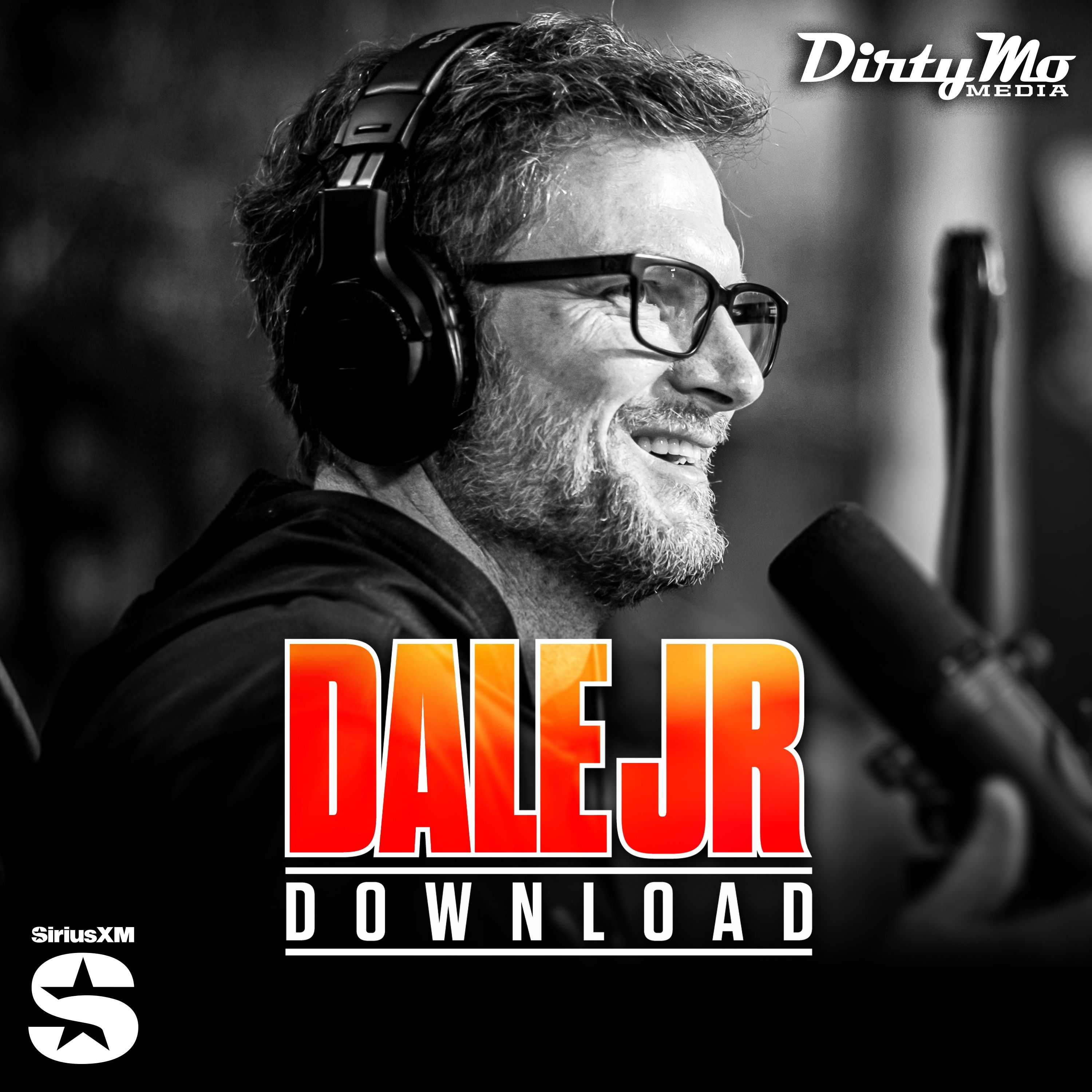
How Never Giving Up Led Lee Pulliam to JRM
About this episode
Lee Pulliam’s journey from a farm near VIR to dominating late-model short tracks gets the spotlight, with Dale Jr. digging into the sacrifices, the grind, and the “never giving up” mindset that finally earned him a NASCAR opportunity at JRM. Pulliam recalls building a limited late model from scratch, winning early at South Boston and Motor Mile, and the loyalty that paid off with chassis help. He also shares the emotional highs and brutal setbacks of his K&N/Nationwide stint, his later shift to ownership, and how VR training helped him overcome motion sickness for the recent race.
Dale Earnhardt Jr. sits down with late model stock standout Lee Pulliam on the heels of his O’Reilly Series debut at Martinsville. Growing up in Semora, North Carolina, on a farm, Lee’s family’s weekly trips to South Boston Speedway inspired him from an early age. As he aged through high school, he devoted his entire existence to figuring out how to get on the race track. Lee explains that he saved every dollar he could to purchase a race car, and that purchase came in the form of a limited late model that took over a year to get race-ready. He entered the ranks at South Boston, and before long, he carved out a career in the Mid-Atlantic that will be celebrated for decades to come.
Lee’s dominance at South Boston, Motor Mile, and other East Coast strongholds earned him four NASCAR Weekly National Championships. While he had a firm footing in the short track world, he only had one opportunity to rise to higher NASCAR ranks, which unfortunately folded after a series of bad luck. Lee returned to his grassroots and continued his winning ways until he made the difficult decision to step away from the driver's seat and concentrate on owner duties. After a triumphant return to the ValleyStar Credit Union 300 at Martinsville, which nearly saw him in victory lane, his emotional post-race reflection motivated Dale Jr. to find him a spot at JR Motorsports, leading to the veteran finally making his O’Reilly Series debut this past weekend.
Arby’s Meat & 3 box is available for a limited time at participating locations while supplies last. Prices may vary. Get your Meat & 3 box at an Arby's near you today.
Subscribe on YouTube: https://www.youtube.com/@DirtyMoMedia
Check out our merch collection: https://shop.dirtymomedia.com/
Hosted by Simplecast, an AdsWizz company. See pcm.adswizz.com for information about our collection and use of personal data for advertising.
road course
"Yeah, where is that? It's a little small town right near VIR in the road course. [126.0s] Really? Yeah, just south of VIR."
A road course is a track with lots of turns, not just left turns like an oval. Cars have to brake and steer carefully to carry speed through corners.
A road course is a type of racing track built from a mix of straights and corners, unlike an oval. Driving a road course emphasizes braking, cornering grip, and maintaining speed through turns rather than just holding a line at high speed.
short tracks
"South Boston has just kind of been, I mean, when I think about late model stock racing, but mainly when I think about mid-Atlantic, racing in the Carolinas, the Virginias, South Carolina, Tennessee, even South Boston is the staple, the standard, for what I think all short tracks should strive to be."
Short tracks are smaller race tracks, usually ovals, where a lot of stock-car racing happens. Because they’re smaller, drivers have to be precise and the racing can feel more intense and close to the fans.
Short tracks are smaller oval circuits where stock cars and other touring-style race cars compete. They tend to produce high fan engagement, frequent cautions, and racing that rewards car control and driver consistency.
O'Reilly
"And now, it had an O'Reilly race or a Bush race, an Xfinity race back in the day. I see you kicked tail there."
O’Reilly is an auto-parts company that sponsors racing events. If they say “an O’Reilly race,” it usually means the event was branded or sponsored by O’Reilly at the time.
O’Reilly is a major U.S. auto-parts retailer that sponsors NASCAR and related series events. When someone mentions an “O’Reilly race,” they’re usually referring to a branded race weekend or sponsorship era.
Xfinity
"And now, it had an O'Reilly race or a Bush race, an Xfinity race back in the day. I see you kicked tail there."
Xfinity is NASCAR’s second major national series (below the top Cup level). If a track hosted an Xfinity race, it means it attracted serious, high-profile stock-car competition.
Xfinity refers to NASCAR Xfinity Series, one of NASCAR’s top national touring series. When a short track hosts an Xfinity race, it’s a big deal because it brings higher-level competition and larger audiences.
AC Delco
"We did. We had some fun, but AC Delco. Yeah. It still though, operates at such a high standard."
AC Delco is an auto-parts brand that’s been involved in racing sponsorships for a long time. When it comes up in a track story, it usually means the event or series had AC Delco branding or support.
AC Delco is a General Motors-owned parts brand and a long-time motorsports sponsor. In racing contexts, mentioning AC Delco often points to sponsorship ties and the brand’s presence in stock-car culture.
MRN radio
"but we were not wealthy either. We didn't have satellite TV. I'd listen to the races on MRN and man, they would just paint the picture for me and it was just something every Sunday."
MRN radio is a radio station/network that carries race broadcasts. The speaker is saying they listened to the races on the radio every Sunday.
MRN (Motor Racing Network) is a major U.S. radio network that broadcasts motorsports coverage, especially NASCAR. In the segment, it’s used to show how the speaker followed races even without other entertainment access.
Mack truck
"I would take like, they would buy a Mack truck and we would turn it into a silage truck with a dump body and all."
Mack makes big work trucks used for hauling. Here, they started with a Mack truck and modified it into a farm silage truck.
A Mack truck is a heavy-duty commercial truck brand commonly used for hauling and industrial work. In this story, the speaker is describing converting a Mack truck into a specialized silage truck for farm use.
spun it out
"And I would just drive it deeper and drive it deeper until I could do what they did. And I spun it out and different things. I never hit nothing, but, and eventually like we run that one race in 06."
Spinning out means the tires lost traction and the car started rotating instead of turning smoothly. It often happens when you’re going too fast for the grip you have.
Spinning out means the car lost grip and rotated uncontrollably, usually from too much speed, too much steering input, or traction loss. It’s a common risk when pushing deeper into corners before you’ve fully mastered the line and braking points.
equipment not up to par
"...but most of these guys were running brand new cars and I was bringing a limited car up, you know, so it was tough. It was definitely, the equipment was, was not up to par with what they had, but I was able to be"
They’re saying their car wasn’t as well-prepared as the others. Even if the driver is good, having older or less-upgraded equipment can make it harder to win.
“Equipment not up to par” means the car (and/or its performance parts) wasn’t as competitive as the newer cars in the field. In racing, this can come from older chassis, less-developed engines, or fewer upgrades—so results depend more on driver skill to overcome the gap.
coal binding
"Frank Denny was working on his stuff. Yeah. He was, uh, he was, I think they were coal binding before any of us knew what it was."
I’m not fully sure what “coal binding” means here because it’s not a common racing term in that exact wording. It sounds like the team was doing something similar to a strategy or setup idea before others caught on.
“Coal binding” appears to be a transcription error or a niche term referring to a technique or early adoption of a setup/strategy. Because the transcript doesn’t provide enough context to confirm the exact meaning, it’s hard to map to a specific, widely used racing term.
plug wires
"we ran the plug wires over the top of the motor at that time. Now we run them under. But at that time we ran it over top of the valve covers and down and we forgot to zip tight."
Plug wires send the spark to the spark plugs. If they’re not secured and they get too close to hot parts, the spark can get interrupted and the engine will start misfiring.
Plug wires deliver high-voltage electricity from the ignition system to the spark plugs. The speaker explains a wiring routing change (running wires over the top vs under/along the engine), and how forgetting to secure them allowed wires to interfere with hot engine components, leading to misfires.
test session
"we went to a test session at Gresham in Georgia. That was the first time I ever drove a car... And I had been faster than him all day..."
A test session is practice time outside (or early in) the race weekend where teams evaluate car setup, tire behavior, and driver comfort. The speaker notes it was his first time driving a car and compares pace with his teammate to judge performance.
qualified in the top three
"And that was the first race of the year to K&N. And I qualified in the top three. And me and Daniel Sorrez pretty much had checked out."
Qualifying is the timed session before the race. Being “top three” means he started near the front, which helps you compete for the lead.
Qualifying “in the top three” means the driver posted one of the fastest times in the qualifying session, earning a front-row or near-front starting position. That starting track position is crucial for early-race strategy and battling for the lead.
left rear was going flat
"And when they checked my tires, the left rear was going flat. I started getting loose in and the left rear was going flat."
That means the left rear tire was losing air. When a tire goes low, the car can get unstable and harder to control.
“Left rear was going flat” indicates a rapid loss of tire pressure on the left rear wheel. In racing, that can destabilize the car, causing it to feel loose and potentially force a penalty or rear-start depending on series rules.
Daytona
"So we go, we race at Daytona on the back stretch. And we had. Damn, you run that race? I did."
Daytona is a famous oval track where cars go very fast for long stretches. How you set up the car and manage tires matters a ton because the turns keep stressing the car.
Daytona refers to Daytona International Speedway, a high-speed oval where drafting and momentum matter a lot. In oval racing, setup and tire management are crucial because you’re constantly loading the car through long corners.
lapping
"it's a big speed difference from the cars up front to the cars at the back. So we were lapping some of these guys like fast every three to five laps."
Lapping is when you catch up to slower cars and pass them so you’re a full lap ahead. If you lap people often, you’re running much faster than the rest of the field.
Lapping means passing slower cars and completing an extra circuit relative to them. The speaker says they were lapping cars frequently, which indicates a big performance gap and/or strong race pace.
crew chief
"“…and like Randy Goss was awesome. He was my crew chief that dude.”"
The crew chief is like the team’s main decision-maker for the race car. They help plan strategy and guide how the car should be set up to go fast.
A crew chief is the team leader for a race car, responsible for strategy, car setup direction, and coordinating the pit crew. In NASCAR, the crew chief plays a major role in how the car performs and how the team responds during a race.
caution
"[2635.0s] and Dalton wreck, um, see Falk. Oh, it's another caution. So that was my other car that was in the race."
A caution is when something happens on the track and the race slows down. Everyone has to drive more carefully until it’s safe to go fast again, and that can change who has the advantage on the restart.
A caution is when a race is slowed due to an incident on track (like a wreck). Drivers typically reduce speed and follow the pace car, which bunches the field and changes restart strategy.
Lionel Racing
"and when it comes to capturing all of that on track action and at that time nobody does it better than Lionel Racing, the official back-ass of NASCAR. Their race win die-casts are some of my favorite cars in my own collection."
Lionel Racing makes NASCAR collectible model cars. They’re known for making the models look like the real race cars, including the details you’d see after a win.
Lionel Racing is a brand that produces NASCAR collectibles, especially die-cast models of race-winning cars. In the segment, they’re positioned as the go-to source for highly detailed replicas that match what fans see on track and in Victory Lane.
NASCAR
"Lionel Racing, the official back-ass of NASCAR. Their race win die-casts are some of my favorite cars... Hey everybody, the 2026 NASCAR season is underway..."
NASCAR is a popular American racing series with stock cars. The show talks about the racing season and the cars fans collect from it.
NASCAR is a major American stock-car racing series known for close racing, frequent contact, and strategy around pit stops and cautions. The segment uses NASCAR as the context for both the on-track action and the collectible die-cast products.
die-cast
"Their race win die-casts are some of my favorite cars in my own collection. That's because the details, they look exactly like the car does in Victory Lane."
A die-cast is a small model car made with metal and painted to look like the real thing. NASCAR fans collect them because they’re detailed and match real race cars.
Die-cast refers to model cars made from metal (often zinc alloy) with painted details and realistic shapes. In NASCAR fandom, die-cast models are a popular way to collect specific cars from races, including win cars.
screwdriver
"Because he got, like I said, he got a screwdriver. What is this guy about to do? So I tried to just get out of there."
They say the other person had a screwdriver, which makes the situation sound more dangerous than just racing. It suggests they might have been trying to mess with the car.
The mention of a screwdriver indicates the situation escalated beyond normal racing contact—suggesting someone had a tool and may have been attempting to interfere with the car. It’s relevant to the safety/incident discussion in the story.
Chase Elliott
"But so like when I was at the racetrack, just like at the Hamlin race in 14, I had I had Chase Elliott in a car."
Chase Elliott is a well-known NASCAR driver. Mentioning him suggests the shop was working at a high level, not just local racing.
Chase Elliott is a prominent NASCAR driver, and his mention signals the level of competition and the caliber of drivers the shop supported. Having a top-tier driver in your car typically implies serious preparation and performance focus.
the three car
"we want you to drive the three car at Martinsville. And I was like, really? And he was like, yeah, he's like, we,"
In NASCAR, each car has a number. “The three car” means the entry with the number 3 that Lee would drive at Martinsville.
“The three car” refers to the race car assigned with car number 3 for that event. In NASCAR, car numbers are tied to teams and drivers, and fans often identify entries by number.
restart
"[4286.1s] show, yeah. So we, we, we rack them and we go green and the, the first restart, [4297.2s] whether restart we had had like 15 laps prior to that, the 14 got a good enough launch with me"
A restart is when the race starts again after a caution. The first few seconds are tricky because tires may not be at full grip yet, and position can change fast.
A restart is when the field accelerates back to racing speed after a caution. Restarts are high-stakes because drivers must time their launch, manage tire grip, and choose whether to lead, draft, or protect position.
slapped the 14 with the left rear
"my focus on defense for a second and I kind of slapped the 14 with the left rear to kind of break his momentum. But the problem is the zero had such a good run out of two."
He’s describing a bump with the back-left of his car to mess up the other driver’s momentum. It can slow them down or make their car less stable, but it’s risky.
This describes a physical contact tactic—using the left rear to disrupt the other car’s momentum and line. In racing, even small contact can unsettle a car’s balance, but it also carries risk (spin, damage, or penalties), so drivers weigh it against the need to defend.
enough weight on my rear tires
"The problem was when I kind of hit him, I didn't have enough weight on my rear tires and I just kind of, I was spinning the tires up off of four and I was like, come on, bang."
He’s saying the rear tires didn’t have enough “load” on them. Without that weight, they can’t grip well when he tries to accelerate, so they spin.
This points to weight transfer: under braking/turning, load shifts between axles. If there isn’t enough load on the rear tires when applying power, traction drops and wheelspin becomes more likely.
motion sickness
"You're not comfortable in the same navigate with motion sickness and all that stuff. But what did you do? What did you do to instead of like, look, if I get in the same, the motion same, I don't love it."
Motion sickness is a common issue when using VR or driving simulators because your eyes and inner ear send conflicting signals. In racing training, it can limit practice time and performance, so drivers look for coping strategies to tolerate the sim environment.
virtual reality (VR) training
"[4955.2s] virtual reality glasses can help train you for that... [5013.2s] but I'm going to keep doing it. So I kept doing it. And the next time I got an emotion rig, [5018.4s] I was perfectly fine."
Virtual reality training means practicing in a computer-made simulation instead of real life. The idea is to get comfortable and improve your routine so you’re ready when it matters.
VR training uses simulated experiences to build familiarity, reduce uncertainty, and improve performance readiness. Here, the speaker describes using VR glasses and a boxing game to stay engaged and motivated while also aiming to support racing preparation.
MetaQuest 3
"[4976.4s] done it. So I was researching and talked to Butterbean about it and trying to figure out things and ended up getting this virtual reality stuff. MetaQuest 3, I believe is what it is."
MetaQuest 3 is a virtual-reality headset. It lets you practice in a simulated environment, which can help you get used to racing-related activities even if you’re new to video games.
MetaQuest 3 is a consumer virtual-reality headset made by Meta. In this context, Lee Pulliam is using VR training to build comfort and skills that can translate to racing, even though he wasn’t a gamer growing up.
qualifying
"...I got to, you know how you need like a few minutes to qualify this for just to get your mind wrapped around qualifying. And I'm like, damn, I got to jump right in there and go right back out..."
Qualifying is when drivers try to set their best lap so they know where they’ll start the race. It doesn’t give you much time to think—once it’s your turn, you have to be ready right away.
Qualifying is the session where NASCAR drivers set their starting position for the race based on lap performance. It’s usually short and timing-sensitive, so drivers have to be mentally ready immediately after practice or other interruptions.
led laps
"It was the, the, we raced all day. We led laps. We had fun."
“Led laps” means the driver was in front of the field for one or more laps during the race. It’s a key performance marker because it shows you had pace and were able to control track position.
win races
"the thing for me is I feel like I can win on that level. I feel like I can win races. So like it was like, I checked that box and I'm going to forever be grateful for it. But now you want to taste. Yeah. It's, it's, uh, it's, it's an addiction, you know, like you get, you get in that thing"
They’re talking about actually finishing first. Winning depends on both the driver and the team getting the car and strategy right.
“Win races” refers to competitive performance outcomes that depend on driver execution, car setup, and team strategy. The discussion implies that confidence in winning changes how the driver approaches each race.
sponsor
"It's easy to, and it's not 100, it's not their fault, but it's easy to take it for granted when you're younger because maybe you've had the sponsor that kind of has been supporting you and you've"
A sponsor is a company that pays for racing and gets their name on the car or driver. They’re saying that when you’re younger and sponsored, you might not feel the pressure as strongly.
A “sponsor” is a company that funds a driver/team in exchange for branding exposure. The speaker suggests that having sponsor support can reduce pressure early on, which can affect how drivers value results.
Folsom Fence Supply
"I know Folsom Fence Supply was a big supporter of what you did. Jerky Boys got an opportunity to ride on board, you know, BRC."
Folsom Fence Supply is a sponsor mentioned in the story. Sponsors like this help pay for racing so a driver can get opportunities.
Folsom Fence Supply is mentioned as a major supporter of Lee Pulliam’s efforts. In motorsports, local or regional sponsors like this can be crucial for funding entry fees, travel, and equipment.
Request an Explanation
Heard something you'd like explained? We'll add it to this episode.
Sign in to request explanations for terms you heard.
Want to learn more?
Browse our glossary for plain-English explanations of automotive terms, jargon, and concepts.
Help improve this episode
See something that's not quite right? Our annotations are AI-generated and can sometimes miss the mark. Click the flag icon on any annotation to suggest a correction.