Dive into the evolving world of software-defined vehicles with experts from QNX and Vector as they discuss attracting top software engineering talent to the automotive industry. Karen Shang and Andy Gritz share their personal journeys, the importance of hands-on experience, and how their companies support education through tools, hackathons, and university partnerships. They also explore the impact of AI on automotive software development, the significance of soft skills, and practical advice for students aiming to break into this tech-driven field. Plus, they explain how QNX and Vector collaborate to build reliable, safe vehicle software.
From Ottawa’s QNX Garage, we sit down with Karen Xiong (Vector) and Andy Gryc (QNX) to talk about the talent behind software-defined vehicles. We cover career paths into automotive software, what companies actually look for in engineers today (CI/CD, systems thinking, reliability), and why “vibe coding” isn’t replacing safety-critical development anytime soon. Plus: practical tools and skills students can start learning now—from QNX Everywhere to ROS and in-vehicle Ethernet.
""...where are we going, how are we going to get there, what are software defined vehicles, and who's going to build them and program them.""
Software defined vehicles are cars that use computer programs to control many parts of how they work. This means the car can get better or change by updating the software, like how your phone gets updates.
Software defined vehicles are cars where most functions and features are controlled or enhanced by software, allowing for updates, new features, and customization without hardware changes. This represents a shift from traditional mechanical or hardware-focused vehicles to ones driven by software capabilities.
""We're in Cunix's garage here up in beautiful Ottawa. We're going to talk to two very special people... The Inevitable podcast is brought to you by Cunix, whose high performance foundational software powers over 275 million vehicles on the road today.""
QNX is a type of computer software that helps cars run safely and reliably. Many cars use it to control important parts and features.
QNX is a real-time operating system widely used in automotive applications for its reliability and safety features. It powers foundational software in millions of vehicles, enabling critical vehicle functions and software-defined capabilities.
""The Inevitable podcast is also brought to you by Vector, a competent partner in embedded software. For over 35 years, Vector has been helping the industry simplify complexity and accelerate the transition to software defined vehicles.""
Vector is a company that makes software to help cars work better and smarter. They help car makers build the software that controls many parts of the car.
Vector is a company specializing in embedded software solutions for the automotive industry, helping simplify complex software systems and accelerate the transition to software defined vehicles.
"Both my parents worked for like OEMs in the area, so like Ford and GM."
OEM means the company that originally makes the car or parts. For example, Ford is an OEM because they make their own cars.
OEM stands for Original Equipment Manufacturer, referring to companies that produce parts or vehicles that are sold under another company's brand. In automotive context, OEMs are the main vehicle manufacturers like Ford or GM.
"Both my parents worked for like OEMs in the area, so like Ford and GM."
General Motors, or GM, is a big company that makes many types of cars and trucks. They own brands like Chevrolet and Cadillac.
General Motors (GM) is a large American automotive corporation that owns several car brands such as Chevrolet, GMC, Cadillac, and Buick. It is a key player in the automotive industry with a long history of vehicle manufacturing.
"Both my parents worked for like OEMs in the area, so like Ford and GM."
Ford is a big company that makes cars and trucks. They are one of the main car makers in the United States.
Ford is a major American automotive manufacturer known for producing a wide range of vehicles including trucks, SUVs, and passenger cars. It has a significant presence in the automotive industry, especially in Michigan.
"I liked working with the FPGAs. FPGAs. What's that? Field programmable gate array."
An FPGA is a special kind of computer chip that you can program to do different jobs. Car makers use them to help control things inside cars.
FPGA stands for Field Programmable Gate Array, which is a type of integrated circuit that can be programmed after manufacturing to perform specific logical functions. They are commonly used in automotive electronics for flexible and efficient hardware processing.
""...there's a, you know, new X blind. It does this and it's got this many horsepower. I'm like, who cares?""
Horsepower tells you how strong a car's engine is and how fast it can go. The higher the horsepower, the more powerful the car usually is.
Horsepower is a unit of measurement for engine power, indicating how much work an engine can perform over time. It is commonly used to describe the performance capability of cars.
""...What's in the, is that? Oh, is that an arm processor? Like, oh, cool. Yeah.""
An ARM processor is a small computer chip inside cars that helps run the software and controls many functions, like the screen and engine management.
An ARM processor is a type of computer chip architecture widely used in automotive electronics and mobile devices due to its energy efficiency and performance. It is often found in vehicle control units and infotainment systems.
"I love to write about Ferraris and Mustangs.
I'm like, yeah, you know what?"
The Mustang is a famous American car that is known for being fast and fun to drive. People who like cars often talk about Mustangs.
The Ford Mustang is an iconic American muscle car known for its powerful engines and sporty design. It represents a popular enthusiast vehicle with a long history.
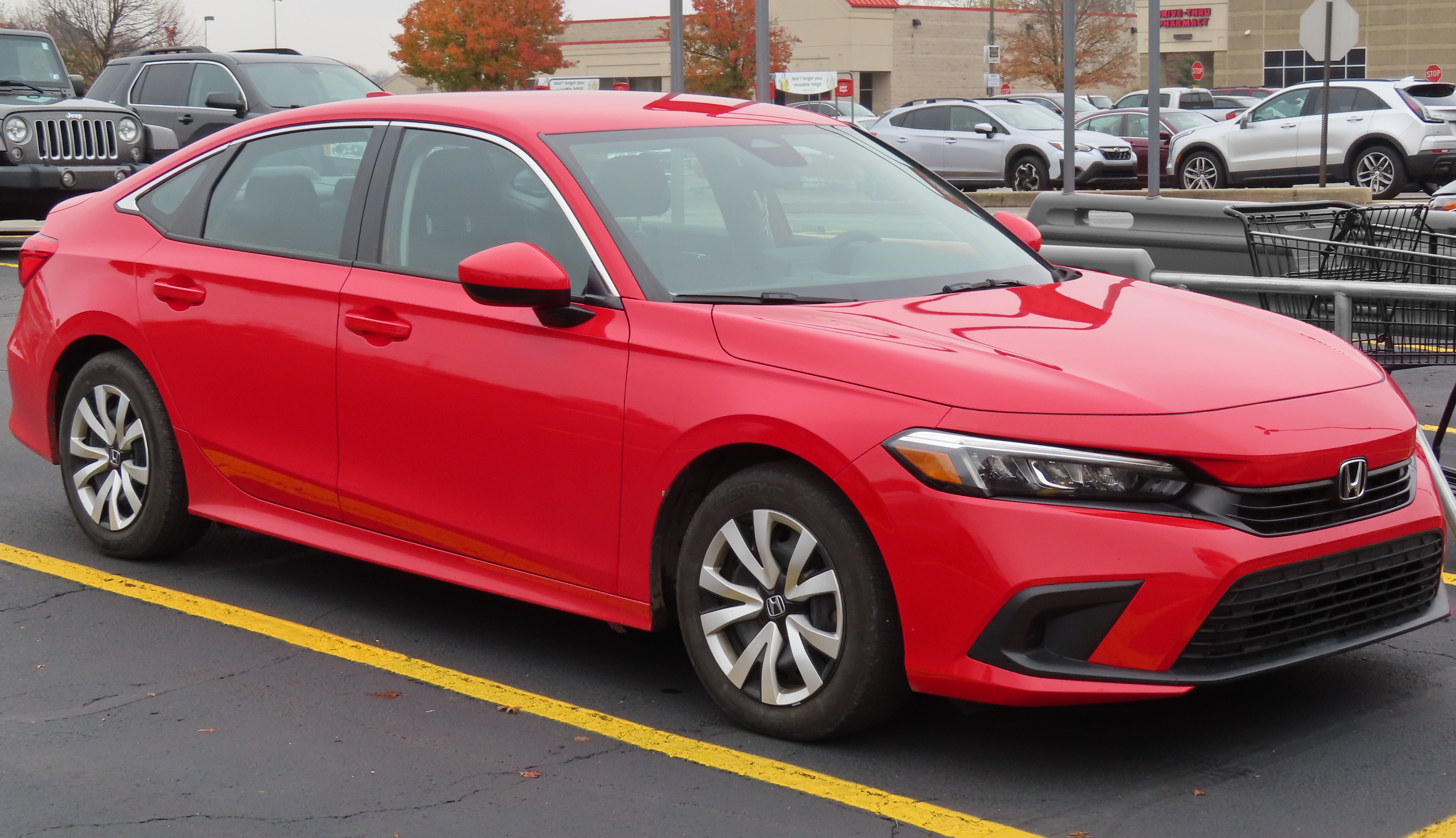
"I can't find these people who want to write about all Corollas and Civics, but also go
deep on all that's all the stuff that's coming."
The Civic is a small car that many people use every day because it is dependable and good on gas. Some people also like to customize it to make it look or go faster.
The Honda Civic is a compact car known for its reliability, efficiency, and strong enthusiast community. It is a common daily driver and also popular for modifications.
"I can't find these people who want to write about all Corollas and Civics, but also go
deep on all that's all the stuff that's coming."
The Corolla is a small car that many people buy because it is reliable and easy to drive. It is very popular around the world.
The Toyota Corolla is a widely sold compact car known for its reliability, fuel efficiency, and practicality. It is one of the best-selling cars globally.
"And then Andy, after, well, let's talk a little bit about your years at, your three years at GM, an on-star. This was 2001 through 2004."
OnStar is a service in some cars that helps you with things like emergencies, directions, and car health by using a built-in phone in the car.
OnStar is a subscription-based communications, in-vehicle security, and emergency services feature developed by General Motors. It provides services like automatic crash response, vehicle diagnostics, and turn-by-turn navigation through a built-in cellular connection.
"So I was there during when they had the analog sunset years. So they had started out everything with analog cell phones and then moving over to digital."
The analog sunset means the time when old-style cell phone networks were turned off and replaced by newer digital ones that work better.
The analog sunset refers to the period when analog cellular networks were phased out in favor of digital networks. This transition improved call quality, security, and allowed for more advanced mobile services.
"And then a bunch of people, you know, different tier ones and Denso's and Delphi's and all those companies will actually bid on it."
Delphi is a company that makes important parts and systems for cars, like electronics and safety features, which car makers use.
Delphi Technologies is an automotive parts supplier specializing in electronics, powertrain, and safety systems. They often act as tier one suppliers providing modules and components to OEMs.
"And then a bunch of people, you know, different tier ones and Denso's and Delphi's and all those companies will actually bid on it."
Tier one suppliers are companies that make important parts or systems and sell them directly to car makers to put in their cars.
Tier one suppliers are companies that supply parts or systems directly to automotive manufacturers (OEMs). Examples include Denso and Delphi, which provide components or modules that are integrated into vehicles.
"And then a bunch of people, you know, different tier ones and Denso's and Delphi's and all those companies will actually bid on it."
Denso is a big company that makes parts for cars, like air conditioning and engine controls, which car makers use in their vehicles.
Denso is a major global automotive parts manufacturer known for producing components like climate control systems, engine management, and electrical systems. They are a common tier one supplier to many car manufacturers.
""LA Auto Show, Automobility Advisory Board chair. Yeah. That's hilarious because then the timeframe that I live in LA, I've been going to the auto show since I was a kid...""
The LA Auto Show is a big car event in Los Angeles where companies show off new cars and ideas. It's like a big car party for people who love cars.
The LA Auto Show is a major annual automotive event held in Los Angeles where manufacturers showcase new vehicles, concepts, and technology. It is a significant event in the automotive industry calendar.
""I've been going to the auto show since I was a kid and then I went, Automobility came up, I was like, what's this?""
Automobility means new ways cars and transportation work together, like self-driving cars or smart technology in vehicles. It's about making travel easier and safer.
Automobility refers to the integration of automotive and mobility technologies, focusing on innovations like connected vehicles, autonomous driving, and new transportation solutions. It represents the future direction of the automotive industry.
"There wasn't really until around, actually right around 2020 when we're like, hey, you know the cars and the software stuff and ADAS. It's not going away."
ADAS means special computer systems in cars that help drivers by making driving safer and easier, like helping you park or avoid accidents.
ADAS stands for Advanced Driver-Assistance Systems, which are electronic systems in vehicles that help the driver with driving and parking functions to increase car safety and improve driving comfort.
"while being able to maintain those strict safety, cybersecurity, I guess. Regulations? Yeah, exactly. Regulations that we need to adhere to in the auto industry."
Cybersecurity rules help keep car computers safe from hackers who might try to break in and cause problems.
Cybersecurity regulations require automotive software to protect vehicles from hacking and unauthorized access, ensuring the safety and privacy of vehicle systems and data.
"while being able to maintain those strict safety, cybersecurity, I guess. Regulations? Yeah, exactly. Regulations that we need to adhere to in the auto industry."
Safety regulations are rules that car makers have to follow to make sure cars don't hurt people and work safely.
Safety regulations in the automotive industry are rules and standards that manufacturers and software developers must follow to ensure vehicles are safe for drivers, passengers, and pedestrians.
""It's more just how you're building it from your requirements to automation, for example, like doing CI, for example. Not only are you coding the functionality, but you're able to manage the source code... building up the CI pipeline, automating tests, making sure you're able to catch things earlier and iterate quicker...""
A CI pipeline is like a system that checks new software changes automatically to make sure everything works well before adding them to the main program. This helps fix problems faster.
A CI (Continuous Integration) pipeline is a process in software development where code changes are automatically tested and integrated frequently to catch errors early and speed up development.
""I think when I think about the relationships that I have with universities and students, a lot of them are through hackathons. Some of our capstone projects, all that kind of stuff.""
Hackathons are like competitions where people work together to build software or solve problems quickly, helping them learn and show their skills.
Hackathons are events where programmers and engineers collaborate intensively on software projects over a short period, often used by companies to engage and recruit talent.
"...that's going to have GM or Ford or Bosch or Continental or Tenneco or something, right?"
GM is a big car company from the U.S. that makes many popular cars and trucks. They are important in the car industry and make lots of different vehicles.
GM, or General Motors, is a major American automotive manufacturer known for brands like Chevrolet, GMC, Cadillac, and Buick. It is one of the largest car companies globally and plays a significant role in automotive innovation and manufacturing.
"...that's going to have GM or Ford or Bosch or Continental or Tenneco or something, right?"
Bosch is a company that makes parts and technology used in cars, like sensors and safety equipment. Many car makers use Bosch parts in their vehicles.
Bosch is a global engineering and electronics company that supplies automotive parts and technology, including sensors, fuel injection systems, and safety components to many car manufacturers.
"...that's going to have GM or Ford or Bosch or Continental or Tenneco or something, right?"
Tenneco is a company that makes parts for cars to help with things like smooth rides and cleaner exhaust. Many cars have Tenneco parts inside.
Tenneco is an automotive parts manufacturer specializing in ride performance and clean air products, such as shock absorbers and exhaust systems, supplying many vehicle makers globally.
"...that's going to have GM or Ford or Bosch or Continental or Tenneco or something, right?"
Continental is a company that makes important parts for cars, like tires and brakes. Many cars use parts from Continental.
Continental is a German automotive parts manufacturer known for tires, braking systems, and various vehicle electronics. It supplies many car companies worldwide with essential components.
""Ethernet in the car is replacing can and LAN. More and more, yeah. Connected like a local area networks.""
LAN is a way for parts inside a car to connect and share information over a small network. Newer cars are using faster ways to do this.
LAN (Local Area Network) refers to a network that connects devices within a limited area such as a vehicle. In automotive context, LAN protocols have been used for communication between electronic modules but are being replaced by Ethernet for better performance.
Select text to request an explanation
The important thing that I would probably communicate to students who are trying to get
through their degree on this is don't let the fact that you know how to type prompts
replace the fact that you know how to do this yourself.
Welcome to The Inevitable, a podcast by Motor Trend.
Hi there and welcome to The Inevitable.
This is Motor Trend's podcast, our podcast about the future of the car, where are we going,
how are we going to get there, what are software defined vehicles, and who's going to build
them and program them.
That's all what we're going to talk about today on this episode, very special one.
Yes, I'm here by myself again, Johnny couldn't join me out here in Canada.
We're in Cunix's garage here up in beautiful Ottawa.
We're going to talk to two very special people, which I'll get to in a moment, but right now
I need to tell you that The Inevitable podcast is brought to you by Cunix, whose high performance
foundational software powers over 275 million vehicles on the road today.
Cunix delivers safe, secure, reliable, and scalable solutions, enabling automakers to
unlock transformative applications, drive new revenue streams, and launch innovative
business models, all without compromising safety or security.
The Inevitable podcast is also brought to you by Vector, a competent partner in embedded
software.
For over 35 years, Vector has been helping the industry simplify complexity and accelerate
the transition to software defined vehicles.
And that's what we're talking about on this episode.
But specifically from a different angle, we're talking about top talent in software engineering
and how to bring these people into the automotive industry.
This is a big topic within the automotive industry as it shifts to becoming more into
the tech space.
It used to be we'd talk about Facebook, Apple, Netflix, Google.
How do you get software engineers to go there?
How do automotive car companies and suppliers?
How do they get that talent to consider working with car companies?
We have two great experts to chat about this topic.
One is Karen Shang.
She comes from Vector, Informatic, based out of Novi, Michigan.
And we also have Andy Gritz, who comes from CUNIX, and is a veteran of the automotive
industries, worked at several different places, including General Motors.
And we're going to talk to them about their journey to their respective companies, their
education, what they studied, how they got into the automotive business, and then what
they do in particular from an outreach perspective, as well as the programs their companies run
in trying to draw top talent into Vector, into CUNIX, and really get the best and the
brightest to consider working in the automotive space and not for a mobile phone maker or
another tech company.
So without further ado, let's welcome Karen Shang and Andy Gritz.
So, Karen, Andy, thank you so much for taking time out of your day and also traveling to
beautiful Ottawa, where apparently isn't that cold, although I'm from California, so it
all looks really cold.
It's way better than it has been.
I saw a little bit of blue sky, actually.
This was spring over here.
I actually, yesterday I took a walk with no coat because it was so warm.
It was about three degrees, which is, what, maybe 38, 40 or something?
Because the week before, minus 25.
Yeah, I understand.
Okay.
Well, you guys are both University of Michigan grads, is that right?
Right now.
Go blue.
You did not know that?
No, I didn't know that.
That's awesome.
That's great.
Yeah, of course.
I did your LinkedIn stalking.
So we're going to talk about that.
We're going to talk about a bunch of different things.
We're talking about what do you guys do at your respective companies.
We're going to talk about, but kind of how you got there.
So let me start, we'll go ladies first.
So Karen, Karen Chung, you've been seven years, now a vector, right?
And you work out of their office in Novi?
Yes.
Okay.
Let's talk about kind of how you got there.
You're University of Michigan grad in computer engineering.
Yes.
Okay.
How was that like?
Why computers?
Why you get in?
I mean, I grew up in Novi, Michigan, so it's always been like the automotive industry.
Okay.
Both my parents worked for like OEMs in the area, so like Ford and GM.
So just grew up in a very engineering family.
Didn't know what major I wanted to pursue, so automatically just picked what my parents
did.
So I started as an electrical engineer actually.
Okay.
I struggled a bit in the circuits courses, and so kind of made the swap to a little bit
more software.
I liked the logic courses.
I liked working with the FPGAs.
I'm sorry, what?
FPGAs.
FPGAs.
What's that?
Field programmable gate array.
Oh, look at you.
Thank you.
It's been a while.
Yeah, it's okay.
But basically like you're able to, you know, write directly to the hardware registers,
see something on the board, see the LEDs, the switches, things like that.
So it was really kind of cool to make changes on your computer and immediately like see it
in hardware.
So that's kind of how I swapped over to computer engineering and yeah, here I am.
So wait, circuits are harder than software?
I was going to ask about that, but I wanted that to interrupt.
No, it was like, I just remember like the specific lab I was doing.
I just like couldn't do it and I had like a crash out, I would say at the ugly and I
was like, no, I can't do electrical anymore.
So I mean, I wouldn't say computer engineering is like easier, but I think it just made more
sense and it clicked better.
Okay.
Yeah.
All right.
We'll pause there because I want to talk about this duality of University of Michigan.
I went to USC who just entered the big 10.
So I'm already kind of like, I'm predisposed to, well, I think we had a pretty good, we
had the University of Michigan.
So I'll go easy on you guys.
You have computer science.
That's right.
A little bit earlier than I think, Karen.
A bit.
Okay.
A bit.
How did you end up in automotive?
Because you worked, you've been at, I looked at, looked you up as well.
You were at HP or at Cybox, applied technology and also General Motors before joining QNICS.
Yeah.
And then you had an interesting detour, which I want to talk about, but why cars, why computer
science?
I'll start with why computer science because that came first.
So, and yes, I kind of started my programming career because I was a kid and I wanted to
play arcade games and I couldn't afford to and I couldn't buy them.
So I was like, well, I'll just learn how to program.
So it kind of went from there to actually like getting a job like while I was still in high
school, like doing statistical quality control apps for automotive.
So I kind of got exposed to automotive at that point.
And then it just kind of, I went into a field in CS because I couldn't think of doing anything
else.
Like I just loved it.
I loved everything about it.
I thought it was just the coolest.
At the time I went to U of M, that was part of LSNA, so the Liberal Arts School, which
when I took my degree, I really hated because I was terrible at French, for example, and
I had to have like a language.
So like my degrees went from A to B to a C to a D and I'm like, thank God I only had
four terms, otherwise I would have like flunked out on that.
But I'm really actually glad that I had a diverse, you know, education after.
But then, yeah, I just continued on.
I didn't really have an idea that I was going to be in automotive.
It wasn't until sort of circumstances, like after I graduated from school, I moved out
to the West Coast, lived in Oregon for a while, working on the mobile compute division.
That's where I was at HP.
So I was doing calculators and palm tops.
I like worked on the palm tops that they had at the time.
They're like precursors of the phones that we have now, you know.
Right.
And then, yeah, I kind of got back into Michigan at some point along my career trajectory.
And I, yeah, I thought, hey, on Star, that seems like that'd be kind of a fun place to
go.
Maybe I'll check them out.
Okay.
Well, without dating you too badly.
Oh, sorry.
It's all good.
What programming language, what was your first programming language you learned?
What were you coding and did you do basic first?
I started with basic and then it became obvious that I couldn't really do anything.
So then I learned assembly second.
Okay.
And then after that, I learned Pascal and then C and then, yeah, I don't know.
I've learned a few.
Same question to Karen.
I would say C++ C.
Okay.
Okay.
Cool.
So there's a little envelope there.
Okay.
Interesting.
Are you car people?
Would you consider, I mean, you come from a car family.
Your parents worked at GM before.
I would say like yes to no.
I'm interested, but I'm not like that interested where I'm like keeping up with all the new
vehicle lines.
That's fine.
Like I would go to the auto show every year with my mom, but kind of the extent.
I'm not super big in the cause like that.
I'm kind of with Karen on that.
I'm interested in what's in the cars, not in the cars.
Like so when people come out and say, oh, yeah, there's a, you know, new X blind.
It does this and it's got this many horsepower.
I'm like, who cares?
What's in the, is that?
Oh, is that an arm processor?
Like, oh, cool.
Yeah.
Like that's the part I care about.
And you guys are in the right place.
And that's fine, by the way.
Like I always felt people like people who aren't working motor chins like, oh yeah.
I love to write about Ferraris and Mustangs.
I'm like, yeah, you know what?
I can throw a rock and hit like 20 people who want to write about Ferraris and Mustangs.
Like, you know what?
I can't find these people who want to write about all Corollas and Civics, but also go
deep on all that's all the stuff that's coming.
That's going to affect everything we drive in a really, like the real technical stuff.
It's harder.
It's hard to explain.
It's hard to understand.
And of course, it's going to be a much smaller subset of people who are willing to do that
kind of stuff, which I think is kind of what we're talking about.
But, okay, so we heard a little bit about where Andy was at HP post-graduation.
Karen, you ended up interning with Volvo, I think in Shanghai?
Yes.
How long, like how does that come about?
That was a pretty long time ago.
That was actually like the summer after my freshman year.
So to be honest, I was like pretty inexperienced.
Okay.
And also like the language barrier was actually quite difficult.
So I was like downstairs in their lab.
I got to see like their vehicles and like kind of their test builds.
But to be honest, like the actual content was pretty difficult for me to grasp at that point.
How long was the internship?
Like two months, I think.
Okay.
Yeah.
Any other internships before jumping into?
No.
So you got hired right out of school to Vector?
Yes.
How?
And how and why?
Did they show up on a job board?
So actually I found Vector at a career fair.
So University of Michigan does like really good career fairs.
So I remember it was my first semester of senior year.
I actually didn't know about the company, but one of my friends who worked at Ford like in an internship was like, oh, I've used their tools a lot.
They're like a really good embedded software company.
So I went up to them, talked to them.
It just kind of worked out and it was great.
And I think like the job posting, like I didn't really want to go straight into software development.
And so it was like a project engineering role, like more integrations of the basic software.
And that's more what I was looking for at the time.
So it just kind of seemed perfect and it worked out.
What sold you, did you get to go visit or did you do a bunch of interviews?
Like what was it like?
We did a couple interviews and also it's like local.
So to be honest, like I already know the area and I heard good things about the company.
So I think I did do an on-site interview or two.
So I got to go see the office.
Okay.
All right.
And then Andy, after, well, let's talk a little bit about your years at, your three years at GM, an on-star.
This was 2001 through 2004.
That was like the third or fourth year of their launch, right?
Yeah, it was probably close to that.
That could be, I mean, that was during the talk to a live person.
So I was there during when they had the analog sunset years.
So they had started out everything with analog cell phones and then moving over to digital.
And so that was kind of interesting to kind of be part of that.
And then I got hired on to sort of like this advanced R&D team.
And my goal was really sort of to help architect the next generation of software because we had convinced the organization,
well, some people in the organization that the company should be owning the software as opposed to just kind of like having it be a black box.
So I don't know how much of the audience is familiar, but normally car companies will say,
hey, we're going to write a specification of everything that this module has to do.
And then we'll send it out for tender.
And then a bunch of people, you know, different tier ones and Denso's and Delphi's and all those companies will actually bid on it.
And then they'll just pick one.
But the OEM doesn't really have any idea what's in the box at that point.
They just know, we've told you what the box needs to do as long as it does that.
We don't care.
And so having had a long software background, I was trying to convince them,
like, you know, it's probably a good idea if we know what's in there and actually have the ability to like move that or migrate it,
change it, adapt it ourselves as opposed to always kind of like doing it through that process.
So we did have some people who kind of internally bought in,
but fundamentally it kind of came against, you know, management, which said,
you know, we're highly risk adverse.
And that sounds like a risky thing.
And then we'd have to hire a bunch of people and all this stuff.
So we're not going to do that.
And that's about the time I decided, you know, I got to look for something else.
And then I found Q-Nex.
It's great because it's funny because you saw the future because right now everybody's like,
vertical integration, we got to own the box.
We might actually build the box and then we're going to build the code in it.
So we know everything all about it, right?
That's sort of, that's kind of been the mantra lately,
although I think, I think some of that's changing.
So then you end up at Q-Nex after OnStar, after GM.
And your first stint was 10 years, right?
Yeah.
10 years in a month.
You went from a field application engineer to product marketing manager.
What were you doing?
Well, I mean the first half, so the first five years,
so I was a worldwide auto FAE and that basically was just helping, you know,
car companies and tier ones build systems with Q-Nex.
So fundamentally explaining what our technology was, how it worked.
Sometimes it would be like little coding things.
Sometimes it would be like technical support.
But fundamentally just kind of being the face of the company to a lot of those.
A lot of travel?
A lot of travel.
That's why I stopped.
That's, that's, you know, I mean, like I was basically on the road,
probably like more than 50% of the time.
Wow.
And I said, yeah, you know, that's not working out so well for me.
Super fun places?
You know, I would always get like, oh, hey, cool, you're going to Japan.
And say, yeah, you know what, the hotels in Japan often look just like the hotels here.
So, I mean, I did get to see a lot of cool stuff and I did get to, you know,
go a lot of really interesting places and I had a lot of great experiences,
but overall it's exhausting.
Okay.
And yeah, so I decided that I needed to do something different.
In which you moved into product marketing?
I did, yeah.
So is that like buying ads or designing, do creative?
No, that was actually a challenge from the VP of the company at the time.
So I was like trying to figure out what I wanted to do at this next stage.
I still wanted to stay at QNICS, but I wasn't sure what I wanted to do.
And the VP of software engineering said, hey, you know,
if you think marketing's got problems, I said, well, I do.
So why don't you go in there and fix it?
So I'm like, oh, it's hard to really argue with that logic, you know?
So I was like, okay, yeah.
I mean, they really probably could use some technical expertise on the product marketing side.
So it wasn't ads.
So we did B2B marketing mostly.
So it's really kind of just figuring out, you know,
how to describe what our product is to the people that matter,
who are going to buy it or be influenced at and, you know, making things up,
but basically explaining in terms that mean something to them, right?
Right.
Yeah.
Okay.
So, and then you went to the LA Auto Show, which I want to come back to,
but Karen is kind of where you were at in your first stint at QNICS.
She's, I think you're in your seventh year now at Vector.
Okay.
What's been your trajectory?
You started out as a product engineer, and now you're a program manager.
So what have you, from there to here, what's the evolution been?
Yeah.
So I started as a project engineer, just like doing integrations,
like I mentioned, doing support, kind of like just the basic with our products.
And the opportunity kind of came along that, hey, we need some more project managers,
like we have more projects going on.
So I did that for like another three years.
And then very recently, the opportunity for like a program manager at our Novi office opened up
and it seemed like a good fit.
And I was interested to like try something a little bit different.
I mean, a lot of it, I guess is kind of similar to project management,
but just had a little bit of a higher level.
So, yeah.
Do you manage a team or do you manage like a series of?
No, so I managed like a program, which is basically just like software programs
for specific customers of ours.
So in my case, it's like specific OEMs.
So a lot of it is just managing their requirements
and making sure our product development matches what they need.
The workflows, everything.
So it's kind of just managing engineering teams.
It's just like very cross-functional, I would say.
It's not specific people, but it's just managing like everybody to come together to deliver.
Do you get to travel or is it all, is it all teams and Zoom calls?
I would say I've traveled more as a program manager,
but I would still say most of it's like Microsoft Teams calls.
Honestly, half my days are usually meetings and a lot of it is in the morning time
when like, you know, the other time zones are available and stuff.
So, yeah.
So you're welcome for, you get to play hooky and stay off some of those teams.
I'm just kidding.
Yes.
Okay.
So great.
All right.
So then, so we have, we have now what Karen's doing at Vector Program Manager,
different teams cross-functionally across around the world.
It sounds like I want to come back to Andy just for a second here.
LA Auto Show, Automobility Advisory Board chair.
Yeah.
That's hilarious because then the timeframe that I live in LA,
I've been going to the auto show since I was a kid and then I went,
Automobility came up, I was like, what's this?
So is that like your baby or sort of?
It's basically Lisa Kaz.
So that was her baby, but we ran it.
We executed it, operationalized it.
Okay.
So, yeah, I, the, at my first stand at Kinects,
then I left for a while and decided I wanted to do my own thing
because there were not a lot of people that understood automotive technology
and marketing and I thought, you know,
maybe that's actually something that we could turn into a business.
So my partner and I, she was also at Kinects.
So we both left and we started our own company.
That's how we got involved with the LA Auto Show.
Okay.
And we had a bunch of other different clients that we kind of worked with,
but that was probably one of the most fun because they just had a really great kind of thing
and we got to lead it and we got to find speakers.
And I'm sorry if we didn't get you.
I mean, I feel bad now.
We were not so probably hardcore into this space as we are now back in,
I mean, the time we were talking was 2014 to 2019.
Yeah.
And we were still a little bit on the, I'll call it analog,
that kind of performance side.
There wasn't really until around, actually right around 2020 when we're like,
hey, you know the cars and the software stuff and ADAS.
It's not going away.
Yeah, it's not going to blow over anytime soon.
So, okay, that makes a lot of sense.
And then since, I mean, just August or so, you're back here.
As a developer ecosystem director, what is that?
What is that?
Well, basically, we have kind of a challenge like a lot of people within the industry,
most people in the industry know what the name Kenix is and what we do,
but outside of the automotive industry and outside of, you know,
like people who are doing like high reliability stuff, nobody knows who we are.
And that leaves a big gap in the talent stream,
which I know that we're going to eventually talk about,
which is all of these OEM customers or all these other customers are building
wind turbines or nuclear power plants, whatever it is that they are,
they can't find engineers that are Kenix literate.
And so part of my role is to ensure that we do as many things as we can to seed
the developer community.
So universities, academia, open source developers, startups, incubators,
all of that kind of stuff with at least the knowledge that we exist and what we do
so that when they get to the point of realizing,
oh, hey, this actually is something that probably has functional safety implications.
Maybe we should be using something other than Linux.
Then while I'm hoping that that spark will take advantage,
and then they'll go and use, you know, use our software for what we think it's intended for.
Okay.
Well, I'm going to ask you both then the next question,
because this is a natural progression.
You kind of said it like nobody knows outside of the automotive industry,
nobody knows what Kenix does.
I'm sure the same applies to Vector.
So if you'd explain to a small child, five years old,
or your grandma in like elevator speech, right, like three sentences,
what does Kenix do?
Software that makes it easy to run reliable applications, things that don't kill people.
Okay.
Dig it.
Karen, same question.
What does Vector do?
I would say something similar to what Andy just said.
We want to offer tools and help with workflows that make developers' lives easier
while being able to maintain those strict safety, cybersecurity, I guess.
Regulations?
Yeah, exactly.
Regulations that we need to adhere to in the auto industry.
Okay.
And then for you both, how do the companies now complement each other or work together?
Because you guys just launched, and we talked about this with your big bosses,
as well as a couple of your colleagues at CES with this product Alloy Core.
But again, for the extremely young or somebody who's super non-technical,
like where do you guys fit in together?
So I will admit at the very beginning that I'm not actually a part of the Alloy Core team,
but I have a good understanding of what I think what it is.
So I'll give my stab at it, and then I'll hand it over to Karen,
and she'll give the real answer.
No pressure.
The way I look at it is that we have very complimentary skills in terms of Vector and QNX,
and I think that what we've done is we've basically said,
look, we know that cars are going to be needing a,
to be able to create a software-defined vehicle, you need a lot of software.
It's not just the pieces on top, all of the fancy shiny stuff.
It's a huge amount of software that's required, and it has to be reliable and tested and all that stuff.
That's something that Vector has spent their entire career doing.
That's something we've spent our entire career doing.
We saw that there was a ton of complimentary in terms of what we both provide to the market,
and we said, look, somebody's got to actually do this.
Let's work together to do it.
Like you provide the pieces we don't, we provide the pieces you don't,
and then we'll have something that OEMs who trust both of us,
like all the OEMs work with both the companies,
how to actually make something that's easier.
I mean, to be honest, I'm also not part of the Alley Core Direct Partnership,
but I think you said it perfectly, and I think you guys have always offered pieces,
we've always offered pieces, and to work together now more closely to make sure it's seamless,
and it's efficient, and we're optimizing.
I think that's kind of the basis of Alley Core.
Okay, great.
Well, you guys spoke to, it wasn't just about Alley Core,
but just that the companies are working together.
So I think that's great.
Okay, so we can pivot a little bit out of now that we know what you guys do
and how your companies work together to talk a little more generally about,
I think, what's required to be in the industry
and what may be folks who might be interested.
We have a pretty broad audience of super car nerds, enthusiasts.
I've been hearing actually lately of a lot of folks who attend CES or listeners,
so thank you for it, because that's kind of who we're targeting with this podcast.
You know, when you think about software-defined vehicles,
what is it that folks who want to get in the business need to understand
about your day-to-day, the products that your companies develop?
What's like, I think, the biggest reality, the shift from being in school,
looking at, I think, theoretical frameworks and learning versus actually being in the roles.
What's the biggest...
What is a rubber meet the road, if that makes any sense?
I would say, like you said, actually having the hands-on experience.
Not just learning the theory in class, but trying to set up your own project,
even if it's a small sensor actuator project.
It's not even really the code or the functionality in that matters.
It's more just how you're building it from your requirements to automation, for example,
like doing CI, for example.
Not only are you coding the functionality, but you're able to manage the source code,
because that's more and more important as you're working with complex systems,
but also building up the CI pipeline, automating tests,
making sure you're able to catch things earlier and iterate quicker, I would say.
To kind of expand on what Karen has said,
I think when I think about the relationships that I have with universities and students,
a lot of them are through hackathons.
Some of our capstone projects, all that kind of stuff.
I think you have to translate that mindset into actual product,
and I think that there's a gap of understanding there,
because you spend 48 hours or 24 hours or however long it is,
just whipping together anything that will work,
and at the end of that, it might work.
But that's like the 10% of the proof of concept.
The 90% of the rest of it is getting that to work reliably under all conditions,
meeting all the requirements, being tested, being maintained, having a plan for life.
There's a huge amount of work that goes beyond just,
I have this software that does this task.
It's like guaranteeing that it's going to do that task for the life of it,
that you can maintain it and keep it going and all the rest of that stuff.
I think it's very hard, unless you've actually done that as a student,
to really grasp just how big that space is.
So moving from the minimally viable product to the actual thing
that could be reliably used every day.
You've got your autonomous car to drive a lap around the parking lot.
Woohoo, that's it, let's go beat Tesla.
No, let's spend the next 10 years trying to do everything else that's needed.
Can you talk more about...
I've looked, I know QNICS has a lot of university outreach,
particularly in all the major Canadian universities,
but also, of course, the major computer science programs,
also in India, as John Wall reminded you.
What are some of the ways, other than hackathons,
I know there's like a, you can, it's free for university,
I think anybody can jump in.
Anybody can download it.
If you're using it non-commercially, you can go to the link, download it, play with it, do whatever you want.
Play with what? What can they...
So it's our development tools, like the IDE,
your integrated development environments for doing code development,
debuggers, compilers, all of the rest of that stuff,
the ability to create an image that runs on a target.
So a piece of hardware, a piece of embedded hardware.
So you get all of that stuff.
The ways that we engage with schools is very dependent on the school,
but we have a few ways that we know work.
Hackathons is definitely one of them.
Sponsoring capstone projects is another one.
So if a school has, you know, like a student club,
and they're building like a Formula EV or Formula 110,
they're one of those kind of projects,
or they're doing an autonomous planetary rover,
then if we sponsor them, we can, you know,
outfit them with the hardware and the software that they need
and the support to actually build those projects.
And, you know, it's sort of a, you know,
hackathons, we reach tons of people super shallow.
Those kind of projects, we reach a few individuals very deeply.
And then there's kind of things that are in between that.
So we might do guest lectures, for example.
So we'll bring in somebody who will talk about functional safety
or talk about cybersecurity,
or one of those things that we specialize in.
And, you know, get students engaged with a connection
to how industry actually does things.
Because they learn about a lot of stuff
from a very academic point of view,
but not how those things get translated into real world
or how they actually are used by companies.
And so we try to provide that gap
and give them like a lot of interesting options
for like cool jobs that they might be able to do
when they graduate.
Okay.
Same question to Karen.
Does Vector have a lot of outreach?
Yeah, I think we do.
Maybe not as like formal as the Q and X one it sounds like,
but I know like since I've started,
we've always like at career first,
we'll reach out with like formula teams as well.
Like if there's any tooling, we can provide them.
I think it's a lot more tool based right now
than it is necessarily like our embedded software.
But I know that we're working to try
to make our embedded software more accessible
for like classroom, school, university usage.
I think we've also done like select sponsorships as well
for some of the like racing teams.
It's more like individual basis.
I know at least, so I don't think we necessarily do it
in our like American office, but I know our German office,
they have like a lot of working students as well.
Students doing their thesis, their PhDs.
So we also do a lot of things like with that.
We also do some lectures, I think.
So yeah, we're also.
And you probably more than Karen,
you participate in some of these.
Like you go, you do career.
Do you give you do career fairs or you go speak of recruit
or any of this?
We have done.
I we don't do a lot, but I actually this this Friday
I'm doing one.
But I mean, generally speaking, we don't do a lot
because we don't have a huge number of positions
that are available.
What I try to do is get engagement for all of our customers
who have QNICs requirements.
And so I'm really trying to just show them that yeah,
there's an ability to kind of get these positions afterwards
with, you know, like our broader customer base,
which is way more jobs than we could ever supply, right?
So basically, so you can help facilitate a partner an OEM
or a tier one by getting the word out that QNIC exists.
If you have it in your quiver of, you know,
as an engineering student, you might be able to get X, Y and Z job.
That's right.
That's right.
It's a differentiator.
Like, I mean, the kids are always looking for like,
what is the thing that's going to really make me stand out
among my peers when people are applying for jobs?
And it's like, you know, the ability to do work on these projects,
sometimes that's it.
But, you know, different skills that they might be looking for.
And we let them know the QNIC skills are actually something
that these people are looking for.
I want to try to do a little bit more formally
to try to connect those up.
I've actually got something in the works for that,
but that's a longer term project.
How about you, Karen?
Do you go on recruiting trips?
So I don't do anything like formally like that,
but I have gone to career fairs actually for Vector.
So it's been a couple years now, but I did do it for a couple years,
going back to like U of M, kind of more local universities actually.
And so I would go to their engineering career fairs
and see if we could find some...
Sit at a table, hand out a Wolverine or something.
Look at a bunch of resumes, talk to them about their projects.
What do you tell young engineering students
about working in the real world?
Do you tell them, like, it's not when it appears,
or is it more like, boy, I wish I had known what
while I was still in school, or go do this?
I've always stressed like the later courses that they take
are like a lot more important because they're more project-based.
You're actually like hands-on, you're developing something.
It's not just like, oh, this lab told me I have to do this
and you follow these rules.
It's like, you actually come up with your own project plan
and you're sourcing the pieces,
potentially even designing a PCP, for example,
and then the whole workflow.
And I think that that's a lot more valuable to a company
and when we're hiring, we can see that you can do a whole life cycle,
the whole project life cycle.
And I think seeing students take initiative outside of the classroom,
not just like, like I said, not just doing the coursework,
but like, oh, I have this interest in this project
and I want to do it on my own.
I like to code or like use Arduino or like the Raspberry Pi.
I think that's really valuable.
Yeah, exactly.
You can tell the people that are like passionate
and do stuff outside of like just the coursework.
You said keeners?
Yeah, it's a Canadian thing, I guess.
They're real keen.
They're really keen, yeah, that's right.
All right, got it.
And so that would be something, that's some actionable advice
if you're looking to break into the automotive industry,
particularly around coding.
Set yourself apart, not just with your,
the grades you get in your coursework,
focus on your higher level courses in your junior and senior year,
but also, and I would say, right, don't force it if you're not really interested,
first of all, you're not going to get hired if you're not that interested,
but you should have something else that you're doing
that demonstrates that you are keen,
that you're really into this coding space,
whether it's with an Arduino or a Raspberry Pi
and making it the robot arm move
or the car navigate on its own.
Yeah, can I add a couple of things to that?
Because I mean, I'm often at these events with a ton of engineers.
I am like an ex-engineer, I guess.
So I appreciate a lot of the feedback
that our engineering team usually gives,
and a lot of it is great stuff like that,
like work on either project-based things
or open-source projects or contribute to those
and get a lot of experience there.
So I try to complement that with what I think is often advice they don't get,
which is work on soft skills, work on networking,
like those kind of things that help you get the job
or help you in interviews
or help you really sort of fit into a team
and provide good chemistry.
A lot of people who are in these professions
are in them because they get to avoid people.
And I think it's important to understand
that you're not going to be able to avoid people.
You have to work with people.
That's just kind of part of the job.
Are you saying there's a stereotype around engineers?
You know what?
Yes, I kind of am.
I have been that stereotype.
But it's just an evolution, right?
It's something that you learn to kind of work on
as an ongoing skill.
True or false, Karen.
Is it true that engineers have that stereotype
of being sort of...
What's the right way to say this?
Maybe not so much...
I'm waiting for it.
I'm letting him say I don't want to fill it in.
Not so much with the people skills, let's say.
And I really want to show more work on their computer
and just look at it.
I definitely think that that exists.
I agree.
The soft skills are important.
I think part of me also is a little forgiving
at the career fairs.
I'm like, oh, they're nervous.
I totally understand where they're coming from.
But I agree.
At the end of the day,
once you're in the industry,
you're working with people.
At least at Vector, we're pretty customer-facing.
So you can't really just assume
that you can hide behind different layers.
So I would say that's like an important skill to have.
But let's just dive in a little bit
because if you have good people skills,
you will likely be, what, promoted faster,
end up with a big team underneath you
and advance corporately.
Maybe.
Maybe or not.
It's not assured.
It's not assured.
It helps.
It does help.
For sure it helps.
But if you're too good at your job,
you also might not get promoted either.
I've had that experience.
Because I wanted,
so this is actually the first role I've had
where I have reporting structure.
I have people to work with me or underneath.
And I've had to get that
because I've always thought,
I think I would actually work well with people.
But I've been told,
at least on two different occasions,
you're too valuable as an individual contributor
for us to move you into management.
So I'm like, ah, I'm shooting myself.
Well, that's great.
Because that was exactly my follow-up question.
I'm sure there's engineers out there
who don't want to lead or manage,
but they want to be handsomely compensated
because they're super strong and independent,
contributor with very specific domain knowledge
and the fastest and the best at this field.
Is that accurate?
There are folks who just want to,
like, I'm really good at this.
Oh yeah, for sure.
And leave me alone.
I'm going to be over here doing this thing.
And I'm happy to do all this,
but I don't want to mess with.
I don't want to do PowerPoint decks.
I don't want to sit on a bunch of Zoom calls.
No, no, for sure there are those people.
But, you know, to kind of, like,
also the alternative of that is
there are also a lot of people who are in,
you know, like our field, like in CS,
CompEng, whatever,
they're in some sort of computer-related field.
And they kind of might like parts of it,
but they don't like all of it,
but they understand technology.
And for those kind of people,
like when I have people come up to me and say,
hey, you know, I'm kind of not sure what I'm going to do.
I'm like, you know, engineering,
like you don't have to just write software.
There are tons and tons of jobs in companies
that require understanding technical concepts,
understanding technology very well,
but, you know, like aren't writing code.
Like, I'm an example.
I think you're an example, right?
I mean, there's lots of those kind of jobs, you know,
like it might be product management,
might be marketing,
might be a lot of other kind of things
that you could have alternative skills
that you bring to shine, right?
Okay.
Well, then let me throw the big curve ball in the room, right?
Because it's, we're almost 40 minutes in here
and we haven't talked about AI.
Oh, okay, perfect.
Like this AI, there's artificial intelligence.
How big of an impact has it made?
Is it making in what you do,
what your companies do,
what you think,
what future talent coming into CUNIX and Vector
need to think about, right?
Is it really, I mean, are you guys vibe,
are you vibe coding?
Are your friends, are your colleagues
just like going into their favorite GPT
and saying, you know,
I want this thing to do this
and just hit a button and there's the code
and then you run it or totally wrong?
I don't know if we're there yet,
internally at Vector, I mean,
I know we are trying to work on like
incorporating AI more,
AI more like in our own workflows
but also like for our customers,
like with our tooling.
I think it's important like in moving forward,
but I don't think that it will like
kind of replace our jobs completely.
I think you still need like a human
to like oversee it,
understand what's actually happening
and like systems are pretty complex these days.
I don't think AI is like ready to handle that yet.
Maybe for like repetitive tasks
or like quick things,
you can say, hey, like help me code this or something,
but you still need to know
like how that fits into the system
and manage that and make sure it works reliably.
So I think it's there to help,
but I don't think it's there to like
replace anything just yet.
Okay, I would agree.
In fact, I think it's inevitable
that AI does end up having more of a role,
but Kenix is in basically
the exact same position of vector is
we're investigating it.
We don't think it's really to a stage
where we want to trust people's lives
to vibe coded applications.
And fundamentally,
if you think about what our business is,
that's what we're all about.
We're all about reliability,
wherever that is,
if it's in a car,
if it's in a surgical robot,
it doesn't matter.
We don't want those things to fail.
And if you look at what's happening to AI,
and I've done vibe coding for very simple apps,
and I know like my colleagues have as well,
not for anything that we're going to release out in a while,
but just this proof of concept like,
how does this stuff work?
How do we understand it?
What's happening?
What you get is very, very hard to maintain
and often hard to understand.
And if you look at many open source projects,
they're actually like cutting off any new contributions
until they can prove the reputation
of the people that are committing those changes.
Like a good example is Godot.
I was just reading,
I mean, I know that this has happened
in a few different open source projects,
but they're an open source gaming engine
that Google created.
And we actually have a port of it to QNICs,
and we use it for certain unit demos and stuff like that.
They're not taking any more source contributions
because people are just pumping it full of AI junk.
Like somebody will say, hey, here's a request,
and somebody will go, okay, I'm going to be like,
you know, part of this community.
I'll vibe code up some kind of thing,
and then they'll submit all the stuff.
So they're getting all this junk.
They don't know what to do with it.
I think we're at that stage where there's a lot of hype.
It can do very, very simple tasks.
It can do like bigger things.
It's getting better all the time.
I'm not going to say it's not.
But when is it going to get to the point
where you can actually use it to build
highly complex interrelated systems
that have functional safety requirements?
Boy, a long time.
Like a long time.
Okay.
That's great.
I think you're the first person,
because I've thrown around the word vibe code.
I have no idea how that would work.
What am I going to do with that?
You're the first person I've heard of
who's actually like done it.
So that's fantastic.
What then do you tell?
Like what would you tell one a year old
in college in computer science,
especially as I'm kind of hearing that,
hey, you know, the bottom has fallen out
of a lot of these tech jobs for coders
at a lot of all the fang or magnificent seven companies.
Like, you know, 40 years ago,
it was the hottest thing to be a,
to get a computer science degree and know how to code.
And now it looks like everybody's pulling back
and the main driver that seems to be the threat
of vibe coding of AI.
Like, so what do you,
how do you talk to somebody who's in school?
What do you tell them?
Like, hey, you should know about it.
You should use it.
You should have a fluency in Claude or whatever.
How does that?
Yeah.
How do you, how do you?
You should use it.
You should have a fluency.
You should know what it does.
You should have an idea of the limits.
I think we're really lucky
because we're part of the industry
where the software that we build
has consequence.
And so I think we're going to be slow adopters on that.
So there's still a lot of room
for actual people who have skills.
And I think the important thing that I would probably
communicate to students who are trying to get through
their degree on this is don't let the fact
that you know how to type props to a GPT engine,
replace the fact that you know how to do this yourself.
Like, it's always going to be a tool like for,
for the foreseeable future.
It can, you know, maybe it can help you peer code review
or maybe it can help you with, you know,
creating some APIs for a particularly complex thing,
but you should understand what that code is doing
and you should have the ability to debug it.
And if you don't have that,
don't assume that it can debug it
because generally like AIs don't debug,
they just rewrite it.
And that causes another set of problems
in terms of maintainability or, you know,
introduction of bugs and all kinds of other stuff.
Right? Okay, so fair.
Anything to add?
No, I agree with him.
Don't like, don't use it as a crutch.
Use it as a tool to help you,
but like you need to keep those skills yourself.
Yeah, that's the thing.
I think it's, there's a,
there's a real attraction to like saying,
this replaces all the, the tedium of,
of actually taking, you know,
hours to code this thing up.
I think you have to sort of,
you have to live through the tedium
to sort of really grok it properly.
You know what I mean?
Grok, I like it.
You used the AI engines as a term.
Yes, I know.
Well, they stole it from, you know,
Heinlein or whoever.
The, well that tracks to be honest
because I've been, I've been messing around
a little bit with, with AI and I,
you know, I would say I have a general,
my expertise would be general automotive stuff.
And if I ask your Gemini or Grok
to explain something,
I love when I can catch an error
because I, and this is where I think this is important,
especially for the young, I have a five year old,
like for the super young kiddos,
you cannot take what AI spits out as the truth.
It's, it is absolutely,
at least at this point, like read it,
but be super critical about the results.
And it's good to hear that it seems to apply
for, for computer science or computer engineering.
So, okay, great.
All right, so let's talk about
what, you know, fundamentally,
this is about talent,
about the role of, of your companies
and how, how you can attract the best folks
to come join you.
So when you look at the work that you do,
the work that Vector is, is, is doing,
what kind of software engineer
or what kind of, what kind of person
would be, would be a perfect fit to come in to Vector?
I would say really just like a software engineer,
somebody who's like not afraid to just like code
and make mistakes and iterate
and like they're comfortable with like a CI CD pipeline.
I think that's not really traditional
for like legacy automakers.
And I think that that's something that's being adopted
like a lot of the workflows have to change for STV
to be like, to be like the new technology, I guess.
So I think we need like software engineers
that are just comfortable with, with software development,
hydration, not being so like focused on their features
necessarily, but like more understanding
of like the overall system architecture
and like how those things all interact
and I don't know, working with interfaces
and yeah, abstracting things properly.
Okay, same question.
I have a different way to answer that
only because I'm in a very different part of the organization.
And so, I mean, I think on the software side of the organization
there's probably all of the things that Karen talked about.
And because I'm focused on Kinects everywhere
and a lot of it is outreach,
I'm looking for basically people who are proactive,
have energy, you know, have a technical background
and technical chops, at least to back up what they're saying,
but not necessarily are going to be coding on a day-to-day basis, right?
So it's a very different skill set
from I think most of what the company does.
Okay.
And then why, and because at the top we talked about
your background and that you're in the automotive industry,
you're not the traditional car person,
like you're not super excited about like all the super fast
and the flashy kind of part of that,
but why should smart, talented, technical people,
software engineers, why should they join automotive?
Why should they come into the automotive industry at large?
And why specifically at either one of your companies?
And I'll say Karen first because, well,
you're still in the greater Detroit area.
Anybody coming out of University of Michigan
or Michigan State or any of the associated universities
in the area, Wayne State, right,
they're going to be looking at a job board
that's going to have GM or Ford or Bosch
or Continental or Tenneco or something, right?
Like why, I guess a lot of those would be mechanical engineers,
but why, or they might be,
they might have a computer science degree
and be looking at a tech company,
an Apple, Facebook or something.
Why come into automotive and then why vector?
I mean, I think automotive more and more
is becoming like those big tech companies.
So I don't know, like if they're interested in big tech,
I think we're not too far off
or at least we're moving in that direction.
And also like automotive, I mean, it's like really important.
It's been here and it'll be here to stay, right?
So I think it's really cool that they'll get to be on this
like forefront of like the evolution from legacy vehicles
into this like SDV architecture.
I think right now is like a big turning point
for the auto industry.
Why vector specifically?
I mean, we've been in the industry like 35 plus years
or we're like a really big networking company.
We do a lot of tooling.
We're really well known for our tools, actually.
We're always like trying to come up with new products
that fit the market needs.
So we're trying to be like this, you know, ecosystem company,
the software factory, we're able to provide these solutions
to work with OEMs or tier ones
or even outside of the automotive industry, actually.
So there's a lot of opportunities, I think.
How's the office in Nova?
Is it?
It's good.
Have you been to Stuttgart?
I have.
So they actually tried.
That place is impressive.
It's not the same, it's not the same,
but I will say they tried to model our offices
off the Stuttgart ones.
So like, I don't know if you've seen our office recently,
but now like the building is painted red outside,
like vector red.
Yeah, even though we don't own the building, but it's red.
It's great.
And like...
Until the landlord finds out.
We redid like the floors during like COVID
and so they like look pretty similar to...
If cool artwork is still installed, anything?
I don't know if we have artwork.
Okay.
I think you should work on that.
There's some local Detroit artists
that would probably be down to...
Yeah, yeah.
Okay.
For sure.
All right.
So before I ask about the office, same question.
Yeah.
So, I mean, I've done embedded like most of my career
and I think the reason to kind of give Otto a chance
or why Otto is kind of interesting
is similar sorts of reasons why embedded is cool
is that you're actually doing something physical.
You're working with something.
When you're done with whatever it is,
there's a physical product that's a result of that.
When you can say that about a car,
that is really something else.
You know, like my software is actually in that car.
Like it's a really interesting way to be able to think about,
you know, kind of like how you're impacting the world
or what the software that you're doing,
it's not just the back end of some SaaS kind of thing
that nobody is ever going to know about.
No, actually, it's in the vehicle that you drove to work today.
You know, it's kind of cool.
You know, for most Americans, most North Americans, right?
You know, the home is the biggest purchase
they'll make in their lifetime, right?
The car is number two and they'll make it multiple times, right?
And actually, we're hearing that this newer generation,
maybe you can't even afford a home,
so there's going to be a bunch of cars, maybe.
But also, look at the Super Bowl, right?
The only commercials they ran into the Super Bowl
were like GLP won, AI, a lot of betting,
and then car companies.
And car companies always run Super Bowl commercials there.
It's a massive industry, super exciting, super entertaining.
It is a big industry.
And the other thing too is that we're probably at a point
that has never been as cool to be in the auto industry.
So many things are impinging on cars.
The ability for you as a new software developer
or even an existing software developer
to get involved in all these different areas of car technology,
it's sort of a technology buffet
in terms of the things that are available to do work on, right?
You can be working on the entertainment side,
bringing all the fun user experience in there,
or you can be on the serious ADAS side,
or you guys can be much deeper within the stack, right?
So there's all sorts of fun stuff.
Yeah, for sure.
Okay, I got one last question.
I'd like to make this a useful podcast
for those who make it all the way to the end.
So you guys are both super technical people
with lots of experience.
Is there some?
And I don't really know what I'm asking from a coding
or super software nerd perspective,
but is there some tool available?
Could it be AI?
Is there a particular thing that you would recommend
somebody who's interested in getting into the business
download or take a look at?
Aside from QNX everywhere.
Or you could say,
Aside from QNX everywhere.
Or you could go deep on QNX everywhere and add this in.
I have asked this to a few people
and somebody told me like,
oh, you know, the Google notebook,
LM has something you could,
it generates a podcast based on your notes.
That's a phone want to play with.
I was asking about specifically AI tools,
but is there something you would recommend
somebody who's interested in getting into the business
start experimenting with or start playing with
if they haven't considered it?
They just want to differentiate themselves.
I know it's a little bit tricky.
Can I go first or do you want to go first?
I guess go ahead.
So I will say QNX everywhere,
but specifically we have a hypervisor
that's also part of that.
So hypervisors are basically a virtualization technology
so you can run different things in it.
So the reason I bring that up
is because more and more of the car
is becoming like consolidated.
So there's this whole trend called ECU consolidation.
And that is basically getting a single,
bigger, more powerful processor
to run what's multiple different systems in there.
Virtualizers are a key way to accomplish parts of that.
And so that would be one thing.
So let's stop there.
So they go to QNX's website, click around.
Go to our website, there's a QNX everywhere link
that says go download the software,
and then I'm trying to simplify this honestly,
but then there's a whole bunch of clicks
to try to get to the point that you need to get to
to download the software.
Our PM has actually got that down to three clicks,
so we'll hope that will be there soon.
The hypervisor specifically?
The hypervisor is actually part of the things
that are enabled through that download.
If anybody has any question about how to get to it,
and they try on the podcast, just have them reach out to me.
Okay, so put it in the comments, we'll connect.
So put it in the comments.
But a couple of other things that are not QNX related.
So one is, I'd say Ross,
so the robot operating system,
not because that's necessarily used in cars,
but because it's open source,
it's used in tons of like university projects,
and it gives you an idea
of how a bunch of different components can talk together.
It's not going to be how a production system
talks together, almost certainly,
but it's enough to kind of get your skills built up
in those areas that are important about,
you know, inter-process communication
between all these different modules
and all that kind of stuff.
ROS, I should have heard of it, okay?
Final couple of options.
Am I stealing all your...
No, you're giving me crates.
Okay, so then I would also say TensorFlow and MediaPipe.
So TensorFlow is just a way
to kind of capture a lot of that AI stuff.
So if you're doing like camera vision
or something like that,
then you'll want to understand that.
MediaPipe is also...
It's like an open source camera vision-specific thing
for being able to do that.
So if you're doing like, you know,
lots of ADAS applications would use those sorts of things
or components thereof
and having familiarity with sort of the data processing pipeline
that those things use will be useful,
even if you're not using those technologies specifically.
Okay, that's way more than I was asking for,
but that's incredible.
Okay, thank you.
Karen, anything?
Any other suggestions?
Sorry.
Those were very specific, to be honest.
I don't know.
I guess from like the vector standpoint,
since we're like more of a like communication protocol
or that was like our bread and butter,
I would say like Ethernet,
like that is like a really up-and-coming like network...
Networking, I guess.
It's like it handles more data, right?
Than Canon lens.
So I guess getting up to speed in that.
Specific tools.
So Ethernet specifically in the automotive or device perspective.
So I'm trying to...
Again, I'm way over my skis
trying to even talk about this kind of stuff,
but Ethernet in the car is replacing can and LAN.
More and more, yeah.
Connected like a local area networks.
Basically, if you can understand Ethernet protocols
that puts you ahead of other potential candidates.
Yeah.
So like back when I was at career fairs,
I was like looking, you know, Canon, like,
oh great, like you're already like kind of ahead of the game.
But I would say these days it's more and more Ethernet,
especially with like the HPCs and like the new Zonal architecture,
like there's just a lot more Ethernet in vehicles.
For specific tooling,
I don't know that vectors is necessarily like free to install.
I think for students, it's like you can contact us
and you know, we'll try to like give discounts and things like that.
So definitely check out our website.
But I would say like a lot of our tooling is, you know,
testing or like simulation.
So like doing sill or hill.
So firm loop hardware.
Sorry.
Sorry for that.
That's okay.
I'm trying to think.
Learn the acronyms.
I think it's a good one too.
Yeah, there's a lot of acronyms.
There are a few.
I don't know if you'll ever get all of them.
But yeah, I mean like a lot of unit testing tools.
I know we have like vector cast as well.
But I know there's open source ones like Google test.
So just like, I don't know,
whatever helps you with your like software development skills,
your workflow, your CI CD pipeline automation, things like that.
All right.
Okay. Well, thank you so much for coming on.
Absolutely.
Very interesting conversation.
I know it's a, these are challenging topics to talk about
specific when you're not a domain expert.
So I'm very thankful to bring two experts on.
So Andy, Karen, thank you so much for joining us
and traveling all this way out here to Ottawa.
TakeUnix's awesome garage and thanks again.
Yeah.
Thank you.
Thank you.
All right.
Yeah.
Request an explanation for:
3 cars
3 cars featured
Request an Explanation
Heard something you'd like explained? We'll add it to this episode.
Sign in to request explanations for terms you heard.
Want to learn more?
Browse our glossary for plain-English explanations of automotive terms, jargon, and concepts.
See something that's not quite right? Our annotations are AI-generated and can sometimes miss the mark.
Click the flag icon on any annotation to suggest a correction.