In the UK, some driving offenses can lead to a fine and penalty points on your license. The host is saying that this system can change how people drive.
Term
robot
Here, “robot” means automated cameras that take your picture and send you a ticket. No officer has to pull you over for the fine to be issued.
A motorway is a big, fast highway with multiple lanes and limited access points. It’s the kind of road where speed limits and traffic rules are usually different from city streets.
Concept
Blade Runner
Blade Runner is a famous sci-fi movie/world. In this conversation it’s used as a playful way to imagine the future having stricter checks on drivers.
Term
chip and pin
Chip and PIN is how you pay with a card: the card has a chip and you type a PIN. Here it’s mentioned as a joke about a future system that checks people before letting them drive fast.
Variable speed signs are electronic speed-limit boards that can change. They’re used to tell drivers to slow down or speed up depending on what’s happening on the road right now.
The Ford Escort is a compact car model made by Ford. The episode talks about an older Escort from the 1960s and points out that top speeds like 110 mph were uncommon back then. It’s used to show how cars improved over time.
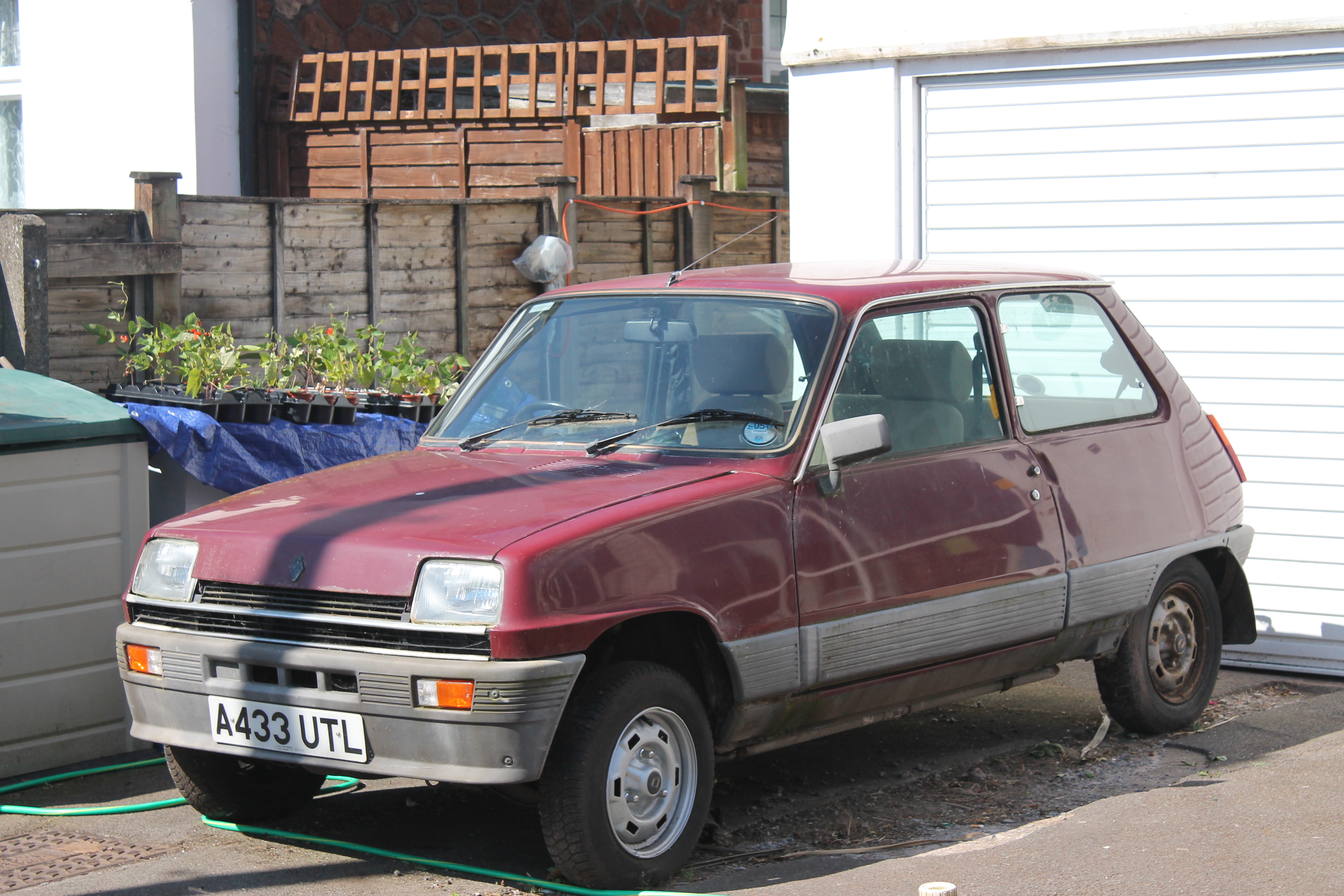
This is a small Renault hatchback that was made faster with a turbo. People like it because it’s fun and lively to drive, especially for a “normal” car.
This is a special, more driver-focused Porsche 968 variant. It’s the kind of car enthusiasts remember because it’s lighter and more “serious” than the regular version.
The Toyota MR2 is a small sports car where the engine sits closer to the middle of the car. The speaker is saying they already had one (a Mark II) and were excited to compare it to the Porsche.
Pop-up lights are headlights that hide in the car’s body and then pop out when you turn them on. They were common on older sports cars and help the front look sleeker.
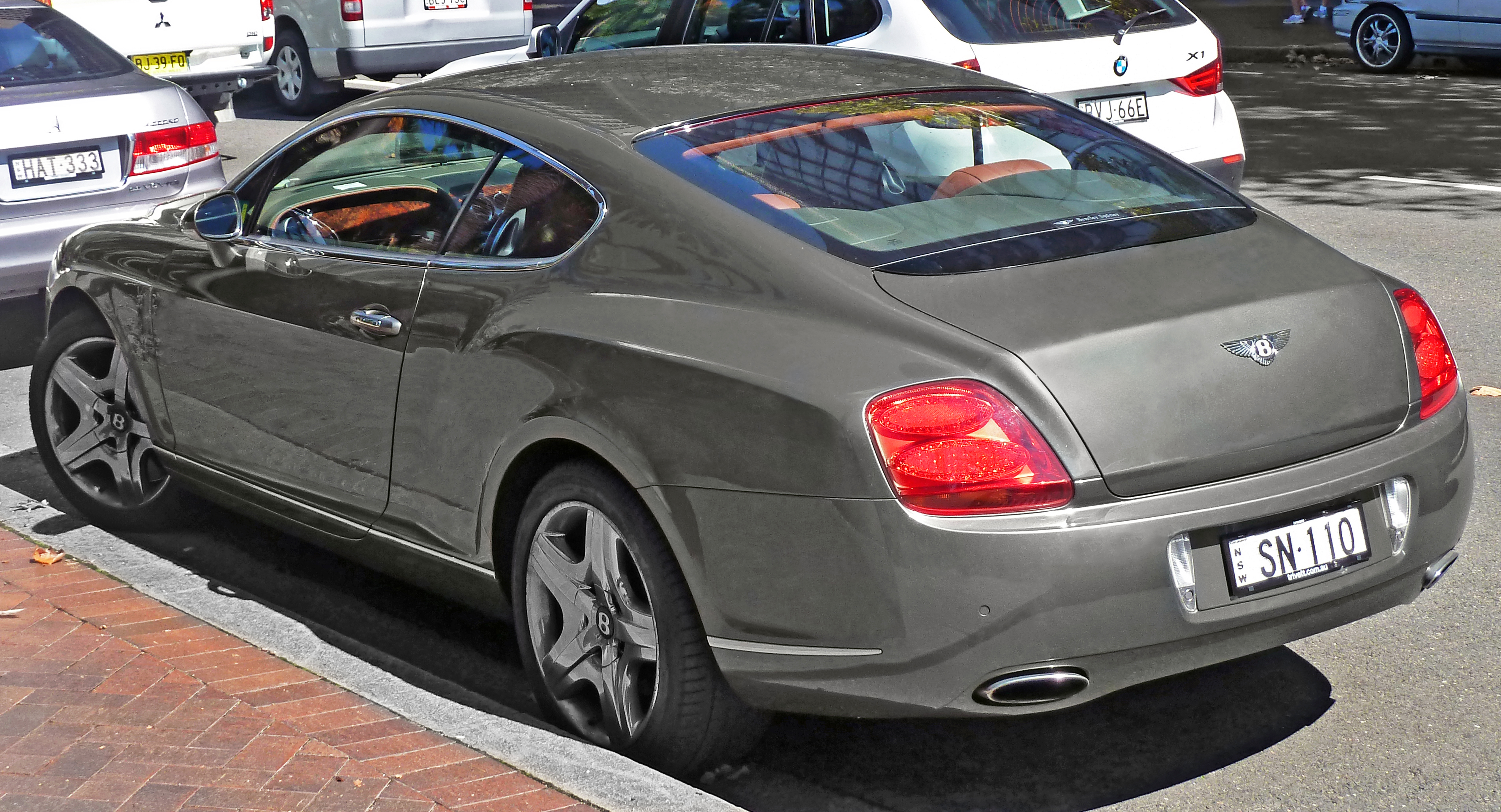
The Bentley Continental T is a fancy luxury grand tourer from the 1990s. The host is basically saying it looks amazing, but that owning it can feel frustrating or not-so-comfortable.
Seat runners are the rails/track system that allows a car seat to slide fore and aft. In this segment, the host mentions having seat runners done (and not done) as part of adjusting seating fit, which affects comfort and how the car feels when you live with it.
The Ferrari 456 is a 1990s Ferrari grand tourer—basically a fast, stylish luxury car. The host is saying it’s not just pretty, but also feels especially strong and well thought out.
Term
road rat
“Road rat” sounds like the name of a magazine section or publication the host is referencing. It’s not a car part or a technical term—more like a label for where the story appeared.
The BMW E39 M5 is a super-fast, performance-focused version of the BMW 5 Series. In this segment, the host says it was so good that it kept beating other cars in comparison tests for years.
The BMW 5 Series is a comfortable, mid-size luxury car. In the episode, the speaker talks about a high-performance version of the 5 Series (the E39 M5) that they really liked. It’s mentioned because it shows how the 5 Series can be more than just a normal family sedan.
A “group test” is when reviewers compare several cars at the same time, using the same kind of driving and measurements. The point is to find which car is best overall, not just which one feels good in isolation.
Independent rear suspension means the two rear wheels don’t have to move together, which can help the car ride and handle better. Harris is warning that on some cars, this system can suffer from corrosion or wear sooner than you’d hope.
He’s talking about the phone app that lets you control your car remotely. The story is basically a warning that technology can fail, and you might still get stuck outside your car.
This is the car talking to a phone app. The app can tell you what the car is doing (like locking/unlocking), and sometimes software problems can make it harder to get in or start the car.
A key fob is the little remote you use to lock and unlock your car. Some cars also need that same remote to start the engine, so if it’s not recognized, you can get in but the car won’t run.
Company
AA
The AA is a roadside help service in the UK. They can come out if you’re locked out and help you get access without wrecking the car.
Coat hangers are sometimes used in movies to bypass a car lock. The point here is that the helper got in without breaking the lock or damaging the car.
An immobilizer is an anti-theft system that prevents the engine from starting unless the correct key is recognized. That’s why the car can lock/unlock but still won’t start when the key’s authorization is lost.
In this context, “reset” means reprogramming/re-pairing the car’s immobilizer/key recognition system so the correct key can start the engine again. Dealers typically handle this with manufacturer software and procedures.
The Rolls-Royce Camargue is an older luxury car made by Rolls-Royce. It’s a grand tourer, meaning it was built for comfortable long-distance driving. The episode brings it up because it’s a notable, memorable Rolls-Royce model.
The Ferrari F12 Berlinetta is a high-performance Ferrari designed for fast driving and comfortable long trips. The episode mentions it because it was a memorable car to be in. It’s a modern Ferrari people recognize for its blend of speed and grand touring style.
A physical key is the normal metal key you put into the door or ignition. The host is saying that older cars behaved differently than newer cars that use electronics and keyless systems.
The Peugeot 306 XSI is an older Peugeot hatchback. The host mentions it because, back then, the car’s locking behavior was simpler, so it was easier to accidentally lock yourself out—and sometimes easier to get back in.
ECUs are the car’s computers that control different functions. The host is saying that older cars had fewer of these computers controlling the locking behavior, so it was more mechanical and less “smart.”
Term
cable that was to the battery
This describes an older, simpler electrical arrangement where a basic cable connection to the battery could drive or influence a system’s behavior. The host’s point is that, in that era, some functions weren’t governed by complex electronic modules, making the car’s lock behavior more predictable (and sometimes easier to work around).
Term
door frame went over the roof into the roof section
The host is talking about how the car’s body is shaped—how the door’s top section blends into the roof. That shape can change how easy it is to remove part of the frame without breaking the glass.
Term
lock male part
Inside a car door lock, there’s a part that sticks out and a matching part it grabs onto. If you can reach the sticking-out part, you may be able to release the lock and open the door.
A “jack” is a tool used to lift a car (or in this case, to pry at a door area). The host describes people trying to wedge a jack into the door gap to force the door open, which shows how improvised tools can be used when normal access is blocked.
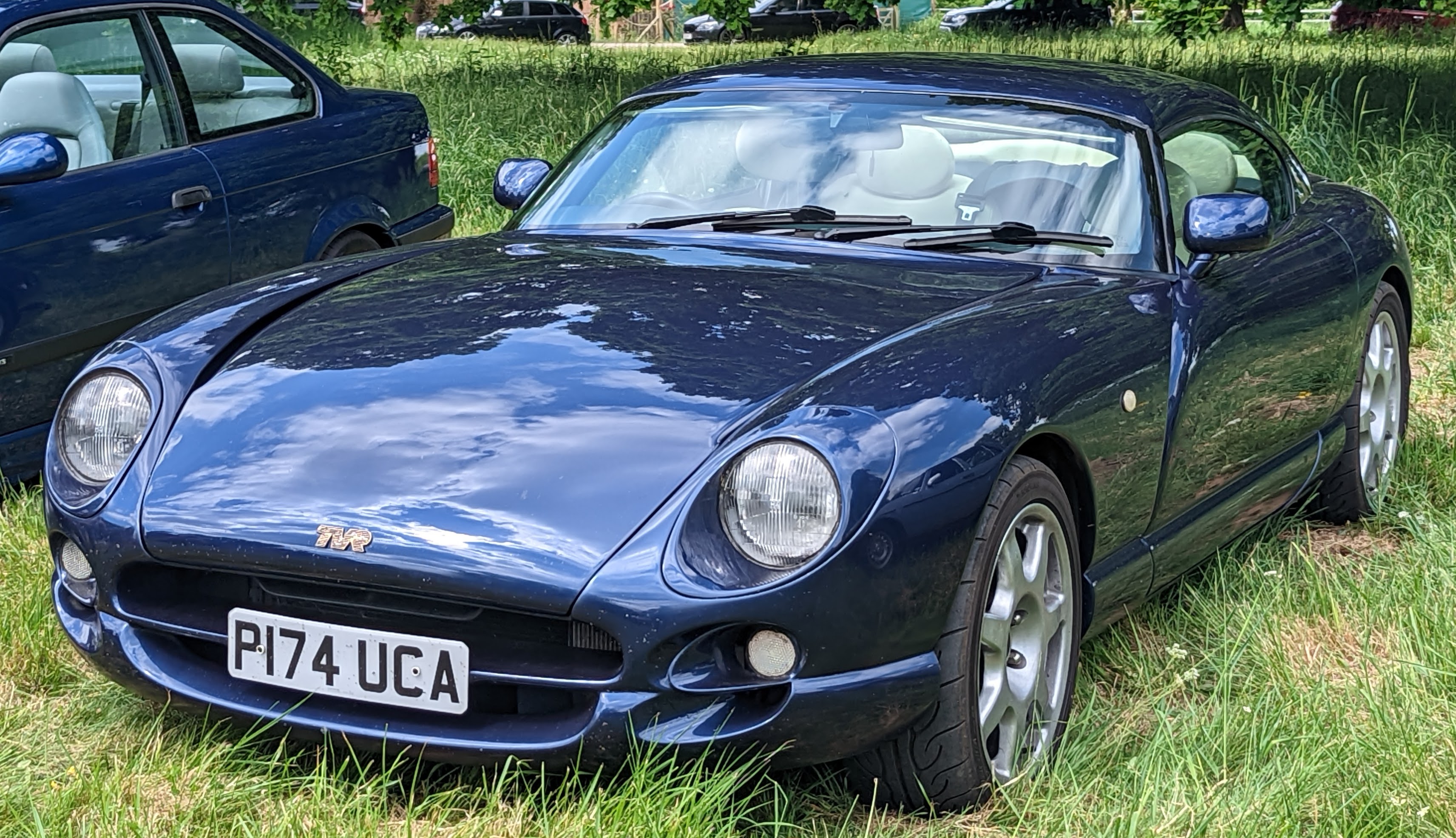
The TVR Cerbera is a British sports car. Here it’s mentioned because the door/locking situation can trap someone inside, which is scary and hard to fix quickly.
“Dead lock” means the doors are locked in a stronger way than usual. If you’re inside when it’s engaged, it can be much harder to open the door and get out.
They’re switching to a fun challenge: imagine designing a brand-new Ferrari from scratch. The rest of the episode will likely focus on what they’d change and why.
Car
electric Ferrari
He’s talking about a Ferrari that runs on electricity instead of gasoline. The big idea is that the car’s layout and design would have to change because the engine and energy storage are different.
Person
Luca Montesemble
The host mentions a specific designer, Luca Montesemble, and says he’s known for making cars look especially good. It’s part of the idea that you’d hire the right design talent first.
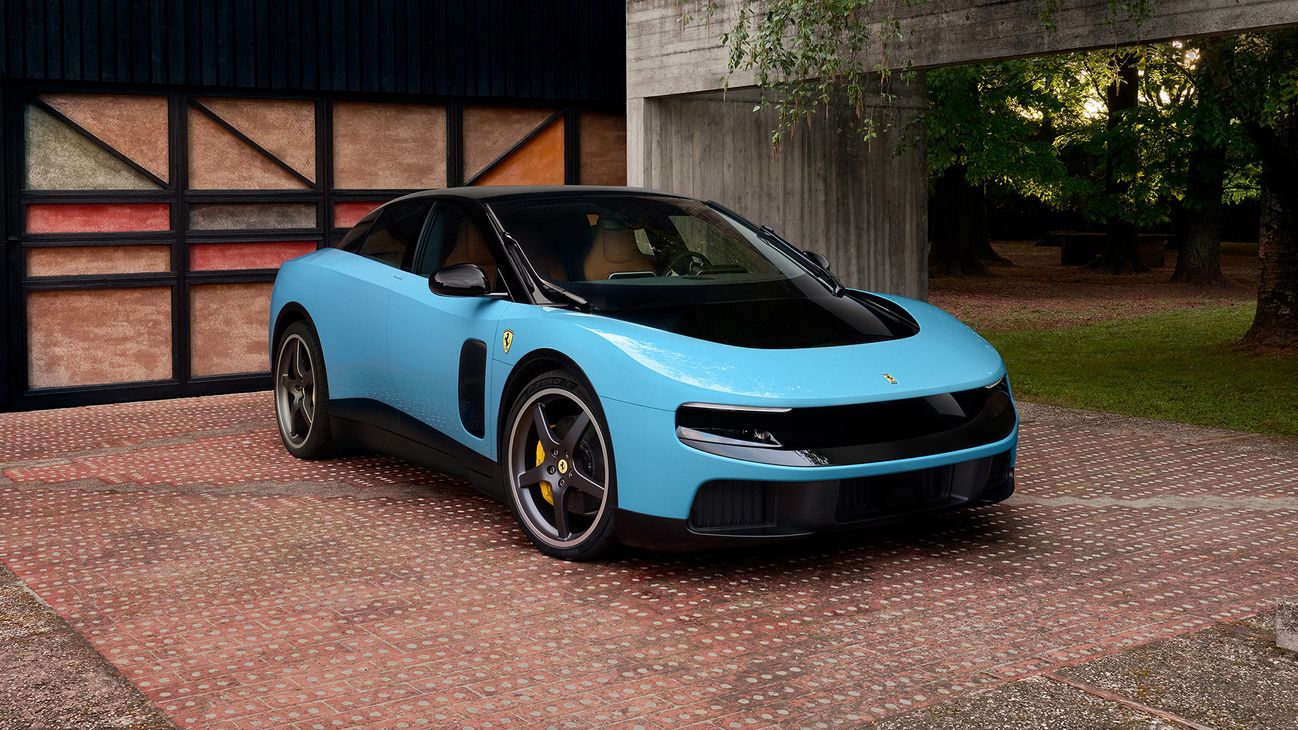
The Ferrari Luce is a Ferrari model that the podcast talks about around its launch. The speaker mentions planning and expected sales, which means it’s being discussed as a new product. The episode isn’t focused on driving details here—more on how Ferrari planned for it.
These are meetings where a company talks to investors about how the business is doing and what it expects next. The host is saying Ferrari would feel pressure to have answers quickly.
The Ferrari 296 is a modern Ferrari with a mid-engine layout and a V6 setup. Here, the idea is to redesign it—removing the turbo setup and giving it a Dino-inspired front end.
“Dino” is a Ferrari name used for certain classic sports cars, often tied to a V6 idea and a particular look. In this redesign fantasy, they’re borrowing that Dino vibe for the front and the engine concept.
“Turbos” are devices that help an engine make more power by forcing extra air into it. If you remove them, the engine usually feels different—often less punchy at the top end and more naturally aspirated in character.
“Normally aspirated” means the engine breathes naturally without a turbo or supercharger. The car’s throttle response and power delivery tend to feel more direct and less dependent on boost.
“Paddles” are the shift controls behind or on the steering wheel that let you change gears without using a stick. The idea here is to avoid that and make it feel more like a manual setup.
Term
intercooler pod
An intercooler is a part on many turbo engines that cools the air before it goes into the engine. In this context, “intercooler pod” is the name of a podcast the hosts are talking about.
“Product design” is the broader discipline of designing consumer goods and engineered objects for usability, manufacturing, and user experience. The speaker contrasts it with “car design,” arguing that cars are about creating emotion, not just solving functional product-design problems.
“Car design” here means designing a car to create a feeling—like excitement or desire—not just making it work. The host is arguing that cars are judged emotionally as much as they are technically.
The McLaren MP4-12C is a supercar made by McLaren. It’s built for very fast driving and strong handling. In the episode, it’s mentioned in a comparison where the speaker is talking about how the car feels and looks.
The Ferrari 458 is a mid-engine supercar from Ferrari. The hosts are using it as an example of how design details can make a car feel tense and fast, even just by looking at it.
“Aero guys” means the people who work on how air flows around the car. Their job is to help the car stick to the road and cut wind resistance by shaping the body and airflow paths.
“Tightest possible package” means fitting all the car’s important parts into the space as efficiently as possible. Doing that well helps the car handle better and keeps everything working properly without wasting room.
Concept
five seat tech bro market
They’re talking about a specific kind of buyer: someone who wants a car that can carry five people but feels modern and tech-focused. The idea is that you design the car around that customer first, then work backward to the technical choices.
An electric car runs on electricity stored in a battery, not gasoline. Designing one usually means rearranging parts and planning for battery space and cooling.
Internal combustion means the car makes power by burning fuel in an engine. The speaker is saying they’d design a Ferrari that still uses a gas engine rather than going fully electric.
The Ferrari 430 is a Ferrari supercar with a mid-mounted engine. The speaker likes the look and proportions of the 430, especially in the convertible (“spider”) form, and compares it to other Ferraris.
A manual gearbox is when you choose the gears yourself using a clutch and a gear stick. The speaker is saying they’d design a Ferrari around that kind of driver involvement.
“Hybrids” are cars that use both a gas engine and an electric motor. The speaker is saying they’d rather not include that in the Ferrari concept they’re talking about.
Term
VA manual
They’re talking about wanting a traditional manual-style driving feel. The point is: no hybrid and no paddle shifters—just a more direct, old-school gearbox experience.
Paddle shifters are the little buttons on the steering wheel that change gears. They’re saying they’d rather not have that and would prefer a more traditional setup.
The Ferrari 250 LM is an old Ferrari sports car from the 1960s. It’s known for its racing background and for looking very distinctive. The episode mentions how good it looks from the side and how it sits on the road.
They’re talking about a new Ferrari model name they can’t quite recall. It sounds like they’re mixing up the Portofino and Roma names while discussing what’s coming out this week.
The Aston Martin DB5 is a classic luxury sports car made in the 1960s. It’s known for its elegant styling and for being a famous “dream car” from that era. The podcast brings it up as part of the classic Aston Martin lineup people remember.
A carburetor is an older way of feeding fuel into the engine. The point here is that older cars with carburetors can be fussier to start and drive than modern cars.
The Honda NSX is a famous supercar with the engine placed near the middle of the car. The host brings it up because Senna’s driving—especially heel-and-toe—looked amazing in it.
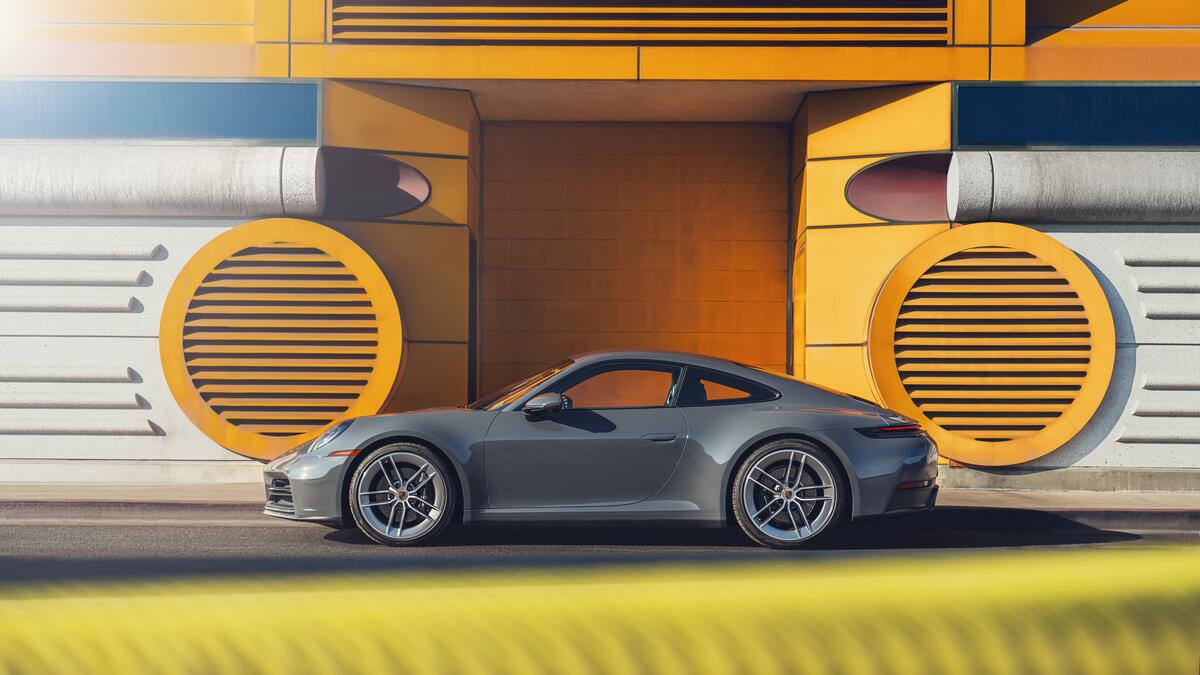
The Porsche 911 GT3 is a more track-focused version of the 911. It’s the kind of car that feels especially impressive when someone really knows how to drive.
The Ferrari Challenge Stradale is a Ferrari that’s meant to feel more like a race car. In this conversation, it’s being compared to another classic Porsche based on how “pure” the driving experience is.
The Ferrari 458 Speciale is a more hardcore, track-focused version of the Ferrari 458. Here, the hosts use it as an example of how the market price for special Ferraris can change a lot as time goes on.
Heel-and-toe is a driving trick for manual cars when you downshift. You brake and quickly add a little throttle at the same time so the engine speed matches the lower gear, making the shift feel smooth.
Double-declutch is a manual-car technique used to make downshifts smoother. You go to neutral, rev the engine briefly to match speeds, then clutch again and put it into the lower gear.
The Jaguar D-type is a famous old Jaguar race car from the 1950s. The host brings it up because older race cars could require more careful downshifting skills like double-declutching to drive smoothly.
Rev-matching means you quickly adjust the engine speed so it lines up with the lower gear you’re selecting. It helps the car shift down smoothly instead of feeling rough.
Synchromesh is a feature in many manual gearboxes that helps the gears line up so they go together more easily. Because of it, you usually don’t have to do as much complicated shifting technique as in older gearboxes.
Formula 4 is a beginner-to-intermediate level of professional race car series. It’s usually for younger drivers coming straight from karting, and the cars are meant to be similar so driver skill matters most.
The Ferrari 360 is a classic Ferrari from the early 2000s with a V8 engine. Here it’s being used as an example of how much certain cars are worth in collector/auction listings.
A 993 Turbo is a Porsche 911 Turbo from the 993 generation. In this conversation, it’s used as an example of a classic Porsche that hasn’t exploded in price as much as some other cars.
A “barometer car” is a car people watch because its price changes seem to reflect what’s happening in the whole market. If it gets more expensive (or cheaper), it’s seen as a clue about collector demand overall.
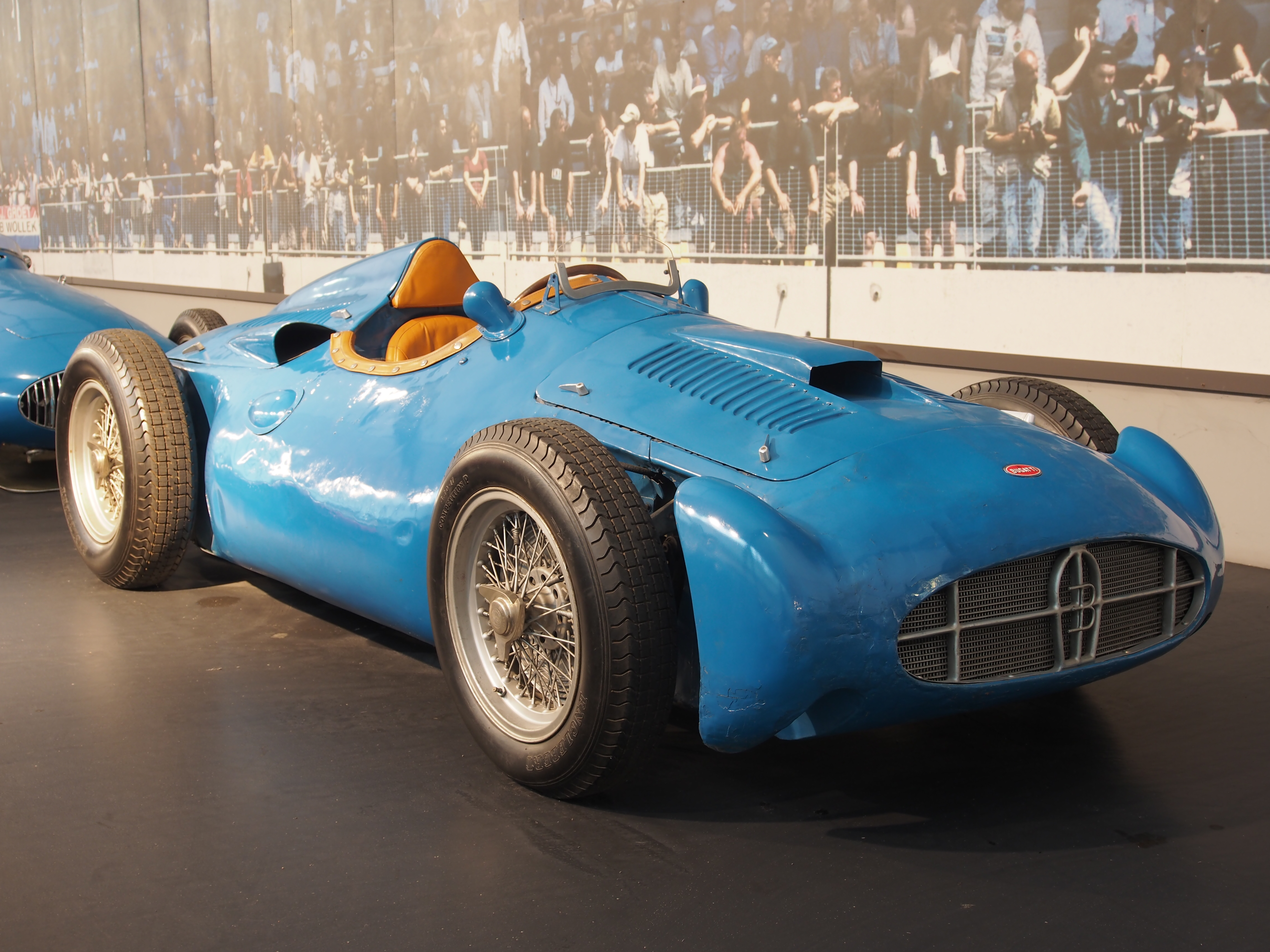
The Bugatti Type 35 is a very famous old racing car. The episode mentions it because people consider it extremely valuable today. It’s remembered for its racing legacy and for being a prized collector car.
The Bugatti Type 251 is an old Bugatti car model. The episode mentions it while talking about how some Bugattis became extremely valuable. It’s part of the same general family of famous Bugatti racing cars.
The Ferrari F50 is a very rare, extremely fast supercar made by Ferrari. It was built in limited numbers, so it’s considered special and expensive. The episode brings it up because it’s one of the cars people chase for status and performance.
Paddle shift means you change gears using buttons or levers on the steering wheel, instead of a stick. Here, it’s mentioned as part of why the host thinks the car isn’t worth the money.
A gearbox is what changes gears so the engine can stay in the right rev range. The host is criticizing the gearbox quality, saying it’s a big part of why he doesn’t understand the car’s value.
This is a BMW 335d, which is a diesel 3 Series. The host is saying that in a straight-line race, the BMW’s diesel torque can beat the Ferrari—so the Ferrari’s reputation doesn’t automatically mean it’s faster.
The Ferrari 360 CS is a more track-oriented version of the Ferrari 360. The hosts are basically saying that people might start with one Ferrari, then learn what they really like after living with it for a while.
The Jaguar E-Type is one of the most famous classic sports cars ever made. The point here is about collector-car prices: the host says you can now buy one for far less than it used to cost.
“Poster cars” are the cars people grow up dreaming about—like the ones you’d see on posters or in magazines. The host is saying each generation has its own dream car, and that changes what collectors want and how much those cars cost.
The Jaguar XK120 is an old-school British sports car that became a legend. People often had it as a “dream car” growing up because it looked great and was considered fast for its time.
The Indy 500 is a huge American race held at Indianapolis. It’s famous for being exciting to watch, with lots of driver communication and strategy.
LIVE
Hello, welcome to the Card Podcast with Chris Harris and his friends.
I'm just cleaning what I call my money pennies.
This is episode number 19.
I've got no fractoid for 1990 other than the fact that there was a World Cup then and we
know it was the greatest one ever because it was organised by Luca Montesemmela.
Yes, there you go.
1990 also, Senna did one of the great physical contact manoeuvres in the history of Formula
1 at a mere 155 miles an hour turn one in Suzuka.
Marty Walker and James Hunt slightly preceded it, but that didn't have me ready for the
multiple angles that we saw that accident at Bernie's beautiful little Aladdin's Cave.
And I have to say, massive Senna fan though I am, I would place that 100
Senna's shoulders.
I'm just hoping for episode 95 so we don't have to talk about fucking Senna again.
Bloody hell.
Here we go.
Too soon?
Oh my God, Neil, don't go to Brazil because you're dead.
You are actually dead.
This is an international bugger.
Did you hear that?
My fellow Brazillera?
Did you hear what he said?
I think we should also acknowledge the fact that the person that you're talking about
that took the impact that day apparently was robbed in a rather horrible incident.
So we send our best style out to Prost, who I gather is recovering, who is one of our
heroes.
He is, totally.
So let's move on.
This is a very good one.
This is.
You're a traffic cop for the day and I'm going to add, what do you do?
So traffic cop for a day, what do you do?
I'm going to hand this one to Chris Cooper because I think he is the most natural traffic
cop type of the four of us.
Because I can imagine he would, he'll never be thinking about placing a socks out, ironing
his trousers, that kind of thing.
So let's go to Chris, I'm a policeman, Cooper.
You've got to the heart of how I thought about this question.
And when we were little, I'm not sure you can say this these days, and there was a television
program on a Saturday evening that you could write into and ask for, fixed it for me.
This is the kind of question that I'd have written in to say, could you fix it for me,
please, to be in a police car with a policeman person, being a traffic cop for the day?
Because how much fun would that be?
I thought you were going to say, can I sit on your lap?
Is that a gear lever?
Yeah, is that a pencil?
I don't know how we've descended so quickly.
It's taken one minute.
This is my suggestion as a question, because it did get to the heart of, there is definitely
part of me that I know, despite all of my best instincts, would be looking everywhere
and saying, oh, 72, go on, get him, get him, always, he's not on the right line.
And I know there's the pedant in me, the OCD, whatever it is, the sort of that slightly
on the spectrum, but they're not agreeing to the rules.
Slightly.
Say again?
You said slightly.
Slightly, OK, completely, completely, totally without any reservation or compromise or mitigation.
We all might be on that little line.
It's just, there's part of you to think, oh, I know how hard it is, you know, when there's
somebody, but there's another part of me that even if people were being slightly naughty,
you know, doing 80 and a 70 miles an hour, if they were driving well, you kind of want
to acknowledge that.
I mean, don't do this at home, everybody, but there's part of me if I was doing that.
And I like to think that this still might be the case.
If you drove really, really well and you exhibited, you know, patience and consideration of other
road users, but to quote Chris, your dear old mum, was going well, you still want to say,
don't do it again, but just let me say, I thought you were going well there.
You just want to convey to another road user, because if we were traffic cops today, we
know we'd look about how people drive, driven, rather than just are they speeding types
and locking crims and up walls kind of things.
So I think I'd be torn between, at the start of the day, I think I probably would be hyper
vigilant and hyper sort of, oh, I've got to get all of them, oh, crikey, there's too many.
I need more sirens, of those big bullhorn things on the Queen's mull's arm,
stop all of them at the same time.
Could I stop three of them at the same time, like the French used to do to us years ago?
But I think in the end of the day, I'd end up being a bit more laissez-faire
and wanting to at least acknowledge to the high quality road user, you've been going well.
Maybe pull it back a bit, but you've been going well.
I like the idea of spreading a bit of love and positivity, rather than just being a figure
that delivers bad news. Manish, what would you do with your day as a police traffic officer?
Well, I've shared this with you by text. I would want to be
Nigel Mansel in 1992 on the Isle of Man as the traffic officer, one day after I won the World
Championship, because I could do no wrong. I think it would just be the most glorious day.
Excuse me, but you were doing 70 and a half miles an hour. Do you know who I am?
The best day of my life. There was that big moment, wasn't there, when was it he who was
pulled up or was it Senna that was pulled up? The cop just basically gave the wrong name.
It was either Senna and said to him, who do you think you are, Nigel Mansel?
He said, no, I'm crossed.
Cheap joke. Very cheap joke. Or it was Mansel who got pulled up, which I fancy was probably
whether who do you think you are at Senna? I could see the explosion. I could really see
that explosion, but I think Nigel would probably have been actually exactly as Mr Cooper says.
I think he probably would pull you up, and then I think he'd probably be quite lenient,
but there'd be a very small sermon about his public, and I would love to be that.
I would just love to be that policeman. What I'm telling my public is, don't drive so fast,
but I like your car. Boom. Off you go. Don't lift it up and again. I can't do Birmingham,
obviously, but Nigel Mansel. It was my Welsh Indian Birmingham accent.
But the point is, I think he would pull up everyone because I think that would vindicate
his existence and his job. I don't think he'd give many tickets because I think he'd want
you to like him afterwards, and I think that would be the essence of my day as Mansel in 92.
I think you're quite right. I think he might also struggle to resist telling people how
difficult it had been to catch them, and did they not realise how much effort it took to drive
on Escort 1.3 to catch their Jaguar, and that they talk about the understeer, the oversteer.
They need to sort of half think the team. They need to be angry, and then at the end of it,
he's saying, oh, I've forgotten what to stop me for now. Neil Clifford.
I really struggled with this because I wouldn't like to be a police person,
mainly because I feel a bit, okay, if you're going to be a police person and help people,
and people broken down on the side of the road, or there's been a little accident,
it needs to help. Fair enough. Amazing. 99.9% of police people are like that. They're there to help
us, the public. But if I think about that man in his van, parked on the bridge with his little
camera poking out of the transit, or parked around the corner at the bottom of a hill that you often
see, I feel really sorry for them, because they cannot, surely, for the life of God,
think that that is an enjoyable thing to do at work. Because, okay, I'm sure there's a lot of
people that would think, and maybe I'm being politically incorrect here, that I'm doing it
for the greater good, because I'm doing it to stop these people going at 34 in a 30, or 76 in a 70,
because I'm saving their lives. Fair enough. I'm sure the statistics say that. But the revenue
driving element of it, which let's be a bit of a cynic just for one moment, may well be quite
significant part of the fact that we get fines and points and this sort of pressure, the pressure
that you have as a driver of the motor car in this country, particularly when, and I'm veering into
dangerous territory here, but you've paid 60% of your petro's tax, you've paid your VAT on your
Mars bar, you've paid your NI, income tax, you've paid your inheritance tax,
you've paid all your other bloody taxes, you've paid the VAT on the car that you've bought,
you've paid for your road tax, and you're going along at 76, and a man in a van takes a picture
of you and sends you a picture, or is not even a man in a van now, it's, you know, doesn't need a
man in a van. A robot. It's a robot. And the hundreds of thousands of these fines that gets
sent to people probably every single day, I'd be very depressed if I was a policeman in that,
because human, humans are decent, and he cannot feel a positive job, surely, that you're parked
around the corner at the bottom of the bend in your van behind a bush. Well, there'd be some
people who, society, thank you for doing what I would do of my conclusion of that little random
speech, is I would take the film out of the camera, and I would just do my job, but then
know that no one's actually going to get that hundred quid in three points, because you know
what, they're probably not out to kill people. They're probably just trying to go about their
daily lives, so I would help them by not putting the film in. Do you think, I mean, I quite like
that, do you think, but there are some that you would want society, somebody doing 150
on a motorway is probably not conducive to us all enjoying the car for much longer.
I wonder though, could you, because I like the direction you've taken that in,
you think you could point it in the sky and see if you could sap a speeding aeroplane in the sky,
or a pigeon flying past? I'd maybe just put the film in the wrong way, or you know what,
I think there's enough pressure on the motorist, that of course we have to have rules, I get that,
but maybe the leniency needs to be a bit more, maybe there's better education, more ways of
stopping, but it's a revenue driver. I think the Americans have it. You get done, for me,
the fines are fine, they want to raise money fine, but in this country, very quickly, you can lose
your license, which means you can't work. In America, it takes a lot to actually get banned,
you'll accrue some points, but the point leniency is there, you can get 20 points or
something in this country, you could pass the same speed camera three times and lose your license,
but not going that far over, and that can have implications for you, your family and your children,
that I don't think affect the crime, and that's the bit that I find very difficult. I think you
could ramp the fines up, personally I'd rather pay the money, it's the threat to the livelihood that
I think is terrible. So what will I do, I've thought about this a bit, so it's quite, I've got two
answers, I'll put my Koopa hat on. My first answer is this, the Jocular one, is I think all of us
have a vaguely middle class view of offenses we think matter that aren't enforced,
which is really another way of saying, when the police stop you, well couldn't you catch a real
criminal, which obviously is the worst thing you can ever say to a police officer, because it's
totally disrespectful and will land you in even more shit than you're already in. But I think,
for example, I would probably make sure that I had a firearms unit with me, and I'd just go up and
down the M4, and anyone that was in the middle lane that didn't need to be there, I'd probably
just shoot at them. So I think that, again, I'm being frivolous here, but I think there's a whole
load of sort of offenses that don't come under the speeding aspect or can't be prosecuted in such a
simplistic punitive way as a camera and a fine. You know, what do we do about, if I see someone
that throws litter out the window of a car, I want to follow them back to their house, I feel very
strongly about it. So I think I'd make a list of those crimes that society seems to have forgiven,
you know, driving to people that drive down a road that's a national speed limit of 40 and
then do 40 through the next village, they should get a much bigger fine than someone that does
58 and 50. But there's no way of catching them at the moment, it seems. They do, they don't seem
I want to play a game, I think to point towards what Neil said, if your job is a bit tedious,
the only way to get around it is to play games yourself, create games. And the game I would play,
which I think none of us could resist, is just using your antennae to go, I think that car looks
a bit dodge, I'm going to stop it. And you'll know, we all spot them. And I think please do as well.
But the idea of just getting it right, you know, you can imagine just randomly stopping what looks
like a thrifty, higher car rental car that's next three on the M4 and finding it's got 100 grams
of cocaine at the boot or whatever, would be equally satisfying because you can go very valid,
isn't it? That's very valid. Using spidey sensors would be enjoyable. The side of it,
I think we have to acknowledge, I've met lots of traffic officers in my time doing my job,
have huge respect for them actually. They, they have, and are regularly at the scene of incidents
that are unrepeatable and have scarred them deeply. And I wouldn't want any of them listening to this
to think that we don't accept that and understand it. So that the frivolous side to this is that
what we do for a day, but actually none of us could do your job, none of us probably could
deal with the trauma shit that you've seen. So, and I think that's where I do diverge slightly
from what Neil said. I think a lot of people that do, that do view the speed cameras as a way of
slowing people down and they, and they view the incidents they see a lot of the time as a result
of excessive speed. And I think there is a connection there. My problem is the revenue
earning bit is a bit silly. It's just, it's gone over the top and the, and the points that are
applied. I don't think they fit the crime. And also there's another entire discussion for maybe
for another podcast. If you're law abiding and you pay your tax and you exist, you're on the list
and they can get you. But most people that seem to behave very poorly aren't on the list. They're
not registered keepers. They're not insured. What do you do with those drivers? And I mean, until
we've all got, until we've all got a chip and pin in our forehead, they're running around. They're
the ones that behave the worst, but no speed cameras ever get them because they don't exist.
Do you know the lovely people that I would never do this, of course, because it's probably legal.
Therefore, I would never do such a thing like this ever. But the other people that do it,
where they warn you with flashing lights, if there is a man in a van behind a bush going the other
way, is that, is that illegal to do that thing that I've never done, but other people do it?
It's called converting the course of justice. Because it's essentially obstructing the lawful
activity of a member of the constabulary from apprehending an alleged offender.
Because he's going to slow down by the time he gets to the camera.
Well, only because you've tipped. When does it stop him speeding?
Well, this is where the intellectual debate clashes with the legal definition.
Because I don't think it's a matter of contention to say that the courts view it as
perverting the course of justice. Whereas the pragmatists might say,
They have prosecuted it as well.
Yeah. And the pragmatists might say, well, hang on a minute.
Haven't I just done society a favor? Do you think, do we think that speed limits are about right?
No. They should be doing so on the motorway.
You're doing so.
I don't think they make a lot of sense. I'm still horrified at how fast some people drive in town.
And yet, if you pointed out to them how long it would take to stop,
they still wouldn't understand it. And yet, on the motorway,
it's difficult to say, isn't it? I mean, in an ideal world,
if you all had a chip and pin in your forehead, if we were in Blade Runner,
and it was 50 years from now, you'd be assessed on how much of a fuckwit you were.
And if you showed some basic motor skills, you'd be allowed to do 120.
If you were like most of my mates, you'd be doing 65, and you'd have a napion.
So it's difficult, really.
On motorway, statistically, the safest place is to speed up the light.
So I'm sort of with you on that. I think that you could have intelligent motorways that rather
than sit down and say, you don't have a lay-by lane, you could have a very smart motorway.
It just looks at how scant or dense the traffic is. And when it's 4 in the morning,
when there's nothing there, why wouldn't the signs come up, saying 90?
Because cars are so much. I'm just trying to remember, you know, in the 80s,
there weren't actually that many Ford Escorts that would do 110 miles.
This was 1965, if I remember, as a temporary speed.
Correct. Initially temporary.
Exactly. So cars are very quick now, very, very safe.
60 years ago.
You get a lot older than 10 miles an hour. The steering barely moves.
I would have thought, actually, you probably could cleverly control the speed on motorways,
depending on the density of traffic, time of day, blah, blah, blah.
But I completely agree. I think in town, you could really,
so really, really smart things. I think they probably really do save lives.
And sadly, I have actually been at the other end of those policemen who pick people up and
bring them into our hospitals. You know, I've done enough casualty, and then,
you know, forget about casual gets tier one, but tier two,
properly on an orthopedic ward, and you've got pelvic injuries,
smashed arms, smashed legs, smashed necks. It's just head injuries in IT.
It's the worst thing that you can imagine. But they really, you know,
I'm trying to look back at it. The vast majority of those, in my experience,
were just sort of in town, you know, someone doing 35, and just a, you know,
a child stepping out or a person stepping out and being hit because they haven't been seen.
That reaction time wasn't there. I don't think there are that many massive
pylots or motorways, are there? I mean, there are some, but I think there are that many.
I'd love to know the stats.
I think we're one of the slowest, aren't we? I'm guessing that a little bit,
but certainly France is a little higher than ours.
In terms of the limit here, there was, I think before COVID, there was,
it felt like there was a movement to have the speed limit raised on UK motorways from 17 to 80,
but that moment seems to have passed. And if anything, for lots of really frustrating reasons
that may be pressure in the other way for environmental or other...
Oh, the current bunch will do something dramatic in the next couple of years. You watch.
They will. They will. And then we'll have to move away. Right.
Yeah. Next one. Best car of the 1990s, brackets, time for Guru.
So let's... Do you not get that reference?
Yeah, I thought so.
Yeah, yeah.
So I'm going to go first to Chris Cooper, I think, on this one. Best car of the 1990s.
I have... I suggested this is a question, but I've had absolutely zero time to think about it.
And actually, when you stop and think about it, you think, it's bloody hard, actually.
It's really hard, because the 90s were really good, and the 2000s were really good.
Give us one. I tell you what, the greatest car...
Is it the greatest car? The one you thought? thought it's not quite attainable?
1990s is around a decade when I first had a decent car, like a more modern car.
My Renault 5 GT Turbo, which is three years old when I bought it, in 1990.
But the one I keep coming back to, because inexplicably, a Porsche dealer allowed me to
take one out on a test drive from a dealership by myself, was a 968 Club Sport.
And it was the Porsche dealer that used to be on the outskirts of Maidstone in Kent,
where there were quite a lot of quite big, complex junctions, where you, let's just say,
had a bit of space to make the car move about a bit. I remember taking... I had my MR2,
my Mark II MR2, my second company car. And I remember being as excited as possible to be,
and I still look at them now. They're kind of most of them a bit leggy now, but there's a time
until quite recently where that yellow 968 Club Sport with the body-coloured seatbacks
and memories of Jonathan Palmer driving one in auto car, motor magazine, sideways,
backing into a corner somewhere. It might not be the best, it might not be ever the greatest,
but the one I kind of always have aspired to in the 90s, because it was the... I can't really
afford it, but I can just about get away with persuading the dealer that I might be.
Bloody brilliant pop-up lights. Great pop-up lights. Also, I love the fact that you've just said it
might not be the best, and the question was, what's the best car of the 90s? Yeah, and he wrote the
question. Can you imagine working for him? Christ. Right, Neil Clifford, let's go. We are hiring.
I read this as best-looking car of the 90s. I mean, I was miles closer than that.
This is one floor over the cuckoo's nest with fucking cars, isn't it? Yeah, it is, is.
I'm MacMurphy. Yeah. I'm looking nurse Ratchett's over there kicking shit out of someone.
Bentley Continental T is the best-looking car of the 90s, and I'm just annoyed that it's been
designed only for Scottish people. No, no, no, no, no. P&A would do seat runners. You'd have been
fine. They do. I've done all that. I didn't do the seat runners in your car. I did it on a cheap way
with Graham, my local mechanic. And I just, you know, it's desperately frustrating because
when I haven't got one, I want one. When I've got one, I don't know why. I've got it because it
don't feel comfortable. It's like a constant, like, trapping fucking heaven and hell together.
But I think best-looking car of the 90s, for me, is the Bentley Continental T. There's not a shit
angle to that car. Right, OK. So, what's the Scottish bit? What's
Short people. Short. So, Manage, how are you going to answer this question?
You're fake Scottish. Yeah, that's right. Yeah, I make it up all the time.
How are you going to answer this question? I'm just waiting for them to shut up.
I Ferrari 456 and then the M in 1998. For me, most beautiful, but also the most potent,
just clever, just everything about them is just... So, you're talking about yourself or your car here?
I'm talking about my car here, cheeky. But I must admit that Conti is a rather wonderful car and
that bizarre trap you describe between heaven and hell, who would have thought that Neil Clifford
would describe Donald Trump's escalation dilemma so goddamn well using a car? I agree with you.
It must be a big thing for you. I love it, but when I own it, I don't love it. But when I don't own
it, I love it. That's a separate podcast chat there because those cars exist. Oh, they do.
A Lancia intergrali for me is exactly the same. Genius. Genius. Yeah. So, I weirdly sort of answered
this in a magazine. So, this is the road rat. This is the last issue. Check that out for an opening
shot. Look at that. Yeah. Wow. I answered. I rhetorically recounted the fact that I'm often
asked what's the best car you've ever driven or what's your favourite car, which is a bit simplistic.
What they should ask is what's the greatest car you've ever driven. And the greatest car I've ever
driven is probably the E39 M5 because when it arrived, I'd never... You have to put it in context.
I'd never driven anything like it. And I don't think I've ever driven a car that was as superior to
the opposition as that was. It made everything else look a bit silly. I also, in this... By the way,
this is still on sale. Yeah, I have to say it's pretty sexy. This... The E39 M5, and we've discussed
this before, was one of those cars that for its entire life, I don't think ever lost
one of those group tests. I think when it arrived, it demolished the opposition. And when it...
When they stopped making an O2, it was still winning group tests. It was invincible. It was.
There's very few cars like that. But does that mean it was the best? No. I think I'm a bit more
lucrative on this. I think for a car to be the best, it has to have been enjoyed by more people.
It needs to be more of a car for the people. And easily, the best car I drove in the 1990s was full
focus because it just came along and just flattered the opposition. It was so comprehensive. I can't
remember. It's a bit like when we first saw Boris Becker. When was that? 85-86. It turned up and he was...
It looked like he was playing a different game to all the others. And I think that's what the
focus was. It just came along. It wasn't a better hatchback. It was just a different type of car
altogether. It offered ordinary folk a window into dynamic accidents they never, ever had before.
And that was a real treat. I maintain that. And I'll often say that on this podcast. And you
don't find very good ones anymore because actually the independent rear suspension
sort of rotted quite quickly. But when it was new, my lord, was it good? Yeah.
The next one... God, they're good. The next one. Locked out of your own car. Chris Cooper, over to you.
So on Friday, I had lunch with a dear friend and his wife and some friends
who told me a story about being locked out of his car, which I thought I'd share as a little
parable, little consumer advice, about what can go wrong with the modern car and the application
thingy-bob on your phone. So this chat, we're calling Peter, which might not be his real name.
So he said, I was sat at the kitchen table on a Sunday morning. I noticed that the app,
there's an app notification from his car saying that his car was unlocked. So he thought
I'll just lock it. So he pressed the button on here to say lock my car. And he sat down and
thought, oh, shit. I hope my key isn't in the car. Well, that can't have happened. It can't have locked
itself with the key in the car. He went looking for his key, couldn't find it, went out to the car,
bugger me, there it is, on the little pocket between the seats. There's his key. He's on
home. So he phones, let's just say, we won't name the manufacturer, but let's just call it Land Rover.
So he calls the manufacturer for help and said, look, can you fix the app? Can you hack the app
to open it so I can get in? And he said, actually, no, we can't. But they had an even better idea.
They sent our favorite yellow vans, the AA. Yes. Actually, it was yesterday. Yesterday,
yesterday, I met the man at the AA who runs all of the yellow vans, Dean. It's a lovely chat.
I didn't tell him. I was going to tell the story. So the AA came out. Very helpful AA man is yellow
van to this man's ways of holding Cornwall. Within a few minutes, I won't say how he got
access to the car without breaking anything or coat hangers or hammer or anything else,
half a tennis ball smashed against the door lock. Remember that one? Yeah. Yeah, that one didn't do
any of that. And he said, ah, there's a problem. Because I had to do this, the key will have been
wiped by the car. It will open it will lock the car, but you can't start it. Oh, fuck. So he said,
what do I do? He said, well, I can either take your car on a truck to the local dealer
and they'll reset it. But then your spare key at home won't work.
So all you can do is go home and get your spare key. So his mate who was with him drove 300 miles
and then 300 miles back with the spare key. So at least he could drive his car.
He said, but you're still going to have to take the car and both the keys to the local dealer
and get the whole thing reset. That'll cost you like a thousand pounds or something.
So Pete's very, very clever brother, who's a technician in the automotive engineering industry
said, aha, there's a clever hack. I've heard, he said, that if you take the key that does work
and the now wiped key and just put them both in the car at the same time
and drive around the wiggly lanes of Cornwall, picking up some clotted cream,
maybe having a little bit of a look at the seaside view.
After a while, by magic, the wiped key unwipes itself and they both work.
So he said, I'll try that. So we went around the wiggly lanes of Cornwall, got some clotted cream,
got some Corev Lager, a bit of tribute.
Bugger me, both keys are now working. Wow. Wow. So there we go. So trust the man from the AA
and your automotive engineering brother. That's good. I mean, just want a key and a bloody ignition
barrel, don't you anyhow? Manish, I can't believe you've ever locked yourself out of a car. If you
have statistically, statistically, it's disappointing. I haven't locked myself out of a car, but Lola did
go through a little phase where when you put the key into, first of all, the central locking,
forget it, didn't work for ages, but you went through a phase where when you went to lock her,
she would unlock immediately. You just couldn't lock her. It was a complete nightmare. They had to
take the door panel off from play. Turned out there was an actual physical obstruction, but
have I locked myself out of a car? I've owned two cars. I've never locked myself out of that. I've
never left the key on the bonnet, on the roof, never left a coffee on the roof and driven off.
Just not wired that way, I'm afraid.
Neil Clifford. Yes. I think I've done this a few times. I think I might have told my
Rolls Royce Camargue story before, so I'm now going to tell you my other story.
It happened quite recently actually now because I was thinking, shit, I haven't got a story here,
but now I've realized I have. I was playing tennis in hybrid, which I do most mornings and
a bit too much information is. Anyway, this is an authentic podcast where we tell the truth.
I was in a Ferrari F12 and with those red Ferrari keys, you've obviously got the unlock
lock button, and then you've got the truth button. I arrived very early, too early, and thought,
oh, I'm not going to play tennis now because I'm too early. I'm going to go and do some steps.
I'm going to walk around hybrid fields about three times and do my 5,000 steps before I play
tennis. I did that and the car was locked. Then I thought, I'm now ready to play tennis. I'm going
back to get my tennis gear out of the boot. I unlock the boot, which obviously unlocks the
boot but doesn't unlock the car. Then I get my tennis bag out, but I'm being very organized,
and I put my key on the little parcel shelf, get my tennis bag out, and slam the boot,
which of course, the key is still in the boot. I can see the key, and now I'm like, oh fuck,
what am I now going to do? What do you do in that situation? Because the key is 50 miles away.
I'm on a single yellow. The traffic warden comes around 8.30. I've got a meeting at 9 o'clock.
I've got 15 minutes to get to work after I've played tennis. Tennis man has arrived,
or I played tennis with. It's all a big drama. I'm like, shit, I'm checked mate, myself here.
I don't know what to do. So I ring my very good friend, or I brought the car off, Franco, Joe
McCarrie, and said, mate, I'm really, really in the shit here. What should I do? Because my instinct
is go and get a rock and just throw it through the little side window. It's going to cost me 300
quid of glass, but much worse than that. Of course, 300 quid is a drama. Actually, it was 170 quid.
It was less than I thought. You will never, ever, ever get rid of all the glass.
Forever more, you'll be finding tiny little bits of glass. And he said, no, I know a man.
Here is the phone number. He's a very secret squirrel man, but all he does, pick locks,
and you ring this number, and he will be there within half an hour. And this is all he does all
day. And it costs you 200 quid. And he does about 10 a day. And he's like the richest man,
the richest pick lock picker in London, but he will be able to do it. So I ring this number,
watch your postcode. Where are you? What car is it? Right? Yeah, no problem. You play tennis,
I'll be there. Man arrives in his little van, gets those lovely little lock pick machine things.
You know, out he gets 30 seconds. Open the door, literally 20 seconds, bang,
there you go. There's my card machine, 250 quid or whatever it was, job done.
So there is a man who can pick a lock of any car in 15 seconds.
Neil, what time did you call Franco in the morning? Because it's like...
Franco will answer my call, 24-7. Shut up. Are you being serious?
No, it's obviously a joke. Manage. But what time did you call him?
He played tennis before. 7.30. Basically half day at work for Neil.
Yeah, I've already been to work and back. Yeah, before he got up.
You were doing your second day's work that day. Exactly, just to ensure that I'm well ahead of
Chris Cooper. Yeah. I mean, I've got so many of these, I've sort of forgotten them really.
Yeah. And actually, of course, they were compounded by the added thing of when you stopped having a
physical key. I mean, the amount of times I drove off from photo shoots and get a phone call an hour
later saying, ah, you've got the card, words out. It's much worse now.
It's terrible. So I've got a bit of a rule and I get myself in trouble. But if I'm doing any work
around cars, I always leave the key on the windscreen. I just leave it on the windscreen.
I won't have it anywhere near the car. I'm going to make sure someone's standing by it because
I've locked myself out so many times. I think back to one where I think I realized I had to fix it
myself. And it was a, I think it was a Peugeot 306 XSI I had locked myself out of it somehow.
I think in those days, you could sit on the key, it would lock itself and you shut the door.
You know, there were no failstakes, no ECUs that controlled about those days. It was just a
cable that was to the battery. And if you sat on the key and it was in the lock position, you
in between opening the door and shutting it and shutting it. But the one that stuck in my mind was
that I managed to break in myself successfully. I think it always sticks with us. The first time
you do the tennis ball or the coat hanger or whatever you saw on the bill or the Sweeney and
it works. Yes. Really sticks with you. Because first of all, you think, well, I could be quite
good at this. Or you also think, you know what? I wasn't being lied to. It does work. What stuck
with me was that was a car that had a frame in the modern style. The door frame went over the
roof into the roof section and was designed to fit flush with it. And therefore, you could put,
you basically could pull the door frame out without risking chattering the glass too much
and get yourself enough gaps to get in there and hook something onto the lock male part that stuck
up. Before that, it was much more difficult to do that because you couldn't prize the door open as
easily. What some people used to do was try and get a jack in there and just sort of try and get
the teeth of the jack to prize it open, which I managed to do. But I managed to pull the two
people that basically bent the door frame out and we opened it up. But there's been so many
when I've failed and I've told the story about seeing people lock themselves in cars. I remember
getting locked into the auto cars long term TBR Cerbera on a very hot day and thinking,
I'm going to put a window through here to get out. The TBR would lock you in it.
Yeah, it would. And you couldn't get out and it was dead lock as well.
Did the Cerbera have the little sort of thing that someone had the little
Yeah, that was the first car that had that.
Onkers. But there's something I think all of us have experienced that moment where as an adult,
an adult quite often with children of your own, you want to cry.
Yeah. And you can probably refer back to incidents in your life where you've not cried.
And you could be recently have gone to the funeral of one of your parents. You're an adult,
you don't cry. But that moment of, oh, no, to frustration right up there for me,
where you just think, I can't resolve this necessarily, but you can be resourceful.
Maybe the older you get, the more phone numbers you have. But it's one of those ones that you
just stand there and think, this is goose. I'm done. And I hate, I hate that feeling.
So yeah, we need that number now. Certainly when he said, we can't share it. I know we
should do. Right. We're actually going to miss the next one. Oh, come on.
Let him do it. We're 43 minutes in. No, it's all right. You can save it.
People like them long. Okay. We're still not doing it. I'm joking. Okay. The next one is,
which I think is quite dangerous. Given the past week.
Design a new Ferrari. Okay, I'm going to start with this one. Good. So what I'd do is this.
I would, I would go to a business that designs cars. I'd phone them and I'd say,
you're really good at designing cars. And I'd say, can you design an electric Ferrari?
Oh, it's electric. It's just any Ferrari, designer Ferrari. I just go to them and say,
look, this is what I want you to do. I then take the results of that and I drive to a little
Hamlet not far from Bologna, where there's a bloke called Luca Montesemble, who's still alive.
Well, I think he's probably responsible for some of the best looking referraries ever.
And I'd say to him, right, before you look at this, I'm going to give you half a million euros.
And you're going to tell me if this is any good or not, or whether you'd have commissioned it.
And if he said yes, be the best one I've ever spent, if he said no, I'd find another half
million euros and they come back again. I reckon there are people that are quite good at this
designing car game. And I'd probably go to them. I think if you want good be, you go to a good
brewer, you want good wine, you go to the right wine regions. And if you want really good looking
cars, you go to people that design them. That's my beginning on this subject. Neil Clifford.
Well, I looked at this, which I think that your answer is probably better than mine.
I looked at it as in, okay, well, we thought this is the Ferrari board having a board meeting
after the launch of the Luce, whatever it's called. We thought we'd sell 1000 of those a year.
Looks like the order books may be going to be a bit light by about 700.
So we sort of need to plug the revenue gap in the forecast. We've got our little investor update
meetings in New York in three weeks time. We're going to get all questions. We're going to get
pressure about, are you confident about the three year revenue? So we need to fill the gap.
We've got to come up with something quick. We haven't got time to go and build a whole new car
because it takes billions and it takes five years, but we need to have the answers. So what
we're going to do is we're going to dust off the brand Dino because actually we've all been waiting
for the Dino. We've all been waiting for the sub brand. It's not going to damage the main brand,
but it gives us another revenue stream. It's another extra bit of business that won't criticize
or take from Ferrari. And we're going to get the 296 because actually a Dino should be a six cylinder.
Yeah, should be a six cylinder. But what we're going to do is we're going to take off the turbos
because actually 600 horsepower is much too much. We're going to take off the turbos. We're going to
have a normally aspirated 296. We're going to fix the front because they didn't do a bad job with
the back. They did a really good job with the side. It's a bit sharky pointy, a little bit lambo
at the front. So we're going to put a Dino front on it. And we're going to heaven forbid
have this idea where you don't have to change the gearbox with paddles. We're going to invent this
handle that comes up between the people where they sit and you've got three extra got this extra
pedal that you push down, which enables you to use this handle. And we're going to call it a
manual 296 Dino. And we're going to charge 400 grand for it. And we're going to make a thousand.
And we're going to sell every single one in a day. And we've got all the answers, the investor
pressure. I think I think this might come across as deja vu at some point that that particular
response there. Manage, what would you do? Well, I had a rather enjoyable listen to the intercooler
pod. And Dan and Andrew were describing Andrew mostly describing his emotions, his feelings,
not having actually seen the car, but just from the pictures, talking about how he felt
about the luce. And he urged everybody to go on to Julian Thompson's article on the intercooler
about, you know, car design. And so I read that and you forget just how brilliant somebody like
Julian really, really is. And to compress the article, I mean, he just says that, you know,
product design, architecture, you know, you name and kind of design, it's not the same thing as
car design. And he, you know, he pointed you to things like Corbusier, he's my favorite architects,
kind of wonderful car design, utilitarian car design, and actually it was a little rubbish.
And this is my favorite architect, he pointed out half a dozen other architects and he just said,
look, without criticizing the people who designed the luce, you know, product design and car design
is very different. He said that with car design, what you're really looking to create is emotion,
more than anything else. You know, even before you get to a Ferrari, you talked about tension
in car design. I remember, you know, I've prattled on about this before, the big difference between
for me and McLaren MP412C and a Ferrari 458 are a bunch of unresolved lines. You look at the Ferrari,
you feel tense, you feel it's moving. And I suppose that the last point he makes is that it's very
multidisciplinary, great car design. You know, you've got fantastic engineers, amazing guys from
electrical department, amazing aero guys, you've got to bring all of this somehow together in the
tightest possible package. And so I think it would be way beyond my pay grade to sit and design a new
Ferrari. I think you can look at these things forwards and backwards, you can go backwards and
say, look, let's go and find a market which we haven't conquered. And let's work backwards from
there. I think there's one thing that science taught me anyway, you know, my training is try to
muck around with as few variables as possible. So if you're going to go for a radical new market,
if you like, try not to muck around with everything else. If you are going for the
five seat tech bro market, because you believe this exists, maybe you don't do it as an electric car,
but if you're going to do it as an electric car, maybe you go and get the safest designers
who make cars that you could possibly get.
Man, I'm sorry to interrupt you. I'm fascinated. I'm generally interested by what you used to
get up to in the operating theater on the basis of what you said. Did you try inventing a new kind
of human being when you were in your younger medical career?
No, the point I'm trying to make is that's exactly what you don't do. You know, one thing surgeons
don't do and there was, you know, physicians make a bit of a joke about it, like you can just invent
an operation, you can't just invent an operation. That's why you should do it all your time,
trying to do somebody else's operation, get better and at it. And nature
throws these quite scary variables up, you know, you go in and you go, oh, that's a hip. Well,
I mean, guess what? No two hips are the same. No two elbows are the same. I couldn't recognize
Neil's elbow from his knee from the photograph that he sent us the other day. But I think what
I'm trying to say is that perhaps Neil, perhaps Chris had said it beautifully already is go back
to what you know. Sometimes going forwards is all is also about referring to the past. And if you're
going to go and challenge, if you're going to go and sort of try to tackle brand new territory
with a name like Ferrari, then you know, that's scary enough, the new territory is scary enough.
So go back to what you know, or go and get two radical designers, but maybe get them to do
something that is a bit more familiar, you know, go and make me a two seat internal combustion
car with a manual engine, go and design that because then you're on some form of safe ground.
I think changing multiple variables, having goals, which are creating a five seat Ferrari,
that in itself is, you know, without being judgmental, it's just a challenge. It's a massive
challenge, putting a man on the moon, but doing it with all the other things that you want to do,
that's not a man on the moon. That's a man on Pluto and back again. It makes no sense. It's a
challenge that's way, way, way too far. So you don't want to design one.
Chris Cooper, I'm going to get myself, Chris Cooper, I'm going to get myself a glass of water.
No, I don't. I like your logic. I agree with you. Yeah. Yeah, yeah, I'll get that.
Chris Cooper, I ended up with exactly the same Ferrari as Neil.
When I first thought about this question.
But when I thought about it secondly, I had a different starting point to Neil.
There's a universe in which actually the luce makes a shit ton of money.
Possibly. Who knows? We'll find out. It's part of the fun. And it allows them a bit more freedom.
And I kind of think they would have a bit of money. And I never quite liked the look of the 430,
particularly as a spider. The proportions weren't quite right. I'd love one. I mean,
not being fussy. If one turned up and say, I'm yours, then I would say, yes, you are. It's wonderful.
I think that because he's got a manual gearbox, designing the manual gearbox, no turbos, no
hybrids, blah, blah, blah. So and I like the size of the footprint. It's so much dainty and smaller
than a 296. So I'd end up with something which is 430. I mean, this question is about what do you
think a Ferrari is? Really? It's not can you do you think you can design a good Ferrari?
Can you do you have better ideas than anybody else? I would. I would caution you in semantically
deconstructing what a question is and what it's asking, given your previous performance on this
episode of the podcast. There's always a second time around. Okay. And it's my fucking question.
Are you choosing to answer your own question correctly this time?
It's what would I want as a Ferrari?
And I think it's a little footprint like a 430, little VA manual, no hybrid,
no flappy paddle. I know you could have flappy paddle and forth. But we really didn't want one.
And the look would be I think Neil's right. I know that. I mean, my first answer was exactly
where Neil was, which was I quite like that that 250lm stance is really, really nice to
haunches the sides the rear three quarter sex is pretty good looking car. Yeah, it is. It's
just that the front is a bit it could be nicer and sort of you can end up with a sort of derivative
T 33 looking generic supercar sports car front end. But actually, it wouldn't look shit. No,
it wouldn't know. And I just think that would sort of save Ferrari in a way that aroma doesn't
really whatever it's amazing. It should be a nasty mountain. Yeah, whatever is called this
week. Is it what's it called this week? Is it Portofino Roma? No, it's called the Amalfi.
They're going to run out of Italian Mediterranean regions at some point, and then we'll get a
better car. I love this Sicily. Neil who's got several practicals cars is two names behind
on what the car is. It just shows all the problems, doesn't it? Right, let's move on. Here we go.
360 CS is now worth more than a 2.7 RS generational shift in prices. I had to say hands up. I
didn't even know that was the case. I didn't know idea that was the case. Yeah, it is. Then I'll go
to actually back to Neil for this first because he proposed. I think maybe in America it is.
Maybe that's the point. But we all know all those that sort of study or in fact are interested or
are on other little chats with all our car obsessive people. The auction and prices therefore
of Ferraris in America, modern Ferraris, but modern as in 10 year old, has gone completely nuts.
Doubled probably in the last 18 months in price on some of those cars. But I do think
even without that, we're not talking necessarily about why the American bubble has happened and
are we following it. Hand drive was always a benefit and now it bloody isn't and everyone
wants a left hand drive for Ari because they're just much more valuable because mainly of America.
Is there a generational shift going on? I think fundamentally there is because
I'm 60 annoyingly, can't believe it, next year. My era of top Trumps and my desires and dreams
of Daytona's and 275 really, 2.7 RS. I never really liked the DB6 ever or DB5, but that period
of 70s was our poster car basically. It's what we dreamed of. It's what we worked for. It's what we,
you know, that was our goal. That was our, if only one day, sir, I could get one of those,
that all those people have either got boring, got the cars already and therefore don't want any
other cars or frankly dead. Therefore, the people now, the younger people that are taken over the
world, the sort of circle of life that is taking place is the poster cars for the 30 year olds
and the 35 year olds weren't those shitty old cars that you've got to know how to start a
carburetor car. You've got to turn the key and leave it for 10 seconds and pump the bloody
accelerator. You've got no air conditioning. You've got shit bloody, demisting. You've got windy
windows. You've got all the crap in exclamation marks that goes with old cars. The people of wealth,
the people of ambition, dreams now don't want those shitty cars. That's why
an E-Type 3.8, you know, flat floor, blah, blah, blah, open bonnet, all that bollocks was 200 grand
seven years ago. They're like less than underground now because basically anyone that wants an E-Type
is in a wheelchair. So, you know, I might be able to drive one. I may well be slightly exaggerating
here, which I've never been known for, but I think the issue of dreams, the dreams are 360,
355 maybe, 458, of course. There's all of that wrap around. We talked about last week, the last of
the last of the Pinaforena cars for Vove, F12, FF. F12, FF hasn't moved yet, but I think it will.
I think there is a generation of shift because people want practicality. They want ease of use.
They don't want to tolerate the shit that we tolerate about old cars. So, I think, you know,
it's a bit like, what's my analogy? Me driving along with my mum and she's saying, oh, what's that
bloody crap you're playing? You know, the jam, what a load of racket. You should listen to this. This
is Neil Diamond. Although I quite like Neil Diamond. I think what's happened in music is
happening cars. It's just the circle of life. I, for the most part, agree. I just love that
slightly schizophrenic bit at the end. Wonderful. Let's go to Manish. I wrote two things down. I
wrote Purist versus Pinup and I wrote Heel and Toe versus Paddle Shift. And I guess I'm saying what
you are, Neil. There's a, do you remember when we had Jay on the show and I think one of the cars
I picked was, I can't remember which Aston I picked. I think it was some DB4 or something in a
two-car garage and he said, you're mad. You know, no one's got a pinup of that. And no one in 20
years' time will ever have a poster of that on their walls. I mean, that's a car that's just going
to lose value. By the second, I think perhaps, yes, I think, you know, you guys know much, much
better than me. You're talking about some kind of changing shift. I have to say that for a Purist
though, something like, you know, I'm supposed to be the one who loves Ferrari's, but I have to say
2.7 RS. I can't think of anything that is a kind of, you know, Magnum 44 of cars. I mean,
just exactly the right amount of power. Blow your head off. You've got to be
brave to use one. You've got to be skilled to use one. I, you know, I've watched those videos of
Senna and his NSX. Heel and toeing. It's just, it just looks like art to me, you know, to be able
to really drive a car. You know, Mr Cooper, for all your faults when you drove me in that GT3 at
Thruxton last year. I mean, I just, you know, I was just a gog because, you know, you forget,
I sit there with my, with my top Trumps or Google or watching some video and you can see someone
who can really drive when you're in a car with someone who can really drive. It's just, I mean,
it's one of the most phenomenal things. And I think if people who can really drive would probably
rate the 2.7 RS above the Challenge Stradale, you know, for all the pure reasons you would do that.
You see, it is quite an impractical car though. I know, I totally get it. I'm just saying, but
I think people who can really drive, they've really don't give a damn about windscreen.
So which one's impractical? The 2.7 RS. Because it's, because it's,
heating doesn't really work. The demisting doesn't really work.
That's the point, Chris. You know, you get a car which is not, you know, I own one, right?
So I'm going to be a bit of a knob here. But the decision to jump in that and take it for a big
long drive, of course. It's a narrow window. Yeah, it's a much narrow window. Max Chilton's
owns one, adores it. They are one of the most fantastic cars. But it's more about the audience,
the available market for that car is shrinking. And the available market for 458 Speciale was
half the price of 2.7 RS three years ago. Now, it's more. Yeah. Maybe the analogy would be
a record, you know, vinyl versus Spotify there. You know, there are people who will really play
vinyl through a very beautiful, beautiful speakers, because they can really hear the difference.
And then there are the mortals who will quite happily plug Spotify through a perfectly respectable
amplifier and a couple of wireless speakers and enjoy that too. And I think Neil's right. Maybe
that market, you know, for middle-aged people, the vinyl market came back on a more mass level.
Perhaps, you know, perhaps that's the way that this is going.
Do you think that you used an interesting sort of metaphor or device to sort of separate
the 360 from the 2.7 RS, flappy paddle versus heel and toe? Because I mean, sort of you are
actually spot on that to really enjoy and drive properly an older car, you've got to be able to
heel and toe, not necessarily double-declutch. I remember I'm old enough to have driven cars where
you needed to double-declutch like that D-type, the amazing D-type that Fiskins allowed us to
drive when we were preparing for the great Jaguar, her British Jaguar day. You had to double-declutch
in that and sort of blip it going up sometimes as well to sort of rev match. And that's actually
quite hard. But in the Syncomesh box, three-pedal car, manual stick, you sort of, if you're really,
really on it and you want the thing to flow and really feel just magical, you've got to be able to,
and I don't know where kids today learn that stuff because they go go-karting, it's a two-pedal car,
left foot is for braking, they get into most racing cars these days. The first racing car
most of them are going to race, if they've got oodles of cash behind them, it's going to be a
Formula 4 car when they're 14 years old, 15 years old, straight out of karting, it's a two-pedal car.
It wouldn't know a clutch if it leapt out of the footwell and bashed them about the proboscis.
And I just think that must put people off because you think I can't quite get the most out of this,
and you know, is there a blah blah blah. Like Chris, I didn't realize that a 360 challenge to
Dali was worth more. So I actually went on to the Oracle, that is the car in classic app.
And I found one challenge to Dali, 400 and something thousand, quite a nice one,
admittedly, in 430,000, that one. And it was more expensive than the most expensive 2.7 RS,
of which actually there were relatively few, there've always been really few for sale. So
the final thing is interesting because hasn't vinyl made a comeback?
It has, yeah. What I was trying to say was in a more middle-aged kind of group.
Well, like all blokes going motorcycling, which I can't do so often.
Well, my son who's 23 years, bought a Oracle player, but I think it's a niche. It's not coming
back to the interesting thing a little bit to this, we get it too much detail. It's mainly
happened in Ferrari, this. That's why the analogy of Ferrari, if you said 993 Turbo,
which of course have grown, they haven't gone mad. 911 R hasn't gone mad. GT3 996 hasn't gone mad.
The inflation is really confusing us, is in Ferrari really.
I think it's very interesting because the 2.7 RS is for many people the barometer car of the
health of the market has been for years. That's true. Maybe that status is dwindling because
the market's changing. I think I nodded but Manage said paddles versus heated toe. I think there's
two things that work here. One, there was a generational shift away from what were the
poster cars. That's what happens. That's a great thing. That's just acknowledging that we're
dinosaurs and the young generation are taking over. Sometimes icons live through all of those
phases, but they're quite rare. Don't forget that when I started reading about cars and loving them,
people used to write about Bugatti Type 35s as being the most valuable car on the planet.
They're so far off now. They're not even in the same league. People make more money for F50s,
Farball. Times do change. I think what's interesting about the motor car is that,
and I do agree with all of you what you said here, you need to be able to have a certain
level of skill to enjoy them beyond just being static objects. There will always be people that
just like having them in a garage lined up and going, I own those. I'm going to walk past them,
either on my owner with my mates and go, look, I worked hard, I bought those. Actually secretly
know they can't drive them for shit. I think that's fine. A lot of people exist like that,
but I think those are the ones that are dying off as well. Now, if you've got some money and you've
sold your business or you're earning 40 grand a month suddenly, you can get the bank to lend you
some money or whatever, those are the ones that want to challenge Stradale. What I would say
is I think it's a bit of a fallacy that this one, because actually I've driven both those cars
extensively, multiple versions of them. If you like cars like you're cooking or your music or
your literature, the 27 RS is a thousand page Dickens novel, a late Dickens novel. It's
not fucking early. It's Dorrit, it's Bleak House. It's one of the great motoring experiences you'll
ever have. The challenge to Dali is not far off down Brown in terms of the way it drives.
It is one of them. If you are, I answer the question, what's the most overpriced for,
I've answered it for me. If people are paying 360 CS 400 grand, they're having a laugh.
It's a paddle shift thing with not that much power. I just don't get it. I don't understand
where he's got so much money on that car. I, you know, driven when it was new, it was fine,
but it was still double the what twice as much money as a non I6 GT3 in the quicker.
And it's got one of the worst gearboxes ever made. It's just shite.
We don't get it. I just, that's where that's the vinyl argument totally goes the other way
then because technically a good vinyl hi-fi system will always outperform any modern system.
You take the best lossless, flab files, whatever you fucking call them and pump them through
anything and anyone will tell you that a really good record player is better. But I think 360
Talastradale is going to get munched in a straight line by a fucking 335D and a
mapped 335D or whatever you call it as the pH massive would call it. And it's not that
that it still is all right, but you know, it's really, it's an odd car to become.
It's only about looks and noise.
Yes, really odd for me that one.
So it looks a sort of odd and I thought you, I wonder whether your literary analogy was going
to be Geoffrey Archer for a second, but I'm brown's better.
It's a bit, I don't get it. I suppose I think the young, what's great about young people is they
start out thinking they understand what being retrospective is all about and they instinctively
you start with something simplistic because it's approachable, but then they become curious.
And that's when the 27RS will come back. I know it will because they'll own a 360 CS and they'll
go, yes, really cool. I could pretend I was an Evo magazine in 2004 and I got the Plexiglas one,
which was definitely worth 100 grand more. And then, and they'll drive it for six months and go,
this is not actually very good. It's really noisy. It makes it, if it can translate some of that
noise into actually going forwards, it would be good. But actually an F12 is miles better and
it's half the money. So I might get one of those. And then, and then they'll have done a few track
days or they'll have learned to drive a bit and now someone will say, my dad's got a 27RS. Do you
want to drive it? They'll go down the right road or they'll bump it to Max Children. He'll be
waxing lyrical about it and they'll drive Max's car and they'll realise that that is one of the
best wheeled devices ever made. I hope you're right. I think, I think that you probably are right
because also, because values are dropping, let's say, let's take the E type. Okay, they've made 100,000.
There's loads of them. You can get a million on car and classics every 10 seconds. The prices did go
a bit crazy. But maybe now at 70, 80, 90 grand, still a hell of a lot of money, but it's half of
what it was five years ago. You've got a new consumer. You've got to, you know, you've got,
you've got to say that if we acknowledge that generational trend of poster cars is the most
important phrase here, if we acknowledge the generational trend of poster cars, there's a
point at which you become curious about why the previous generation chose its poster cars.
I'm now in that phase of life. So I never had an XK120 on my wall. That was the generation before.
But now I'm much more interested in owning one of those than I am a 360 CS. Yeah. Because it,
because I think you become curious about the previous generation. Yeah, when you become more
informed, more intelligent, frankly, if you, as you get older, you have to get more intelligent.
Otherwise you are really stupid, aren't you? Yeah. Well, I've hammered the 360 CS a bit there,
but purposefully, because, you know, what is it over a 360? I mean, you said to me,
this is how curious it is. 360 manual makes much more sense as being valuable than the 360 CS,
because the CS is great fault for me, because it paddles only. Yeah. But a lot of this money
flying about is investment money. And that's why the US lens you've used is probably accurate.
And it does seem to be accurate. But I think also to step on you there, it's wise investment.
Now, whilst we've been doing this, I've just Googled F12s for sale. There are, I don't think
there's any UK F12s for sale on car and classic. There might be one that's about to come. On auto
traded, there are five. In January, there were probably 30. Yeah. So everyone's looking at the
world and going, Do you know what? They're not making any more of these. And I'm going to,
I'm going to hoover them up. So I think actually, I'd be looking at 27 RSs, if they start
beginning with a three, you know, I'm mortgaging one of my testicles to buy one of them. That's
that's an amazing car. Anyhow, you don't want my testicles.
This is the last thing to say on this. And I think we touched on it somewhere in someone in there.
We can think of lots of reasons why social media is a is a negative and pernicious influence on
modern life, particularly for young people. But the ability to follow curiosity,
and learn more and see more and absorb and just be hungry for knowledge and information,
which feels like a universal good is brilliant when it comes to cars. Because it keeps,
it shortens the bloodline between young people of today and the really cool cars that we'd all
like to see continue long after we've gone. Very, very true that.
It's true, very true. Also, we're running out, we're getting low on time. We'll have very quick
few minutes about the Indy 500 at the weekend, last weekend. I didn't propose this, I presume
Mr Cooper did. So I'll let's have a chat about the Indy 500.
It is the self professed world center of motorsport, if Daro's here, tell us what all the
all the words were and all those of the legends about Indy. It's an amazing race. This year was
it was a red flag, and then effectively a one lap sprint. And the cars are the same,
which you think one make racing, I could watch Ford Fiesta. The engines aren't the same.
Engines aren't the same. Well, there's two. Is it Chevrolet and Honda, basically?
And a slight Erica difference, but they look the same and you know, blah, blah, blah.
But for pure spectacle and excitement and closeness, there really isn't anything like it.
It is just we are so lucky still to have, you know, given, you have lots of arguments about how
the US is, you know, where it's at organization, you can, you know, economically and so forth,
but we're so lucky to have that series. And that track and Roger Penske's passion for all of the above
at 89 million years old or what it is going to be this year.
So the last, the last, it could be won by any body, any one of three drivers.
And you watch the on boards and the tilting cameras and you listen to the spotters.
And you got to listen to some of it, absorb something to really, really understand and
appreciate what's going on. And the spot is saying still below, still below, know you're clear,
somebody behind, you know, there's no in GT cars that we race. There's a little thing on the dashboard
with a green or a red arrow, depending whether the car behind is gaining or they don't have any
of that. It's got a guy shouting in the rear when they're doing 200 million miles an hour,
two millimeters. He's like, will you all just shut the fuck up and let me drive?
But it doesn't work. You have to have that. It's, there's nothing else like it.
There's nothing else like it. I agree.
Very easy to sneer at oval racing and IndyCar, because it hasn't got the technology,
but Jesus Christ, if you watch one race next year, or find a space this year to see one thing on
YouTube, whatever that you haven't seen, go watch Indy 500.
I watched, I was, I was actually in America when qualifying was on the week before.
And I'd never sat and watched the whole qualifying session for Indy. It's fascinating
because, you know, they, they whittle it down. You know, you have to earn the right to do that
final qualifying session. It's a bit like F1 from the 80s and 90s. We had pre-qualifying.
And I watched the shootout and I was staggered by two things really. One, there's no one in
the grandstands. So you've got this place that is totally really deserted for what I think would be
the, I'd go to qualifying just because the cars are on the ragged edge and they look from television
perspective, they look that they're just going around, around a circle. They're really not.
It's not, it's not a pure oval. And the adjustments they're making on the steering
wheels during the lap are something to behold. That's why the commentary team is very good.
And Will Buxton and the others do a great job of talking through what they're doing. I mean,
they're adjusting roll bars as they're doing 212 miles an hour through a corner. I mean,
the whole thing is bonkers. So I think, I think, yes, it's a spectacle. I love watching
qualifying the race as it ended. I mean, what's great about American sport is they know
how to, how to allow the chance for a pause and a reset, whether it's American football or whether
it's, you know, Indy, I don't understand baseball really, but I suspect that does the same thing
ice hockey as well. You know, up to a point basketball, they're, they're sports that have
the ability to reset so many times that you're, you're, you remain invested. You can't just leave.
This year was the ultimate example. I think Rose and Chris won by, you know, a Nats pub,
didn't they? It was absolutely ridiculous how close it was. And I think four people could have
won because Pat O'Wall was fourth. And the commentators were saying he was in with a
shout at one point, but he ended up third in that muggle. So yeah, phenomenal. It's just another,
it's another example of why us Europeans should not be pious and superior about motorsport.
You should, we should be curious to use that quest, that word that Chris used about all forms
of motorsport. There is some stuff that goes on in America that I think is rubbish and a bit
simplistic, but Indy is mighty. And I, I mean, at skill level and decision making that goes on
is phenomenal. And a real pleasure to watch for me this year. So yeah, like Chris,
I implore you to watch it. By the way, the Isle of Man is still better, but no, it's pretty good.
Carry on. We should go. Yeah, we should. I mean, it's insanely exciting. I find it insanely
dangerous to find honest. The number of crashes, I think there were seven proper into the wall,
scraping down the inside. That's the only, that's the only thing I would say. I just find it,
I do find it very, very scary. And it's not, it's not cars going round and round circles.
Each of those, their corners are different. You know, the banking is very slightly different.
The grip is very, very slightly different. The approach is very, very slightly different.
I mean, those guys, as you say, I mean, they are super humans and they're just literally,
they're within the tiniest, tiniest margins of error. And when you see them make a little
error, I mean, it just has one, do you see even Mick Schumacher, just slightly got coming,
I think it was turn three, just got it slightly wrong, just, he just twatted the wall, not so
hard that he smashed, but I mean, it's, it's, it's a marginal thing. I just, just reminds me of one
thing that we lost Alex Zanardi a few weeks ago. And I remember, you know, he, it
didn't work out for him, for God knows what reason in Formula One, it just didn't. But you just got
to see another super human going out there. Again, he injured himself in Indy, but it, yeah,
I mean, probably the ultimate motor racing spectacle, isn't it really?
When you look at, when you look at what they're doing at the skill level they're deploying,
it is insulting that for many people, it's where you go if you don't make it in Formula One, that
in itself is insulting, disrespectful and isn't right. Neil, did you watch it?
No.
This goes on too long.
You watched the last bit?
I did.
Yeah, fast forward Neil.
Yeah, yeah, no, it's, it's, I don't like the look of the cars, they're a little bit pointy,
they're a little bit, bit like a paper aeroplane.
But slightly with the, the shield now, it's slightly odd looking thing, but.
Yeah, it's a bit finger mouse.
Finger mouse, that is a reference I did not expect to see.
Right, let's move on.
Can I just say one thing about US motorsport that, that has made it over here in stock this year
in the UK, it's the 60th anniversary of the Santa Pod drag racing.
Oh, yeah.
Let's go there.
Um, I'm embarrassed, I can't quite recall the name of the current owners of Santa Pod,
it's, I think it's only had three owners in 60 years.
Um, it is, it's, they are prolific in the number of events they run.
It's an amazing family orientated and centered sport.
It, at the right at the top level, it is remarkably and wonderfully diverse in terms of
women and men who are right in the top fuel.
They have to rebuild the thing up every four seconds of running.
Because this is only 12,000 horsepower.
I went a couple of years ago to the European finals, which is in September every year,
FIA European finals.
The noise is one thing, the assault to your chest when the things fire up and launch.
It's like a bomb.
It must be like Chris, when you went to watch that Russian
it just rips the atmosphere.
So, um, there's a, if you can access it, you can probably see it online,
MotorSport UK's revolution magazine, which is available online.
Just Google it, you'll find a link to it.
There's a wonderful article in there this month about Santa Pod, its history,
the fantastic people behind it and what they're doing.
It's part of Americana Motorsport, which has been unbelievable successful in the UK.
It's another UK motorsport success story.
So, I implore you have a moment, go to Santa Pod.
You can take your own car to Santa Pod and run what you brung.
We're live on my chat GBT, because I was talking to Pete the plumber in
Salvino this morning at 6 a.m.
And he said, where have you been, the TT?
And I'm like, yeah, it's really good.
He's like, you haven't been to Santa Pod though, have you?
He said, that's the best thing to do.
And therefore, I've got all the dates on here.
And they look as though they're deliberately doing it, just to be annoying.
They're the blue collar good wood, because every single thing is the same date as a good wood event.
They're like, f**k.
Okay, so two car garage.
Yes.
You've just landed your dream job at a vintage super car dealer in Miami.
You're 46, single, twice divorced, and have started a new life in America.
Sounds like a real person.
The car scene is like nowhere else in the world.
Noisy, colorful, modern, fresh.
Florida is flat.
All the roads are straight.
And there's no point in having something truly dynamic.
You want two cars that will help you make a statement and start conversations
with car guys and women.
Between the two cars you need to cover off.
Oh, long.
A comfortable, luxurious, mileage muncher.
Be able to turn heads on Ocean Drive.
Stand out in the sea of Hurricanes and Cullinans.
Get knowing nods from genuine car enthusiasts.
You have 200,000 pounds.
Dollars.
Dollars.
150 grand.
Yeah.
Okay.
I'm going to start with Manish, please.
Well, Neil is going to win this, apparently.
So I'm just putting mine out there.
These are just two little random thoughts.
I think this would be my mileage muncher.
It's a 1974 Jensen Interceptor.
I think a lot of people are going to look at me in Miami and go,
that is so cool.
And the other thing is it's got an American engine.
So I think, you know, when things go wrong,
I think that's eminently fixed.
Well, it's beautiful.
Four seat, completely re-upholstered.
It's sort of a potsy blue at tan.
I just love it.
My second car, even though they don't have to handle well,
I think people are going to have their heads turned by this car.
Just go, what is that?
Because I don't think they're going to be too many of these.
And it's a car that you guys keep telling me to buy.
It's an automatic, but it doesn't matter,
because we've just been told performance per se is an issue.
And it is the 91 Honda NSX in red.
Look at that.
We go up and down in Miami Park, outside some pastel pink hotel.
And I think, you know, people will think you're a complete dude.
So that is my two car garage well within 150,000 pounds.
I think you're quite right.
Do you know what? I stand by those two.
Chris Cooper.
So this is an interesting one, this one,
because the caricature of the person behind this
is somebody that we sort of, since we know.
We do know.
He's a lovely chap.
And it's very well written, because it actually leaves it quite open
as to what kind of cars you might choose.
I was very tempted on car and classic by a GMC motorhome,
63 axle six wheel motorhome, that when you've turned the heads
and created the nods of various car enthusiasts,
you could be able to take them all home
or to some other wonderful car event.
But I stayed away from that.
It's not quite the Plaxton panorama of this particular cooker.
So the first car I chose, I think you've got to go British.
I think you're British.
So the first car I chose was an Aston Martin Lagonda.
Aston Martin Lagonda series three fuel injection,
fully restored, might get it for 90.
And I thought what would be, what's timeless?
And would get appreciative nods from ever.
And now I can't get my bloody thing to work.
It is.
Drumroll.
It's a Rolls Royce Phantom.
Yeah, he's got two.
Interesting.
So about 150.
It's a 2008, 60,000 miles, both on car and classic.
I think one or rather are both of those
on the straight, flat roads of Florida,
getting knowing nods from everybody.
Those are my two.
Which one did you mild munch on?
Which one is your getting a chick car?
It doesn't say getting your chick,
it says get knowing nods from genuine car.
And it says to help you open conversations with men and women.
Yeah, I think the Aston would definitely help you get
open conversation with men and women.
And I think the Roll, Phantom would as well.
Yes.
Okay, Neil Clifford.
Right, this person is a friend of mine
and he's a friend of the pot
and he does us lots of lovely little things.
And it's a true story.
And I've just been in Miami.
And you know what, you don't realize how hot it is in Miami.
You can see the weather, you can see the temperature,
you look at your weather app,
and then you get there and you go,
fuck me, it's hot here.
So even though I think Chris Cooper is in theory correct
that you should go British, it's really theoretically correct.
You need, in my view, because I've just been there for a week,
you have to have one car that you have to trust with your life.
Because if you're going to break down your mild muncher,
you are then going to get munched by alligators.
That's bad.
If you get out and start looking under the engine
on your way from Miami to Naples, you're going to get eaten.
So you either have to go, in my view, Japanese or German.
And then, so I've gone German because I think there are some,
I've gone Alpina.
I've just said, I'm going to do a mild muncher
that's going to have beautiful cold air conditioning.
It's got the car play, it's comfortable.
I can fit all my shit in the back for my Kia, for my new apartment.
It's a Swiss Army knife.
It's a D3S in grey.
I'm not sure you're allowed to import those.
How do you know?
I'm buying it.
I'm buying it in America.
This is just the equivalent car.
Yeah.
And then diesel.
Diesel.
Yeah.
In Florida.
Yeah, in Florida, yeah.
And because it's something to talk about, people go,
what does that D stand for?
Yeah.
And you'll say, it stands for diesel.
It's very rough, I guess.
And then, I'm doing a juxtapose because I think if you're going to have two,
if you're going to have a two car garage,
it's got to be really bloody different.
It's pointless having similar cars because it's a bit silly, it's a waste.
So I'm going XK120 full on fucking spats, the whole thing.
And I'm going to, it's going to be so gorgeous and people say,
oh, you must be British driving that car.
You must be handsome.
Can I take you out for dinner?
I don't want you to pay, I will pay because your car is so gorgeous.
And it will break down, you can't afford dinner.
No, but you're only driving around Miami.
You're not going anywhere in it.
You're just driving up and down South Beach outside the, look at that.
Look, it's one of the most gorgeous, we should all have one.
Again, it's made for Scottish people, unfortunately.
But the car is just the most gorgeous looking car ever.
Or Indians, Neil, or Indians.
I think there's been some solid efforts here, but I think you're about to hear
what the voters would call the winner.
So first of all, you want to be seen, you want to start conversations.
You're the Brit that's arrived in town.
You're turning up in a Bristol 411.
Oh, well, you may or may not turn up in a Bristol 411.
You will, but it's got a six and three-quarter Chrysler in it.
So they know how to look after that engine out there.
It's an American engine.
So basically, it's the DiTomaso Pantera of British GTs.
It's got an American heart.
So you can talk about that.
Let's talk about how our two fair nations have come together in this vehicle.
The special relationship.
So you can reference all of that.
So it's a conversation starter, progressor, sustainer and ender in one.
It's what?
Bristol 411.
If you turn up outside some restaurant in Bristol 411 in that,
well, let's just say you'll get more than one Bristol.
So here we go.
Now, you need, and I think you need a sports car.
You're right.
And what really struck with me, I've not been to Miami for a couple of years,
and it is, it's evolving at quite a rate.
But it has become, like all these places,
a repository for some less than tasteful sports cars.
And there are seas of these Lamborghini things.
And they need to be countered by a British sports car
that I think is more sophisticated.
And for me, it grows more beautiful by the day.
And that's the McLaren MP412C in silver.
One of those, and you can make them work quite well now,
that is every time someone says there's a Huracan, you can go,
we made one too, and it was better.
And it's cheap.
Yeah.
So I'm going Bristol 411, MP412C.
Old and new conversation starter.
Also, I think you start many more conversations
if you were so inclined with the opposite sex around the Bristol 411.
They'd find you a bit quirky.
They'd want to investigate further.
It's the coolest car ever made.
So there we go.
I think you all agree I've just won again.
Right, here we go.
Let's start for our next bit,
which is obviously some music before we leave.
So a piece of music, please, Manish.
I am still in Portugal.
And last week I picked San Fado.
Today I'm going to pick its cousin, Bossa Nova,
which sort of originates in Latin America, South America.
And it's a piece of music called Bim Bom.
And it's on an album called A Day in New York.
And what makes this rather wonderful,
it's a genius called Jacques Morelle and Baum,
who did lots and lots of Bossa Nova.
But this is in partnership with Ryuichi Sakamoto,
who gave us Merry Christmas, Mr. Lawrence.
And Brazil has got a massive Japanese population.
And the fusion of these two wonderful brains
gives you one of the most rhythmic, beautiful,
Bossa Nova melodies you'll ever hear.
A restaurant chain called Sushi Samba.
Right, let's go to Chris Cooper.
During the week, I found myself watching
or looking at a post that Sarah Hoy's,
so Chris Hoy's wife posted.
They've been on the hall somewhere together.
You'll see it on the internet.
And I think it was her post.
There was a wonderful, I dare anybody to listen to it
and not have a tear in their eye.
Heather Small, proud.
And I think that's a wonder.
I'll say I had a dusty office the day I was looking at it.
But I think in the car, it's such a wonderful,
uplifting, happy, positive, little ditty.
So proud by Heather Small this week.
No, Clifford.
I've been listening to the Pet Shop Boys because I love them.
And super beautiful little song called Rent.
It's so sad, but so lovely.
Yes, good song.
A bloke and a guitar and a microphone
can sometimes deliver stunning results.
Go and listen to James Taylor, Carolina in my mind.
Wow, that's fucking great.
Yeah, it's not, I know it's not the most uplifting,
but my lord, does it make you,
it's just if I wanted to be somewhere else
that matters to you.
I love that song.
It's touring the UK, I think.
We should go watch it.
We should go watch it, honestly.
Honestly, I think the year's end.
What a song, what a tune that is.
Okay, a little bit of housekeeping.
So it's Arlemann TT race week.
I tried to get there yesterday, but failed.
EasyJet from Bristol failed to make it there.
Couldn't land, couldn't come back.
So the weather's going to be in Clement.
Wishing, John McGinnis, very best of luck,
friend of the podcast and someone that turns up
and does silly things with us.
He was sensational at the weekend,
just to give you an update.
You know, he's not getting any younger.
They've turned up with a nice new bike for him
and he's fifth in the big race on the Superbike,
the six-lap race.
And he was within two seconds of fourth at one point.
This is extraordinary.
I don't think we've seen a top level performance
of what someone that should be considered a veteran
in any sport like this for a long, long time.
I can't think of a sport where someone's operating like that.
Maybe golf, someone comes out now and again
and plays sensation in a major, but it's unlikely.
But we have to celebrate the win.
It's Dean Harrison won his first TT on,
as they call it, the big bike.
He was just, he was mesmerizingly brilliant.
He just smashed the lot of them in the first three laps
and then just pegged it and it was remarkable to watch.
Get your TT Plus app, watch it.
It's extraordinary.
The end is amazing, but the TT is still the one.
So from all of us here, from Neil, from Manish,
from Chris and from myself,
we look forward to annoying you again next week.
And we'll see you at the Howl tomorrow.
About this episode
The hosts kick off with Formula 1 safety and enforcement debates—how traffic policing should balance rules with acknowledging good driving—then turn to speed cameras, fines, and whether automated systems really change behavior. Midway, the conversation becomes practical and personal with connected-car lockouts and key/immobilizer failures. The episode’s creative core is the prompt “Design a new Ferrari,” where they sketch an electric-free, manual, naturally aspirated, Dino-inspired concept and argue car design is ultimately about emotion.