How would you design a new Ferrari? | The Car Podcast #90
About this episode
The hosts kick off with Formula 1 safety and enforcement debates—how traffic policing should balance rules with acknowledging good driving—then turn to speed cameras, fines, and whether automated systems really change behavior. Midway, the conversation becomes practical and personal with connected-car lockouts and key/immobilizer failures. The episode’s creative core is the prompt “Design a new Ferrari,” where they sketch an electric-free, manual, naturally aspirated, Dino-inspired concept and argue car design is ultimately about emotion.
Get your tickets to Clapham Grand below! From £34.50!
Get your tickets to HOWL below!
https://thruxtonracing.co.uk/event/howl
https://thruxtonracing.co.uk/event/chris-harris-live-podcast
Download Car & Classic’s app today to see our 2CG’s, and our weekly pick of our favourite listings:
https://candc.li/App_Download_
(00:00) Intro
(00:06) You’re a traffic cop for a day
(21:10) Best car of the 90s
(28:20) Locked out of your own car
(41:31) Design a new Ferrari
(54:05) 360CS is now worth more than 2.7RS - Generational shift?
(1:12:45) Indy 500
(1:22:07) 2CG
(1:31:26) Music
Hosted on Acast. See acast.com/privacy for more information.
understeer
"and that they talk about the understeer, the oversteer."
Understeer means the car doesn’t “turn in” as much as you want. It tends to slide outward in a corner because the front tires lose grip first.
Understeer is when a car turns less than the driver expects—typically the front tires lose grip first. The result is the car pushing toward the outside of a corner, which changes how you need to steer and manage throttle/braking.
oversteer
"and that they talk about the understeer, the oversteer."
Oversteer means the car’s rear end gets loose in a turn. Instead of going where you aimed, the back can slide outward.
Oversteer is when a car turns more than the driver expects—often because the rear tires lose grip first. That can make the back of the car step out, which can be controlled with steering input and throttle technique depending on the situation.
fines and points
"But the revenue driving element of it, which let's be a bit of a cynic just for one moment, may well be quite significant part of the fact that we get fines and points and this sort of pressure,"
In the UK, some driving offenses can lead to a fine and penalty points on your license. The host is saying that this system can change how people drive.
“Fines and points” refers to the UK-style penalty system for traffic violations, where you can receive both a monetary fine and penalty points on your driving record. It’s relevant here because the host connects it to driver behavior and enforcement pressure.
robot
"or is not even a man in a van now, it's, you know, doesn't need a man in a van. A robot. It's a robot."
Here, “robot” means automated cameras that take your picture and send you a ticket. No officer has to pull you over for the fine to be issued.
In this context, “robot” is a stand-in for automated speed enforcement—systems that capture license plates and generate tickets without a human officer. The key idea is that enforcement can be automated and scaled up, leading to very high volumes of notices.
motorway
"No. They should be doing so on the motorway. ... I think that you could have intelligent motorways that rather than sit down and say, you don't have a lay-by lane, you could have a very smart motorway."
A motorway is a big, fast highway with multiple lanes and limited access points. It’s the kind of road where speed limits and traffic rules are usually different from city streets.
A motorway is a high-speed, limited-access road designed for fast traffic flow, typically with multiple lanes and controlled entry/exit. In the UK context, it’s where speed limits and traffic-management systems (like variable speed signs) are most relevant.
Blade Runner
"if you all had a chip and pin in your forehead, if we were in Blade Runner, and it was 50 years from now, you'd be assessed on how much of a fuckwit you were."
Blade Runner is a famous sci-fi movie/world. In this conversation it’s used as a playful way to imagine the future having stricter checks on drivers.
Blade Runner is a science-fiction setting used here to describe a far-future world. The host uses it to frame a hypothetical where driver behavior is monitored and only capable drivers are allowed higher speeds.
chip and pin
"if you all had a chip and pin in your forehead, if we were in Blade Runner, and it was 50 years from now, you'd be assessed on how much of a fuckwit you were."
Chip and PIN is how you pay with a card: the card has a chip and you type a PIN. Here it’s mentioned as a joke about a future system that checks people before letting them drive fast.
Chip and pin is a payment method where a card contains a chip and the user verifies with a PIN. In this transcript it’s used as a futuristic metaphor for requiring driver “assessment” or capability checks.
variable speed signs
"It just looks at how scant or dense the traffic is. And when it's 4 in the morning, when there's nothing there, why wouldn't the signs come up, saying 90?"
Variable speed signs are electronic speed-limit boards that can change. They’re used to tell drivers to slow down or speed up depending on what’s happening on the road right now.
Variable speed signs are electronic road signs that can display different speed limits depending on current traffic and safety conditions. They’re a key part of intelligent motorway systems, allowing speed limits to change when risk is higher (or lower).

Ford Escorts
"...now, in the 80s, there weren't actually that many Ford Escorts that would do 110 miles. This was 1965, if I reme..."
The Ford Escort is a compact car model made by Ford. The episode talks about an older Escort from the 1960s and points out that top speeds like 110 mph were uncommon back then. It’s used to show how cars improved over time.
The Ford Escort is a long-running compact car line that became a major part of Ford’s history, including in performance and rally contexts. The podcast mentions a 1965-era Escort and notes how few of them could reach high speeds like 110 miles per hour at the time. It’s brought up to illustrate how performance expectations and capabilities have changed over the decades.
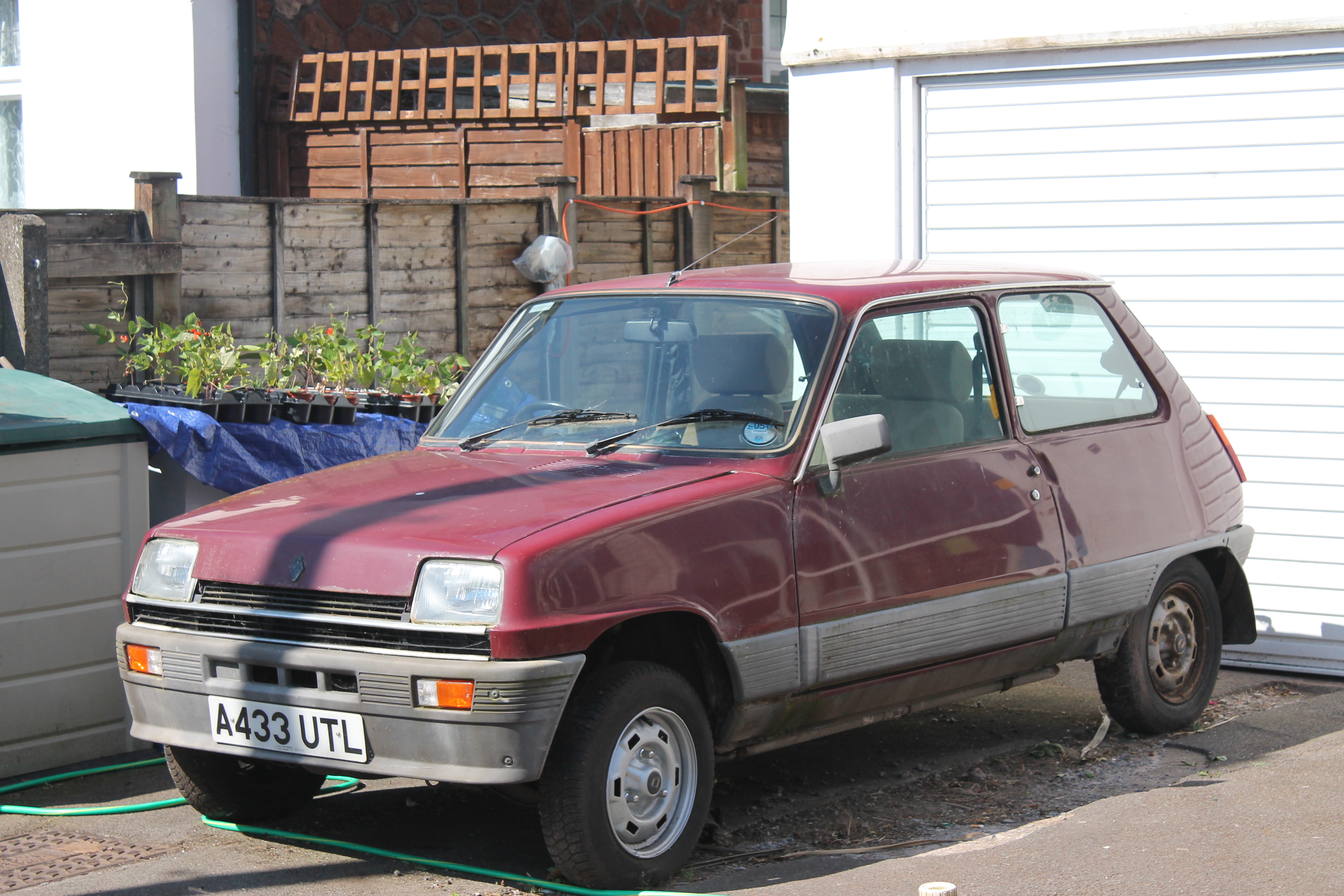
Renault 5 GT Turbo
"My Renault 5 GT Turbo, which is three years old when I bought it, in 1990."
This is a small Renault hatchback that was made faster with a turbo. People like it because it’s fun and lively to drive, especially for a “normal” car.
The Renault 5 GT Turbo is a hot-hatch version of the classic Renault 5, known for its turbocharged punch and compact, tossable feel. It’s a 1990-era “driver’s” small car that many enthusiasts remember as a fun first step into turbo performance.

Porsche 968 Club Sport
"But the one I keep coming back to, because inexplicably, a Porsche dealer allowed me to take one out on a test drive from a dealership by myself, was a 968 Club Sport."
This is a special, more driver-focused Porsche 968 variant. It’s the kind of car enthusiasts remember because it’s lighter and more “serious” than the regular version.
The Porsche 968 Club Sport is a lightweight, track-focused trim of the Porsche 968, built to feel more raw and driver-involved than a standard 968. It’s especially notable for being a rare, enthusiast-oriented variant that people still chase today.

Toyota MR2
"I remember taking... I had my MR2, my Mark II MR2, my second company car."
The Toyota MR2 is a small sports car where the engine sits closer to the middle of the car. The speaker is saying they already had one (a Mark II) and were excited to compare it to the Porsche.
The Toyota MR2 is a mid-engine sports car line, and the speaker specifically mentions the Mark II as their earlier company car. That context matters because it frames how they compared the feel of the MR2 to the Porsche 968 Club Sport during the test drive.
pop-up lights
"I can just about get away with persuading the dealer that I might be. Bloody brilliant pop-up lights. Great pop-up lights."
Pop-up lights are headlights that hide in the car’s body and then pop out when you turn them on. They were common on older sports cars and help the front look sleeker.
Pop-up lights are headlights that pivot or slide out from the body when activated, then retract when off. They’re a styling and packaging trick that became popular on 1980s–1990s sports cars because it lets designers keep the front end lower and cleaner at speed.
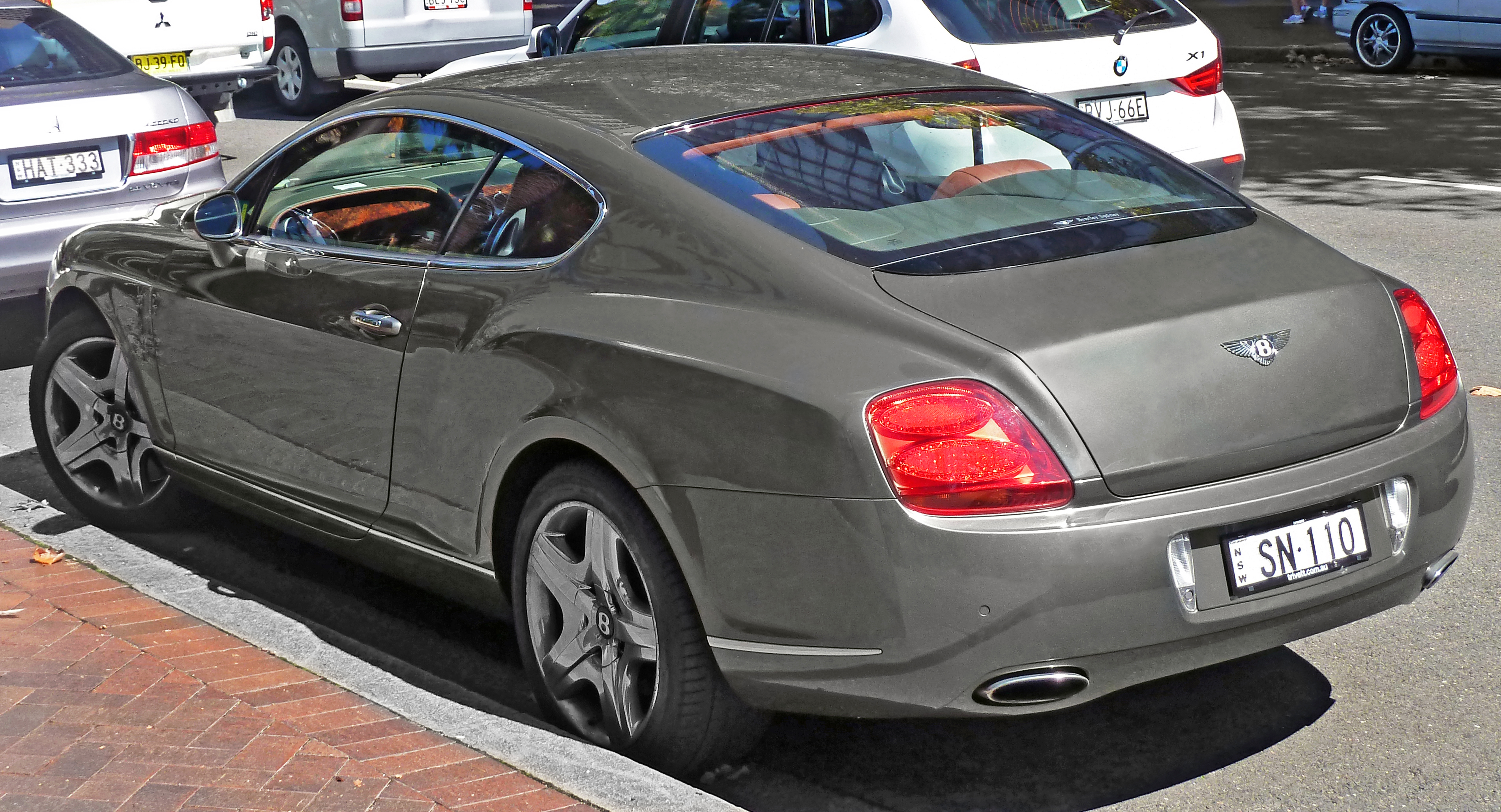
Bentley Continental T
"Bentley Continental T is the best-looking car of the 90s, and I'm just annoyed that it's been [1457.2s] designed only for Scottish people. No, no, no, no, no. P&A would do seat runners."
The Bentley Continental T is a fancy luxury grand tourer from the 1990s. The host is basically saying it looks amazing, but that owning it can feel frustrating or not-so-comfortable.
The Bentley Continental T is a 1990s-era grand tourer from Bentley, known for its elegant, long-hood styling and high-end luxury aimed at effortless cruising. In this segment, it’s treated as the “best-looking car of the 90s,” with the host also discussing how ownership and comfort can feel contradictory.
seat runners
"Bentley Continental T is the best-looking car of the 90s, and I'm just annoyed that it's been [1457.2s] designed only for Scottish people. No, no, no, no, no. P&A would do seat runners."
Seat runners are the rails/track system that allows a car seat to slide fore and aft. In this segment, the host mentions having seat runners done (and not done) as part of adjusting seating fit, which affects comfort and how the car feels when you live with it.

Ferrari 456
"I Ferrari 456 and then the M in 1998. For me, most beautiful, but also the most potent, [1528.7s] just clever, just everything about them is just... So, you're talking about yourself or your car here?"
The Ferrari 456 is a 1990s Ferrari grand tourer—basically a fast, stylish luxury car. The host is saying it’s not just pretty, but also feels especially strong and well thought out.
The Ferrari 456 is a 1990s Ferrari grand tourer that’s notable for combining a refined, practical layout with Ferrari’s performance focus. Here, it’s framed as both the “most beautiful” and “most potent” option, with the host praising how clever and complete the car feels.
road rat
"Yeah. So, I weirdly sort of answered [1572.8s] this in a magazine. So, this is the road rat. This is the last issue."
“Road rat” sounds like the name of a magazine section or publication the host is referencing. It’s not a car part or a technical term—more like a label for where the story appeared.
“Road rat” here refers to a magazine/feature identity or recurring column name rather than a standard automotive technical term. The host uses it to describe the context of how they answered questions about favorite cars in print.

BMW M5
"driven is probably the E39 M5 because when it arrived, I'd never... You have to put it in context. I'd never driven anything like it."
The BMW E39 M5 is a super-fast, performance-focused version of the BMW 5 Series. In this segment, the host says it was so good that it kept beating other cars in comparison tests for years.
The BMW E39 M5 is a high-performance version of the 5 Series, built around a powerful M5 engine and tuned for serious road and track use. Chris Harris describes it as dominating contemporary group tests for much of its life, implying it was consistently faster and more capable than rivals.

BMW E39
"...the greatest car I've ever driven is probably the E39 M5 because when it arrived, I'd never... You have..."
The BMW 5 Series is a comfortable, mid-size luxury car. In the episode, the speaker talks about a high-performance version of the 5 Series (the E39 M5) that they really liked. It’s mentioned because it shows how the 5 Series can be more than just a normal family sedan.
The BMW 5 Series is a mid-size luxury sedan line known for balancing comfort with driving dynamics. The podcast references the E39 M5 as the “greatest car” the speaker has driven, tying the 5 Series platform to high-performance variants. It’s discussed because the 5 Series family is often where BMW puts its most refined everyday luxury—and sometimes its most serious performance.
group tests
"for its entire life, I don't think ever lost one of those group tests. I think when it arrived, it demolished the opposition."
A “group test” is when reviewers compare several cars at the same time, using the same kind of driving and measurements. The point is to find which car is best overall, not just which one feels good in isolation.
“Group tests” are side-by-side evaluations where multiple cars are tested under the same conditions to see which one performs best overall. Harris uses the idea to argue that the E39 M5 was consistently superior to its competitors across repeated comparisons.
independent rear suspension
"and you don't find very good ones anymore because actually the independent rear suspension sort of rotted quite quickly."
Independent rear suspension means the two rear wheels don’t have to move together, which can help the car ride and handle better. Harris is warning that on some cars, this system can suffer from corrosion or wear sooner than you’d hope.
Independent rear suspension (IRS) is a suspension setup where each rear wheel can move somewhat independently, improving ride quality and grip. Harris says the Focus’s independent rear suspension “rotted quite quickly,” suggesting a durability issue that showed up after the car was no longer new.
application thingy-bob on your phone
"who told me a story about being locked out of his car, which I thought I'd share as a little parable, little consumer advice, about what can go wrong with the modern car and the application thingy-bob on your phone."
He’s talking about the phone app that lets you control your car remotely. The story is basically a warning that technology can fail, and you might still get stuck outside your car.
This refers to a smartphone app used for modern car access functions like remote locking/unlocking. The host is setting up a consumer lesson: even with app-based convenience, things can still go wrong and leave you locked out.
app notification
"there's an app notification from his car saying that his car was unlocked. So he thought I'll just lock it. So he pressed the button on here to say lock my car."
This is the car talking to a phone app. The app can tell you what the car is doing (like locking/unlocking), and sometimes software problems can make it harder to get in or start the car.
This is an example of connected-car functionality: the car communicates with a phone app and can report events like being unlocked/locked. It also shows how software/telematics issues can affect access and starting behavior.
key fob
"thought, oh, shit. I hope my key isn't in the car. Well, that can't have happened. It can't have locked itself with the key in the car. He went looking for his key, couldn't find it, went out to the car..."
A key fob is the little remote you use to lock and unlock your car. Some cars also need that same remote to start the engine, so if it’s not recognized, you can get in but the car won’t run.
A key fob is the wireless remote you use to lock and unlock a modern car. Many cars also use the fob for starting, so if the fob isn’t recognized, the car may lock/unlock but won’t start.
AA
"They sent our favorite yellow vans, the AA. Yes. Actually, it was yesterday, Yesterday, yesterday, I met the man at the AA who runs all of the yellow vans, Dean."
The AA is a roadside help service in the UK. They can come out if you’re locked out and help you get access without wrecking the car.
The AA is a UK roadside assistance organization that sends recovery and locksmith-style help when you’re locked out or have key/access problems. In this story, they handle entry without damaging the car.
coat hangers
"half a tennis ball smashed against the door lock. Remember that one? Yeah. Yeah, that one didn't do any of that. And he said, ah, there's a problem."
Coat hangers are sometimes used in movies to bypass a car lock. The point here is that the helper got in without breaking the lock or damaging the car.
Coat hangers are a common pop-culture stand-in for “lock picking” or bypassing a door lock. The speaker emphasizes the AA avoided damaging methods like that.
immobilizer
"Because I had to do this, the key will have been wiped by the car. It will open it will lock the car, but you can't start it. Oh, fuck."
An immobilizer is an anti-theft system that prevents the engine from starting unless the correct key is recognized. That’s why the car can lock/unlock but still won’t start when the key’s authorization is lost.
reset
"They sent our favorite yellow vans, the AA. Yes. Actually, it was yesterday... he said, well, I can either take your car on a truck to the local dealer and they'll reset it. But then your spare key at home won't work."
In this context, “reset” means reprogramming/re-pairing the car’s immobilizer/key recognition system so the correct key can start the engine again. Dealers typically handle this with manufacturer software and procedures.

Rolls-Royce Camargue
"...w times. I think I might have told my Rolls Royce Camargue story before, so I'm now going to tell you my oth..."
The Rolls-Royce Camargue is an older luxury car made by Rolls-Royce. It’s a grand tourer, meaning it was built for comfortable long-distance driving. The episode brings it up because it’s a notable, memorable Rolls-Royce model.
The Rolls-Royce Camargue is a luxury grand tourer from the late 1970s, known for its distinctive styling and place in Rolls-Royce history. The podcast mentions telling a Camargue story again, implying it’s a memorable car for the speaker. It’s discussed because it’s a less common Rolls-Royce model that stands out from the more frequently referenced Phantoms and similar cars.

Ferrari F12
"...entic podcast where we tell the truth. I was in a Ferrari F12 and with those red Ferrari keys, you've obviously..."
The Ferrari F12 Berlinetta is a high-performance Ferrari designed for fast driving and comfortable long trips. The episode mentions it because it was a memorable car to be in. It’s a modern Ferrari people recognize for its blend of speed and grand touring style.
The Ferrari F12 Berlinetta is a grand touring Ferrari from the early 2010s, built to combine high power with everyday usability for long drives. The podcast mentions being in an F12 and references the distinctive red Ferrari keys, using it as a vivid memory. It’s discussed because the F12 is a well-known modern Ferrari that sits in the “serious performance but still usable” category.
physical key
"Yeah, and actually, of course, they were compounded by the added thing of when you stopped having a [2278.0s] physical key. I mean, the amount of times I drove off from photo shoots and get a phone call an hour [2289.3s] later saying, ah, you've got the card, words out."
A physical key is the normal metal key you put into the door or ignition. The host is saying that older cars behaved differently than newer cars that use electronics and keyless systems.
A physical key is the traditional metal key you insert into the lock cylinder. The host contrasts it with modern keyless/remote systems, where the car’s electronics and sensors change how locking and starting work—and how you can accidentally lock yourself out.

Peugeot 306 XSI
"But the one that stuck in my mind was [2319.6s] I think it was a Peugeot 306 XSI I had locked myself out of it somehow. [2327.7s] I think in those days, you could sit on the key, it would lock itself and you shut the door."
The Peugeot 306 XSI is an older Peugeot hatchback. The host mentions it because, back then, the car’s locking behavior was simpler, so it was easier to accidentally lock yourself out—and sometimes easier to get back in.
The Peugeot 306 XSI is a late-1990s hot-hatch/driver’s car from Peugeot, known for being a relatively simple, analog-feeling car compared with modern vehicles. In this segment, it’s used as an example of an era where locking/unlocking could be defeated more easily because the system relied more on basic mechanical/electrical behavior than today’s integrated electronics.
ECUs
"You know, there were no failstakes, no ECUs that controlled about those days. It was just a [2335.0s] cable that was to the battery."
ECUs are the car’s computers that control different functions. The host is saying that older cars had fewer of these computers controlling the locking behavior, so it was more mechanical and less “smart.”
ECUs (engine control units) are computers in a car that manage specific systems. Here, the host is saying that older cars had fewer electronic control units handling locking/anti-lockout behavior, so the locking system could be more directly influenced by simple actions.
cable that was to the battery
"You know, there were no failstakes, no ECUs that controlled about those days. It was just a [2335.0s] cable that was to the battery. And if you sat on the key and it was in the lock position, you [2339.6s] in between opening the door and shutting it and shutting it."
This describes an older, simpler electrical arrangement where a basic cable connection to the battery could drive or influence a system’s behavior. The host’s point is that, in that era, some functions weren’t governed by complex electronic modules, making the car’s lock behavior more predictable (and sometimes easier to work around).
door frame went over the roof into the roof section
"What stuck [2368.0s] with me was that was a car that had a frame in the modern style. The door frame went over the [2375.1s] roof into the roof section and was designed to fit flush with it. And therefore, you could put, [2382.9s] you basically could pull the door frame out without risking chattering the glass too much"
The host is talking about how the car’s body is shaped—how the door’s top section blends into the roof. That shape can change how easy it is to remove part of the frame without breaking the glass.
This is describing a bodywork design where the door’s upper structure integrates into the roof area, creating a flush fit. The host uses it to explain why a door frame could be pulled out without shattering the glass—an example of how specific body construction affects access and damage risk.
lock male part
"and get yourself enough gaps to get in there and hook something onto the lock male part that stuck up."
Inside a car door lock, there’s a part that sticks out and a matching part it grabs onto. If you can reach the sticking-out part, you may be able to release the lock and open the door.
The “lock male part” refers to the protruding locking piece (often called a latch/striker engagement) that mates with the corresponding part on the door. If you can access and hook onto that engagement point, you can sometimes release the latch and open the door.
jack
"What some people used to do was try and get a jack in there and just sort of try and get the teeth of the jack to prize it open, which I managed to do."
A “jack” is a tool used to lift a car (or in this case, to pry at a door area). The host describes people trying to wedge a jack into the door gap to force the door open, which shows how improvised tools can be used when normal access is blocked.
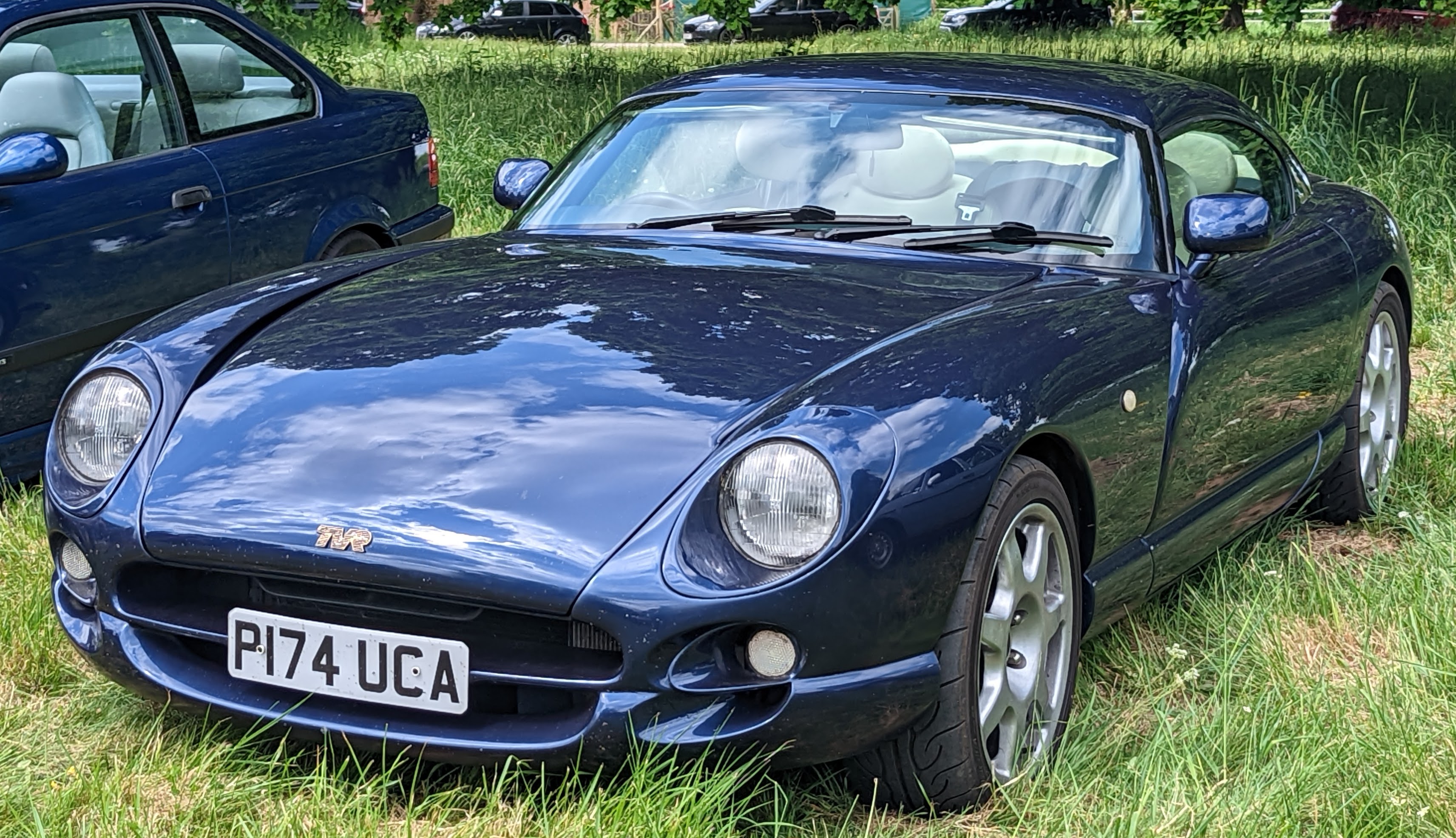
TVR Cerbera
"I remember getting locked into the auto cars long term TBR Cerbera on a very hot day and thinking, I'm going to put a window through here to get out. The TBR would lock you in it."
The TVR Cerbera is a British sports car. Here it’s mentioned because the door/locking situation can trap someone inside, which is scary and hard to fix quickly.
The TVR Cerbera is a British sports car known for its raw, analog feel and big V8 character. In this story, the host mentions a long-term lockup issue—being trapped in the car—highlighting how door/lock mechanisms can become a real safety problem.
dead lock
"Yeah, it would. And you couldn't get out and it was dead lock as well."
“Dead lock” means the doors are locked in a stronger way than usual. If you’re inside when it’s engaged, it can be much harder to open the door and get out.
“Dead lock” is a locking mode where the doors are fully immobilized so they can’t be opened from the inside or outside in the normal way. It’s often used to prevent break-ins, but it can make escape difficult if someone is accidentally locked in.
Design a new Ferrari
"The next one is, which I think is quite dangerous. Given the past week. Design a new Ferrari. Okay, I'm going to start with this one."
They’re switching to a fun challenge: imagine designing a brand-new Ferrari from scratch. The rest of the episode will likely focus on what they’d change and why.
This is the episode’s pivot into a design prompt: what a “new Ferrari” should be like. It sets up the discussion as a creative engineering/design exercise rather than a review of a specific existing model.
electric Ferrari
"you're really good at designing cars. And I'd say, can you design an electric Ferrari? Oh, it's electric. It's just any Ferrari, designer Ferrari."
He’s talking about a Ferrari that runs on electricity instead of gasoline. The big idea is that the car’s layout and design would have to change because the engine and energy storage are different.
This is a hypothetical “electric Ferrari,” meaning a Ferrari designed around electric propulsion instead of the brand’s traditional internal-combustion engines. It’s a useful thought experiment because Ferrari’s design language (shape, packaging, aerodynamics) has to be reworked when the powertrain changes.
Luca Montesemble
"where there's a bloke called Luca Montesemble, who's still alive. Well, I think he's probably responsible for some of the best looking referraries ever."
The host mentions a specific designer, Luca Montesemble, and says he’s known for making cars look especially good. It’s part of the idea that you’d hire the right design talent first.
Luca Montesemble is referenced as a living designer in the Bologna area, and the host credits him with creating some of the best-looking “Ferrari” style cars. The point is that the host would outsource the design concept to a specialist rather than starting from engineering constraints.
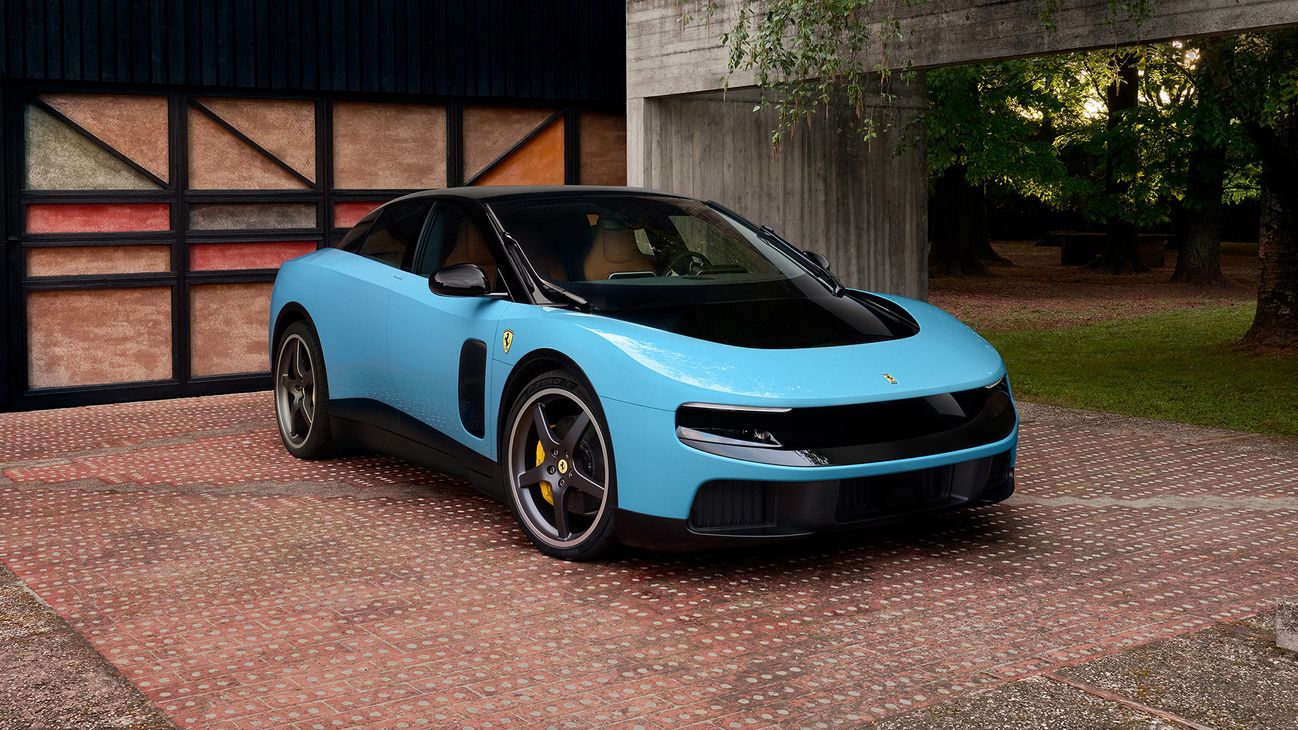
Ferrari Luce
"...rd having a board meeting after the launch of the Luce, whatever it's called. We thought we'd sell 1000 ..."
The Ferrari Luce is a Ferrari model that the podcast talks about around its launch. The speaker mentions planning and expected sales, which means it’s being discussed as a new product. The episode isn’t focused on driving details here—more on how Ferrari planned for it.
The Ferrari Luce is referenced by the podcast in the context of its launch and expected sales volume, with the speaker mentioning a board meeting after the launch. That suggests the car is part of a newer Ferrari product plan and is being discussed in terms of business expectations. It’s brought up because it represents Ferrari’s ongoing efforts to grow its lineup and market reach.
order books
"Looks like the order books may be going to be a bit light by about 700. So we sort of need to plug the revenue gap in the forecast."
Order books are basically the backlog of orders customers have already placed. If they’re “light,” it means fewer cars are already sold than expected.
“Order books” are the list of customer orders a company has received for future delivery. When the host says order books look light, he’s describing weaker-than-expected demand that affects revenue forecasts.
revenue gap
"Looks like the order books may be going to be a bit light by about 700. So we sort of need to plug the revenue gap in the forecast."
A revenue gap just means the money the company expected to make is coming up short. The host is saying they’d need a plan to make up the difference.
A “revenue gap” is the shortfall between expected sales revenue and what’s actually projected. Here, the host describes management needing to “plug” that gap, which drives the decision to pursue a faster, lower-risk branding/product approach.
investor update meetings
"We've got our little investor update meetings in New York in three weeks time. We're going to get all questions,"
These are meetings where a company talks to investors about how the business is doing and what it expects next. The host is saying Ferrari would feel pressure to have answers quickly.
“Investor update meetings” are scheduled presentations where a company explains performance and forecasts to shareholders and analysts. In this segment, the host uses that corporate context to explain why management might need a quick product or branding plan rather than a full new car program.

Ferrari 296
"or take from Ferrari. And we're going to get the 296 because actually a Dino should be a six cylinder. Yeah, should be a six cylinder. But what we're going to do is we're going to take off the turbos"
The Ferrari 296 is a modern Ferrari with a mid-engine layout and a V6 setup. Here, the idea is to redesign it—removing the turbo setup and giving it a Dino-inspired front end.
The Ferrari 296 is a modern Ferrari built around a V6 engine paired with a hybrid system, and it’s known for its mid-engine layout and sharp, angular styling. In this segment, the hosts are redesigning the 296 by removing the turbos to create a normally aspirated version and changing the front end to a Dino-style look.

Dino
"or take from Ferrari. And we're going to get the 296 because actually a Dino should be a six cylinder. ...So we're going to put a Dino front on it."
“Dino” is a Ferrari name used for certain classic sports cars, often tied to a V6 idea and a particular look. In this redesign fantasy, they’re borrowing that Dino vibe for the front and the engine concept.
“Dino” refers to Dino-branded Ferrari sports cars, historically associated with smaller-displacement V6 engines and a distinct design language. Here, the hosts use “Dino” as a styling and engineering reference point—specifically a six-cylinder concept and a Dino-style front end.
turbos
"Yeah, should be a six cylinder. But what we're going to do is we're going to take off the turbos because actually 600 horsepower is much too much."
“Turbos” are devices that help an engine make more power by forcing extra air into it. If you remove them, the engine usually feels different—often less punchy at the top end and more naturally aspirated in character.
“Turbos” refers to turbochargers, which use exhaust gas to spin a turbine and force more air into the engine. That extra air lets the engine make more power without increasing engine size as much, which is why removing them would also change the character of the car.
normally aspirated
"because actually 600 horsepower is much too much. We're going to take off the turbos. We're going to have a normally aspirated 296."
“Normally aspirated” means the engine breathes naturally without a turbo or supercharger. The car’s throttle response and power delivery tend to feel more direct and less dependent on boost.
A normally aspirated engine makes power without turbocharging or supercharging, relying on atmospheric pressure and engine design to draw air in. In this segment, the redesign goal is to turn the Ferrari 296 into a naturally aspirated setup to match the “Dino should be a six cylinder” idea.
gearbox with paddles
"heaven forbid have this idea where you don't have to change the gearbox with paddles. We're going to invent this handle"
“Paddles” are the shift controls behind or on the steering wheel that let you change gears without using a stick. The idea here is to avoid that and make it feel more like a manual setup.
A “gearbox with paddles” typically means paddle shifters—controls on the steering wheel that let you change gears without a traditional gear lever. The hosts are imagining a manual-style interaction instead, including a new “handle” and an extra pedal.
intercooler pod
"Manage, what would you do? Well, I had a rather enjoyable listen to the intercooler pod. And Dan and Andrew were describing Andrew mostly describing his emotions, his feelings,"
An intercooler is a part on many turbo engines that cools the air before it goes into the engine. In this context, “intercooler pod” is the name of a podcast the hosts are talking about.
An “intercooler” is a heat exchanger used on turbocharged engines to cool the compressed intake air before it enters the engine. Calling it an “intercooler pod” here is a reference to a podcast episode/segment name, but the underlying term is still turbo-engine hardware.
product design
"And to compress the article, I mean, he just says that, you know, product design, architecture, you know, you name and kind of design, it's not the same thing as car design."
“Product design” is the broader discipline of designing consumer goods and engineered objects for usability, manufacturing, and user experience. The speaker contrasts it with “car design,” arguing that cars are about creating emotion, not just solving functional product-design problems.
car design
"product design, architecture, you know, you name and kind of design, it's not the same thing as car design. And he, you know, he pointed you to things like Corbusier"
“Car design” here means designing a car to create a feeling—like excitement or desire—not just making it work. The host is arguing that cars are judged emotionally as much as they are technically.
The segment frames “car design” as a discipline focused on emotional impact—how the car makes you feel—rather than only on utilitarian function. This is presented as a key distinction from other design fields like architecture or general product design.

McLaren MP4-12C
"...re, the big difference between for me and McLaren MP412C and a Ferrari 458 are a bunch of unresolved lines..."
The McLaren MP4-12C is a supercar made by McLaren. It’s built for very fast driving and strong handling. In the episode, it’s mentioned in a comparison where the speaker is talking about how the car feels and looks.
The McLaren MP4-12C is a modern supercar from McLaren, known for its carbon-fiber construction and sharp performance focus. The podcast compares it to other supercars and mentions “unresolved lines,” pointing to design and character as part of the discussion. It’s brought up because it represents McLaren’s approach to building a driver-focused, high-tech performance car.

Ferrari 458
"for me and McLaren MP412C and a Ferrari 458 are a bunch of unresolved lines. You look at the Ferrari,"
The Ferrari 458 is a mid-engine supercar from Ferrari. The hosts are using it as an example of how design details can make a car feel tense and fast, even just by looking at it.
The Ferrari 458 is a mid-engine Ferrari supercar famous for its dramatic styling and how its design communicates speed and motion. In this segment, it’s contrasted with the McLaren MP412C to discuss how “unresolved lines” and overall design execution can affect the emotional feel of the car.
aero guys
"amazing guys from electrical department, amazing aero guys, you've got to bring all of this somehow together in the tightest possible package."
“Aero guys” means the people who work on how air flows around the car. Their job is to help the car stick to the road and cut wind resistance by shaping the body and airflow paths.
“Aero guys” refers to the aerodynamic engineering team. In car design, aerodynamics is about shaping the body to manage airflow for downforce, drag reduction, and stability—often requiring tight integration with packaging and cooling.
tightest possible package
"amazing guys from electrical department, amazing aero guys, you've got to bring all of this somehow together in the tightest possible package."
“Tightest possible package” means fitting all the car’s important parts into the space as efficiently as possible. Doing that well helps the car handle better and keeps everything working properly without wasting room.
“Tightest possible package” describes the engineering challenge of fitting many subsystems—mechanical, electrical, and aerodynamic—into the smallest, most efficient space. It’s a core part of supercar design because packaging affects weight distribution, cooling, structural stiffness, and how well the car can achieve its performance goals.
five seat tech bro market
"If you are going for the five seat tech bro market, because you believe this exists, maybe you don't do it as an electric car, but if you're going to do it as an electric car,"
They’re talking about a specific kind of buyer: someone who wants a car that can carry five people but feels modern and tech-focused. The idea is that you design the car around that customer first, then work backward to the technical choices.
“Five seat tech bro market” is a niche target customer segment described by the hosts—people who want a practical, five-seat vehicle but with a tech-forward identity. The point here is that product planning starts with choosing a market segment, then working backward into engineering and design decisions.
electric car
"If you are going for the five seat tech bro market, because you believe this exists, maybe you don't do it as an electric car, but if you're going to do it as an electric car,"
An electric car runs on electricity stored in a battery, not gasoline. Designing one usually means rearranging parts and planning for battery space and cooling.
An “electric car” uses one or more electric motors powered by a battery pack instead of an internal-combustion engine. In design terms, going electric changes packaging and engineering priorities—especially around battery placement, weight distribution, and thermal management.
internal combustion
"So go back to what you know, or go and get two radical designers, but maybe get them to do something that is a bit more familiar, you know, go and make me a two seat internal combustion car with a manual engine, go and design that because then you're on some form of safe ground."
Internal combustion means the car makes power by burning fuel in an engine. The speaker is saying they’d design a Ferrari that still uses a gas engine rather than going fully electric.
Internal combustion refers to engines that create power by burning fuel inside the engine cylinders (as opposed to electric-only propulsion). The speaker’s imagined Ferrari is explicitly “two seat internal combustion” to keep the concept rooted in traditional gas-engine technology.

Ferrari 430
"And I kind of think they would have a bit of money. And I never quite liked the look of the 430, particularly as a spider. The proportions weren't quite right."
The Ferrari 430 is a Ferrari supercar with a mid-mounted engine. The speaker likes the look and proportions of the 430, especially in the convertible (“spider”) form, and compares it to other Ferraris.
The Ferrari 430 is a mid-engine V8 supercar from Ferrari, known for its naturally aspirated character and (in some variants) a traditional manual gearbox. In this discussion, the host focuses on the 430’s styling and proportions—especially compared to other Ferraris—and specifically calls out liking it as a “spider” (convertible) shape.
spider
"And I kind of think they would have a bit of money. And I never quite liked the look of the 430, particularly as a spider. The proportions weren't quite right."
“Spider” here means a convertible version of the car. The speaker is saying the 430 looks worse to them when it’s in that open-top form.
In Ferrari terminology, “spider” typically means a convertible (top-down) variant of a model. The speaker specifically says they didn’t like the look of the Ferrari 430 “particularly as a spider,” meaning the convertible body shape and proportions.
manual gearbox
"I think that because he's got a manual gearbox, designing the manual gearbox, no turbos, no hybrids, blah, blah, blah."
A manual gearbox is when you choose the gears yourself using a clutch and a gear stick. The speaker is saying they’d design a Ferrari around that kind of driver involvement.
A manual gearbox is a transmission controlled by the driver using a clutch pedal and gear lever, rather than automatic shifting. In the Ferrari design discussion, the speaker treats the manual gearbox as a key “what to build” constraint—contrasting it with the idea of adding turbos or hybrids.
hybrids
"I think that because he's got a manual gearbox, designing the manual gearbox, no turbos, no hybrids, blah, blah, blah."
“Hybrids” are cars that use both a gas engine and an electric motor. The speaker is saying they’d rather not include that in the Ferrari concept they’re talking about.
“Hybrids” refers to hybrid powertrains that combine an internal-combustion engine with an electric motor and battery. The speaker frames “no hybrids” as part of the imagined Ferrari’s ruleset, contrasting it with modern electrified Ferrari directions.
VA manual
"And I think it's a little footprint like a 430, little VA manual, no hybrid,"
They’re talking about wanting a traditional manual-style driving feel. The point is: no hybrid and no paddle shifters—just a more direct, old-school gearbox experience.
“VA manual” here is shorthand for a manual gearbox setup that’s meant to feel more old-school and analog than modern dual-clutch or paddle-shift systems. The host is contrasting it against hybrid tech and paddle shifters to describe the driving experience they want.
flappy paddle
"no flappy paddle. I know you could have flappy paddle and forth. But we really didn't want one."
Paddle shifters are the little buttons on the steering wheel that change gears. They’re saying they’d rather not have that and would prefer a more traditional setup.
“Flappy paddle” refers to paddle shifters—controls behind the steering wheel that let you change gears without using a clutch pedal. The speaker is saying they don’t want that style of shifting on their ideal Ferrari.

250Lm
"... where Neil was, which was I quite like that that 250lm stance is really, really nice to haunches the sid..."
The Ferrari 250 LM is an old Ferrari sports car from the 1960s. It’s known for its racing background and for looking very distinctive. The episode mentions how good it looks from the side and how it sits on the road.
The Ferrari 250 LM is a classic Ferrari sports car from the 1960s, closely associated with endurance racing and the era’s racing heritage. The podcast mentions the “250 LM stance” and describes it as really nice, focusing on its visual proportions and presence. It’s discussed because the 250 LM is both historically important and instantly recognizable as a racing icon.
haunches
"which was I quite like that that 250lm stance is really, really nice to haunches the sides the rear three quarter sex is pretty good looking car."
“Haunches” are the bulges over the wheel arches. They make the car look wider and more aggressive, like a race car.
In car design, “haunches” are the flared, bulging sections over the wheel arches that visually widen the car. The speaker is describing how the 250 LM’s body shape “haunches” the sides to create a muscular, race-inspired look.

Ferrari Portofino Roma
"Is it Portofino Roma? No, it's called the Amalfi. They're going to run out of Italian Mediterranean regions at some point, and then we'll get a better car."
They’re talking about a new Ferrari model name they can’t quite recall. It sounds like they’re mixing up the Portofino and Roma names while discussing what’s coming out this week.
The Ferrari Portofino and Roma are two different modern Ferraris, both known for their grand-touring focus and contemporary styling. In the segment, the host is trying to name a current Ferrari and lands on “Portofino Roma,” which appears to be a mistaken or blended reference to those models.

DB6
"I never really liked the DB6 ever or DB5, but that period of 70s was our poster car basically."
They’re talking about an Aston Martin from the 1960s called the DB6. It’s one of the famous “DB” grand tourers people associate with that era.
The speaker mentions the Aston Martin DB6 as part of a comparison of classic “poster cars.” The DB6 is a well-known 1960s grand tourer from Aston Martin, often discussed alongside other DB-series models like the DB5 and DB4.

Aston Martin DB5
"...lly, 2.7 RS. I never really liked the DB6 ever or DB5, but that period of 70s was our poster car basica..."
The Aston Martin DB5 is a classic luxury sports car made in the 1960s. It’s known for its elegant styling and for being a famous “dream car” from that era. The podcast brings it up as part of the classic Aston Martin lineup people remember.
The Aston Martin DB5 is a legendary grand touring car from the 1960s, strongly associated with the brand’s image and motorsport-era styling. The podcast references the DB5 era as a “poster car” time period, even while noting personal preferences about DB6/DB5. It’s discussed because the DB5 has become an icon of classic Aston Martin design and desirability.
carburetor car
"weren't those shitty old cars that you've got to know how to start a carburetor car. You've got to turn the key and leave it for 10 seconds and pump the bloody accelerator."
A carburetor is an older way of feeding fuel into the engine. The point here is that older cars with carburetors can be fussier to start and drive than modern cars.
A “carburetor car” uses a carburetor to mix fuel and air before it enters the engine. The speaker is contrasting older carbureted cars—often requiring more manual warm-up steps—with modern fuel-injected cars that are easier to start and drive.


Honda NSX
"I've watched those videos of Senna and his NSX. Heel and toeing."
The Honda NSX is a famous supercar with the engine placed near the middle of the car. The host brings it up because Senna’s driving—especially heel-and-toe—looked amazing in it.
The Honda NSX is a mid-engine supercar known for its balance and for being a benchmark of how “everyday usable” a supercar can be. Here it’s specifically referenced in connection with Ayrton Senna’s heel-and-toe driving style, highlighting the technique and the car’s responsiveness.

Porsche 911 GT3
"It's just looks like art to me... to be able to really drive a car. You know, Mr Cooper... when you drove me in that GT3 at Thruxton last year."
The Porsche 911 GT3 is a more track-focused version of the 911. It’s the kind of car that feels especially impressive when someone really knows how to drive.
The Porsche 911 GT3 is a track-oriented 911 variant built for high grip and driver engagement, with a focus on lap-time performance rather than comfort. In this segment, it’s used as an example of how much difference it makes when a skilled driver is behind the wheel.

Ferrari Challenge Stradale
"I think people who can really drive would probably rate the 2.7 RS above the Challenge Stradale, you know, for all the pure reasons you would do that."
The Ferrari Challenge Stradale is a Ferrari that’s meant to feel more like a race car. In this conversation, it’s being compared to another classic Porsche based on how “pure” the driving experience is.
The Ferrari Challenge Stradale is a performance-focused Ferrari road car derived from the brand’s one-make racing culture, aimed at drivers who want a more “track-bred” feel. The speaker compares it against the Porsche 2.7 RS in terms of what “pure reasons” might lead a skilled driver to prefer.

Ferrari 458 Speciale
"But the available market for 458 Speciale was half the price of 2.7 RS three years ago. Now, it's more."
The Ferrari 458 Speciale is a more hardcore, track-focused version of the Ferrari 458. Here, the hosts use it as an example of how the market price for special Ferraris can change a lot as time goes on.
The Ferrari 458 Speciale is a performance-focused version of the 458, known for its high-revving naturally aspirated V8 and track-oriented tuning. In this segment, it’s used as a pricing/market benchmark versus other modern Ferraris, illustrating how enthusiast demand can shift over time.
heel and toe
"Because I mean, sort of you are actually spot on that to really enjoy and drive properly an older car, you've got to be able to heel and toe, not necessarily double-declutch."
Heel-and-toe is a driving trick for manual cars when you downshift. You brake and quickly add a little throttle at the same time so the engine speed matches the lower gear, making the shift feel smooth.
Heel-and-toe is a manual-driving technique where the driver uses the right foot to brake while also “blipping” the throttle with a toe, matching engine speed to the lower gear. It helps make downshifts smooth and reduces driveline shock, especially in cars with a manual gearbox.
double-declutch
"heel and toe, not necessarily double-declutch. I remember I'm old enough to have driven cars where you needed to double-declutch like that D-type..."
Double-declutch is a manual-car technique used to make downshifts smoother. You go to neutral, rev the engine briefly to match speeds, then clutch again and put it into the lower gear.
Double-declutch is an older manual-transmission technique used when synchronizers aren’t doing the job well: the driver shifts to neutral, releases the clutch, blips the throttle to match engine speed, then presses the clutch again and selects the lower gear. It reduces gear clash and helps the car engage smoothly.

Jaguar Dtype
"I remember I'm old enough to have driven cars where you needed to double-declutch like that D-type, the amazing D-type that Fiskins allowed us to drive..."
The Jaguar D-type is a famous old Jaguar race car from the 1950s. The host brings it up because older race cars could require more careful downshifting skills like double-declutching to drive smoothly.
The Jaguar D-type is a legendary mid-1950s Jaguar race car famous for its racing success and distinctive aerodynamic design. In this segment, it’s referenced as an example of a car where double-declutching and rev-matching were necessary skills for smooth driving.
rev match
"You had to double-declutch in that and sort of blip it going up sometimes as well to sort of rev match."
Rev-matching means you quickly adjust the engine speed so it lines up with the lower gear you’re selecting. It helps the car shift down smoothly instead of feeling rough.
Rev-matching is the act of adjusting engine speed to match the transmission’s target gear during a downshift. When done correctly, it makes the drivetrain engagement smoother and helps prevent jerky motion.
blip
"You had to double-declutch in that and sort of blip it going up sometimes as well to sort of rev match."
A “blip” is a quick tap of the gas to raise the engine speed for a moment. Drivers use it when downshifting so the engine and gearbox speeds match up.
A “blip” is a quick, brief increase in engine speed—typically by momentarily pressing the throttle—used during downshifts to help rev-match. It’s a key part of heel-and-toe and double-declutch workflows.
Syncomesh
"And that's actually quite hard. But in the Syncomesh box, three-pedal car, manual stick, you sort of..."
Synchromesh is a feature in many manual gearboxes that helps the gears line up so they go together more easily. Because of it, you usually don’t have to do as much complicated shifting technique as in older gearboxes.
Synchromesh (often spoken as “Syncomesh”) refers to a manual-transmission system that uses synchronizers to help match gear speeds before engagement. It reduces the need for techniques like double-declutching in many everyday manual cars.
Formula 4
"Formula 4 car when they're 14 years old, 15 years old, straight out of karting, it's a two-pedal car."
Formula 4 is a beginner-to-intermediate level of professional race car series. It’s usually for younger drivers coming straight from karting, and the cars are meant to be similar so driver skill matters most.
Formula 4 (F4) is a junior single-seater racing series designed to bridge the gap between karting and higher-level formula racing. It’s typically aimed at teenagers and uses standardized cars so drivers can focus on learning racecraft rather than engineering advantages.
two-pedal car
"Formula 4 car when they're 14 years old, 15 years old, straight out of karting, it's a two-pedal car."
A “two-pedal car” means you only use the gas and the brake. There’s no clutch pedal, so you don’t have to shift gears manually.
A “two-pedal car” is shorthand for an automatic or semi-automatic transmission setup where the driver uses only accelerator and brake pedals. It contrasts with a manual gearbox that also requires a clutch pedal to manage gear changes.

Ferrari 360 challenge to Dali
"And I just think that must put people off because you think I can't quite get the most out of this, and you know, is there a blah blah blah. Like Chris, I didn't realize that a 360 challenge to Dali was worth more."
The Ferrari 360 is a classic Ferrari from the early 2000s with a V8 engine. Here it’s being used as an example of how much certain cars are worth in collector/auction listings.
The Ferrari 360 is a late-1990s/early-2000s V8 Ferrari that’s become a common reference point in enthusiast and collector discussions. In this segment, it’s mentioned in the context of a “challenge” listing/auction value, tying the model to market pricing.
993 Turbo
"It's mainly happened in Ferrari, this. That's why the analogy of Ferrari, if you said 993 Turbo, which of course have grown, they haven't gone mad."
A 993 Turbo is a Porsche 911 Turbo from the 993 generation. In this conversation, it’s used as an example of a classic Porsche that hasn’t exploded in price as much as some other cars.
A “993 Turbo” refers to the Porsche 911 Turbo built on the 993 generation platform. The 993 Turbo is a highly regarded, air-cooled 911 variant, and it’s being used in the discussion as an example of a model that hasn’t gone “mad” despite market inflation.
barometer car
"I think it's very interesting because the 2.7 RS is for many people the barometer car of the health of the market has been for years."
A “barometer car” is a car people watch because its price changes seem to reflect what’s happening in the whole market. If it gets more expensive (or cheaper), it’s seen as a clue about collector demand overall.
A “barometer car” is a collectible car whose market pricing is used as an indicator of the overall health of that segment. In other words, when that model’s values rise or fall, people treat it as a signal for broader collector sentiment.

Bugatti Type 35S
"... cars and loving them, people used to write about Bugatti Type 35s as being the most valuable car on the planet. The..."
The Bugatti Type 35 is a very famous old racing car. The episode mentions it because people consider it extremely valuable today. It’s remembered for its racing legacy and for being a prized collector car.
The Bugatti Type 35 is one of the most famous racing cars ever made, and it’s often cited as a benchmark for Bugatti’s racing success. The podcast mentions people writing about the Type 35 as being among the most valuable cars on the planet, emphasizing its collector status. It’s discussed because it represents both motorsport history and enduring desirability.
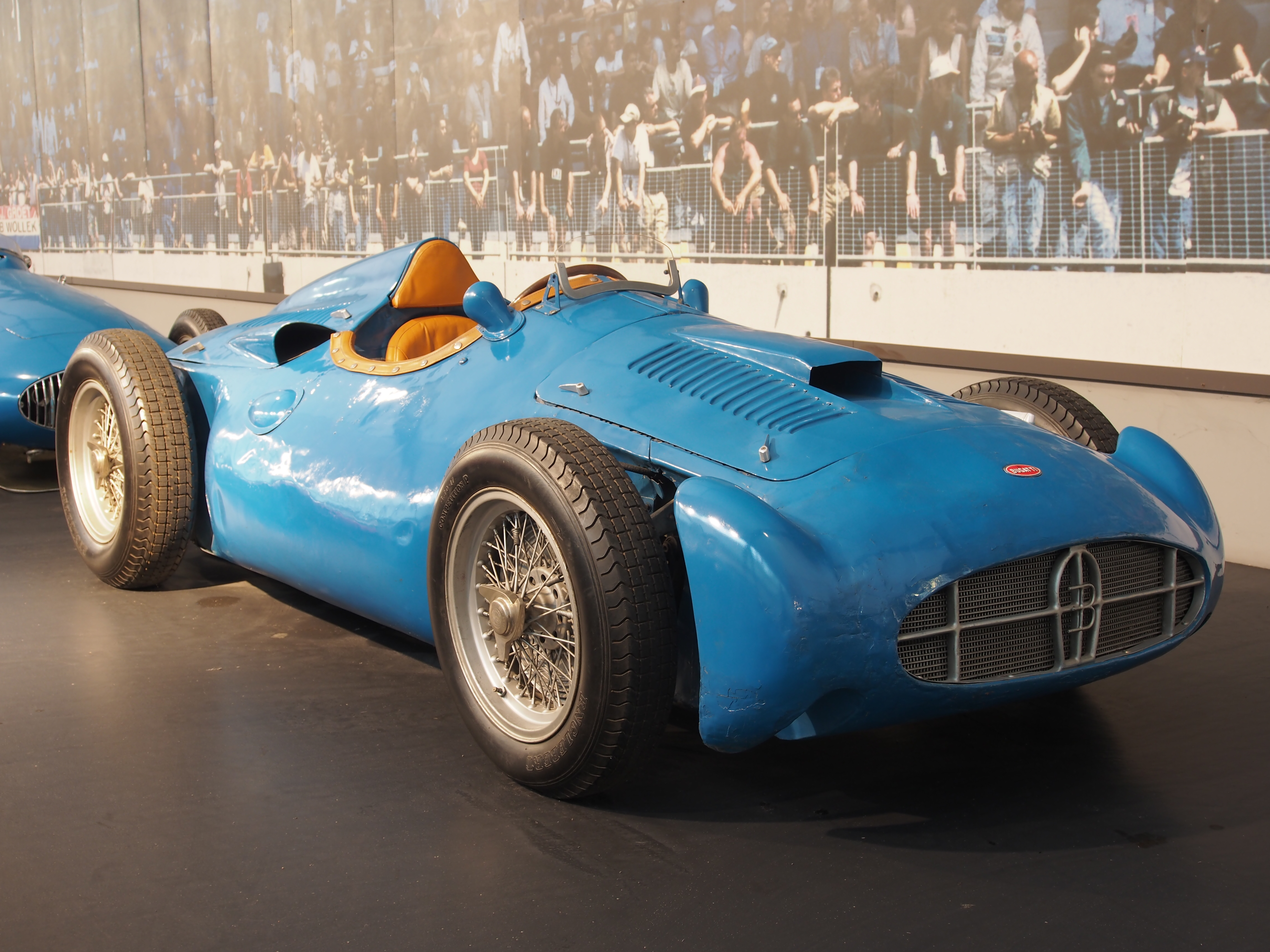
Bugatti Type
"... cars and loving them, people used to write about Bugatti Type 35s as being the most valuable car on the planet...."
The Bugatti Type 251 is an old Bugatti car model. The episode mentions it while talking about how some Bugattis became extremely valuable. It’s part of the same general family of famous Bugatti racing cars.
The Bugatti Type 251 is a rare Bugatti model mentioned in the context of Bugatti’s most valuable and celebrated cars. The podcast contrasts it with the more famous Type 35, using it to highlight how Bugatti’s racing-era reputation grew over time. It’s discussed because it sits within the broader Type-number legacy that collectors and enthusiasts obsess over.

Ferrari F50
"...en in the same league. People make more money for F50s, Farball. Times do change. I think what's interes..."
The Ferrari F50 is a very rare, extremely fast supercar made by Ferrari. It was built in limited numbers, so it’s considered special and expensive. The episode brings it up because it’s one of the cars people chase for status and performance.
The Ferrari F50 is a high-performance, limited-production supercar from the early 1990s, built to be a modern, track-focused Ferrari. The podcast references how people value F50s highly and compares it to other cars in the same “league” of desirability. It’s discussed because it represents a specific era of Ferrari’s top-end performance and exclusivity.
paddle shift
"If people are paying 360 CS 400 grand, they're having a laugh. It's a paddle shift thing with not that much power."
Paddle shift means you change gears using buttons or levers on the steering wheel, instead of a stick. Here, it’s mentioned as part of why the host thinks the car isn’t worth the money.
Paddle shift refers to gear changes controlled by small paddles behind the steering wheel, rather than a traditional gear lever. The host is using it as part of his argument that the Ferrari 360 CS’s driving “package” doesn’t justify its price.
gearboxes
"And it's got one of the worst gearboxes ever made. It's just shite."
A gearbox is what changes gears so the engine can stay in the right rev range. The host is criticizing the gearbox quality, saying it’s a big part of why he doesn’t understand the car’s value.
A gearbox is the transmission system that selects different gear ratios to match engine speed to driving conditions. Harris calls the gearbox “one of the worst,” using it as a key reason he thinks the car doesn’t justify its price.

BMW 335D
"But I think 360 Talastradale is going to get munched in a straight line by a fucking 335D and a"
This is a BMW 335d, which is a diesel 3 Series. The host is saying that in a straight-line race, the BMW’s diesel torque can beat the Ferrari—so the Ferrari’s reputation doesn’t automatically mean it’s faster.
The BMW 335d is a diesel-powered 3 Series variant known for strong real-world acceleration and torque, especially in a straight-line run. Harris ends the segment by claiming the Ferrari 360 CS will be “munched” in a straight line by a 335d, emphasizing how torque and traction can matter more than price or badge.
Ferrari 360 CS
"And that's when the 27RS will come back. I know it will because they'll own a 360 CS and they'll go, yes, really cool."
The Ferrari 360 CS is a more track-oriented version of the Ferrari 360. The hosts are basically saying that people might start with one Ferrari, then learn what they really like after living with it for a while.
The Ferrari 360 CS is a late-2000s Ferrari built around the 360 platform, known for its track-focused, lightweight “CS” (Competizione Sportiva) approach. In this segment, it’s used as a reference point for how younger owners can start with one Ferrari and then realize what they actually want from a different model.

Jaguar E-Type
"because also, because values are dropping, let's say, let's take the E type. Okay, they've made 100,000. There's loads of them."
The Jaguar E-Type is one of the most famous classic sports cars ever made. The point here is about collector-car prices: the host says you can now buy one for far less than it used to cost.
The Jaguar E-Type is a classic British sports car famous for its 1960s design and driving character, and it’s become a benchmark “poster car” for collectors. The host uses it to illustrate how values can drop from earlier hype—citing production volume and current pricing levels.
poster cars
"you've got to say that if we acknowledge that generational trend of poster cars is the most important phrase here, if we acknowledge the generational trend of poster cars, there's a"
“Poster cars” are the cars people grow up dreaming about—like the ones you’d see on posters or in magazines. The host is saying each generation has its own dream car, and that changes what collectors want and how much those cars cost.
“Poster cars” are the cars that become aspirational icons—often the ones people imagine owning because they look great and have a strong cultural presence. The host frames this as a generational trend: as new buyers enter the market, what they consider the “dream car” shifts, affecting demand and pricing.

Jaguar XK120
"So I never had an XK120 on my wall. That was the generation before."
The Jaguar XK120 is an old-school British sports car that became a legend. People often had it as a “dream car” growing up because it looked great and was considered fast for its time.
The Jaguar XK120 is a classic British sports car from the late 1940s/early 1950s, famous for its early postwar performance and sleek roadster/GT styling. When someone says they never had an XK120 on their wall, they’re referencing the car’s status as a “poster car” that shaped how enthusiasts romanticize that era.
Indy 500
"We'll have very quick few minutes about the Indy 500 at the weekend, last weekend. I didn't propose this, I presume Mr Cooper did. So I'll let's have a chat about the Indy 500."
The Indy 500 is a huge American race held at Indianapolis. It’s famous for being exciting to watch, with lots of driver communication and strategy.
The Indy 500 is the Indianapolis 500-mile race, one of the biggest events in American open-wheel racing. In this segment, the hosts focus on how the race plays out with red flags, on-board cameras, and spotters, and why it’s so compelling to watch.
Request an Explanation
Heard something you'd like explained? We'll add it to this episode.
Sign in to request explanations for terms you heard.
Want to learn more?
Browse our glossary for plain-English explanations of automotive terms, jargon, and concepts.
Help improve this episode
See something that's not quite right? Our annotations are AI-generated and can sometimes miss the mark. Click the flag icon on any annotation to suggest a correction.
1 community members have helped improve this episode.