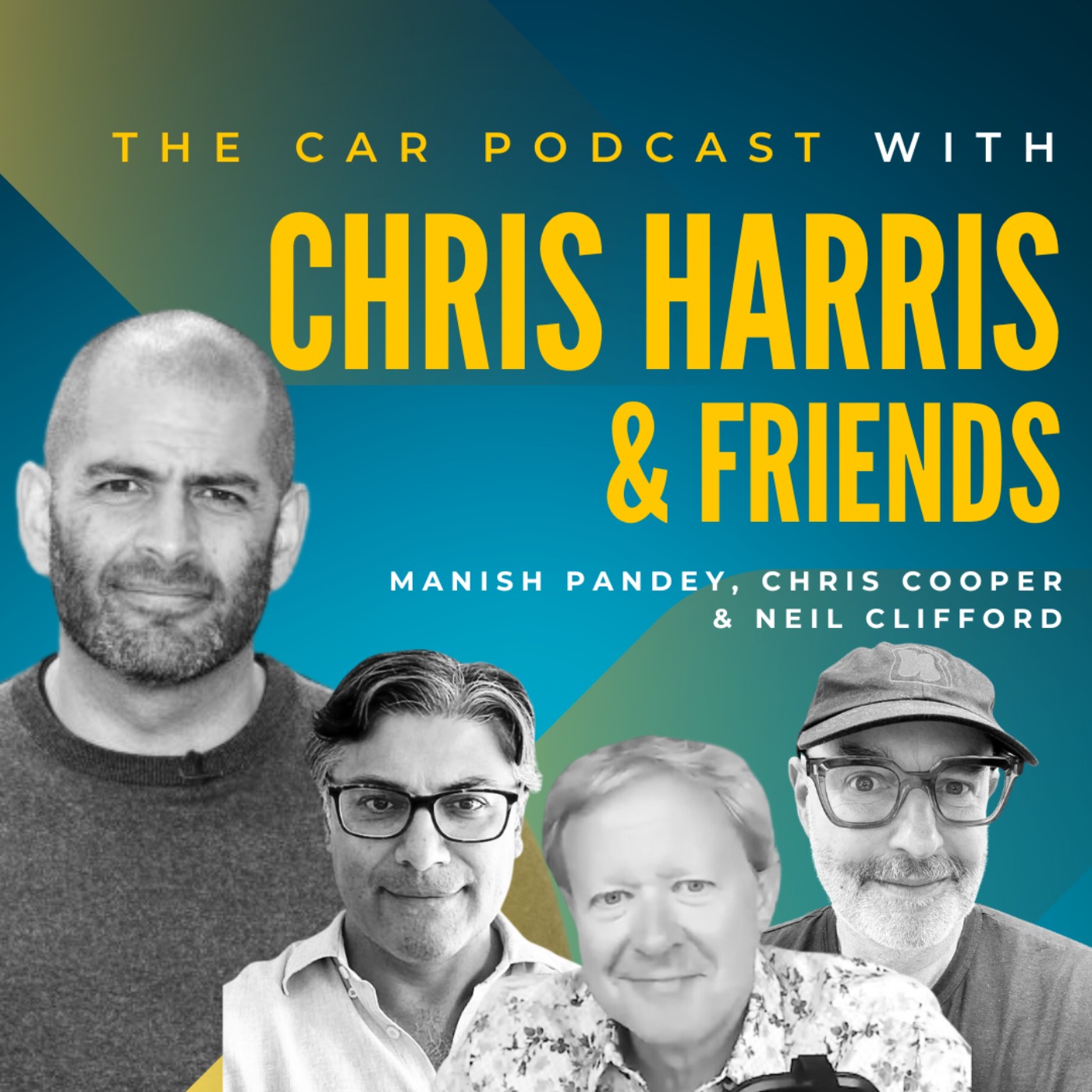
Ferrari are bringing back the Manual! | The Car Podcast Emergency Podcast
About this episode
Ferrari’s “manual comeback” sparks debate on whether a dual-clutch gearbox with manual operation really counts as a true manual. The hosts break down the new VertiCom/12-cylinder setup: a clutch pedal, gated feel, manual upshifts/downshifts (with some auto behavior at higher speeds), and even the ability to stall or block-change. They also discuss Ferrari’s prior stance against manuals, the limited run numbers, and how this could affect used values of rare older manual Ferraris—ending with a hopeful call for other brands to follow.
Get your tickets to Clapham Grand below! From £34.50!
Download Car & Classic’s app today to see our 2CG’s, and our weekly pick of our favourite listings:
https://candc.li/App_Download_
Hosted on Acast. See acast.com/privacy for more information.
dual clutch gearbox
"And actually, if you drill into the data of the new Dodici Cylindri Manoale, you'll find out it actually has a dual clutch gearbox, but with a manual operation now available."
A dual-clutch gearbox uses two clutches so the car can switch gears very quickly. It can feel like a manual because you can choose gears yourself, but the shifting is still handled by the transmission.
A dual-clutch gearbox uses two separate clutches—one for odd gears and one for even gears—so it can pre-select the next gear. That enables very fast, smooth shifts compared with a traditional torque-converter automatic, and it can also support manual-style gear selection.
Neil Cliford
"First of all, the question goes to Neil Cliford. I think sitting holding a red telephone, it's an Arnaj in Le Mans."
Neil Cliford is the person the host brings into the conversation to answer a question. He’s part of the discussion about Ferrari’s manual/gearbox choices.
Neil Cliford is named as the person being asked a question in this segment. The discussion around manuals and gearbox decisions is being directed to him, so he’s a relevant on-air participant for the debate.
Le Mans
"First of all, the question goes to Neil Cliford. I think sitting holding a red telephone, it's an Arnaj in Le Mans."
Le Mans is one of the most famous endurance races in the world, held in France. Mentioning it usually signals racing experience or credibility.
Le Mans is the famous French endurance race (24 Hours of Le Mans) held near the city of Le Mans. The speaker’s reference suggests an “Arnaj” (likely a person or team) connected to racing pedigree at Le Mans.
Galeria
"It's clear why they fired what's his name? Galeria. Galeria. Galeria. Because he's the guy that said, we will not make manual gearboxes."
They mention someone named “Galeria” as the person who previously said Ferrari wouldn’t build manual gearboxes. The point is that Ferrari seems to have reversed that position.
“Galeria” is referenced as the person who said Ferrari would not make manual gearboxes. The speaker uses this as context for why Ferrari’s stance appears to have changed.
manual gearbox
"Because he's the guy that said, we will not make manual gearboxes. If you want a manual gearbox, you go and buy a second hand one."
A manual gearbox is the kind where you choose the gears yourself, usually using a clutch. The speaker is saying that if you want that exact driving feel, you may have to look at used cars.
A manual gearbox requires the driver to select gears using a clutch pedal (or clutch mechanism) and a gear lever. The speaker contrasts this with modern automated transmissions, arguing that if you want a true manual experience you’d need to buy used.
clutch pedal
"[261.0s] 12 cylinder, mainly manual. [263.0s] It's got a clutch pedal. [265.0s] You can do 200 miles an hour in 6th and you can change up to 7th."
It’s the pedal you press to help you change gears. It temporarily disconnects the engine from the transmission so shifting is smooth.
A clutch pedal is the driver-controlled pedal used to disengage the engine from the gearbox so you can shift gears smoothly. In a “manual” car, you typically press the clutch pedal while moving the gear lever to select the next gear.
hyperdrive button
"[300.0s] Yes. [301.0s] Ah. [302.0s] The hyperdrive button. [304.0s] Yeah, so they wanted a gator with six slots in a reverse."
They’re jokingly calling a special button the “hyperdrive button.” Pressing it changes how the car shifts gears to help you go faster at the top end.
The “hyperdrive button” is the speaker’s playful name for a special mode button that changes how the car manages gears. In this context, it’s used to switch behavior at very high speed to help reach the final top-end acceleration.
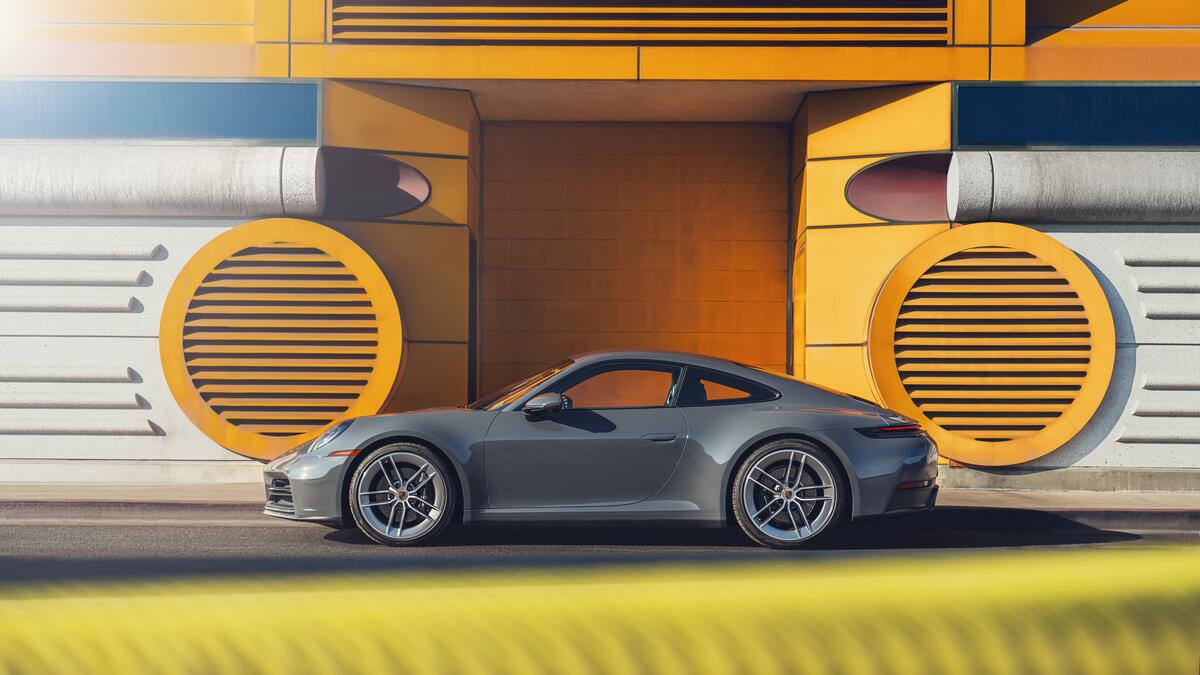
991 GT2 RS
"[304.0s] Yeah, so they wanted a gator with six slots in a reverse. [309.0s] Yep. [310.0s] And if you happen to find yourself in a dogfight with a particularly irascible 991 GT2 RS, [319.0s] when you get to very high speed, you can press a button and go into automatic mode to get"
This is a super-quick Porsche 911 variant built for the track. The hosts mention it as a dramatic example of something you’d be racing at very high speed.
The Porsche 911 GT2 RS (generation 991) is a track-focused, high-power 911 variant known for extreme performance and aggressive tuning. In the segment, it’s used as a humorous “enemy” in a fast, high-speed scenario to set the context for the Ferrari’s gear-selection trick.
automatic mode
"[310.0s] And if you happen to find yourself in a dogfight with a particularly irascible 991 GT2 RS, [319.0s] when you get to very high speed, you can press a button and go into automatic mode to get [324.0s] that last 15 miles an hour."
It’s a mode where the car does the gear changes for you. You don’t have to shift manually in that mode.
Automatic mode is a driving setting where the car handles gear selection for you instead of requiring the driver to shift. In a “manual-ish” setup, it’s often used at very high speeds to reduce driver workload or optimize shift timing.

Ford Falcon
"...at last 15 miles an hour. Is that when Millennium Falcon is being chased by something and all the stars go..."
The Ford Falcon is an older car model made by Ford. In this podcast moment, it’s likely being mentioned as a familiar, classic name, not because it’s connected to the “Millennium Falcon” story. The comparison is probably just for humor.
The Ford Falcon is a classic American-built car line that’s known for being a practical, widely used model in its era. It may come up in a podcast as a reference point for older, more iconic vehicles—especially when the conversation turns to pop-culture comparisons or nostalgia. The “Millennium Falcon” chase mention sounds like a playful analogy rather than a technical discussion of the car itself.
forward gears
"So it is six forward gears then, Manish?"
“Forward gears” refers to the number of selectable gear ratios used for driving ahead (as opposed to reverse). More forward gears can help keep the engine in its ideal operating range more often, though it depends heavily on gearing strategy and transmission type.
automatic gearbox
"I'll talk about what I know about. Lola famously has an automatic gearbox with four forward gears."
An automatic gearbox shifts gears for you. You don’t have to use a clutch pedal to change gears.
An automatic gearbox is a transmission that changes gears without the driver using a clutch pedal. Instead, it uses hydraulic/electronic control to select the appropriate gear based on speed, throttle input, and engine conditions.
overwrite
"They do a manual car, but it's very slightly gimmicky because there's a DCT and an overwrite."
Here, “overwrite” means the car can override what you’re doing with the gearbox. So even if it feels manual, the car may still step in with its own automatic logic.
In this context, an “overwrite” refers to a control override that lets the driver’s manual input be superseded or blended with the transmission’s programmed behavior. It’s essentially a way to keep the car’s automated logic while still offering a manual-style interaction.
rev match
"Pull second. You have to sort of rev match."
Rev matching means you “blip” the engine a bit so the RPMs line up with the gear you’re going into. It makes downshifting smoother and prevents the car from jerking.
Rev matching is the technique of adjusting engine speed to match the lower gear’s required speed before you fully engage the clutch. It reduces driveline shock and helps downshifts feel smooth and controlled.
auto mode
"If you're in auto mode, if you go below 80 kmph, I think it is, 80, and you just push the clutch pedal, you become a manual."
Auto mode is when the car chooses the gears for you. You don’t have to shift manually, and the car handles it automatically.
Auto mode is a driving mode where the car automatically selects gears for you, typically using an automated manual or dual-clutch transmission logic. The speaker describes switching between auto and manual behavior based on speed and pedal input.
hybrid
"The chassis is exactly the same. They chose the 12C for obvious reasons because it's got no hybrid,"
A hybrid uses a gas engine plus an electric motor. In this case, the speaker is saying that having no hybrid system makes the manual feature simpler to design and control.
A hybrid vehicle uses both an internal-combustion engine and an electric motor/battery system. The speaker implies that removing hybrid complexity makes it easier to implement a manual activation strategy tied to speed and clutch input.

Ferrari 430
"He said, "well, I actually worked on the manual gearbox cars all those years ago, and I felt like saying, the last good one I drove was probably the 430""
The Ferrari 430 is a mid-engine Ferrari supercar. Here, it’s mentioned as the last manual Ferrari the speaker really liked driving.
The Ferrari 430 is a mid-engine V8 supercar from the 2000s, known for its naturally aspirated character and driver-focused layout. In this segment, Chris Harris is using it as a benchmark for the “last good” manual Ferrari he drove.

Ferrari 599
"the last good one I drove was probably the 430 because the few 599s they made are worth a zillion pounds. If you drive one, that's shit."
The Ferrari 599 is a V12 Ferrari grand tourer. In this segment, the speaker says the manual versions are rare and expensive, and he doesn’t like how they drive.
The Ferrari 599 is a V12-powered grand tourer from the late 2000s, famous for its high-revving engine and big, fast-road presence. The speaker notes that only a few manual 599s were made, implying rarity and value, and then makes a strong opinion about how they drive.

Ferrari 575
"And actually, a 575 manual isn't very nice. They're not..."
The Ferrari 575 is a V12 front-mid-engine Ferrari from the mid-2000s, typically associated with the brand’s classic gated manual feel in some configurations. Here, the speaker says a “575 manual” isn’t very nice, contrasting it with other Ferrari manuals he prefers.

Ferrari 550s
"They're not... The 550s is good, and a 456 is nice,"
The Ferrari 550 is an older V12 Ferrari. Here, the speaker is saying the manual version is good to drive compared with some other manuals.
The Ferrari 550 is a V12 Ferrari from the 1990s/early 2000s era, often remembered for its analog driving feel and classic supercar proportions. The speaker says the “550s is good,” using it as a positive example among Ferrari manual gearbox cars.

BMW 550S
"They're not... The 550s is good, and a 456 is nice,"
The BMW 5 Series is a mid-size luxury car made by BMW. It’s usually chosen for a balance of comfort and performance. The podcast mention of specific numbers (like “550”) is pointing to particular engine versions within the 5 Series.
The BMW 5 Series is BMW’s mid-size luxury sedan line, typically positioned as a comfortable daily driver with strong performance options. In the context you provided, the discussion highlights specific variants—like the 550i—suggesting the episode is comparing which versions are most appealing. It’s a common topic because different engines and model years can feel quite different in power, smoothness, and running costs.

Ferrari 456
"The 550s is good, and a 456 is nice, but as they sort of forgot about them over time,"
The Ferrari 456 is a V12 Ferrari grand tourer from the 1990s. The speaker is saying the manual version feels good to drive.
The Ferrari 456 is a V12 grand tourer from the 1990s, known for being more “usable” than many track-focused Ferraris while still delivering V12 drama. The speaker calls a “456” nice, placing it among the better-driving Ferrari manual experiences in his opinion.
gear gate
"I know they have patented the gear gate [683.0s] and the actual shifter."
The gear gate is the part of the shifter mechanism that “routes” you into the right gear positions. It’s like a guide that makes it harder to accidentally grab the wrong gear.
A gear gate is the shaped “slot” in the shift mechanism that guides the driver’s hand to the correct gear positions. In a manual gearbox, it helps define the allowed shift pattern and reduces the chance of selecting the wrong gear.
shifter
"I know they have patented the gear gate [683.0s] and the actual shifter. [685.0s] That was mentioned in the conversation."
The shifter is the lever you move to choose gears. Here, they’re talking about the specific mechanism Ferrari designed and patented.
In this context, the shifter refers to the physical mechanism the driver moves to select gears. The speaker is implying Ferrari patented details of how the shifter works with the gearbox’s shift pattern (including the gear gate).
Koenigseggs
"it is quite close to the Koenigsegg solution [690.0s] because the Koenigseggs had something like this for a while,"
Koenigsegg is a supercar brand famous for unusual, high-tech engineering. Here, they’re being used as a comparison point for a similar idea about how shifting can work.
Koenigsegg is a Swedish supercar maker known for advanced drivetrain and shifting technologies. The speaker is comparing Ferrari’s new manual approach to earlier Koenigsegg solutions, noting that Koenigseggs had something similar but not using dual-clutch gearboxes.
DCT
"You've pre-selected a gear in the DCT as well, [701.0s] but you're..."
DCT means dual-clutch transmission. It uses two clutches so the car can have the next gear ready, which makes shifting quicker and smoother than a normal manual.
DCT stands for dual-clutch transmission. It uses two clutches—one for odd gears and one for even—so the next gear can be pre-selected and engaged quickly, enabling fast shifts without a traditional torque converter.
Silverstone
"Well, I've just come from Silverstone. We're very, very lucky to be at Silverstone today."
Silverstone is a well-known race track in the UK. Formula 1 cars race there, so it’s a serious place to test or show off fast cars.
Silverstone is a famous motorsport circuit in the UK, best known for hosting Formula 1. It’s also used for other major racing events, so seeing a car test or race there is a big deal for performance brands.
V12
"And a red Ferrari, his yellow helmet, manual gearbox V12 Ferrari, what a day."
A V12 is an engine with 12 cylinders arranged in two rows. It’s famous for smooth running and a special sound, and it’s not common anymore.
A V12 is an engine with 12 cylinders arranged in a “V” shape, usually with two banks of six cylinders. V12s are known for smooth power delivery and a distinctive sound, and they’re relatively rare in modern cars.
Request an Explanation
Heard something you'd like explained? We'll add it to this episode.
Sign in to request explanations for terms you heard.
Want to learn more?
Browse our glossary for plain-English explanations of automotive terms, jargon, and concepts.
Help improve this episode
See something that's not quite right? Our annotations are AI-generated and can sometimes miss the mark. Click the flag icon on any annotation to suggest a correction.