
Ayrton Senna | The Car Podcast #94
About this episode
A cut-down Chris Harris & Friends show turns into a deep, story-driven discussion of Ayrton Senna and why his legend endures. The hosts trade personal memories of 1994 and the Imola weekend, then focus on Senna’s off-track persona—his poetic, physical way of talking about the car—and how that shaped his myth. A standout segment shares family anecdotes that suggest obsessive traits (the “toast-buttering” story and a missing tennis ball obsession), sparking debate: were they a curse or the edge that made him great?
Get your tickets to Clapham Grand below! From £34.50!
Download Car & Classic’s app today to see our 2CG’s, and our weekly pick of our favourite listings:
https://candc.li/App_Download_
(00:00) Intro
(00:06) Senna
(12:57) Dogs as cars, cars as dogs (aka are VW Polos actually cats?!)
(19:32) Coolest Citroen
(30:04) F1
(41:57) 2CG with Car & Classic
(52:02) Music
Hosted on Acast. See acast.com/privacy for more information.
Ayrton Senna
"[155.6s] all my stories about Senna. [177.0s] Because I think he had a few obsessive psychological issues. [222.7s] So I think he was a double world champion at this point."
Ayrton Senna was a famous Formula 1 race driver from Brazil. He won the world championship three times and is widely considered one of the greatest drivers ever, known for being extremely focused and skilled behind the wheel.
Ayrton Senna was a Brazilian Formula 1 driver and a three-time World Champion (1988, 1990, 1991). He’s remembered for exceptional car control, especially in wet conditions, and for his intense, detail-obsessed approach to driving and racing.
Formula One
"I think in Formula One, it was a massive blessing [..] because it made him so obsessive about a sport which was absolutely packed with details."
Formula One is the highest level of open-wheel race car racing. The cars are very advanced, and the teams obsess over tiny details to go faster.
Formula One (F1) is the top tier of open-wheel racing run by the FIA, using single-seat race cars with strict technical rules. It’s known for intense engineering detail, driver skill, and constant performance analysis.
James Hunt
"Hunts, maybe? [..] I mean, James Hunt. [..] bless him."
James Hunt was a famous Formula One race driver from the UK. He won the World Championship in the 1970s and was known for being a bit wild and unpredictable.
James Hunt was a British Formula One driver, famous for his flamboyant personality and for winning the 1976 World Championship with McLaren. He’s often remembered as a contrast to more methodical drivers.
Gilles Villeneuve
"I think Gilles Villeneuve was a very, very untidy driver, actually."
Gilles Villeneuve was a Formula One driver from Canada. Fans loved him because he drove with a lot of intensity and took big risks on track.
Gilles Villeneuve was a Canadian Formula One driver known for aggressive, high-commitment driving and an intense style. He raced in the late 1970s and early 1980s and became a fan favorite for his fearless approach.
Mansel
"I was the only one that was British at that point, you know. Mansel was still my guy or whenever that, but he was the guy, you wanted his hair."
“Mansel” is Nigel Mansell, a British Formula 1 champion. The speaker is saying Senna had a favorite driver or admired him.
“Mansel” refers to Nigel Mansell, a British Formula 1 champion known for aggressive driving and high competitiveness. In this segment, the host mentions him as someone Senna admired or compared to.
Lewis
"Did he resonate outside the sport? The way that the, like Lewis does. When Lewis won that race of the week, it was amazing."
“Lewis” here means Lewis Hamilton, a top Formula 1 driver from Britain. The speaker is comparing how Hamilton’s success made him widely known, similar to how Senna resonated beyond racing.
“Lewis” is a reference to Lewis Hamilton, a British Formula 1 driver who became famous for winning multiple races and championships. The speaker compares Senna’s mainstream impact to Hamilton’s, describing how coverage and attention spike after big wins.
Michael Schumacher
"He used to go to America for holidays, a bit like Michael Schumacher, because the volume of F1 was so much lower and because he was Brazilian,"
Michael Schumacher was a German Formula 1 driver and multiple-time world champion, famous for dominating the sport during his peak years. The host uses him as a comparison point for why Senna might travel to America during holidays.
F1
"He used to go to America for holidays, a bit like Michael Schumacher, because the volume of F1 was so much lower and because he was Brazilian,"
F1 stands for Formula 1, the highest level of car racing with single-seat race cars. The speaker is saying there was less F1 attention in America, so it was easier to live normally on holiday.
F1 is the common abbreviation for Formula 1, the top level of open-wheel racing governed by the FIA. In the segment, it’s used to explain why the sport’s “volume” (attention and coverage) felt lower in America at that time.
Imola
"Hmm. That race in Imola. And John wasn't there because he was Silverstone for an F-3000 race."
Imola is a famous race track in Italy. It’s known for a tragic Formula 1 weekend in 1994 involving Ayrton Senna.
Imola refers to Autodromo Enzo e Dino Ferrari in Imola, Italy, a classic Grand Prix circuit. It’s especially famous in Formula 1 history for the 1994 weekend where Ayrton Senna and Roland Ratzenberger were killed.
F-3000
"And John wasn't there because he was Silverstone for an F-3000 race. He was the chief designer of the Reinhard F-3000 car in 94D, which one David Coulthard was driving that weekend."
F-3000 (Formula 3000) was a single-seater racing series that used standardized engines and was widely seen as a direct path toward Formula 1. In the 1990s it became the main proving ground for up-and-coming drivers and teams.
David Coulthard
"He was the chief designer of the Reinhard F-3000 car in 94D, which one David Coulthard was driving that weekend. Well, I think it was his only F-3000 race that year,"
David Coulthard is a well-known Formula 1 driver. Here he’s mentioned because he was racing an F-3000 car at the time.
David Coulthard is a Scottish Formula 1 driver who later raced for top teams. In this segment, he’s mentioned as driving the Reinhard F-3000 car during that weekend, linking the feeder series to the F1 talent pipeline.
Roland Ratsenberger
"Because of Reuben Barrichello's accident, then the horrible events of Saturday with Roland Ratsenberger. And it sort of initially didn't seem that bad because it was like,"
Roland Ratzenberger was a Formula 1 driver who died in a crash during the 1994 race weekend at Imola. That tragedy helped push major safety changes in F1.
Roland Ratzenberger was an Austrian Formula 1 driver who died during the 1994 San Marino Grand Prix weekend at Imola. His crash was one of the events that made that weekend a turning point for safety in Formula 1.

Volvo XC90
"Mr Harris, a white miniature poodle. Is a Suzuki XC90. Brilliant."
The Volvo XC90 is a larger family SUV. It’s built to carry people comfortably and handle daily driving. It’s often mentioned as a practical, easy-to-live-with vehicle.
The Volvo XC90 is a midsize luxury SUV known for family-friendly practicality and a comfortable ride. In the podcast context, it’s mentioned as a “Suzuki XC90,” which appears to be a playful slip, but the key point is the XC90 as a recognizable SUV choice. It’s the kind of vehicle that comes up when discussing sensible, everyday usability rather than pure sports-car performance.
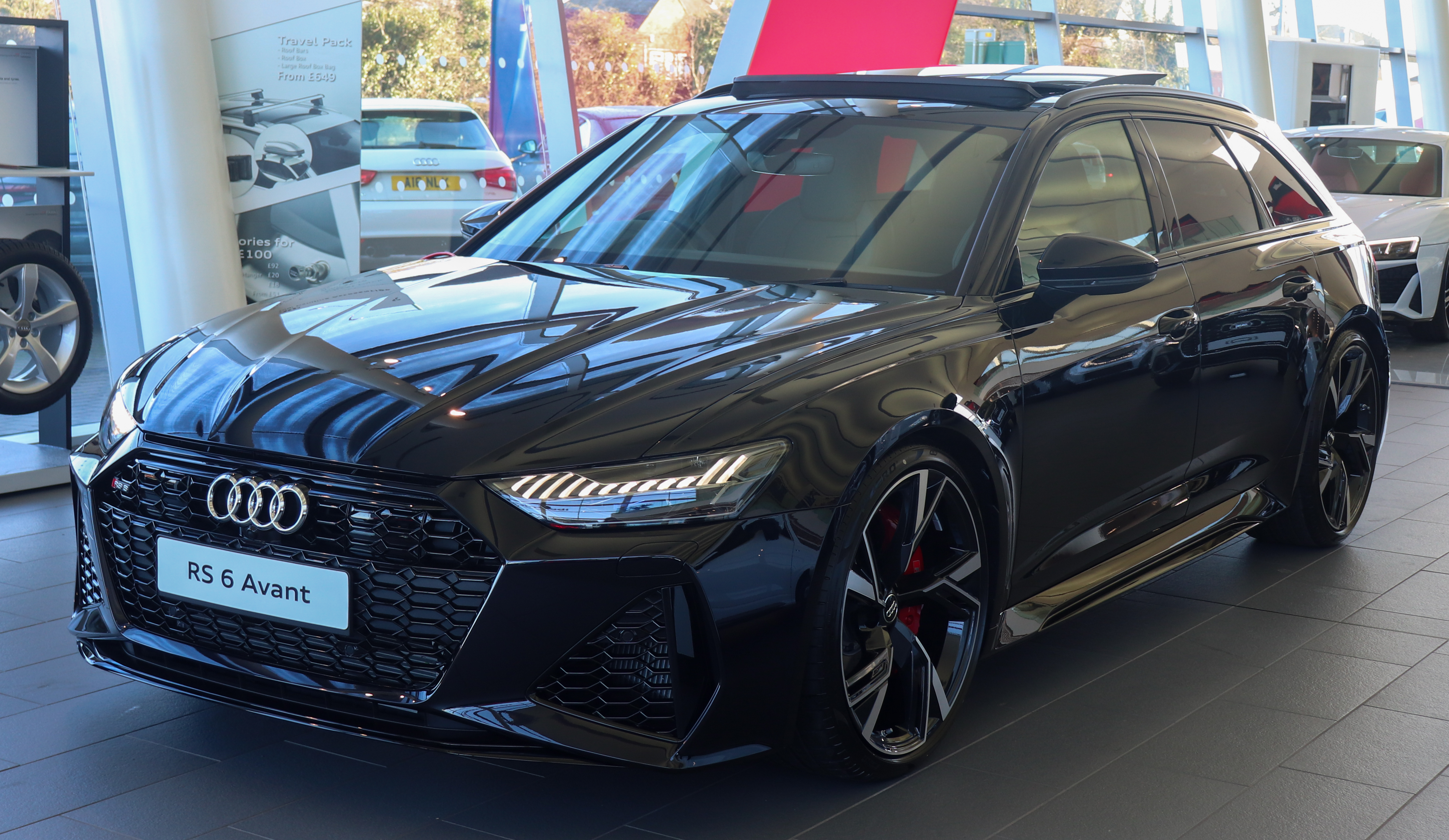
Audi Rs6
"I think that is a 2004, whatever series that was, Audi RS6. [954.1s] Oh yes. [955.1s] That's true. [956.1s] C5. [957.1s] C5, yeah."
The Audi RS6 is Audi’s “serious performance” version of the A6. It’s known for being very quick while still being usable day-to-day, and here they’re talking about the older C5-era RS6 from the early 2000s.
The Audi RS6 is a high-performance version of the Audi A6, typically built around a powerful twin-turbo V8 and tuned for fast, confident driving. In this segment the hosts narrow it down to the C5 generation, which is the early-2000s RS6 era known for its big power and wagon/sedan practicality.
V8
"[958.1s] Is that with the V10 or the V8? [961.1s] V8. [962.1s] V8."
A V8 is an engine with eight cylinders arranged in a V shape. More cylinders usually means smoother power and strong acceleration.
A V8 is an engine with eight cylinders arranged in a “V” shape. It’s a common layout for performance and smoothness because the cylinder arrangement helps balance the engine’s power delivery.
Twin turbo
"[962.1s] V8. [963.1s] Twin turbo. [964.1s] Leica."
Twin turbo means there are two turbochargers feeding extra air into the engine. More air lets the engine make more power.
Twin turbo means the engine uses two turbochargers to force more air into the cylinders. That typically increases power and helps the engine feel more responsive, especially when the turbos are sized and controlled for good boost across the rev range.

Citroen 2CV
"Chihuahua, mannish. Citroen 2CV. Nice."
The Citroën 2CV is a small old car made by Citroën. It was designed to be simple and handle everyday roads, even when they weren’t great. People talk about it because it has a very distinctive, quirky character.
The Citroën 2CV is a small, quirky French car famous for its simple design and ability to cope with rough roads. It’s often discussed as an icon of “character” engineering—more about practicality and charm than outright performance. The podcast’s brief mention fits that idea: it’s a memorable, personality-driven classic.

Chevrolet Suburban
"[991.1s] Mr Harris, St Bernard. [996.1s] Chevy Suburban. [1001.1s] Oh yes. [1003.1s] They're so good. [1005.1s] When you get in one of those and you get a higher car, [1008.1s] I've got a Suburban. [1009.1s] I'm so happy."
The Chevrolet Suburban is a big, comfortable SUV that’s built to carry people and gear easily. It’s also popular because it sits higher, so getting in and out feels easier than in low cars.
The Chevrolet Suburban is a full-size SUV known for its long-running “family hauler” formula: lots of interior space, strong towing capability, and a comfortable ride. In this segment, Chris Harris is praising how good it feels to get into a Suburban—especially compared with lower cars.
longer version of an atom
"I've never driven a longer version of an atom [1044.1s] that neither like both of it."
They’re talking about a bigger/longer version of the Atom, which can change how the seats and space feel. Even if it’s the same basic car, the extra length can affect whether taller people fit comfortably. They’re unsure because they haven’t sat in or driven one.
This refers to a variant of the Ariel Atom with different dimensions—typically longer wheelbase or altered packaging—so the seating position and interior space can change. The hosts connect it to fitment, implying the cabin/cockpit is not the same as the standard Atom. Without a specific model name, it’s best understood as a size/fitment difference within the Atom family.
DS
"So this was the big debate. Do you go CX or DS? And the CX for me, aesthetically, it had to be the DS, actually. Oh, and DS in the end."
The Citroën DS is a classic Citroën from the 1950s that looked futuristic for its time. It also used advanced tech, including special suspension and braking systems, which made it feel way ahead of other cars.
The Citroën DS is a landmark 1955-era design famous for combining futuristic styling with advanced technology. In this segment, the host highlights its disc brakes and hydropneumatic suspension as part of why it was so “technically off the scale.”
CX
"So this was the big debate. Do you go CX or DS? And the CX for me, aesthetically, it had to be the DS, actually."
The Citroën CX is another Citroën model, from a later era, with a very distinctive futuristic look. The hosts are basically debating whether the CX or the DS looks cooler.
The Citroën CX is a later Citroën model line known for its aerodynamic, space-age styling. Here it’s being compared directly against the Citroën DS on aesthetics, with the DS ultimately winning in the host’s opinion.
hydropneumatic suspension
"disc brakes, hydropneumatic suspension, the power steering, all the stuff it has."
Hydropneumatic suspension uses pressurized fluid and gas to act like the car’s spring and shock absorber. It helps the car stay level and ride smoothly, even when the road or load changes.
Hydropneumatic suspension is Citroën’s distinctive system that uses pressurized hydraulic fluid and nitrogen gas (in spheres) to provide springing and damping. It can keep the car’s ride height more consistent and deliver a very smooth, self-leveling ride compared with conventional coil-spring setups.
disc brakes
"And then to make a car that's not only that beautiful, but also that technically off the scale, disc brakes, hydropneumatic suspension, the power steering, all the stuff it has."
Disc brakes stop the car by squeezing pads against a spinning metal disc. They tend to work more consistently than older drum brakes, especially when you brake hard more than once.
Disc brakes use a rotating disc (rotor) squeezed by brake pads to slow the car. Compared with older drum brakes, discs generally provide more consistent braking and better resistance to fade under repeated hard stops.
power steering
"hydropneumatic suspension, the power steering, all the stuff it has. And then to make something with an interior quite so stylish."
Power steering helps you turn the wheel with less effort. That makes driving and parking easier, especially when you’re moving slowly.
Power steering uses a pump or electric assist to reduce the effort needed to turn the steering wheel. It improves low-speed maneuverability and makes the car easier to drive, especially in parking and tight corners.
Flamino Bertone
"I did design by Flamino Bertone, who was a sculptor. I didn't know this."
Flamino Bertone was a designer who helped create the look of some famous Italian cars. In this clip, the host is saying the DS’s styling came from a serious design talent, not just normal car styling.
Flamino Bertone was an Italian designer associated with the Bertone coachbuilding house. Here, he’s credited with designing the car’s look, and the host connects that design background to the vehicle’s sculpted, “spaceship” appearance.
traction avant
"He designed the traction avant and the two CV before. A guy called Andre Lefebvre and Robert."
“Traction Avant” is a Citroën term for front-wheel drive. That means the front wheels do the work of pulling the car, which can make the car feel different in how it drives.
“Traction Avant” is Citroën’s name for its front-wheel-drive system and the early model line that used it. The key idea is that the engine’s power is sent to the front wheels, which changes packaging and handling compared with rear-wheel drive.
Andre Lefebvre
"He designed the traction avant and the two CV before. A guy called Andre Lefebvre and Robert."
André Lefèbvre was a key French automotive engineer at Citroën. The host mentions him as part of the engineering team behind the DS’s development, alongside other figures responsible for its advanced design and technology.
aerodynamicist
"So the sculptor, an aerodynamicist and a kind of engineer par excellence. I mean, how does it get better than that?"
An aerodynamicist is someone who focuses on how air moves around a car. That can change how slippery the car feels and how stable it is when you’re going fast.
An aerodynamicist is a specialist who designs and studies how air flows around a vehicle. In car terms, that matters because airflow affects drag, stability, and how efficiently the car moves at speed.

Citroen GS
"So it's not the DS and it's not the SM. [1526.1s] It's the GS, early 70s, specifically, specifically the by rotor. [1532.1s] Yeah. [1533.1s] Vankel engine GS."
The Citroën GS is a classic 1970s Citroën. Here, they’re talking about a special early-70s version that used a rotary engine, which is unusual compared with most cars.
The Citroën GS is a 1970s compact car known for its distinctive, very “French” design and engineering. In this segment, the hosts focus on an early-70s GS variant with a rotary engine, which is a big part of why it stands out from typical piston-engine cars.
Vankel engine
"Yeah. [1533.1s] Vankel engine GS. [1536.1s] You look at that shape now, we'll put a picture up to show it."
A Wankel (rotary) engine doesn’t use pistons. Instead, it uses a spinning rotor to create power, which is why it feels and sounds different from most engines.
A “Vankel engine” refers to a Wankel rotary engine, which uses a spinning rotor instead of pistons moving up and down. That rotary layout can make packaging and smoothness interesting, but it also behaves differently than conventional engines in terms of how it makes power and how it wears over time.
Wankel engine
"Yeah. [1533.1s] Vankel engine GS. [1536.1s] You look at that shape now, we'll put a picture up to show it."
A Wankel engine is a rotary engine. It makes power with a spinning rotor rather than pistons, so it’s a different kind of engine than you’d expect in a normal car.
A Wankel engine is a rotary engine design where combustion happens in a chamber formed by a rotor that spins as it moves through the housing. This is distinct from the piston-and-crankshaft design most cars use, so it’s a key technical reason the segment’s “by rotor” GS is notable.
rotary engine
"The story about the by rotor is that Citroen was so worried about the potential for mechanical failure. They tried to buy them all back."
Most car engines use pistons that move up and down. A rotary engine works differently: it uses a spinning “rotor” to make power. Because it’s a different design, it can have different reliability concerns than a normal engine.
A rotary engine is an engine design where a rotor spins to create combustion, instead of pistons moving up and down. That layout can be distinctive in how it delivers power and how it’s engineered for reliability and emissions. In this story, it’s specifically tied to Citroën’s concern about mechanical failure for a rotary-powered car.
corrosion
"Am I going to, you know, am I going to risk the 15 grand? Shall I deal with the corrosion or is it going to be 15 grand to paint the whole bloody car?"
Corrosion is basically rust and metal damage over time. On a car, it can start small but can spread, and fixing it properly usually means more work than just touching up paint. That’s why it can get expensive.
Corrosion is the chemical/electrochemical process that causes metal to deteriorate over time, most commonly seen as rust on car body panels. On older cars, corrosion around wheel arches (“wings”) can spread and become expensive because it often requires cutting out affected metal before repainting. The speaker uses it to frame a restoration cost decision.

Citroen SM
"Maybe it's the right choice. Maybe it's a bit too obvious. The Citroen SM. And there he was."
The Citroën SM is a famous old French luxury sports/grand touring car. It’s remembered for being unusual and technically ambitious for its time. Here, they’re talking about the specific Citroën SM they saw.
The Citroën SM is a classic French grand tourer known for its advanced, stylish design and its distinctive engineering. It’s especially notable in enthusiast circles because it’s associated with Citroën’s experimental approach to powertrains for that era. In this segment, it’s the specific car being discussed as the “obvious choice” color/variant.
pneumatic things
"Green with black manual had all the suspension pneumatic things done by that company that everyone wants them to do it for. [1711.1s] They had the special wheels."
“Pneumatic” means using air pressure. In a car, that often points to suspension parts that use compressed air to help control how the car rides and handles.
“Pneumatic things” here refers to air-pressure-based systems—most likely pneumatic suspension components. In practice, these systems use compressed air to control ride height and damping characteristics, aiming for a smoother or more adjustable feel than purely mechanical setups.
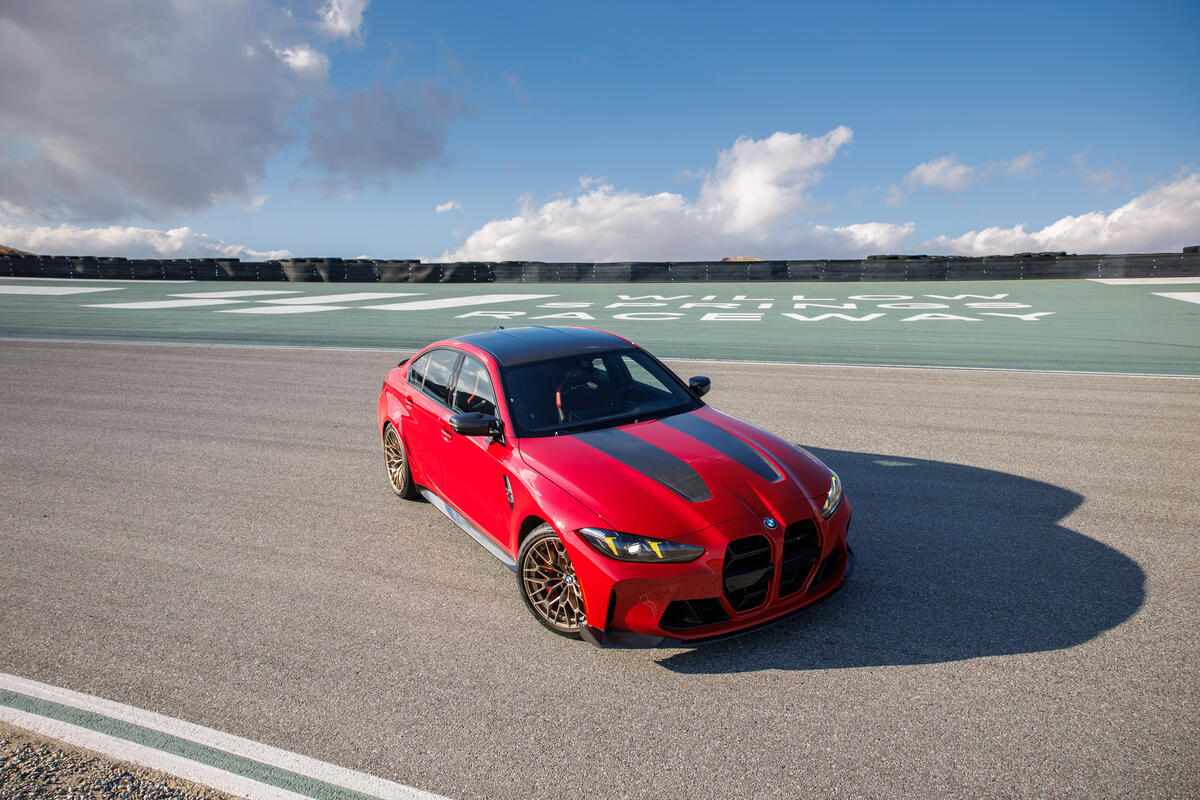
BMW M3
"Lancia Integrale for me and E30 M3. [1724.1s] Same."
The BMW E30 M3 is a famous older BMW performance model. Fans love it because it’s a very engaging, well-balanced car to drive, and it has strong racing roots.
The BMW E30 M3 is a legendary 1980s/early-1990s homologation-era performance car built around BMW’s M division. It’s celebrated for its balance, steering feel, and the way it became an icon for “driver’s car” handling—especially in the context of motorsport and road relevance.

BMW E30
"...s throw it out there. Lancia Integrale for me and E30 M3. Same."
The BMW 3 Series is a mid-size car made by BMW. It’s designed to be comfortable for everyday driving but also fun to drive. People often mention it when talking about classic, important BMW models.
The BMW 3 Series is a compact executive car line that’s often associated with driving feel and a broad range of performance and comfort variants. In enthusiast discussions, it’s frequently used as a reference point for what a “proper” sporty daily driver should be. The podcast context groups it with other iconic cars, suggesting it’s part of a shared shortlist of meaningful models.

Delta Lancia Integrale
"Let's throw it out there. Lancia Integrale for me and E30 M3. Same."
“Delta” refers to a model called the Lancia Delta. It’s a car that’s known for being sporty and having a strong reputation among car enthusiasts. People mention it because it’s more than just a normal everyday car.
“Delta” in this context most likely refers to the Lancia Delta, a performance-focused model that’s often remembered for rally heritage and strong enthusiast appeal. It’s brought up alongside other iconic cars, suggesting it’s part of a shortlist of meaningful, driver-focused machines. The name alone is enough for many fans because the Delta has a reputation beyond just being a regular road car.
hovercraft
"It's a little bit tricky because it's basically a hovercraft. [1738.1s] And the button of the brake pedal is tricky."
He’s using “hovercraft” as a comparison. He means the car feels very smooth and floaty, like it’s not fully “bouncing” on normal springs.
Calling the car “basically a hovercraft” is a metaphor for how it feels—typically very floaty or smooth, as if it’s riding on an air cushion. Enthusiasts often use this kind of comparison when suspension and ride height control make the car feel unusually detached from the road.
425cc
"I think that the sweet spot is a 425cc, late 50s, canvas roof, very bare interior and a, you know, winter ribbons that work off the speedometer cable."
“425cc” is the size of the engine, measured by how much space the cylinders move. The host is saying a 425cc version of the car is the best mix of simplicity and feel.
“425cc” refers to engine displacement—how much volume the engine’s cylinders sweep. In the context of the Citroën 2CV, the host is pointing to a specific, smaller-displacement era as the “sweet spot,” implying a balance of simplicity, lightness, and character.
speedometer cable
"I think that the sweet spot is a 425cc, late 50s, canvas roof, very bare interior and a, you know, winter ribbons that work off the speedometer cable."
A speedometer cable is an older-style mechanical connection that tells the speedometer how fast the car is going. Here, the host is saying some accessories are powered by that same cable movement.
A speedometer cable is a mechanical link that transfers the vehicle’s speed to the speedometer (common on older cars). The host mentions “winter ribbons” that work off the speedometer cable, highlighting how some older designs used mechanical motion from the speed signal to operate accessories.
hot hatch
"But the way it drives is so urgent that I almost think it's the ultimate hot hatch because you might not be going very fast."
A hot hatch is a small hatchback that’s been tuned to feel more exciting to drive. It’s meant to be quick and fun, not just practical.
A hot hatch is a performance-oriented hatchback that’s tuned for quicker acceleration and more engaging handling than a normal compact hatch. The term usually implies a smaller, lighter car with a more aggressive driving character rather than a big-engine supercar feel.
Group A insurance
"And I remember it was Group A insurance in the early 90s where everything else was from 12."
“Group A insurance” is an old way insurers sorted cars into categories. Cars in the same group were priced and insured in a similar way, usually based on risk and how the car was used.
“Group A” refers to an insurance classification used in the early 1990s that grouped certain performance or homologation-style cars together for pricing and underwriting. When a host mentions “Group A insurance,” they’re talking about how that car was categorized for coverage and cost, not a mechanical feature.
AX GT
"So it should be the 2CV, but I'm going AX GT."
The “AX GT” is a Citroën AX GT, a small sporty hatchback. The point here is that even a cheap, compact car can feel really exciting and connected when you drive it.
The “AX GT” refers to the Citroën AX GT, a small hot-hatch from the 1990s with a punchier engine than the base AX. The host is using it as a punchline: despite being a tiny, affordable car, it can deliver a surprisingly special driving sensation.
F1 Austria
"Oh, a little bit of F1 Austria. I'm going to go to Mr Cooper first."
“F1 Austria” means Formula 1 racing in Austria, usually at the Red Bull Ring. They’re bringing it up as part of a racing discussion.
“F1 Austria” is a reference to Formula 1 racing in Austria, typically the Austrian Grand Prix at the Red Bull Ring. It’s being used here as a contextual example while they talk about racing moments.
Mr Cooper
"I'm going to go to Mr Cooper first. Yellow flag gate was interesting, wasn't it?"
“Mr Cooper” is a nickname for a specific person they’re talking about in the F1 context. The transcript doesn’t spell out who, but it’s clearly someone important to the racing story they’re telling.
“Mr Cooper” is a reference to a specific person the hosts are discussing in the context of Formula 1. In this kind of segment, it usually points to a well-known driver or team figure associated with F1 history or a particular moment.
Yellow Flag Gate
"So quality in Austria was really, really interesting about Yellow Flag Gate."
“Yellow Flag Gate” is an F1 system/rule that’s tied to how drivers must react when a yellow caution is shown. The key point is making sure everyone understands the exact warning being displayed.
“Yellow Flag Gate” refers to a specific F1 rule/implementation related to how drivers are expected to respond to yellow-flag cautions. The discussion here focuses on how the signaling is interpreted and applied, especially for double-waved yellow indications.
double waved yellow
"What was particularly interesting was how few people recognize what a double waved yellow looks like on the lightboards."
In F1, a yellow flag means “caution.” A double-waved yellow is a stronger warning, telling drivers to slow down more and be ready for something dangerous ahead.
A double-waved yellow is a specific Formula 1 caution signal shown on the lightboards. It indicates a more serious hazard than a single waved yellow, and drivers must reduce speed and be prepared for obstacles on track.
lightboards
"What was particularly interesting was how few people recognize what a double waved yellow looks like on the lightboards."
Lightboards are electronic boards around the track that show race warnings to drivers. They help drivers instantly understand what kind of caution is happening ahead.
Lightboards are electronic display panels at circuits that show race control signals to drivers. In F1, they’re used to communicate flag cautions quickly, including single and double-waved yellow patterns.
single yellow
"I can see how a single, a single yellow, a constant yellow would be a static yellow waved one, a flashing would be a single yellow."
A single yellow is the basic “slow down and be careful” warning in racing. It means there’s a problem somewhere on track, and drivers need to drive cautiously.
A single yellow is the lighter caution signal used in F1 signaling. In the context of lightboards, it corresponds to a less severe hazard than the double-waved yellow, but still requires drivers to slow and stay alert.
triangular flick flak thing
"And the answer was no, we're going to have this triangular flick flak thing."
They’re describing a special blinking pattern on the electronic boards. The idea is that the warning can be shown clearly without needing extra boards—just the right flashing sequence.
This phrase describes the visual pattern used on the lightboards to represent double-waved yellow cautions. The host is explaining that the system doesn’t require two separate lightboards; instead it uses a specific flashing pattern.
Red Bull
"It's amazing to see the Red Bull going so well. And that fantastic Ford Red Bull Milton Keynes engine."
Red Bull is the F1 racing team. The hosts are saying the Red Bull car has been doing really well.
Red Bull is the Formula 1 team and brand that competes in F1 with its own power unit and racing program. In this segment, it’s referenced as performing strongly, tying into the discussion of engine capability.
F1 Academy
"good luck to all the British drivers in Formula One and the F1 Academy."
F1 Academy is a racing series for women that’s linked to Formula 1. They’re saying to cheer for the British drivers there too.
F1 Academy is a women’s single-seater racing series connected to Formula 1. The host mentions it alongside F1 to encourage support for British drivers across the broader F1 ladder.
F2, F3
"everyone going Silverstone, please cheer all the British drivers, everyone Academy F2, F3, everything."
F2 and F3 are lower-tier racing series that help drivers work their way up toward Formula 1. The host is asking listeners to cheer for British drivers in those series too.
F2 and F3 refer to feeder series that develop drivers for Formula 1. The host groups them with F1 and F1 Academy as part of the wider ecosystem of races where young drivers compete.
George
"He just that car should not have been second. I know George was managing the very last stint and sort of backing off a little bit, but he wasn't backing off a second lap."
“George” is another Formula 1 driver. They’re saying he was being careful near the end of the race—more about managing the car than going as fast as possible every lap.
“George” refers to George Russell, another Formula 1 driver. Harris mentions him “managing the very last stint,” implying Russell was controlling tire/engine/pace to manage the race end rather than pushing flat-out.
stint
"I know George was managing the very last stint and sort of backing off a little bit, but he wasn't backing off a second lap."
A stint is the time you spend on a specific set of tires before you pit again. They’re saying George was careful with how hard he pushed during the final tire period.
A stint is a segment of an F1 race between pit stops, typically defined by a particular tire set and fuel/strategy plan. Harris says George was managing the “very last stint,” meaning he was controlling pace and resources late in the race.
Max Verstappen
"What is Max Verstappen doing in second place at the end of a race like that? And even if it's accident and qualifying, he didn't completely understand it."
Max Verstappen is a top Formula 1 race driver from the Netherlands. Here, they’re talking about why he ended up in second place and what his team was trying to do during the race.
Max Verstappen is a Dutch Formula 1 driver known for aggressive racecraft and frequent front-running performances. In this segment, Chris Harris is analyzing Verstappen’s strategy and pace during a race where he finished second.
telemetry
"He was trying to get that, you know, the telemetry said if you could get that extra three kilometers now, he'd be right up there."
Telemetry is the data the race car sends back to the team. It helps engineers spot what’s happening and decide how to push the car harder or change strategy.
Telemetry is the live (or recorded) stream of car data—like speeds, temperatures, and sensor readings—sent back to the team. Harris is referencing telemetry as the reason the team thought they could gain “extra” performance by adjusting something during the race.
altitude
"What was all about this race is I think it's an altitude."
Altitude means how high the track is above sea level. Higher altitude changes the air, which can affect engine power—especially for turbo cars.
Altitude is the elevation above sea level, which affects air density and therefore how much oxygen an engine can ingest. Harris argues the race’s altitude suited turbocharged engines because they can better cope with changes in available air.
turbochargers
"And I think it did suit big turbochargers for that reason."
Turbochargers are parts that help the engine make more power by squeezing more air into it. In this discussion, they’re saying altitude conditions can make turbo engines work especially well.
Turbochargers are forced-induction devices that use exhaust gases to spin a turbine, compressing incoming air for more oxygen in the engine. Harris connects turbochargers to altitude effects, arguing that the conditions favored turbo engines.
suspension setting
"People couldn't analyze every single suspension setting, every single, you know, the Renault kind of bought that in with their turbochar."
Suspension settings are how the car’s suspension is tuned to control how it grips the road. They’re saying older races relied more on guesswork because teams couldn’t measure everything as well.
Suspension settings are adjustments to how the car’s suspension behaves—such as stiffness and damping—that affect grip, ride compliance, and tire contact. Harris contrasts the 1980s (less telemetry) with later eras where teams could analyze and optimize suspension choices more precisely.
Renault
"People couldn't analyze every single suspension setting, every single, you know, the Renault kind of bought that in with their turbochar."
Renault is a company that competes in Formula 1. Here they’re mentioned as part of the turbo era and the engineering approach of that time.
Renault is a Formula 1 constructor and engine supplier with a long history in turbo-era racing. In this segment, Harris mentions Renault in the context of bringing in turbo-related engineering and data-driven development.
banks of computers
"Honestly, it looked like NASA. They used to bring it to every race, these banks of computers."
They’re talking about big computer setups teams used to analyze race information. The point is that teams still used computers, but not in the same real-time way as today.
“Banks of computers” refers to large groups of race-analysis computers used by teams to process data and support decisions. Harris is using it to illustrate how, even before modern telemetry, teams still brought heavy computing to races.
engine step
"I thought, oh, Ferrari, you're going to walk it. They've got their engine step. They're brilliant in the heat."
An “engine step” means a team brings an upgraded engine version to a race. The goal is to make the car faster or easier to drive, especially when conditions change.
In Formula 1, an “engine step” is a planned performance upgrade—often a new specification of the power unit or key internal components—aimed at improving output and drivability. Teams typically introduce these steps at specific races to gain a measurable advantage.
Grand Prix ball
"My final point, yesterday I went to the Grand Prix ball and it was a lot of fun, money raced for charity."
A “Grand Prix ball” is a fancy charity event tied to Formula 1. People from the sport show up, and it’s usually to raise money.
This refers to a social charity event connected to the Formula 1 calendar, where fans and figures from the sport gather. It’s not a racing concept, but it’s a named event that anchors the off-track context of the discussion.
triangle
"And it's going to be a lot of fun if Red Bull can get that car right, seeing this triangle, because I think it's between them."
“Triangle” here is shorthand for the competitive pecking order among the top F1 teams—typically the three front-runners that trade fastest laps and race wins. The speaker is suggesting the title fight is mainly between those teams.
Silverstone
"And you know, come on, Lewis, this weekend. We want Lewis to be Harry Kane on Sunday at Silverstone."
Silverstone is a well-known race track in the UK that hosts Formula 1. When people say “at Silverstone,” they mean the whole F1 weekend, not just the final race.
Silverstone is a famous Formula 1 circuit in the UK, known for high-speed corners and fast lap times. It’s a common venue for major F1 weekends, so references to “at Silverstone” usually mean a full race weekend with practice, qualifying, and the Grand Prix.
qualifying
"I thought it was one of the most interesting races of the year so far. I really enjoyed qualifying. And I think George deserves a massive pat on the back because championships are often decided"
Qualifying is the session where F1 cars set their fastest laps to determine the starting grid for the race. A strong qualifying performance often matters because it can help a driver start in cleaner air and avoid traffic.
FP3
"If you looked at the pace in FP3, George shouldn't have been in with a shout. And he grabbed the opportunity."
FP3 is the last practice session before qualifying in an F1 race weekend. It’s where teams try things and see how fast the car seems to be before the real qualifying and race.
FP3 means “third free practice,” the final practice session before qualifying in an F1 weekend. Teams use it to test setups and pace, so saying someone’s pace in FP3 wasn’t strong is a way of arguing they outperformed expectations later.
that racetrack
"It's a funny racetrack. I've driven there quite a few times to do films. It's so short and so technical."
They’re talking about a particular race track that’s short and very twisty. On tracks like that, small driving mistakes (and small car differences) show up quickly.
The hosts are describing a specific circuit layout: it’s short and “technical,” meaning it has frequent changes in direction and places where braking/turning precision matters. That kind of track makes lap-to-lap driving and car setup feel especially sensitive.
curbs
"But the way they drive the bloody things round there and also those curbs are serrated and they're like little peaks. And they all use the curbs on turning, which I don't know how a car does it."
Curbs are the raised strips at the edge of the track. Racers sometimes ride over them to help the car turn, but they can also make the car bounce or feel unstable.
Racing “curbs” are the raised edge markings at the sides of corners. Drivers often use them to help rotate the car and tighten the line, but they can be tricky because curbs can unsettle the suspension and tires.

Ferrari Off
"...ry significant race. And I wouldn't want to write Ferrari off because I think they're the fascinating thing abo..."
The Ferrari FF is a high-performance Ferrari designed for long trips. It has seating for four people and uses all-wheel drive to help put power down. It’s mentioned because it’s a different kind of Ferrari than the usual two-seat sports cars.
The Ferrari FF is a grand tourer from Ferrari that’s notable for being an all-wheel-drive Ferrari with a four-seat layout. It’s significant because it blends high-end performance with added traction and practicality for long-distance driving. That makes it a frequent talking point when discussing Ferrari’s more unusual or technically interesting models.
corner exit
"And they were losing on the corner exit, weren't they? Quite a lot. But yeah, I really enjoyed it."
Corner exit is when you’re coming out of a turn and starting to accelerate. If a car is slow on exit, it usually means it can’t put power down as well as the competitors.
“Corner exit” is the phase of a turn where the car straightens up and accelerates out of the corner. In racing, poor corner exit often points to traction or throttle response problems that limit how quickly the driver can apply power.
crystal ball-gazer
"Are you a crystal ball-gazer? Amazing."
It’s a funny way to say someone is trying to predict what will happen next, like they have a “magic prediction” device.
“Crystal ball-gazer” is a metaphor for someone who tries to predict the future. In this context, it’s about guessing how the match would turn out while they’re driving.

W140 S600 Coupe
"On car and classic, there is an S600 Coupe, W140 S600 Coupe."
This is a Mercedes-Benz S-Class from the W140 generation. The S600 Coupe is the high-end version with a powerful V12 engine, built for smooth, comfortable long drives.
The W140 is the chassis generation for the Mercedes-Benz S-Class from the early 1990s. The S600 Coupe is the top, V12-powered grand tourer version, known for its big-engine luxury and long-distance comfort.

Honda S600
"...BMW and Mercedes. On car and classic, there is an S600 Coupe, W140 S600 Coupe. Oh, well, that's good."
The Honda S600 is an old Honda sports car. It’s small and light, and it was made to be fun to drive. People talk about it because it’s a classic model with a sporty reputation.
The Honda S600 is a small, classic Honda sports car from the early 1960s, known for its lightweight design and enthusiastic driving feel. It’s often discussed by collectors because it represents Honda’s early performance efforts and has a distinct place in classic Japanese sports-car history. In the podcast context, it’s being compared as part of a lineup of notable classic performance models.
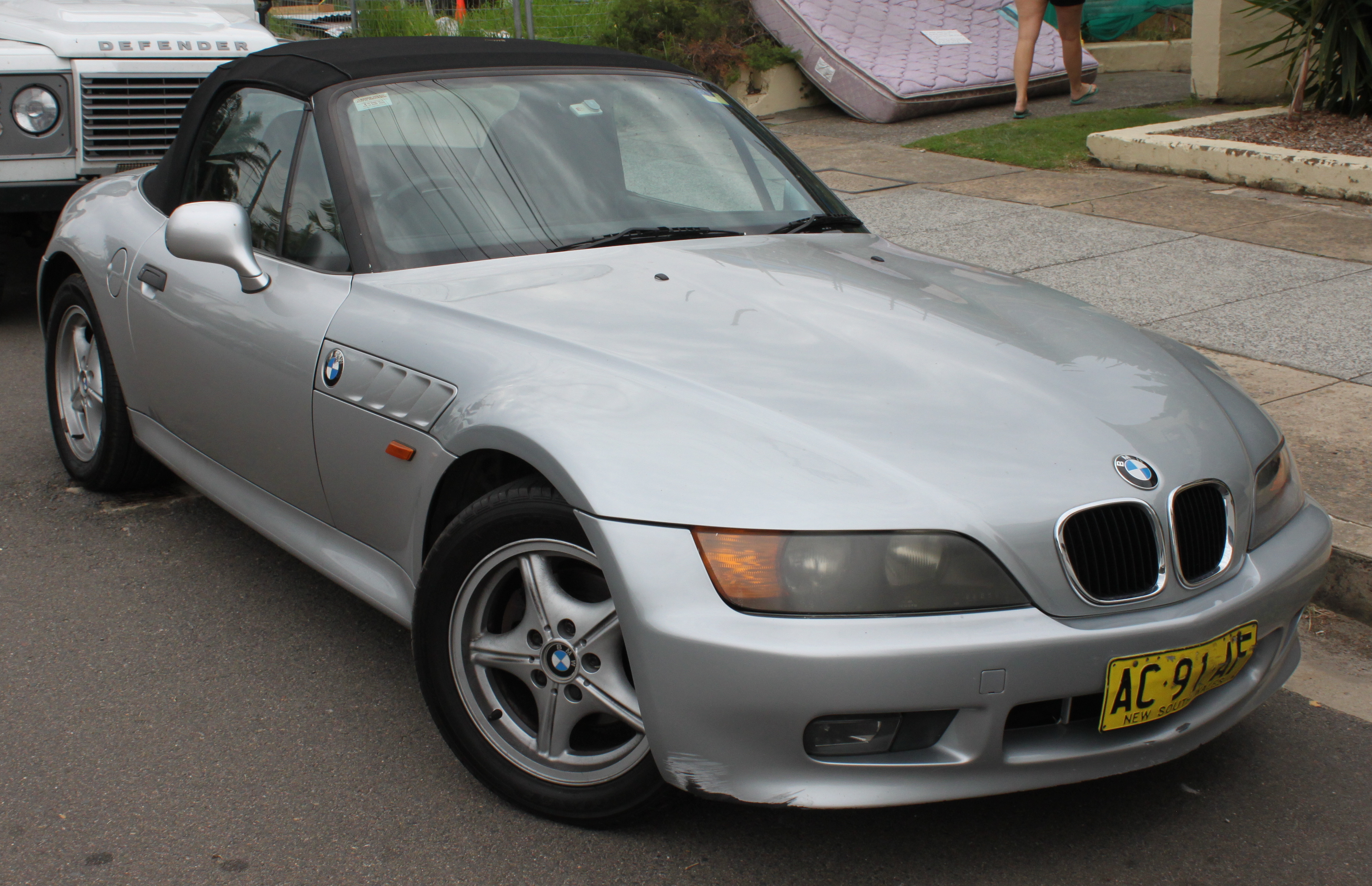
Z3M bread van
"But I ended up with Z3M bread van."
This is a BMW Z3 M, which is the sporty version of the Z3. People call the Coupe a “bread van” because its shape is more enclosed and hatch-like than the open-top roadster.
The BMW Z3 M is the performance version of the Z3 roadster, built around a high-output straight-six and tuned for sharper handling than the standard Z3. The “bread van” nickname usually refers to the Z3 M Coupe’s more hatch-like, practical rear shape compared with the open-top roadster.
Z3M
"There's some luxury, there's some sportiness, [2830.1s] but the heft of that Z3M."
The BMW Z3 M is a sportier, higher-performance version of the Z3 roadster. When they say it has “heft,” they mean it feels heavier and more solid when you drive it.
The BMW Z3 M is the performance version of the Z3 roadster, tuned for a more aggressive, sporty feel than a standard Z3. When Chris Harris mentions “the heft of that Z3M,” he’s pointing to how the car feels weighty and planted compared with lighter or more comfort-oriented alternatives.
buy the cars in America
"Well, I read a very slightly different way in that you had to buy the cars in America [2860.1s] on car and classic, which rather reduces the number of cars."
They’re talking about where you buy the cars from. If you only look in America, you’ll find fewer cars than if you could buy from anywhere.
This is about how the buying market changes what cars you can realistically source. Buying in the U.S. can reduce the number of available options compared with a broader search, because you’re limited to what’s for sale there.
drive to Mexico
"So there's another little tricky bit in this, which is you've got to drive to Mexico. [2888.1s] I don't know if you guys have driven in Mexico, but some of the roads are maybe not quite as nice"
They’re talking about driving across borders as part of the plan. The point is that roads and help if something breaks may not be as good, so reliability matters more.
This refers to a cross-border road trip plan, where the practical logistics matter as much as the car itself. The speaker highlights that road quality and breakdown support can be worse in some regions, which affects how “reliable” a car feels on a long trip.

2021 GMC Yukon
"So my first one is the 2021 GMC Yukon. [2920.1s] And it's got a 6.2-litre engine. [2923.1s] And this thing's about £40,000. [2925.1s] It's white. [2926.1s] It's massive."
The GMC Yukon is a large SUV. In this part of the episode, they’re talking about the 2021 version as a comfortable, easy “cruiser” with a big engine and lots of space.
The GMC Yukon is a full-size SUV from GMC, and the 2021 model is notable here because it’s being pitched as a big, comfortable cruiser. In this segment, Chris Harris highlights its large size, strong comfort equipment, and a 6.2-litre engine for effortless highway driving.
6.2-litre engine
"So my first one is the 2021 GMC Yukon. [2920.1s] And it's got a 6.2-litre engine. [2923.1s] And this thing's about £40,000."
A “6.2-litre engine” means the engine is big—its displacement is 6.2 liters. Bigger engines often feel easier to drive in a heavy vehicle because they can deliver strong power without working as hard.
“6.2-litre engine” refers to the engine’s displacement, measured in liters, which is the total volume of all cylinders. A larger displacement like 6.2 liters typically means more potential for low-end torque and relaxed cruising, especially in a heavy SUV.
sat-nav upgrade
"It's had all its snagging done. [3042.1s] It's had its sat-nav upgrade. [3044.1s] It's had, you know, people have..."
A sat-nav upgrade updates the car’s GPS/navigation system. It usually means newer maps or software so directions are more accurate and the system works better.
A “sat-nav upgrade” means updating the car’s built-in navigation system—typically to newer maps, software, or hardware. Owners do this to improve route accuracy, traffic behavior, and the responsiveness of the infotainment/navigation interface.
snagging
"It's had all its snagging done. [3042.1s] It's had its sat-nav upgrade. [3044.1s] It's had, you know, people have..."
“Snagging” here means the little problems that get noticed before you fully accept the car—like parts that don’t fit quite right. The idea is they fix those small issues so the car is sorted.
In car/vehicle delivery context, “snagging” refers to fixing small issues found during inspection—things like misaligned trim, fitment problems, or minor defects. It’s similar to a pre-delivery quality check where the dealer or seller resolves outstanding annoyances before the owner fully takes the car.

Mclaren 12C
"A superbly presented McLaren 12C, available from Loewe Cars, Upper Tilbury Farm, Abergavenny."
The McLaren 12C is a high-end supercar made by McLaren. It uses a modern twin-turbo V8 and a very strong lightweight body, which helps it feel fast and sharp.
The McLaren 12C is a supercar from McLaren built around a lightweight carbon-fiber MonoCell tub and a twin-turbo V8. It’s notable for how it blends exotic performance with a more usable, modern supercar layout than many older exotics.
Loewe Cars
"A superbly presented McLaren 12C, available from Loewe Cars, Upper Tilbury Farm, Abergavenny."
Loewe Cars is the dealership mentioned as the place where that McLaren 12C is available. It’s basically the seller you’d go to for that exact car.
Loewe Cars is referenced as the dealer listing the McLaren 12C. In car-shopping terms, this is the seller you’d contact to buy the specific car being discussed.
Abergavenny
"available from Loewe Cars, Upper Tilbury Farm, Abergavenny. So that's going to be really easy to get from Abergavenny to Atlanta, isn't it?"
Abergavenny is a place in Wales. They mention it to explain where the car is being offered from.
Abergavenny is a town in Wales referenced here as the location of the dealer listing the McLaren 12C. The hosts use it to set up a practical “where can you get it from” shopping scenario.
Atlanta
"So that's going to be really easy to get from Abergavenny to Atlanta, isn't it? Because it begins with an A, at 65 grand."
Atlanta is a city they mention as a destination. They’re talking about how easy it is to get the car there.
Atlanta is referenced as the destination city for getting the McLaren from Abergavenny. It’s part of the logistics/market discussion—how easy it is to source and move the car.
Miami
"and I want it to be American this time because it's going to be easier to sell in Miami. Obviously not as easy as the McLaren, but easy."
Miami is the city they’re thinking about selling the car in. They’re choosing a car that should be easier to market there.
Miami is mentioned as the U.S. market where the host wants an easier-to-sell car. The context is about choosing a convertible and an American model to match local buyer preferences.

Chevrolet Corvette
"So we've gone for a Chevrolet. What, laddie, is this anyway? C5 thing, Corvette."
The Chevrolet Corvette is a famous American sports car. Here they’re talking about a C5-era Corvette, and they’re choosing it because it’s more “American” and easier to sell in the U.S. market.
The Chevrolet Corvette is America’s long-running performance sports car line, and the C5 generation is the mid-1990s to early-2000s era. In this segment, they’re pointing to a convertible-friendly Corvette as the easier-to-sell, more American alternative to the McLaren.
Beverly Hills Motor Cars
"And this is available, Beverly Hills Motor Cars. Which is only one of them."
Beverly Hills Motor Cars is the dealership mentioned for the Corvette. It’s where the car is supposedly available to buy.
Beverly Hills Motor Cars is named as the dealer offering the Corvette they’re considering. The mention is about where the car can be sourced, not about a technical detail.
non-convertible
"[3120.1s] And you've got convertible, non-convertible, V8, V8. [3124.1s] It's all going to be a great laugh. [3126.1s] Did you say the words McLaren and reliability in the same sentence?"
“Non-convertible” just means the car has a normal hard roof that doesn’t open. Hardtops are often a bit stiffer than convertibles.
“Non-convertible” means a fixed-roof car (a hardtop) rather than a roof that can open. Fixed roofs generally provide more structural stiffness and can improve ride/handling consistency.
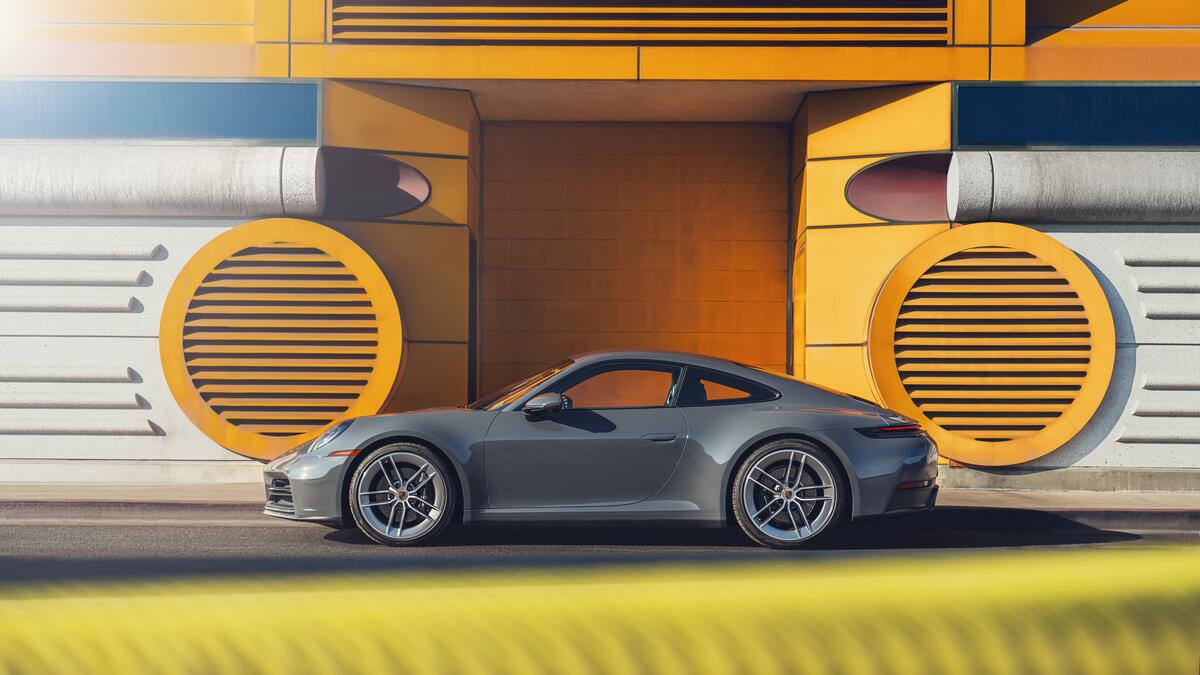
993
"Oh, no. Here we go. [3146.1s] I want a 993 for this journey. [3148.1s] I love a 993."
“993” is a nickname for a specific Porsche 911 generation. People love it because it’s the last version of the classic air-cooled 911, so it can be expensive to buy now.
“993” refers to the Porsche 911 generation from the early-to-mid 1990s. It’s the last air-cooled 911, which is why it’s so beloved by enthusiasts and often commands strong collector pricing.
highway halls
"[3149.1s] And actually, even though long auto, [3153.1s] what are they called, highway halls in America, [3157.1s] make you want to be in a suburban,"
They mean long, straight highway driving that feels a bit boring. Even if you have a fun car, it can get tedious without twists and turns.
“Highway halls” is a humorous way to describe long, straight, boring stretches of highway. The point is that even a fun car can feel tedious if the route doesn’t offer corners or variety.
manual
"because I do think it's about a 70 grand car, but it's manual. I've never owned a 993 target."
A “manual” is a car where you change gears yourself using a clutch pedal and a stick. It gives the driver more control over how the car feels. The host is pointing out that his car is a manual.
A “manual” transmission means the driver selects gears using a clutch pedal and gear lever, rather than relying on an automatic gearbox. Enthusiasts often prefer manuals because they provide more direct control over engine speed and gear selection. In this segment, the host emphasizes that the car he bought is manual.

Stang
"American, it has to have one American car, don't it? And it has to be a Stang. So I found myself 36 grams worth of Stang, five leads of manual, obviously,"
“Stang” means the Ford Mustang. The host is saying he picked a Mustang (and specifically a manual) for the trip because it’s the classic American choice. Mustangs are popular for their performance and big parts selection.
“Stang” is the enthusiast nickname for the Ford Mustang. In this segment, the host is talking about finding a manual Mustang and choosing it as the one American car for a trip. The Mustang is known for its V8 muscle-car heritage and strong aftermarket support.

Plymouth Barracuda
"...e was like a sort of version of this. It's called Barracuda. Barracuda, the Howard's Way theme."
The Plymouth Barracuda is a classic American muscle car. It was made in the era when cars were known for big styling and powerful engines. People mention it because it’s a well-known model from that time.
The Plymouth Barracuda is a classic American muscle car associated with the 1970s era of bold styling and strong engine options. In the podcast context, it’s referenced as a “version of this,” tying it to a specific theme or moment rather than technical details. It’s discussed because it’s a recognizable nameplate from the muscle-car period.
penalty charge notice
"would you like to talk about your penalty charge notice [3498.1s] of last week that you began the show with? [3501.1s] Yeah, the show with. [3502.1s] So, so I did receive a penalty charge notice"
A penalty charge notice is basically a formal ticket for a traffic or parking problem. It tells you what you did wrong and how long you have to pay or appeal it.
A penalty charge notice (PCN) is an official ticket issued for certain traffic or parking violations, typically by local authorities. It usually includes instructions and deadlines for paying or challenging the charge.

Bentley Bentayga
"and work out whether I had the Bentayga at that point. [3512.1s] And I didn't manage to have the car."
The Bentley Bentayga is a luxury SUV from Bentley. It’s meant to feel very high-end inside, while still being powerful enough to drive quickly.
The Bentley Bentayga is Bentley’s luxury SUV, known for combining a big, powerful engine with a very upscale ride and interior. In enthusiast conversations, it often comes up as a “fast luxury” alternative to more traditional performance SUVs.
14 days
"And even worse, you know, if you pay it in the first 14 days, [3536.1s] you pay, know, half."
With some parking/traffic tickets, you can pay a cheaper amount if you do it quickly. In this case, the discount applies if you pay within the first 14 days.
Many penalty charge notice systems offer a reduced payment if you pay within a short window—here, the first 14 days. That discount is meant to encourage quick resolution rather than waiting for appeals or hearings.
Request an Explanation
Heard something you'd like explained? We'll add it to this episode.
Sign in to request explanations for terms you heard.
Want to learn more?
Browse our glossary for plain-English explanations of automotive terms, jargon, and concepts.
Help improve this episode
See something that's not quite right? Our annotations are AI-generated and can sometimes miss the mark. Click the flag icon on any annotation to suggest a correction.