
Who will come out on top in 2026 - Silverstone F1 Review! | The Car Podcast #95
About this episode
A lively, nostalgia-heavy chat that pivots from F1 updates to real-world event culture. Chris Harris & Friends debate Aston Martin’s likely turnaround, citing Adrian Newey’s influence, planned Hungary aero/weight upgrades, and Honda’s engine step at the Dutch GP. Chris Cooper then shares his Silverstone weekend experience—massive crowds, festival energy, and a notably British-heavy driver lineup—plus thoughts on why people are shifting money from pubs to live events. The hosts also swap quick car-week stories, including a Mustang prop-shaft scare and a relaxed Classic Le Mans trip.
Get your tickets to Clapham Grand below! From £34.50!
https://dice.fm/event/g5q62a-the-car-podcast-live-in-london-17th-jul-the-clapham-grand-london-tickets
Download Car & Classic’s app today to see our 2CG’s, and our weekly pick of our favourite listings:
https://candc.li/App_Download_
(00:00) Intro
(00:06) What did we do in cars this week or good news !
(23:55) A Picture that tells a Story
(33:00) Do you see actual car colours as you walk around normal life?
(43:20) Favorite locking mechanism
(56:41) F1
(1:10:05) 2CG with Car & Classic
(1:18:55) Music
Hosted on Acast. See acast.com/privacy for more information.
Peugeot 306XSI
"One, I bought my first Peugeot 306XSI in blue with gloss seats and wheel trims rather than alloy wheels."
The Peugeot 306 XSI is a sporty version of the Peugeot 306. It’s the kind of car enthusiasts looked for in the 1990s because it was more fun to drive than the standard models.
The Peugeot 306 XSI is a hot-hatch from Peugeot’s 306 line, known for being a driver-focused, enthusiast-era small car. In the mid-1990s, the XSI trim was a popular entry point for people who wanted more performance than a basic 306.
Le Mans
"Neil Clifford. McLaren, and I was there, won Le Mans in the wet."
Le Mans is a long-distance race in France where cars and drivers compete for about 24 hours. Winning in the wet is harder because the track is slippery and conditions change a lot.
Le Mans is the famous endurance race in France, where teams race for 24 hours and reliability matters as much as outright speed. Winning “in the wet” is especially notable because grip is inconsistent and driver skill and car setup are under constant stress.
Nigel Mansel
"It's also the year that Nigel Mansel drove for Ron Dennis for about a quarter of a lap and then went, his car's too small."
Nigel Mansell is a famous former Formula 1 driver and World Champion. Here, the hosts are talking about a time when he was driving a McLaren.
Nigel Mansell is a former Formula 1 World Champion known for aggressive driving and strong performances for teams like McLaren and Williams. In this segment, he’s referenced as driving for Ron Dennis’s team around the 1995 timeframe.
Ron Dennis
"It's also the year that Nigel Mansel drove for Ron Dennis for about a quarter of a lap and then went, his car's too small."
Ron Dennis was a top Formula 1 team leader, strongly linked to McLaren. The hosts mention him because he was involved with the team at the time.
Ron Dennis was a major Formula 1 team boss, most closely associated with McLaren. He’s mentioned here in connection with Mansell’s brief stint, reflecting how team leadership and driver decisions shaped F1 seasons.
wings
"Yeah. It had those funny wings on the, the air box. It was, it was lit, the nose."
In F1, wings aren’t just for looks—they’re aerodynamic parts that push the car down onto the track. More downforce usually means better grip in corners.
On an F1 car, “wings” are aerodynamic surfaces designed to create downforce, improving grip and stability at speed. The front and rear wings (and any wing-like elements) are critical for cornering performance and are heavily shaped by regulations and development.
air box
"It had those funny wings on the, the air box. It was, it was lit, the nose."
The airbox is part of an F1 car that helps get air into the engine. Where it sits and what shape it is can affect how the car breathes and also changes the car’s overall design.
In Formula 1, the “airbox” is the intake housing that feeds air to the engine’s air intake system. Its shape affects airflow and packaging around the nose and front wing area, so it can influence performance and how the car looks.
Mark Blundell
"Then Brundel got the drive, didn't he? No, Mark Blundell had it for a bit. When he first got in and couldn't fit his wallet in, they made it bigger."
Mark Blundell is a former F1 driver. Here he’s mentioned because he drove the McLaren and the team had to deal with fitment issues.
Mark Blundell is a former Formula 1 driver who drove for McLaren in the 1990s. The segment uses him to illustrate how different drivers fit and how teams sometimes adjust the car to suit the driver.
Imola
"So didn't, I mean, but we, we don't remember Nigel for that. We remember Nigel for everything else. How about the Sean and Lazy thing you were talking about, Mr Cooper? Well, this is one of the only win Canada 95 in Montreal."
Imola is a well-known race track in Italy that hosts Formula 1. It’s a track where small mistakes can cost you, so driving precision matters.
Imola is a historic Formula 1 circuit in Italy, officially Autodromo Internazionale Enzo e Dino Ferrari. It’s known for being technical and demanding, with sections that punish mistakes—so qualifying and race execution matter a lot.
Canada 95
"How about the Sean and Lazy thing you were talking about, Mr Cooper? Well, this is one of the only win Canada 95 in Montreal."
“Canada 95” means the Canadian Formula 1 race from 1995. The hosts are using it as a timeline marker for their story.
“Canada 95” refers to the Canadian Grand Prix in 1995, a specific Formula 1 race date. It’s used here as a reference point for a particular win and memory.
Goodwood
"How about the Sean and Lazy thing you were talking about, Mr Cooper? Well, this is one of the only win Canada 95 in Montreal. Yeah. So yeah, my favourite memory of John and Lazy was after, after a race at Goodwood,"
Goodwood is a famous UK venue for car events and racing. People go there for motorsport and lots of car culture, including historic cars.
Goodwood refers to the Goodwood Motor Circuit and estate in the UK, a major motorsport and car-enthusiast venue. It’s especially associated with historic racing and events that mix modern and classic machinery.
Monaco
"I did see him class this year at Monaco. Oh, yeah. He looks like a proper film star now."
Monaco is a famous place in Formula 1. The race there is on very tight streets, so it’s easy to make mistakes and hard to overtake.
Monaco is home to one of Formula 1’s most famous races, the Monaco Grand Prix. It’s known for tight street-circuit racing where qualifying and avoiding mistakes are especially important.
Formula One
"I'd like to talk about Formula One. Now, I am a devotee of Adrian Muir, and I know that it has not been Aston Martin's finest getaway at the top of the season, but I would like to say there is some very good news coming."
Formula One is the highest level of race car driving with single-seat race cars. Teams constantly update their cars, and strategy and qualifying matter a lot.
Formula One (F1) is the top tier of open-wheel motorsport, run with highly engineered single-seater race cars. It’s defined by constant technical development, strict rules, and race weekends that heavily reward qualifying pace and strategy.
Aston Martin
"I am a devotee of Adrian Muir, and I know that it has not been Aston Martin's finest getaway at the top of the season, but I would like to say there is some very good news coming."
Aston Martin is a car brand that also competes in Formula 1. Here, the host is saying the team hasn’t had the best start, but expects improvements with new updates.
Aston Martin is a British automaker and Formula 1 constructor/team. In this segment, the host contrasts Aston Martin’s early-season results with an expectation of major upgrades coming soon.
Adrian Muir
"I am a devotee of Adrian Muir, and I know that it has not been Aston Martin's finest getaway at the top of the season, but I would like to say there is some very good news coming."
Adrian Muir is a person involved with Aston Martin’s Formula 1 team. Here, the host is talking about what he expects to happen with the team’s car updates.
Adrian Muir is a motorsport engineer/executive associated with Aston Martin’s Formula 1 program. In this segment, he’s referenced as the source of expectations about upcoming car updates.
Hungary
"In Hungary, we will see a massive package. Adrian did a little, did a little thing. We will see a massive package of updates."
Hungary is where one of the Formula 1 races takes place. The track can be tough on tires, so setup and driving consistency matter.
Hungary hosts a Formula 1 race at the Hungaroring circuit near Budapest. It’s a track where car setup and tire management can strongly affect results.
massive package of updates
"In Hungary, we will see a massive package. Adrian did a little, did a little thing. We will see a massive package of updates."
In Formula 1, a “package of updates” means the team brings multiple new parts to the car. A “massive” one usually means they’re trying to improve performance in several ways at the same time.
In F1, a “package of updates” means a set of new parts and engineering changes—often aerodynamic, cooling, or mechanical—that are introduced together to improve performance. When a team says it’s a “massive package,” it usually implies several areas are being upgraded at once.
aero tweak
"remains the same, they are going to have a little aero tweak. They've got big weight reductions on the car."
It means they made a small change to the car’s shape and wings to help it grip the road better. In racing, even tiny aerodynamic changes can change how fast and stable the car feels.
An “aero tweak” is a small change to a Formula 1 car’s aerodynamic parts (like wings, floors, or bodywork). Even minor aero changes can noticeably affect downforce, drag, and how the car behaves in corners and on straights.
weight reductions
"remains the same, they are going to have a little aero tweak. They've got big weight reductions on the car."
It means making the race car lighter. A lighter car can speed up and slow down more easily and often handles better because the tires don’t have to work as hard.
“Weight reductions” means removing mass from the Formula 1 car to improve acceleration, braking, and tire behavior. In F1, shaving weight can also help the car’s balance and make it easier to keep the tires in their optimal operating window.
Dutch Grand Prix
"And then after that, at the Dutch Grand Prix, Honda have their first step up with the engine."
The Dutch Grand Prix is one of the Formula 1 races. Teams use it as a chance to test upgrades and see how their cars perform on track.
The Dutch Grand Prix is a Formula 1 race on the calendar, held at Circuit Zandvoort. It’s often a key mid-season benchmark because teams can bring updates and see how they work in real race conditions.
Honda
"And then after that, at the Dutch Grand Prix, Honda have their first step up with the engine."
Honda is a company that makes engines, including the engines used in Formula 1. Here, they’re talking about Honda bringing a new engine upgrade for the next race.
Honda is a major Formula 1 engine supplier/partner, known for developing power units and performance upgrades. In this segment, “Honda” specifically refers to their engine development timeline and how it affects race competitiveness.
engine
"Honda have their first step up with the engine. So to optimise the Formula One, some good news in Formula One, it's a British team."
In F1, the engine is the main power source that drives the car. When they say the engine gets a step up, they mean it’s more powerful or more efficient than before.
In Formula 1, the “engine” refers to the car’s power unit, which is tightly regulated and central to performance. Improvements can change power delivery, efficiency, and how much energy the car can deploy over a race distance.
John Barnard
"He is the greatest designer who has ever walked this earth along with maybe John Barnard, Gordon Murray, and Mauro Fogieri."
John Barnard is a famous person in Formula 1 who designs race cars. The point here is that he’s considered one of the great technical minds in the sport.
John Barnard is a legendary Formula 1 designer, closely associated with major technical breakthroughs in race car design. The host groups him with other “great designers” to emphasize how influential their engineering ideas have been.
Gordon Murray
"He is the greatest designer who has ever walked this earth along with maybe John Barnard, Gordon Murray, and Mauro Fogieri."
Gordon Murray is a well-known Formula 1 race car designer. The host is saying he’s one of the biggest names in F1 engineering.
Gordon Murray is a highly influential Formula 1 engineer and designer, known for shaping how cars are packaged and built. The host mentions him as one of the top designers in the sport’s history.
Mauro Fogieri
"He is the greatest designer who has ever walked this earth along with maybe John Barnard, Gordon Murray, and Mauro Fogieri."
Mauro Fogieri was a major engineering figure in racing. The host is using his name to point to the sport’s most respected designers.
Mauro Fogieri was an Italian race car engineer and designer, associated with high-performance engineering work. The host lists him among the greatest designers to highlight the pedigree of technical talent in motorsport.
pit exit or entry road
"we were in that new swanky veil hospitality thing, which is just on the pit exit or entry road before the veiled squiggly bit, before we get on the start finish straight."
That’s the special road where cars come in and out of the pit lane. It’s controlled so cars can rejoin the race safely.
The pit exit/entry road is the controlled lane that connects the pit lane to the main track. In F1, it’s a key part of race operations because cars must rejoin the circuit safely and within strict rules.
sprint qualifying
"Friday we were there to watch free practice in the sprint qualifying, went to see some of the lovely garages..."
Sprint qualifying is a shorter race weekend session in F1. It helps decide where the cars start for the main race and can affect strategy because it matters for points.
Sprint qualifying is an F1 format where a shorter “sprint” race is run to set the grid for the main Grand Prix. It’s designed to add extra on-track action and can award points, making it strategically important.
paddock
"went to see some of the lovely garages and people met few mates in the paddock and talked about the business and sport"
The paddock is the team area at a race weekend. It’s where the garages are and where team people hang out between sessions.
The paddock is the secure area at an F1 event where teams work between sessions—garages, hospitality, and team personnel are based there. It’s where you’ll see mechanics, engineers, and team members moving around during the weekend.
Bentley
"I went to Classic Le Mans. Oh, by the way, isn't it good news that Bentley have named their new car after Thomas Tuchel?"
Bentley is a luxury car brand from the UK. In this bit, they’re talking about Bentley naming a new car after a person.
Bentley is a British luxury automaker known for grand touring cars and high-end performance. Here, the hosts mention Bentley naming a new car after Thomas Tuchel, tying the brand to a specific naming decision.
Thomas Tuchel
"Oh, by the way, isn't it good news that Bentley have named their new car after Thomas Tuchel? Torquel."
Thomas Tuchel is a famous soccer coach. The hosts are mentioning him because a Bentley model is being named after him.
Thomas Tuchel is a well-known football (soccer) manager, and the hosts are referencing him in a car-naming context. The point here is the crossover between celebrity sports figures and luxury car branding.

Ford Mustang
"On a more serious note, I was taking the Ford Mustang and I took it to Graham and said, Graham, please check it over because I want to take the Ford Mustang. And then you get that phone call."
The Ford Mustang is a famous American sports car. Here, they’re talking about a problem that affects how the car’s power gets from the engine to the back wheels.
The Ford Mustang is a long-running American muscle-car icon known for its V8 heritage and rear-wheel-drive layout. In this segment, Chris Harris talks about taking a Ford Mustang to be checked because of a drivetrain issue that affects how power reaches the rear wheels.
prop shaft
"What's the thing that connects the engine to the back wheels, that long pipe? Oh, the prop shaft. Technically speaking, Neil, the prop shaft is completely fucked."
The prop shaft is the part that transfers power from the engine/gearbox to the back wheels. If it’s broken, the car may not be able to drive properly at all.
The prop shaft (propeller shaft) is the driveshaft that transmits torque from the transmission to the rear differential on many rear-wheel-drive cars. If the prop shaft is “completely fucked,” it can prevent the car from driving safely and may leave you stranded.
Euro tunnel
"Technically speaking, Neil, the prop shaft is completely fucked. And you'll be lucky if you get down to the Euro tunnel."
The Eurotunnel is the train tunnel between the UK and France. They mention it to show the trip would be in trouble if the car can’t be driven.
The Eurotunnel (Channel Tunnel) is the rail tunnel connecting the UK and France. The hosts use it as a destination reference to emphasize how serious the Mustang’s prop shaft failure would be for their travel plans.
M25
"Because you don't obviously now want to take the Mustang because you don't want to be stuck on the M25. So then I had too much work and it was very annoying"
The M25 is a big highway that circles London. They mention it to explain how traffic could be a problem if the car isn’t reliable for the trip.
The M25 is the major orbital motorway around London in the UK. In the segment, it’s used as a real-world reference point for traffic and the risk of getting stuck if the Mustang can’t be driven.
petrol station
"I find a petrol station. 60 miles range, 50 miles range, 40 miles range. [863.3s] The yellow warning comes on."
A “petrol station” is where you stop to buy fuel. In this story, they’re trying to find one before they run out.
A “petrol station” is a fueling point where you buy fuel for an internal-combustion vehicle. The episode uses it as a practical constraint—when they’re low, they need the next station quickly.
yellow warning
"The yellow warning comes on. Still haven't got to the motorway. You only know about [867.6s] petrol stations on motorways in France, but our hotel was in the middle of nowhere."
A “yellow warning” is a caution light on the dashboard. It usually means you need to deal with the problem soon, like finding fuel or charging.
A “yellow warning” is a dashboard alert light indicating a caution-level problem or low remaining capacity (here, low remaining energy/fuel situation). Yellow typically means “get ready to act soon,” not “stop immediately.”
Apple Pay
"Try all the credit cards. Pulling it out slowly, pulling out quickly wouldn't work. Then I'm like, I'm buggered."
Apple Pay is a way to pay with your phone instead of a card. Here, they’re trying it at a fuel stop when they can’t pay the usual way.
Apple Pay is a mobile payment system that lets you pay using your phone’s secure payment credentials. In this story, the speaker tries it at a fuel situation when they’re out of euros and credit cards.
emergency £50 note
"So all I've got in the back of my phone is an emergency £50 note, which I carry. So his name was Nuno."
They’re saying they keep a small amount of cash just in case something goes wrong. In this case, it helps when they can’t pay for fuel with cards or phone payments.
This is a practical “get-you-home” contingency: keeping cash available for situations where electronic payments fail or aren’t accepted. While not a car component, it’s directly tied to the car-fuel emergency described in the segment.
range
"I had 75 miles left on my range. I could get to the motorway where there were human beings."
In a car, “range” usually means the estimated distance you can drive before running out of fuel, based on current fuel level and recent consumption. When the estimate is low, many cars become less precise and can drop in larger increments.
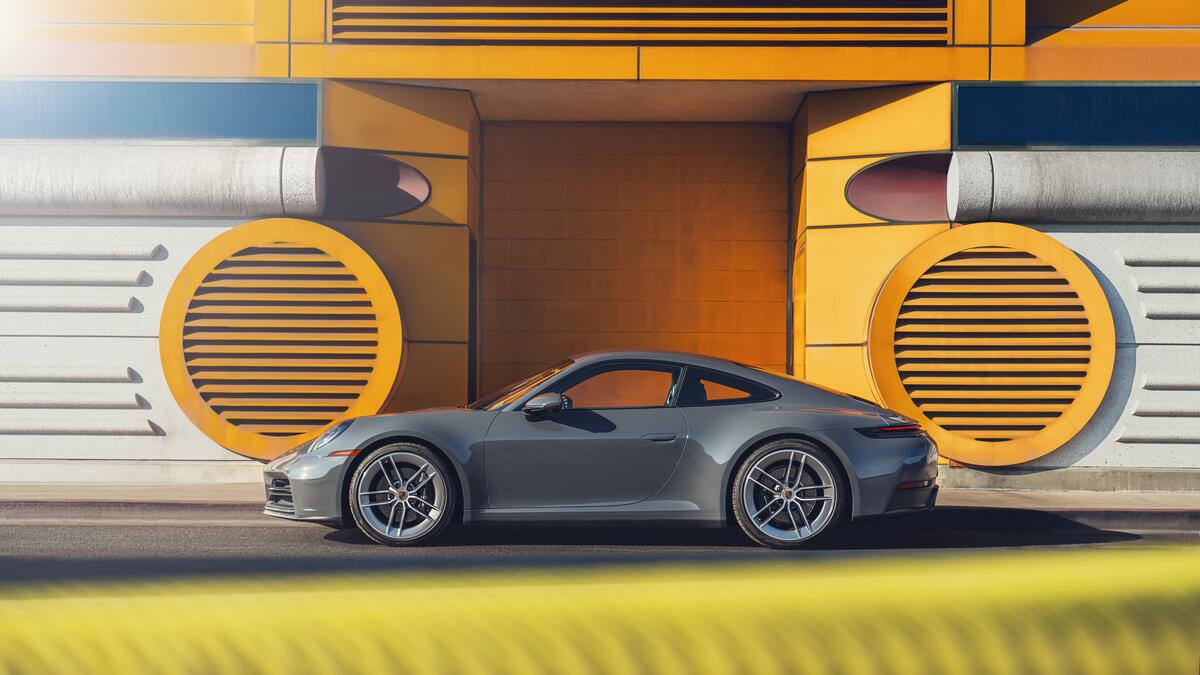
996 GT2
"I drove quite a weird car for my lovely friends at Cloudson cars. It's a 996 GT2, never raced at Le Mans period, but it did raise a lot of spa and in Europe. It's an unconventional car with a massive amount of turbocharging."
This is a Porsche 911 GT2 from the 996 generation. It’s a race-style version that uses a turbo to make lots of power, and it can be fussy about hot air getting into the engine.
The Porsche 911 GT2 (996 generation) is a track-focused, turbocharged variant known for high boost and strong straight-line performance. In this segment, Chris Harris describes it as “unconventional” because it uses a massive amount of turbocharging and is sensitive to intake conditions.
Spa
"It's a 996 GT2, never raced at Le Mans period, but it did raise a lot of spa and in Europe."
Spa is a famous race track in Belgium. It’s known for tricky corners and changing weather, which makes it a real test for race cars.
Spa refers to Circuit de Spa-Francorchamps in Belgium, a legendary road course known for fast corners, elevation changes, and weather variability. It’s a common European racing venue mentioned alongside Le Mans.
turbocharging
"It's an unconventional car with a massive amount of turbocharging. It's got quite a small intake restrictor and it doesn't like hot air."
Turbocharging uses a turbo to push extra air into the engine. That extra air helps the engine make more power.
Turbocharging uses a turbine-driven compressor to force more air into the engine. More air generally allows more fuel to be burned, which can increase power—especially in performance and racing applications.
intake restrictor
"It's got quite a small intake restrictor and it doesn't like hot air. Marcus, my teammate, raced it in period and he was mega."
An intake restrictor is a smaller passage in the air intake that limits how much air the engine can breathe. Less air usually means less power, and it’s used to keep cars more evenly matched.
An intake restrictor is a size-limited opening in the air intake system that caps how much air the engine can ingest. In racing, restrictors are often used to control performance so different cars can be balanced under rules.
Teter Rouge
"Because it's, it's just you pinch yourself every time you, every time you come out of Teter Rouge and you fire it over that curb, you just think, this is special."
Tertre Rouge is a well-known corner at Le Mans. It’s the sort of place where you can really feel how well the car grips and how stable it is under braking and turning.
Tertre Rouge (often misspoken as “Teter Rouge”) is a famous corner sequence at Le Mans known for its braking and curb/exit behavior. It’s the kind of spot where a driver feels the car’s balance and traction immediately.
Gibraltar
"And the Moise is a strange place. It is a bit, it's a bit like, it's another Gibraltar. It's a bit of a British enclave."
Gibraltar is a place that’s being used as a comparison. The speaker means the area feels like a British pocket, not like the surrounding country.
Gibraltar is used here as a metaphor for a small, distinct British enclave feel. In motorsport talk, it’s often used to describe how a location can feel culturally different from the surrounding region.
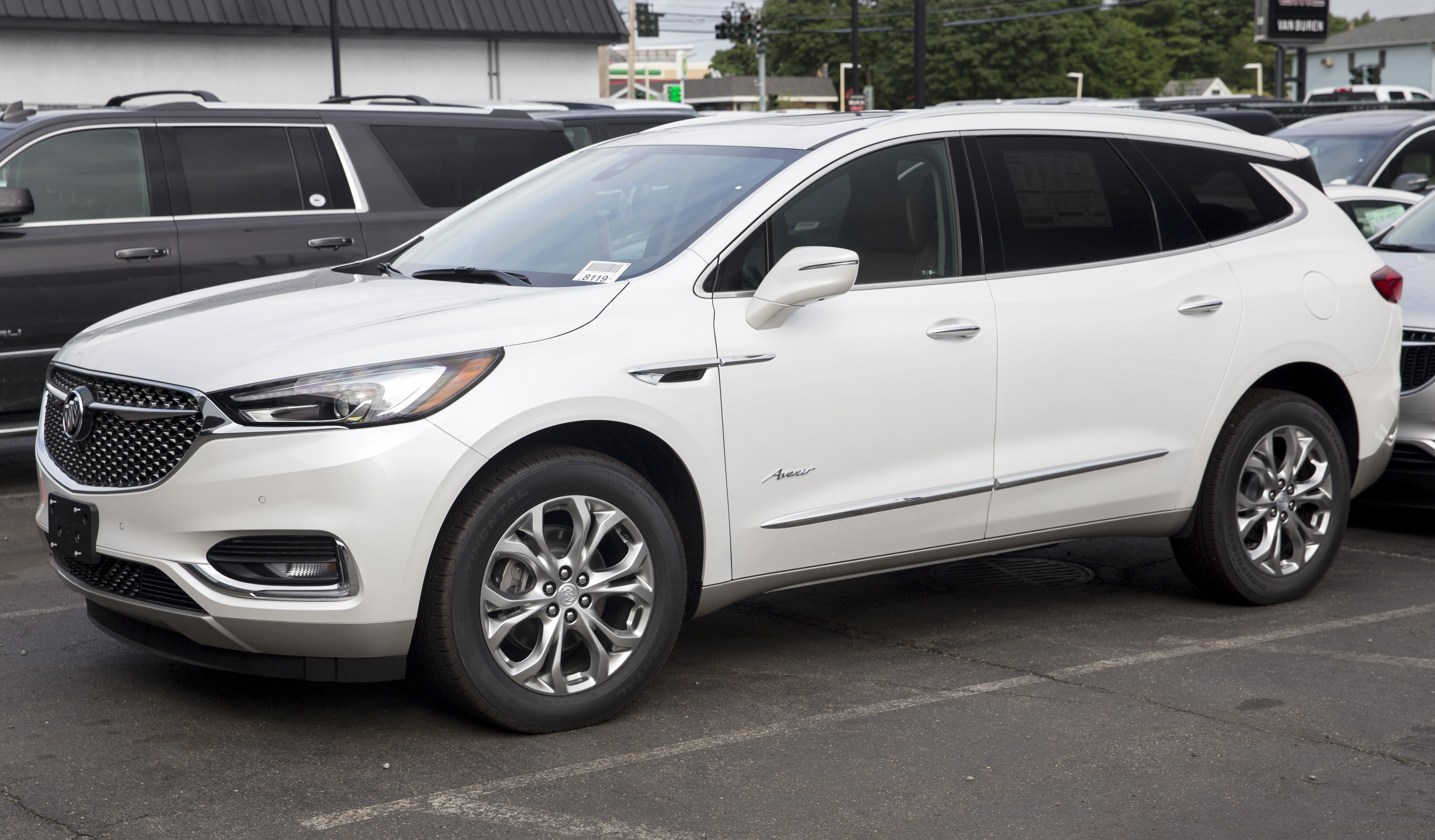
Buick Enclave
"..., it's another Gibraltar. It's a bit of a British enclave. The ACO doesn't like that necessarily, but the B..."
The Buick Enclave is a larger SUV that can carry more people, usually with three rows of seats. It’s built to be comfortable for everyday trips. The podcast mentions it as a specific SUV model in the mix.
The Buick Enclave is a three-row midsize SUV aimed at family use, with a focus on comfort and quiet cruising. The podcast’s “British enclave” wording is a playful aside, but the car itself is the kind of vehicle that’s typically chosen for space and ease rather than pure sportiness. It comes up in conversation as a recognizable, mainstream SUV option.

205
"I intended to drive out there in a 205, but my, my eldest son decided to take on the role of driving one of those..."
The Peugeot 205 is a popular older French car that lots of enthusiasts still love. Here, they’re using a 205 to get around during the Le Mans trip.
The Peugeot 205 is a compact French hatchback/coupe that became a motorsport icon, especially in rallying and track events. In this segment, Chris Harris is talking about driving/being around a Peugeot 205 that’s being used for Le Mans weekend logistics.

Dassault Falcon 6X
"It's called a Dassault Falcon 6X. And it's, you look it up. It's a very useful car. It goes quite fast."
A Dassault Falcon 6X is a private jet. They mention it because it’s what he ended up using to get to the event, before switching back to cars on-site.
The Dassault Falcon 6X is a business jet, not a car—used here because the hosts needed a fast, comfortable way to travel to the event. Chris Harris notes it’s “very useful” and “goes quite fast,” contrasting it with the cars they’ll use on the ground.

Ford Falcon
"... one of these cars before. It's called a Dassault Falcon 6X. And it's, you look it up. It's a very useful ..."
“Falcon” can refer to different things. In the podcast, they’re talking about the Dassault Falcon 6X, which is a plane, not a car. So it’s included as a name reference rather than a vehicle you’d drive on the road.
The Ford Falcon is a model name used for different vehicles depending on the market, but it’s commonly associated with a practical, performance-capable car line. In the podcast, the mention is about a “Dassault Falcon 6X,” which is actually an aircraft, not a car. The key point is that “Falcon” is being used as a reference to that plane name.
infield
"Then you're the race circuit. Then you've got the infield and you're limited to what you can fit in the infield. Le Mans is enormous."
The infield is the space inside the race track. At Le Mans there’s a lot of room there compared with many other circuits.
The infield is the area inside a race circuit’s main track. Harris contrasts most circuits—where space is tight—with Le Mans, where the infield has room for additional venues and activities.
Bugatti circuit
"And so on the infield, they've got this Bugatti circuit, which is where they race the bikes and all the French car clubs come out to play."
The Bugatti Circuit is a smaller track area inside the larger Le Mans complex. It’s used for events like bike races and club gatherings.
The Bugatti Circuit is a specific track layout at Le Mans used for various events, including motorcycle racing and club activities. Harris mentions it as part of why Le Mans has so much space for different racing and car-club groups.
suspension
"you just come home, the suspension is just perfect for these broken roads."
Suspension is what helps the car absorb bumps and keep the tires in contact with the road. Good suspension makes rough roads feel controlled instead of jarring.
Suspension is the system that connects the wheels to the car body and controls ride comfort and how the tires follow the road. The speaker praises the suspension’s ability to stay “perfect” over broken roads, implying good compliance and stability over bumps.
torque
"It breathes with the surface and you, you use the torque of that little 1362 engine to get to about 60 miles an hour."
Torque is the engine’s “pulling power.” It’s what helps the car get moving smoothly, especially at lower speeds.
Torque is the twisting force an engine produces, and it’s what helps a car accelerate smoothly from low speeds. Here, the speaker credits the “torque of that little 1362 engine” for getting the car up to around 60 mph, emphasizing usable pull rather than peak horsepower.

Porsche Carrera GT
"you could give me two Carrera GTs and I wouldn't be as happy as I am with two 205 XSs down here"
This is a Porsche from the Carrera family, which is known for being a serious performance car. Here it’s mentioned as a “big deal” car that the speaker says wouldn’t make them as happy as the other choices.
The Porsche Carrera GT is being used as a benchmark for how “special” the speaker finds the other cars. Porsche’s Carrera line is associated with performance and driving feel, and the comparison suggests the speaker values the alternative cars’ ride quality and usability as much as outright supercar status.
Caron Classic
"both of which I bought from Caron Classic. So I had to get the plug in there and they are not sponsored by Ferrari either."
Caron Classic is where the speaker says they bought the cars they’re talking about. It matters because it’s part of how they got these specific enthusiast cars.
Caron Classic is mentioned as the place where the speaker bought the “205 XS” cars. It’s relevant because it ties the story to a specific source for classic or enthusiast vehicles, not just general car ownership.
Aylesbury
"He died in an epileptic fit in the back of my car driving a million miles an hour [1568.9s] to try and get him to a vet in Aylesbury. So that was an incredibly stressful, difficult time for"
Aylesbury is a town in England. It’s mentioned as where they were trying to get to for a vet during an emergency.
Aylesbury is a town in Buckinghamshire, England. The speaker uses it as a real-world destination during an emergency trip.
Barcelona
"But I may be a very, very, very, yeah, I'm a very good salesman, but he's even better than me. [1618.1s] But it was, you know, look, it could have been Coco Chanel's car because it was delivered [1622.6s] new in France. But apart from that, we're not so sure. But anyway, I met him filming one of his [1630.5s] videos and he's down in, you know, beautiful Spain now filming his new videos. And now he's [1639.1s] very much, he about 15 years ago in Barcelona, he was filming one of his videos with two"
Barcelona is a big city in Spain. They mention it because that’s where the filming happened with those cars.
Barcelona is a major city in Spain. The speaker references it as the location where JK was filming videos with multiple high-end cars.
V8
"And I always wanted one. And as Chris will know, I'm always very, [1676.8s] very addicted to V8 and Mercedes old ones, particularly 6.3s."
A V8 is an engine with eight cylinders. The cylinders are arranged in a V shape, and it’s often linked with a strong, satisfying driving feel.
A V8 is an engine with eight cylinders arranged in a “V” shape. It’s commonly associated with smooth power delivery and strong sound/feel in classic American and many European performance and luxury cars.

Mercedes-Benz Mercedesbenz 600
"owned one of those cars once, he's now got that 600 plate on some amazing Mercedes. So it's a memory of Ferdy. It's a memory of my friendship with Jay. And it's a memory of owning a Mercedes-Benz 600. So that's that picture. Lovely. I think I could do more of these. That was lovely. And I love the"
The Mercedes-Benz 600 (W100) is a very large luxury car made by Mercedes-Benz. It’s known for being a top-of-the-line limousine, not a normal everyday vehicle. The podcast is mentioning it because it was a meaningful car from someone’s past ownership.
The Mercedes-Benz 600, W100, is a full-size luxury limousine from Mercedes-Benz, famous for its grand scale and high-end engineering. The podcast ties it to personal memories of owning one and having a “600 plate,” emphasizing its status as a special, rare ownership experience. It’s discussed here as a symbol of that era’s top-tier luxury.

R129 500 SL
"I've had an R129 500 SL in what I call in the window, which is it's early enough to to have the really good 32 valve engine, but it's late. It's late enough to have the nice gearbox."
This is a Mercedes-Benz SL roadster from the R129 generation, with a 5.0-liter V8. The speaker is pointing out that some versions have different engine and transmission setups depending on when they were built.
The R129 500 SL is a Mercedes-Benz SL roadster generation (the “R129” chassis) powered by a 5.0-liter V8. The host mentions two key enthusiast details: the early cars had the “32 valve” V8, and the later cars had a different gearbox—plus production timing that makes specific variants relatively rare.

300 SL 6.3
"And I've always wanted a 300 SL 6.3. So I'll go up at the SL shop filming something the other day. And of course, they bloody have one."
The Mercedes-Benz 300 SL 6.3 is a famous, rare classic Mercedes with a big engine. People love it because it’s tied to racing and it’s one of the most desirable versions of the 300 SL.
The Mercedes-Benz 300 SL 6.3 is a legendary performance variant of the 300 SL, famous for its large-displacement engine and motorsport heritage. Enthusiasts chase it because it’s a rare, high-performance classic that represents Mercedes’ top-tier racing ambition in the early 1960s.
single headrest
"So he's gone through this car. And it's the way it's the one I posted a picture of with the single headrest. So it's got the car has one headrest at the back for the owner where he would"
A “single headrest” means only one headrest is fitted in that seat area. On classic cars, the exact headrest setup can be part of how original the interior is.
A “single headrest” refers to a seat setup where only one headrest is fitted (in this case, at the back for the owner). In older Mercedes interiors, headrest arrangements can vary by period and specification, and that can affect originality and value to collectors.
history file
"he sent me a picture of everything inside the history file. These cars accumulate wonderful history files."
A “history file” is a compiled set of documents and records for a specific car—often including prior ownership, service records, test reports, and correspondence. Enthusiasts value it because it can verify provenance and add context to how the car has lived over time.
300 SL 6.3
"which was in this island's road test report on the 300 SL 6.3 where he goes to Matt, he borrowed a press car went to Mallory Park and rolled it"
This is a famous Mercedes-Benz from the early 1960s, and the “6.3” refers to a larger engine meant for high performance. The host is talking about how the car’s past test reports and paperwork add to its story.
The Mercedes-Benz 300 SL 6.3 is a legendary early-1960s racing-derived version of the 300 SL, known for its big V8 and serious performance. In this segment, it’s referenced through a specific “island’s road test report,” which highlights how its history and test documentation can become part of the car’s appeal.
press car
"where he goes to Matt, he borrowed a press car went to Mallory Park and rolled it"
A press car is a car given to journalists to test and write about. The host is saying the rollover happened during a media-style test.
A press car is a vehicle provided to journalists or media outlets for evaluation, typically before or around a release. In this story, it frames the 300 SL 6.3 incident as something that happened during a media test rather than normal customer use.
Mallory Park
"he borrowed a press car went to Mallory Park and rolled it and blamed the rear kinematics and cross fly tires."
Mallory Park is a race track in the UK. The host is using it as the setting for a dramatic test/incident story involving a press car.
Mallory Park is a well-known UK circuit used for racing and track days, especially associated with smaller formula and club racing. Mentioning it in the context of a “press car” roll ties the Mercedes-Benz 300 SL 6.3 story to real motorsport testing conditions.
rear kinematics
"and rolled it and blamed the rear kinematics and cross fly tires."
“Rear kinematics” is a fancy way of talking about how the back suspension is set up and how it moves. The speaker is saying the car’s rear suspension behavior may have caused the handling problem.
Rear kinematics refers to the geometry and movement relationships of the rear suspension components—how the wheels travel and how forces are transmitted. When someone “blames the rear kinematics,” they’re suggesting the suspension geometry contributed to handling instability or a rollover.
cross fly tires
"and rolled it and blamed the rear kinematics and cross fly tires."
Cross-ply tires are an older style of tire where the internal layers are arranged in a crisscross pattern. The host is implying that tire construction may have influenced how the car handled in that situation.
Cross-ply tires are an older tire construction where the plies are laid in alternating angles, rather than the modern belt-and-radial approach. The host’s mention suggests the tire type affected grip and behavior during the incident being discussed.
radials
"And the radials, he blames the radials. And there's all sorts of history."
Radial tires are a modern tire design (compared to older cross-ply tires) that tends to grip and ride more predictably. The host is saying the driver thought the tire type contributed to the problem.
Radial tires use a construction where the tire’s internal cords run mostly perpendicular to the direction of travel, improving ride and grip consistency compared with older cross-ply designs. Here, the speaker says the test driver blamed the radials, implying tire choice played a role in the car’s behavior.
head restraint
"That car was some really super duper oil magnet that ordered it new with one head restraint, which I thought was the coolest thing ever. Not no head restraints in the front, one at the back."
A head restraint is the part of the seat that supports your head. The host is pointing out that this car had a unusual setup for where the headrest was placed.
A head restraint (headrest) is an adjustable seat component designed to reduce whiplash and head movement during a crash. The speaker’s point is about the car’s specific seating configuration—“one at the back” and not in the front—making it a notable original-spec detail.
colorblind
"Lots of people and a lot of people I know are colorblind and don't see colors at all. And I only find out later in my friendship with them that they're colorblind."
Colorblindness means someone can’t reliably tell some colors apart. The hosts connect it to racing because flags and color signals are important there.
Colorblindness is a vision condition where a person has difficulty distinguishing certain colors. In a motoring context, it can make reading race flags and color-coded signals harder, which the host jokes about while discussing journalists.
Vipery Green
"And there was one of those new Renault fives that you have the yellow one or the sort of Vipery Green one. And this thing just leaps out at me."
“Vipery Green” is the name of a particular car paint color. They’re saying it’s so vivid that it grabs your attention immediately.
“Vipery Green” is a specific paint color name used on a Renault 5 example in the discussion. The host treats it like a standout, high-contrast color that strongly affects how the car is perceived.
Oxford Green
"And he sent me a picture of the one he really liked, which was Oxford Green. Look at what maybe that was."
“Oxford Green” is a specific green paint color. They’re talking about it because the producer liked that color a lot when looking at cars.
“Oxford Green” is a named exterior paint color the producer prefers for a car shown in the Car Classic app. The discussion uses it to reinforce the idea that paint color can materially change your emotional reaction to a car.

Volkswagen Polos
"...e really solid colors as well. I mean, I remember Volkswagen Polos in that kind of odd mint green, you know, forward..."
The Volkswagen Polo is a small car, usually a hatchback, meant for everyday driving. The podcast is recalling how Polos looked in certain colors. It’s the kind of car people see often because it’s practical and easy to live with.
The Volkswagen Polo is a small, practical hatchback designed for everyday driving and efficient ownership. The podcast references specific color memories, which fits how common and recognizable the Polo is in many markets. It’s often discussed because it’s a mainstream car that balances size, usability, and Volkswagen’s typical engineering approach.

Ford Granada
"...n, you know, forward escorts in yellow or forward granadas in mustard or a kind of brown. And I think, so I ..."
The Ford Granada is a mid-size car that Ford made in the past. In the podcast, it’s mentioned because of the color they remember seeing it in. It’s being used as a memory of what those cars looked like.
The Ford Granada is a mid-size car that was offered in various trims and markets, often associated with classic styling and everyday comfort. The podcast mentions “forward granadas in mustard,” which is about specific color memories rather than performance details. It’s brought up as part of a visual recollection of cars seen in the past.

R107
"be gray. And I think I'm going to stick my neck out there. I'm going to, if I find my perfect R107, maybe it won't be deep metallic gray. Maybe that's just boring. R107s aren't generally speaking available in a pleasantly broad range of colors."
“R107” is a specific Mercedes-Benz SL model generation from the 1970s and 1980s. People who like these cars often care a lot about the exact color. Here, they’re debating what colors are worth choosing if you’re hunting one.
“R107” refers to the Mercedes-Benz SL generation (the long-running 1970s–1980s roadster/coupe line). It’s a popular classic because it’s a simple, elegant grand tourer platform, and enthusiasts often hunt specific colors and condition. In this segment, they’re discussing which R107 color choices are “boring” versus exciting.
deep metallic gray
"I'm going to, if I find my perfect R107, maybe it won't be deep metallic gray. Maybe that's just boring."
“Deep metallic gray” is a dark gray paint that has metallic particles in it. Those particles make the color look different depending on the light. The speaker is saying they might avoid that shade because it feels too plain.
“Deep metallic gray” describes a paint finish that uses metallic flakes to create depth and sparkle, with a darker gray base. Color and finish matter a lot on classic cars because they affect how the body lines read in different lighting. The speaker is implying this specific shade is too safe or “boring” for an R107 hunt.
ultraviolet
"if I walk down the road with my wife and said, oh, look, there's ultraviolet in that restaurant. Or those, the salt and pepper pots, their guards red."
“Ultraviolet” is a color name in this context—basically a vivid purple/blue. The speaker is joking that they can’t help mentally “naming” colors like they would for cars. It’s more about the color mindset than car mechanics.
“Ultraviolet” here is used as a color reference, pointing to a vivid purple-blue hue. The speaker is making a joke about mentally labeling colors they see in everyday life using car-color vocabulary. It’s not a technical automotive term like a paint system name, but it’s part of the color-obsession bit.
guards red
"there's ultraviolet in that restaurant. Or those, the salt and pepper pots, their guards red. Or, oh, I think that guy's suit looks like posse blue."
“Guards Red” is a well-known Porsche red paint color. People who are into cars use the name because it refers to a specific shade, not just “red.” Here it’s part of the joke about the speaker seeing car colors everywhere.
“Guards Red” is a famous Porsche paint color name, associated with the brand’s classic red tone. Enthusiasts often use these named paint codes/colors as shorthand for specific shades. In the segment, the speaker is joking that they mentally map everyday colors to named Porsche hues.
posse blue
"Or, oh, I think that guy's suit looks like posse blue. I do that in my head. I stopped myself speaking."
“Posse Blue” is being used like a specific color name, similar to how people might say “a certain shade of blue” for a car. The speaker is joking that they can’t stop thinking in car-color terms. The segment doesn’t go into what exact paint system it is—just that it’s a named shade.
“Posse Blue” is presented as a named color reference, used like a car paint shade label. The speaker is using it as a punchline to show how they mentally categorize colors in everyday life using car-brand color names. It’s not explained technically in this excerpt, but it functions as a color-name shorthand.

944 cabriolet
"How much are you a day, Chris? Oh, I'm a leggy 944 cabriolet."
The Porsche 944 cabriolet is a Porsche sports car with the 944 model name, made as a convertible. It’s a classic Porsche that’s often considered more “everyday usable” than a 911. Here it’s mentioned as part of a joke about how Chris measures everything in car terms.
The Porsche 944 cabriolet is a convertible version of the 944, Porsche’s front-engine, rear-transaxle sports car. It’s known for being a more approachable, balanced alternative to the 911 while still delivering classic Porsche feel. In the segment, Chris uses it as a punchline to describe his “fuel” obsession.

Renault Fuego
"First person I ever met who bought a Renault Fuego. You remember those with the hub gaps, one of the great cars."
The Renault Fuego is an older Renault coupe from the late 1970s/early 1980s. The story here is about how its key could lock and unlock the car from a distance—something that felt very futuristic back then.
The Renault Fuego is a classic 1970s/early-1980s Renault coupe that’s remembered for its distinctive styling and period-cool details. In this segment, it’s specifically notable because the host describes it as having advanced keyless/remote locking for its time.
hubcaps
"And it had those, it had those hubcaps, you know, with the straight lines that go from incredible car and curved back windscreen actually just look cool."
Hubcaps are the covers on the outside of a wheel. They’re mainly there for looks (and sometimes to help protect the wheel), and different designs can really change how a car looks.
Hubcaps are decorative covers that fit over the wheel’s hub area. They can also help protect parts of the wheel, but in enthusiast conversations they’re often mentioned for their look—like the “straight lines” style the host describes.
key
"He gets his keys out, and he presses a button on his key, and the car locks."
Here, “key” means the remote you carry to control the car. Instead of unlocking by hand, you can press a button and the car locks or unlocks for you.
In this context, the “key” refers to the remote fob used to send lock/unlock commands. The host is contrasting it with older cars that required physically turning a key in the door.
infrared central locking
"This was the first car with an infrared central locking, even though he had two doors and the back thing, oh my God..."
Infrared central locking is a way to lock and unlock your car using a light signal from the key. It usually works best when you’re facing the car, because infrared doesn’t bounce around like radio signals do.
Infrared central locking is a remote-locking system that uses infrared light (line-of-sight) to send lock/unlock commands to the car. Compared with later radio-frequency systems, it generally needs the key to be pointed toward the car to work reliably.

Audi 90
"He literally walked around the corner to the Audi dealership and went, right, I'm an Audi man now. And he bought a thing called an Audi 90. Yeah, cool car."
The Audi 90 is an older Audi family car. In the story, it’s described as closely related to the Audi 80, but with a stronger five-cylinder engine and some styling changes at the front.
The Audi 90 is a late-1970s/1980s-era Audi sedan that’s best known for pairing a more powerful engine than the base 80 with a similar overall platform. In this segment, Chris Harris describes it as essentially an Audi 80 with a five-cylinder engine and slightly different front-end bodywork.
motor-driven
"And the Audi central locking of that era was motor-driven. And it made this moaning sound. [2916.4s] So you'd lock the door and it'd go... A bit like a 928."
“Motor-driven” means the locks move using an electric motor. So instead of just a simple mechanical action, you can hear the system working when you lock the doors.
“Motor-driven” describes central locking actuators that use an electric motor to move the lock mechanism. That’s why the host hears a characteristic noise when the system locks—because the motor is doing the work rather than a purely mechanical linkage.
interlock
"It was an interlock. And the interlock was [2983.3s] you had to lift the handle up. So you really had to mean to do it."
An interlock is a built-in “prevention” feature. In this case, it helps stop you from locking the doors while the keys are still inside by requiring a specific sequence to lock the front doors.
An interlock is a safety/logic mechanism that prevents a user from locking the car in an unintended way—here, stopping you from locking the keys inside. The host explains it required a deliberate handle-lift action, making it harder to accidentally trap the keys.

Bentley Turbo R
"Two things I've got to say. One is I've got lots of these. I'm really obsessed with the sound of locking. Bentley Turbo R with that really old school leather, big remote control that Bentley clunk."
The Bentley Turbo R is a classic Bentley luxury car. Here, the host is talking about how satisfying the remote locking sound is—like a heavy “clunk” when the car locks.
The Bentley Turbo R is a late-1980s/early-1990s luxury saloon from Bentley that’s known for its big, old-school feel and a distinctive sound. In this segment, Chris Harris is specifically enjoying the “clunk” of the car’s remote locking mechanism, which highlights how tactile and mechanical the experience can be on certain classic-era Bentleys.

G-Class G Wagon
"And you watch them go down and sometimes one doesn't go down and then you've got to do it with the key. I love the nine to eight. It's more about that internal button... Really. I love the G wagon 63 sound of the remote locking on that on the G wagon."
The “G wagon 63” is a powerful Mercedes G-Class SUV (the AMG version). The host likes the distinctive sound it makes when you lock it with the remote.
“G wagon 63” refers to the Mercedes-AMG G 63, a high-performance version of the Mercedes-Benz G-Class SUV. The host is describing the remote locking sound (“clank to clank”), using it as an example of how some cars feel more physical and satisfying than others when you lock them.

Beetle convertible
"My daughter, this is, that was locking. My daughter had six years of an old Beetle convertible that I bought her did 30,000 miles in it, no carplay, no air conditioning, lovely car, little cabriolet."
He’s talking about a Volkswagen Beetle convertible—an older open-top car. He mentions it didn’t have modern features like CarPlay or air conditioning.
The “Beetle convertible” refers to the Volkswagen Beetle in a cabriolet (open-top) body style. In this segment, it’s used as an example of a simple, older car his daughter drove for 30,000 miles without modern tech like Apple CarPlay and without air conditioning.
CarPlay
"My daughter had six years of an old Beetle convertible that I bought her did 30,000 miles in it, no carplay, no air conditioning, lovely car, little cabriolet."
CarPlay is Apple’s system that lets you use your iPhone through the car’s screen. He’s saying the older car didn’t have that modern phone integration.
CarPlay is Apple’s in-car system that mirrors a compatible iPhone’s apps and interface onto the vehicle’s infotainment screen. The host notes the older Beetle didn’t have CarPlay, contrasting it with newer cars that include smartphone integration as standard.

one series, 120 sport
"So we went to BMW and a lovely man at BMW helped me the whole thing. We got a new, brand new, one series, 120 sport, the cute, really lovely little car."
He’s talking about a BMW 1 Series (a small BMW) in the 120 Sport version. He also mentions paying for it monthly using a financing plan (PCP).
This is a BMW 1 Series, specifically described as a “120 sport,” which points to the BMW 120i (the 1 Series 2.0-liter petrol model) in a Sport trim. The segment is about buying a new BMW for his daughter and mentions a monthly PCP payment, which is a common UK-style way to finance a new car.
PCP
"There's not anything negative on BMW, fabulous car, great service, little, little PCP that I'm paying monthly, whatever it is, 200 quid a month or something as a gift for her..."
PCP is a way to finance a car with monthly payments. At the end, you usually choose to hand the car back, trade it in, or pay a final amount to keep it.
PCP (Personal Contract Purchase) is a car-financing method where you pay a deposit plus monthly payments, then typically have an option at the end to return the car, trade it in, or pay a final “balloon” amount to own it. The host uses it to describe the monthly cost of the new BMW he bought for his daughter.
indicator stalks
"that smashed and broken off all of the indicator stalks, basically the invention of this remote key"
Indicator stalks are the steering-wheel levers you use to turn the blinkers on. If they’re broken, the car can’t signal turns properly, which makes driving stressful and unsafe.
Indicator stalks are the lever(s) on the steering column used to control turn signals. In the story, they were smashed off during the break-in, which is why the car couldn’t indicate and the driver was afraid to drive it.
Faraday bloody bag
"didn't tell her to buy a Faraday bloody bag to put the keys in, it's on the cc, ring ring thing"
A Faraday bag is a special pouch that blocks wireless signals. People use it to stop thieves from reading or using the signal from a car key fob through the front door or nearby walls.
A Faraday bag is a pouch made to block radio signals. It’s used to prevent key-fob “signal theft” by keeping the key’s wireless communication from being picked up by a thief outside the home.
signal
"sensor, nick the sense, get the key, open the car, didn't nick the car because it had the thing on it"
In this context, “signal” means the wireless message between your car and the key fob. Thieves can try to intercept that message and trick the car into unlocking.
Here, “signal” refers to the radio communication between a key fob and the car. The described theft method relies on capturing and relaying that signal so the car believes the authorized key is present.
BMW
"1500 quid's worth of damage, got to get it to BMW, she can't drive the car, she's had the car one week"
BMW is the car brand being referenced for repairs. The point is that the car had to go to BMW because the damage from the break-in was significant.
BMW is the car brand involved in the repair booking and service process mentioned in the segment. The speaker says the car needs to be taken to BMW because it’s too damaged to drive.
mechanically opens a barrel
"[3368.0s] I don't know, just bring back the key. You mean a mechanical, it mechanically opens a barrel, [3374.9s] yeah, it's got tumblers, yeah, yeah, you mean, yeah, yeah, yeah, you literally, you need Parker"
The “barrel” is the main part of a key lock that turns to open the door. When they say it “mechanically opens,” they mean it works by the physical key turning the lock parts.
A lock “barrel” is the cylindrical core of a key-operated lock that rotates when the correct key is inserted. “Mechanically opens” emphasizes that the mechanism is purely physical (key/lock internals) rather than electronic or remote.
tumblers
"[3374.9s] yeah, it's got tumblers, yeah, yeah, you mean, yeah, yeah, yeah, you literally, you need Parker"
Tumblers are the little moving pieces inside a lock. They only line up the right way when you use the correct key, so the lock can’t open otherwise.
Tumblers are the internal parts in a mechanical lock that rotate into the correct positions when the right key is used. In the context of opening a barrel-style lock, they’re what prevent the lock from turning unless the key matches the pattern.
British Grand Prix
"[3428.9s] it's extraordinary, cultural, collective phenomenon now, the British Grand Prix. It's Betelmania. There were people camped"
The British Grand Prix is the Formula 1 race held at Silverstone, one of the sport’s most iconic circuits. It’s a major event in the F1 calendar, and the hosts are discussing how the crowd and atmosphere at Silverstone shape the weekend experience.
Request an Explanation
Heard something you'd like explained? We'll add it to this episode.
Sign in to request explanations for terms you heard.
Want to learn more?
Browse our glossary for plain-English explanations of automotive terms, jargon, and concepts.
Help improve this episode
See something that's not quite right? Our annotations are AI-generated and can sometimes miss the mark. Click the flag icon on any annotation to suggest a correction.
2 community members have helped improve this episode.