
“I Sold My First Car At 11 for £300” Now I Buy Hypercars & Built London’s Coolest Car Space
About this episode
From selling his first car at 11 to running “Duke of London” in Brentford, the guest explains how small car-deal profits turned into a bigger business: dealerships, storage, events, and creative workspaces. The conversation follows their warehouse-to-showroom beginnings, the dealer network that helps with pickups and short-term storage, and why classic-car risk gets “buffered into our margins.” Hypercar dealing comes with private deals, tight trust, and even scam-avoidance tactics—plus the stress of after-sale problems like a V12 Vantage failure.
Make sure you follow Arvelo by clicking Here 👉🏻 https://www.instagram.com/arvelo.app?igsh=aDlyMDBweWk0NWN2
========================
Coachbuilt Whiskey Terms:
The winner selected at random of the Coachbuilt whiskey will need you to provide proof of age before the prize can be sent.
========================
The story behind the Duke of London is far deeper than just supercars and social media. In this episode of Road To Success, Merlin McCormack opens up about building one of London’s most unique automotive businesses from the ground up — from selling cars at 11 years old to handling hyper car deals worth hundreds of thousands of pounds.
We dive into the reality of the car world, the pressure of running a growing business, nightmare Aston Martin failures, luxury car investments, imposter syndrome, burnout, and how the Duke of London became far more than just a dealership.
From rusty workshops to LaFerraris, this is the untold story behind the Duke.
Don’t forget to subscribe to our channel for more exciting content about your favourite shows and celebrities. Hit the bell icon to stay updated on all our latest episodes
👍 Like, Comment, and Share this episode. Join our discussion in the comments section
Check out Tweak: https://www.tweakuk.com/
🔗 Follow Us:
Instagram: @Roadtosuccessofficialpodcast
@benedictfowler
Contact: [email protected]
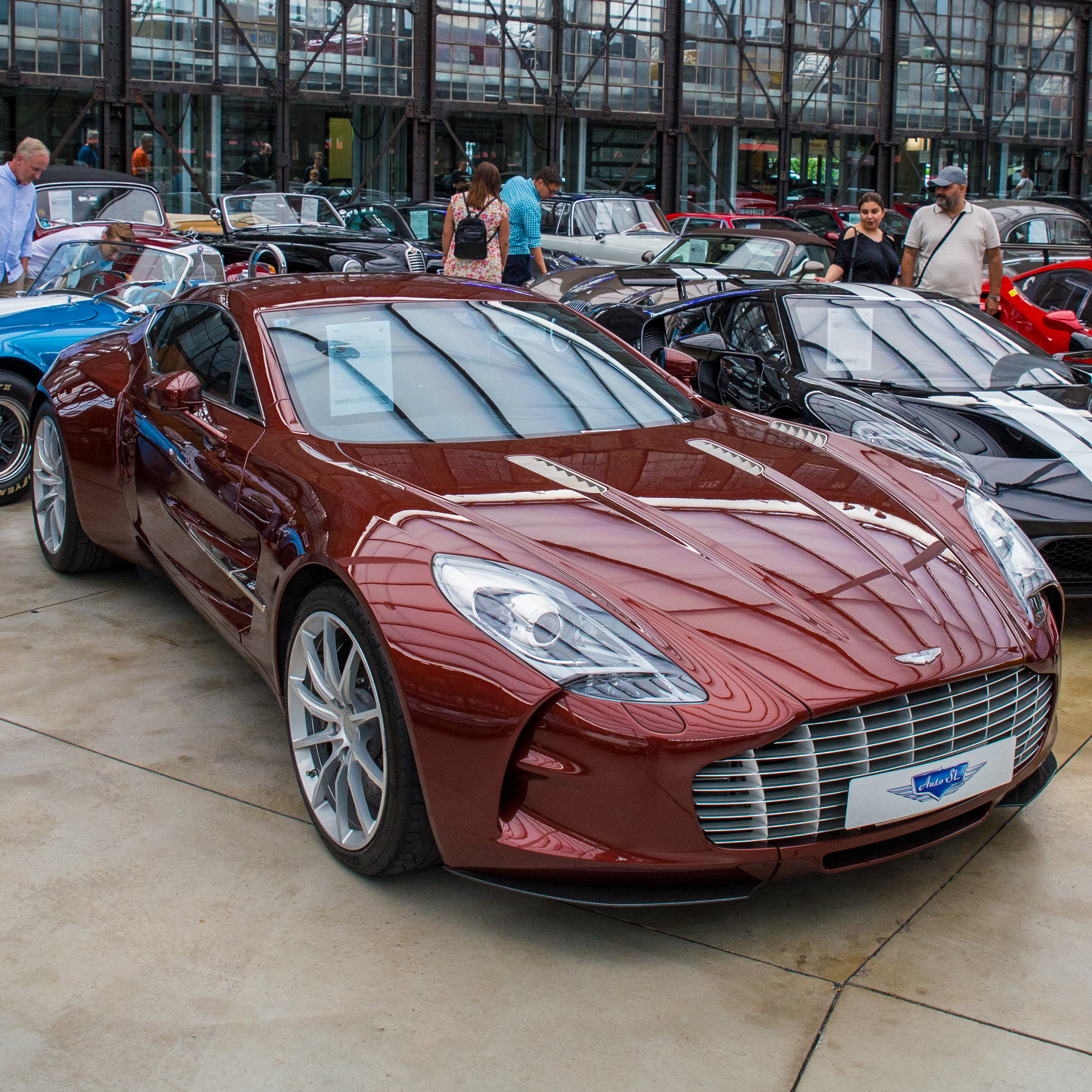
Aston Martin V12 Vantage
"... out. I get a phone call from a guy I just sold a V12 Vantage 2. This is painful."
The Aston Martin V12 Vantage is a sports car from Aston Martin. It’s powered by a V12 engine, which is known for strong performance and a distinctive sound. The podcast mentions it because someone recently sold one and regrets it.
The Aston Martin V12 Vantage is a performance version of the Vantage line, powered by a V12 engine and aimed at buyers who want a more dramatic, high-end driving feel. The podcast calls it out with “I just sold a V12 Vantage,” and the speaker says it’s “painful,” which signals how desirable it is to enthusiasts. It’s discussed because it’s a memorable, emotionally engaging Aston Martin model.
ferry vs tunnel crossing
"We booked the ferry because we couldn't afford to get the tunnel."
They chose the ferry because it was cheaper than going through the tunnel. It’s part of the story showing they were on a tight budget.
Choosing a ferry instead of a tunnel crossing is a practical cost decision when traveling with limited money. The speaker uses it to set the stakes of the trip—budget constraints shape the route and timing.

Land Rover Range Rover
"...ilmed in Brentford, where the Duke had his yellow Range Rover, hence we have a yellow Range Rover as our kind o..."
The Range Rover is a large, comfortable SUV made by Land Rover. It’s designed to be good both on regular roads and rougher terrain. The podcast mentions a yellow one because it was tied to a specific person and location.
The Land Rover Range Rover is a luxury SUV known for its upscale interior and off-road capability, making it a common choice for high-profile owners. In the podcast context, it’s mentioned as a specific “yellow Range Rover” associated with a person in Brentford, which is why it stands out in the story. It’s the kind of car that signals status and comfort while still being practical.
chop truck
"where the Duke had his yellow Range Rover, [638.9s] hence we have a yellow Range Rover as our kind of chop truck. [643.3s] And so yeah, we've just played into it a bit"
“Chop truck” is slang for a car you use like a work vehicle—basically your mobile setup for events or filming. In this story, the Range Rover is acting as that “get-it-done” car.
“Chop truck” is car-culture slang for a vehicle used as a mobile base—often for filming, events, or transporting gear—rather than a truck in the literal sense. Here, the host uses it to describe how their yellow Range Rover functioned as the go-to vehicle for their production.

Ferrari SP2
"...own us in your walk around includes like a Monzer SP2. Yeah, so they're not for sale."
The Ferrari SP2 is a limited Ferrari sports car made in small numbers. It’s designed for a very special driving experience and is not widely available. The podcast mentions it to emphasize how exclusive it is.
The Ferrari SP2 is a special, limited-run Ferrari model built around a high-performance, open-air driving experience. In the podcast, it’s mentioned as part of a walk-around that includes a “Monzer SP2,” and the speaker notes these cars “aren’t for sale,” highlighting their exclusivity. It comes up because it’s a rare collector-focused Ferrari rather than a common production car.

Ferrari LaFerrari
"...in cars of the etiquette and the degree of like a LaFerrari concept. Yeah, so the LaFerrari's not the one tha..."
The LaFerrari is a very rare, very fast Ferrari supercar. It uses a hybrid system, meaning it combines an electric setup with a gasoline engine. The podcast mentions it as a special kind of car concept.
The Ferrari LaFerrari is a limited-production, high-performance hybrid supercar designed to deliver extreme speed and advanced technology. The podcast references it in the context of “etiquette and the degree of like a LaFerrari concept,” which suggests it’s being discussed as a standout, special-occasion kind of car. It’s notable because it represents Ferrari’s top-tier engineering and rarity.
primary cats
"and this car had full Aston history ... they're known for ingesting their primary cats"
“Primary cats” are the main catalytic converters in the exhaust. If they get damaged, they can break apart and cause serious problems—often including loud noises and costly fixes.
“Primary cats” refers to the primary catalytic converters in the exhaust system. If they fail or break down, debris can get ingested downstream, which can cause loud noises, loss of performance, and expensive repairs.
primary cat delete
"so this has had a primary cat delete done on it so that wasn't an issue so it had been done 10,000 miles ago"
A “cat delete” means removing or bypassing the car’s emissions filter in the exhaust. It can change how the exhaust system behaves, and it can also make the car harder to cover under warranty. Here, the host says it was already done earlier, so it wasn’t the cause of the later trouble.
A “cat delete” is when the catalytic converter (often the primary one) is removed or bypassed. That changes exhaust flow and emissions equipment behavior, and it can also affect how warranties and inspections treat the car. In this story, it’s mentioned as something already done before the engine problem, helping explain why the issue wasn’t tied to that modification.
V12s
"so it wasn't like there's any residue left everything was fine so I'm worried like the engine sounds like the engine's blown and I'm thinking how the fuck can this happen these V12s do not just blow up"
A “V12” is a type of engine with 12 cylinders arranged in a V shape. It’s usually found in expensive, high-performance cars. The host is basically saying that even though engines can fail, V12s aren’t supposed to just suddenly catastrophically break.
“V12” refers to an engine with 12 cylinders arranged in a V shape. V12s are typically high-end, complex engines, and while any engine can fail, they’re often perceived as robust when maintained. The host is emphasizing that V12s “do not just blow up,” which frames the surprise at the catastrophic failure described.
Aston warranty
"but because the car had been modified we weren't able to get an Aston warranty on it because the car was sold me in month with him"
An “Aston warranty” means the official warranty coverage for an Aston Martin. If the car has been modified—especially in emissions or exhaust areas—manufacturers may refuse to cover problems. The host is saying the modifications prevented them from getting that warranty help.
This refers to an Aston Martin warranty. Warranties can be denied or voided when a car has been modified in ways the manufacturer considers outside approved specifications—like exhaust/emissions changes. Here, the host says they couldn’t get an Aston Martin warranty because the car had been modified.
burn your engine
"and it cost me just over 33 grand to burn your engine just before Christmas that was fun"
“Burn your engine” is a rough way of saying the engine got badly damaged—usually from something like overheating or lack of proper lubrication. It implies the damage was serious enough that the engine likely needed major repair or replacement. The host is using it to describe how expensive the problem became.
“Burn your engine” is a colloquial way to describe catastrophic engine damage, often from overheating, oil starvation, or severe internal failure. It’s not a precise technical diagnosis, but it signals that the engine was effectively destroyed rather than having a minor issue. In this segment, it’s used to quantify the cost of the failure event.
logs rev reports
"and I think wear it a Porsche that kind of logs rev reports and things like that or wear it on YouTube or someone's Instagram"
“Logs” and “rev reports” are records of what the engine was doing—like how fast it was spinning and how it behaved. People use them to figure out what went wrong and when. Here, the host says they used those records as proof in their situation.
“Rev reports” and “logs” refer to recorded engine data—often from the car’s onboard diagnostics or aftermarket monitoring. These can show patterns like abnormal behavior around the failure event, helping establish what likely happened. The host mentions using these records (and even social media) to “prove” something malicious occurred, implying the data was used as evidence in a dispute.

Ford Mustang
"prior to that it was Mustangs and Range Ravers so we've gone"
The Ford Mustang is a sports car made by Ford. It’s known for being fun to drive and for its distinctive look. In the podcast, it’s mentioned as part of a set of cars they’ve been dealing with.
The Ford Mustang is a classic American sports car that’s widely recognized for its performance-focused design and strong enthusiast following. The podcast references “Mustangs and Range Ravers,” suggesting they’re talking about a lineup of cars they’ve sold or discussed. It’s often brought up because it represents a popular, recognizable performance brand.

Porsche Cayman
"sadly from selling earlier Caymans and boxes"
The Porsche Cayman is a sports car with the engine placed toward the middle of the car. That layout helps it feel balanced when driving. The podcast brings it up because they’ve sold some earlier Caymans and are talking about what happened next.
The Porsche Cayman is a mid-engine sports coupe built for handling and driver engagement. The podcast mentions “selling earlier Caymans and boxes,” implying they previously owned or moved these cars and are now discussing what’s available. Caymans come up frequently in car conversations because they’re a compact, performance-oriented alternative within Porsche’s lineup.
Ferrari-esque things
"[2418.3s] more modern stuff [2419.1s] and actually I prefer to sell [2420.3s] because it's less prone to [2421.8s] Ferrari-esque things [2423.0s] that existed [2423.6s] from the 70s through till"
“Ferrari-esque things” means the kinds of annoying issues people often expect from older Ferraris. The host is saying those problems are part of why he prefers to sell instead of keeping them.
“Ferrari-esque things” is a colloquial way to describe the kinds of quirks, maintenance needs, or problem patterns people associate with certain older Ferrari cars. The host links it to the 1970s-to-then era, implying age-related complexity and ownership headaches rather than a single specific failure.

Ferrari 288 GTO
"through things something like a 288 GTO [2571.1s] won't be ads value"
The Ferrari 288 GTO is a very famous Ferrari from the late 1980s. It’s known for having a powerful turbocharged engine and for being a highly collectible, special supercar.
The Ferrari 288 GTO is a late-1980s supercar built around a turbocharged V8 and designed to be a road-going homologation-style car. It’s famous for its 2.8-liter turbo V8 and for being one of the most collectible “era-defining” Ferraris from that period.

Jaguar XK120
"but it's more like the XK120s of this world [2577.7s] Neetypes"
The Jaguar XK120 is an old-school British sports car from the late 1940s and 1950s. People talk about it because it was one of the early cars that made Jaguar famous for fast, stylish driving.
The Jaguar XK120 is a classic 1940s/1950s-era British sports car known for popularizing the modern “grand touring” formula. It’s especially associated with early post-war performance and the XK engine family, which became a foundation for many later Jaguar performance cars.

Porsche Carrera GT
"it'll have gone to Carrera GTs they're a different kind of fish"
The Porsche Carrera GT is a famous Porsche supercar with a V10 engine. People compare it to other exotic cars, but it drives and feels very different from many competitors.
The Porsche Carrera GT is a mid-engine supercar known for its V10 engine and analog, driver-focused feel. It’s often discussed as a “different kind of fish” because it competes in the same general supercar space as other exotics but with a distinct character and engineering approach.
GT car
"ones are GT car ones one's almost like a hypercar"
A GT car is a fast, comfortable performance car meant for long drives. The host is basically saying GT cars and hypercars are built with different priorities.
A “GT car” is a grand touring-style performance car designed for fast road driving (and often endurance racing heritage). In the transcript, the host contrasts GT cars with hypercars to explain why they feel and behave differently.
hypercar
"ones one's almost like a hypercar but I still think at 300 grand"
A hypercar is an even more extreme version of a supercar—usually faster, more advanced, and more expensive. Here it’s used to compare different kinds of exotic cars.
A hypercar is an ultra-high-performance car that sits above typical supercars, usually with advanced aerodynamics, exotic materials, and very high power. The host uses “hypercar” to frame the comparison between different tiers of exotic cars and why they can be “good value” at certain prices.
flat 12
"I think the flat 12 Ferrari's"
“Flat-12” means the engine has 12 cylinders arranged in a special flat layout. It’s a way of describing the engine’s design, not just that it’s powerful.
“Flat-12” refers to a 12-cylinder engine layout where the cylinders are arranged in two banks lying flat on opposite sides of the crankshaft (a boxer-style configuration). The host is describing the Ferrari as having a “flat 12” to characterize its engine type and how it fits the car’s identity.
car deal
"and I didn't do it because I just had so much going on that week that it just was too much stress under my head to do a car deal as well"
A “car deal” means the whole process of buying or trading a car, not just driving it. It usually involves agreeing on price and handling the paperwork.
A “car deal” here refers to negotiating and completing the purchase/trade process—typically involving price, timing, and paperwork. In enthusiast circles, this often includes coordinating trade-ins, financing, and condition checks before money changes hands.
stop gap
"there is a buffer [2714.7s] there needs to be a stop gap [2715.5s] where you're like [2716.0s] okay this has now cost me so much money"
A “stop gap” car is a temporary car you buy just to get you through a rough patch. You’re using it until you can afford or find the next car you really want.
In car buying, a “stop gap” is a temporary vehicle you use while you wait for the right car or while you recover financially. It’s meant to bridge the gap between purchases, not be a long-term solution.
limited run
"if you look at [2722.3s] especially limited run ones [2723.1s] or low production number ones [2726.3s] and I've still got my roses done"
A “limited run” car is built in small numbers. Because fewer exist, they can stay more valuable than cars that are made in huge quantities.
“Limited run” refers to a production model made in relatively small quantities. Scarcity can affect pricing and demand, often helping keep values from dropping as much as mass-market cars.

Porsche 911 (964)
"you know the 964 [2750.2s] and the 930 is a great looking car [2752.3s] but to drive"
This is a specific generation of the Porsche 911. People debate how “fun” it is to drive compared with other 911s, even if it looks great.
Porsche 911 (964) is the 911 generation from the late 1980s to early 1990s, and it’s known for being a more modernized “next step” compared with earlier 911s. In enthusiast discussions, it often comes up because its driving feel can be less sharp than some earlier or more focused 911 variants.
Request an Explanation
Heard something you'd like explained? We'll add it to this episode.
Sign in to request explanations for terms you heard.
Want to learn more?
Browse our glossary for plain-English explanations of automotive terms, jargon, and concepts.
Help improve this episode
See something that's not quite right? Our annotations are AI-generated and can sometimes miss the mark. Click the flag icon on any annotation to suggest a correction.