
I survived a lightning strike and getting trolled by a child - Sent and Bent #78
About this episode
A lightning storm turns into a full-on emergency: the hosts describe constant bolts, power flickers, and a strike that blew out a nearby ceiling, forcing evacuations and even firefighters busting down doors to find a fire inside the walls. Between generator plans, storm prep, and cleanup, the conversation pivots to being trolled by a child online—who ultimately teaches them “It is not about the stuff you have / It's about the experiences.”
A massive storm rolled through Idaho and we got stuck in the middle of it... Premium Members Club https://grindhardplumbingcomembers.com/pages/premium-members-club

Renault Wind
"...nd of just raining a little bit then and not very windy and I went into the shop to get the generator an..."
The Renault Wind is a small two-seat convertible-style car. It’s built for driving with the top down when the weather is good. The podcast mention likely connects to how it feels to drive in light rain or wind.
The Renault Wind is a small, two-seat roadster-style car designed for open-air driving with a compact footprint. It’s the kind of car that often gets mentioned in casual conversations because it’s distinctive and weather-dependent—like when someone is talking about rain or wind conditions. In the podcast context, it sounds like it came up during a discussion of a trip or moment where the weather mattered.
six by six
"For the vast majority of the world. You're filling up your your uh military six by six with the trash from your backyard"
“Six by six” means the truck has six wheels and all of them help drive the vehicle. It’s usually used on trucks meant for rough terrain because it grips better.
“Six by six” describes a 6-wheel-drive configuration where the vehicle has three axles and all six wheels are powered. That kind of drivetrain is common on off-road and military-style trucks because it provides better traction on loose or uneven ground.
scrap
"I took a load of scrap in in my wife's dump truck. They'll forward at 350 Because we had the changley load of scrap in there from our backyard monster truck show."
Scrap is old metal you’re saving to recycle. In this case, it’s the metal the host hauls away and replaces with new steel.
Scrap refers to discarded metal or other recyclable material collected for recycling or resale. Here, the host loads scrap into the dump truck and later plans to buy new steel for home railings.
2024 electric mini truck
"This is a 2024 electric mini truck or neighborhood car I got it almost two years ago and just drive it around our subdivision This is basically an enclosed golf cart top speed is 30 to 35"
They’re talking about a small electric vehicle meant for short, local driving. It’s basically like a tiny truck or neighborhood car that doesn’t go very fast—more like 30 to 35 mph.
The speaker is describing a 2024 electric mini truck that’s used like a neighborhood vehicle. These small EVs are often “micro-trucks” or enclosed neighborhood cars designed for short trips, typically at low speeds (here, about 30–35 mph).
generator and the water pumps
"I've tried everything. I'm like, what if you remove The generator and the water pumps and all the stuff they're not supposed to import"
They’re suggesting taking out parts like a generator and water pumps. The idea is that changing what’s installed could change how the vehicle is treated under the rules for importing it.
The speaker is talking about removing components like a generator and water pumps to change how the vehicle is classified for import rules. In practice, that kind of component swap can affect whether a vehicle meets the requirements for a particular category.
tariff
"Electric cars from china's are The highest tariff there is right. It's like 100 plus"
A tariff is a tax on things brought in from another country. If the tariff is high, the imported car costs more, and that can make it harder to bring in.
A tariff is a tax placed on imported goods. Here, the speaker says Chinese electric cars face very high tariffs (they mention “100 plus”), which increases the cost and can discourage importing.
electric cars from china's
"They technically because Electric cars from china's are The highest tariff there is right. It's like 100 plus"
They’re talking about electric cars made in China and why it can be hard to import them. The government rules and taxes can make it complicated to bring them in legally.
The speaker is referring to Chinese-made electric vehicles and the trade barriers that affect importing them. In this context, they’re tying it to tariffs and import requirements that can make it hard to legally bring these cars into the country.
certifications
"You need to pass all these certifications. They basically make it impossible to bring them in right"
They mean the legal approvals a vehicle has to pass before it can be sold or used. The speaker is saying the paperwork/testing requirements are so strict that it becomes nearly impossible to import.
The speaker is describing regulatory certifications required before imported vehicles can be sold or used legally. They imply these compliance steps are so difficult that they effectively block imports of certain Chinese electric vehicles.
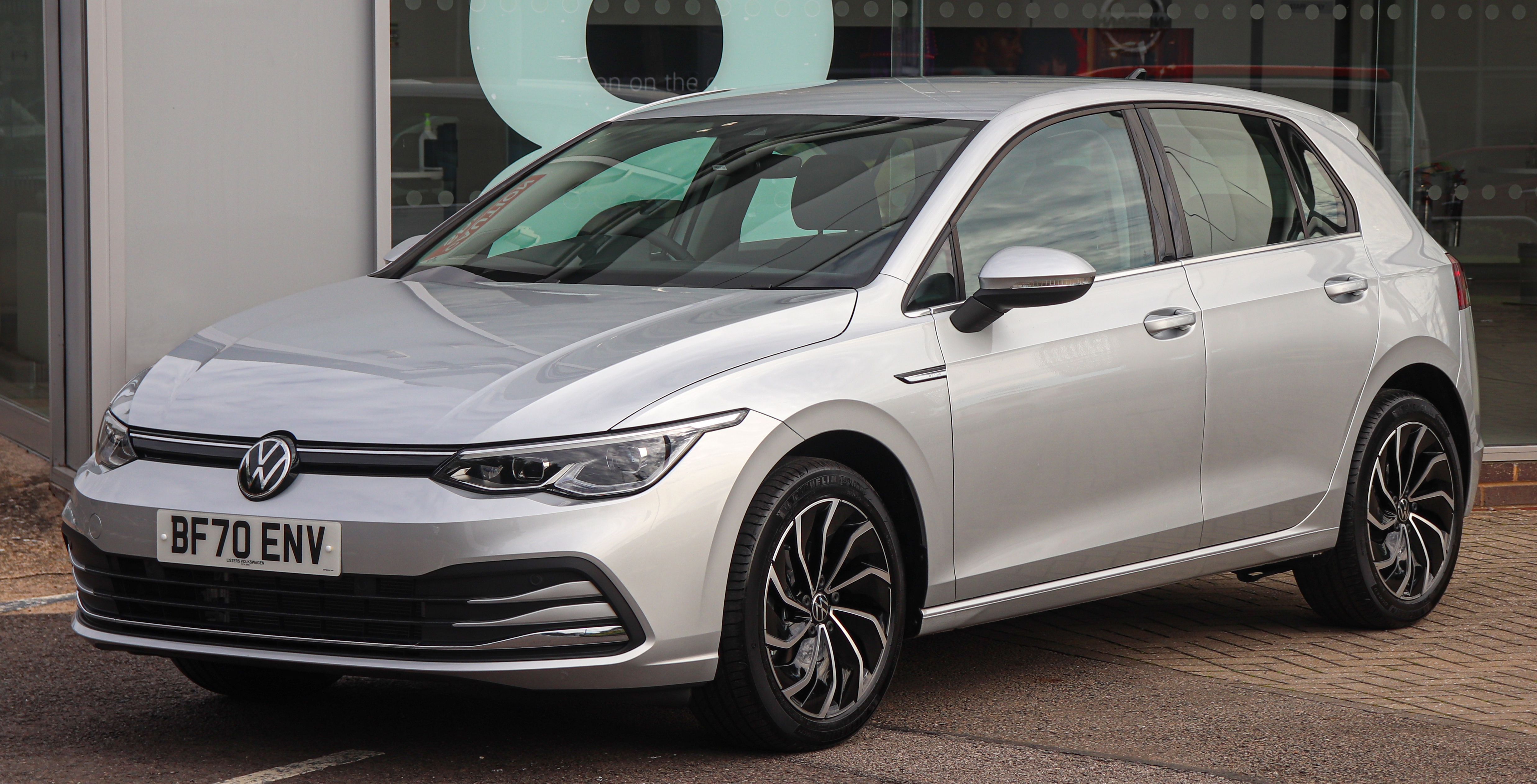
Volkswagen Golf
"...think they call an enclosed mobility scooter or a golf car. Yeah, and that's how we get them right The f..."
The Volkswagen Golf is a small car made for everyday driving, usually in a hatchback body style. Sometimes people also say “golf car” to mean a small mobility vehicle, so the podcast may be talking about that mix-up. Either way, it’s a car name most people recognize.
The Volkswagen Golf is a compact hatchback that’s known for being practical and easy to live with day to day. In a podcast context, it may come up because people often use “golf car” as a casual nickname for small enclosed mobility vehicles, so it’s likely being referenced as a point of confusion or wordplay. It’s a common, widely recognized model, which makes it a frequent topic in everyday car discussions.
enclosed mobility scooter or a golf car
"The changley's I think they call an enclosed mobility scooter or a golf car. Yeah, and that's how we get them right"
They’re saying the vehicle is probably treated like a mobility scooter or a golf cart. That matters because the rules for importing/selling scooters and golf carts can be different from rules for regular cars.
The speaker claims the “Changley” vehicle is likely classified as an enclosed mobility scooter or a golf car. Those categories can have different regulatory and import pathways than full passenger cars, which is why classification matters for getting them in.
top speed is 30 to 35 miles per hour
"Uh, what's cool about this is top speed is 30 to 35 miles per hour depending on how much weight is in it So that's pretty sick that they've actually been using it to haul stuff around the neighborhood"
They’re quoting the vehicle’s maximum speed. On small electric vehicles, carrying more weight can reduce how fast it can go.
The “top speed” range is a key performance spec for low-speed electric vehicles, because it’s typically limited by motor power, controller settings, and battery voltage. The mention that it varies with weight highlights how payload affects acceleration and maximum speed under load.
72 volt five kilowatt hours
"There you go, and it's 72 volt five kilowatt hours. So it's actually way better than the other one changley"
“72 volt” is the battery’s electrical system voltage. “Five kilowatt hours” (kWh) tells you how much energy the battery holds, which is one big factor in how long it can run.
“72 volt” refers to the battery system’s electrical voltage, which affects how the motor controller and power electronics are designed. “Five kilowatt hours” (kWh) is the battery’s energy capacity—how much total electrical energy it can store for driving.
Real-wheel drive
"We've ever had but it is a Real-wheel drive. Well, I mean I didn't expect it to be four-wheel drive."
They’re talking about which wheels get power. More driven wheels usually means better traction, especially on rough or slippery ground.
“Real-wheel drive” here is describing a drive setup where power is sent to the wheels rather than being a simple single-drive configuration. In practice, it’s being contrasted with expectations about whether it’s four-wheel drive, which matters for traction and how the vehicle handles on uneven surfaces.
diesel swap
"You want to diesel swap it with me? diesel swap it That looks pretty cool, right?"
A “diesel swap” is when someone replaces the original engine with a diesel engine. It’s a big project that usually requires lots of extra parts and work to make everything work together.
A “diesel swap” means replacing the vehicle’s original powertrain (often electric or gasoline) with a diesel engine and the associated fuel, cooling, wiring, and drivetrain components. It’s a major modification that can change weight distribution, torque delivery, and how the vehicle is maintained.
micro camper
"“...That actually kind of looks cool a little micro camper on it...”"
A micro camper is a very small camping setup. It’s usually built to be simple and compact, and in this conversation they’re talking about it like a platform you could modify.
A “micro camper” is a small, lightweight camper setup—often built on a compact chassis or utility vehicle—intended for minimal, budget-friendly camping. The discussion treats it like a modular platform where you could potentially change the powertrain (e.g., diesel swap).
kabocha diesel
"“...He still swap it with a kabocha diesel and did you see the wheels? ...you could put a diesel in there. That's what I'm thinking”"
They’re talking about a diesel engine called “kabocha” that someone could put into a small vehicle. A “swap” means replacing the original engine with a different one, usually to change fuel type and driving behavior.
“Kabocha diesel” is referenced as a diesel engine option that could be swapped into a small micro-camper/golf-cart-style vehicle. The key idea is an engine swap: replacing the original powerplant with a different engine type (here, diesel) to change how it runs and what parts you need.
engine swap
"“...He still swap it with a kabocha diesel... Yeah, you could put a diesel in there. That's what I'm thinking”"
An engine swap means putting a different engine into a vehicle. It’s not just “bolt it in”—you often have to change parts and connections so everything works together.
An engine swap is the process of removing one engine and installing a different one, which can require custom mounts, wiring changes, fuel system updates, and sometimes drivetrain adjustments. In this segment, the swap is discussed as swapping in a diesel engine into a small vehicle.
timu
"“...I bet you could get one of those on timu too”"
They’re mentioning an online shopping site where you can buy these kinds of parts or vehicles. The point is that listings can be confusing about what’s actually made where.
“timu” is referenced as a marketplace where you might find the same kind of small diesel-powered equipment/vehicles. The automotive relevance here is that these platforms often sell imported, rebranded parts where engine origin claims can be unclear.
cafe racer
"“...On my new video the the testing the cafe racer that I got on amazon...”"
A cafe racer is a motorcycle style that looks stripped-down and sporty, often with a more aggressive posture. People often build them from parts, so who actually makes the base bike can be a big deal.
A “cafe racer” is a motorcycle style associated with stripped-down, sporty road bikes—typically with a more aggressive riding position and minimalist bodywork. The host is labeling a bike’s origin (and getting corrected), which matters because cafe racers are often built from aftermarket parts or imported platforms.
amazon
"“...the testing the cafe racer that I got on amazon...”"
They’re saying they bought the motorcycle on Amazon. The relevance is that online marketplaces often sell imported bikes, so the brand/origin details may not be straightforward.
“Amazon” is mentioned as the source for a cafe racer the host tested. For enthusiasts, the key takeaway is that big marketplaces can carry imported motorcycles and parts, sometimes with inconsistent branding or origin details.
vivore venom
"“...What's vivore is? ...it's one of them. It's vivore venom. I think I would make a lot more sense if it was venom”"
They’re trying to figure out the exact name of the motorcycle brand/model—“vivore venom.” The point is that with imported bikes, the branding can be confusing and people may correct each other in the comments.
“vivore venom” (as spoken) appears to be the brand/model name the host is trying to identify for a motorcycle. The discussion highlights how easy it is to misread or mishear brand names on imported bikes, and how commenters may correct the origin/company.
Suronster
"Suronster has three 2774.0s] And I'm like Suronster is a lot more successful youtuber than me is what I'm thinking"
“Suronster” sounds like a YouTube channel or creator name. Here, they’re just talking about who’s more popular, not reviewing a car.
“Suronster” appears to be a creator/channel name being referenced in the episode. In this context, it’s used as a comparison for social media success rather than as a specific vehicle or product.
pit bike
"The magazine has like one page about a pit bike like every four episodes every four issues [3059.1s] Yeah, you know, they have the rest of the magazines dedicated to four fifties"
A pit bike is a small dirt bike made for track areas near the pits. It’s usually meant for short, fun rides rather than normal street use.
A pit bike is a small motorcycle designed for riding in and around a racetrack “pit” area. They’re typically lightweight, lower-powered, and used for short laps or practice rather than street driving.
four fifties
"[3059.1s] Yeah, you know, they have the rest of the magazines dedicated to four fifties [3067.2s] It's both I mean it is also the pinnacle for the kid. It's like wow, that's the best bike there is"
“Four fifties” is a nickname for motorcycles in a certain engine-size category. It’s basically a quick way to say how big/powerful the bike is.
“Four fifties” is slang for 450cc-class motorcycles (often referring to engine displacement). In pit-bike and dirt-bike culture, people use these shorthand engine-size names to quickly describe the bike’s power class.

e36 wagons
"Yeah, like all the cars that like weren't released in this country like all those cool european cars and lanceas and stuff like [3094.7s] I didn't know anything about it until I was an adult and I'm like dang these things are sick like e36 wagons"
“E36” is the code name for a BMW 3 Series from the 1990s. A wagon version is the same basic car, but with extra cargo space and a long roof—something fans like because it’s fun to customize.
“E36” refers to the BMW 3 Series generation from the 1990s. An “E36 wagon” is the wagon body style of that generation, which is especially popular with enthusiasts because it’s a practical platform that can be modified for a more aggressive look and feel.
slammed with wheels
"I was like wow. Yeah, and I was like [3108.8s] And it was clean and it had it was slammed with wheels [3113.7s] Like man, I want to get one of these cool cars and just ruin it"
“Slammed” means the car sits very low to the ground. People usually do this to make it look more aggressive, often along with bigger or different wheels.
“Slammed” is car-culture shorthand for lowering a vehicle’s ride height so the body sits close to the ground. When someone says it’s “slammed with wheels,” they’re usually pointing to an aggressive stance—often paired with aftermarket wheels and suspension changes.
two-wheel drive motorcycle
"Yeah, they had like the chevron tread [3141.0s] No, it's a motorcycle. Oh, it's a two-wheel drive motorcycle, right? Oh, right. Yeah [3146.6s] Yeah, that was like"
A two-wheel drive motorcycle powers both wheels instead of just the back wheel. That can help it grip better, especially on wet or slippery ground.
A two-wheel drive motorcycle sends power to both the front and rear wheels, improving traction compared with a typical rear-wheel-drive setup. It’s a specialized drivetrain concept that can help on slippery surfaces or during hard acceleration.
chevron tread
"Yeah, they had like the chevron tread [3141.0s] No, it's a motorcycle. Oh, it's a two-wheel drive motorcycle, right?"
Chevron tread describes a tire tread pattern made of V-shaped “chevrons.” It’s commonly associated with off-road or traction-focused tires because the shape can help channel debris and improve grip.
Request an Explanation
Heard something you'd like explained? We'll add it to this episode.
Sign in to request explanations for terms you heard.
Want to learn more?
Browse our glossary for plain-English explanations of automotive terms, jargon, and concepts.
Help improve this episode
See something that's not quite right? Our annotations are AI-generated and can sometimes miss the mark. Click the flag icon on any annotation to suggest a correction.