
We have the BEST News ever! (Not Clickbait) - Sent and Bent #81
About this episode
The hosts kick off with “BEST News ever” and explain how a friend helped them line up a MechALAC for free—specifically “the eight M. C. R.”—plus a dealer promise that they’ll get “whatever attachments we want,” including logging options. Between the announcement, they share weekend road-trip and Gambler 500 stories, then dive into hands-on ambulance ownership: fixing an air-ride compressor issue, troubleshooting warning symbols, and diagnosing coolant/pressure behavior. The episode blends big equipment news with real-world mechanical problem solving.
skid steer
"It's like one of the fastest skid steers also. Yep. If you can even call it a skid steer. I mean, personally, I would call it an excavator..."
A skid steer is a small construction machine that can turn very tightly. Instead of steering like a car, it pivots by using its wheels/tracks, and you can swap tools on the front to do different jobs.
A skid steer is a compact construction machine that turns by skidding its wheels (or tracks) rather than using a steering wheel like a car. It’s designed to be maneuverable in tight spaces and is commonly used with interchangeable attachments for tasks like digging, lifting, and grading.
excavator
"I would call it an excavator that is it's half and half, but it's more excavator than it is skid steer."
An excavator is a big digging machine with a long arm and a bucket. It’s used for digging trenches, moving dirt, and doing heavier earthmoving than smaller machines.
An excavator is a heavy construction machine built around a boom and arm with a bucket for digging and moving material. Compared with a skid steer, excavators are typically better suited for longer-reach digging and heavier earthmoving work.
attachment
"They're just going to give us whatever attachments we want. Dude, that's amazing. What all attachments are there?"
Attachments are add-on tools you swap onto the machine so it can do different work. Instead of buying a different machine for every job, you change the tool.
Attachments are interchangeable tools mounted to a machine (like a skid steer/excavator) to change what it can do. Examples mentioned here include tools for logging, building, and road building, which let the same base machine handle many different jobs.
marketplace
"I see his listings on marketplace. Yeah. And I that it's kind of funny because I was thinking about messaging him and just seeing if we could get like a solid discount on a used machine..."
Marketplace is a place online where people post listings to sell things. They’re using it to show the dealer has used equipment for sale.
Marketplace refers to an online listing platform where used equipment can be bought and sold. Here it’s used as evidence that the dealer has listings, which influences the host’s idea of negotiating for a used machine.
Mechalac
"I didn't remember what a Mechalac was, but I remember on one of our early, early podcasts, Will was talking about how Davey has this crazy machine that he drove."
Mechalac is a type/brand of special construction machine. It’s known for having an unusual articulated arm and wheels, and people use it like a mix of a small digger and a skid steer.
Mechalac is a brand/model family of compact construction machines known for a distinctive articulated arm and wheel/track setup. In this segment, they describe it as a “crazy arm with these wheels,” and it’s positioned as a hybrid between a skid steer and an excavator.
Moab and arches trip
"We went to Moab and arches and all this stuff. And that is also when I realized that I really like vans, like four wheel drive camper vans."
They talk about a trip to Moab and Arches where they drove around in a 4x4 van. The story is basically about exploring and finding cool roads that made them like these vans.
The hosts describe a trip to Moab and Arches, including off-road driving in a 4x4 van. This functions as a travel story that explains why they became interested in four-wheel-drive camper vans.
four wheel drive camper vans
"And that is also when I realized that I really like vans, like four wheel drive camper vans. I was driving,"
These are camper vans that can drive with power to all four wheels. That helps them get through rough roads or trails where a normal van might struggle.
Four-wheel-drive camper vans are vans built for both living in (camping) and off-road traction. The key idea is that the drivetrain can send power to all four wheels, helping the van move over loose dirt, sand, or uneven terrain.
efoil
"So the last time that I hung out with Davey, besides just talking to him around town, I was teaching him how to efoil because he has a boat."
An eFoil is a battery-powered board that can lift you above the water using fins/“wings.” It’s like a surfboard, but the motor helps it glide smoothly with less water drag.
An eFoil is an electric hydrofoil board that uses a motor to lift the rider above the water on wing-like “foils.” Because it’s electric, it’s typically quieter than gas-powered watercraft and can be used in places where noise is a concern.
flow rate
"...some people like do things to increase the flow rate and then post it on a forum and then like other people do it and then breaks or something."
Flow rate just means how quickly fluid is moving through the machine. If you increase it, the hydraulics can make an attachment move faster or work harder.
“Flow rate” is how much fluid (usually hydraulic fluid in an excavator) moves through a system per unit time. When people try to increase flow rate, they’re typically trying to make hydraulic attachments move faster or work more aggressively.
logging protection
"...they hit you guys up with the logging protection because they sell these like a cage, big cage, things that go over the glass."
Logging protection is extra protective gear to keep important parts safe during rough work. In this case, they’re talking about a cage that helps protect glass.
“Logging protection” here refers to protective hardware used to shield glass or other exposed parts during logging-related work. The hosts connect it to a “cage” product that goes over glass to prevent damage from debris or impacts.
void the warranty
"...No strings attached. And then tell us how to not void the warranty."
“Void the warranty” means making the manufacturer’s warranty invalid, usually by using the product in ways that violate the terms (like unsafe modifications or unapproved changes). The hosts say the company will instruct them on how not to void the warranty while filming.
Duramax
"It is a four door Kodiak O five Duramax and it is awesome... So smooth. They're like, it just, it doesn't have an excessive power cause it's stock."
Duramax is the name for a diesel engine family used in GM trucks. Diesel engines like this are known for strong pulling power and smooth driving when you’re carrying a lot of weight.
Duramax is GM’s turbo-diesel engine line used in many heavy-duty trucks. It’s especially valued for torque (the twisting force that helps with towing and moving heavy loads) and for feeling smooth under steady driving.
horse power and torque numbers
"I'm pretty sure that that Duramax has basically the same horse power and torque numbers as our Ferrari really or rather the Ferrari has the same as it, which is insanity."
Horsepower and torque are two different ways of describing engine output. Horsepower is related to how quickly the engine can do work, while torque is the twisting force that strongly affects acceleration and pulling—especially noticeable in heavy vehicles like trucks.
6.6
"The Duramax is a 6.6. The Ferrari, the Toureg engine is a five liter."
“6.6” is the engine size in liters for the Duramax. Bigger diesel engines often make more low-end pulling power, which helps trucks carry heavy loads.
“6.6” refers to engine displacement in liters for the Duramax (a 6.6-liter diesel). Larger displacement often helps produce strong torque, which is why big diesel engines are common in heavy-duty trucks.
Two turbos
"So it's got two turbos. Yeah. Anyway, so we'd been going through this thing..."
Two turbos means the engine has two turbochargers. They help the engine breathe better by forcing more air in, which can make more power.
Two turbos means the engine uses twin turbochargers to force more air into the cylinders. This can improve power and torque across a wider range of engine speeds compared with a single turbo setup.
air ride
"Just it had a external air compressor thing cause it had a bunch of air leaks to keep the air ride."
Air ride is a suspension system that uses air pressure instead of metal springs. It helps the truck ride smoother and can keep the height more consistent, which matters on heavy vehicles.
Air ride suspension uses compressed air instead of traditional steel springs to support the vehicle. It can smooth out bumps and help maintain ride height, which is especially helpful for heavy vehicles like ambulances that need consistent comfort and control.
external air compressor
"Just it had a external air compressor thing cause it had a bunch of air leaks to keep the air ride. And the built in air compressor had failed at some point, but we, we fixed that."
The external air compressor is the device that fills the air system with pressure. If it breaks or if air leaks out, the suspension can’t stay properly inflated and the ride gets worse.
An external air compressor is the pump that pressurizes the air system used by air ride suspension. If it fails—or if there are air leaks—pressure can’t be maintained, and the suspension can lose its intended ride height and smoothness.
onboard air compressor
"Yeah. Heck yeah. That's amazing. So that's how we fixed the onboard air compressor, which all it runs is the rear airbags and the air for the seats."
This is a built-in pump that makes compressed air inside the car. That air is then used to run systems like the rear air suspension/airbags and some seat functions.
An onboard air compressor is a small pump mounted in the vehicle that pressurizes air for pneumatic systems. In this case, it supplies air to the rear air suspension/airbags and the air for the seats, so it directly affects ride height and comfort functions.
rear airbags
"So that's how we fixed the onboard air compressor, which all it runs is the rear airbags and the air for the seats."
In this context, “airbags” means air springs in the rear suspension. They use air pressure to help the car ride smoothly and stay at the right height.
“Rear airbags” here refers to air springs at the back of the vehicle, not just crash airbags. Air springs use pressurized air to support the vehicle’s weight and help smooth out bumps, and they’re commonly paired with an onboard compressor and valves.
coolant light
"So also the light, I don't know, early 2000s Chevy's, I don't know what they were thinking with their symbols. It's not obviously a low coolant light."
That warning means the car thinks the coolant level is low. Coolant helps keep the engine from overheating.
A low coolant light is a dashboard warning indicating the engine’s cooling system has insufficient coolant. Coolant is what carries heat away from the engine, so low levels can risk overheating.
low coolant
"we pulled over and it was just actually low coolant in the, [1473.4s] a lot of vehicles traditionally have a, you know, a pressurized cap on the radiator"
Coolant is the fluid that keeps the engine from getting too hot. If the level is low, the engine can run hotter than it should and the car may warn you or eventually overheat.
“Low coolant” means the engine cooling system doesn’t have enough liquid to carry heat away. When coolant level drops, the system can’t maintain proper temperature control, which can trigger overheating warnings even if the engine isn’t fully boiling yet.
pressurized cap
"a lot of vehicles traditionally have a, you know, a pressurized cap on the radiator or [1479.4s] somewhere in the cooling system."
The radiator cap isn’t just a lid—it helps keep pressure in the cooling system. More pressure helps the coolant stay liquid longer before it boils.
A “pressurized cap” on the radiator maintains system pressure. Higher pressure raises the coolant’s boiling point, so the engine can run hotter without the coolant turning into steam.
expansion tank
"And then they have an expansion tank, which is when it gets hot [1483.7s] enough to push it coolant or pressure out of the system, it goes into the expansion tank."
The expansion tank is like a coolant overflow container. When the engine heats up, coolant goes into it, and when things cool down, it pulls coolant back in.
An “expansion tank” is a reservoir connected to the cooling system that receives coolant/pressure when the engine heats up. As temperatures drop, it draws coolant back in to keep the system filled and stable.
Chevy
"Well, Chevy and Volkswagen and some other people have decided [1495.5s] that's not a good idea."
“Chevy” is shorthand for Chevrolet. The host is saying some Chevy models use a different cooling setup that relies on pressure in the coolant tank.
“Chevy” refers to Chevrolet, which the host says uses a cooling-system design with a pressurized expansion tank rather than the more traditional radiator cap approach. This matters because the pressure-management strategy affects how the system behaves when coolant level or pressure is off.
Volkswagen
"Well, Chevy and Volkswagen and some other people have decided [1495.5s] that's not a good idea."
Volkswagen is mentioned because the host says some VW cars use a cooling design that keeps pressure in the coolant tank. That can affect how warnings show up when coolant is low.
Volkswagen is mentioned as using a cooling-system layout the host describes as having a pressurized expansion tank. The point is that different manufacturers manage cooling-system pressure differently, which can change how alarms and coolant loss present.
air leak
"Either [1552.6s] there's a leak, an air leak somewhere very high in the system, like top of the radiator"
An air leak means air is getting into the cooling system. That can stop the system from pressurizing correctly, which can cause coolant to boil away and trigger warnings.
An “air leak” in a pressurized cooling system can prevent the system from building and maintaining pressure. Without proper pressure, coolant can boil at a lower temperature and turn into steam, which looks like coolant disappearing.
coolant lines
"like top of the radiator, [1557.6s] one of the higher coolant lines, one of the heater hoses somewhere in that part of the system"
Coolant lines are the hoses/tubes that move coolant around the engine. If one leaks air or coolant, the cooling system may not work properly.
“Coolant lines” are the hoses and tubing that route coolant through the engine and heat-management components. If air leaks or pressure loss occurs in these lines, the system may not build pressure and can boil or trigger alarms.
heater hoses
"one of the higher coolant lines, one of the heater hoses somewhere in that part of the system, [1562.6s] or the tank itself is cracked"
Heater hoses are the coolant hoses that feed the cabin heater. If they leak, you can lose coolant and the engine cooling system can also get messed up.
“Heater hoses” carry hot coolant to the cabin heater core. Because they’re part of the same cooling circuit, leaks or air pockets in heater hoses can contribute to low-pressure operation and coolant loss.
boils at a significantly lower pressure
"because if it never builds pressure, [1569.0s] the water in the system boils at a significantly lower pressure and it'll just [1573.8s] gradually turn into steam"
If the cooling system isn’t pressurized, the coolant boils sooner. When it boils, it turns into steam and you can lose coolant.
Coolant “boils at a significantly lower pressure” when the cooling system can’t maintain pressure. Lower pressure reduces the boiling point, so the coolant can transition to steam more easily, leading to coolant loss.
steam and boil off
"and it'll just [1573.8s] gradually turn into steam and boil off in the atmosphere, which is what I think is happening."
“Boil off” means the coolant is turning into steam and disappearing. That can happen slowly, so you might not notice a big leak on the ground.
“Steam and boil off” describes coolant turning into vapor and escaping into the atmosphere. In a failing cooling system, this can happen gradually, making it look like the car is “using coolant” without obvious puddles.
dropping someone off at a hospital in the ambulance
"we did make it all the way to your house without no, no, we did once. It's like slightly after silverwood. We had to fill it again. Yeah. So whatever the, we'll hope it's not headgaskets"
They’re explaining a real trip they had to make using an ambulance to drop someone off at a hospital. That context matters because it explains why they were paying attention to the vehicle and its problems.
The hosts describe using an ambulance for a real-world errand/appointment drop-off. This sets up the context for why they were monitoring the vehicle’s condition and why the situation became urgent.
head gaskets
"we'll hope it's not headgaskets, but it probably isn't because the system would pressurize. And wouldn't it overheat then if it was the headgaskets usually, but there are instances where headgaskets can fail in such a way that you're just burning through water"
A head gasket is a thin seal inside the engine that keeps coolant and oil where they belong. If it breaks, coolant can leak or get burned, and the engine can start running hot or lose coolant. The hosts are wondering if their cooling problem could be caused by that.
Head gaskets are the sealing layer between an engine’s cylinder head and the engine block. If they fail, coolant can leak into the combustion chambers or out externally, and the engine may overheat or lose coolant. The hosts are discussing whether the symptoms they’re seeing could be consistent with a head gasket failure.
system would pressurize
"we'll hope it's not headgaskets, but it probably isn't because the system would pressurize. And wouldn't it overheat then if it was the headgaskets usually"
Cars cool the engine with coolant in a closed system. That system is pressurized, which helps keep the coolant from boiling too easily. The hosts are talking about how the cooling system’s pressure behavior can hint at what’s going wrong.
A pressurized cooling system means the engine’s coolant is held under pressure, which raises the boiling point and helps prevent overheating. When a head gasket fails, pressure can build in the wrong places (like combustion gases entering the cooling system), changing how the system behaves. The hosts use this idea to reason about whether the symptoms match a head gasket issue.
hundred mile challenge
"And as much as it's unexpected or, uh, might be, uh, you know, out of character, it was actually my idea to do a hundred mile challenge. It really was in the power wheels, Lamborghinis."
A “hundred mile challenge” just means trying to drive something for about 100 miles to see if it can last. Here, they’re using that challenge idea on toy cars to test how well they really work.
A “hundred mile challenge” is a self-imposed endurance test where the goal is to cover about 100 miles as a way to prove how capable the vehicle is. In this episode, they’re applying that idea to Power Wheels Lamborghini toys to see if they can handle sustained driving.
range
"…If you put a better battery in your electric Lamborghini, it's like putting an extra fuel tank in your car… The stock batteries actually do have quite a bit of range…"
“Range” means how far the EV can drive on one charge. They’re comparing the stock battery’s short distance to what they needed for their event, including how fast it could recharge.
“Range” is how far the vehicle can travel on a charge. They discuss both the stock battery’s limited distance and the need for batteries that can recharge quickly for repeated runs.
48 volt battery
"…We literally didn't even retune the controllers. We just plugged in a 40 volt battery into what was supposed to be a 24 volt system."
A “40 volt battery” is the EV battery pack’s electrical voltage. That voltage affects how the car’s power system behaves—sometimes letting it feel quicker, but it can also stress parts if the car wasn’t designed for it.
A “40 volt battery” refers to the battery pack’s nominal voltage. In EVs, higher system voltage can change how power is delivered, which can affect acceleration and also how hard the rest of the electronics are working.
24-volt system
"…We literally didn't even retune the controllers. We just plugged in a 40 volt battery into what was supposed to be a 24 volt system."
A “24 volt system” means the car’s electronics were designed to run at about 24 volts. Using a higher-voltage battery without adjusting the electronics can make it faster, but it may not be ideal for long-term durability.
A “24 volt system” is the electrical design target the vehicle’s controllers and related electronics were built around. If you run a much higher-voltage battery without retuning, you can get performance changes but potentially create long-term stress or reliability risk.
controller
"…We literally didn't even retune the controllers. We just plugged in a 40 volt battery into what was supposed to be a 24 volt system."
“Controllers” are the car’s power-management electronics. They help regulate how battery power turns into motion, and if they’re not adjusted for the new battery, the car can behave differently.
In an EV conversion or battery swap context, “controllers” are the electronics that manage power delivery from the battery to the motor(s). If you don’t retune them for the new voltage, the car may still run but the behavior and stress levels can change.
charge quickly
"Uh, and the main thing is that we needed batteries that could charge quickly. The stock batteries actually do have quite a bit of range…"
“Charge quickly” means the battery can refill faster. If you have to do multiple trips in a day, charging speed can be just as important as how far it goes.
“Charge quickly” refers to the battery’s ability to accept power at a high rate, reducing downtime between runs. For event logistics, fast charging can matter as much as peak range.
three miles
"…The stock batteries actually do have quite a bit of range. We were able to get like three miles out of the stock batteries…"
“Three miles” is how far the stock battery can take the car. They’re using it as a baseline to judge whether the stock setup works for their route.
“Three miles” is the stated usable distance from the stock batteries. It’s a key data point because they later compare it to the total distance context of their event.
six hours
"…they don't have any ability to recharge. They charge like in like six hours or something."
“Six hours” is how long the stock battery takes to charge. That matters because it affects how many times you can use the car in a day.
“Six hours” is the stated charging time for the stock batteries. Charging time directly impacts how practical the vehicle is for repeated use during a multi-stage event.
coolant issue
"I mean, it was basically the coolant issue thing and the rest was just driving down there."
Coolant is the fluid that helps keep the engine from getting too hot. If there’s a coolant issue, it can mean the fluid is leaking or the cooling system isn’t working right, which can lead to overheating.
“Coolant” is the liquid that carries heat away from the engine to the radiator. A “coolant issue” usually means a leak, overheating risk, or a cooling-system malfunction that can quickly become a reliability problem on a long drive.
Harbor Freight
"It had a sushi restaurant and Harbor freight. So we got fish power and literal power."
Harbor Freight is a store that sells tools and equipment. In this story, they used batteries they bought there to power their gear.
Harbor Freight is a retail brand known for selling tools and equipment, including cordless battery platforms. Here it’s mentioned because they bought batteries and used them to power their setup.
Atlas tool batteries
"So we modified them to use Atlas tool batteries, which is Harbor freight's like yard tool brand."
Atlas is the battery brand/line from Harbor Freight. They used those batteries to power their tools, and the voltage/capacity determines how much power and runtime they get.
Atlas is Harbor Freight’s cordless tool battery line. The segment explains they used Atlas batteries (40V/80V) to run their equipment, which is relevant to how the system is powered and for estimating runtime.
12 volt batteries
"So there, there are 40 volt or 80 volt batteries. So we bought their biggest ones, which are at 40 volts, eight amp hours."
“40 volt” is how strong the battery’s electrical system is. It affects how much power the battery can provide to run tools.
Battery voltage (like “40 volt”) affects how much electrical power can be delivered to tools and how they’re wired. Higher-voltage battery systems can be more efficient for certain high-draw equipment, depending on the tool design.
eight amp hours
"So we bought their biggest ones, which are at 40 volts, eight amp hours."
“Amp hours” is basically how much energy the battery can hold. Higher amp hours usually means it can run the tool longer before needing a recharge.
“Amp hours” (Ah) is a battery capacity rating—how much charge the battery can store. More amp hours generally means the battery can run equipment for longer at a given power draw.
miles to the gallon
"Oh, also of note, we got nine miles to the gallon, which may not sound like much, but in a, I don't know, 12,000 pound ambulance..."
Miles to the gallon (MPG) tells you how far a vehicle can go on one gallon of fuel. Higher MPG means better fuel economy, and towing or heavy cargo usually lowers it.
“Miles to the gallon” (MPG) is a fuel-economy measure showing how many miles you can drive per gallon of fuel. It’s especially useful when comparing how different vehicles handle heavy loads like towing or large cargo boxes.
12,000 pound ambulance
"Oh, also of note, we got nine miles to the gallon, which may not sound like much, but in a, I don't know, 12,000 pound ambulance..."
They’re talking about a very heavy ambulance. When a vehicle weighs a lot, it usually gets worse gas mileage and feels like it works harder to move.
This refers to the vehicle’s gross weight class—an ambulance built to carry heavy equipment and personnel. Weight has a major impact on fuel economy, braking demands, and how hard the engine and transmission have to work.
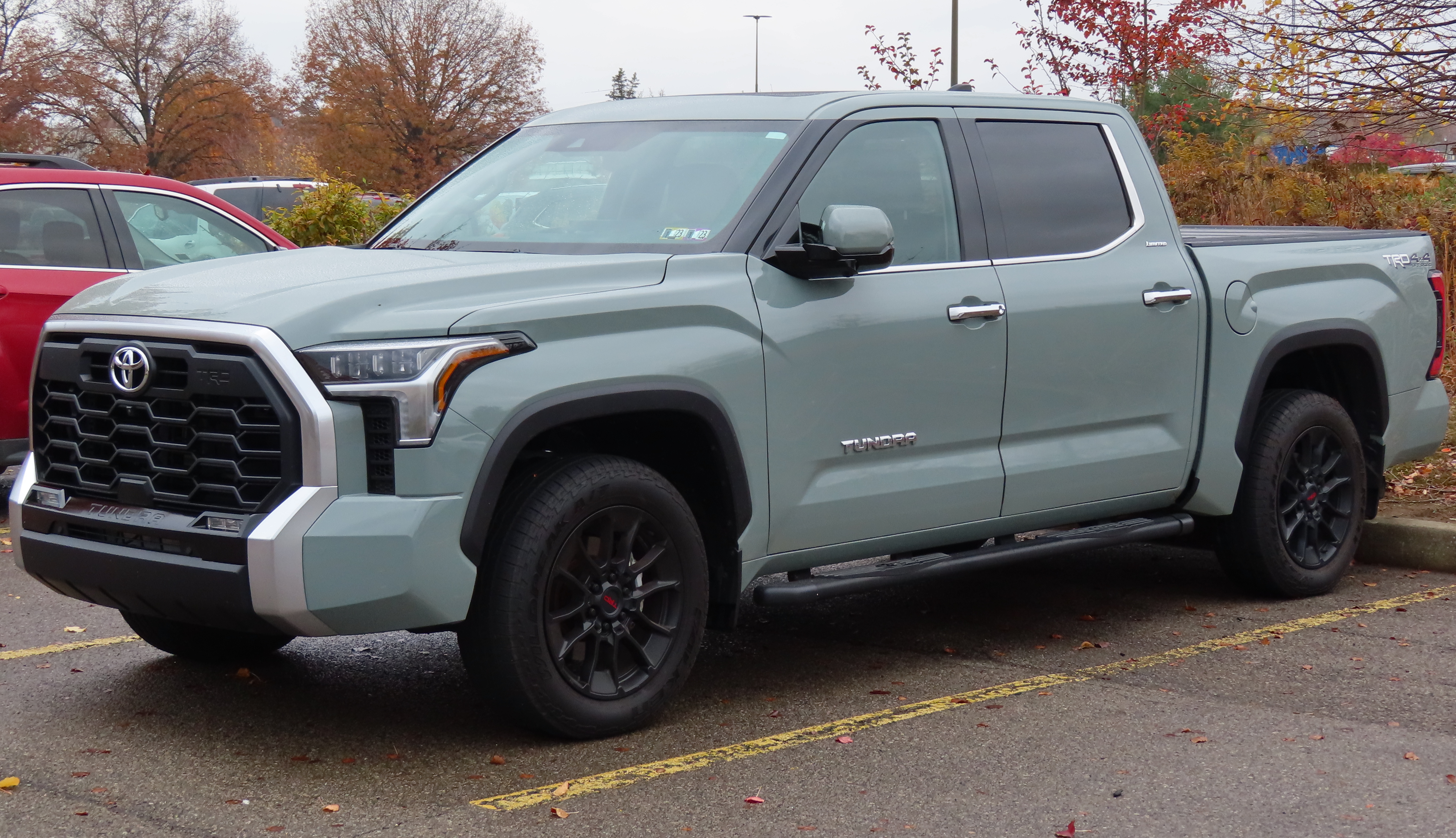
tundra
"Like I've gotten worse than that in my tundra, which is a three and a half liter V six towing a trailer."
The Toyota Tundra is a large pickup truck that’s built to tow. Here they’re comparing its towing fuel economy to the much heavier ambulance setup.
The Toyota Tundra is a full-size pickup known for towing capability and V6/V8 engine options depending on model year. In this segment, it’s used as a real-world comparison for fuel economy while towing a trailer.
trailer
"Like I've gotten worse than that in my tundra, which is a three and a half liter V six towing a trailer."
A trailer is something you tow behind your vehicle to carry extra stuff. It usually makes the vehicle use more fuel because it’s harder to pull.
A trailer is an unpowered load-carrying unit towed behind a vehicle. Towing a trailer adds aerodynamic drag and rolling resistance, which typically reduces fuel economy and increases drivetrain load.
Gambler 500
"even that part of the world on at any or even that part of that part of the world on at any other time than when the gambler 500 is happening, you would not get that reaction."
The “Gambler 500” is a fun car rally where people start with a cheap car and drive it to a destination. It’s popular because it’s more about the adventure than having a perfect, expensive car.
The “Gambler 500” is a well-known grassroots rally where participants buy a cheap car and then drive it to a destination, often with a strict budget. It’s become a cult event in the car community because it rewards creativity and risk-taking rather than expensive prep.
sidecar
"But we've been talking for years about some sort of motorcycle adventure. There's nothing to give away because we don't even have a plan yet. But when we were talking about that sidecar, I was like, man, I need whatever I do. I need to get something with a sidecar and modify it for the goose."
A sidecar is a little extra passenger compartment attached to a motorcycle. It adds an extra wheel and changes how the bike handles.
A sidecar is an attached passenger compartment mounted to a motorcycle, creating a three-wheeled vehicle. It affects cornering and braking balance, and it’s often used for touring or carrying an additional rider.
dirt roads
"[2863.0s] there is like 25 miles. But the way that we did it was like 35 and very off roady. Yeah. Yeah. [2879.1s] Those roads were like perfect though and a great test of the ambulance."
Dirt roads are roads that aren’t paved with asphalt. They’re bumpier and can be slippery, so they test how well a vehicle handles rough surfaces.
“Dirt roads” are unpaved roads made of soil, gravel, or packed earth instead of asphalt. They’re much rougher and can stress a vehicle’s suspension, tires, and traction more than pavement.
off roady
"[2863.0s] there is like 25 miles. But the way that we did it was like 35 and very off roady. Yeah. Yeah. [2879.1s] Those roads were like perfect though and a great test of the ambulance."
“Off roady” means driving on rough ground away from paved roads. It usually involves dirt, gravel, or uneven tracks that are harder on tires and suspension.
“Off roady” refers to driving on surfaces outside normal paved roads, often including dirt, gravel, ruts, and uneven terrain. It’s used here to describe a route that required more suspension travel and traction than typical street driving.
Power Wheels
"[2916.7s] part of the video until we get to gambler really, unless you guys, yeah. And I mean, also it was [2922.6s] just, you know, a sequence of events that was driving the power wheels, like not to say it's [2926.2s] not exciting to recount, but like, yeah, there wasn't anything it was like, Oh my God, this one"
“Power wheels” means the wheels are driven by electricity rather than a traditional engine. If the batteries aren’t charging right, the vehicle can’t move or run its systems as intended.
“Power wheels” here likely refers to electrically driven wheels or wheel motors used for propulsion or mobility in the vehicle setup. The key point is that the vehicle’s movement depends on electrical power, tying it to the battery charging issues they mention.
battery charging problems
"[2930.5s] thing was insane that we need to tell you. I think a lot of the things that like happened that we [2935.1s] like weren't able to catch on camera like happened like in gambler town because that first night [2942.2s] we were just trying to figure out how to charge the batteries and we're having a bunch of battery [2946.9s] charging problems."
“Battery charging problems” means the system wasn’t successfully charging the batteries, which can happen with wiring, charging equipment, battery health, or power-management settings. In a vehicle context (like an ambulance conversion), it can prevent running accessories or keeping onboard power available overnight.
pedal assisted e-bike
"on like a little pedal assisted e-bike that like those things aren't really built to jump."
A pedal-assisted e-bike is a bicycle with an electric motor that helps you while you pedal. The host is saying it’s not really made for jumping like a dirt bike or BMX bike.
A “pedal assisted e-bike” is an electric bicycle that helps you when you pedal, using a motor and battery. The host is emphasizing that these bikes typically aren’t designed for jumping, even if they can move quickly.
Request an Explanation
Heard something you'd like explained? We'll add it to this episode.
Sign in to request explanations for terms you heard.
Want to learn more?
Browse our glossary for plain-English explanations of automotive terms, jargon, and concepts.
Help improve this episode
See something that's not quite right? Our annotations are AI-generated and can sometimes miss the mark. Click the flag icon on any annotation to suggest a correction.