
About this episode
Motorsports takes the wheel as WFO Radio Podcast looks ahead to the Summit Racing Equipment, NHRA Nationals at Summit Motorsports Park in Norwalk, then zooms through a busy mix of NASCAR and drag-racing talk. Hosts debate feasibility of NHRA-style racing on a base, recap Corey Heim’s first win and a wheel-off incident, and discuss late-race chaos and cautions. The show also pivots into bracket-racing tuning, betting/odds math, and a guest spotlight on a 1968 Dodge Dart.
Summit Motorsports Park
"Big week this week, the Summit Racing Equipment, NHRA Nationals Summit Motorsports Park, Norwalk."
Summit Motorsports Park is a drag-racing track in Norwalk, Ohio. It’s where major NHRA events are held.
Summit Motorsports Park is a drag strip venue in Norwalk, Ohio, used for NHRA-style straight-line racing. It’s known for hosting national-level drag events and drawing large crowds.
NHRA Nationals
"Big week this week, the Summit Racing Equipment, NHRA Nationals Summit Motorsports Park, Norwalk."
NHRA Nationals is a big drag-racing event in the U.S. It’s run by the NHRA, which organizes and rules drag races nationwide.
NHRA Nationals refers to the National Hot Rod Association’s major drag-racing events. NHRA is one of the biggest U.S. drag-racing sanctioning bodies, and “Nationals” typically means a high-profile stop on the schedule.
Western swing
"After this event, it becomes the Western swing and then Brainerd and Indy and that's it."
A “western swing” just means the series moves to the western region for a run of races. It’s a tour-style scheduling label.
“Western swing” is a motorsports scheduling term for a run of races in the western part of a country. In drag racing, it usually describes the stretch of events that shifts the tour westward after an earlier set of rounds.
Brainerd
"After this event, it becomes the Western swing and then Brainerd and Indy and that's it."
“Brainerd” is the name of a place the races are visiting. The host is listing the next stops after this event.
“Brainerd” refers to Brainerd, Minnesota, which is a recurring stop name in motorsports scheduling. Here it’s part of the sequence of events after the NHRA Nationals stop.
Indy
"After this event, it becomes the Western swing and then Brainerd and Indy and that's it."
“Indy” is a nickname for Indianapolis. The host is saying the racing tour goes there next.
“Indy” is shorthand for Indianapolis, which commonly appears in motorsports schedules for major events. In this context—after NHRA Nationals—it likely refers to the next stop in the tour at/near Indianapolis.
Shane Van Gisburgen
"You may notice that Shane Van Gisburgen was not. He did not win the race."
This is a race driver the hosts are talking about. They’re saying he didn’t finish the race and that something went wrong during the action.
Shane Van Gisburgen is a stock-car racer mentioned in this segment. The hosts discuss his results and a moment where he didn’t finish the race, framing it as part of the on-track drama.
Austin Hill
"there's someone by the name of Austin Hill, who ran out of talent and just drove into him, cut the curve short and at the restart..."
Austin Hill is another race driver mentioned in the story. The hosts are describing a risky move where he ended up hitting someone and causing trouble.
Austin Hill is a stock-car driver discussed here in the context of a contact incident. The hosts describe him “cut[ting] the curve short” and then driving into another car, implying a mistake or aggressive move that affected the outcome.
cut the curve short
"Austin Hill, who ran out of talent and just drove into him, cut the curve short and at the restart, I was like, dude,"
It means the driver didn’t follow the full corner and instead took a tighter path. That can put the car in a different spot than other drivers expect, which can lead to contact.
“Cut the curve short” means a driver takes a tighter line through a corner than intended, often by not following the full arc of the track. In racing, this can be dangerous because it changes where the car is positioned relative to other cars, especially near the apex and exit.
restart
"cut the curve short and at the restart, I was like, dude, I have to say there's a reason I didn't have Austin Hill on my team"
A restart is when the race starts running again after a caution. Everyone is close together, so it’s a moment where mistakes and crashes are more likely.
A “restart” is when the race resumes after a caution period (like a crash or debris). Restarts are high-risk because cars are bunched up and drivers have to accelerate and choose lanes quickly, which can lead to contact.
three wide
"Well, we saw they were gone three wide and SVG was like, whoa, whoa, whoa, this isn't going to work."
“Three wide” means three cars are running next to each other at the same time. It can help someone gain spots, but it’s also riskier because there’s less space to avoid a mistake.
“Three wide” means three cars are side-by-side in the same section of track. It’s a common racing tactic for gaining position, but it increases the chance of contact because there’s less room for each car to maneuver.

68 dart
"All right, show us the car. Just an old dart, 68 dart. Very nice."
A “68 Dart” is a 1968 Dodge Dart. It’s a classic American muscle car—people often race them, but you can also drive them normally on the street.
“Dart” refers to the Dodge Dart, and a “68 Dart” is the 1968 model year. The Dodge Dart is a classic American muscle car platform that’s commonly raced and modified, but it can also be kept as a street car.
Road America
"They were at Road America. It was obviously a replay because, you know, this is late at night."
Road America is a famous race track in Wisconsin. IndyCar and other big racing series use it, and it has a mix of fast turns and long stretches.
Road America is a major road course in Elkhart Lake, Wisconsin, known for long straights and fast, flowing corners. It’s a frequent venue for IndyCar and other top-level racing series, so it’s a common reference point for race strategy and car setup.
engine crapped out
"He's leading the race by 23 seconds with, you know what? I want to take three or four laps to go and his engine crapped out. Oh, and so, yeah, he's on suicide watch."
It means the engine suddenly failed and stopped working properly. In a race, that usually forces the driver to retire because the car can’t keep going.
“Engine crapped out” is racing slang for an engine failure or sudden loss of power. In motorsport, that can instantly end a driver’s chances because the car can’t maintain pace or complete the race safely.
suicide watch
"I want to take three or four laps to go and his engine crapped out. Oh, and so, yeah, he's on suicide watch. Christian Lungard for McLaren gets the win."
They’re using a dramatic phrase to say the driver is in a really bad, high-pressure situation. It means things look like they could go terribly wrong.
“Suicide watch” here is idiomatic racing commentary meaning the driver is under extreme stress because a win is slipping away. It’s not a literal medical term in this context—just a dramatic way to say the situation is dire.
McLaren
"Christian Lungard for McLaren gets the win. He brought it home."
McLaren is a well-known racing team and car maker. Here, it’s the team that the winning driver was driving for.
McLaren is a top motorsport brand known for building competitive race cars and supporting drivers across series like IndyCar and Formula 1. In this segment, it’s the team/manufacturer associated with the race winner.
Alain Palau
"It's the win. [3054.3s] Alain Palau is still the win. [3055.7s] Yeah, he's the winner."
They’re talking about Alain Palau as the person who won and is currently leading the points race.
Alain Palau is mentioned as the winner and as leading the points in the IndyCar context of this segment. The hosts are using him as a key reference for the championship standings.
David Malukas
"It looks like 60 points over David Malukas. [3065.0s] And that's your Indy car report right there."
They mention David Malukas as the main competitor in the points standings, not far behind the leader.
David Malukas is referenced as the points leader’s closest rival, with the host estimating a gap of about 60 points. In racing, that kind of gap strongly affects how close the championship fight is.
Austrian Grand Prix
"Oh, and so for Formula One, we can quickly now next week [3105.8s] or this weekend coming up is the Austrian Grand Prix. [3110.2s] Austrian Grand Prix."
They’re talking about the next Formula 1 race: the Austrian Grand Prix.
The Austrian Grand Prix is a Formula One race held in Austria. It’s a major event on the F1 calendar, and the hosts note it as the next race coming up.
Red Bull
"[3110.2s] Austrian Grand Prix. [3111.6s] Home of the Red Bull. [3113.8s] Right, isn't that Austria?"
Red Bull is a big name in Formula 1, and the hosts are pointing out that it’s closely linked with the Austrian Grand Prix.
Red Bull is a motorsport brand strongly associated with Formula One through its Red Bull Racing team. The hosts connect it to the Austrian Grand Prix, reflecting how Red Bull is tied to that event and the broader F1 ecosystem.
reliability issues
"What about Mercedes reliability issues? [3191.2s] I think that's an interesting angle with all the racing left."
Reliability issues are when the car has problems—like parts failing or systems acting up. In racing, that’s a big deal because you can’t score points if the car breaks or can’t finish.
Reliability issues are mechanical or systems problems that cause failures, retirements, or performance drop-offs during a race weekend. In motorsport, reliability is crucial because even a fast car can lose points if it can’t finish consistently.
podium
"Like if Ferrari could put two on the podium and Mercedes, [3202.3s] they've been finishing one car like it's like one car each week has problems."
The podium is the top three spots in a race. If a car is on the podium, it finished in the top three—usually celebrated on the winners’ platform.
In racing, the podium is the top-three finish positions. When a team “puts a car on the podium,” it means that car finished first, second, or third in that race.
consistency
"I think, well, like you were saying, Sue, with drag racing, that consistency [3265.5s] and that momentum is that's why you gun drivers like, you know, your veterans"
Consistency means doing well again and again, not just having one great race. In racing seasons, finishing strong regularly usually helps you climb the standings more than one big result.
Consistency in motorsport means repeatedly finishing races in strong positions rather than having one-off results. Over a season, consistent points scoring often matters more than occasional wins because it reduces the impact of mechanical issues or bad races.
momentum
"I think, well, like you were saying, Sue, with drag racing, that consistency [3265.5s] and that momentum is that's why you gun drivers like, you know, your veterans"
Momentum is the “hot streak” feeling—when a team or driver is building confidence and results. The idea is that good performance can make the next races go better too.
Momentum is the idea that confidence, setup progress, and performance trends can carry forward from one event to the next. In racing talk, it often refers to how a team’s recent form can make it easier to keep performing at a high level.
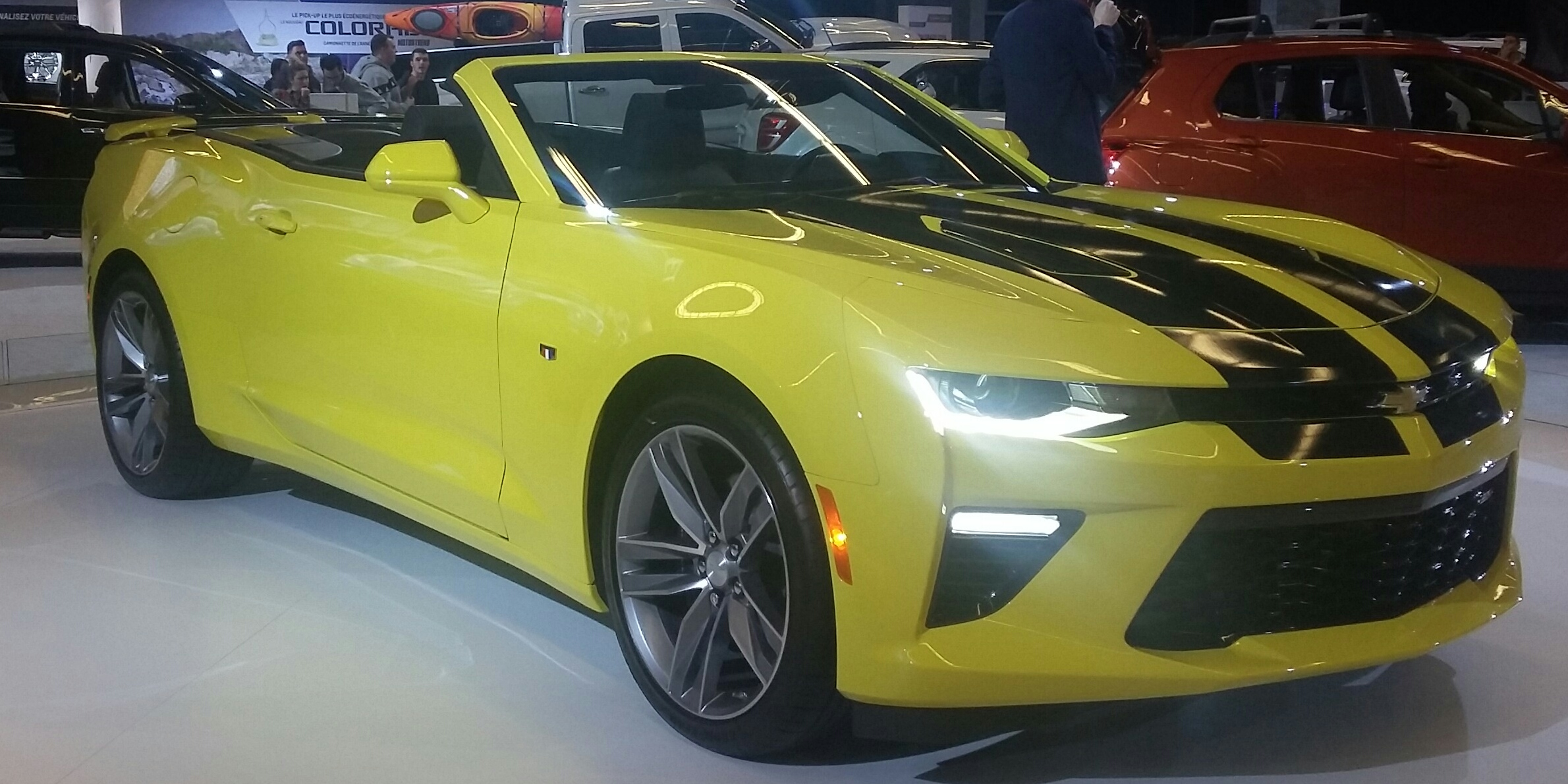
Chevrolet Camaro
"...s general motors Chevrolet and which was with the Camaro. That's their first win since the race in Februar..."
The Chevrolet Camaro is a sports car made by General Motors. It’s known for performance, and the podcast brings it up in connection with racing. That’s why people often talk about it when discussing speed and competition.
The Chevrolet Camaro is a performance-focused American sports car produced by General Motors, typically offered as a coupe or convertible. The podcast references the Camaro in a racing-related context, which highlights how it’s been used in competitive settings and why it’s frequently discussed alongside motorsport history. That kind of mention usually points to the car’s reputation for speed and its presence in racing events.

Mustang
"A lot of the, I guess, tier one teams this season went to forward with the Mustang."
The Ford Mustang is a well-known American sports car. They’re saying many top teams chose it this season because it’s been competitive.
The Ford Mustang is a classic American pony car from Ford. The hosts mention that many top-tier teams switched to the Mustang, implying it’s a competitive choice in the racing series they’re discussing.
triple crown
"Cam waters driving for the monster Tickford team come away with the overall win. So they have the triple crown."
A “triple crown” means winning three big things in the same competition or season. They’re saying Cam Waters’ team won all three of the major targets they were chasing.
“Triple crown” is a motorsport achievement where a driver/team wins three major events or titles within a defined series or season. In this segment, the hosts say Cam Waters’ team has the triple crown, meaning they’ve swept the key results being tracked.
Adelaide
"They in the last month have lost the MotoGP has been cancelled down there to go to Adelaide to the bend where the drag strip is."
Adelaide is a city in South Australia. The host is saying some big motorcycle events are being moved there.
Adelaide is referenced as the location to which MotoGP and other motorcycle events are being moved. In Australian motorsport coverage, Adelaide is commonly associated with major event infrastructure in South Australia.
Phillip Island
"It's a little island off the bottom of Victoria called Phillip Island. It's been a racetrack since the 30s, I believe, and it is a premier racetrack."
Phillip Island is a famous race track in Australia. It’s known for motorcycle racing and has hosted big events for a long time.
Phillip Island is a well-known Australian road-racing circuit off the coast of Victoria, famous for fast corners and high-speed flowing sections. The host frames it as a long-running “premier racetrack” that has hosted major motorcycle events for decades.
Sydney Dragway
"Last but not least, we've got some drag racing coming up this weekend at Sydney Dragway. We are in the midst of our winter break, but they have a major nostalgia meeting called the day of the drags..."
Sydney Dragway is a place where drag racing happens—cars run down a straight track to see who’s fastest. The segment is previewing an event there this weekend.
Sydney Dragway is a drag-racing venue in Australia, used for events like nostalgia meetups and record-attempt style runs. The host’s mention ties it directly to the upcoming drag-racing schedule and the “day of the drags” event.
day of the drags
"We are in the midst of our winter break, but they have a major nostalgia meeting called the day of the drags, which is probably one of the biggest nostalgia meetings that happens in Australia, but definitely in Sydney."
“Day of the drags” is a drag-racing event focused on nostalgia—basically classic or older cars showing up to race. The host says it’s one of the biggest such events in Sydney.
“Day of the drags” is described as a major nostalgia drag-racing meeting in Australia. It’s the specific event name the host uses to frame what’s happening during the winter break.

Ford Anglia
"So maybe Matt will get out there, but I'm not sure my shazzy builder and friend John Willard with the world's quickest Ford Anglia. He'll be out there racing that with his son behind the wheel and hoping for some six second passes, which will reclaim his or establish his world record in Outlaw Anglia."
The Ford Anglia is an older Ford model that became popular with drag racers because it’s light and easy to modify. Here, the host is talking about a very fast Anglia competing to set or reclaim a world record.
The Ford Anglia is a classic British compact car from Ford, best known in motorsport for its lightweight, simple platform and huge aftermarket support. In this segment, the host specifically references a “world’s quickest Ford Anglia” competing in outlaw-style drag racing, which is why it matters to enthusiasts.
Outlaw Anglia
"He'll be out there racing that with his son behind the wheel and hoping for some six second passes, which will reclaim his or establish his world record in Outlaw Anglia."
“Outlaw Anglia” is a class/identity used in drag racing for a heavily modified Anglia running under “outlaw” rules rather than a strict factory-stock category. The key idea is that the car is built for maximum speed and flexibility in setup, which is why it can target world-record ETs.
six second passes
"He'll be out there racing that with his son behind the wheel and hoping for some six second passes, which will reclaim his or establish his world record in Outlaw Anglia."
In drag racing, a “pass” is a full run down the strip, and the “six seconds” is how long it takes. Faster passes mean quicker acceleration and better overall performance.
“Six second passes” refers to drag-racing elapsed time (ET), meaning the car runs the measured drag strip distance in about six seconds. In drag racing, ET is one of the primary ways to compare how quickly cars accelerate under race conditions.
dialed in
"in the semifinals fourth thou so uh she's uh like I said we we we don't quite have her dialed in quite yet uh I was running uh 618 619"
In drag racing, "dialed in" means the car is tuned to hit the expected performance—especially the target elapsed time used in bracket racing. When the host says they “don’t quite have her dialed in,” they mean the car isn’t consistently producing the times they’re aiming for. That affects how well they can run close to their dial-in and avoid losing on timing.
tuning
"we went took at home and uh we were tuning on it so uh this coming weekend the bracket racing bracket racing weekend for both of us it's points up Greer"
In drag racing, "tuning" refers to adjusting the car’s setup—typically fuel/ignition calibration, boost (if applicable), and sometimes transmission/launch parameters—to optimize performance for the track and conditions. Even small changes can shift where the engine makes power and how the car accelerates. The goal is usually to improve both launch (like 60-foot time) and overall speed/elapsed time.
bracket racing
"this coming weekend the bracket racing bracket racing weekend for both of us it's points up Greer so we'll be headed out to there"
"Bracket racing" is a type of drag race where you’re not only trying to go fast—you’re trying to hit a specific target time. Cars can be different, but the winner is often the one that stays closest to their planned time. That’s why teams talk about getting the car "dialed in."
"Bracket racing" is a drag racing format where cars race head-to-head but are scored relative to a chosen target time (the “dial-in”). That means consistency and staying close to the dial-in can matter as much as outright speed. The transcript’s mention of not having the car "dialed in" fits this format.
60 foot time
"how fast does the car going to go like off the stop like do we have 60 foot time do we have you only ran eight miles so what do we know what are the comps"
In drag racing, the "60-foot time" is how fast the car gets from the start to 60 feet down the track. It’s a big clue about how well the car launches—whether it hooks up and accelerates right away. Better 60-foot times generally help the whole run.
In drag racing, the "60-foot time" measures how quickly the car accelerates from the starting line to 60 feet. It’s a key indicator of launch quality—traction, clutch/torque converter behavior, and overall drivetrain setup. Faster 60-foot times usually translate into better elapsed time and top speed later in the run.
rpms
"but this thing uh we're going to get her up in the rpms because my last motor was right around 6800 was peak"
“RPMS” (engine RPMs) are how fast the engine is spinning. Drag racers often talk about where the engine makes peak power—like the transcript’s “peak” around a certain RPM—because tuning aims to keep the engine in that power band during launch and acceleration. Getting the RPMs up at the right moment can improve both launch and top-end speed.
converter
"so um yeah we're we're tweaking it we're we we got a new new converter we get to marry up with this combination"
A "converter" here is almost certainly a torque converter used in an automatic transmission drag setup. The torque converter multiplies engine torque at launch and can be tuned (via stall characteristics) to match the engine’s powerband. Changing the converter can improve 60-foot times and overall acceleration by better coupling the engine to the drivetrain.
mile an hour
"so that thing's running good now we just got a tuner in so who knows um we'll we'll see what kind of mile an hour we get"
In drag racing, "mile an hour" is the speed the car reaches by the end of the run. It helps show whether the car is making strong power and accelerating well. Teams use it to compare setups from one race to the next.
In drag racing, "mile an hour" refers to the car’s speed at the end of the run (often the trap speed). It reflects how much power the car makes and how efficiently it accelerates over the whole distance. Comparing mile-per-hour results across tuning changes helps teams judge whether the car is gaining speed or just improving launch.
Request an Explanation
Heard something you'd like explained? We'll add it to this episode.
Sign in to request explanations for terms you heard.
Want to learn more?
Browse our glossary for plain-English explanations of automotive terms, jargon, and concepts.
Help improve this episode
See something that's not quite right? Our annotations are AI-generated and can sometimes miss the mark. Click the flag icon on any annotation to suggest a correction.