Exploring the future of General Motors, this episode dives into groundbreaking advancements in AI, hands-free driving, and next-gen battery technology. Key figures from GM discuss their new lithium manganese rich battery chemistry, centralized computing architecture, and the upcoming 2028 Cadillac Escalade IQ featuring level three autonomous driving. The episode also highlights GM's partnership with Google to integrate the Gemini AI Assistant into vehicles dating back to 2015, enhancing user interaction and functionality. Insights from industry experts provide a fascinating look at how GM aims to redefine mobility.
In this episode of The InEVitable by MotorTrend, host Ed Loh takes you inside GM Forward — General Motors’ technology showcase in New York — to explore the company’s electrified, autonomous, and AI-driven future. From new lithium manganese-rich batteries that cut costs while keeping range high, to hands-free, eyes-off driving coming to the 2028 Cadillac Escalade IQ, and even Google Gemini AI built directly into millions of GM vehicles — this episode dives into every major innovation reshaping the automaker. You’ll hear from the engineers, designers, and executives behind GM’s next generation of mobility, including:
Gary Cygan - Director of Platform Engineering General Motors
Kurt Kelty - VP of Battery Propulsion and Sustainability General Motors
Aseem Kapur - Chief Revenue Officer GM Energy
Baris Cetinok - Sr. Vice President Software & Services, Product and Design, General Motors
David Richardson - Sr. Vice President of Software Services General Motors
Key topics:
⚡️ GM’s unified computing architecture for all vehicles
🔋 New LMR battery chemistry: more range, less cost
🏠 EVs as home energy backup systems (now available via leasing)
"...future of GM's products. GM CEO, Mary Barra, was there, kicked off the day..."
GM stands for General Motors, a big car company that makes many different types of vehicles.
GM, or General Motors, is one of the largest automotive manufacturers in the world, known for producing a wide range of vehicles under various brands, including Chevrolet, GMC, Cadillac, and Buick.
"...talked about their new lithium manganese rich battery chemistry and some of the US production announcements they had."
This is a special kind of battery used in electric cars that helps them store more energy and stay safe while charging and discharging.
Lithium manganese rich battery chemistry refers to a type of lithium-ion battery that uses manganese as a key component, which can improve energy density and thermal stability, making it suitable for electric vehicles.
"...the 2028 Cadillac Escalade IQ will have eyes off, hands off, driving. So basically level three driving..."
Level three driving means the car can drive itself most of the time, but you still need to be ready to take control if something goes wrong.
Level three driving refers to a level of automation where the vehicle can handle most driving tasks without human intervention, but the driver must be ready to take over if needed. This is part of the SAE levels of driving automation.
"...the 2028 Cadillac Escalade IQ will have eyes off, hands off, driving. So basically level three driving..."
The Cadillac Escalade IQ is a new electric SUV that will be available in 2028. It has technology that allows it to drive itself without you needing to pay attention to the road.
The Cadillac Escalade IQ is an upcoming electric SUV from Cadillac, set to be released in 2028. It features advanced technology, including hands-free driving capabilities.
"...you mentioned a can, a can bus, right? That's literally having to plug it in at a dealer and a hard line versus over the air..."
The CAN bus is like a communication system in cars that helps different parts talk to each other. It allows things like the engine and brakes to share information without needing a central computer.
The CAN bus (Controller Area Network) is a robust vehicle bus standard that allows microcontrollers and devices to communicate with each other without a host computer. It is commonly used in automotive applications for connecting various electronic components within a vehicle.
"...this system will work, you're calling it propulsion or powertrain agnostic, right? So, internal combustion, EV, hybrid theoretically..."
A hybrid car uses both gas and electricity to run. This helps it use less fuel and be better for the environment.
A hybrid vehicle combines an internal combustion engine with an electric motor to improve fuel efficiency and reduce emissions. It can switch between the two power sources or use them simultaneously.
"...this system will work, you're calling it propulsion or powertrain agnostic, right? So, internal combustion, EV, hybrid theoretically..."
EV means electric vehicle, which runs on electricity instead of gas. They're becoming more common because they're better for the environment.
EV stands for electric vehicle, which is powered entirely by electricity rather than gasoline or diesel. EVs have become increasingly popular due to their environmental benefits and advancements in battery technology.
"...this system will work, you're calling it propulsion or powertrain agnostic, right? So, internal combustion, EV, hybrid theoretically..."
The powertrain is what makes the car move. It includes the engine and other parts that help the car go forward.
The powertrain is the system in a vehicle that generates power and delivers it to the road. It includes the engine, transmission, and other components that work together to move the vehicle.
"...this system will work, you're calling it propulsion or powertrain agnostic, right? So, internal combustion, EV, hybrid theoretically..."
Internal combustion means that the engine burns fuel inside it to make the car go. It's how most cars used to work before electric cars became popular.
Internal combustion refers to an engine type where fuel is burned inside the engine's cylinders to create power. This is the traditional method of powering vehicles before the rise of electric vehicles (EVs).
"...the experienced people want in their cars that is provided from the electrical architecture like this, whether it be AV experiences, whether it be infotainment experiences..."
Infotainment is the technology in cars that provides information and entertainment, like music and GPS. It makes driving more enjoyable.
Infotainment refers to the combination of information and entertainment systems in a vehicle, including navigation, audio, and connectivity features that enhance the driving experience.
"providing entertainment or media to the customer, that is independent of what propulsion system that they choose, right? And so from day one, we design the architecture for it to cover the entire portfolio."
A propulsion system is what makes a car move. It can be an engine that runs on gasoline, an electric motor, or a combination of both in hybrid cars.
A propulsion system refers to the components that generate thrust to move a vehicle. This can include traditional internal combustion engines, electric motors, or hybrid systems that combine both.
"If you're in an EV and here's the cooling ports, you know, you have coolant and you're pulling out the cold, the big computer. If you're an EV, you can just tap into the cooling system that already exists for the battery and grab the cool."
The cooling system helps keep the engine or battery from getting too hot. It uses a liquid called coolant to absorb heat and keep everything running smoothly.
A cooling system is essential in vehicles to manage the temperature of the engine or battery. It circulates coolant to absorb heat and prevent overheating, ensuring optimal performance and longevity.
"If it's a hybrid, you get the same thing as an EV. If it's a turbocharged vehicle, you can tap into the..."
A turbocharged vehicle has a special device called a turbocharger that helps the engine produce more power. It does this by pushing extra air into the engine, which helps burn more fuel.
A turbocharged vehicle is equipped with a turbocharger, which forces more air into the engine's combustion chamber, allowing for more fuel to be burned and thus increasing power output without significantly increasing engine size.
"...the GPUs in here is from NVIDIA, at least for the, to support the autonomous system. Yes. And we know like from the computing days..."
NVIDIA is a company that makes powerful computer chips, especially for graphics. Their chips help cars use advanced technology like self-driving features.
NVIDIA is a leading technology company known for its graphics processing units (GPUs) and artificial intelligence (AI) solutions. In the automotive industry, NVIDIA's technology is used to support advanced driver-assistance systems and autonomous driving capabilities.
"...is this like the, you know, the LS, the digital equivalent of like a Chevy, like the LS small blocks?"
LS small blocks are a type of engine made by Chevy that are known for being powerful and reliable. Many car enthusiasts like to use them in different types of cars.
The LS small block is a series of V8 engines produced by General Motors, known for their performance and versatility. They are popular in both factory applications and custom builds due to their power and aftermarket support.
"...the heritage of the small block Chevy. Right. Okay. Which you said, you're a car guy, car guy. And what that means to people and why people buy certain vehicles or just to get a small block Chevy..."
The small-block V8 is a type of engine made by Chevrolet that has been popular since 1955. It's known for being powerful and is used in many different kinds of cars, making it a significant part of car history.
The Chevrolet small-block V8 is a series of V8 engines produced by Chevrolet since 1955. It is renowned for its versatility, performance, and has become a staple in American automotive culture, often used in various vehicles from muscle cars to trucks.
"...our latest battery chemistry, this LMR chemistry, which is lithium manganese rich chemistry. Okay. And a different form factor and a different battery pack design..."
LMR chemistry is a special type of battery technology that helps electric vehicles store more energy safely. It makes the batteries last longer and work better.
LMR chemistry stands for lithium manganese rich chemistry, which is a type of battery technology that enhances energy density and safety. This chemistry is often used in electric vehicles to improve performance and longevity.
"...we're standing next to a table and it has the battery pack from one of the trucks. It's one of the trucks. It's our biggest battery pack..."
A battery pack is like a big container that holds many smaller batteries. It gives power to electric cars so they can run.
A battery pack is a collection of individual battery cells grouped together to provide the necessary voltage and capacity for an electric vehicle or hybrid vehicle. It is a crucial component that powers the vehicle's electric motor.
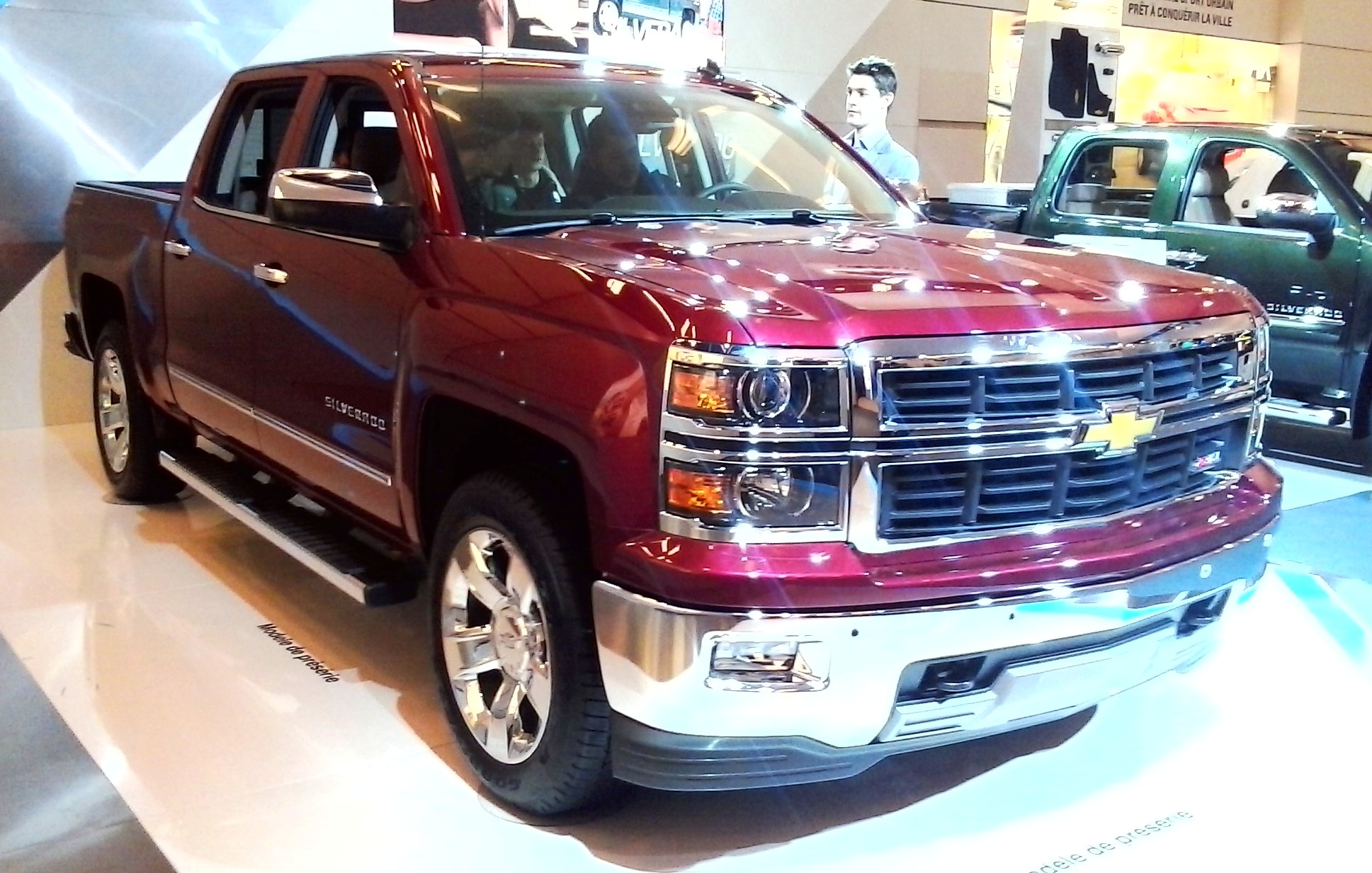
"...current technology in like a Silverado. Correct. Yes. Okay. Yeah. So you get 210 kilowatt hours..."
The Chevrolet Silverado is a big truck that many people use for work and personal use. It's known for being strong and able to carry heavy loads.
The Chevrolet Silverado is a full-size pickup truck known for its durability and versatility. It is popular among both consumers and businesses for its towing capacity and range of configurations.
"...it gives you 490 miles of driving range, which is best in the market for a truck. Right. It's a lot of miles..."
Driving range is how far an electric car can go before it needs to be charged again. A longer range means you can drive further without stopping to recharge.
Driving range refers to the distance an electric vehicle can travel on a single charge. It's an important factor for consumers when considering electric vehicles, as it impacts usability and convenience.
"...the prismatic cell goes from the top to the bottom."
A prismatic cell is a flat battery shape that helps fit more batteries into a space. It's used in electric cars to make them more efficient and powerful.
A prismatic cell is a type of battery cell design that is flat and rectangular, allowing for efficient use of space in battery packs. This design can improve energy density and thermal management in electric vehicles.
"...the other real advantage here is the chemistry. So this is an LMR, the lithium manganese rich chemistry, which is something we've been developing in our labs for over 10 years now at GM. We're going to be the first to market with this"
Lithium manganese rich chemistry is a special kind of battery technology that helps electric cars store more energy safely. It uses manganese, which makes the batteries work better and last longer.
Lithium manganese rich chemistry refers to a type of lithium-ion battery chemistry that uses manganese as a key component. This chemistry can provide better thermal stability and higher energy density compared to other lithium-ion chemistries, making it advantageous for electric vehicle applications.
"...M sort of pioneering, like in presenting, meaning prisms like boxes, not cylinders like bricks. Well, that..."
The Geo Prism is a small, budget-friendly car that was made a long time ago. It's known for being reliable and easy to drive, making it a good choice for people looking for an economical vehicle.
The Geo Prism was a compact car produced in the 1990s, known for its affordability and reliability. It was a collaboration between General Motors and Toyota, sharing many components with the Toyota Corolla, which contributed to its reputation as a dependable vehicle.
"... who actually invest in, say, just the high-speed charger first. They got an EV, they got a high-speed char..."
The Dodge Charger is a big car that looks sporty and can go really fast. It's popular because it combines a lot of power with space for passengers, making it a fun choice for families who want something exciting to drive.
The Dodge Charger is a full-size sedan known for its powerful performance and muscular styling. It has a rich history dating back to the 1960s and has evolved into a modern muscle car that appeals to enthusiasts and families alike, often discussed in the context of its performance and technology features, including electric vehicle (EV) charging capabilities.
"We are going to bring the next generation of supercruz that we already have to our customers. What's going to be the big change at that time?"
Super Cruise is a technology that lets you drive without using your hands on the steering wheel. It helps you stay safe and focused while driving on specific roads.
Super Cruise is a hands-free driving assistance feature developed by General Motors that allows drivers to take their hands off the steering wheel while driving on certain highways. It uses a combination of cameras, sensors, and GPS to navigate and maintain speed, providing a more relaxed driving experience.
'Hands off, eyes off' means you won't have to touch the steering wheel or even look at the road while the car drives itself. It's a more advanced form of self-driving technology.
'Hands off, eyes off' describes a future driving mode where the driver can completely disengage from driving tasks, not needing to monitor the vehicle's actions. This represents a higher level of automation in vehicles.
"...the other side was the autonomous vehicle roll. So and I heard Drive Thor is in this..."
An autonomous vehicle is a car that can drive by itself without anyone needing to control it. It uses special technology to see and understand its surroundings.
An autonomous vehicle is a car or truck that can drive itself without human intervention, using a combination of sensors, cameras, and artificial intelligence to navigate and make decisions on the road.
"You know, the sensor fusion, the fact that you're losing LiDAR as well as radar, of course, different from other manufacturers Tesla obviously is vision only."
Sensor fusion means using information from different sensors, like cameras and radars, to get a better understanding of what's around the car. This helps make driving safer and more reliable.
Sensor fusion is the process of combining data from multiple sensors to improve the accuracy and reliability of information about the vehicle's environment. This is essential for advanced driver-assistance systems and autonomous vehicles.
"You know, the sensor fusion, the fact that you're losing LiDAR as well as radar, of course, different from other manufacturers Tesla obviously is vision only."
LiDAR is a technology that helps cars understand their surroundings by using lasers to measure distances. It's important for self-driving cars to navigate safely.
LiDAR stands for Light Detection and Ranging. It is a technology that uses laser light to measure distances and create high-resolution maps of the environment, which is crucial for autonomous driving systems.
"Google built in Android automotive. Google also bought Waze."
Android Automotive is a version of Google's Android system designed for cars. It helps drivers use apps and services right on the car's screen, making it easier to access information and entertainment while driving.
Android Automotive is an operating system developed by Google specifically for vehicles. It allows for integration of apps and services directly into the car's infotainment system, enhancing user experience and connectivity.
"I'm a huge Waze fan and Waze's big thing is that the cars are essentially networked."
Waze is a map app that helps you find the best routes while driving. It shows traffic, accidents, and other hazards based on what other drivers report, helping you avoid delays.
Waze is a GPS navigation software that provides real-time traffic and road information. It allows users to share information about traffic conditions, accidents, and hazards, making it a valuable tool for drivers.
Select text to request an explanation
Hi there. Welcome to The Inevitable. This is Motor Trends Podcast, our podcast about the future of cars,
the future of mobility. Where are we going? How are we going to get there? And on this particular
episode, we are talking about the future of General Motors. Welcome to The Inevitable,
a podcast by Motor Trend. And you know how some of y'all complain that I cut off the guests a little
too frequently? Good news for you. I'm not even on this episode. Yes, it's all about me. Hello there.
I'm Ed Lowe. I'm the head of editorial Motor Trend. I'm your co-host along with Johnny
for this podcast, which is not sponsored by the way. So if you want to shoot us a note,
drop it to GM, edward.loh at Hearst.com. And yes, for this episode, unfortunately, Johnny couldn't
come with me. I went to New York early this week for what was called GM Forward. And this was a
technology focused morning, really, it was from about 8am to just after 12 noon. All about the
future of GM's products. GM CEO, Mary Barra, was there, kicked off the day, followed by GM President
Mark Royce. They had their chief product officer, this new guy, Sterling Anderson, was there. I got
to talk to exactly none of those people. But I did get to talk to a bunch of the folks who are
really in the trenches doing a lot of the hard work in different verticals. And they're more
interesting anyways. They're all very nice people, very interesting people. Well, that is correct.
And I think if we do this, well, why don't I not, I won't jinx it. I'll just tell you some of the
folks we talked to will surprise you with the order. I'll tell you who comes at the end,
though. We talked to Kurt Kelty, who's GM's battery guru. So talked about their new lithium
manganese rich battery chemistry and some of the US production announcements they had.
We talked to a guy named Ryan Seigin, sorry, Gary Seigin. Shoot, I hope that's great. Gary Seigin,
who is the connected, it's all about their new centralized computing architecture.
So that's his Boloax gives me the whole rundown on that. We also talked to our man,
Asim Kapoor, who we had on the podcast from GM Home Energy, gave us a latest update on what
they're doing with battery charging at the house. There's some big announcement on leasing the system.
And then we talked with Barris Setanak, who's of the GM Software and Services division about the
big news, which is that the 2028 Cadillac Escalade IQ will have eyes off, hands off, driving. So
basically level three driving. Nice. So basically you can put the car into super cruise mode,
and you don't have to be looking down the road anymore. The car is going to drive for you.
Interesting. Some very interesting philosophical decisions they made about the process,
which is super cool. That's awesome. And then we wrap with the man, the myth, the legend,
Dave Richardson, who is their head, I think is SVP of Software and Services for John Motors,
longtime Apple guy. He comes on and talks about this big announcement that's coming next year,
which is GM vehicles are going to add Google Gemini AI Assistant to all their vehicles.
All the way back to 2015, which was like, yeah, which was the wildest news. There was a last
interview of the day. It's the last interview of this episode. Should be the first, but
that's just how it how it how it ended up and all the implications of adding. I mean,
it's millions of cars are going to get an over the air update, adding a conversational
AI chatbot to the car. How I mean, they can do over the air on 2015.
We're going to hear from David Richardson all about that on this episode. So let's dive in.
I apologize. This was filmed in a very tight amount of time in a very tight space. So
I'm not sure how the audio without is good. Without Johnny, not sure how the audio or
the video is going to work out, but we tried our best. So let's let's roll tape.
Now, while people may be more familiar with our cars and pop culture, they may not know that we've
always pushed the industry forward with our technologies.
Our vision is to create a car of the future that knows you that orange that looks out for
you and anticipates your needs even before you say it's more than just a vehicle. It makes your
life easier, more screen line and more importantly, safer. That's what we're working toward at General
Motors. And so at this GM forward, I'm calling it a science fair. This is your display. This
is this is me. This is both a video podcast and an audio one. So as much as you can,
you tell us what's the big news on this centralized compute? Yeah, absolutely. So if we start over
here, this is our current generation architecture, and it's very similar to what's on most of the
vehicles on the road today. Okay, it grew over many years as we added electronic controls to
each major subsystem on the vehicle, propulsion, their own module, brakes, its own module,
infotainment, its own module. And then we slowly and improve that over years, adding more and more
capability. When you want to add a new feature, okay, you want to add a new feature to this vehicle,
it oftentimes requires you change software in three, four, five, six different places,
integrate it on that module, and then integrate it at a vehicle level with all of the modules
talking over can, right? So there's multiple steps of validation and integration and
it need to go to removing the new architecture. The big difference is all of that thinking is
now collapsed and happening in one place. So the updates happen in one place, the integration
happens in one place, and this architecture we're using across all of the vehicles. So you don't
have these nuances vehicle to vehicle, you have one core architecture, one brain that you're
updating and you're delivering to. So it allows us to do a lot faster delivering new value,
delivering fixes, delivering new features to our customers now. And one of the keys there is in the
older system to do any kind of update. You mentioned a can, a can bus, right? That's literally having
to plug it in at a dealer and a hard line versus over the air, not necessarily on this architecture,
we can update this architecture. You've got to power up all of the module update,
you've got to power up the can network. So everything is on, awake, aware and programmable,
right? This is just far simpler because you power up one. You flip one switch, you've got everything
on it, you need to update, you update it and there you are. Okay. And one of the key announcements
here was also that this system, again, you're showing the current generation, which is in all
cars, primarily internal combustion, this new system will work, you're calling it propulsion
or powertrain agnostic, right? So, internal combustion, EV, hybrid theoretically, any,
whatever GM is going to make one system. Exactly. Exactly. Because fundamentally, there's a couple
reasons. First, and we did this from day one, this was the plan as we set out to design
this new architecture. We think that the experienced people want in their cars that
is provided from the electrical architecture like this, whether it be AV experiences,
whether it be infotainment experiences, whether it be immersive experiences inside the vehicle
providing entertainment or media to the customer, that is independent of what propulsion system
that they choose, right? And so from day one, we design the architecture for it to cover the
entire portfolio. There's some nuances, you know, architecture to architecture or propulsion
system to propulsion system and how you have to cool it, etc. Like as an example, if you're
in an EV and here's the cooling ports, you know, you have coolant and you're pulling out the cold,
the big computer. If you're an EV, you can just tap into the cooling system that already exists
for the battery and grab the cool. If you're in a nice vehicle, the coolant that goes through
the engine to cool a nice vehicle is much hotter temp than what you need, right? So we actually
have to create an auxiliary cooling system and cooling loop to cool it. If it's a hybrid,
you get the same thing as an EV. If it's a turbocharged vehicle, you can tap into the
charged air cooler system and grab that coolant and do it. So there's nuances in the physical
integration, but the digital side of this is one common platform for all of you.
So why does it have to be liquid cooling versus, I mean, I'm thinking about this as a computer,
like a PC, you might have built it at home in the 90s or ever. And those were air cooled,
yellow fan on there. This couldn't have been air cooled. So just like a gaming PC and my,
you know, my kid just built a new gaming PC, right? It's recently, right?
They're all liquid cool. They're all liquid cool, right? And if you look, the reason of,
if you kind of, you know, open that thing up and look at the chip, right? The amount of energy
density to fire all the transistors in today's chip, super powerful chips, you need to liquid
full, right? It's much more efficient to liquid coolant than to air coolant, right?
So that's the reason. So we're computing is gone. Got it. So for those listening,
sorry, we're standing in front of a wall that has the current set up with what,
like a dozen black boxes or so. There's more than a dozen. I think there's 17 plus
a couple of fusing boxes, right? That collapse. That's current state. Yep. And the next generation
is essentially four different modules. A connectivity hub module, essential compute unit.
That's the big silver box. Yep. And tell us about these two aggregators I heard in a previous,
in your demo, that this essentially replaces the traditional fuse box. No more,
no more fuses as we know them in the cars of the future. Correct. Yeah. So if you look over here
and everybody's seen these in their cars, we have multiple fuse boxes. Each one is on a specific wire.
So if something draws more current than that wire is designed to the fuse, the fuse blows,
right? Protects the system. As we move to the new architecture, we have what's called
ease uses, which you can think of this as a electronically controlled piece of silicon
that is controlled via software that lives in here that turns the circuit on,
off, monitors current throughout every single circuit and can limit the current level on
an individual circuit. So, hey, I want to only allow 10 amps. You can do that, right?
So these go away. We move to sort of what we think is next and will be commonplace,
you know, in 10 years across the industry to these electronic uses that allow that take
the control. Okay. So, and then this, this hub connectivity model, this is model module,
this is where everything basically on the outside world comes into the car. You got it. You got it.
So anything you want the car to connect to, whether it be Wi-Fi, whether it be cellular,
whether it be radio, right? Every radio technology that you're connecting a car to
happens in that module there. All right. Also, if you want to connect to a device
or a tablet or anything like that, it happens through there. So that's design and that's why
it's so long because you've got multiple radios across there that are picking up any connection
that you want to make for the vehicle. It happens in that single box and not distributed across the
car. Yeah. So in one place. So ensuring 5G Wi-Fi, radio, Bluetooth, Sirius XN. Okay.
Yup. Yup. It's that GNSS, satellite position, right? Exactly. Okay. And then in the box,
the main thing though is that this is a centralized computing architecture. Yes. Can you just
recount for our lay person audience, like the headline, like what are the big benefits? Like
one is like decreased amount of wiring to the car. Is that correct? So it for sure
decreases the wiring. This whole architecture makes it simpler to build, simpler to
wire, fewer parts to install for sure. But the big reason that we're doing it,
we want those benefits for sure. The big reason we're moving, we're moving your architecture
like this is because it's fundamentally faster to deliver software to our fleet. That's,
that's the real takeaway, right? Faster deliver new experiences to our customers. Okay. And why
is this better than say a zonal architecture, right? We think it's the next step beyond zonal,
where zonal have processors that do thinking in these models, like the equivalent in a zonal
architecture would have four of these that has processing, you know, on each of the edges, right?
Fundamentally moving to a centralized compute allows more software to be pulled into the central
compute. You have to do it. And that separates really the application software on the vehicle
from the hardware on the vehicle. And it allows far more software sharing across different
vehicle types. And more software sharing across different vehicle types allows faster
deployment, better validation, higher quality, more experiences faster. Yeah. So
you're a car guy, right? Absolutely. Is this, and this I know has one of the big processors or
GPUs in here is from NVIDIA, at least for the, to support the autonomous system. Yes.
And we know like from the computing days, if you were to buy a gaming computer or something
that was graphics intensive, you were always looking for an NVIDIA graphics card, right? That was
like they were in the GVU. Right. Do you think, I'm getting a good question is, is this like the,
you know, the LS, the digital equivalent of like a Chevy, like the LS small blocks? And will
people be buying cars based on the processor within the body? Very interesting you say that.
I've actually internal, right, with my team talked about, if you think about the heritage
of the small block Chevy. Right. Okay. Which you said, you're a car guy, car guy.
And what that means to people and why people buy certain vehicles or just to get a small block
Chevy, a 350, a 300, what up, right? This in the future is where we, where we see vehicles
going and what's important in a vehicle. It's very similar in what we want to create for
customers. They're buying it to get back from the key. They're buying it to get that
capability. The engine that powers digital experiences, we want to create and we
want it to be similar to how people think about the small block Chevy and our legacy of,
you know, when it was invented in 1955, right? All right. Well, that's wild. Looks like a lot of work.
Oh yeah. It's exciting though. It's exciting. And this, this will come to consumers hands 2028.
Yes. 2028. And in the Cadillac Escalade IQ, first come in the Cadillac Escalade IQ,
and then we'll be quickly rolling in across the portfolio. We're working through the rollout plans,
but again, the power in this is getting it not only in the one vehicle, but getting it into the
fleet of vehicles and being able to deliver and deploy as a fleet. Common central platform
across the scale of our portfolio. Awesome. Yeah. All right. Well, Gary Salyan,
thank you so much. Hey, absolutely. Great to meet you.
So we're here at GM Forward, basically your science fair. And this is your display. Yeah.
Kurt, Kelty, what's your title? So I'm basically head of battery,
anything battery related at GM. Okay. And then what's the big news today from this event?
So you've got several non-batteries, which is hard to imagine. Right.
I'm really interested in the battery part of this. And so what we're demonstrating here is
our latest battery chemistry, this LMR chemistry, which is lithium manganese rich chemistry.
Okay. And a different form factor and a different battery pack design. Okay. So this is a video
podcast. So there's an audio component. So if you can walk us through this massive
battery display here. Again, for those of you listening, we're standing next to a table and it
has the battery pack from one of the trucks. It's one of the trucks. It's our biggest battery pack.
Okay. And what we've done here is the first time we're showing this to the public,
it's really a hybrid prototype where we've got our existing technology on the left side here.
And the right side is our next generation technology. And let's talk about the
existing technology. So we're on the left side. And what you can't see is some pouches in front of us.
And then an opened up battery pack showcases some of the pouches. And which chemistry is this?
So this is a high nickel chemistry. And we've got 24 pouches lined up and connected together
in a module. And then we've got the module stacked on top of each other. So it's two layers
of modules here. And then there's 24 modules total in the battery pack. And this is current
technology in like a Silverado. Correct. Yes. Okay. Yeah. So you get 210 kilowatt hours
out of this. Okay. It's massive. Yes. And it gives you 490 miles of driving range,
which is best in the market for a truck. Right. It's a lot of miles. A lot of miles.
Huge battery. We dig it. But over here on the right side, this is the new chemistry.
This is the big announcement today. Yeah. And so what you can see here is an implementation of
LMR chemistry in a large prismatic cell. The prismatic cell goes from the top to the bottom.
So it goes the full height of the battery pack. And you can see how simple it is here.
And how much the batteries take up the space as opposed to the other side with the pouch cells.
There's a lot of wasted space in there compared to what we're doing here where we've got
all these cells that look like bricks or a book all lined up next to each other.
And we've got now six modules here instead of 24. So we significantly reduce the module count.
The other thing is a per count in overall is dropped by about 50%. So we get much simpler design,
less parts, which leads to lower costs. It's better warranty issues, less things to break.
So that's on the just simple mechanical design. But the other real advantage here is the
chemistry. So this is an LMR, the lithium manganese rich chemistry, which is something we've been
developing in our labs for over 10 years now at GM. We're going to be the first to market with this
with our trucks in 2028. We're to manufacture it at our old Tim plants with our partner,
LG. The two of us are developing this together. And so what you're going to end up with here
is a chemistry and a form factor. It really achieves a low cost at a very strong range.
You're not going to have as much range as a high nickel, we're able to drive a lot of that cost out
of it. Okay, so instead of getting 490 miles, which you get in a high nickel chemistry, right?
Yeah, the current skate will go with an LMR. And we're going to get over 400 close to 420 miles
on this. We're going to be able to do it at a cost. It's similar to LRP. And LRP is the chemistry
in China. It's the affordable chemistry. If you put LRP in here, you get about 350 miles.
So that gives you a little comparison. So it's right, it's kind of right in between LRP and
the high nickel in terms of range, but it's at a cost similar to the LFP.
Okay, so let me just recap that. So high nickel current state in like a Silverado EV pickup
truck, you're getting around 490 miles of range in a pack this size. If you went to LMR,
lithium, manganese rich, you could get around 420, but at a cost of a much lower cost. Do you
have any kind of percentage? So the LFP, if you went LFP, we'd have a $6,000 savings
compared to the high nickel. And the LMR is a comparable cost to the LFP.
So it's as cost efficient as LFP, but LFP is only delivering about 350 miles of range for a pack
this size. Correct. This is what we heard Mary and Mark talking earlier about how we're able to
compete against the Chinese. And the most effective way we have in US here is by innovating,
innovating faster. We're really the first to market with this. So we're super excited
about implementing this. Okay. And just again, for those listening, we're looking at a pack
that you might have heard some of these other EV manufacturers like Tesla. They're using cylindrical
cells, pouches are used by other manufacturers. Prismatic is basically a GM sort of pioneering,
like in presenting, meaning prisms like boxes, not cylinders like bricks. Well,
that's a common form factor in the industry uses prismatic form factor. So there's
nothing new in terms of that form factor. But what we're able to do with LMR, we're able to make
this massive cell to make it this big is really unusual. If you look at other prismatic cells,
they're much smaller. And we're able to do the LMR enables us to make this big cell.
And then one of the other things that Mark talked about is the rare earth
yes issue. And there's an advantage here with LMR too, right?
There are no rare earth minerals in battery packs, just to clear that up. Okay, right.
They are in motors, magnets, things like that, but not in battery packs. Okay. Yeah. Sorry,
but then the broader picture of the sustainability and supply chain and the supply
agency. Yes. Yes. Because this has lower nickel content for that's where some of the price
savings is. Yes. So there's not savings come from reducing the nickel from that 90%
nickel of our high nickel cells down to 35% nickel in the LMR cells. So that's where we get a huge
cost reduction from that. And then we're able to leverage the existing supply chain
from the high nickel. We use that same cathode process is in fact, it's a little bit easier
than the than the high nipple. So we're able to reuse costs there as well and processing
costs. Okay. My co-host would kick me for asking the rare earth question about batteries. I should
have. No, that is a very common misconception. And we did not address it appropriately up there.
Okay. So I would, that's why I correct. I'm sorry if I said it. No, no, no. It's okay. We've
actually covered it. I just had a, it's early for me. People are often making that mistake.
But, and I'll just ask you because the other guy you talked to asked it. It's a great
question. So I'd like you to repeat it. Talk about the recyclability and the fact that
another misconception is that, well, A batteries are super expensive, which has been true,
but the cost is coming down. But two, that what are you going to do with that big hunk of
battery in the car once it's done? Like you got to put that into it, into a, you know,
a junkyard. And it's like, absolutely not. You, you, Mary and Mark talked about
a second life for batteries, all of that. Yeah. So, so first of all, the, the metals in batteries
can be a hundred percent recycled. And that's not, we, that's not downcycled. It's recycled
into other batteries. So that's the lithium. It's the, the nickel. It's the copper, the
aluminum, all that hundred percent recycled. That's the first point. The second point is
we recycle everything in our factories now. So all of our scrap that comes off our line,
any battery packs that come back from the market for whatever reason,
or fresh test in or whatever reason, we recycle all that. Now, the third thing to point out
is that batteries actually can have a second life. So if you, let's say you driven the car
for 150,000 or 200,000 miles, and you've got 80% capacity remaining, you might want to trade
up your car. Well, we can still use that in a second use application. And that's where we're
working with Redwood to use a second, second, get a second life out of these battery packs.
And we're packed, powering right now data centers out of that. Okay. All right. Well,
when will we see the, what will be the first vehicle we should see LMR in and when?
So you'll see it in 2028. The, and we'll see it in the truck applications.
Okay. So in manufacturing, old team factories, the, so it's, it'll be,
yeah, so you'll see it then. And we're going to be first to market.
All right. Yeah.
Exciting news. It is. Anything else you want to tell us about what GM's doing in the,
in the, I mean, the, the real beauty of all this is it hits all three of our
bulls that we're trying to do. We're trying to drive out costs. We're trying to improve
performance and trying to localize the supply chain. And so all three of those we can achieve
here with this LMR. So it's the first example of what you're going to see more and more from us
is how we're addressing the market and driving down costs and improving performance.
Awesome. Kurt Kelsey, John Motors, battery guru. Appreciate it.
Thank you. It's a pleasure.
Asim Kapoor, thank you so much for being back on the inevitable. Tell me what,
what are you, what's the big news here for you? Yeah. Well, first of all, it's great to see you
again. Yes. Thank you for having us. The big news is that we have gotten customers to have EVs serve
as their backup power generators. The last time you and I met, we gave you a demo and talked about
all the, the value pool. Now we have thousands of customers that are using it. Okay. And
we're going to expand the scale by giving customers the option to lease the system,
both finance, the purchase and the installation and scale. So that's what we're really doing.
And we'd love to talk about some of the features we've released, some of the things that we've
actually done for the customers to make their lives easier. Okay. Well, let's,
let's do that. That does seem like big news. So that's great. That's, that's great that
since we've talked sounds like things have gone well, successful. And the, and the
customers that have adopted the home energy solution, which, which involves
this battery module behind you, yes, controller, the bi-directional charging cable, right? Yes.
Those customers have had to essentially purchase the system. Is that correct? Okay. And
so now you're announcing leasing has, is that in response to maybe some customers that were
interested but turned, but did not end up buying the system or? Yeah. So I think the,
the price of the product is definitely, you know, consideration. So we want to make it
more accessible and lower the cost of entry for the consumer. So that's definitely, you know,
a driver there. I think the other aspect is we are bringing what we've learned to our journey
so far is that as we've deployed these systems, we're building a very robust installation network.
So bringing installer partners so we can provide more cost certainty on both the product
and the installation experience. So we want to make sure that we can, you know,
provide customer the confidence, what's it going to cost to install and how long it's
going to take to install. When you bundle those things together, the customer is looking for choices.
Hey, can I get it at a lower price point? Can I actually make a monthly payment? So the leasing
really unlocks that flexibility that the customers want in order to make a monthly
payment to be able to get into this technology. So let's, let's talk about the, the difference
between. So can you give me like, what's the average consumer who buys into the GM
home-managed system? What would they, what would they pay if they were to buy it versus leasing it?
So the cost varies by, of course, the configuration, right? It depends on the size of your home,
the type of home you have, whether the system's going indoor and outdoor. So without going into
specifics of what they may pay in the future, what I can say is that on a cool cost basis,
when you look at buying the system upfront and then paying for your installation,
we're going to unify that experience, right? You get one code, what's your cost for the
purchase and the installation. And it's very commonly done in the solar industry.
The second piece is going to be, it's based on the duration of the lease. You can pick your lease
terms. And that also, you know, changes your lease payment options, right? The monthly payment
that you make. And then the last thing I would, I would say is that in addition to
not only lowering the monthly payment, what we're also doing is partnering with
utility companies to unlock any incentives that are available to the customers. So
like for instance, with PG&E, they're offering a $4,500 discount towards the purchase of the system.
And we're also enrolling our systems into their programs. So if they offer a monthly incentive
or an opportunity to use the system to lower the impact on the grid,
we will bundle that in for the customer upfront. So bringing the incentives to the table,
bringing the installer to the table, we're taking all that complexity that the customer has
to take on, simplify it, make one monthly payment and get into the system.
So then, well, what I can see here, sort of avoiding, I just, I just want to know like,
like, there's a dollar, like, is there a volume? What's the, what's the buyer, the most popular
sort of system is roughly how much for? Yeah, so I'll be transparent.
Yeah, the system by itself entirely today, I think it's priced at around a little over
15,000. We're running a really big promotion at present, which discounts it by 20%. So the
cost of the hardware is roughly around 13,000. The average installation cost varies, but the
median is around like 8,500 or so. So for about a 2250, like $22,000 or $25,000, you can invest in
the entire system. The majority of our customers buy the full package. They want the EV and the
power bank because it gives them the most flexibility. It's also when you add in the tax
credit, the incentives that are available today on a per kilowatt hour basis, that's the most
economical. Okay. When you then translate that into a monthly payment on a lease, whether it's a
10-year lease or a longer duration lease, it's a few hundred dollars a month. So it's very,
very economical relative to what you have to pay up front to make an investment. Okay,
that decision today. I appreciate that. That was, that was what I was getting,
because I am completely ignorant as to what the lease terms would be. So these are
much longer lease terms than for a car. You're talking 10, 20, what's the high-end duration
would you do? Yeah, typically 10 is, you know, so the way to think about this is it follows the
life of the asset or the warranty on the asset. Okay. And storage power bank is where the
10-year warranty typically lies. Okay. We are definitely looking into extended warranty
options as well. So I don't have all the details worked out, but I think we're going to have flexible
lease terms, but they're definitely longer than a vehicle. And that's okay. Then,
all right, great. So we have the pricing down. So it goes from, you know, a massive potential
outlet if you're to buy it to a couple hundred bucks a month, that seems like a win. And you
can bundle this in with, if you already own a GM vehicle, is it will be available
with like GM financing or? Yes, we have a host options, whether it's GM financing or any other
third-party financer, like we're exploring all of them. We haven't finalized that yet,
so not ready to talk about that just yet, but yes. All right. And then any new features,
you talked about there's some cool stuff so you can do it out. Yeah. So a couple of key
features I want to highlight for you. I think one is when we initially released the system,
one of the first things, you know, that our teams did is work with
the third-party companies in order to integrate the energy plans. The biggest value proposition
besides resilience to power your home is the fact that can the system save you money?
Right. And so we've intelligently configured the system to allow it to power when the energy
prices are the lowest. So if you tell us where you live, like in this case, the customers
with a DTE consumer, we know what type of refunds they offer because we have an integration
on the back end with the utility companies. They can select and they can also pick their choice,
right, depending on their lifestyle. But the system automatically then chooses when to power
from the grid. And so saving money is becoming an increasingly big value proposition, especially
as the value of energy prices keeps going up, right? We've seen about 30% increase in the
West Coast, the East Coast, and its projected is going to go up by another 30% in the next
five years. So that's a big driver, a new feature that we've released. The other thing I just want
to highlight is when we initially launched the system, like we had this unified experience that
was built in, what we found is there's a very high level of app engagement. When people invest
in this technology, they have a higher propensity to go in and use our system. They are looking
at it. They're constantly touching and feeling it. They want to see how the system is functioning.
When am I saving? Yes. So they want to see how much money they're saving.
So what we've been able to use very successfully is, I think, demonstrate two things.
Beyond app engagement, one, can we do proactive notifications to the consumer? So in partnership
with the utilities, hey, there's a big storm coming. It's three days out. It can be day out.
Get ready. Now you have your system telling you, charge your battery, be ready. And so
you're prepared. Not just charge your storage battery, charge your car battery,
because if you have a SilverRDV, you've got a massive battery. You could then
use the bi-directional cable, plug it back in with this thing when you're done with the home
charging battery. And so just imagine the piece of mind you have that you're prepared.
You have that. And it's at the tip of your palm when the app is doing that.
So it's a part of the lifestyle that you're not leading. So that's one big change.
The second is we've also seen quite a bit of interest in when we have the customers
who actually invest in, say, just the high-speed charger first. They got an EV,
they got a high-speed charger. We are then using the apps to say, hey, look, the system's capable
of doing more. Have you tried this feature set? Have you seen that you can save more money?
So we are actually encouraging them to identify opportunities for them to save more money
or get ready. And that is capability that we want to bring to the energy companies,
because that is valuable to them. If they're more prepared customers,
they're customers that can go off the grid during a major event, that is resilience and
capacity that we can bring to the grid. And looking at ways we're running active pilots
with energy companies like DTE, PG&E. So that's been the biggest change. The fact that there's
high app engagement, a lot of interest, people are constantly looking at it. And more importantly,
it's just the lifestyle that people are getting into where it's the piece of mind.
One of the most common things that I get back, and I call customers often,
especially when I'm having tough days to really say, hey, what do you think about the system?
And it's all about the fact that people say, hey, look, I love the fact that I can see how much
money I'm saving. And then I get notifications telling me, let's get ready.
All right. For those listening, as he was standing in front of a display,
that's supposed to be like a giant mobile phone showing us ostensibly,
this is basically a recreation of the GM energy.
Yeah. Okay, that's right. It's actually mirrored from the phone on the screen.
I will say, when you showed the charging,
what was it? The setting. When you showed me the rate plan for Detroit, that is insane.
It's saying nine cents per kilowatt hour for off peak and 14 cents. I'll just tell you,
in California, in my house, I'm paying 36 cents. I think the national average for peak is 18.
That's right. So Detroit, you guys have really low electricity costs.
Well, let's see what the season varies by season. No, it's even, it's even better.
So before you get too excited, this is our test data.
Okay. All right.
So I don't take this for, this is the code.
Killing me.
I'm going to move to Detroit.
Yes. So I think this is illustrative to actually demonstrate what this is.
So I can confirm back for you if this is actually good data.
All right. I think that's great. This sounds great.
Great to hear that the program is successful. I think the lease option is a no-brainer.
Anything else you want to tell our audience?
Yeah. I think I would just want to highlight the fact is that we have people living in the future
today. There's a lot of, you know, anxiety around what's it going to do with my battery?
What's it going to do to the grid? And we're making it happen.
You know, we have one of the largest dealer network, the largest after service network,
and we're leading in to provide that confidence to our customers and something
kind of awesome. Well, thank you.
I am Boris Chetnok. I'm the CEO, Vice President for Product Management for Software and Services at
GM. What my team and myself and all of us team to share was our vision and direction for autonomy.
What we shared with you today was starting in 2028 with Escalade IQ.
We are going to bring the next generation of supercruz that we already have to our customers.
What's going to be the big change at that time? Today with supercruz on many roads,
close to a million miles of roads in the United States, across the United States,
and we're also available in other countries as well. You can take your hands off,
still be attentive, keep your eyes on the road, and you can drive.
And that really creates this comfort, lower cognitive load. I think you just arrived at your
destination refreshed. Our goal in 2028 with Escalade IQ is to upgrade that to a also eyes-off
experience so you can actually let the car drive autonomously on the highway and you can
just focus on what matters to you first. We're going to give you the time back.
You can catch up on work. You can be entertained. We show how you can pull up a
latest episode of Escalade on HPL Max and watch an episode of White Lotus,
or you can be just engaging with your colleagues or friends and family and have a chat with them.
So the idea is how do we create that environment of the car is driving on your behalf.
Okay. So current system is hands off, eyes on.
Correct.
And we're calling that, you guys call it Supercruise 2.0?
No, I think we call it just Supercruise. We don't have an external moniker like that.
Okay. And then in 2028, it'll be hands off, eyes off.
On highways.
On highways.
Correct.
Okay. And I think it didn't, I saw the embargoed press release and it didn't
strike me until you until your demonstration and you kind of reiterated it.
You really mean eyes off. Like if a customer decides to fall asleep,
that's possible. That's allowed. Or check Instagram for an hour and completely ignore
the road. This is the condition that you think is going to be allowed.
Yeah. I mean, our goal is to create an eyes off, hands off experience on the
highways where you can, like I said, you can pull up your, open up your laptop and do email.
You can watch a show. You can watch a YouTube video and watch one of your YouTube videos
and catch up on what's going on in your podcast.
Okay.
I mean, it is the environment we're working to create.
Okay. And I think that the big, the big thing that you talked about,
which I was hoping to explore is, I think it's important, you GM, your team,
there's a philosophical, you're making a pretty strong statement here, which is with eyes off,
you believe the vehicle has to have the intelligence and the capability to deal with any
situation on a highway. There's going to be no hard handoff while the system is engaged.
Yeah. I think it's still, of course, early to get the exact specifics of moments of handoff.
But I think what we show today is we want, we are working to create a system that is designed to
make millisecond decisions. We as a human, an example will be if you're driving at 70 miles an hour,
a good attentive human has probably one and a half to two seconds of reaction time.
We want to create a system that can act in milliseconds.
So increase the safety of your drive. Second, our goal is also to make sure that this
moments of handoffs are gracefully designed. Because we said we're going to start on the
highways. So that means there is your own rap and off rap moments. And then we showed in our demo,
if you sat in the car, we will gracefully give you a heads up and say, Hey,
you're coming to the one stretch of the ride, where we know how to operate
in X minutes or X 100 feet, you're going to be on an off ramp. Please now get ready to take over.
So we are working to design this type of engagement, disengagement and all those moments.
But it's still too early to share the exact choreography in exact details.
Okay. But in the demos you showed two scenarios. One where there's a motorcycle
passing on the right on the left hand side, cut sort of cutting aggressively across,
and then a potential but avoided deer strike scenario. And both of those situations,
the driver was not taking over. The idea is the vehicle handles it completely.
So can you just walk us through like let's let's take that avoided deer strike.
The vehicle senses this creature on the roadway and pulls over or sorry, slows down. I'm watching
actually slows down as the animal scampers away. That's right. You the system will do that or even
in that maybe a more dramatic case, even pull you off the road and stop. I mean, that's the
thing. Again, you know, let's talk about what we show today. The goal of our demonstration was we
showed why we believe we're building a system that has multi layers of sensing the world.
Cameras, which are great because they give you a very wild field and a 360 view of the world.
But it works great in good weather. I can see all the way up to four football fields ahead.
Then we layer on top of that radar, which can penetrate through fog or rain can let's say detect
a debris that your eyes or a camera camera is just a super eyes cannot detect what the radar can.
And then you layer on top of that the LiDAR. Now the LiDAR is creating a millimeter specific
depiction of the world point cloud or point cloud well said. And now we fuse all of those.
So all of a sudden we created a super human that senses the world much better than you would.
So that fusion of that inputs, married with the brain, the intelligence and the models that we're
going to have will handle the situation appropriately. And then of course we will go
through the specifics of if then, if then, if then what cases. But today we show a sudden
experience like a deer jumping in front of the highway and your car doing a
decelerated evasive manure maneuver is absolutely the art of the possible. And that's what we're
working on. Okay. And I, and we talked to your colleague Gary Seigen about not just the sensor,
not just this cool LiDAR that's on the top, the radar you mentioned, the cameras,
but it's fundamentally tied to the central computer architecture that you'll be putting
in the vehicle in 2028, right? This is, you can't have one without the other.
That's the way we want to kind of bring the low technologies together in our launches.
Because the next generation electrical and compute platform that we shared also gives us
a higher compute capabilities and also gives us not just for autonomy for all other use cases
enough capacity and headroom. And finally it just accelerates our speaking innovation,
because you probably saw it was very vividly depicted that one central unit replaces
13 modules and probably hundreds of other tasks in one central compute. And it is
easier to update, easier to scale. And so therefore this type of use cases
definitely benefit from a more elegant design. Okay. And then I went to
Nvidia GTC earlier this year and when the GM partnership was announced and one of the announcements
was on manufacturing and the other side was the autonomous vehicle roll. So and I heard Drive
Thor is in this, will be in the vehicle specifically for Supercruise or is that today
we didn't kind of get into the exact spec details of what sensors said, what compute,
et cetera. But you know, when we're ready to share more, I'll make sure you hear first.
Okay. And then I asked this question again, but you told me a great question. So I'm going to
ask it again for our audience. You know, the sensor fusion, the fact that you're losing
LiDAR as well as radar, of course, different from other manufacturers Tesla obviously is vision only.
GM has also been very upfront and forward about adopting the Google suite of technologies,
Google built in Android automotive. Google also bought Waze. I'm a huge Waze fan and Waze's big
thing is that the cars are essentially networked. You know what you know what traffic hazards are
coming because the network knows in a future post 2028 when Supercruise is available LiDAR is
everywhere. Will the cars talk to each other and tell you, Hey, there's a hazard ahead
and you're going to need to take the wheel or you know what I'm saying, like in the same way
that Waze offers. I don't have anything like specific to share to that. But one thing we are
going to absolutely do is we're going to confuse that that's the one benefit of our cars, right?
They all have on star and on star is how we connect our cars to the world. So we will tap
into all possible source of data to kind of keep your knowledge of the roads fresh.
But I don't have a specific feature to talk about at this point.
Okay, all right.
Okay, well, there's those awesome to chat with you.
Same here.
Hope to have you on the notable soon. We go into greater depth, but this is very cool.
Yo, I have one last question.
Go for it.
The lights, the lights being turquoise.
Yes. California doesn't allow, but you don't only have to be white or yellow
on forward facing, otherwise you look like an emergency vehicle. I know this is a concept,
but how important is it to have?
I think you have answered yourself.
Okay. Well, but is the point to show off that this car's underway under it's not show off.
It's a I think there is a debate around emerging conventions.
Should the vehicles convey to the outside world that they're autonomous or not.
But as you know, there is no regulations or standards, etc.
It's that's why I also was very clear that this is an early design study.
Yep.
And these are still too.
There's a lot of to be debated design choices.
So I wouldn't take this as this is the set direction or this is the final direction.
And you know, there's going to be interesting debates around what's going to be
expected or required.
So let's see how the emerges.
It's a low key flex.
Awesome.
I appreciate you guys again.
Great questions.
Thank you.
Thank you so much.
All right.
Dave, you're our last interview today.
We just saw the GM forward science fair, as I've been calling it.
Yeah.
Pretty cool.
Great.
I'm going to get your impressions at the end.
But what's the big news that you announced today regarding AI?
Yeah.
So we announced a number of things, but specifically in my air, we talked about how in 2026.
So next year we're bringing conversational AI to our vehicles with Google Gemini.
Okay.
For the layperson or for somebody who's driving a GM vehicle right now, like say a new 2025
GM vehicle that has Google built in already and they know that they can say,
hey Google, you know, navigate me to the air Starbucks or hey Google, tell me a joke.
What's what's going to be the big, the big difference?
Yeah.
The big difference I think is what really comes from the power of large language models.
So if you've used large language models like chat, GPD or Google Gemini,
you know that they understand context, right?
They aren't particular about how you phrase things with the language you use.
They can understand accents, the ways of speaking.
And so I think what you're going to see is when we bring that into the vehicle,
it's going to feel a lot more conversation and natural.
It's going to have that context so that you can do more things in the vehicle
than kind of what I would say is a little bit more canned interactions
that you have to deal with a lot of the voice control.
Okay.
They have a robotic, like if you don't get the word precisely correct.
You don't get it quite right or whatever the keyword is.
It doesn't understand you.
And I think a lot of people who have used voice assistance in cars,
myself included, have had it fail a few times and it's frustrating
and so it sort of turns you off.
Maybe you don't use it as much.
I think when you use large language models,
it feels a lot more like you're talking to an actual human
and they understand you and it's far more forgiving
and you get the results that you need.
So I think bringing that to the vehicle is going to be a big unlock
for how you use voice in the car.
Okay.
I mean practically speaking, when you're in the car,
is it a button push on the steering wheel?
Is it the Hey Google prompt?
Is it, I'll tell you, currently I'm in a Tesla
that has both the vehicle assistant and then GROC on board,
but it's two mode.
I have to like short push to get the car to do something
and then long push to talk to GROC,
which doesn't do anything in the car.
Like it doesn't.
Right.
So what's kind of the user interface for doing that?
I don't think we've shared really a lot of those details
today on that.
You know, I will kind of defer and come back.
It'll maybe come back to you on that one,
but certainly our intent is that the mode of interaction
should be seamless and it should be intuitive.
I've also told people, some people say like,
I don't want voice in the car and that's fine.
We were going to continue to design the cars and the interfaces
so that you have different modes of using it.
We just think that voice is going to be an additional
aspect on top of that.
Okay.
Yeah. In 2026, across, is it every vehicle that current,
I mean, every vehicle currently runs Google built in?
Right.
So it'll be available through an OTA over there update.
Okay.
I believe and so it's not just the new vehicle,
it's not just 2026 vehicles.
It's going to go back multiple years,
I think all the way back to 2015 vehicles.
I don't know the exact specific for where that cutoff is,
but the intent is to bring it to as large the car park
as existing vehicles as well as our new ones
as we possibly can.
Really the only limitation is,
is do you go back in time so far that you don't have
the basic hardware requirements to run it?
Other than that, it will come through an OTA.
This is burying the lead.
Like I didn't realize, I thought it was starting in 2026.
Yeah, yeah, sorry, we were clear on that.
In 2026, that capability will roll out across the car park.
All the way to 20 back to around,
I believe around 2015, I don't hold me exactly on that date.
But what would be the hardware limitation?
Basically, if we just don't have the compute hardware
to run that headroom, there's also some
compatibilities potentially with the Google Gemini application
and its software, whether it can run on the physical hardware itself.
Again, also some of the OTA capabilities,
if you go back far enough, being able to do sort of those larger,
more advanced OTAs or more challenging
because of the vehicle architecture we had at the time.
Okay, yeah.
Wow, okay.
So if you're a current GM owner of a vehicle
that's around 2015 and newer,
they should expect to see sometime in 2026,
what, an email or a text, like an alarm
or an in-car notification that will tell them
that the update is available?
Yeah, so it'll be an OTA update
and as part of those updates,
it'll have a list of the features coming out
and this will be a majorly highlighted feature
that's coming to your vehicle.
And you click install and then there it is.
I'm sure we'll have other ways and venues
where we'll advertise and make this more visible to people
so they can expect and get excited about it.
Interesting, okay.
Yeah, I think it's pretty cool.
Yeah, I didn't, I didn't, I thought it was like,
okay, so if you buy a new car and you get this,
but I don't know, apparently.
We're bringing the value to existing car owners
all the way back for quite a while.
Residual times.
Yeah, absolutely.
Uh, that's cool on my mind.
Okay.
Good.
Mission accomplished.
So let me just run this by you too
because you're now two years, two, a little over two.
A little over two years and the decision about
Google built in basically walking away from
CarPlay predates you.
Projection, basically.
Yeah, CarPlay predates you, right.
And I was struck by what we just did,
our SUV of the year competition.
And I drove 44 different vehicles
and in about two and a half days.
It's a lot of driving.
And I logged that more than half of them
from all different manufacturers at Google built in.
And I was like,
I'm pretty clear who's won the war here
in terms of a dominant operating system.
Is that true?
Is that your perception?
I mean, look, I think Google has invested a lot
in not just projection, correctly.
Like they built a bunch of libraries
and applications and frameworks
that let you integrate more into the vehicle
as opposed to completely giving over the screen
real estate or the experience to them.
And so I think that's why you see it adopted so much.
I also think with things like Google Maps and Navigation,
people just have come to expect that as standard.
So it makes sense.
I think Google also has a track record of open source
and kind of modes of collaboration.
So I think that combination
is why you're seeing it so much.
And it's been valuable for us as well.
I understand.
But given your prior employer
and the many issues right there,
it must be a little bit of a...
Or are you like...
Well, no.
You personally vastly prefer
one system over another?
Or...
You know, look, I think for as long as I'm going to be around,
I'm going to be a fan of Apple and Apple's products.
I think they do a ton of things really well.
And that's not always the same overlap space
with what Google does well.
And I think in the car space
for the things that GM needs,
Google has really had a great focus there.
I certainly understand people's love
and desire for car play.
But I think as we've talked about in the past,
that's not the direction we need to go
in terms of being able to own
and control the user interface
and the experience in the car.
So I don't want to comment too much
around their business models,
but I think their focus has been a little bit different
in how they've tried to tackle a vehicle.
That's my sense.
That's fair.
I was struck by how, you know,
believe me, on staff at Motor Show,
we are a little bit too much on the car play side.
I have to actively tell folks that,
guys, you can't put the phone away
or let's get some Android phones
that we have to really,
to fairly evaluate the vehicles.
You have to just,
you have to use the native system.
I think that's the big win here
is that the Google built-in system is so good.
It is, I think,
it is very competitive
with what car play delivers,
but the chief,
I think the point that everyone stumbles over
is eventually you have to pay for the service.
Whereas car play, it's free, so to speak,
in that it comes on your phone
and you're just walking.
Yes, so, you know,
where we're going
and the way we're building is
we're building a lot of stuff in-house,
we're partnering with some aspects,
but at the end of the day,
what we're trying to deliver
and we're going to deliver
is a native experience for GM vehicles
that we only control,
we control the customer experience.
There'll be aspects of that,
maybe for additional features,
which will be subscription-based
and on top of that,
but kind of that core capabilities,
whether that's Google Maps
behind the scene or whatever,
that should be really transparent to the user.
In the same way that,
you know, if you have a phone today,
it's got a lot of different apps
and technologies on it
and you can kind of mix and choose
what you're paying for,
what you're not,
what comes bundled with it.
So that kind of flexibility,
I think,
is what you're going to see
in the vehicle as well.
Okay, all right.
How of the...
This is my second to last question.
Sure.
How has it been at GM now
and now you've been there two years?
Like, what's probably the biggest
revelation or change for your company?
You know, I say,
I've really enjoyed my time here so far.
It's been quite a learning experience.
You know, I don't think,
before I joined GM,
I really appreciated
how much engineering and complexity
goes into a vehicle,
its design,
its manufacturing,
safety, critical, regulatory.
So that's been a really exciting journey for me.
It's understanding how to take software
and narrow it into that world.
I would say as well,
like the company itself,
I'm very impressed with
how open and how hard they're pushing
with a technology transformation.
Those things are really challenging
and it's really hard to do.
And the fact that the company
is bought in
and is fully behind this,
I think it was really impressive for me.
It continues to be that way
with very martial leadership.
So that, for me, has been a fun ride
to be a part of.
And, you know, at the end of the day,
what I like doing is building
technology that gets in people's hands.
You know, it's one of the reasons
I like being an Apple.
It's also why I like being at GM
and, you know, growing up in the Midwest,
growing up with GM cars everywhere.
It's pretty great to ship software that,
you know, is really in people's hands
and making a difference in their lives.
Cool. Last question,
bringing it back to this Gemini
conversational AI
coming to GM vehicles in 2026.
For you, for you, maybe personally,
what's like the big win?
What's if like a customer says,
will you overhear them and line up or start?
I just did this in the car.
Like, what's the thing where you're like,
no, that's gonna be so cool?
Yeah. I mean, I think the big one for me is
just if you see people talking about
that capability in a car,
talking about our vehicles,
but also, like, you know,
I think there's a big unlock with
voice companions and assistants inside,
inside of the vehicle.
And I'll be excited when that's really what people do.
Like, if you see people get in a car
and instead of reaching for a button
or something like that,
they're talking to it
and they're getting really value out of it.
That for me means, like,
it's really landed and it's been successful.
Yeah. Maybe.
As opposed to a novelty way,
like you try it out or something,
or like in a pinch, you try it.
If it's really becomes, like,
for many people,
their primary way with interacting with the car,
that's pretty cool.
All right.
Or I can see in 2028,
you get into an escalated IQ,
set the nav,
put the seat back.
Yeah.
Talk to your AI,
like it's your therapist for a couple hours.
Well, I don't know.
I don't know if bringing a companion
is what we're going for.
I think, you know,
we've been very clear,
like, you know,
it's about being an AI assistant
and what's valuable in the car.
I'm sure people can think of
a whole bunch of use cases
as they do for that,
but really we're,
we want to bring that value for the vehicle.
And I think there's a lot of head room for that.
That hasn't been realized yet.
Awesome.
Well, thank you for your time.
You bet.
Thanks for being here.
Busy day.
I know.
We're the lot.
Really exciting though.
Put us to the winner.
Lots of great stuff.
So I appreciate the time.
Yes.
Good to talk with you.
Thank you.
You're welcome.
All right.
So that's it.
That you heard it all from,
from all of the smartest people
in General Motors.
Thanks for watching this episode of the Inevitable.
We'll be back next week.
So catch you then.
Request an explanation for:
4 cars
4 cars featured
Request an Explanation
Heard something you'd like explained? We'll add it to this episode.
Sign in to request explanations for terms you heard.
Want to learn more?
Browse our glossary for plain-English explanations of automotive terms, jargon, and concepts.
See something that's not quite right? Our annotations are AI-generated and can sometimes miss the mark.
Click the flag icon on any annotation to suggest a correction.