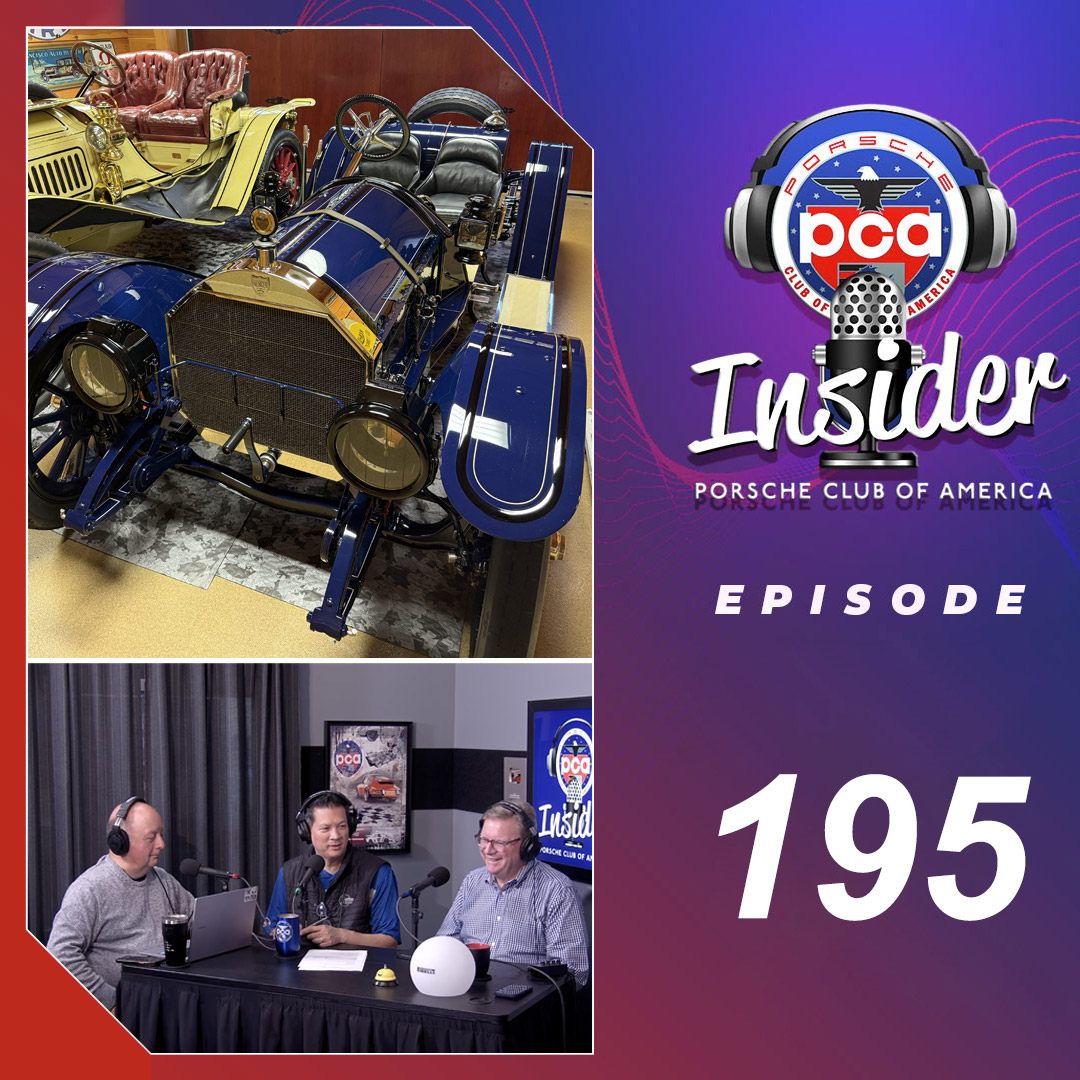
Tim McNair, owner of Grand Prix Concord, shares his journey as a high-end detailer specializing in concours preparation for rare and valuable cars. He discusses the nuances of preparing vehicles for prestigious events like Pebble Beach, emphasizing the difference between standard detailing and concours prep. Tim's unique approach includes using low abrasives and understanding the judges' expectations, which sets him apart in the industry. With stories from his extensive career, he reveals the pressures and joys of working on some of the world's most iconic automobiles.
On this episode, Tim McNair, a master detailer who specializes in preparing cars that often compete i shows like Pebble Beach, joins us to tell us stories of how he got started, collections that impressed him, detailing adventures and much more. If you watched Tim on our most recent Tech Tactics Live, you’ll really enjoy this podcast as you get to learn about the person behind all those great detailing tips. Plus, we cover Porsche news, upcoming PCA events and an update on PCA videos.

"...maybe taking better care of your Porsche or whatever car you might be cleaning."
Porsche is a famous car brand from Germany that makes fast and luxurious cars. They are well-known for their sports cars, like the Porsche 911.
Porsche is a renowned German automotive manufacturer known for producing high-performance sports cars, SUVs, and sedans. The brand is synonymous with luxury and performance, with models like the 911 and Cayenne being particularly famous.
"...I want to, of course, thank our presenting sponsor, Pirelli. Pirelli tires have to achieve the highest levels of performance..."
Pirelli is a company that makes tires for cars. They are known for making high-quality tires that help cars perform better, especially in racing.
Pirelli is an Italian tire manufacturer known for producing high-performance tires for sports cars, motorcycles, and other vehicles. They are often associated with motorsports and are a supplier for various racing series.
"...you don't want to kind of shop where I'm dropping off my West Macan and picking it up later in the day. You could drop it off."
The Porsche Macan is a smaller SUV made by Porsche, known for being fun to drive and having a high-quality interior. It's a good option if you want a luxury vehicle that still has some sporty features.
The Porsche Macan is a compact luxury SUV that combines sporty performance with everyday usability. It's known for its handling and upscale interior, making it a popular choice among luxury SUV buyers.
"...especially when I'm working, preparing a show car, a lot of times I'm in a shop already and ask them to remove parts..."
A show car is a car that looks really nice and is often shown off at events. It's usually very clean and detailed to impress people.
A show car is a vehicle that has been modified or detailed to a high standard for display purposes, often at car shows or exhibitions. These cars are typically not driven regularly and are maintained in pristine condition.
"...especially when I'm working, preparing a show car, a lot of times I'm in a shop already and ask them to remove parts, but things like air cleaner assemblies and things like that."
The air cleaner assembly helps keep dirt and debris out of the engine by filtering the air that goes in. This is important for the engine to run smoothly and efficiently.
An air cleaner assembly is a component of the engine's air intake system that filters and cleans the air entering the engine. This is crucial for optimal engine performance and efficiency.
"...family and friends oftentimes ask me to help them clean their cars, detail their cars and stuff like that."
Detailing is when you clean a car really well, both inside and out, to make it look as good as new. It involves a lot of work to get every part of the car clean.
Detailing refers to the thorough cleaning and restoration of a vehicle's interior and exterior. This process often includes washing, waxing, polishing, and cleaning various components to achieve a showroom-quality finish.
"car is about to be on the Pebble Beach show the very next morning at the 11th hour. That's a lot of pressure."
Pebble Beach is a famous car show where people display beautiful and rare cars. It's a big deal in the car world, and many collectors want to show their cars there.
The Pebble Beach Concours d'Elegance is an annual automotive event held in Pebble Beach, California, showcasing classic and vintage cars. It is renowned for its high standards of vehicle presentation and is a prestigious gathering for car enthusiasts and collectors.
"I've worked on everything from original paint Ferraris from the 50s to an 1885 Dury A and things like that where, and a lot, I never consider the value of the car."
Ferrari is a famous car brand from Italy that makes fast and expensive sports cars. They are very popular among car lovers and collectors.
Ferrari is an iconic Italian sports car manufacturer known for producing high-performance vehicles. The brand is synonymous with luxury and racing, with models that often appreciate in value over time.
Duesenberg is a brand of very fancy and expensive cars made a long time ago. They are famous for being really well-made and powerful.
Duesenberg was a luxury automobile manufacturer known for its high-performance vehicles and exquisite craftsmanship during the early 20th century. Their cars are often considered classics and are highly sought after by collectors.
"I think of a lot of times when people participate in the Porsche Parade Concours. There's people out there that will pay a detailer to prepare their car."
The Porsche Parade Concours is an event where Porsche owners show off their cars to be judged. Judges look at how clean and well-kept the cars are, and it's a big deal for fans of the brand.
The Porsche Parade Concours is a prestigious event where Porsche owners showcase their vehicles, and judges evaluate them based on various criteria such as cleanliness, originality, and overall presentation. It's a key event for enthusiasts to demonstrate the quality and care of their cars.
"And he had a Daytona Spider, he had a Boxer, which was new."
The Ferrari Daytona Spider is a famous sports car from the 1970s. It has a powerful engine and is very stylish, making it a favorite among car collectors.
The Ferrari Daytona Spider is a classic sports car produced by Ferrari in the early 1970s, known for its powerful V12 engine and sleek design. It's highly regarded among collectors and enthusiasts.
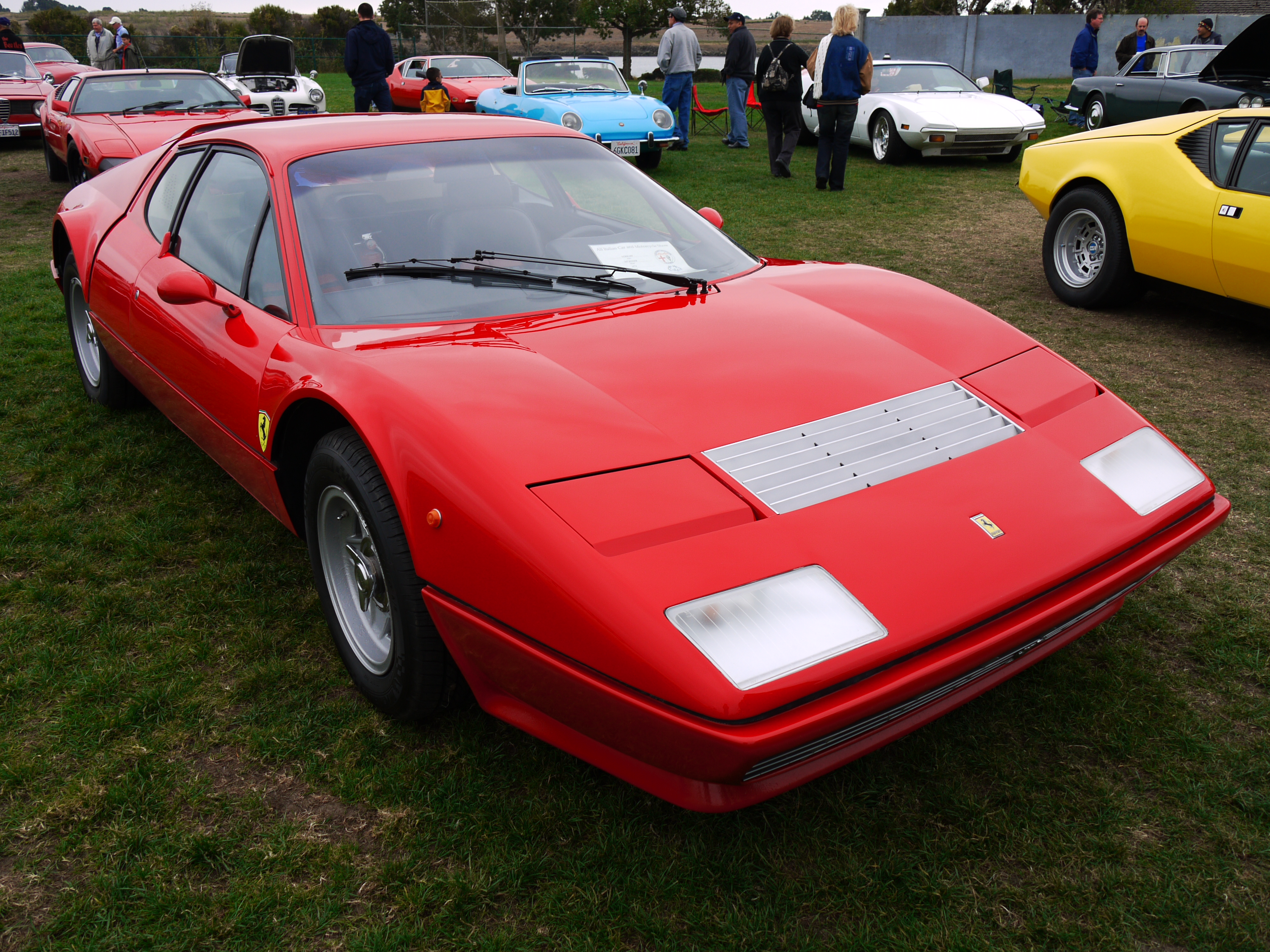
"he had a Daytona Spider, he had a Boxer, which was new."
The Ferrari Boxer is a type of sports car made by Ferrari in the late 1970s and early 1980s. It has a unique engine layout and is known for its performance and style.
The Ferrari Boxer refers to a series of mid-engine sports cars produced by Ferrari in the 1970s and 1980s, known for their flat-12 engines and distinctive design. The most famous model is the 512 BB.
"He was just taking delivery of his 288, that kind of stuff."
The Ferrari 288 is a supercar made by Ferrari in the 1980s. It has a powerful turbocharged engine and is very rare, making it very valuable.
The Ferrari 288 GTO is a legendary supercar produced in the mid-1980s, known for its turbocharged V8 engine and lightweight construction. It is highly sought after by collectors and enthusiasts.
"...is. I drove up and there's a 330 LMB, which is a 250 GTO with a big motor and a long tail, basically, in s..."
The Ferrari 250 GTO is a very rare and beautiful car made in the 1960s that many people dream of owning. It's famous for being fast and successful in races, which makes it very valuable today. The podcast talks about it because it's a classic car that collectors love.
The Ferrari 250 GTO is one of the most sought-after classic cars, produced in the early 1960s, known for its stunning design and racing pedigree. It is often considered the pinnacle of Ferrari's achievements and has set records at auctions due to its rarity and historical significance. The mention in the podcast likely relates to its iconic status among collectors and enthusiasts.
"I drove up and there's a 330 LMB, which is a 250 GTO with a big motor and a long tail, basically, in so many simple terms."
The Ferrari 330 LMB is a special version of the Ferrari 250 GTO, designed for racing with a bigger engine and a longer back end. It's a rare and valuable car.
The Ferrari 330 LMB is a racing car derived from the Ferrari 250 GTO, featuring a larger engine and a longer tail for improved aerodynamics. It is known for its performance and rarity, making it a highly sought-after classic car.
Term
$850,000
"He said, well, I just sold it for $850,000. Back in 1980."
This is a large amount of money, showing that some cars can be very expensive, especially if they are rare or in high demand.
This figure represents the sale price of a car, indicating the high value that certain classic or rare cars can achieve in the market.
"You mean someone's going to pay close to a million dollars for a car? And he goes, oh, yeah."
It means that some cars can cost almost a million dollars, which is a lot of money and indicates how valuable certain cars can be.
This phrase emphasizes the significant value of certain cars, suggesting that collectors are willing to pay substantial amounts for specific models, especially those that are rare or have historical significance.
"And I've, in the last year or two years, I've done some incredible original paint cars. We had an ACA Bristol that we took to Amelia this year and won a preservation award, but it had original lacquer on it."
Original paint is the paint that was put on the car when it was first made. People like to keep it because it shows the car's true history and can make it worth more.
Original paint refers to the factory-applied paint on a vehicle that has not been repainted or altered. It is often sought after by collectors and enthusiasts for its authenticity and potential value.
"We had an ACA Bristol that we took to Amelia this year and won a preservation award, but it had original lacquer on it."
The ACA Bristol is a type of classic car that is valued for its unique style and history. It won an award for being well-preserved, meaning it still looks and works like it did when it was first made.
The ACA Bristol is a classic car known for its unique design and historical significance. Winning a preservation award indicates its well-maintained condition and originality.
"Lacquer is very forgiving. It's either on the car or it's not."
Lacquer is a kind of paint that dries fast and makes things shiny. It's often used on cars because it's tough and easy to work with.
Lacquer is a type of paint that dries quickly and provides a hard, glossy finish. It is often used in automotive applications for its durability and ease of application.
"But where it was actually adhered to the car, you could polish. And I basically just use a very simple, low abrasive polish and took my time. And yes, I used a buffer on it."
A buffer is a machine that helps make surfaces shiny by polishing them. It's often used on cars to make the paint look smooth and bright.
A buffer is a tool used to polish and shine surfaces, including automotive paint. It can help achieve a smooth, glossy finish when used correctly.
"Well, tonight we have the pleasure of having you on Tech Tactics Live and I brought in my not so pristine 356."
The Porsche 356 is an old sports car made by Porsche, famous for being light and fun to drive. It was produced a long time ago, and many people love to collect them.
The Porsche 356 is a classic sports car produced by Porsche from 1948 to 1965. It is known for its lightweight design and rear-engine layout, making it a favorite among enthusiasts and collectors.
"Like I barely put the microfiber on it just to make sure I make a pass and make it dry."
A microfiber cloth is a special cleaning cloth made of tiny fibers that are great for cleaning without scratching surfaces. People use them a lot for washing cars to keep the paint safe.
A microfiber cloth is a cleaning cloth made from synthetic fibers that are finer than human hair. They are highly effective for cleaning surfaces without scratching and are commonly used in automotive detailing to avoid damaging paint finishes.
"A lot of Porsche people remember a place in Philly called Subtle Dynamics. I worked at Subtle Dynamics selling Kony Shocks and Kemi spoilers and Bill Steeves."
Subtle Dynamics is a business that sells parts and accessories for cars, especially Porsches. They help improve the performance and look of these vehicles.
Subtle Dynamics is a company known for selling automotive accessories, particularly for Porsche vehicles. They offered products like suspension components and aerodynamic enhancements.
"I worked at Subtle Dynamics selling Kony Shocks and Kemi spoilers and Bill Steeves."
Koni makes parts for car suspensions, which help control how a car rides and handles on the road. They're favored by people who want better performance from their vehicles.
Koni is a well-known manufacturer of performance shock absorbers and suspension components. Their products are popular among car enthusiasts for improving handling and ride quality.
"He was one of the original importers or sellers of a thing called Rainex. You guys heard of that?"
Rainex is a product that makes your car's windshield repel water. It helps you see better when it's raining by making the water slide off the glass.
Rainex is a brand known for its water-repellent products, particularly for automotive windshields. It helps improve visibility during rain by causing water to bead up and roll off the glass.
"...ere was a car in the back of the shop. It was an XK120 coupe. And no one was allowed to touch it."
The Jaguar XK120 is a beautiful sports car made in the late 1940s and 1950s that was very fast for its time. It's known for its elegant design and is loved by car collectors today. The podcast mentions it because it's a classic car with a lot of history.
The Jaguar XK120 is a classic sports car produced in the late 1940s and 1950s, known for its stunning design and performance. It was one of the fastest production cars of its time and played a significant role in establishing Jaguar's reputation for luxury and performance. The mention in the podcast likely reflects its status as a cherished classic among collectors.
"Okay, I gotcha. Yeah, it wasn't, we didn't do any, you know, Ford, country squires and stuff. It was mostly higher-end cars."
The Ford Country Squire is a big family car made from the 1950s to the 1990s, known for its roomy interior and wooden sides. It's a classic car that many people remember fondly from family road trips. The podcast mentions it to highlight its nostalgic value.
The Ford Country Squire is a full-size station wagon that was produced from the 1950s to the 1990s, known for its spacious interior and classic wood-paneling design. It represents an era of family-oriented vehicles and is often remembered for its nostalgic appeal. The mention in the podcast may reflect on its place in automotive history and its cultural significance.
The Ferrari Club is a group for people who love Ferrari cars, where they can meet others and join events about these cars.
The Ferrari Club is a community for Ferrari enthusiasts, providing opportunities for members to connect, share knowledge, and participate in events related to Ferrari cars.
"...I judged, my first judging gig was at the New Hope Auto Show."
Judging means looking at cars at a show and deciding which ones are the best based on how they look and how well they are made.
Judging in the context of car shows involves evaluating vehicles based on criteria such as condition, originality, and presentation to determine awards or recognition.
"...I've judged a Porsche Club, Ferrari Club, Alpha Club, CCCA."
Alfa Romeo is an Italian car brand that makes stylish and sporty cars. They have a long history in racing and are known for their unique designs.
Alfa Romeo is an Italian car manufacturer known for its stylish designs and sporty vehicles. The brand has a rich history in motorsport and produces a range of cars from sedans to sports cars.
"...I've judged a Porsche Club, Ferrari Club, Alpha Club, CCCA."
The CCCA is a club for people who love classic cars. They organize events and competitions to celebrate and judge these older vehicles.
The Classic Car Club of America (CCCA) is an organization dedicated to the preservation and appreciation of classic cars. They often hold events and judging competitions for classic vehicles.
The AACA is a club for people who love old cars. They help people learn about and take care of antique vehicles and hold events to showcase them.
The Antique Automobile Club of America (AACA) is an organization that promotes the preservation and enjoyment of antique vehicles. They provide resources for collectors and enthusiasts, including judging schools.
"...our one episode detailing a dry ice blasting and McLaren F1. Yes, yes."
The McLaren F1 is a very fast and famous sports car made in the 1990s. It's special because it has a unique design and is considered one of the best cars ever made. People talk about it because of how amazing it is and how much care it needs.
The McLaren F1 is a legendary supercar that was produced in the 1990s, known for its exceptional speed and innovative design, including a central driving position. It is often regarded as one of the greatest cars of all time due to its engineering excellence and performance. The mention in the podcast likely relates to its iconic status and the specialized maintenance it requires.
"...de note, we were driving the rental, which was a 720S. And I was with one of my clients who's actually..."
The McLaren 720S is a very fast and advanced sports car made recently, known for its lightweight body and powerful engine. It's designed for incredible speed and handling, making it a thrilling car to drive. The podcast mentions it because it's a top choice for car enthusiasts.
The McLaren 720S is a modern supercar that showcases cutting-edge technology and performance, featuring a lightweight carbon fiber structure and a twin-turbocharged V8 engine. It is part of McLaren's Super Series and is known for its exceptional speed and handling capabilities. The mention in the podcast likely highlights its performance characteristics and the experience of driving such a high-end vehicle.
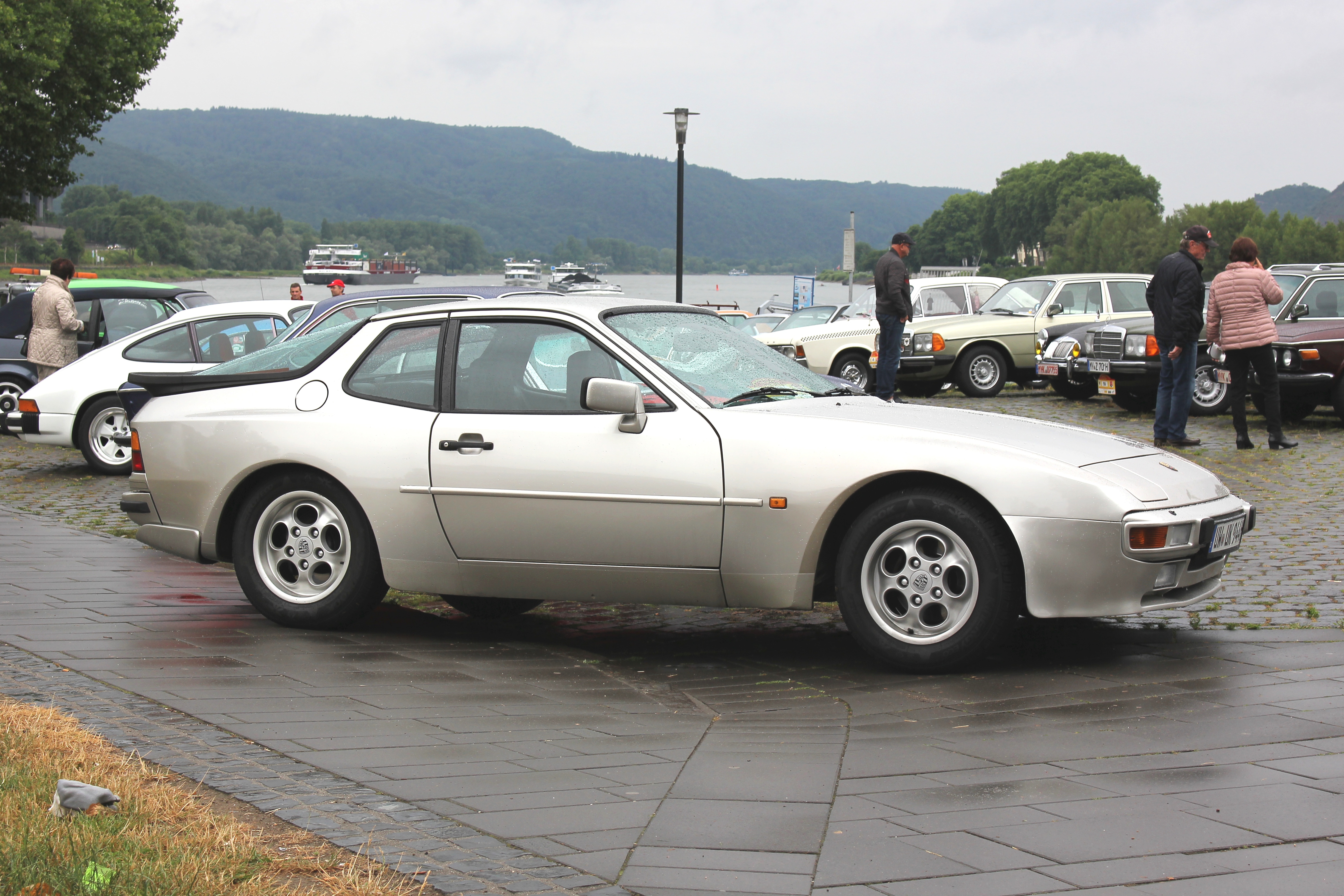
"...give them a call. They might have stuff for your 944 turbo, your 914, whatever your heart desires."
The Porsche 944 is a sporty car made in the 1980s and 1990s that many people enjoy driving because it handles well and isn't as expensive as other Porsches. It's a good choice for those who want a fun car without breaking the bank. The podcast mentions it because there are parts available to help keep it running smoothly.
The Porsche 944 is a sports car produced from the early 1980s to the early 1990s, known for its balanced handling and affordability compared to other Porsche models. It features a front-engine, rear-wheel-drive layout and is often praised for its driving dynamics. The mention in the podcast suggests a focus on its popularity among enthusiasts and the availability of parts for maintenance.
"...area. And for you, Porsche guys, there is a golf 917 K in there and an M8 F and just the easiest way ..."
The Porsche 917 is a famous race car from the 1970s that is known for being very fast and winning many races. It's special because of its unique design and powerful engine, making it a favorite among racing fans. The podcast talks about it because it's an important part of racing history.
The Porsche 917 is a legendary race car that dominated endurance racing in the early 1970s, known for its innovative design and powerful flat-12 engine. It played a crucial role in Porsche's racing success and is celebrated for its performance and engineering. The mention in the podcast likely relates to its iconic status and the nostalgia it evokes among motorsport fans.
"...struck me was in the corner. There's there was a GT 350. There was a 427 Cobra GT 40."
The Lamborghini 350 GT is a beautiful sports car made in the 1960s and is known for its powerful engine and stylish look. It's important because it's the first car Lamborghini made, which helped the company become famous. The podcast talks about it because it's a classic that collectors love.
The Lamborghini 350 GT is the first production car from Lamborghini, introduced in the mid-1960s, known for its elegant design and powerful V12 engine. It marked Lamborghini's entry into the luxury sports car market and set the stage for the brand's future success. The mention in the podcast likely emphasizes its historical significance and appeal among collectors.
"There's there was a GT 350. There was a 427 Cobra GT 40. Yes, a real GT 40, Mark two."
The Shelby Cobra is a fast and powerful sports car from the 1960s that many people admire for its speed and design. It's known for being exciting to drive and has a special place in car history. The podcast brings it up because it's a favorite among car lovers.
The Shelby Cobra is a high-performance sports car that gained fame in the 1960s, combining a lightweight chassis with a powerful V8 engine. It is celebrated for its raw performance and has become an icon in American automotive history. The mention in the podcast likely highlights its significance in motorsport and its enduring appeal among car enthusiasts.
"...m, one was the most gorgeous green metallic, um, Lamborghini Mura S, just fresh criminally restoration, absolutely ..."
The Lamborghini Miura is a famous sports car from the 1960s that is known for its gorgeous looks and powerful engine. It's considered one of the first supercars and has influenced many cars that came after it. The podcast talks about it because it's a classic that many car enthusiasts admire.
The Lamborghini Miura is a groundbreaking supercar introduced in the 1960s, known for its stunning design and mid-engine layout. It is often credited with establishing the high-performance supercar segment and is celebrated for its beauty and performance. The mention in the podcast likely highlights its iconic status and influence on future supercars.
"Oh, so what kind of car is it? First of all, 550 Maranello. Okay."
The Ferrari 550 Maranello is a luxury sports car made in the late 1990s and early 2000s that is known for being fast and comfortable. It has a powerful engine and is designed for long drives while still being exciting to drive. The podcast talks about it because it's a popular choice among Ferrari fans.
The Ferrari 550 Maranello is a grand tourer produced in the late 1990s and early 2000s, known for its blend of performance and comfort, featuring a front-mounted V12 engine. It represents a classic era of Ferrari design and engineering, appealing to those who appreciate both speed and luxury. The mention in the podcast likely relates to its status as a desirable classic Ferrari.
"...the GTS and in the, uh, plug-in hybrids like the Cayenne, um, is a long motor and it's limited to 215 hors..."
The Porsche Cayenne is a fancy SUV that drives like a sports car but has more space for passengers and cargo. It's popular because it offers both luxury and performance, and the podcast talks about its different versions, including a hybrid that saves fuel.
The Porsche Cayenne is a luxury SUV that combines sports car performance with the practicality of an SUV, first introduced in 2002. It has become a significant model for Porsche, contributing to the brand's expansion into the SUV market. The mention in the podcast likely relates to its performance variants and hybrid options, showcasing its versatility.
"Carrera 3.0 and like a lot of people, I think, assume that it was like, is that like, is it related to the 9-11 SC or whatever, you know, and I left it there. It's absolutely not that."
The Porsche 911 is a well-known sports car that has been around for many years and is famous for its unique shape and powerful performance. People often confuse its different versions, like the Carrera 3.0, but each one has its own special features. The podcast discusses this car because it's a classic and has a lot of history.
The Porsche 911 is an iconic sports car that has been in production since the 1960s, known for its distinctive design and rear-engine layout. It has evolved through multiple generations while maintaining its status as a symbol of performance and luxury. The podcast's mention of the Carrera 3.0 highlights its significance in the 911 lineage and the common misconceptions about its relation to other models.
"... range, but that's, excuse me, a lot less than a Carrera RS 2.7. Right."
The Porsche Carrera RS is a special version of the 911 sports car made in the early 1970s that is designed for racing. It's lighter and faster than regular 911s, making it very popular among car fans. The podcast talks about it because it's an important part of Porsche's history.
The Porsche Carrera RS is a high-performance version of the 911, introduced in the early 1970s, known for its lightweight construction and racing capabilities. It is highly regarded among collectors and enthusiasts for its engineering and performance on the track. The mention in the podcast likely highlights its significance in Porsche's racing heritage.
Select text to request an explanation
Welcome to the Porsche Club Insider, your one stop for all things Porsche and PCA.
Here's your host, Vu Gwin, and the Insider crew.
Welcome everyone to episode 195.
We have a friend and no stranger to PCA here, Tim McNear, owner of Grand Prix Concord, and
we're going to introduce him and we're going to have a good time.
On this episode, we're going to welcome him and he's going to take us behind the scenes
of what he does every day, preparing cars for the most competitive Concord events.
We'll hear about how he got started, what led him to work on such valuable and rare cars
and the stories behind prepping all these like the, for me, every time I see you, I learn
something new and I know what we're going to go over today that you're going to walk
away from this podcast and some details of maybe taking better care of your Porsche
or whatever car you might be cleaning.
But before we get started, I want to, of course, thank our presenting sponsor, Pirelli.
Pirelli tires have to achieve the highest levels of performance, safety, noiselessness and
grip on the road surface, innovative tires that can even satisfy the most specific mobility
needs of the in consumer.
And also I want to thank you all for listening.
If you aren't currently a PCA member and know a Porsche, what are you waiting for?
Grab that VIN, head over to PCA.org and make yourself a member.
And if you're looking for a Porsche, we have the Test Drive program.
Just head over to PCA.org and we'll unlock resources to help you find that special Porsche
for your driveway or garage.
So let's kick it off with, again, Tim McNair, owner of Grand Prix Concord.
If you're going to any major show in the US and I guess internationally too, and there's
some fairly valuable cars, more than likely you're going to find Tim there.
And he's, I would say he's like the, and I hope I don't offend if I don't say this
correctly.
Like you're like the detailer to the stars of like the car stars, right?
And I mean, the seven figure cars is just normal to you.
Seven, yeah.
Now eight, eight more.
Oh, yeah.
So you don't want to kind of shop where I'm dropping off my West Macan and picking it
up later in the day.
You could drop it off.
You won't work on it, but you can surely drop it off.
Certainly drop it off.
Leave gas in it and the keys will be fine.
But well, first thing I should probably tell you is I don't have a shop.
I'm completely mobile.
I never had a shop.
I've never done advertising.
Everything's been done by referral.
So every time I get a chance to work on something and I've been in the greatest collections
of all time and it's amazing.
I love doing it.
Hey, we haven't used that word in a while.
Sorry.
Amazing.
Amazing.
Oh, great.
I got to watch what they say.
But yeah, so it's been a great haul.
We had a great time.
When I describe your level of work to those that don't know your work, I say, well, just
imagine, have you ever met a detailer that will come in with his wagon or arson of tools
and get started on your car usually doesn't wash it.
The cars are done kind of dry and we'll talk about that in a bit.
But the thing I always tell him is what he does, he does it so well that he wears a button
up Brooks Brothers shirt while he's doing it.
Yes.
That's true.
That's true.
Always hold up appearances.
Yeah.
Yeah.
Don't wear hoodies.
But it's a funny thing.
My background is I was in the restoration business.
So another kind of weird thing that I do that most detailers don't do is I'll take things
apart, especially when I'm working, preparing a show car, a lot of times I'm in a shop already
and ask them to remove parts, but things like air cleaner assemblies and things like that.
But headlights, tail lights, trim, anything I can take off rather than tape off, sometimes
it's easier and you'll get a better finish, especially badges and things like that.
What I most admire about you is family and friends oftentimes ask me to help them clean
their cars, detail their cars and stuff like that.
The cars aren't that valuable for the most part, but I always have a fear of messing
things up.
You're working with seven figure, eight figure cars, doing it under a hot lamp because the
car is about to be on the Pebble Beach show the very next morning at the 11th hour.
That's a lot of pressure.
At times.
I have to say, the funny thing I found in the business, I've been doing just concord preparation,
not detailing just concord prep for the last 20 years.
And I've worked on everything from original paint Ferraris from the 50s to an 1885 Dury
A and things like that where, and a lot, I never consider the value of the car.
I try not to even let that enter.
And honestly, you know, paint's paint.
I'm more interested in how the paint's going to respond to the products I'm using.
Also how, what process I'm about to use to clean things.
So I always err in the side of caution.
I start with very low abrasives or very low chemical compounds that don't strip too harshly.
But generally, at this point, I'm really not intimidated by the cars, more by the owners.
Wow.
Well, that's it.
When you said it's not detailing, it's concord prep.
Yes.
What does that mean?
I would think it's the same thing.
The easiest way I could describe it is I'm the 2% guy.
I'll go into, I'll actually go into a shop and they all look at me.
It's kind of funny.
And the car will be 98% done and I've got the eyes across the T's.
If I'm doing a car that's already completed, I can spend between 40 and 60 hours on a
completely restored car.
So if I have the opportunity, if it's on a lift, I'll have the wheels off.
I'll do inside the wheel wells.
Just a typical preparation that we did for Pebble Beach.
We'll use some of those pre-work cars that we did this year.
I did a Duesenberg.
Luckily it was on a lift.
We had the wheels off.
It takes anywhere between four and six hours just to do a wheel.
You have to go and polish each individual spoke and things like that.
But in some cases, I get a lot of garage queens.
So it's easy to bring them back up to spec.
But a lot of times they do drive their cars, especially now tours are so popular.
I'm getting cars back from tours that really need a lot of work.
When Manny asked the difference between detailing what you do,
I think of a lot of times when people participate in the Porsche Parade Concours.
There's people out there that will pay a detailer to prepare their car.
They paid a detailer.
What they say is, I had it detailed.
And then they come to parade and they do terribly.
Because I think detailing a car in the normal sense is very different from a car that's about to be judged.
And I would imagine when you're cleaning, do you have a sense of what the judges will be looking for?
And that's what you're focusing on as opposed to the broad panel.
That's easy to see whether it's shiny or not shiny.
Anyone can make a car shiny.
What separates my business from everyone else is I'm a judge.
I'm a senior class judge at Ferrari.
I've judged literally all over the world, Lugano, Switzerland.
I've judged at Pebble Beach now every year.
And I think that gives me a serious advantage because I know what I want to see.
And I will actually use scoring sheets as I work to pre-score the car before it gets there.
I've also been hired in some cases to pre-judge a car and then tell them what's wrong with it before it goes to a national meet.
So go in there and say, hey, you need to fix this, you need to change that, those screws are wrong.
Watch your tapping.
Sorry, those screws are wrong, the decals and things like that.
So I go in there and just make all those adjustments as we go.
But I think it gives me a real advantage being both a judge and being from the restoration world.
Because I know what to look for and I know what it takes to make it better.
But there has to be, tell us a car, there has to be a car or a situation that makes you nervous.
Like what would make you nervous?
An eight-figure car or a high-profile event or what would make you nervous?
It's not so much nervous anymore.
When I was first starting, one of my first cars that I did when I started detailing back in, this was in the mid-80s.
And I started going on my own and doing my own thing.
And I worked for a client of mine here in Maryland that had 15 Ferraris.
He also had lifts in his garage for an F1 toolbox, like all the cool stuff.
And he had a Daytona Spider, he had a Boxer, which was new.
He was just taking delivery of his 288, that kind of stuff.
And so going there for the first time was pretty intimidating.
But one of the first cars that truly made me nervous.
I was working at, this is actually a quick side note.
This was probably 1985 or six.
And I was working in Fort Washington in Pennsylvania near Philadelphia.
And there's one of the big brokers at that time is Mark Smith.
And he's an old Philadelphia motor car company.
And he asked me to come in and do this Ferrari for him.
So I drove over and there it is.
I drove up and there's a 330 LMB, which is a 250 GTO with a big motor and a long tail, basically, in so many simple terms.
So I walk over and I'm looking at this car and I'm thinking, oh, this is going to be a lot of work.
The car is beat.
You know, I drove it all the time.
Pirani wire wheels, never experienced those.
I'm like, oh, this is going to be a problem.
So I come out and he comes over and says, yeah, I just need you to clean this up.
You know, make it look nice.
It's being shipped to Switzerland.
I said, oh, that's cool.
I said, I got to ask you, what's something like this worth?
He said, well, I just sold it for $850,000.
Back in 1980.
So I said, wait a minute.
You mean someone's going to pay close to a million dollars for a car?
And he goes, oh, yeah.
He's been looking for this car forever.
And finally we were able to get it.
Wow.
Million bucks.
Could you imagine?
Back in the day.
Back in the day.
That was like serious money.
So yeah.
So it took me two days to do the car and just doing as carefully as possible because a lot of times when I get these cars, you don't know who painted it, when it was painted,
how much materials on it.
I don't care how many paint meters you own in your life.
You still don't know how much clear versus paint versus primer versus anything.
So it doesn't really matter.
You can use them all day and it won't help you.
So it's really just feel, touch and being careful.
How about like, look, I have a thing with getting nervous.
It's like an original paint car.
Yes.
Because you know, especially an older, older car because you don't know if I, is this paint ready to come off?
And am I going to be the one to knock it off?
Well, that's the thing.
And I've, in the last year or two years, I've done some incredible original paint cars.
We had an ACA Bristol that we took to Amelia this year and won a preservation award, but it had original lacquer on it.
Lacquer is very forgiving.
It's either on the car or it's not.
So what was left on the car, which was cracking and peeling, you had to be very careful where it was cracked.
But where it was actually adhered to the car, you could polish.
And I basically just use a very simple, low abrasive polish and took my time.
And yes, I used a buffer on it.
Orbital, low speed, foam pad took my time and it came out like glass.
Car look gorgeous.
Well, tonight we have the pleasure of having you on Tech Tactics Live and I brought in my not so pristine 356.
And I showed you earlier, like, you know, there's some areas.
It was resprayed in the 80s.
And, you know, when they say prep is everything, I think my car is a perfect example of where prep is everything.
Because down the road, 20 years, 30 years later, whatever it is, if you didn't prepare it well, some of the stuff kind of bubbles up.
And I have some areas in my paint that bubbles up.
And my question to you was how careful do I have to be around it?
Like right now I tiptoe around it, like I barely put the microfiber on it just to make sure I make a pass and make it dry.
Like I don't want to accidentally like pop the bubble and have it start to crack and stuff like that.
How do you know?
Well, eventually what'll happen is, and it could be 10 years, it could be two years.
If you put it out in the sun, it could be tomorrow.
Some of the...
Oh!
Yeah, what about that?
That'd be a pirate car.
You have one of the things I noticed on your car was just solvent pop, which is basically the undercoat was curing after...
Or the top coat was curing faster than the bottom coat basically is what it is.
And sometimes those little dots will come off.
Sometimes they won't.
At this point, your car, I wouldn't be afraid to go over that whole thing with a polisher.
No problem.
I thought he was going to say sander.
Yeah.
There's that too.
I wouldn't hesitate to have it refinished.
Yeah.
The thing is, if I know it's going in for paint, well, of course, you know, we could use anything we want.
No, it's not.
But it's not original paint, so if anything happens, it's not like you're thinking of original paint.
But I don't want to make it worse.
That's the thing is, I love when they call the patina that it has now.
I just don't want it to get worse.
And for those who haven't seen Boo's car, it looks like it has ingrown hair.
Hey, hey, hey, hey, hey.
You know, there's a little bump she's getting in your skin.
It's acne.
Don't worry.
It's all good.
It's an old car.
It has a little patina.
Yeah, that's it.
You were hoping Tim would give you some magical advice.
Yes, of course.
With admittance, it would disappear.
Of course.
Yeah, we could use lacquer thinner.
Just eating it all out.
Oh, my gosh.
Oh, no.
But in case of this Bristol, one of the things that we found was right behind, they always
ran with the boot on it.
Uh-huh.
And we had to spare aluminum at that point.
So what we do then is we tape it all off and tape all the edges.
And I use a matte clear and seal everything that's peeling to seal it down.
So it's not going to come off anymore.
It's not going to come off anymore.
So just rewinding to what were you doing?
Like, did you grow up in the car world?
Did your parents make you wash your cars?
Yeah.
How did you get into this?
Well, my family typically was not in the cars at all.
My brothers were a little bit into it.
I have two older brothers and they were sort of into it, but not per se.
Pennsylvania born and raised?
Yep, Philly.
Yep, Philly.
Okay.
Go birds.
Yeah.
So to that point, how was the car guy?
So they would, this is the story my mom always told before, and they would build models.
And they would have, under their bed, they had this box of just various model parts.
And I would just go in there.
I wasn't allowed to use glue.
Yeah.
So I went in there and would just assemble cars and make models out of their scrap parts
and just build stuff like that.
So it became a sort of a car obsession at age 10.
I had a subscription to Road Track Magazine.
Oh, of course.
And of course, that was the standard at the time and fantastic.
And that just led to one thing or another.
And one of my brothers wanted their cars cleaned.
I would always clean the cars.
I kind of liked it.
So it was 14, 15 years ago.
So your brother's inception to you, I did that to my sister.
Like when she was younger and my dad made me clean the kitchen table after dinner.
She saw me with the spray bottle and the towel and she thought it was the coolest thing ever.
I'm like, you're not old enough to use this yet.
But one day I'm going to let you use a Windex.
She said, oh my gosh, can I use it today?
I'm like, nope, nope, nope, nope.
And finally I let her use it and then she, she was like, oh, I get to clean the table.
I'm like, have at it.
Have at it.
Nice.
So your brother's inception to you, like I'd say.
Yeah, exactly right.
But eventually, fast forward a bunch of years.
And I've been in the car business at the time I did, I've done everything in the car business.
A lot of Porsche people remember a place in Philly called Subtle Dynamics.
I worked at Subtle Dynamics selling Kony Shocks and Kemi spoilers and Bill Steeves.
Was it like an independent repair shop?
No, no, accessories.
Oh, accessories.
Yeah, we used to run full page ads for own track and things like that.
Oh, okay.
That was our thing.
I remember the Kemi spoilers and all that.
That's kind of thrown it way back.
He was one of the original importers or sellers of a thing called Rainex.
You guys heard of that?
Oh yeah.
Yeah.
So that's where his whole thing started, Rainex.
And then they sold Porsche design and all kinds of crazy stuff.
But we did mail order.
Okay.
There was a company in Ohio called Maya, Michael I and Ellie Auto House.
And the two of them would compete against each other all the time in Road and Track magazine
to see who would have bigger ads and better prices.
And it was all by mail orders.
Mail order business.
People calling in, giving their credit card numbers out of the phone and all that fun stuff.
But anyway, moving on.
After that, I met a bunch of people, but a friend of mine had a detailing business in Devin
PA.
His dad was a banker in Philly.
So what he would do is he would drive, walk down or ride his bike or take his car down
to the train station, pick up one of his dad's friends, Mercedes, bring it back to his garage
and clean it.
Yeah.
And then put it back before they got home from the train.
So with that, I started working for him part-time in cleaning cars.
That's where I learned how to use a buffer.
But there was a car that he finally bought a shop, opened the shop.
And there was a car in the back of the shop.
It was an XK120 coupe.
And no one was allowed to touch it.
And I said, so what's the deal with that?
He goes, well, the car is going to this big show called Pebble Beach.
What's Pebble Beach?
So he started explaining to me how we have to detail the undercarriage we had to do,
the engine.
And I thought, yeah, that's a really cool thing.
So one thing, again, I started doing more and more cars.
My friend was a sales manager at Algar Ferrari.
How old were you at this time?
I would say 20, 22, 34.
Oh, early 20s.
Yeah.
And then my friend.
I realize you've been in this game that long.
Oh, yeah.
Wow.
And he, yeah, I'm old, by the way.
That was a long time.
So I started building some ground and working on my own customer cars.
And my friend at Algar would send me Ferraris all the time.
Okay, that's a big jump.
You were working for a detailing company.
Working on Mercedes and the high-end cars, anyway.
Oh, okay.
Mercedes and Porsche only.
Okay, I gotcha.
Yeah, it wasn't, we didn't do any, you know, Ford, country squires and stuff.
It was mostly higher-end cars.
And that's what was in the early 80s?
Yeah.
Okay, yeah.
And then, so anyway, I started doing these cars and got involved with the Ferrari Club.
Ferrari Club begat me judging.
I judged, my first judging gig was at the New Hope Auto Show.
And you're now in your 30s?
Yeah.
30s, okay.
Times two.
Yeah.
No, no, I'm saying when you came to the judging first.
No, probably about the same, maybe late 20s at this point.
Late 20s, okay.
And then I started judging there.
He had to be one of the youngest judges.
Yeah, that's what I thought.
No, surprisingly.
Yeah, he probably was.
But what was interesting was, I also drew the short straw.
You know, someone didn't make it.
So, hey, can you do this?
You also had to do is follow the form.
And yeah, I kind of knew what I was doing anyway.
But so anyway, I ended up judging and then that begat more and more into the clubs.
So, I've judged a Porsche Club, Ferrari Club, Alpha Club, CCCA.
I went to the AACA has judging schools.
I've done those.
They're fantastic.
So, that's where I really learned my chops.
And I always thought when I got, so flash forward, got out of this detailing thing.
I actually, with a friend of mine, I just spoke to you the other day.
We opened a detail shop in just outside Baldwin, Towson.
Oh, yeah.
Okay.
So now you're the business owner of a detail shop.
Yeah.
And so we opened this shop and we were working on cars and I ended up getting involved with
the whole girlfriend getting married thing and I left him the business and he paid for
his law school.
He went on to be a lawyer smarter than me.
Yeah.
So, then I got back to Philly.
I was a nervous advisor at a Mercedes dealership.
I've been a Mercedes certified tech.
I'm a Lotus certified tech.
All this fun stuff.
I did, but my real passionate job, the job I love the most was working in Camden, New
Jersey in the absolute war zone of Camden, New Jersey on 300 SLs.
So, I was the last guy in line.
I was the assembler.
Oh.
I would get a car with chassis, body attached, engine in, usually suspension attached and
then with a box full of wiring harness and say, okay, start.
And you're working for Mercedes at this point?
No, working for a restoration shop in Camden.
Oh, okay.
And yeah.
So, what I would do is I do all the final assembly work.
Then I would do the prep and then I would accompany the car to the show.
Ah, okay.
So, all the, you know, Starfest, all the big Mercedes shows, we won everything those years.
Now we're in the 90s?
Yeah.
Okay.
92, 93?
Okay.
Actually, 91, 92.
Okay.
And then, still doing cars, still working for them, got out of the business entirely,
sold suits, clothing for a while and then started selling of all things.
I got into the wine business.
Huh.
Yeah.
Okay.
I said, hell with cars, I'm done with this.
I got so tired of working on stuff, I guess, I don't know.
Change of pace.
Having, starting a small family, you know, things were starting to happen.
I worked for a company we sold wine that went into working for a company that sold espresso machines.
Oh.
So, now you might think this is all goofy and stuff like that, but what I find too is
the most enthusiast, A, drink coffee and B, love wine.
Yeah.
So, when I go out socially now, I'm the guy that gets the wine list, which is cool.
Yeah.
You know, because most people just look at the next thing or order the box order.
Yeah.
Manny and I asked for the fruity drinks with umbrellas.
Or just the opposite in my world, they go down and look how much opus one is today and they'll
spend that because it's the most expensive thing on the menu.
So, that must be good.
It must be.
It has to be good.
It has to be good.
So, anyway, got out of that, started selling cars.
I've done, sold Hondas.
I've sold minis.
I've sold all kinds of sales.
So, you got back into retail sales with cars.
Okay.
And in 2006, I was selling minis at the time and I was building, I had a nice client base,
probably about 10, 15 clients of just doing heavy metal, just big cars.
I said, you know what, that's what I really like to do.
I'm going to do it.
During the day you're selling minis, but in your extra time, you're dealing with some
15 clients.
So, I started the business with like a thousand bucks and I went to, I bought some equipment
and the best thing I ever did was I went to Monterey.
Went to Monterey and I met people.
Meeting people was the big thing.
I did a lot of work at that time with the guys at Classic Motorsports Magazine.
We did a bunch of little projects here and there.
Did some video work, some work in the magazine.
And I will say this, I've done, I'm in probably a hundred different magazines.
I've written for Octane, Magneto and other magazines myself.
I don't get any work from being in magazines.
I don't get any notoriety or anything like that.
Some people have seen it.
The only time it's ever happened was I was very, very fortunate.
My friend works for New York Times and did an article on me last year.
I thought that was...
And I had two or three clients actually come up to me and said,
saw you in the Times, which was like, wow.
First of all, I'm in the Times.
It's one thing to be in Octane, it's one thing to be in the Times.
It's a different world.
And that was really cool.
For good reason, not a bad reason.
Exactly.
You're not a tabloid.
It wasn't a big shot.
It wasn't on the first page.
But yeah, so it's just been great.
Probably the best thing about being in this and doing what I'm doing
and quitting my job at that time.
And yeah, really struggling to get cars.
Again, it's all been by referral.
I've been getting some of the greatest cars.
And then I get together with clubs.
I've done seminars for the Porsche Club, Ferrari Club,
on your cruise actually, maybe another time.
We did a going group was a great one.
Alpha Club, I've done for them.
One of your chapters, Lone Star.
Lone Star, okay.
Sent me to Texas.
We did a seminar for those guys, which was really great.
Thank you, Derek.
That was a lot of fun.
I would love to do that again.
So yeah, so they sent me all over to these seminars.
I guess I befriended some other people in the business
like Jason Camisa and things like that.
Got involved with Hagerty and done a bunch of videos with them
called Beyond the Details.
You've probably seen some of it, maybe.
However, half a million hits on our one episode detailing
a dry ice blasting and McLaren F1.
Yes, yes.
I remember that one.
So McLaren F1 is another sort of pet project of mine.
I've done more, I probably done over 30 F1s.
Oh, how many are there?
64 road cars.
I've done 19 of the GTR LM cars as well.
Wow.
So yeah, so I was involved with the F1 owners club.
So I would detail all the cars for them after their tours.
Took me to Jackson Hole for one of their tours.
Took me to, yes, that is an LM.
Yeah, for those of you that aren't watching on YouTube,
David just put up a beautiful photo of McLaren there.
Yes.
So the F1 owners get together and they're like,
who do you get to detail your car?
And suddenly they're like,
I want someone who's familiar with the car.
That's a very funny thing.
Not only that, but I ended up making friends
with some very, very interesting people at the time.
And it turned out to be just so much,
so helpful in my business.
One of the long convoluted story about Make It Quick,
one of our tours was in Jackson Hole.
And I got this phone call from Ray Bellum,
FIGT world champion who is organizing these tours.
And he said, I've got a client.
He wants to do a pre-tour.
Can you help him set it up?
He wants to go from Arizona and maybe do some back roads
and go through Bryce and Zion and come up through Park City
and this was the tour we planned.
And then end up at Jackson Hole and start our tour.
I said, sure.
So the client was Montserrat Auger,
who at the time was the biggest shareholder in McLaren.
And I would get a call just randomly.
And it's like, talk about intimidating, right?
So he calls Ray and he says, hey,
you're interested in doing this for me?
I said, absolutely.
I'd love to do it.
He said, well, you know, to set up the whole thing,
send it over the itinerary, tell me what you like, whatever.
So anyway, what we did was there's six people
and we rented one motor home.
I had a friend drive the motor home and follow two P1s.
And they left.
We originally were planning on leaving out of Scottsdale,
going to Flagstaff driving and then driving up from there.
He called me one morning and said, hey,
the drive between Scottsdale and Flagstaff kind of sucks.
Would you mind if we took the plane?
I'm like, sure.
So I had to call Scottsdale and make sure that they took
his Bombardier, his Global Express.
He's on the board of Bombardier as well, by the way.
So he had a Global Express, huge.
And I have a picture of it.
I should send that to you.
So the plane, the two P1s and the motor home
sitting on the tarmac prepped before the tour.
So they take off and they drive.
And I finally meet him in person in Jackson Hole.
He shows up.
He went into town, bought a hat, a sheriff's star,
cowboy boots and a bullow tie.
And that's how he showed up at the event.
And he just loved the tour and had a great time.
That then ended up being more and more stuff I did for him
and his friends.
So what did you have to do, clean his car after every day?
Yeah, so I cleaned all the cars every day.
You had a team of people helping you.
One other person.
Yeah, I only brought two people.
My friend Phil, at that time.
And Phil and I did this thing.
And every night we worked in the basement at the Amen Gani,
which is a five-star resort in Jackson Hole.
And then from there, also we did another tour in Bordeaux
with the same thing.
And in Bordeaux, there were so many F1s.
And the thing about the F1 owner's club is that they drive
the hell out of their cars.
Just a quick side note, we were driving the rental,
which was a 720S.
And I was with one of my clients who's actually driven
in Indianapolis and things like that.
So I was okay.
We're coming down this back road and we're doing,
I'm not kidding, we're doing 170 plus.
And I'm looking over at the speed.
I'm going, man, we're going fast.
And because everything looks like a ribbon at this point,
he says, oh, check the mirror.
And I look in the mirror and an F1 GTR long tail,
the Davidoff car, and the Lark short tail.
We're coming up on us.
Oh my gosh.
On a back road in the middle of France.
So he slows down and we move over a little bit
and they go pious like we're standing still.
No tags, open exhaust, just whoa, whoa, like that.
That's crazy.
And they're going winery to winery in Bordeaux.
All right.
Well, let's, let's pause right there.
I do want to recognize our corporate sponsor,
Auto Atlanta.
If you're chasing some parts for your Porsche and some
possible to find, give them a call.
They might have stuff for your 944 turbo, your 914,
whatever your heart desires.
Either way, Auto Atlanta has you covered.
They've been taking care of Porsche since 1978.
Not only do they have parts, but they also ship
internationally and they offer expert tech advice.
So whatever you need, no matter where you are in the world,
AutoAtlanta.com.
They also buy and sell pre-owned vehicles.
So if you'd like to sell one, give them a call.
If you'd like to buy one, give them a call as well,
whether you're rebuilding a classic or just needing
that very single clip to finish the project,
they have you covered AutoAtlanta.com.
There's a 5% coupon code that you can use,
PCA, the number five, OFF.
Again, AutoAtlanta.com, Porsche parts,
Porsche people, Porsche passion since 1978.
Now let's get back to your average customer.
Like I know you said by participating
in many of these events, participating in clubs,
and by now, like I said earlier,
you're sort of like the detailer to the stars.
And if all these P1 or F1 owners know of you,
your name must just get passed around.
Yes, occasionally.
And again, meeting some of the other people
on the tour like Gordon Murray and things like that,
it's been a lot of fun.
So what sets you apart from, let's say,
I want to carry, maybe I want to put on a button up
Brooks Brothers and start cleaning cars.
What sets you apart from everyone else?
Everyone else like the valet.
Yeah, I just like trying to.
And I know the answer to this partially
because I've seen you work before is your attention to detail
and you work on cars as though they are your own.
And you look at, kind of with like a third eye almost,
like I might look at something and you look at the same thing.
We're looking at the same thing,
but you see that I didn't finish this corner
or I could have used was that the Brewhack Steel Wool
to make it better when I thought it was already clean.
You have this extra spidey sense to clean cars,
but there's more than that.
Yeah, that's an obsession.
I'm sorry.
Yeah.
It's interesting.
I can't describe it.
A lot of it comes from my background
and things that I do on this.
As a hobby, I build crazy-ass expensive model cars.
And I have a lathe, the mill, 3D printer.
I just bought a laser printer or laser engraver,
all this fun stuff.
And I think that that is where you learn that finite detail.
But there is an eye to it.
It's sort of like the only way I can describe it is
it's like a professional race car driver.
You could be a race car driver, but you're not a pro.
You know, having David Donahue drive your car
is you'll realize how bad you really are,
even though you think you're a great driver.
Because that's what they do all the time.
That's the same kind of thing.
I do this all the time.
But the coolest thing to me is I'm at a point now
where I've cut back.
I don't have 5,000 customers.
I don't want that.
I never did.
I only want to work on, at this point, in the business.
I only want to work on what I'd like to work on.
Nice.
And that's a privilege.
I mean, that's just really a great thing.
The magic to a small business to me is the word no.
The ability to say no.
When you can do that, you know you're doing the right thing.
Now, how often does this happen?
Let's say one of your well-known or wealthy customers
has you come in to work on a particular car
and you get started on it, but then you look to your left
and there's 20 other cars in that garage
and like, while you're here, Timothy,
why don't you go ahead and finish up the other 20 cars?
Does that happen or do you have to learn to say no
because that's really six months of work
that you'd have to move in?
It literally just happened about a month ago.
I can imagine that that happened.
I went in to work on a 1915 Mercer race about.
Which I have no idea what that is.
It's cool.
What's it called again?
It was a yellow one, wasn't it?
Well, most of them were yellow.
This one's blue.
What is it?
A Mercer.
They were built in Trenton, New Jersey.
The Mercer?
They're like the two spare tires in the back.
Yeah.
There's like the one at the Porsche Museum
with like the clover leaf.
No.
That's an alpha.
No, you're thinking of the Astro-Dommer, I think.
The world you live in, I just have no clue.
So these are American-built cars.
They were the GT2 of their time.
They were fast, fast, fast.
1915, you said?
Yeah.
And it's pretty amazing.
You got it up on the board.
I don't, but I can.
Is that it?
Yeah.
That is one.
See the two spare tires in the rear?
Yeah.
I've only sent them in yellow.
I've never realized that.
Damon, it's a blue one, which just sold at auction recently.
It should be easy to find.
It might be that one in the middle there.
It might be a 20.
No.
So a Mercer.
Yeah, there it is.
I don't know.
Wow.
So that was like the GT2.
The Mercer running.
Yeah.
I mean, that's a little model it looks like.
Yeah, exactly.
That's the one.
Yeah.
But it's, so the car, I was asked to come in because the grill had some staining and
I had to polish the grill.
So I polished it.
I polished the grill.
Then I did the rest of the car and he was blown away and I had to go back this week and work
on the Bentley pre-war Bentley that was in there with fabric body, by the way.
Fabric body.
So it's painted fabric.
I'll show you.
Yeah, it's pretty cool.
Anyway, but that happens all the time and a lot of times they'll ask me to do something
while I'm there and a lot of times I have to reschedule it because it just requires
too much work.
But yeah, that's typically how it happens.
My world is in the best collections.
A lot of these guys either they're in storage places or they're in their own personal museum
on white marble floors, not making this up or black marble, very popular now.
I never wash a car.
Yeah, that gets back to what we said earlier.
It's like, you don't wash cars because you don't need to wash.
Well, there's two reasons.
One, I can't typically and two, the cleanup after washing a 57 pontoon TR that doesn't
have gaskets in the doors.
I'll fill the interior with water with a hose.
Are you kidding me?
So I never wash and I don't care what it is.
So I have to ask at this point, why even doesn't wash either?
Yeah, I mean either.
In fact, I've got a video you should watch and then tell me all the things I did wrong.
He knows about your video.
He cred.
Yeah.
Yeah.
Hey, it still looks better than it did.
Doesn't?
Anyway, so my question is, what surprises you know or what shocks you because, you know,
I've got a little bit, I don't want to say I'm jaded, but like it takes some in the
jaw drop.
For me, it was the white collection that did that for me when I when I visited there.
And then the second time was the RS squared collection that we had a video on.
And for obvious reasons, you know, the white collections is very unique because of the
color or was and the RS squared collection because of the cars that were in there.
So what makes what surprises you what shocks you nowadays?
Probably the easiest thing I could tell you is the quality of some of the collections
and the stuff that people don't see that I do.
There's particular collection, probably my favorite in the country.
It's in the Indianapolis area.
And for you, Porsche guys, there is a golf 917 K in there and an M8 F and just the easiest
way I could describe this is when I first took a tour of the collection, I was out there
to do I'm sorry, sometimes sometimes my world to me sounds really, for lack of a better
term, douchey.
But this is this is my world.
This is what I get to work on all the time.
I was hired to go out to do the last unrestored 250 GTO.
And to you, Porsche guys, if you don't know what that is, it is the holy grail.
I think everyone knows the last unrestored, you said.
So mostly original paint.
So, yeah, but I got a tour of the collection, which first of all, the buildings, the setting,
everything is just spectacular.
But even his crew or ex Indy car mechanics, one is ex Holbert, by the way.
So anyway, I'm walking around and the one that struck me was in the corner.
There's there was a GT 350.
There was a 427 Cobra GT 40.
Yes, a real GT 40, Mark two.
And then sitting next to that was a 289 Cobra FIA car.
Except I looked at it, I said, that's the target winner.
He goes, oh, yeah, Dan Gurney's Targa Florio winning.
So if you ever read the book, Cobra Ferrari Wars, there's that's the car.
Number 146, right across the nose.
I mean, it was like just the sense of history and just walking around and seeing these cars
and just thinking and the thing is, not only does he have these cars,
but he still races most of them today.
It's incredible.
So we a couple of years flash for another couple of years.
So I did is an unrestored Tester Rosa and 57 was originally a pontoon car.
Fifty eight converted to a standard body.
Two things are funny about this story.
One is I get working on three things.
I get working on the car and it's up on a lift and I pull the front grill out
and there's fog lights.
There's driving a fog and I pulled them out their marshals and I take them out
and I clean them, take them apart, clean inside, clean, even clean the silvering,
everything inside now, put them all back together, stick them back in the car.
And the grill, which was all shot, it was all peppered with with, you know,
what was left of black paint.
So I lightly just dusted a little bit more paint out just to give it a more
consistent color.
I'm not here to restore it.
I just want to make it more fresh looking and cover up any of the sort of
oxidation and stuff.
So I do that.
I put the whole thing back together.
And I said, so the owner came back later and I said, oh, I even clean up
the lights in the front.
He goes, there are lights in the front.
Well, you didn't realize there was lights in the front.
It was so dirty.
You could barely see that they were behind the grill.
Oh, wow.
So I, I called a friend of mine earlier in the day.
This is a really strange thing.
And this is doesn't apply to you guys, but except for Rudge guys.
So I, there's a, I'm looking at the car and it's got a two-spoke knockoff
in the front and a three-spoke in the rear.
I'm like, that's really strange.
So I called buddy mine.
I said, Hey, I need two, two-spoke knockoffs because it should have come with those.
And I said, uh, but I named it to be original because his car is original.
It's never been restored.
I said, you know, what do you got laying around?
That's that you haven't sent to the plater.
He goes, let me look.
So he calls me back.
He says, I might have a pair.
I said, okay, good.
So when the owner came in, um, so before the owner came in, I'm going, I'm in his
shop and he has phenomenal artwork all over the place, mostly pictures of real cars.
So I'm walking down to the, to the restroom downstairs and on the wall, almost full
size is a picture of my cauldron driving that car at Le Mans and side view.
Three-spoke, two-spoke.
I was about to know that it was original, not original.
So, so I called my friend and said, forget it.
I don't need them.
So the owner came in after the light thing.
It's the first thing I mentioned to him.
I said, I thought that was totally wrong.
And I said, but that proved me wrong right there.
There it is.
So, I mean, it's just one of those things, you know, but, but anyway, this
collection, uh, just tell me you get asked to work on an unrestored GTO, as you
just mentioned, how do you approach that?
Like what's, you get to the garage, door opens, you see this incredible car.
Try not to be phased by the value of it.
Where do you start?
And what, what's, what's the customer's expectation that you're going to do to
this car?
Like, did you talk to them in advance?
Like I'm just going to work on the exterior, working on the interior, I'm working
on the engine, or did they say, here's a blank check and make me win Pebble Beach?
I would take it, the less unrestored GTO would have tons of patina.
Yeah.
And how do you keep that patina?
Oh, let me just hit one point that you just hit, uh, that, that is the biggest
misnomer about me and my business.
Oh, I don't get blank checks.
I don't get people that say, I don't care what it costs, fix it.
And I don't charge a lot of money.
How's that?
Oh.
So I'm not the most expensive game in town by far.
Oh.
And I charge what I think is fair.
And, um, so the, and what the market will bear.
I do have a different rate Pebble Beach week because everyone's charging the same
amount out there.
So I just ride the pony out there and roll with it.
But, um, to the point of doing a GTO in this, of this caliber, as you know, that
cars, those cars are over currently over 70 plus million.
Um, so, uh, it was a referral from, uh, from a restoration shop, a very, very
famous restoration shop.
And I took it very seriously.
Yeah.
So I contacted the client and I said, um, you know, I'm going to come out when he
was like, I can't wait for you to be here.
I've seen what you do, blah, blah, blah, blah, blah.
And I said, okay, cool.
Okay.
So I get out there and the first thing we do is let's get together and walk around
the car, set the expectations.
I want to hear what he wants, what he's looking for.
I don't care what I do, but if he's expecting me to clean, you know, the back
side, the, the glass on the tachometer on the inside, well, I need to know that.
So, which I do anyway, by the way.
Um,
Well, you're not doing that, but like 24 hours before a show.
Are you like taking speedometers apart?
No.
See, most, most cases, I'm never the night before.
I am also never that guy.
Yeah, yeah.
Uh, in, I've done too many all nighters.
I've done too much of that crap.
I, I don't want to ever do the last minute detail, you know, and expect to rescue
your car for a show.
I still can't get past the, I gotta, I gotta know.
What's, what's the pebble beach rate that other people are charging?
Uh, 300 an hour.
Oh, that's not too bad.
So what's the, to clean a car?
What's the night before pebble beach rate?
Whatever it takes.
Well, it depends.
Again, I don't, I don't know.
Cause I imagine that's like calling a plumber and waters just pouring into your
base, you'll pay anything for them to come fix it.
One thing when I have learned in this business is never hold your customer
hostage and I want the referral.
I want to do, okay.
So I did that car for you.
Now I want to do your other cars and your friend's car.
So just another quick, stupid story, but this is, this is actually pretty funny.
I go to pebble this year and a friend of mine is a broker out of in England.
And he says to me, Hey, um, I have a couple of cars here that can you
clean them up?
Uh, I don't have anybody to do it.
Just wipe them down, get them touched up and ready for the show on Sunday.
I said, no problem.
He said, I'll do them on Friday after the tour.
He said, great.
So I got there and the two of the cars, um, one was the most gorgeous green
metallic, um, Lamborghini Mura S, just fresh criminally restoration, absolutely
spectacular car.
The other car was a 250 LM.
Oh, yeah.
Oh, that's right.
To me, that was like, yeah, of course I'll do that.
I'll drop everything else.
I'm going to do that.
So anyway, funny story, I'm working on the car, the owners, uh, the owners came
up and they were from, uh, Australia and they ship a car there every year just
to, to do the show.
So I'm talking to them and they're older people and they're just really nice
people.
They were great.
They were, and they love driving the car and they drive this LM.
So they drove it on the tour and everything.
And I got all cleaned up for him.
And I'm just like drooling all over this thing.
Funny story though is that she goes, I said, so what are the cars you guys
have down there?
She goes, Oh, show them the Porsche.
So we upset his phone.
And I'm thinking, I mean, he's got a 250 LM.
What could it possibly be?
Nine, whatever.
Oh, six, oh, eight, 17.
Yeah.
Golf.
I mean, uh, Sonoco 917 30.
Oh, and he goes, I just got this.
And I, I, I've driven it.
I'm like, where?
Right.
Yeah.
In, in Australia.
I'm like, that is, you know, what do you expect?
It was like, all right, all right.
Let's bring it back to earth.
Okay.
Let's bring it back to earth because there's this one photo you showed me.
Yes.
Uh, with the silver car and a clay bar.
So this is something that for those of you that are listening, this is going to
apply to you possibly.
Is that a clay bar or a magic eraser?
No, that's a clay bar.
Oh, so what kind of car is it?
First of all, 550 Maranello.
Okay.
So it's, it's a valuable car.
And what was the customer complaint on this car?
Uh, the car is dull, need to be polished.
And, um, by the way, no comments on what that looks like.
Okay.
Yeah.
So it looks like dirty speed shine.
That's what it is.
He runs his hand on this.
You know, he's like, it feels really rough for some reason.
Yeah.
Okay.
So I got the car and I'm working in this dirty old shop of all things.
And, uh, so I always start with the basics.
So we clean old car with speed shine.
That's what the, you can see the little blue and hint to it there.
Hold the car clean with speed shine and get out the clay bar and start
squirting it down.
And, uh, I forget which.
But I start, you start seeing a different color.
Yeah.
So the bar is gray.
Yeah.
The clay bar is like an all white, gray color.
And then so I, I flipped it.
And if you would, Damon, that's what came up.
So that was what was stuck.
So what we're looking at is now basically a red clay bar.
Yep.
So basically what it was, was the car was in a body shop recently and
that's red overspray paint all over the car, all over the car.
Wow.
So I spent a couple of hours just taking overspray off.
Magically, the car looks shinier.
Was that over the trim and windshield and everything you had to take off?
Everything.
Wow.
Yeah.
So you're using the traditional clay bar.
What are your thoughts on the synthetic clay?
I use a synthetic clay mitt from Griot's garage, which works really well.
And I like it because it's easy to use.
Yeah.
Well, I've switched.
I use only the, not only, but I use typically the clay pad from Griot's.
The clay pad.
Yeah.
So I should address that at some point.
A lot of the stuff I use is available over the counter.
It's, it's a little disc.
Oh, yeah, yeah, yeah.
I know you don't mind.
It's like 25 bucks, you know, but a lot of stuff.
So you don't have a lot of secret sauce stuff you're using?
Oh, I do.
Oh, you do.
And the magic stuff we can talk about later is some of the more interesting during
tech tactics, because there's some really cool stuff I need to show you guys.
But, but typically the basic stuff generally is available over the counter.
And the reason for that is the story I always tell is I was going to Monterey
and I'd packed Griot's three in one leather care.
Yeah.
And it exploded in the luggage that I brought with.
So I've got a pelican case that I carry my stuff in.
I've got two smaller, like basically suitcases that are gutted
just to carry buffers and lights, depending on what job I'm doing.
So it was in one of the suitcases and it exploded.
And now I don't have any leather care, but I was able to go to AutoZone
and pick up another one off the shelf.
Yeah, off the shelf.
So you learn, you learn to, you know, use the stuff that you need.
I can't get it on a Sunday.
I can't get it.
You know, I'm using some magic elixir made of elephant earwax or some crap.
Let me tell you the other situation is this.
I don't, I'm not endorsed by anybody.
I have friends in the business that send me stuff just because they do.
But for the most part, I use stuff that you can buy, like I said, over the counter.
But I also have to use what works in the car.
And what I find is some products work better than others.
You know, one day I may use a McGuire's product or I may use a Griot's product
or I may use a Geon product, whatever it may be,
because that's what works on that type of paint.
The type of paints I work on could be anywhere from a, from a urethane
or from an original lacquer from the fifties.
I've used old school stuff for old school paint and it actually works.
No kidding.
So how does, you know, for the past three decades,
the evolution of car care products has changed dramatically?
Like I remember this tin bottle of what's called liquid glass.
Don't you remember that?
I've had it.
I think I still have it because I don't throw anything away,
but I have shelves and shelves of different car care products.
How has the car care products changed, you know, in your, in your profession?
And in terms of ease of use or quality or level of gloss and all that kind of stuff.
All that.
Um, the, uh, first of all, I should tell you that I have a collection
of all kinds of, uh, polishes and waxes from all over the world.
And, uh, from all different time periods, I have a bottle of McGuire's
from the forties, a coordinated Barry and, uh, yeah, stuff like that.
So I've got all this weird stuff and I've tried everything.
Japanese stuff that's still written.
I can't understand what it says on label, but it's cool.
Anyway, uh, so to that point, uh, yeah, today we have the best by far and away.
The products are easier, faster, cleaner.
Uh, I can achieve results in half the time, uh, with the advent of things
like clay bars and, you know, I remember, you know, of course, everyone does
using paste waxes and there's still people out there to swear by
Colin, I know that stuff.
I'm sure all that stuff is wonderful, but I use what works and what lasts.
And, um, because I have to.
All right.
Final question for me, if you don't mind is, um, we've all seen this video, uh,
out there where the guy has paid some crazy amount of money to detail cars and
he literally puts the, I don't know what kind of wax it is by hand.
He like, he like puts it on like lotion on his hand and then he rubs the car down.
Like, is that a thing?
Are you going to make fun of me again?
Well, did you do that?
Yeah.
In my video, it was like a, okay, so you weren't, you know, that's all right.
You did do that, but I'm talking about a famous guy that did it.
Well, I'm old.
That's how they, they're like, your body heat is the perfect temperature
to apply this wax.
Like, I know, I know I'm going to piss somebody off at this, but I'm going
to blame it all on Chuck Bennett, uh, Charlie Bennett's a guy or Charles
Bennett has got it designed, Zymall, and he was able to sell the BMW community
that if it has an umlaut, it must be great.
Yeah.
And, uh, so I won't say the, the, the little known secrets about their
company back in the day in particular, but I will say that was, that was his
shtick, you know, use HD cleanse on the back by hand and never use a buffer.
And then you apply it by head, but to that point and to, for Damon to rescue him
here, if it's a straight up.
He's the one who brought back their memories from that video.
Nothing, no abrasive in it.
Yeah.
Applying it by hand, you use less product and you can get a more even clean finish.
That's my opinion.
And that's what I've done with that.
I don't do it anymore because there are applicators that are better than my hand.
Okay.
So, uh, but yeah, it was a thing.
And, uh, with the Zymall products, when you got it to the heavy duty stuff, like
at Lantique, which was whatever a thousand bucks at the time, you had to warm it up.
Right.
Exactly.
Yeah.
It was so hard.
Yeah.
Whatever.
Um, the problem is, is that current technology has far surpassed that, that I can
get a finish 10 times deeper, 10 times glossier using the modern products over any
of that stuff, any of the stuff, even, even five years ago, three years ago.
Really?
Some of the ceramics that are out now, the top quality stuff.
So, you know, your Gion, G technique, um, there's so many, you know, so many products
out there, I'm not going to name them all, but the higher end, better quality
stuff is super, it's truly amazing.
And the level of gloss that you can achieve with some of these products,
whether a polymer based or ceramic base are just unbelievable.
I made cars that you wouldn't think could shine look like a million bucks because
they, the products are just that good.
They make me look like, I always tell us a griot.
I said, that was looking, your products make me look like a hero.
Yeah.
Cause I could put it on a car in no time and it's so shiny and glossy that everybody's
impressed.
Well, we're going to leave you hanging there because if you want to know more of
those details, tune in to.
Oh, it's already on YouTube.
Oh yeah, it's already on.
By the time it's come down, it's already, you gotta check out the Texas Tactics Live
where we're going to dig deeper and he's going to share all this.
I want to know, I would think that in this day and age, what wasn't around the
eighties, obviously with the internet and YouTube, but now if I hear a new
product, I can just go to YouTube and get what you think is unsolidisted
opinions of what people think of it.
And there's a balance because some manufacturers will send it to influencers
or bring them to a pretty resort or something.
And of course, they're going to write great things about it, but you can find
that the guys who aren't getting paid to do this and their opinions of.
Yeah, always consider the source.
And when you see, you know, I see it all the time now, for me, there are a
couple of things that always sort of not insulted by, but always laugh at.
And one is the term paint correction.
My paint was always bad.
I had to correct it.
Oh, okay.
We used to compound and polish and things like that.
If that's what we do, we polish the paint.
We don't correct the paint.
Guys who go in there and can't wait to color sand and buff your car.
Oh, can I tell that story?
Oh, it's one of my favorites.
Well, we got to cover some stuff.
Okay, I'll make it quick.
I'll make it quick.
I'm doing a seminar for McGuire's and we're Amelia Island, roomful about 200 people.
And we're talking about cars.
And I brought up the fact that these people are going out now and they're
doing paint correction, which to them means that they have to sand out the orange
peel out of the car.
So there is a person, a group of guys or shop online that did a black 458 Ferrari.
And they went around and measured every panel and somewhere nine, some were five.
So they took an average.
What they did was they sanded every panel so they were all seven mil.
Oh, no.
Oh yeah.
So, and then polished the car.
So I said, this is about the dumbest idea I've ever heard because you don't know
how much clear is on the base coat.
You don't know what's the composition and I'll be the one to say it.
And Ferrari people, you can be pissed.
Uh, some of the worst paint coming out of the factories right now is coming from
Ferrari.
Um, I've seen cars that have to be painted off the boat.
So you're not the first, so we definitely heard that.
It's just terrible.
And then, um, so anyway, I'm talking about this and saying, this is a travesty.
You know, these guys are just taking advantage of some guy that thinks this is
such a great idea on his car.
And now there are panels on this car that may even have like a half a mil of
clear left because they sanded it so much.
Right.
And with that, these two guys got up and left.
Am I all right?
So I finished my seminar and RJ comes up to me from McQuires.
He goes, Hey, I got to talk to your first thing.
I said, what's up?
He goes, remember that Ferrari story?
I said, yeah, I said, yeah, that was sort of the guys that did it.
Oh, yikes.
Yes.
All right.
With that, I'm going to remind you to make sure you sign up for PCA's
newsletters, performance news, e-brake news and mart fresh all free.
And in the news, we're talking about a developing Dakar.
Well, that's a rumor.
Yeah.
With the new 992 GTS, of course, the original Dakar, they built 2,500, uh,
examples and they're all sold in people's garages.
But, uh, I think Porsche isn't going to leave a good alone and they've
realized that they're still market for more.
So the rumor right now is that they're working on a T hybrid version, which is
just basically what they did with the GTS.
Originally, you put the, uh, the off road, um, suspension body and what not.
And I'm sure they're going to have a line of people wanting to buy that, uh,
since you and I, when we all, uh, drove the GTS is there to tell that it is a hybrid.
I think people will be more than happy with the money at your foot.
Um, oh, what's, what's next in news?
So Porsche, who's, uh, evidently has an employee camped out of the
patent office is falling for another patent.
Um, this, the name alone is, uh, um, pretty cool.
It's an axial flux, axial flow, uh, machine.
Uh, so basically the long story of it, short of it is, um, the hybrid motor, uh,
that they're using now in the GTS and in the, uh, plug-in hybrids like the
Cayenne, um, is a long motor and it's limited to 215 horsepower.
I think, uh, this new, uh, uh, radial flux electric motor.
It's much smaller and it's capable of a lot more, uh, more horsepower.
Uh, Mercedes, uh, um, uses it, uh, there, there are suppliers.
Different ZF is doing the one right now.
They're using a company called Yasa has made a prototype for Mercedes.
That's, uh, making 1,005 horsepower and it's only three inches thick.
So they think that's going to be what we'll eventually see in like the GT three
and, and whatnot, because it obviously can put a lot more power and, uh, it
worked, but here's the thing.
So far, it's the only works with like the PDK transmissions.
So I don't know if this is yet another sign that maybe we won't see it on
the manuals, uh, the hybrid system, but anyways, uh, yeah.
Pushes going to town right now.
And it seems like every other week we hear a patent being filed.
All right.
I want to remind everyone we will be having tech tactics East.
We don't have a date yet.
So just keep, uh, reading your e-brake news and we'll make sure, uh, that's usually,
it's usually, I will say, just had an email as we were, uh, Rolf just, uh,
sent an email that, that looks like it's February 21st and 22nd.
That's okay for them.
Cause they have to, um, make sure they're not away being trained themselves
because they don't want to train the technicians, but the trainers have to go
to training too.
Uh, so it looks like February 21st and 22nd, um, 2026 will be the dates for
tech tactics.
And it is limited about a hundred and 25 per day, 125 people per day.
So, um, we'll make sure we get all that information out and be sure to register.
Works reunion Amelia Island is March 6th registration opens December 10th.
So of course I'm sure we'll see you there.
Yep.
Um, the tight judges here.
You sure?
We always are looking for judges for you.
We're always looking for judges.
So you just let us know and we make that happen.
Uh, career through video drop.
Do you want to talk a little bit about that Damon?
Yes.
So this is, excuse me there.
Um, gonna let the video play a little bit for those who are watching on YouTube
here, but, uh, back in July, when I was driving out to Oklahoma city, um, I stopped
off in Tulsa, um, and met Nathan Merz, uh, one of our Porsche experts who's done a
ton of model guide videos, uh, with us and, uh, we met up with somebody, I guess
the, the Carrera 3.0 community, um, out in, um, Oklahoma and Tulsa specifically is,
is where we were filming this, um, at an undisclosed location, but, uh, we had
several, I think it was five or six Carrera 3.0s on location.
Um, not all of them were inside the garage, not enough space.
Um, but it's basically, I'm one of those people who didn't know much about a
Carrera 3.0 and like a lot of people, I think, assume that it was like, is that
like, is it related to the 9-11 SC or whatever, you know, and I left it there.
It's absolutely not that.
Yeah.
Um, it's the kind of car where maybe you want an RS 2.7 or one of those, um,
higher level, um, uh, air-cooled Porsches and those are way too much money.
So Carrera 3.0s aren't cheap either.
Um, I think we, on, um, our podcast, the last one, we were talking about it
and they're in that, what, 80, 90 to 110, 120 range, but that's, excuse me, a
lot less than a Carrera RS 2.7.
Right.
Exactly.
Um, watch it if you want it.
A lot of car for the money.
Nathan, of course, geeks out, um, as he usually does, does a fantastic job.
A two, was a two-year model car, right?
Yeah.
Yep.
1976, 1977, and, um, your own, yeah.
And it's pretty cool too.
Um, because of what was going on at Porsche at that time, um, 1976, no brake
booster, 1977, yes, brake booster.
So, but that doesn't just affect the brakes.
It's also, you can start the Targa top without folding it if you have a Targa.
So there's actually quite a wide range of cars, um, in the Carrera 3.0, um, uh,
the two years that it was produced.
So, um, never sold here in the U.S.
Um, but it can be imported under the 25 year rule to the U.S.
now, there you go.
All right.
We'll remind everyone, if you're interested in racing with PCA members online,
check out PCACemRacing.com.
If you're looking for some PCA insider swag, head over to our PCAwebstore.org.
We have insider bottles, mugs, t-shirts.
And if you're looking for insider decals, send us your address information to
podcast at PCA.org and we'll get us set out to you.
Tim, thank you for joining us.
And I'm very much looking forward to tonight on Tech Tactics Live.
Thank you all for listening.
Be sure to like, comment, subscribe and consider sharing our show with fellow
Porsche enthusiasts until next time.
Stay safe and we'll catch you down the road.
Thanks.
Request an explanation for:
21 cars
Scroll for more
21 cars featured
Request an Explanation
Heard something you'd like explained? We'll add it to this episode.
Sign in to request explanations for terms you heard.
Want to learn more?
Browse our glossary for plain-English explanations of automotive terms, jargon, and concepts.
See something that's not quite right? Our annotations are AI-generated and can sometimes miss the mark.
Click the flag icon on any annotation to suggest a correction.