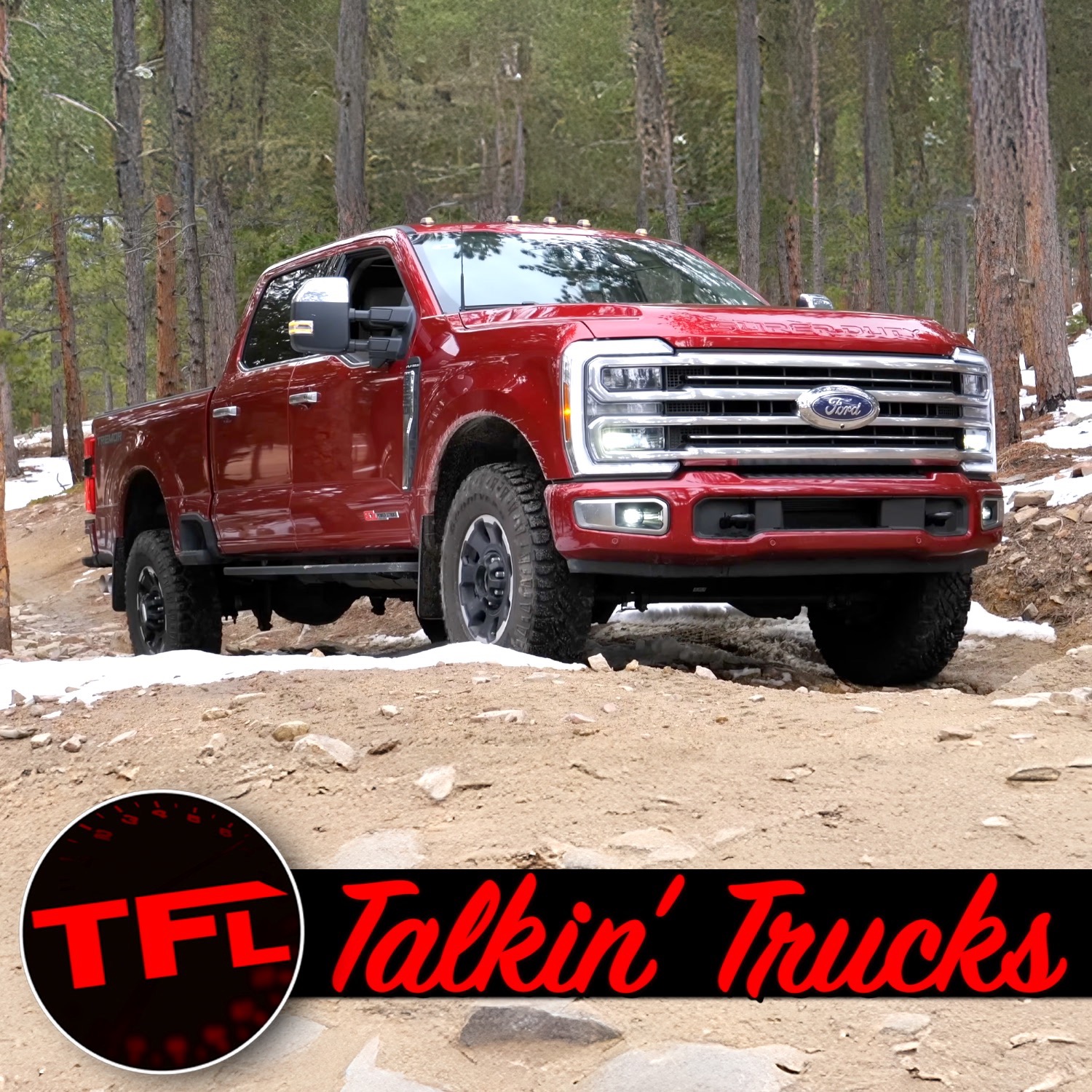
Rumors about future truck engines take center stage, with the hosts tackling claims of an 8.3L Duramax, 8.0L Power Stroke, and 7.2L Cummins—separating “hoax” talk from what’s actually confirmed. They pivot to GM’s newly detailed 6.7L small-block V8 debuting in the Corvette Grand Sport, and discuss how that tech could translate to trucks, including a possible hybrid path. The conversation also covers Ford’s F-150 EcoBoost particulate filter update (same horsepower, shifted peak RPM), hands-free driving timelines, and what “perfect” means by use case: diesel for real towing, gas for weekend duty, and hybrids for mountain practicality.
( https://www.alltfl.com/ ) Check out our new spot to find ALL our content, from news to videos and our podcasts! In today's episode, Andre is joined by Kase—fresh off his wedding—to dive headfirst into the "upsizing" rumors taking the heavy-duty truck world by storm. While the rest of the industry is downsizing to turbo-fours and V6s, whispers of 8.3L Duramax, 8.0L PowerStroke, and 7.2L Cummins engines have enthusiasts wondering if we're entering a new era of massive displacement. The guys break down the engineering logic behind larger engines for towing, the reality of "fake news" in the automotive space, and why a bigger engine might actually be the key to better efficiency when pulling maximum loads up the Ike Gauntlet.
The conversation shifts from rumors to reality as they discuss the newly debuted 6.7L Small Block V8 in the 2027 Corvette Grand Sport. With 535 horsepower and 520 lb-ft of torque, this "LS6" (a name returning from the archives) serves as the foundation for the next generation of GM truck engines. Andre and Kase also answer listener questions about the future of the Toyota Tundra, the high cost of specialized Jeep Gladiators, and why heavy-duty Ford owners are still waiting for a "4-Auto" transfer case. From particulate filters on Ford EcoBoosts to the "perfect" truck engine, this episode covers the specialized gear and displacement shifts defining the future of trucking.
( http://www.patreon.com/tflcar ) Visit our Patreon page to support the TFL team!
"Yeah. But first, how about that Corvette Grand Sport? Yeah, so sounds a little weird to bring up,"
The Buick Gran Sport is a performance-focused model name from Buick. In the podcast, it’s mentioned briefly while discussing performance car naming. The point seems to be about what the name refers to rather than detailed specs.
The Buick Gran Sport is a performance-oriented nameplate associated with Buick models, and it’s brought up in the podcast as part of a conversation that starts with the Corvette Grand Sport. The mention is likely about clarifying or connecting names and categories of performance trims rather than discussing a specific modern truck. In that sense, it’s relevant because it shows how performance branding gets referenced in automotive talk.
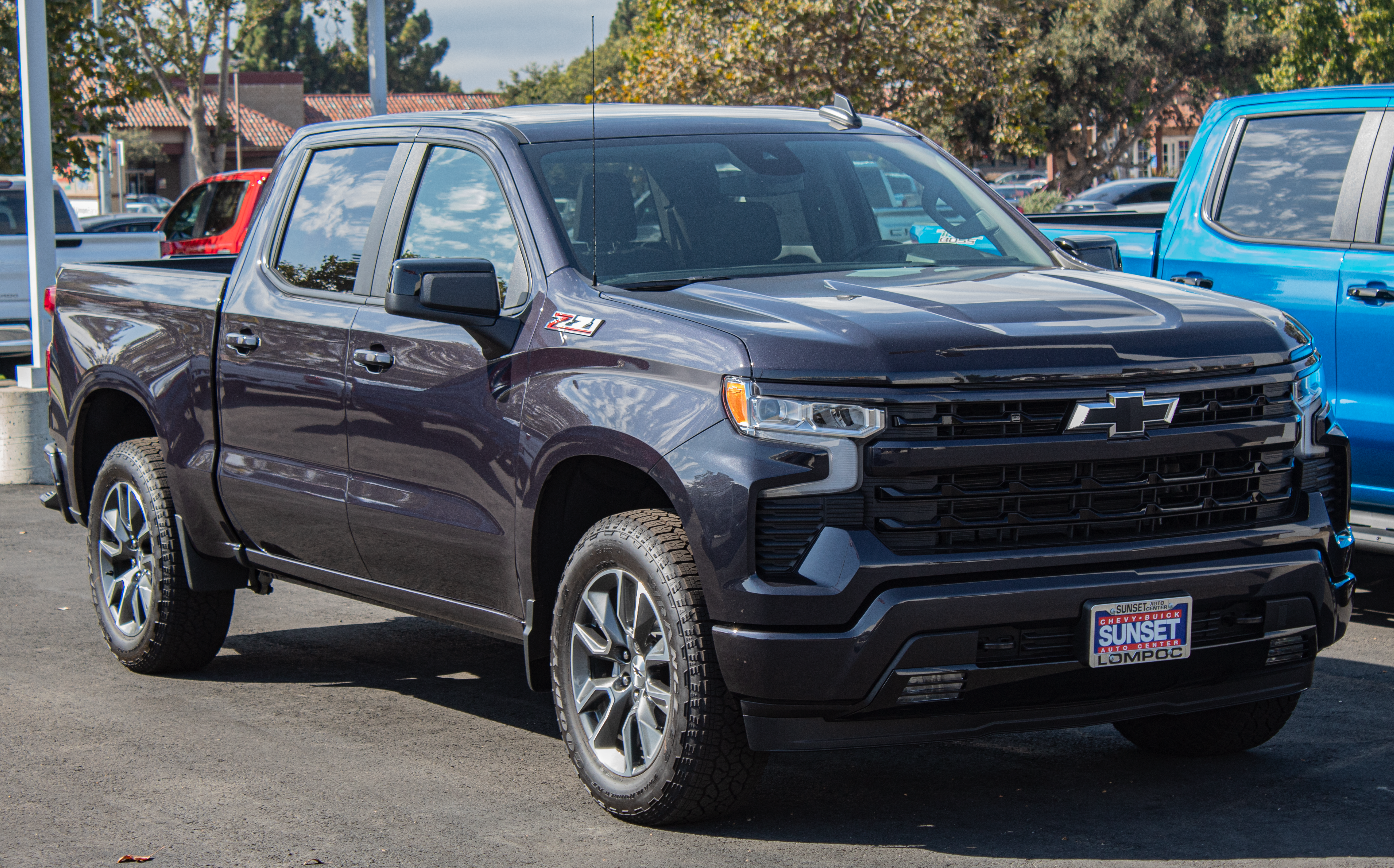
"... kind of has some relationship to the 6.2 in the Silverado 1500 and also the Sierra 1500 trucks."
The Chevrolet Silverado is a large pickup truck made for hauling and towing, but it can also be used like a normal daily vehicle. It comes with different engines depending on the model. The podcast mentions it because of the specific engine options people talk about when comparing trucks.
The Chevrolet Silverado is a full-size pickup truck built for work and everyday driving, with multiple engine options and configurations. It’s often discussed because its engine families and powertrain choices (including larger V8s) influence how it performs and how it’s compared to other 1500-class trucks. In the podcast, it’s referenced in relation to the 6.2-liter engine and how Silverado/Sierra 1500s fit into the broader truck lineup.
"Also here in Corvette form, the engine itself is making about 535 horsepower, 520 pound feet of torque."
The Corvette is Chevrolet’s high-performance sports car. In this segment, they’re using it as the example to talk about how strong the engine is. Then they compare that to what a truck version might deliver.
The Chevrolet Corvette is a performance sports car line used here as the reference point for the engine’s output. The discussion ties Corvette-specific engine specs to whether similar performance could make sense in trucks. It’s a key anchor because the rumored truck engine is being compared to what’s already “official” in the Corvette.
"And that's why truck engines are usually not crazy high horsepower, but they usually emphasize torque a little bit more and cooling in the big way."
Torque is the engine’s pulling power. For towing, you want strong torque so the truck can move a heavy trailer without constantly revving high.
Torque is the twisting force the engine produces, and it’s especially important for towing because it helps move heavy loads without needing extreme engine speeds. Truck engines are often tuned to deliver strong low- to mid-range torque to stay effective under sustained load.
"they also have an option where you could pair it up to a hybrid system, and that brings a power for 535 horsepower to over 700..."
A hybrid system uses both a gas engine and an electric system. The electric part can add extra power and help the vehicle drive more efficiently.
A hybrid system combines an internal combustion engine with electric propulsion components. In this segment, they’re comparing how hybrid power can boost output and how the system architecture affects drivetrain behavior.
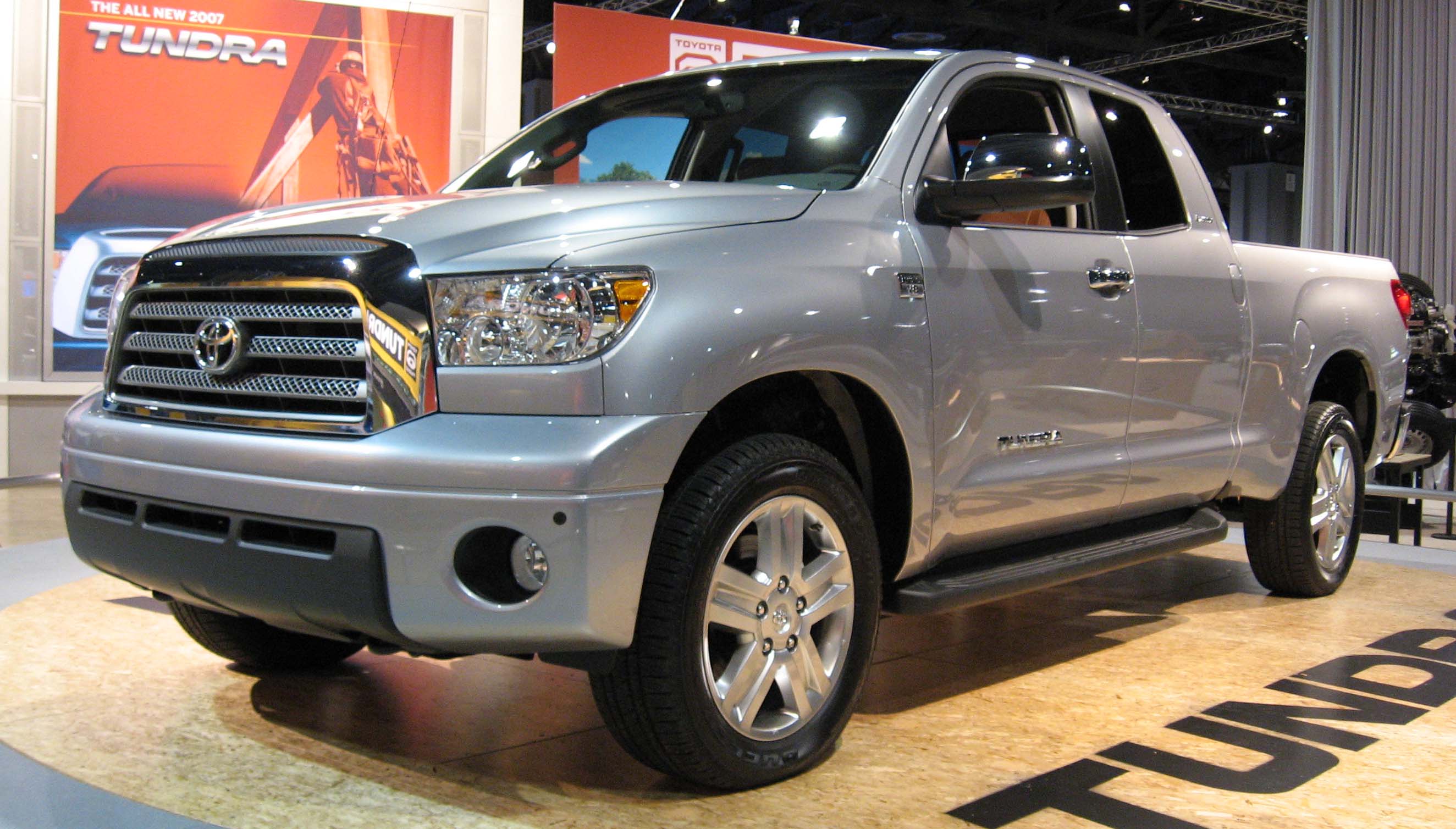
"...ards the front. And the way that truck, like the Tundra and the F-150, have done hybrids is that they sa..."
The Toyota Tundra is a large pickup truck. Some versions use a hybrid system, which combines a gasoline engine with an electric motor. The podcast brings it up because of how that hybrid setup helps the truck move and manage power.
The Toyota Tundra is Toyota’s full-size pickup truck, known for being offered with hybrid powertrain options. It comes up in discussions about how hybrid systems can change the way power is delivered to the wheels, especially during acceleration and low-speed driving. The podcast specifically references the Tundra’s approach to hybrid operation alongside other full-size trucks.
"...of the next generation GM full-size light-duty trucks [861.5s] is that they're stepping up their tire size to 35s, [865.2s] which is already a welcome thing."
“35s” means tires that are about 35 inches tall. Bigger tires can help a truck go over rough ground more easily, but they can also change how the truck drives.
“35s” means 35-inch tall tires, a common shorthand in truck/off-road circles. Bigger tires can improve ground clearance and off-road capability, but they also affect gearing, ride quality, and fitment.
"...we don't have any information that suggests [867.9s] that they're stepping up to 37s, [870.3s] which is okay."
“37s” are even larger tires than “35s.” They usually make a truck more capable off-road, but they can also require more modifications to fit and drive well.
“37s” refers to 37-inch tall tires, typically an even more extreme off-road setup than 35s. Going from 35s to 37s usually requires more suspension clearance and can increase cost, weight, and drivetrain demands.
"[921.8s] Reggie, I just sold my car online.
[924.1s] Let's go, Grandpa.
[925.4s] Wait, you did?
[926.6s] Yep, on Carvana.
[927.9s] Just put in the license plate, answered a few questions,
[930.5s] got an offer in minutes.
[931.7s] Easier than setting up that new digital picture frame.
[934.5s] You don't say.
[935.7s] Yeah, they're even picking it up tomorrow."
Carvana is a company that buys and sells used cars online. You can enter your car’s info, get an offer fast, and they can pick the car up for you.
Carvana is an online used-car retailer that lets you list a vehicle, get an offer, and schedule pickup—often with minimal paperwork compared to a traditional dealership. In this segment, they’re using Carvana’s process to sell a car quickly and have it picked up the next day.
Horsepower is basically how strong the engine is at producing power. Two engines can have the same horsepower number, but feel different depending on when that power shows up.
Horsepower is a measure of how much power an engine produces. It’s commonly used in marketing and spec sheets, but it doesn’t tell the whole story by itself—where peak horsepower happens (RPM) matters too.
"something interesting has happened with the RPM. With the peak power and torque."
RPM tells you how fast the engine is spinning. If peak power and torque happen at different RPMs, the truck may feel like it needs more revs to get the best performance.
RPM (revolutions per minute) is how fast the engine spins. When Ford changes the RPM where peak power and peak torque occur, it can make the engine feel like it “wants” different driving habits (more or less revving) even if the peak numbers stay the same.
"Yeah, and it's still 500 pound feet, which is a solid number."
“Pound-feet” is how torque is measured. They’re pointing out that the peak torque number is still about 500, even though it happens at a different RPM now.
“Pound-feet” (lb-ft) is the unit for torque. The speaker is emphasizing that even though the RPM for peak torque moved, the peak torque value remains at a strong, round number—500 lb-ft.
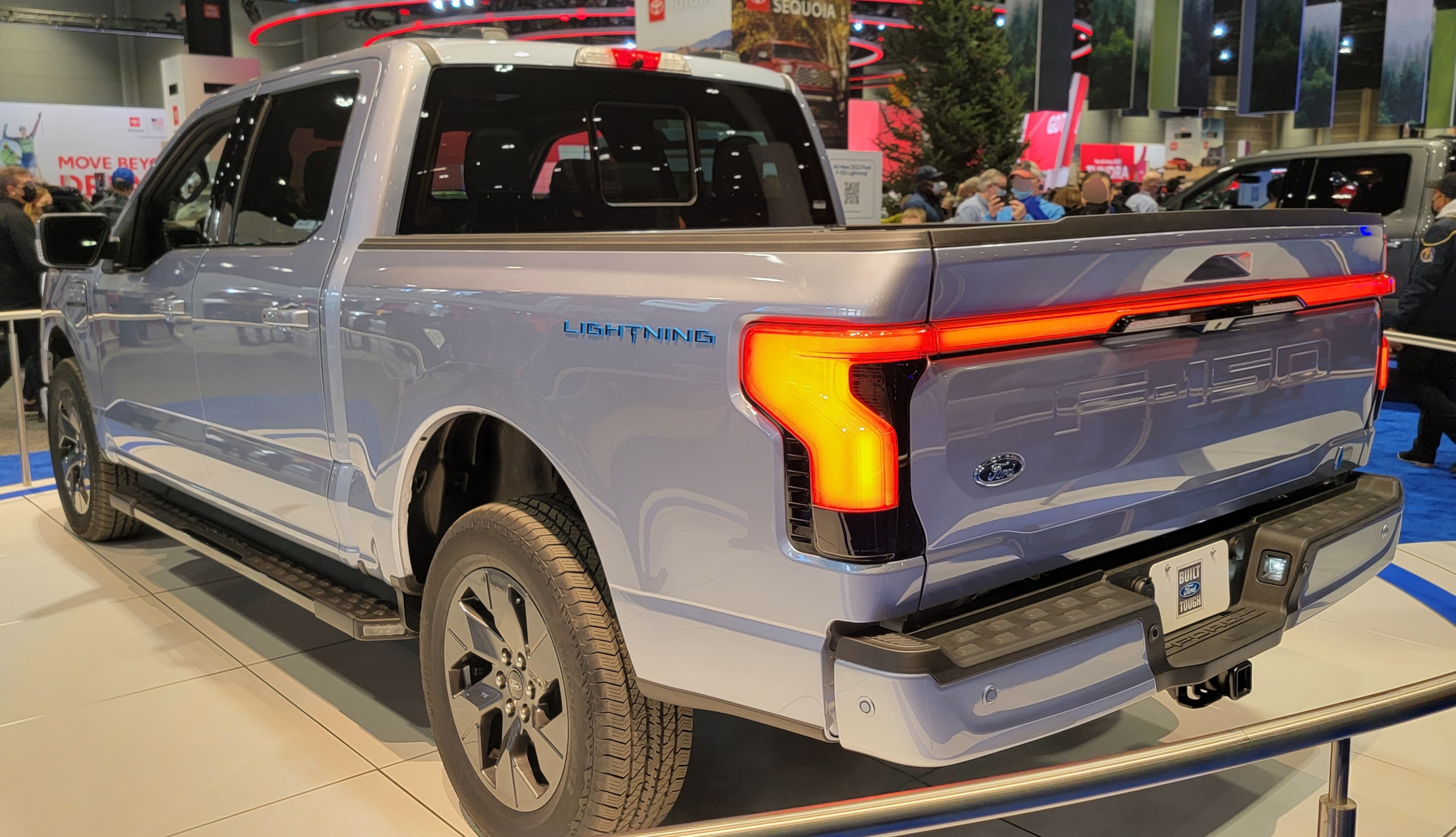
"So it's a little bit more affordable. So when you're searching for a F-150, you can get that."
The F-150 is Ford’s popular full-size pickup. Here, they’re talking about engine choices for it—specifically that a smaller 2.7-liter option can be cheaper, so you don’t have to pay extra to get a good setup.
The Ford F-150 is the full-size pickup this segment is focused on, and the host is discussing which engine options are available. The key takeaway is that the 2.7-liter engine is positioned as a more affordable “base” option, which affects how buyers shop and what they pay.
"There's always a margin of error. [1337.4s] Yeah, there's always a margin of error. [1339.1s] Depending on temperatures..."
They’re saying the results won’t be identical every time. Things like weather and how much the truck has been driven can make the numbers look different even if the engines are similar.
They’re emphasizing that dyno and performance comparisons aren’t perfectly repeatable. Differences in temperature, fuel, and vehicle condition (like mileage) can create small gaps that don’t necessarily mean the engine is truly better.
"So we have a 2026 Jeep Gladiator 41 edition,
which is a very cool military theme pickup truck.
Super cool, they're aluminum wheels,"
This is a special 2026 Jeep Gladiator trim called the “41 edition.” It’s styled like a military/WWII throwback, and the episode points out the unique wheels and graphics.
This refers to a specific 2026 Jeep Gladiator “41 edition,” a special military-themed trim. The “41” nods to Jeep’s WWII-era heritage, and the episode highlights its styling details like wheels, graphics, and interior color.
Car
1945 Willis MB Army Jeep
"parking either of those next to the actual 1945
Willis MB Army Jeep that we have, looks awesome.
And that video is coming up, right?"
The 1945 Willis MB was a WWII-era military Jeep. They’re parking the modern Jeep next to it to show the historical inspiration behind the “41” theme.
The Willis MB is a WWII-era U.S. military Jeep, and it’s a major part of Jeep’s historical identity. The segment uses it as a visual reference point to show how modern Jeep “41” themed trucks and SUVs pay homage to that era.
"It also gets you a rear locker,
[1562.3s] it gets you some pretty aggressive roundabout 33s"
A rear locker helps when the truck is on slippery or uneven ground. It makes the rear wheels work together so you’re less likely to spin one wheel uselessly.
A rear locker is a differential locking feature that forces the rear wheels to rotate together. This improves traction when one wheel loses grip on uneven or slippery surfaces, which is why it’s a common off-road upgrade.
"Just straight up steelies.
And put 35s on them, small lift,"
“Steelies” just means plain steel wheels. They’re usually cheaper and tougher than fancy alloy wheels.
“Steelies” is slang for steel wheels, usually the basic factory wheels (often used on trucks for durability and cost). They’re commonly paired with all-season or off-road tires depending on the build.
"Stoke shoes are built to fix all that
with a wider toe box that accounts for a foot's width"
The toe box is the roomy part of a shoe where your toes go. A wider toe box can feel more comfortable because it doesn’t squeeze your toes.
The toe box is the front part of a shoe that surrounds the toes. A wider toe box can reduce pressure on the forefoot and help toes spread naturally, which the ad claims improves comfort and posture.
"Outside of, obviously, there are EV trucks
[1848.8s] that are a little bit on the smaller side
[1850.3s] that offer some more tech."
An EV truck is a pickup that runs on electricity instead of gas. Because it’s more software- and electronics-driven, it often comes with newer tech features.
EV trucks are electric pickup trucks, typically using battery packs and electric motors instead of a gasoline or diesel engine. They can offer “more tech” like advanced driver assistance and software features, but they’re also constrained by battery cost, charging infrastructure, and range.
"I'm guessing we'll have to wait until the next generation.
[1855.7s] Could be."
“Next generation” is basically the next big redesign of a vehicle. Big updates usually happen when the model is fully refreshed, not every year.
“Next generation” means the redesigned, updated model that typically arrives after a full product cycle. Major changes like new platforms, powertrains, and interior tech often wait for that generation refresh rather than appearing mid-cycle.
"I think GM still does it the best. Supercruise is a really good system."
GM is General Motors, the company behind brands like Chevrolet and GMC. They’re being praised here for having strong truck tech and drivetrain options.
GM refers to General Motors, which makes trucks under brands like Chevrolet and GMC. The hosts are crediting GM for leading in hands-free driving systems (in their view) and for offering certain drivetrain options.
"[2032.7s] So and the reason is really just durability and reliability
[2037.7s] because adding that feature with clutches
[2039.6s] or designing it in a compact way"
Clutches are friction-based devices used to engage or disengage drive components, often in traction systems like limited-slip or locking differentials. Adding clutch-based features can improve control, but it also requires careful engineering so the clutches can survive high torque and heat.
"Shluffy is asking, have you driven the Nokia Outpost AT, the all-terrain tire? And the answer is no."
An all-terrain tire is made to handle both regular roads and rougher surfaces. It usually has a tougher tread pattern, which can make it a little louder on the highway.
An all-terrain (A/T) tire is designed to work on both pavement and light off-road. Compared with highway tires, it typically has a more aggressive tread pattern for traction on dirt, gravel, and mud, but may be noisier at highway speeds.
"It's pretty aggressive. But nonetheless, it looks amazing. Yeah."
“Aggressive” here describes the tire’s tread design—typically deeper lugs and more open tread blocks. More aggressive tread usually improves off-road traction but can increase noise and sometimes reduce highway comfort compared with milder tires.
“White letters” means the tire’s sidewall lettering is white instead of the usual color. It’s mostly about how the tire looks.
“White letters” refers to tire sidewalls where the raised lettering is white, creating a visible branding look. It’s a common aesthetic choice on some off-road and street tires, and the hosts are discussing it as part of their tire preferences.
"No, I've got a Mickey Thompson Baja Boss on my Land Rover. And those tires are pretty sweet."
Mickey Thompson makes tires that are often used for off-roading. The hosts are saying these tires have been getting good feedback.
Mickey Thompson is a well-known tire and motorsports brand, especially popular for off-road and performance tire lines. The host is using the brand as an example of tires they’ve tried and that viewers have praised.
"So we were talking at the beginning of this podcast about the diesels and why I think it would make sense for them to go bigger in displacement is primarily for emissions. Yeah, and so that's a big deal."
Emissions are the harmful gases and particles an engine puts into the air. The hosts are saying emissions rules are a big reason manufacturers might change diesel engine design.
Emissions refers to pollutants released by an engine, such as nitrogen oxides (NOx) and particulate matter. The hosts connect emissions to engine design choices—specifically why they think diesel engines might increase displacement to meet regulations.
"about the diesels and why I think it would make sense for them to go bigger in displacement is primarily for emissions."
Displacement is basically the engine’s size—how much space the cylinders move through. Bigger displacement can affect how the engine makes power and how it meets emissions requirements.
Displacement is the total volume swept by an engine’s cylinders, usually measured in liters. Increasing displacement can change how an engine produces torque and how it manages combustion and emissions under modern regulations.
"You have the V8s, which are old school naturally aspirated. So a little bit simpler."
Naturally aspirated means the engine pulls in air on its own, without a turbo or supercharger. It’s often simpler and can feel smooth and predictable.
Naturally aspirated engines make air flow without a turbocharger or supercharger. They’re often described as simpler mechanically, with more linear throttle response, though they may be less efficient than forced-induction setups.
"[3012.3s] And if you had a battery big enough,
[3014.5s] I'm not talking about like two kilowatt hours.
[3017.0s] I'm talking something slightly bigger,"
Kilowatt-hours (kWh) tell you how much energy is stored in the battery. A bigger number usually means the battery can help longer.
Kilowatt-hours (kWh) measure battery energy capacity—how much electrical energy the battery can store. More kWh generally means the vehicle can run the electric motor for longer or provide more electric assist.
"It blows every other, in terms of horsepower, torque, acceleration, it blows every other powertrain in a mid-size."
Powertrain is everything that turns engine power into motion. It includes the engine plus the parts that send that power to the wheels.
A powertrain is the combination of components that create and deliver power to the wheels—typically the engine, transmission, driveshafts, and differential. When they say “powertrain,” they mean the whole setup, not just the engine.
"So it's possible to have fun with some smaller turbos. Well, for sure, I don't just dislike turbos."
Turbos are devices that help the engine make more power. Even smaller engines can feel strong and quick when they’re turbocharged.
“Turbos” refers to turbochargers, which force more air into the engine so it can make more power without needing a larger engine. The discussion suggests that smaller turbo engines can still be fun if they deliver torque effectively.
"But if somebody else did a hybrid, that's where I was going. Plug-in hybrids? No, no, just not super expensive."
A plug-in hybrid can be charged from a wall outlet, so it can run on electricity more often. The speaker is saying they don’t want that version—at least not if it makes the truck too expensive.
Plug-in hybrids (PHEVs) use a larger battery that can be charged from an external power source, allowing more electric-only driving than a standard hybrid. The speaker is distinguishing PHEVs from what they want—suggesting they don’t want the added cost or complexity that can come with plug-in systems.
Select text to request an explanation
Hi, this is Alex Cantrowitz.
I'm the host of Big Technology podcast,
a longtime reporter and an on-air contributor to CNBC.
And if you're like me,
you're trying to figure out how artificial intelligence
is changing the business world and our lives.
So each week on Big Technology,
I bring on key actors from companies building AI tech
and outsiders trying to influence it,
asking where this is all going.
They come from places like Nvidia, Microsoft,
Amazon and plenty more.
So if you wanna be smart with your wallet,
your career choices,
and meetings with your colleagues and at dinner parties,
listen to Big Technology podcast
wherever you get your podcasts.
If you're a podcast host, listen up this once for you.
My name is Ali Jackson.
I'm the host of Finding Mr. Height,
a dating and relationship podcast
that I've been doing for four years now,
sharing my positive and practical approach to dating
that's built on my own life experience.
And I wanted to share another experience that I've had,
my secret behind monetizing my show.
It's called Red Circle.
And I was just telling my colleague
about how much I love their platform.
With Red Circle,
not only am I getting a seamless hosting experience,
but I also love the support I receive in ad sales.
It's not just typical ad sales either.
It's targeted opportunities based on my show and my life.
And the platform is super simple.
You just set your preferences
and Red Circle matches you with sponsors
that align with your show.
You can vet every opportunity
and their platform gives you great analytics.
More recently too,
my Red Circle team has brought me opportunities
outside of my podcast on social media
to really augment the podcast partnerships,
bring them full circle.
I just can't recommend them enough.
If you want to give it a try,
go to RedCircle.com to get your free trial.
That's RedCircle.com for a free trial.
Case, dude, welcome back.
It's nice to be back in Colorado.
I think we all missed you.
I missed you.
Yeah.
You were away for a little while.
You got married.
I did. Yeah.
Awesome. Congratulations, dude.
Good reason to be away from work.
Took a little bit of time around the wedding
and now we're back to talk about trucks.
So now I'm going to throw you into the deep.
Perfect. Deep deep end right now
because there's been so many rumors swirling around
about upcoming new pickup truck engines
and just truck engines in general
that I really wanted to kind of discuss this
on this episode of TFL Talking Trucks podcast
and also see what some of our listeners and viewers
are thinking about this.
Yeah.
Because I've been talking about the 8.3-liter Duramax,
the 8.0-liter Powerstroke, the 7.2-liter Cummins
that are coming into the pickup trucks.
But a lot of people are saying that this is a hoax.
Yeah, and obviously, fake news.
We don't have any firm confirmation
from any of the manufacturers.
If you ever try to ask them about what they're
going to do on a future truck, there's a programmed response.
We do not comment on future product.
Yeah.
Every single time, every single brand without fail.
So obviously, they're not going to confirm these things,
but you hear some rumors.
Sometimes we'll get emails from people
that work at some of these brands
or at companies adjacent to some of these brands
that maybe have more indication than the general public
what could be coming down the pipeline.
Every now and then, things get leaked.
So there are some theories, but they're definitely
not set in stone.
But I would also kind of rephrase the first question I asked,
that is it a hoax, right?
I would rephrase it slightly differently
to say, what is a perfect pickup truck engine?
Yeah, because we could definitely discuss
what we would like to see for the future of these trucks.
Yeah.
And also, you and I just did an iGuntlet yesterday, which
hasn't been published yet.
So we were talking about kind of the future of engines
and some of them are being downsized in a lot of the pickup
trucks.
And then for heavy duties, they might be upsized.
Yeah, which maybe sounds a little strange,
because like we've all seen, a lot of V8 full-size trucks
have gone down to turbo V6s.
A lot of V6 mid-sized trucks have gone down
to turbo four cylinders.
So it seems against the trend for HD trucks and diesels
to go from being 6.6 and 6.7 liters to over seven or eight
liters.
But it makes a lot of sense if you think about the engineering
behind it.
Yeah.
But first, how about that Corvette Grand Sport?
Yeah, so sounds a little weird to bring up,
because this is a truck.
Corvette Grand Sport.
Obviously, there's a truck podcast.
Yes.
So we don't usually talk about Corvettes,
except when Corvettes are debuting engines.
Brand new engines.
Going to be making their way into trucks and SUVs.
Potentially, yes.
Because historically speaking, if you look at like the 6.2
liter, right, V8 engine that's been in a Corvette
for a very long time, it kind of has some relationship
to the 6.2 in the Silverado 1500 and also the Sierra 1500
trucks.
But we know a little bit more, actually quite a bit more,
but maybe not everything about the new 6.7 liter
gas V8 in the new Corvette.
Yeah, we have basically all of the specs on this engine
as it exists in the Corvette.
We don't know what differences there
are going to be between the engine and the Corvette.
And the version of it that will eventually
make its way into trucks and SUVs,
because we do know very well, confirmed by General Motors,
that they've made a massive investment
in the next generation of small block V8s.
Yes.
That's confirmed.
So these engines are definitely going to make their way
into trucks and SUVs.
It's debuting with Chevrolet's flagship vehicle,
which is the Corvette, and that makes a lot of sense.
Like you said, that's what they've done in the past.
The LS, original LS1, debuted in 1997
in a C5 Corvette, and eventually all the engines
on that platform made their way into trucks and SUVs.
So this is the first Gen 6 small block
that we're seeing in anything.
And some things about this engine that we know for sure,
is that they've maintained a lot of what's made these
engines basically what they are since the very beginning.
So since 1955, all of these small block Chevys
have been cam and block, and they've been,
they've had the same bore spacing,
about 112 millimeters is 4.4 inches
between the center of each cylinder.
So different bore diameters
and different displacement engines,
but the same bore spacing.
But that's kind of what defines the small block, right?
Chevrolet small block engine.
Not that there aren't some exceptions,
like the original LT5 that was in the ZR1,
like what we have is a dual overhead cam engine, right?
There's been some outliers over time,
but in general what defines the small block Chevy
is that bore spacing and being cam and block.
And this new engine is the same way, which is pretty cool.
So they're sticking to the general formula,
but here in Corvette form, it's going to be
a little hopped up.
So this should be as far as we're able to tell,
because I haven't seen them say it explicitly
in the press release, but the LT2,
that this new Gen 6 LS is replacing in the Corvette,
that was a dry sump system.
So this one should be dry sump as well,
but probably in a pickup truck,
the next generation LS is going to be a wet sump.
Well, because in the pickup truck, you have more space, right?
If you look at the engine bay of the truck, right?
Especially with the high hood and the high nose
and a big giant radiator that's in the front
of a pickup truck.
There's a lot more space in that engine bay.
In the Corvette, especially mid-engine, right?
There's not a lot of spaces at the premium.
Plus this engine is flying around the racetrack, right?
You don't want to starve it of oil, right?
Because that's bad.
Exactly.
So a dry sump system on a high performance sports car
makes a lot of sense, but probably not dollar for dollar
on a truck, right?
Also here in Corvette form,
the engine itself is making about 535 horsepower,
520 pound feet of torque.
Yeah, those are the numbers officially from Chevrolet.
So this is not a hoax.
This is from the source.
It's a beast.
And even if they tone that down,
a decent amount for trucks and SUVs,
which I think would be reasonable,
maybe emphasizing mid-range power rather than higher RPM.
And torque, low-end torque, maybe.
And low-end torque.
Even so, if it's making remotely similar
horsepower and torque, it's gonna be a beast.
The kind of confusing thing, though,
is that the new generation 6.7 small block
that they're debuting in this Corvette
is called the LS6.
Which is a name that they've used before.
They've already had an LS6, the C5-06 had an LS6.
So Cole, can you pull up a truck website again?
Maybe a different page.
And because we wrote a story recently
about some of the rumors, so unofficial rumor
about the new 6th generation engine in the Silverado,
which was just a couple of several days ago.
This was the 2027 Silverado.
Yeah, I think it's one of these stories.
And the number that was thrown around,
this is unofficial, and it's slightly lower displacement.
So 6.6 liters V8, that's the current rumor
for the truck versus 6.7 for the Corvette.
In the truck, the rumor is it's 475 horsepower.
All of which seems pretty reasonable to me.
Again, they're not going to be the exact same engine
in a Corvette in a pickup truck,
because obviously they have different needs,
different use cases.
So we know now a lot about the engine
that is going to be coming in these trucks,
but we don't know the specifics
of what it'll be like exactly in those trucks.
But I think 475 horsepower sounds pretty reasonable.
Yeah, and actually a pretty beefy number.
Yeah, it sounds like a great number.
Yeah, yeah, it does.
And so, and just one more comment about truck versus car.
In a truck, and talking about the iGodlet,
the world's toughest towing test,
is where you're basically pulling almost maximum load
for, the way we do it is about eight miles.
So at least eight minutes of almost full throttle.
A sports car like a Corvette
probably doesn't see that very much,
because if you wore full throttle in the Corvette
for eight minutes, you would be going
200 and something miles per hour, right?
Yeah, yeah, no doubt.
So truck use case is way different
because you could be full throttle
for an extended amount of time,
so the heat is building up, right?
And that's why truck engines
are usually not crazy high horsepower,
but they usually emphasize torque a little bit more
and cooling in the big way.
Now, here's another question,
and I have my own thoughts about this.
In this new Corvette Grand Sport,
that they're using to debut this next generation,
small block Chevy,
they also have an option where you could
pair it up to a hybrid system,
and that brings a power for 535 horsepower to over 700,
I wanna say 720.
I think they said 721, that's the number I saw, holy wow.
Here's my question.
What?
Do you think they'll offer something similar
in trucks and SUVs?
So the Corvette, that hybrid system in the Corvette,
where they combine electricity, electric motors,
and that engine is kind of a different system in my view,
because you have a front axle driven by electricity.
Yeah, so it makes it all wheel drive.
Yeah, it makes it all wheel drive,
and then of course the internal combustion V8
is driving the rear axle.
So in a truck, it's a whole different story, right?
Because your engine is in the front,
it's got a giant drive shaft that goes to the rear,
and that's primarily how it's powered,
and then you have a four wheel drive system
that splits the power towards the front.
And the way that truck, like the Tundra and the F-150,
have done hybrids is that they sandwich an electric motor
between the engine and the transmission,
so the rest of the drivetrain, the axles,
and the drive shafts are mostly the same.
No doubt, it would have to be
a completely different engineered system.
Yeah, so I don't know if the electric motor
from the Corvette can be reused in some way.
No, I don't think it would be reused.
It probably won't be able to be reused, yeah.
But do you see some potential for them to still offer that?
It means over 700 horsepower?
That would be, or something, some version,
some hybridized version of these powertrains.
I think they need it,
because when you look at the Raptor R,
Yeah.
720 horsepower in the Raptor R,
so it's funny that they debuted 721.
Yeah, if they were hitting a similar figure even
with a hybrid system in the V8, that could be interesting.
We're kind of talking apples and oranges,
comparing a sports car to a high-performance truck,
but I think if they nailed a high-performance hybrid system
in a Silverado or Sierra, that would be something special.
You know, we're pretty far from Christmas,
but you know what's on my wish list?
What?
For them to finally, in this next generation
of their 1500s, their trucks,
for GM to make a real Raptor competitor.
I feel like the Raptor has been around
for long enough and successful, long enough
to show that there is a business case.
Well, Ram stepped in there and got the TRX going.
Looking for them too.
And got the R.H.O. going as well, so.
I'm not gonna hold my breath, but it could be interesting.
Well, so the spy images we have
of the next generation GM full-size light-duty trucks
is that they're stepping up their tire size to 35s,
which is already a welcome thing.
So, but we don't have any information that suggests
that they're stepping up to 37s, which is okay.
I mean, you could do a lot with a 35-inch tall tire,
especially if you have a wide body,
you know, in a big suspension system.
So I think GM is on the right track, potentially.
We'll just have to wait and see.
Yeah, and this new generation small block
is going to be potentially a good platform
to build some performance trucks around.
So it definitely gets the gears turning in my head
for all of the potential, what could they do in the future
with this as a basis, as a foundation
for building a bigger, badder truck?
Yes.
This is Bayard Winthrop, founder of American Giant.
We make all our clothing right here in the US
with American cotton and American workers.
Get 20% off your first order
when you use code giant20 at american-giant.com.
Reggie, I just sold my car online.
Let's go, Grandpa.
Wait, you did?
Yep, on Carvana.
Just put in the license plate, answered a few questions,
got an offer in minutes.
Easier than setting up that new digital picture frame.
You don't say.
Yeah, they're even picking it up tomorrow.
Talk about fast.
Wow, way to go.
So about that picture frame.
Ah, forget about it.
Until Carvana makes one, I'm not interested.
Car selling made easy.
On Carvana.
Pick up these, may apply.
So let's, okay, let's kind of move on to the next topic.
Before we talk about what is the perfect engine,
we kind of started that conversation already.
I have some news.
Yeah.
So in November of last year, of 2025,
I did a story about an F-150
because the information we received back then
was that their turbocharged engines,
the three and a half liter EcoBoost in the F-150
and also the hybrid version, the PowerBoost,
are getting a gasoline particulate filter
because some of the emissions on those engines,
especially when they're pulling heavy, heavy loads
and they're wide open and they're working very hard,
some of the emissions those engines were putting out
were a little bit off the chart in some areas.
So they decided to add this particulate filter,
which is already kind of a eh,
really do we need, do we really need another filter?
Well, especially because initially
when they dropped that news,
they were showing on their website
a slightly decreased power output.
Yes.
Which obviously made people upset,
but then very quickly they went and updated those numbers.
Yes, so cool.
If you show the original story,
I just wanna make sure that we have the latest news.
So there's me with a sad face.
So if you're watching us on TFL Talk YouTube channel,
you could see that.
And also if you're actually a member of our Patreon page,
patreon.com.tflcar, you could also interact with us
during these shows because we're live right now.
Send us questions.
And I think we have at least one comment,
but we'll get to it in a second.
So if you scroll down, Cole,
we have some numbers that they published on their site.
I have some screenshots here.
A little bit, maybe lower in this story.
So their 3.5 Ecoboost was shown on 4.com
at 18% horsepower less than before.
And their hybrid was shown 10 horsepower less than before.
So I reached out to them.
Ford told me, they got back to me pretty quickly back then.
And they said, no, no, no, by the way,
the numbers are the same as before.
It doesn't affect the horsepower or the torque.
But I was like, but your website says something different.
And then it stayed there for several months.
Those numbers, these numbers.
But then just recently, just a few days ago,
we got the latest information that indeed the horsepower
and torque numbers on all of these engines for F-150
stay the same, but something interesting
has happened with the RPM.
With the peak power and torque.
Which in a lot of cases, actually a good thing.
So again, the horsepower and torque figures
from 2025 to 2026 are the same.
But peak power and peak torque is now coming in
at slightly different RPM in different engines.
So for a regular three and a half liter EcoBoost,
now peak torque is at 3,500 RPM.
So it's 400 RPM higher.
So you'll have to wring it out a little bit more
to get that power.
Yeah, and it's still 500 pound feet,
which is a solid number.
Yeah, absolutely.
So that's a pretty solid number.
And in the 3.5 hybrid, peak power is 150 RPM
higher than it was.
But peak torque is actually 100 RPM lower.
And then in the 2.7 EcoBoost,
they've actually changed up things a little bit.
Once again, output is the same,
but both peak power and peak torque are 500 RPM sooner
than they were.
So if you're stepping into a 2026, 2.7 EcoBoost,
you won't have to wring it out quite as much
to get that peak power and peak torque,
which is kind of nice.
So it's a little bit different depending on each engine.
But at least we're not losing power.
Yeah, the power figures are the same.
Yeah, so, and I wanna say recently,
I did a Denver 100 MPG loop in a 2.7 liter,
not a 2026 model, it was a slightly prior version
of that engine.
And it was, first of all, it's a base engine for them now.
So it's a little bit more affordable.
So when you're searching for a F-150, you can get that.
Then, so you don't have to step up and pay extra
for some silly feature to get a 35 or a hybrid system.
So it's affordable.
And now they're making it a little bit more peppy.
It's already kind of a peppy engine in the F-150.
But now Ford has for 2026, they kind of lowered those
RPM for peak torque and peak horsepower.
So it's still 325 horsepower and 400 pound feet of torque.
But it's available a little bit sooner, like you said.
So I'm kind of excited about this.
I think we should drive more of these trucks.
And then the hybrid, also pretty good news,
lower torque, 3000 RPM, that's pretty nice.
And then the EcoBoost, it looks like they had
to raise some of those numbers.
I mean, I'm not an engineer, but at least
we're getting the same horsepower numbers.
Yeah, so the headline figures,
peak horsepower and peak torque are the same,
even though they're adding particular filters
on a few of these vehicles, which is interesting.
When they initially lowered those numbers
and had that on their website,
I would assume that that wasn't just a typo.
So maybe they went back in and retuned things a little bit.
That level of detail, they probably won't tell us.
Yeah, no, I don't know those details.
But they are claiming the same figures.
It would be interesting to take a 2025 and a 2026,
say just three and a half liter EcoBoost,
just a standard model, and put both of them on a dyno.
Yeah, or just drag race them maybe.
Yeah, but we have access to a dyno.
We do, oh, go to Jordan's.
Oh, hey Jordan, that'd be cool.
Are you listening?
Yeah, it would be cool because, yeah,
sometimes dinos are a little bit challenging,
but I mean, Jordan is the man.
There's always a margin of error.
Yeah, there's always a margin of error.
Depending on temperatures, depending,
maybe one truck has 3,000 miles
because it's a brand new 2026 and a 2025 has 20,000 miles.
There's always gonna be some differences,
but it would be interesting to see
if there's a significant, unnotable difference
between the two.
Do we have some comments, Cole?
Let's take a look a little bit here.
Okay, so we have Joe R, we have Nathan, we have Jason.
Yeah, so we have one, well, actually two questions
from Jason Lee.
He's asking, if we think Toyota would ever bring back
the 5.78 in a new Tundra, I don't think so.
I think the answer is no.
We do have some news recently,
we actually have a new story about this on our site,
TFLtruck.com, that they trademarked TRD Hammer, name.
So that story is what about a week old now.
And everything I've seen, and these are rumors still,
by the way, about it is that it'll be
their twin turbo hybrid.
Maybe with slightly higher power numbers, potentially.
Or maybe not.
Or maybe not, because Toyota is very conservative, right?
As far when it comes to how they're choosing
their power trends.
They don't throw stuff at the wall and see what sticks.
No, usually no, so unfortunately the 5.7,
I don't think it's coming back.
And obviously there is a new V8 coming in the GRGT,
but that's a pretty exotic engine,
that's not gonna be repurposed into a pickup truck.
If I had to guess, I'd bet a lot of money on that.
So no, I think they're gonna stick with it.
So sorry Jason, sorry Jason about that.
And Jason also thinks that you should get a Gladiator.
To replace my Tundra.
Yeah, a Gladiator, I'm assuming 41,
like the special edition that we have outside.
Yeah, so Jason, I see where you're going.
I see where you're going.
Yeah, Andre's interested in Gladiators.
That 41 is cool, but it's kinda pricey.
So yeah, so there's a couple things stopping me,
Jason right now.
So we have a 2026 Jeep Gladiator 41 edition,
which is a very cool military theme pickup truck.
Super cool, they're aluminum wheels,
they kinda look like steelies, very classic.
It's got tan cloth seats.
Oh man.
So parking that Gladiator or the Wrangler
that we also have here, that's the same special edition,
same wheels, same color scheme and graphics,
parking either of those next to the actual 1945
Willis MB Army Jeep that we have, looks awesome.
And that video is coming up, right?
Yeah, we took the Wrangler and the Willis MB off-road,
which is really cool, seeing them side by side on a trail.
Yes, and I was just driving the Gladiator
and also the Wrangler, so we have both at the same time.
So thank you Jeep for that loan, that was incredible.
It actually turns heads.
You know, I'm always kind of aware when, for example,
you know what was a little strange
when we had the Ford Ranger Raptor?
It did not turn many heads.
Yeah, it's subtle.
It was subtle, it was flying on the radar most of the time.
This Jeep does not fly on the radar.
People are turning their heads, they're looking, so.
Which is cool.
Which is good because you do have to pay quite the premium
for that package, the package that is this special edition
is $7,200, it gets you more than just appearance.
The appearance stuff is neat, the wheels are awesome,
paint color and the graphics, all that.
It also gets you a rear locker,
it gets you some pretty aggressive roundabout 33s
just under.
We have that video on TFL off-road, I believe,
where we showed that Jeep just very recently.
So it's a neat truck, but that truck plus a few
additional options is, yeah, $57,500,
which you can buy a lot of mid-sized trucks
for that amount.
So it does have a rear locking differential,
of course it has solid axles front and rear,
it does not have a disconnectable sway bar in the front.
Yeah, it doesn't have the front locker,
they're manual seats on both sides,
which again, for 60 grand.
Yes, but the seats, and I think we went over this already,
they're heated and they work instantaneously.
Yeah, I like cloth seats, but I don't know,
it's just a lot of money for what it is.
Jason, where I'm going with this is,
for 57 grand, let's say I got a discount.
Okay, let's say it was several grand less.
Yeah, because there's a lot of Jeeps on lots
that are selling well under sicker.
Yeah, so let's say I got a small discount
when I was looking at this Jeep,
I still have a couple of other issues.
First of all, the engine and the torque
from this engine is not super high,
so this is a Pentastar V6 and 260 pound feet of torque,
and I towed my boat in the summer, right?
So that's one of my use cases.
So that's probably not gonna be the best
for towing my boat when my entire family
is sitting in the truck,
because also it has 835 pounds of payload,
which is not enough.
No, no, it's not a lot.
You could take a truck full of people
or a trailer, basically.
But not both.
Yeah, pretty much, unless it's a real small trailer.
So the way I would do this, if I could do this,
I would actually buy a base wheelies gladiator,
maybe with a locking differential, right?
And then go out somewhere and procure these wheels.
Yeah.
So maybe they'll be sold as a Mopar,
a Jeep Performance Part accessory.
So I'm gonna go out buy these wheels, get bigger tires.
Even the gladiator we had back in the day with the steelies.
Oh, even that.
That looked great.
Oh man, you know what we did
with that original gladiator in 2020?
We bought four spare wheels.
Yeah.
Just straight up steelies.
And put 35s on them, small lift,
and the truck looked fantastic.
That was a budget way of doing it.
Yeah, it was cool.
So Jason, basically, I like being on the budget.
So I don't know if I can just go
and switch my tundra into this gladiator.
Yeah, it's kind of a,
it's definitely a different price range
than I think where you're ideally shopping.
Cramped toes, collapsed arches, shop posture?
That's because 50% of guys are wearing shoes
that are too darn narrow.
Stoke shoes are built to fix all that
with a wider toe box that accounts for a foot's width
and girth.
Stoke shoes let your toes spread out and do their job.
With five star reviews,
Stoke is the fastest growing sneaker
for under a hundred bucks for real men with real feet.
Available now at Murdox.
Go to stokeshoes.com to find a store near you.
Stoke shoes, thunderous comfort at half the price.
Now, Nathan Mura,
I'm hoping I'm saying your last name correctly,
says, how long do you think it will be
before the midsize trucks get hands-free driving tech?
Ha, that is interesting.
It's a good question.
It's a good question because right now,
mostly full-size light duty trucks have this tech.
If you look at GM, if you look at Ford,
if you, the new Ram trucks offer hands-free driving
in a lot of their pickup trucks.
Heavy duties don't.
No.
For example, the Super Duty is the only one
which allows for lane centering,
where it will keep its lane.
And none of the midsize trucks really have this technology.
Which, in a way, maybe makes sense
because midsize trucks, at least theoretically,
are supposed to be a little bit more affordable,
so arguably more basic.
And adding some of that tech
would certainly bring the prices up.
People are already pretty price sensitive.
So I think it seems to me like a lot of the manufacturers
are working on, right now,
trying to build more entry-level trucks
than necessarily complicating the trucks further
and making them more expensive and more high-end.
So I don't know of anything on the horizon personally
that's bringing that.
Outside of, obviously, there are EV trucks
that are a little bit on the smaller side
that offer some more tech.
I'm guessing we'll have to wait until the next generation.
Could be.
Right, so recently, GM midsize trucks
were redesigned in 2023.
The Tacoma was redesigned in 2024.
Well, the Ridgeline and Jeep Gladiator,
they haven't been redesigned.
Yeah, it was too ancient.
Frontier hasn't been redesigned
in a humongous way in quite some time.
So I think we'll have to wait for the next turnover.
The next cycle.
Which will take years, I think.
I don't think it's coming.
I don't think it's coming any time soon.
But there are some trucks that are on their way.
Eventually, a Dodge Dakota is gonna take a couple years.
But who knows, maybe they could be the first.
Ram hasn't exactly been on the forefront
of hands-free driving tech.
I think GM still does it the best.
Supercruise is a really good system.
With towing, even, with towing.
You can actually tow with that system active,
so who knows, that's a good question.
So now Joe R has a really interesting question, I think.
He's asking, is there reason Ford does not offer
four-wheel-drive auto in their super-duty trucks
like they do in their F-150 trucks?
So currently, the only heavy-duty
that's offering automatic four-wheel-drive is General Motors.
So you can get a Sierra or Silverado heavy-duty
with that system.
Interestingly enough, that all-wheel-drive capability
dates back decades, actually.
My neighbor had, gosh, he had like a 2005 heavy-duty
with an automatic four-wheel-drive auto.
Honestly, GM has been pretty good about it a lot
in the past, this is a very GM heavy podcast.
But I love shopping around for GM T800s.
Oh, yes.
Tahoe's and Newtons.
I love shopping around for 400s too.
Yeah, 400s as well.
But it's funny, you could get a GM T800 Tahoe
or Yukon, Suburban, whatever, for not that much money.
And majority of those that I see pop up have four-auto.
Yes.
Which is nice.
Remember that GMT 400 Tahoe that we purchased
and then my dad purchased it from our company?
That has four-wheel-drive auto.
So I think it comes down to, Joe, sorry,
this was a long answer, but it could really,
so first of all, I've never point blank asked for this.
But when I was talking to GM about this,
about offering four-wheel-drive auto,
which is a useful feature for us in Colorado,
because with wet roads or snowy roads
and then dry roads immediately after that.
Yeah, we get a lot of cold days and then warm days,
but there's shady spots that still have snow
and then sunny spots that are dry
and so you're back and forth a lot.
That's when all-wheel-drive is really key
because it works instantaneously
within a few milliseconds or half a second,
it will kind of help you out.
So and the reason is really just durability and reliability
because adding that feature with clutches
or designing it in a compact way
that they can still fit inside the same space
and then handle all the torque.
I mean, we're talking about sometimes 1,200 pound-feet
of torque in some of these power strokes.
It would have to be a robust system.
So I think, and that's also another reason
why the Raptor R really doesn't have a front locker anymore
or the torsion, because when you pump,
when you're pumping so much torque and also, yeah.
Anyway, so those components cannot stand up.
So it's not, to your point that you're making now
is it's not the easiest thing to build, to engineer
and to refine to the point where it's durable enough
to go however many miles you want your truck to go.
Especially in the heavy duty.
Especially in an HD and especially with that kind
of horsepower and torque.
But the other thing is, there's not necessarily
that many people that are aware of the usefulness
of a four-auto system.
I've even talked to other journalists,
people in our field of work,
that don't really see the benefit
of a full-time four-wheel drive system or a four-auto setting.
But for us here in Colorado, where like we said,
we're back and forth between different traction conditions
quite a bit, and you still, you wanna be able
to put it into a mode where you set it,
you just get to run it, you're not worried about it
crabbing in a tight parking lot.
Because you might say, why not just use four high, right?
Well, so what happens is, well, first of all,
like you said, in that condition where you have
a sunny spot with perfectly dry highway
and then a shady spot in the corner
where there's ice, yes, of course,
you could put it in four-wheel drive high,
but now, potentially in a slow situation,
you'll get crabbing, and then also,
you're losing efficiency, right?
Because you're turning a lot of these components
now all the time, and now you're losing efficiency
basically while driving.
Yeah, so we see the benefit of a four-auto system,
but not everyone does.
And it's possible Ford may come out
with something like this in the future.
Yeah, definitely not.
Or maybe even RAM, maybe even RAM.
There just has to be enough people asking for it
and wanting it for them to see the value
in manufacturing it, engineering it.
Yeah, and final question before we move on
to our kind of what is the perfect engine is,
Shluffy is asking, have you driven the Nokia Outpost AT,
the all-terrain tire?
And the answer is no.
Nope. Have you?
Have not.
No.
Can't say I have.
So recently, I have driven, so this Jeep
that we have right now has Firestone destinations.
Yep.
Empties, MT2s.
I actually went on a trip for the launch of those tires.
Yeah, which is actually a pretty decent tire.
It has a tiny bit of noise at highway fast speeds.
It's pretty aggressive.
But nonetheless, it looks amazing.
Yeah.
It's pretty capable.
White tire letters.
Yes, white letters.
So that, KO3s, of course.
I have my trucks, my truck, my Tundra.
So I think also Open Country, I think I recently drove.
But unfortunately, sorry, we haven't tried Nokia.
No, I've got a Mickey Thompson Baja Boss on my Land Rover.
And those tires are pretty sweet.
Alex has got a set two on his Wrangler.
Actually, I heard we recently had one of our viewers
come out with their truck,
and they were raving about Mickey Thompson.
Yeah.
Saying there was really excellent tires.
Yeah.
So that's as far as our tire knowledge recently goes.
Yeah, as far as, well, not necessarily all newer stuff,
but.
Yeah.
So we were talking at the beginning of this podcast
about the diesels and why I think it would make sense
for them to go bigger in displacement
is primarily for emissions.
Yeah, and so that's a big deal.
Even though the EPA regulations have been kind of relaxed
recently and there's a lot of stories floating around
the internet about these states are,
delete everything, delete all the emissions.
But I mean, development cycles on these engines go for years.
And also I wanna make a point where,
so there's several forums.
There is a GM focused forum.
There's a four, of course, RAM as well,
where after we've done some of these stories
talking about the 8.3 liter Duramax
or an eight oh power stroke or seven to Cummins,
there's some forums and published articles
that basically say this is not coming.
But whenever we publish our stories,
we never take it lightly.
So there has to be something like a mounting
and the amount of rumors where we have to,
that pushes us to kind of do a story.
Because if one guy says somewhere,
hey, you know what, a nine liter Duramax is coming soon,
we're not gonna run that story.
No, not because one random person dreamed it up.
Yes, and we're seeing like Roman,
he last year, he caught Duramax trucks
testing in the high country.
He did that same thing four days ago.
So something is happening, right?
So and that's kind of what pushes us
to do some of these stories.
And increasing the displacement of many
of these turbodiesel engines should allow
the manufacturer to lower the temperatures a little bit
while maintaining power while lowering the temperature
helps with emissions.
Yeah, because there are limitations to how much power
you can practically squeeze out of an engine
of a given displacement.
So as these power figures continue to increase,
but they have to keep all of the emissions
and everything in check, and look,
people don't always get very passionate about emissions,
which is fair enough, but also think about durability.
If you have an 8.3 liter Duramax
that's making 500 horsepower and in excess
of 1,000 pound-feet of torque,
maybe something along the lines of 1,100, 1,200, sure.
Instead of a 6.6 trying to do that,
that 8.3 is by comparison going to be much less stressed.
So as far as longevity is concerned,
that would also be a good thing.
And I don't think anybody would dislike having
a bigger displacement engine under the hood, right?
No, I think we're all cool with that.
Bigger is better, right?
Yeah.
Okay, so, no anyway, and the same story goes
for the 8.0 rumor with the power stroke and the Ford,
and 7.2 liter Cummins is not a rumor,
because that engine exists.
I actually saw it recently in Indianapolis.
Did you do a video with it?
Well, I actually did the walk around of the entire show,
and I came into the on video,
I came into the Cummins booth.
Their booth was right next door to Ram.
You know, that's a good relationship.
That's a good synergy.
Good synergies, but the 7.2 specifically,
the one I saw at the show,
it's really a commercial grade medium duty truck engine.
Think about like kind of a medium duty trucks,
like the 6,500s or the bigger freight liners,
that type of stuff.
And the horsepower in that engine is way lower,
because those engines are really detuned
and rated differently.
Like the one I saw was about 300 horsepower for a 7.2.
Still a lot of torque.
I don't remember exact torque number.
I want to say like eight or 900 pound feet of torque.
So these engines, I usually made it to,
you know, really heavy duty transmissions,
sometimes ZEF, sometimes some others.
So that engine exists.
Yeah, but.
But is it coming to the Ram 2,500?
There is no information about that.
No, there's no information on that,
but it very well could because six, seven Cummins
are also used in plenty of commercial applications.
A lot of big trucks, flatbed trucks,
that are using a detuned version of that engine.
The other thing is when you and I went to Germany
to see the ZEF 8-speed transmission at ZEF's facility,
the one that is used in the Ram truck now.
When they were telling us about that transmission,
they were saying this is a medium duty transmission
for commercial trucks and maybe some other stuff.
And then it transitioned into a Ram 2,500, 3,500.
Yeah, so just because this 7.2 Cummins
is being used in that application doesn't mean
it can't be used in a regular everyday 2,500, 3,500 truck
that you would go to a dealership and buy
to pull your own trailer personally.
And I also wouldn't hate it if this engine
has spent some time in other trucks
being worked on and refined before it makes its way
into a truck that you or I might go out and buy.
There's also another Cummins engine that I saw
right next to the 7.2 on display.
It was a 6.7 liter octane.
So a gasoline 6.7 Cummins.
And that engine is already now also in freight liner trucks.
Quite interesting.
Yeah, it is.
I don't know if it's really applicable to
heavy duty pickup trucks,
but there's nothing to say it couldn't be.
Yeah.
So that's another possibility for some of these engines.
And the 8.0 liter Ford and the 8.3 liter GM turbodiesel
are still just rumors, technically speaking.
They are definitely working on something as they should be.
We see them working.
Yeah, we see them testing powertrains.
So they're doing something.
A GM especially is probably gonna want to up their,
not necessarily horsepower,
but definitely up their torque figure.
At some point to get in excess of a thousand pound
feet of torque, not that I think it's strictly necessary,
but as far as a headline figure.
And marketing purposes.
From a marketing perspective,
you don't wanna be the lowest.
Yeah.
So, for example, I think there's a comment here
on the live show from Don Megahan.
Thank you Don for joining.
Soon we'll see 18 wheeler engines
that are heavy duty pickup trucks.
Well, we're getting to those horsepower numbers already.
Right?
So when you're talking about 500 horsepower
or 600 horsepower in a pickup truck diesel,
those are the horsepower numbers we see in a semi truck.
Even though semi usually have 12 liter
or 13 liter or 15 liter engines with more torque,
the horsepower numbers we're already seeing, right?
Yeah.
So that's kind of a cool comment.
So thank you.
So I would say a perfect truck engine,
pickup truck engine for heavy duty
would be a turbo diesel with a caveat
that you have to use it.
How do you mean?
You have to work it for a living.
You know, it's like having a triple crown winner horse
that you never raced.
Right.
You know what I'm saying?
Like I was shopping around
when I'm thinking about replacing my tantra, right?
Yeah.
For an older, maybe slightly used commons
or maybe a power stroke, something like that.
And then I'm keep thinking,
you know what, it's gonna sit around
for like two or three days a week.
Then I'm gonna drive short distances in it
without a trailer.
I'm really not using a diesel
the way it's meant to be used.
Yeah.
You see what I'm saying?
Which is fair.
I'm not talking about your diesel.
You have a second gen commons,
which is a little bit more simple.
I'm not, I wasn't looking at that generation.
I was looking at newer generations of those engines.
And really those engines with the DPF systems
and DEF systems,
they really need to be heated up
and used really heavily.
Yeah, for sure.
As far as keeping everything happy,
especially in the emissions system,
it makes a difference.
I mean, we've seen our good buddy,
an old coworker, Alex, his commons.
He doesn't have a super heavy trailer.
He's got a pretty small trailer
that he could get away with pulling.
With a Maverick?
Just about anything.
Because it's a aluminum motorcycle trailer.
But he does have a commons.
And doing some shorter trips
has definitely given him some challenges
as far as his DEF injector.
Yeah.
So I would say if I was bundled
by a heavy duty pickup truck,
no matter what the brand is for recreation,
let's say I wanna put a small camper in the back of it,
maybe go camping,
maybe take a small boat out on the weekend.
I think I would choose a gas engine for that.
You can get it with an exhaust system,
you can get some good sounds out of that engine.
It won't have all those DEF systems included with it.
So I would go diesel if you're actually doing something
with it, like maybe pulling trailers for work
or that type of stuff.
But if you're a recreational guy, I would say go gas.
Fair enough.
That's just my take on it.
I would have a hard time not expecting that.
Diesel all the way?
Yeah, pretty much.
Okay, well, let us know what you think.
What about half tons?
So we've seen downsizing of engines
for sure in the half ton segment.
But now there is a resurgence of V8s, right?
Yeah.
V8s are really now at the forefront.
And this side of it is tough
because there's so many different options
and all of them make sense for different applications.
You have more budget minded V6s that still exist
in a few of the trucks.
You have the V8s, which are old school naturally aspirated.
So a little bit simpler.
You have some turbo straight sixes and turbo V6s
that are kind of a good in-between
because they make good power and good torque.
Not as much power and torque as a supercharged V8s.
And then even some hybrid systems.
And soon enough with the RAM,
you have a range extended EV option.
So which one's the best?
Oh, and GM with the three liter Duramax?
Yes.
Yeah, there's a lot of different ways
that you can power a truck like that, so.
Exactly.
It's not simple.
I'm gonna go back to the F-150 Hybrid
because I miss mine when I sold it.
And I think it was a combination
of pretty good efficiency, really great power,
and then also the export power that you could get from it.
I think that was almost unbeatable.
That was just really a great combination.
And also for towing, if we can mention our iGauntlet
just really briefly, when we've noticed it
with a three liter hurricane, right?
We've noticed it with many smaller engines,
including the EcoBoosts,
that they can't great shift effectively
and hold your speed down the mountain.
Yeah, I mean, they'll downshift
and they'll bring the RPMs up,
but they don't have enough displacement
to effectively engine brake and slow you down.
Without you having to ride
your actual friction brakes quite a bit.
Yeah, so I'm thinking in the future,
if there were more hybrid options,
including V8 pairings,
like you could pair a small V8 to a hybrid system,
or you could pair maybe a turbo six cylinder
to a hybrid system.
And if you had a battery big enough,
I'm not talking about like two kilowatt hours.
I'm talking something slightly bigger,
maybe three or four kilowatt hours.
Then you could use the electric motor to slow you down.
You know what I'm saying?
Yeah.
And that could help in a big way
in many different ways.
The only thing is that they are relatively complicated.
And expensive powertrains.
Yes.
And not very interesting to drive.
Driving a lot of the hybrid trucks out there
is like having a conversation with me.
It's a...
Wait a minute.
It's just not that much fun.
No, no, no.
Well, this is one of the most popular truck podcasts
in the country.
Not because of me.
No, no, no, no, no.
For that reason, I would pick either
something like that three liter Duramax,
which I love, great engine.
Which is still around, by the way.
And there's no rumor about it going away.
Or a Raptor R or a TRX, Supercharged V8.
Those would be my two picks.
Your perfect engines are Supercharged V8s.
Okay.
Yeah, call me crazy.
That's a pretty lukewarm take.
No, no, no.
I like Supercharged V8s with 700 horsepower.
How weird.
There is a hot take, I guess.
I don't know if it is, honestly.
Okay.
I'm gonna go back to the hybrid.
Because, yes, they may not have the auditory character,
you know, the sound or maybe some vibrations.
Well, and even beyond that,
there's just a lot going on.
The combustion engines kicking on and kicking off
and making weird little high-pitched noises.
Maybe jerks or something.
Sometimes they're not exactly.
Engagement isn't always a smoothest, so.
Not my favorite.
Yeah, well.
But it's very practical reasons why you picked them.
Okay, let's go smaller.
Let's go mid-size or compact pickup.
What's turbo diesel all the way?
No.
Used to be a good option back in the day.
Yeah, not anymore.
So once again, same story.
There's a lot of downsizing of those engines.
We went from natural aspirated V6s to turbo fours.
There once was a time when you could get a V8
in a mid-size truck.
Will there ever be a time for that again?
Maybe.
Let's hope so.
Yeah, that's our best answer.
Maybe the Gladiator, we don't know,
but it would be a lot cooler if they did.
But at the moment, if you ask me,
hands down the most impressive engine
in a mid-size truck is the three-liter EcoBoost
and a Ranger Raptor.
It blows every other, in terms of horsepower,
torque, acceleration, it blows every other powertrain
in a mid-size.
But do you have fun driving it?
Yeah, I do.
See?
Yeah.
So it's possible to have fun with some smaller turbos.
Well, for sure, I don't just dislike turbos.
The hybrid thing, maybe not my all-around favorite.
Not your fave.
That Ranger Raptor is a beast, though.
Well, now the 2.7 Ranger could have more,
same torque, but at a lower RPM.
So that could be also very fun.
Yeah, true.
And the 2.7 in the Ranger is a great engine as well.
So I'm thinking in the future,
so we just did an I-Gauntlet with the GMC Canyon Turbo,
the 2.7-liter four.
And I did eight brake applications
on the way down the mountain,
which is not the best performance.
No, it's not.
It's not dangerously bad.
We weren't smoking the brakes or anything.
You made this point yesterday, which is a good point,
that beyond maybe 10 brake applications,
we start to get a little concerned,
because that's when stuff gets hot.
So we were still within a range that I think is acceptable.
But yeah, bigot displacement engines.
They definitely, like we said, they do a better job
downshifting, slowing you down.
Electric motors also.
They do.
That's true.
Plus you're gaining energy on the way down the mountain.
Gaining energy.
Would you honestly pick a hybrid Tacoma, that powertrain?
Just powertrains alone, rest of the truck will leave out of it.
But what do you like better between a Ranger Raptor,
that twin turbo V6, and the hybrid four cylinder setup
Tacoma?
The Raptor twin turbo V6 all day long.
It's like it's not even close.
No.
Even though, well, do they have similar torque?
They might have similar torque numbers at some RPM ranges,
but I would go that V6 from Ford is so much more fun.
Oh, it's a beast.
It's just a beast.
More power, sounds better.
Yeah.
So anyway, I think we disagree on everything.
Yeah.
Well, no, no.
Here's maybe one thing that, well, let's see.
Let's see if we agree on this.
We agreed on the Ranger Raptor.
We do agree on the Ranger Raptor.
In mid-sized trucks, naturally aspirated V6, to me, it's out.
It's too dated.
It's been done.
Let's remove it.
They just, they don't make enough low end torque.
No.
And they scream all day.
And for that reason, I'm out.
Because if I'm buying a truck or an SUV, I want low end torque.
I don't want to be sitting behind the steering wheel,
pulling a trailer at 6,000 RPM, wondering,
am I driving a 350Z right now?
No, you're not supposed to.
No.
Why is this?
You're not.
Why do I have a screaming V6 in a truck?
I want low end grunt.
Yes, so normally aspirated V6s,
they're basically out of half tons already.
They're gone.
And then they should be,
they should leave the mid-sized segment
because Nissan currently uses one,
Jeep is using one, Honda is using one.
They need to remove those engines.
They should move them along.
From trucks.
Put them out to pasture.
They can leave them in their SUVs.
Sure, totally.
That's totally fine.
That's totally great.
Just remove them out of trucks.
And you know, maybe you live in a flatter place,
closer to sea level and your experience is different.
But for us here in the mountains,
naturally aspirated V6s just have to work so hard
and rev so high.
And that makes them inefficient also.
Yeah.
You know, they're not getting any efficiency by doing this.
But they just, at this point, it feels dated.
So I'm going with
turbo diesel for heavy duty.
Perfect.
Yes.
But with a caveat that you have to actually use it.
And I'm not talking about putting them on 20-folds.
20-folds.
And you know, and with underglow, I'm not talking...
You don't want to donk your truck?
No, I'm not talking about underglow on your trucks.
I'm talking about actually using your truck for heavy duty.
And I think I would go hybrid for everything else.
That's where I am.
Because it seems like a combination.
Because you can make a hybrid more affordable
by not having a humongous battery
and humongous electric motor.
Are you saying you would pick,
so for min-sized trucks specifically,
would you pick hybrid in theory?
In theory.
Okay.
Not with a Toyota.
Because I'm thinking actual existing powertrains.
What's ideal?
Okay.
No, I'm talking about theory.
Fair enough.
Theory.
So if GM came out with a hybrid
or if Ford did a mid-size hybrid,
that's where I'll...
Because Toyota, as good as they're, and smooth...
By the way, Toyota hybrid is very smooth.
Yeah, they've been doing hybrids for a long time.
No hiccups, no imperfections with smoothness
and power delivery.
But it's just not efficient enough.
You know what I'm saying?
Yeah.
So that's where I am with Toyota truck hybrids.
But if somebody else did a hybrid,
that's where I was going.
Plug-in hybrids?
No, no, just not super expensive.
Just small, regular hybrid that helps me to tow
on the way down the mountain
and on the way up the mountain.
That's it.
I think my ideal would be to have a commuter car
that could maybe do the hybrid feel-efficient thing
and then leave the truck to be more trucky.
With eight cylinders?
Yeah, with either twin turbo V6 and a mid-size,
I think, is a kick-ass combo.
Or again, if we bring back a V8 and a mid-size truck,
I'd be pretty excited about that too.
Oof.
And then, yeah, in a full-size truck,
by the big V8 or small diesel,
small diesel is pretty rad.
Well, let us know.
I don't know if we, I think we disagreed
on a lot of things here.
And we accomplished nothing.
Almost nothing.
But I think we agreed on something today.
We agreed on the twin turbo Ranger.
We agreed on that.
And we also agreed that the Corvette is a cool car,
I think.
So we agreed on two of the easiest things
there are to agree on.
Yes.
Well, let us know if you disagree or agree.
And I think a lot of what manufacturers
should be thinking about is not just
gigantic horsepower numbers, but also reliability.
Yeah.
You know, that's a big thing that I think
everybody should be thinking about,
especially for trucks that work for a living.
So I'm going to sign off now.
See you next time.
All right, thanks.
If you're a podcast host, listen up this once for you.
My name is Ali Jackson.
I'm the host of Finding Mr. Height,
a dating and relationship podcast
that I've been doing for four years now,
sharing my positive and practical approach to dating
that's built on my own life experience.
And I wanted to share another experience that I've had,
my secret behind monetizing my show.
It's called Red Circle.
And I was just telling my colleague
about how much I love their platform.
With Red Circle,
not only am I getting a seamless hosting experience,
but I also love the support I receive in ad sales.
It's not just typical ad sales either.
It's targeted opportunities based on my show and my life.
And the platform is super simple.
You just set your preferences
and Red Circle matches you with sponsors
that align with your show.
You can vet every opportunity
and their platform gives you great analytics.
More recently too,
my Red Circle team has brought me opportunities
outside of my podcast on social media.
To really augment the podcast partnerships,
bring them full circle.
I just can't recommend them enough.
If you want to give it a try,
go to RedCircle.com to get your free trial.
That's RedCircle.com for a free trial.
Go spread out and do their job.
With five star reviews,
Stoke is the fastest growing sneaker
for under a hundred bucks for real men with real feet.
Available now at Murdox.
Go to stokeshoes.com to find a store near you.
Stoke Shoes, thunderous comfort at half the price.
Request an explanation for:
5 cars
5 cars featured
Request an Explanation
Heard something you'd like explained? We'll add it to this episode.
Sign in to request explanations for terms you heard.
Want to learn more?
Browse our glossary for plain-English explanations of automotive terms, jargon, and concepts.
See something that's not quite right? Our annotations are AI-generated and can sometimes miss the mark.
Click the flag icon on any annotation to suggest a correction.