The 1936 Ford V8 is an old car that features a V8 engine, which means it has eight cylinders arranged in a V shape. This type of engine was popular because it provided more power and speed compared to older engines with fewer cylinders.
The powertrain is the part of a car that makes it move. It includes the engine and the parts that send power from the engine to the wheels. When someone says it's smooth, it means the car feels nice and easy to drive.
The clutch pedal is a pedal in cars with manual transmissions that you press to change gears. If it feels great, it means it's easy to use and works well.
Body roll happens when a car leans to one side while turning. If a car has a lot of body roll, it can feel like it's tipping over, which can make it harder to drive safely around corners.
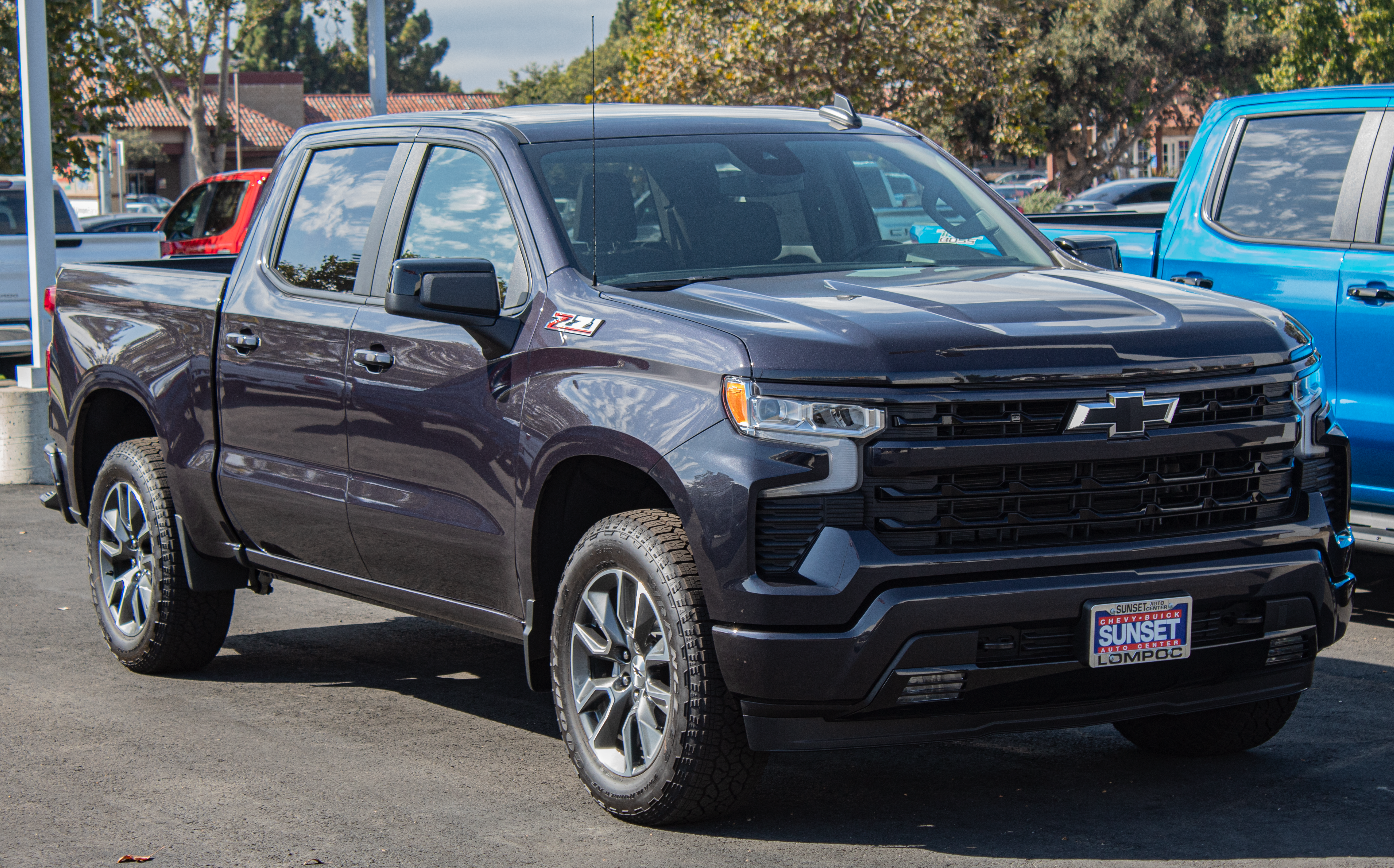
The Chevy Silverado is a big truck made by Chevrolet. The first version was made from 1999 to 2006 and is known for being strong and useful for carrying things or towing.
The Chevrolet Suburban is a large SUV that's been around for a long time, since 1935. It's popular for families because it has a lot of space and can carry many passengers or cargo.
The engine block is the big piece of metal that holds the engine's parts together. It's important for making the engine work properly, and sometimes it needs to be fixed or cleaned.
Autonomous vehicles are cars that can drive themselves without needing a person to control them. They use technology to see their surroundings and make decisions while driving.
The Hummer EV is a big electric truck made by GMC. It's designed for off-road driving and is part of the trend towards electric vehicles that are also powerful.
A level three vehicle is a type of self-driving car that can drive itself in some situations but still needs a human driver to take over when necessary.
The S-Class is a high-end luxury car from Mercedes-Benz, famous for its comfort and advanced technology. It's often used as a benchmark for other luxury vehicles.
Michigan left turns are a special way of turning left at intersections in Michigan. Instead of turning directly left, you go straight, make a U-turn, and then turn right to go where you want.
Autonomous driving means cars can drive themselves without needing a person to control them. They use special technology to see and understand their surroundings.
The Hyundai IONIQ 5 is a new electric car that looks modern and has a lot of technology. It's similar to the Kia EV6 and is part of the growing electric vehicle market.
Dual motor all-wheel drive means the car has two motors that help power all four wheels. This makes it better at handling and driving in tough weather.
This isn't just a game, it's a once-in-a-generation event.
The Harlem Globetrotters 100-year tour.
Celebrate 100 years of high-flying dunks, 100 years of showstopping moves, and 100 years
of changing the game.
Bring the whole family and be part of the legacy.
This game is once in a century.
Be there at MotorCenter on January 24th.
Go to HarlemGlobetrotters.com for your tickets to the 100-year tour.
This isn't just a game, it's a once-in-a-generation event.
The Harlem Globetrotters 100-year tour.
Celebrate 100 years of high-flying dunks, 100 years of showstopping moves,
and 100 years of changing the game.
Bring the whole family and be part of the legacy.
This game is once in a century.
Be there at MotorCenter on January 24th.
Go to HarlemGlobetrotters.com for your tickets to the 100-year tour.
This is episode 427 of Wheel Bearings.
I am Sam Abuel-Sammond from Telemetry.
I am Roberto Baldwin from SAE International.
And I guess I'm Craig Cole with multiple outlets,
but let's just say auto esoterica on YouTube.
Craig, thank you for joining us today.
Nicole, I think, is in Mexico this weekend.
She was at the Baja 1000.
And so I appreciate you taking the time to step in.
Join us today.
I appreciate the invite.
I've never been on the show before.
I hear good things.
We'll see if those are lies or not.
Most of them are lies.
You're glad to be here.
You had me on your former show a couple of times,
so I figured a good time to return to favorite.
Tell the audience who may not be familiar
with who Craig Cole is.
Who the hell are you?
That's a good question.
I ask myself that all the time.
What is Craig Cole?
How is Craig Cole?
Are you done with the interrogatives?
When is Craig Cole?
Where is Craig Cole?
So yeah, I have covered.
I've worked on automotive media for damn near 20 years now.
I've known you for many of those years, Sam.
But I've worked at a number of publications.
I do everything, feature stories, news articles, first drives.
I've done it all in the business, mostly covering.
Trying to get our own YouTube channel up and running now,
which, believe it or not, is very hard.
So it's called Ottawa Soterica.
We try to focus more on classic cars and stuff.
Kind of what we feel is a bit of an underserved market
these days, with quality content at least.
So that's sort of the background on me.
I've been there.
I've done that.
And I'm here now.
Craig is a man lost in time.
He certainly is.
In more ways than one.
I mean, you've got at least one interesting old car.
I'm not sure if you have other ones.
Tell us about what you've got in your garage.
Well, I've got one and a half interesting old cars,
as I say right now.
So I've got my full old car.
It's a 1936 Ford V8, completely restored.
I did that with my dad, frame off, everything,
which required so much welding and metal work and finishing.
But super satisfying.
The car drives like a brand new 90 year old vehicle,
which is terrifying.
But because if you've never driven a car that old,
you don't appreciate how far things have come.
Because it's like a tractor that'll do 100 miles an hour.
It's something if you've never experienced that.
Surprisingly modern in some ways too.
Like the powertrain is super smooth.
The clutch pedal feels great.
But also then the handling is nautical.
The brakes are not good.
I've never driven a car with more body roll ever.
So if you haven't driven it, Sam,
I'll have to get you in the driver's seat sometime.
Yeah, I haven't driven yours.
I think the oldest thing that I've driven was
like a first generation Chevy Silverado,
or not Silverado, Suburban.
Some years back GM was doing a thing to celebrate,
I think the 75th anniversary of the Suburban.
And they brought out a bunch of the different generations,
and they did this out of Bell Isle,
and got to get a little time behind the wheel
of that first generation one,
which was what was, let's see,
that would have been around the same time.
Yeah, early 30s, early mid 30s time frame.
Because that's the longest running uninterrupted name
plate, right?
In US history.
Yeah, that is the claim, yes.
Yeah, so I'm making my own cars, I'm a vampire.
But yeah, I've got the 36,
that's done and been drivable for maybe 10 years now,
and I'm about halfway done restoring a 51 Ford Crest liner.
So I'm trying to wrap up the paint work now
before it's too cold, which I may have failed at that.
But if I get it painted this winter,
I can start putting it together.
So I'm very excited about that.
And I just, just yesterday,
got the engine back from the machine shop.
A two and a half year wait took them two and a half years,
but the machine work is done,
and I can put that together now when I get time.
That was two and a half years just to like
get the block and heads in that machine?
Yeah, to machine the block and balance everything.
I mean, they do it, it's a lot of setup work to do that.
So they want to do a batch of flat heads.
They want to do a batch of big block mopars.
They want to do a batch of LS all at once.
So they kind of wait to get enough of those
to make it worth their time to do all the setup.
And it was fine.
I did not need the engine anytime soon.
I still really don't need it until I get the body painted.
So it's going to sit under the bench for a little while.
It was 65 out yesterday.
You could have painted it yesterday.
Yeah, I should have.
I'm so close.
Anyway, that's my story.
I'm probably boring everybody.
No, no.
People love to hear about this weird shit on this show.
Nice.
Well, we could get in the weeds if you want.
We specialize in tangents and divergences.
Perfect.
Then you can hear all about flat heads and mechanical breaks.
Awesome.
All right.
Well, Robbie, tell us what you drove this week.
So I drove something, but didn't go anywhere.
It's like one of those riddles from the Riddler or, I don't know,
here in North.
So you sat there and did burnouts on a drag strip?
I didn't move at all.
I flew to Poland, where I went to the ITS Motor Transport Institute
for autonomous vehicles, Competence Center for Poland.
Their idea is that they want to make sure that when people or companies
deploy autonomous vehicles in Poland that they work.
That's what just, you know, seem like a reasonable goal.
Yeah, it seems like it's something you should be doing.
You should make sure that when you deploy something, it works.
I know that's hard for a lot of companies.
But at least for one particular company.
At least for one.
So I flew there and one of their deals is they set up scenarios
and really difficult, I'm sorry, they record scenarios
and difficult intersections so they can give them to automakers
who or companies who want to deploy autonomous vehicles
in their country to help them train those systems.
And they also work to see how humans and vehicles interact.
And one of the ways they do that is they have two simulators.
They have one for large trucks, semi-trucks,
and they have one for just vehicles, regular, regular old cars.
I could have driven the regular old car.
No.
So why would you do that?
Yeah, anyone can drive a regular old car.
So instead, what I did is I drove the giant truck.
And when I got in the truck, I was the first one
because I'm always the first to raise my hand for anything.
They threw all the scenarios at me.
The woman who's in charge of the technology division of that.
She runs all the sort of nerdy things.
I mean, I also made a joke that, oh yeah,
they throw everything at me, including a plane landing.
So I got in a big semi and it's just like I have to
take turn off the part, you know, the air brake,
I have to put in gear.
I get to turn it on, all this stuff or it won't work.
So I'm driving it and immediately I'm going through a tunnel
and as I come out of the tunnel, she just turns on like a windstorm.
So I come out of the tunnel, so it was not windy
before I went into the tunnel.
It wasn't rainy suddenly.
So now I'm like trying not to hit the divider,
which fortunately I was able to not wreck the fake semi-truck
that I was driving.
I drove a little while.
Would you get fake points on your license if you did?
I think so.
Like on my fake license.
Fake license, basically international driving license.
Yeah, the international driving permit that we get for AAA.
I drove a little bit longer.
She stuck a trailer alongside, you know, on the exit ramp.
So I had to go around that in a very thin area.
Then she just had a moose come out that apparently no one
else saw but me, thankfully, because I was driving.
Slowed down, went around a moose, took a left turn.
Suddenly a man appeared in the road, kept driving.
She had cars breaking.
And so she's doing all, you know, throwing all these scenarios at me.
And then she's like, hold on.
I'm like, okay.
And all of a sudden the simulation goes dark.
And then boom, it comes back.
She's like, turn off the vehicle.
I'm like, okay, goes dark, comes back up.
I'm on a flight line.
There's a plane coming at me.
So now I thought, oh my God, I'm trying to turn the vehicle on.
And I got out of the way just in time before the,
and I was driving a shell truck.
So anyway, so it's, they use it to measure, you know,
competence in driving and scenarios and just determine
like how people react to scenarios like that.
Like, again, like a moose coming out and, you know,
running out in front of you.
Or a guy sleeping in the middle of the interstate.
Yeah, a man sleeping in the interstate or a train,
or, you know, a 747 barreling down on you
as you wake up from some sort of coma in a gastric.
So yeah, it was interesting.
And, you know, she was very, she's like, this is really,
you know, for us, this part is really the interaction
of how people interact with their vehicles.
And they do a lot of drowsy driving research there.
They talked about, you know, everyone's eyes are different.
So, you know, it's hard to create, you know,
sort of a catch-all for drowsy driving
because, you know, everyone opens their eyes
a little bit differently than everyone else.
And of course, everyone's tall, short, whatever.
And, you know, what happens when, you know, you create scenarios.
And what was funny is she talked about how they had a local,
tell like morning news, you know, morning news,
and they have the tech guy go out
and they were going to have a scenario where they told them
they were going to have someone stop short in front of them
if he, while he was looking at his phone.
And he's like, well, it's not going to work
because I know it's coming.
And she's like, well, we'll see.
And of course, he slammed into the car in front of him.
Like he just looked at his phone for a second.
She, she break the car in front of him
and he just ran right into it.
So even within anticipation, the idea of like,
when you're looking at your phone, it distracts you just enough
where you could, you know, there could be a horrible,
you know, outcome.
So don't look at your phone while you're driving,
is the one trying to tell you.
And even when you're anticipating it,
that a scientist is going to,
when you know it's going to happen,
you're still going to hit the thing.
So yeah, no, it was, it was very interesting.
I'll have a couple articles coming up on SAE about it.
It was, you know, the whole trip that I,
the reason I went to Poland was to sort of, you know,
talk to their overarching, it's called a PGM,
the Polish Automotive Group,
where they work with all these sort of small suppliers
to help them interact
or work with larger OEMs outside of the company.
And, you know, we went to a company
that refurbishes large calipers for trucks,
for large trucks, again, semis, you know, class 8 vehicles.
And that was really interesting.
We, you know, again, we did some, the autonomous stuff,
and this was really sort of an institute.
They get some money from companies,
but they make a lot of their money
by making sure vehicles are homologated for Poland.
So they do, you know, that's how they make their money
in order to think, so they can do the research
for, you know, autonomous driving.
And, you know, we all, I think everyone listens
has heard me go on and on
about how autonomous driving is still very far away.
Like true autonomous driving is not an easy problem to solve,
but I think talking to these folks for them,
it's more about safety, you know, driver and pedestrian
and, you know, cyclist safety
and making sure it works within their infrastructure
versus like the, like we got to get it there
as quick as possible for shareholder value.
Which of course has never worked out.
You know, no matter how many, it's weird,
we just keep doing it, it doesn't work.
I don't know why.
Funny that, but if like six people
make a whole bunch of money though.
Well, I would argue that, you know,
if your goal is to maximize shareholder value,
then it has worked out remarkably well for Tesla.
Because, I mean, the entire premise
of their shareholder value, you know,
of their market cap is based on the trillions of dollars
a year that they're going to make from
RoboTaxies any minute now.
I mean, if you take that out of the equation,
Tesla would have a shareholder value,
you know, maybe, you know, 10, 15 billion dollars,
you know, equivalent to, you know,
any other automaker that sells, you know,
one and a half to two million cars a year.
It, you know, it would not have, you know,
a trillion plus dollar valuation.
So it has worked for- It's making robots, too.
Yeah, it has worked for shareholder value.
Yeah, I mean- And you're going to come out
with that Roadster like seven years ago.
Yeah, I mean, Tesla is a, you know,
it's a meme stock.
It's value is not set to anything that's real.
But it's got, it has intrinsic value
because it has intrinsic value.
It's like NFTs.
Remember NFTs or the monkeys?
Remember the monkeys or beanie babies?
Like they had value because they had value.
And just because everyone- Because people
thought it had value.
Yeah, so everyone- To some degree,
every stock is like that.
Yeah, everything has value because it,
but there's, there's the,
if you look at what's backing up the value of that stock,
it's not in real, I mean, in the stock,
also the stock market is not a real thing most of the time.
Yeah, I mean- The stock market these days is just a casino.
Yeah, I mean, I think we all cover tech.
And a thousand, you know, the death of a thousand unicorns,
like companies that were working, you know,
billions of dollars that didn't really have a business plan
or an actual product that more than, you know,
20,000 people who didn't know how to like do their own,
you know, laundry.
We're going to disrupt the kitchen utensil industry.
Yeah, we're going to make a juicer.
We have a team changing new-
Here's a, here's a $700 juicer
that's really just squeezing juice that's already been squeezed.
Correct, correct.
You know, I know I certainly need a humanoid robot
to load the dishes into my dishwasher.
Yeah, because I, I cannot take 30 seconds to do that on my own.
No, no, no, no, no.
You're too busy, Sam.
Oh, they're getting there.
You've got to edit this show, for instance.
Exactly, yeah.
Yeah, yeah.
This show would never get out if I didn't,
you know, if I didn't have a humanoid robot
to load the dishwasher.
To load the dishwasher, which is such a 20.
Did you guys see the clip of the one robot,
the guy, I forget the guy, he has a YouTube channel.
He bought one of those, some robot,
and he was trying to have it cook eggs in the kitchen.
Oh no.
This is a complete disaster.
I forget the guy's name.
I'd be terrified.
Like a fire, because fire,
that's the only reason I'd be terrified,
like everything else.
The robot spilled the eggs,
and then it slipped on the eggs
and is trying to catch itself,
and then it falls over and it makes just a colossal mess.
So it's Mr.
Larius, if you haven't seen it.
I'll have to, the robot is Mr. Bean.
I'll have to look for that one,
but I did see a clip from a Russian company
that brought out their first robot the other day,
and came out onto the stage and immediately face planted,
and then everybody's trying to pull curtains around it.
Yeah, and they had this black fabric
they brought out to try and hide it.
Yeah.
It was twisted in the middle, so it wouldn't block anything.
I don't understand the desire for the humanoid robot
outside of, you know,
because we all watch the Jetsons,
because there are...
It's pretty much it, I think.
Yeah, I think there's,
it's like the flying car.
Remember for a couple years,
they're going to have a flying car.
I'm like, well, first of all, flying cars don't exist,
because a car and a flying machine
are two, you know, very different things.
And I, you know, you driven on the road as a listener,
you know how those people are.
Do you want to be in the sky with those folks?
I mean, there's, you know,
there's a reason the FAA has like,
you know, pilots license and,
you know, it's, it's...
But it'll be autonomous and flying.
At the end of the day,
it's still just a very nice helicopter.
It's a helicopter with redundancies,
which I'm like, okay, cool.
Just say that's what it is.
It's an evatol.
It's a helicopter with redundancies.
Fine.
Don't call it a flying car.
For a lot of people.
You know, if it flies,
it's also not a car.
It's an aircraft.
Exactly.
Flying car.
Stop it.
It may be a drivable aircraft,
but it's not a flying car.
No one's driving their Ford Escort
and then taking off at the local airport
to land at LAX.
And if you've ever seen one of these EV Tals,
you know, these things are,
I mean, if you think a Hummer EV is large,
you know, or a heavy-duty pickup truck,
these things are huge.
They're enormous.
There is no way that they could ever drive.
Yeah.
Knock it over the side.
Yeah.
It's like,
like, when they move the challenger through a town,
for them to land and take off.
They have to like uproot trees
and move traffic signs
when they move the,
I think one of the space shuttles
through LA,
they had like,
especially take apart the infrastructure
so it could go through town.
It's like that.
You know, if you want something
that carries more than two people.
And even when they-
Well, you get the Cadillac one
that was just like a wheelchair
that was with a bunch of fans on it, right?
Yeah.
That seems,
yeah, it's a little,
yeah.
It was still huge.
It's, yeah.
It's still very, very large.
So anyway, no flying cars.
So the back to the simulator,
was this a full motion dynamic simulator
that moved around?
See a few of the forces?
It did.
It moved around.
The brakes were a little,
they didn't,
and they were very upfront about it.
The brakes are not like one to one
with the physics of a,
you know, a loaded semi
because they're like,
that's not really the point.
Right now,
the point is like how people react to things.
So you would stop short.
So you actually,
so actually you had the advantage,
but apparently most people don't see the moose
because you're coming at,
you're going by the trees
and the person in the simulator with me
who was like watching,
just sitting there,
I'm like, oh, moose.
And I slowed down and went around the moose.
He's like, I didn't even see the moose
until it was too late.
So, yeah.
So it's, you know-
having encountered moose
on the road in northern Sweden many years ago,
you know, I mean,
the only reason I didn't hit the moose
is because I was far enough away from it.
You know, it, I mean,
it was actually tools-
There is tall, they come out of trees-
that came running out of the woods,
came running out of the trees on one side.
And there's tall trees.
It's like a tree just decided to move.
Yeah.
You know, they came running out of the trees
on one side of the road,
ran across the road.
And, you know, like I said,
the only reason I didn't hit them
is because I was far enough away
when I saw them.
But, you know, it, in a norm,
you know, if I had been closer,
I mean, there's no way I could have averted them.
Yeah. No, they, they, they just kind of,
they're so,
and you're like, well, they're so big,
but they're the same color as trees, man.
Because they're trying to hide from wolves.
And then suddenly one of the trees is like,
hey, I'm in the road.
And their, and their legs and their antlers
are like trees.
You know, it looks like a tree trunk.
It looks like a tree.
And even the little flying squirrel friend
that they always have with them,
they don't help because they're so small.
Yeah. It's hard to see those little squirrels.
Okay. So, so are they,
they're also making the simulator
available for, for AV companies
that want to test on scenarios
recorded from Polish roads?
Is that, is that also what they're doing there?
You know, I think they would do it loud.
They, they, they understand that
they're still pretty early days with this
and they understand that, you know,
AVs are still pretty far off.
I mean, really, we, you know, we have two,
we have one level three vehicle on the road.
And it's, you know, it's, it's, it's geofence,
the, you know, the S class, the Mercedes S class.
And then we have GM coming in like two or three years.
I don't, it's, I was at the event,
they said the year like 15 times,
and I still can't remember it because it only got like.
2028.
Yeah. 2028.
Because I'd only got like 90 minutes
of sleep before I got to the event
after driving into the desert all day.
2028.
So it, you know, it's, it, it's good to be,
prepared for this sort of, for this technology
and a way that benefits the people on your roads.
Then, you know, and again, I mean,
Mercedes drove around, they did a whole big deal
where they drove around the world
just to collect data from every region of the world
and how people drive and how, you know, the, you know,
local laws and line markings and signs and, you know,
just the, the weird little, you know, the, the,
the colloquial driving experience of driving in Japan
versus driving in China versus driving in India
versus driving in Detroit versus driving in, you know,
North Carolina, every, every place is different.
And it, there's so many variables
that these companies have to think about.
And if you go into a region,
it's helpful at that region if the, if the, you know,
someone in that region has already thought about that
and already set up something so that when you, you know,
as a company you come into that region,
they have data, they have training information
and they have simulators that allow you to like,
at least, you know, get a, a sort of a head start.
So they're not starting, starting from zero
in order to, to have autonomous vehicles in that,
in that region.
Yeah.
Because, you know, every place you go has got
different rules of the roads,
different road configurations.
You know, some places have roundabouts,
some places don't, you know, here in Michigan,
we've got Michigan left turns, you know,
which are a weird kind of anomaly.
Or they think, are Australia, they have that weird turn
that, that you go to the right and then you take a left
or it's, they have a very weird turn in Australia.
We have, we have some of that here.
You know, that's one of the varieties
that we have here in Michigan where
you know, especially for major thoroughfares,
you know, instead of making a direct left turn
at it, at an intersection, you will turn right
and then immediately go into a lane and do a U-turn
to go back in the opposite direction.
You know, and in some cases you go through the
intersection and do that, do the U-turn
and then come back and make the,
make the right turn at the intersection.
And you know, some, some vehicles, you know,
that try to rely on cameras only for,
for automated driving have difficulty with that.
Brand might that be, I can't imagine.
So they talk to, you know, they're, they're, you know,
they have six, four LiDAR, six or eight R,
a bunch of cameras on, on these devices,
on their, their, their sort of test vehicles.
They have one test vehicle that has,
you know, that's kind of going out.
And they didn't talk, they, they just said,
well, some companies do, you know, camera only.
And, you know, a lot of people have, you know,
various opinions about that, which is, which is,
which is, you know, sort of corporate speak for,
that's dumb.
They're, they're not a corporation.
They're, you know, they're part, you know,
they get funding from the government and from,
you know, homologation, you know, certification.
So, you know, at some point,
they're going to have to work with, well, maybe, who knows?
But at some, you know, they're going to have to work with
some company that's probably going to want to try
to come in with camera only, autonomous driving.
And so, but it's, you know, when you talk
to actual researchers in this,
and people who've been following this,
camera only is always sort of like, you want to do what?
Oh man.
I mean, I guess it's like the robot making,
it's like the robot making eggs,
but it doesn't have the correct skillet.
And it's got to use like a wooden spoon
instead of like a spatula.
You're like, this is what we got to do.
Just not quite the right equipment.
Just not quite.
It's like one piece of the equipment.
You got a pan and then it just falls apart.
Excellent.
All right.
Anything else on the, the Polish simulator?
Quick.
Ready for my notes?
No, I'm going to say no,
because there's just too much.
Oh, I'm looking at the wrong,
and I'm looking at the wrong,
I'm looking at the wrong notes.
Because I changed over or something.
Yeah.
They're testing scenarios.
Let me make sure.
Six radars, four LiDARs.
That's, that's what that's what that's a reasonable
configuration.
Yeah.
And then a bunch of a gaggle of cameras.
Oh, and a thermal, a thermal camera as well.
Just keep, what other sensors are we missing here?
They had the high, I mean, they had the high
microphones.
They did have a microphone in the back, I don't know.
Like the Mercedes system where it has the microphone,
so we can hear emergency vehicles.
They had a microphone on there for emergency vehicles.
They have the high definition GPS.
They didn't talk about it, but they had it.
It needs an altimeter.
Altimeter, barometer.
I don't know why.
Barometer.
They should have one, a barometer, yeah.
Barometer, yeah.
And of course, you know,
six-axis motion sensor.
Yeah.
Oh yeah, there's getting out of here.
No, no, we need a barometer before we need that.
And we need the, you think it's good?
Ooh, it's chilly.
Is it going to rain?
It's going to rain.
It's the barometric pressure.
No driving today.
Too much, too much, too much pressure.
And it has an integrated blood pressure cuff.
Yeah.
Just in case.
Yeah.
I mean, you know.
But it's squeezing your arm the entire time.
We're just talking about the external sensors.
I mean, then there's all the internal sensors.
You know, you need multiple cameras
watching the driver and all the vehicle occupants.
You need to measure the driver's heart rate
and respiration rate and their blood pressure.
They just put little sensors up your nose to check if they start to get a little anxious
your oxygen level and blood sugar. Don't forget blood sugar. Yeah. Yeah. You gotta have a continuous
glucose monitor in the car. You know, so if they haven't eaten enough Snickers package, you know,
yeah, you got the package monitor. Oh, you're seeing a little package. Let's pull over and get
yourself get you something nice. Good. Like an Acura first drive off and you'll have a little
bag of snacks in the back. I just ate 20 minutes ago, but thank God there's a bag of
chips. We have a cliff bar in the back seat. A very interesting thing about Poland is everywhere
you go when you get there, there's always a plate of at least cookies. And then they have like
little sandwiches and little meats and whatever. So every we would see like two to four companies
a day while we were there. It was a it was a whirlwind event. The sun goes down like three
o'clock. So I'm like, well, that was the end of the day. But everywhere you went, there was
like cookies and candy and, you know, something else. And so, yeah, I don't want you to get
hangry. They didn't want you to get a hangry at all. And they're like, you know, after they
made you fly coach from San Francisco. Yeah, that was another thing. But you know, I
complaining about getting a flight to Poland is that's that's a whole other that's a
whole other audience action. I tried to never in to real people like regular normal
humans. You don't want to come across sounding as too entitled. Yes. Yes, you
sound very entitled when you're like, Oh, I had a fly coach flying to Poland instead of
business class. There's a lot of reasons why that's not a great idea, especially if you
have a drive program. But I wasn't doing a drive. I was just in offices and doing
tours and watching machines and driving simulators that wasn't driving a car. So
it wasn't that big of a deal. I mean, when I when I flew to Austria last this
year, that doesn't matter. I flew to Austria to ride motorcycles. They gave
me a whole extra day because driving riding a more cycle is far more, you know,
cognitive, you know, it's more intense than driving a car. So they gave me a whole.
So I just had a free day. I walked around. I went hiking. I saw a goat. I didn't
need that in Poland. I wasn't going on any of that stuff. Yeah, they could
have how many days were you in Poland? We got there. I left on Monday and got
back on yesterday, yesterday afternoon, Saturday, a decent amount of time. Yeah,
I was there for it was three days of nonstop meetings and tours. So that's a
lot. You covered a lot. Yeah, so I got a lot of stuff. I got a lot of notes to
check out those articles when when they come out. Yeah, yeah. We'll check them
out. They're very nice time. A lot of meat and potatoes and and and
dumplings. So very, very Eastern European sandwiches, too. So don't tell
Poland. They're Eastern European. They are Central European. Okay. That is a
whole thing I found out while I was there. Oh, interesting. Well, they hate
program. I don't blame them. They have rather a history with Russia. Yeah,
Russia. They hate Russia. And they, you know, yeah, for they've been the
Russians have been there a few times. Yeah, they're not they're not fans.
No, I would be either. But this isn't just a game. It's a once in a
generation event. The Harlem Globetrotters 100 year tour. Celebrate 100
years of high flying dunks 100 years of showstopping moves and 100 years of
changing the game. Bring the whole family and be part of the legacy. This
game is once in a century. Be there at Motor Center on January 24. Go to
Harlem Globetrotters.com for your tickets to the 100 year tour.
This isn't just a game. It's a once in a generation event. The Harlem Globetrotters
100 year tour. Celebrate 100 years of high flying dunks 100 years of showstopping
moves and 100 years of changing the game. Bring the whole family and be part
of the legacy. This game is once in a century. Be there at Motor Center on
January 24. Go to Harlem Globetrotters.com for your tickets to the 100
year tour.
If you're an HVAC technician and a call comes in, Granger knows that you need a
partner that helps you find the right product, fast and hassle free. And you
know that when the first problem of the day is a clanking blower motor,
there's no need to break a sweat. With Grangers easy to use website and
product details, you're confident you'll soon have everything humming
right along. Call 1-800-GRANGER, click Granger.com or just stop by.
Granger, for the ones who get it done.
Did you know you can support wheel bearings directly? Head to patreon.com
slash wheel bearings media, and you can become a patron today. Your
contributions will help fund the platforms and tools we use to bring
the podcast to you. And exclusives and improvements are already on the way
thanks to your generosity. So if you want to be part of an automotive
podcast like no other, head to patreon.com slash wheel bearings
media. We've updated the wheel bearings merch store and now
there's a whole bunch of new choices, new colors, new styles,
t shirts, sweatshirts, hoodies, hats, mugs, travel mugs,
stickers, aprons, tote bags, you name it, you can get your
wheel bearings merch at shop.wheelbearing.media. Go check
it out. That's shop.wheelbearing.media.
All right. Well, I had a Kia EV6 again, I had the 2025 EV6 GT
line. So, you know, this is you know, for 2025 Kia did a mid
cycle update of the EV6 just as Hyundai did with the IONIQ
5, which means that it got some got you know, some mild visual
refreshes to the exterior new new lights in the front, some other
minor tweaks, and probably the most important tweak of all was
they moved the charging port from the right rear corner to the
left rear corner, and changed it from a CCS-1 port to an SAE J3400
port also known as a Nax or Tesla port. They also upgraded the
battery, they bumped the battery up from 77 kilowatt hours to 84
kilowatt hours. But overall performance is about the same,
got a little bit more range than before. And you know, so, you
know, this meant we had two EV6s here this week, because we
also own one week, we own a 2023 EV6 wind with their not the
Nactoy edition. Not the Nactoy edition. No. So we have
we have a wind with dual motor all wheel drive. So it's the same
same motors on their 320 horsepower between the two
motors, slightly rear biased, more the rear motors, a little
more powerful. The GT line is not the GT, the EV6 GT. So
confusing. And no reason arguably the GT line is better,
because it costs a lot less and delivers basically delivers
all the performance you actually need. Yeah, you don't need
the GT model. And you get more range too, right? Yeah, you get
more range. Yeah. Question for the August panel here, though, you
mentioned they moved the charging port from one side to
the other. Where do you guys think the charging port should
go on EVs? I'm curious. I believe it should be in the
front. Because there's a there's still a lot of charging out
in the world, including Tesla charging that's that's it's
in parking lots. And every time someone has to back in,
you're like, Oh, it's you know, when you're pulling into the
ran, you know, the Costco parking lot and the guy in the
Silverado decides to back his truck in good. It makes sense.
It's easier when you're we have a large truck to back it in. But
you're like, Oh, I got to wait 30 seconds for this guy. Now
you got to do that. Yeah, it's when you just pull
straight in plug it in. I personally don't really have
much of a preference one way or the other. I think, you
know, the front, having having it in the front panel
actually generally, you know, works pretty well everywhere.
It's easily accessible regardless of where that where the
charger is configured. You know, like if you get a Genesis GV
70 or G 80 EV, they have the charge port in the now fake
grill. And so you can pull up to a Tesla supercharger, you
know, that has ridiculously short cables, and still
reach that port. In the case of the EV six, on the ionic five,
they did not move the charge port, because on the ionic
five, where the charge port is located is actually in the
sheet metal and the right rear corner. And so they would
have had to retool that sheet metal that that metal panel
and everything. In the case of the EV six, the charge
port is you have the tail lamps that curve, you know,
run across and curve down the sides. And there's a plastic
trim panel under below that. And so all they had to do is
change the plastic panel and of course, change the wiring
harness. So it was a lot easier for Kia to move the charging
port to the to the left rear corner, so that it's in the
same place as it is on Tesla vehicles, which means you do
have to back in to charge at a supercharger. But you
don't have you can park in the correct parking space because of
the way they're set up. So you're not taking up an extra
parking space in order to reach the the cable. So they the car
the the press car that they delivered did have the charging
adapters that came with it. Kia does not actually bundle those
with the car, you have to pay extra for those. So the AC
adapter, I think is about 100 bucks or so. 125 bucks. If you've
got the the the J plug at home, for instance, for your level two
charge, you've got to buy the adapter. Right. Yeah. Next. Yeah.
And actually, I was just looking on Amazon this morning for
one of those, because tomorrow I'm getting a lucid gravity. And
I'm not sure if that one's going to come with an adapter
or not. So the price of damn well better. Yeah. Well,
should we give them the $200 adapter? Well, 80 something
thousand dollar car. The AC adapters are actually fairly
inexpensive. You can get those for about 30 to $40. Yeah, the
DC adapters are more expensive. Because they they have to have
more stuff in them, you know, for temperature monitoring,
things like that, because of the higher power outputs, you
know, driving this, the interior is basically unchanged,
except for they changed some of the textures on some of the
surfaces. I like the layout of the EV six with one distinct
exception. In recent years, KIAs have had this panel below the
the center part of the dashboard, which is a dual mode panel
that has a couple of knobs on it. And if you tap one of the
icons on there, it will give you media controls. So you turn
the knob and it changes the volume or changes the tuner. And
there's a couple other things on there. And you tap the other
icon in there, and it changes it over to climate controls. So
those knobs go from becoming volume and tuner to the
temperature controls. And the first time I ever drove an EV
six, it was on the temperature control mode. How do I
change the radio station? Yeah, well, yeah, I couldn't figure
out how to change the volume with the knob. I mean, there
is a redundant volume control on the steering wheel. But, you
know, that's that's still somewhat of an annoyance. It's
super clever. It's a good use of space. And it's no different
than the menu bar on your Mac, right? It changes based on what
program you're using. Yeah, so so it's, you know, it it's
a clever idea that is perhaps more clever than useful.
Yeah, it's a lot of EV stuff. It's clever for the sake of
being clever and you're like stop it. Stop. Stop. That's what I
like about the lightning, for instance, it's just an F 150.
Yes, it's just an F 150. You just plug it in and you go and
drive it. That's why I liked about our Kona. Our Kona
electric is just the Kona but electric. Yeah. Doesn't try to
be something it's not. It's like, hey, look what I'm doing.
No, none of that. So, you know, otherwise, you know,
the the EV six and the ionic five and the ionic six, you
know, are all mechanically identical to each other. EV six
is a slightly shorter wheelbase. But you know, it's a
different, different shape to it. I personally prefer the the
shape of the EV six. But I'm I'm fine with the ionic five as
well. But you know, that's why my wife and I bought an EV
six because we like the way it looks. It's a great car to
drive quick enough. And with the 320 horsepower, it'll do
0 to 60 in the low four second range. You know, it's got decent
handling. It's roomy. You know, carry five people easily. It's
got plenty of cargo space in the back. You know, we during
the summer, you know, we loaded up the paddle board and beach
chairs and stuff and and the dog went out to the lake. Nice.
So it's, you know, it's a it's a very useful vehicle.
It's a it's a nice size vehicle. And, you know, that's
the reason why I spent our money on this thing. Yeah, because
we think it's you bought it twice, didn't you? We bought it
twice. Yes. Car so nice, you bought it twice. Yeah, there
you go. The advertising rights itself. But like the Hyundai
Motor Group did a fantastic job with that EGMP architecture
with they which they've just expanded everywhere, right? But
it charges very quickly with the battery design, great
performance, excellent refinement. I mean, lots of room,
like you said, Sam, super versatile vehicles too. So
like, it's hard to fault any of those products really. Yeah.
Yeah, you got to be nitpicky, essentially. Yeah. I mean,
there's not there's not many EVs, you know, that will charge
it, you know, upwards of 240 kilowatts. And keep charging
at that speed for most of the charging cycle. Like it'll
stay above 200 kilowatts, well past 50% state of
charge. Wow. I have I have seen you know, even that you know,
70% state of charge still going 170 kilowatts, you know, which
is why you can get from 10 to 80% charge in 18 minutes, these
things. I've driven my my ionic five up and down the state a
bunch of times and it charges very it charges quicker than
it takes for me to eat a burrito from like 20 below 20%
almost like so sometimes even if it's 80% I'm still eating
my burrito and there's no one around. I'll just keep eating.
He'll be that guy. I'll just be that guy. Well, I wait if I see
someone. Yeah, so I'm like, okay, someone's waiting. I'm
gonna leave at 80%. I'm not gonna be that jerk. But if I'm
eating my burrito, don't be the Chevy Bolt driver that takes
the only 350 kilowatts charger and you're there for two days
because you gotta get for some reason you feel you have to
go to 100%. No, don't do that. I've I've encountered that
person at my local electrify American Station. Oh yes. And
they're sitting there for like three hours or I don't know if
it's three hours a really long time. A very long car does what
55 kilowatts or something. Yeah, well, it depends. The original
ones were 50 and then they bumped it up to the whole 55.
Yeah, the new one that's coming out after the first of the
year is 150 but yeah, okay, that's that's pretty much the
standard right? Yeah, these days. So, you know, obviously
now the the tax credits on EVs have gone away. But what we are
seeing is that manufacturers, a lot of manufacturers have made
adjustments to compensate for the absence of the tax credits.
The Hyundai crew, you know, cut the price of the Ionic five
by an average of over $9,100. They cut the MSRP. Kia has not
yet cut the MSRP of their EVs, but they are offering some pretty
spectacular deals. Like I took a look when I when I first
checked a few weeks ago, you know, they were offering $9,000
rebates on the EV6 and EV9. They that is now at $10,000. But
that's only if you finance the car through Kia Financial
America. So they'll give you $10,000 off. So the EV6 GT line, the
Neuroni for the one that I've got here in the driveway came to a
grand total of $60,740. And so if you go to a Kia dealer and
you you finance it through Kia, you can get $10,000 off of
that. And then some dealers are also offering additional
discounts on top of that. So you can you can conceivably
get one of these, you know, in the upper 40s. You know, if you
don't need the GT line, you know, so look, you know, comparing
the GT line to ours, we have the wind. You know, some of the
some of the things that are missed that we don't have on
ours, we don't have the heads up display. That's fine. We
can live without that. We don't have the glass moonroof.
That's fine. Solid steel roof is fine with me. I don't
want I hate moonroofs. We've had moonroofs on several our last
several cars. But you know, when it came around this time, it's
like, in recent years, my wife hasn't really used it anyway. So
don't you know, we didn't you know, it was no big deal not
having it. The the GT line comes with 20 inch alloy wheels.
You know, our wind has 19s, which arguably living in
some place like Michigan is better because you get a little
more sidewall, which you know, makes makes the tires a little
more resilient to pothole damage. And for all of the car
designers listening, putting such big wheels on everything. Yeah,
all there is fine. To your point, Sam, you won't damage the
wheels if you live in a place where the roads are bomb
cratered. Also, ride and handling is way better like
the Silverado EV. Have you driven that thing with the 24s?
I have. It's terrible. Not good. It was not good. I'm like
whatever the the what's the the trail boss model, I think it
comes with like 18s or 19s. Yeah, 18 18s. I've got a trail boss
coming in a few weeks. Better. A stick better. Definitely put
the 24s on there just destroys it. I'm sorry, that's my
little aside here. The GT line also gets a heat pump instead
of a resistive heater, which you know, it's a little bit
better and cold weather for efficiency. And you get heated
rear seats, in addition to the the heated, heated and cooled
front seats. But you know, the wind also has heated and
ventilated front seats. Who cares if your rear seats are
heated, you know, let the plebs in the back, you know,
suffer a little. That's where my dog sits. So they're
fine about the heated seats. And then, you know, the
current on the 25s, the GT line gets heated steering wheel. The
wind does not our 23 wind does have a heated steering wheel. So
you know, they did, they did take, you know, remove a couple
of things, moved a couple of things around, did some
repackaging. But overall, you know, they're pretty, they're
pretty similar. In the, in the most important ways. So
but a 10 grand discount. That's
yeah. Huge. Yeah. Making any money at that point? Is this a
lost leader? Probably not. I have asked, well, previous to
this, I have asked Hyundai, I'm like, so do you lose money or
you make money in each car? They're like, why would we lose
money? We're not gonna answer that. We make money on our
cars. That's what, no, they told me they're like, we make
money. We make a profit on our vehicles. Why would, what
are you talking about? What's wrong with you? Why would you
ask that question? Yeah. Why would we make a car? They've
consistently said that that these vehicles are
profitable. Of course, that's, you know, profitable at the
original MSRP. Are they still profitable if they're giving you
10 grand off? Who knows? Or maybe they're maybe they're
overall lineup averaged out is profitable. But perhaps they're
still losing money. No, no, they I mean, they have
explicitly said their EVs are profitable. Yeah. Okay. So up
until now, we know they're profitable. Who knows what's
what's in the future? So, so Craig, since this is your
first time on the show, one of our one of our things
that we do here is we have a little contest when we do the
car reviews of guess the destination charge. Huh. Huh.
Okay. 1200. What was yours, Robbie? 1200. I'm just
dealing with things. What's your guess? Oh, it's I'm trying
to remember what Hyundai Kia does. It's either like 1295 or
1495, I think. I'm going to go 1295. I'm going to give
them the benefit of the doubt. Well, you won. It's actually
1475. See your winner. Wow. It's just a way for automakers to
make another thousand dollars or more. Well, it certainly is
for the Detroit automakers. Yes. On on the full size trucks
and utilities. We've talked about this before. They have
raised the destination charges twice this year by
six hundred dollars. They went from at the beginning of the
year it was nineteen ninety-five. Then they went to
twenty-one ninety-five and more recently they went to twenty-five
ninety-five. It's it's twenty-six hundred dollars. It is
twenty-six hundred dollars on a full size truck or S&P now.
Yeah. No, I'll go to the factory and pick it up myself
thanks. You're still going to pay the twenty-six hundred.
I know it's unfortunate part. We've we've had this
conversation way too many times. So, that's the that's
the twenty-twenty-five EV6 GT line all wheel drive.
Nice. Alright. You're a Cummins diesel owner. You know your
truck is worth more than just any truck. It's the workhorse
that keeps you going. That's why protecting your Cummins diesel
is so important. Complete emissions recall 67A and get a
free warranty extension worth thousands. Plus an exclusive
Cummins gift. It's quick, it's easy, and it's
protection that keeps your truck going for miles and
miles. Visit Cummins Recall dot com to schedule
your appointment today. That's Cummins Recall dot com.
Let's get into some of the other stuff. So, this week,
Kia took the wraps off of, oh, they they showed us the
visuals of the new twenty-twenty-seven Telluride.
They are going to officially unveil it completely
on Thursday at the LA Auto Show. Are you going to LA Craig?
I'm not. Are you Robbie? I'm sorry. Nope. I have time off. I
actually have time off. Am I going to LA and it looks like I'm not
going to CES either. I'm skipping all the I I do all the
weird little things like Poland and Austria and that sounds
more fun than CES, I'll be honest. We'll we'll miss you in
Vegas. Yeah. Well, yeah. Well, I mean, no one's
yeah, we'll see. I mean, someone might still like
sneak up on me and be like, hey, can you you might get
horn swoggled into going? Just gird up your loins. I've been
to CES. I've only missed one CES like the last twenty years.
That wasn't like, you know, pandemic and uh so if I don't
go to CES up, I'll be uh it's not gonna hurt my feelings. So
anyway, the Telluride, the twenty-seven Telluride,
you know, obviously rides as before on the same platform as
the Hyundai Palisade. Kia did an event in Los Angeles what I
think a week and a half ago um at their design center. Mm hmm.
And they brought some people in to take a look at this. I was
not among that group. Did you go there? I went to it. You
were there? Yeah, we were there. I mean, cool people
were there. Oh, yeah. Well, I know. Um so what uh what
did you guys think of the New Telluride? Okay, it
doesn't look better. I don't think on the outside at least. It
looks better in pictures and it looks better in person than in
pictures but that doesn't mean it's it's not as nice. The
previous um design was better. Yeah. Exterior wise at
least. Yeah, they made it larger. It's a couple inches
longer. The wheelbase has extended a little bit as
well. So, there should be a a good bit more passenger
space in the third row. Easier access back there as
well. The interior of the Telluride looks fantastic um
but the exterior I just don't I don't know why. It's
missing something. It's it's definitely blockier. Yeah. And
they they they said they wanted it blockier. They're
like because they're like well, you know, old SUVs, old,
you know, you know, competent SUVs are are
blocky. They're big blocky machines. So, we made a big
blocky machine and they're like, okay, that's what
you did. And they you know, they show us the X
Pro. That's what their whole, you know, the the sort of
off-roadish version of the vehicle. So,
yeah. Yeah. Which which looks particularly Spartan
up front. I think I'm hoping some of the more mass market
trims um or mainstream trims will have a little
different treatment up front. But the the the X Pro
model looks a little bare up front. From from the
images that they released, you know, it the the the more
mainstream trims actually look even more Spartan
because you don't even have like on the X Pro, you
have the the orange or red recovery hooks. You know,
so you at least have that. You don't have that on
the on the mainstream model. Yeah. I'm you know,
I like the current Telluride. I'm somewhat less
enamored with this one. Uh it's it's interesting. I
mean the interior, like you said, does look really
nice. But the the exterior, I'm not a not a huge
fan of. Again, it looks better in person than it
does in the pictures. Okay. But it's not as good
as the previous generation. And also, you know,
I was talking to someone about this. What we
like as automotive journalists doesn't always translate
to what people buy. That's definitely not.
It's it's like uh yeah. Sometimes, sometimes the
auto journalists get a very very large heads about
like, well, this is what I think. Like, we love this
car. No one buys the car. Yeah. We hate this car.
70 million of that. Cadillacs, CTSV, wagon, you
know. Yeah. With a man. Yeah. Yeah. Any wagon. We're
like, yeah. And the consumers are like, man. Well,
I mean, the you know, the first generation
Telluride and Palisade, you know, I think a
lot of people preferred or a lot of journalists at
least preferred the look of the the Telluride to
the Palisade. Yes. But the Palisade sold
significantly higher volumes than the the
Telluride. So again, crazy. Yeah. Because the
the Palisade look, you know, the the Telluride work
better, but you know, we can't control. But I
guess they didn't tell you guys any technical
details. Nah, they didn't tell us nothing. I
mean, we can go to HyundaiNews.com. I'm
assuming it's going to be the same. Yeah.
I think I think that's a reasonable assumption. Yeah.
So, you know, the the Palisade has, you know,
3.5 liter naturally aspirated V6, we think about
268 horsepower, which, you know, definitely
feels a little underwhelming in that vehicle.
And wasn't it a 3.8 before? It was a 3.8 before.
Yeah. So the new one is slightly smaller.
You know, but the vehicle is bigger and heavier.
I think it's close to the same power as before,
maybe just slightly less, but the vehicle's bigger
and heavier. So I would expect the same experience,
you know, in the in the Telluride. And then,
you know, the other the other thing that we
would expect in the Telluride is the is the
hybrid, the the next gen Hyundai Motor Group
hybrid system, which I got a chance to drive
a week or so ago in the Palisade.
You know, we went to Austin, Texas to drive the
drive the new Palisade. The hybrid system is really good.
It feels much better than the than the naturally aspirated V6.
It has a 2.5 liter turbo four cylinder.
And it's a different hybrid configuration from
the previous Hyundai Motor Group hybrids.
So the Hyundai had kind of kind of an odd,
unusual, unique hybrid configuration.
So they used a combination of an electric motor that was
embedded in the six speed automatic transmission
and a clutch between the engine and the electric motor.
So the electric motor took the place of the torque converter.
And then they also had a belted starter generator,
which handled the starting and stopping of the engine,
did a little bit of energy recovery, the little bit of the
regen. Most of the regen was handled by the electric
motor and the transmission. And so driving it, it felt more
normal, natural, more like a conventional vehicle because
it had a conventional transmission in there.
But you know, it didn't have as much electrical power as
some other hybrid systems. So the the new one,
they get rid of the belted starter generator
and they added a second motor generator unit in the transmission.
So now you have the engine, the first motor generator,
the clutch, and then the second motor generator.
And the second motor is the one that does most of the propulsion.
So when you're when you're driving along.
So that's on the input shaft of the transmission.
It's on the input shaft with no clutch.
With no clutch, correct.
And then the the first motor generator ahead of it's on the output
shaft of the crank, it's on the output of the crankshaft of the engine.
And that the clutch is in between those two.
And so when the clutch is open, then the system basically operates
like a serious hybrid. So the engine can, if you if you need
the power, you know, if the battery is depleted, I mean, it's just,
you know, smallish one and a half kilowatt hour battery,
similar, you know, typical of a hybrid.
So the engine is going to be driving that first motor generator,
providing electricity to the to the battery,
which then the second motor generator uses to move the vehicle.
And that's, you know, low to mid speed range.
And then when at higher speeds, that clutch closes
and it operates as a parallel hybrid with the engine
and both motors driving the vehicle.
And it definitely it definitely feels a lot better.
Three hundred and thirty two horsepower.
And say three hundred and thirty six foot pounds of torque, I think.
Something like that.
And yeah, so we don't we don't know the, you know, we don't know for certain,
but that's what's going to be in the tally ride.
But, you know, it's going to be in the tally ride.
It's going to be in the tally ride.
Yeah. So this is they did this whole system is completely different
from what Ford and Toyota have done for patent reasons, right?
Because Ford and Toyota came to some sort of agreement,
some patent sharing deal.
I think they may have had some money changing hands as well.
Many years ago.
But basically their hybrid systems are the same
with the with the planetary gear set and the two motor generators.
This is totally different then.
Yeah, because it uses a conventional six speed step ratio,
you know, planetary gear set automatic transmission.
Yeah, but still pretty efficient and effective, it sounds like.
So yeah, I mean, driving the driving the Palisade,
we were in the Palisade calligraphy, which is the top trim level with the
the the two large wheels, the 20 inch 20 or 21 inch or maybe was 22 inch wheels even.
And that one, we averaged it's rated at 29 miles per gallon combined
with all wheel drive on the calligraphy.
And we got we we saw an indicated 28.
We didn't get a chance to fill it up and do a formal.
But during our yeah, during our drive for about four hours,
very impressive, though, we saw 28 miles per gallon with it,
which is yeah, quite good, actually.
And the the base front wheel drive model with the 18 inch wheels
is rated at 34 miles per gallon combined.
So that's smaller wheels.
Yeah. So that's, you know, that's comparable to what you get
with a Toyota Highlander hybrid, which is a fair bit smaller vehicle.
The Highlander, you know, isn't technically a three row,
but the third row is very small.
The third row in the in the Palisade and in the Telluride
is much more usable for adults.
And so I think they, you know,
this this hybrid system definitely seems to work really well.
It's very smooth.
You don't really notice the transitions at all between the series
and parallel and EV modes.
You know, it just it just kind of all works seamlessly.
There's no jerking or anything.
And because it's got a six speed transmission,
it also feels more natural.
It doesn't have it doesn't have the droning you get with a Toyota
or Ford hybrid system where when you accelerate,
it revs up to 4000 RPM and then just sits there.
It's it's a much more pleasant experience to drive this.
Yeah, nice.
Yeah.
And clever over there Hyundai Motor Group.
Yeah, they are.
You know, this you know, this hybrid system in a lot of ways
is more like the hybrid max system that Toyota has on the crown
and on the the Grand Highlander.
But it's not quite as powerful as that,
but it is more efficient than that one.
So it's kind of a nice blend,
because that one also uses a conventional transmission
and I think a six speed, right?
With the turbo four.
Yeah.
Yeah.
Yeah.
All right.
So that's the the Telluride and the Palisade hybrid.
And then let's see.
Did either I don't think either of you went to the Dodge
Charger Drive program.
Did you?
I'm invisible to Dodge.
I did not.
We had some other.
I got invited, but I didn't have time to go to that one.
So I had to take a pass.
But Nicole went to it.
And so she got to drive the Dodge Charger six pack
on the the tail of the dragon in North Carolina.
Very nice stretch of road with hundreds of curves.
And I think it's 318 if memory serves.
Yeah, that sounds like 11 miles or something.
It's I've driven it a few times.
Fantastic piece of highway.
Don't go faster than 35 miles per hour
because the Blount County Sheriff's will find you.
From what I've heard, I haven't I never had any trouble.
But yeah, I've been told go slow.
Well, anyway, Paul did get to drive it.
And she's got her right up on top speed.
And so, you know, this one, this is the first internal
combustion version of the new Charger.
You know, the Charger Daytona launched,
you know, beginning of this year with EV only.
It has not not been a huge sales success.
I think through the first nine months of the year,
they sold about 4,500 of them, which is not great.
Oh, you mean the angry Tim video didn't sell it?
No.
Is that the one where he was with the Dodge brothers?
That is the one, yes.
Oh, no, no, no.
We're going to grab him.
Like, geez, I don't want to buy anything from this man.
That did not convince the the muscle car fans to go buy one of these.
Which is also the price tag, too, is the big hell.
Yeah, I'm working against that car.
Yeah. So, I mean, when when they when they did the
backgrounder, you know, give us all the details on the new Charger back
in what I think April or so last year of 2024, March or April of last year.
You know, they they confirmed at the time and it had been
speculated for a while that the Charger would also be available
with an internal combustion engine.
And right now, you know, you can get it with the
three liter hurricane six cylinder at 550 horsepower.
And it's it's quick.
It's not quite as quick as the EV.
But it's still I think it'll do zero to 16 about 3.6 seconds.
You know, it still has it's still all wheel drive only.
So there's no no rear drive version of this available.
That makes sense with all that power and torque.
Yeah. And you know, this this is a big car.
I mean, it is a big car.
It's it's like sick.
What six or eight inches longer than the old Charger
and two inches wider than the old Charger wide body.
So, you know, driving this thing on something like the tail of the
dragon would be interesting because it tends to fill up the road.
You know, we drove it on some mountain roads, drove the EV on some mountain roads
in Arizona last December.
And it was it was challenging to keep in the lane.
It's a lot.
You can land you can land planes on the bonnet like helicopters.
Put a big H on it.
You can like you have some executives.
No, no, no.
One of your flying cars you can land.
You can drive an Eva to fly an Eva to land it on top of the Daytona charger.
Yeah, no, it's ready for our Charger Daytona.
On the other hand, that size.
The size does mean that the backseat is very usable.
You know, it's you know, I mean, adults can sit in the backseat comfortably
much more so than in the old Challenger.
Right now, I think that you can only get the six pack
in the two door, but it will be coming to the four door
fairly soon as well.
And it's also fairly certain that in the not too distant future
that there will probably be a Hemi powered charger as well.
I mean, that's the one that's when everyone's going to buy the least
efficient, the worst power.
But the six is better on paper.
Yeah, but it says Hemi doesn't matter.
There's something about this this car to it.
It's very unattractive in photos.
It just pictures.
Don't do it justice.
You've got to see one in person.
Every time I see a photo of one, I'm just like.
It's like it's even though it's really big, like any three quarter
front shot makes it look smushed.
It's I think it's that little that little bow on the on the hood.
Like if you don't see it in profile, if you look at front on a three quarters,
it just looks like that front is just smushed and weird.
For me, the side view mirrors, the housings just they need to redesign those.
They just don't they just look blobby and melted.
They just found they just found some off the mark.
They're like looking at them.
They're looking at the rack or I get those would do.
There we go.
Found them in an auto zone or something.
Exactly right.
They stepped into the zone and put them on the fenders, you know,
little plastic Buick style.
You know, especially in person, I do like the design of this car.
I think it's a good looking car overall.
Yeah, it definitely looks better in person than it does in photos.
I agree.
The question, of course, will be, you know, will it actually work better?
Because, you know, I don't know if you've talked to Nicole recently, Craig,
but she has she bought a Wagoneer S,
which is on the same style of large platform.
I saw her post on like Instagram, I think.
It breaks down every other week, apparently.
Pretty much, yeah.
So it's it has not been a great experience.
So hopefully, you know, the the six-cylinder version of the charger will work better.
We'll see.
See if it sells.
Let's keep the motor in it until something happens here.
I was looking up the pricing.
The 26 charger scat pack plus with the with the hurricane,
maxed out goes for $70,000.
No, it's dead on arrival at that price.
Like, I still I still understand why they're like,
hey, how about scat pack?
You mean like a sack of poop?
It's a heritage inspired name.
Come on.
They do start at $55,000, which is a bit more palatable.
But like even the Mustang GT is absurdly expensive.
If you look at the base price, it's just like, yeah.
Who? Why? Why?
Why? Also, this Dodge, no manual transmission, right?
It's auto.
Um, yeah.
Well, they didn't have a manual on the old charger.
They did.
You could get it on a challenger, I think,
but only with the only with the penistar.
I don't think I thought to be honest,
I don't think they dodge dodge people.
You know how to drive a manual.
I mean, they haven't had a manual for 100,000 years.
Yeah, you don't need a manual or a muscle car.
I mean, you want to be able to break torque it
so you can spin it out.
Yeah, me driving a, I don't know, that 350 Mustang GT.
It's got a manual.
Yeah, pretty magical.
It shall be.
It's, I dare say, even some voodoo.
But you do?
Yeah.
That is my favorite Mustang of all time, the GT350.
Yeah.
All right.
Just the thing revs to the moon.
But so does the standard Coyote, too.
Like those just rip.
Yeah.
Let's talk about the Nissan Rogue plug-in hybrid.
Do we have to?
Do you guys take a look at these pictures yet?
I have not.
So I've been in another country, but I've heard rumblins.
Let's see.
Hold on.
I looked at the specs for this, Sam.
I have a question for you,
because you may have attended a background or something.
Are they just taking the Mitsubishi Outlander
Phev drivetrain and copying and pasting that to the Rogue now?
It's more than that.
They have literally just put a different grill on an Outlander plug-in hybrid.
That is, and different tail lights.
That is literally the only change.
I guess they did.
Yes, there it is.
Yeah, this is an Outlander.
It's a Nissan badge.
Because the Outlander Phev is a nice vehicle, I would say.
Nice SUV.
It's just not very efficient as a hybrid.
The Mitsubishi technology, there's their own drivetrain in there, right?
It's a 2.4-liter four-cylinder.
But not particularly efficient for what it is.
Yeah, it's rated at 38 miles of electric range.
Which is good, but the fuel economy is...
In hybrid mode, it's only like 26 miles per gallon, which is not good.
So when I got the link to the embargoed information a couple of days ago,
I opened up the folder and I looked at this.
Why?
Because they've been talking about this one for a while,
that they're going to do a plug-in hybrid version of the Rogue.
And I looked at this.
It's like this is just an Outlander with a Nissan grille on it.
And actually just the top portion of the grille, the topmost portion between the headlights,
the rest of the front fascia is unchanged.
And so I reached out to Nissan and asked some questions.
And they reminded me that earlier this year, Nissan announced some future plans.
Among those plans are that there's going to be a new Rogue, a redesigned Rogue,
coming in 2026.
And that is going to offer Nissan's next generation e-power system.
So that's their series hybrid system.
That's coming to the Rogue next year.
And the Rogue currently is built in Smyrna, Tennessee.
And it's Nissan's best-selling vehicle in North America by a fairly wide margin.
So there's going to be an all-new Rogue next year with e-power.
And the Outlander is actually built in Japan at a Mitsubishi plant.
Even though the Outlander and the Rogue, the current generations,
are on the exact same platform.
They have the same dimensions, the same wheelbase, everything.
For all intents and purposes, the same vehicle.
So Nissan could have taken the Mitsubishi plug-in system,
put it into the Rogue that they're building here,
except because they're already going to be retooling to build the new Rogue in Smyrna,
it didn't make sense.
So for 2026, there's actually two distinctly different looking Rogues.
I mean, a lot of the underpinnings are the same, obviously.
But they're very different looking versions of the Rogue.
And so what we have is the Rogue plug-in hybrid
is basically just a re-grilled Outlander plug-in hybrid.
The Rogue-lander.
Yes, the Rogue-lander.
One other thing that they did remove from the Rogue plug-in hybrid
is it does not have the Chatham-O DC fast-charging that the Outlander offers.
Which sunset that port.
Well, when I drove the Outlander plug-in a couple of years ago,
I opened the charge port door and saw the Chatham-O partners.
Why bother with this?
Because even with the Chatham-O, it was still only 22 kilowatts.
Which means that it would take, for a 20 kilowatt hour battery,
it would take you an hour to charge it anyway at 22 kilowatts.
So why even bother with that?
And aren't the Chatham-O chargers in the U.S. capped at like,
I want to say 50 kilowatts?
The technology can handle more, but I think they're limited artificially here.
There's nothing that's more to the point.
The only other cars that have ever been sold with Chatham-O in the U.S.
are the Nissan Leaf and the Mitsubishi iMeave.
And I can't remember what the max charging speed was on the iMeave,
but the Leaf, it was 50 kilowatts.
So nobody ever bothered to install Chatham-O chargers with more...
Well, they would charge...
Actually, some of the Electrify America stations that have two cables
where they've got a CCS and a Chatham-O cable,
they are 150 kilowatt chargers,
but I think they will only put out 50 on the Chatham-O cable.
But it doesn't matter because that's all the car can accept anyway.
Yeah, it's the Chevy Bolt of Japan.
Yeah, you know, road plug-in hybrid buyers,
you're not losing anything by Nissan dropping that port.
It's not, it was no real benefit to it.
But other than that, yeah, it is literally an Outlander plug-in hybrid with a different grille.
For a year?
Well, no, I think they're going to continue to sell this at least for a couple of years.
So they just had a bunch of extra Mitsubishi motors around.
They want to get a hybrid into the market as quickly as possible.
Put it on there, and the next year we'll have our new system, which I drove in Japan.
The E-Power?
I think I can say that I did that.
Well, you just did, so...
Well, anyway, I drove in Japan. It was really, it was nice.
You just can't say what you thought of it.
Yeah, I think that's maybe what...
The embargoes on that trip were just all over the place.
Every person who talked to it gave you a different answer, and I was like, oh my god.
That's helpful.
Two years ago, Nissan did show us details of the system.
We didn't, it wasn't available to drive yet.
But the next gen system is significantly lower in cost than the current gen,
and should be more efficient.
It'll be a smaller package, so better packaging for it.
And it'll, you know, it should be notably more efficient than the current generation.
Because I think part of the reason why they never bothered to launch the E-Power
in the current generation Rogue, because they actually, they do sell it overseas with E-Power.
In the rest of the world, what we know is the Rogue is sold as the X-Trail.
And so in Japan and Europe, they do sell the X-Trail with E-Power.
But if you look at the fuel economy numbers for it, it's only like about one,
maybe one and a half miles per gallon.
By the time you convert from WLTP to EPA and everything,
it's only about one to one and a half miles per gallon better
than the 1.5 liter, three cylinder.
So it wasn't really worth it, but the new system should be more efficient.
So we'll see.
And then, you know, we also don't know anything about pricing on the Rogue.
They haven't announced that yet.
But it'll probably be somewhere in the $45,000 to $50,000 price range,
same as the Outlander.
So not cheap.
Yeah.
Good to know.
Toyota officially inaugurated their first North American battery plant this week.
They announced this plant back in 2021.
And at the time, they only said it was going to be a $1.3 billion investment.
Since then, that has grown to almost $14 billion.
And at the time that they announced it, they said that it was going to build,
they were initially going to build batteries for hybrids.
And given how many hybrid vehicles Toyota sells and builds in North America,
makes sense.
So this is a 30 gigawatt hour capacity lithium ion battery plant.
But they're doing more, like most of the other plants of similar size of 30 gigawatt hours or so,
typically cost about four and a half, four to four and a half billion dollars.
And this one is $13.9 billion.
And it turns out the reason why is because they're also doing all the cathode and anode
material processing.
They're just getting raw materials and doing that material processing in the plant.
So very vertically integrated then.
Yes.
And they're building the modules and battery packs there as well.
Nice.
So it's easy to call CAT-CATL and have them send you battery cells, right?
It's quite another thing to build the cells yourself to install in the pack that goes in the car.
Yeah.
And good for them.
And produce all the materials.
So yeah, it's definitely probably the most integrated,
vertically integrated battery plant in North America.
They actually started shipping battery modules to the Georgetown assembly plant back in June.
And they've been putting them into Camry's and I think they're also shipping them to
Alabama where they put them in the Corolla Cross hybrid and in the Mazda CX-50 hybrid.
So that's right now they've got the plan is for 14 production lines.
They've got three running now.
They're installing the fourth right now and then over the next couple of years,
they're going to install the rest.
And this plant is also going to supply batteries for Toyota's new three-row electric SUV,
which should be coming eventually sometime.
Should be coming eventually.
Someday.
Very specific time.
Well, the original plan is it was supposed to launch in 2026.
They haven't said anything different yet.
But my guess is that we probably won't see it till 27.
Because I think their original goal was also to unveil it next week at the LA Auto Show.
And they're not going to be doing that.
So I think we'll probably see it sometime in 2026 and launch in 2027.
Although some of us...
Well, anyway, continuing on.
He nearly said too much folks.
Yes.
About what I don't actually know.
But Tesla is reportedly testing CarPlay.
Tesla has been along with Rivian and some other startups has been avoiding
incorporating CarPlay or Android Auto in their vehicles.
But now they are apparently maybe finally going to give up and put CarPlay in there.
Maybe.
Let's hope so.
Because why wouldn't you just use CarPlay and Android Auto?
It's give your customers the option of choosing.
That's my stance.
Give the people what they want to sell your car.
Yes.
So a JDM is going to learn a hard lesson, I think,
with their products not having CarPlay in it.
The people are going to want that and they're going to go elsewhere.
Have they actually learned a lesson from that?
Well, I'm assuming they're capable of learning.
I mean, have they learned a lesson period?
But...
Love it.
That's an evergreen question.
Exactly.
But I think they're...
I wouldn't be surprised if in like two years they're like,
oh, new and improved CarPlay is back in your Silverado, in your GMC Savannah.
We've got CarPlay.
For reals.
You can't take something away if you haven't.
And again, I've talked about this.
You can't take it away until you've bested the thing you're taking away.
And they have not.
I think there's one word I would change in that statement
is that you shouldn't take something away.
Oh, man.
You certainly can take it away.
You can do whatever you want.
Yeah, you can do it.
It's your car company.
Do what you want.
A lot of people are like, oh, doesn't have CarPlay, right?
I'm like, that's such a...
That is a decision that automatically turns off an audience of buying your car.
Why would you do that?
Especially now.
Exactly.
And I understand why.
And then they got zapped for essentially selling data without telling people.
So now they can't do that.
Only because they got caught though.
Yeah, only because they got caught.
So yeah, I mean, the reason for not wanting CarPlay
is it because they're making something better?
The reason is because they have more data on you that they can sell.
They don't want that data.
You know, they don't want Apple getting that data.
They would rather have control of that data.
But then they got in trouble for it anyway.
So they can't do it for...
I forget how many years they're not allowed to sell customer data.
Good that they're trying it.
I mean, well, I support that fully.
Do you think that if Tesla adds CarPlay to their vehicles,
it will do anything to juice their sales?
No, I think the brand is too toxic at this point for a lot of drivers.
Also, people are still, for better or worse,
they're still lenient about EVs.
I think that's partially why we're seeing this $10,000 discount
we talked about earlier on some of the Hyundai products,
right, or the Kia models.
Just because they're not selling as well as they should be.
And I don't know that...
I don't know that adding CarPlay
is going to move the needle enough for people.
For Tesla now?
Yeah, especially for Tesla.
There might be a few people, but it's not...
That adding something is fine,
but taking something away is a completely different beast.
That's where it comes in.
Rivian, because people would argue with me,
they're like, well, Rivian and Tesla,
I'm like, yeah, but they never offered it.
And so you already went into...
Their sort of social agreement was,
we're going to do this because we're going to do it better,
whether or not that's true or whatever.
But that was the agreement they made with their customers
as GM was like, yeah, we're going to have their...
Now we're taking it away.
And they're a legacy automaker.
And you're like, well, why?
And then you're not offering something better.
Because shareholder value.
Shareholder value.
They can scoop up all of that delicious succulent data
and then sell it off.
Delicious data.
I'll take a glass, please.
Give me all that.
My steamy glass of data.
I guess it's a glass.
I don't know.
However you want your data, you can have it.
Yep.
As a gravy?
Because Thanksgiving's coming up.
A data sandwich, perhaps?
A pie, a data pie.
Data pie?
A pumpkin spice data pie.
That's what they're doing.
Oh.
Sounds like I'm done.
So Jeep started making some announcements this week.
And they've got more coming next week
that we'll talk about on the next show.
But the big thing that they announced this week
was Jeep brand air drops.
They're going to do monthly special editions.
I mean, they have long done special editions
of various Jeep models, especially the Wrangler.
And now to celebrate 85 years of quote unquote
off-road domination, they're going to be doing
a special edition Wrangler every month for the next 12 months.
Starting with this first one, which
is the Jeep Wrangler Moab 392, a very purple four-door Wrangler
with this new Moab trim level that they're launching this year.
I thought you were going to say new 6.4 liter Hemi, but
throw him out.
No, the 6.4 liter is new.
The 6.4 is old and it's been in the Wrangler for a while.
The Moab trim is new.
And it's going to be coming to other Jeep models.
What do you think of this idea?
Is this going to help Jeep to sell more vehicles?
I mean, it's a huge...
I mean, I think at the end of the day,
these are all just going to be different paint jobs after a while.
You're going to get two that have maybe some mechanical differences
and then 10 that are just different paint jobs,
which if you can support that in your paint job, cool.
If it's stickers, whatever, it's...
Yeah, I mean, we'll probably get an 80s version.
I think a lot of people love that 80s version.
They showed off it.
I think SEMA.
So yeah.
That was at the Easter Jeep Safari.
The Easter Jeep Safari, yeah.
So, yeah, I think you're just going to see all the...
A lot of paint, which is fine.
I mean, more graphics and weirdness on cars.
If you want to get it, right?
Yeah, you don't want to get it.
I don't...
Stalantis isn't doing great financially.
So they really can't afford to go crazy,
mechanical-wise with these vehicles.
But it'll be interesting to see how many they sell.
And if it generates...
If they have a Supreme one,
that's the one they should be building.
For old people who are really into this.
390 Supreme.
Something from 10 years ago.
That's what it's always fun.
Is when we were looking at the Dodge Charger,
or the Daytona Charger,
it was like, AC DC, when you're driving,
I'm like, oh, oh, you...
I mean, I guess you know your customers.
But I don't know, man.
Just listen to some new music.
You got to get people younger than 40 into your vehicles.
Yeah, people younger than 40 can't afford groceries.
That's true.
So $80,000 Moab Jeep Wrangler.
All right, let's go back.
I guess AC DC worked.
It should have been Metallica.
Come on.
Even the big...
This is very classic Stalantis and especially Jeep.
Like whenever they run out of other ideas or something,
they kind of come up with a special edition model
of something with unique trim or different wheels.
Or it's the last year.
This is the last year we're going to make this
and then the next year is the last year.
It's like the who.
Exactly.
It's always speaking of old bands.
Well, I mean, the final editions of the Durango Hellcat.
Yeah.
I mean, that one, when they first announced it in 2020 for 2021,
it was supposed to only be for one year.
And now five years later, they're still making them.
I remember I had, I reviewed that vehicle locally.
I had one on loan and it was the last edition model.
And I put in my review, it's the last edition until it isn't.
And my editor's like, no, you have to, what do you know?
Did you hear something?
I'm like, no, but they're going to make more.
Well, we better take this speculation out.
This is Stalantis.
This is what they do.
Okay.
It's Stalantis.
If they're making enough money, they're like, oh,
I don't care.
Just keep making it.
And you're going to.
And then they kept building them.
So yeah, you're going to make them feel angry, but.
Well, speaking of making enough money,
one of the things that popped up in my inbox this week
was an email from GPR about the Compass for 2026.
And for 2026, the Compass was supposed to be all new.
But then tariffs happened and they canceled their plans
to retool their Brampton, Ontario assembly plant
to build the new Compass there.
And then they spent several months trying to decide
what to do and they finally decided to build it
in Belvedere, Illinois instead, but not until 2027,
which means until for the next two years,
we still have the old Compass that we've had
for nearly a decade now.
Last year, in 2023, early 24, when Antonio Filosa,
who's now CEO of Stellantis, the whole company,
was brought in to run Jeep after Christian Mounier
was departed, and one of the first things he did
was he started cutting prices on Jeep models
because he said they're too expensive.
This is part of why their sales were down.
They're too expensive.
One of the big things he talked about was,
we've slashed the price on the Compass
down to only, you know, it's under $27,000 now.
And if you look at Jeep.com, go to the building price.
It still shows the price is $26,990 for the 2025 Jeep Compass.
Well, looking at the what's new release for 2026
for the Compass, it now starts at $30,990.
So it went up by $4,000 for the...
Me or $4,000, okay.
That's nothing for the most affordable model.
With a, don't forget the delivery charge, which is...
And wait, that's for the same model.
Let me see here.
Yeah, $39,000, $26,900 to $30,990.
No, thank you.
Well, actually, previously they had the Sport model,
which was the one that started at $26,990.
So the latitude was $28,765, and now it's $30,990.
So it went up by $2,200 for the latitude.
And what's the delivery charge now, $4,500?
Let's see.
It's probably...
We've hit five figures yet?
No.
$78,000.
Let's see, what does it say?
Probably $19,985.
And this is the other thing that annoys me about Stalantis.
Now they've changed around the building price sites.
Now you don't just get a summary at the end that has everything.
There's somewhere you got to click to find it.
That's a trick.
Like the Ford building price tool, you've got to go into the payment options
and then switch over to cash.
From lease to finance, yeah.
So $19,95 is the destination charge for the Compass.
Same for the Wrangler, $2,000.
And that's where they get you, folks.
That's where they get you.
You could ship it FedEx for less.
Yeah.
All right.
One last item I want to talk about.
We have talked at some length here about EVs potentially being too fast.
Too fast.
Yeah, too quick.
Too fast, too furious.
Most people really need cars that go zero to 60 in two to three seconds.
Nope, not really.
No.
Well, apparently the Chinese government has plans to do something about that,
because a lot of the Chinese EV startups have been creating some of these insanely fast EVs,
like the Xiaomi, SU7, and various others that are two and a half or so seconds zero to 60 times.
And so the Ministry of Public Security has drafted new national safety standards
that would require manufacturers to have the default setting in the car
for zero to 100 kilometers an hour, so zero to 62 miles an hour in no less than five seconds.
So they can still have a mode where you can go faster,
but that needs to be something that is specifically selected by the driver.
Kind of like a launch control, almost.
Yeah, so just regular old driver.
I mean, you accelerate zero to 60 in five seconds and you hit somebody,
they're still going to perish.
If you hit them in 2.7 seconds, they're still going to not be with us anymore.
They have two and a half seconds to get out of the way.
So that amount of speed, I mean, most people, they don't understand how quick those vehicles
are until they do it.
And then the driver gets, I was in a car with somebody who we were doing,
it was the Gigafactory launch or opening or whatever.
And they were letting us use launch control on the Model S.
Did it down stop at the end of the road.
There was just a road on the factory land.
You had to take a, because it just ended and you take a right.
Well, the camera person I had taken with me, they had never experienced this.
And when they did it, they were so mesmerized or taken aback or surprise or whatever,
they didn't realize, they didn't think about breaking.
So I'm like, break, break, break, break, break.
We had to snap them out of it to break so we didn't go
launching into the desert.
That's how fast these systems are,
because they sort of break your brain if you're not used to it.
And you're like, wow.
And so the idea that just your average person is launching an SUV,
because they're all SUVs now, down the road in their neighborhood,
and less than five seconds is terrifying.
This makes a lot of sense though.
I mean, five seconds is still plenty quick.
Yeah, it's very quick.
You're not going to have any trouble merging on the highway.
Yeah, you'll be fine.
Yeah.
But it's also kind of nice.
I expected it to be much more draconian than that,
that like, no, you will not accelerate to 100 kmh faster than five seconds.
But they're still offering that.
You just have to enable it.
You have to turn it on.
Yeah.
Maybe have to do a little, like, contra code, like ABA.
And of course, every time you get in and start the car,
it's going to go back to the default mode.
Yeah.
So you won't.
Just like Regen in a Hyundai product.
Yeah.
It's a level three.
Well, that one doesn't.
I want eye pedal, but it keeps turning off.
It always goes to level three, I think.
Yeah.
And you got to turn on eye pedal.
Whatever you left it at, up to level three.
So it won't go to eye pedal by default when you start it.
And then there's also a couple other things in here.
Like, for example, the new rules state that the manufacturers
of both battery electric and plug-in hybrids
have to be able to automatically cut off power circuits.
In situations such as when the speed changes by 25 kilometers per hour,
it's about 15 miles an hour or more within 150 milliseconds
in either longitudinal or lateral direction.
So basically, if you have had some sudden deceleration
due to impacting something.
If you've hit or been hit by something, it's going to disconnect.
I don't know how else you would drop 25 kilometers per hour in 150 milliseconds
unless there's an impact involved.
You've got some really big honking brakes.
Brembo.
You've got some 401 brakes on your EV.
I got those Brembo, like, you know, 26 inch brakes.
They're larger than the wheels themselves.
They're larger than the wheels.
The new Brembo mega brakes.
Well, they sit on the outside of the car.
F1 cars will pull about 5Gs of diesel.
So that's, yeah, that's a pretty serious braking performance.
And then, let's see, what else?
It's kind of like the Fords used to have, they might still have them.
The fuel pump cutoff switch, which a lot of other vehicles did not have historically.
So if there ever was an impact, there was sort of a kill switch
that would shut off the electric fuel pump.
And sometimes those would get jostled or something and the car wouldn't start
and you just have to reset it.
So, yeah, kind of the electric version of that, I guess.
And then, oh, and then the other thing was with batteries.
It must be equipped with directional pressure relief and pressure balancing devices
with designed pressure relief channels.
So basically, they've got to have a system to vent, be able to vent excess pressure out of the battery.
So if the gas is building up, but outside of the, away from the passenger compartment.
And then, the battery compartment must not catch fire or explode for at least five minutes
after a battery alarm, providing passengers adequate time to evacuate.
I think some pretty reasonable rules.
Absolutely.
I mean, it's smart they're not venting the battery gases into the HVAC system,
so that's good.
And five minutes gives you plenty of time to hopefully walk away, make a call,
yeah, get an Uber or whatever.
Whatever the 911 equivalent in China is, I don't know, but call 911.
Yeah, the emergency services.
I want to talk a little bit about the fact that I still, I think I've talked about this before
on the podcast where there is a stretcher road near my house where there are always car fires.
It's all gas cars that I haven't seen.
And there was another one like a week ago, the same stretch within the same like mile.
Is it called like insurance fraud boulevard or what?
I don't know, I was driving home like a week ago and there was a car that had been on fire
there putting it out.
I'm like, what is going on at this point?
What is happening?
Is there like some kind of spike that comes up when you drive over it that punches through
your fuel tank?
I don't know.
Is there a mad scientist with the lasers?
It's the lightning strike capital of America, maybe.
Yeah, I don't, it's such a weird phenomena and it's all, it was a Camry, that's what
it was on fire last time.
That's not a car known for just spontaneously combusting, so.
What is happening at this site?
Yeah, usually there'll be Ferraris and Lamborghinis.
They're like, what is going on at this site?
I'm going to investigate more.
I'm going to investigate more, which means in 10 minutes after this podcast I'm going to
forget I even mentioned it and then in like six, you know, three to six months there'll
be another fire in the exact same spot.
This is some good investigative local reporting you could be doing.
It's like the area near the Bay Bridge where if you have wireless carplay it just turns
it off.
Every car, it doesn't matter what manufacturer, like wireless carplay it's turned off.
Something's going on.
Ghosts, I think it's ghosts.
Or wizards, are the ghosts of wizards?
One of those.
Sure.
Poltergeist.
All right, on that note.
We're like, why do we have Rob on the podcast though?
Thank you for joining us today, Craig.
It has been a pleasure, sir, sir.
I appreciate the invite.
Lot of fun.
And we'll definitely have to have you back again soon.
All right, take care everybody.
Talk to you next time.
Thanks.
This isn't just a game.
It's a once in a generation event.
The Harlem Globetrotters 100 year tour.
Celebrate 100 years of high flying dunks.
100 years of showstopping moves.
And 100 years of changing the game.
Bring the whole family and be part of the legacy.
This game is once in a century.
Be there at MotorCenter on January 24th.
Go to HarlemGlobetrotters.com for your tickets to the 100 year tour.
If you're an HVAC technician and a call comes in,
Granger knows that you need a partner that helps you find the right product,
fast and hassle free.
And you know that when the first problem of the day is a clanking blower motor,
there's no need to break a sweat.
With Granger's easy to use website and product details,
you're confident you'll soon have everything humming right along.
Call 1-800-GRANGER, click Granger.com or just stop by.
Granger, for the ones who get it done.
About this episode
The episode features a lively discussion with guest Craig Cole, who shares insights on classic car restorations and his experiences with a 1936 Ford V8 and a 1951 Ford Crestliner project. The hosts dive into the latest automotive news, including the Kia EV6 updates, the new Jeep Wrangler special editions, and the implications of China's new regulations on EV acceleration. They also touch on the Nissan Rogue plug-in hybrid's similarities to the Mitsubishi Outlander and Toyota's new battery plant in North America. The conversation is filled with humor and personal anecdotes, making for an engaging listen.
Nicole is in Mexico this week for the Baja 1000 so Craig Cole from AutoEsoterica stepped in. Robbie went to Poland this week to drive a simulator and Sam had the refreshed 2025 Kia EV6 GT-Line.
We discuss the new 2027 Kia Telluride that will be revealed in full at the LA Auto Show this week and speculate about whether it will have the same powertrains as the Hyundai Palisade including the next-generation HMG hybrid system that was in the Palisade that both Nicole and Sam drove. Nicole also drove the new Dodge Charger Six-Pack on the tail of the dragon. Toyota has initiated its first North American battery plant in North Carolina. Nissan is launching a plug-in hybrid version of the Rogue that is just a rebadged Mitsubishi Outlander PHEV. Tesla is reportedly testing CarPlay to add to its infotainment system and Jeep launches the first of 12 monthly special edition Wranglers. Finally, we've discussed EVs being too quick for most drivers and now the Chinese government is doing something about it.