
itsJoel Buys the UK's Biggest Money Pits | Ep 93 | Drive Torque Podcast
About this episode
The Drive Torque crew banter about their “easy now” catchphrase and then swap stories from car meets—like getting into an Aston Martin Valkyrie but “couldn't close the roof.” The conversation quickly turns to money pits: buying high-mileage, unreliable luxury cars, and the real-world costs behind YouTube content, financing, and ownership. Along the way, they discuss Michelin sponsorship and a tyre rebate code, plus Autobahn/Nürburgring speed and track-lap experiences.
🛞 New Michelin tyres? Don't miss your rebate with our code below!
👉 Visit: https://offer.michelin.co.uk/pim4-uk
🏁 Use code: DT4W26
Don't forget to send us your questions or subject for future episodes.
Subscribe/Follow, give us a rating and give us a follow on Instagram for all the latest Podcast news - https://www.instagram.com/drivetorque...
Cheers and see you at the next one 👊
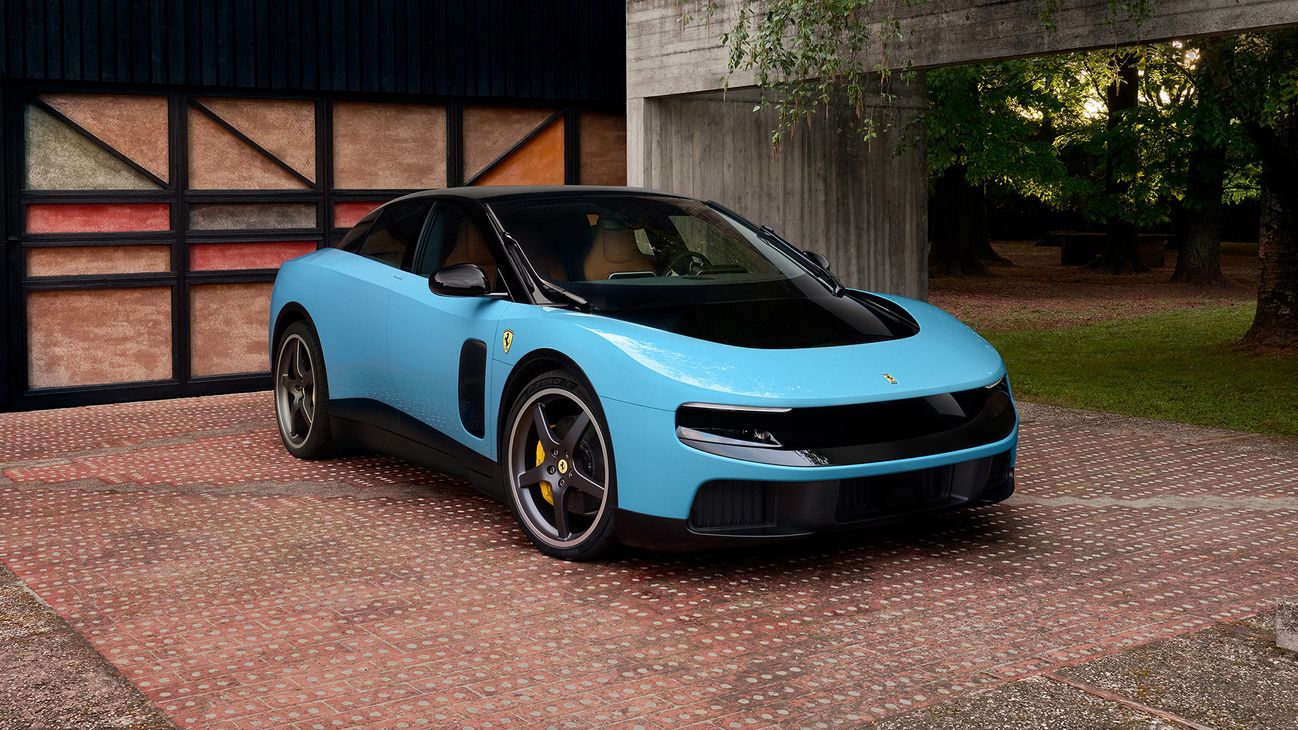
Ferrari Luce
"No, no, definitely not. Especially on Ferrari, Luce. Oh, that's no, no, we're not talking about that."
In the podcast, “Ferrari Luce” is mentioned but then quickly dismissed as not what they’re talking about. So there isn’t enough context in the episode to explain what it is in detail. The only clear takeaway is that they don’t want to discuss it.
“Ferrari Luce” is mentioned in the podcast as something they explicitly do not want to discuss, suggesting it’s a specific Ferrari-related topic or model name. Because the conversation rejects it, the car is being treated as a boundary rather than a detailed subject. The key point here is that it’s referenced only to say “not that.”

BMW E63
"...ome great cars and bikes out there. It's a lovely E63 M6 actually in the car park. There is."
The BMW 6 Series is a bigger BMW meant for comfortable, sporty driving. It’s typically aimed at people who want more luxury and space than a smaller sports car. In the podcast, it’s mentioned because they’re talking about a specific BMW they saw.
The BMW 6 Series is a larger, more upmarket BMW designed for comfortable performance and long-distance driving. In the podcast, it’s referenced through an “E63 M6” example in a car park, tying it to BMW’s performance lineup. It’s brought up as part of a broader discussion about cars they’ve seen or driven.

BMW 330D
"Someone with some class and there's a 330D over there."
This is a BMW 3 Series with a diesel engine. Diesel torque usually makes it feel punchy, especially at lower speeds.
The BMW 330d is a 3 Series diesel variant known for strong real-world torque and relaxed highway driving. In enthusiast circles, it’s often appreciated as a “fast enough” daily that can still feel lively when driven hard.
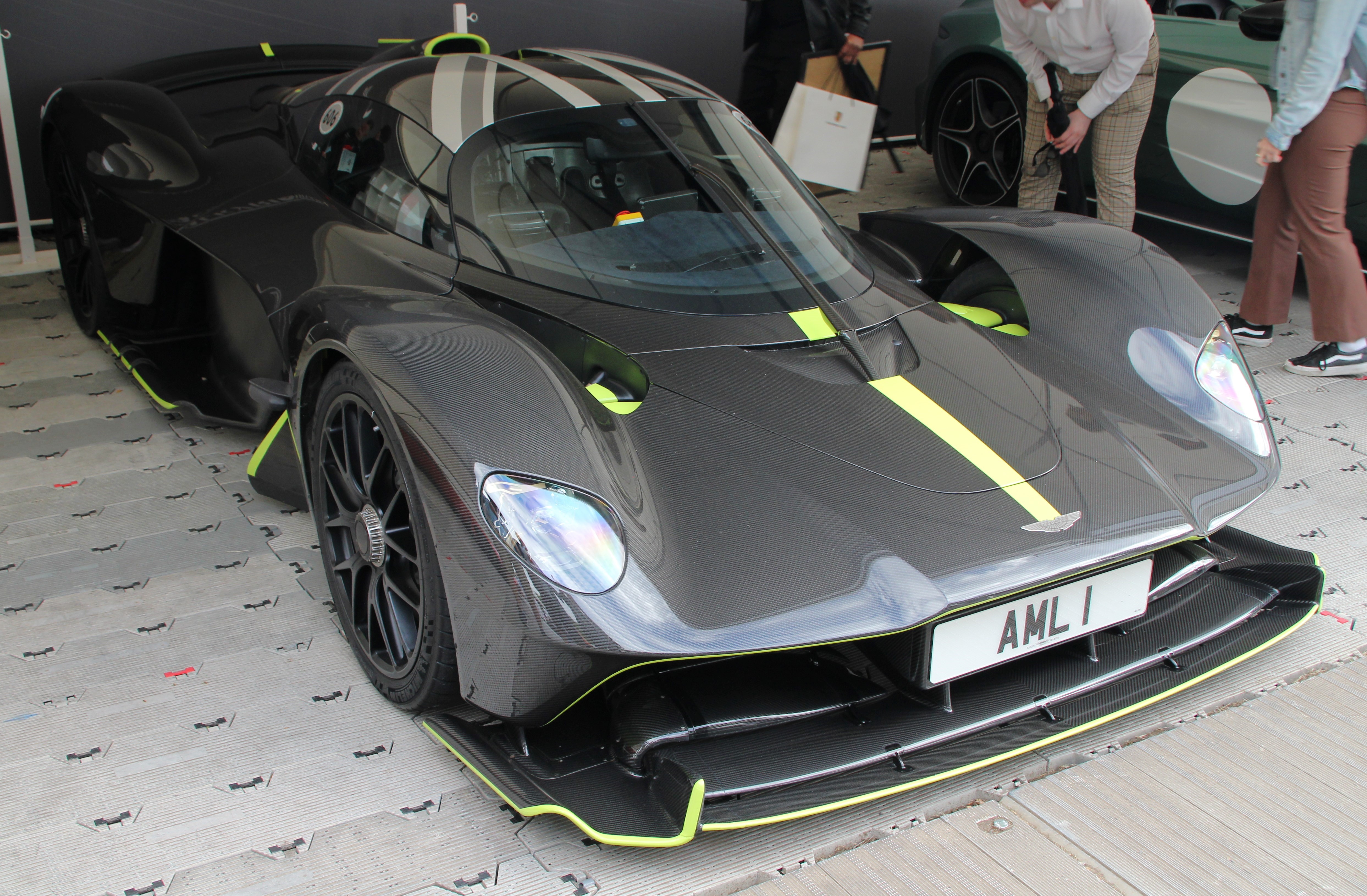
Aston Martin Valkyrie
"And we just managed to have a chance to sit in the Valkyrie... I mean, you sat in it but couldn't close the roof."
The Aston Martin Valkyrie is a track-focused hypercar built around an extreme lightweight, high-performance philosophy. The host’s comment about being unable to close the roof highlights how the Valkyrie’s cockpit packaging is designed around its racing proportions and driver fit.
Michelin UK
"And thanks to our headline sponsor, Michelin UK, we actually have a Formula One wheel..."
Michelin UK is part of Michelin, a well-known tire company. They’re sponsoring the podcast in this segment.
Michelin UK is the UK arm of Michelin, a major tire manufacturer. In this episode it’s mentioned as the headline sponsor, tying the show to tires and motorsport culture.
Formula One wheel
"we actually have a Formula One wheel that I dragged out of my garage this morning. From back in the day, because that's when Formula One wheels were small."
A Formula One wheel is the special wheel used on an F1 race car. It’s built for racing stresses and usually looks smaller than a normal car wheel.
A Formula One wheel refers to the specialized wheel used on an F1 car. F1 wheels are designed for high loads and rapid tire changes, and they’re typically much smaller than what most road-car owners expect.
Michelin tyres
"But we're also brand ambassadors for Michelin [504.6s] and part of that is that we are really lucky [507.9s] we get to run Michelin tyres on our cars. [510.2s] And I don't know about you, mate, [511.6s] but the amount of people who come up to me at events or DM me on social media"
“Michelin tyres” just means tires from Michelin. Tires are what actually grip the road, so the brand can affect how the car feels and handles.
“Michelin tyres” refers to tires made by Michelin, a brand with a reputation for strong grip, durability, and consistent performance. Tires are a key contact point between the car and the road, so the specific tire brand can matter for feel and traction.
V10 engine
"...a 5-litre V10 BMW M6, which again, up there in the top 10, probably have notorious cars to run."
A V10 engine is an engine with 10 cylinders arranged in two banks that form a V shape. More cylinders usually means more parts to maintain, so it can be pricier to run.
A V10 engine is a gasoline engine with ten cylinders arranged in a “V” shape (two banks of five). The V10 layout is known for smooth power delivery and a distinctive sound, but it can also mean higher maintenance costs due to more cylinders and more complex packaging than smaller engines.
supercharged
"I've got a 5-litre supercharged L322 Range Rover with 216,000 miles on it, which is a recent purchase."
“Supercharged” means the engine has a device that pushes extra air into it to make more power. It’s often great for performance, but it can mean more things to maintain.
A supercharged engine uses a compressor (driven by the engine) to force more air into the cylinders. That typically increases power compared with the same engine without forced induction, but it can also add complexity and maintenance demands.

Land Rover Range Rover
"I've got a 5-litre supercharged L322 Range Rover with 216,000 miles on it, which is a recent purchase."
This is a specific older generation of the Range Rover (the L322). The point here is that it’s a big, luxury SUV that can be costly to keep running—especially with very high mileage.
The L322 Range Rover is a full-size luxury SUV from Land Rover’s Range Rover line, known for its strong comfort focus and complex systems. In this segment, the host highlights it as a “recent purchase” with very high mileage, which sets up the theme of expensive ownership and frequent repairs.

BMW M6
"But I genuinely love the M6 as an example. That was one of my, that was sort of my first obtainable dream car."
The BMW M6 is BMW’s performance version of a big, fast luxury car. The host is saying they still want it even if it’s not the easiest or cheapest car to own.
The BMW M6 is BMW’s high-performance M-series coupe/grand tourer, built for strong power and driving feel rather than low running costs. Here it’s used as an example of a car the host “genuinely lusts after,” even while acknowledging it can be expensive to maintain.
Isle of Man TT
"Yeah. Because of a Top Gear episode back in the day where they were... Isle of Man TT."
The Isle of Man TT is a very famous motorcycle race on real roads in the Isle of Man. The host is mentioning it as part of the Top Gear context that influenced his car dreams.
The Isle of Man TT is a famous motorcycle road-racing event held on public roads around the Isle of Man. In this segment, it’s referenced as the kind of Top Gear-era content that helped shape the host’s early “dream car” impressions.
F1 linkage
"Yeah. And I just thought, wow, I've got to own one of those. Yeah. And I think I've just been fascinated by a BMW having a V10 and the whole F1 linkage."
They’re saying the car uses engineering ideas similar to Formula 1. “Linkage” here means the mechanical parts that connect and control how the wheels and suspension move.
“F1 linkage” refers to suspension/steering or drivetrain linkage concepts inspired by Formula 1 engineering. The point is that the car uses hardware geometry and actuation ideas similar to what F1 teams use to control wheel movement precisely.
de-restricted
"And the whole F1 linkage. And the fact that it was capable of de-restricted of well over 200 miles an hour."
“De-restricted” means the car’s electronic top-speed limit has been removed. That lets it go faster than the factory limit under the right conditions.
“De-restricted” means removing or bypassing the car’s electronic speed limiters so it can reach higher top speeds. Many high-performance cars are electronically limited for safety, tire/brake durability, and regulatory reasons.

Bugatti Veyron
"... Because I suppose if you look at things like the Veyron, it's the tyre technology and the real limiting f..."
The Bugatti Veyron is a very extreme supercar designed for top-level speed. To go that fast safely, the tires and grip have to work at their limits too. The podcast mentions it because it’s an example of how tires can be a real limiting factor.
The Bugatti Veyron is a landmark hypercar built to deliver extremely high performance, including very high top speeds. It’s frequently discussed in technical terms because achieving that level of speed depends on more than just engine power—tires and traction limits matter a lot. The podcast mentions the Veyron when talking about limiting factors like tire technology.
autobahn
"Have you had it on the Autobahn at all? I've not, but in a couple of weeks I'm going."
The Autobahn is a major highway system in Germany. It’s famous because some parts don’t have a general speed limit. People use it to test how fast cars can go.
The Autobahn is Germany’s highway network, famous for long stretches where there may be no general speed limit. It’s often used by car enthusiasts and automakers as a real-world venue to test top speed and stability at very high velocities. In this segment, the host is planning to take the car there to see how fast it will go.

Audi R8
"Where I took a, it was an R8, rear wheel drive actually. So the only 570 horsepower one. Yep. We did 331 kilometres an hour, which is 206."
The Audi R8 is a high-performance supercar from Audi. Here they’re talking about a rear-wheel-drive version with around 570 horsepower. They’re describing a special event where they reached about 206 mph.
The Audi R8 is a mid-engine supercar known for its high-performance V10 (in many versions) and track-bred feel. In this segment, the host mentions an R8 that was rear-wheel drive and the “only 570 horsepower one,” tying it to a specific performance configuration. They also reference hitting 331 km/h (about 206 mph) during an Audi UK event.
PS4Ss
"It is, it's on PS4Ss, which were kindly supplied by our friends at Michelin."
PS4Ss are Michelin performance tires (Pilot Sport 4 S). Better tires help the car stick to the road, especially when you’re going fast. In this story, the host is saying the tire setup is at least part of why the high-speed run is possible.
PS4Ss refers to Michelin’s Pilot Sport 4 S tires, a performance street tire designed for strong grip and stability, especially at higher speeds. The host mentions the car is “on PS4Ss,” implying the tire choice is a major factor in how safely (and confidently) the car can reach very high speeds. This is a specific tire model, not just a generic “performance tire.”

Porsche Panamera Turbo SE Hybrid
"I was in the new Porsche Panamera Turbo SE Hybrid. That thing goes from like 150 to 197 miles an hour."
This is a Porsche Panamera that’s a plug-in hybrid, meaning it has both a gas engine and an electric motor. The host is talking about how quickly it can build speed toward very high highway numbers.
The Porsche Panamera Turbo SE Hybrid is a plug-in hybrid version of Porsche’s Panamera, combining a high-output turbocharged setup with an electric motor. The “Turbo SE Hybrid” label matters because it’s designed to deliver very strong acceleration and high-speed capability, which the host is discussing with real-world speed runs.
foot to the floor
"Literally, I was at, was it 317, I think? Yeah, somewhere like that. And I'm like foot to the floor and then I just see the brake lights."
It means the driver presses the gas pedal all the way down. Here, it’s describing maximum acceleration effort.
“Foot to the floor” is a driving phrase meaning the accelerator pedal is fully depressed. In this context, it describes the host giving maximum throttle while trying to accelerate up to very high speeds.
200 miles an hour
"and just not that I would have done it 200 miles an hour. [919.8s] But it wasn't difficult at all."
That’s about 200 mph, which is extremely fast. They’re using it to say the car feels controlled and smooth even at that kind of speed.
“200 miles an hour” is an extreme top-speed reference used to emphasize how stable and composed a car feels at very high velocity. In performance-car discussions, it’s often used to talk about aerodynamics, stability, and driver confidence at speed.
780 horsepower
"It did have an awful lot of, what was it, 780 horsepower. [939.8s] Yeah, destroyed."
Horsepower is a way of describing how strong the engine is. “780 horsepower” means the car has a lot of power, so it can accelerate very hard.
Horsepower is a measure of engine power—how much work the engine can do over time. When someone says a car has “780 horsepower,” they’re describing its potential to accelerate strongly, especially at higher speeds.
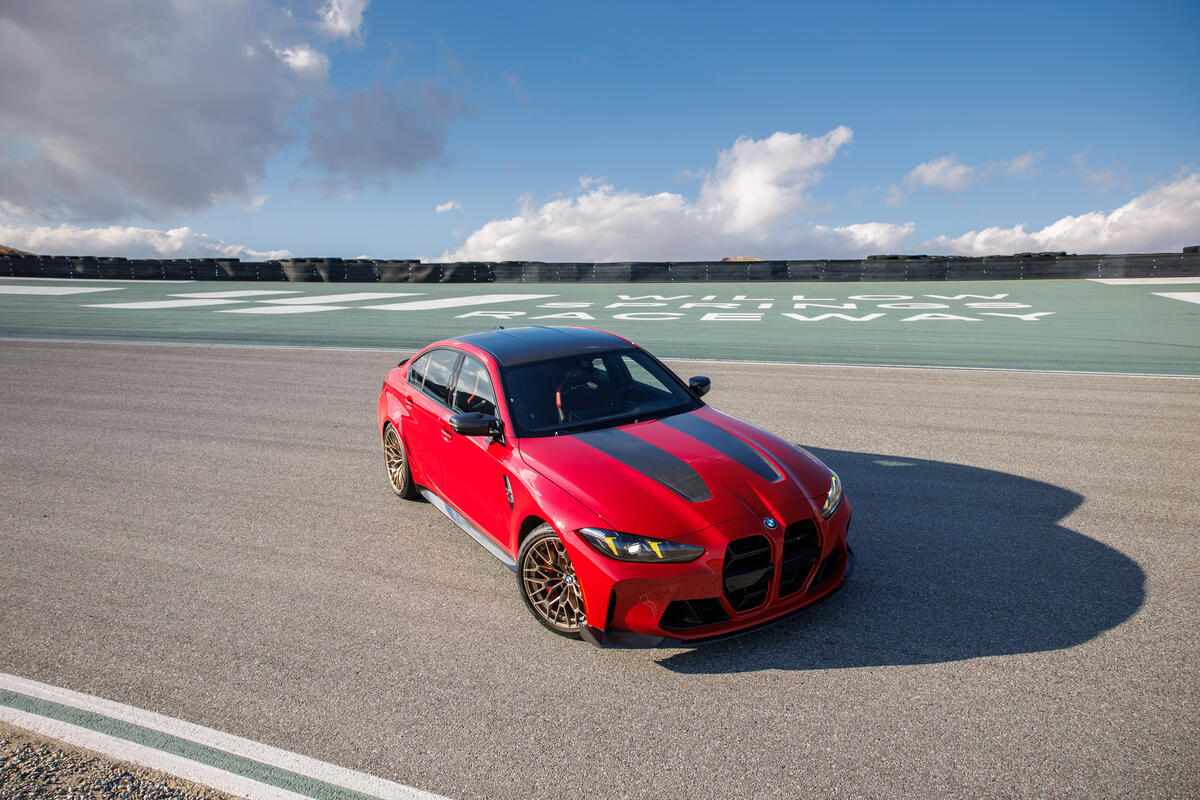
BMW M3
"And I was like, right, as soon as you get to the sign, put your foot down. [953.2s] I'll put mine down in my M3 touring, which is, let's face it, isn't a slow car."
That’s a BMW M3 wagon. It’s the sporty, high-performance version of the 3 Series wagon, meant to be quick rather than just practical.
“M3 touring” refers to the BMW 3 Series Touring in the M3 performance trim. It’s notable because the M3 is BMW’s high-performance version, and the Touring body adds practicality while keeping serious straight-line and track-capable hardware.
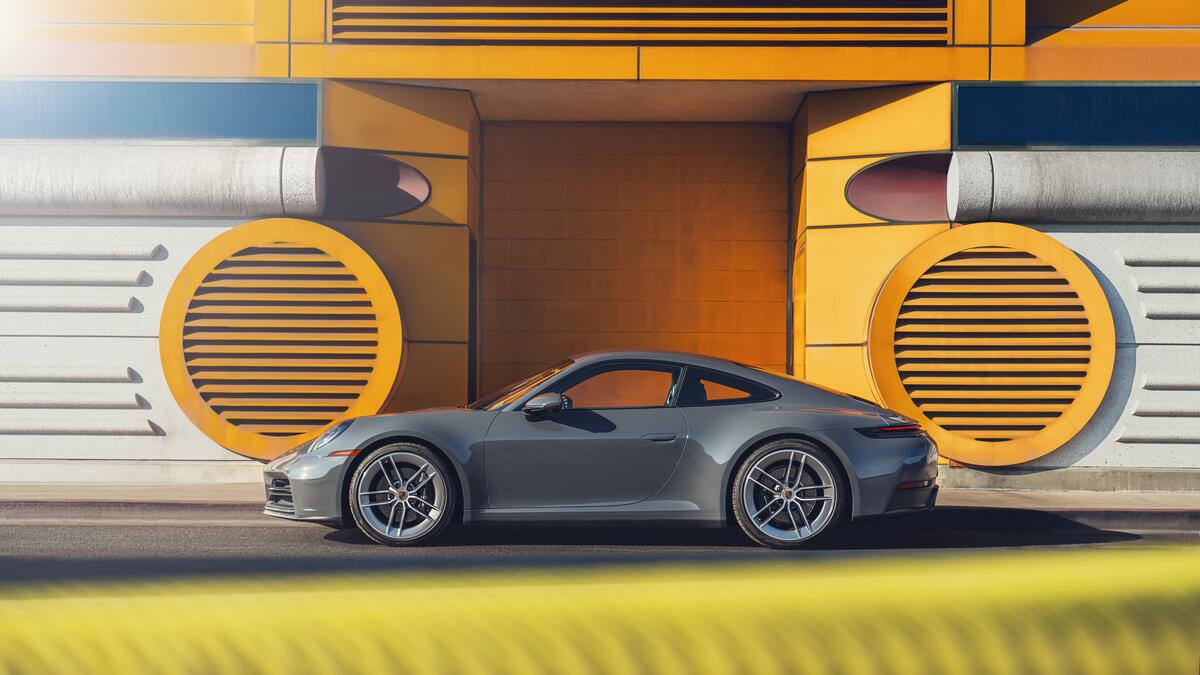
Porsche 911 Turbo S cabriolet
"because I'd had a 911 Turbo S cabriolet the week before in the UK, and that's 711 horsepower, ... only 800 Newton meters of torque"
The Porsche 911 Turbo S cabriolet is a very powerful 911 with a turbo engine, and it’s a drop-top. They’re comparing how much it can pull (torque) versus another Porsche to explain why it feels different.
The Porsche 911 Turbo S cabriolet is a high-performance 911 variant with a turbocharged engine and all-weather usability thanks to the convertible body style. The host contrasts its torque figure (800 Nm) with the Panamera’s, using torque to explain how different Porsche models feel at speed.
torque
"only 800 Newton meters of torque instead of the 1,000 in the Panamera."
Torque is the car’s pulling power. More torque usually means the car feels stronger and easier to move quickly without needing to rev as much.
Torque is the engine’s twisting force that determines how strongly a car accelerates and how easily it pulls from low to mid speeds. In this segment, the host uses torque numbers (800 Nm vs 1,000 Nm) to explain why the Panamera can feel more relaxed and effortless at steady high-speed cruising.
PDK
"It was a PDK as well, which I quite enjoyed."
PDK is Porsche’s automatic gearbox. It shifts quickly by using two clutches, so the car feels more responsive than many older automatics.
PDK is Porsche’s dual-clutch automatic transmission. It uses two clutches to pre-select the next gear, which helps deliver fast, smooth shifts compared with a traditional torque-converter automatic.
Porsche 911 Turbo S
"Which at the time was the Turbo S.1, so 650 horsepower, so one of that."
The Porsche 911 Turbo S is the high-performance, turbocharged 911 variant built for maximum acceleration and strong real-world punch. Here it’s described as “the opposite” of the base 992, with the host quoting a 650 horsepower figure to frame the performance gap.
Thruxton
"I did a BMW thing at Thruxton, that M experience."
Thruxton is a UK race track. The host is saying they tested a BMW there, not just on normal roads.
Thruxton is a motorsport circuit in the UK, often used for track days and performance testing. Mentioning it in the context of an “M experience” suggests the host was evaluating how a BMW handles under more track-like conditions.
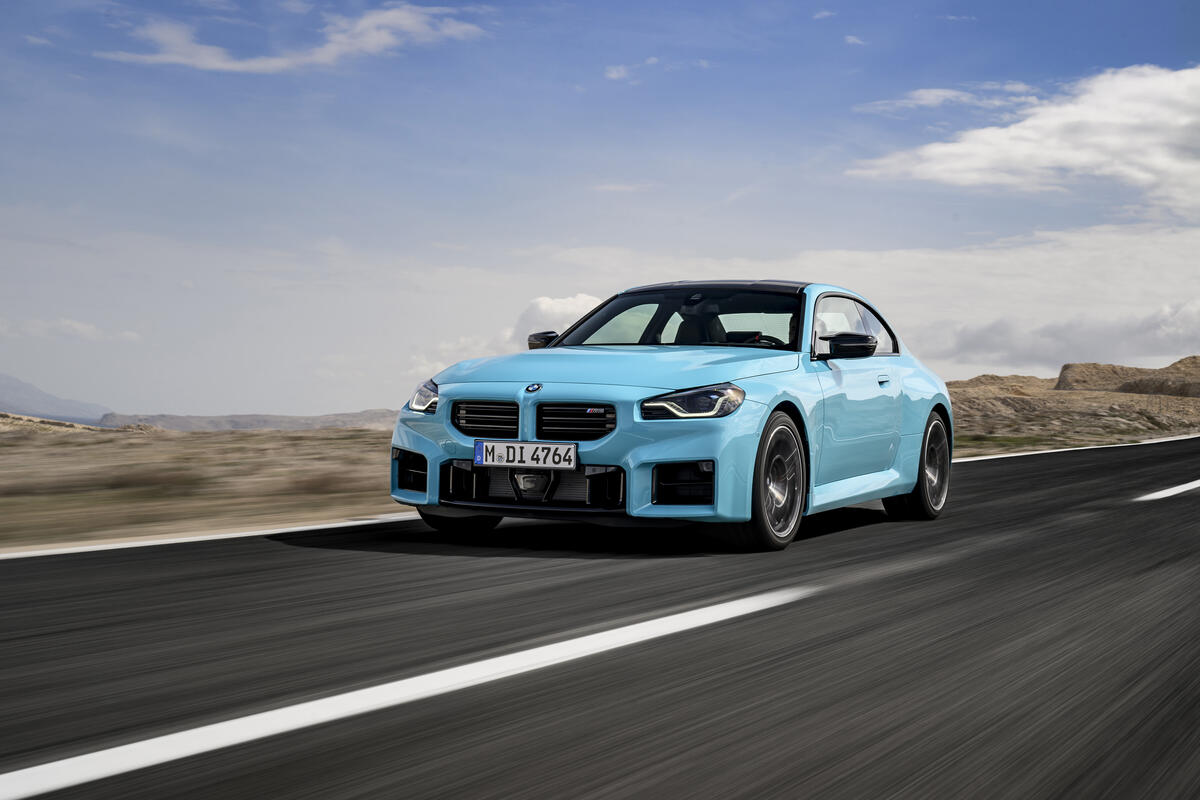
BMW M2
"And I'd have the M2 when we took it onto the Norse lifer."
The BMW M2 is BMW’s smaller performance model. It’s designed to feel sporty and fun to drive, especially when you push it.
The BMW M2 is a compact, track-focused M model built around BMW’s performance chassis and rear-wheel-drive driving feel. In this segment, it’s referenced as the car the host took onto the “Norse lifer,” implying a more spirited evaluation than the road-based 911 comparison.
long wheelbase
"and I designed some branded slippers for the back of that [1161.1s] because it was a long wheelbase and I thought,"
“Long wheelbase” means the car’s body is stretched so there’s more room between the wheels. That usually makes the back seat more comfortable, with more legroom.
A long wheelbase means the distance between the front and rear axles is extended compared with the standard version. That extra space usually improves rear-seat legroom and ride comfort, which is why long-wheelbase luxury cars are popular for chauffeur use.
V12
"so the long wheelbase seven series with the V12. It actually aspirated 6.0-litre V12, which is essentially what they put in the Phantom, you know, it was cross-developed."
A V12 is an engine with twelve cylinders. It’s known for being very smooth and refined, which is why it’s common in luxury cars.
A V12 is an engine with twelve cylinders arranged in a “V” shape. It’s often associated with smooth power delivery and strong refinement, which is why V12s show up in high-end luxury cars like the Rolls-Royce Phantom.
cross-developed
"which is essentially what they put in the Phantom, you know, it was cross-developed."
“Cross-developed” means the engineering was shared or jointly designed between companies. In this case, it suggests the engine used in the BMW and the Rolls-Royce are closely related.
“Cross-developed” means two companies worked together on the same or closely related engineering—so the BMW and Rolls-Royce V12s are described as being essentially the same design lineage. This kind of shared development is common when manufacturers want to leverage expertise and reduce duplication.

Rolls-Royce Phantom
"...re V12, which is essentially what they put in the Phantom, you know, it was cross-developed."
The Rolls-Royce Phantom is a very high-end luxury car. It’s known for being extremely smooth and comfortable, and it uses a V12 engine. The podcast mentions it because the V12 was developed specifically for that car.
The Rolls-Royce Phantom is a flagship luxury sedan known for its comfort, refinement, and powerful engine setup. The podcast specifically mentions its V12, highlighting that the engine was cross-developed for the car. It’s discussed because it represents the top end of Rolls-Royce engineering and luxury.
heated and cooled seats
"It had heated and cooled and massage front seats [1296.3s] and heated and cooled and massaged rear seats, [1298.4s] which I've never seen since."
These are seats that can warm you up or cool you down. It’s a luxury feature that helps you stay comfortable year-round.
Heated and cooled seats use seat heaters and a cooling system (often via HVAC airflow or a refrigerant-based setup) to regulate cabin comfort. It’s a premium feature that can make long drives much more comfortable in both hot and cold weather.
massage seats
"It had heated and cooled and massage front seats [1296.3s] and heated and cooled and massaged rear seats, [1298.4s] which I've never seen since."
Massage seats have motors or air bladders inside the seat that provide a massaging effect. It’s a comfort feature you usually only see on luxury cars.
Massage seats use built-in actuators and air bladders (depending on the design) to create vibration or kneading motions in the seat cushions. They’re typically found on higher trims because they add complexity, weight, and cost.
facelift
"Oh, so a really late one. [1306.8s] It's a facelift, so the slightly less ugly bang-a-bust-ear of the 7 Series."
A facelift is when a car gets refreshed partway through its model run. Usually it means updated styling and features, not a completely new car.
A facelift is a mid-cycle refresh where a car’s styling and equipment are updated without changing the full generation. Common changes include revised headlights/taillights, bumpers, interior updates, and sometimes updated infotainment or powertrain tuning.
camshaft sensor
"I think it needed, at one point, a camshaft sensor or something like that, a few hundred quid."
A camshaft sensor is a small electronic sensor that helps the car’s computer know exactly where the engine’s timing is. If it fails, the engine can run poorly or throw warning lights.
A camshaft sensor tells the engine control unit where the camshaft is in its rotation. That timing information helps the engine manage ignition timing and fuel injection accurately.
air conditioning (AC)
"And yeah, I think it had the air conditioning done. You know, there wasn't anything that went wrong on it, which you wouldn't think, would you?"
Car air conditioning is the system that cools the cabin. If it was “done,” it usually means it was repaired or serviced so it works properly again.
Automotive air conditioning uses a refrigerant system and compressor to cool the cabin. When it’s “done” or repaired, it typically means the system was serviced so it can blow cold air reliably.
cruise control
"took it to the Nurbug ring, had it on cruise control at 155 miles an hour in the Autobahn."
Cruise control is a feature that lets you set a speed, and the car tries to hold it for you. It’s mainly for long highway drives to reduce driver fatigue.
Cruise control is a driver-assist system that maintains a set speed without you keeping your foot on the accelerator. On highways, it reduces fatigue and helps keep speed steady.
Nordschleife
"whilst my friend Ben drove around the Nurbug ring. And I was trying to make some cheese and crackers and drink champagne whilst we were at the Nordschleife."
The Nordschleife is the famous long Nürburgring track section with lots of turns. It’s tough on both the car and the driver, so it’s a big deal when someone takes a car there.
The Nordschleife is the long, twisty “North Loop” section of the Nürburgring. It’s known for being demanding on tires, brakes, cooling, and driver concentration, which is why it’s such a popular proving ground.
pre-purchase inspection
"when I first take it to somewhere, a specialist, and have it inspected. I genuinely don't know what they're going to say."
A pre-purchase inspection (PPI) is when a specialist checks a car before you buy it, looking for hidden problems. The goal is to reduce the risk of expensive surprises after purchase by identifying issues early.
5-litre one
"[1506.5s] I've got the 5-litre one, so it's the actual last of the Line L32 too. [1510.7s] I think Clarkson described it as very chintzy with the grilles and stuff,"
“5-litre” is the engine size. Bigger engines can make more pulling power, which is especially noticeable in heavier cars.
“5-litre” indicates the engine’s displacement—about 5.0 liters total volume swept by the pistons. Larger displacement engines often produce more torque, which matters for heavy or luxury cars.
Line L32
"[1506.5s] I've got the 5-litre one, so it's the actual last of the Line L32 too. [1510.7s] I think Clarkson described it as very chintzy with the grilles and stuff,"
“Line L32” is likely a code that identifies a specific version of the car. It helps tell which exact variant you’re looking at.
“Line L32” sounds like an internal model/production code used to identify a specific variant or run. These codes can help distinguish which engine, trim, or update package a car has.
Saudi Prince
"It was originally owned by Saudi Prince [1528.7s] because his BA gold card was in the original book pack"
They’re saying the car was owned by a Saudi royal. That can matter because it might affect how well it was kept and what paperwork you can find.
This is a reference to a prior owner being a Saudi royal. In car-buying context, prior ownership can matter for documentation, storage conditions, and how the car was maintained.
book pack
"because his BA gold card was in the original book pack [1531.8s] and I was able to do some digging."
A “book pack” is the folder of manuals and paperwork that comes with the car. Having it can help you confirm what the car is and what’s been done to it.
A “book pack” is the set of manuals and documents that come with a new car (or were kept with it). Complete documentation can make it easier to verify service history and ownership details.
state of disrepair
"and there's no paperwork with it [1538.4s] and it's in a state of disrepair, but that's a whole other story."
“State of disrepair” means the car isn’t in good shape and probably needs repairs. Even if the price is low, fixing everything can get expensive.
“State of disrepair” means the car is not in good working condition and likely needs repairs across multiple systems. For buyers, this often signals deferred maintenance and can turn a cheap purchase into higher total costs.
no paperwork
"and there's no paperwork with it [1538.4s] and it's in a state of disrepair, but that's a whole other story."
“No paperwork” means you don’t have the records or documents that prove what’s been done to the car. Without that, it’s harder to know what condition it’s really in.
“No paperwork” typically means missing service records, ownership documents, or manuals. That makes it harder to verify maintenance history and can increase uncertainty about hidden problems.
PCP
"The scream when I see stuff about EVs, this and PCP, [1593.3s] lease deals, that, because, you know, these cars are designed"
PCP is a UK way to finance a car with monthly payments. At the end, you usually have options like returning the car or paying a final amount to keep it.
PCP (Personal Contract Purchase) is a UK car finance plan where you pay a deposit and monthly payments, then choose to return the car, buy it, or refinance at the end. It’s often used to make newer cars feel cheaper month-to-month, but it can encourage frequent upgrades.
lease deals
"The scream when I see stuff about EVs, this and PCP, [1593.3s] lease deals, that, because, you know, these cars are designed"
A lease is like renting a car for a fixed time. You pay monthly, and when the lease ends you typically give the car back.
A lease deal is an agreement where you pay to use a car for a set period, then return it (or sometimes buy it) at the end. In the context of the episode, the host argues that leasing encourages short ownership cycles, which increases how often new cars must be manufactured.
Tesla
"than if I went and leased a new Tesla, I don't know."
Tesla is a company that makes electric cars. The host brings it up as an example of a brand-new EV you might lease instead of keeping an older car running.
Tesla is an EV brand known for battery-electric vehicles. Here it’s mentioned as the kind of new EV the host contrasts with running an older diesel Jaguar, in an argument about environmental impact.
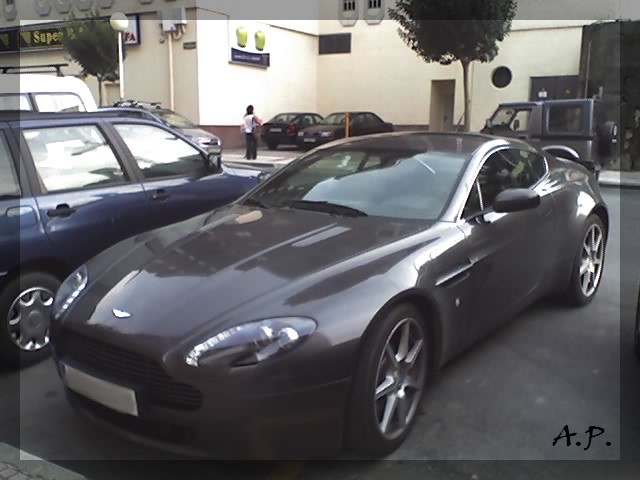
Aston Martin V8 Vantage
"And if you look at Aston Martin, for example, V8 Vantage's, you can get a nice example for some mid 20s."
The Aston Martin V8 Vantage is a smaller Aston Martin sports car. It’s popular because it has a V8 engine and feels like a “real” Aston without costing as much as the biggest models.
The Aston Martin V8 Vantage is a compact British sports car known for its V8 engine and classic front-engine, rear-wheel-drive layout. It’s often discussed as a more attainable entry point into Aston Martin ownership compared with the brand’s larger grand tourers.

Aston Martin DB9
"Now, if you want it, a DB9 is even cheaper."
The Aston Martin DB9 is a bigger Aston Martin meant for comfortable fast driving. It’s known for having a strong V12 and for being a more affordable way into the DB lineup.
The Aston Martin DB9 is a grand touring (GT) Aston Martin built around a powerful V12 and a comfortable, long-distance focus. It’s a notable “big Aston” model that enthusiasts often compare on value because it can be cheaper than newer DB models.

Aston Martin DB7
"Yeah, DB7. They've gone really cheap now. I could see you in a seven. Oh, I can't stand the seven DB7."
The Aston Martin DB7 is an older Aston Martin grand tourer. People talk about it because you can sometimes find one for less money than newer Aston models, but it depends a lot on the specific car and maintenance history.
The Aston Martin DB7 is an earlier grand tourer that’s often remembered for its mix of classic Aston styling and different engine options over its production. In enthusiast discussions, it comes up as a “cheap Aston” compared with later models, but it’s also a car people debate based on how it’s been maintained.
low mileage
"Went at historic the other day for 12, 12 and a half thousand. It was low mileage."
“Low mileage” means the car hasn’t been driven very much. That can be a good sign for wear and overall condition, especially on older cars.
“Low mileage” means the car has been driven relatively few miles compared with typical usage. In buying decisions—especially for older performance cars—it can matter because it may reduce wear on components and help preserve condition.
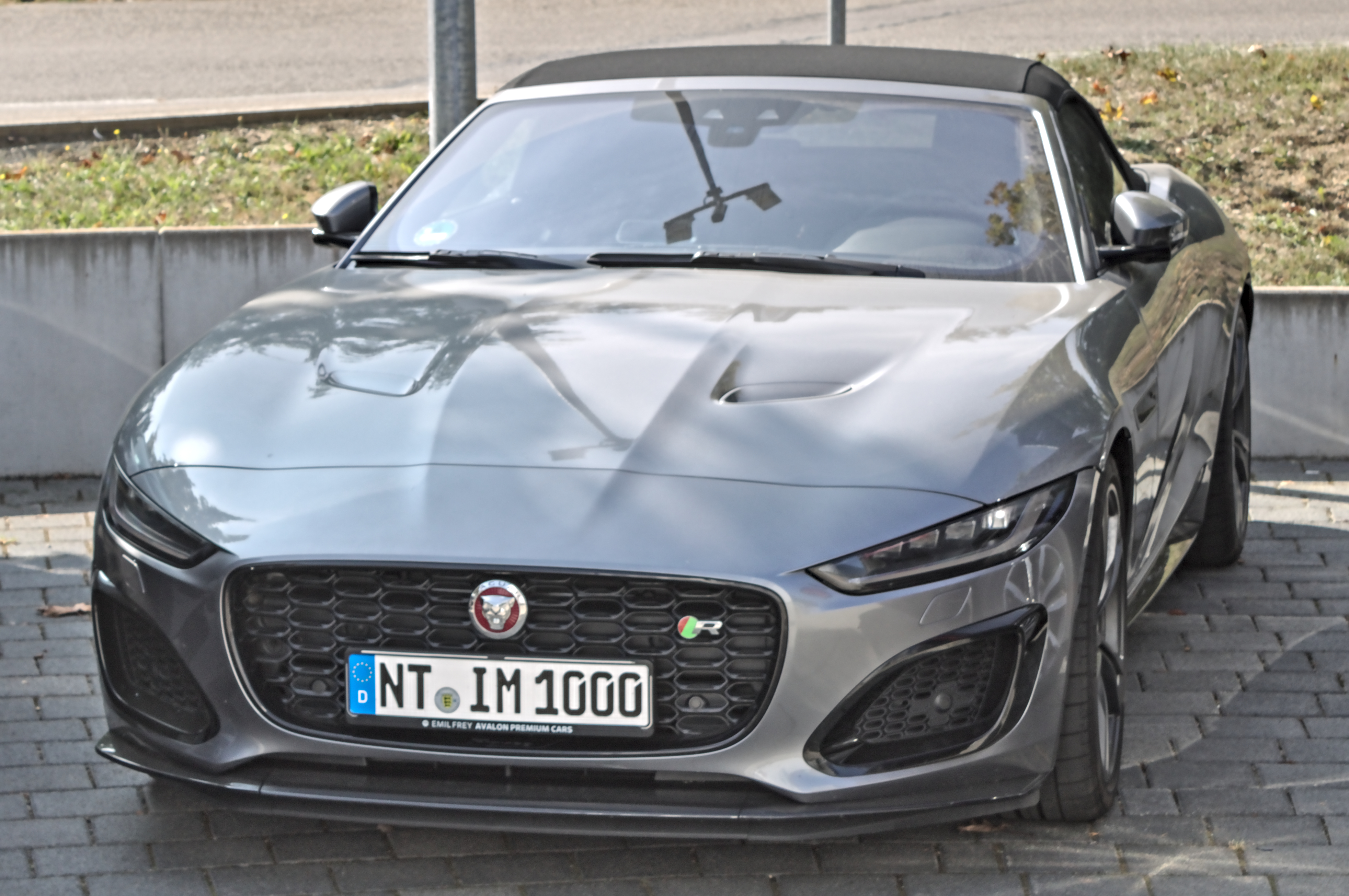
Jaguar F-Type
"But yeah, I mean, F types. You get a Ford Transit key thrown in for free."
The Jaguar F-Type is Jaguar’s sports car. The hosts are basically saying you can find them for less money than you might think.
The Jaguar F-Type is Jaguar’s modern sports car, offered in multiple engine and trim configurations. In this segment, it’s brought up as an example of a car you can buy relatively cheaply now, implying depreciation has made it more accessible.

Ford Transit
"But yeah, I mean, F types. You get a Ford Transit key thrown in for free. Yeah, exactly."
The Ford Transit Custom is a van made for work. People use it to carry tools, equipment, or passengers for business. The podcast mentions it as part of a practical comparison involving keys and deals.
The Ford Transit Custom is a light commercial van used for work and everyday hauling needs. It’s relevant in the podcast because it’s mentioned in a practical, “what you get with the deal” kind of context. That makes it a contrast point to the performance cars being discussed.

Volvo XC90
"And they're always angled really funny because I had an XC90 for a while. You can't see it because it's tilted."
The Volvo XC90 is a big family SUV. The host is talking about how the driving position and the way the car is angled can make visibility feel different.
The Volvo XC90 is a large family SUV known for its comfort-focused design and specific driver seating position. Here, the host mentions having one and notes the seat/visibility angle was “tilted,” which affects how you can see the car’s surroundings.

Maserati Grand Sport
"whether it's like a Maserati Grand Sport, which is today's video, for £15,000, a limited Maserati."
Maserati is an Italian luxury/performance brand. The “Grand Sport” name here is being used as an example of a high-end Maserati you might find for a lot of money when buying used.
The Maserati Grand Sport is a Maserati model name used for certain performance-focused variants. In this episode it’s mentioned as an example of a pricey, used exotic that can cost tens of thousands of euros depending on market and condition.
right hand drive
"I think part of it is because obviously right-hand drive, there's less right-hand drive markets across the world, so they're not quite a desirable light for light generally."
Right-hand drive (RHD) means the steering wheel is on the right side of the car. Because fewer countries use RHD, the supply of buyers is smaller, which can affect used-car demand and pricing.
car tax
"[1805.6s] I've just bought this Range Rover, it's about 800 quid a year to tax. [1808.5s] Yeah, because of, you know, whatever. [1810.5s] People are like, God, that's awful."
“Car tax” is the money you have to pay to the government just to own and legally drive a car. The episode is pointing out that different countries charge very different amounts.
“Car tax” refers to government charges tied to owning and registering a vehicle, which can vary a lot by country. In this segment, the hosts compare UK costs (about £800/year) versus much higher costs in places like Belgium and Ireland.
illegal to finance a car
"Oh, I was watching Yanomai's actually [1834.7s] and he's doing some stuff about Cyprus at the moment. [1837.7s] And it turns out if you, it's illegal to finance a car in Cyprus."
The host is saying that in Cyprus, it’s not allowed to get a loan to buy a car. So if you see someone driving an expensive car there, they probably paid for it outright.
This refers to a legal restriction where car loans/financing arrangements are not allowed in Cyprus. The host uses that rule to explain why someone driving a supercar there would likely have bought it with cash instead of financing.

Ferrari 458
"OK. [1841.9s] So if you're in Cyprus and you're rolling around in a Ferrari 458 [1844.5s] or something, you're a proper baller because you own it cash."
The Ferrari 458 is a very expensive, high-performance sports car from Ferrari. In this story, it’s used to show that in Cyprus you basically have to pay cash for a car like that because financing is not allowed.
The Ferrari 458 is a mid-engine supercar from Ferrari, famous for its naturally aspirated V8 and high-performance driving feel. The host uses it as an example of someone in Cyprus who can only “roll around” in one if they own it outright, since financing is illegal there.
HP a car
"you'd either get a bank loan or HP a car. The whole PCP thing wasn't a thing."
HP is another monthly-payment way to buy a car. You keep paying until you’ve paid it off completely, and then you own it.
HP (hire purchase) is a traditional UK-style financing method where you pay a deposit and then installments until the car is fully paid off. Ownership transfers to you once the final payment is made, unlike PCP where you often face a balloon payment at the end.
monthly payment looks attractive
"The car can have a list price of whatever they want as long as the monthly payment looks attractive to someone. Because people don't look, do they?"
Sometimes people choose based on what they pay each month, not the full cost of the car. That can make a more expensive car seem like a better deal.
This describes a common financing psychology: shoppers focus on the monthly payment rather than the total cost of the deal. In PCP-style plans especially, structuring payments can make the car feel affordable even when the overall price is higher.
RRP
"Porsche GB, if you go onto like most car websites... So that includes the first year of road fund... So Porsche don't, their RRP is not, doesn't include that."
RRP (recommended retail price) is the manufacturer’s headline price. Here, the host argues that Porsche’s RRP doesn’t include certain UK “on-the-road” costs (like the first year of road tax), unlike how some other brands present pricing, which makes comparisons misleading.
road fund
"like, so you look at the RRP on the road costs. So like Audi, all the other Germans, usually they'll give you on the road price. So that includes the first year of road fund... which is really punchy on a 911."
Road fund is the UK road tax you pay to legally drive the car. They’re saying the first year of that tax is particularly costly on a 911.
In the UK, “road fund” refers to vehicle road tax (Vehicle Excise Duty). The segment highlights that the first year of road tax can be especially expensive on a Porsche 911, so the true “on-the-road” cost rises beyond the base price.
delivery fees
"which these days is really high on a sports car. Like a delivery fee in there sometimes. Yeah, delivery fee, all that's quite..."
A delivery fee is extra money for getting the car to you or to the dealer. It’s one of the add-on costs that can make the final price higher than the sticker number.
A delivery fee is a charge added to the purchase price for getting the car to the customer (or to the dealer) and handling logistics. The host groups it with other “on-the-road” costs that some brands include in their advertised price, which affects how you should compare against Porsche’s headline RRP.

Alpine A110
"Yeah, really definitely get the Bose. But yeah, it's just, it's gone from 80 grand car now to a 110 grand car in not, not long, but yeah, I still desperately want one."
The Alpine A110 is a small sports car designed to feel nimble and fun to drive. It’s made to be light and responsive rather than just fast in a straight line. The podcast mentions it because its price has risen a lot over time.
The Alpine A110 is a lightweight, mid-engine sports car known for its agile handling and driver-focused character. It’s often discussed because it has a strong enthusiast following and a reputation for being fun on twisty roads. The podcast references its price jump, highlighting how it’s moved up in the market.

Aston Martin Vantage
"It's, well, it's going to mown in there, but 911s used to be, I don't know, like I said, 80, 90 grand, a vantage entry level. That's the heart and used to be like 70 grand. They were relatively attainable. Vantage now is like best part 200 grand."
The Aston Martin Vantage is one of Aston Martin’s sports cars. They’re saying it used to be much cheaper, and now it costs far more and you don’t see as many on the road.
Aston Martin Vantage is a performance sports car from Aston Martin, typically positioned as the brand’s more accessible “entry” model. The segment compares how Vantage pricing has risen dramatically (from around ~70k to “best part 200 grand”), and notes how rarely you see the newer ones compared with older examples.

Vauxhall Corsa
"Yeah, it was. I remember my grandma's Vauxhall Corsa B. Vauxhall Corsa B."
The Vauxhall Corsa 5-door is a small car with five doors, made for everyday use. It’s the kind of car people choose for practicality and easy getting in and out. The podcast mentions it because the speaker remembers their grandma’s Corsa.
The Vauxhall Corsa 5-door is a practical small hatchback, commonly chosen for everyday driving and easy access to the rear seats. The podcast references a family memory of a Vauxhall Corsa B, which helps ground the discussion in real-world ownership rather than performance. It’s mentioned as a familiar, relatable car in the speaker’s background.
the Ring
"I think it was your first ever lap of the ring in the Z4. Yes."
“The Ring” usually means the Nürburgring in Germany. It’s a very famous race track that car people use to judge how good a car is in real driving conditions.
“The Ring” is enthusiast shorthand for the Nürburgring in Germany, a famous circuit used to evaluate sports cars. It’s especially well-known for its long, technical Nordschleife layout, where small mistakes are punished and driver skill matters a lot.
No Broke
"Because it was your first lap of the No Broke. Yes, it was definitely on that trip where it was the first time I'd ever been there and the first time I would have lapped the ring in my Z4, which is the sort of only car I had for about three years at the time."
“No Broke” sounds like the event or track spot where they went for their first lap. The speaker is saying it was their first time there and that it’s the kind of place where things happen during laps.
“No Broke” here refers to a specific track-lapping event or venue the speaker calls out as the place they did their first lap. The context (“first time I’d ever been there” and “lapped the ring”) suggests it’s a recurring motorsport gathering where track conditions and incidents are common.
yellow flag
"And I don't think, I can't remember the last time I did a lap there where there wasn't a yellow flag. Yep. There's always something going on, whether it's an oil spill from earlier and there's some cones out."
A yellow flag means “something is wrong on the track ahead.” It’s a warning to slow down and watch out for hazards like crashes or debris.
A yellow flag is a track warning that there’s a hazard ahead—often a crash, debris, or fluid on the racing surface. Drivers typically must slow down and be prepared for changing conditions until the flag is cleared.
oil spill
"There's always something going on, whether it's an oil spill from earlier and there's some cones out. Couple of YouTubers crashing. Yeah, exactly."
An oil spill on track is a contamination that can drastically reduce tire grip, making braking and cornering less predictable. It’s especially dangerous because drivers may not expect the reduced traction until they hit the affected section.
Nürburgring
"That one we stood on at N24 that time. Yes. And it was just, I remember going past it and feeling the heat, such intense heat. ... Most pet trades now to go to Nürburgring."
The Nürburgring is a legendary race track in Germany. A lot of car fans travel there to drive their own cars and experience what track driving feels like.
The Nürburgring is a famous motorsport venue in Germany, best known to enthusiasts for its long Nordschleife (“North Loop”) circuit. It’s become a pilgrimage spot for drivers because it’s where people go to experience high-speed laps and “real” track driving in a way that feels more raw than many closed circuits.

Audi RS5
"And then when you do go to a brand, don't ask for an RS5, ask for like, you know, an A1 or something."
The Audi RS5 is a sporty, higher-performance version of the Audi A5. People mention it because it’s a big “dream car” upgrade compared to more basic Audis.
The Audi RS5 is a high-performance version of Audi’s A5, built by Audi Sport (RS line). It’s known for being a “step up” car that enthusiasts often use as a benchmark for what they want next in the lineup.

Audi A1
"And then when you do go to a brand, don't ask for an RS5, ask for like, you know, an A1 or something."
The Audi A1 is a smaller, more basic Audi hatchback. The point here is that you start with something like this instead of immediately going for a top sporty model.
The Audi A1 is Audi’s small, entry-level hatchback in the A1 lineup. In this conversation, it’s used as the “start somewhere” alternative to jumping straight to a performance model like the RS5.

Porsche 911 GT3
"I'd have had the best car, my dream car, I'd have had a GT3 at the age of like 18, 19... we all, well, you and I would love a GT3 in our garage..."
The Porsche 911 GT3 is one of Porsche’s most track-oriented versions of the 911. It’s treated here as the kind of “ultimate dream” car someone might want at a young age.
The Porsche 911 GT3 is a track-focused 911 variant built for high grip and driver engagement, typically with a naturally aspirated flat-six and motorsport-derived tuning. In the segment, it’s used as the “dream car” people want early—contrasted with the idea of building up to it.

BMW 130i
"So the first almost new car that I bought, it was six months, five or six months old, approved 130i."
The BMW 130i is a compact 1 Series model known for its rear-wheel-drive layout and enthusiast-friendly straight-six engine character (in the E87 generation). Here it’s described as the speaker’s first “almost new” purchase, highlighting it as an early step into BMW ownership.
approved 130i
"So the first almost new car that I bought, it was six months, five or six months old, approved 130i."
“Approved” usually means the dealer certified the used car—checking it and offering some kind of coverage—so it’s less risky than buying an unknown used car.
“Approved” here refers to a dealer-backed used-car certification program (BMW Approved Used), where the car is inspected and comes with defined coverage. It matters because it signals the speaker bought a nearly new car with some warranty/assurance rather than a random private sale.
Cotswolds BMW
"I remember that episode very well. So the first almost new car that I bought... approved 130i. And I remember, so it was, I picked that up from Cotswolds BMW."
This is the name of the BMW dealership the speaker bought the car from.
Cotswolds BMW is a BMW dealership location the speaker used to buy the BMW 130i. It’s relevant because it anchors the story in a specific UK purchase experience rather than a generic “dealer.”
McLaren
"But, and it was right next door to McLaren, and then that became Harrod's."
McLaren is a famous car brand known for supercars and racing. Here it’s mentioned as a nearby landmark.
McLaren is a British supercar and racing brand, and in this segment it’s used as a landmark reference for where the BMW showroom was located. That helps listeners picture the speaker’s London environment around high-end performance brands.
Harrods
"But, and it was right next door to McLaren, and then that became Harrod's."
Harrod’s is a famous luxury department store in London. The speaker is saying the showroom area later became Harrod’s.
Harrod’s is a well-known luxury department store in London. The speaker uses it to describe how the location next to the showroom changed over time, grounding the story in a specific high-end retail area.

Mclaren F1
"And then there was that McLaren F1 that they could never sell, [2853.0s] which is just, again, when you think about that, I'm sure it was, [2855.8s] I remember it was, it was, what was the McLaren F1 when it was new?"
The McLaren F1 is a famous, very rare supercar built by McLaren. The host is talking about how much it cost when it was new and how the price later dropped, which shows just how crazy the money side of these cars can be.
The McLaren F1 is a legendary supercar from McLaren, famous for its extreme performance and unique three-seat layout. In this segment, the host discusses its original pricing and how the asking price later dropped, highlighting how rare and valuable these cars can be.
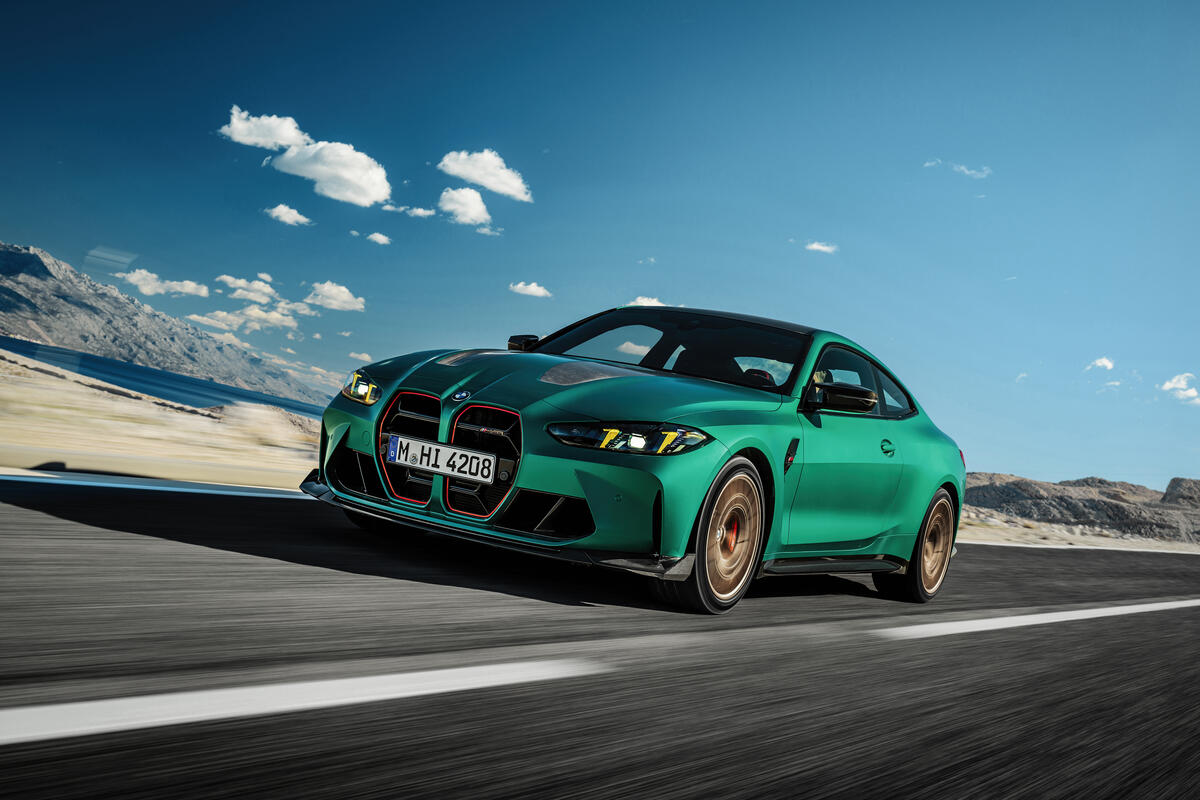
BMW M4
"And I remember the M4, and this guy came out, [2890.3s] and I can't remember his name or anything, [2891.7s] because it was 2020 years ago now, and he came out, [2894.7s] and I was talking, and he could see that I was a proper petrolhead,"
The BMW M4 is a high-performance BMW model from BMW’s “M” department. In this part of the story, it’s just one of the cars the host remembers seeing at the dealership.
The BMW M4 is BMW’s performance coupe/convertible line (part of the M division), built for sharper handling and stronger engines than standard 4 Series models. Here it’s mentioned as part of the dealership context while the host is picking up another car, so it helps listeners place the scene in a modern BMW showroom.
petrolhead
"and he was a proper petrolhead, which is quite rare as a salesperson, [2900.4s] because so many of them are just salespeople, [2902.1s] they're not interested in cars. [2903.6s] And so I was picking up the 130, and he said, [2905.6s] oh, you're a bit of a petrolhead,"
A “petrolhead” is just a car enthusiast—someone who really cares about cars and enjoys them.
“Petrolhead” is car-enthusiast slang for someone who genuinely loves cars—often focusing on driving feel, engines, and automotive culture rather than just transportation.

BMW E60 M5
"And I couldn't believe that I was sitting in this car that I'd just watched on Top Gear, and we only went around the block, but I was just sitting there like, oh my God, I'm in an E60 M5."
The BMW E60 M5 is a special, high-performance BMW 5 Series. It’s famous for being a big, powerful M car with a very distinctive feel and sound.
The BMW E60 M5 is a high-performance version of the 5 Series, built around a powerful V10 engine and aimed at blending everyday usability with supercar-like acceleration. In enthusiast circles, the E60 M5 is especially notable because it’s a rare, naturally aspirated M-car with a distinctive sound and character.

BMW E60
"...u want to go out for a quick passenger ride in an E60, we've got a demo here. And I couldn't believe th..."
The BMW 5 Series is a mid-size luxury car meant for comfortable everyday driving. It’s also designed to drive in a sporty way compared with many other family sedans. In the podcast, it’s mentioned because they had a demo E60 and talked about taking a ride in it.
The BMW 5 Series is a mid-size executive sedan known for balancing comfort with driving dynamics. The podcast mentions an E60 demo and the idea of taking a passenger ride, which points to how it feels in motion. It’s discussed as part of the speaker’s experience with BMWs and what they offer to drive.
air suspension
"I was showing him part of the car park... and I was showing him the air suspension. I've never had a car like this before. I was like, look, it goes up, and it goes down..."
Air suspension is a suspension system that uses air bags instead of metal springs. It lets the car lift up or drop down, which can make entry/exit easier and change how the ride feels.
Air suspension uses air-filled springs (instead of steel coils) to automatically adjust ride height and ride comfort. On the L322 Range Rover, it can raise the vehicle and lower it, which is why the host demonstrates it “goes up” and “goes down.”

BMW 7 Series
"The biggest disaster, and I didn't lose money on this car because I also sold it for quite a lot more than I paid, but I did try, after the 7 Series went, I tried, there was so much online about M lights at that point…"
The BMW 7 Series is BMW’s big, luxury flagship car. Here, it’s mentioned as the car the host had before switching to a different BMW.
The BMW 7 Series is BMW’s flagship luxury sedan, known for comfort-focused engineering and high-end tech. In this segment, it’s the prior car before the host pivots to BMW’s smaller “M” branded models.

BMW M240i
"…M140Is in particular, all the rage, and I thought, let's go into this and get an M240i, because that's more my thing is a coupé style of that…"
The BMW M240i is a sportier version of the BMW 2 Series. The host is buying one because it’s the kind of car they think will be fun to film and drive.
The BMW M240i is a performance-focused 2 Series coupe/Gran Coupe variant, built to deliver a sporty drive without going full M-car. In this segment, it’s the specific car the host buys to create content, and they describe its options and color.

BMW M240I
"...age, and I thought, let's go into this and get an M240i, because that's more my thing is a coupé style of..."
The BMW 2 Series is a smaller BMW that’s often offered in a coupe-like shape. The podcast mentions the M240i as a choice because it fits what the speaker likes in terms of style. It’s basically a compact performance BMW with a coupe look.
The BMW 2 Series is a compact, more driver-focused BMW lineup, often offered as a coupe-style car. The podcast mentions choosing an M240i because it matches the speaker’s preference for a coupe style. It’s brought up as a personal selection based on body style and performance character.
ProNav
"…this was an M240i that had a heated wheel, electric seats, I had the ProNav, it was mineral gray over red. You needed the ProNav, didn't you, because you had the lovely big glass screen…"
ProNav is BMW’s built-in navigation system. In this story, it’s mentioned because it’s connected to having the bigger screen in the car.
ProNav is BMW’s navigation system package, typically tied to the car’s larger infotainment screen and more advanced mapping. Here, the host suggests you “needed the ProNav” to get the bigger glass display, implying it’s part of the option bundle for the desired tech look.
heated wheel
"…this was an M240i that had a heated wheel, electric seats, I had the ProNav, it was mineral gray over red."
A heated wheel means the steering wheel warms up. It’s a convenience feature that helps in cold weather.
A heated wheel is a steering wheel with built-in heating elements to warm the rim. It’s a comfort/feature option that can matter in colder climates and is often bundled with higher trim or option packages.
electric seats
"…this was an M240i that had a heated wheel, electric seats, I had the ProNav, it was mineral gray over red."
Electric seats let you adjust the driver’s seat using buttons or switches. It’s more convenient than adjusting by hand.
Electric seats use motors to move the seat and often the backrest and lumbar support, instead of manual levers. It’s a common luxury option that improves daily usability and can be part of the same spec as other tech features.
mineral gray over red
"…I had the ProNav, it was mineral gray over red. You needed the ProNav, didn't you, because you had the lovely big glass screen…"
“Mineral gray over red” is the car’s color combo. It means gray with red accents, usually in the interior.
“Mineral gray over red” describes a two-tone exterior/interior color combination—gray as the main color with red accents (often in upholstery). It’s a specific spec detail that affects how the car looks and feels.
OPF
"Sorry, but it was a 67, so it was a facelift, but not OPF. [3112.1s] Free OPF, yes."
OPF is a filter in the exhaust that catches soot. It helps the car pollute less, but it can change how the car behaves and how people service or modify it.
OPF stands for an exhaust system particulate filter. It traps soot from diesel engines to reduce emissions, and cars with OPF can feel different to maintain and modify compared with non-OPF versions.
bronze mineral gray
"So it was just the sweet spot, it was the perfect car, [3115.3s] and it was on these bronze mineral gray. [3118.2s] Yeah, yeah, mineral gray, yeah."
That phrase is the car’s paint color name. Enthusiasts care because it helps identify the exact spec and how the color will look in real life.
“Bronze mineral gray” appears to be a specific factory paint color name. Color names like this matter to enthusiasts because they can indicate the exact trim/option package and how the car looks in different lighting.
bronze bowler of B11 wheels
"And it was on these bronze bowler of B11 wheels. [3121.9s] I remember it."
This is describing the wheels—what style and finish they were. Enthusiasts use these names to match the exact factory setup.
This refers to a specific wheel style/finish and possibly a wheel option code (the “B11” part). Wheel option names are used to identify exact factory specs, which can affect appearance and sometimes fitment/weight.
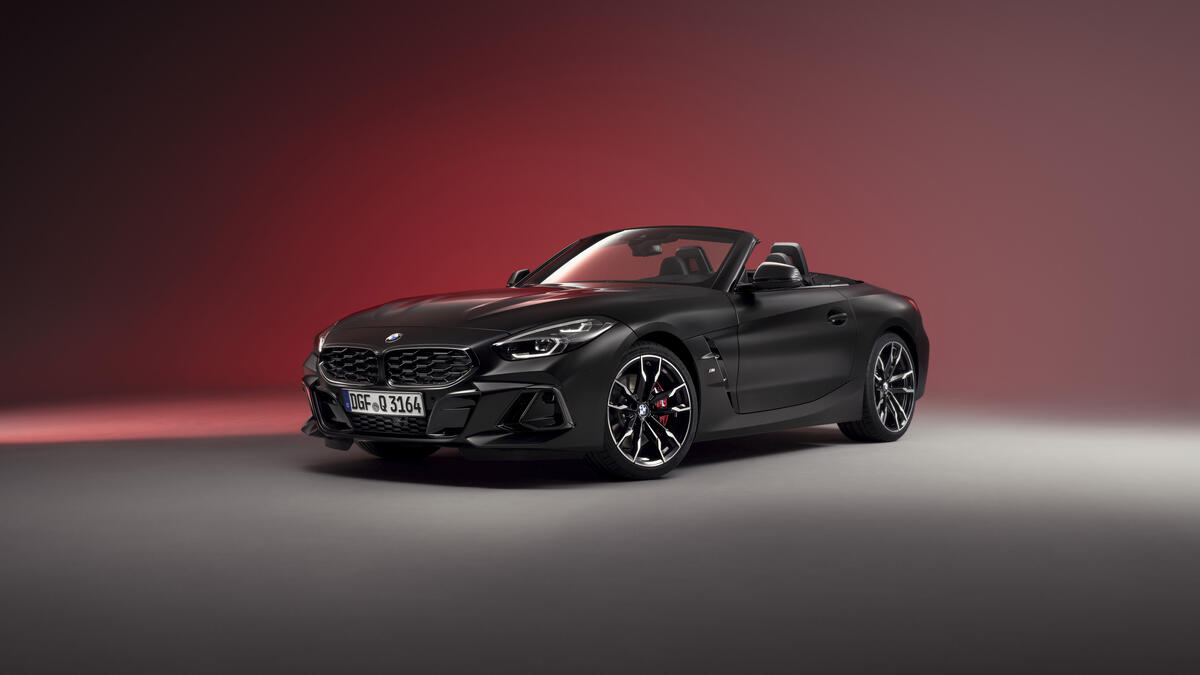
BMW Z4
"That was before the 7th series, so I did... That's right, I did that. I had my Z4 at the time."
The BMW Z4 is a sporty BMW roadster. Here it’s just part of the story about what car the speaker owned when they were making their buying/selling decisions.
The BMW Z4 is a rear-wheel-drive roadster/coupe from BMW, known for its sporty driving feel and relatively compact proportions. In this segment, it’s mentioned as the host’s car “at the time,” tying into a story about buying and selling cars that may have been financially risky.
Request an Explanation
Heard something you'd like explained? We'll add it to this episode.
Sign in to request explanations for terms you heard.
Want to learn more?
Browse our glossary for plain-English explanations of automotive terms, jargon, and concepts.
Help improve this episode
See something that's not quite right? Our annotations are AI-generated and can sometimes miss the mark. Click the flag icon on any annotation to suggest a correction.